
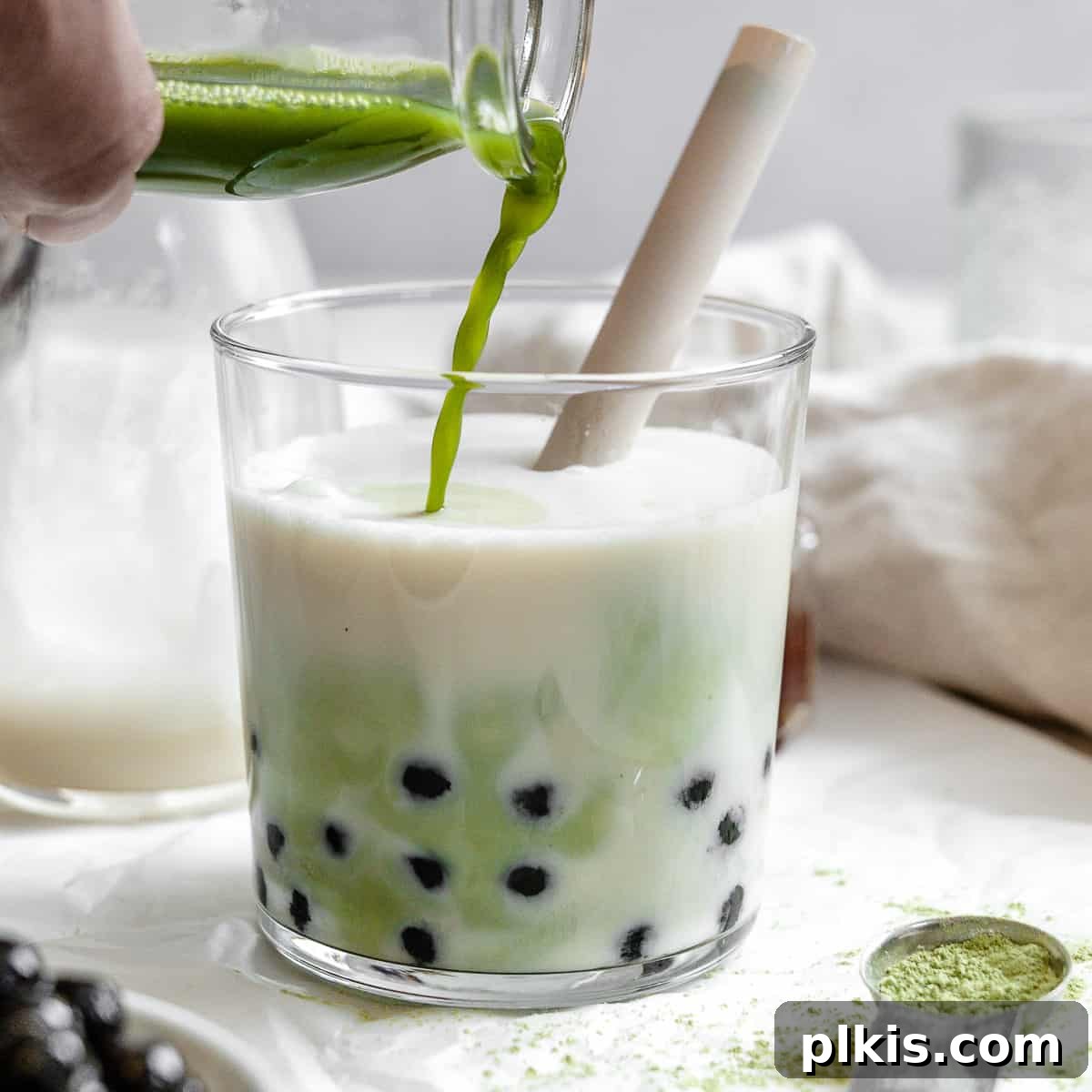
This comprehensive guide will show you how to effortlessly create a delightful matcha boba tea (also known as green milk tea) right in your own kitchen. Sweet, rich, and distinctly earthy, this vibrant green beverage is brimming with antioxidants and can be savored either warm or refreshingly cold. Best of all, crafting it at home is not only significantly more affordable but also allows you to control the ingredients for a healthier, preservative-free indulgence.
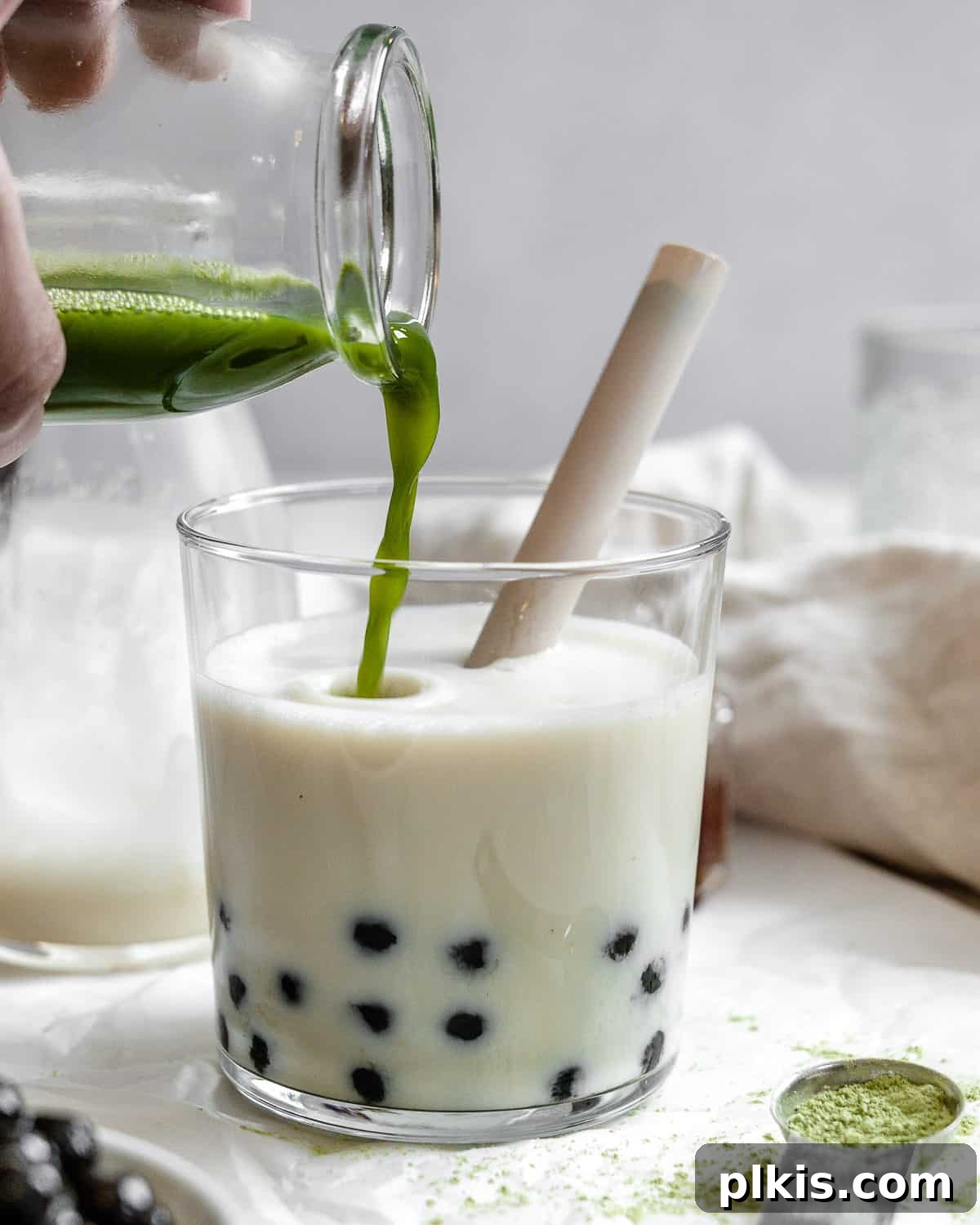
Often recognized by its various names – bubble tea, boba tea, pearl milk tea, or tapioca milk tea – this immensely popular beverage traditionally blends warm or chilled milk tea with chewy tapioca pearls, creating a uniquely satisfying texture and flavor experience. While black tea is a common base, we’re taking a vibrant twist today by crafting a sweet, creamy, and subtly earthy matcha boba tea. This green milk tea variation offers an energizing kick along with a wealth of health benefits.
Opting to prepare your dairy-free milk tea at home brings a multitude of advantages. Beyond the clear cost savings compared to frequenting your local tea shop, homemade versions are inherently healthier. You eliminate unwanted preservatives and artificial additives often found in commercially prepared drinks. Crucially, you gain complete control over the amount and type of sugar and fat used, tailoring the sweetness and richness precisely to your preference. Furthermore, while many commercial tea establishments rely on ‘matcha mixes’ that may contain fillers or artificial flavorings, our recipe champions 100% pure matcha powder. This ensures you receive the full spectrum of its antioxidant, anti-inflammatory, and brain-boosting properties without compromise.
What truly makes this dairy-free matcha milk tea recipe stand out is its remarkable simplicity. The process is straightforward: perfectly cook your tapioca pearls, expertly prepare your matcha tea base, and then combine all the elements in a tall glass. In just a few easy steps, you can satisfy your bubble tea cravings any time of the year, whether you prefer it chilled on a hot summer day or warmed for a comforting treat. If you’re keen to explore other delightful variations, you might also enjoy our recipes for chocolate milk tea, mango bubble tea, and strawberry milk tea.
Table of contents
- The Allure of Matcha Boba Tea
- Why DIY Matcha Boba Tea?
- The Power of Matcha: Health Benefits
- The Ingredients
- Customization Ideas for Your Green Milk Tea
- How to Make Matcha Boba Tea?
- Serving and Storage Tips
- FAQs
- Top Recipe Tips and Notes
- More Fun Vegan Drinks
The Allure of Matcha Boba Tea
Matcha boba tea is more than just a drink; it’s an experience. The vibrant green hue, derived from finely ground green tea leaves, immediately captivates the eye, promising a refreshingly unique flavor. Originating from Japan, matcha has been celebrated for centuries not just for its distinct taste but also for its ceremonial significance and potent health benefits. When combined with the comforting creaminess of milk and the playful chewiness of tapioca pearls, matcha transcends its traditional form, appealing to a broader audience seeking both taste and wellness in a single glass.
This particular rendition focuses on creating a harmonious balance: the slight bitterness and earthy notes of premium matcha are mellowed by a sweetener of your choice and enriched by creamy plant-based milk. The addition of chewy boba pearls transforms it into a delightful treat that engages all your senses, offering a delightful contrast in textures with every sip. It’s a truly invigorating beverage that leaves you feeling refreshed and gently energized.
Why DIY Matcha Boba Tea?
Beyond the simple joy of creating something delicious, making matcha boba tea at home offers numerous compelling advantages:
- Cost-Effective: Regularly purchasing boba tea can quickly add up. Making it at home drastically reduces the cost per serving, allowing you to enjoy your favorite drink more frequently without breaking the bank.
- Healthier Choices: Commercial boba teas often contain excessive amounts of sugar, artificial flavors, and preservatives. At home, you dictate the ingredients. You can opt for natural sweeteners, control the sugar level, and ensure your matcha is pure, not a “matcha mix” filled with unnecessary additives.
- Quality Ingredients: You have the freedom to select high-quality ingredients, from ceremonial-grade matcha to your preferred plant-based milk. This ensures a superior taste and maximizes the health benefits of your drink.
- Customization Galore: Craving a sweeter tea? Less ice? A specific type of plant milk? When you’re the barista, the possibilities are endless. Adjust the ratios and add-ins to perfectly suit your mood and preferences.
- Dietary Control: For those with dietary restrictions, like a preference for dairy-free or vegan options, making boba at home guarantees your drink aligns perfectly with your needs.
The Power of Matcha: Health Benefits
Matcha isn’t just a delicious ingredient; it’s a powerhouse of nutrition and wellness. Unlike traditional green tea, where leaves are steeped and then discarded, with matcha, you consume the entire tea leaf, receiving a more concentrated dose of its beneficial compounds. Here’s a closer look at what makes matcha so exceptional:
- Rich in Antioxidants: Matcha is exceptionally high in catechins, particularly epigallocatechin gallate (EGCG), a potent antioxidant known for its ability to fight free radicals in the body. These antioxidants help protect cells from damage, reduce chronic disease risk, and support overall cellular health.
- Enhanced Brain Function: The combination of caffeine and L-theanine in matcha provides a unique energy boost. L-theanine promotes a state of calm alertness, enhancing focus and concentration without the jitters often associated with coffee. It can also improve memory and reaction time.
- Sustained Energy Without the Crash: While matcha does contain caffeine, L-theanine helps to slow the absorption of caffeine, resulting in a more sustained and gentle energy release. This means you experience prolonged vigor and mental clarity without the sharp peaks and sudden crashes.
- Metabolism Booster: Some studies suggest that matcha can help boost metabolism and increase fat burning, making it a supportive beverage for weight management efforts when combined with a healthy diet and exercise.
- Detoxification Properties: The vivid green color of matcha comes from chlorophyll, a powerful detoxifier that helps eliminate heavy metals and toxins from the body.
- Supports Heart Health: Regular consumption of matcha has been linked to several factors that promote heart health, including reduced levels of LDL (bad) cholesterol and triglycerides.
The Ingredients
Creating the perfect matcha boba tea starts with selecting high-quality ingredients. Here’s a closer look at what you’ll need:
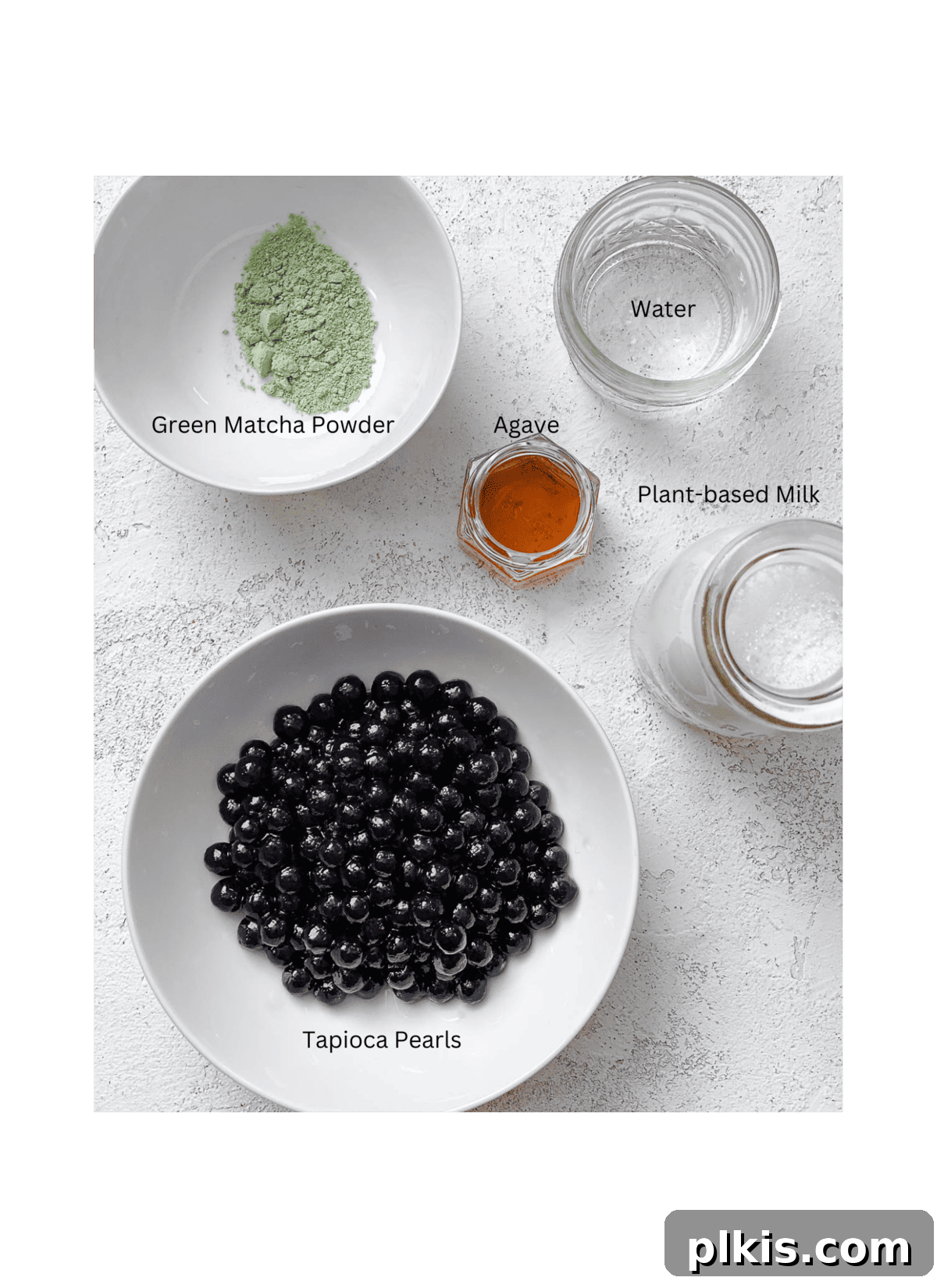
- Matcha Green Tea Powder: The quality of your matcha is paramount to the flavor, color, and health benefits of your boba tea. We highly recommend using a ceremonial grade or premium grade matcha. These grades offer a brighter green color, a smoother, less bitter flavor profile, and a higher concentration of beneficial antioxidants. Culinary-grade matcha, while suitable for baking, often has a duller color and a more astringent taste that might not be as pleasant in a beverage.
Tip for choosing matcha: Always look for matcha powder that is vibrant, lighter, and brighter green. Avoid powders that appear dark, murky, or brownish, as this can indicate lower quality or oxidation.
- Water: Filtered water is ideal for preparing your matcha base. The purity of the water can influence the taste of your tea.
- Tapioca Pearls: These chewy spheres are the signature element of boba tea. You can use regular or quick-cooking tapioca balls, available in brown or white varieties. The amount can be adjusted to your liking, typically between ½ to 1 cup per serving for that satisfying chew.
- Plant-Based Milk: Any plant-based milk will work beautifully. Popular choices include creamy coconut milk, subtly nutty almond milk, rich oat milk, or classic soy milk. Oat and soy milk tend to be the creamiest options, providing a luscious texture. For an extra indulgent and velvety drink, consider using a vegan creamer.
- Sweetener: Customize the sweetness to your palate. Excellent vegan options include agave nectar, maple syrup, coconut sugar, or regular granulated sugar. If you prefer a sugar-free alternative, erythritol or stevia can also be used. Always adjust the amount to taste.
- Ice (Optional): For a refreshing cold beverage, ice is essential. To prevent watering down your delicious boba tea, consider making matcha ice cubes by freezing leftover matcha tea. This way, as the ice melts, it only enhances the matcha flavor.
Customization Ideas for Your Green Milk Tea
One of the best parts about making boba tea at home is the endless possibilities for customization. Here are some delightful additions to elevate your green milk tea:
- Vanilla Extract: A splash of pure vanilla extract (natural vanilla for the best flavor) can add a warm, aromatic depth that beautifully complements the earthy notes of matcha.
- Strawberry Matcha Boba: For a fruity twist, create a simple strawberry puree. Combine ⅓ to ½ cup of fresh or frozen strawberries with a touch of sweetener. Allow them to macerate for 10-15 minutes, then gently muddle or mash the berries. Layer this vibrant puree over your boba pearls before adding the milk and matcha.
- Vegan Jellies: Incorporate different textures with popular boba jellies. Coconut jelly (nata de coco) or a tangy mango fruit jelly pair wonderfully with matcha, adding a delightful chew and burst of flavor.
- Brown Sugar Boba: Transform your tapioca pearls into a decadent treat by making a quick brown sugar syrup. Combine 1-2 tablespoons of brown sugar with a small amount of boiling water, mixing until the sugar dissolves. Pour this syrup over the cooked boba pearls at the bottom of your glass and let them soak for 10-15 minutes to absorb the rich, caramelized flavor.
- Whipped Vegan Coconut Cream: For an extra luxurious garnish, top your matcha boba tea with a dollop of homemade or store-bought whipped vegan coconut cream. It adds a lovely richness and a touch of sweetness.
- Sweet Red Beans: A traditional pairing with matcha in many Asian desserts, sweet red bean paste (either canned or homemade) offers a unique, earthy sweetness and a creamy texture that harmonizes beautifully with green tea.
- Other Fruit Purees: Experiment with other fruit purees like blueberry, peach, or raspberry for different seasonal flavors.
- Spices: A tiny pinch of cinnamon or cardamom can add a surprising warmth and complexity to your matcha.
How to Make Matcha Boba Tea?
Follow these simple steps to prepare your perfectly layered and flavorful matcha boba tea:
- 1) Prepare the Tapioca Pearls: Begin by cooking your tapioca pearls according to the package instructions. This usually involves boiling water, adding the pearls, simmering until tender and translucent, and then letting them rest briefly before draining. Ensure they are soft and chewy.
- 2) Heat the Water for Matcha: Bring your filtered water to a boil, then remove it from the heat and allow it to cool for 2-3 minutes. This crucial step ensures the water isn’t too hot, which can scorch the delicate matcha powder and result in a bitter taste.
The ideal temperature for brewing matcha is around 80°C (175°F). Water that is too hot can make your matcha unpleasantly bitter, so patience here is key.
- 3) Whisk the Matcha Base: In a small bowl, add the matcha powder. Pour in the cooled hot water. Using a traditional bamboo matcha whisk (chasen) is highly recommended for achieving a smooth, frothy, and lump-free tea. Whisk vigorously in a “W” or “M” motion for about a minute until the matcha is fully dissolved and a fine froth forms on the surface. Once whisked, set this vibrant green mixture aside to cool slightly.
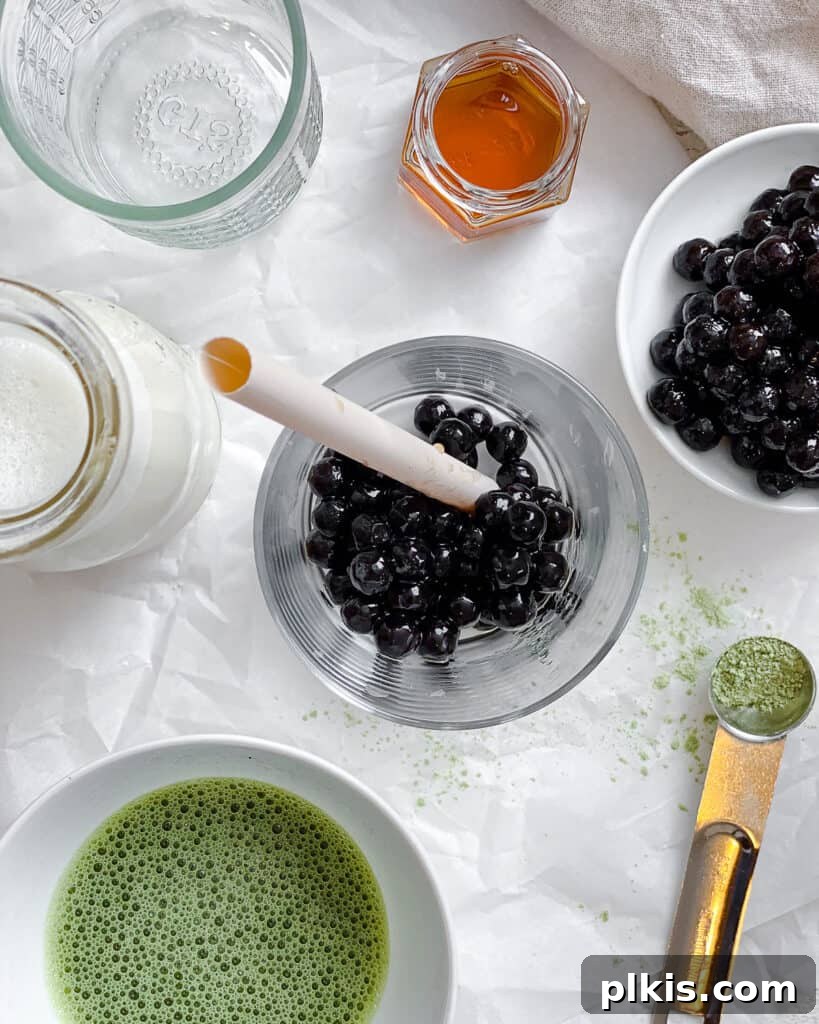
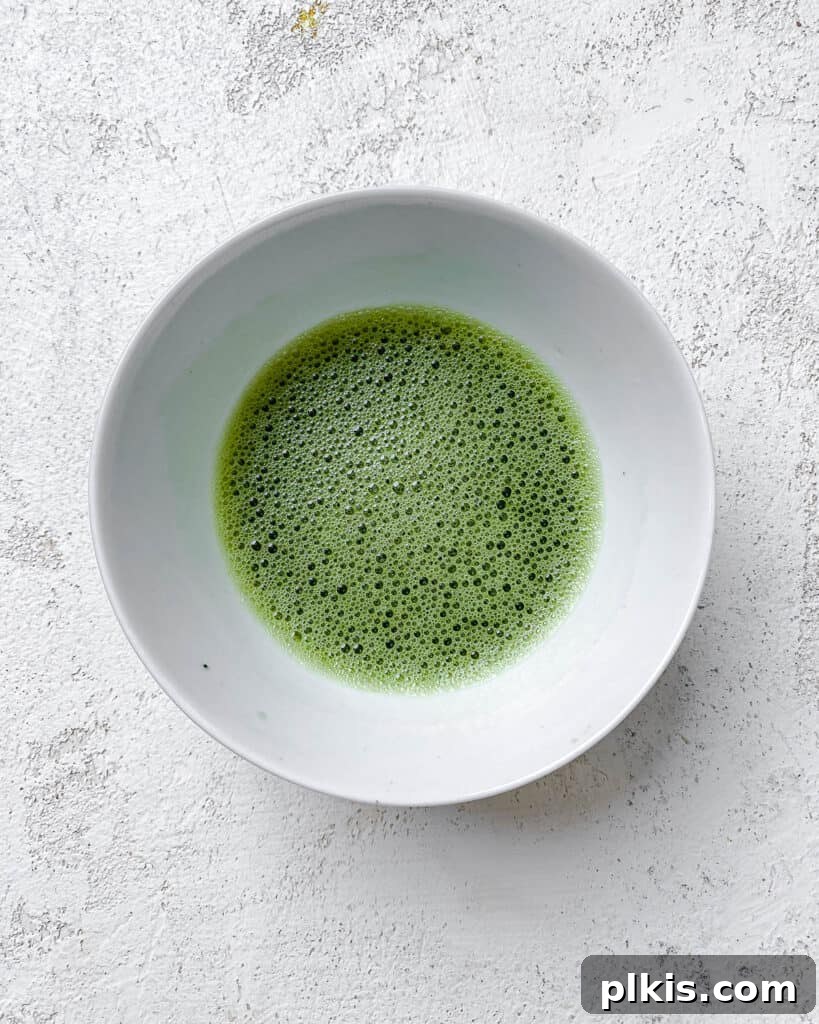
You have the option to mix your chosen sweetener directly into the whisked matcha at this stage, or you can add it directly into the glass later when assembling your drink.
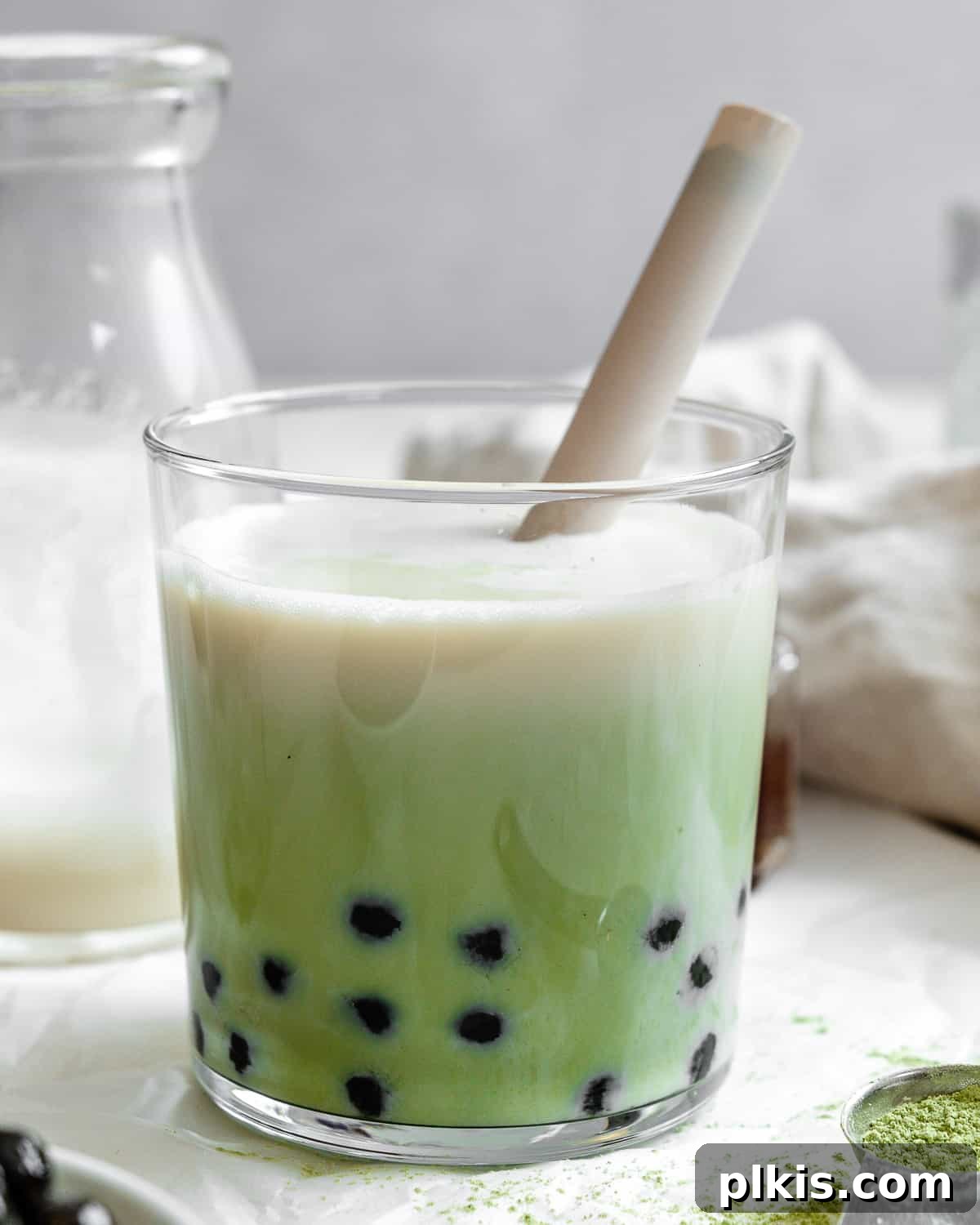
- 4) Assemble Your Matcha Boba Tea: To a tall glass, first spoon in your perfectly cooked tapioca pearls. If you haven’t already added it to the matcha, drizzle in your preferred sweetener and mix gently with the boba. Next, pour in your plant-based milk. Finally, slowly and carefully pour the prepared matcha tea base over the milk. This creates a visually stunning layered effect, showcasing the beautiful green milk tea.
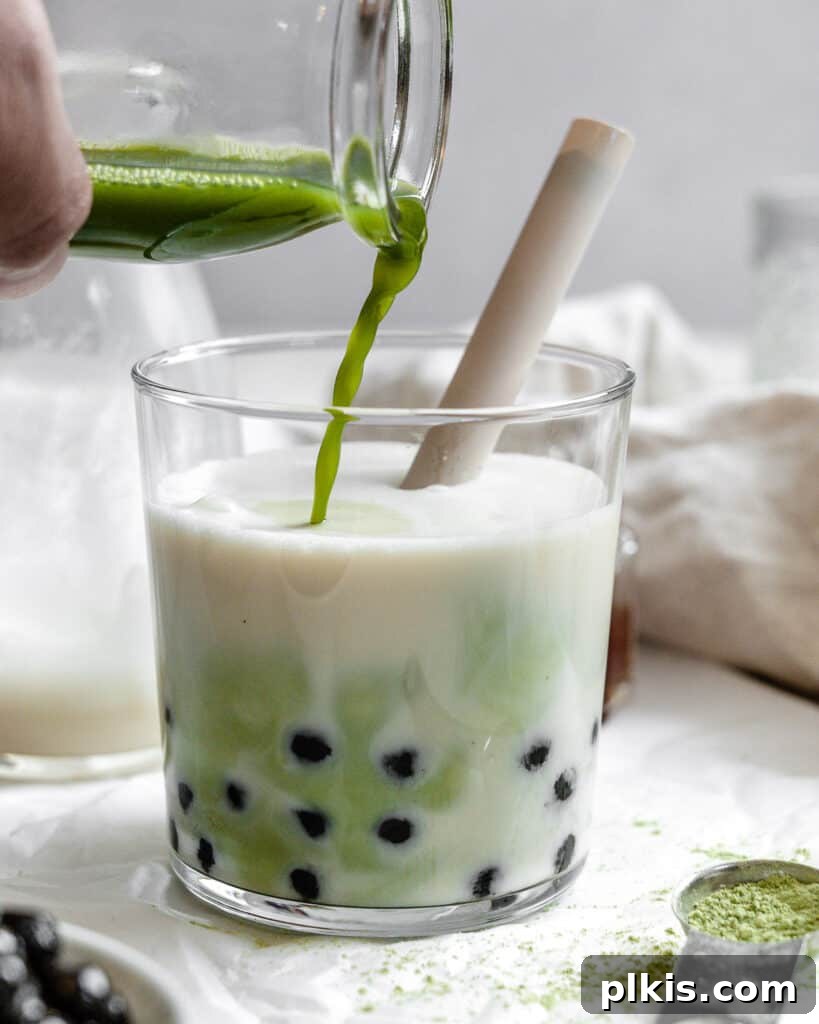
To enjoy your green tea milk tea cold, you can optionally add ice to the glass before adding the plant-based milk. For a comforting warm version, simply heat the plant-based milk first before assembling. Serve your homemade matcha boba tea with a long spoon or, ideally, a wide bubble tea straw to easily enjoy the chewy pearls, and savor every delicious sip!
Serving and Storage Tips
For the best experience, serve your matcha boba tea immediately after assembly. The tapioca pearls are at their peak chewiness when fresh. Use a wide boba straw for easy enjoyment of the pearls, or a long spoon if preferred.
If you plan to make components ahead of time, the whisked matcha milk tea mixture (without boba) can be prepared up to 3 days in advance and stored in an airtight container in the refrigerator. However, the tapioca pearls should always be cooked fresh. They tend to harden and lose their desirable chewy texture after just 3-4 hours, so cook them just before you’re ready to assemble and enjoy your drink.
FAQs
Yes, matcha bubble tea contains caffeine, as matcha is a form of green tea. On average, a typical serving of matcha contains about 70mg of caffeine, which is generally less than a cup of coffee (which can range between 100-140mg). However, the caffeine in matcha is unique due to the presence of L-theanine. This amino acid helps to regulate and slow the absorption of caffeine, providing a more even, sustained energy boost over several hours without the common jitters or sudden crash often associated with coffee.
Absolutely! While a traditional bamboo matcha whisk (chasen) is ideal for achieving a smooth, frothy texture, it’s not strictly necessary. If you don’t have a whisk, you can use a small handheld frother, an immersion blender, or even a regular blender. The key is to thoroughly mix the matcha powder with water until it’s fully dissolved and free of clumps to ensure a smooth, enjoyable drink.
You can certainly prepare the matcha milk tea mixture (without the boba pearls) up to 3 days in advance and store it in a sealed container in the refrigerator. This makes for quick assembly when a craving strikes. However, the tapioca pearls are best when made fresh. They start to lose their soft and chewy consistency, becoming tough, after just 3-4 hours of being cooked. For the best texture, always cook your boba pearls just before serving.
Yes, this recipe is designed to be completely vegan! We use plant-based milk and vegan sweeteners like agave or maple syrup, ensuring it’s suitable for a vegan diet. Always double-check your tapioca pearls and any additional toppings to ensure they are also vegan-friendly.
While you can make a green milk tea with brewed regular green tea bags or loose leaf, it won’t be the same as matcha boba tea. Matcha provides a distinct flavor, vibrant color, and concentrated health benefits because you’re consuming the entire powdered tea leaf. Regular brewed green tea will result in a lighter flavor and less creamy texture. For an authentic matcha boba experience, using actual matcha powder is highly recommended.
Top Recipe Tips and Notes
Achieving the perfect homemade matcha boba tea is simple with these expert tips:
- Mind the Water Temperature: Always use water that is just below boiling, ideally around 80°C (175°F). Boiling water can scorch the delicate matcha, resulting in a bitter, unpleasant taste. Allowing the water to cool for a couple of minutes after boiling is a crucial step.
- Whisk Matcha Thoroughly: For a smooth, lump-free, and frothy matcha base, whisk the powder thoroughly with water. A traditional bamboo whisk is best, but a small frother or blender also works. This step ensures an even flavor distribution and a pleasant texture.
- Sweeten to Your Liking: The beauty of homemade boba tea lies in customization. Feel free to adjust the amount and type of sweetener to perfectly match your taste preferences. You can also tweak the ratios of plant-based milk and matcha to achieve your desired strength and creaminess.
- Cook Boba Fresh: For the ultimate chewy texture, always cook your tapioca pearls just before serving. They are best consumed within 3-4 hours after cooking, as they tend to harden and become less palatable over time.
- Enjoy It Your Way: This versatile drink can be savored in multiple ways. Enjoy it as is for a simple, flavorful experience. Add plenty of ice for a refreshing colder version, especially with matcha ice cubes to prevent dilution. To enjoy a comforting warm version, simply heat your plant-based milk before assembling.
More Fun Vegan Drinks
If you’ve enjoyed crafting this delicious matcha boba tea, we encourage you to explore more of our delightful and budget-friendly vegan drink recipes:
- Homemade Chai Concentrate
- Turmeric Golden Milk
- Mexican Horchata
- Mexican Hot Chocolate
- Lemon Cinnamon Ginger Tea
- Fresh Watermelon Slushie
Or enjoy browsing our entire collection of budget-friendly vegan drink recipes to find your next favorite beverage!
Conclusion
There you have it – a comprehensive guide to making your own luscious and invigorating matcha boba tea at home. This simple yet rewarding recipe allows you to enjoy a beloved beverage that’s not only cost-effective and customizable but also packed with the incredible health benefits of pure matcha. By taking control of the ingredients, you can savor every sip knowing you’re treating yourself to a wholesome, delicious, and energizing drink. So gather your ingredients, follow these steps, and immerse yourself in the delightful world of homemade green milk tea!
Photos by Alfonso Revilla
Matcha Boba Tea (Green Milk Tea)
Equipment
- Measuring Cups
- Measuring spoons
- Small Whisk
Ingredients
- ⅓ cup cooked tapioca pearls
- 1 teaspoon green matcha powder
- ¼ cup cooled hot water
- 1 tablespoon agave or maple syrup
- 1 cup plant-based milk
- 1 cup ice (optional)
Instructions
- In a small bowl, thoroughly whisk the matcha powder with the cooled hot water for at least one minute until smooth and frothy. Set this vibrant mixture aside and let it cool down further.
- To a tall glass, add the cooked tapioca pearls. If you haven’t already mixed your sweetener with the matcha, add your sweetener of choice directly to the boba and mix well to combine.
- If you are enjoying the tea cold, add the ice to the glass now. Then, pour in the plant-based milk. Finally, slowly and gently add the prepared matcha tea base to create a beautiful, distinct layer. Serve immediately and enjoy!
Notes
- Use Warm Water: Boiling water can scorch the matcha and turn it bitter. 80C/175F is the ideal temperature for optimal flavor.
- Whisk Matcha Thoroughly: Ensure your matcha is thick, frothy, and completely lump-free for the best texture and taste.
- Sweeten to Taste: Feel free to adjust the ratios of sweetener, milk, and matcha to perfectly suit your personal preferences.
- Cook Boba Fresh: Tapioca pearls are best consumed within 3-4 hours after cooking, as they will become tough and chewy if left for too long.