
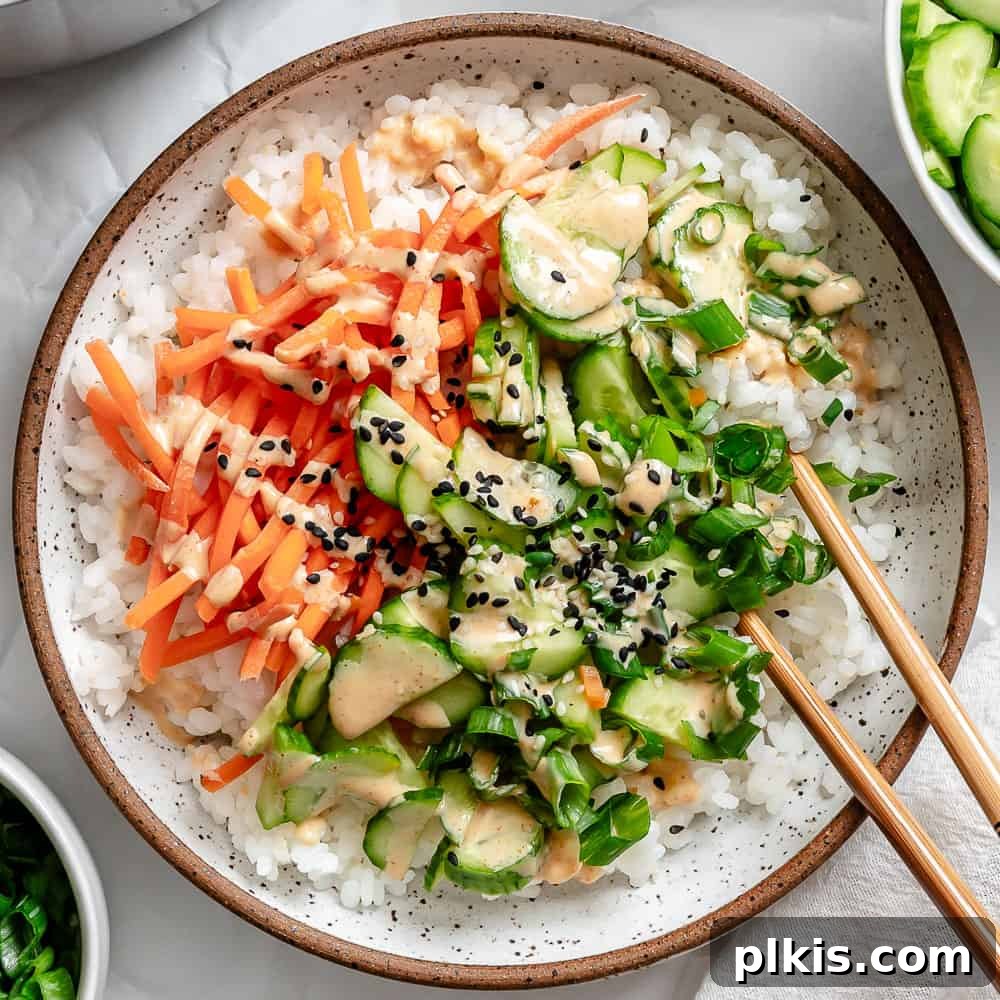
Craving the vibrant flavors and fresh ingredients of sushi but without the fuss of rolling? Look no further than this incredibly easy and delicious vegan sushi bowl recipe! It eliminates the complex rolling process of traditional sushi, delivering all the beloved taste and texture in a convenient, customizable, and budget-friendly format. Packed with an array of crisp vegetables, savory tofu, delicate nori sheets, and a creamy, spicy mayo, this simple-to-prepare dish is a healthy and satisfying meal that will quickly become a favorite in your kitchen.
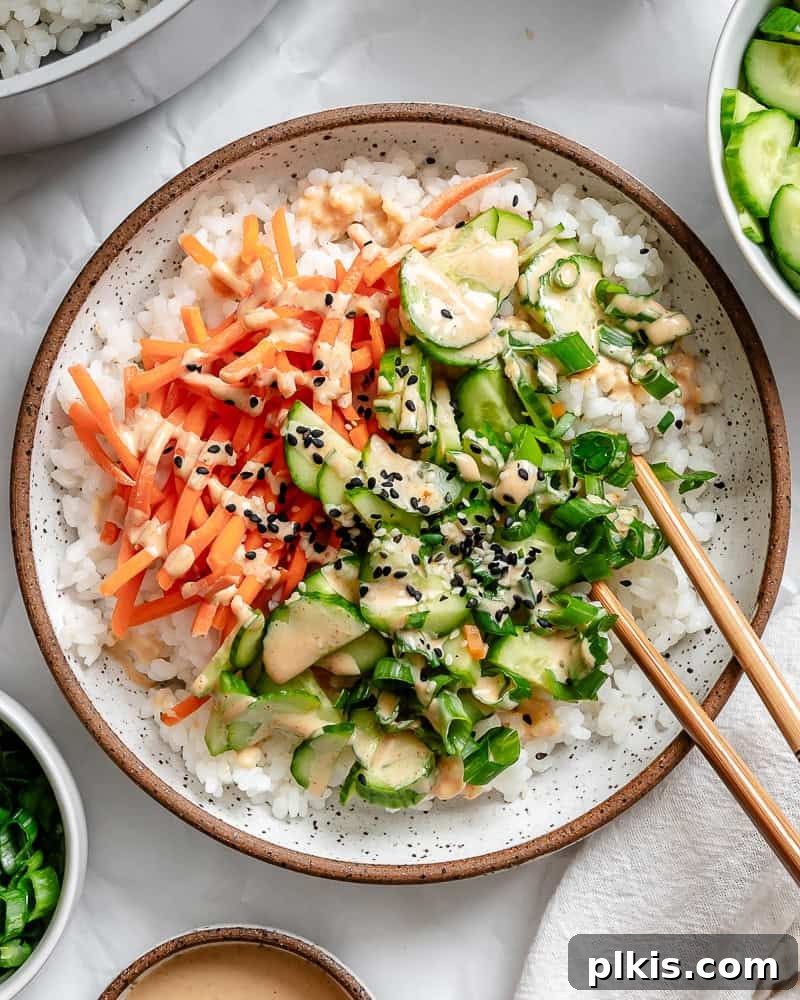
Healthy & Flavor-Packed Vegan Sushi Bowls: Your Customizable Takeout Alternative
Say goodbye to expensive takeout sushi and hello to your new favorite homemade meal! This vegan sushi bowl recipe brings all the excitement and freshness of sushi right to your table, often at a fraction of the cost. We absolutely adore how this topping-packed rice bowl is not only budget-friendly and incredibly flexible but also exceptionally healthy. Best of all, it’s significantly easier to prepare than traditional homemade sushi rolls, which often require specific techniques and patience. The money you save by skipping takeout can be happily spent on a wider variety of your favorite vegan sushi toppings, allowing for endless culinary creativity!
What truly sets this sushi bowl apart is its incredible versatility. The opportunities for customization are boundless, allowing you to tailor each bowl to your exact preferences. Whether you prefer a bounty of fresh, crunchy vegetables, the creamy richness of ripe avocados, the umami burst of salty nori sheets, or protein-packed additions like tofu and edamame, there’s no limit to making this recipe uniquely your own. It’s an ideal choice for busy weeknights, meal prepping for healthy lunches, or a fun, interactive dinner with friends and family.
If you’re a fan of vibrant, wholesome, and customizable vegan grain bowls, you’ll also love exploring other delicious recipes. Try this hearty sweet potato quinoa bowl for a comforting meal, the refreshing Mediterranean quinoa salad for a taste of the Mediterranean, or a nutrient-dense green veggie bowl. These recipes offer fantastic options for satisfying lunches and dinners throughout the week, ensuring your plant-based journey is always flavorful and exciting.
The Essential Ingredients and Clever Substitutions for Your Sushi Bowl
This delightful dish masterfully combines all the classic components of vegan sushi into one incredibly satisfying and easy-to-eat bowl. Building your perfect sushi bowl starts with a few key elements, offering both traditional flavors and room for your personal touch. Each ingredient plays a crucial role in creating a harmonious blend of textures and tastes.
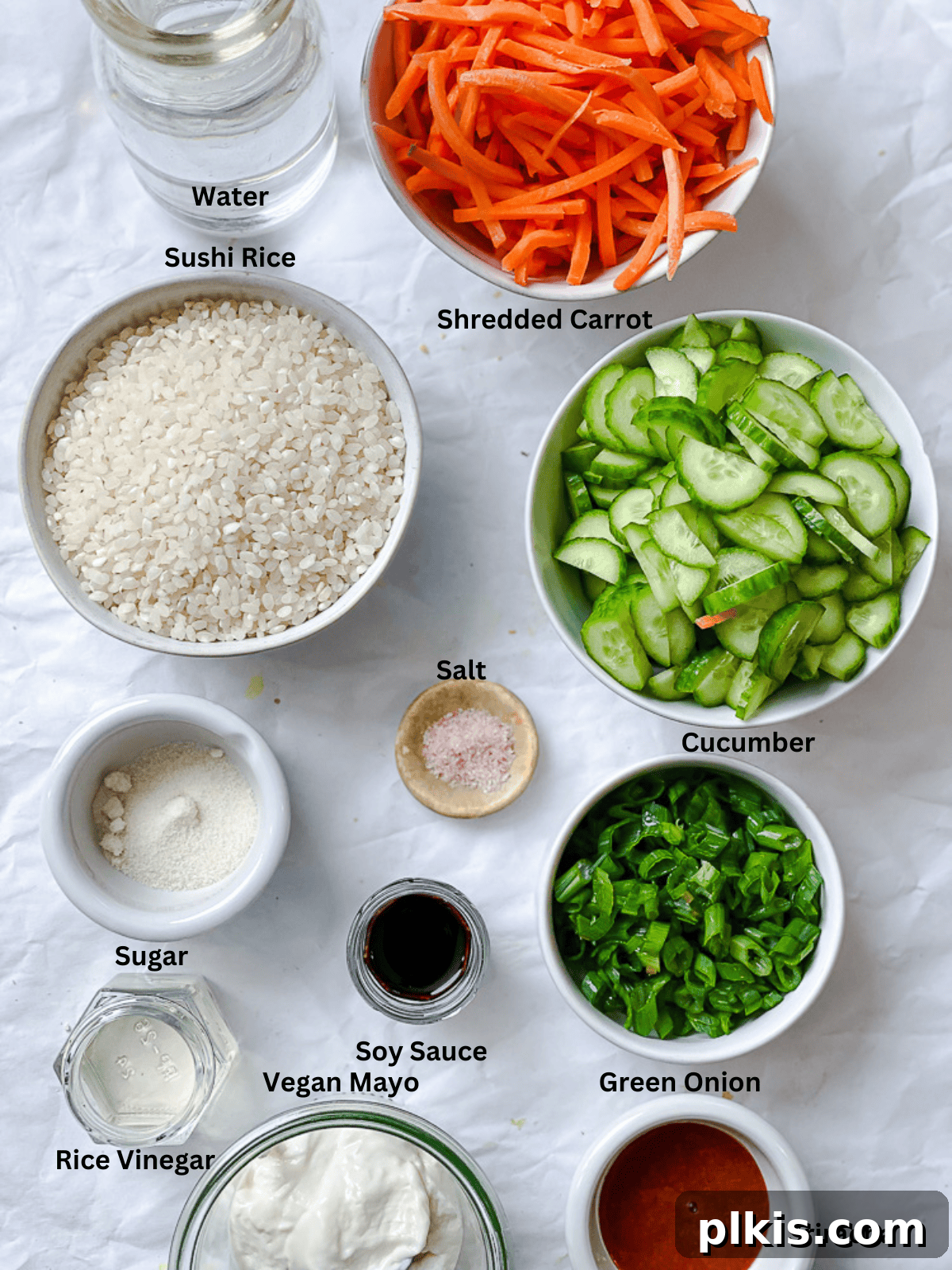
At its heart, there are three non-negotiable elements that form the foundation of this delectable sushi bowl: (1) perfectly seasoned sushi rice, providing that essential sticky texture and subtle sweetness; (2) an abundance of fresh, vibrant toppings that add crunch, color, and flavor; and (3) a creamy, spicy vegan sriracha mayo sauce, which ties all the elements together with a zesty kick. To transform this into a truly satisfying and protein-rich meal, the addition of diced raw or pan-fried tofu on top is an absolute must, offering a substantial and delicious counterpoint to the fresh vegetables.
One of the many benefits of this dish is its inherent gluten-free nature, making it accessible to a wide range of dietary needs. The only component that typically contains gluten is the traditional soy sauce found in the spicy vegan mayo. However, adapting this is incredibly simple: you can easily substitute it with tamari for a gluten-free alternative, or use coconut aminos for a soy-free and gluten-free option. This small adjustment ensures that everyone can enjoy the rich flavors of this sushi bowl without compromise.
What Else Could I Add? Endless Topping and Flavor Variations
The beauty of a sushi bowl lies in its infinite customizability. While the base recipe is fantastic, feel free to unleash your creativity and incorporate additional ingredients to suit your taste, dietary needs, or what you have on hand. These suggestions will help you elevate your sushi bowl to new heights of flavor and nutrition:
- Edamame: For an extra boost of plant-based protein and a pop of vibrant green, add shelled edamame. You can buy them frozen and simply steam or boil them according to package instructions before tossing them into your bowl. They offer a delightful chewiness and mild, sweet flavor.
- Pickled Ginger (Gari): Any true sushi aficionado knows that a side of pickled ginger is essential for cleansing the palate between bites. Its zesty, slightly sweet, and tangy flavor provides a refreshing contrast to the richness of the other ingredients. You can typically find pickled ginger at most major grocery stores or in international food markets.
- Quinoa: If you’re looking to significantly increase the protein content or simply prefer an alternative to rice, consider swapping the sushi rice for cooked quinoa. Its slightly nutty flavor and fluffy texture make it an excellent, nutritious base.
- Wasabi: For those who appreciate a fiery kick, a small dollop of wasabi paste alongside your bowl is a game-changer. Just like pickled ginger, it adds a pungent heat that complements the otherwise refreshing profile of the bowl.
- Mango: Introduce a tropical twist with diced fresh mango. Its sweet, tart, and juicy notes add a fantastic burst of freshness and a touch of fruity elegance, contrasting beautifully with the savory elements.
- Leafy Greens: To add more volume, fiber, and a fresh crispness, stir in some finely chopped romaine lettuce, spinach, or delicate sprouts. They brighten up the bowl and provide an extra layer of texture.
- Radishes: Thinly sliced red radishes or beautifully marbled watermelon radishes offer a wonderfully crisp texture and a subtle peppery bite. Their vibrant colors also make your bowl visually stunning.
- Sweet Potatoes: Make your sushi bowl even heartier and more comforting with cubed and either oven-baked or air-fried sweet potatoes. Their natural sweetness and soft texture are a delightful addition, especially when caramelized slightly.
- Tempeh: As an alternative to tofu, try steamed and then fried tempeh, or marinate it in a flavorful sauce like this BBQ tempeh. Tempeh offers a firmer texture and a nutty, earthy flavor, providing another excellent protein source.
- Alternative Sauces: While the spicy vegan mayo is a superstar, don’t hesitate to experiment with different dressings. Swap it for a sweet and savory vegan teriyaki sauce, a tangy sweet and sour sauce, a simple drizzle of your favorite hot sauce, a bright ponzu sauce, or a rich and creamy peanut sauce for a different flavor profile.
- Kimchi: For a fermented, tangy, and spicy kick, a spoonful of vegan kimchi can add incredible depth and a probiotic boost to your bowl.
- Bell Peppers: Thinly sliced red, yellow, or orange bell peppers contribute sweetness, crunch, and even more vibrant color.
- Avocado Oil or Toasted Sesame Oil: A light drizzle of high-quality avocado oil or toasted sesame oil can enhance the overall richness and aroma of the bowl, adding a subtle depth of flavor.
How to Make a Vegan Sushi Bowl: A Simple Guide
Creating your own vegan sushi bowl is surprisingly straightforward, especially when you break it down into a few easy steps. The key to a truly outstanding sushi bowl lies in the preparation of the rice and the fresh, vibrant toppings. Follow these detailed steps to assemble a delicious and visually appealing meal.
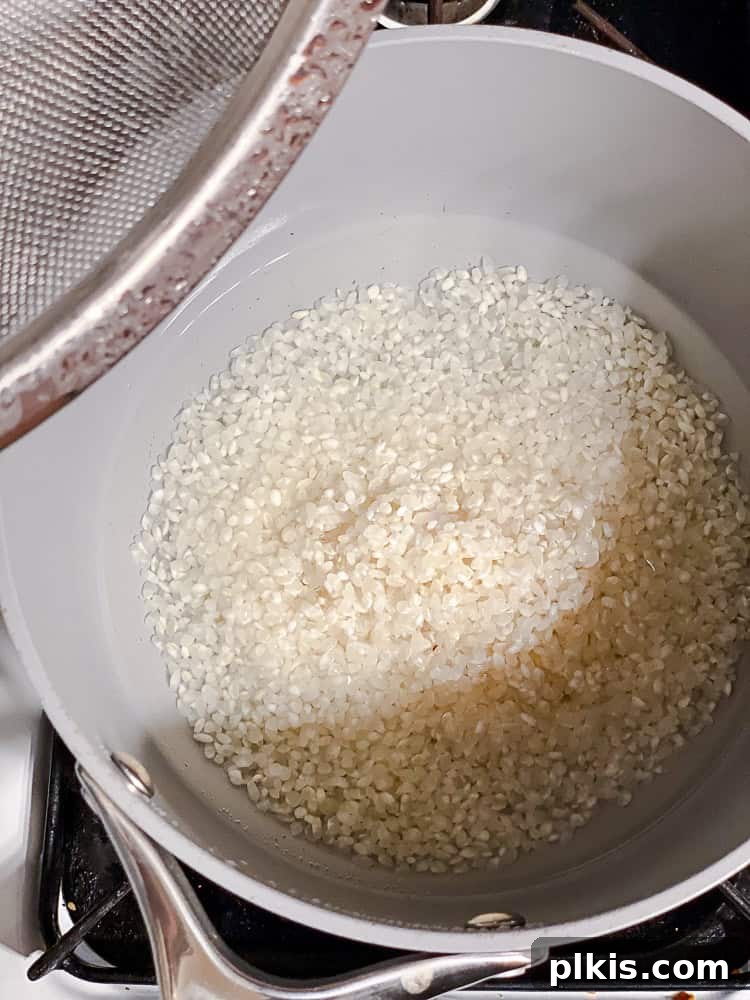
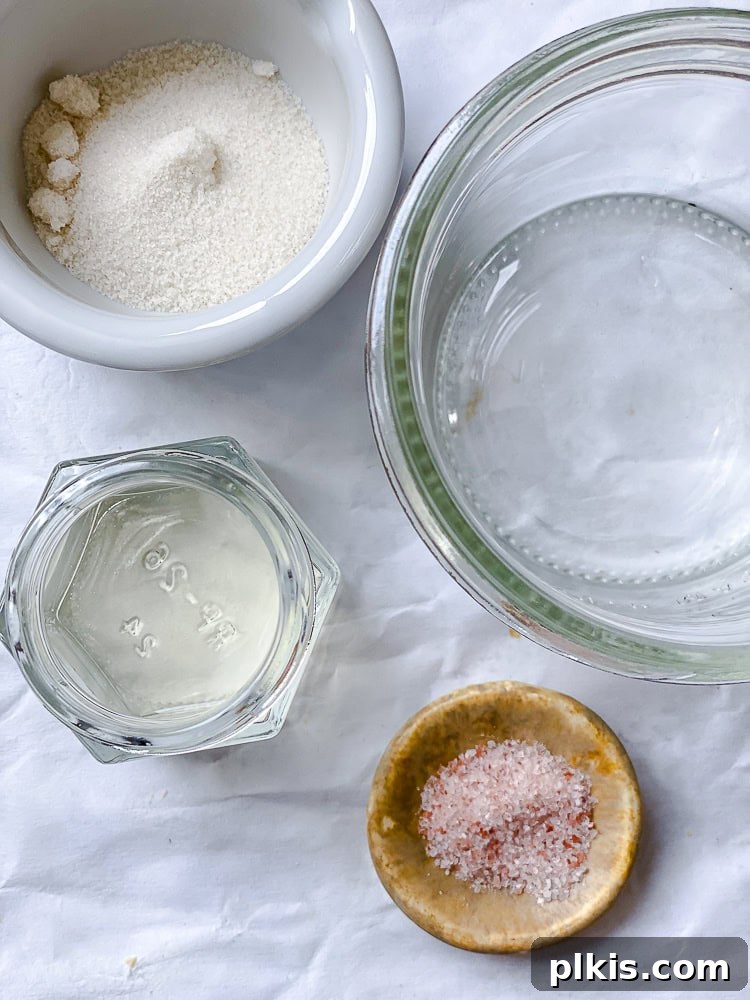
Step 1: Prepare the Sushi Rice. Begin by thoroughly rinsing the sushi rice in a fine-mesh colander under cold running water for at least 1 minute, or until the water runs clear. This crucial step removes excess starch, ensuring your rice achieves that perfect sticky (but not mushy) texture. Once rinsed, allow it to drain for another minute. Transfer the rinsed rice and 1 cup of fresh water to a small pot. Bring the water to a boil, then immediately reduce the heat to a low simmer, cover the pot tightly with a lid, and cook undisturbed for 15 minutes. After 15 minutes, turn off the heat but do not lift the lid; allow the rice to rest, still covered, for an additional 10 minutes. This steaming period is essential for the rice to absorb all the liquid and become perfectly tender.
Step 2: Prepare the Rice Vinegar Seasoning. While your sushi rice is cooking and resting, prepare its essential seasoning. In a small bowl or jar, combine the rice vinegar, sugar, and salt. Stir vigorously until the sugar and salt are completely dissolved. This sweet and tangy mixture is what gives sushi rice its distinctive flavor and helps preserve its texture.
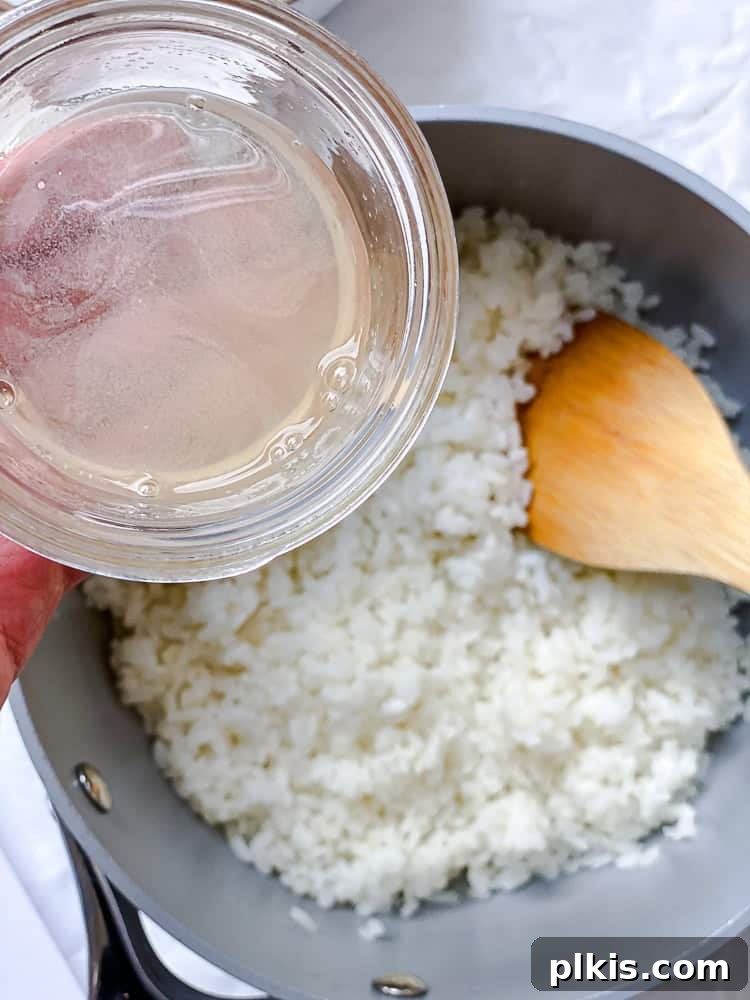
Step 3: Season the Sushi Rice. Once the rice has rested for 10 minutes, uncover it and immediately transfer it to a large, shallow bowl or a baking sheet (this helps it cool faster). Gently pour about half of the prepared rice vinegar mixture over the rice. Using a wooden spoon or rice paddle, gently fold and stir the rice, being careful not to mash the grains. The goal is to separate the grains and evenly distribute the seasoning. Once the first half is incorporated, gently stir in the remaining vinegar mixture. Remember, sushi rice is delicate, so aggressive mixing can turn it mushy instead of maintaining its desired sticky, distinct grain texture. Allow the seasoned rice to sit uncovered for about 5 minutes to cool slightly before serving.
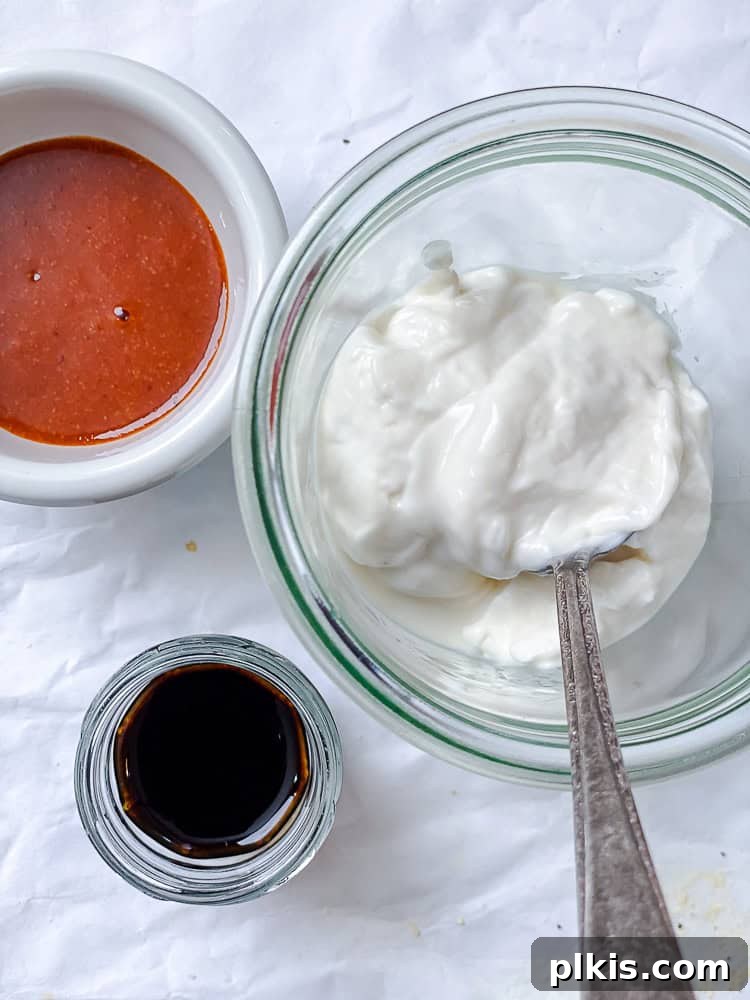
Step 4: Prepare the Vegan Spicy Mayo Sauce. For an irresistible creamy kick, make the vegan spicy mayo. In a small bowl, whisk together the vegan mayonnaise, sriracha, and soy sauce (or tamari/coconut aminos for a gluten-free option). Mix until the sauce is smooth, vibrant orange, and perfectly combined. Taste and adjust the spice level to your preference by adding more sriracha if desired.
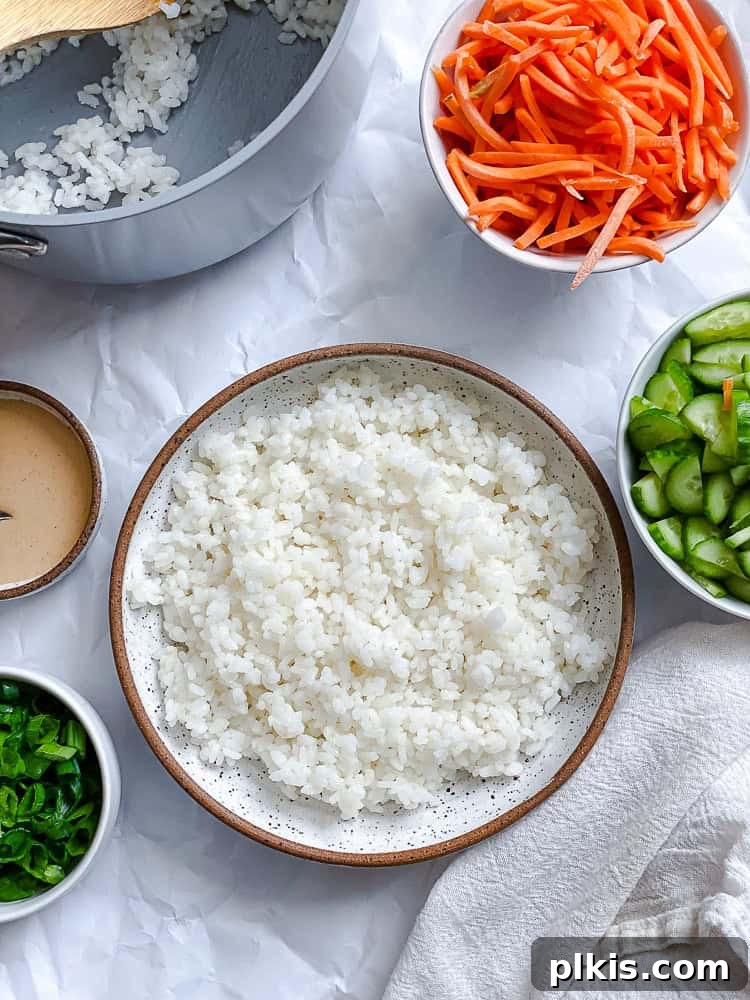
Step 5: Assemble and Serve Your Sushi Bowls. Now for the fun part! Distribute the seasoned sushi rice evenly among your serving bowls, creating a sturdy and delicious base. Artfully arrange your desired toppings over the rice. Pile on the shredded carrots, thinly sliced cucumber, and green onions. If using, add diced tofu (raw or pan-fried), sliced avocado, edamame, or any of your other chosen variations. Finally, generously drizzle the homemade spicy vegan mayo sauce over the assembled bowls. Garnish with a sprinkle of sesame seeds and a few strips of nori, then dive in and enjoy your beautifully crafted, healthy, and incredibly flavorful vegan sushi bowl!
Frequently Asked Questions About Vegan Sushi Bowls
Here are answers to some common questions you might have when preparing your vegan sushi bowl:
Do I have to rinse the rice before cooking?
Yes, absolutely! Rinsing the rice before cooking is a critical step for achieving the perfect sushi rice texture. Sushi rice, particularly short-grain varieties, is naturally very high in starch. If you don’t rinse it, this excess starch can cause the rice grains to stick together too much and become gummy or clumpy when cooked. Rinsing removes this surface starch, allowing the grains to cook more evenly, separate slightly while still remaining delightfully sticky, and achieve that ideal fluffy-yet-firm consistency that is characteristic of authentic sushi rice.
Should sushi bowls be served hot or cold?
These bowls are best enjoyed at room temperature, much like traditional sushi rolls. The warm, freshly cooked and seasoned rice cools down slightly, creating a pleasant contrast with the cool, crisp, and refreshing raw vegetables. Since many of the toppings, such as cucumber, avocado, and carrots, are served uncooked, the combination of room temperature rice and fresh veggies works harmoniously, ensuring all the flavors and textures shine without one overpowering the other due to temperature differences. If you’re meal prepping, allowing all components to come to room temperature before combining makes for a more cohesive meal.
Can I use brown rice instead of white sushi rice?
While traditional sushi uses white short-grain rice, you can certainly substitute it with short-grain brown rice or even a blend of brown and white. Keep in mind that brown rice will have a chewier texture, a nuttier flavor, and will require a longer cooking time and more water than white sushi rice. The final texture might not be as sticky, but it will still be delicious and offer added fiber.
How do I make this oil-free?
To make your sushi bowl oil-free, ensure your vegan mayo is oil-free (or make your own from silken tofu and spices), and if you’re pan-frying tofu, opt for baking or air frying it without oil, or use raw diced tofu instead. All vegetables are naturally oil-free.
Pro Recipe Tips for the Best Vegan Sushi Bowl
Mastering your vegan sushi bowl is easy with a few expert tips:
- Use the Right Rice for Superior Texture: For the most authentic and delicious results, always opt for Japanese-style short-grain white rice, commonly labeled as “sushi rice.” Its specific starch content and grain size are crucial for achieving that signature sticky, yet tender and slightly chewy texture. While short-grain brown rice can work as a healthier substitute, be aware that its texture will be firmer and less fluffy or sticky than its white counterpart.
- Ensure the Rice Cools Properly: It’s essential to give your seasoned sushi rice ample time to cool to room temperature before adding it to your bowls with raw vegetables. Adding warm rice could inadvertently “cook” or wilt the fresh ingredients, compromising their crispness and vibrant color. To expedite the cooling process, spread the freshly seasoned rice evenly in a thin layer on a baking sheet. You can then place it in the freezer for about 10-15 minutes, or simply let it air cool on the counter for 20-30 minutes, stirring occasionally.
- Save Time with Pre-Shredded Carrots: To shave a few precious minutes off your prep time, consider purchasing pre-shshredded carrots from the grocery store. This simple shortcut is a real time-saver and won’t compromise the flavor or quality of your bowl.
- Skip the Spicy Vegan Mayo? No Problem! If you prefer a lighter dressing or are short on time, you can easily omit the homemade spicy vegan mayo. Instead, simply drizzle your sushi bowls with a combination of high-quality soy sauce (or tamari) and a touch of sriracha for that familiar savory and spicy kick. You can also offer these condiments on the side for individual customization.
- Cut Vegetables Uniformly: For a more aesthetically pleasing and easier-to-eat bowl, try to cut all your vegetables into similar sizes and shapes, such as matchsticks, thin slices, or small dice. This also ensures a balanced distribution of flavors and textures in every bite.
- Toast Your Nori: If you’re using nori strips for garnish, lightly toasting them over an open flame or in a dry pan for a few seconds can enhance their crispness and intensify their umami flavor.
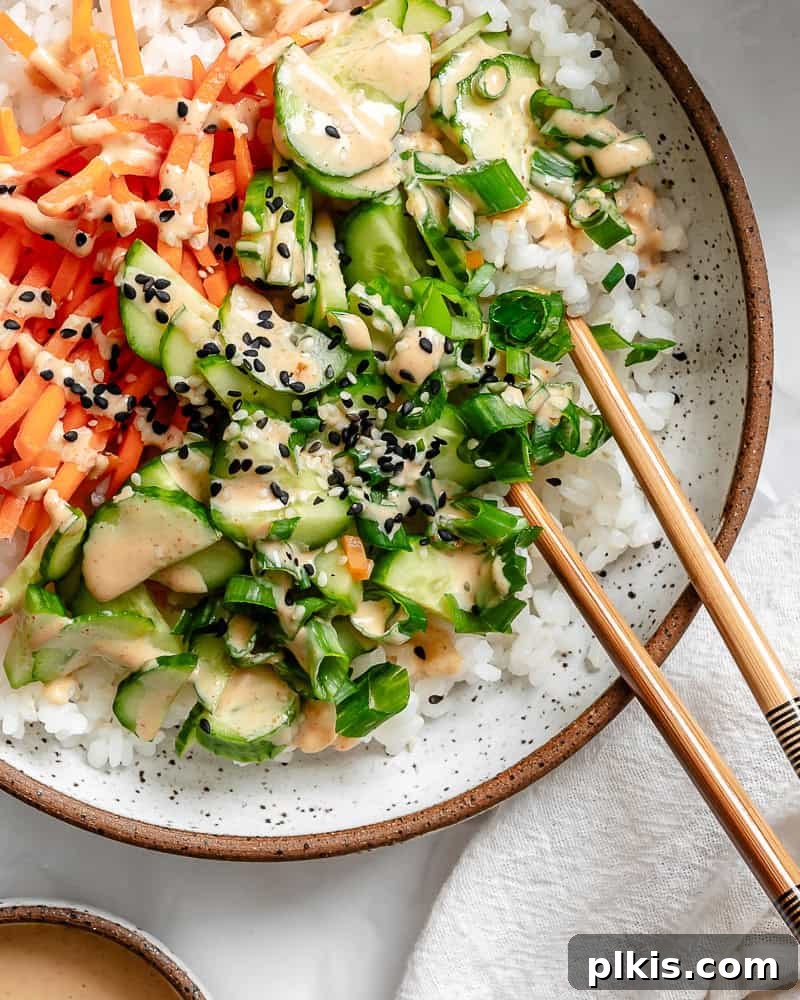
Serving Suggestions for Your Vegan Sushi Bowl
These flavorful vegan sushi bowls are incredibly versatile, making them ideal for satisfying lunches and wholesome dinners. With their abundant toppings and garnishes, they are hearty enough to be enjoyed as a complete meal on their own. However, adding a few complementary side dishes can elevate the dining experience and create a well-rounded feast for any occasion.
To transform your sushi bowl into a more elaborate and delightful meal, consider pairing it with these delicious recipes:
- Start with Savory Appetizers: Serve these crispy tofu vegetable wontons or fresh avocado mango spring rolls as a delightful prelude to your main course. Their light yet flavorful profiles perfectly complement the sushi bowl.
- Complement with Refreshing Sides: Enhance your meal with a vibrant side salad. A cooling spicy cucumber salad offers a refreshing crunch and zesty flavor, while a ramen noodle salad brings more texture and savory notes. For a unique touch, try blistered shishito peppers, which offer a mild, smoky sweetness with an occasional spicy surprise.
- Boost the Protein: If you’re looking to make the meal even more substantial, a side of sticky sesame tofu can add an extra layer of savory protein and a rich, glazed texture that pairs wonderfully with the fresh sushi bowl ingredients.
- Conclude with a Digestif: Finish your meal on a comforting and digestive note with a warm mug of homemade ginger tea. Its soothing properties are the perfect ending to a fresh and flavorful Asian-inspired meal.
Storage Instructions for Freshness
To maintain the crispness and freshness of your vegetables and prevent the rice from becoming too soggy, it’s best to store the components of your sushi bowl separately. Place the seasoned sushi rice and all your fresh vegetables in individual airtight containers. Store these in the refrigerator for up to 4 days. Similarly, keep the vegan spicy mayo in its own airtight container in the fridge.
If you’re including avocado, remember that it tends to brown quickly once cut and exposed to air. To keep it looking its best, only slice as much avocado as you plan to eat immediately. Any leftover sliced avocado will typically start to brown after just 1 or 2 days, even when stored in an airtight container, so fresh is always best for this particular topping.
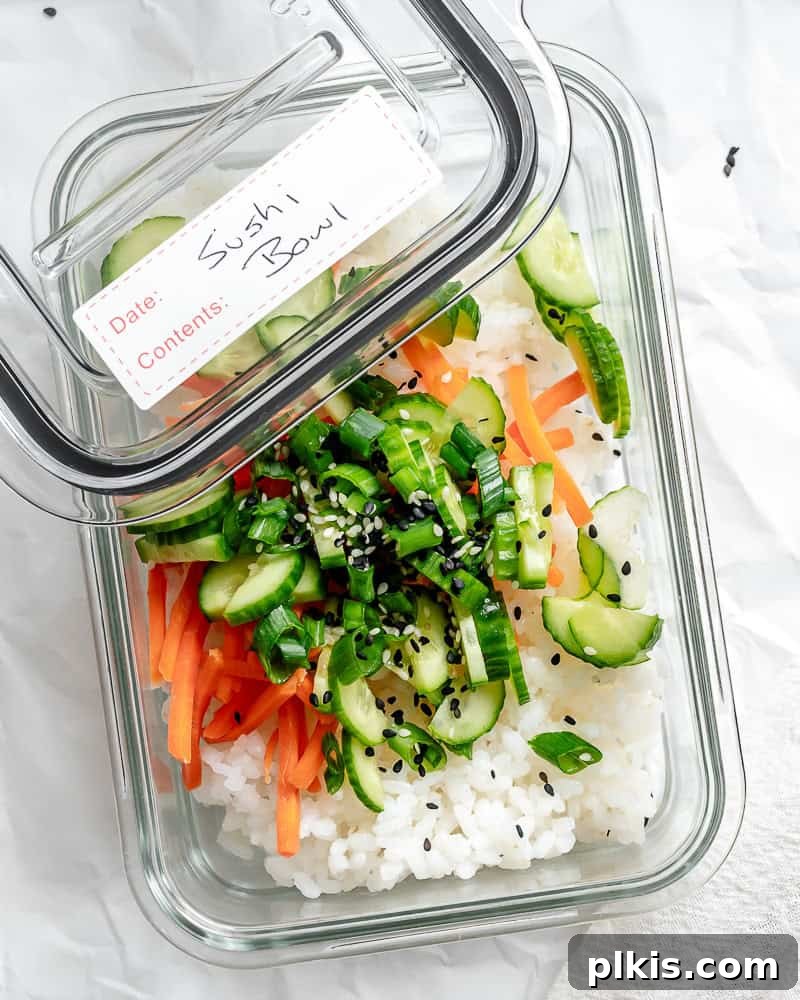
Vegan Sushi Bowl Recipe
This easy vegan sushi bowl takes the guesswork out of homemade sushi but doesn’t skip the flavor! Fresh vegetables, nori sheets, tofu, and spicy mayo are piled on top of sushi rice in this easy-to-prepare and healthy dish.
Equipment
- Knife set
- Measuring Cups
- Measuring spoons
Ingredients
For the Sushi Bowl Base:
- 1 cup of sushi rice
- 1 cup of water
- 1 tablespoon of rice vinegar
- 1 tablespoon of sugar
- ½ teaspoon of salt
For the Toppings:
- 1 cup of shredded carrot
- 1 cup of thinly sliced cucumber
- ½ cup of thinly sliced green onions
- Diced tofu, raw or fried (optional, but recommended for protein)
- 1 avocado, sliced (optional)
- Sesame seeds for garnish (optional)
- Nori strips, for garnish (optional)
For the Optional Spicy Vegan Mayo Sauce:
- 3 tablespoons of vegan mayonnaise
- 2 tablespoons of sriracha
- 1 tablespoon of soy sauce (or tamari/coconut aminos for gluten-free)
Instructions
- Wash the sushi rice thoroughly for 1 minute in a fine mesh colander. Continue rinsing until the water runs completely clear, then allow the rice to drain for 1 minute.
- Add the washed rice and 1 cup of water to a small pot. Bring the water to a boil over high heat. Once boiling, immediately cover the pot with a tight-fitting lid and reduce the heat to the lowest simmer. Cook undisturbed for 15 minutes. After 15 minutes, turn off the heat and let the pot sit, still covered, for an additional 10 minutes. Do not lift the lid during this resting period.
- While the rice is cooking and resting, prepare the seasoning mixture. In a small jar or bowl, combine the rice vinegar, sugar, and salt. Stir vigorously until the sugar has completely dissolved, ensuring a smooth, clear liquid.
- Once the rice is ready and has rested for 10 minutes, uncover it and transfer it to a large, shallow bowl or baking sheet. Pour about half of the prepared vinegar mixture over the rice. Using a wooden spoon or rice paddle, very gently fold and mix the rice, taking care not to mash the grains. Once the first half is incorporated, gently stir in the remaining vinegar mixture until evenly distributed. Remember, aggressive mixing can make sushi rice mushy, and we want it sticky but still with individual grains.
- Allow the seasoned rice to sit uncovered for about 5 minutes to cool slightly before assembling your bowls.
- To assemble the sushi bowls, distribute the prepared sushi rice evenly among your serving bowls. Artfully arrange the shredded carrots, sliced cucumbers, and thinly sliced green onions over the rice. Add any optional ingredients you are using, such as diced tofu and sliced avocado.
- Optionally, make the spicy vegan mayo sauce. In a small jar or bowl, mix the vegan mayonnaise, sriracha, and soy sauce (or tamari/coconut aminos). Stir well until creamy and thoroughly combined.
- Generously drizzle the spicy vegan mayo sauce over your assembled sushi bowls. Garnish with sesame seeds and nori strips if desired. Serve immediately and enjoy!
Recipe Notes
- Use the right rice: For the best results, opt for Japanese-style short-grain white rice, also known as sushi rice. Short-grain brown rice will work as a substitute, although the texture may not be as fluffy or sticky.
- Let the rice cool: Give the rice time to cool to room temperature before adding it to the bowls, as warm rice may cook the raw vegetables. To help it cool down fast, spread the seasoned rice on a baking sheet and place it in the freezer for about 10 minutes.
- Buy pre-shredded carrots: You can save a few minutes of prep time by buying pre-shredded carrots instead of grating them yourself.
- Want to skip the spicy vegan mayo? Simply drizzle the sushi bowls with a combination of soy sauce (or tamari) and sriracha instead for a delicious, straightforward flavor.
Nutrition Information (per serving)
Calories: 582kcal |
Carbohydrates: 100g |
Protein: 11g |
Fat: 16g |
Saturated Fat: 2g |
Polyunsaturated Fat: 2g |
Monounsaturated Fat: 10g |
Sodium: 1497mg |
Potassium: 966mg |
Fiber: 12g |
Sugar: 12g |
Vitamin A: 11157IU |
Vitamin C: 30mg |
Calcium: 88mg |
Iron: 3mg
Additional Info
- Author: Toni Okamoto
- Course: Dinner, Lunch
- Cuisine: Asian
- Method: Stovetop
- Diet: Vegan
Tried this recipe? Please tag us at @PlantBasedOnABudget! 🙂