
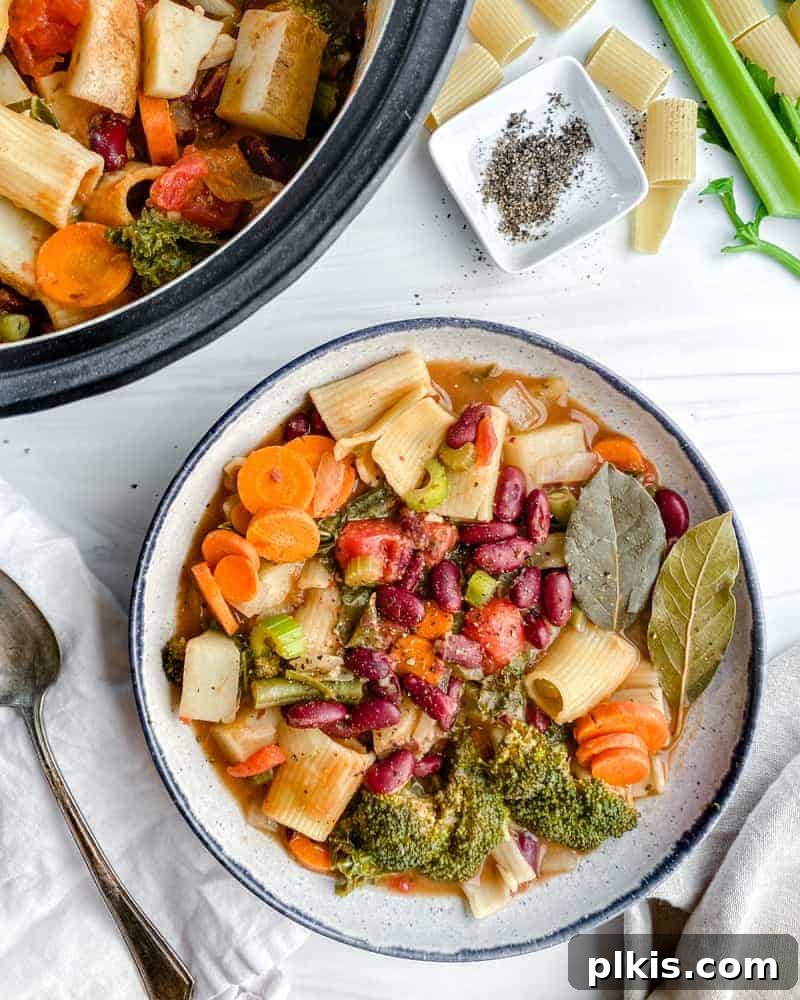
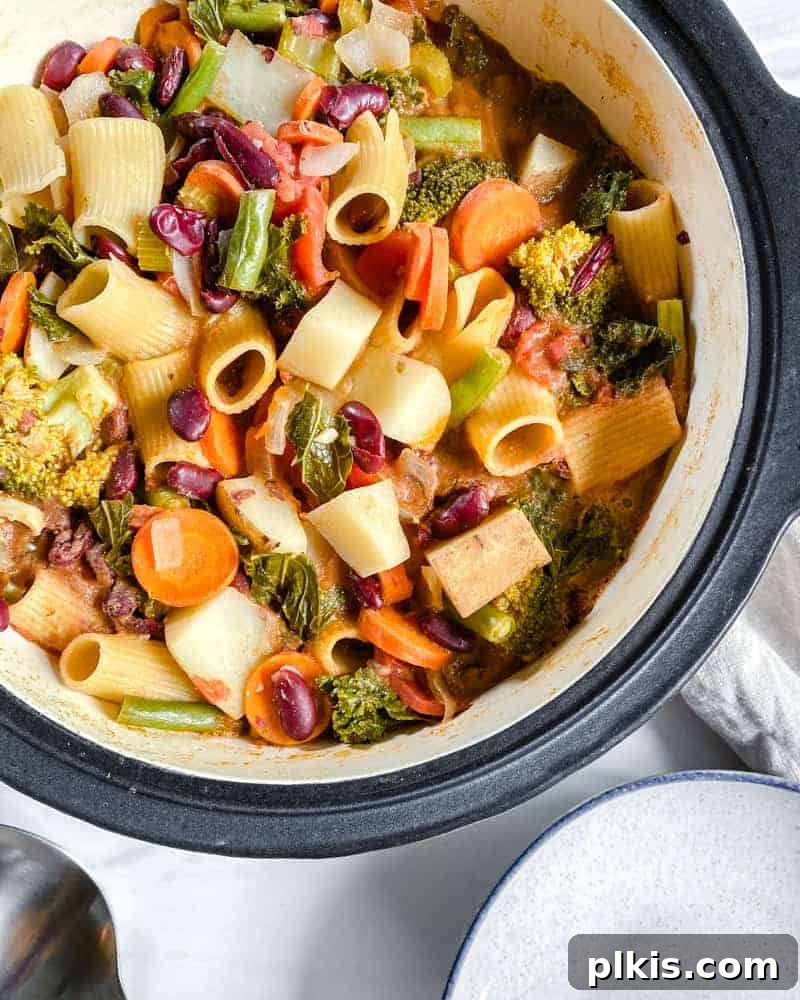
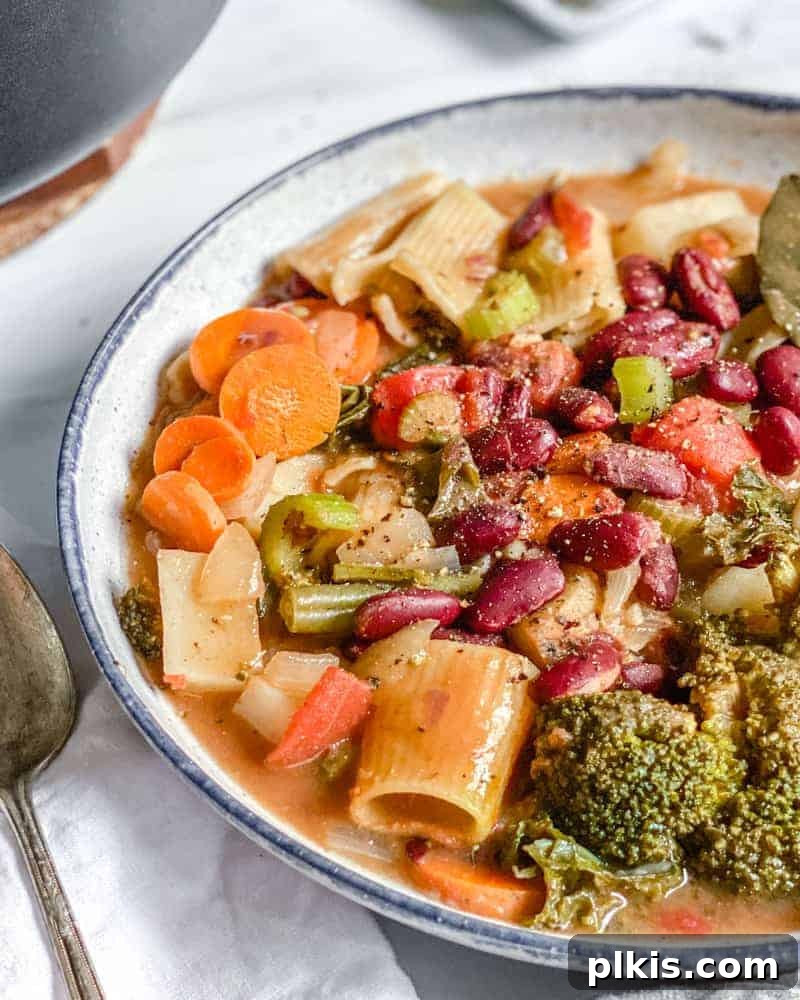
Vegan Minestrone Soup is a truly heartwarming and wholesome dish that brings together a vibrant array of fresh garden vegetables, comforting tender pasta, aromatic spices, and protein-packed plant-based ingredients, all harmoniously simmered in a rich, savory tomato broth. This healthy, satisfying, and incredibly easy one-pot meal is designed to instantly warm you from the inside out, leaving you feeling utterly cozy and deeply contented. It’s the quintessential comfort food, especially perfect for those crisp, chilly days when you crave something nourishing and soul-soothing.
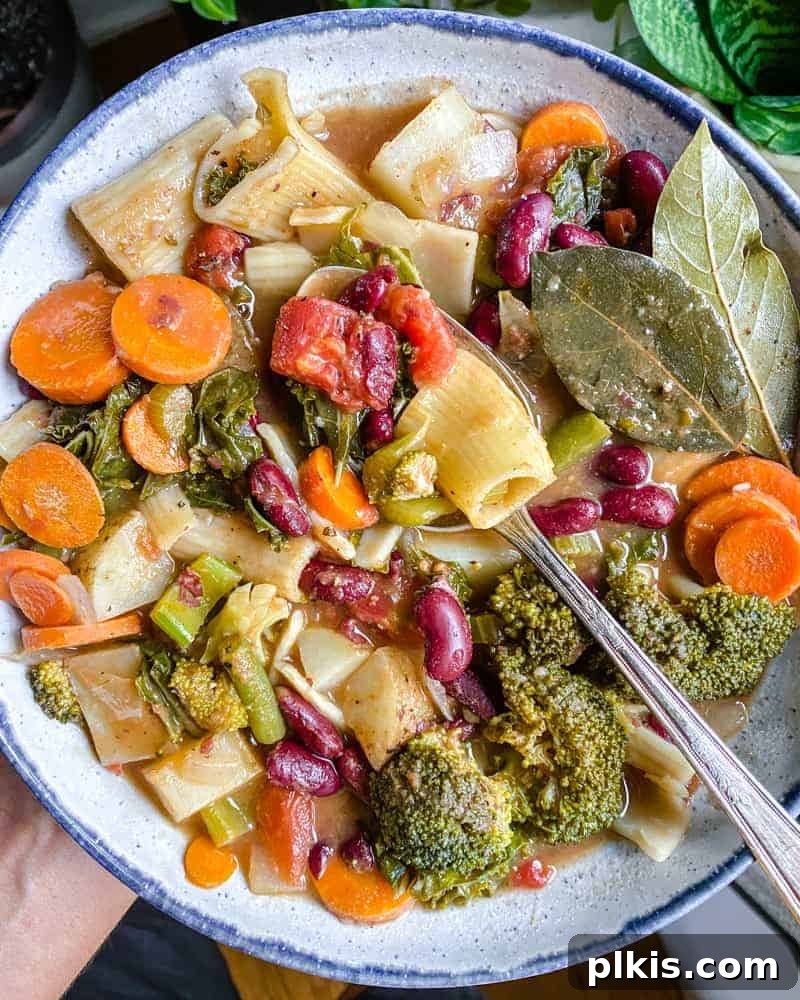
As the air turns cooler and we officially embrace soup season, there’s no better time to add this exquisite vegan Minestrone Soup to your culinary repertoire. This recipe effortlessly joins the ranks of our most beloved cozy vegan soup recipes, promising a delightful fusion of robust flavors and exceptional nutritional value. What makes this classic Italian soup truly remarkable is its inherent adaptability; you can easily customize it to suit your preferences and utilize whatever fresh vegetables you have readily available, making it a versatile and budget-friendly choice for any home cook.
Exploring the Rich History and Essence of Minestrone Soup
The term “Minestrone” itself is derived from the Italian word “minestra,” meaning “soup,” and the suffix “-one,” which denotes “big” or “thick,” essentially translating to “big soup” or “thick vegetable soup.” This humble yet incredibly rich dish traces its origins back to the foundational era of the Roman Empire. Born out of a frugal diet, which was largely vegetarian in nature, Minestrone was initially a peasant food, a practical way to utilize leftover vegetables and pulses to create a filling and nutritious meal.
Unlike many traditional recipes that adhere to rigid ingredient lists, Minestrone has always been characterized by its flexibility. There was never a definitive recipe set in stone; instead, ingredients would change seasonally and regionally, reflecting the abundance of local produce available to families. Early versions often included whatever grains or legumes were on hand, such as chickpeas or spelt, and sometimes even stale bread to thicken the broth. Over centuries, as culinary traditions evolved, Minestrone adapted, incorporating new world ingredients like tomatoes and potatoes, which became staples in Italian cuisine. Today, this adaptable and wholesome soup is celebrated in kitchens worldwide, cherished not only for its comforting warmth but also for its myriad health benefits and its enduring legacy as a versatile, nourishing dish.
The Exceptional Health Benefits of Vegan Minestrone Soup
Vegan Minestrone Soup stands out as an exceptionally healthy meal choice, brimming with an impressive spectrum of vitamins, minerals, and essential nutrients. Every spoonful delivers a powerful boost to your well-being, thanks to the diverse range of fresh vegetables and plant-based proteins thoughtfully incorporated into the recipe. Let’s delve deeper into why this soup is so good for you:
- Legumes (Beans): A cornerstone of Minestrone, beans such as kidney beans, cannellini, or chickpeas are renowned for their high fiber and protein content. Fiber is crucial for digestive health, promoting regularity and aiding in satiety, which can help with weight management. The plant-based protein in beans makes this soup incredibly filling and a fantastic muscle-building component, especially for a vegan diet. They also provide essential minerals like iron, magnesium, and folate.
- Carrots and Celery: These crunchy root and stalk vegetables form the aromatic base (soffritto) of many Italian soups. Carrots are an outstanding source of beta-carotene, a powerful antioxidant that the body converts into Vitamin A, vital for vision, immune function, and skin health. Celery contributes Vitamin C, K, and folate, along with a host of antioxidants and anti-inflammatory compounds.
- Tomatoes: Whether diced or crushed, tomatoes are central to the broth, providing a rich source of lycopene, another potent antioxidant known for its heart-protective and anti-cancer properties. They also supply Vitamin C and potassium, contributing to overall cardiovascular health.
- Leafy Greens (Kale/Spinach – Optional but Recommended): Adding greens like kale or spinach significantly boosts the nutrient profile. These dark, leafy vegetables are packed with vitamins A, C, and K, as well as iron and calcium, supporting bone health and immune function.
- Overall Benefits: The combination of these ingredients creates a dish rich in antioxidants, which combat free radicals in the body, reducing inflammation and the risk of chronic diseases. The high fiber content aids in blood sugar regulation and cholesterol management. Moreover, consuming warm, nutrient-dense soups like Minestrone can be incredibly comforting and hydrating, supporting your body’s defenses against common ailments like colds and flu, particularly during cooler seasons. This vegan version ensures you receive all these benefits without any saturated fat or cholesterol commonly found in meat-based broths.
Essential Ingredients for a Perfect Vegan Minestrone Soup
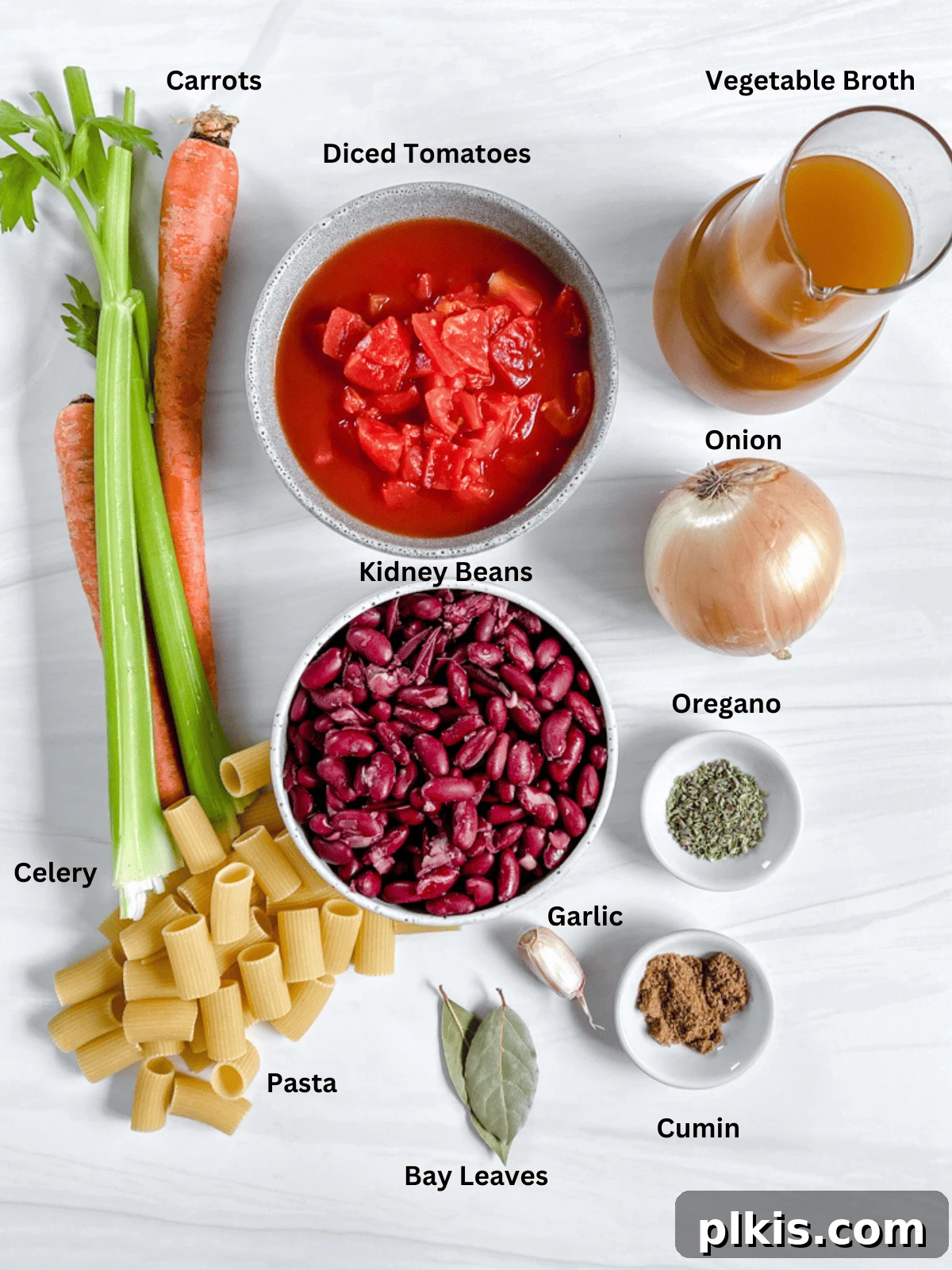
Crafting a truly authentic and delicious Vegan Minestrone Soup relies on a selection of fresh, high-quality ingredients. While the beauty of Minestrone lies in its flexibility, these core components will ensure a rich and flavorful foundation for your soup. Below is a visual representation of the ingredients you’ll need, followed by a detailed list and tips for selecting the best produce.
Effortless Preparation: How to Make Vegan Minestrone Soup
Creating this delicious Vegan Minestrone Soup is remarkably straightforward, requiring minimal effort and just one pot – a true testament to its simple elegance. From start to finish, you can have this comforting dish ready for serving in approximately 30 minutes, including a mere 10 minutes of preparation time. Follow these steps to bring a taste of Italy into your kitchen:

Step 1: Build Your Flavor Base. In a large, heavy-bottomed pot or Dutch oven, heat the vegetable oil over medium heat. Once shimmering, add the diced onion, minced garlic, sliced carrots, and sliced celery. Sauté these aromatics gently for 5-7 minutes, stirring occasionally, until they become soft and slightly translucent. This step is crucial for developing the foundational flavors of your soup.
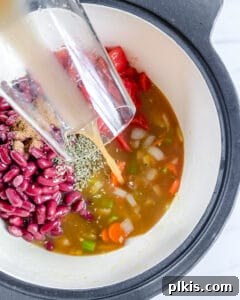
Step 2: Simmer the Broth. Pour in the canned diced tomatoes (with their juices), vegetable broth (or water with bouillon cubes), drained kidney beans, dried oregano, and ground cumin. Stir well to combine all ingredients. Bring the mixture to a gentle boil, then reduce the heat to low, cover the pot, and let it simmer for at least 10-15 minutes. This simmering time allows the flavors to meld beautifully and the vegetables to tenderize further. This is also the perfect moment to add any optional ingredients like bay leaves, chopped potatoes, broccoli florets, or fresh green beans if you desire a heartier, more varied vegetable medley.


Step 3: Cook the Pasta. Once the broth has simmered and flavors have deepened, add your chosen pasta noodles directly into the pot. Stir gently to ensure the pasta is fully submerged. Cook according to the package instructions, typically 8-12 minutes, or until the pasta is al dente (firm to the bite). Keep an eye on it to prevent overcooking, as soggy pasta can diminish the soup’s texture.
Step 4: Season and Serve. After the pasta is cooked, remove the pot from the heat. Taste the soup and season generously with salt and freshly ground black pepper to your preference. If you added bay leaves, remove them before serving. Ladle the hot Vegan Minestrone Soup into bowls, garnish with fresh parsley or a sprinkle of vegan parmesan, and serve immediately. Enjoy this nourishing and incredibly flavorful meal!
Expert Tips for Perfecting Your Vegan Minestrone Soup
Achieving a truly exceptional Vegan Minestrone Soup is easy with a few insider tips. These suggestions will help you customize your soup to perfection, whether you prefer it thick and hearty or light and brothy, and ensure optimal enjoyment every time:
- Adjusting Consistency: The beauty of Minestrone lies in its versatility. If you prefer a richer, thicker soup, consider adding an extra tablespoon or two of tomato paste along with the diced tomatoes. For a soupier consistency, simply increase the amount of vegetable broth or water. You can also partially mash some of the beans against the side of the pot to naturally thicken the broth.
- Pasta Management for Leftovers: A common challenge with Minestrone is that pasta can absorb a lot of liquid and become mushy when stored in the soup. To avoid this, especially if you plan to enjoy leftovers, it’s highly recommended to cook the pasta separately. Prepare the pasta according to package directions, then add it to individual bowls just before serving. When reheating the soup, you can then add fresh, pre-cooked pasta. This method ensures your pasta retains its ideal texture.
- Low-Carb Alternatives: For those following a low-carb diet or simply wishing to reduce carbohydrate intake, you can easily omit the pasta entirely. To compensate for the lost bulk and add more nutritional value, consider increasing the amount of plant proteins, such as an extra can of beans (cannellini or chickpeas work wonderfully), or adding more non-starchy vegetables like zucchini, bell peppers, or additional leafy greens. Shirataki noodles or spiralized zucchini noodles can also be added in the final minutes of cooking for a pasta-like texture.
- Enhancing Flavor with Toppings: While delicious on its own, Vegan Minestrone can be elevated with simple, flavorful toppings. A generous sprinkle of vegan parmesan cheese adds a delightful savory, umami note. A dollop of fresh parsley and arugula pesto or a swirl of high-quality extra virgin olive oil can introduce a fresh, herbaceous burst. Don’t forget a grind of fresh black pepper and maybe a pinch of red pepper flakes for a subtle kick!
- Utilizing Seasonal Vegetables: Embrace the spirit of traditional Minestrone by using whatever seasonal vegetables are fresh and abundant. In spring, consider asparagus or fresh peas. In summer, zucchini, bell peppers, and fresh green beans shine. For autumn and winter, root vegetables like parsnips or sweet potatoes can add a different dimension.
- Boosting Umami: A tablespoon of nutritional yeast or a dash of soy sauce/tamari (for gluten-free) can significantly deepen the savory umami flavor of the broth without altering the taste profile too much. Add it during the simmering stage.
Frequently Asked Questions About Vegan Minestrone Soup
Absolutely! Making this Vegan Minestrone Soup gluten-free is incredibly simple. The vast majority of the ingredients – vegetables, beans, broth, and spices – are naturally gluten-free. The only component you need to pay attention to is the pasta. Simply ensure you use a certified gluten-free pasta brand. Many excellent options are available today, made from rice, corn, lentils, or chickpeas, which hold up well in soups. Add it during the final cooking stage as instructed, and you’ll have a delicious, hearty gluten-free meal.
Vegan Minestrone Soup is so nutrient-dense and satisfying that it can easily be enjoyed as a complete meal on its own. However, if you’re serving a hungry crowd or simply want to elevate your dining experience, there are several fantastic accompaniments:
- Crusty Bread: Go classic by serving this hearty soup with freshly baked crusty bread, a warm skillet cornbread, or some garlic bread for dipping into the rich broth.
- Crunchy Sides: For a delightful textural contrast, consider serving crispy sides like Fried Green Tomatoes or savory baked Zucchini Fries.
- Simple Salad: A light, fresh green salad with a vinaigrette dressing provides a refreshing counterpoint to the warmth and richness of the soup.
- Sandwich or Half-Wrap: For a more substantial lunch, pair a bowl of Minestrone with half of a vegan sandwich or a flavorful wrap.
Optimal Storage and Reheating for Vegan Minestrone Soup
Proper storage is key to enjoying your delicious Vegan Minestrone Soup for days to come, ensuring its flavors remain vibrant and its textures appealing. Here’s how to best store and reheat your leftovers:
Cooling Down: Before storing, it is crucial that the soup has thoroughly cooled down to room temperature. Transferring hot soup directly to the refrigerator can raise the internal temperature of your fridge, potentially compromising other foods and encouraging bacterial growth. Once cooled, typically within two hours, it’s ready for storage.
Separating Pasta (Recommended): For optimal texture, especially if your soup contains pasta, it is highly recommended to separate the cooked pasta from the broth before storing. Pasta tends to absorb a significant amount of liquid and can become mushy and bloated when left to sit in the soup for extended periods. Store the cooked pasta in a separate airtight container. When you’re ready to eat, add freshly cooked or separately stored pasta to your reheated soup.
Refrigeration:
For short-term storage, transfer the cooled soup (and separated pasta, if applicable) into airtight containers. This prevents air exposure, which can lead to spoilage and flavor degradation.
Stored correctly in the refrigerator, Vegan Minestrone Soup will remain fresh and delicious for up to 5-7 days. Always label your containers with the date to keep track of freshness.
Freezing for Longer Storage:
Minestrone Soup freezes exceptionally well, making it perfect for meal prep or busy weeks. If planning to freeze, ensure the soup is completely cooled. It’s even more critical to separate the pasta if you’ve added it, as frozen and thawed pasta can have a less desirable texture.
Portion the soup into freezer-safe containers or heavy-duty freezer bags, leaving some headspace for expansion.
Frozen Minestrone Soup can be stored for up to 2-3 months. Label with the date of freezing.
Thawing and Reheating:
When ready to enjoy, thaw frozen soup overnight in the refrigerator. Alternatively, you can gently reheat it directly from frozen on the stovetop over low heat, stirring occasionally.
For refrigerated soup, reheat on the stovetop over low to medium heat. The goal is to bring it to a gentle simmer without boiling vigorously, which can cause the vegetables to become mushy and overcooked.
Stir frequently to ensure even heating. Once heated through, add your separately stored or freshly cooked pasta, and serve. Taste and adjust seasonings as needed, as flavors can sometimes mellow during storage.
By following these simple storage tips, you can extend the life of your Vegan Minestrone Soup, ensuring you always have a healthy, comforting meal ready to go.
Vegan Minestrone Soup
Equipment
-
Measuring Cups
-
Measuring spoons
-
Large Pot
-
My favorite knives
Ingredients
1x 2x 3x
- 1 tablespoon vegetable oil
- ½ yellow or red onion diced
- 1 garlic clove minced
- 2 medium carrots sliced
- 2 ribs celery sliced
- 1 can diced tomatoes 14.5 ounces, in their juices
- 5 cups vegetable broth
- 2 cans kidney beans 15-ounce, drained
- 1 teaspoon dried oregano
- 1 teaspoon ground cumin
- 1 ½ cups pasta noodles bowties, tubular, penne, etc.
Optional Additions:
- 2 pieces bay leaves
- 2 cups kale or spinach, chopped
- 2 medium russet potatoes or red potatoes, chopped
- 1 cup broccoli fresh or frozen
- 1 cup green beans fresh or frozen
Instructions
-
In a large pot over medium-high heat, heat the oil (or water).
-
Add the onion, garlic, carrots, and celery. Saute for 3 minutes or until the onion is tender and translucent.
-
Add the tomatoes, water, and bouillon cubes (or broth), beans, oregano, and cumin, and cook for 5 minutes.
-
Add the pasta and cook for the amount of time suggested on the package.
-
Remove from the heat. Add salt and pepper.
Notes
- If you want a thicker soup, you can add more tomato sauce, but add more broth or water if you like it soupier.
- If you are making this to serve later, pre-cook the pasta separately and add it when reheating the soup. It’s not good to let the pasta rest in the soup as it will soak the liquids.
- If you want to make it low-carb, you can skip the pasta and add more plant proteins instead.
- You can sprinkle on vegan parmesan cheese and pesto before serving to make it even more flavorful!