

Flavorful 40-Minute Vegan Eggplant Curry with Chickpeas
Embark on a culinary journey with this incredibly cozy, comforting, and satisfying vegan eggplant curry, ready in just 40 minutes! This Indian-inspired dish, packed with tender eggplant and protein-rich chickpeas, is entirely meat and dairy-free, making it a perfect plant-based meal for anyone. Bursting with aromatic spices and a creamy coconut base, it’s surprisingly easy to prepare and guarantees a rich, deeply satisfying flavor that will become a go-to in your kitchen rotation.
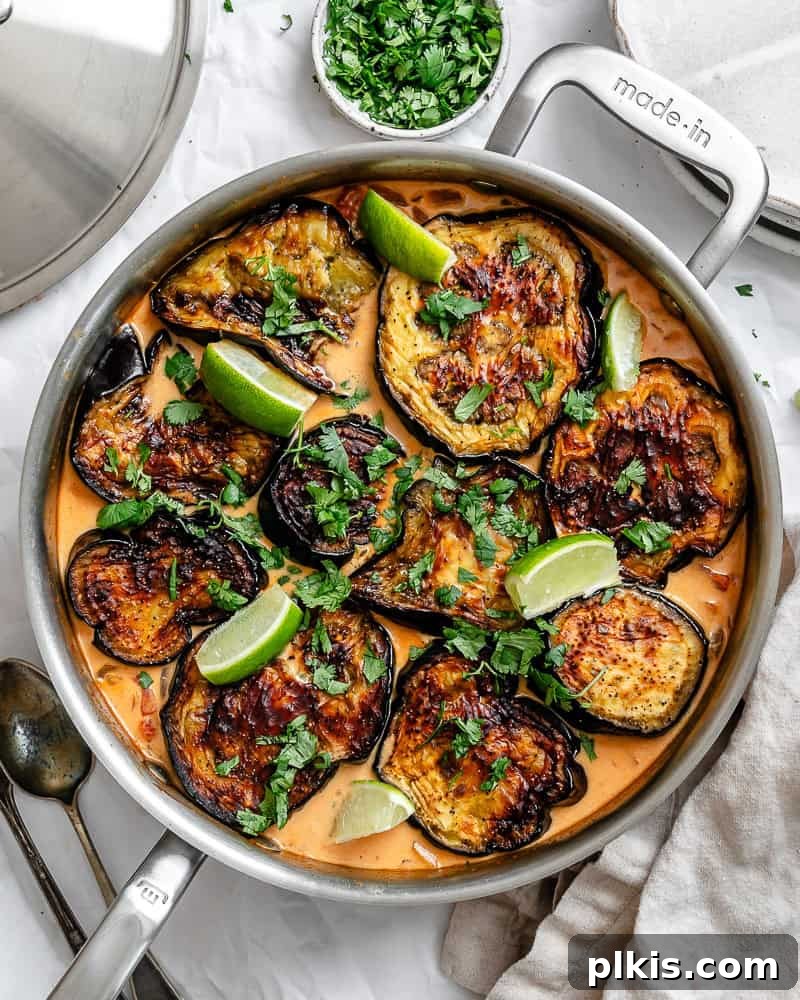
Why You’ll Love This Easy Vegan Eggplant Curry Recipe
This isn’t just another curry recipe; it’s a celebration of vibrant flavors and wholesome ingredients. Eggplant, often called ‘aubergine’ in many parts of the world, transforms into a melt-in-your-mouth creamy delight when cooked correctly. Its unique ability to absorb surrounding flavors makes it an ideal star for rich, savory dishes like this curried eggplant. We’ve mastered the art of preparing eggplant to achieve that perfect tender texture, soaking up every nuance of the aromatic sauce.
Our method involves roasting eggplant slices until they achieve a beautiful caramelization and a slight char, enhancing their natural sweetness and adding depth. These perfectly prepared aubergine pieces are then lovingly folded into a lusciously sweet, savory, and perfectly spiced tomato and coconut milk curry sauce. The addition of chickpeas not only boosts the fiber and plant-based protein content but also adds a delightful textural contrast, making this dish incredibly nutritious and profoundly satisfying.
What truly sets this quick eggplant curry apart is its simplicity. Unlike many traditional Indian curry recipes that can be time-consuming, this version leverages the convenience of curry paste or powder and minimal, budget-friendly ingredients. The result is a flavor-packed, meat-free meal that’s ideal for busy weeknights when you’re craving comforting, hearty food without the fuss. Furthermore, it’s excellent for meal prep, allowing you to enjoy delicious, homemade vegan meals throughout the week. This Indian-inspired eggplant curry is a versatile and freezer-friendly option, ensuring you always have a wholesome meal within reach.
If you’re eager to explore more delightful plant-based curry dishes, we highly recommend trying our Easy Chickpea Lentil Curry for another protein-packed meal, or indulge in the rich creaminess of our Creamy Curry Pasta (Vegan) for a fusion twist.
Key Ingredients for Your Plant-Based Eggplant Curry
Crafting this incredible coconut eggplant curry requires a selection of readily available ingredients that come together to create a symphony of flavors. While the full list of ingredients, precise quantities, and potential substitutes can be found in the detailed recipe card below, here’s a quick overview of what you’ll need to gather:
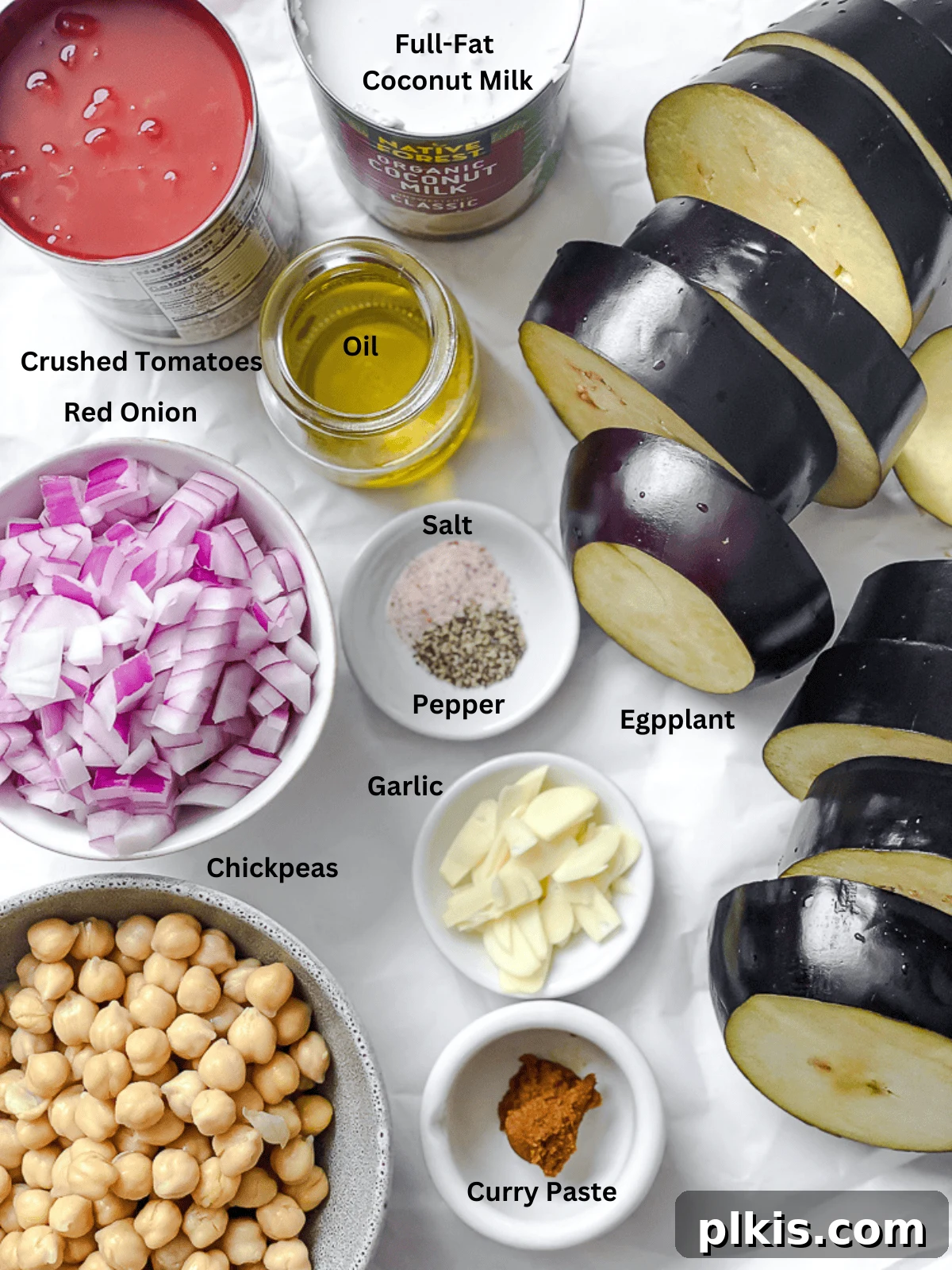
Pro Tip for Selecting Eggplant: When choosing eggplant, look for ones that are smooth and shiny with unwrinkled skin. A good eggplant should also feel heavy for its size, indicating freshness and moisture content. Avoid eggplants with soft spots or blemishes.
Central to our curry are two medium eggplants, which will be sliced and roasted to perfection. Olive oil, salt, and pepper are essential for seasoning the eggplant before roasting, creating a flavorful base. For the aromatic curry sauce, you’ll need a red onion, finely diced, and fresh garlic cloves, sliced for a robust flavor. The heart of the curry’s taste comes from curry paste (or powder), allowing you to adjust the spice level to your preference. Canned crushed tomatoes and full-fat coconut milk create the rich, creamy sauce, while canned garbanzo beans (chickpeas) add a wonderful texture and protein boost. Optional garnishes include fresh cilantro and lime wedges to brighten the flavors.
Recipe Customization and Variations to Explore
One of the beauties of this vegan eggplant curry is its adaptability. Feel free to experiment with these variations to tailor the dish to your taste and pantry availability:
- Spice Profile Enhancement: To add even more depth and traditional Indian flair, consider incorporating other ground spices. A pinch of cumin, paprika, turmeric, and/or ground coriander can dramatically enhance the aroma and flavor. Start with small amounts, like a quarter teaspoon, and adjust to your taste preferences.
- Aromatic Curry Leaves: For an authentic touch, simmer 1-3 fresh curry leaves in the curry sauce. Their distinctive, nutty aroma will infuse the dish beautifully. Remember to remove them before serving, or leave them for a rustic presentation.
- Turn Up the Heat: If you crave a spicier kick, introduce some chili flakes, a dash of chili powder or cayenne powder, or finely minced fresh chili pepper (such as a bird’s eye chili or serrano). Adjust the quantity according to your desired heat level.
- Balancing Acidity with Sugar: Depending on the acidity of your tomatoes and curry paste, you might find the sauce benefits from a touch of sweetness. A small amount of sugar (granulated, brown, or even a natural sweetener like maple syrup) can help balance the flavors in this rich aubergine tomato curry.
- Hearty Potato Addition: For an extra-filling meal, add cubed potatoes to the curry. Both regular potatoes (like Yukon Gold or Russet) and sweet potatoes work wonderfully, making a super hearty curried eggplant and potatoes dish. Add them with the chickpeas and coconut milk, ensuring they cook until tender.
- Vegetable Power-Up: Easily bulk up this aubergine curry recipe and boost its nutritional value by incorporating other vegetables. Cubed butternut squash, florets of cauliflower, sliced bell peppers, or zucchini can be excellent additions. Add harder vegetables earlier in the cooking process to ensure they become tender.
- Thai Curry Twist: For a different flavor profile, swap the Indian curry paste for a Thai red or green curry paste. This will introduce distinct Southeast Asian notes, creating a uniquely delicious Thai-inspired eggplant curry. Be mindful of the spice level of Thai pastes, which can vary significantly.
Step-by-Step Guide: How to Make Curried Eggplant and Chickpeas
Creating this delightful eggplant and chickpea curry is a straightforward process, broken down into simple, easy-to-follow steps. Precision in preparing the eggplant and layering the flavors is key to achieving the perfect result.
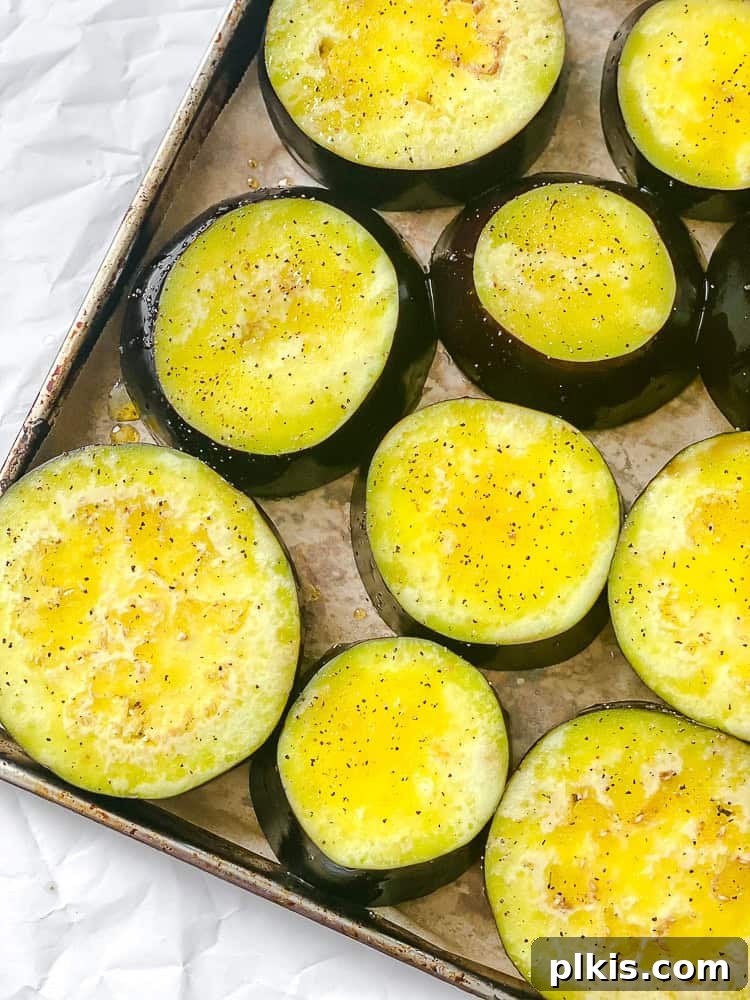
Step 1: Roast the Eggplant. Begin by preheating your oven to 450°F (230°C). While the oven heats, slice two medium eggplants into approximately 2-inch thick round slices. Arrange these slices in a single layer on a large baking tray. In a small bowl, combine ¼ cup of olive oil with 1 teaspoon of salt and ½ teaspoon of pepper. Evenly brush both sides of the eggplant slices with this seasoned oil. Transfer the tray to the preheated oven and roast for 15-20 minutes, or until the eggplant is tender, lightly charred, and beautifully caramelized. Once done, remove them from the oven and set aside.
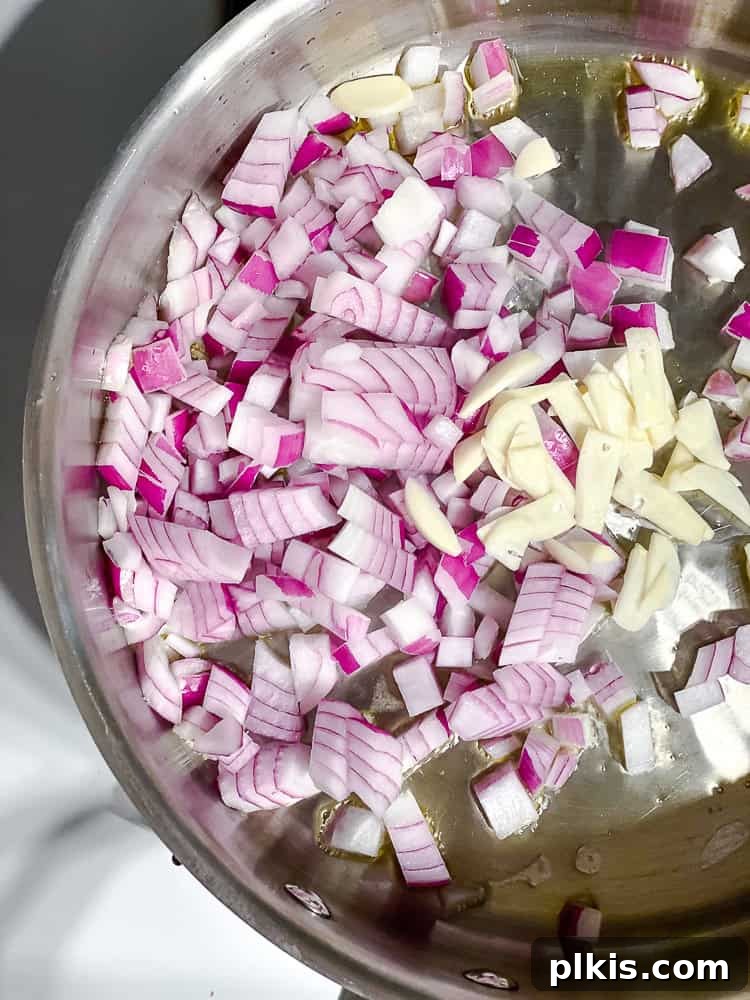
Step 2: Sauté the Aromatics. While the eggplant is roasting, heat 2 tablespoons of olive oil in a large, lidded saucepan or Dutch oven over medium heat. Add the diced red onion and sliced garlic cloves to the hot oil. Sauté for 4-5 minutes, stirring occasionally, until the onions are softened and translucent, and the garlic is fragrant and lightly charred around the edges. This step is crucial for building a flavorful base for your curry.
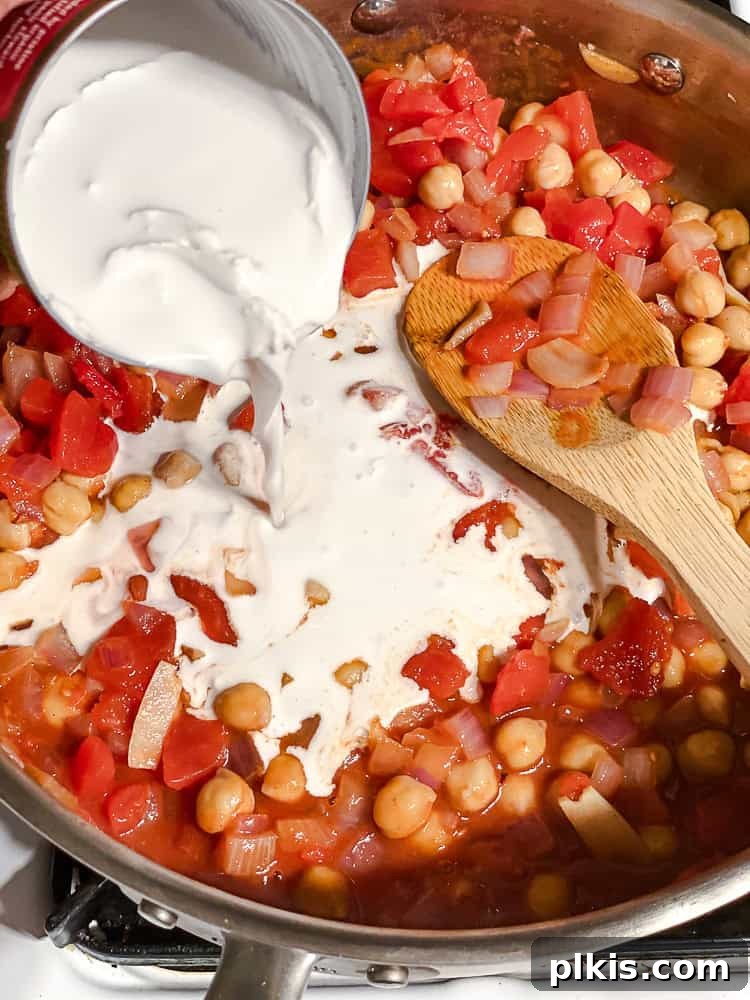

Step 3: Build the Curry Sauce. Stir in 1 teaspoon of curry paste (or powder) with the sautéed aromatics and cook for about 20 seconds, allowing the spices to bloom and become fragrant. Then, add one 15-ounce can of crushed tomatoes and one 15-ounce can of full-fat coconut milk to the pan. If you’re using chickpeas, stir in one 15-ounce can of drained garbanzo beans at this point. Bring the mixture to a boil, then reduce the heat to a gentle simmer. Cook for 20 minutes, stirring occasionally to prevent sticking, until the sauce has thickened slightly and the flavors have melded beautifully. This should coincide with your eggplant finishing roasting.
Step 4: Combine Eggplant with Curry. Once the roasted eggplant slices are ready, carefully transfer them into the simmering curry sauce in the pan. Arrange them in a single layer as much as possible, though it’s perfectly fine if they are tightly packed. The goal is for them to bathe in the sauce. Resist the urge to aggressively stir or flip them; gentle handling will help maintain their shape and delicate texture as they absorb the curry’s rich flavors.
Helpful Hint: For smaller portions or easier serving, you can optionally cut the roasted eggplant slices into halves or quarters before adding them to the curry. This can also make it easier for younger eaters or those who prefer smaller bites.
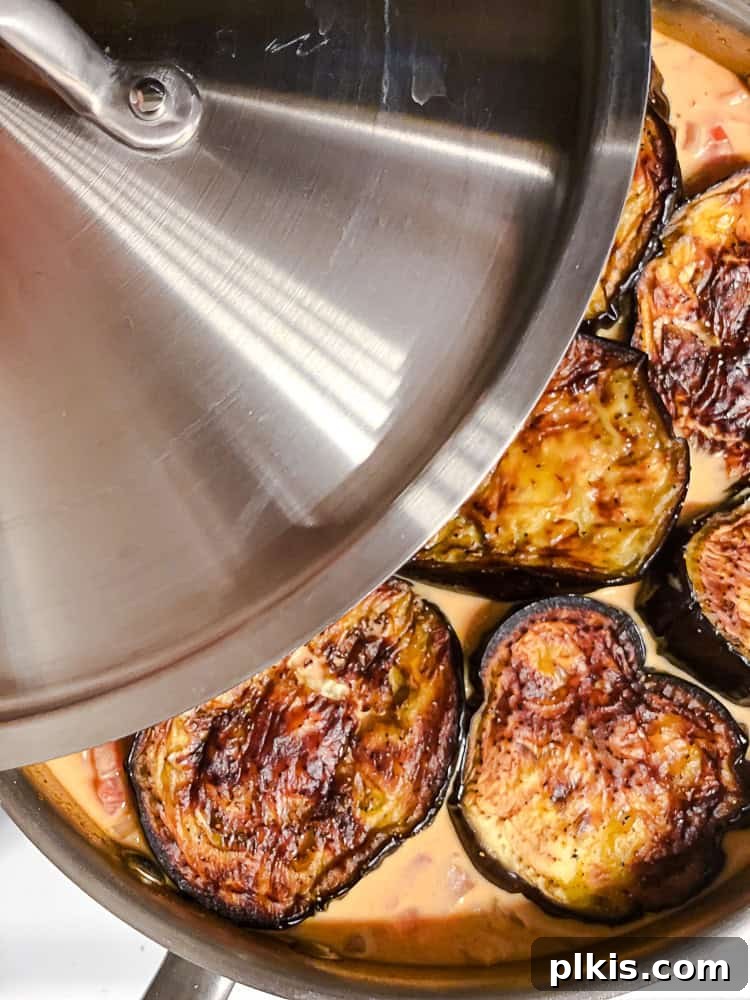
Step 5: Final Simmer and Serve. Cover the pan with its lid and let the eggplant curry gently simmer for another 5 minutes on low heat. This final short simmer allows the roasted eggplant to truly meld with the sauce. After 5 minutes, remove the pan from the heat, keeping the lid on, and let it sit undisturbed for an additional 10 minutes. This resting period is crucial; it allows the eggplant to fully absorb the rich flavors of the curry and finish cooking to a silky, tender perfection. Finally, remove the lid, give it a gentle stir, and serve your aromatic curried eggplant. For an added touch of freshness and zest, optionally garnish with fresh cilantro leaves and vibrant lime wedges – Enjoy this comforting and delicious meal!
Important Check: Always remove the lid and test the eggplant for doneness to ensure it meets your preferred texture. If you desire even softer, creamier eggplant, simply cook it for a few more minutes, ensuring it doesn’t become mushy.
Frequently Asked Questions (FAQs) About Eggplant Curry
A: No, it’s generally not necessary to peel eggplant for this curry. The skin helps the eggplant slices hold their shape during roasting and simmering, preventing them from becoming too mushy. Moreover, the skin contains beneficial nutrients and adds a slight textural element. However, if you have a strong aversion to the texture of eggplant skin, or if you’re using a very large, older eggplant with tough skin, you are welcome to peel it before slicing.
A: Yes, pan-frying the eggplant is an alternative if you don’t want to use the oven or prefer a different texture. You will likely need to pan-fry the eggplant in two or more batches to avoid overcrowding the pan, which can lead to steaming instead of browning. Heat a tablespoon or two of oil in a large skillet over medium-high heat and cook the eggplant slices until they are tender and golden brown on both sides. Be mindful that pan-frying can absorb more oil than roasting.
A: Modern eggplants are bred to be less bitter, so salting (sweating) them is often optional. However, if you’re concerned, you can slice the eggplant, sprinkle liberally with salt, let it sit for 30 minutes to draw out moisture and bitterness, then rinse thoroughly and pat dry before roasting. Roasting also helps to mellow any potential bitterness. Additionally, ensuring a balanced sauce with a touch of sweetness can counteract bitterness.
A: For the creamiest and most flavorful curry, it is highly recommended to use full-fat canned coconut milk. The higher fat content contributes to a rich, velvety texture and deepens the overall flavor profile of the curry. Light coconut milk can be used for a lower-calorie option, but it will result in a thinner sauce and a less indulgent taste.
Expert Tips for the Best Eggplant Curry
Elevate your Indian-inspired eggplant curry with these expert tips, ensuring every batch is exceptionally delicious and perfectly textured:
- Bloom Your Spices for Deeper Flavor: To unlock the full aromatic potential of your curry paste or powder, always sauté it briefly with the aromatics (onions and garlic) before adding any liquid. Cook it for about 20-30 seconds until you can smell its fragrant essence. This process, known as “blooming,” intensifies the spices’ flavors and creates a richer, more complex curry base.
- Adjust the Texture to Your Liking: The texture of your eggplant curry is entirely customizable. If you prefer smaller, more integrated pieces of eggplant, feel free to chop them more finely after roasting before adding them to the sauce. For a thicker, heartier sauce, consider mashing a portion of the cooked chickpeas directly into the curry. This will naturally thicken the sauce and add a lovely creamy texture without needing additional thickeners.
- Always Tweak to Taste: Culinary masterpieces are often the result of careful tasting and adjustment. After your eggplant curry has simmered and rested, always taste it. If you desire a stronger curry flavor, add a little more curry paste or powder, dissolving it completely. Balance the sweetness, saltiness, and acidity until it perfectly suits your palate. A squeeze of lime at the end can also brighten all the flavors.
- Don’t Overcrowd the Baking Sheet: When roasting the eggplant, ensure the slices are arranged in a single layer with a little space between them. Overcrowding the baking sheet will cause the eggplant to steam rather than roast, preventing it from achieving that desirable caramelized, lightly charred exterior and tender interior.
- Embrace the Resting Period: The final 10-minute resting period with the lid on is not just a suggestion; it’s a critical step. During this time, the eggplant continues to gently cook and, more importantly, absorbs the robust flavors of the curry sauce, resulting in a more harmonious and deeply flavored dish.
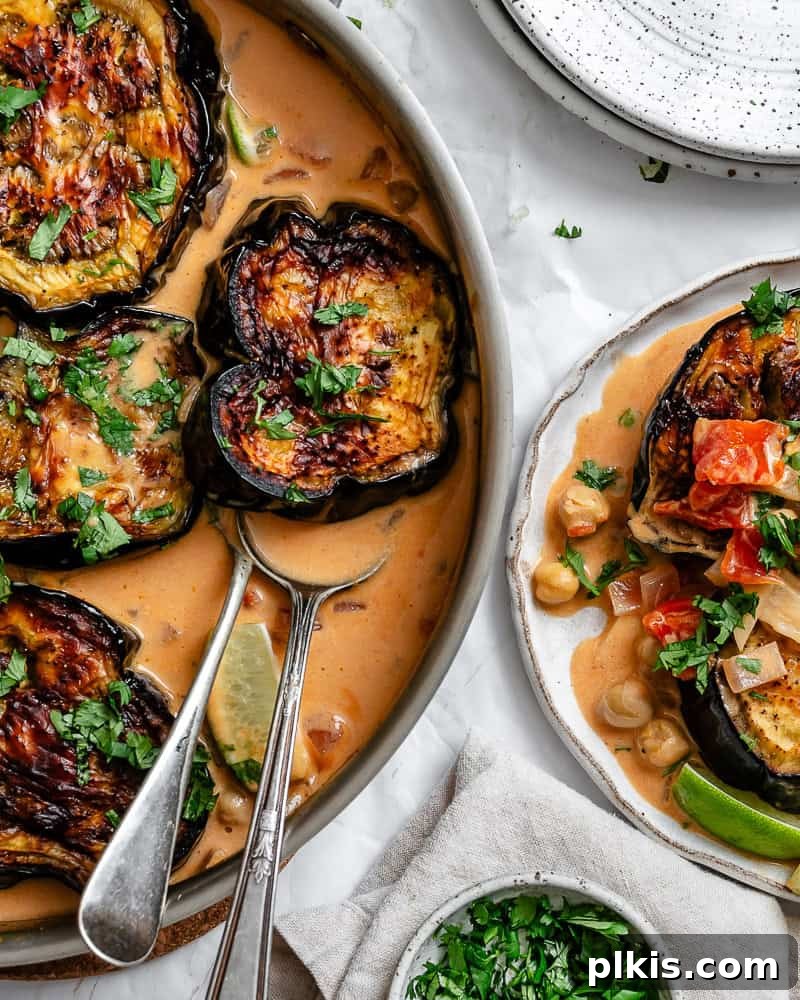
Serving Suggestions for Your Vegan Eggplant Curry
This creamy, comforting vegan eggplant curry is incredibly versatile and pairs wonderfully with a variety of sides, creating a complete and satisfying meal. Here are some of our favorite ways to enjoy this delicious dish:
- Fluffy Rice: The classic companion for any curry! Serve it with perfectly steamed white rice, wholesome brown rice (learn how to cook brown rice for ideal texture), fragrant basmati rice, or even a lighter cauliflower rice for a low-carb option. For an ancient grain alternative, quinoa also works beautifully (our complete guide to quinoa can help you perfect it).
- Indian Breads: Scoop up every last drop of the rich sauce with warm, soft Vegan Naan bread, traditional roti, or wholesome chapati. These flatbreads are perfect for soaking up the aromatic flavors.
- Refreshing Side Salads: Cut through the richness of the curry with a simple, crisp side salad. Options like a healthy carrot raisin salad or a vegan broccoli salad add freshness and a delightful crunch.
- Cooling Vegan Raita: A cool and creamy vegan cucumber raita provides a fantastic contrast to the warm, spiced curry. Its refreshing qualities balance the heat and richness perfectly.
- Sautéed Greens: A quick side of sautéed spinach or kale adds vibrant color and a boost of nutrients, complementing the curry without overpowering its flavors.
- Additional Roasted Vegetables: Enhance the vegetable medley by serving the curry alongside more roasted vegetables. Oven-charred broccoli, tender roasted cauliflower, or crispy spice-roasted okra can add more texture and flavor dimensions to your meal.
Storage and Meal Prep Tips for Eggplant Curry
This quick eggplant curry is an excellent candidate for meal prepping, as its flavors tend to deepen and meld even further after a day or two. Proper storage ensures you can enjoy delicious, ready-to-eat meals throughout the week.
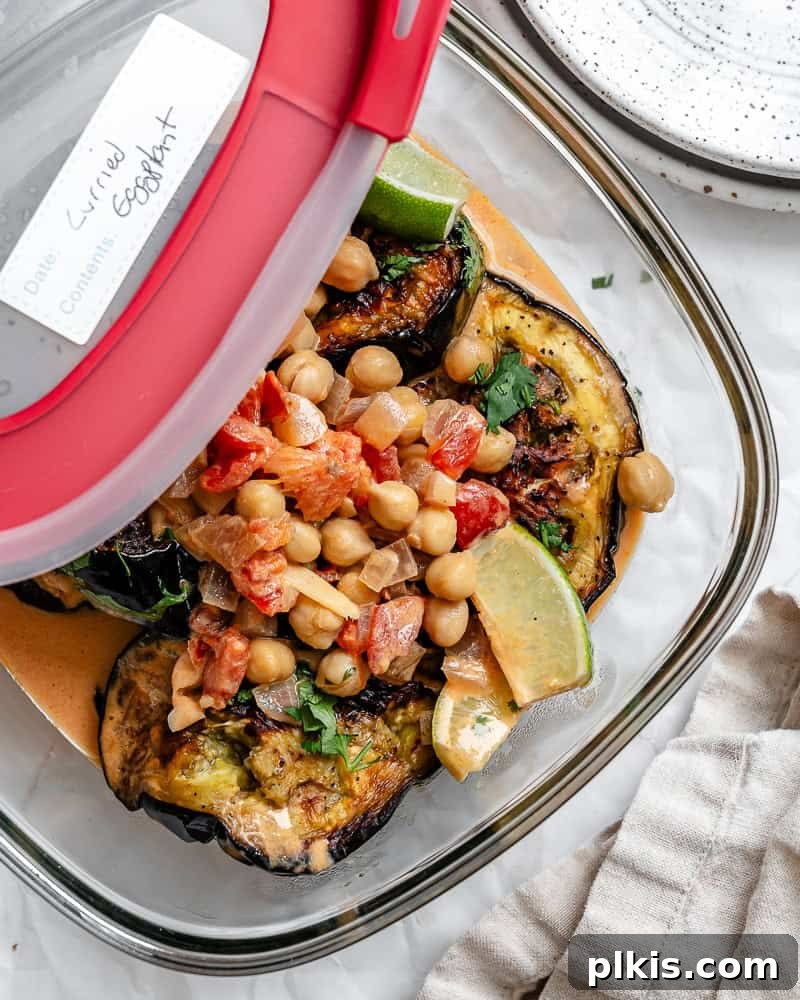
Store any leftover aubergine curry in an airtight container in the refrigerator for 4-5 days. Ensure it cools completely before refrigerating to maintain freshness and prevent bacterial growth. The curry’s consistency might thicken slightly in the fridge, which is perfectly normal.
For longer storage, this vegan eggplant curry can also be technically frozen. Transfer cooled curry to a freezer-safe container, leaving a little headspace, and freeze for up to 3 months. Be aware that upon thawing (preferably overnight in the refrigerator), the eggplant will likely have a softer texture than when freshly made. While still delicious, it won’t retain the same firm bite as freshly roasted eggplant. The sauce, however, freezes and thaws beautifully, retaining its rich flavor.
To reheat your curry, you can use either a microwave or a stovetop. If using a microwave, heat in short intervals, stirring in between, until heated through. On the stovetop, gently reheat over medium-low heat in a saucepan. If the curry has thickened too much during storage, add an extra splash of water or a plant-based milk (such as unsweetened almond or coconut milk) to bring it back to your desired creamy consistency. Stir well until uniformly warm and flavorful.
Quick Eggplant Curry (Vegan & Indian-Inspired)
This delightful 40-minute vegan eggplant curry with chickpeas is a comforting, Indian-inspired dish bursting with flavor. Naturally meat and dairy-free, it’s incredibly satisfying and surprisingly easy to prepare, making it perfect for busy weeknights.
Prep Time: 15 mins
Cook Time: 25 mins
Total Time: 40 mins
Yields: 4 to 6 servings

Print Recipe
Equipment
- Knife set
- Measuring spoons
- Baking sheet
- Large lidded saucepan or Dutch oven
Ingredients
- 2 medium eggplants, sliced into 2-inch round slices
- ¼ cup olive oil, plus 2 tablespoons for the sauce
- 1 teaspoon salt
- ½ teaspoon pepper
- 1 red onion, diced
- 2 garlic cloves, sliced
- 1 teaspoon curry paste (or powder), plus more to taste
- 1 (15-ounce) can crushed tomatoes in their juices
- 1 (15-ounce) can full-fat coconut milk
- 1 (15-ounce) can garbanzo beans (chickpeas), drained and rinsed
- Fresh cilantro for garnish (optional)
- Lime wedges for garnish (optional)
- Cooked rice, for serving (optional)
Instructions
- Prepare for Roasting: Preheat your oven to 450°F (230°C). Line a large baking sheet with a silicone mat or parchment paper.
- Season Eggplant: Place the sliced eggplant rounds on the prepared baking sheet in an even layer. In a small bowl, whisk together ¼ cup olive oil, 1 teaspoon salt, and ½ teaspoon pepper. Evenly brush both sides of the eggplant with this mixture.
- Roast Eggplant: Roast the eggplant for 15 to 20 minutes, or until it is golden, soft, and lightly caramelized but not mushy. Remove from the oven and set aside.
- Sauté Aromatics: While the eggplant roasts, heat the remaining 2 tablespoons of olive oil in a large lidded saucepan or Dutch oven over medium heat. Add the diced red onion and sliced garlic, and sauté for 5 minutes until softened and lightly charred.
- Build the Sauce: Stir in 1 teaspoon of curry paste and cook for 20 seconds until fragrant. Add the crushed tomatoes, full-fat coconut milk, and drained garbanzo beans. Stir until well combined. Bring the sauce to a boil, then reduce the heat to a gentle simmer. Cook for 20 minutes, stirring occasionally, until the sauce thickens and flavors deepen, coinciding with the eggplant finishing roasting.
- Combine & Simmer: Once the roasted eggplant is ready, carefully transfer each slice into the simmering curry sauce in the pan. Arrange them in a single layer as best as possible; it’s fine if they are snugly packed. Avoid vigorous stirring at this stage to preserve their shape.
- Final Rest: Cover the pan with a lid and cook on low heat for 5 minutes. Then, turn off the heat and allow the curry to sit undisturbed, still covered, for 10 minutes. This resting period allows the eggplant to fully absorb the sauce’s flavors and achieve a creamy texture.
- Serve: Remove the lid, gently test the eggplant for your desired tenderness (cook a bit longer if you prefer it softer), and serve the aromatic curry immediately. Optionally garnish with fresh cilantro and a squeeze of lime juice, ideally over a bed of fluffy rice.
Notes
- For Deeper Flavor: Always sauté your curry paste or powder with the aromatics (onion, garlic) for 20-30 seconds before adding liquids. This “blooming” process significantly enhances the overall flavor profile.
- Adjusting Texture: If desired, you can mash a portion of the cooked chickpeas into the sauce for a naturally thicker and creamier consistency.
- Taste and Adjust: After simmering, taste the curry and adjust seasonings. Add more curry paste/powder for intensity, salt for balance, or a touch of sugar to counteract acidity if needed.
Nutrition Facts (per serving)
- Calories: 610 kcal
- Carbohydrates: 57 g
- Protein: 16 g
- Fat: 40 g
- Saturated Fat: 22 g
- Polyunsaturated Fat: 3 g
- Monounsaturated Fat: 12 g
- Sodium: 750 mg
- Potassium: 1434 mg
- Fiber: 18 g
- Sugar: 19 g
- Vitamin A: 576 IU
- Vitamin C: 20 mg
- Calcium: 141 mg
- Iron: 9 mg
Additional Information
- Author: Toni Okamoto
- Course: Dinner
- Cuisine: Indian
- Method: Oven, Stovetop
- Diet: Vegan, Plant-Based, Dairy-Free, Meat-Free
Tried this recipe?
We’d love to see your creations! Please tag us on Instagram at @PlantBasedOnABudget!