
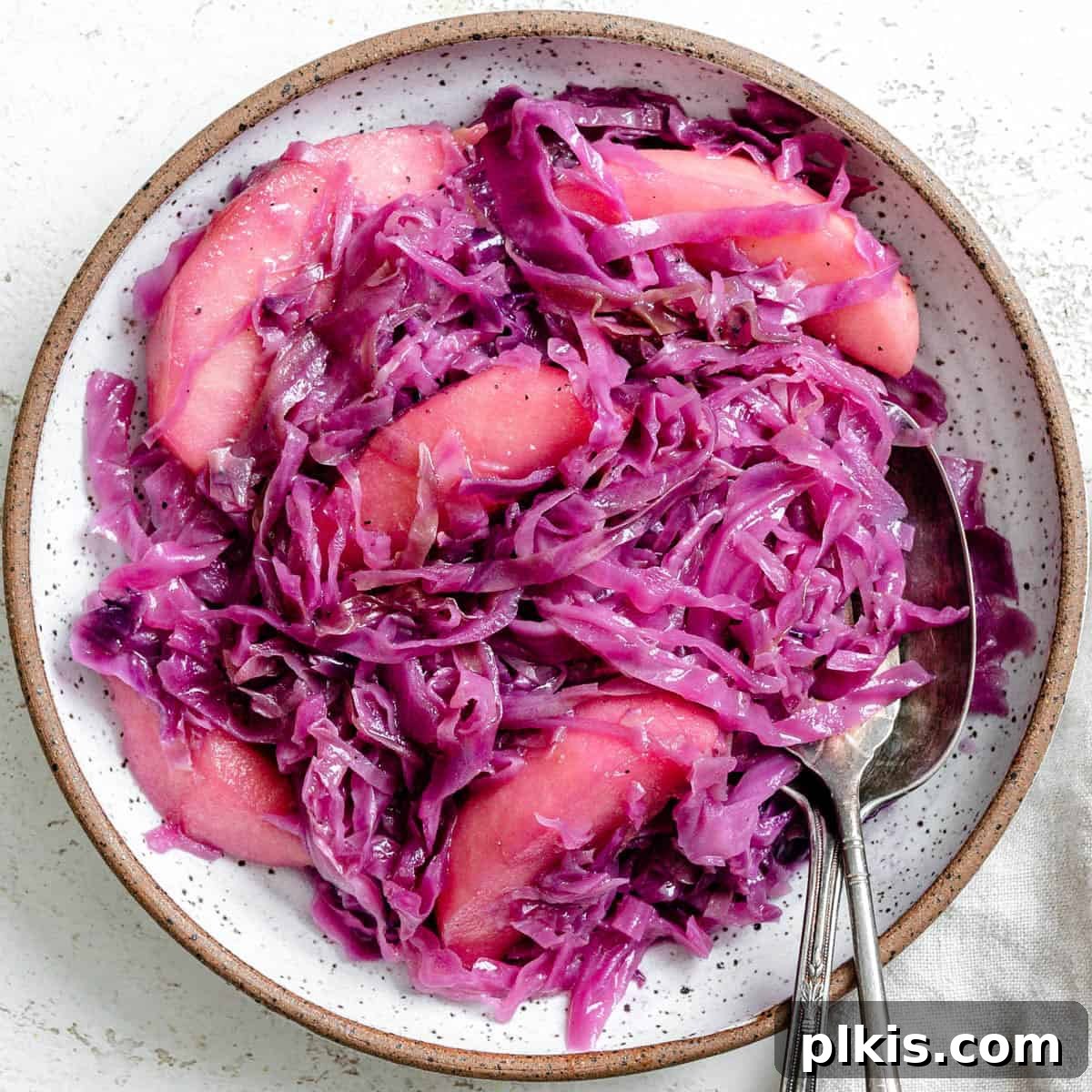
Delight in the rich heritage of German cuisine with this classic German-inspired red cabbage, known as Rotkohl. This exceptional side dish, featuring tender red cabbage braised with crisp apples, strikes a perfect balance between sweet and sour notes. Its vibrant, glossy appearance and deeply satisfying flavor make it an indispensable addition to any hearty German-themed meal or festive holiday gathering. Whether you’re celebrating Oktoberfest or simply seeking a comforting, nutritious side, this Rotkohl with apples is sure to impress.
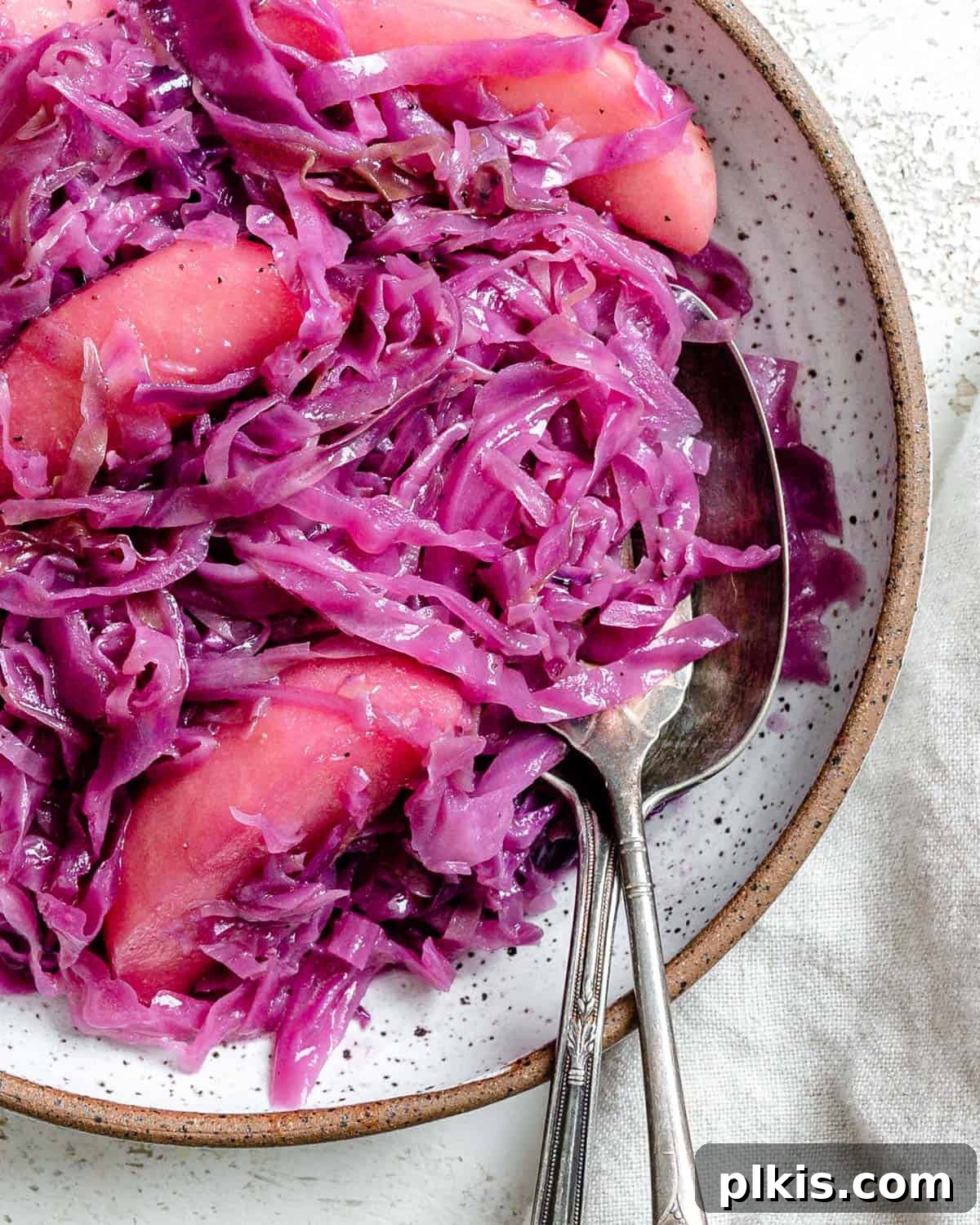
Why This Sweet and Sour Red Cabbage Recipe Will Become Your Favorite
If you thought simple sautéed red cabbage was delicious, prepare to be amazed by this classic German-inspired red cabbage and apples recipe! Known as Rotkohl in northern Germany and Blaukraut in the south, this timeless dish is celebrated for its exquisite balance of sweet and tangy flavors. Gently braised with fresh apples, apple cider vinegar, and a touch of brown sugar, the cabbage transforms into an irresistibly tender side with a rich, vibrant, and glossy glaze.
This red cabbage with apples isn’t just incredibly flavorful; it’s also remarkably easy to make. Simply combine all the ingredients in one pot and let it simmer, allowing the flavors to meld beautifully. It’s an affordable, naturally vegan, and gluten-free dish that’s packed with essential nutrients. Red cabbage is a powerhouse of fiber, vitamins (especially C, K, and B6), and antioxidants, making this Rotkohl as nutritious as it is delightful. Enjoy it as the perfect accompaniment for cozy fall meals, festive gatherings like Oktoberfest, Thanksgiving, or Christmas dinner, or simply as a healthy everyday side.
One of the best aspects of this recipe is its efficiency: it cooks in just about 30 minutes, and like many braised dishes, it tastes even better the next day! This makes it an ideal make-ahead side dish for busy weeknights or when entertaining guests. Its versatility means it pairs wonderfully with a wide array of main courses, from traditional German fare to modern plant-based meals.
Craving more affordable and nutrient-rich cabbage dishes? Explore our other fantastic recipes such as a comforting vegan cabbage soup, rich braised cabbage, or a refreshing crunchy Thai peanut salad.
Essential Ingredients for Perfect Rotkohl
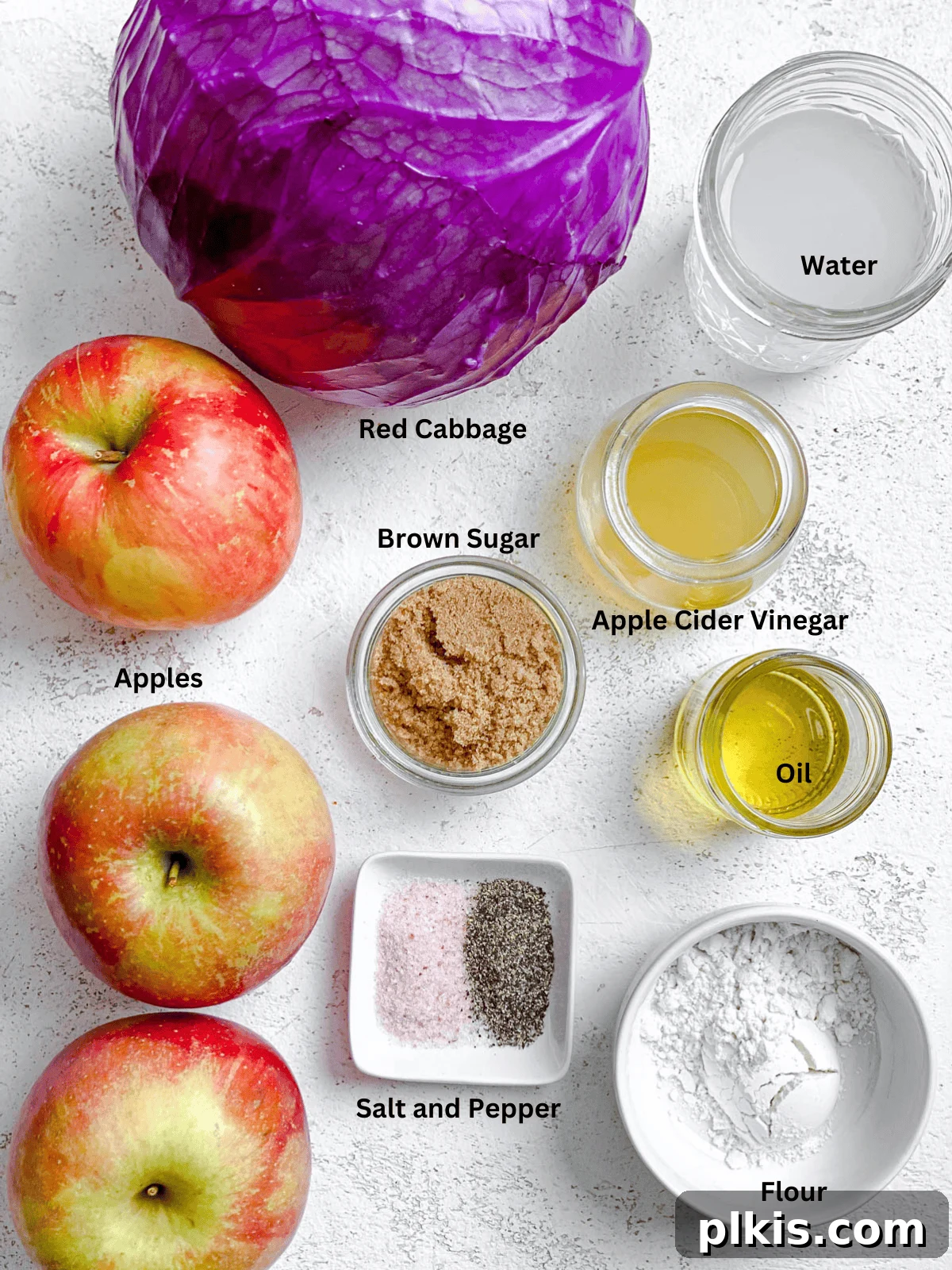
Crafting authentic German red cabbage relies on a few simple yet crucial ingredients. The star, of course, is fresh red cabbage, which gives the dish its beautiful color and hearty texture. Apples are indispensable, providing natural sweetness and a delicate tartness that complements the cabbage beautifully. Apple cider vinegar and brown sugar are key to achieving the signature sweet and sour flavor profile, while a neutral oil ensures a smooth texture. A touch of flour helps thicken the sauce into a luscious glaze, and caraway seeds, though optional, add an authentic, earthy German aroma. Salt and black pepper enhance all the flavors, bringing the dish to life. For a full list of ingredients and precise measurements, please refer to the comprehensive recipe card below.
Exciting Recipe Variations to Explore
While the classic German red cabbage recipe is perfect on its own, don’t hesitate to customize it to your liking. These variations can add extra layers of flavor and texture, making the dish uniquely yours:
- Currant Jelly or Fruit Preserves: For an even deeper sweet and tangy profile, incorporate 1-2 tablespoons of red currant jam, cherry preserves, or cranberry sauce. This easy cranberry sauce with orange juice, for example, would be a delightful addition, imparting a festive and complex sweetness.
- Aromatic Spices and Herbs: Elevate the aromatic depth by adding 1-2 juniper berries or bay leaves during the braising process. These traditional German accents infuse a subtle, woodsy note. Alternatively, introduce a pinch of warm spices like allspice, cardamom, or cinnamon for a comforting, festive twist.
- Caramelized Onion: For an extra layer of savory sweetness and depth, sauté thinly sliced white or yellow onion until lightly caramelized before adding the cabbage and apples. This step builds a robust flavor base for the Rotkohl.
- Dried Fruit Infusion: Stir in some dried fruits such as raisins, cranberries, or currants during the last 10 minutes of cooking. Their concentrated sweetness and chewy texture provide a wonderful contrast to the tender cabbage and apples.
- Crunchy Toppings: Just before serving, sprinkle your Rotkohl with toasted nuts or seeds for a delightful textural crunch. Toasted almonds, walnuts, sunflower seeds, or pepitas are all excellent choices that add both flavor and visual appeal.
- Swap out Vinegar: While apple cider vinegar is traditional, you can experiment with red wine vinegar for a slightly different tang, or even balsamic vinegar for a richer, sweeter finish.
Simple Steps to Make German-Inspired Red Cabbage and Apples
Creating this flavorful German red cabbage with apples is a straightforward process, making it accessible even for novice cooks. Follow these easy steps to achieve a perfectly tender and sweet-sour side dish:
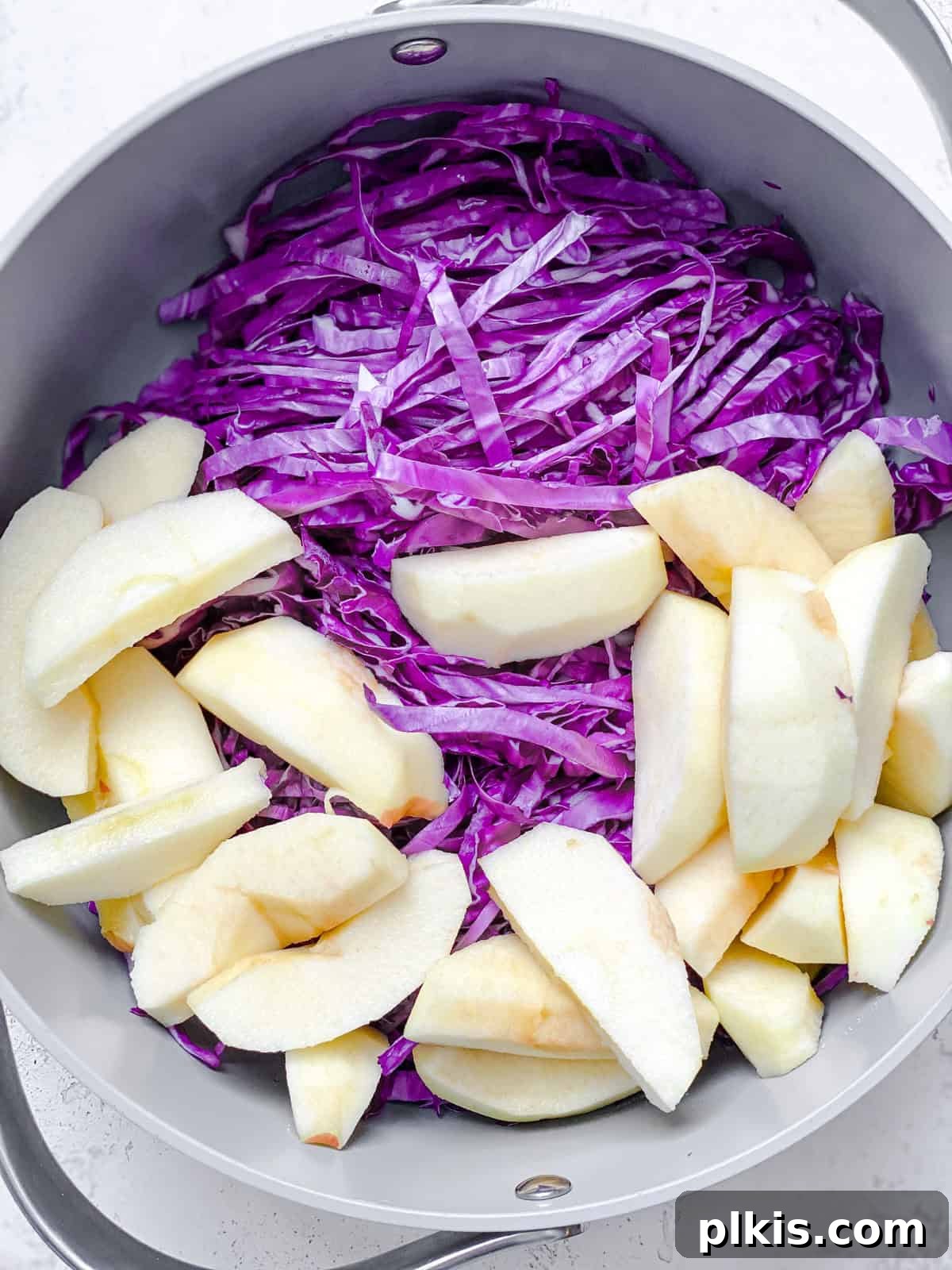
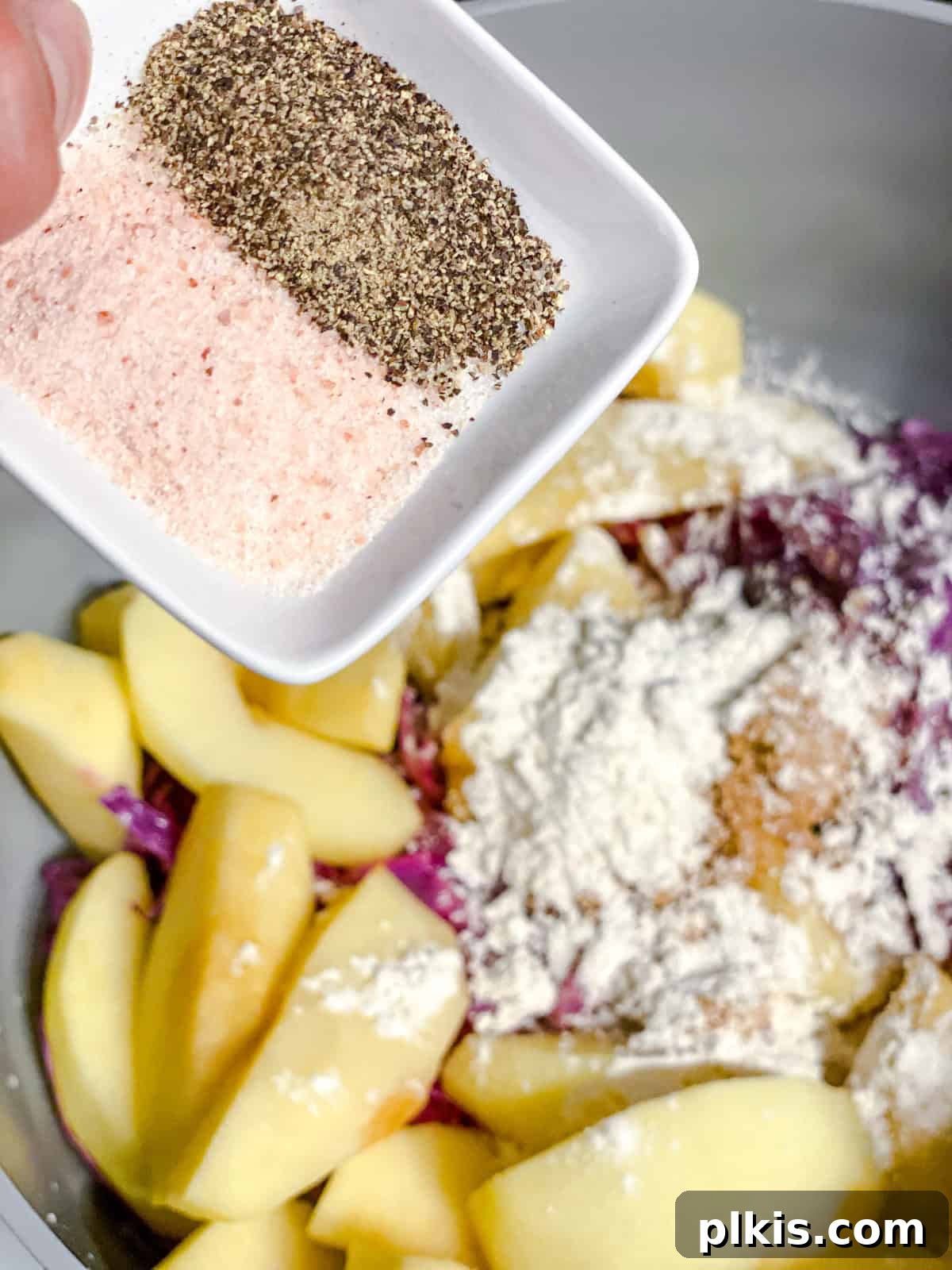
Step 1: Prepare and Soften the Cabbage & Apples. Begin by thoroughly rinsing the red cabbage. Cut it in half, then quarter it, and carefully core out the tough stem. Using a sharp knife or a mandoline, thinly slice the cabbage into uniform ⅛-¼-inch shreds. Next, peel, core, and finely slice or shred your apples. Heat a large, lidded pot over medium heat. Once hot, add the shredded cabbage, sliced apples, and the measured boiling water. Cover the pot and allow it to cook for 10 minutes, or until the cabbage just begins to soften, releasing some of its vibrant color.
Step 2: Create the Flavorful Sauce and Braise. While the cabbage is softening, prepare your sweet and sour sauce. In a small bowl, whisk together the neutral oil, apple cider vinegar, all-purpose flour, brown sugar, salt, freshly ground black pepper, and caraway seeds (if you are using them). Once the cabbage has softened, pour this well-combined sauce mixture evenly over the red cabbage and apples in the pot. Stir everything thoroughly to ensure the cabbage and apples are well coated. Continue to cook, uncovered, for an additional 20 minutes, or until the cabbage is wonderfully tender and the rich, complex flavors have fully melded together, stirring occasionally to prevent sticking. Serve your delicious German red cabbage warm and enjoy!
Please note that cooking times can vary. Depending on your pan size, the heat intensity, and the thickness of your cabbage shreds, this dish may take up to an hour to reach desired tenderness.
Frequently Asked Questions About Rotkohl
Flour in this recipe serves as a thickening agent, helping to create that desirable glossy, glaze-like consistency for the sauce. However, if you prefer a thinner sauce or are looking for a gluten-free option, you can certainly omit the flour. Alternatively, you can use a gluten-free flour blend or a cornstarch slurry (1 tablespoon cornstarch mixed with 2 tablespoons cold water) added at the end of cooking for thickening.
Interestingly, “German red cabbage” is essentially the same beloved dish known by different names depending on the region. In southern Germany, it’s commonly referred to as Blaukraut, which translates to “blue cabbage,” reflecting the tendency of red cabbage to appear more bluish when cooked in alkaline conditions. In central Germany, it’s called Rotkraut, meaning “red cabbage.” And in northern Germany, including Berlin, it’s most often known as Rotkohl, also translating to “red cabbage.” Regardless of the name, the ingredients and preparation are largely consistent, focusing on the delightful sweet and sour balance.
Absolutely, red cabbage is an incredibly healthy and nutrient-dense vegetable! It’s a humble superfood packed with numerous benefits. It’s renowned for its anti-inflammatory properties and is an excellent source of gut-friendly fiber, which aids digestion and promotes a healthy microbiome. Red cabbage is particularly rich in antioxidants and phytonutrients, including anthocyanins, which give it its vibrant color and contribute to cellular health. Furthermore, it’s loaded with essential vitamins and minerals, such as high levels of Vitamin C (boosting immunity), Vitamin K (important for blood clotting and bone health), Vitamin B6, and potassium, making it a fantastic addition to a balanced diet.
For Rotkohl, it’s best to use apples that hold their shape well when cooked and offer a good balance of sweetness and tartness. Granny Smith apples are a popular choice for their tartness, which perfectly complements the cabbage. Fuji, Honeycrisp, or Gala apples also work beautifully, contributing a sweeter note and tender texture without becoming mushy. Feel free to use a combination for a more complex flavor.
Expert Tips for the Best German Red Cabbage
Achieve Rotkohl perfection with these helpful tips and tricks:
- For Lightning-Fast Prep: While a sharp knife works wonders, a mandoline slicer will make quick work of shredding the cabbage and apples evenly and efficiently. This ensures uniform cooking and a consistent texture throughout the dish.
- Mind Your Cooking Time: The thinner you shred your cabbage, the faster it will cook. However, don’t be afraid to allow for a longer, slower braise (up to 50-60 minutes). This extended cooking time allows the flavors to deepen and meld even further, resulting in a richer and more tender Rotkohl. Adjust cooking time based on your preferred tenderness.
- Always Taste and Adjust: Towards the end of the cooking process, taste the red cabbage and adjust the seasonings to your preference. If it’s too tart, add a little more brown sugar. If it’s too sweet, a splash more vinegar will balance it out. If the flavor is too intense, a small amount of water or vegetable broth can help mellow it.
- Leftovers Are a Delight: This German-inspired red cabbage and apples dish genuinely tastes even better on day two or three. The flavors have more time to marry and deepen, making it an excellent candidate for meal prepping or enjoying as an effortless reheat meal.
- Use a Large, Heavy-Bottomed Pot: A spacious pot with a lid ensures even cooking and prevents the cabbage from overflowing, especially in the initial softening stage. A heavy bottom helps distribute heat, minimizing scorching.
- Consider Vegetable Broth: For an even richer flavor base, consider replacing some or all of the boiling water with vegetable broth, especially if you’re not adding other flavorful elements like onion or additional spices.
What To Serve With German-Inspired Red Cabbage With Apples
Traditionally, Rotkohl is a beloved companion to hearty meat dishes in Germany. However, its versatile sweet and sour profile also makes it an exceptional partner for a wide variety of plant-based options, enhancing any meal:
- Vegan German Classics: Pair it with savory vegan schnitzel, hearty plant-based bratwurst, or comforting stuffed cabbage rolls for an authentic, meat-free German feast.
- Potato Perfection: The tanginess of Rotkohl cuts beautifully through rich potato dishes. Serve it alongside fluffy potato dumplings, the best vegan mashed potatoes, crispy garlic roasted baby potatoes, or fragrant rosemary roasted potatoes.
- Hearty Stews and Roasts: This red cabbage makes an excellent side for a rich vegan goulash or any festive vegan roast dinner, adding a pop of color and bright flavor that complements rich gravies and savory main courses.
- Grain Bowls and Sandwiches: Incorporate leftover Rotkohl into healthy grain bowls for a burst of flavor and nutrients, or pile it onto plant-based sandwiches and wraps for a gourmet touch.
- Other Plant-Based Proteins: It pairs wonderfully with lentil loaf, seitan roasts, mushroom steaks, or even simple pan-fried tofu.
Storage and Reheating Instructions
One of the many benefits of this German red cabbage recipe is how well it stores, with flavors often improving over time. Prepare a larger batch and enjoy it throughout the week!
Fridge: Allow the German-inspired cabbage and apples to cool completely before transferring it to an airtight container. It will keep beautifully in the refrigerator for 5-7 days. The flavors will continue to meld and deepen, making it even more delicious on subsequent days.
Freezer: For longer storage, this Rotkohl freezes exceptionally well. Once cooled, pack it into a freezer-safe container, Ziplock bag, or Stasher bag, ensuring as much air as possible is removed to prevent freezer burn. It can be stored in the freezer for up to three months. When ready to enjoy, thaw it overnight in the refrigerator. Note that the texture of the cabbage might be slightly softer after freezing and thawing.
Reheat: You can enjoy leftover German-inspired purple cabbage chilled, much like a slaw, or gently reheated. To reheat, warm it on the stovetop over medium-low heat, stirring occasionally until heated through. Alternatively, microwave it in 20-30 second increments, stirring between each interval, until it reaches your desired temperature.
Other Delicious Vegan Cabbage Recipes to Consider
Vegan Appetizers
Sautéed Red Cabbage [4 Ways]
Vegan Appetizers
Braised Cabbage
Vegan Dinners
Cabbage Bean Soup
Vegan Dinners
Vegan Cabbage Soup [Stove, IP, Crockpot]
If you tried this delicious German-inspired red cabbage recipe or any other recipe from our blog, please take a moment to leave a 🌟 star rating and share your experience in the 📝 comments below. Your feedback means the world to us!
German-Inspired Red Cabbage (Rotkohl)
Pin
Video
Equipment
-
Large Pot
-
My favorite knives
-
Measuring Cups
-
Measuring spoons
-
Wooden Spoon
-
Serving Platter
Ingredients
- 1 head red cabbage quartered, cored, and finely shredded
- 3 medium apples peeled, cored, and sliced
- ¾ cup boiling water
- 3 tablespoons neutral oil (canola, vegetable, etc.l
- ¼ cup apple cider vinegar
- 1 ½ teaspoons all-purpose flour
- ¼ cup brown sugar
- 2 teaspoons salt
- 1 teaspoon freshly ground black pepper
- 1 teaspoon caraway seeds (optional)
Instructions
-
In a large covered pot over medium heat, add the shredded cabbage and sliced apples. Pour in the boiling water, cover, and cook for 10 minutes until the cabbage begins to soften.
-
In a small bowl, whisk together the oil, apple cider vinegar, flour, brown sugar, salt, black pepper, and caraway seeds (if using).
-
Pour the mixture over the cabbage and apples, stirring to combine.
-
Cook uncovered for 20 minutes, stirring occasionally, until the cabbage is tender and the flavors have melded together.
-
Serve warm as a side dish.
Notes
-
- For quick prep: A mandoline will help prep the cabbage in no time.
-
- Cooking time varies: The thinner the shredded cabbage, the quicker the cook time, but slower cooking (50-60 minutes) can enhance flavor.
-
- Flavor to taste: At the end of the cooking process, tweak the vinegar and sugar to taste. Is it too strong? Add more water/broth.
-
- Save leftovers: German-inspired red cabbage and apple taste even better on day two!