
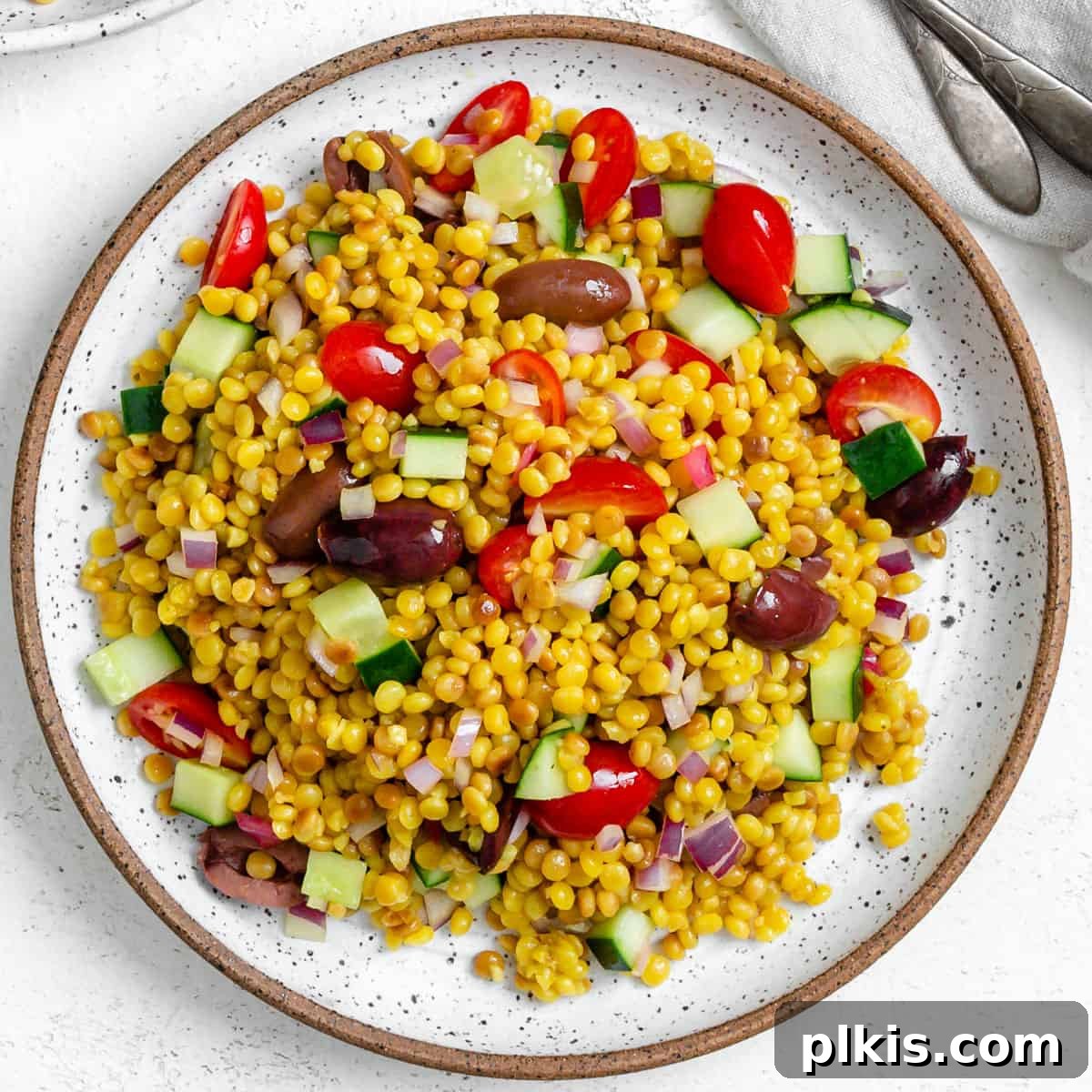
Welcome to the ultimate guide for creating a vibrant, delicious, and incredibly versatile Mediterranean Pearl Couscous Salad. This isn’t just a recipe; it’s an invitation to experience a burst of fresh flavors and delightful textures in every bite. Packed with wholesome ingredients like briny olives, juicy tomatoes, crisp cucumbers, and pungent red onions, this salad is a testament to how simple components can create culinary magic. Whether you’re seeking a healthy side dish for your next family dinner, a portable meal for picnics and barbecues, a delightful contribution to a potluck, or a nutritious addition to your lunchbox, this Mediterranean pearl couscous salad is the perfect choice.

Fresh and Flavorful Mediterranean Pearl Couscous Salad: A Culinary Gem
Many believe that achieving profound flavor requires a long list of exotic ingredients. However, this misconception is beautifully dispelled by our Mediterranean pearl couscous salad. With a carefully curated selection of just seven core ingredients, this recipe masterfully delivers an explosion of taste while remaining wonderfully minimalist. The secret lies in smart flavor pairings and a few clever techniques that amplify the natural goodness of each component.
The outcome is a salad that is not only bright and visually appealing but also remarkably light yet satisfyingly hearty. It’s so rich in flavor that a separate dressing is often unnecessary. Instead, the fresh, simple ingredients themselves do all the heavy lifting, providing tangy, savory, and crisp notes that perfectly complement the nutty, slightly chewy texture of the pearl couscous (also known as Israeli couscous or giant couscous). This robust flavor profile makes it an ideal dish for those who appreciate clean eating without compromising on taste.
Beyond its inherent deliciousness, this salad is exceptionally adaptable. It serves as a fantastic foundation for improvisation, allowing you to easily incorporate additional ingredients based on your preferences or whatever you have on hand – making it an excellent “clear the fridge” meal. Imagine adding a boost of protein with chickpeas, extra fresh vegetables for enhanced nutrition, or even a sprinkle of vegan feta cheese for an authentic Mediterranean touch. The possibilities truly are limitless.
Preparing this versatile Mediterranean couscous salad is surprisingly simple. The most challenging aspect is often the patience required for the cooked couscous to cool before integrating the fresh vegetables. Excluding this cooling period, the recipe demands only a few minutes of active preparation, making it perfect for busy weeknights. Furthermore, it yields excellent leftovers, ensuring you have healthy, flavorful meals ready for days. Naturally vegetarian, vegan, soy-free, and nut-free, this recipe caters to a wide array of dietary needs and preferences, promising a guilt-free indulgence for everyone.
Understanding Pearl Couscous: The Heart of Our Salad
Before diving into the recipe, let’s take a moment to appreciate the star ingredient: pearl couscous. Often referred to as Israeli couscous or giant couscous, these are not grains but tiny pasta spheres made from semolina flour (or sometimes whole wheat flour). Unlike traditional couscous, which is much smaller and cooks quickly, pearl couscous has a larger size, requiring a slightly longer cooking time akin to other small pasta shapes. This results in a distinctive soft yet slightly chewy texture that holds up beautifully in salads, absorbing flavors wonderfully without becoming mushy. Its subtle nutty flavor provides a perfect canvas for the vibrant Mediterranean ingredients we’ll be adding.
The Essential Ingredients and Smart Substitutes
This entire Mediterranean pearl couscous recipe shines with its reliance on just a few simple, budget-friendly ingredients. Each component plays a crucial role in building the salad’s distinct character.

- Pearl Couscous: As discussed, you’re looking for pearl couscous, also known as Israeli couscous or giant couscous. Its unique texture is key. If unavailable, orzo pasta is an excellent substitute due to its similar size and chewiness. Alternatively, regular couscous or even quinoa can be used, though the texture will be different and cooking times will need adjustment.
- Olive Oil: A staple in Mediterranean cuisine, olive oil is used for toasting the couscous and adds a foundational richness. Extra virgin olive oil will impart the most flavor. If preferred, a neutral cooking oil like avocado oil can be used.
- Vegetable Broth: Cooking the couscous in vegetable broth instead of water is one of the key “flavor hacks” for this salad. It infuses the couscous with savory depth right from the start. Use regular or reduced-sodium broth based on your dietary needs.
- Fresh Vegetables: The heart of any vibrant salad, this recipe features a classic Mediterranean vegetable medley:
- Red Onion: Adds a sharp, pungent bite and a beautiful pop of color. For a milder flavor, soak the finely diced red onion in ice water for 10-15 minutes before adding it to the salad. Shallots can also be used for a slightly sweeter, milder onion flavor.
- Greek Kalamata Olives: These add a distinctive salty, briny, and slightly fruity flavor that is quintessential to Mediterranean dishes. Pimento-stuffed olives or regular black olives can be used as alternatives, though they will alter the flavor profile slightly. Ensure they are pitted and halved.
- Cucumber: Provides a refreshing, crisp texture and a cool counterpoint to the other ingredients. English cucumbers or Persian cucumbers are often preferred for their thinner skin and fewer seeds.
- Cherry Tomatoes/Baby Plum Tomatoes: Bursting with sweet and tangy juices, these small tomatoes are perfect for salads. Halve or quarter them depending on size. Larger tomatoes can also be used, simply chop them into bite-sized pieces.
- Lemon (Optional but Recommended): A squeeze of fresh lemon juice just before serving is a game-changer. It brightens all the flavors, adds a delightful tang, and enhances the overall Mediterranean character of the salad. Don’t skip it if you can!
- Fresh Parsley (Optional but Recommended): Fresh herbs elevate any dish, and parsley is a fantastic addition to this summer couscous salad. Its fresh, slightly peppery notes complement the other ingredients beautifully. Finely chop about ¼-⅓ cup (loosely packed) and stir it in. Other fresh herbs like basil, dill, cilantro, or scallions/green onions would also work wonderfully, each adding its own unique aromatic touch.
Crafting a Delectable Dressing for Your Giant Couscous Salad
While this Mediterranean pearl couscous salad is flavorful enough to stand on its own, a simple vinaigrette can add an extra layer of sophistication and moisture, especially if you prefer a saucier salad. To create a delicious dressing, combine 2-3 tablespoons of fresh lemon juice (and optionally a touch of lemon zest for extra aromatic brightness) with 3-4 tablespoons of high-quality olive oil. Season generously with salt and freshly ground black pepper to taste.
For an even more complex flavor profile, consider these optional additions: a small amount of minced fresh garlic (or about ¼ teaspoon of garlic powder), a pinch of Dijon mustard for an extra zing, or a subtle smoky flavor from a pinch of smoked paprika. If you find the dressing too acidic, a tiny dash of maple syrup or agave nectar can help balance the flavors beautifully without making it sweet.
Endless Customization: Exciting Add-ins and Variations
The beauty of this cold couscous salad lies in its incredible versatility. Its simple foundation makes it super adaptable, allowing you to tweak and enhance it to perfectly fit your budget, dietary needs, and taste preferences. Get creative and make it your own!
- Protein Power-Ups (Chickpeas/White Beans): To significantly boost the protein and fiber content, simply mix in a can of drained and thoroughly rinsed chickpeas or white beans, such as cannellini or butter beans. This transforms it into a more substantial main meal.
- Healthy Fats & Creaminess (Avocado): For a dose of heart-healthy monounsaturated fats and a luxurious creamy element, dice a small, ripe avocado and gently fold it into the couscous vegan salad just before serving. Its smooth texture is a delightful contrast.
- More Plant-Based Protein (Tofu): If you’re looking for another protein source, consider adding some simply marinated baked or pan-fried tofu cubes. A light marinade with soy sauce, ginger, and a touch of sweetness would complement the Mediterranean flavors nicely.
- Vegan Cheese: A small amount of crumbled vegan feta cheese would be an outstanding addition, perfectly echoing the traditional Mediterranean flavors with its tangy and salty notes.
- Spice It Up (Red Pepper Flakes): For those who appreciate a bit of heat, a pinch of red pepper flakes can add a delightful warmth and subtle spice to the couscous salad.
- Roasted Mediterranean Vegetables: Elevate the complexity by adding roasted vegetables. Bell peppers (especially red and yellow for sweetness), zucchini, and eggplant become wonderfully caramelized and tender when roasted, adding depth and a different texture.
- Crunch and Nutrition (Nuts/Seeds): For an added textural contrast, a sprinkle of nuts or seeds provides a satisfying crunch, along with healthy fats and protein. Walnuts, sunflower seeds, pine nuts, or toasted almonds are excellent choices.
- Sweet Bursts (Raisins): Regular or golden raisins offer delightful bursts of sweetness that contrast beautifully with the savory and tangy elements of the couscous salad, adding an unexpected but welcome dimension.
- Expand Your Veggie Palette: There are countless fresh vegetables that would be delicious in this couscous veg salad. Don’t hesitate to experiment with what’s seasonal and fresh:
- Bell Pepper: Finely diced red, yellow, or orange bell pepper adds sweetness and crunch.
- Zucchini: Thinly sliced into half-moons, zucchini offers a fresh, mild flavor and tender bite.
- Broccoli: Finely shredded broccoli florets can add a lovely green color and a unique texture.
- Carrot: Shredded carrot introduces a hint of sweetness and vibrant color.
- Spinach: Finely ribboned fresh spinach (chiffonade) can be stirred in for added greens and nutrients.
- Peas: Frozen peas, thawed, offer a sweet pop and bright green color.
Step-by-Step Guide: How To Make Pearl Couscous Salad
Making this delightful Mediterranean Pearl Couscous Salad is straightforward and rewarding. Follow these simple steps for a perfect result:
- 1) Begin by heating one tablespoon of olive oil in a medium saucepan over medium-high heat. Add the pearl couscous to the hot oil and stir continuously, toasting it until the small pearls are lightly browned and fragrant. This crucial step deepens the flavor and adds a subtle nutty note to the couscous.


- 2) Carefully pour in the vegetable broth. Bring the mixture to a rolling boil, then reduce the heat to a gentle simmer. Cover the saucepan with a lid and allow the couscous to cook for approximately 10 minutes, or until it is tender and has absorbed most of the liquid. Once cooked, remove from heat.

- 3) While the couscous is cooking, prepare your fresh vegetables. Finely dice the red onion and cucumber. Halve the cherry tomatoes (or quarter them if they are larger) and the pitted Greek kalamata olives. This prep ensures everything is ready to be combined once the couscous has cooled.

- 4) Once the couscous is cooked, transfer it to a large bowl and allow it to cool completely to room temperature. This step is crucial to prevent the fresh vegetables from wilting. Once cooled, gently stir in the diced red onion, olives, cucumber, and tomatoes. If you are using lemon juice and/or fresh herbs like parsley, add them now. Taste and adjust seasonings as needed, then serve and enjoy your freshly made Mediterranean pearl couscous salad!
You can also enjoy this salad warm, but it is generally best served immediately when warm, whereas it develops more integrated flavors when chilled.
Frequently Asked Questions (FAQs) About Pearl Couscous Salad
Pearl couscous, also known as Israeli couscous or giant couscous, is a type of pasta made from semolina flour (or sometimes whole wheat flour) shaped into small, spherical pearls. It is significantly larger than regular couscous, cooks similarly to pasta, and boasts a unique soft, chewy texture that absorbs flavors beautifully.
Absolutely! While pearl couscous provides a distinct texture, you can certainly use other small pasta shapes. Orzo pasta is an excellent alternative due to its similar size and chew. Regular fine couscous can also be used, though its texture will be much lighter and it cooks significantly faster. For a gluten-free option, consider quinoa or even small gluten-free pasta shapes. Remember to adjust cooking times and the amount of broth used according to the package directions for your chosen substitute.
Yes, this Mediterranean pearl couscous salad is perfect for meal prep! We highly recommend preparing the couscous a day in advance, as it needs to cool completely before mixing with the fresh vegetables. You can prepare the entire dish and store it in an airtight container in your refrigerator for 3-4 days. For optimal freshness, if you plan to add extra ingredients such as a dressing, vegan cheese, or avocado, it’s best to incorporate them just before serving to maintain their texture and prevent sogginess.
Expert Tips for the Best Results
- Mellow the Onion Flavor: If you find red onion too strong, a simple trick is to soak the finely diced onion in a bowl of ice water for 10-15 minutes. This process helps to draw out some of the harsh pungency, leaving you with a milder, sweeter flavor.
- Prepare Couscous in Advance: To truly streamline your meal prep, cook the pearl couscous the night before or several hours in advance. This allows ample time for it to cool thoroughly, which is essential for preventing the vegetables from wilting when combined.
- Quicker Veggie Prep: Save time and effort by using kitchen gadgets. A mandoline slicer can quickly create uniformly thin cucumber slices, and a food chopper can make quick work of dicing onions and other hard vegetables, ensuring consistent pieces.
- Prioritize Fresh Produce: Given the minimal number of ingredients in this pearl couscous recipe, the quality of your produce truly shines through. Opt for in-season, high-quality vegetables for the best possible flavor and crisp texture. Visit your local farmers market for truly exceptional ingredients.
- Don’t Skip Toasting the Pearl Couscous: This step takes only a couple of minutes but makes a significant difference. Toasting the dry couscous in a little olive oil before adding liquid imparts a deeper, nuttier flavor and a richer golden color, enhancing the overall taste and aroma of the salad.
- Embrace Experimentation with Add-ins: This recipe is a fantastic “clear out the fridge” meal. Don’t be afraid to experiment with whatever fresh ingredients you have on hand. Think beyond the suggested add-ins and explore different nuts, seeds, herbs, or vegetables that might appeal to your palate.
- Season Generously: Taste as you go! Adjust salt and pepper after mixing all ingredients, especially if you’re adding a dressing. A little extra seasoning can dramatically enhance the overall flavor profile.

What To Serve With Mediterranean Couscous Salad?
While this Mediterranean pearl couscous salad is perfectly satisfying as a light and refreshing lunch on its own, its versatility makes it an outstanding accompaniment to a wide variety of meals. Here are some fantastic serving suggestions:
- As a Main Dish: Enjoy a larger portion of this salad for a wholesome and complete meal, especially when enhanced with protein-rich additions like chickpeas, white beans, or marinated tofu.
- Alongside Grilled Favorites: It’s an excellent pairing for summer barbecues. Serve it alongside flavorful vegan burgers, vibrant plant-based kebabs, or crispy baked falafel. It also complements a range of other BBQ dishes, offering a fresh, light contrast.
- Part of a Mezze Platter: Create an authentic Mediterranean spread by serving this couscous salad alongside classic dishes like creamy hummus, smoky baba ghanoush, warm pita bread, and crisp raw vegetables. It’s perfect for sharing and communal dining.
- Packed for Lunch: Its robustness makes it an ideal candidate for lunchboxes. Pair it with a piece of fresh fruit, a handful of nuts, or a small container of vegan yogurt for a balanced and satisfying midday meal.
- Picnics and Potlucks: The fact that it tastes even better after the flavors meld makes it a superstar for gatherings. It travels well and holds up beautifully, making it a crowd-plepleaser at any outdoor event or shared meal.
The delightful combination of textures and flavors in this simple giant couscous vegan salad ensures it’s a hit for any occasion, from casual mid-week dinners to festive celebrations.
Storage and Meal Prep Instructions
Proper storage is key to enjoying your delicious Mediterranean Pearl Couscous Salad for days to come. Store any leftover Med/Greek couscous salad in an airtight container in the refrigerator for up to 4-5 days. However, for the best quality, aim to consume it within 2-3 days, as the fresh vegetables will begin to soften and lose their crisp texture over time.
We generally do not recommend freezing the assembled cold couscous salad due to the fresh, water-rich ingredients like cucumber and tomato. These ingredients tend to become mushy and lose their desirable texture upon thawing. However, you can freeze the cooked pearl couscous on its own. To do this, allow the cooked couscous to cool completely, then transfer it to a freezer-safe container or bag. It can be frozen for up to 3 months. When ready to use, simply leave it to thaw overnight in the refrigerator, then fluff it with a fork and proceed with the recipe as normal, adding your fresh vegetables.
More Hearty Salad Recipes to Explore
If you loved this refreshing and wholesome Mediterranean Pearl Couscous Salad, you’re in for a treat! We have a wide array of other hearty and flavorful salad recipes that are perfect for any occasion. Expand your plant-based culinary repertoire with these delicious options:
- Warm Soba Salad with Sunomono-Style Cucumbers
- The Perfect Pasta Salad
- Artichoke Quinoa Salad
- Tanzanian Quinoa Salad with Grapefruit and Avocado
- Wild Rice Fall Salad
- Greek Millet Salad
- Simple Farro Salad
Photos by Alfonso Revilla
Mediterranean Pearl Couscous Salad
Rating: 5 out of 5 stars (49 votes)
Prep: 10 mins | Cook: 10 mins | Total: 20 mins
Servings: 4 servings

This simple Mediterranean pearl couscous salad is bright, delicious, and packed with flavors like olives, tomato, cucumber, and red onions—perfect for serving as a healthy side or main at home, picnics, BBQ, potlucks, and in lunch boxes!
Equipment
-
Medium Bowl
-
Measuring spoons
-
Measuring Cups
-
Medium Pot
Ingredients
- 2 cups of uncooked pearl/Israeli couscous
- 1 tablespoon of olive oil
- 2 cups of vegetable broth
- ¼ of a small red onion, finely diced
- 10 Greek pitted kalamata or pimento-stuffed olives, halved
- ½ of a cucumber, diced
- ½ cup of cherry tomatoes, halved or quartered
Instructions
-
In a medium pot over medium-high heat, stir couscous and olive oil until it’s lightly browned. Add the vegetable broth, bring to a boil, cover, and let simmer for 10 minutes.
-
Once the couscous has cooled, stir in the onion, olives, cucumber, and tomatoes.
Notes
- For more flavor, add lemon juice and fresh parsley as needed.
- To cool quickly, spread the cooked pearl couscous in the freezer for 10-15 minutes on a parchment-lined tray. Don’t forget to set a timer!
- For a mellower onion flavor: Soak the onion in ice water for 10-15 minutes before adding it to the couscous salad.
- Prepare couscous in advance: You need to leave it to cool before adding the veggies, so it’s best to prepare the night before/several hours in advance.
- For quicker prep: Use a mandoline/food chopper to help chop the veggies.
- Use fresh produce: Since there are so few ingredients in this pearl couscous recipe, we highly recommend using in-season, high-quality veg for the best flavor and texture.
Nutrition
Calories: 378kcal | Carbohydrates: 70g | Protein: 11g | Fat: 5g | Saturated Fat: 1g | Polyunsaturated Fat: 1g | Monounsaturated Fat: 3g | Sodium: 587mg | Potassium: 243mg | Fiber: 5g | Sugar: 2g | Vitamin A: 393IU | Vitamin C: 6mg | Calcium: 33mg | Iron: 1mg
Additional Info
Author: Toni Okamoto
Course: Lunch
Cuisine: Middle Eastern
Method: Stove
Diet: Vegan
Tried this recipe?
Please tag us at @PlantBasedOnABudget! 🙂