
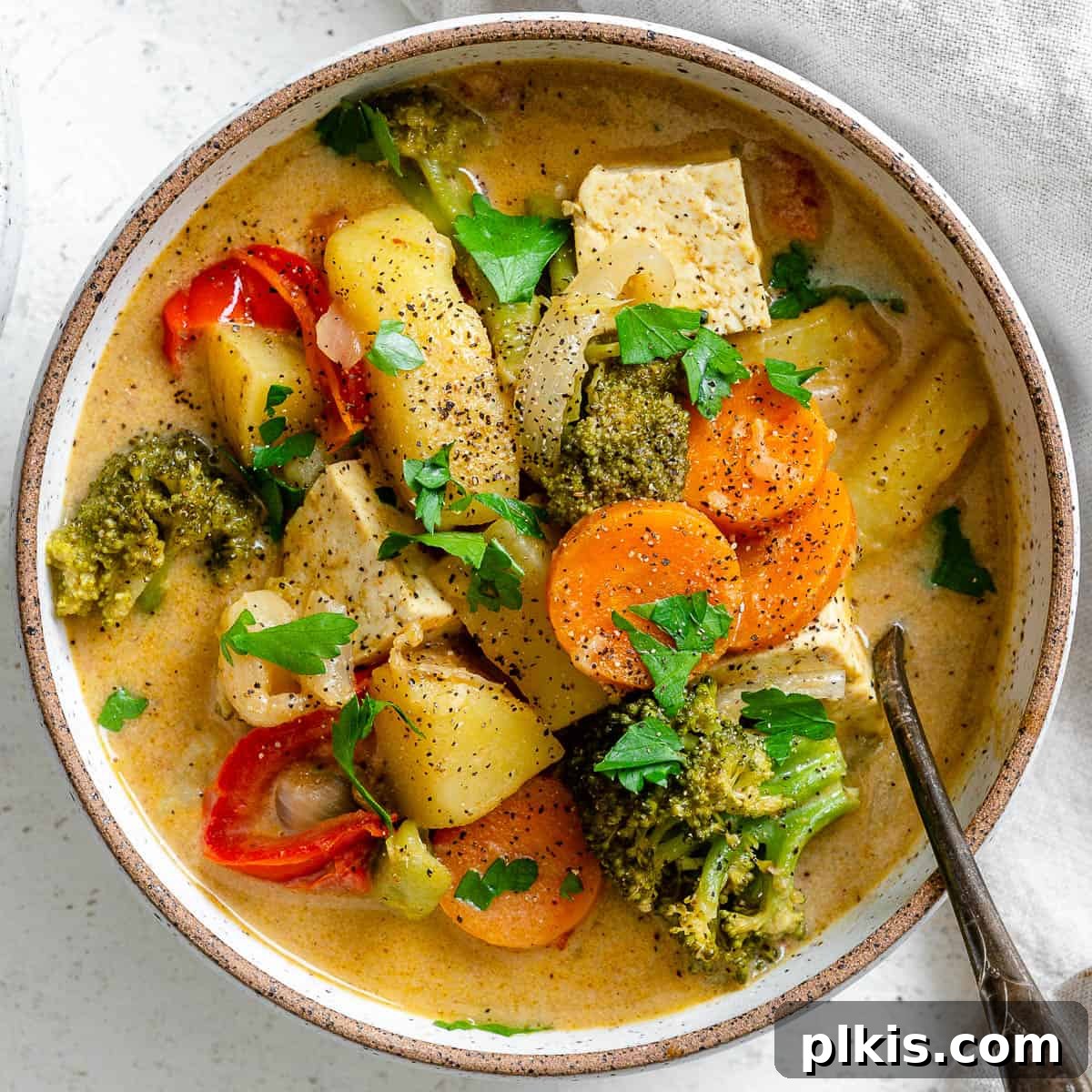
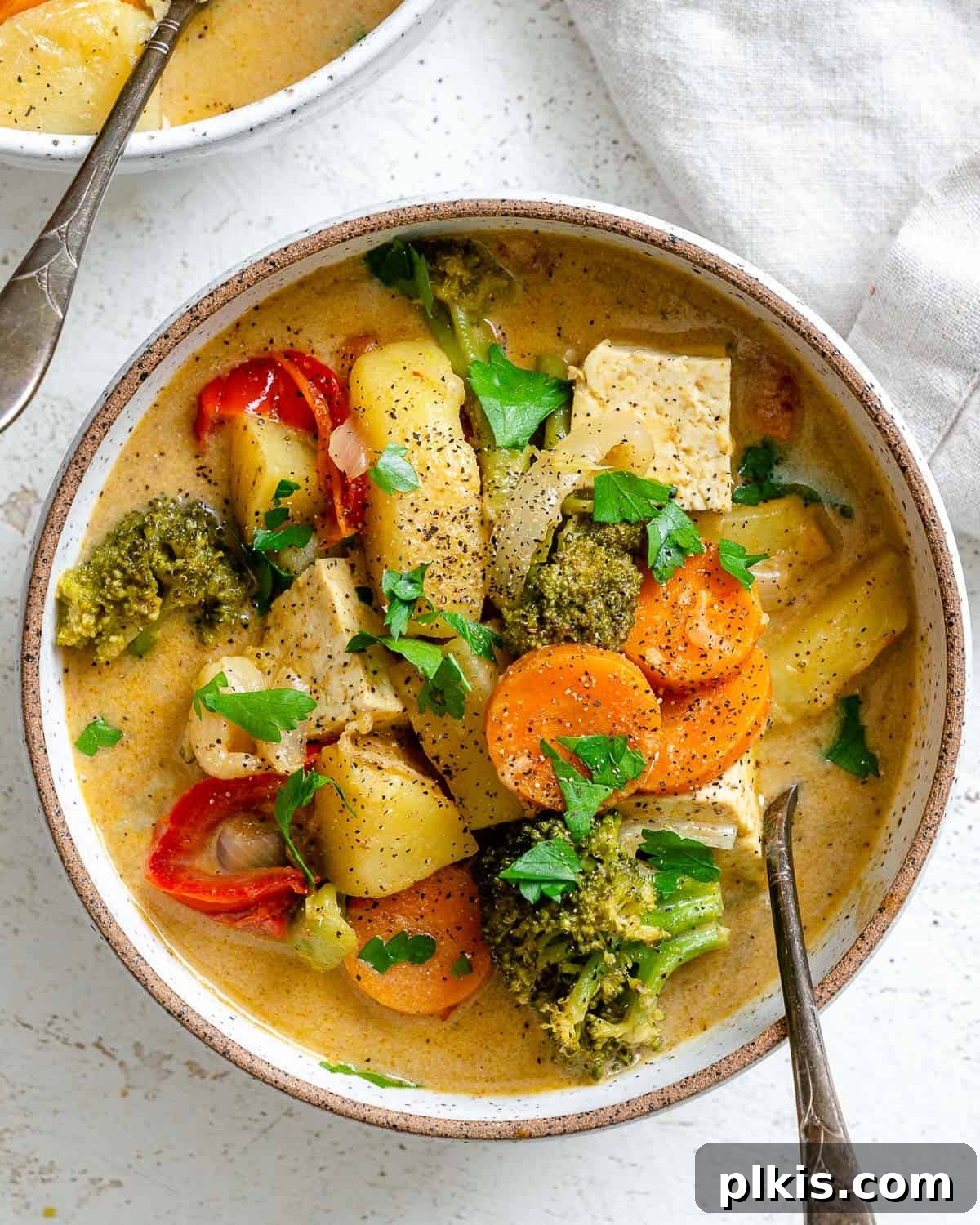
Embark on a culinary journey with this incredible one-pot tofu yellow curry recipe. It’s a dish that masterfully blends creamy textures, comforting warmth, and truly satisfying flavors. Featuring a wholesome medley of tofu, potatoes, carrots, broccoli, bell peppers, and onions, this curry is not just delicious but also packed with nutrients. Designed for convenience, it comes together in just 45 minutes, making it the ultimate solution for a flavorful, wholesome, and speedy weeknight dinner.
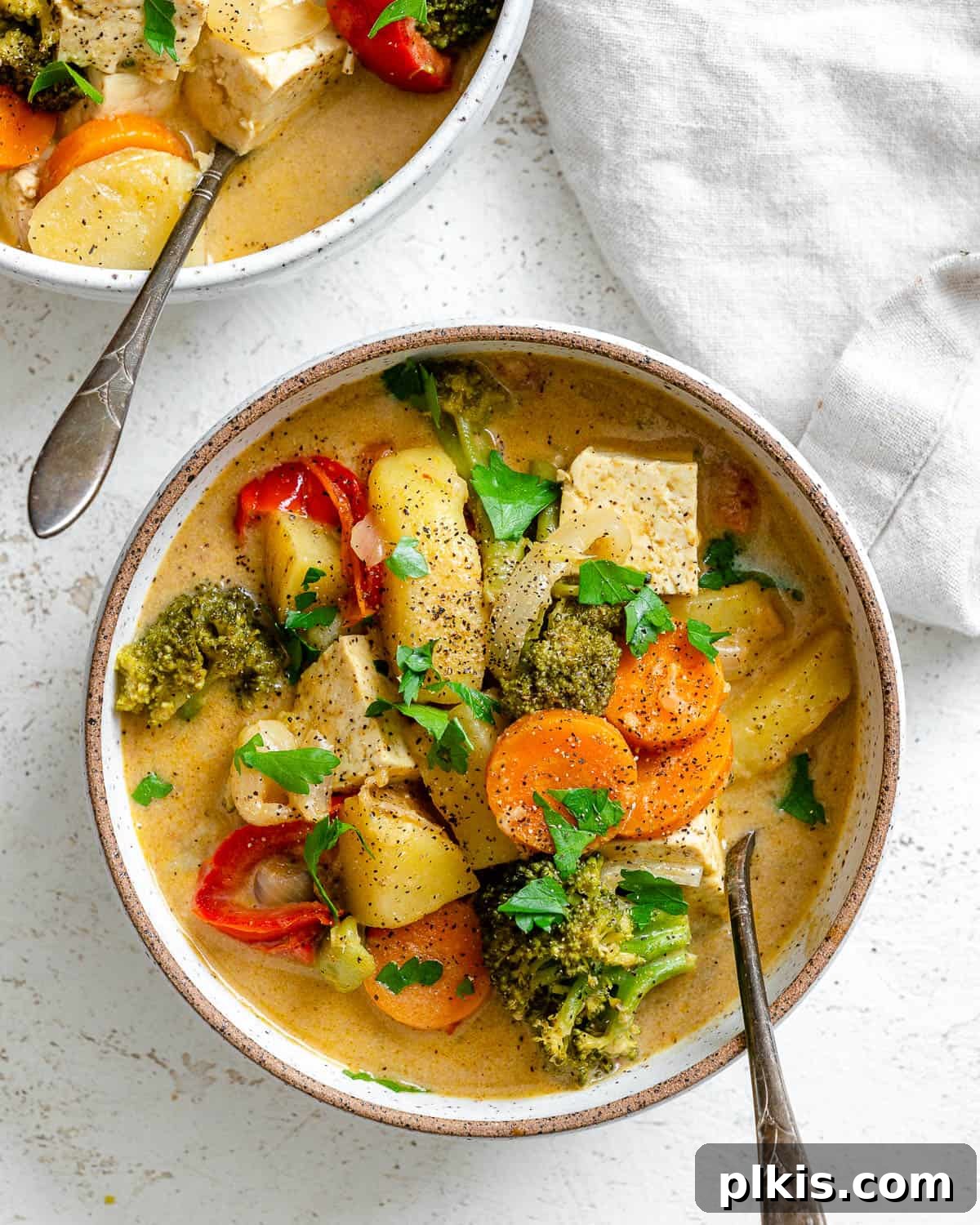
Creamy One-Pot Tofu Yellow Curry: A Flavorful & Budget-Friendly Vegan Meal
While our hearts have a special place for the slow-cooked richness of our crockpot red curry, this straightforward vegan yellow curry, adapted from our beloved cookbook, The Friendly Vegan Cookbook, offers a delightful alternative perfect for diverse palates. Its gentle spice profile, combined with the luxurious creaminess of canned full-fat coconut milk, creates a mild, slightly sweet, and aromatic dish that’s universally appealing. It’s an excellent choice for family dinners, especially when serving guests or children who might be sensitive to spicier flavors. Beyond its delightful taste, this recipe shines as a truly budget-conscious option, utilizing readily available ingredients to create a gourmet experience without breaking the bank.
This Thai-inspired tofu yellow curry isn’t just a meal; it’s an experience. Each spoonful delivers satisfying, warm flavors and fragrant aromas that will transform your kitchen into a comforting haven. The real beauty lies in its ease of preparation: everything comes together in a single pot in just 45 minutes, with most of that time dedicated to hands-off simmering. This makes it an invaluable recipe for anyone navigating a busy weeknight schedule. Furthermore, it’s a nutritional powerhouse, brimming with an array of good-for-you vegetables, essential vitamins and minerals, and a substantial dose of plant-based protein from the tofu, ensuring you feel satiated and energized long after the meal.
Perhaps the most appealing aspect of this yellow tofu vegetable curry is its incredible flexibility. You’re encouraged to customize it to your heart’s content – tweak the spice levels, experiment with different seasonal vegetables from your garden or local market, or even swap out the tofu for alternative protein sources. Once you’ve created your perfect rendition, serve this rich and vibrant curry over a generous portion of fluffy rice, comforting noodles, or warm, pillowy flatbread. Get ready to enjoy a deeply satisfying and nourishing meal that will become a regular in your rotation!
If you’re eager to explore more global flavors, we have a variety of other delicious vegan curry recipes to inspire your cooking:
- Hearty Pumpkin Tofu Curry
- Exotic Vegan Coconut Curry with Apples
- Classic Cauliflower and Potato Curry (Aloo Gobi)
- Flavorful Cauliflower Sweet Potato Mushroom Curry
- Comforting Butternut Squash Curry
- Simple & Satisfying Chickpea Lentil Curry
Key Ingredients for a Perfectly Balanced Yellow Curry
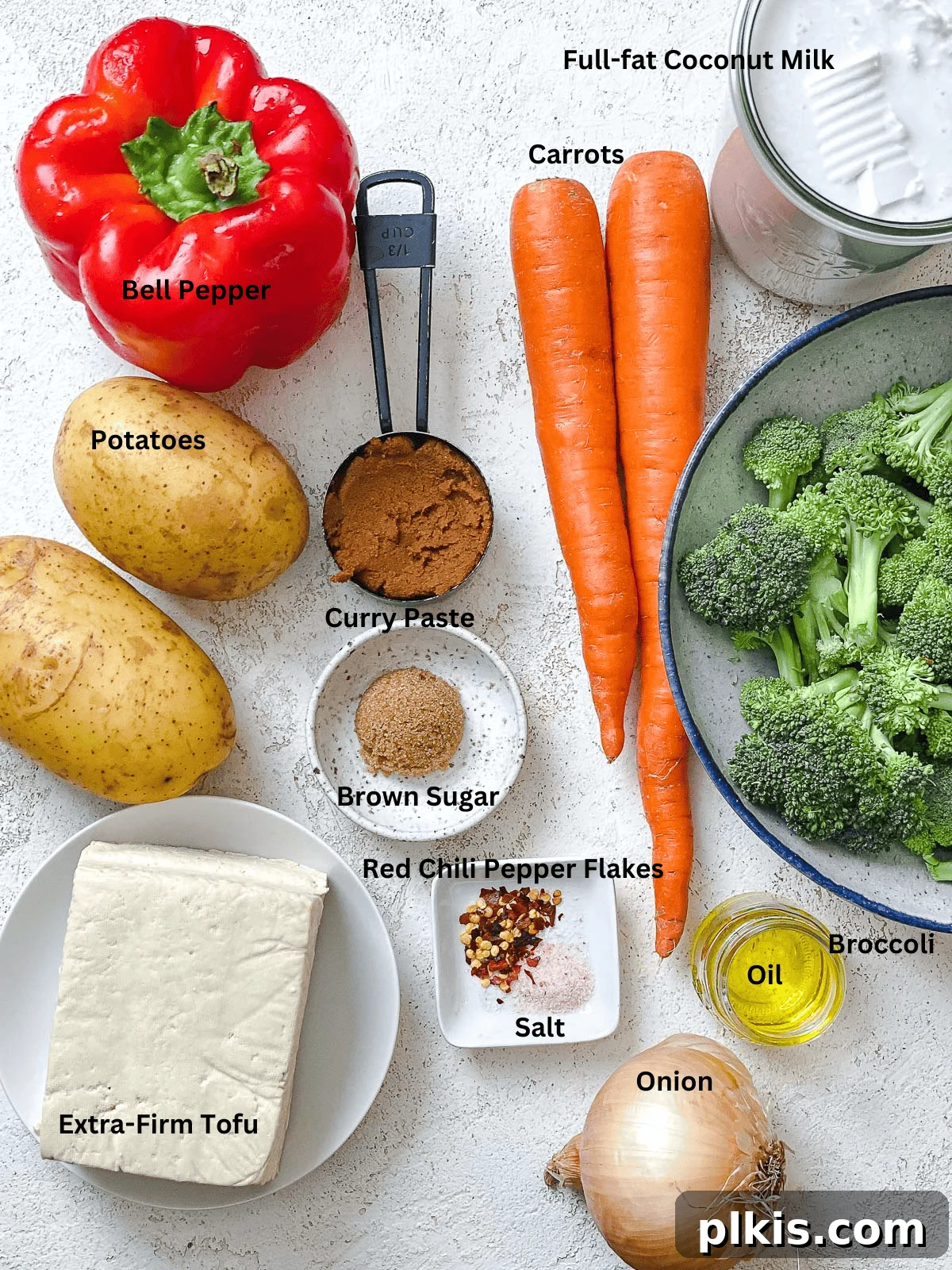
The secret to an outstanding yellow curry lies in the quality and balance of its ingredients. Here’s a detailed look at the core components for this recipe and how you can adapt them:
- Extra-Firm Tofu: This is our star protein. Extra-firm tofu is ideal because its dense texture holds up well during simmering, absorbing the rich curry sauce without falling apart. For best results, press the tofu for at least 15-30 minutes to remove excess water; this allows it to soak up more flavor and achieve a better texture. If you’re looking for a soy-free option, cooked chickpeas or lentils can be a fantastic alternative, providing a similar hearty, plant-based protein boost. You could also try your favorite store-bought vegan mock meat, following package instructions for preparation.
- Potatoes (Yukon Gold or Russet): Potatoes add a wonderful bulk and natural creaminess to the curry, making it incredibly filling. Yukon Golds offer a buttery texture, while russets become soft and floury. Cutting them into uniform 1-inch pieces ensures they cook evenly and become perfectly tender within the simmering time.
- Carrots: Sliced carrots contribute a subtle sweetness and a beautiful orange hue to the dish. They soften beautifully in the creamy sauce, adding essential vitamins and fiber.
- Broccoli: Added towards the end of cooking, broccoli florets retain a pleasant crisp-tender bite and vibrant green color, offering a refreshing textural contrast to the rich curry base.
- Red Bell Pepper: This adds a lovely sweet note and a vibrant splash of color. Feel free to use yellow or orange bell peppers if you prefer, as they offer similar sweetness.
- Yellow Onion: Onions are the aromatic foundation of many savory dishes, and this curry is no exception. Sautéing them properly brings out their natural sweetness and creates a deep flavor base.
- Yellow Curry Paste: This is where the magic happens! A high-quality yellow curry paste is paramount for an authentic Thai flavor profile. It typically features a blend of turmeric (which gives it its signature golden color), lemongrass, galangal, cumin, coriander, and mild chilies. The specific spice blend creates a warm, earthy, and aromatic base. Adjust the quantity to control the overall intensity and heat of your curry.
- Full-Fat Coconut Milk: Absolutely essential for achieving that characteristic rich, creamy, and velvety texture of Thai curry. Do not substitute with light coconut milk if you desire the authentic mouthfeel and body; the fat content is crucial for the flavor and consistency.
- Brown Sugar: A touch of brown sugar might seem unusual, but it plays a vital role in balancing the complex savory, spicy, and tangy notes of the curry, enhancing its overall depth and roundness of flavor.
- Salt: A fundamental seasoning, salt is crucial for bringing out and enhancing all the individual flavors in the curry. Taste and adjust as you cook.
- Red Chili Pepper Flakes: These allow you to precisely control the heat level. Add more if you crave a spicier kick, or reduce the amount (or omit entirely) for a milder, family-friendly dish.
- Vegetable Oil: Used for sautéing the aromatics and vegetables, it helps to kickstart the flavor development. Any neutral-flavored cooking oil will work well here.
To ensure a complete and satisfying meal, we highly recommend preparing 4 to 6 cups of cooked white or brown rice. This generous amount will perfectly complement the rich and flavorful yellow tofu curry, allowing you to create individual portions that suit your appetite.
Customizing Your Yellow Tofu Curry: Delicious Additions & Variations
The beauty of this easy tofu curry lies in its incredible versatility. Feel empowered to get creative and experiment with various additions to make it uniquely yours or to utilize ingredients you have on hand. Here are some fantastic options:
- Other Vegetables: This vegetarian yellow curry is a perfect canvas for almost any vegetable. Consider adding:
- Cauliflower: Adds a wonderful texture and absorbs the curry flavors beautifully. Cut into florets.
- Green Beans: For a delightful snap and earthy flavor. Add with the broccoli.
- Snow Peas/Sugar Snap Peas: These add a bright, sweet crunch. Stir them in during the last 5 minutes of cooking.
- Mushrooms: Sliced cremini or shiitake mushrooms add an umami depth and a pleasing meaty texture. Add with the initial sauté.
- Butternut Squash: For a naturally sweet and creamy element, cut into 1-inch cubes and add with the potatoes.
- Baby Corn: Offers a unique crunch and mild, slightly sweet flavor. Add with the broccoli.
- Eggplant: Cubed eggplant soaks up the curry sauce, becoming incredibly tender and flavorful. Add with the potatoes.
- Zucchini/Yellow Squash: These add a lighter, fresher element. Dice and add with the broccoli.
- Peas: A quick and easy addition for sweetness and a pop of color. Stir in during the last few minutes.
- Bok Choy: For a leafy green component, roughly chop and stir in at the very end until just wilted.
- Leafy Greens: Boost the nutritional content even further by stirring in large handfuls of fresh spinach, kale, or Swiss chard at the very end. The residual heat will quickly wilt them into the curry.
- Nuts for Crunch: For an added layer of texture and richness, sprinkle roasted cashews, almonds, or peanuts over individual servings just before serving. This provides a delightful contrast to the creamy curry.
- Additional Plant-Based Protein: To enhance the heartiness, consider adding a can of rinsed and drained chickpeas or white beans along with the potatoes. They will simmer and absorb the curry flavors beautifully.
- Fresh Herbs: Beyond cilantro, fresh Thai basil leaves can elevate the authenticity and aromatic complexity of your curry. Stir them in just before serving.
- Citrus Zest or Juice: A squeeze of fresh lime juice or a sprinkle of lime zest at the very end can brighten all the flavors and add a zesty finish.
How to Make This Easy Tofu Yellow Curry: Step-by-Step Guide
Whipping up this incredibly flavorful one-pot curry is a straightforward process. Follow these detailed steps to ensure a perfect, creamy, and aromatic meal every time.
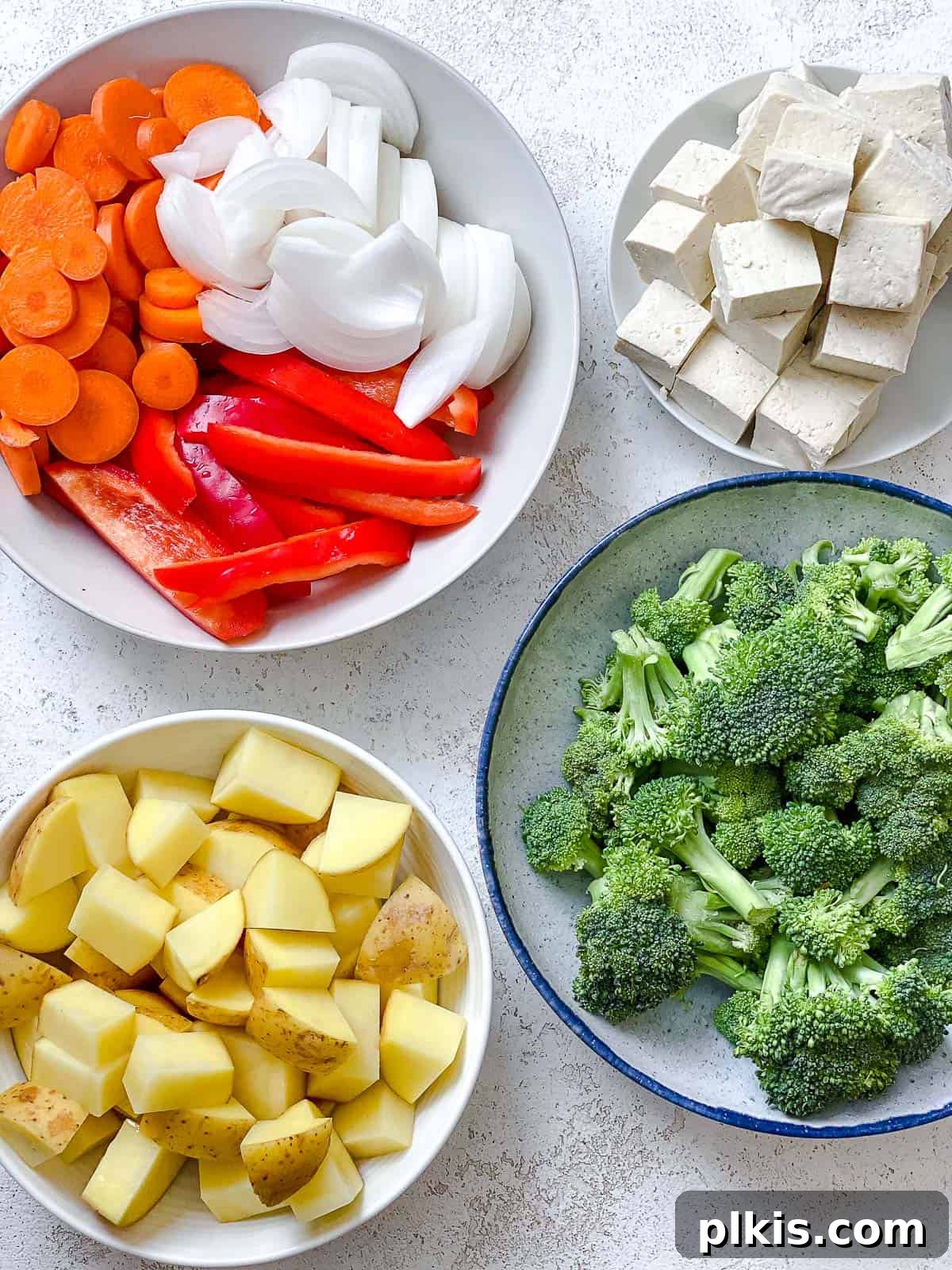
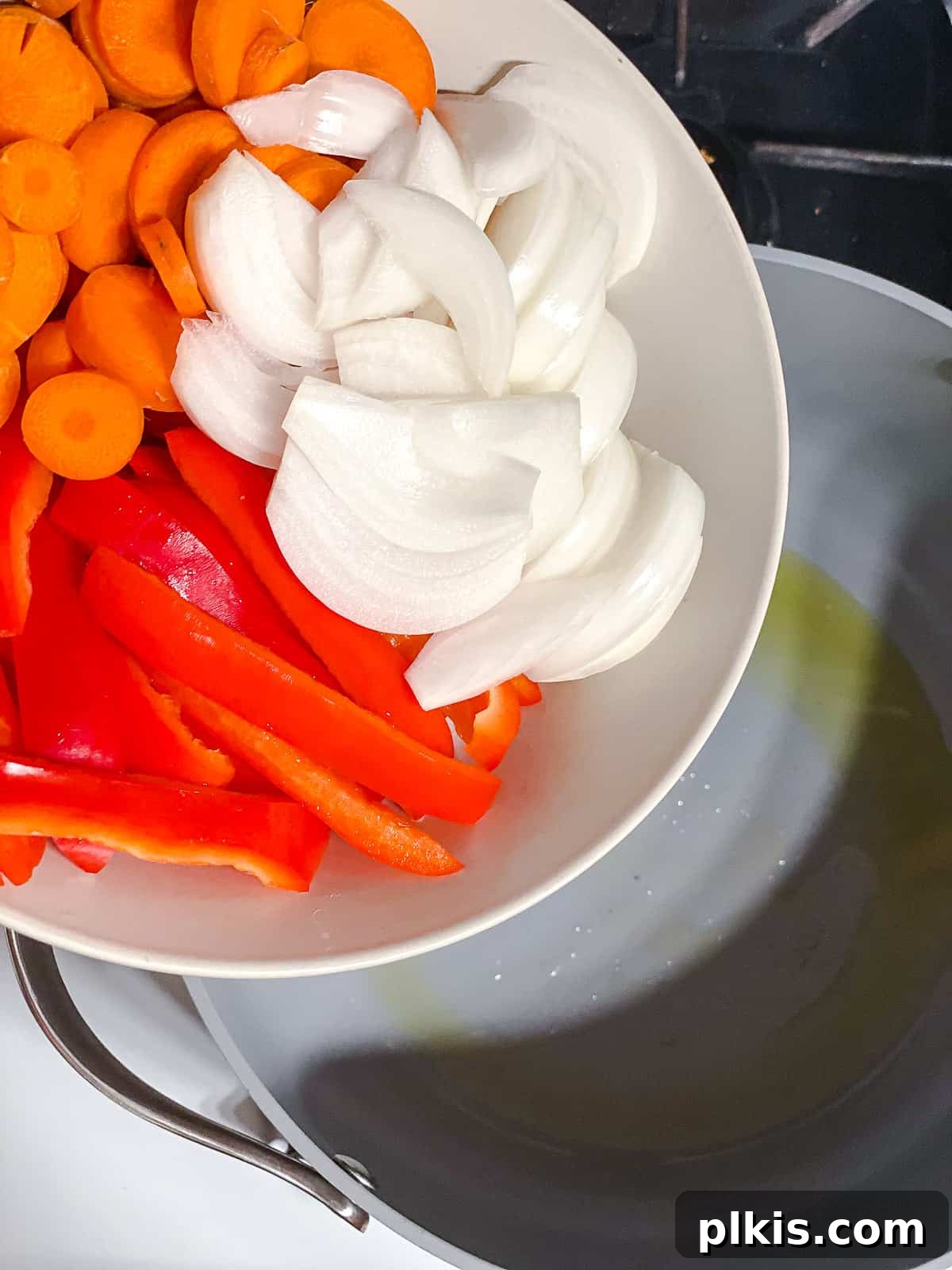
Step 1: Prepare All Ingredients. Begin by thoroughly rinsing your carrots and potatoes. Peel the carrots and potatoes, then slice the carrots, bell pepper, and onion into uniform pieces. Chop the broccoli into bite-sized florets. Next, drain your block of extra-firm tofu and gently press out any excess water using paper towels or a tofu press; this helps it absorb more flavor. Once pressed, cut the tofu into approximately 1-inch cubes. Ensure all your ingredients are prepped before you start cooking, as this one-pot meal comes together quickly.
Step 2: Sauté the Aromatics. Heat the vegetable oil in a large, heavy-bottomed pot or Dutch oven over medium-high heat. Once the oil is shimmering and hot, add the sliced onion, carrots, and bell pepper to the pot. Sauté these vegetables for 2 to 3 minutes, stirring frequently, until the bell pepper begins to tenderize slightly and the onions become translucent and fragrant. This initial sautéing step is crucial for developing a deep, foundational flavor for your curry.
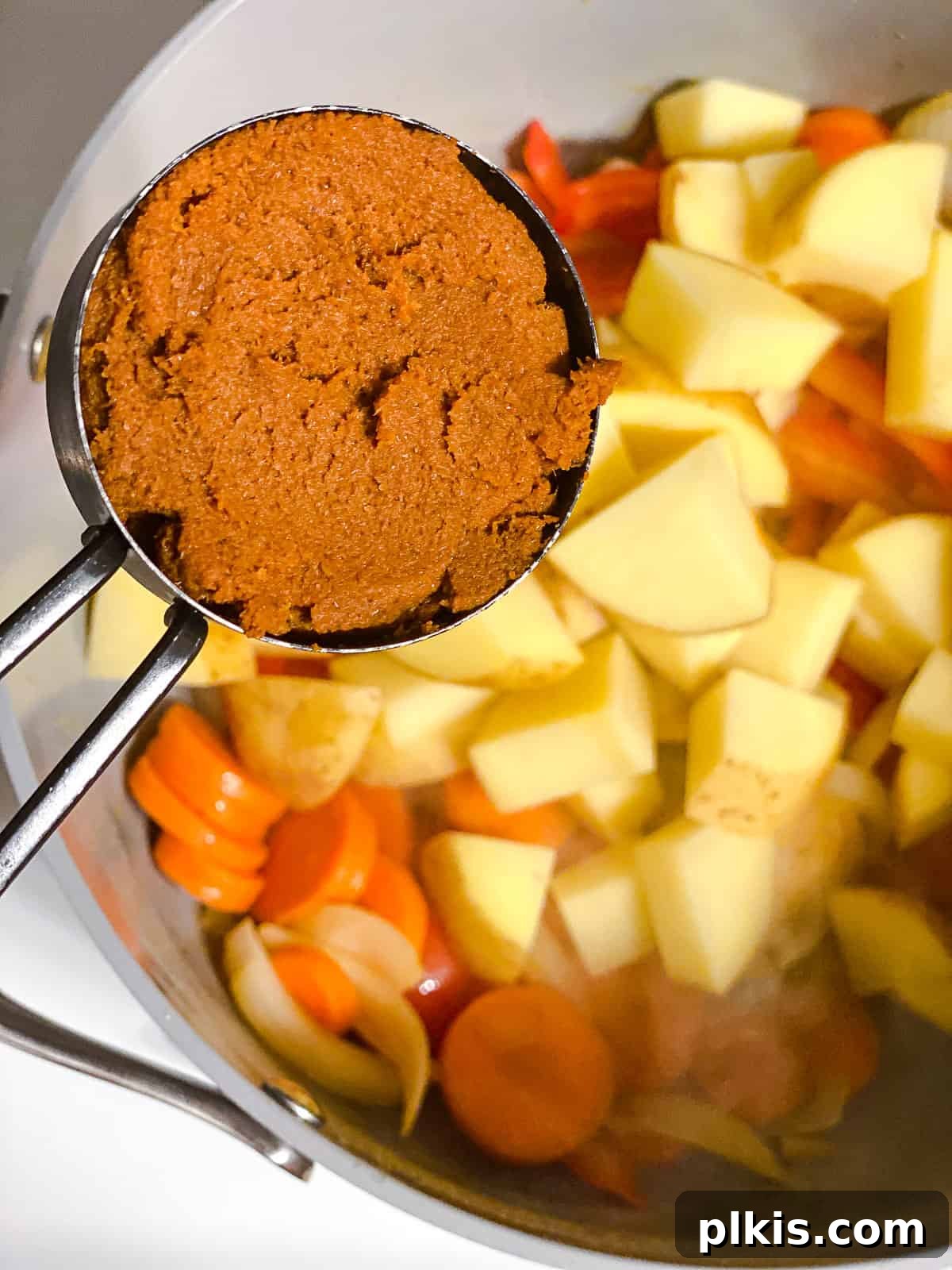
Step 3: Build the Flavor Base & Simmer. Add the diced potatoes and the yellow curry paste to the pot. Continue to sauté for another 3 to 4 minutes, stirring constantly to ensure the paste is thoroughly incorporated and becomes deeply fragrant. This “blooming” of the curry paste is key to releasing its full aromatic potential. Next, carefully pour in the two cans of full-fat coconut milk. Stir in the brown sugar, salt, and red chili pepper flakes. Bring the entire mixture to a gentle boil, then immediately reduce the heat to a low simmer. Cover the pot with a lid and let it cook undisturbed for 15 minutes. This simmering time allows the potatoes to soften and all the vibrant flavors to meld together beautifully.
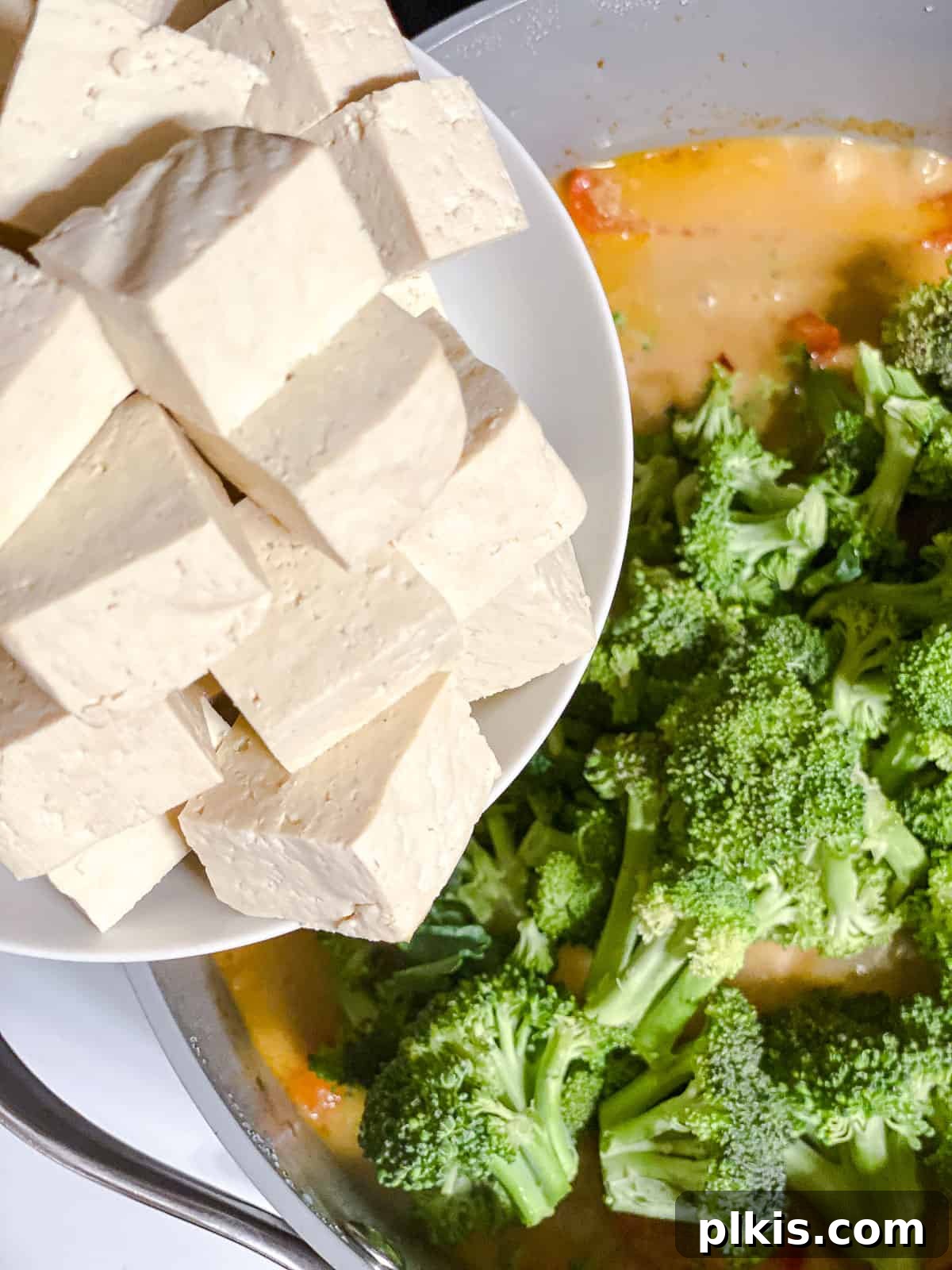
Step 4: Add Final Ingredients & Finish. After the initial 15-minute simmer, carefully remove the lid. Add the bite-sized broccoli florets and the cubed tofu to the pot. Stir gently to ensure they are well coated in the creamy curry sauce. Cover the pot once more and continue to simmer for an additional 15 minutes, or until the vegetables are perfectly tender to your liking and the tofu has fully absorbed the fragrant flavors of the curry. Once cooked, always taste the curry and adjust any seasonings as needed; you might want a pinch more salt to enhance flavors, a dash of sugar to balance, or extra chili flakes for more heat. For a burst of freshness, a squeeze of fresh lime juice can be added at the end. Garnish your savory tofu potato curry with fresh cilantro and lime wedges, then serve immediately with a generous side of perfectly cooked jasmine rice, brown rice, quinoa, or warm flatbread.
Pro Tip for Crispier Tofu: If you prefer a firmer, more texturally appealing tofu, consider pan-frying the pressed tofu cubes separately in a non-stick pan with a tablespoon of oil until they are golden brown and slightly crispy on all sides. You can then add this crispy tofu to the curry in Step 4, maintaining its delightful texture.
Frequently Asked Questions About Thai Yellow Curry
Thai curries are renowned for their distinct color and flavor profiles, primarily determined by the curry paste used. All three — red, yellow, and green — share foundational aromatic ingredients like lemongrass, garlic, and galangal. However, their unique characteristics come from additional components and the types of chilies used. Red curry paste achieves its vibrant color and medium heat from dried red chilies, often balanced with shallots and kaffir lime zest. It tends to have a richer, deeper flavor. Green curry paste is typically the spiciest and most herbaceous, made with fresh green chilies, kaffir lime, and fresh green herbs such as Thai basil and cilantro, giving it its characteristic bright green hue. Yellow curry paste is generally the mildest and often the sweetest of the three, distinguished by its golden color derived primarily from turmeric. It combines dried red chilies (fewer than red curry), lemongrass, galangal, ginger, garlic, shallots, cumin, and coriander, resulting in a rich, earthy, and highly aromatic but gently spiced base. Its approachable flavor makes it a fantastic entry point for those new to Thai cuisine.
Thai yellow curry offers a delightfully balanced flavor experience that is both creamy and deeply aromatic, with a gentle warmth rather than intense heat. The predominant flavors come from earthy spices like turmeric, cumin, and coriander, which are brightened by the citrusy notes of lemongrass and the pungent warmth of ginger and garlic. Full-fat coconut milk transforms these spices into a luxurious, velvety sauce that is subtly sweet, savory, and incredibly comforting. While it carries the exotic essence of Thai cuisine, its mild spice level makes it exceptionally palatable for a wide audience, including children or those sensitive to heat. It’s a rich, complex, and highly satisfying dish that warms you from the inside out.
Choosing the “best” yellow curry paste often boils down to personal preference and what’s available in your local Asian market or grocery store. However, some brands consistently receive high praise for their authentic flavor. Mae Ploy and Aroy-D are two widely recognized brands that produce high-quality, vegan-friendly yellow curry pastes. When purchasing a store-bought paste, it’s always wise to check the ingredient list, as some brands may include shrimp paste or other non-vegan components. For those who enjoy a truly bespoke flavor, making your own yellow curry paste from scratch offers the ultimate control, allowing you to fine-tune the proportions of each spice and herb to match your exact taste preferences. If opting for store-bought, look for pastes with a vibrant color, strong aroma, and minimal artificial additives.
Pro Tips for a Flawless & Delicious Tofu Yellow Curry
Elevate your one-pot tofu yellow curry from good to gourmet with these expert tips:
- Sauté the Curry Paste Until Fragrant: This isn’t just a suggestion; it’s a crucial step. Gently sautéing the yellow curry paste for a few minutes before adding any liquids helps to “bloom” the spices. This process intensifies their aroma, deepens their flavor, and cooks out any raw, harsh notes, creating a much richer and more complex curry base. Use medium-low heat to prevent burning.
- Customize the Flavor Profile with Different Pastes: While this recipe champions yellow curry, feel free to experiment with other Thai curry pastes. Swapping yellow for green curry paste will yield a spicier, more herbaceous dish, while red curry paste will offer a moderately spicy, richer, and deeper flavor. This simple change can completely transform your curry experience!
- Adjust the Intensity to Your Palate: The beauty of cooking at home is personalization. Start with the recommended amount of yellow curry paste and red pepper flakes. Taste the curry as it simmers, and if you desire more heat or a more pronounced curry flavor, add a little extra paste or chili flakes in small increments until it’s perfect for you. For a milder dish, you can slightly reduce the initial amount of paste.
- Experiment with Diverse Vegetable Add-ins: Your curry is a versatile canvas for vegetables. When adding other ingredients beyond those listed, always consider their cooking times. Harder root vegetables like butternut squash or sweet potatoes should be added earlier with the potatoes. Softer, quicker-cooking greens like spinach or quick-blanching items like snow peas should be stirred in during the last 5-10 minutes of simmering to prevent them from becoming overcooked and mushy.
- Avoid Vigorous Boiling of Coconut Milk: Once you’ve added the full-fat coconut milk to your curry, it’s best to maintain a gentle simmer rather than a rolling boil. Prolonged high heat can cause coconut milk to “split” or curdle, separating its fat from the liquid and resulting in a less creamy, sometimes grainy texture.
- Fine-Tune the Consistency: If your curry turns out thicker than you prefer, simply thin it down with a splash of water, vegetable broth, or unsweetened plant-based milk (like almond or soy milk) until it reaches your desired consistency. Conversely, if your curry is too thin, simmer it uncovered for an additional 5-10 minutes to allow some of the liquid to evaporate and thicken naturally. For a quicker fix, mix 1 tablespoon of cornstarch with 2 tablespoons of cold water to create a slurry, then stir it into the simmering curry and cook for another minute or two until it thickens.
- Adapting for a Crockpot or Slow Cooker: For an even more hands-off approach, this recipe can be adapted for a slow cooker. Begin by sautéing the onions, carrots, bell pepper, and curry paste on the stovetop to develop their flavors. Then, transfer all ingredients (including the sautéed mixture, potatoes, coconut milk, seasonings, and tofu) to your slow cooker. Cook on low for 4-6 hours or on high for 2-3 hours. Add the broccoli florets during the last 30-60 minutes of cooking to ensure they remain tender-crisp and retain their vibrant color.
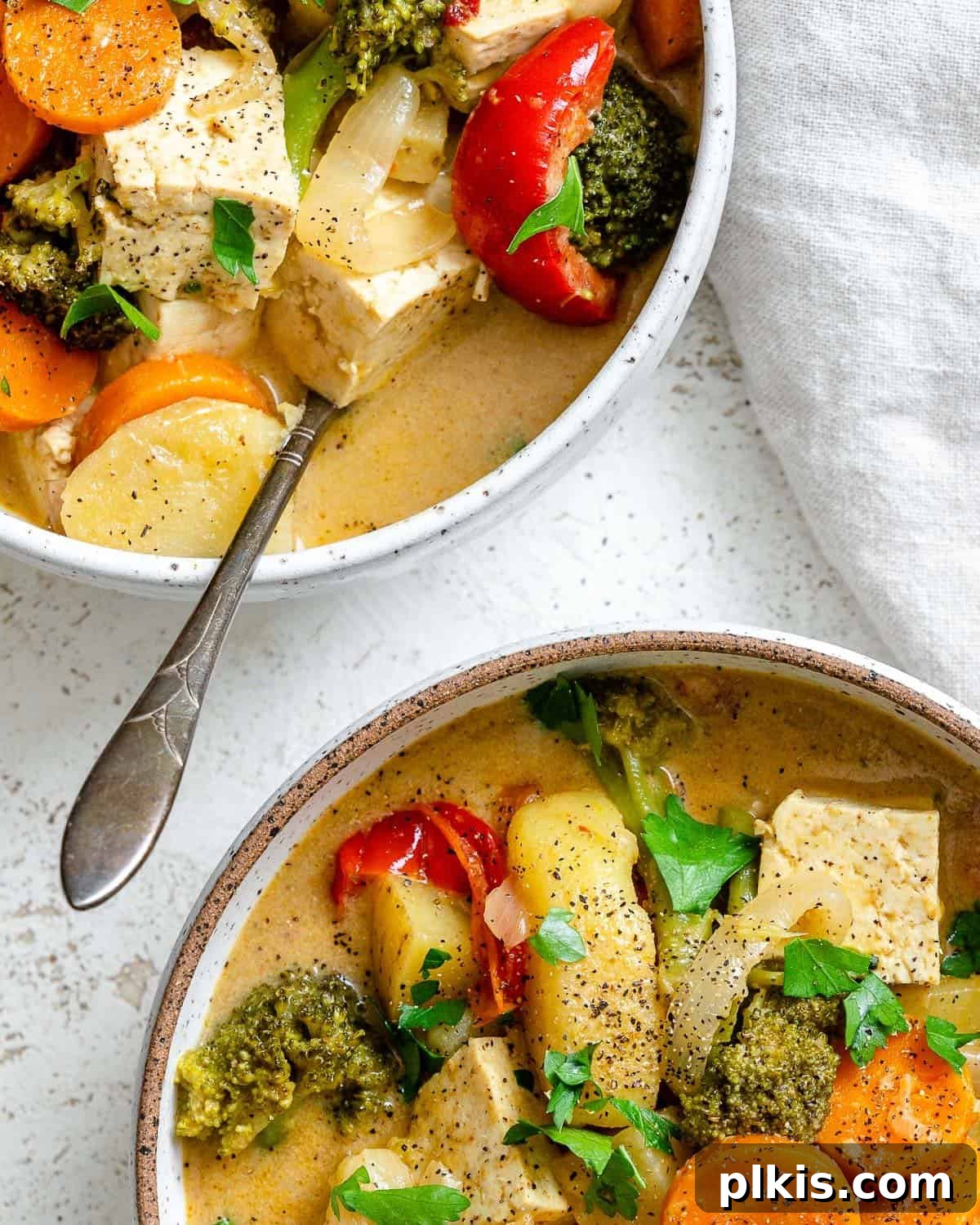
Storage and Reheating Instructions for Leftovers
One of the many benefits of this vegan yellow curry is that it often tastes even better the next day, as the flavors have more time to meld and deepen. Proper storage is key to enjoying your leftovers safely and deliciously:
- Refrigeration: Allow any leftover vegan yellow curry to cool completely to room temperature before transferring it to an airtight container. Store it in the refrigerator for up to 3-4 days. This makes it an excellent option for meal prepping throughout the week.
- Freezing: This curry freezes exceptionally well, allowing you to enjoy it much later. Portion the cooled leftovers into airtight, freezer-safe containers or sturdy Ziplock bags. If using bags, spread the curry flat and press out any excess air to prevent freezer burn and save space. It can be stored in the freezer for up to 3 months. When you’re ready to enjoy, simply transfer the frozen curry to the refrigerator to thaw overnight before reheating.
- Note on Tofu Texture After Freezing: It’s important to be aware that the texture of tofu can change after being frozen and thawed. It typically becomes spongier and develops a chewier, meatier consistency. Interestingly, many people find they prefer this altered texture, as it can add a new dimension to the curry.
- Reheating: To reheat your vegan tofu curry, you have a couple of options. You can gently warm it on the stovetop over medium-low heat, stirring occasionally, until it is heated through to your desired temperature. Alternatively, microwave individual portions in 2-3 minute intervals, stirring halfway through, until piping hot. If the curry has thickened too much during its time in the refrigerator or freezer, simply add a splash of water, vegetable broth, or additional coconut milk to achieve your preferred consistency.
One-Pot Tofu Yellow Curry Recipe
Print Recipe
This one-pot tofu yellow curry recipe delivers a creamy, comforting, and deeply satisfying meal packed with tofu, potatoes, carrots, broccoli, bell peppers, and onions. It’s a nutritious, delicious, and incredibly quick dinner option, ready in just 45 minutes.
Recipe Video
Equipment
- Individual Bowls
- Large Pot / Dutch Oven
- Knives Set
- Measuring Spoons
- Can Opener
- Measuring Cups
- Wooden Spoon or Spatula
Ingredients
- 1 tablespoon of vegetable oil
- 1 small yellow onion, sliced
- 1 large red bell pepper, sliced
- 2 carrots, sliced
- 2 large Yukon or Russet potatoes (about 1 pound), peeled and cut into 1-inch bite-sized pieces
- ⅓ cup of yellow curry paste
- 2 (13.5-ounce) cans of full-fat coconut milk
- 1 tablespoon of packed brown sugar
- 1 teaspoon of salt
- 1 teaspoon of red chili pepper flakes (adjust to your preferred spice level)
- 2 cups of bite-sized broccoli florets
- 1 (16-ounce) block of extra-firm tofu, drained, pressed, and cut into 1-inch cubes
- 4-6 cups of cooked white or brown rice, for serving
Instructions
-
Heat Oil and Sauté Initial Vegetables: Heat the vegetable oil in a large, heavy-bottomed pot or Dutch oven over medium-high heat. Add the sliced onion, bell pepper, and carrots. Sauté for 2 to 3 minutes, stirring occasionally, until the bell pepper begins to tenderize and the onions turn translucent.
-
Add Potatoes and Curry Paste: Stir in the diced potatoes and the yellow curry paste. Continue to sauté for another 3 to 4 minutes, stirring constantly. This step is essential to “bloom” the spices in the curry paste, which enhances their aroma and flavor significantly.
-
Simmer the Curry Base: Pour in the two cans of full-fat coconut milk. Stir in the brown sugar, salt, and red chili pepper flakes. Bring the mixture to a gentle boil, then immediately reduce the heat to a low simmer. Cover the pot with a lid and cook for 15 minutes, allowing the potatoes to soften and the flavors to meld.
-
Add Tofu and Broccoli: After 15 minutes, carefully add the broccoli florets and the cubed tofu to the pot. Stir gently to combine them with the creamy curry sauce. Cover the pot once more and continue to simmer for an additional 15 minutes, or until the vegetables are perfectly tender and the tofu is heated through and has absorbed the curry flavors.
-
Taste, Adjust, and Serve: Taste the curry and adjust any seasonings as needed; you may want a bit more salt, sugar, or chili flakes. For a brighter finish, a squeeze of fresh lime juice can be added. Serve your creamy one-pot tofu yellow curry hot with a generous side of cooked rice or your preferred grain, optionally garnished with fresh cilantro.
Notes
- Sauté the paste until fragrant: This crucial step helps to unlock the full flavor and aroma of the spices in the curry paste.
- Change the flavor profile: Easily modify the dish by substituting yellow curry paste with green or red curry paste, keeping in mind their differing heat levels and flavor nuances.
- Adjust the intensity: Customize the spice level by varying the amount of curry paste and red chili pepper flakes you use.
- Experiment with add-ins: When adding other vegetables, introduce them based on their cooking times to ensure everything reaches optimal tenderness without becoming mushy.
- Avoid vigorous boiling of coconut milk: Maintain a gentle simmer to prevent the coconut milk from separating or curdling, which can affect the curry’s creamy texture.
- Adjust consistency: If the curry is too thick, thin it with water or plant milk. If it’s too thin, simmer uncovered for longer or stir in a cornstarch slurry.
- For crockpot yellow curry: Sauté the aromatics on the stovetop first, then combine all ingredients in the slow cooker. Cook on low for 4-6 hours, adding broccoli and tofu in the last hour.
- Crispier Tofu: For a different texture, pan-fry the pressed tofu until golden and slightly crispy before adding it to the curry in the final simmering stage.
Nutrition Information (per serving, estimated)
Carbohydrates: 82g
Protein: 21g
Fat: 49g
Saturated Fat: 40g
Polyunsaturated Fat: 2g
Monounsaturated Fat: 3g
Sodium: 732mg
Potassium: 1376mg
Fiber: 7g
Sugar: 11g
Vitamin A: 9918IU
Vitamin C: 116mg
Calcium: 166mg
Iron: 10mg
Additional Info
Tried this delicious recipe? We’d love to see your culinary creations! Please tag us at @PlantBasedOnABudget on Instagram! Your feedback and photos inspire us. 🙂