
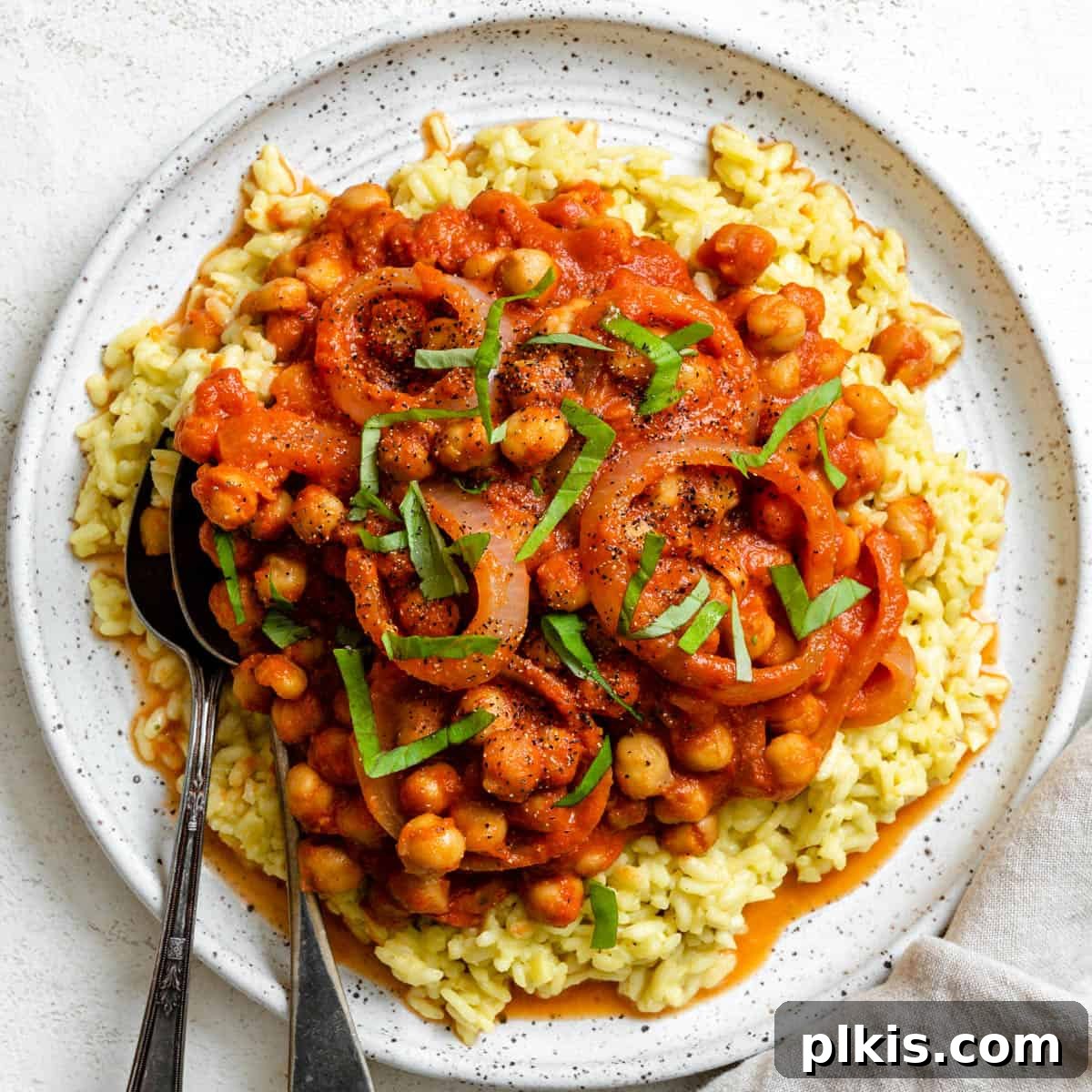
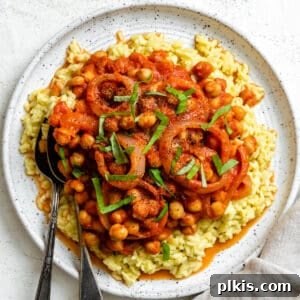
Delight your taste buds with this vibrant Vegan Tandoori Chickpeas recipe, a plant-based reimagining of a beloved Indian classic. This flavorful dish comes together effortlessly from scratch using a handful of accessible ingredients and a straightforward cooking method. Perfect for a quick weeknight dinner, it’s ready in approximately 30 minutes and pairs beautifully with creamy risotto, garnished with fresh cilantro or your favorite aromatic herbs.
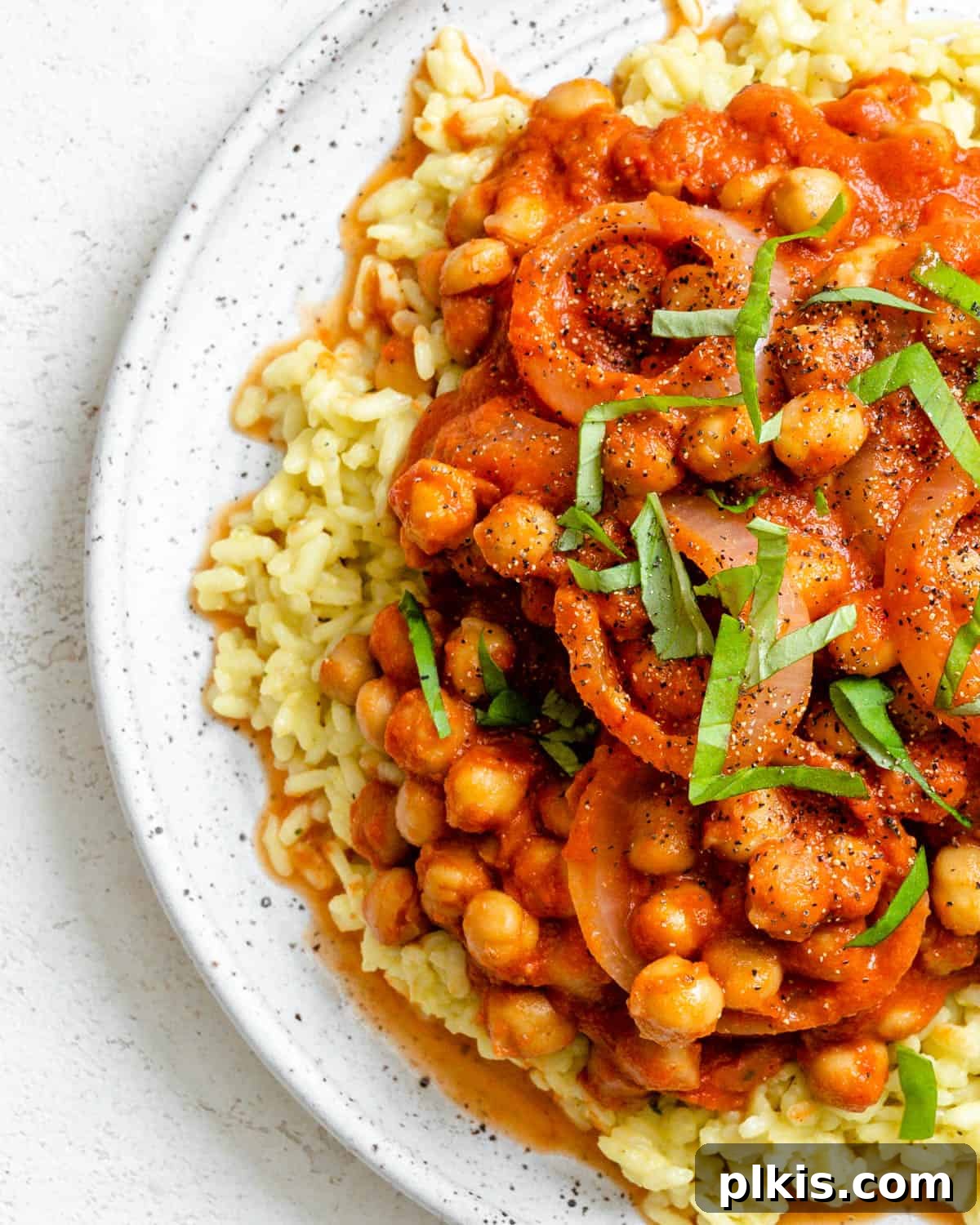
Table of Contents
- A Plant-Based Twist on Tandoori: Embracing Flavor Without Compromise
- Why You’ll Love This Vegan Tandoori Chickpeas Recipe
- The Essential Ingredients for Vegan Tandoori Chickpeas
- How to Make Vegan Tandoori Chickpeas: A Simple Cooking Guide
- Recipe FAQs: All Your Questions Answered
- Pro Tips for Perfect Vegan Tandoori Chickpeas
- Serving Suggestions and Accompaniments
- Storage and Make-Ahead Instructions
- More Irresistible Vegan Chickpea Recipes
A Plant-Based Twist on Tandoori: Embracing Flavor Without Compromise
Traditional Indian tandoori dishes are renowned for their incredibly rich flavors, vibrant colors, and succulent textures, typically achieved by marinating chicken or other meats in yogurt and spices, then cooking them at high heat in a tandoor oven. While our version celebrates these core flavor principles, it offers a revolutionary plant-based alternative. This recipe replaces the traditional chicken with hearty, protein-packed chickpeas, making it a fantastic option for vegans, vegetarians, and anyone looking to incorporate more plant-based meals into their diet without sacrificing taste.
It’s important to note that this specific vegan tandoori chickpea recipe is an adaptation, designed for home cooks seeking a simple, flavorful, and accessible take on the tandoori experience, rather than striving for strict authenticity. Our goal is to capture the essence of those beloved tandoori flavors using readily available ingredients and standard kitchen equipment. We achieve that signature deep flavor through a robust blend of spices, ensuring every bite is as satisfying as its traditional counterpart.
In a conscious effort to make this dish even more accessible and budget-friendly, we’ve opted for creamy coconut milk as a base for our sauce, which typically is easier to find and more affordable than some vegan yogurts. This choice not only contributes a delightful creaminess but also complements the spices beautifully. Furthermore, we prepare our tandoori chickpeas on the stovetop, a practical method for most home kitchens, eliminating the need for a specialized tandoor oven. Of course, if you are fortunate enough to own a tandoor, feel free to use it to impart an even more authentic smoky flavor!
This recipe isn’t just delicious; it’s also incredibly versatile. It’s the perfect addition to a budget-friendly meal plan, offering a wholesome and satisfying option for quick weeknight dinners. Moreover, it serves as an excellent way to effortlessly incorporate affordable, high-quality plant-based proteins, like chickpeas, into your regular diet, promoting both health and culinary adventure. Get ready to fall in love with this unique and flavorful vegan take on tandoori cuisine!
Why You’ll Love This Vegan Tandoori Chickpeas Recipe
There are countless reasons why this Vegan Tandoori Chickpeas dish deserves a spot in your weekly rotation. Beyond its incredible flavor, it boasts several practical benefits that make it a true kitchen hero.
- Budget-Friendly: Chickpeas are one of the most economical sources of plant-based protein. Combined with common pantry spices and a few fresh ingredients, this meal won’t break the bank.
- Quick & Easy: With only about 5 minutes of prep time and 30 minutes of cooking, this recipe is perfect for busy weeknights when you need a delicious and nutritious meal on the table fast.
- Nutrient-Packed: Chickpeas are rich in fiber, protein, and essential minerals, contributing to a balanced and satisfying meal. The array of spices also offers numerous health benefits, from anti-inflammatory properties to aiding digestion.
- Incredibly Flavorful: The robust blend of tandoori spices, enhanced by garlic, lemon pepper, and a rich tomato-coconut base, creates a depth of flavor that is truly irresistible. Even without a tandoor oven, the taste is profoundly aromatic and satisfying.
- Versatile: While we love serving it with creamy risotto, this dish is wonderfully adaptable. It pairs well with various grains, flatbreads, or even fresh salads, allowing for endless customization based on your preferences and what you have on hand.
- Plant-Based Powerhouse: It’s a fantastic way to enjoy a comforting, hearty meal that is entirely vegan, proving that plant-based eating can be exciting, flavorful, and deeply satisfying for everyone.
The Essential Ingredients for Vegan Tandoori Chickpeas
Crafting this flavorful vegan tandoori dish requires a simple yet impactful selection of ingredients. Each component plays a crucial role in building the dish’s distinct taste and texture. Here’s a detailed look at what you’ll need and why:
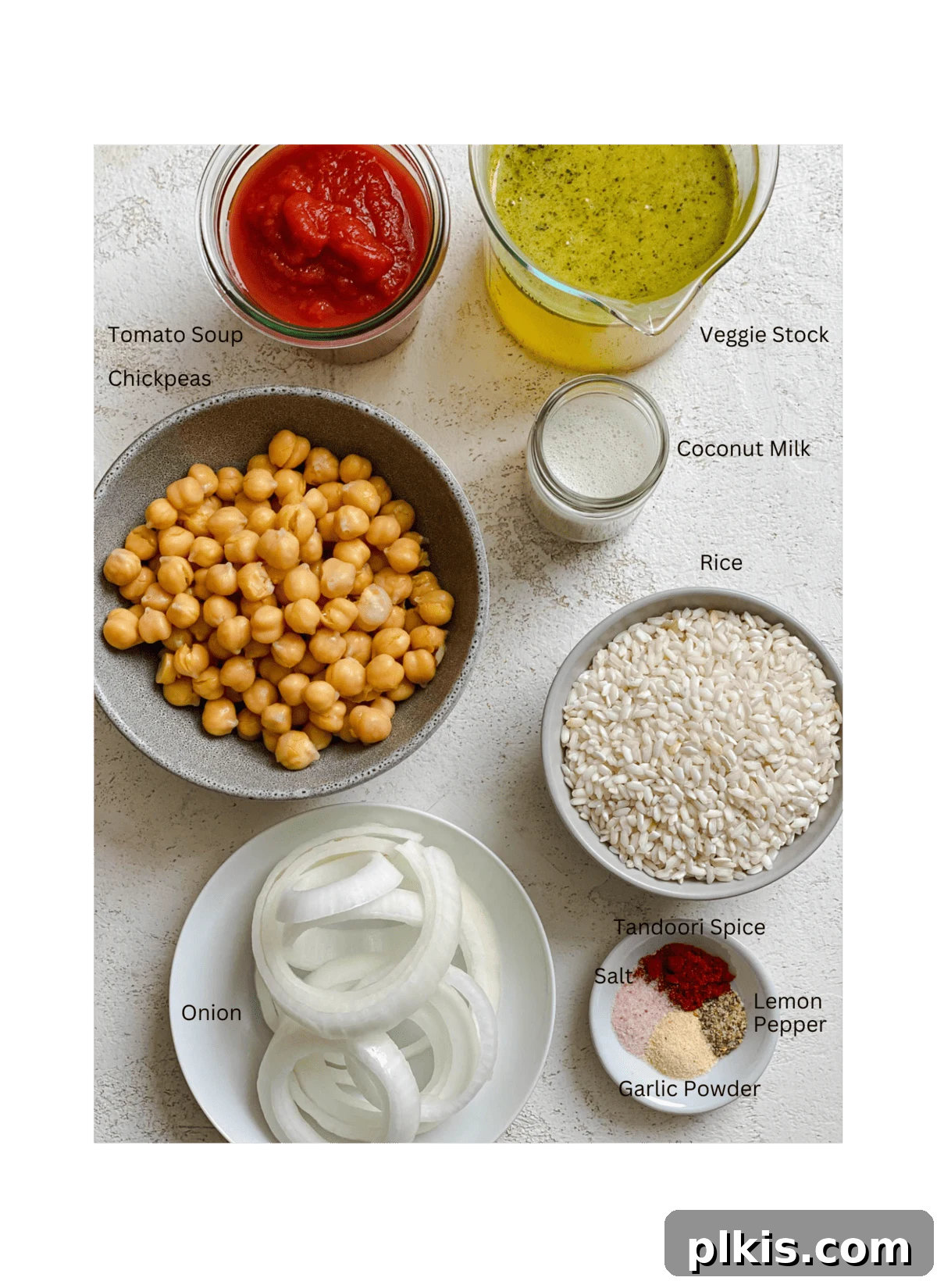
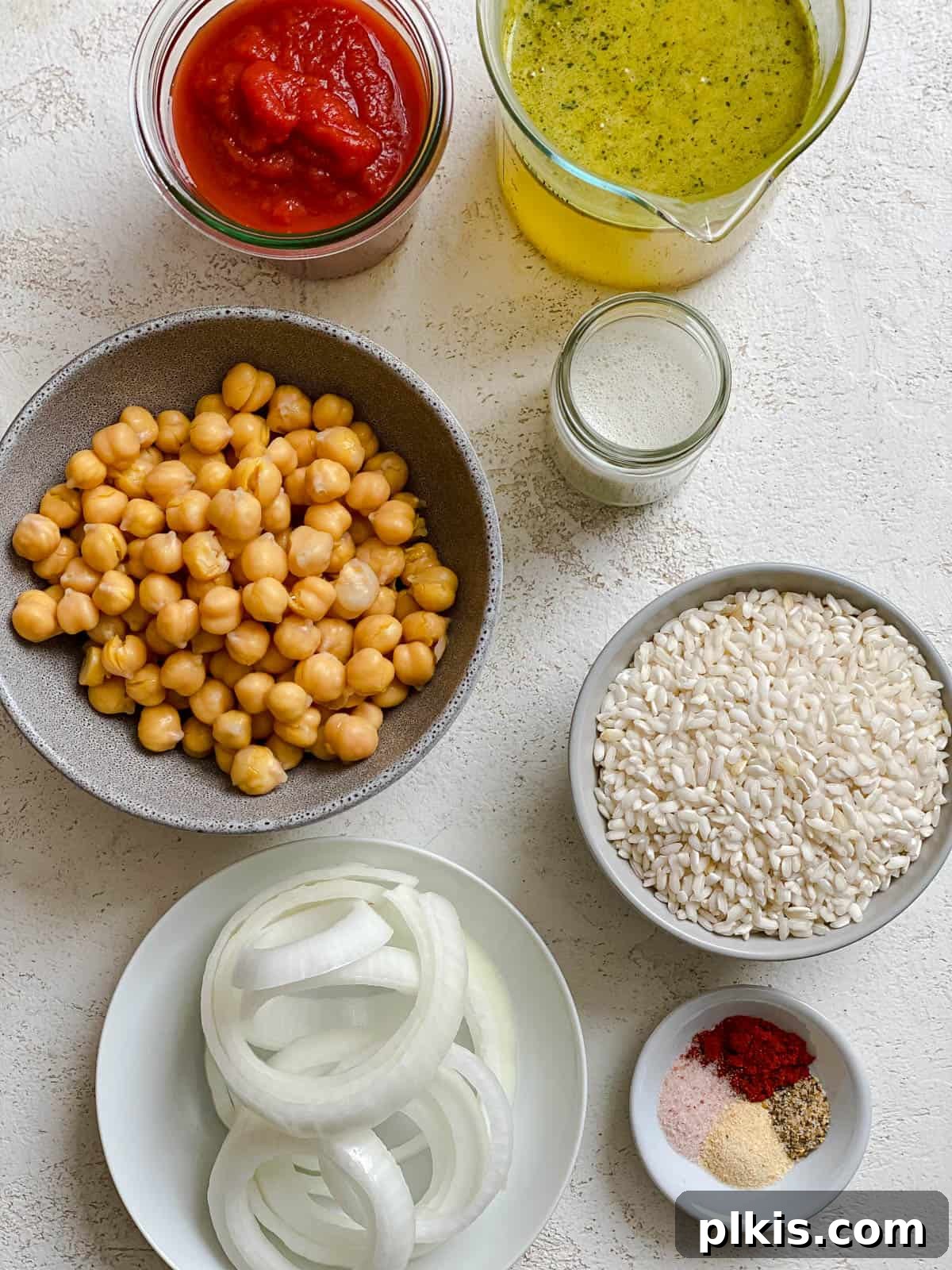
- Tomato Soup (or Thin Sauce): This ingredient is a clever hack for achieving a natural, rich red hue in our tandoori without relying on artificial food colorings, which often contain non-vegan ingredients. Beyond color, the tomato base adds a lovely tang and depth of flavor that beautifully complements the robust tandoori spices. Ensure you choose a plain, unsweetened tomato soup or a thin tomato sauce for the best results. A good quality canned crushed tomato or tomato puree diluted slightly with water can also work in a pinch.
- Chickpeas: The star protein of this vegan adaptation! Chickpeas, also known as garbanzo beans, are incredibly versatile, affordable, and packed with plant-based protein and dietary fiber. For convenience, we use canned chickpeas, which should be thoroughly drained and rinsed to remove excess sodium and improve their texture. If you prefer to cook from scratch, 1 ½ cups of cooked chickpeas (about ½ cup dry) can be used. Other excellent plant-based protein alternatives include lentils, firm tofu cubes, or even cauliflower florets, all of which absorb the tandoori flavors wonderfully.
- Tandoori Spice Blend (or Tandoori Masala): This is where the magic happens! Tandoori spice is a complex and aromatic blend typically featuring a mix of cumin, coriander, turmeric, paprika, ginger, garlic, cayenne pepper, and sometimes fenugreek and cinnamon. It’s crucial for achieving that characteristic tandoori flavor. You should be able to find it in the spice aisle of most well-stocked grocery stores or Indian specialty markets. If you can’t find a pre-made blend, consider making your own with individual spices (more on this in the FAQ section).
- Additional Spices: To enhance and balance the tandoori blend, we add a few extra staples:
- Salt: Essential for bringing out all the flavors and ensuring the dish isn’t bland. Adjust to your personal preference.
- Garlic Powder: Provides a concentrated garlic flavor that permeates the sauce without the pungency of fresh garlic, though fresh minced garlic can certainly be used if desired.
- Lemon Pepper: Adds a bright, zesty kick and a subtle peppery warmth. If lemon pepper isn’t available, simply use regular black pepper and a squeeze of fresh lemon juice at the end for similar effect.
- Onion: A large yellow or white onion, thinly sliced into rings, forms the aromatic base of our sauce. As the onion simmers, it softens and sweetens, adding a foundational layer of flavor to the dish. Red onions can also be used for a slightly sharper, more vibrant taste.
- Coconut Milk: Full-fat canned coconut milk is highly recommended here for its rich, creamy texture and subtle sweetness that beautifully balances the savory spices. It’s a fantastic dairy-free alternative to traditional yogurt often used in tandoori marinades, and generally more shelf-stable and affordable. It’s absolutely crucial to use unsweetened coconut milk to prevent any unwanted sweetness in your savory dish. If you don’t have coconut milk, other unsweetened non-dairy milks like oat milk or cashew milk could be substituted, though the final texture and richness might vary.
- Risotto or Rice (for serving): While technically a serving suggestion, a good quality risotto rice (like Arborio) or your preferred rice (like basmati or jasmine) is essential for completing the meal.
- Vegetable Stock (or Broth/Water): Needed for cooking the risotto or rice. Using a good quality vegetable stock will add an extra layer of flavor to your grain.
How to Make Vegan Tandoori Chickpeas: A Simple Cooking Guide
Creating this flavorful vegan tandoori chickpea dish is remarkably straightforward, making it perfect for both novice and experienced cooks. Follow these easy steps to bring this vibrant meal to life in your kitchen.
- Step 1: Prepare Your Grain (If Serving with Risotto/Rice)
If you plan to serve your delicious vegan tandoori chickpeas over creamy risotto or rice, begin cooking your chosen grain first. For risotto, aim for a ratio of approximately 3 parts liquid (water or vegetable broth) to 1 part dried risotto rice. For regular rice, a 2:1 liquid-to-rice ratio is generally standard. Follow the package instructions for your specific grain to ensure perfect consistency. Starting this first ensures everything is ready to serve hot at the same time. - Step 2: Combine and Simmer the Base
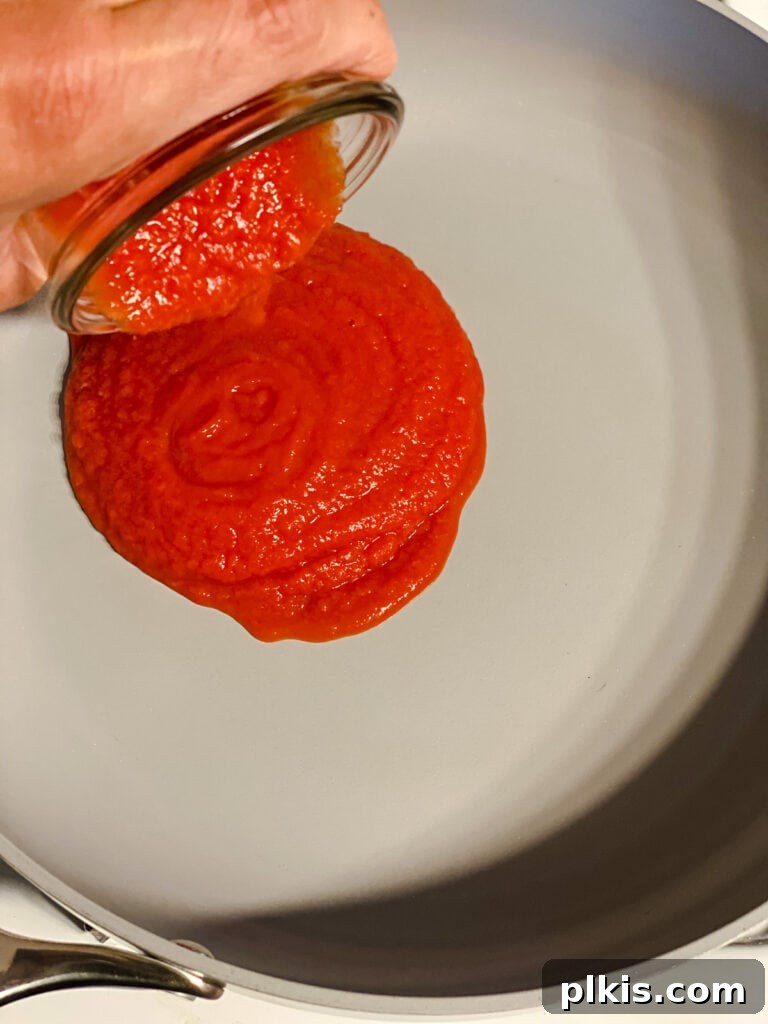
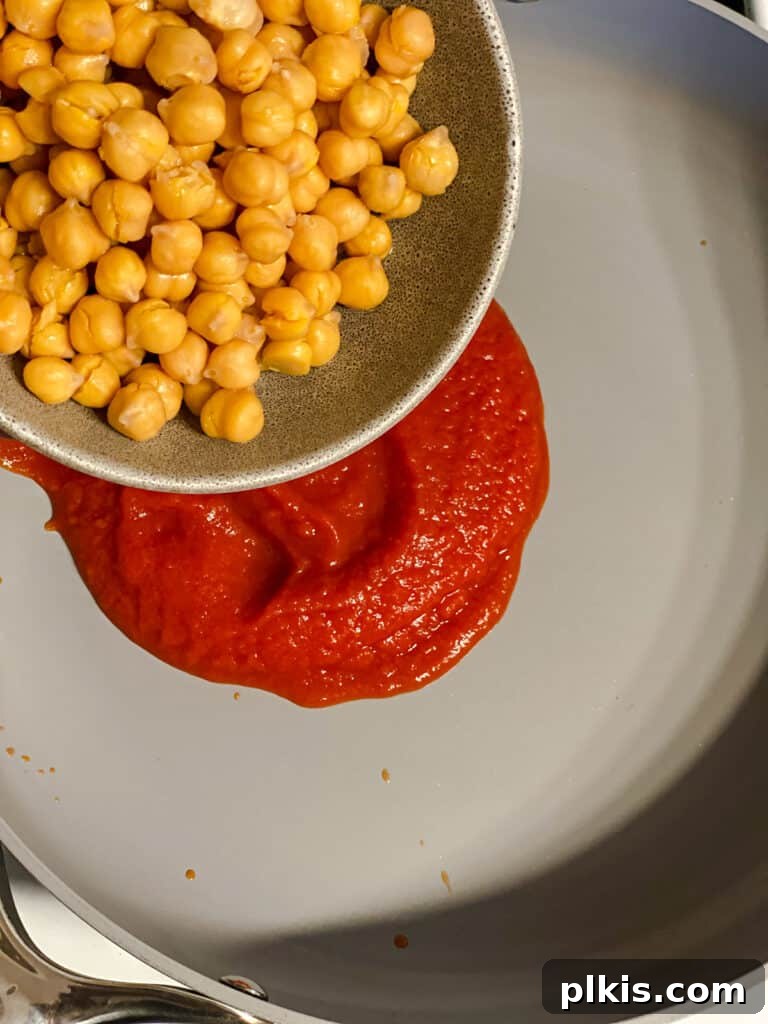
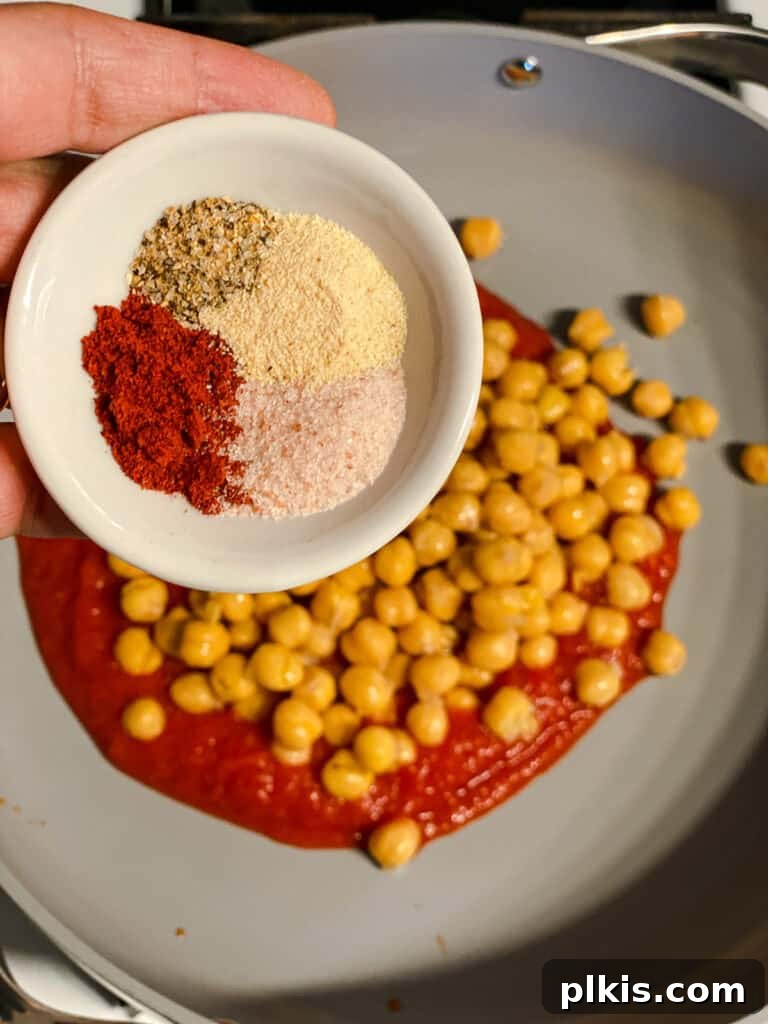
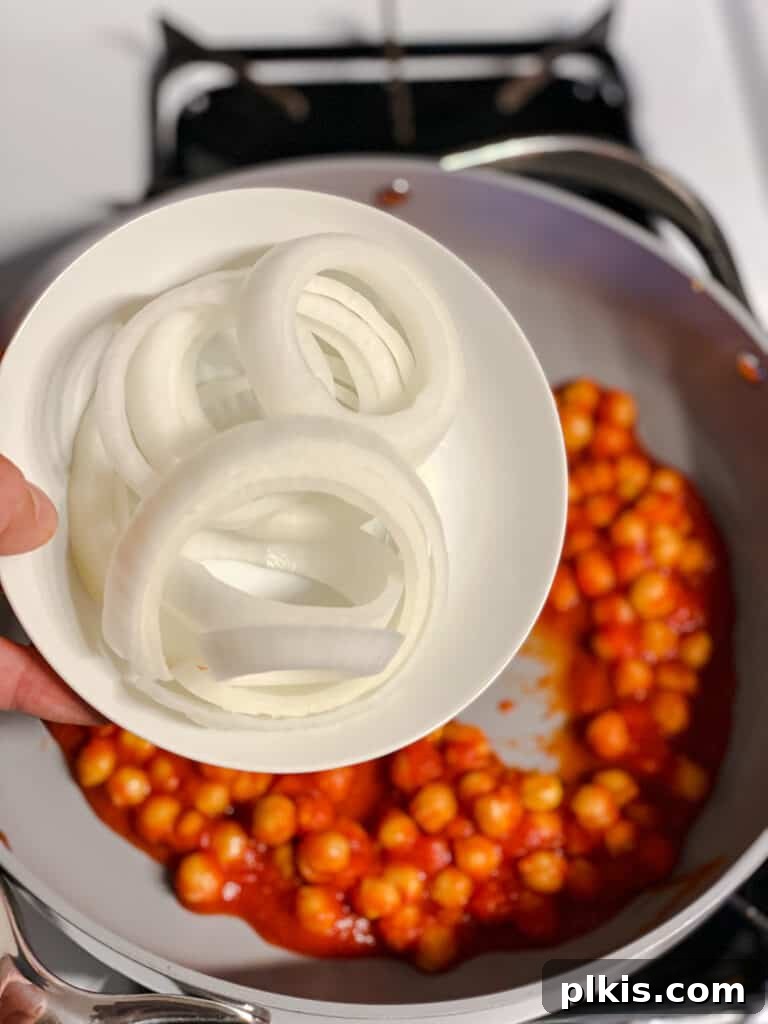
In a large saucepan or a deep skillet, combine the full cup of tomato soup, your drained and rinsed chickpeas, the flavorful tandoori spice blend, salt, garlic powder, lemon pepper, and the thinly sliced onion rings. Give everything a good stir to ensure all the chickpeas and onion slices are thoroughly coated with the spices and tomato base. Place the saucepan over medium heat, bringing the mixture to a gentle simmer.
- Step 3: Simmer to Develop Flavors
Once the mixture is simmering gently, reduce the heat slightly to maintain a consistent, low simmer. Allow the chickpeas and spices to cook together for approximately 20 minutes. This crucial simmering period allows the chickpeas to fully absorb the rich, complex flavors of the tandoori spice blend, and for the onions to become tender and sweet. Stir occasionally to prevent sticking and ensure even cooking. - Step 4: Incorporate Creaminess and Thicken
After the initial 20 minutes of simmering, lower the heat to its lowest setting. Now, stir in the unsweetened coconut milk (or your chosen non-dairy milk). The coconut milk will add a luxurious creaminess and mellow the spices slightly, creating a beautifully balanced sauce. Continue to simmer the dish for another 10 minutes, or until the sauce has thickened to your desired consistency. It should be rich and coating, clinging beautifully to the chickpeas. Taste and adjust seasoning if necessary, adding a little more salt or spice if desired. - Step 5: Serve and Enjoy!
Once the vegan tandoori chickpeas have reached their perfect consistency and flavor, remove them from the heat. Serve immediately, piping hot, spooned generously over your prepared creamy risotto, fluffy rice, or another grain of your choice. Garnish with fresh cilantro, parsley, or any preferred herbs for a pop of color and freshness. Enjoy this delightful and satisfying meal!
Recipe FAQs: All Your Questions Answered
Below are some frequently asked questions about this Vegan Tandoori Chickpeas recipe and related topics, providing deeper insights and helpful information.
While both Tandoori and Tikka Masala are immensely popular and flavorful dishes in Indian cuisine, they possess distinct characteristics in terms of preparation, spice profiles, and final presentation. Tandoori refers to dishes that are traditionally cooked in a tandoor oven, which is a cylindrical clay oven that cooks food at very high temperatures, imparting a unique smoky flavor and slightly charred exterior. Tandoori marinades are typically yogurt-based and feature a vibrant red or orange color (often from spices like paprika or food coloring, though ours uses tomato soup for natural color). The resulting dishes are often drier and more char-grilled. In contrast, Tikka Masala is known for its rich, creamy, and often slightly sweet tomato-based sauce. The “tikka” refers to pieces of meat (often chicken) that are marinated and grilled (sometimes in a tandoor, but then added to the sauce), but the defining feature is the luscious, intensely flavored gravy. Tikka Masala is typically simmered on a stovetop and is much saucier and richer than Tandoori dishes, making it perfect for scooping up with naan bread or serving over rice.
If you find yourself without a pre-made tandoori spice blend, don’t worry! You can easily create a homemade substitute using common spices you likely already have in your pantry. A good homemade tandoori spice blend often includes: 1 tablespoon ground cumin, 1 tablespoon ground coriander, 1 tablespoon paprika (smoked paprika can add depth), 1 teaspoon turmeric, 1 teaspoon garlic powder, 1 teaspoon ginger powder, ½ teaspoon cayenne pepper (adjust to your spice preference), and a pinch of ground cardamom or cinnamon for warmth. Mix these thoroughly, and you’ll have a blend that offers a similar aromatic profile. Alternatively, Garam Masala is a widely available Indian spice blend that shares many similar components with tandoori spice. While it leans a bit spicier and often has more prominent notes of cinnamon, cloves, and cardamom, it can work as a suitable substitute in a pinch, adding a somewhat similar flavor profile to your dish. You might want to use slightly less Garam Masala initially and adjust to taste.
Chickpeas are a staple in Indian cuisine, celebrated for their versatility and nutritional value. There’s a vast array of delicious Indian dishes that feature them as the main protein. Beyond this tandoori creation, you can explore traditional favorites like Chana Masala, a hearty and tangy chickpea curry often made with tomatoes, onions, garlic, ginger, and a blend of aromatic spices. Another popular street food is Chana Chaat, a vibrant and refreshing chickpea salad bursting with spices, chutneys, and fresh vegetables. You might also enjoy Chana Aloo, a comforting curry combining chickpeas and potatoes in a rich, spicy gravy. For a lighter touch, try Chickpea & Spinach Curry, where chickpeas are simmered with leafy greens in a fragrant sauce. On our blog, you can find other fantastic chickpea-based recipes like Curry Chickpeas, a flavorful and quick meal; Coconut Curry Soup, which offers a creamy and aromatic experience; Yellow Dal (while traditionally lentils, sometimes chickpeas are added for texture), and Quinoa Chickpea Patties, a delicious way to enjoy Indian-inspired flavors in a different format. The possibilities with chickpeas in Indian cooking are truly endless!
Pro Tips for Perfect Vegan Tandoori Chickpeas
Achieving the best possible flavor and texture in your Vegan Tandoori Chickpeas is simple with these expert tips. These small adjustments can make a big difference in your culinary experience.
- Start with Cooked Chickpeas: This tip is absolutely crucial. Whether you’re using canned chickpeas or cooking them from dried, ensure your chickpeas are fully cooked and tender before adding them to the saucepan. This recipe does not contain enough liquid or cooking time for dried, uncooked chickpeas to soften adequately directly in the sauce. Using pre-cooked chickpeas guarantees they will absorb the flavors beautifully without extending the overall cooking time, maintaining the dish’s quick preparation advantage.
- Marinate the Chickpeas in Advance (for Deeper Flavor): For an even more profound and infused flavor, consider marinating your chickpeas. While not strictly necessary for this recipe, authentic tandoori preparations often involve an overnight marinade. You can replicate this by combining the drained chickpeas, tandoori spice blend, salt, garlic powder, lemon pepper, and tomato soup mixture in an airtight container and refrigerating it for at least 4 hours, or ideally up to 24 hours, before proceeding with step 2 of the cooking instructions. This allows the spices to deeply penetrate the chickpeas, resulting in a more complex and satisfying taste.
- Adjust Spices to Your Taste: Spice preference is highly personal, and this recipe is wonderfully forgiving. The given measurements are a great starting point, but don’t hesitate to adjust. If you enjoy a spicier kick, add a pinch more cayenne pepper or a dash of red chili flakes. If you prefer a milder flavor, start with slightly less tandoori spice and gradually add more until you reach your desired intensity. Always taste the sauce as it simmers and make adjustments before serving. Remember, it’s easier to add more spice than to take it away!
- Don’t Skimp on the Full-Fat Coconut Milk: While other non-dairy milks can be substituted, full-fat canned coconut milk provides the best richness and creaminess, essential for a luxurious tandoori sauce. The fat content helps carry the flavors and creates a more satisfying mouthfeel.
- Sauté Onions First (Optional): For an extra layer of sweetness and depth, you can lightly sauté the thinly sliced onions in a tablespoon of oil for 5-7 minutes before adding the other ingredients. This caramelizes the onions slightly, enhancing their flavor profile.
Serving Suggestions and Accompaniments
This versatile Vegan Tandoori Chickpeas dish is delicious on its own, but it truly shines when paired with the right accompaniments. Here are some fantastic serving ideas to complete your meal and create a delightful culinary experience:
- Creamy Risotto or Rice: As suggested in the recipe, serving these flavorful chickpeas over a bed of creamy risotto creates a wonderfully comforting and indulgent meal. The richness of the risotto beautifully complements the spiced chickpeas. Alternatively, classic grains like fluffy brown rice, fragrant basmati rice, or light and airy quinoa are excellent choices, providing a perfect canvas for the vibrant sauce. For an aromatic twist, try it with this delightful garlic rice.
- Fresh Flatbreads: No Indian-inspired meal is complete without a side of warm bread for scooping up all that delicious sauce. Serve with soft, pillowy Vegan Naan bread, crispy papadums, or even simple whole wheat tortillas for a convenient option.
- Refreshing Salads: To balance the richness of the tandoori chickpeas, consider a light and fresh salad. A Spicy Cucumber Salad offers a cooling crunch and a hint of heat, while a simple garden salad with a lemon-tahini dressing provides a refreshing contrast. This unique Raw Carrot Salad could also offer a sweet and tangy element.
- Crispy Sides: Add some textural variety with crispy vegetable sides. Crispy Green Bean Fries offer a satisfying crunch, or you could opt for roasted broccoli or cauliflower for added nutrition and a slight char.
- Vegan Raita: A cool and creamy vegan raita (yogurt-based dip) made with dairy-free yogurt, cucumber, and mint would provide a wonderful cooling contrast to the spiced chickpeas.
- Fresh Herbs: Always finish your dish with a generous sprinkle of fresh cilantro or parsley. These herbs not only add a pop of color but also contribute a fresh, aromatic lift that brightens the entire meal.
Storage and Make-Ahead Instructions
This Vegan Tandoori Chickpeas recipe is fantastic for meal prepping and enjoying throughout the week. Proper storage ensures your leftovers remain fresh and flavorful.
- Refrigeration: To maintain optimal freshness and prevent sogginess, it’s best to store the Vegan Tandoori Chickpeas and any accompanying creamy risotto or cooked grain in separate, airtight containers. When refrigerated promptly within two hours of cooking, the tandoori chickpeas will keep beautifully for 4-5 days. The cooked grains will also last for a similar duration.
- Reheating:
- Stovetop: For the best results, reheat the chickpeas gently in a saucepan over medium-low heat, stirring occasionally, until thoroughly warmed through. You might need to add a splash of water or vegetable broth to loosen the sauce if it has thickened too much in the refrigerator.
- Microwave: If you’re short on time, the chickpeas can also be reheated in the microwave in a microwave-safe dish. Heat in 1-minute intervals, stirring in between, until hot.
- Reheat risotto or rice separately, adding a bit of water or broth to restore creaminess if needed.
- Freezing (Experimental): While I haven’t extensively tested freezing this specific tandoori chickpeas recipe, chickpeas and tomato-based sauces generally freeze well. However, the coconut milk in the sauce might slightly alter the texture upon thawing and reheating, potentially becoming a little grainy or separating. If you wish to experiment, transfer the cooled tandoori chickpeas to a freezer-safe airtight container, leaving some headspace. Freeze for up to 2 months. To use, defrost completely in the refrigerator overnight before reheating on the stovetop. Stir vigorously during reheating to help re-emulsify the sauce. The slight textural change should not significantly impact the flavor. It’s generally not recommended to freeze cooked risotto as its texture can become mushy.
- Make-Ahead Tips: The tandoori chickpea base can be prepared entirely in advance and stored in the refrigerator for up to 2 days. This is particularly convenient if you’re hosting or want to minimize cooking time on a busy day. Simply reheat and serve with freshly cooked rice or risotto. As mentioned in the “Pro Tips,” you can also marinate the uncooked chickpeas in the spice and tomato soup mixture for up to 24 hours in advance to deepen the flavors.
More Irresistible Vegan Chickpea Recipes
Chickpeas are a true superstar in plant-based cooking, offering incredible versatility, nutrition, and affordability. If you loved this Tandoori Chickpeas recipe, you’re sure to enjoy these other fantastic vegan dishes featuring our favorite legume:
- Crispy Air Fryer Chickpeas: A quick and easy snack or salad topper, these chickpeas are seasoned and air-fried to golden perfection for an irresistible crunch.
- Chickpea Sweet Potato Boats: Wholesome baked sweet potatoes generously filled with a flavorful and hearty chickpea mixture, offering a complete and satisfying meal.
- Hearty Vegan Chickpea Stew: A comforting and robust stew packed with vegetables and chickpeas, perfect for a warming meal on a chilly day.
- Flavorful Plant-Based Chickpea Tuna Salad: A delicious and convincing vegan alternative to classic tuna salad, perfect for sandwiches, wraps, or salads.
- Easy Homemade Hummus Recipes: Learn how to make creamy, smooth hummus from scratch with various flavor variations – a versatile dip or spread.
- Refreshing Vegan Lentil Chickpea Salad: A light yet satisfying salad combining the goodness of lentils and chickpeas with a vibrant tahini dressing.
Photos by Alfonso Revilla
Vegan Tandoori Chickpeas
★
★
★
★
5 mins
30 mins
35 mins
4 servings
Equipment
-
Measuring Cups
-
Measuring spoons
-
Knife set
Ingredients
- 1 cup of risotto or rice (dried, any grain is fine)
- 2-3 cups of veggie stock (broth or water is fine. Amount depends on what grain you pick)
- 1 cup of tomato soup (or thin sauce)
- 15 ounces of chickpeas (1 can, drained and rinsed)
- ½ teaspoon of tandoori spice
- ½ teaspoon of salt
- ¼ teaspoon of garlic powder
- ¼ teaspoon of lemon pepper
- ¼ of a large yellow onion (thinly sliced in rings)
- 2 tablespoons of unsweetened full-fat coconut milk (or any unsweetened non-dairy milk)
Instructions
-
In a medium pot, cook your rice or risotto according to package instructions. Risotto typically requires about 3 cups of liquid per 1 cup of dried rice, while regular rice usually needs a 2:1 ratio.
-
In a large saucepan, combine the tomato soup, chickpeas, tandoori spice, salt, garlic powder, lemon pepper, and thinly sliced onion. Stir well to ensure all ingredients are evenly coated. Place over medium heat to bring to a simmer.
-
Once simmering, reduce the heat to a gentle simmer and cook for 20 minutes, stirring occasionally, to allow the flavors to meld and deepen.
-
After 20 minutes, lower the heat to its lowest setting and stir in the coconut milk. Continue to simmer for another 10 minutes, or until the sauce has thickened to your desired consistency.
-
Serve hot over your prepared rice or risotto, garnished with fresh cilantro if desired, and enjoy!
Notes
- Start with cooked chickpeas. If using dried chickpeas, they must be cooked ahead of time. There is not enough liquid in the recipe for raw chickpeas to cook directly in the pan.
- Marinate the chickpeas in advance, if desired. For deeper flavor, you can marinate the chickpeas in the spice and tomato soup mixture for up to 24 hours in the refrigerator before cooking.
- Adjust the spices to taste. Everyone’s spice preference is different. Feel free to adjust the amount of tandoori spice, salt, and lemon pepper to suit your palate.
Nutrition
Carbohydrates: 59g
Protein: 9g
Fat: 4g
Saturated Fat: 2g
Polyunsaturated Fat: 1g
Monounsaturated Fat: 1g
Sodium: 1199mg
Potassium: 436mg
Fiber: 6g
Sugar: 4g
Vitamin A: 413IU
Vitamin C: 5mg
Calcium: 59mg
Iron: 2mg
Additional Info
Margaret Chapman
Dinner
Indian
Stovetop
Vegan
Please tag us at @PlantBasedOnABudget! 🙂