
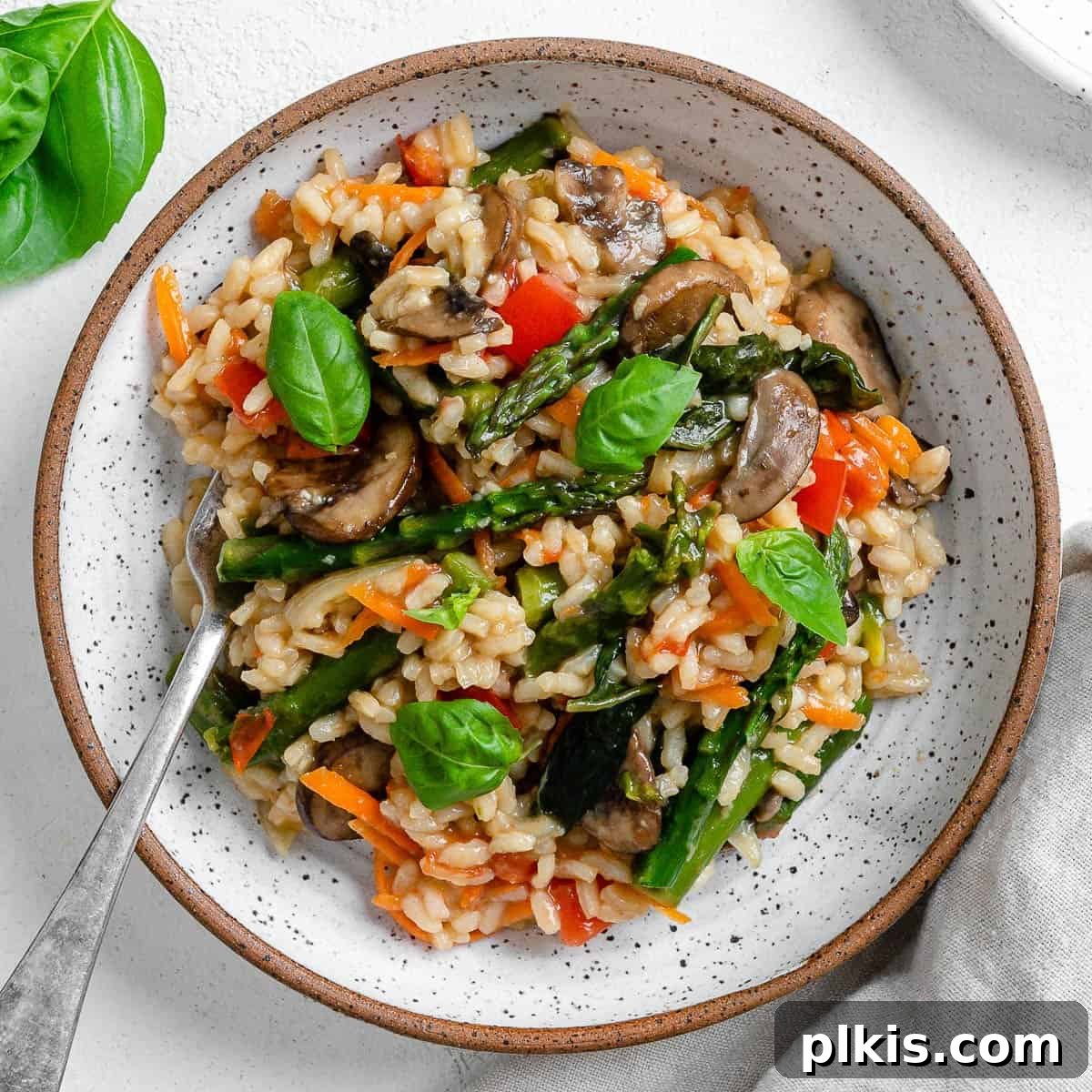
Best Veggie Vegan Risotto: A Perfectly Creamy & Delicious Plant-Based Meal
Discover the ultimate **vegan risotto recipe** that promises a perfectly creamy, intensely flavorful, and utterly satisfying meal. Packed with vibrant vegetables, this plant-based risotto is surprisingly easy to make and guaranteed to become a family favorite. Say goodbye to the misconception that risotto is too complicated – our streamlined approach brings this classic Italian dish within reach for every home cook, no dairy required!
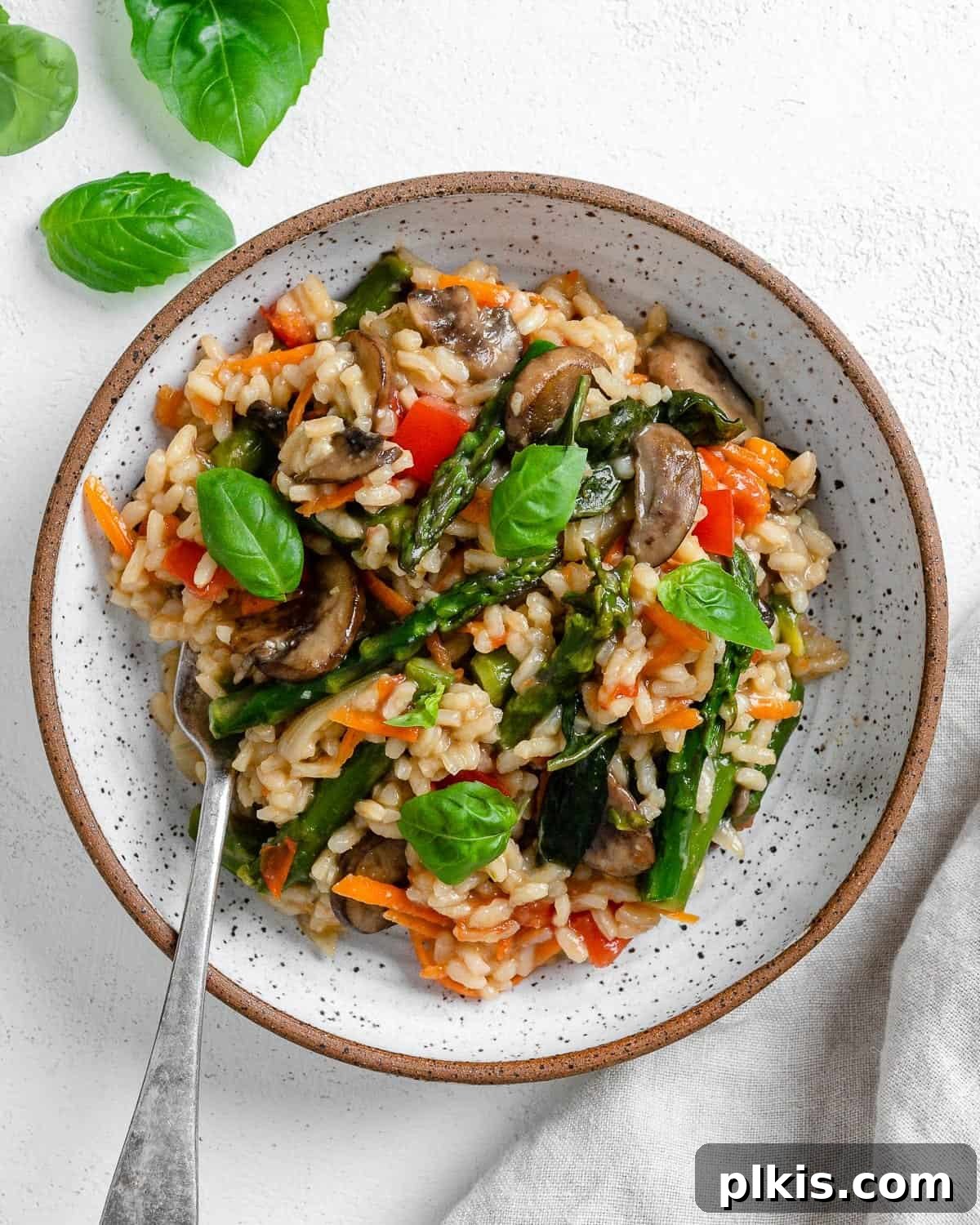
Many home cooks shy away from risotto, believing it demands excessive time and skill. However, I’m here to debunk that myth with this incredible vegetable risotto recipe. It consistently earns rave reviews at my dinner table, proving that a restaurant-quality meal can be effortlessly created in your own kitchen. This isn’t just a recipe; it’s an invitation to enjoy rich, comforting Italian flavors with a healthy, plant-based twist.
This versatile vegan risotto serves beautifully as a hearty main course, or it can effortlessly complement your favorite entrées as an elegant side dish. When presented as a main dish, all you need is a crisp salad and a delightful bread like this homemade Focaccia Bread to complete the experience. It offers a wonderful alternative to traditional potato or rice sides, pairing exceptionally well with savory dishes such as white bean burgers or delectable crispy tofu strips.
If this creamy vegan risotto captures your heart, be sure to explore our brown rice risotto variation too. It’s another delicious option that maintains the same comforting appeal!
Why This Vegan Risotto Recipe Is a Must-Try
Our vegan risotto stands out for several compelling reasons, making it a reliable and enjoyable choice for any meal:
- Unbelievably Creamy Texture: The secret to truly luscious risotto lies in Arborio rice. Its high starch content is naturally released during the cooking process, creating a wonderfully creamy, dairy-free texture without the need for any milk, cream, or cheese. Each grain absorbs the flavorful broth, swelling to perfection while contributing to an irresistibly smooth consistency.
- Hearty Vegan Comfort Food: This veggie risotto is the epitome of wholesome comfort. Whether served as a satisfying main meal or a rich side dish, its hearty nature and abundant vegetables make it deeply gratifying. It’s the kind of dish that warms you from the inside out, offering a nourishing and fulfilling experience that appeals to vegans and non-vegans alike.
- Exceptional Flexibility & Customization: One of the greatest advantages of this vegetable risotto is its adaptability. It’s a fantastic way to utilize whatever fresh vegetables you have on hand, minimizing food waste and encouraging creativity in the kitchen. Feel free to swap out or add any vegetables from your fridge to craft a unique combination tailored to your taste and what’s in season. This flexibility ensures that your risotto can always be fresh, exciting, and perfectly suited to your preferences.
Is Risotto Traditionally Vegan? Understanding the Plant-Based Adaptation
Traditional Italian risotto, at its core, is a dish made by slowly cooking Arborio rice in a savory stock, typically finished with butter and Parmesan cheese for its characteristic creamy richness. While the basic preparation isn’t vegan due to these dairy components, adapting risotto to be entirely plant-based is remarkably simple and doesn’t compromise on flavor or texture.
In a restaurant setting, if a risotto dish isn’t explicitly marked as vegan, it’s always wise to inquire about the ingredients and preparation methods. Common non-vegan elements include butter, cheese (like Parmesan), and sometimes even chicken or beef stock. However, in the comfort of your own kitchen, transforming this classic into a delicious vegan meal is straightforward. Simply substitute animal products with equally appealing plant-based alternatives: use high-quality olive oil instead of butter, replace dairy cheese with nutritional yeast for a cheesy umami flavor, or a good quality vegan Parmesan. The depth of flavor comes from aromatic vegetables, herbs, spices, and a rich vegetable broth, ensuring your homemade vegan risotto is just as appetizing and tantalizing as its traditional counterpart.
Essential Ingredients for Your Delicious Veggie Risotto
Crafting this incredible vegan risotto requires a simple list of ingredients, most of which are readily available at any grocery store. Focus on fresh, quality produce to maximize flavor and enjoyment.
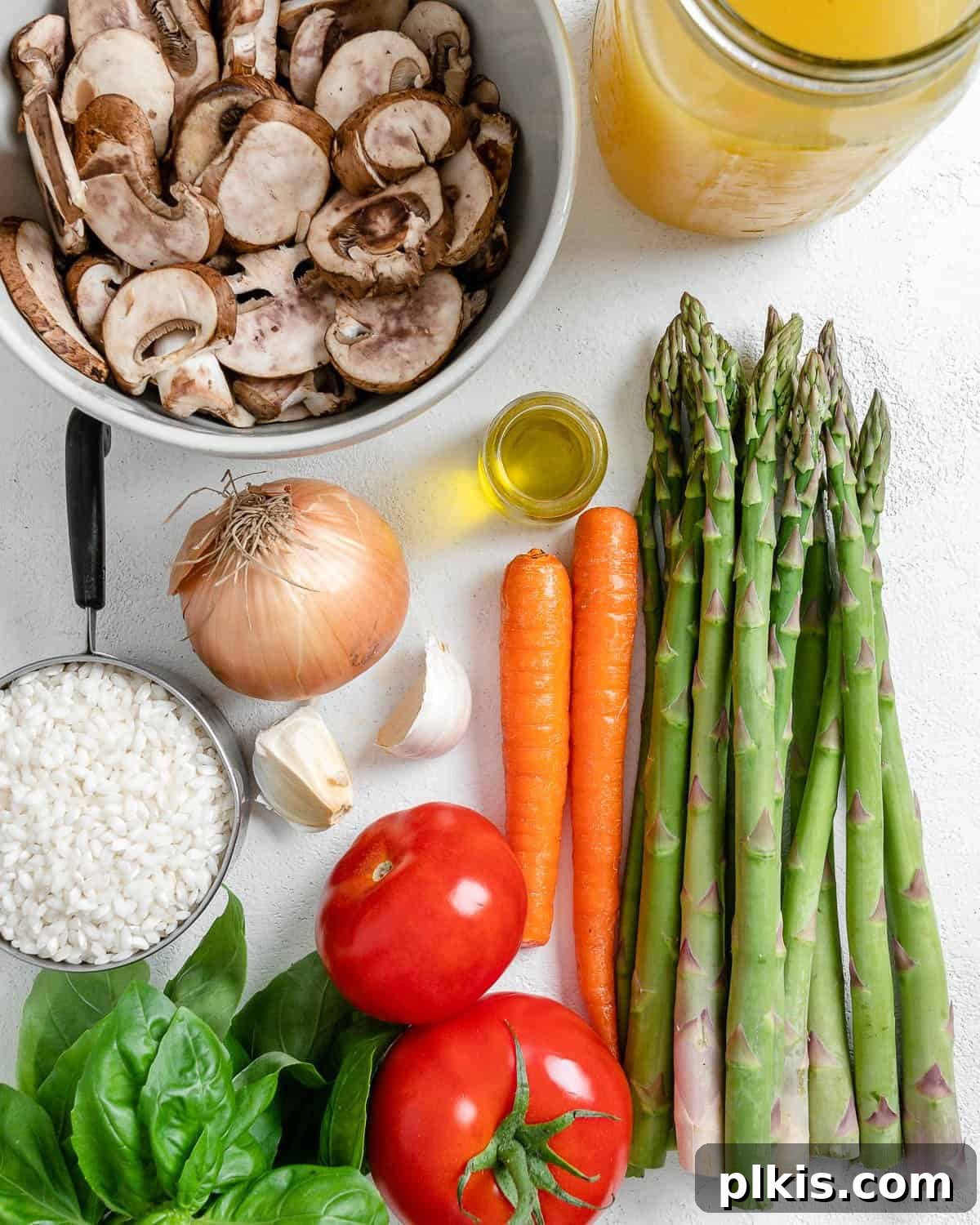
- Olive Oil: We use olive oil for sautéing our vegetables, providing a healthy and flavorful base for the risotto. It performs beautifully at the medium temperatures required for this plant-based dish.
- Fresh Mushrooms: Any variety of fresh mushrooms will work wonders, adding a rich, earthy umami depth. White or cremini mushrooms are excellent, budget-friendly, and widely available choices.
- Aromatics (Onion & Garlic): The foundational flavors of this easy vegetable risotto come from finely chopped yellow or sweet onions and freshly minced garlic. These aromatics are sautéed until tender, releasing their sweet and pungent notes that permeate the entire dish.
- Arborio Rice: This is the non-negotiable star of any truly creamy risotto. Its unique short, plump grains are high in starch, which is gradually released as it cooks, creating that signature velvety texture without any dairy.
- Vegetable Broth: Using a high-quality vegetable broth is crucial for infusing your risotto with deep, savory flavor. It’s far superior to cooking with water, providing a rich liquid for the Arborio rice to absorb.
- Fresh Veggies: Our preferred combination for this recipe includes crisp asparagus, juicy tomatoes, and sweet shredded carrots, adding color, texture, and nutritional value. Ensure your vegetables are fresh for the best results.
- Fresh Basil: The vibrant, peppery sweetness of fresh basil is the perfect finishing touch. Stirred in at the end, it infuses the best vegetarian risotto with an aromatic burst of flavor that truly elevates the dish.
Creative Substitutions and Delightful Variations for Your Risotto
This vegan risotto recipe is incredibly forgiving and encourages culinary exploration. Feel free to adapt it based on your pantry, preferences, or what’s seasonal. Here are some fantastic ideas to get you started:
- Vegan Risotto with Peas: A classic and refreshing twist! Simply swap the asparagus for an equal amount of fresh or frozen green peas. Add them towards the end of the cooking process so they retain their bright color and tender bite.
- Vegan Risotto with Asparagus Only: If you’re an asparagus enthusiast, embrace it fully! Increase the quantity of asparagus and omit the carrots and tomatoes for a more focused flavor profile.
- Vegan Risotto with No Mushroom: For those who aren’t fond of mushrooms, simply leave them out. To compensate for the lost umami flavor, consider stirring in a teaspoon of white miso paste during the last few minutes of cooking. Miso adds a wonderful savory depth without overpowering the dish.
- Other Vegetable Risotto Recipe Ideas: This recipe is a perfect canvas for almost any vegetable. Don’t let anything go to waste! Here are some of my favorite vegetables to incorporate, either individually or in creative combinations:
- Broccoli: Chop into small florets and add during the last 10 minutes of cooking.
- Spinach or Kale: Wilt in large handfuls right at the very end, just before serving.
- Fennel: Thinly slice and sauté with the onions for a subtle licorice-like flavor.
- Zucchini: Dice and add with the asparagus for a summery touch.
- Butternut Squash: Roast cubes separately until tender, then stir into the finished risotto for a sweet and earthy addition.
- Sweet Potato: Small diced sweet potato can be added earlier in the cooking process to soften.
- Bell Peppers: Dice and sauté with the aromatics for a pop of color and sweetness.
- Sun-dried Tomatoes: A fantastic way to add concentrated, savory tomato flavor. Chop and add with the fresh tomatoes.
Remember to consider the cooking time of different vegetables. Harder vegetables like carrots or squash might need to be added earlier, while softer greens like spinach should be stirred in at the very end to prevent overcooking.
Step-by-Step Guide: How To Make Vegan Risotto with Vegetables
If this marks your inaugural foray into making vegetable risotto, rest assured – the process is simpler than you might imagine. Follow these clear steps to achieve a perfectly creamy and flavorful dish:
- 1) In a large, heavy-bottomed saucepan or Dutch oven, heat the olive oil over medium heat. Once shimmering, add the sliced mushrooms, chopped onion, and minced garlic. Sauté, stirring occasionally, until the onion becomes tender and translucent, and the mushrooms have softened and released their moisture, about 5-7 minutes. This step builds the aromatic foundation of your risotto.
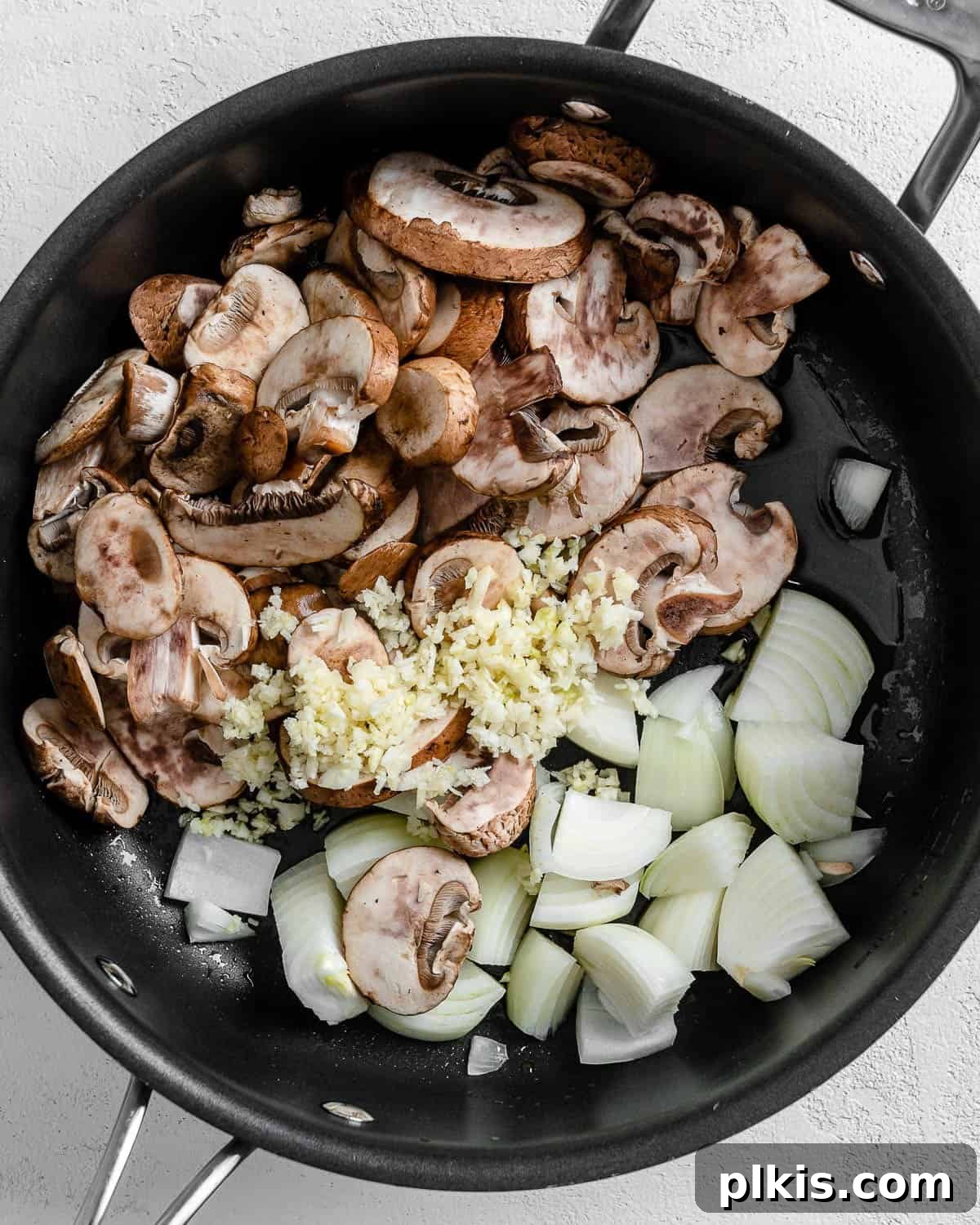
- 2) Add the uncooked Arborio rice to the skillet with the sautéed vegetables. Toast the rice for approximately 5 minutes, stirring constantly. You’ll notice the edges of the rice grains becoming translucent and slightly golden brown. This crucial step deepens the nutty flavor of the rice and helps prevent it from becoming mushy.
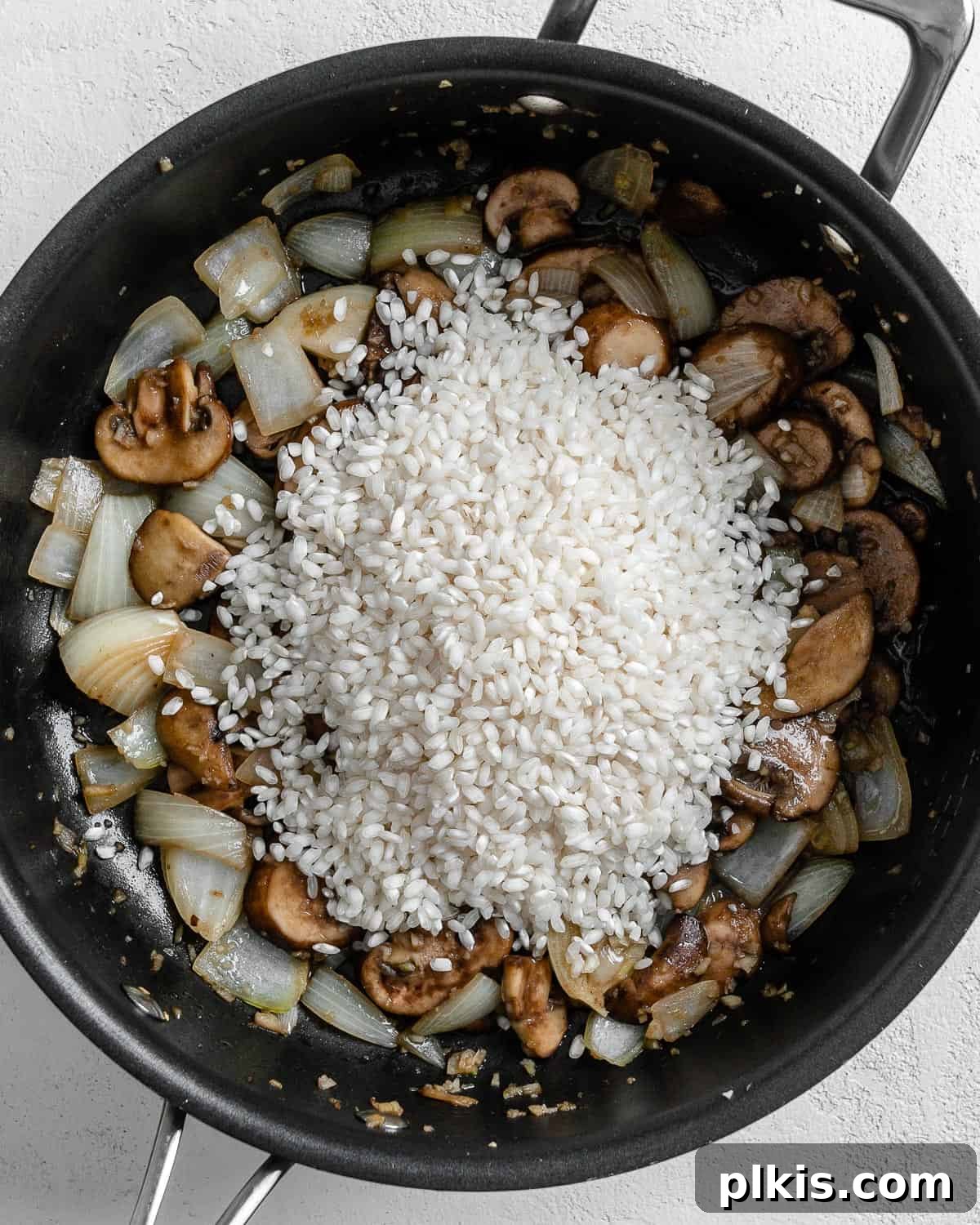
- 3) Simultaneously, in a separate saucepan, bring the vegetable broth to a gentle boil. Once boiling, reduce the heat to a low simmer, just enough to keep the broth hot. Maintaining hot broth is key to not shocking the rice and slowing down the cooking process.
- 4) Begin adding the hot broth to the rice mixture, starting with one cup. Pour it in slowly, stirring continuously with a wooden spoon. Continue to cook and stir over medium heat until all the liquid has been absorbed by the rice. This constant stirring helps to release the starches from the Arborio rice, which is essential for developing that coveted creamy texture.
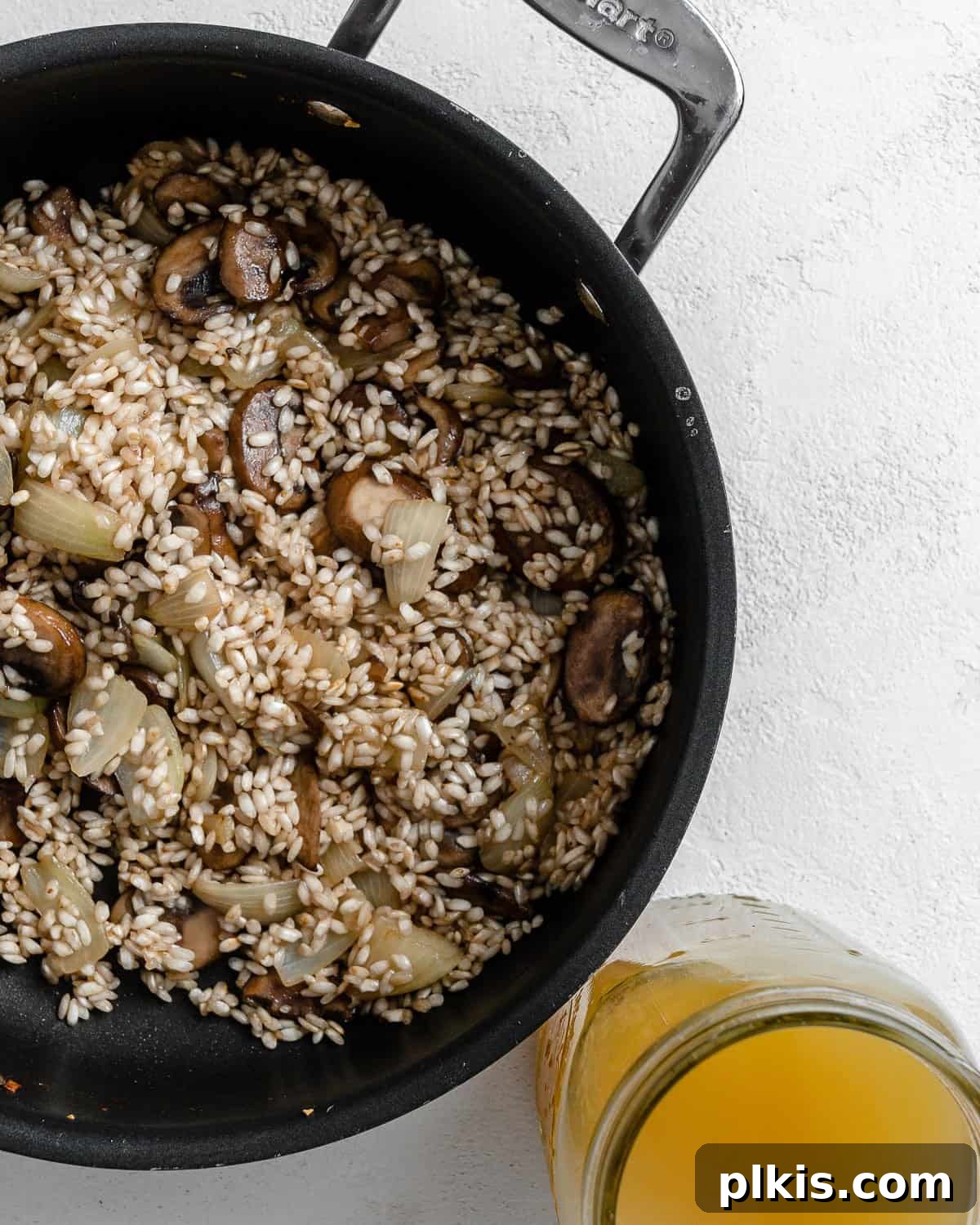
- 5) Next, add another half cup of the hot broth along with the fresh asparagus pieces to the rice mixture. Continue to stir constantly until this liquid is also fully absorbed. Following this, add an additional cup of broth, but this time, incorporate it a half-cup at a time, stirring persistently after each addition until the liquid has been fully taken up by the rice. This stage, where broth is added gradually, should take approximately 15 minutes, and you’ll notice the risotto thickening.
- 6) For the final liquid addition, stir in the remaining half-cup of broth along with the diced tomato and shredded carrot. Continue cooking and stirring. At this point, the rice should be reaching a slightly creamy consistency and should be just tender with a slight bite (al dente). Taste a grain to ensure it’s cooked to your desired texture.
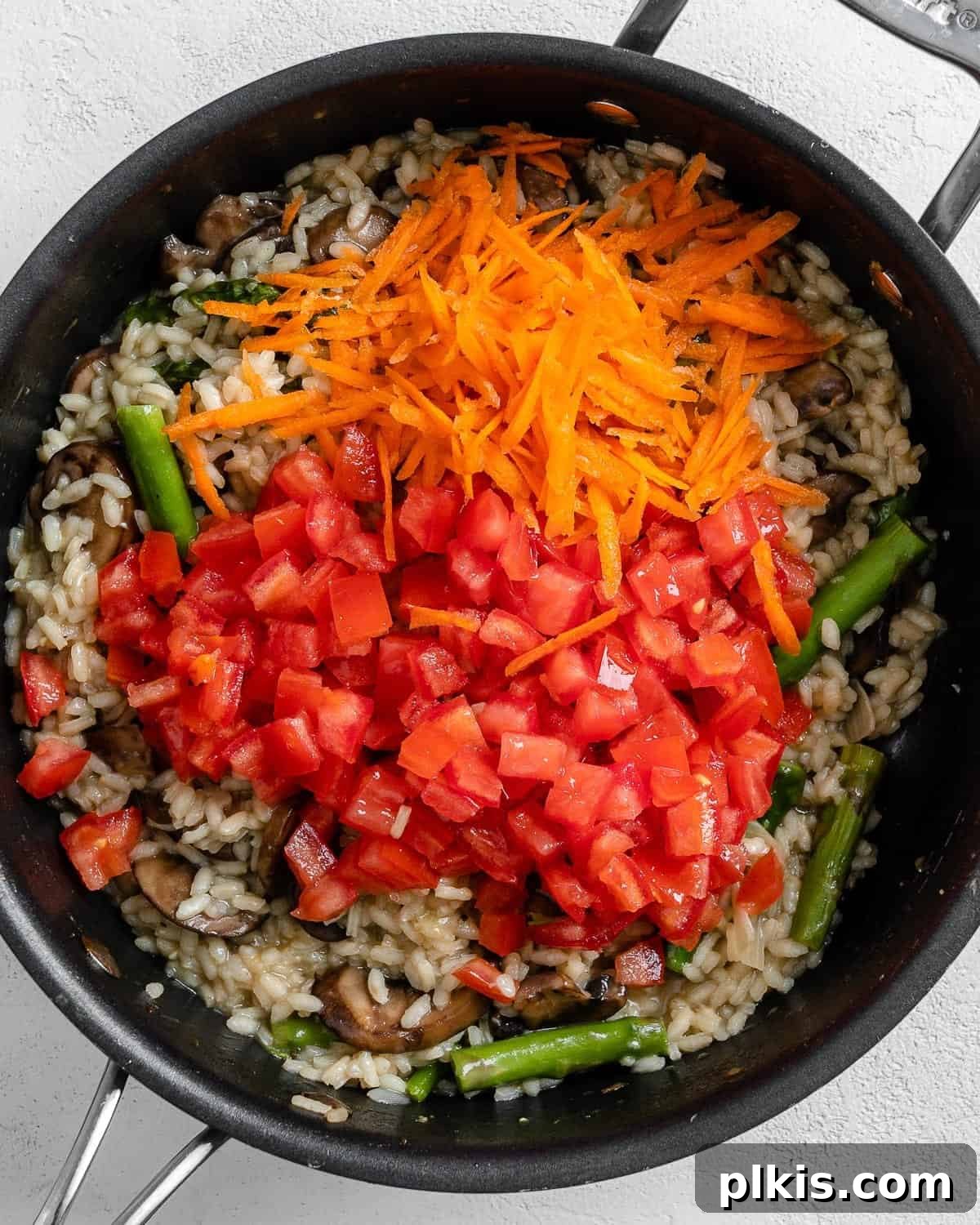
- 7) As a final flourish, stir in the snipped fresh basil. The warmth of the risotto will gently coax out its aromatic oils. Serve your delicious vegan risotto immediately, while it’s at its peak of creamy perfection.
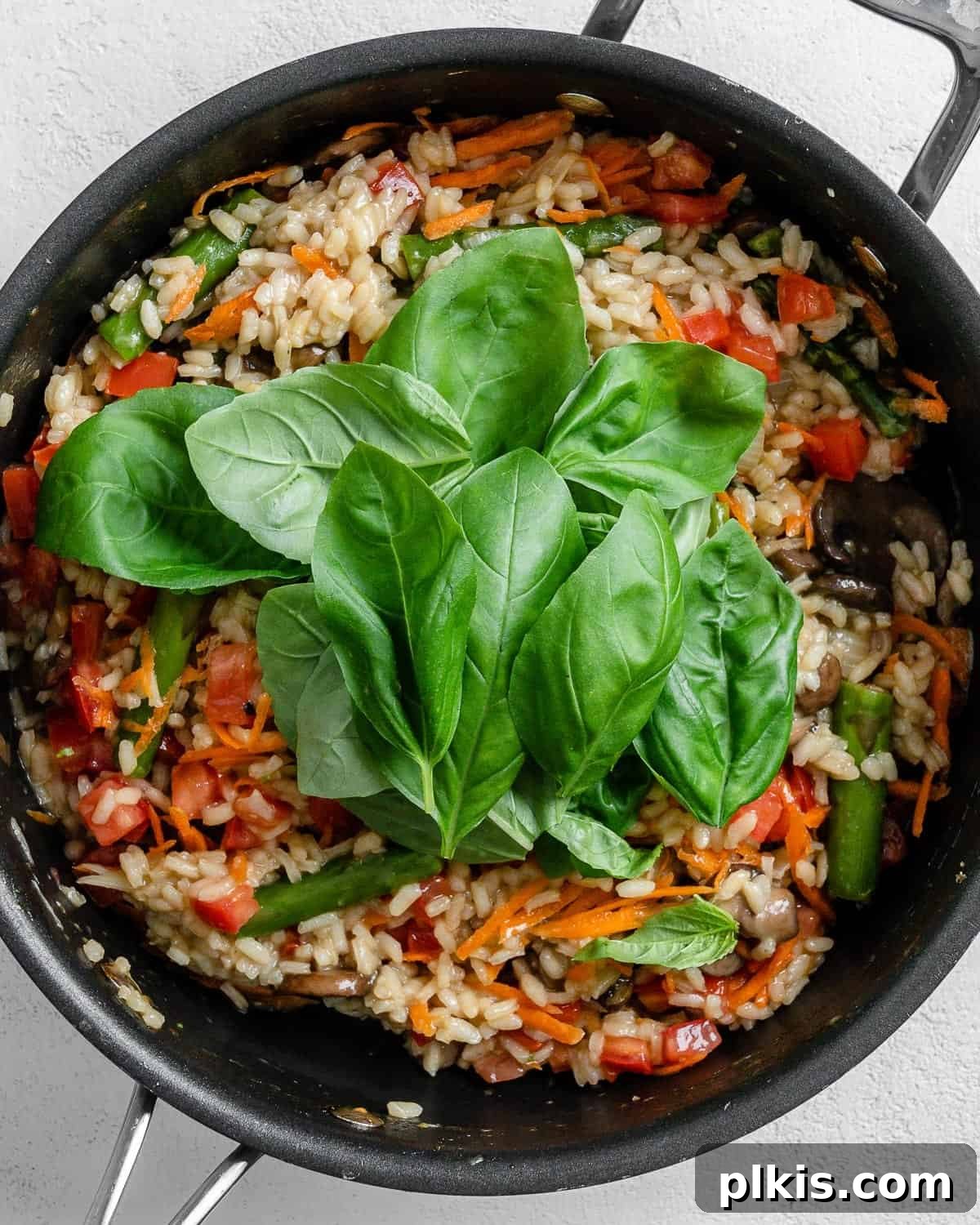
Expert Tips for Mastering Your Vegan Risotto
Achieving the perfect creamy vegan risotto involves a few key techniques. These expert tips will guide you to culinary success:
- Choose the Right Rice: The foundation of any authentic risotto is Arborio rice. Its distinct short, plump grains contain a high amount of amylopectin starch, which is gradually released as it cooks and is continuously stirred. This is what creates that signature creamy, luscious texture that other rice varieties simply cannot replicate. Using any other type of rice will result in a different, less creamy dish, so stick with Arborio for true risotto results.
- Embrace the Stirring: While you don’t need to stir constantly for the entire cooking duration, risotto demands frequent attention. Regular stirring ensures that the rice grains rub against each other, encouraging the release of starch. It also prevents the rice from sticking to the bottom of the pan and promotes even cooking. Think of it as a meditative process – a labor of love that rewards you with incredible creaminess.
- Add Broth Slowly and Warm: This is perhaps the most crucial technique. Adding the hot vegetable broth gradually, about a half to one cup at a time, and allowing each addition to be fully absorbed before adding more, is vital. This slow process enables the rice to cook evenly and for its starches to emulsify with the liquid, building the creamy texture layer by layer. Using warm broth (kept at a simmer in a separate pan) prevents shocking the rice, which can slow down cooking and result in an unevenly textured risotto.
- Don’t Skip Toasting the Rice: Before adding any liquid, briefly toast the Arborio rice in the hot oil (or water, if oil-free) with the aromatics. This step, typically lasting about 3-5 minutes until the edges of the grains become translucent and slightly nutty in aroma, enhances the overall flavor of the rice and helps it hold its shape, preventing it from becoming too starchy or mushy later.
- Incorporate Fresh Basil at the End: Fresh herbs, especially delicate ones like basil, are best added towards the very end of the cooking process. Stirring in snipped fresh basil just before serving ensures its vibrant flavor and aromatic oils are preserved. The residual heat of the risotto will gently warm the basil, releasing its full fragrance. For an extra touch of freshness and presentation, reserve a small amount of basil to sprinkle over individual servings.
- Taste and Adjust Seasoning: Always taste your risotto throughout the cooking process and especially before serving. Vegetable broths can vary significantly in their sodium content, so adjust salt and pepper as needed. You might also want to add a squeeze of lemon juice or a dash of nutritional yeast at the end to brighten the flavors and add a cheesy note.
Frequently Asked Questions About Vegan Risotto
Absolutely! Traditional risotto often includes Parmesan, but it’s entirely unnecessary to create the hallmark creamy texture. The creaminess comes from the starches released by Arborio rice as it’s slowly cooked and stirred. While cheese contributes some savory flavor in traditional recipes, you can easily replicate or even enhance that depth in a vegan version. Consider stirring in nutritional yeast for a cheesy, umami boost, your favorite grated vegan Parmesan, or even a squeeze of fresh lemon juice at the end to brighten the flavors. Don’t forget herbs and spices to customize the taste to your liking.
Vegan risotto is incredibly versatile! As a main dish, it pairs beautifully with plant-based proteins such as pan-seared tofu, grilled tempeh, savory seitan, or even simply some cooked cannellini or white beans for a quick protein boost. For a complete and satisfying meal, serve it alongside a crisp green salad, a warm bowl of soup, or some crusty bread for dipping. As a side, it complements almost any vegan entrée.
For authentic, creamy risotto, Arborio rice is truly essential. Its specific starch content and absorption properties are what give the dish its unique, velvety texture. While you can certainly cook other varieties of rice with broth and vegetables, the result will not have the same creamy consistency and characteristic mouthfeel of a true risotto. Using long-grain rice, for example, would yield a dish closer to a pilaf, not a classic risotto.
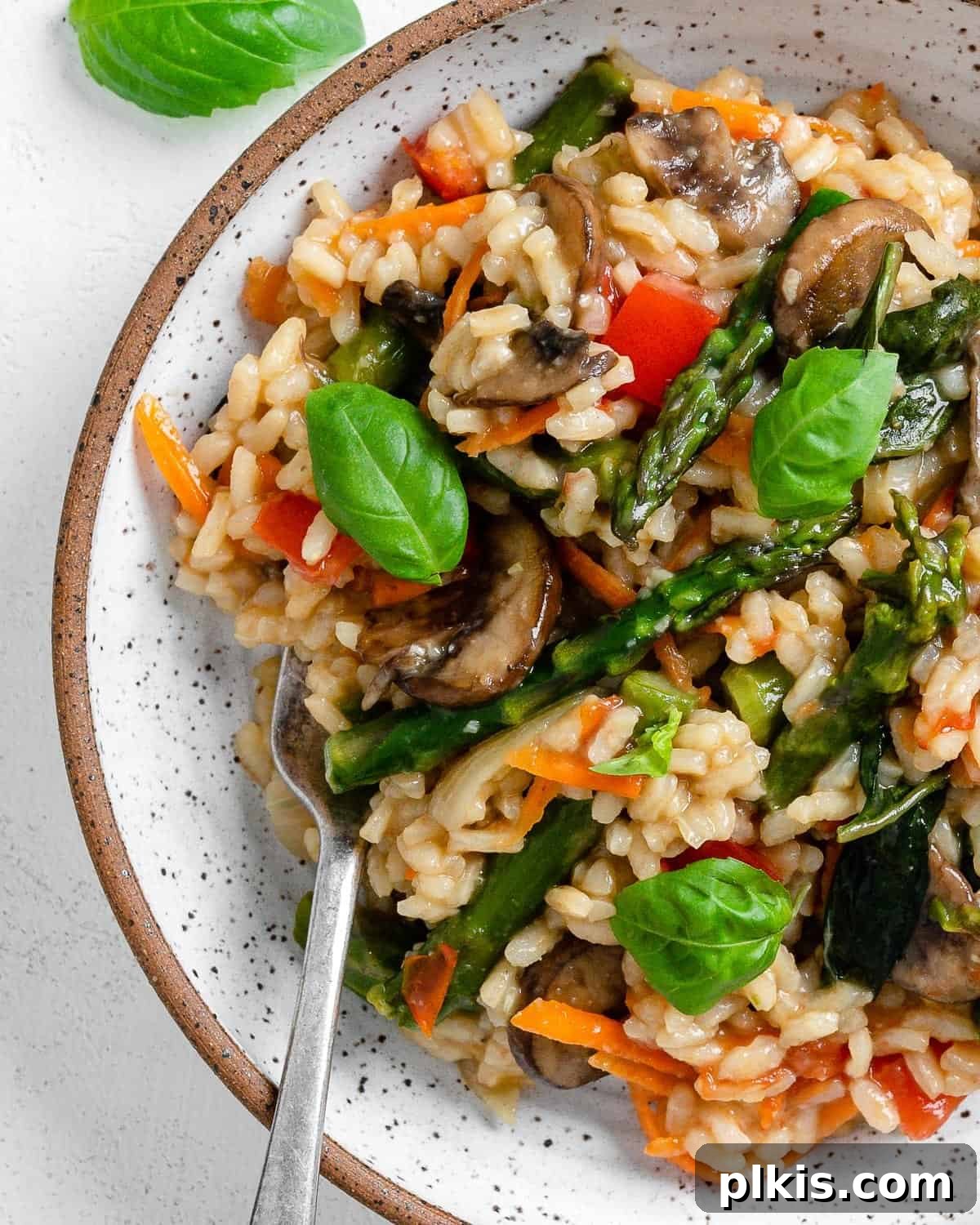
What to Serve with This Delightful Vegan Risotto
This creamy vegan risotto is incredibly versatile, making it suitable for a variety of meal pairings, whether it’s the star of the show or a supporting act.
As a Main Dish:
When serving risotto as the centerpiece of your meal, consider it much like a hearty pasta dish. Since it’s primarily carbohydrate-based, augmenting it with a good source of plant-based protein can create a more balanced and filling meal. Excellent pairings include:
- Grilled or baked tofu, marinated and seasoned to perfection.
- Sautéed or roasted beans, such as cannellini, chickpeas, or black beans, offering a rustic protein boost. For inspiration, check out our guide on 59 Ways to Use a Can of Beans.
- A light and fresh side salad. My personal favorites are edamame salad, zesty black bean salad, or a protein-rich quinoa salad.
Topping Suggestions:
Elevate your risotto with simple yet impactful toppings:
- A generous sprinkle of vegan Parmesan cheese adds a salty, umami kick.
- A fresh squeeze of lemon juice just before serving brightens all the flavors and adds a zesty finish.
- Finely chopped fresh parsley or chives for an extra burst of freshness and color.
- A drizzle of high-quality extra virgin olive oil for richness.
As a Side Dish:
This vegan risotto can effortlessly replace any standard rice or rice pilaf side, bringing a touch of gourmet flair to your table. Its creamy texture and rich flavor make it an excellent accompaniment to a range of main courses. My family particularly enjoys it served as a side with various tofu main dishes. Beyond tofu, it also pairs beautifully with these plant-based recipes:
- Hearty Quinoa Stuffed Peppers
- Flavorful Chickpea Quinoa Burger Patties
- Rich Mushroom and Red Lentil Meatballs
Explore More Delightful Rice Recipes
If you’re a fan of the versatility and comfort that rice dishes offer, you’ll love exploring these other delicious recipes from our collection:
- Creamy Pumpkin Risotto
- Flavorful Vegetable Rice Pilaf
- How to Cook Perfect Brown Rice
- Hearty Wild Rice Salad
- Quick and Easy Brown Rice Stir Fry
Photos by Alfonso Revilla
Best Veggie Vegan Risotto
15
35
50
4 servings
Video
For a visual guide, check out our video tutorial on making this delicious vegan risotto!
Equipment
-
Measuring spoons
-
Measuring Cups
-
My favorite knives
Ingredients
- 2 Tablespoons of olive oil (optional– for sauteing, you can use water)
- 2 cups of sliced fresh mushrooms
- ½ cup of chopped onion
- 2 garlic cloves minced
- 1 cup of uncooked Arborio rice
- 3 cups of vegetable broth
- ¾ cup of bite-size asparagus pieces
- ¾ cup of seeded and diced tomato
- ¼ cup of shredded carrot
- 3 Tablespoons of snipped fresh basil
Instructions
- In a large saucepan over medium heat, heat the oil. Add mushrooms, onion, and garlic and cook until onion is tender.
- Add rice. Cook and stir for about 5 minutes more until rice is golden brown.
- Meanwhile, in another saucepan, bring broth to a boil; reduce heat and simmer. Slowly add 1 cup of the broth to the rice mixture, stirring constantly.
- Continue to cook and stir over medium heat until the liquid is absorbed. Add another 1/2 cup broth and the asparagus to the rice mixture, stirring constantly. Continue to cook and stir until liquid is absorbed. Add another 1 cup broth, 1/2 cup at a time, stirring constantly until the broth has been absorbed. (This should take about 15 minutes.)
- Stir in the remaining 1/2 cup broth, tomato, and carrot. Cook and stir until rice is slightly creamy and just tender. Stir in basil. Serve immediately.
Notes
- Get the right rice: It really all starts with the rice. You simply can’t make true risotto without arborio rice. The high starch content it releases into the pot is what gives risotto a creamy texture.
- Stirring: It’s not necessary to stir constantly the entire time it cooks, but it does need a lot of attention and frequent stirring.
- Add broth slowly: Follow the instructions and add the water in small amounts and allow it to fully absorb into the rice before adding more.
Nutrition
Carbohydrates: 49g
Protein: 6g
Fat: 8g
Saturated Fat: 1g
Polyunsaturated Fat: 1g
Monounsaturated Fat: 5g
Sodium: 717mg
Potassium: 373mg
Fiber: 3g
Sugar: 5g
Vitamin A: 2214IU
Vitamin C: 9mg
Calcium: 24mg
Iron: 3mg
Additional Info
Miranda Rivera
Dinner, Lunch
American
Stovetop
Vegan
Tried this recipe?
Please tag us at @PlantBasedOnABudget! 🙂