
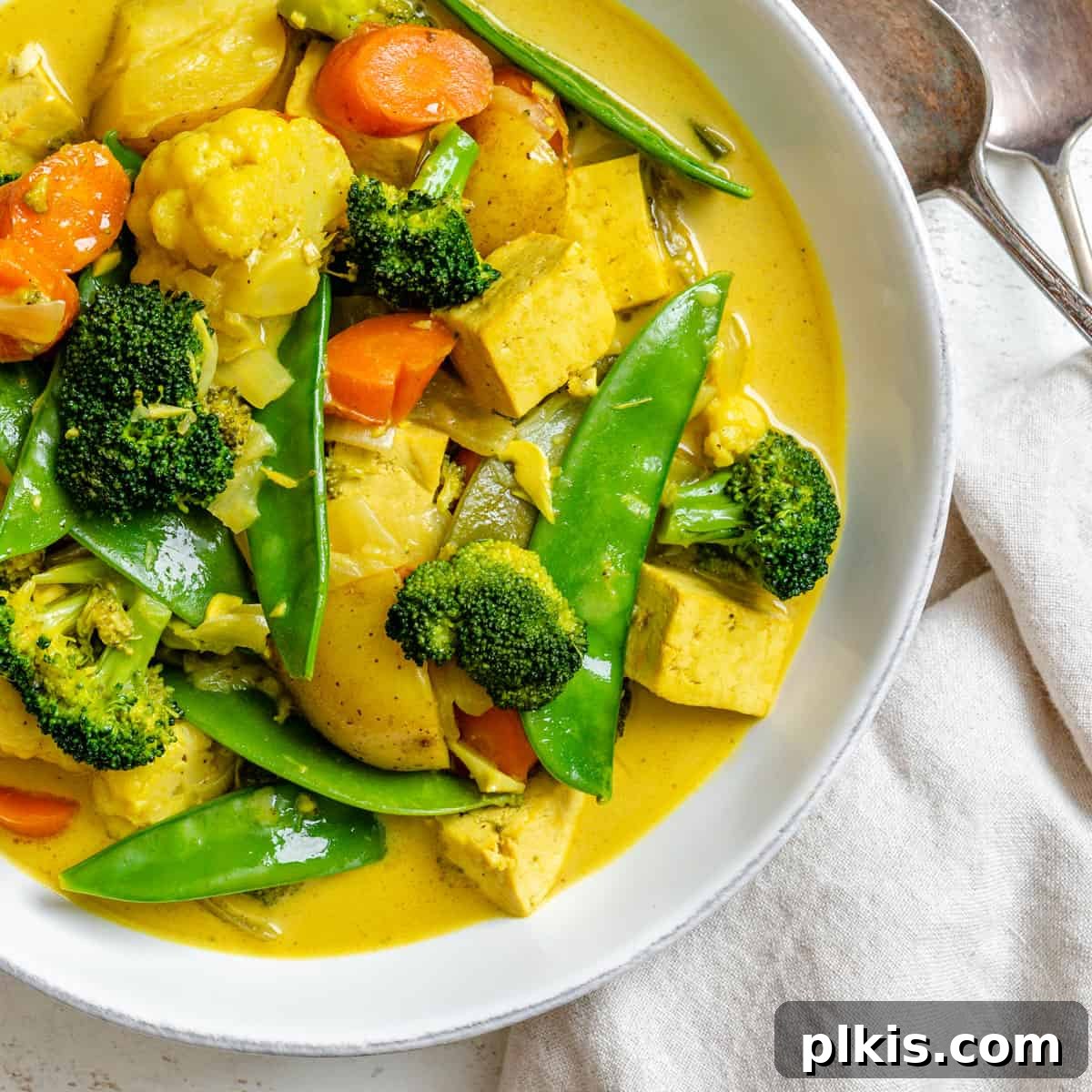
Welcome to your new go-to recipe for a truly satisfying and effortlessly delicious meal: a 30-minute Indian-inspired vegan coconut curry! This vibrant dish is brimming with wholesome tofu and an array of colorful vegetables, all enveloped in a rich, aromatic curry powder and coconut milk sauce. It’s the perfect blend of simplicity and bold flavor, delivering a comforting, budget-friendly meal that’s packed with nutrients and incredibly satisfying. Whether you’re a seasoned chef or a kitchen novice, this easy vegan curry recipe promises a delightful experience, proving that healthy, flavorful food doesn’t have to be complicated or expensive.
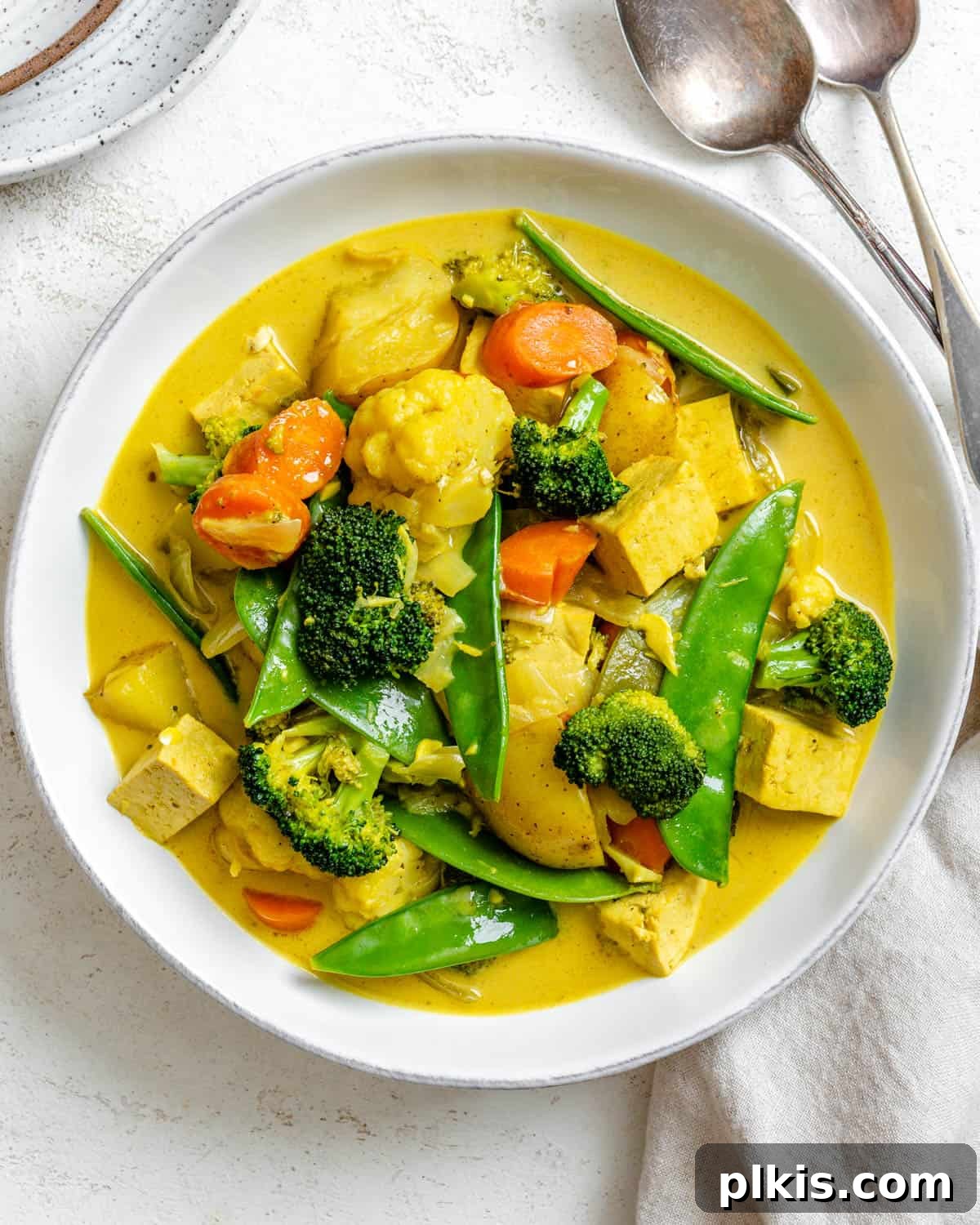
Creamy Tofu and Vegetable Coconut Curry: A Weeknight Wonder
There’s something uniquely comforting about a steaming bowl of fragrant curry, especially when the weather turns cool. It warms you from the inside out and fills your home with an irresistible aroma. While we’ve previously explored an array of delightful vegan curry recipes, from a hearty butternut squash curry and an intriguing Brussels sprout curry to a convenient crockpot Thai red curry, this recipe introduces a truly simple, Indian-inspired vegan coconut curry that stands out for its ease and incredible flavor profile.
While coconut milk is often associated with the vibrant flavors of Thai cuisine, this recipe takes inspiration from the aromatic spice blends commonly found in Indian cooking, adapting them to create a unique and accessible vegetable curry. It’s important to note that this isn’t an authentic Indian curry – in fact, “curry powder” as a pre-mixed blend is not traditionally found in Indian kitchens. However, this blend masterfully captures the essence of Indian spices, allowing you to achieve rich, complex flavors without needing an extensive, fully-stocked spice cabinet. This approach makes it a perfect choice for budget-conscious cooks and those looking for a flavorful meal with minimal fuss.
This easy vegan coconut curry combines nutrient-dense tofu with a medley of versatile vegetables, all bathed in a luscious coconut milk sauce. The result is a dish rich in texture, depth of flavor (easily adjustable to your preferred spice level), and a wealth of plant-based protein. Beyond its delicious taste, this curry is packed with essential vitamins, minerals, and heart-healthy fats, making it a wholesome addition to any diet. Plus, its versatility shines through in preparation; you can whip up this one-pot wonder on your stovetop for a quick meal or let it simmer in a crockpot for a hands-off approach. It’s naturally dairy-free, gluten-free, nut-free, and entirely vegan, catering to various dietary needs and preferences. This veggie coconut curry truly delivers a healthy, comforting, and remarkably satisfying meal for any day of the week.
Essential Ingredients for Your Vegan Coconut Curry
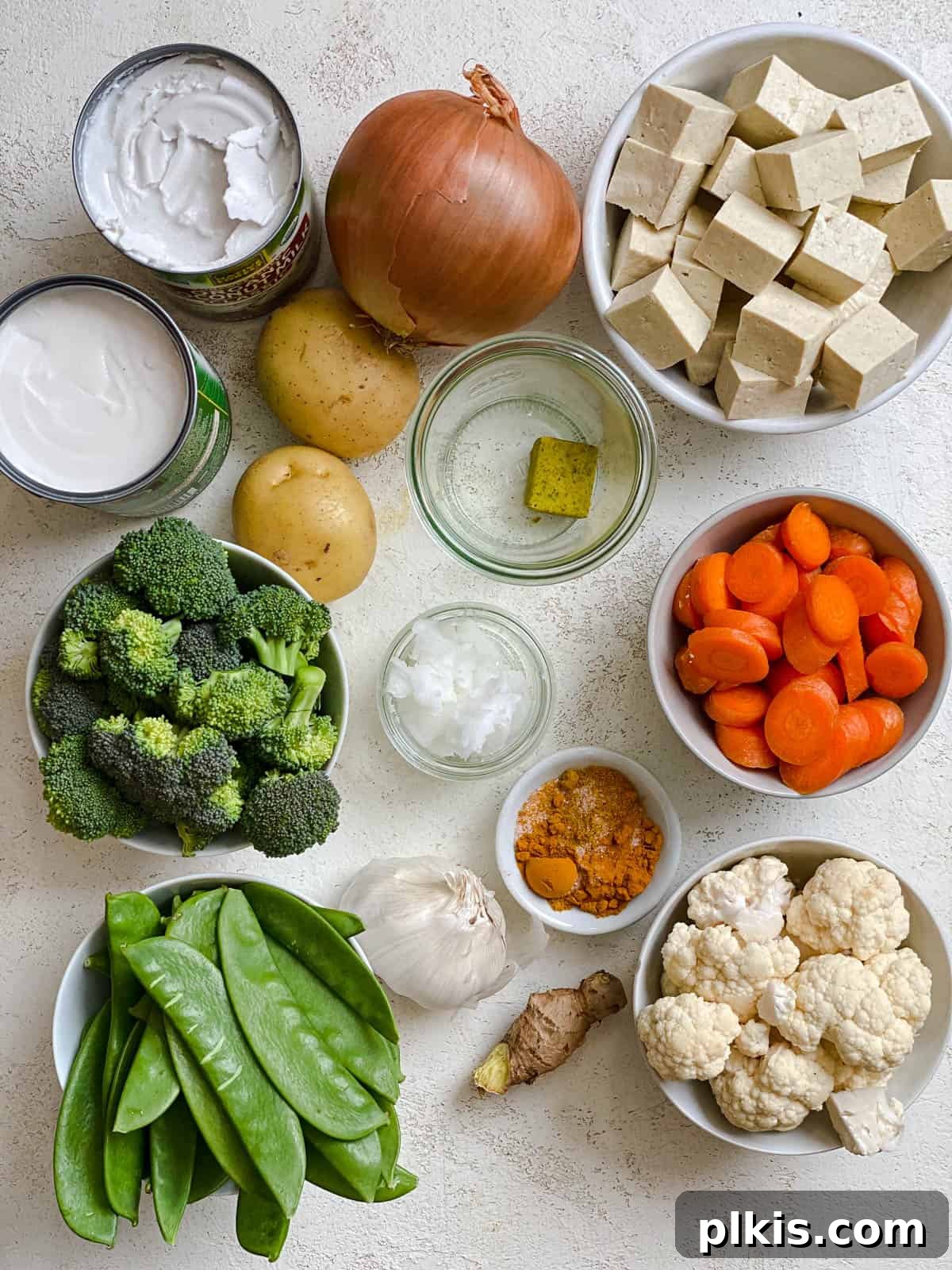
One of the many charms of this simple coconut curry recipe is its reliance on a surprisingly short list of ingredients, yielding an incredibly flavorful sauce and allowing for great flexibility with your choice of protein and vegetables. Each component plays a crucial role in building the dish’s signature taste and texture, ensuring a robust and well-rounded meal.
Crafting the Creamy Coconut Milk Curry Sauce
The heart of any great curry lies in its sauce. For this recipe, we build a foundation of aromatic vegetables and classic Indian-inspired spices, creating a rich and savory base that truly sings. The careful balance of these ingredients ensures a sauce that is both deeply flavorful and wonderfully creamy.
- Aromatics: We begin with the traditional “curry trifecta” – a combination of yellow onion, fresh garlic, and ginger. These three ingredients are indispensable, forming the aromatic backbone of this Indian vegetable coconut curry. They are sautéed to release their fragrant oils, building the first layer of complex flavor.
- Vegetable Broth: This liquid gold helps to thin the sauce to the perfect consistency and adds an extra layer of savory depth. You can use pre-made vegetable broth, a homemade version, or even vegetable bouillon dissolved in water. Opt for a low-sodium broth if you’re watching your salt intake.
- Coconut Milk: For a truly decadent and creamy texture, full-fat canned coconut milk is highly recommended. Its richness is key to achieving that luscious curry consistency. While light coconut milk can be used for a lower-calorie option, be aware that it will result in a slightly thinner sauce.
- Seasonings: Simplicity is key for the spice blend in this Indian coconut curry. We rely on just three core elements:
- Curry Powder: This blend brings the characteristic “curry” flavor. Choose mild, medium, or hot based on your personal preference. It’s a fantastic shortcut to a complex flavor profile.
- Turmeric: Beyond its beautiful golden hue, turmeric adds an earthy, slightly bitter note and boasts impressive anti-inflammatory properties.
- Salt: Essential for enhancing all the other flavors and balancing the dish. Adjust to taste.
- Oil: Coconut oil is an excellent choice for sautéing the aromatics, complementing the coconut milk beautifully. However, any neutral cooking oil you prefer, such as olive oil or avocado oil, will work just as well.
Our Star Protein and Versatile Veggies
The beauty of this tofu coconut curry recipe lies in its adaptability. While we provide a fantastic combination of vegetables, feel free to substitute with whatever fresh produce you have on hand or what’s in season.
- Tofu: To ensure your tofu holds its shape and absorbs maximum flavor, always use pressed extra-firm tofu. Pressing removes excess water, leading to a firmer texture. Alternatively, puffed fried tofu cubes can be added directly for a different textural element. For a soy-free version, chickpeas are an excellent substitute, adding protein and a lovely creaminess.
- Core Vegetables: For this rendition of the vegetable coconut curry, we’ve included a delicious and nutritious mix:
- Carrots: Adding a touch of sweetness and vibrant color, carrots soften beautifully in the sauce.
- Potatoes: Yukon Gold or red potatoes are ideal for their creamy texture and ability to hold their shape. Sweet potatoes, butternut squash, or pumpkin also make excellent, slightly sweeter alternatives.
- Cauliflower: This cruciferous vegetable adds a satisfying bite and readily soaks up the curry flavors.
- Broccoli: Providing a pop of green and a slight crunch, broccoli is a fantastic addition for both texture and nutrients.
- Snow Peas (or Green Beans): These are added towards the end to retain their crispness and offer a fresh contrast. Green beans are a great alternative.
Exciting Add-ins and Flavor Variations
This Indian curry with coconut milk is incredibly versatile, inviting you to customize it to your heart’s content. Experiment with these additions to enhance its flavor, texture, or even transform its regional profile:
- Soy Sauce / Tamari: A splash of soy sauce (regular or reduced sodium) or tamari (for a gluten-free option) can add a wonderful salty, umami-rich depth that elevates the entire dish.
- For More Spice: If you love a kick, easily increase the heat level. Add red pepper flakes, chili powder, or cayenne powder to taste. For fresh heat, finely slice or dice fresh chiles like serrano or jalapeño.
- Additional Spices: Deepen the flavor profile of this vegetable yellow curry recipe with a pinch (or more) of cumin for earthiness, paprika for a smoky note, or even a hint of cinnamon for warmth and complexity.
- Garam Masala: For a more authentically robust Indian flavor, stir in a small amount of garam masala at the end of cooking. This aromatic spice blend can also be used in place of curry powder for a different but equally delicious result.
- Tomatoes: To create a more tomato-forward vegetable coconut curry, add a can of crushed tomatoes. If you do this, remember to reduce the amount of vegetable broth accordingly. You might also want to add a pinch of coconut sugar or maple syrup to balance the acidity of the tomatoes.
- Other Vegetables: The beauty of this recipe is its flexibility. Feel free to use whatever vegetables are in season or available in your pantry. Great options include:
- Baby corn
- Peas (frozen peas are quick and easy)
- Mushrooms (cremini or shiitake add umami)
- Bell peppers (any color for sweetness and crunch)
- Zucchini
- Eggplant
- Leafy Greens: Stir in a handful of spinach or kale during the last few minutes of cooking, allowing them to wilt gently into the hot curry.
- Nuts: For added crunch and richness, stir in some cashews, almonds, or peanuts towards the end.
- Thai Coconut Curry: For a complete flavor transformation, swap the Indian curry powder for a good quality Thai yellow curry paste. This will introduce distinct Thai aromatics like lemongrass, galangal, and kaffir lime, creating a different but equally delicious Thai coconut curry.
How to Make Easy Vegan Coconut Curry: A Step-by-Step Guide
Creating this flavorful tofu and vegetable curry with coconut milk is surprisingly straightforward, requiring just one pot and approximately 30 minutes of your time. Follow these simple steps for a truly rewarding culinary experience.
For the complete list of ingredients and precise measurements, please refer to the dedicated recipe card below.
- 1) Prepare Your Ingredients: Begin by pressing your extra-firm tofu for at least 30 minutes. This essential step removes excess water, allowing the tofu to better absorb the rich curry flavors and maintain its shape. While the tofu presses, prepare your vegetables: rinse and peel the carrots, then chop them into thin, even slices. Cut the potatoes into bite-sized pieces so they cook evenly. Break the cauliflower and broccoli into small, uniform florets. Finally, dice the onion, mince the garlic cloves, and grate the fresh ginger. Thorough preparation upfront ensures a smooth cooking process.
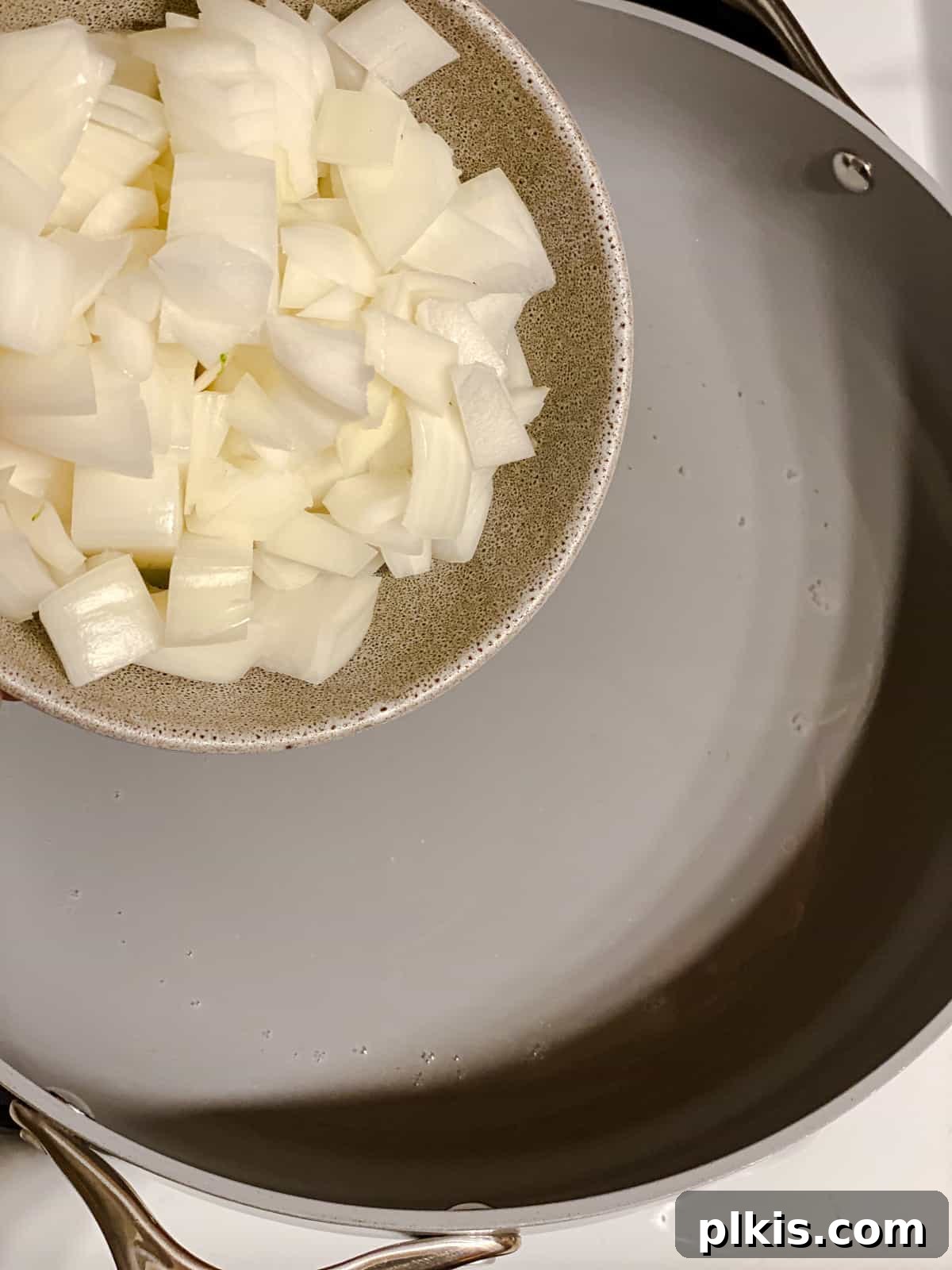
- 2) Aromatic Base: Heat your chosen oil in a large, heavy-based pot or Dutch oven over medium heat. Once the oil is shimmering, add the diced onion and sauté for about 4 minutes, stirring frequently, until it softens and becomes translucent. Next, add the minced garlic, grated ginger, and all the dry spices (curry powder, turmeric, and salt). Continue to cook for another minute or two, stirring constantly. This crucial step, known as “blooming” the spices, enhances their fragrance and deepens their flavor, forming the aromatic heart of your curry.
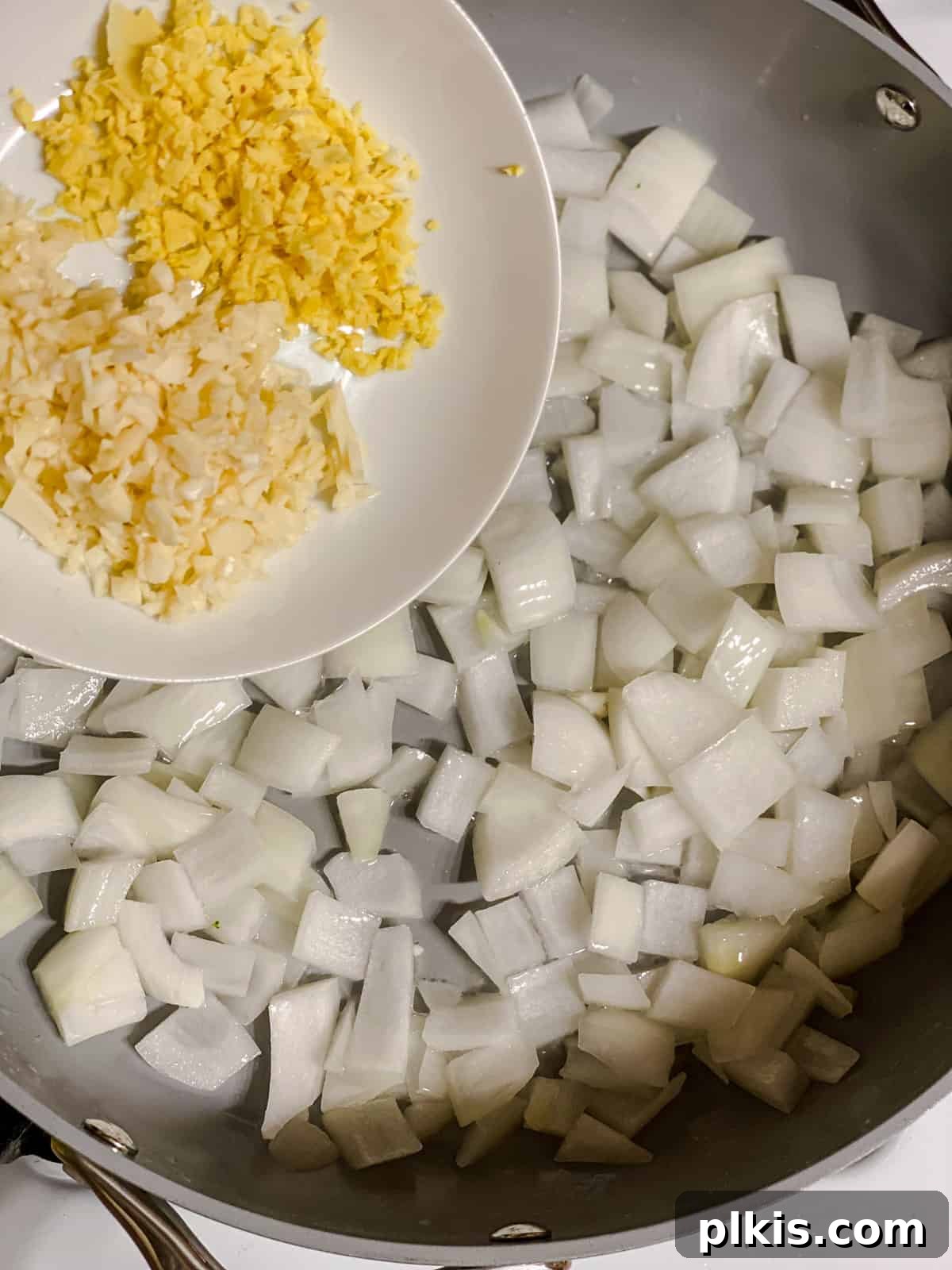
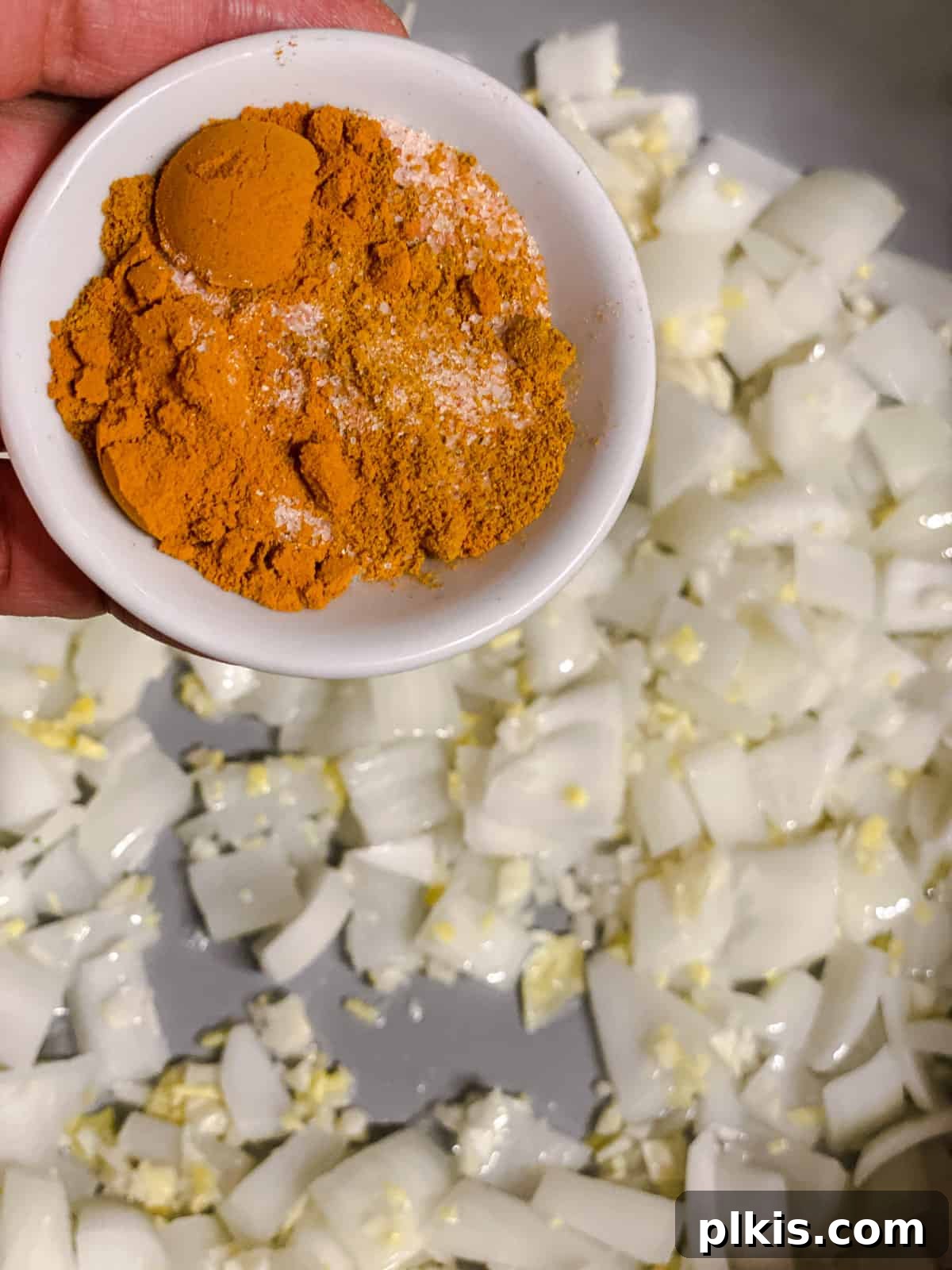
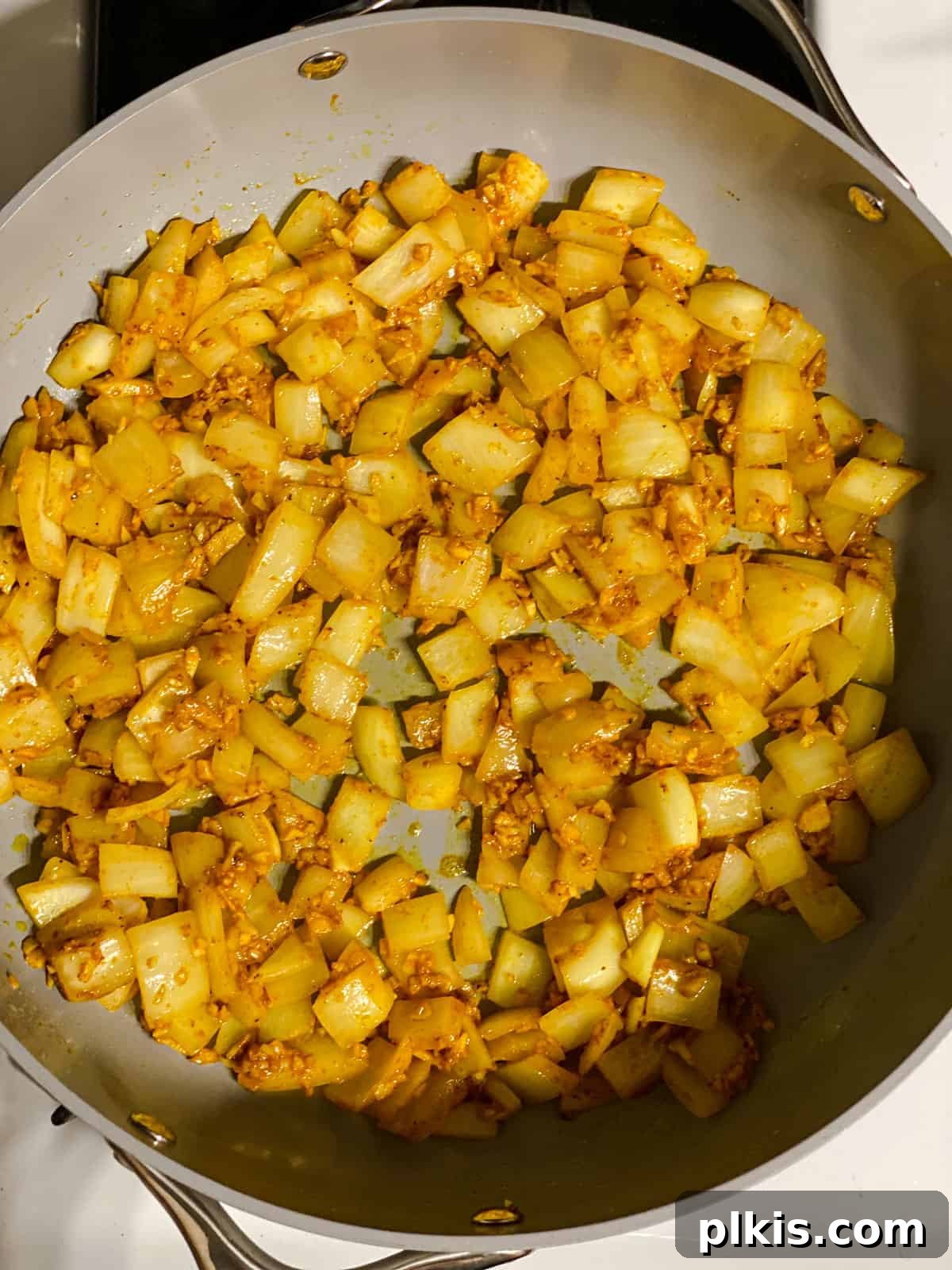
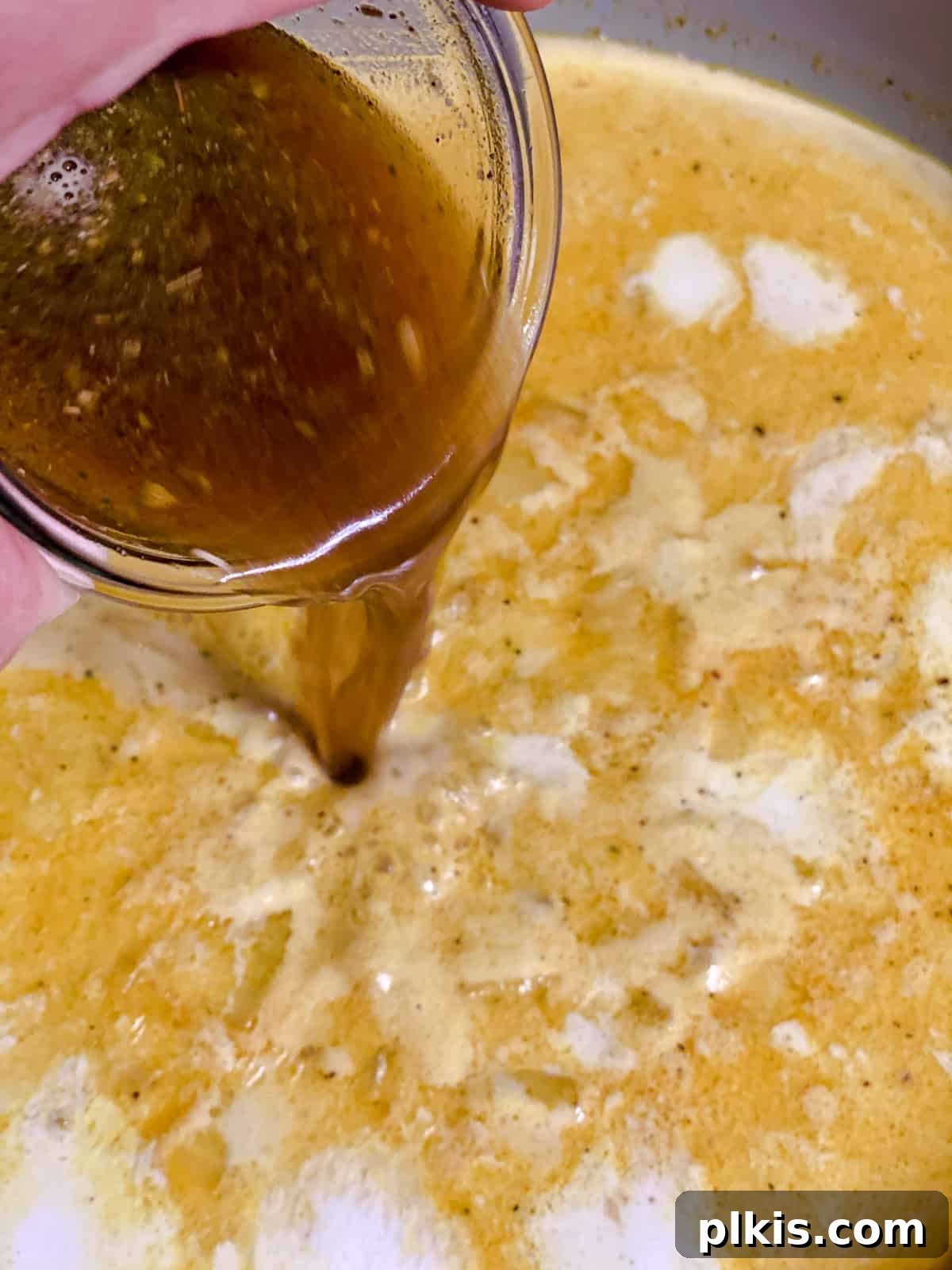
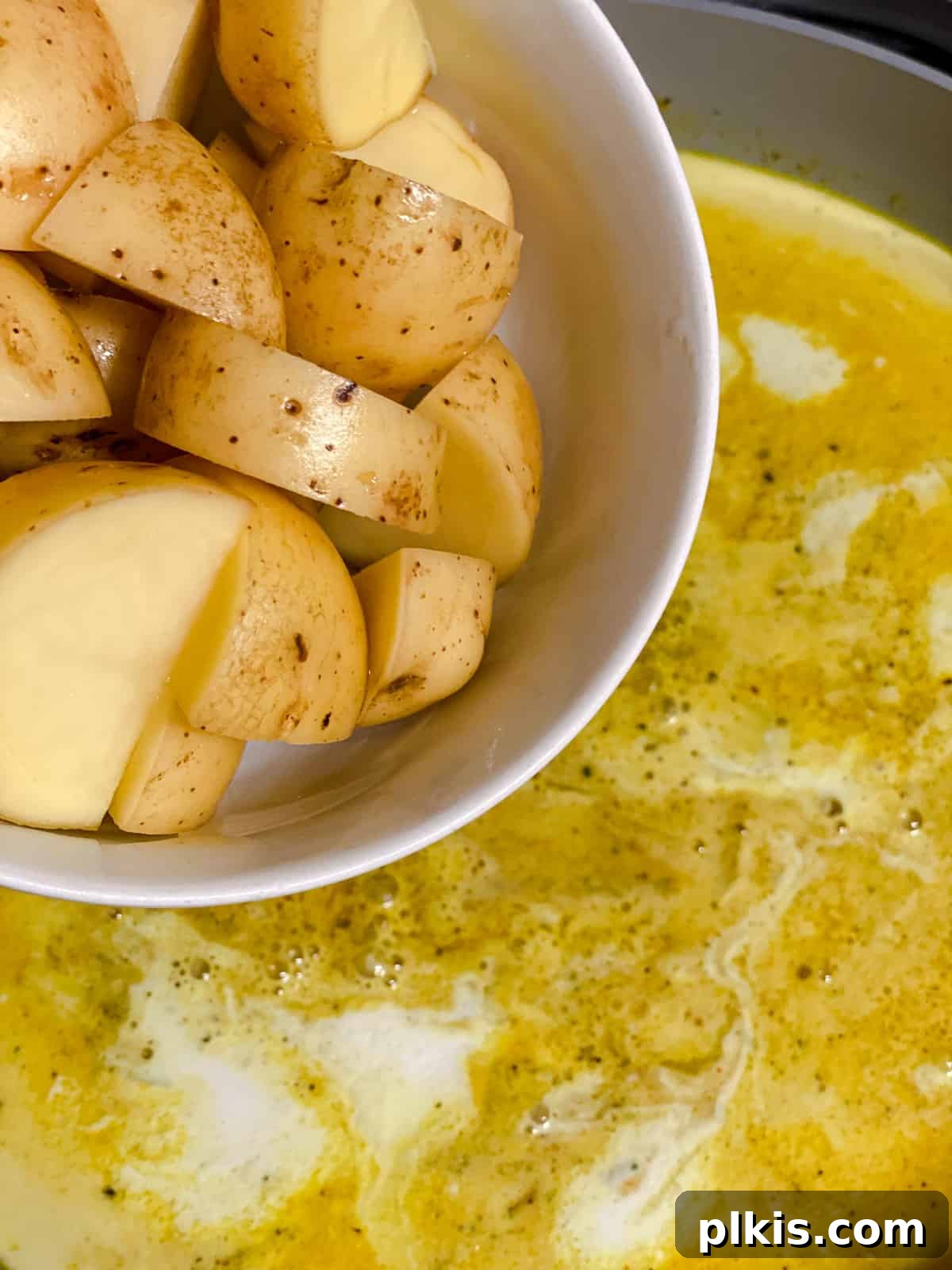
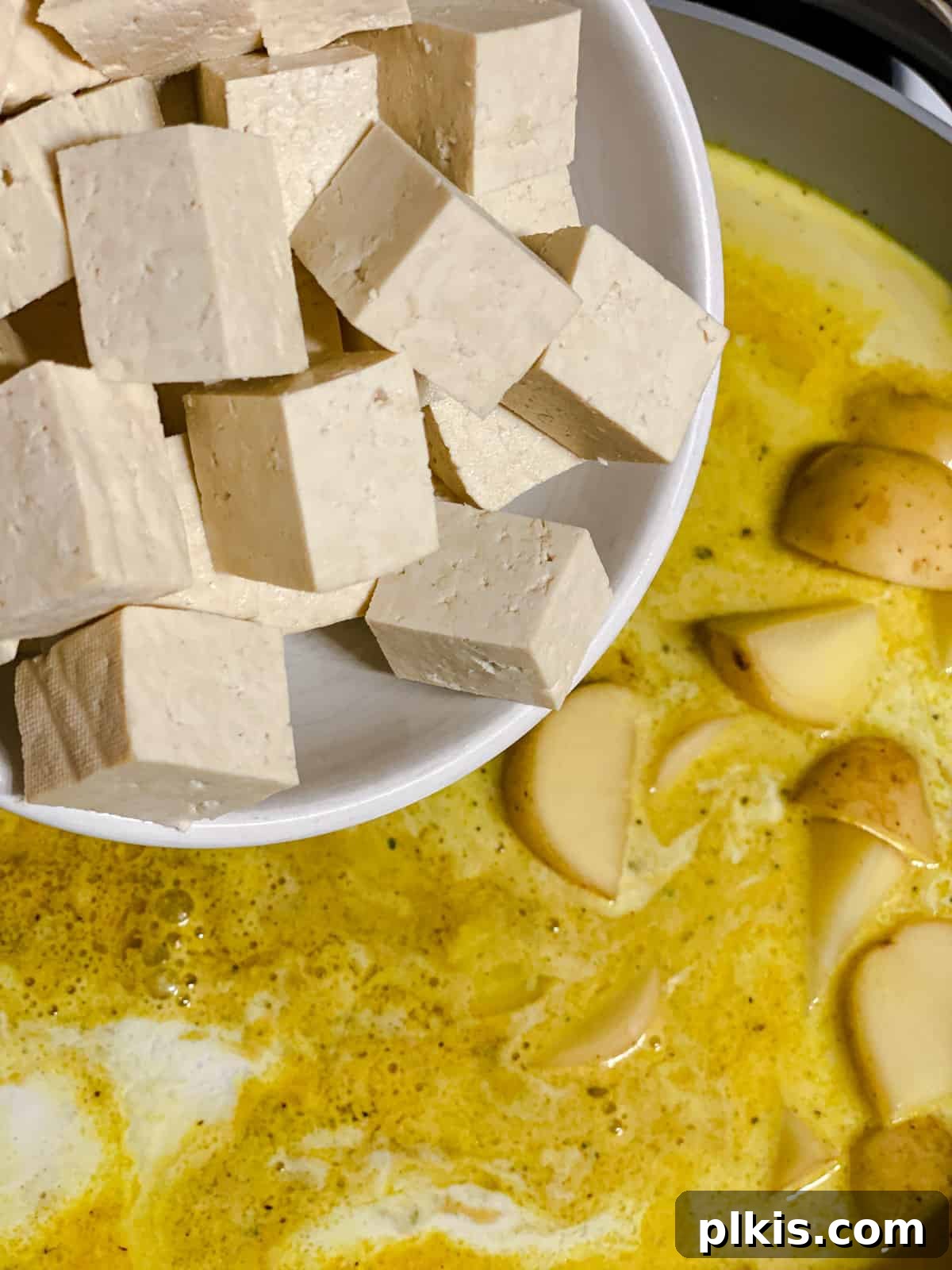
- 3) Simmer the Core: Pour in the full-fat coconut milk and vegetable broth, stirring well to combine with the aromatic base. Add the bite-sized potato pieces and the pressed, cubed tofu to the pot. Bring the mixture to a gentle simmer, then reduce the heat to medium-low, cover, and let it cook. The potatoes will need time to soften and absorb the curry liquid, while the tofu will soak up all the delicious flavors.
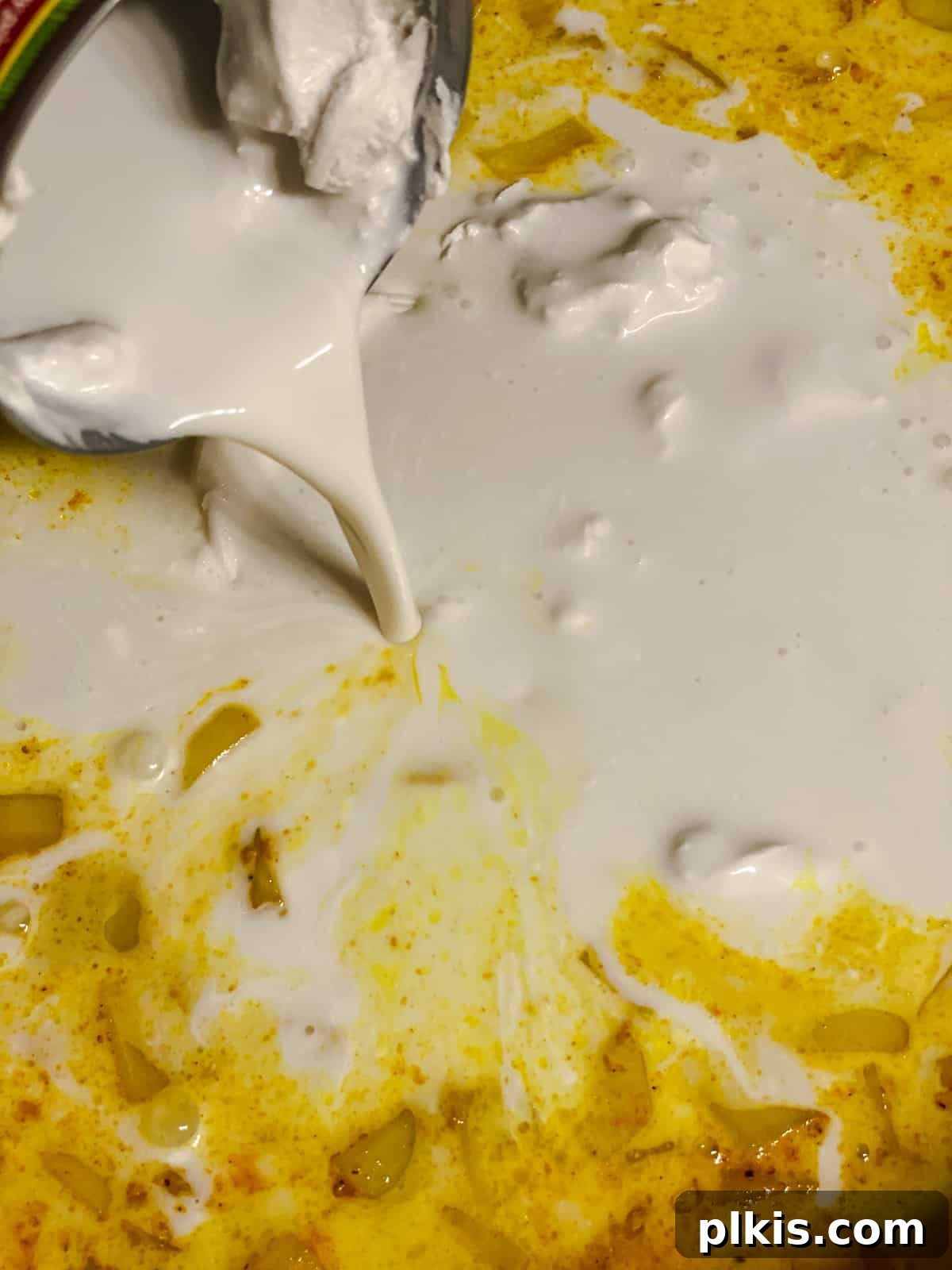
Pro Tip for Crispy Tofu: If you prefer a crispy texture for your tofu, consider cooking it separately. Pan-fry or air-fry the tofu cubes until golden and crisp, then add them into the curry just before serving to maintain their delightful crunch.
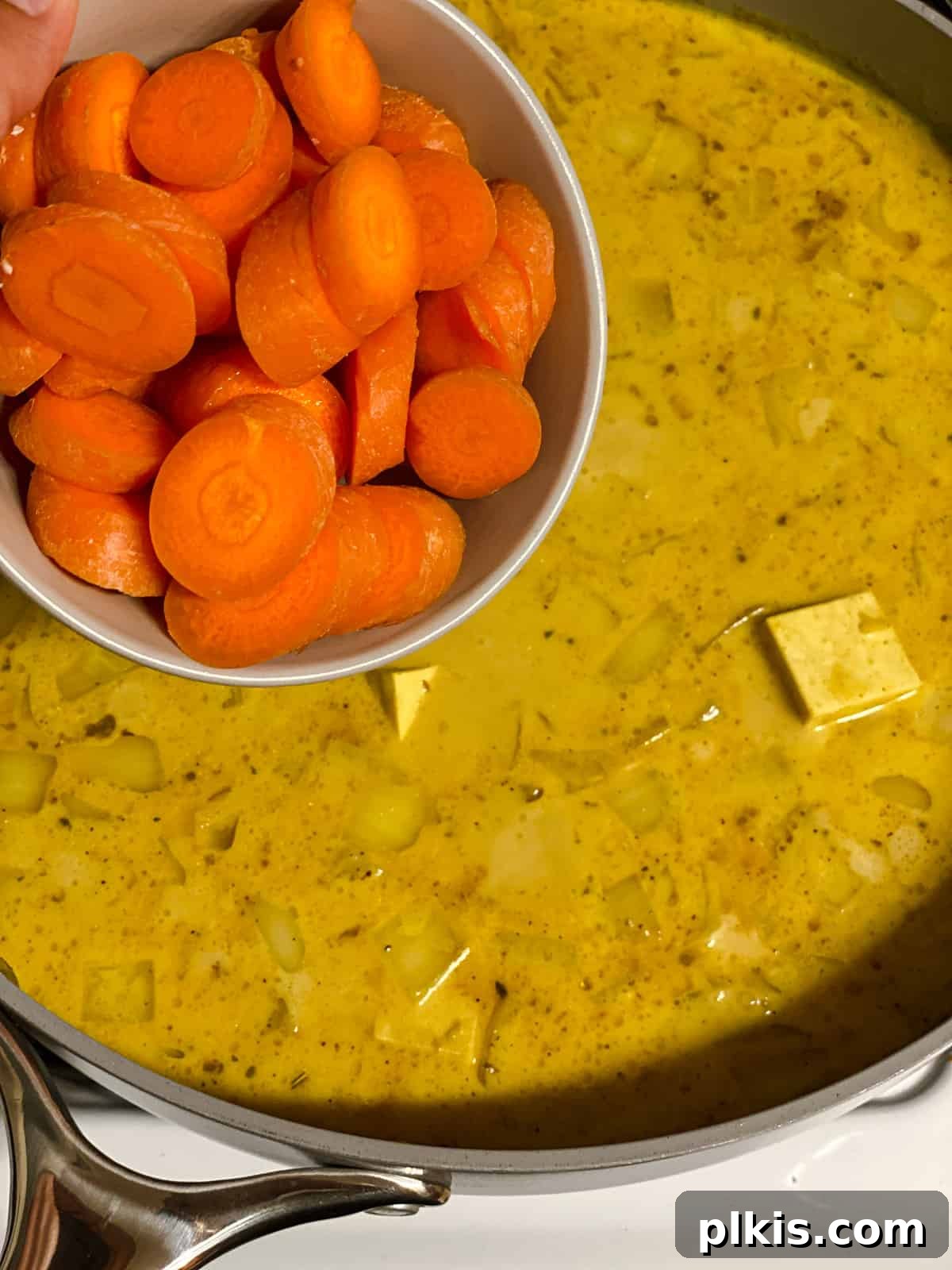
- 4) Adding More Vegetables: Once the potatoes begin to soften around the edges (this usually takes about 10-15 minutes, depending on their size), stir in the sliced carrots and cauliflower florets. These vegetables require a bit less cooking time than the potatoes, ensuring they are tender-crisp rather than mushy when the curry is ready. Continue simmering, covered, until they are almost tender.
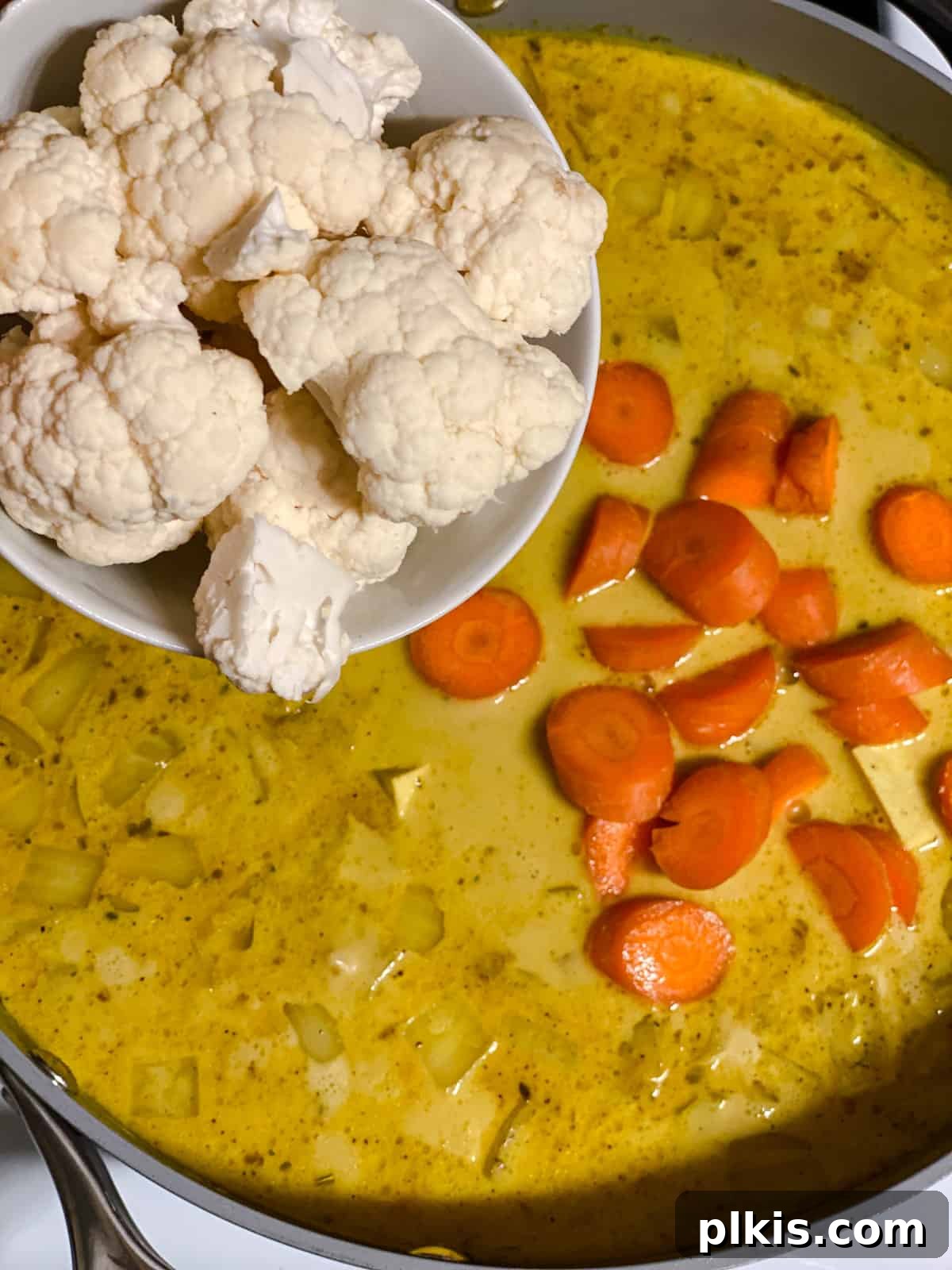
- 5) Final Touches & Serve: Once all the vegetables are tender, but still retain a slight bite (this typically takes another 10-15 minutes after adding carrots and cauliflower), stir in the broccoli florets and snow peas. Turn off the heat immediately and place the lid back on the pot. Allow the curry to sit for a few minutes. The residual heat will gently steam the broccoli and snow peas, ensuring they remain vibrant and tender-crisp. Taste and adjust seasonings as needed, then serve your delicious Easy Tofu Vegetable Coconut Curry piping hot!
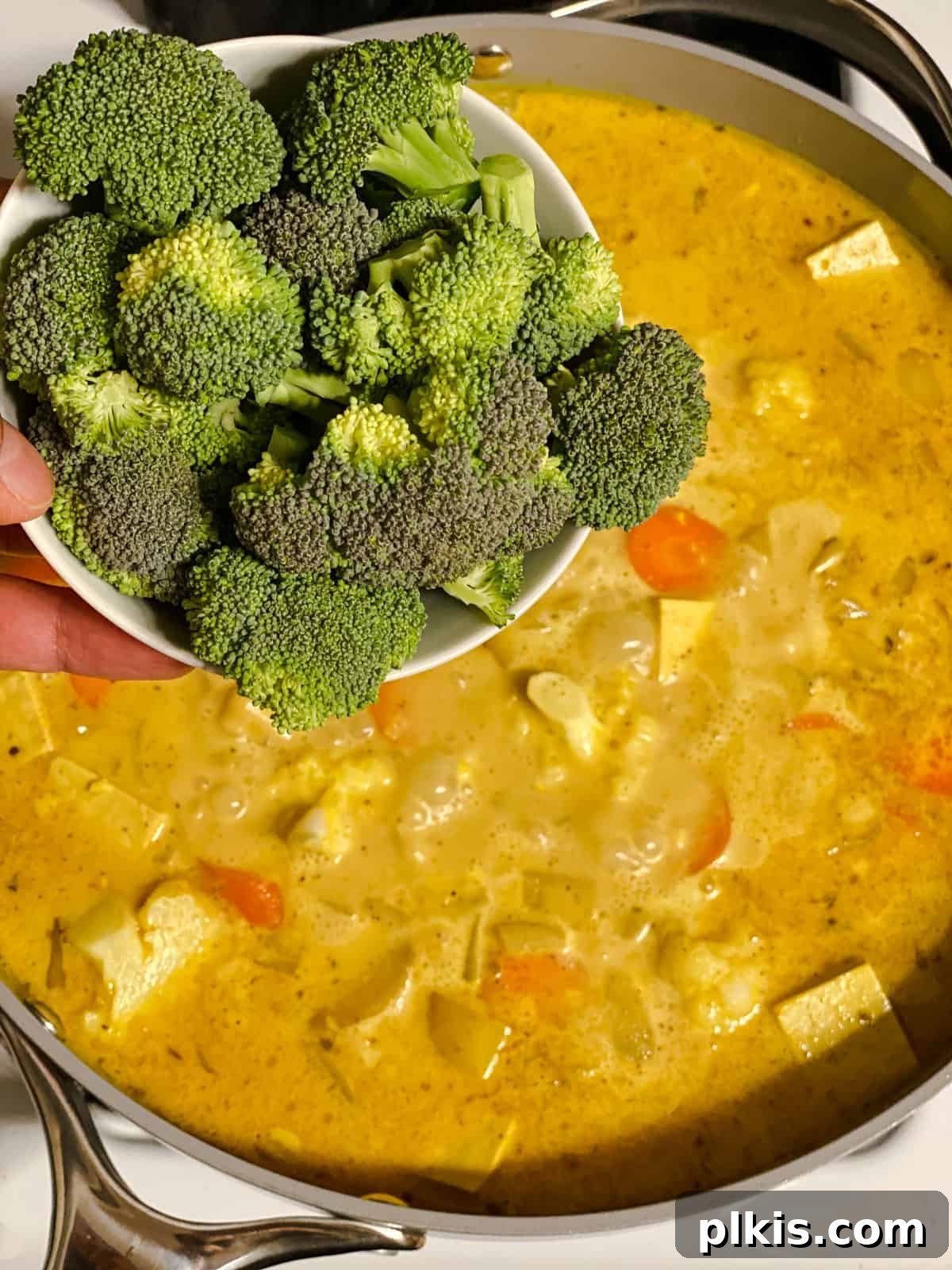
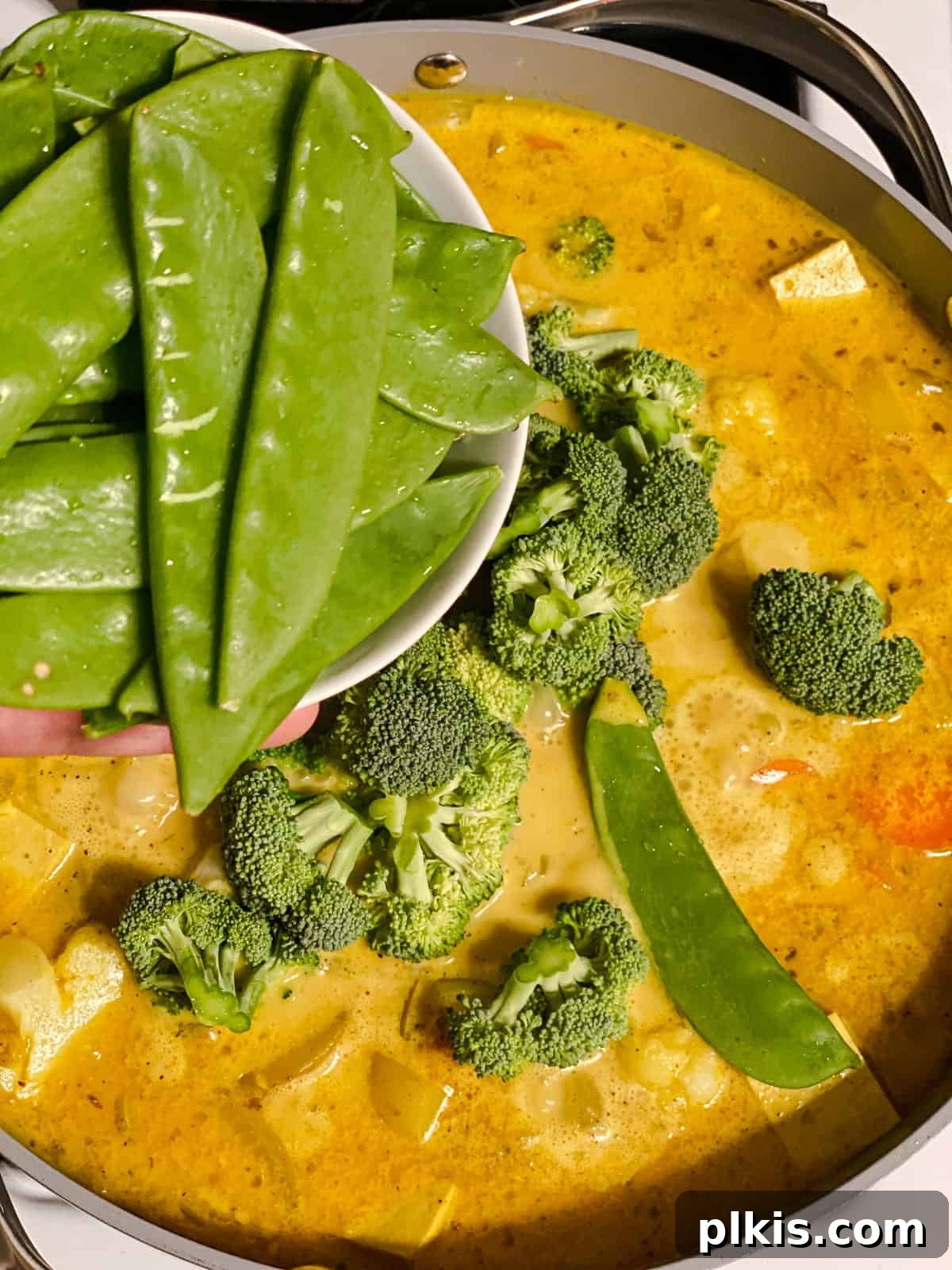
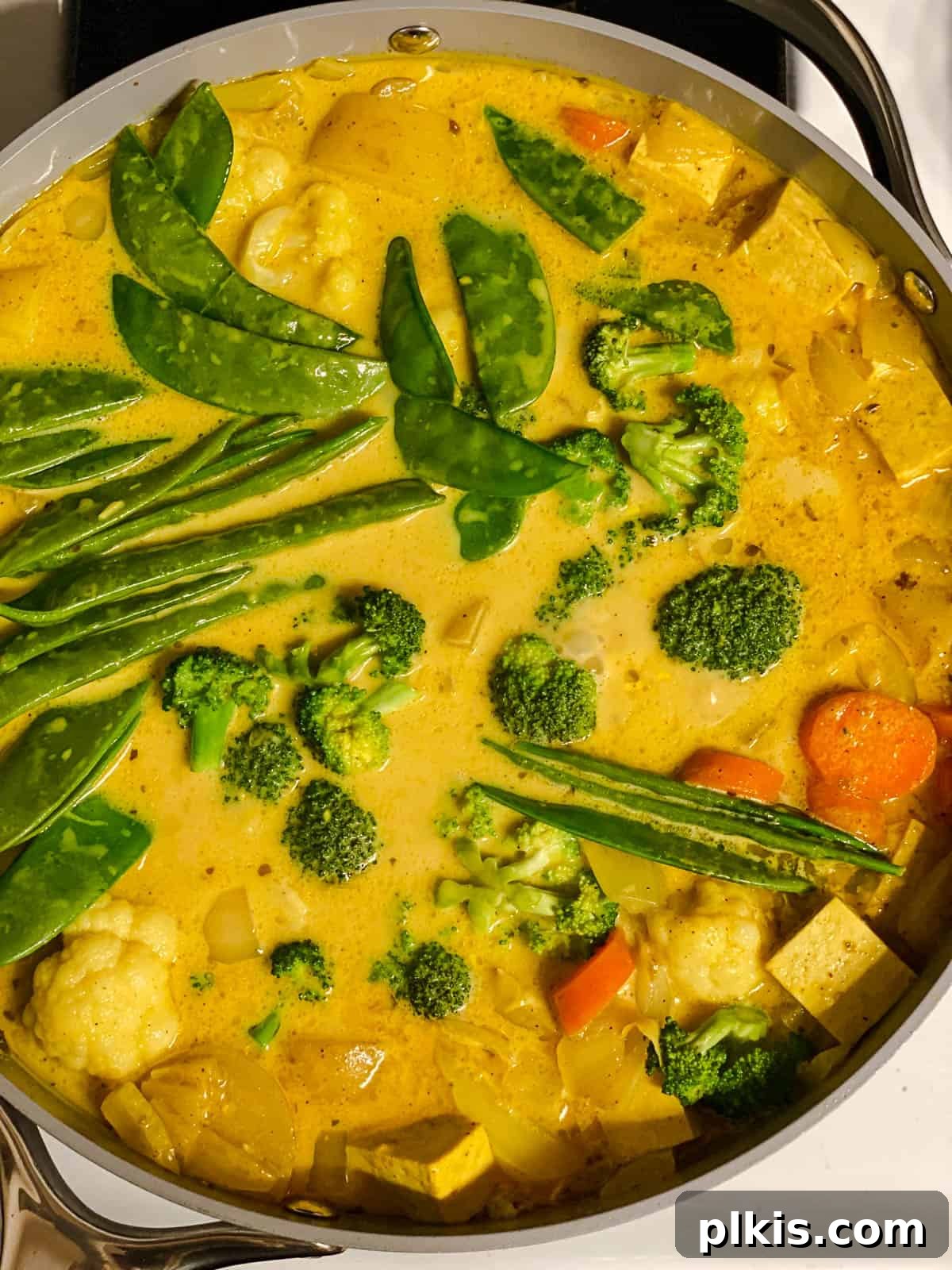
Tip for Softer Veggies: If you prefer your broccoli and carrots more tender, rather than crisp, you can add them earlier in the cooking process, perhaps alongside the potatoes, to allow them more time to soften in the simmering sauce.
Frequently Asked Questions About Vegan Coconut Curry
Absolutely! Frozen vegetables are a convenient shortcut. When incorporating them, you might want to slightly reduce the amount of vegetable broth as frozen vegetables tend to release more liquid as they cook. Additionally, since most frozen vegetables are par-cooked, they will require less cooking time than fresh ones. Add them a little later in the process to prevent them from becoming too mushy.
Yes, you can certainly use coconut cream. This will yield an even creamier, richer, and more decadent curry. However, because coconut cream is thicker and more concentrated, you may find yourself needing to add more vegetable broth or water to achieve your desired consistency. Adjust the liquid gradually until it reaches your preferred richness.
Yes, this recipe adapts well to a slow cooker! To ensure the best flavor, start by completing the ‘sauté’ steps on the stovetop (cooking the onion, garlic, ginger, and spices until fragrant). Once the aromatics are bloomed, transfer this mixture along with the coconut milk, broth, potatoes, and tofu to your slow cooker. Cook on LOW for 7-8 hours or on HIGH for 3-4 hours. For best results, add the carrots and cauliflower after the first hour or two, and the broccoli and snow peas in the last 30 minutes of cooking to keep them from becoming overly soft.
Certainly! While tofu is fantastic, this curry is very flexible. Cooked chickpeas, lentils (red or green), or even various beans (like cannellini or kidney beans) can be stirred in. Tempeh is another great option; simply crumble or dice it and sauté it until golden before adding it to the curry alongside the potatoes. Adjust cooking times as needed for your chosen protein.
To achieve a thinner curry, simply stir in additional vegetable broth or water, a quarter cup at a time, until it reaches your desired consistency. If you prefer a thicker curry, create a slurry with 1 tablespoon of cornstarch (or arrowroot powder) mixed with 2 tablespoons of cold water. Stir this into the simmering curry and increase the heat slightly, stirring continuously until the sauce thickens. Repeat if necessary for an even thicker sauce.
Helpful Recipe Notes and Expert Tips
Maximizing the flavor and efficiency of your vegan coconut curry is easy with these simple notes and tips:
- Speed Up Prep Time: To significantly reduce your preparation time, consider purchasing pre-chopped or frozen vegetables. Many grocery stores offer pre-diced onions, prepared broccoli or cauliflower florets, and even pre-minced garlic and ginger, allowing you to get this delicious meal on the table even faster.
- Adjust the Consistency: If you find the curry too thick for your liking, gradually add more vegetable broth or water until you reach your desired thinness. Conversely, to thicken the curry, prepare a slurry by mixing 1 tablespoon of cornstarch with 2 tablespoons of cold water. Stir this mixture into the simmering curry and increase the heat slightly, stirring continuously until the sauce visibly thickens. Repeat this process if a richer, thicker consistency is desired.
- Boost the Flavor: For an even more intense and robust curry flavor, don’t hesitate to increase the amount of curry powder you add. Start with an extra half teaspoon and adjust according to your taste preferences, allowing the spices to truly shine.
- Customize the Spice Level: The heat of your curry is entirely up to you. Begin by selecting a curry powder that matches your preferred spice level (mild, medium, or hot). If you desire an extra kick, incorporate additional cayenne pepper, chili powder, or red pepper flakes. For a fresh and fiery touch, finely diced fresh chiles can also be added.
- Tailor the Creaminess: The ratio of coconut milk to vegetable broth is key to controlling the creaminess of your curry. For a lighter curry, use a higher proportion of broth. For a richer, more luxurious mouthfeel, lean into more coconut milk. Experiment to find your perfect balance.
- Mix and Match Your Veggies: This recipe is incredibly adaptable to whatever produce you have on hand, what’s in season, or what’s on sale. Feel free to swap out the recommended vegetables for others like bell peppers, zucchini, green beans, or leafy greens. Remember to adjust cooking times accordingly, adding harder vegetables earlier and softer ones later to ensure everything cooks to perfection.
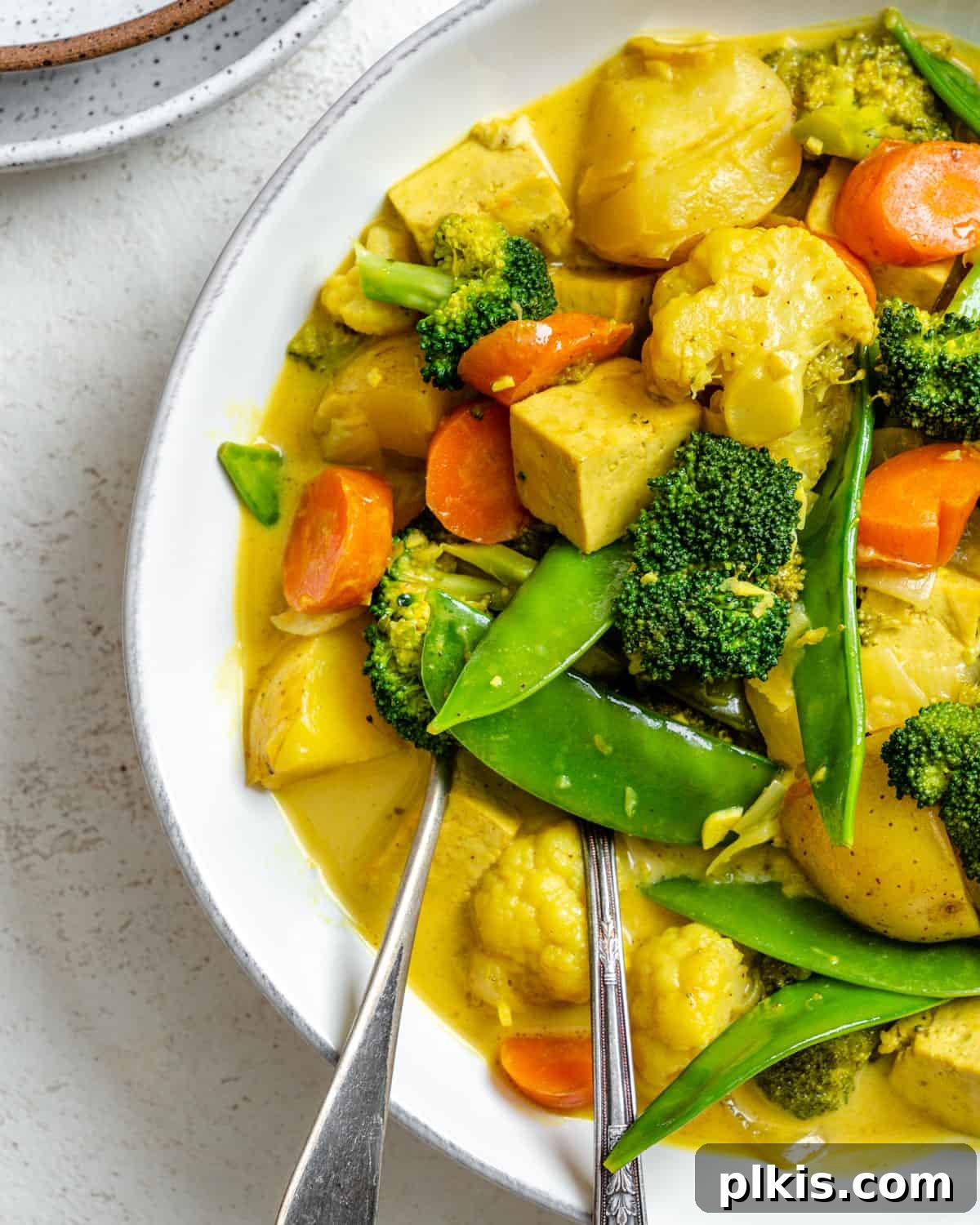
What to Serve With Indian Coconut Curry?
This versatile vegan coconut curry pairs beautifully with a variety of side dishes, transforming it into a complete and satisfying meal. We particularly love serving it alongside perfectly cooked rice or protein-packed quinoa. For an extra layer of coconut flavor, try cooking your rice or quinoa directly in coconut milk (diluted with water if needed). If you’re looking for a lower-carb option, cauliflower rice makes an excellent substitute.
Beyond grains, warm and fluffy naan bread or roti is perfect for scooping up every last drop of the rich, creamy sauce. Garnish your bowls with a sprinkle of fresh cilantro or parsley for a burst of freshness, and a squeeze of lime or lemon juice adds a bright, zesty finish that perfectly complements the curry’s richness. A side salad or some simple steamed greens can also add a refreshing contrast to this hearty dish.
Storage and Reheating Instructions
This vegetable and tofu coconut curry is fantastic for meal prep! To store leftovers, allow the curry to cool completely to room temperature before transferring it to an airtight container. It will keep wonderfully in the refrigerator for 3-4 days, with flavors often deepening overnight.
For longer storage, this curry is also freezer-friendly. Portion the cooled leftovers into airtight freezer-safe containers or sturdy Ziplock/Stasher bags. If using bags, flatten them to save space and remove as much air as possible to prevent freezer burn. It can be stored in the freezer for up to 3 months. Do note that upon thawing and reheating, the texture of the tofu may become slightly chewier, and some of the vegetables might be a bit softer than when freshly cooked. This is a common and normal change after freezing.
To reheat, simply transfer the curry to a saucepan and gently warm it on the stovetop over low heat, stirring occasionally, until it is heated through. If reheating from frozen, you can gently thaw it overnight in the refrigerator or reheat directly from frozen on the stovetop, adding a splash of water or broth if it seems too thick. Alternatively, you can microwave individual portions for 2-3 minutes, stirring halfway through, until thoroughly hot.
Discover More Delicious Vegan Curry Recipes
If you’ve enjoyed this easy vegan coconut curry, you’ll love exploring our other plant-based curry creations:
- Hearty Pumpkin Curry
- Unique Vegan Coconut Curry with Apples
- Flavorful Cauliflower, Sweet Potato, and Mushroom Curry
- Classic Yellow Tofu Curry
- Satisfying Curried Chickpeas
- Lightning-Fast Quick Thai Curry
- Traditional Cauliflower and Potato Curry (Aloo Gobi)
- Warming Coconut Curry Soup
Photos by Alfonso Revilla
Easy Tofu Vegetable Coconut Curry
Rated 4.98 from 90 votes
Prep: 10 mins
Cook: 25 mins
Total: 35 mins
Servings: 6 servings
This 30-minute Indian-inspired vegan coconut curry is packed with tofu and vegetables in a curry powder and coconut milk curry sauce for a super simple yet flavor and nutrient-packed, low-budget, comforting, super satisfying meal!
Equipment
- Knife set
- Measuring Cups
- Measuring spoons
Ingredients
- 2 tablespoons of neutral oil
- 1 large onion, diced
- 7 garlic cloves, minced
- 1 tablespoon of ginger, grated
- 2 ¼ teaspoons of curry powder
- ¾ teaspoon of turmeric
- 1 teaspoon of salt
- 2 (13.5 ounces) cans of full-fat coconut milk
- 1 cup of veggie broth
- 2 small potatoes, cut into bite-sized pieces
- ½ block of extra firm tofu, pressed and cut into bite-sized cubes
- 1 large carrot, chopped
- 1 cup of cauliflower florets
- 1 cup of broccoli florets
- 1 handful of snow peas
Instructions
-
Heat oil in a large pot. Add diced onion and cook for about 4 minutes until softened. Then add minced garlic, grated ginger, and all the spices. Cook for another minute, stirring, until fragrant.
-
Once the spices are fragrant, stir in the coconut milk, vegetable broth, bite-sized potatoes, and cubed tofu.
-
When the potatoes begin to soften around the edges, add the chopped carrots and cauliflower florets to the pot.
-
Once all the vegetables are tender, stir in the broccoli florets and snow peas. Turn off the heat and let the curry sit for a few minutes with the lid on. Serve immediately with rice or quinoa.
Notes
- To cut down prep time: You can buy pre-chopped or frozen vegetables (i.e., diced onion, prepared broccoli/cauliflower florets, etc.).
- Adjust the consistency: For a thinner curry, add more broth/water. To thicken it, add 1 tablespoon of cornstarch (in a slurry) and increase the heat, stirring until thickened. Repeat if needed.
- For richer flavor: Increase the amount of curry powder you add.
- To adjust the spice level: First, select a mild, medium, or hot curry powder. For more spice, add cayenne/ chili powder or red pepper flakes.
Nutrition Information (per serving)
Calories: 264kcal
Carbohydrates: 20g
Protein: 6g
Fat: 19g
Saturated Fat: 13g
Polyunsaturated Fat: 2g
Monounsaturated Fat: 4g
Trans Fat: 0.02g
Sodium: 597mg
Potassium: 640mg
Fiber: 3g
Sugar: 3g
Vitamin A: 2194IU
Vitamin C: 37mg
Calcium: 60mg
Iron: 4mg
Additional Info
Author: Stephanie Lundstrom
Course: Dinner
Cuisine: Indian-Inspired
Method: Stovetop / Crockpot
Diet: Vegan, Gluten-Free, Dairy-Free, Nut-Free