
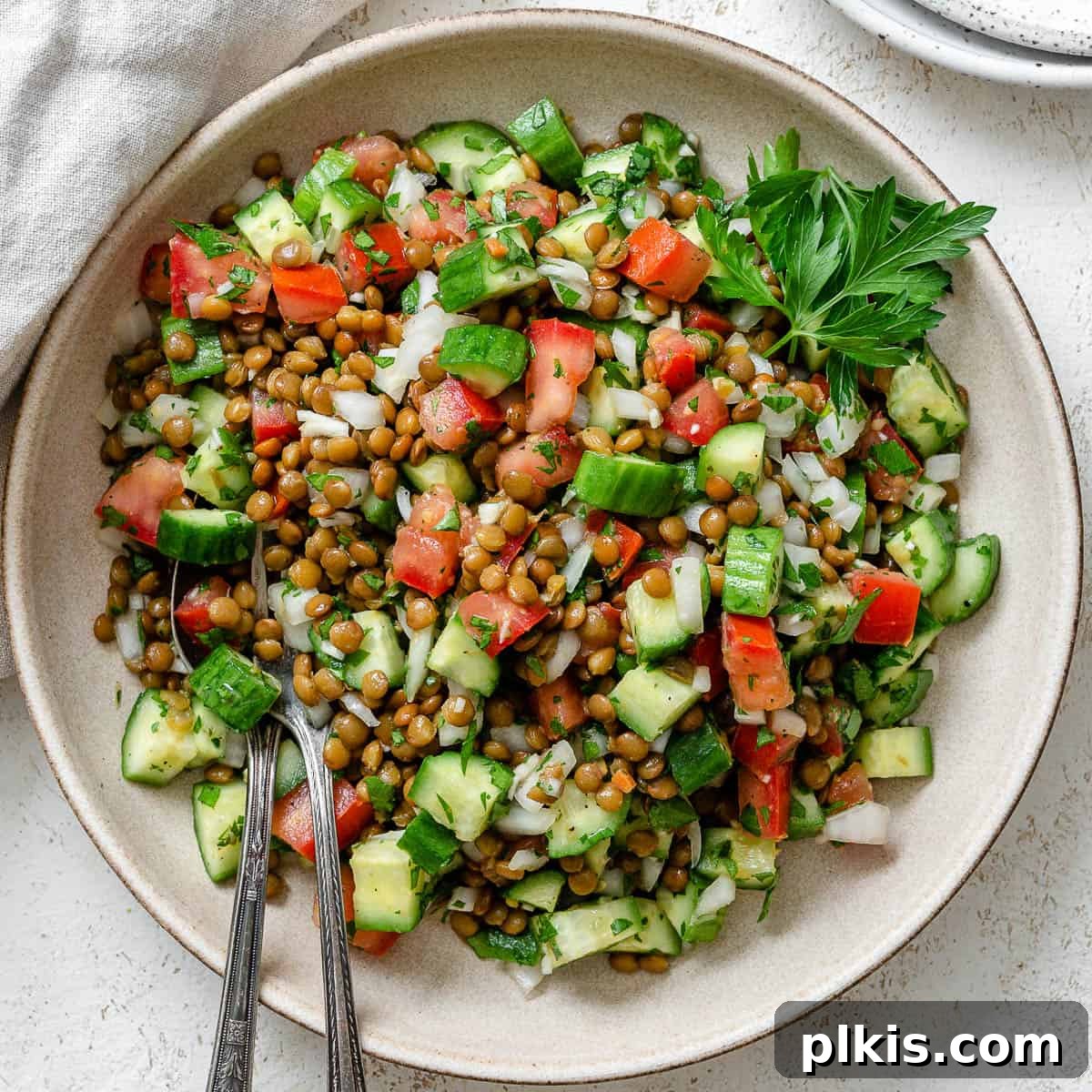
Welcome to a vibrant and healthy twist on a beloved classic: our Protein and Fiber-Rich Herby Lentil Tabbouleh Salad! Say goodbye to bulgur and embrace the wholesome goodness of lentils in this refreshing, budget-friendly dish. Perfect for any occasion – from casual family dinners and lively potlucks to sunny picnics and sizzling BBQs – this vegan and gluten-free delight is incredibly easy to prepare and can be on your table in just 30 minutes!
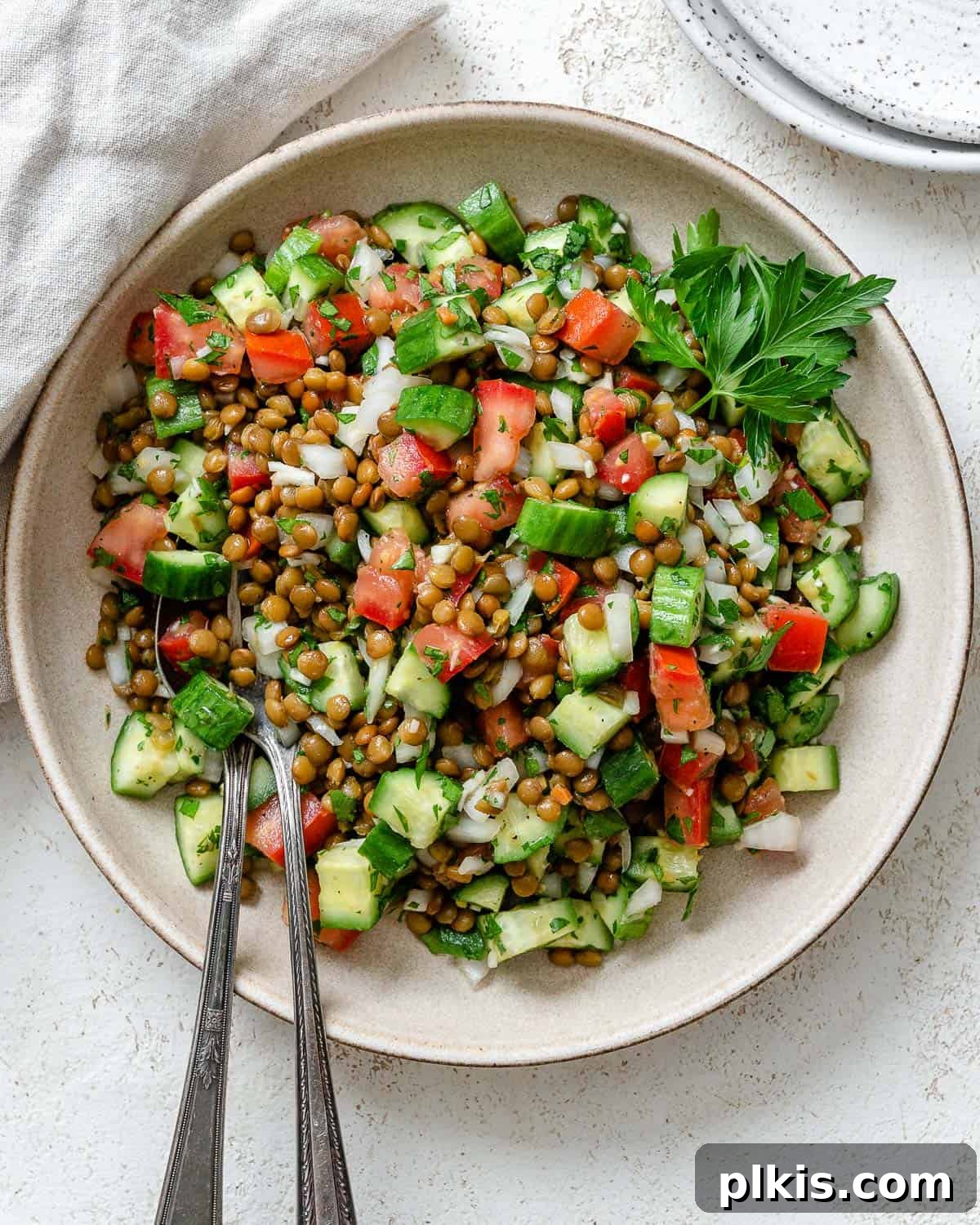
Following the popularity of our Mediterranean chickpea lentil salad, we embarked on a culinary journey to redefine traditional tabbouleh. This time, lentils take center stage, creating a heartier, more satisfying, and naturally gluten-free version of the classic herb-forward salad. This lentil tabbouleh bursts with fresh flavors, vibrant colors, and aromatic herbs, making it an irresistible addition to your meal rotation. Best of all, with the convenience of canned lentils, you can whip up this delightful dish in as little as 10 minutes, bringing a taste of the Mediterranean to your kitchen without the fuss.
Table of Contents
- What Is Lentil Tabbouleh?
- Why You’ll Love This Lentil Tabbouleh Recipe
- Essential Ingredients and Clever Substitutes
- The Lentil Base
- Perfecting The Tabbouleh Salad
- Customize Your Lebanese Lentil Salad: Exciting Add-ins!
- Step-by-Step: How to Make Lentil Tabbouleh
- Expert Recipe Pro Tips for the Best Lentil Tabbouleh
- Frequently Asked Questions (FAQs)
- Mastering the Art of Mincing Parsley
- Serving Suggestions for Lentil Tabbouleh
- Storage Tips for Freshness
- Explore More Healthy Salad Recipes
What Is Lentil Tabbouleh?
Tabbouleh, often spelled tabouleh, tabouli, or tabbouli, is a vibrant and refreshing Levantine salad that originated in the rich culinary traditions of Lebanon and Syria. Traditionally, this beloved mezze dish (perfectly complementing classics like hummus) is characterized by a generous amount of finely chopped parsley, combined with bulgur wheat (typically soaked, not cooked), ripe tomatoes, crisp onions, fresh mint, and dressed simply with lemon juice and olive oil. The hallmark of authentic tabbouleh is its herb-forward profile, where parsley isn’t just an garnish but the undeniable star.
Our innovative version, however, reimagines this classic by substituting the bulgur wheat with wholesome, protein-packed lentils. This transformation creates a lentil salad that retains all the deliciously fresh and herby essence of traditional tabbouleh while offering a heartier, more substantial meal. Inspired by popular Mediterranean restaurant variations like Cava’s lentil tabbouleh, our recipe boasts a naturally gluten-free profile, is rich in plant-based protein, and loaded with dietary fiber. It’s a nourishing upgrade that makes this healthy lentil salad not only incredibly flavorful but also exceptionally fulfilling, appealing to a wider range of dietary needs and preferences without compromising on taste.
Why You’ll Love This Lentil Tabbouleh Recipe
- Effortlessly Quick & Easy: Life gets busy, but healthy eating doesn’t have to be complicated. This lentil tabbouleh recipe requires minimal effort, with just four simple steps from start to finish. If you’re cooking lentils from scratch, you’re looking at under 30 minutes. But here’s the best part: use pre-cooked or canned lentils, and you can have this vibrant salad on your table in a remarkable 10 minutes! It’s the ultimate solution for quick lunches, last-minute dinners, or unexpected guests.
- Budget-Friendly Goodness: Eating well shouldn’t break the bank. This recipe utilizes common, affordable produce and pantry staples like lentils, onions, tomatoes, and fresh herbs. It’s a testament to how simple, wholesome ingredients can come together to create a dish that’s both nutritious and economical, proving that delicious plant-based meals are accessible to everyone.
- Irresistibly Fresh & Bright: Prepare your taste buds for an explosion of freshness! This salad is a symphony of flavors and textures, combining the crispness of cucumber and the juicy sweetness of ripe tomatoes with an abundance of fragrant fresh parsley and a zesty lemon-based dressing. Each bite is light, invigorating, and perfectly balanced, making it an ideal choice for warm weather or whenever you crave a burst of summery zest.
- Nutritious & Diet-Friendly Powerhouse: Beyond its incredible taste, this lentil tabbouleh is a nutritional champion. It’s naturally gluten-free, dairy-free, and entirely vegan, fitting seamlessly into various dietary lifestyles. The intelligent combination of ingredients delivers a substantial dose of fiber and plant-based protein, alongside a wealth of essential vitamins, minerals, and potent antioxidants. It’s truly a feel-good food that nourishes your body from the inside out.
- Versatile & Crowd-Pleasing: Whether you’re assembling an elaborate mezze platter or looking for the perfect side dish for a large gathering, this lentil tabouli is an absolute crowd-pleaser. Its vibrant appeal and satisfying flavors make it a welcome addition to BBQs, potlucks, dinner parties, picnics, and any event where delicious, healthy food is appreciated. It’s a dish that effortlessly adapts to any social setting.
- Excellent for Meal Prep: Take the stress out of weekday meals! This lentil tabbouleh is fantastic for meal prepping. In fact, its flavors tend to deepen and meld beautifully after a day or two in the fridge, making it even more delicious. Prepare a big batch at the beginning of the week, and enjoy wholesome, flavorful meals for several days, saving you time and effort when you need it most.
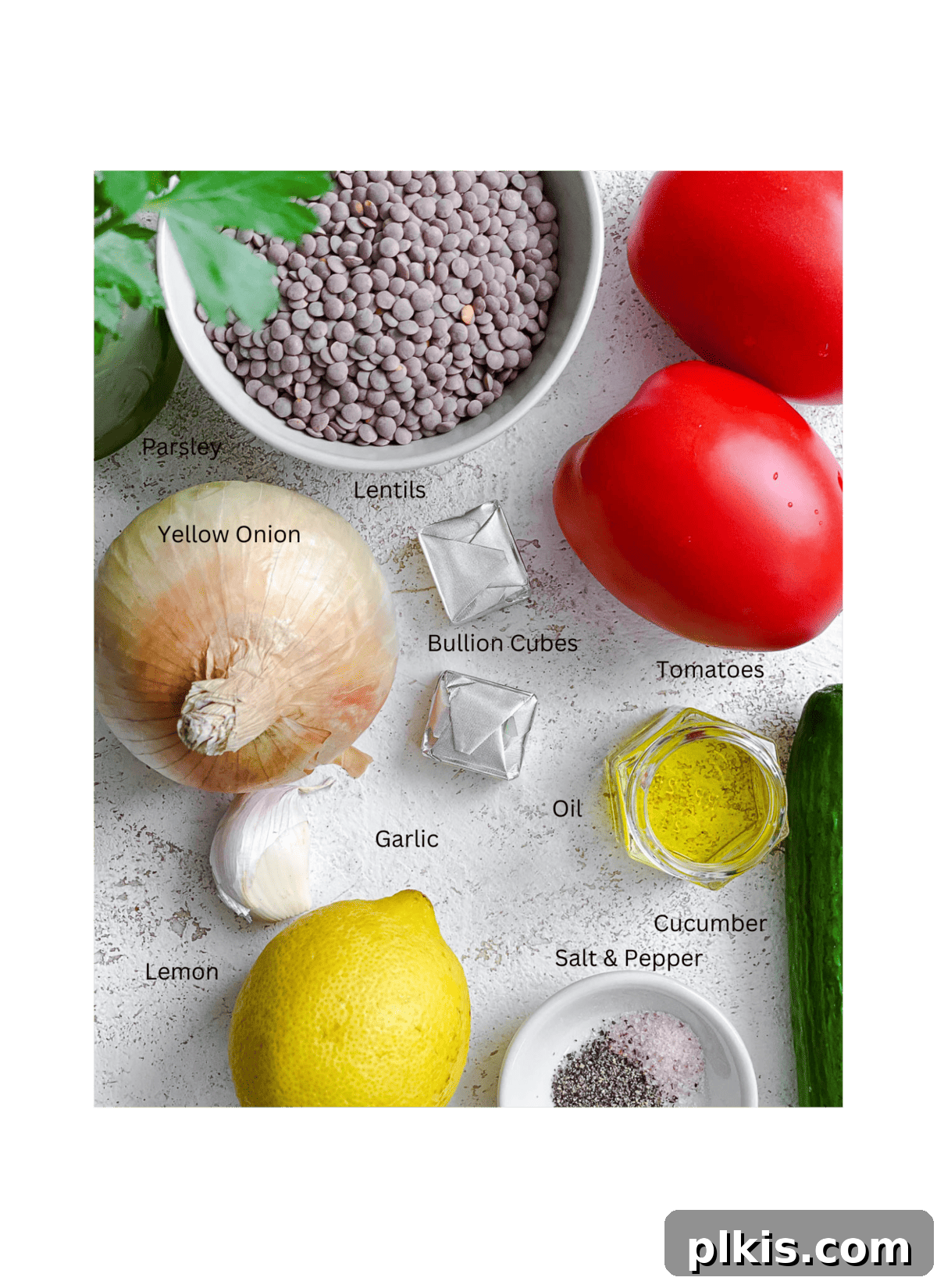
Essential Ingredients and Clever Substitutes
The Lentil Base
- Lentils: The star of our lentil tabbouleh! We prefer using dried green or brown lentils and cooking them from scratch for optimal texture and flavor. However, for ultimate convenience, pre-cooked or canned lentils work perfectly and significantly cut down on prep time. Just ensure they are thoroughly rinsed and drained.
- Vegetable Stock: To infuse our lentils with savory depth, we use a combination of bouillon cubes and water. Alternatively, pre-prepared vegetable stock (low-sodium if preferred) is an excellent choice. This step adds a layer of flavor that plain water simply can’t match, making your lentil base truly delicious.
What Are the Best Lentils for Tabbouleh?
The key to a superb lentil tabbouleh is using lentils that maintain their structural integrity and don’t turn mushy within the salad. For this reason, we highly recommend firmer varieties such as black (Beluga), green, or brown lentils. These types hold their shape beautifully, providing a satisfying bite and texture that complements the crisp vegetables. It’s best to avoid red and yellow lentils, as they tend to break down easily and become too soft for a fresh salad like tabbouleh. For a more comprehensive understanding of these versatile legumes, check out our complete guide to lentils.
Perfecting The Tabbouleh Salad
- Onion: You have flexibility here! A regular yellow onion provides a robust flavor, while red onion adds a touch of color and a slightly sharper bite. For a milder taste, especially if you’re sensitive to raw onion, shallots or finely sliced green onions (scallions) are excellent alternatives.
- Garlic: Freshly minced garlic is non-negotiable for its aromatic punch. Adjust the quantity to your preference – a little extra never hurt a garlic lover! Its presence is crucial for the authentic Mediterranean flavor profile.
- Tomato: Choose fresh, ripe, and firm tomatoes for the best results. Varieties like Beefsteak or vine-ripened tomatoes are ideal, offering a good balance of flesh and juice. If fresh, in-season tomatoes aren’t available, grape or cherry tomatoes are a fantastic substitute, as they tend to be sweeter and less watery year-round. Dice them evenly for consistent flavor in every bite.
- Cucumber: To avoid a watery salad, opt for low-seed, thin-peel varieties such as Persian or English cucumbers. If using standard cucumbers, you might want to peel them and/or scoop out the seedy core to ensure a crisp texture. The refreshing crunch of cucumber is vital to this salad’s appeal.
- Fresh Parsley: Parsley is more than just a garnish in tabbouleh; it’s a foundational ingredient, almost the centerpiece! We typically use curly parsley, but flat-leaf (Italian) parsley works just as well. For an added layer of freshness and a slightly different aromatic note, consider combining it with a handful of fresh mint leaves. The generous amount of herbs is what gives this dish its characteristic vibrant flavor.
- The Simple Dressing: The beauty of lentil tabbouleh lies in its straightforward yet impactful dressing, requiring just a few key components:
- Extra-virgin olive oil: A good quality olive oil is essential for its fruity notes and luxurious texture, binding all the flavors together.
- Fresh lemon juice: Provides the bright, tangy acidity that cuts through the richness and awakens all the fresh ingredients. Always use fresh for the best results!
- Kosher salt & black pepper: Seasoning to taste is crucial. These simple staples enhance and balance all the other flavors, bringing the salad to life.
Customize Your Lebanese Lentil Salad: Exciting Add-ins!
One of the joys of cooking is the freedom to customize, and this Lebanese lentil salad is no exception. While perfect as is, a few thoughtful additions can elevate its flavor, texture, and nutritional profile:
- Pomegranate Arils: For a burst of jewel-toned color and a delightful sweet-tart crunch, sprinkle pomegranate seeds over your tabbouleh. They can be used alongside or as a partial substitute for tomatoes, adding a unique brightness.
- Aromatic Spices: Deepen the flavor of your salad dressing with a pinch of ground cumin for earthy warmth, or sumac for a distinct tangy, slightly sour note that is quintessential to Levantine cuisine. A hint of cinnamon or allspice can also introduce an intriguing, subtle warmth.
- Olives: Add a briny, salty kick with a handful of chopped green, black, or a mixed variety of olives. Their rich, savory flavor perfectly complements the fresh herbs and tangy dressing.
- Avocado: For a creamy texture and a boost of healthy monounsaturated fats, incorporate diced avocado just before serving. It adds a luxurious richness and a beautiful green hue.
- Other Vegetables: Get creative with additional veggies! Consider adding finely shredded or diced beets for sweetness and color, grated carrots for crunch, or roasted eggplant cubes for a smoky, tender element.
- Lettuce: While not traditional, if you enjoy a more substantial green salad, feel free to mix in some crisp Iceberg, Romaine, or butter lettuce. It can lighten the dish and add extra volume.
- Nuts/Seeds: Lightly toasted nuts or seeds introduce a wonderful crunch and provide additional protein and healthy fats. Pine nuts, sunflower seeds, pumpkin seeds, or slivered almonds are all excellent choices.
- Pickled Cucumber/Turnips: For an extra layer of sweet-tangy flavor and a delightful crisp texture, stir in some finely chopped pickled cucumbers or traditional Lebanese pickled turnips.
- Vegan Feta Cheese: Crumble some store-bought or homemade vegan feta cheese over the top for a salty, tangy, and creamy counterpoint that mimics the traditional dairy version.
- Tahini Drizzle: A small swirl of tahini (sesame paste) can add a lovely creamy richness to the lemon dressing, providing a nutty depth that complements the other flavors beautifully.
Step-by-Step: How to Make Lentil Tabbouleh
Creating this delicious lentil tabbouleh is a straightforward process. Follow these steps for a perfect, flavorful salad:
- Prepare the Lentils: If you’re using dried lentils, begin by rinsing them thoroughly under cold water and carefully sorting them to remove any small debris or shriveled pieces. Transfer the sorted lentils to a small saucepan. Add the specified amount of water and bouillon cubes (or vegetable stock). Bring the mixture to a rolling boil over high heat, stirring occasionally.
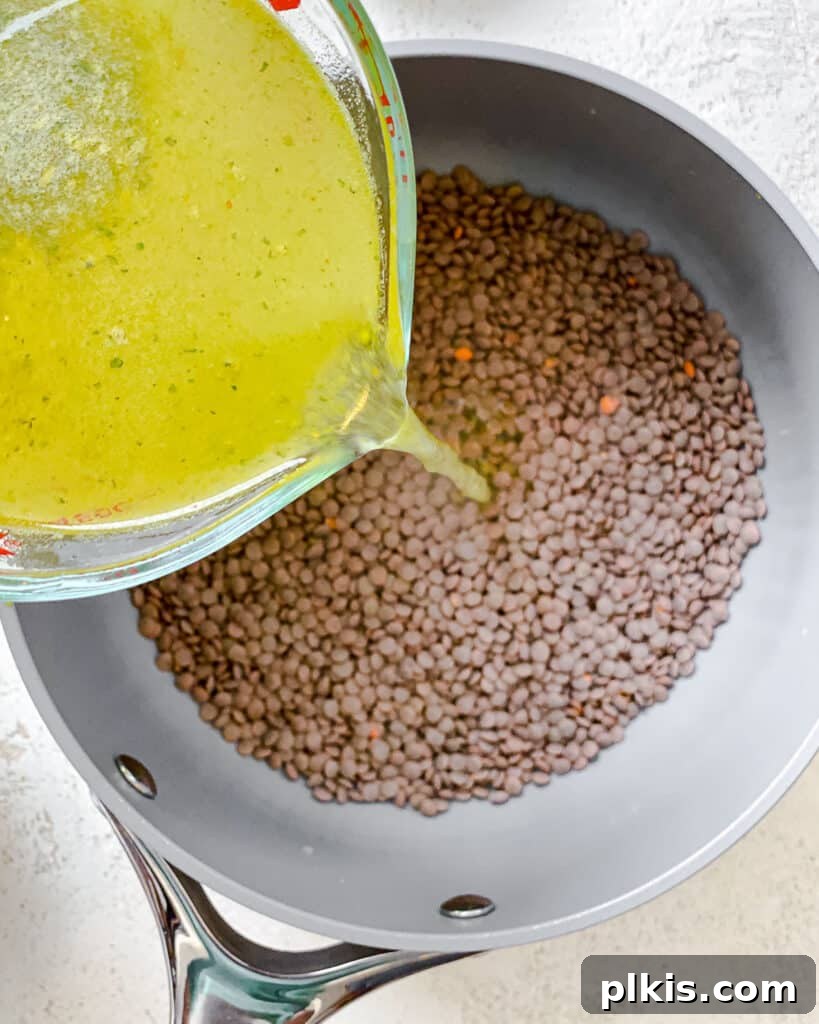
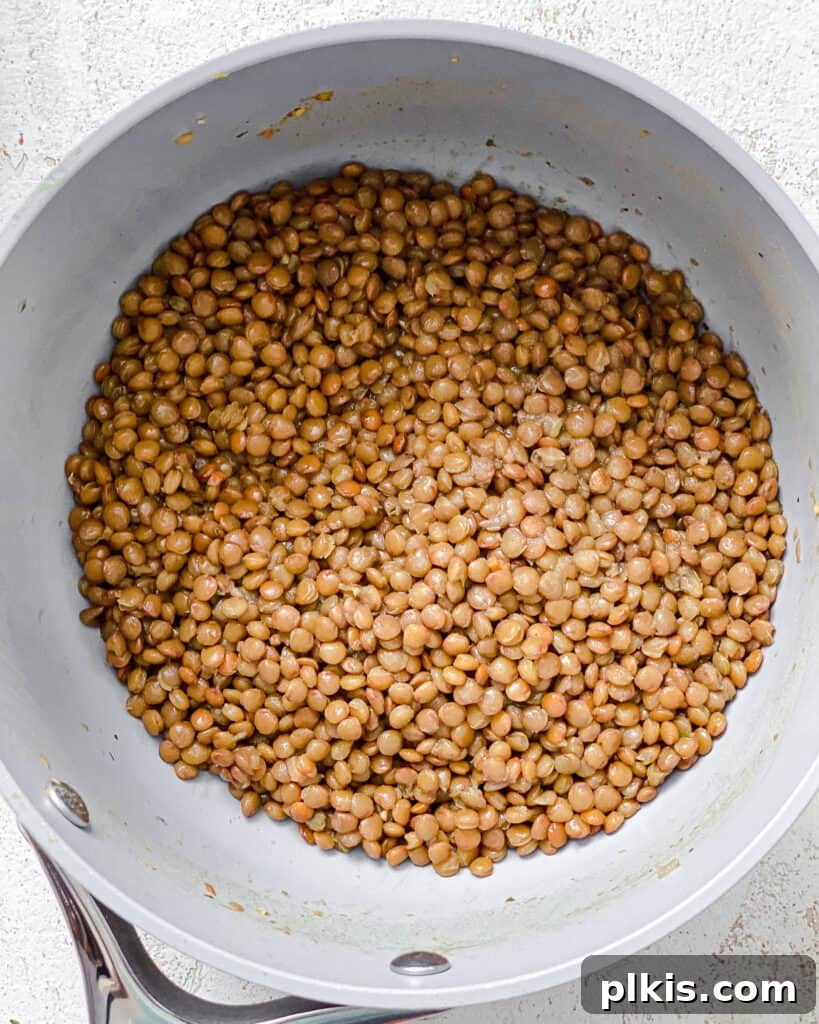
- Cook and Cool Lentils: Once boiling, reduce the heat to a gentle simmer. Cover the saucepan with a lid and cook for 15-20 minutes, or until the lentils are tender yet still retain a slight bite (al dente). Remove the saucepan from the heat and allow the lentils to sit undisturbed for 5 minutes with the lid on. This allows them to steam slightly and finish cooking perfectly. Finally, remove the lid and let the lentils cool completely to room temperature. This step is crucial for preventing the salad from becoming warm or soggy.
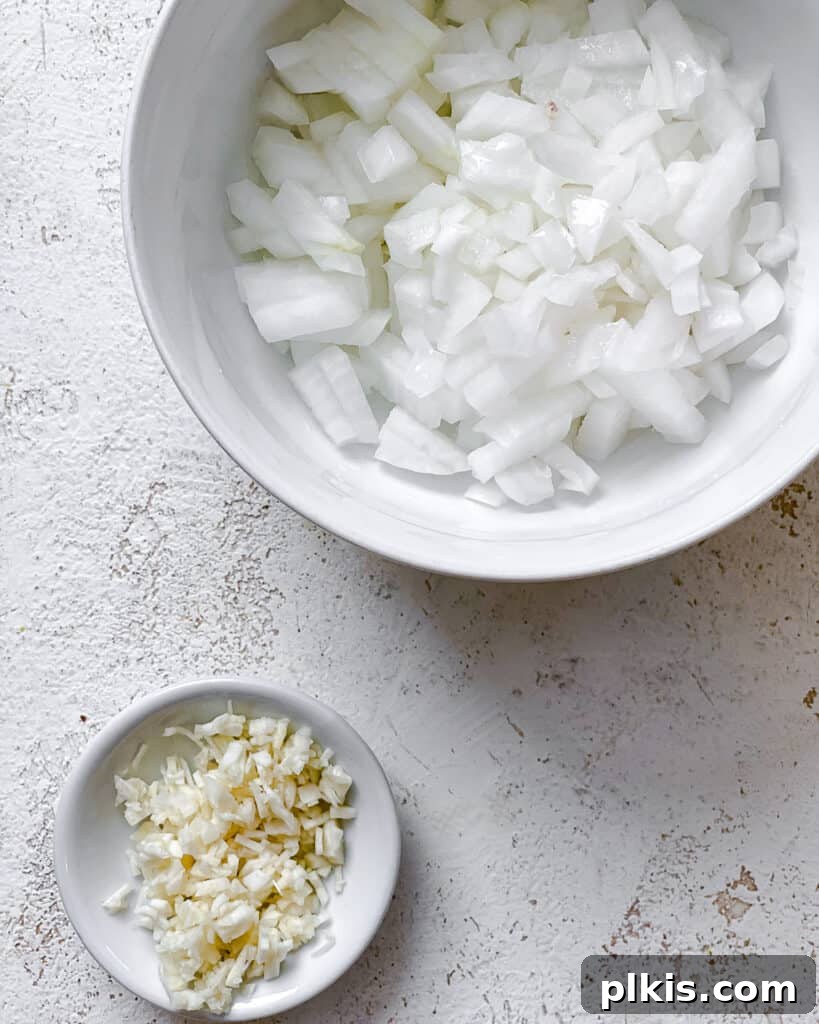
- Prepare Aromatic Base: While your lentils are cooling, proceed with preparing the aromatic base for your tabbouleh. Finely dice your chosen onion, mince the garlic cloves, and freshly juice your lemon. Combine all three in a large mixing bowl. Allow this mixture to sit for 10-15 minutes. This brief marinating period is a chef’s secret!
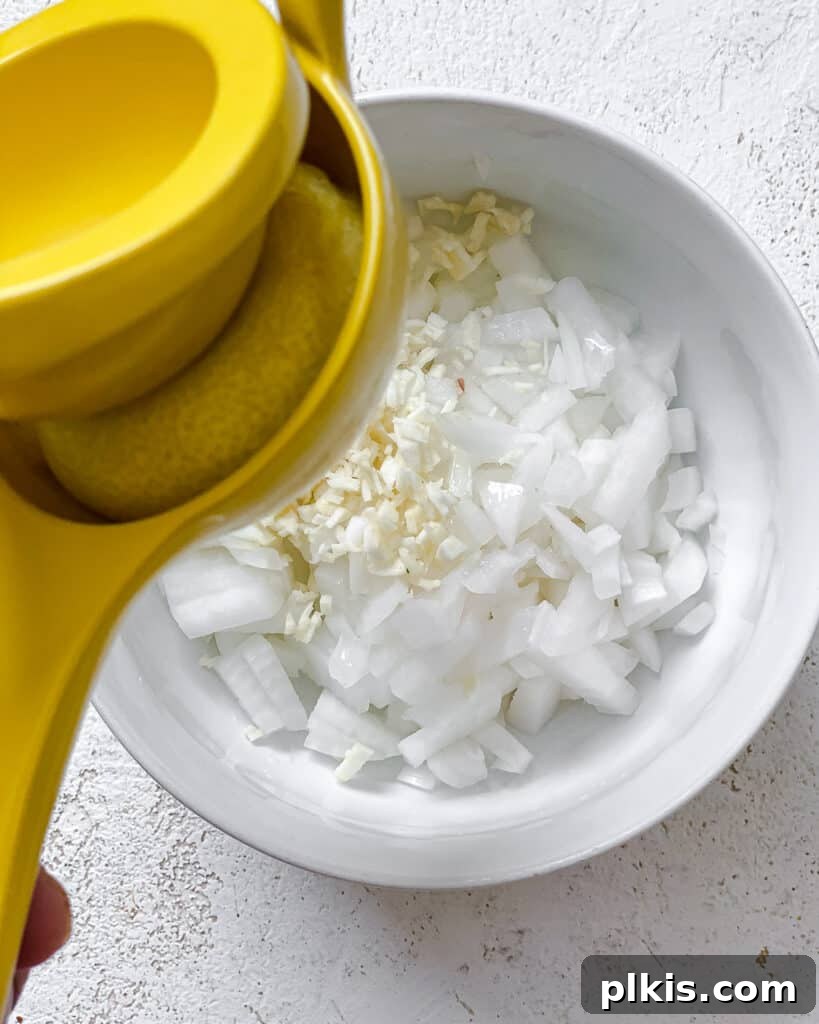
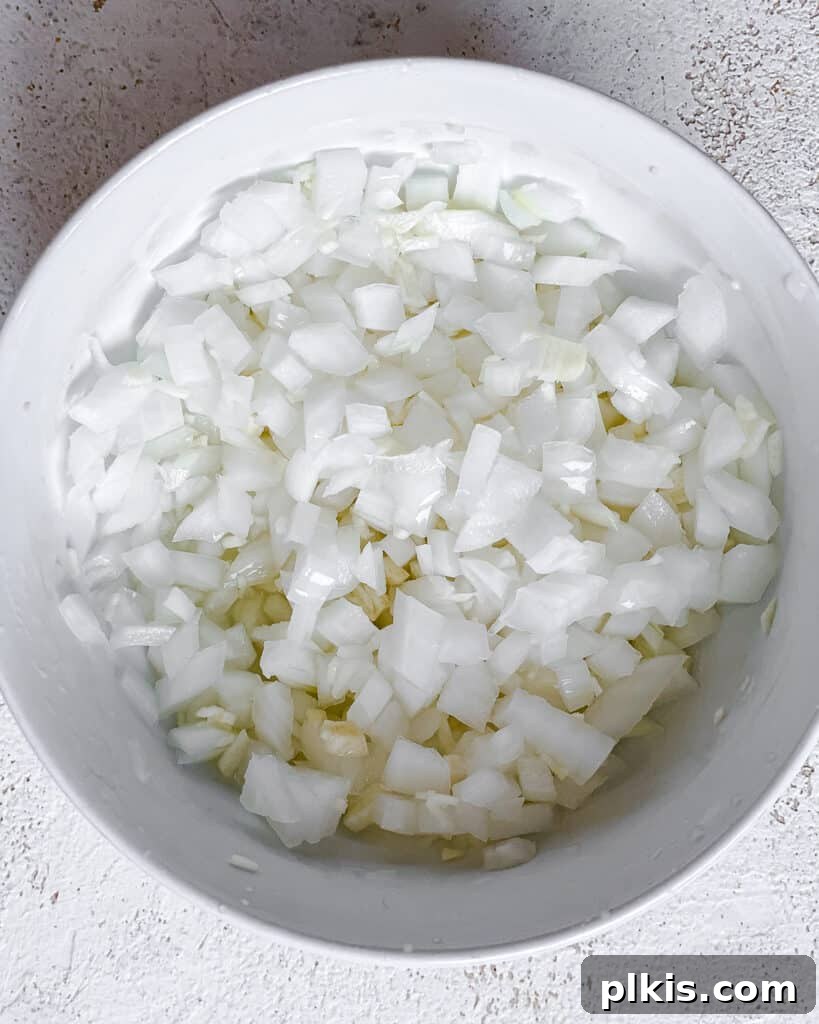
Pro Tip: The acidity in the lemon juice works wonders by gently “cooking” and mellowing the pungent, robust flavor of raw onion and garlic. This process makes them much more palatable and imbues the dressing with a smoother, brighter taste, essential for a harmonious tabbouleh.
- Assemble the Salad: Now for the grand assembly! Rinse your tomatoes and cucumber thoroughly. Finely dice both the tomatoes and cucumber into even-sized pieces – consistency ensures every bite is balanced. Mince the fresh parsley. Add the diced tomatoes, cucumber, minced parsley, extra-virgin olive oil, and the completely cooled lentils to the large bowl containing your lemon-garlic-onion mixture. Toss all the ingredients thoroughly until they are well combined and evenly coated with the dressing. Taste the salad, then season generously with salt and freshly ground black pepper according to your preference.
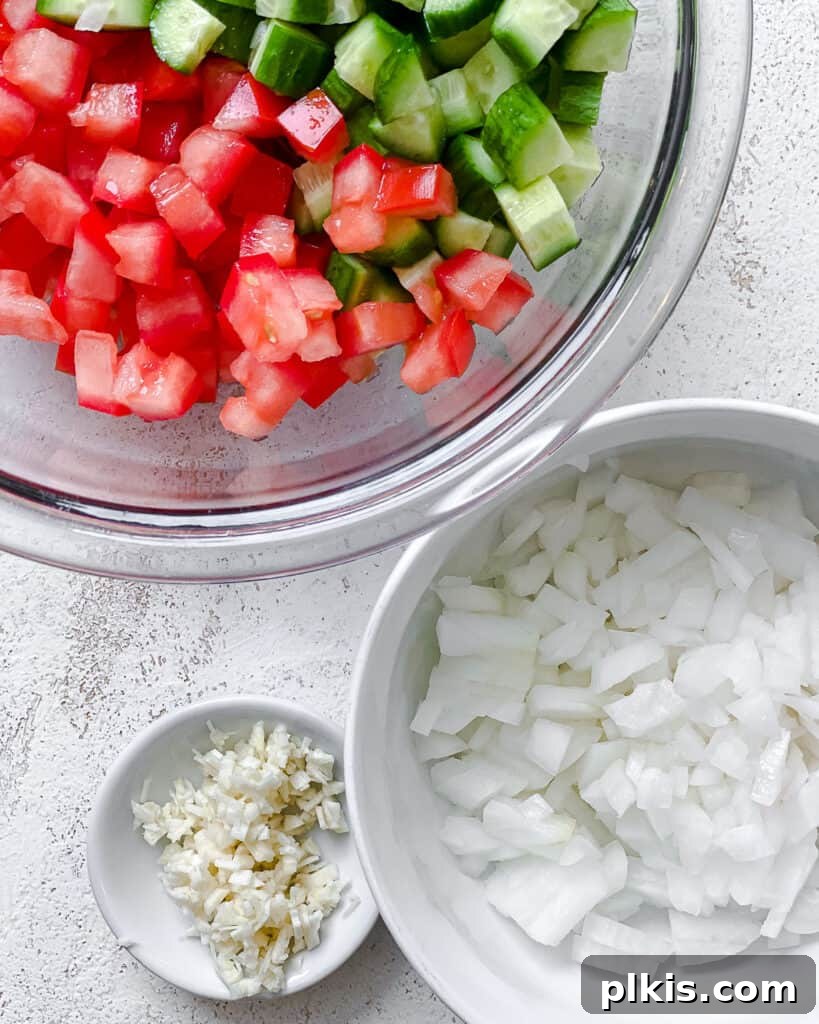
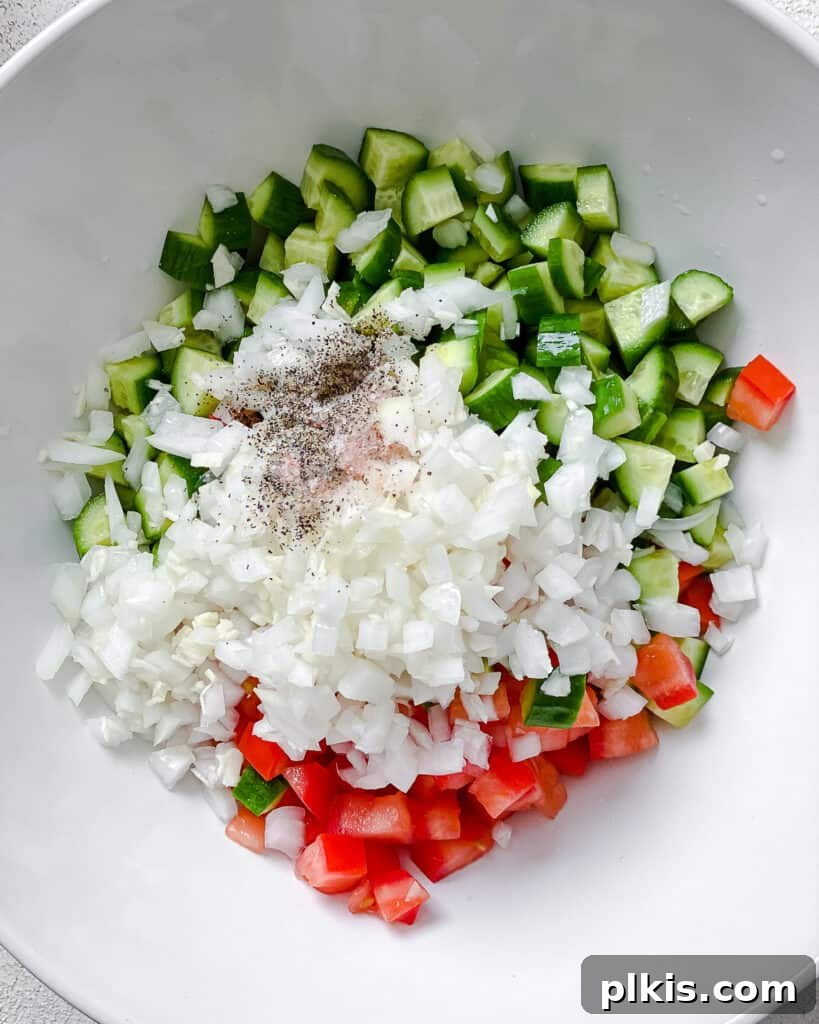
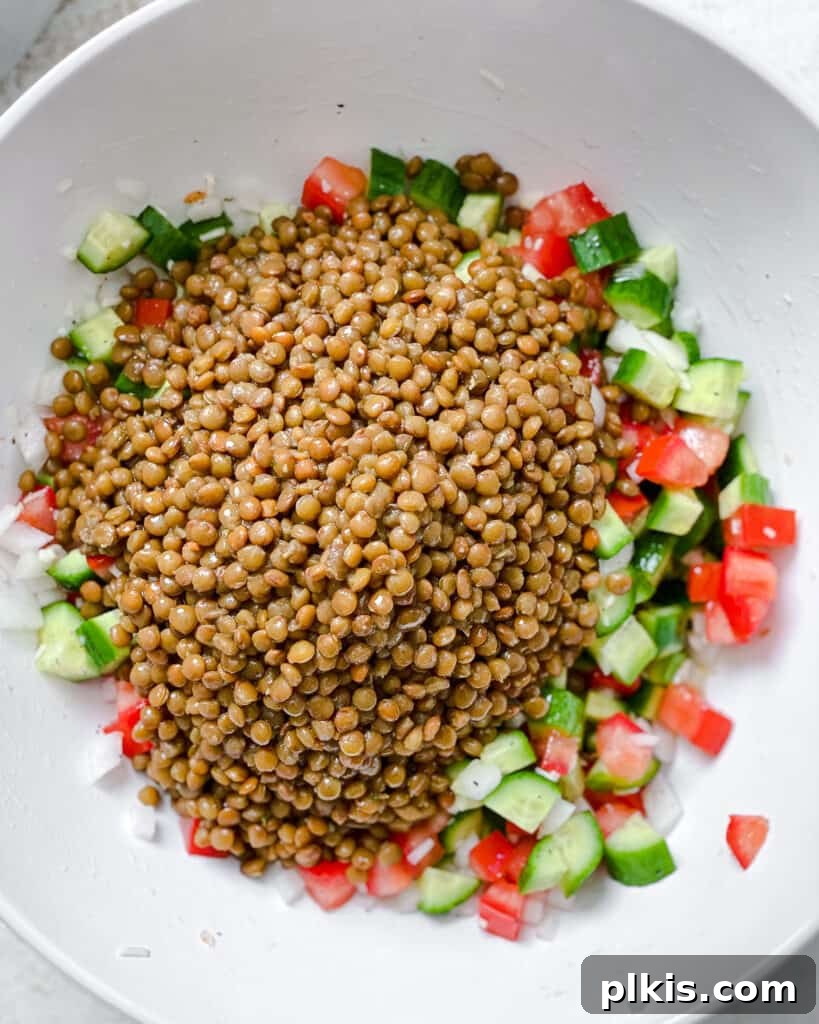
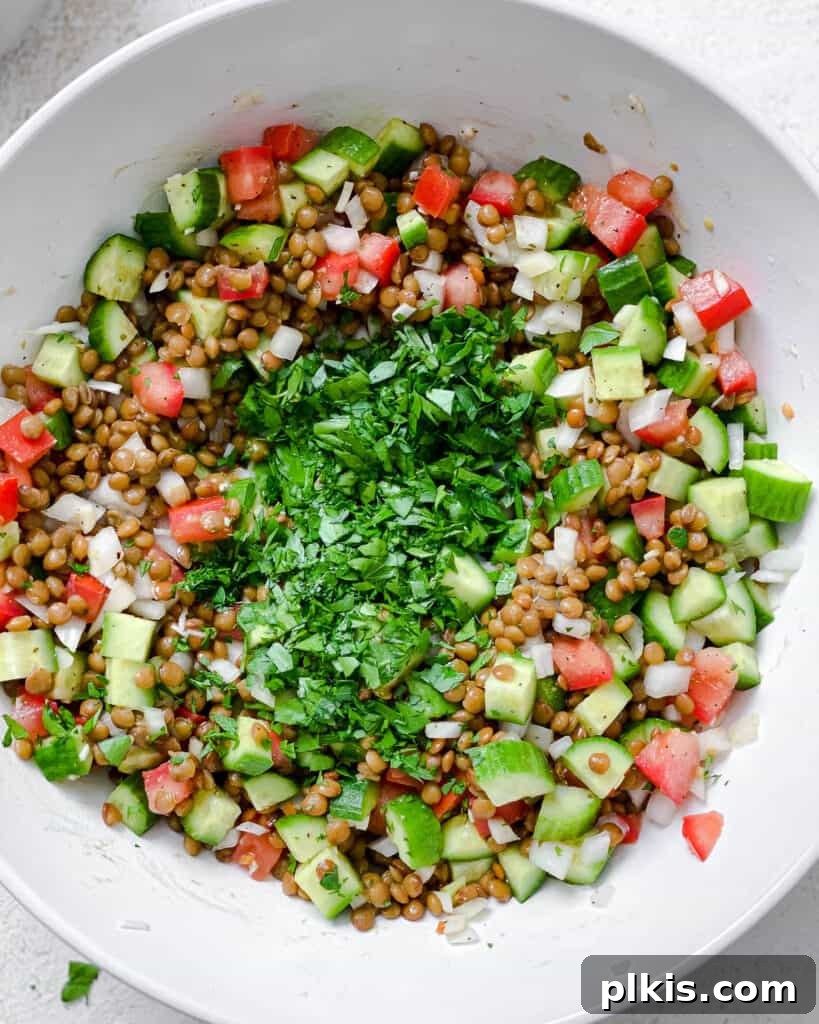
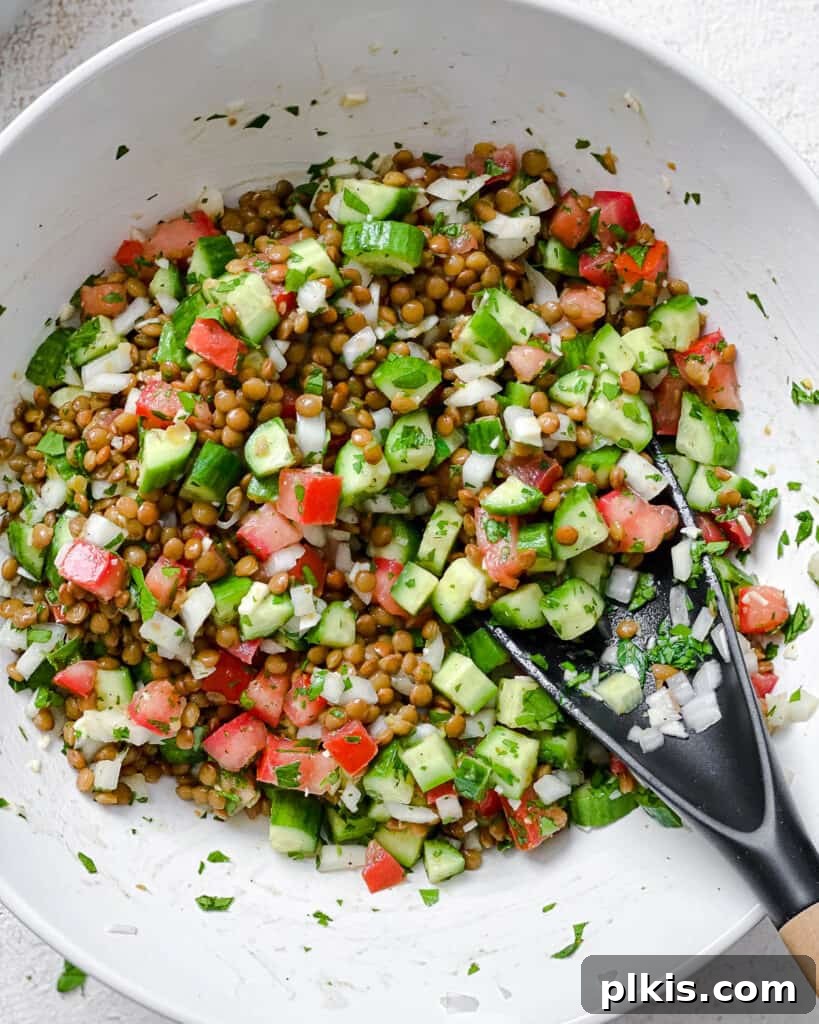
For Optimal Flavor: While you can absolutely enjoy your lentil tabouli immediately, we highly recommend allowing it to “marinate” and for the flavors to meld together for at least 10-20 minutes before serving. This brief resting period allows the herbs, vegetables, and lentils to truly absorb the vibrant lemon-olive oil dressing, resulting in a significantly more cohesive and delicious salad experience.
Expert Recipe Pro Tips for the Best Lentil Tabbouleh
Unlock the full potential of your lentil tabbouleh with these expert tips:
- Prioritize Ripe, In-Season Produce: With so few fresh ingredients, their quality profoundly impacts the final taste. Opt for the ripest, most flavorful tomatoes, crispest cucumbers, and freshest, most aromatic parsley and mint available. In-season produce not only tastes better but often offers superior nutritional value.
- Master the Texture: Traditionally, tabbouleh ingredients are finely minced, allowing you to experience all the distinct flavors in a single bite. This fine texture is highly recommended for an authentic experience. However, if you prefer a more rustic feel or larger pieces, feel free to chop your vegetables and herbs a bit chunkier. Just ensure consistency for even distribution of flavors.
- Adjust the Ratio to Your Liking: The proportion of parsley to bulgur (or, in this case, lentils) can vary regionally in traditional tabbouleh. There’s no single “correct” ratio, so feel empowered to adjust it to your personal preference. If you adore herbs, add an extra handful of parsley! If you prefer a more substantial lentil base, increase the lentils slightly.
- Embrace the Rest Period: As mentioned in the instructions, allowing the lentil tabouli to rest for 10-20 minutes (or even longer in the fridge) is not just a suggestion – it’s a game-changer. This marinating time enables the dressing to thoroughly penetrate the lentils and vegetables, allowing all the distinct flavors to meld into a harmonious, more profound, and overall better-tasting salad. Patience truly pays off here.
- Don’t Skimp on Lemon and Olive Oil: These two ingredients form the backbone of your dressing. Use good quality extra-virgin olive oil for its rich flavor, and always, always use freshly squeezed lemon juice. Bottled lemon juice simply doesn’t compare in terms of brightness and zest.
Frequently Asked Questions (FAQs)
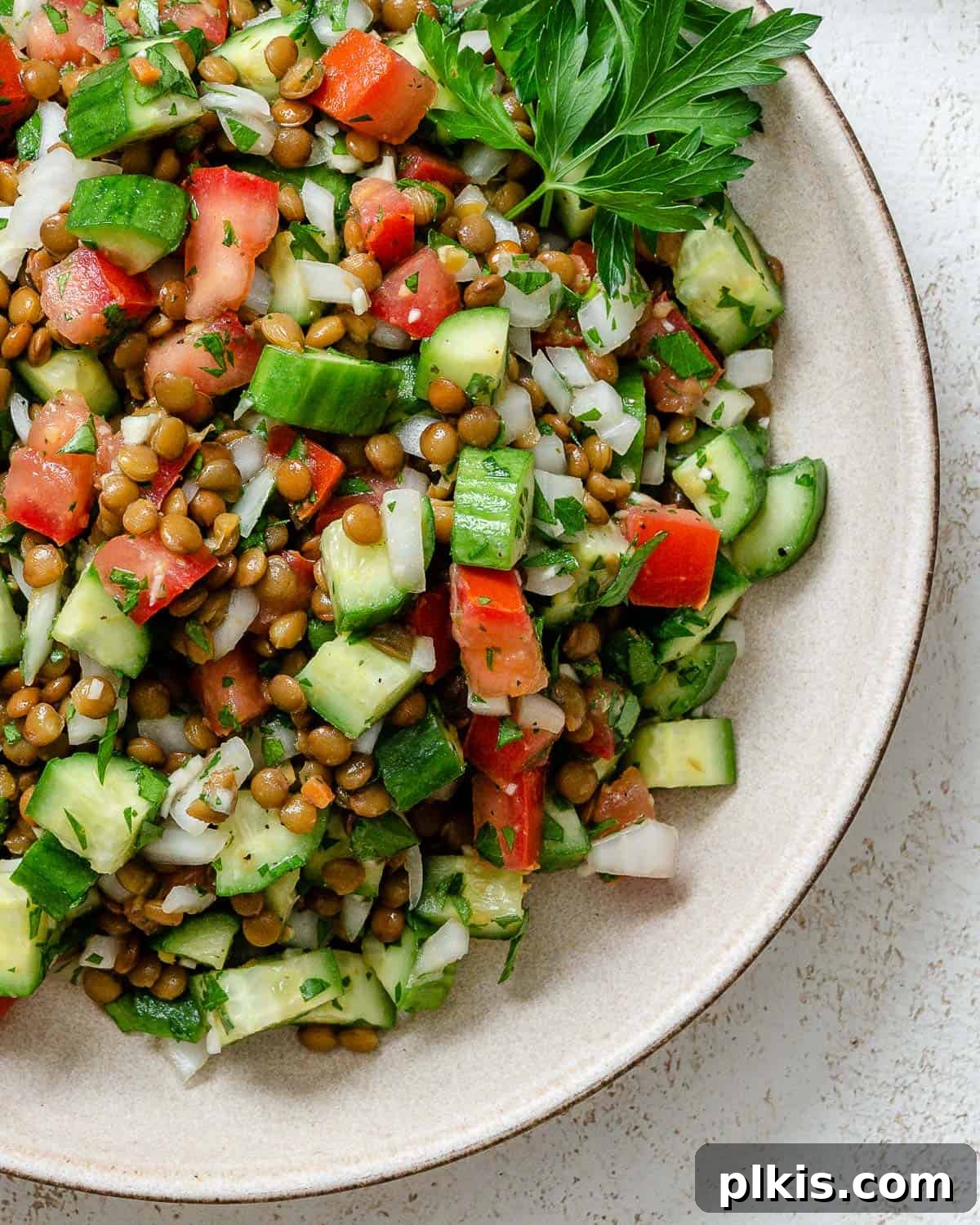
Is Lentil Tabbouleh healthy?
Absolutely! This lentil tabbouleh is a powerhouse of nutrition. It combines antioxidant, vitamin, and mineral-rich vegetables with heart-healthy extra-virgin olive oil, and the lentils themselves are a fantastic source of plant-based protein and dietary fiber. This makes for a highly nutritious, satisfying, and beneficial dish for overall well-being.
Are tabbouleh and bulgur the same thing?
No, they are not the same. While bulgur wheat is a central and defining component of a *traditional* tabbouleh salad, tabbouleh refers to the entire salad dish itself, which includes herbs, vegetables, and dressing in addition to the bulgur. Our lentil version simply swaps out the bulgur for lentils to create a gluten-free alternative.
Is tabbouleh naturally gluten-free?
Traditional tabbouleh, made with bulgur wheat, is *not* gluten-free, as bulgur is a processed form of wheat. However, this specific lentil tabbouleh salad recipe is indeed naturally gluten-free, making it a wonderful option for those with gluten sensitivities or celiac disease who still want to enjoy the flavors of this classic dish.
Can I use other types of beans instead of lentils?
While lentils are ideal for their size and texture in this particular dish, you could experiment with other small, firm beans like black beans or small white beans for a different twist. However, the texture and mild flavor of lentils are particularly well-suited to mimicking the bulgur in tabbouleh. If using other beans, ensure they are cooked al dente and thoroughly rinsed.
How can I make my lentil tabbouleh spicier?
If you enjoy a bit of heat, you can easily add a kick to your lentil tabbouleh. Consider finely dicing and adding a small amount of fresh red chili, a pinch of red pepper flakes to the dressing, or a dash of hot sauce when mixing. Start small and add more to taste.
What does “Levantine” mean in reference to tabbouleh?
“Levantine” refers to the historical and geographical region of the Levant, which encompasses much of the Eastern Mediterranean, including modern-day Syria, Lebanon, Jordan, Palestine, and Israel. Tabbouleh is a culinary staple across this region, deeply ingrained in its food culture.
Mastering the Art of Mincing Parsley
Achieving that perfectly fine, fluffy parsley is key to authentic tabbouleh texture. Here’s how to do it efficiently:
First, gather a generous bunch of fresh parsley. Line up the stems neatly and slice away the thicker, tougher parts. You only want the tender leaves and thinner stems for mincing. Next, pile the remaining parsley tightly in the center of your cutting board, creating a compact mound.
Hold your chef’s knife firmly in your dominant hand. Place the tip of the blade on the cutting board, keeping it touching the surface. Place your free palm (the non-dominant hand) over the top of the knife blade, applying gentle pressure (ensure you’re pressing on the dull spine of the blade, not the sharp edge!).
Now, using a quick, rhythmic up-and-down rocking motion, begin to chop the parsley. Keep the knife tip anchored to the cutting board, moving the blade in a semi-circular motion to gradually chop all the herbs. As you chop, periodically gather the parsley back into a pile using the side of your knife or a bench scraper. Repeat the rocking motion and re-piling until your parsley is finely minced and uniformly textured.
Alternatively: For a super-fast chop, special multi-bladed herb scissors can quickly snip through a tied bundle of parsley leaves, offering a convenient shortcut to a fine mince.
Serving Suggestions for Lentil Tabbouleh
Lentil tabbouleh is incredibly versatile and shines in various culinary contexts. Traditionally enjoyed as a mezze dish, it pairs beautifully with an array of Mediterranean flavors:
- Classic Mezze Platter: Serve it alongside an assortment of dips like creamy hummus and smoky baba ghanoush.
- With Pita Bread: Offer warm pita bread or pita chips for scooping up every delicious bite of the salad.
- Grilled Delights: It makes a refreshing counterpoint to grilled vegetables such as eggplant, bell peppers, and tender zucchini.
- Protein Companions: Pair it with crispy falafel (either on its own or tucked into a falafel wrap), flavorful tofu/tempeh kabobs, or simply with marinated tofu or other plant-based proteins.
- Stuffed Grape Leaves: A natural pairing, the fresh flavors of tabbouleh complement the savory goodness of stuffed grape leaves.
- Versatile Leftovers: Don’t let any go to waste! Leftover lentil tabbouleh is fantastic added to vibrant Buddha bowls, stuffed into wraps for a quick lunch, or served as a refreshing side with any meal.
Storage Tips for Freshness
Proper storage is key to extending the life and flavor of your lentil tabbouleh. Any leftover salad should be transferred to an airtight container and stored in the refrigerator for 3-4 days. Interestingly, many find that the flavors deepen and improve after a day or two, making it an excellent candidate for meal prep.
Pro-Tip for Longevity: To maximize the shelf life and prevent your salad from becoming soggy too quickly, consider de-seeding your tomatoes and cucumber before dicing. A light sprinkle of salt on the diced cucumber and tomato for a few minutes before adding them to the salad can also help draw out excess liquid. Simply pat them dry before incorporating them into the mix. This small step makes a big difference in maintaining the fresh, crisp texture of your tabbouleh.
Explore More Healthy Salad Recipes
- Pita Panzanella Salad
- Cold Sesame Noodles (Noodle Salad)
- Crunchy Thai Peanut Salad
- Texas Caviar (Avocado Corn and Bean Salad)
- Mediterranean Pearl Couscous Salad
- Easy Summer Fattoush Salad
Photos by Alfonso Revilla
Wholesome Lentil Tabbouleh
Rating: 5 out of 5 stars from 47 votes
Prep Time: 5 mins | Cook Time: 25 mins | Total Time: 30 mins
Servings: 4 to 6
Print Recipe
Swap bulgur for lentils in this protein and fiber-rich herby lentil tabbouleh salad. It’s quick and easy to prepare, low budget, and a perfect summery salad for family meals, potlucks, picnics, BBQs, and more! Vegan & Gluten-free, plus ready in 30 minutes!
Equipment
- Knife set
- Measuring Cups
- Measuring spoons
Ingredients
- 1 cup green or brown lentils
- 2 cups of hot water
- 2 bouillon cubes
- 1 small yellow onion, finely diced
- 2 garlic cloves, minced
- 2 tablespoons of lemon juice
- 2 tomatoes, diced
- 1 large cucumber, diced
- 1 tablespoon olive oil
- 1 cup of parsley, minced
- Salt & pepper to taste
Instructions
- In a small saucepan, combine the lentils, water, and bouillon cubes. Bring to a boil over high heat, stirring well. Once boiling, cover the saucepan and reduce the heat to a simmer. Cook for 15 to 20 minutes, or until lentils are tender but still firm. Turn off the heat and let them sit undisturbed for 5 minutes with the lid on. Once cooked and rested, uncover and allow them to cool completely.
- In a large bowl, combine the finely diced onion, minced garlic, and fresh lemon juice. Mix well and let this mixture sit for about 15 minutes while the lentils are cooking and cooling down. This step helps to mellow the raw flavors.
- Once the lentils are completely cool, add them to the large bowl with the onion, garlic, and lemon juice mixture. Then, add the diced tomatoes, diced cucumber, olive oil, and minced parsley. Toss all ingredients gently but thoroughly until everything is well combined and coated. Taste the salad and season with salt and pepper to your preference. For optimal flavor, allow the salad to rest for at least 10-20 minutes before serving, allowing the flavors to meld.
Notes
- Use ripe, in-season produce: With only a few fresh ingredients, their quality profoundly impacts the final taste.
- To adjust texture: A fine texture ensures you taste everything in a single bite (which is the recommended/traditional way), but feel free to chop ingredients chunkier if preferred.
- Adjust the ratio: The ratio of parsley to lentils can vary; adjust it to your liking for a more herb-forward or lentil-rich salad.
- Leave it to rest: Allowing the salad to marinate for 10-20 minutes will allow all the flavors to meld and produce an overall better-tasting lentil tabbouleh.
Nutrition
Calories: 243 kcal | Carbohydrates: 37g | Protein: 14g | Fat: 5g | Saturated Fat: 1g | Polyunsaturated Fat: 1g | Monounsaturated Fat: 3g | Sodium: 460mg | Potassium: 824mg | Fiber: 17g | Sugar: 5g | Vitamin A: 1847 IU | Vitamin C: 38mg | Calcium: 76mg | Iron: 5mg
Additional Info
- Author:
- Toni Okamoto
- Course:
- Dinner, Lunch
- Cuisine:
- Mediterranean
- Method:
- Stovetop
- Diet:
- Vegan
Tried this recipe?
Please tag us at @PlantBasedOnABudget! 🙂