
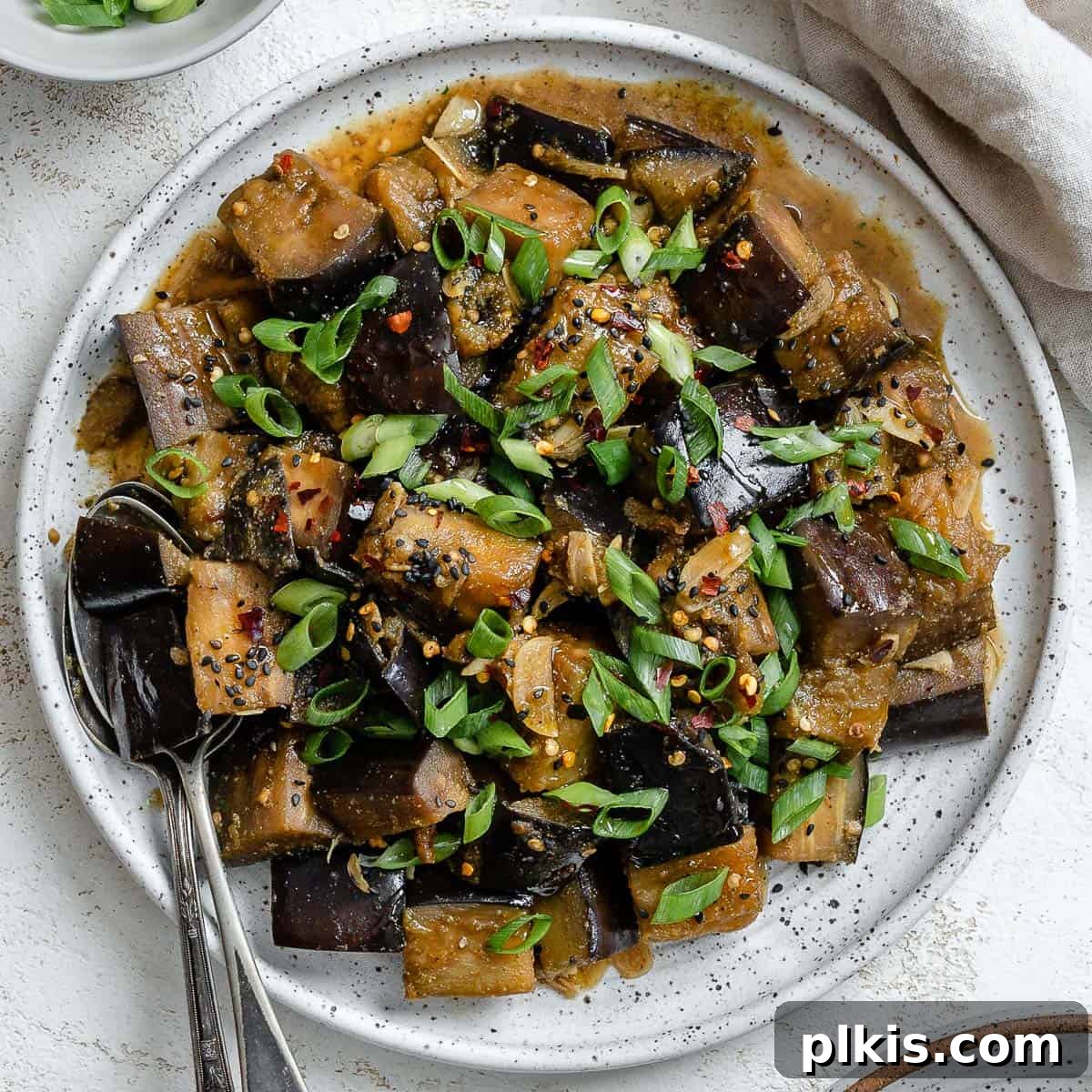
Unlock the secrets to perfectly **sautéed eggplant** – a culinary delight that’s tender on the inside, wonderfully ‘meaty’ in texture, and beautifully crisp and caramelized on the outside. This incredibly versatile vegan side dish is surprisingly easy to prepare, ready in under 20 minutes, and transforms from a simple vegetable into a gourmet experience, especially when coated in our luscious maple-soy glaze!
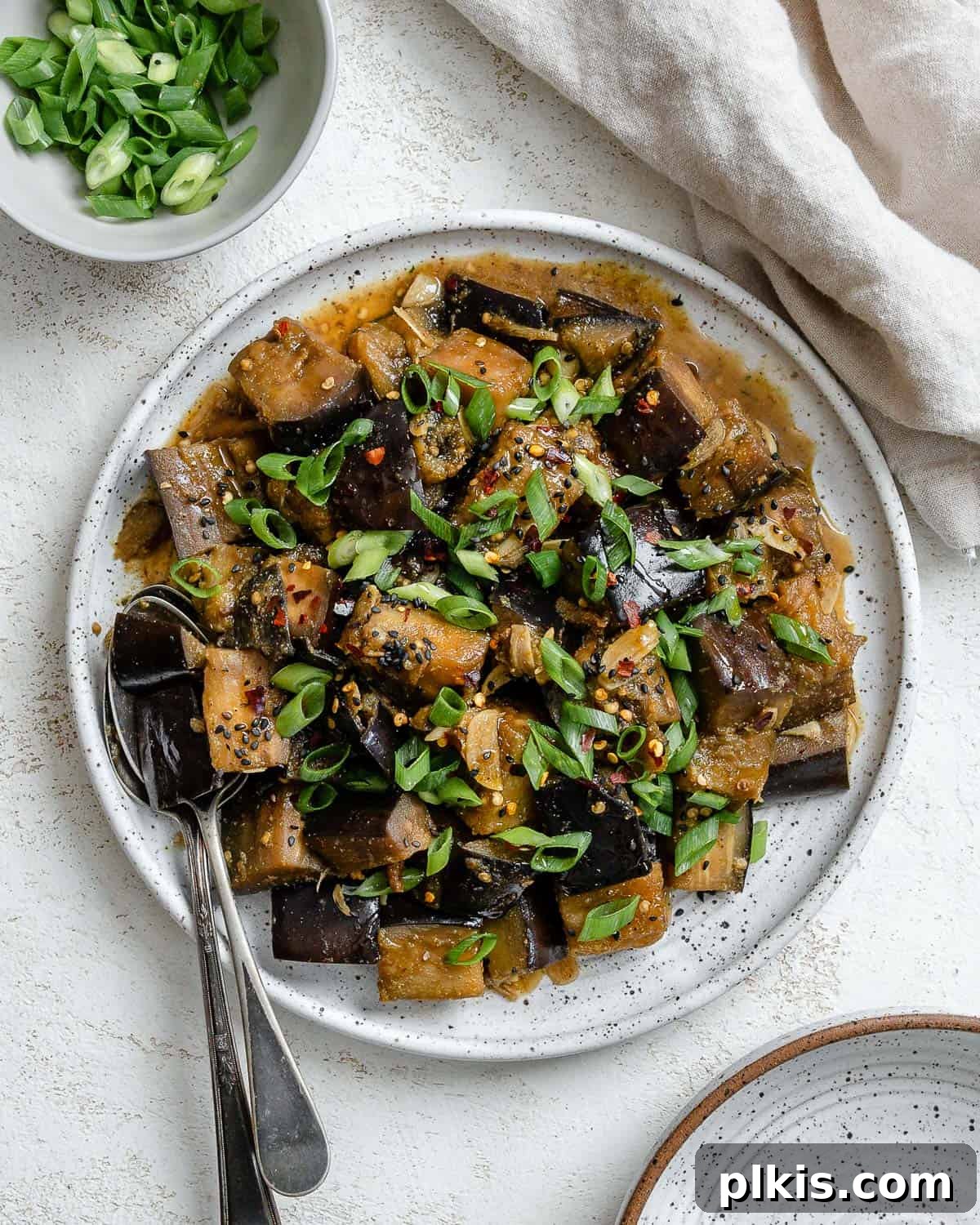
Eggplant, often celebrated for its affordability and adaptability, can be an extraordinary addition to any meat-free kitchen. However, its reputation sometimes suffers from less-than-ideal cooking methods, leading to soggy, greasy, or bland results. Fear not, as this foolproof stovetop method guarantees a light, melt-in-your-mouth tender interior, surrounded by an irresistibly caramelized crust that rivals even roasting in depth of flavor!
This recipe offers a fantastic two-in-one experience. Initially, the eggplant is expertly sautéed until it reaches that coveted crisp and caramelized stage – a perfectly pan-seared eggplant you could enjoy as is. But we elevate it further by gently tossing the golden eggplant into a delectable sweet and savory, Asian-inspired maple-soy glaze. This simple step transforms an already delicious side into a moreish delicacy, perfect for enjoying year-round alongside your favorite noodles, fluffy rice, or a myriad of other main courses. If you’re a fan of eggplant, you’ll also adore our quick eggplant curry or comforting vegan eggplant lasagna.
Why You’ll Fall in Love with This Sautéed Eggplant Recipe
Prepare to add this incredible sautéed eggplant to your regular cooking rotation. Here’s why it’s destined to become a household favorite:
- Lightning Fast Preparation: Cooking eggplant on the stove is hands down one of the quickest and simplest ways to prepare this versatile vegetable. It’s the ideal solution when you need a delicious, nutritious side dish in a pinch, making it perfect for busy weeknights.
- Effortlessly Easy: Forget complicated steps or a mountain of dishes. This recipe calls for just a few staple ingredients, a single pan, and a handful of straightforward instructions. No more waiting for the oven to preheat, no tedious salting, and absolutely no soaking required! It’s truly a fuss-free culinary adventure.
- A Wholesome Choice: Eggplant is a nutritional powerhouse, boasting an excellent source of fiber, potent antioxidants, and a spectrum of essential vitamins and minerals. By pan-frying it, you’re also keeping fat content to a minimum. Plus, if you opt for our maple-soy sauce, you can easily adjust the recipe to suit your dietary preferences and health goals.
- Diet-Friendly Versatility: This simple yet flavorful eggplant, sautéed with aromatic garlic, naturally fits a wide range of dietary needs. It’s gluten-free, low-carb, keto-friendly (with appropriate syrup choice), entirely vegan, and can easily be adapted for paleo lifestyles.
- Irresistibly Delicious: Pan-searing allows you to achieve that perfect balance – a soft, creamy interior with a beautifully browned, slightly crisp crust. This cooking method enhances eggplant’s naturally sweet and earthy flavors, making it truly shine. When paired with our simple maple-soy sauce, the taste experience is nothing short of extraordinary.
- Incredibly Versatile: Eggplant possesses a unique ‘meatiness’ that makes it fantastic for more than just a side dish. It can star as a superb meat substitute in various mains, from rich curries and hearty pasta dishes to creamy risottos and beyond.
The Ingredients You’ll Need
At its heart, simple sautéed eggplant requires only fresh eggplant, a touch of salt, and a sprinkle of black pepper. For those who enjoy an extra layer of flavor, garlic powder is a wonderful addition. However, to truly elevate this dish, we’ve crafted this skillet eggplant with a sensational Asian-inspired soy-maple sauce that will tantalize your taste buds.
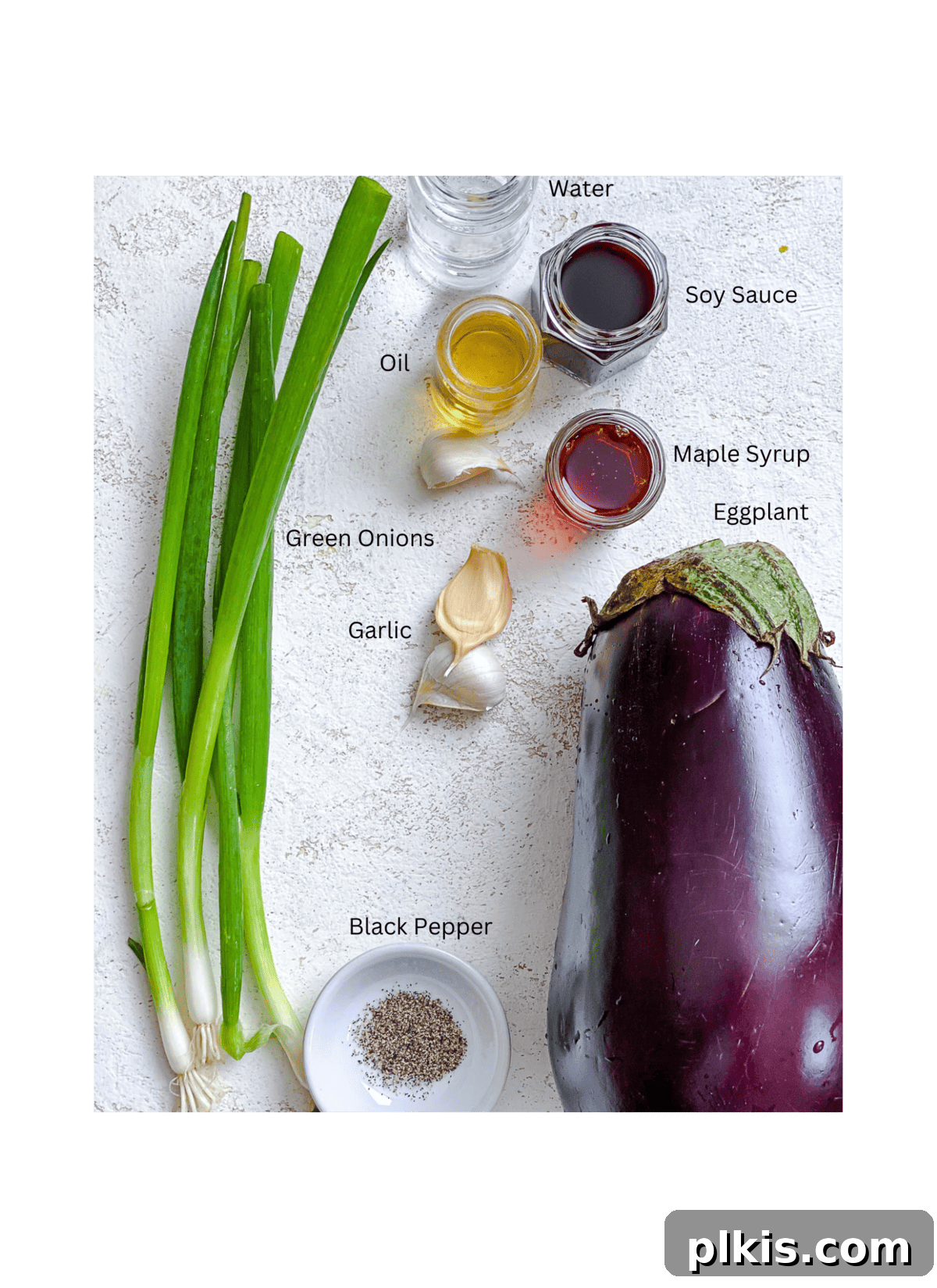
- Eggplant: For this recipe, we typically use Globe eggplant, which is the most readily available variety in many regions, including the US. However, a variety of other eggplant types will yield excellent results. Chinese eggplant, with its longer, thinner shape, is particularly well-suited for slicing, offering a greater surface area for caramelization. Feel free to experiment with Japanese, Italian, or other local varieties.
- Olive Oil: We prefer using heart-healthy olive oil for its rich flavor and beneficial properties. However, you can certainly substitute with other high smoke point cooking oils like avocado oil, grapeseed oil, or even coconut oil, depending on your preference and desired flavor profile.
Enhance Your Dish with Extra Veggies: Consider boosting the nutritional value and flavor of your pan-fried eggplant by adding other quick-cooking vegetables. Sliced onion, earthy mushrooms, vibrant bell peppers (in any color), and/or tender zucchini all make fantastic additions. Simply add them to the pan during the last few minutes of cooking for a delightful medley.
Crafting the Irresistible Soy Maple Glaze
This simple yet impactful glaze transforms the sautéed eggplant into an extraordinary dish. Here’s what you’ll need:
- Garlic: Freshly minced garlic offers the most vibrant and aromatic flavor, truly making the glaze pop. In a pinch, garlic powder can be used, but adjust the quantity carefully as its flavor is more concentrated.
- Black Pepper: A dash of freshly ground black pepper introduces a subtle warmth and balances the other flavors beautifully.
- Soy Sauce: The cornerstone of this Asian-inspired glaze, soy sauce provides a deep, salty, and umami-rich foundation. For those mindful of sodium intake, reduced-sodium soy sauce is a great alternative. For the most authentic and layered flavor, we recommend a 50/50 blend of light and dark soy sauce.
- Maple Syrup: Or, if you prefer, agave syrup. The natural sweetness of maple syrup perfectly complements the savory soy sauce and any added chili for a delightful sweet-savory-spicy profile. For a keto-friendly version, opt for a sugar-free maple syrup substitute.
- For Garnish: Elevate the presentation and add a fresh burst of flavor with thinly sliced green onions (also known as scallions) and a sprinkle of toasted sesame seeds. If you crave a kick of heat, a pinch of red pepper flakes or thinly sliced fresh chili is an excellent addition.
Optional Flavor Boosts: To add even more tangy depth and aromatic complexity to your eggplant recipe, consider incorporating a teaspoon of finely minced fresh ginger. A splash of Chinese black vinegar or white rice vinegar can also introduce a delightful zest that brightens the entire dish.
Selecting the Perfect Eggplant for Sautéing
The foundation of exceptional skillet eggplant begins with choosing the best produce. Keep these key points in mind when you’re at the market:
- Appearance Matters: While eggplant varieties come in a spectrum of colors and shapes (Globe, Japanese/Chinese, Thai, Italian, etc.), always select specimens with glossy, taut, and smooth skin. Avoid any that appear dull, wrinkled, or bruised, as these are signs of age or poor handling.
- Firmness and Weight: When gently squeezed, a fresh eggplant should feel firm but yield slightly to pressure. It should never be soft or mushy. Also, pick one that feels surprisingly heavy for its size, indicating it’s full of moisture and not dried out.
- Vibrant Stem: The stem and calyx (the leafy cap) should be a lively green, not brown, shriveled, or dried out. A fresh stem is a clear indicator of a freshly picked eggplant.
Insider Tip for Bitterness: Generally, smaller, younger eggplants with fewer visible seeds are best, as they tend to be less bitter. The older and larger an eggplant gets, the more pronounced its bitterness can become. Aim to use them quickly after purchase for the freshest and sweetest flavor profile.
Exciting Seasoning Variations
Eggplant’s mild, adaptable flavor makes it an excellent canvas for a wide array of seasonings beyond our delightful maple-soy glaze. Here are some of our favorite alternatives to customize your sautéed eggplant:
- Classic Simplicity: A combination of salt, black pepper, and either garlic powder or freshly minced garlic offers a timeless and comforting flavor.
- Mediterranean Medley: Infuse your eggplant with dried herbs like oregano, basil, and thyme. A ready-made Italian seasoning blend also works beautifully for a rustic, aromatic touch.
- Fresh Herb Finish: Garnish your cooked eggplant with vibrant fresh herbs such as finely chopped parsley, fragrant basil leaves, delicate chives, or a scattering of green onions for a burst of freshness.
- Subtle Smokiness: A pinch of smoked paprika can impart a wonderfully deep and earthy smokiness, adding complexity without being overpowering.
- Earthy & Savory: Ground cumin offers an exotic, warm, and savory flavor that pairs exceptionally well with eggplant, especially in Middle Eastern or Indian-inspired dishes.
- Spicy Kick: For those who love a bit of heat, a dash of cayenne pepper or chili powder will add a welcome warmth and fiery depth.
- Nutty & Cheesy Notes: Sprinkle with nutritional yeast during the last minute of cooking for a delightful nutty, umami-rich, and ‘cheesy’ flavor, perfect for vegan preparations.
- Bright Citrus Zest: Serve your sautéed eggplant with fresh lemon wedges, allowing guests to squeeze a burst of tangy citrus over their portion, or add a little lemon zest for an immediate lift and brightness.
How to Make Perfect Sautéed Eggplant
Achieving perfectly tender and caramelized eggplant is simpler than you might think. Follow these straightforward steps:
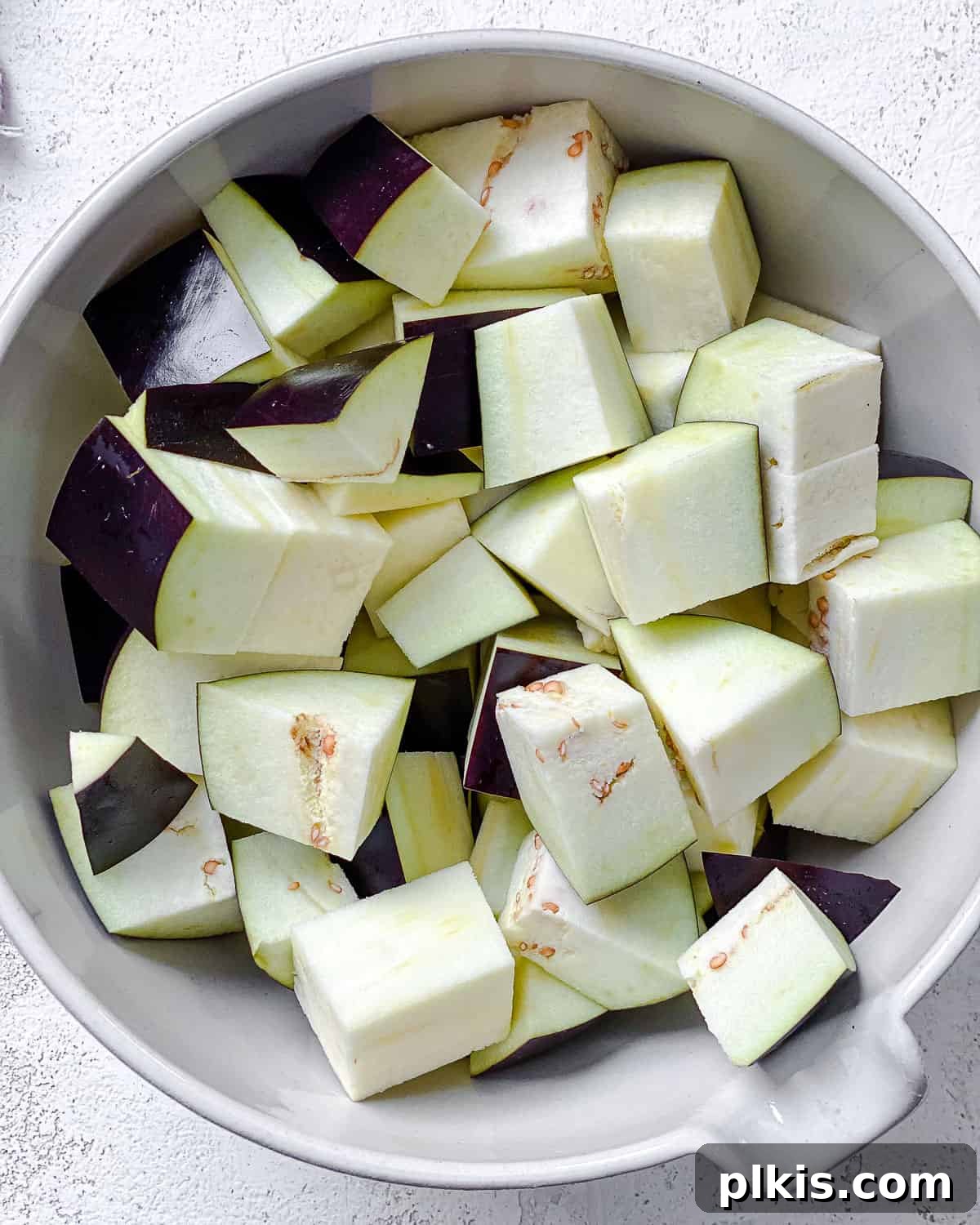
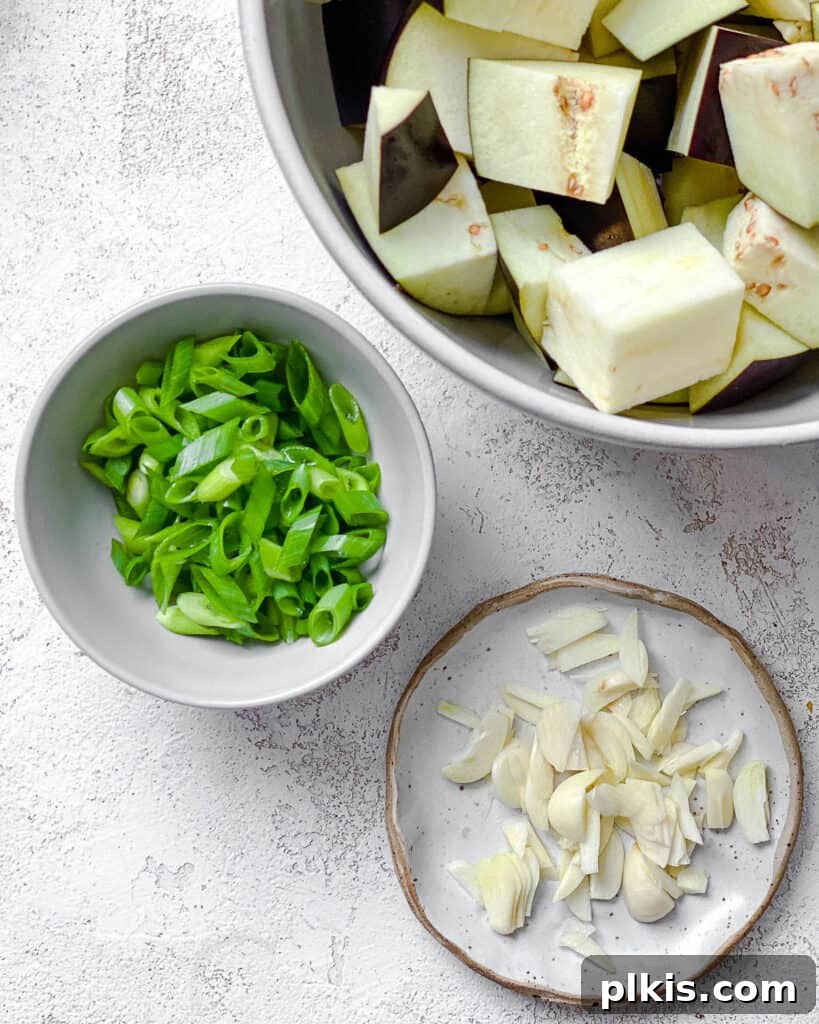
- 1) To begin, thoroughly rinse your eggplant under cool water and pat it dry. Then, carefully cut the eggplant into uniform 1-inch cubes. Alternatively, you can slice it into ¼ to ½-inch thick rounds or half-moons. Slices offer a larger surface area, which can lead to more caramelization and typically requires only one flip during cooking.
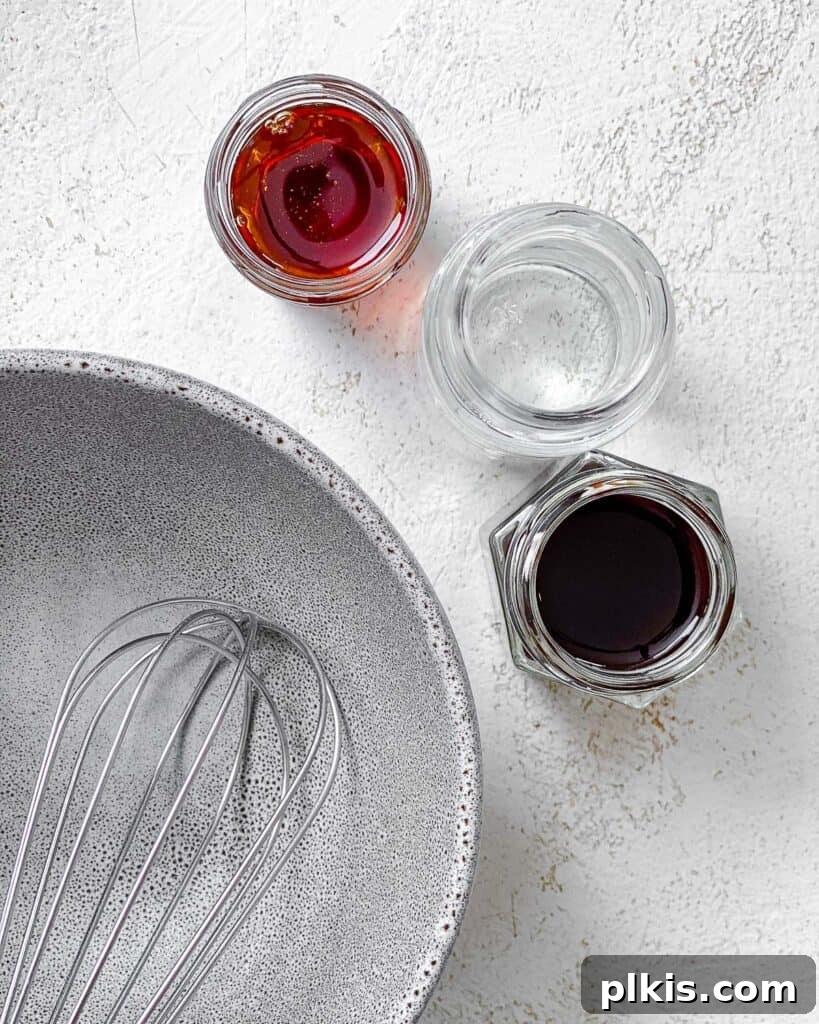
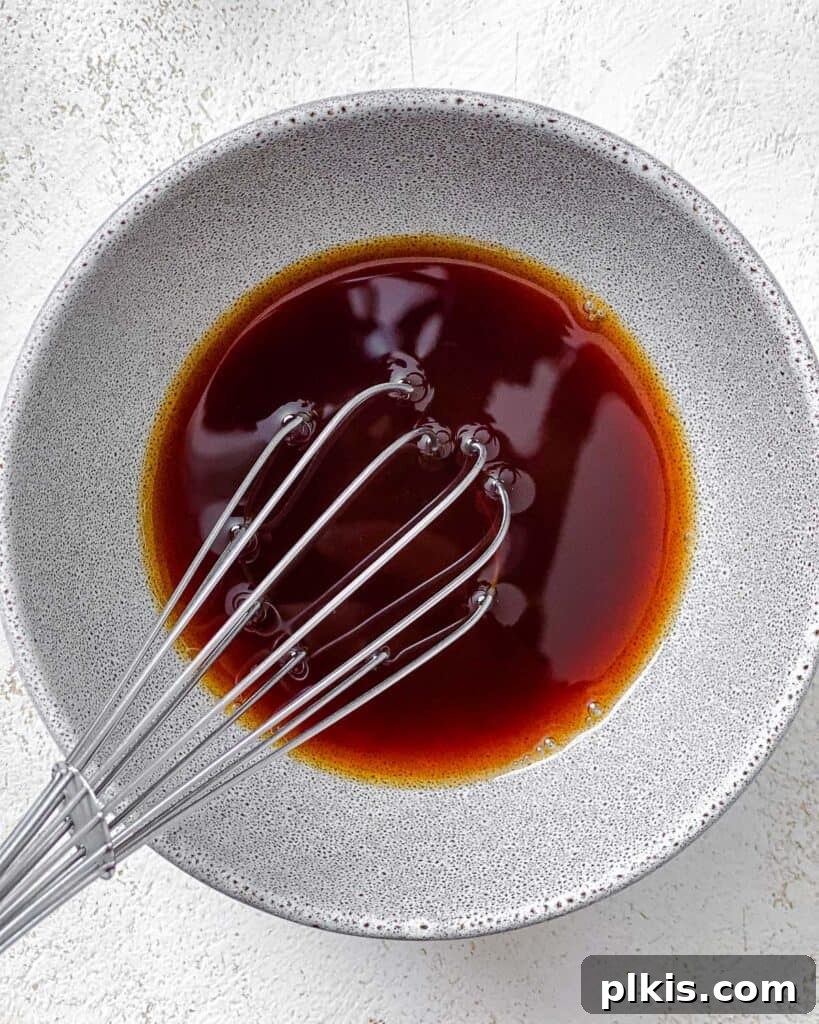
- 2) If you plan to use our delectable maple-soy glaze, now is the time to prepare it. In a small bowl, combine the soy sauce, maple syrup (or agave syrup), and a splash of water. Whisk these ingredients together until they are thoroughly combined and smooth. Set this aside.
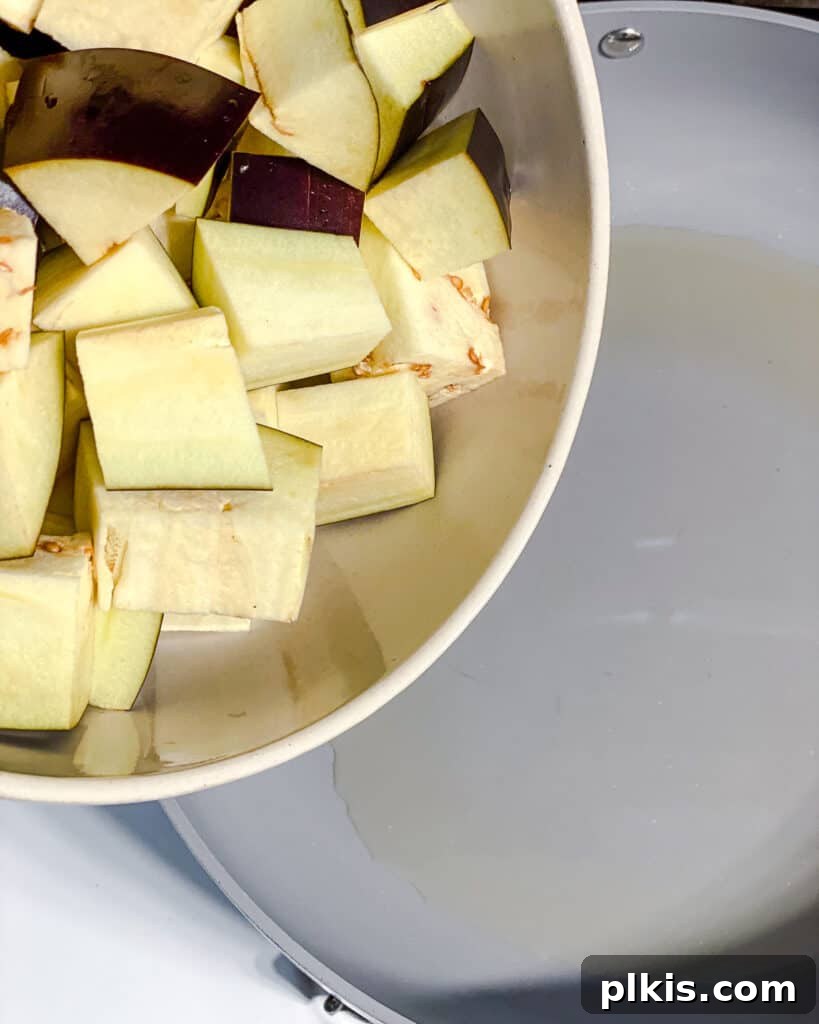
- 3) Place a large skillet (preferably non-stick) over medium-high heat. Allow the pan to heat sufficiently before adding your chosen cooking oil. The oil should shimmer but not smoke excessively.
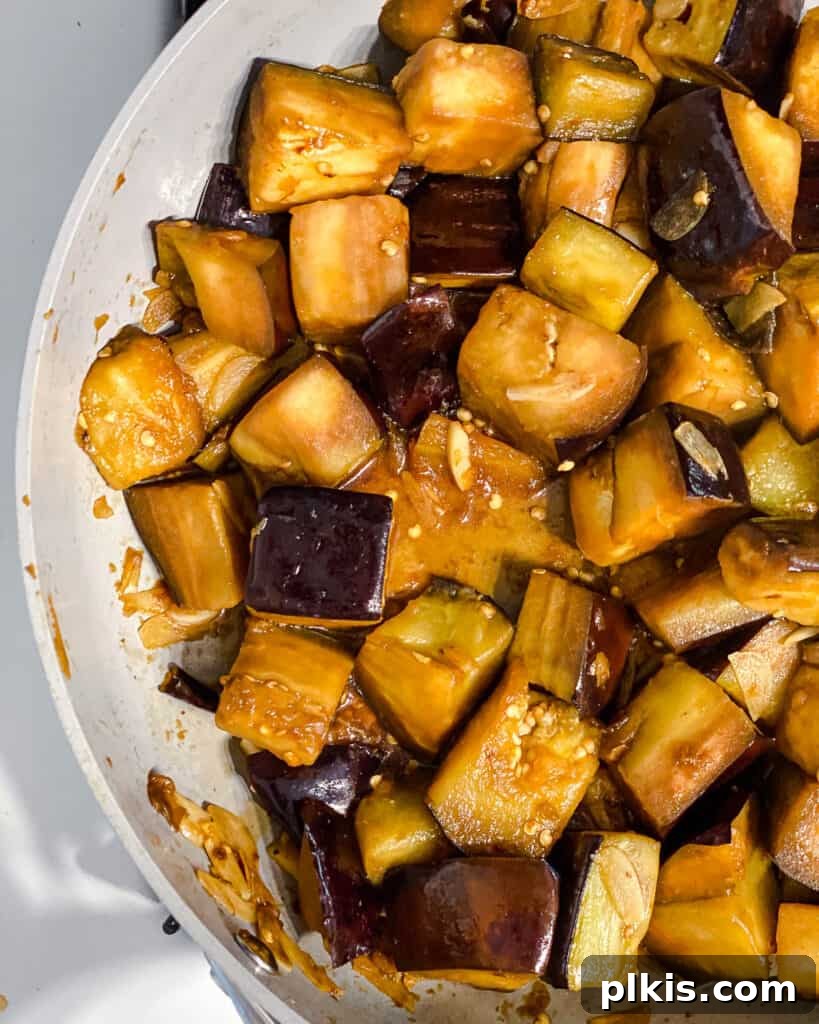
- 4) Once the oil is hot, carefully add the cubed or sliced eggplant to the skillet in a single layer. Avoid overcrowding the pan; if necessary, cook the eggplant in batches to ensure even browning. Cook for approximately 2-3 minutes per side, or until each piece develops a beautiful golden-brown crust. The exact timing can vary based on your heat and the size of your eggplant pieces.
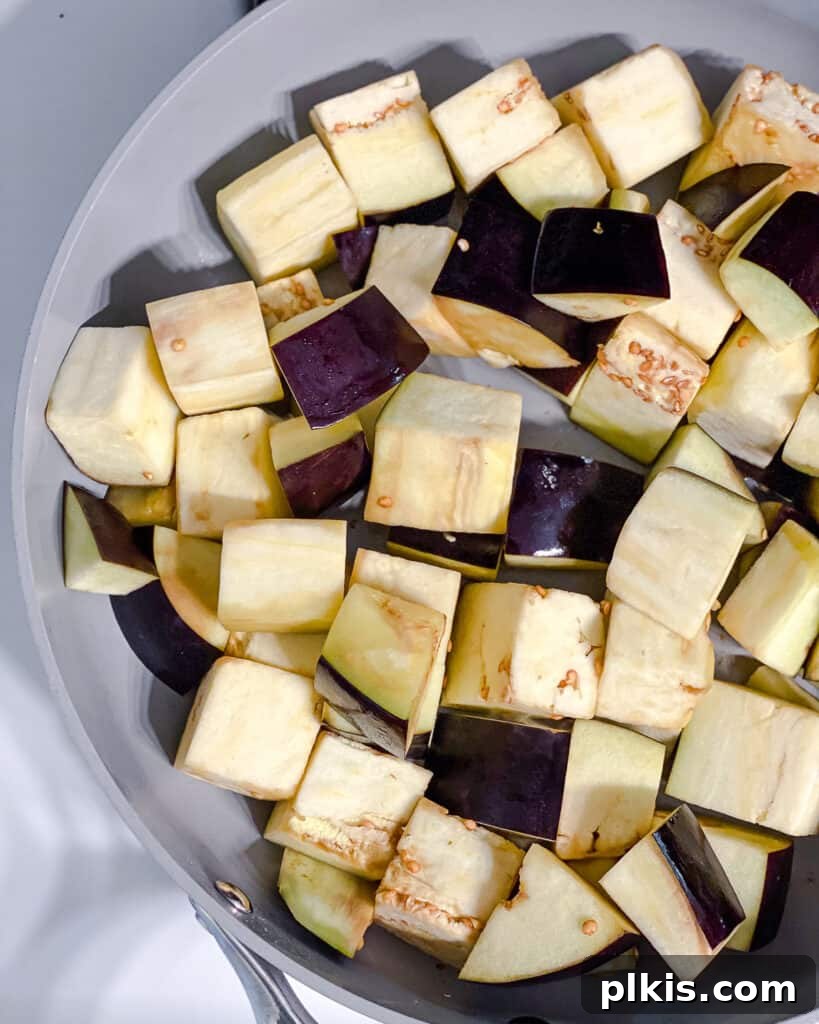
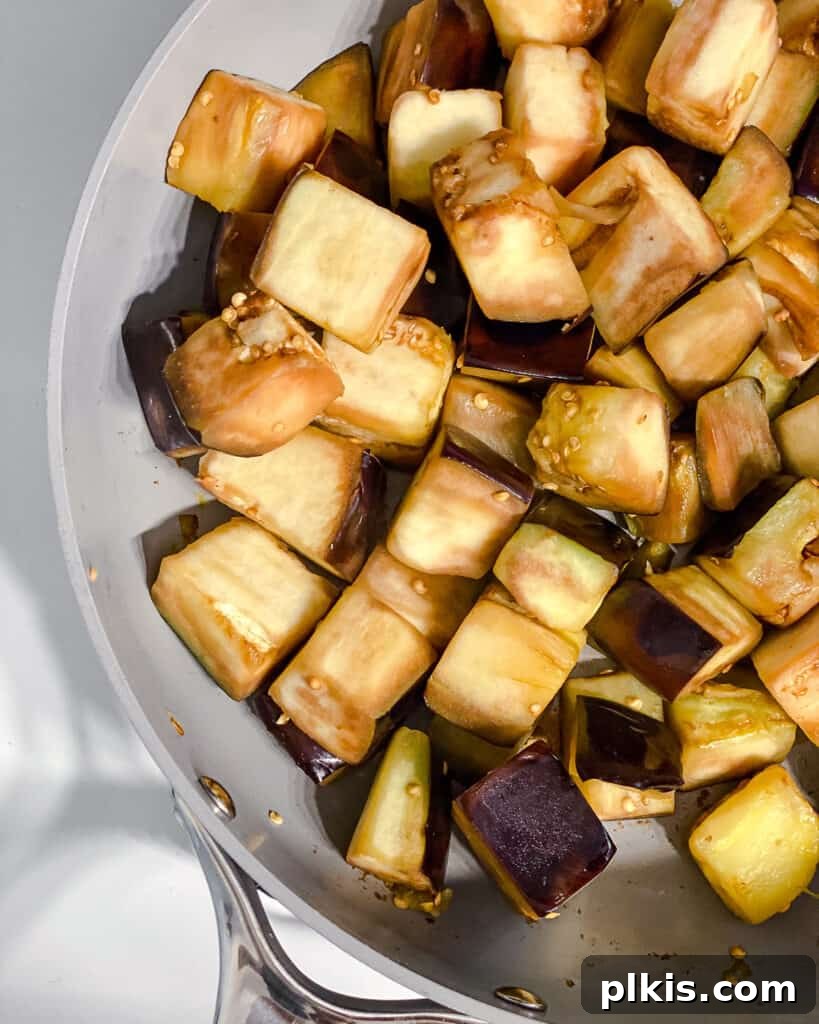
Achieving Optimal Browning: Depending on your stove’s heat and how deeply browned and ‘crusty’ you desire your sautéed eggplant, it can take anywhere up to 5 minutes per side. Patience here will be rewarded with superior flavor and texture.
- 5) Once the eggplant is beautifully browned, add the sliced garlic to the pan. Continue to cook for another 5-7 minutes, stirring frequently to prevent burning. The garlic should become fragrant and golden, not dark brown or bitter.
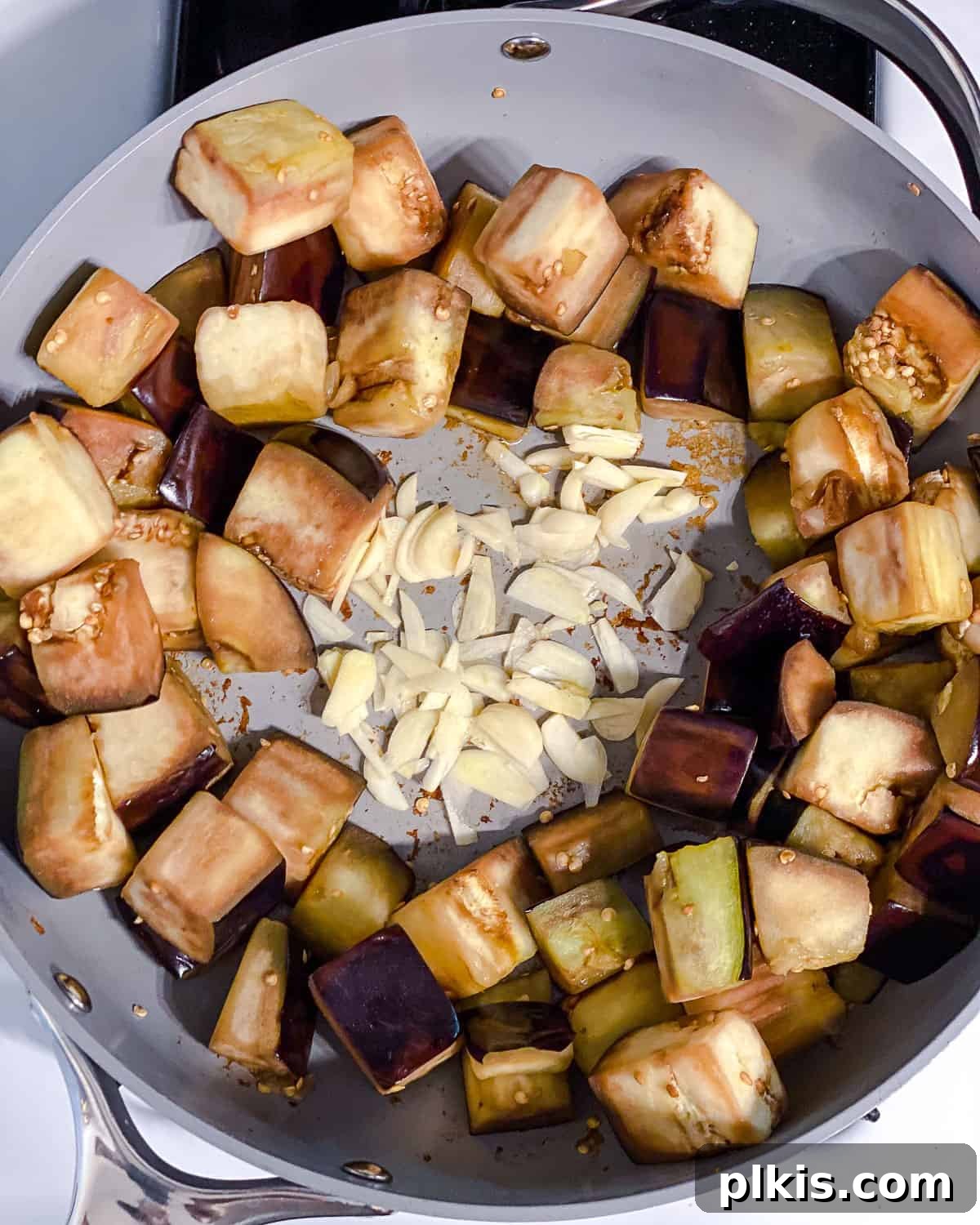
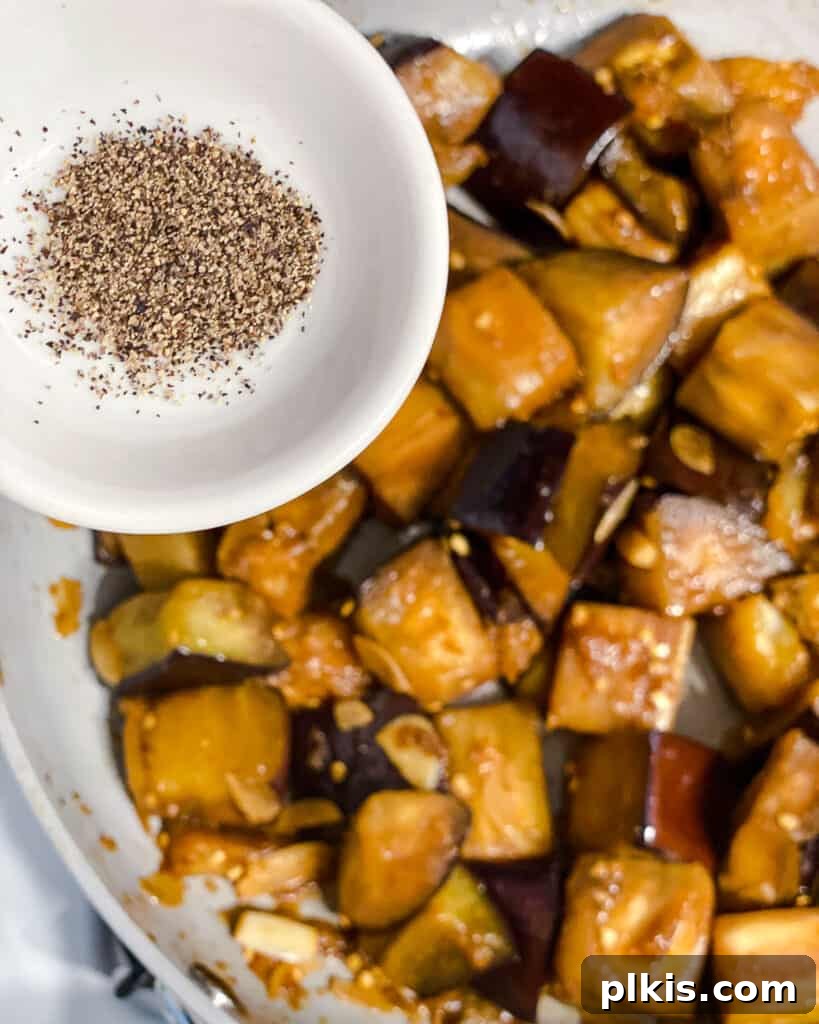
- 6) Remove the skillet from the heat. Pour in the prepared maple-soy sauce (if using) and add the black pepper. Mix everything thoroughly, ensuring each piece of eggplant is coated in the glossy sauce. Cover the pan with a lid and let it sit for 2-3 minutes. This allows the eggplant to absorb the flavors and become even more tender.
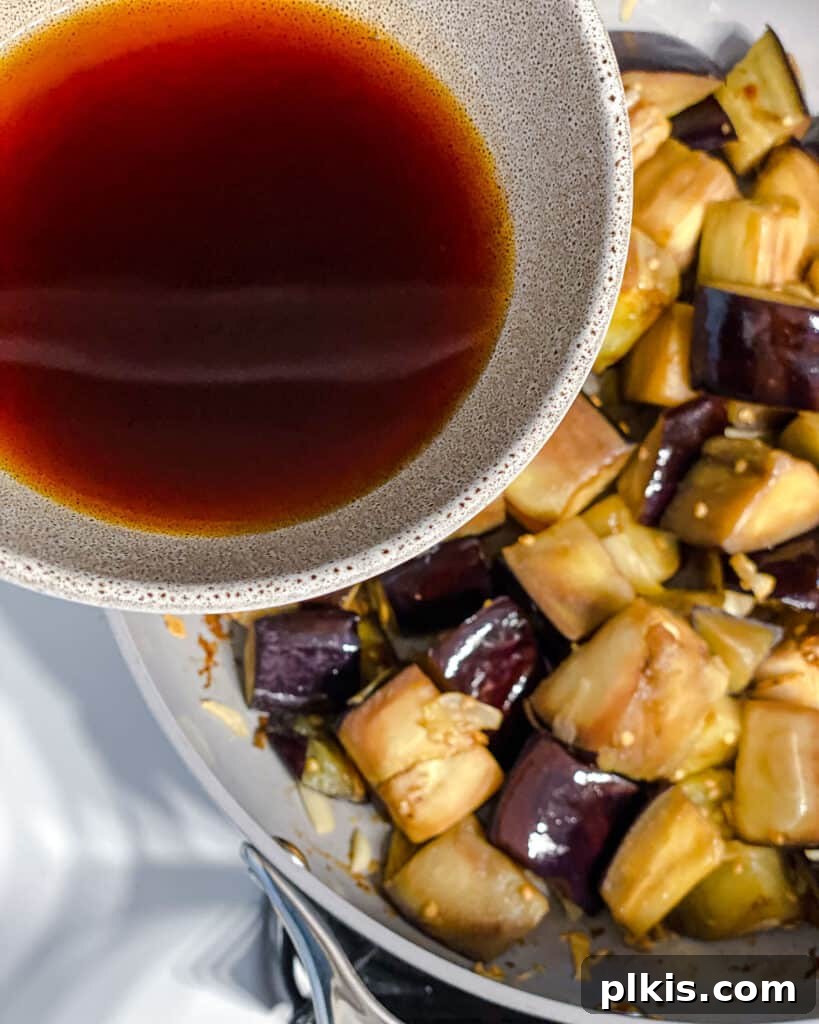
- 7) Finally, for an appealing presentation and an extra layer of flavor, optionally garnish your maple-soy glazed eggplant with thinly sliced green onions, a sprinkle of red pepper flakes (for a touch of heat), and/or a scattering of sesame seeds. Serve immediately and enjoy!
Top Tips for Perfect Pan-Fried Eggplant
Mastering the art of sautéing eggplant is easy with these expert tips:
- For Simple Sautéed Eggplant: If you prefer to enjoy eggplant without the glaze, simply follow steps 1, 3, 4, and 5 of the recipe. During step 5, season the eggplant generously with salt and pepper to taste. You can also add other herbs and spices from our ‘Seasoning Variations’ section.
- Ensure Even Sizing: Cutting your eggplant into uniform pieces is crucial. This ensures that every piece cooks at a consistent rate, preventing some from being undercooked while others are overly soft.
- Use Fairly High Heat: This is a game-changer! Much like deep-frying, cooking eggplant over sufficiently high heat helps prevent it from absorbing too much oil. Eggplant acts like a sponge, but hot oil quickly sears the exterior, creating a barrier. The result? Delicious, caramelized eggplant morsels that develop a crisp outer layer while remaining tender and succulent in the middle.
- Avoid Overcrowding the Pan: This is a common mistake. If you pack too much eggplant into the skillet, it will lower the pan’s temperature and release its moisture, causing the eggplant to steam rather than sear. This leads to a lackluster, soggy texture. Cook in batches if necessary, ensuring each piece has enough space to make direct contact with the hot pan.
- Resist Constant Stirring: For truly pan-seared eggplant with a wonderful golden-brown crust, don’t fuss with it too much. Allow the eggplant to sit undisturbed on each side for a few minutes before flipping. Only touch it when it’s time to turn it over to cook the other side. This patience is key to achieving that desirable caramelized exterior.
Frequently Asked Questions (FAQs)
Historically, salting eggplant was primarily done to draw out bitterness, a trait that has largely been bred out of most modern eggplant varieties. So, it’s generally no longer strictly necessary for flavor. However, salting will also extract excess liquid, which can result in a slightly firmer, more tender texture. If you prefer this effect, you can certainly add this step. To do so, generously salt your chopped eggplant and place it in a colander in the sink for 30-60 minutes to “sweat.” Afterward, firmly pat away any excess liquid (and salt) with paper towels before proceeding with the recipe.
Soaking (sometimes referred to as ‘brining’) eggplant in salt water for about 20-30 minutes can help prevent the eggplant from absorbing as much oil during cooking. This can also impart a subtle seasoning and contribute to a slightly firmer texture. While it’s a technique some chefs employ, it is not essential for achieving delicious, perfectly sautéed eggplant with this recipe. Our method focuses on high heat to minimize oil absorption.
No, generally, you do not need to peel eggplant. The skin is completely edible and softens beautifully as it cooks, adding fiber and nutrients. The only exception might be if you are using a very large or old eggplant, where the skin can sometimes become a bit tougher or the seeds more prominent, in which case you might prefer to peel it for a smoother texture. For most eggplants found in supermarkets, peeling is unnecessary.
What to Serve With Pan-Fried Eggplant?
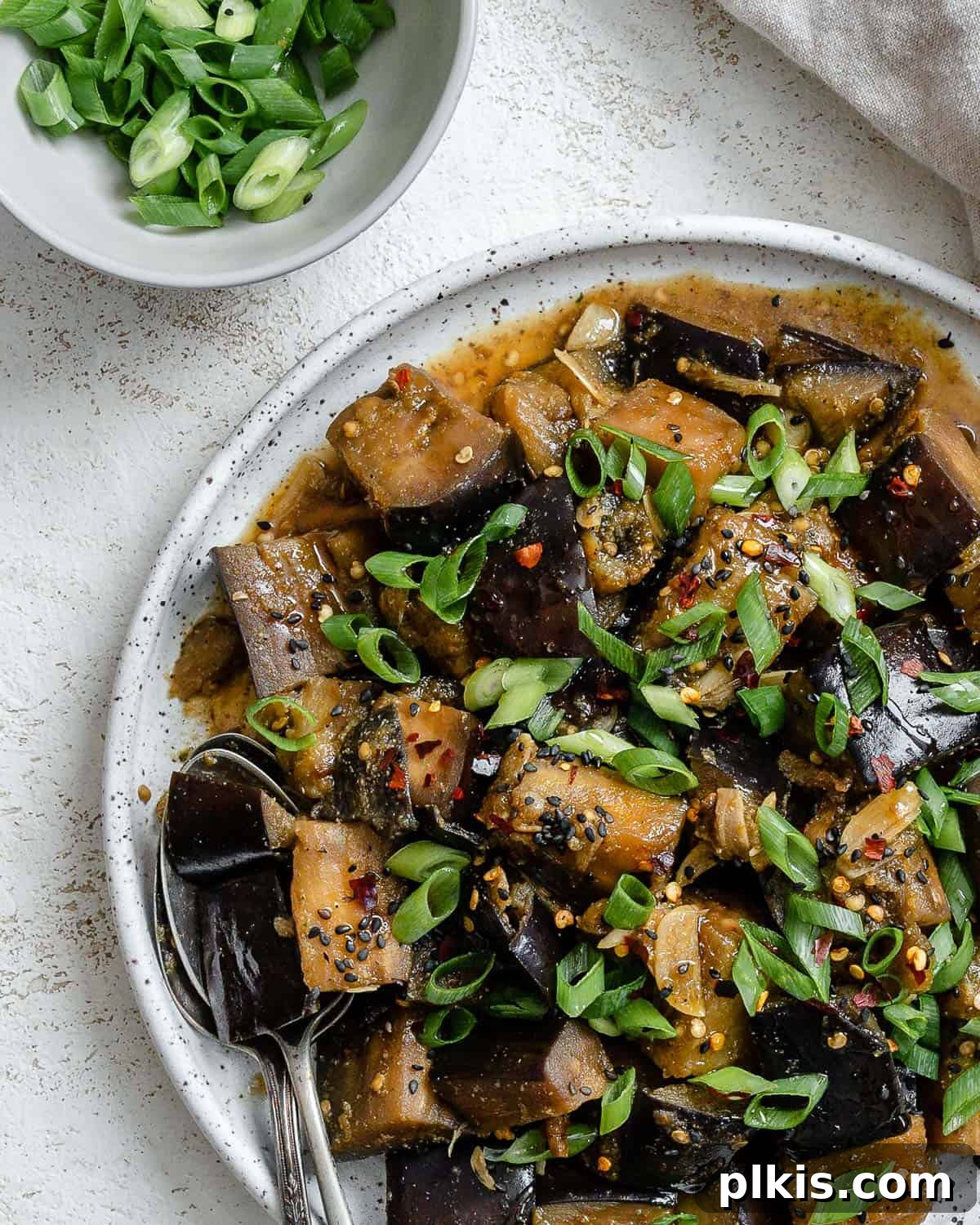
The beauty of this pan-fried eggplant, whether plain or glazed, lies in its incredible versatility. It can effortlessly serve as a standalone side dish for virtually any meal or be incorporated directly into a variety of main courses:
- Grain and Pasta Bowls: Mix it into your favorite pasta dishes, hearty rice bowls, or creamy risotto for added texture and flavor.
- Savory Stews and Curries: It pairs wonderfully with rich curries and other saucy main dishes, soaking up the flavors beautifully.
- Sandwiches and Wraps: Elevate your lunch by adding it to vibrant sandwiches or savory wraps. Its ‘meaty’ texture makes it a satisfying component.
- Breakfast/Brunch: Try it over creamy avocado toast for a sophisticated twist, or serve alongside vegan omelets or fluffy scrambled tofu for a wholesome start to your day.
- Salads and Bowls: Toss it into refreshing pasta salads, crisp cold salads, or vibrant Buddha bowls for a boost of nutrients and flavor.
- Polenta Perfection: Enjoy it spooned over creamy polenta for a comforting and satisfying meal.
When preparing the eggplant with our garlic and maple-soy sauce, it truly shines when served over a bed of steaming brown rice or a tangle of savory sesame soba noodles, allowing the delicious sauce to coat every strand.
Storage and Reheating Instructions
While the freshly sautéed eggplant offers the best texture and crispness, you can certainly store leftovers for future enjoyment. Allow any remaining eggplant to cool completely before transferring it to an airtight container. It will keep well in the refrigerator for 3-5 days.
For longer storage, sautéed eggplant freezes remarkably well. Transfer the cooled eggplant to freezer bags or containers, and it can be stored for 4-6 months, and even up to a year with proper freezing techniques. To prevent the pieces from sticking together, we recommend flash-freezing them first: spread the cooked eggplant in a single layer on a baking sheet and freeze until solid, then transfer to a freezer-safe container or bag.
To reheat your eggplant, you have several convenient options. You can return it to a pan on the stovetop with a small amount of additional oil (if it’s plain sautéed eggplant; omit extra oil if it’s coated in the maple-soy sauce) and toss until heated through. Alternatively, you can directly add it to a simmering sauce or pop larger quantities into the oven or an air fryer (at approximately 350°F or 175°C) until thoroughly warmed.
More Delicious Vegan Eggplant Recipes
If you’ve enjoyed this sautéed eggplant, be sure to explore these other fantastic vegan eggplant recipes:
- Eggplant Pasta with Crispy Hazelnuts [Vegan]
- Eggplant Stacks [2 Ways]
- Easy Eggplant Penne | Easy Dinner Recipe
- Vegan Calzones (Homemade Vegan Pizza Dough)
Photos by Alfonso Revilla
Perfect Sautéed Eggplant with Maple Soy Glaze
⭐⭐⭐⭐⭐ (Rated 5 out of 5 stars by 43 votes)
Prep time: 5 minutes
Cook time: 15 minutes
Total time: 19 minutes
Servings: 4
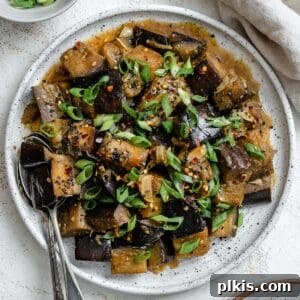
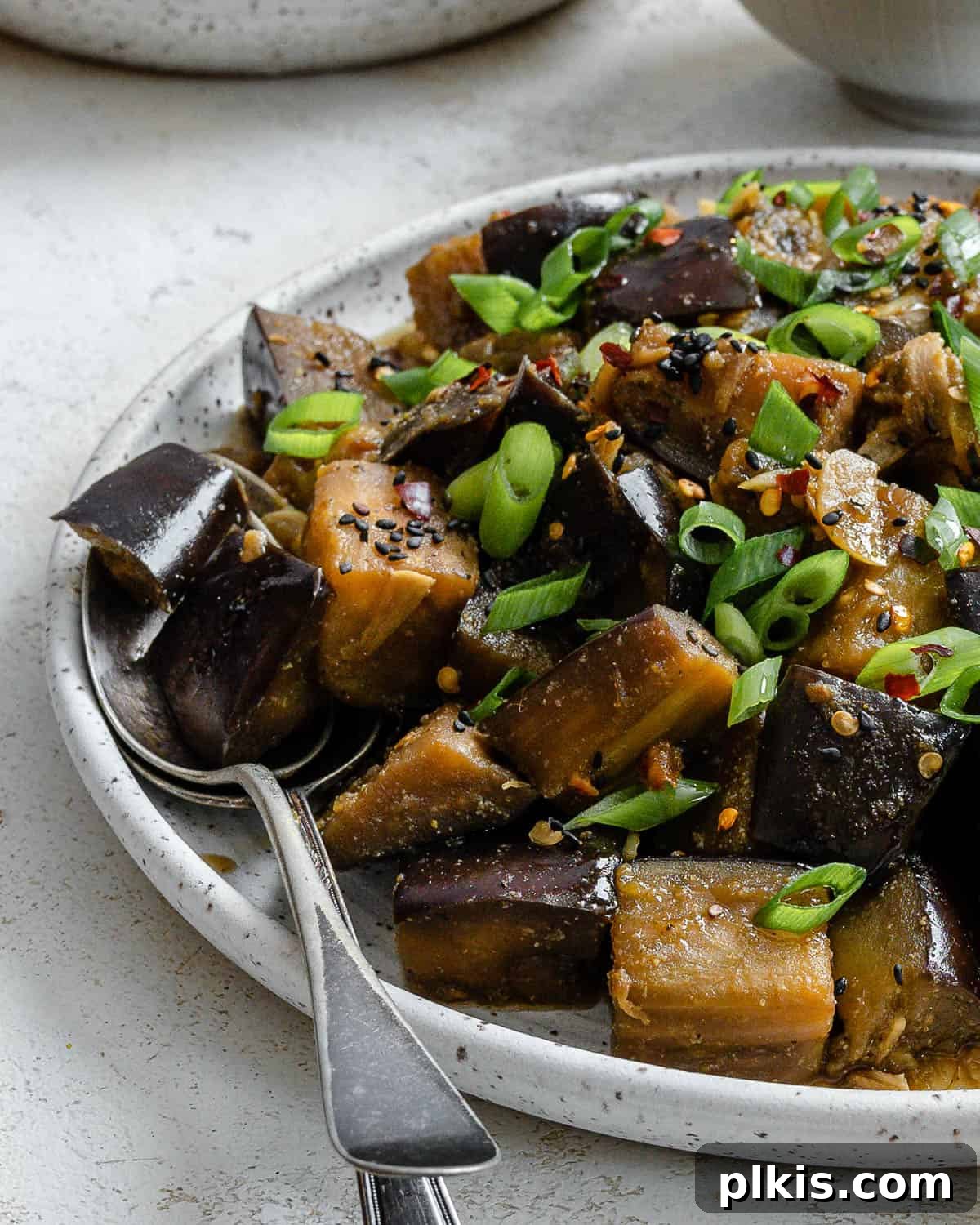
This Sautéed Eggplant is tender in the middle, slightly ‘meaty’, crisp/caramelized on the outside, is easy to prepare, ready in 20 minutes, and a versatile vegan side dish – made even more delicious with a simple maple soy glaze!
Equipment
- Measuring spoons
- Knife set
- Whisk
Ingredients
- 2 tablespoon of soy sauce
- 1 tablespoon of agave or maple syrup
- 2 tablespoons of water
- 1 eggplant, cut into 1-inch cubes (not peeled)
- 3 garlic cloves, thinly sliced
- 1 tablespoon of oil
- ¼ teaspoon of black pepper
- 3 springs green onions, thinly sliced
- Crushed red pepper for garnish, optional
- Sesame seeds for garnish, optional
Instructions
- In a small bowl, whisk together the soy sauce, agave or maple syrup, and water until well combined.
- In a large pan with a lid, heat the oil over medium-high heat.
- Carefully add the cubed eggplant to the hot pan in a single layer. Cook for 2 minutes per side or until golden brown and caramelized. Add the sliced garlic and continue to cook for another 5 to 7 minutes, stirring frequently, until the garlic is fragrant and lightly browned (be careful not to burn it).
- Turn off the heat. Pour the prepared sauce and black pepper over the eggplant in the pan. Mix everything well to coat. Cover the pan with a lid and let it sit for 2 to 3 minutes to allow the flavors to meld.
- Garnish with thinly sliced green onions, and optionally, crushed red pepper or sesame seeds.
- Serve hot and enjoy!
Notes
- Cut even-sized pieces: This will ensure they cook at a consistent rate, resulting in uniformly tender and browned eggplant.
- Use fairly high heat: Just like deep-frying, cooking over hot heat will help prevent the eggplant from excessively absorbing oil (as it acts like a sponge!). Instead, you’ll achieve delicious, caramelized eggplant pieces that are crisp on the outside and tender in the middle.
- Don’t overcrowd the pan: If you add too much eggplant, it will steam rather than crisp up, leading to a less desirable, soggy texture. Cook in batches if necessary to ensure sufficient space for browning.
- Don’t move the eggplant too much: To achieve a beautiful golden-brown crust, allow the eggplant to sear undisturbed. Only touch it when you need to flip it to cook the other side. This is crucial for developing that wonderful caramelized exterior.
Nutrition Information (per serving)
Calories: 88 kcal | Carbohydrates: 12g | Protein: 2g | Fat: 4g | Saturated Fat: 0.5g | Polyunsaturated Fat: 1g | Monounsaturated Fat: 3g | Sodium: 506mg | Potassium: 297mg | Fiber: 4g | Sugar: 8g | Vitamin A: 35 IU | Vitamin C: 4mg | Calcium: 22mg | Iron: 1mg
Additional Info
Author: Toni Okamoto
Course: Side Dish
Cuisine: American
Method: Stovetop
Diet: Vegan
Tried this recipe? Please tag us at @PlantBasedOnABudget! 🙂