

Indulge in the vibrant flavors of Southeast Asia with this exquisite Thai-style vegan butternut squash soup with coconut milk. Crafted to deliver ultimate comfort on chilly evenings, this soup offers a delightful blend of warmth and satisfaction without feeling heavy. It’s a culinary journey featuring the rich, earthy sweetness of roasted butternut squash, perfectly balanced with the invigorating heat of chiles and the creamy, subtle sweetness of coconut milk. This recipe is designed to be a crowd-pleaser, easy to prepare, and bursting with authentic Thai essence.

As autumn leaves fall and winter winds whisper, few dishes provide as much comfort as a steaming bowl of butternut squash soup. It’s a quintessential fall and winter staple, transforming this humble squash into a hearty, warming meal. However, this particular vegan butternut squash soup recipe offers a unique twist, elevating it far beyond your average squash puree.
Unlike traditional versions, our Thai-inspired creation is generously spiced, boasts a luxurious creaminess, and is packed with an explosion of exotic flavors. If you’re a fan of rich, satisfying soups that ignite your palate, you’ll find this recipe utterly irresistible. For those who enjoy a more classic rendition, you might also appreciate our butternut squash and apple soup.
Are you a devoted fan of Thai cuisine? If the answer is a resounding yes, then prepare to expand your culinary horizons! After savoring this delightful soup, be sure to explore more of our authentic plant-based Thai recipes. We highly recommend trying our Easy Thai Basil Tofu, the classic Tofu Pad Thai, and this incredibly flavorful Vegan Thai Pizza Recipe. Each offers a distinct taste of Thailand, made accessible and delicious for any home cook.
Why This Vegan Thai Butternut Squash Soup Works
- Unforgettable Flavor Profile: This soup masterfully balances the five fundamental flavors of Thai cuisine – sweet, spicy, sour, salty, and umami. The combination of naturally sweet butternut squash, fiery chiles, creamy coconut milk, tangy lime, and aromatic spices creates a truly divine and complex taste experience that will leave you craving more.
- Excellent for Meal Prep: This recipe is incredibly convenient for busy schedules. It can be easily prepared in advance, allowing the flavors to deepen and meld even further overnight. Simply reheat gently on the stovetop when you’re ready to serve for a quick, wholesome meal. Its freezer-friendly nature makes it an ideal option for batch cooking.
- Customizable to Your Taste: We understand that everyone has different preferences when it comes to spice and sweetness. This recipe is designed to be highly adaptable, allowing you to easily adjust the heat level by modifying the amount of chiles, or increase the sweetness with a touch more coconut milk or a dash of maple syrup. You can also fine-tune the tanginess with additional lime juice, ensuring it perfectly suits your palate.
- Nutrient-Rich and Wholesome: Butternut squash is a powerhouse of vitamins and minerals, especially Vitamin A, which is crucial for vision and immune health. Combined with fiber-rich ingredients and healthy fats from coconut milk, this soup is not only delicious but also incredibly nourishing, providing sustained energy and satiety.
Essential Ingredients for This Thai Butternut Squash Soup
When you envision the vibrant culinary landscape of Thailand, what characteristic flavors and ingredients come to mind? From fragrant herbs to rich, creamy textures, Thai cuisine is renowned for its harmonious balance. Let’s delve into the key components that bring this sweet, spicy, and savory soup to life, creating a truly authentic and deeply satisfying experience.
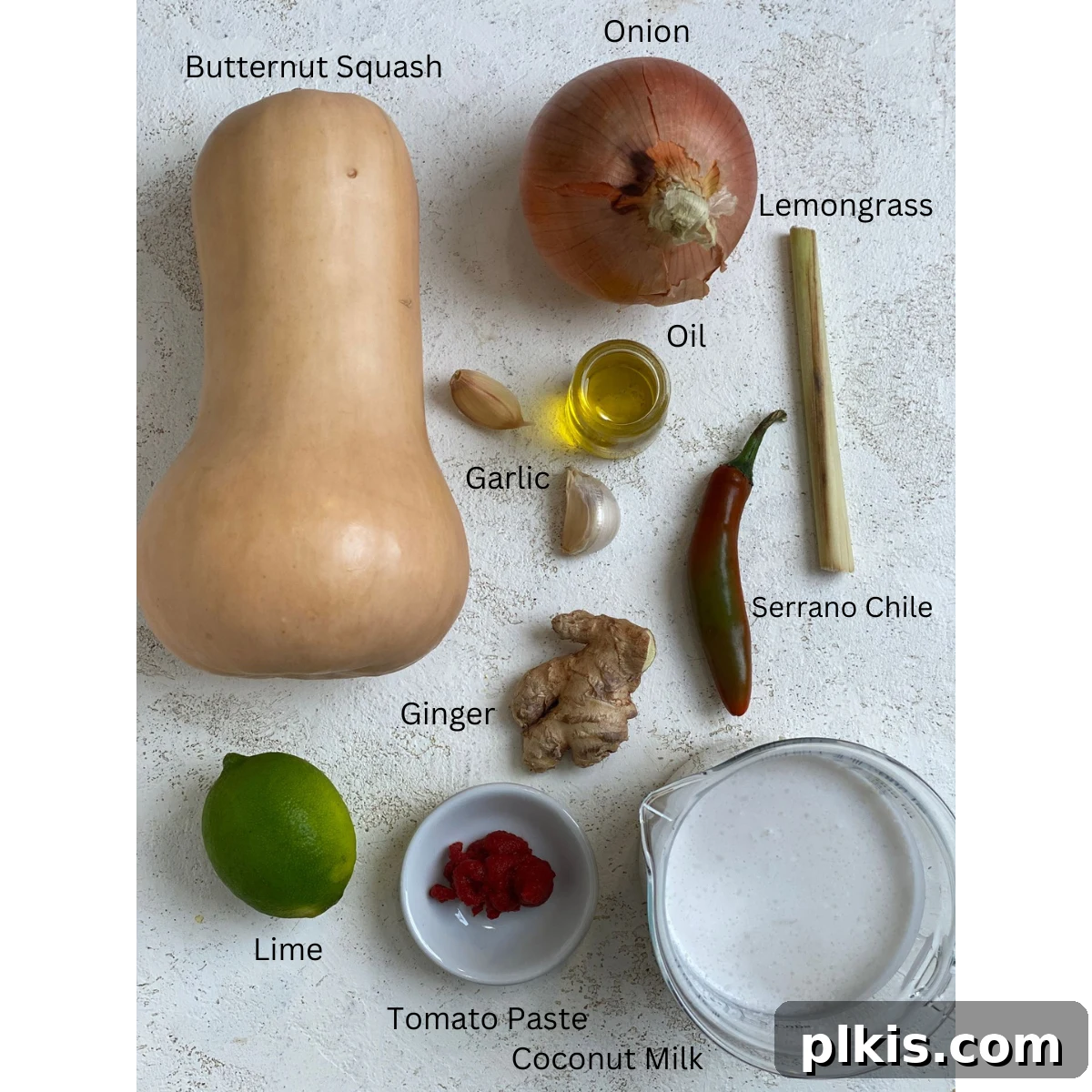
- Butternut Squash: The star of our soup, this lightly sweet winter squash offers a naturally creamy texture and a subtle nutty flavor when roasted. Roasting caramelizes its sugars, enhancing its depth and sweetness before it’s pureed into a velvety smooth base. Choose a firm, unblemished squash for the best results.
- Aromatics: The foundation of any great soup, a combination of fresh onion, garlic, and ginger provides the crucial first layer of complex flavor. These ingredients are sautéed to release their fragrant oils, building a rich and pungent base that is essential to Thai cooking.
- Lemongrass: An iconic and emblematic ingredient in Thai cuisine, lemongrass is a fibrous herb with a distinct bright, citrusy, and slightly minty aroma. Resembling a long, pale green leek, it imparts a unique, refreshing flavor that is instantly recognizable and indispensable for an authentic Thai taste. When preparing, ensure the tough outer layers are removed and only the tender inner stalk is finely chopped.
- Coconut Milk: This creamy, plant-based milk is a true staple in Thai cooking, providing a luxurious, velvety texture and balancing the soup’s spicy and tangy notes. It’s responsible for the soup’s decadent creaminess and acts as a binder, harmonizing all the diverse flavors. For the richest soup, opt for full-fat coconut milk.
- Tomato Paste: A small but mighty addition, tomato paste contributes a concentrated umami depth and a subtle sweetness, enriching the overall flavor profile of the soup and adding a touch of acidity to brighten the dish.
- Thai Bird Chiles: These small, vibrant red chiles are renowned for their intense heat and are widely used across Thai and other Asian cuisines. They provide the characteristic fiery kick that makes this soup so exciting. If fresh Thai bird chiles are unavailable, serrano peppers make an excellent substitute. For a milder soup, remember to remove the seeds and internal membranes, as these contain most of the capsaicin, the compound responsible for the heat.
- Fresh Lime Juice: Essential for brightening the flavors, freshly squeezed lime juice adds a crucial tangy, sour element that cuts through the richness of the coconut milk and balances the sweetness of the squash and the heat of the chiles. It’s the final touch that rounds out the entire flavor spectrum.
- Garnish: Elevate your soup with a variety of fresh garnishes. Fresh cilantro leaves add a burst of herbaceous freshness, finely chopped scallions provide a mild oniony bite, while a drizzle of olive oil enhances richness. For an extra kick, a swirl of sriracha can be added just before serving. Feel free to use all or pick your favorites to customize each bowl.
Crafting Your Creamy Thai Butternut Squash Soup: A Step-by-Step Guide
This recipe transforms simple ingredients into an extraordinary culinary experience. Follow these detailed steps to create a rich, aromatic, and perfectly balanced Thai butternut squash soup. The full ingredient list and precise measurements can be found in the comprehensive recipe card further down the page.
- 1) Prepare and Roast the Butternut Squash. Begin by preheating your oven to 400°F (204°C). Line a sturdy baking sheet with aluminum foil for easier cleanup. Carefully cut the butternut squash in half lengthwise. This can be tricky, so be mindful and use a sharp, heavy knife. Remove the seeds and any stringy fibrous bits from both halves using a spoon. Prick the skin of each squash half multiple times with a fork. Lightly spray all surfaces, including the cut sides, with cooking spray, or brush sparingly with vegetable or canola oil. This helps achieve a beautiful caramelization during roasting.

EXPERT TIP: Softening the Squash for Easier Cutting. Butternut squash can be notoriously difficult to cut. To make this process safer and easier, consider microwaving the whole squash for 1 to 2 minutes before cutting it in half. This gentle pre-cooking softens the skin slightly. Remember to stab the skin a few times with the tip of your knife before microwaving to prevent any pressure buildup and potential mess inside your microwave.
- 2) Roast the Squash to Perfection. Place the prepared butternut squash halves cut-side down on the lined baking sheet. Transfer the baking sheet to your preheated oven and bake for approximately 40 minutes, or until the flesh is fork-tender and slightly caramelized. Roasting is key to developing a deep, rich flavor in the squash, contributing significantly to the soup’s overall sweetness and complexity.
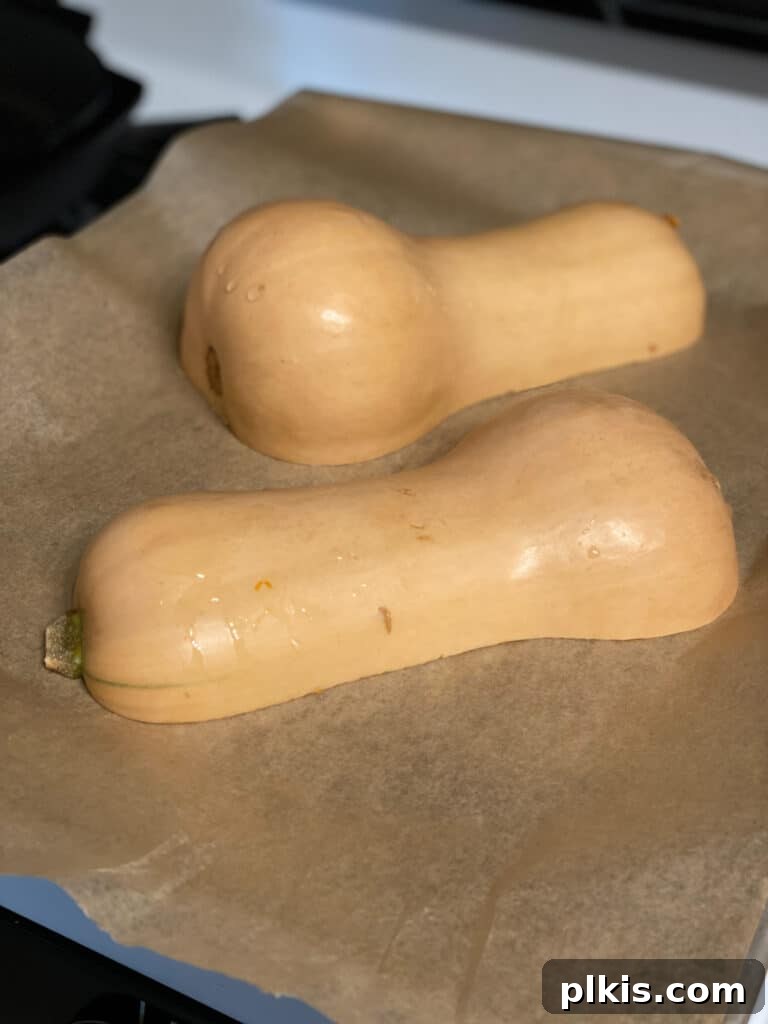

- 3) Cool and Scoop the Flesh. Once roasted, carefully remove the squash from the oven. Allow it to cool sufficiently so it’s safe to handle. Using a spoon, scoop the tender, cooked flesh out of the skin. Transfer the scooped squash flesh into a bowl and set it aside. This soft, sweet squash is now ready to become the creamy heart of your soup.


SMART COOKING TIP: Utilize Leftover Squash. This recipe typically calls for only half of a butternut squash. Don’t let the other half go to waste! Having pre-cooked squash on hand is incredibly convenient. You can easily incorporate it into other delicious plant-based recipes such as these Butternut Squash Sage Biscuits, creamy Butternut Squash Mac n’ Cheese, or this warming Creamy Curried Butternut Squash Lentil Soup.
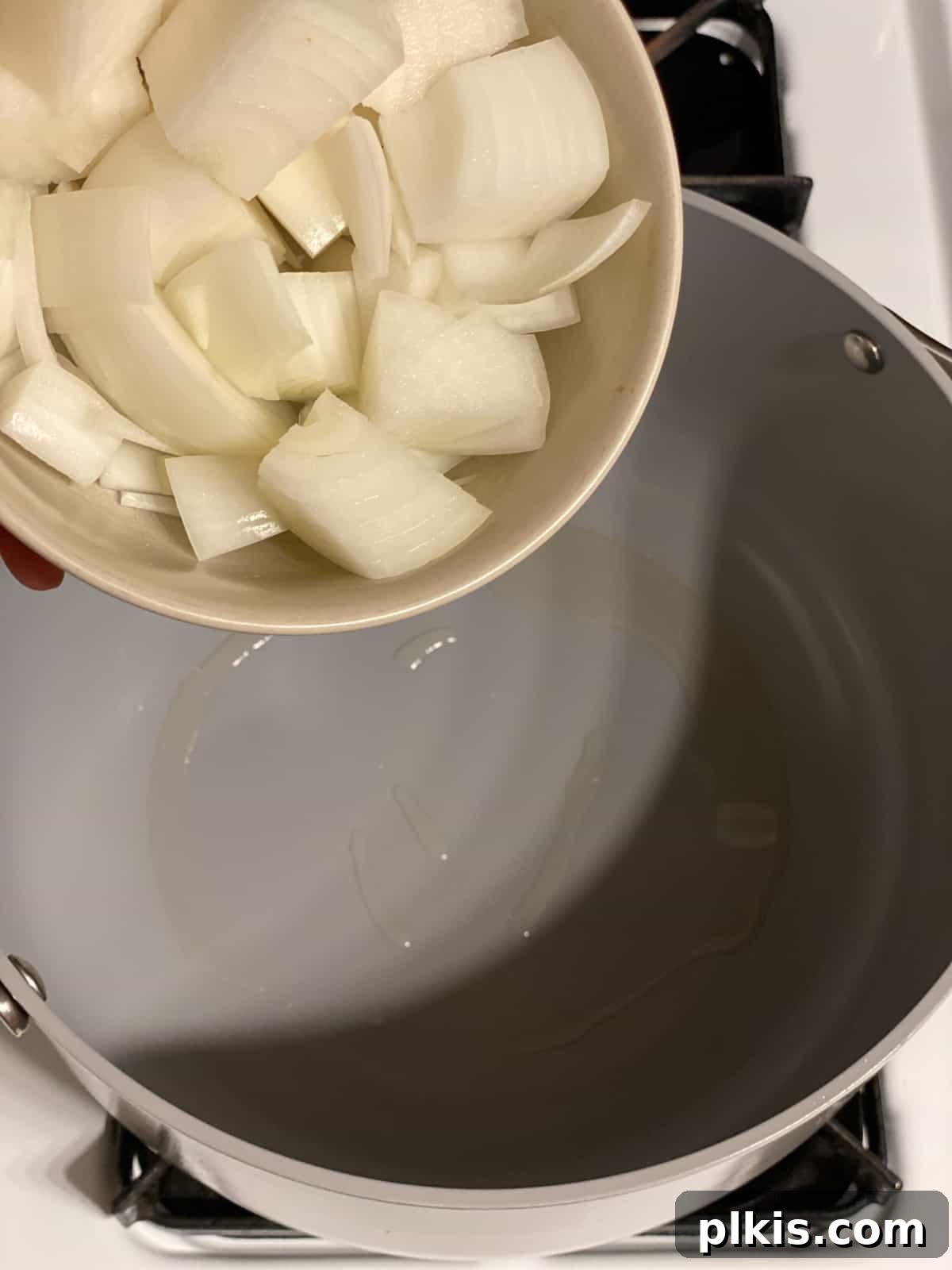
- 4) Sauté the Aromatics. In a large, heavy-bottomed pot, heat 1 tablespoon of vegetable or canola oil over medium-high heat. Add the chopped onion and cook for 5-8 minutes, stirring occasionally, until it becomes soft and translucent. This initial sautéing step is vital for building a fragrant and flavorful base for your soup.
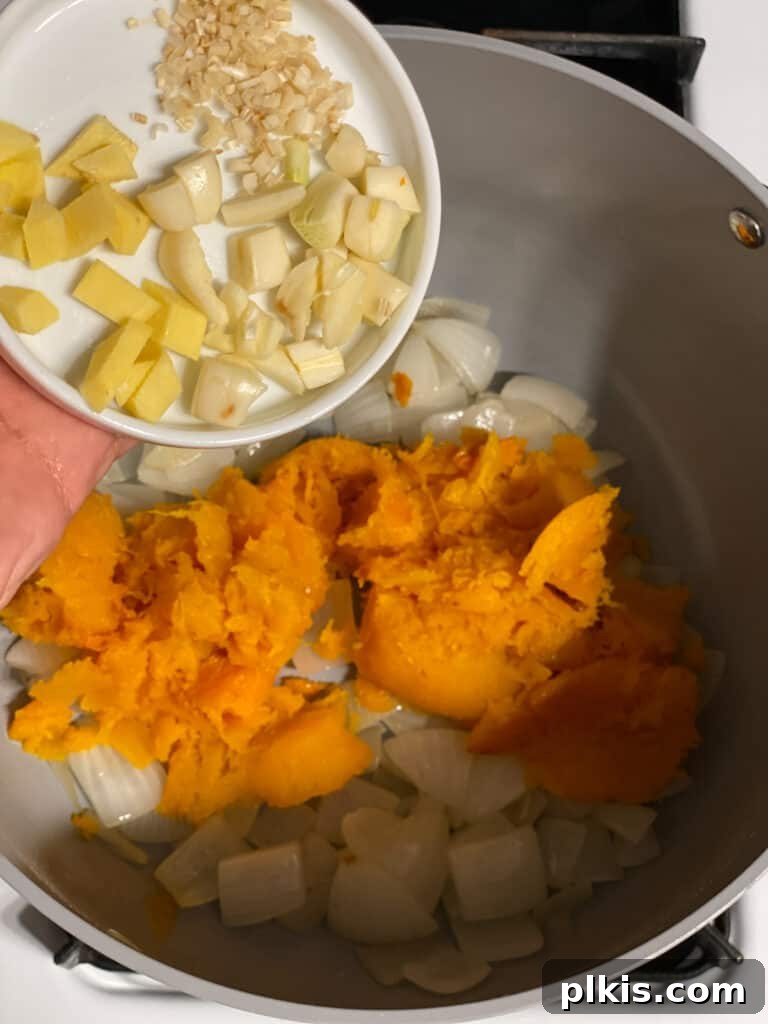
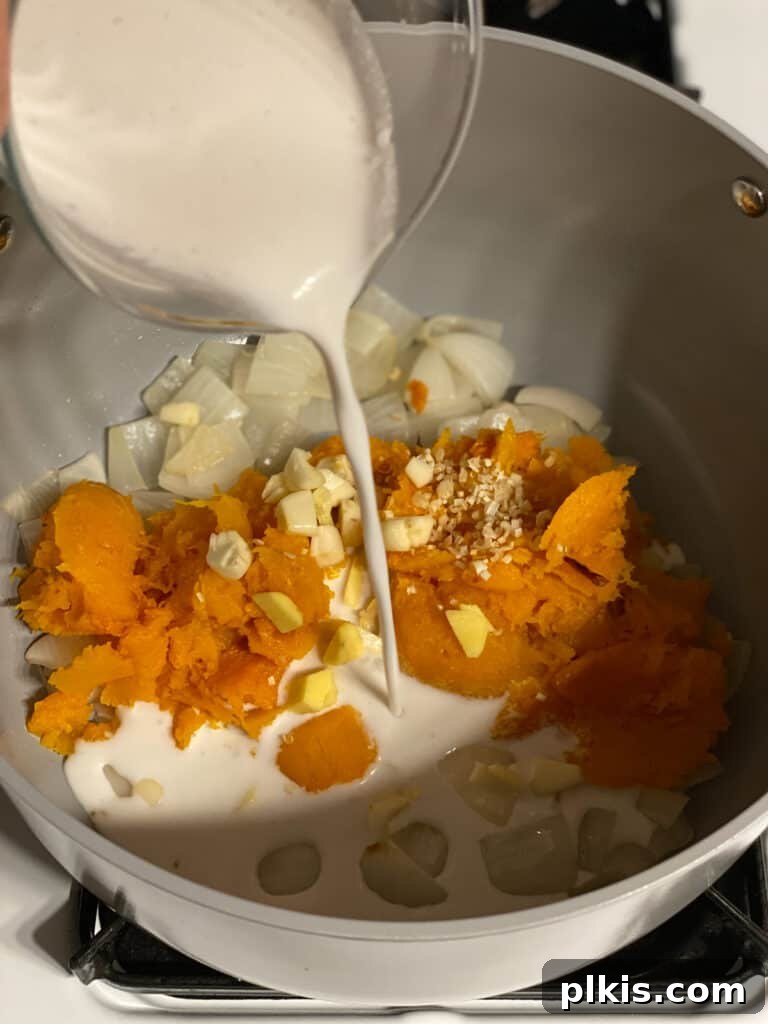
- 5) Combine and Simmer the Soup Base. To the softened onions, add the reserved roasted butternut squash flesh, chopped garlic, grated ginger, finely chopped lemongrass, creamy coconut milk, and concentrated tomato paste. Stir all the ingredients well to combine. Bring the mixture to a gentle boil, then reduce the heat and let it simmer for about 10 minutes. This simmering time allows all the incredible Thai flavors to meld beautifully and become deeply infused throughout the squash base.
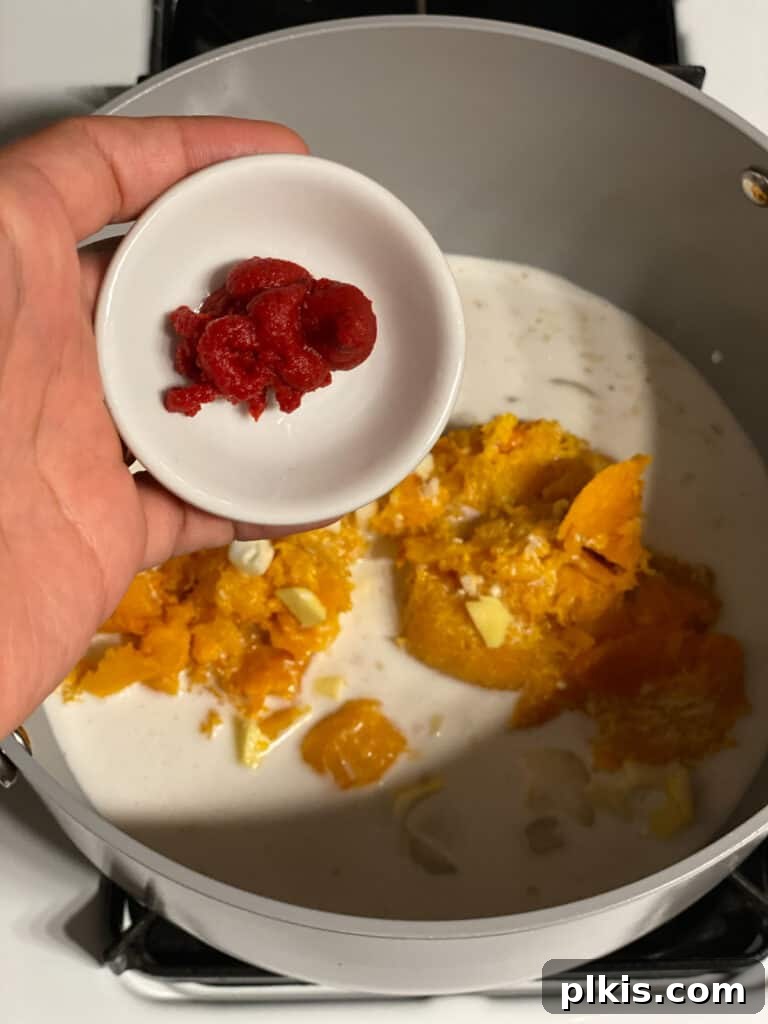
- 6) Blend to Creamy Perfection. Carefully transfer the hot soup mixture to a blender. If necessary, work in batches to avoid overfilling the blender. Add the Thai bird chiles (adjusting quantity based on desired heat), fresh lime juice, kosher salt, and water. Secure the lid and blend until the soup is completely smooth and creamy. For an alternative, if you prefer not to use an upright blender, you can add the chiles, lime, salt, and water directly to the pot and use an immersion blender directly in the pot, blending until smooth.
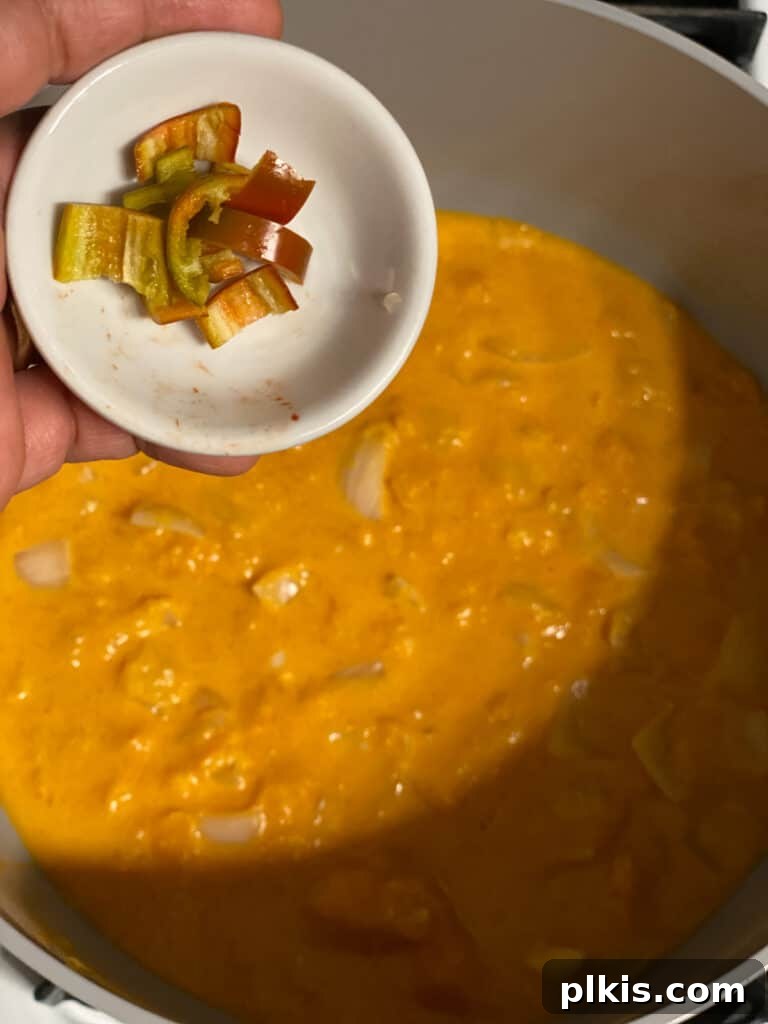
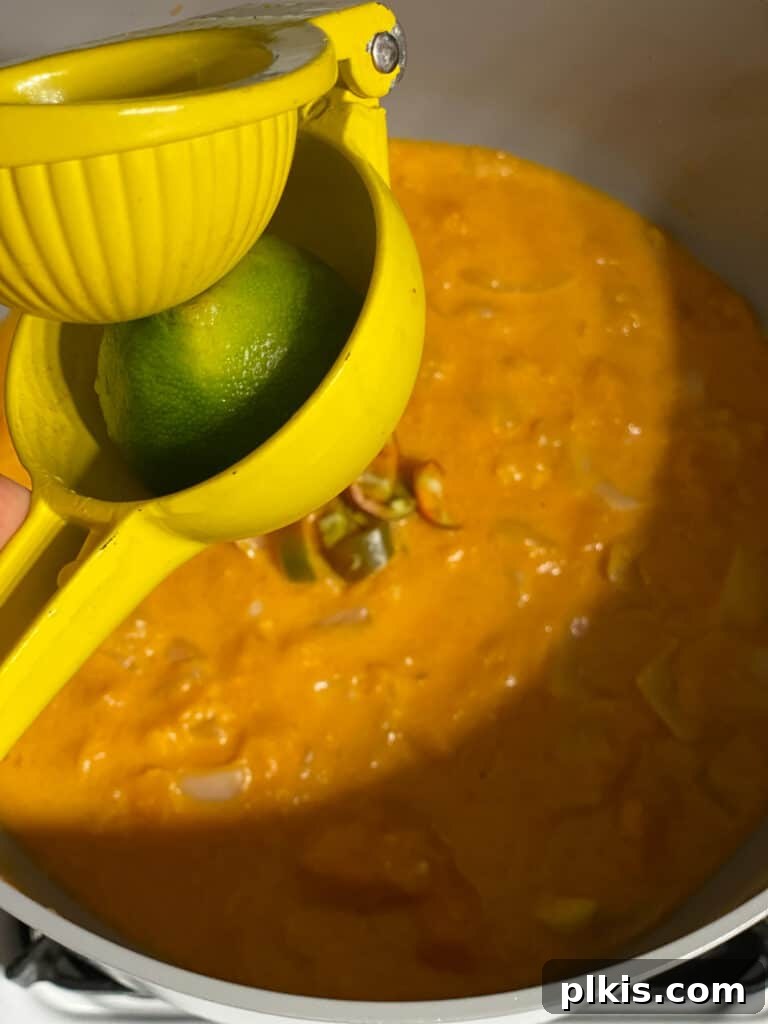



- 7) Final Adjustments and Serving. Return the smoothly blended soup to the pot. Give it a taste and adjust the seasoning as needed, adding more salt, lime juice, or chiles to achieve your preferred balance of flavors. Reheat the soup gently if necessary to ensure it’s piping hot. Once ready, ladle the luscious soup into individual bowls.
- 8) Garnish and Enjoy. Finish each serving with your chosen garnishes. A generous sprinkle of fresh cilantro leaves and finely chopped scallions adds vibrancy and a fresh aroma. For a touch of extra richness, drizzle a small amount of olive oil over the top. If you love an additional layer of heat, a swirl of sriracha creates a beautiful visual and flavor contrast. Serve immediately and savor every spoonful of this comforting Thai masterpiece.
Expert Tips & Frequently Asked Questions for Perfect Thai Butternut Squash Soup
Mastering this Thai Butternut Squash Soup is simple with these additional tips and answers to common questions. Elevate your cooking and make this dish a regular in your rotation.
- Add Some Crunch and Texture. For a delightful contrast to the creamy soup, consider topping each bowl with toasted squash seeds (from your butternut squash!) or a sprinkle of toasted pumpkin seeds. They add a nutty flavor and satisfying crunch.
- Storage and Reheating Made Easy. This soup is fantastic for meal prep. Store any leftovers in an airtight container in the refrigerator for up to five days. For longer storage, transfer to freezer-safe containers and freeze for up to three months. When ready to enjoy, reheat gently in a saucepan on the stove over medium-low heat, stirring occasionally until warmed through. You might need to add a splash of water or vegetable broth if it’s too thick after thawing.
- Customize the Spice Level. Thai cuisine is known for its heat, but you can easily tailor it to your preference. For a milder soup, reduce the amount of Thai bird chiles. Crucially, removing the seeds and internal membranes of the chiles will significantly cut down on the heat, as these parts contain the highest concentration of capsaicin. For those who love intense spice, feel free to leave the seeds in or add an extra chile.
- Achieving the Perfect Consistency. If your soup is too thick after blending, gradually add small amounts of vegetable broth or water until it reaches your desired consistency. If it’s too thin, you can simmer it uncovered for a bit longer to allow some of the liquid to evaporate, or stir in a tablespoon of cornstarch slurry (cornstarch mixed with a small amount of cold water) and simmer until thickened.
- Serving Suggestions. This soup is wonderfully satisfying on its own, but it also pairs beautifully with a side of fluffy jasmine rice, crusty bread, or even rice noodles to make it a more substantial meal. For added protein, consider stirring in some cooked chickpeas, baked tofu cubes, or edamame.
- Boost the Aromatics. For an even deeper flavor, consider bruising your lemongrass stalk before adding it to the pot. This helps release more of its essential oils. You can also grate a little extra ginger for a more pronounced zest.
Butternut squash naturally boasts a delicate sweetness, which harmonizes exceptionally well with spicy, fragrant, and other sweet ingredients. In this Thai-style vegan butternut squash soup recipe, we strategically combine all these elements: roasting the squash enhances its natural sugars, while aromatics like ginger and lemongrass, coupled with the heat of chiles, the tang of lime, and the richness of coconut milk, create a complex and incredibly flavorful experience. Each component plays a vital role in creating a balanced and captivating taste.
Absolutely! Butternut squash soup, especially this vegan version, is incredibly beneficial for your health. Butternut squash is packed with an abundance of nutrients, most notably a high concentration of Vitamin A, which is essential for maintaining excellent eye health, supporting immune function, and promoting skin vitality. Furthermore, it’s a hearty and satisfying option, brimming with dietary fiber which aids digestion and helps you feel fuller for longer, making it an excellent choice for a nutritious and fulfilling meal.
While fresh roasted butternut squash offers the best flavor and texture, you can use canned pumpkin puree or unsweetened canned butternut squash puree in a pinch. If doing so, omit the roasting step and simply add the canned puree to the pot with the other ingredients in step 5. You might need to adjust the water content to achieve the desired consistency, as canned purees vary in thickness. Ensure it’s plain puree, not pumpkin pie filling!
Fresh lemongrass provides a unique flavor that is hard to replicate perfectly. However, if it’s unavailable, you have a couple of options. You can use lemongrass paste, typically found in tubes in the produce or international aisle of many grocery stores. Use about 1-2 teaspoons for this recipe. Alternatively, a combination of lemon zest and a tiny pinch of ginger can offer a similar aromatic profile, though the depth of flavor won’t be quite the same.

Explore More Delicious Butternut Squash Recipes
Butternut squash is an incredibly versatile ingredient, capable of starring in a wide range of sweet and savory dishes. If you’ve enjoyed this Thai-style soup, we invite you to discover more creative ways to incorporate this nutritious and flavorful squash into your cooking. Here are some of our other favorite butternut squash recipes that you’re sure to love:
- Butternut Squash Sage Biscuits: Fluffy, savory biscuits with a hint of earthy sage and the subtle sweetness of squash.
- Butternut Squash Mac N Cheese: A creamy, healthier take on a classic comfort food, perfect for family dinners.
- Roasted Curried Butternut Squash: Simple yet powerfully flavored, this side dish is vibrant and aromatic.
- Butternut Squash Curry: A hearty and aromatic curry that can be customized with your favorite vegetables and proteins.
Photos by Alfonso Revilla
Thai Butternut Squash Soup

Equipment
-
Baking sheet
-
My favorite knives
-
Measuring Cups
-
Measuring spoons
-
Mixing Bowl
-
Large Pot
-
Blender
-
Immersion blender
-
Individual Bowls
Ingredients
- 1 butternut squash
- cooking spray (or vegetable or canola oil)
- 1 tablespoon of vegetable or canola oil
- 1 small onion chopped
- 2 cloves of garlic chopped
- 2 tablespoons of peeled, chopped ginger
- 1 stalk of lemongrass, tough outer layers removed, bottom inch and tapered top removed, finely chopped
- 1 ½ cups of coconut milk
- 1 tablespoon of tomato paste
- 2 small Thai bird chiles (or 1 serrano chile), halved, seeds removed if you want less heat
- 1 ½ tablespoons of lime juice
- 1 ½ teaspoons of kosher salt (or ¾ teaspoon table salt)
- ¾ cup of water
- cilantro leaves, finely chopped scallion, olive oil, and sriracha as garnish
Instructions
-
Preheat the oven to 400 degrees F (204 degrees C). Line a baking sheet with aluminum foil. Cut the butternut squash in half lengthwise. (Microwaving the squash for a minute or two can help soften it up and make it easier – and safer – to cut in half. If you do microwave it, be sure to give the skin a few good stabs with the tip of your knife so nothing ends up exploding all over the inside of your microwave.) Prick the skin of each half a bunch of times with a fork, scoop out the seeds and stringy bits, then give all surfaces a quick spray with cooking spray. (Or brush lightly with some oil.) Place cut-side down on the baking sheet, and bake for 40 minutes. Remove from the oven, let cool, and scoop the flesh out of the skin, place in a bowl, and set aside. (You only need half the squash for this recipe, but it never hurts to have half a cooked squash on hand.)
-
Heat the oil in a pot over medium-high heat. Add the onion, and saute until softened, 5-8 minutes. Add the squash, garlic, ginger, lemongrass, coconut milk, and tomato paste, bring to a boil, and simmer until everything is heated through, around 10 minutes. Transfer to a blender (in batches, if necessary), add chiles, lime juice, salt, and water, and puree until smooth. (Alternately, add the chiles, lime, salt, and water to the pot, and puree with an immersion blender.) Return to the pot, adjust seasoning, and reheat until ready to serve. Transfer to bowls and garnish with cilantro leaves, chopped scallions, and drizzles of olive oil and sriracha.
Notes
- Add some crunch. Top with toasted squash seeds or some pumpkin seeds.
- Store leftovers in the fridge for up to five days or in the freezer for up to three months. Reheat the leftovers in a saucepan on the stove.
- For less spice, reduce the amount of chilies and make sure to remove the seeds and membranes which contain most of the heat.