

Warm up your soul with a hearty, comforting bowl of creamy spiced butternut squash and lentil soup. This delightful recipe, easily prepared on the stove or in a slow cooker, is not just incredibly delicious but also a nutritional powerhouse. It’s packed with plant-based protein, fiber, and essential vitamins, making it an ideal choice for a wholesome meal. Whether you’re seeking a cozy dinner on a chilly evening or a nourishing option for your weekly meal prep, this soup promises satisfaction in every spoonful.

Why You’ll Adore This Butternut Squash & Lentil Soup Recipe
There’s truly nothing quite like a steaming bowl of soup to chase away the chill of a cold day, and this butternut squash and lentil soup takes comfort food to an entirely new level. Butternut squash is a seasonal star, celebrated for its naturally sweet flavor and creamy texture. We’ve previously explored its versatility in Thai-style variations, sweet and savory apple pairings, and even a vibrant red pepper infusion. Now, prepare to be captivated by this thick, creamy, and incredibly filling butternut squash and lentil soup.
What makes this particular recipe stand out? The genius combination of butternut squash with hearty lentils. The savory, earthy notes of lentils perfectly complement the inherent sweetness of the squash, creating a harmonious flavor profile that is both complex and deeply satisfying. Beyond taste, lentils work wonders by naturally thickening the soup, lending it a luxurious body, and significantly boosting its protein and fiber content. This means you’ll feel fuller and more energized, making it an excellent choice for a main course.
The aromatic spices are another highlight. Warming flavors like pungent ginger and earthy cumin, combined with the rich creaminess of coconut milk, infuse every spoonful with an irresistible taste. This isn’t just any soup; it’s a culinary hug that warms you from the inside out.
Furthermore, this nourishing soup is remarkably easy to prepare, requiring only about 10 inexpensive ingredients. In as little as 40 minutes, you can have a gourmet-tasting, homemade meal ready on your stovetop. For those busy days, a slow cooker option offers a hands-off approach, allowing the flavors to meld beautifully over several hours. Its simplicity makes it an excellent candidate for meal prep, ensuring you have healthy, delicious comfort food readily available throughout your week.
Most importantly, this creamy butternut squash and lentil soup is a plant-based powerhouse. It’s brimming with fiber, protein, and a spectrum of vitamins, including significant amounts of Vitamin A from the squash, crucial for immune health. This makes it a fantastic immune-boosting meal, especially during colder months. Essentially, it’s not just delicious; it’s truly “soup-er” good for you! If you’re looking for more simple and satisfying vegan soup recipes, don’t miss our vegan split pea soup, hearty lentil and carrot soup, or the comforting sopa de fideo.
Essential Ingredients for Your Butternut Squash & Lentil Soup
Crafting this flavorful and nutritious butternut squash and lentil soup requires a selection of readily available ingredients, each playing a crucial role in its irresistible taste and texture. While the full list can be found in the recipe card below, let’s delve into some key components and their potential substitutes to help you master this dish.
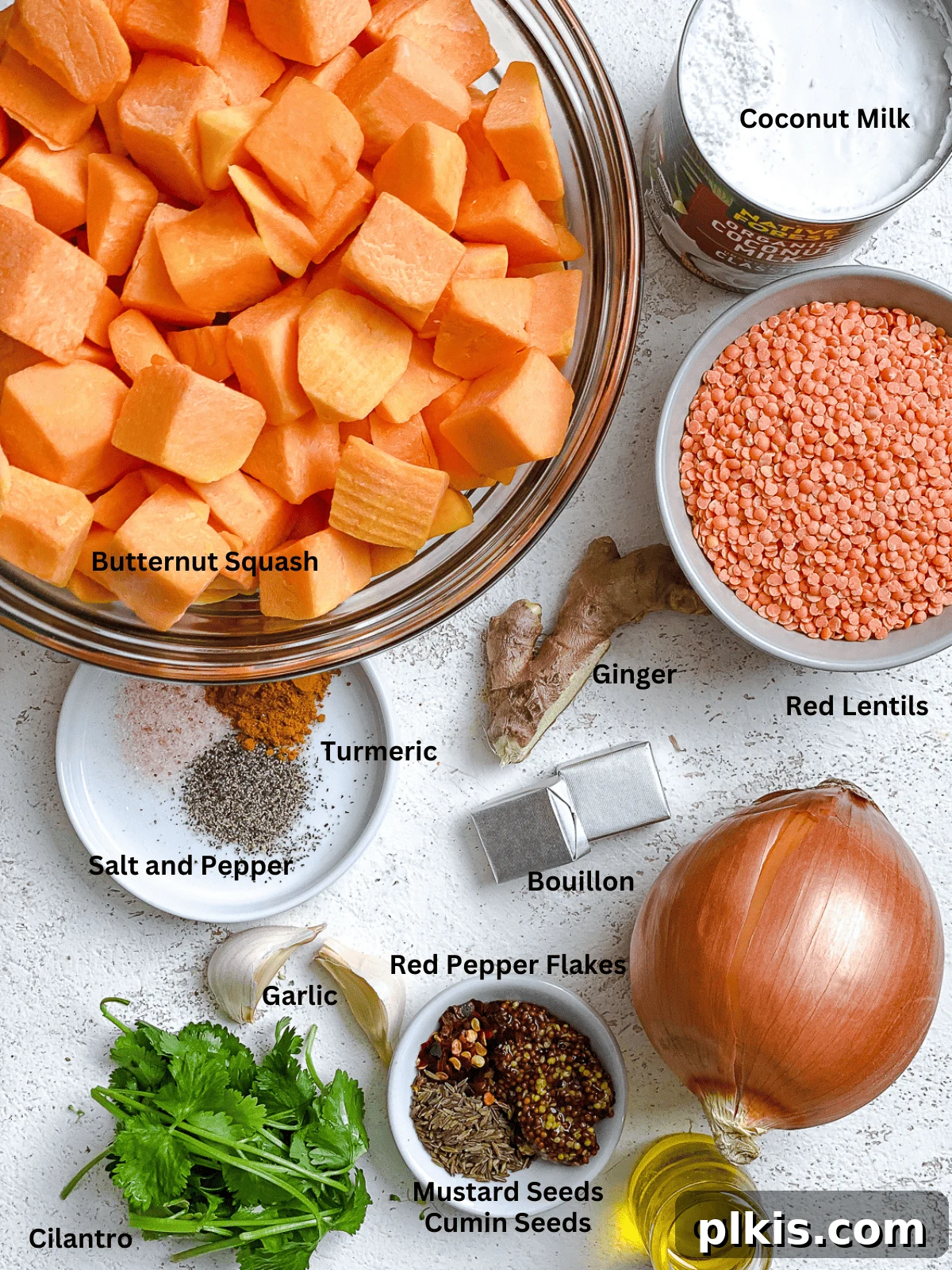
Butternut Squash: The star of the show, providing natural sweetness, a creamy texture when cooked, and a rich source of Vitamin A. When selecting butternut squash, look for one that feels heavy for its size and has a deep, uniform tan color. Avoid any with soft spots or blemishes. Peeling and cubing can be a bit challenging, but a sharp peeler and knife make it easier (see FAQ for cubing tips).
Lentils: This recipe primarily calls for red lentils because they break down beautifully, adding to the soup’s creamy consistency without needing to be pureed. They are also incredibly quick-cooking. However, you can use brown or green lentils for a chunkier soup, though they will require a longer simmering time (adjust accordingly, typically 30-40 minutes). Lentils are a fantastic source of plant-based protein and dietary fiber, contributing to the soup’s heartiness and satiety.
Coconut Milk: Full-fat canned coconut milk is essential for achieving that luxurious, creamy texture and a subtle tropical richness. It’s the secret to making this soup dairy-free and wonderfully indulgent. Shake the can well before opening to ensure the cream and liquid are combined. Lite coconut milk can be used for a lower-calorie option, but the soup may not be as rich.
Aromatics & Spices: Onion, garlic, and fresh ginger form the flavorful base of this soup, imparting depth and warmth. Brown mustard seeds, whole cumin seeds, and red pepper flakes are toasted at the beginning of the cooking process to release their full aromatic potential, giving the soup an Indian-inspired flair. Feel free to adjust the red pepper flakes to your preferred level of heat.
Vegetable Broth: A good quality vegetable broth forms the liquid base of the soup. Opt for a low-sodium variety to better control the overall saltiness of your dish. If you only have water on hand, you can use vegetable bouillon cubes or powder for flavor.
Substitutions for Squash: For added depth and slightly different flavor notes, you can replace a portion of the butternut squash with other fall favorites like diced carrots, cubed sweet potato, or even canned pumpkin puree (ensure it’s 100% pumpkin, not pie filling). These additions will integrate seamlessly and enhance the soup’s nutritional profile.
Exciting Recipe Variations to Explore
While this butternut squash and lentil soup is delicious as is, it’s also incredibly versatile, offering plenty of room for customization to suit your palate and dietary needs. Experiment with these variations to discover new dimensions of flavor and texture:
- Curried Butternut Squash Soup: For a more pronounced aromatic experience, elevate this to a curried butternut squash soup. Stir in about a tablespoon of your favorite curry powder (mild, medium, or hot) or Thai red curry paste when you add the initial spices. Briefly temper it with the other spices in the hot oil before adding the aromatics; this helps to unlock its full flavor potential and distribute it evenly throughout the soup. You could also add a pinch of turmeric for color and its anti-inflammatory properties, pairing it with black pepper for optimal absorption.
- Zesty Lemon or Lime Juice: A squeeze of fresh lemon juice or lime juice at the end of cooking can significantly brighten the soup’s flavor and add a subtle tang, balancing the richness of the coconut milk and the sweetness of the squash. For an extra pop of citrus, grate in some lemon zest or lime zest along with the juice. This simple addition can make a huge difference in the overall vibrancy of the dish.
- Enhanced Spice Profile: Expand on the warming spices beyond ginger and cumin. Consider adding a half teaspoon of ground cinnamon or a pinch of nutmeg for a cozy, autumnal twist. A teaspoon of smoked paprika can introduce a delightful smoky depth, making this a truly spiced lentil and butternut squash soup. Cardamom, coriander, or even a dash of garam masala could also be excellent additions for an even more complex flavor.
- Boosted Greens (Spinach/Kale): For an extra dose of nutrients and a touch of freshness, stir in a couple of handfuls of fresh spinach or chopped kale during the last 5-10 minutes of cooking. The residual heat of the soup will wilt the greens perfectly without overcooking them. This is an easy way to sneak in more vegetables.
- Kick of Heat with Hot Sauce: If you prefer a spicier soup, a dash or two of your favorite hot sauce, such as sriracha, chili garlic sauce, or even a few extra red pepper flakes, can boost the heat to your liking. Add it incrementally at the end and taste as you go to achieve your desired level of spice.
- Herbaceous Freshness: Beyond cilantro, consider other fresh herbs. A handful of fresh parsley, chopped finely, or even a sprig of fresh thyme or rosemary added during the simmer, can bring a different aromatic dimension to the soup. Remove woody stems before serving.
- Sweetness Adjustment: If your butternut squash isn’t as sweet as you’d like, or if you prefer a slightly sweeter soup, a touch of maple syrup or agave nectar (start with a teaspoon and add more if needed) can enhance the natural sweetness. This can also help to balance out any added spicy elements.
How to Prepare Creamy Butternut Squash and Lentil Soup
Making this delightful butternut squash and lentil soup is a straightforward process, whether you opt for the classic stovetop method or the convenient slow cooker. Follow these simple steps for a truly comforting and nutritious meal.
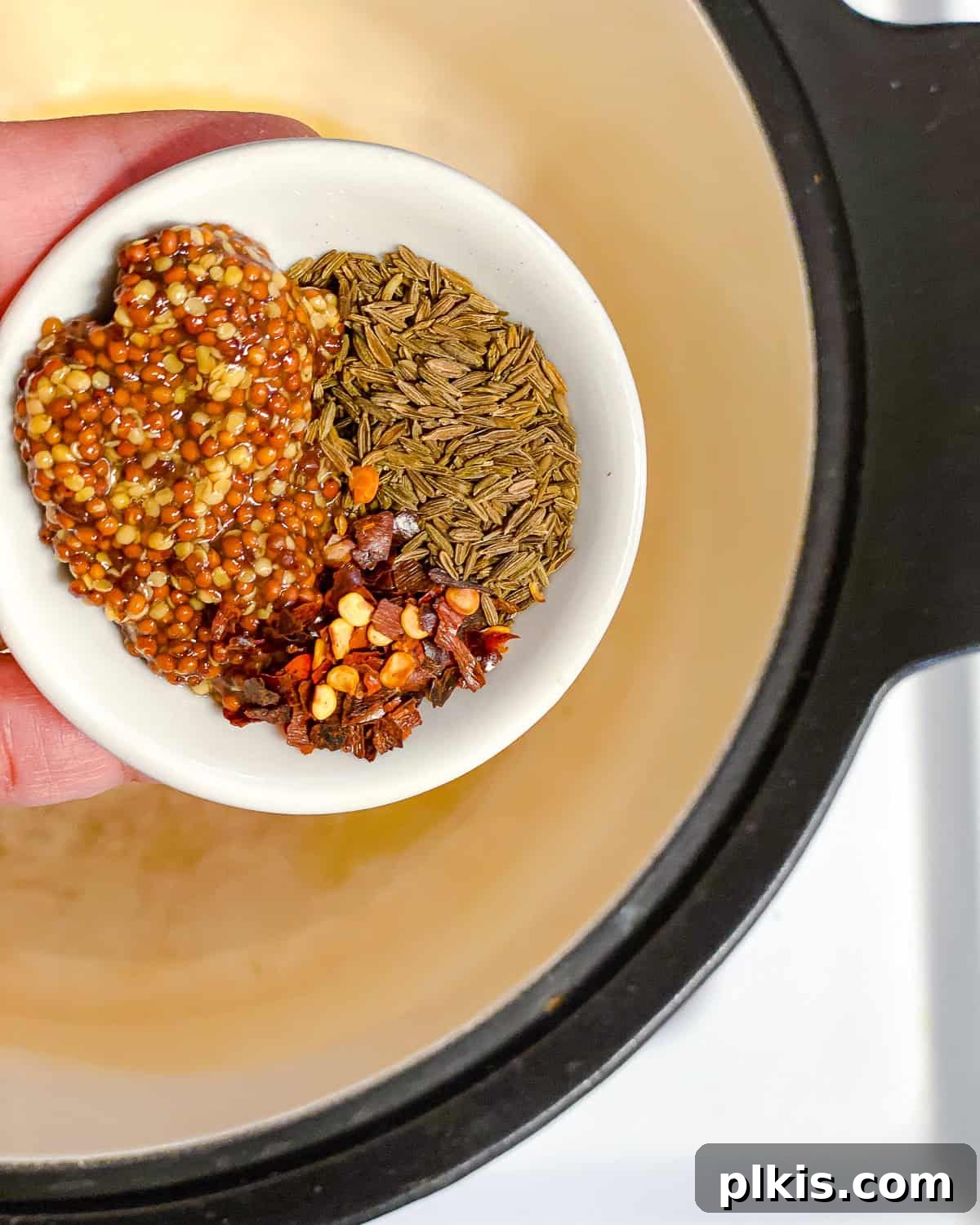
Step 1: Prepare & Sauté Spices. Begin by thoroughly sorting through your red lentils to remove any small stones or debris, then rinse them under cold water until the water runs clear. Next, finely dice the onion, and mince the garlic and peeled ginger. Heat a large saucepan or Dutch oven over medium-high heat. Once hot, add your preferred medium-high heat oil. Add the mustard seeds, cumin seeds, and red pepper flakes to the hot oil. Sauté them for 1-2 minutes, stirring constantly, until they become fragrant and the mustard seeds begin to pop. Be careful not to burn the spices, as this can make them bitter. Reduce the heat slightly if needed.
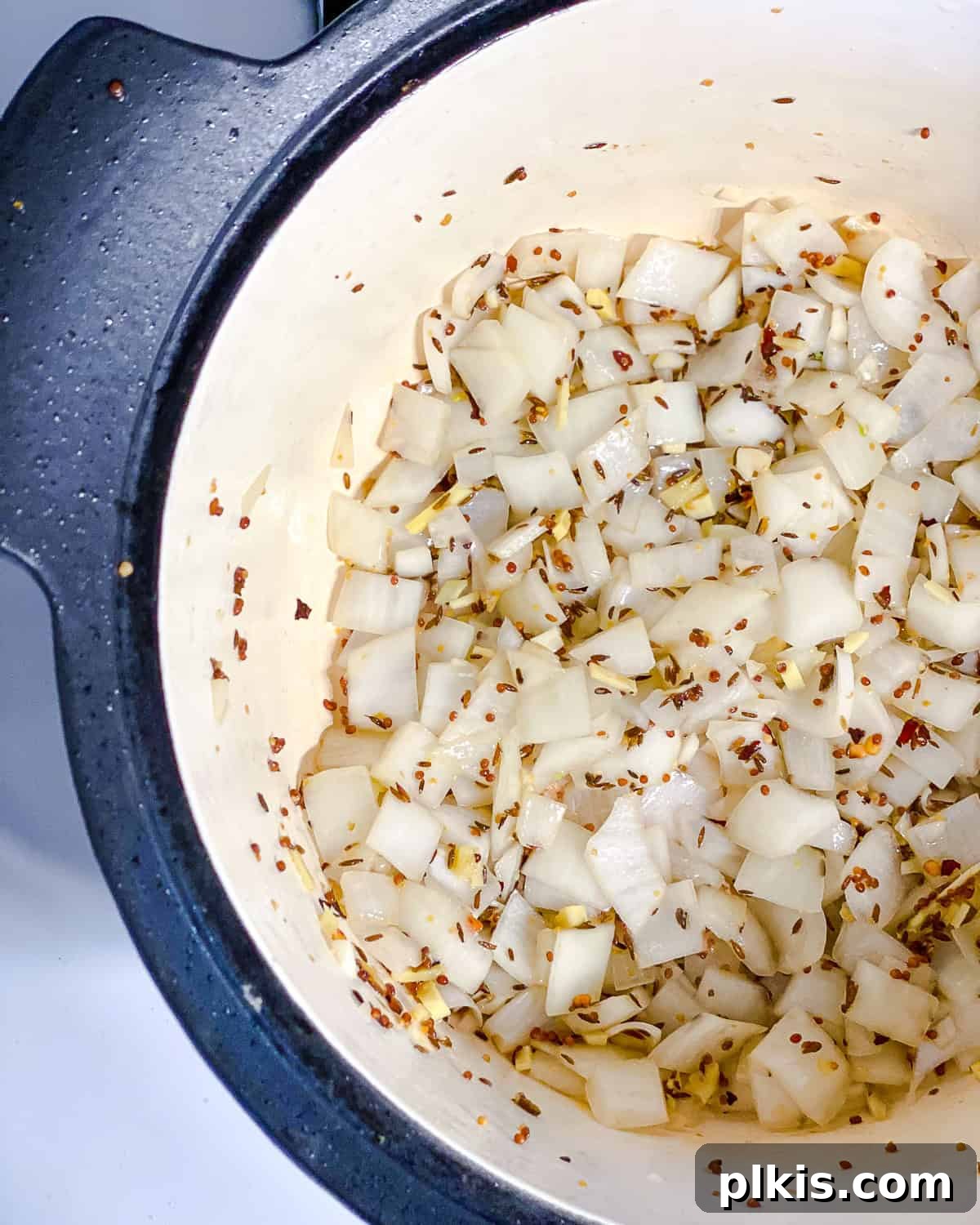
Step 2: Soften Aromatics. To the fragrant spices, add the diced onion, minced garlic, and chopped ginger. Stir to combine with the spices. Cover the pot with a lid, reduce the heat to medium-low, and allow the aromatics to cook for 2-3 minutes. This gentle simmering allows the onion to soften and become translucent, releasing its sweet flavors without browning, and mellows the garlic and ginger.
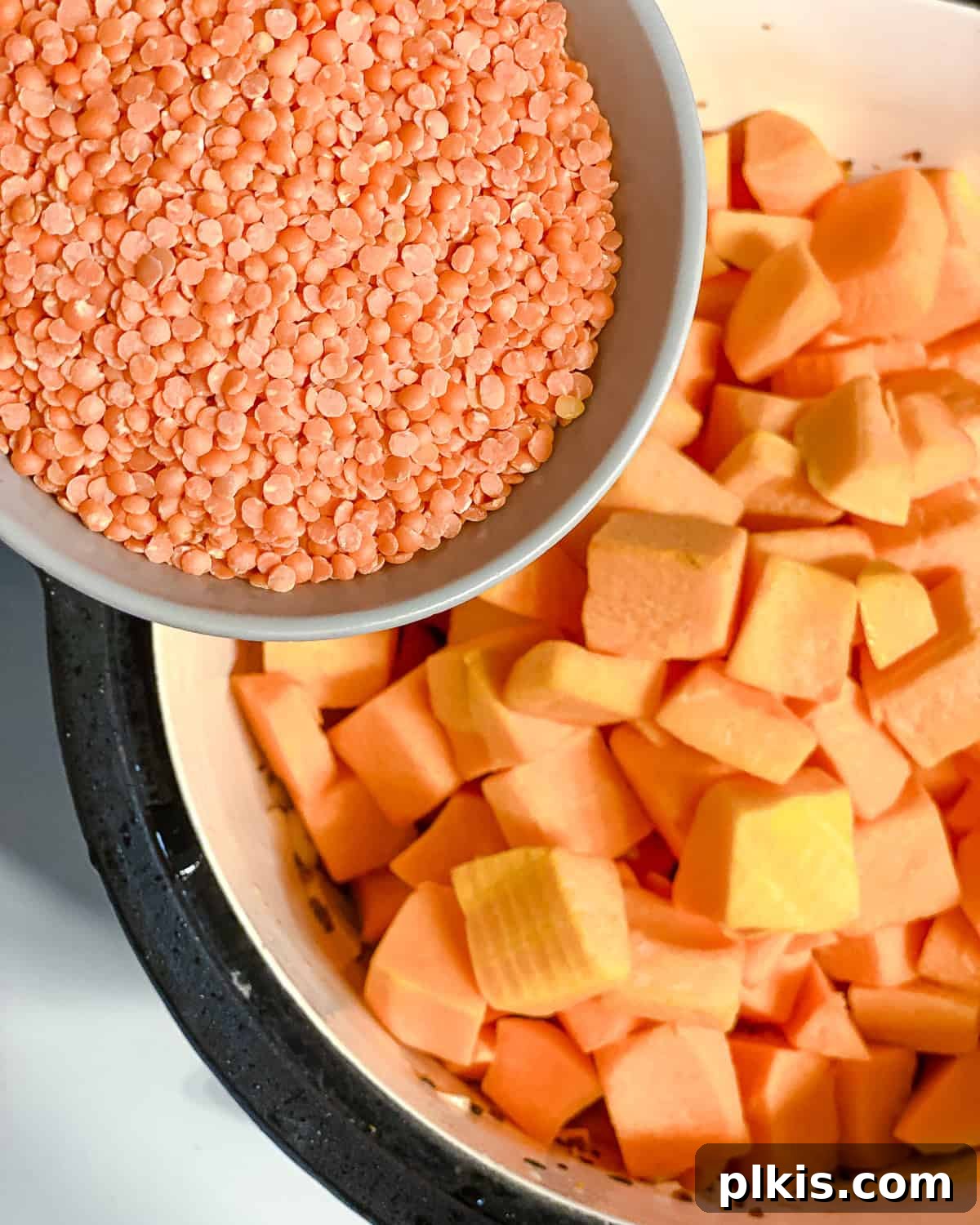
Step 3: Simmer Squash & Lentils. Now, add the peeled, de-seeded, and cubed butternut squash along with the rinsed red lentils to the pot. Stir well to ensure the squash and lentils are thoroughly coated with the aromatic spice mixture. Pour in the vegetable broth, ensuring everything is adequately submerged. Bring the mixture to a gentle simmer, then cover the pot and reduce the heat to low. Let it cook for 15-20 minutes, or until the butternut squash is fork-tender and easily mashable, and the lentils are soft. If using brown or green lentils, you may need to simmer for a longer period, possibly 30-40 minutes.
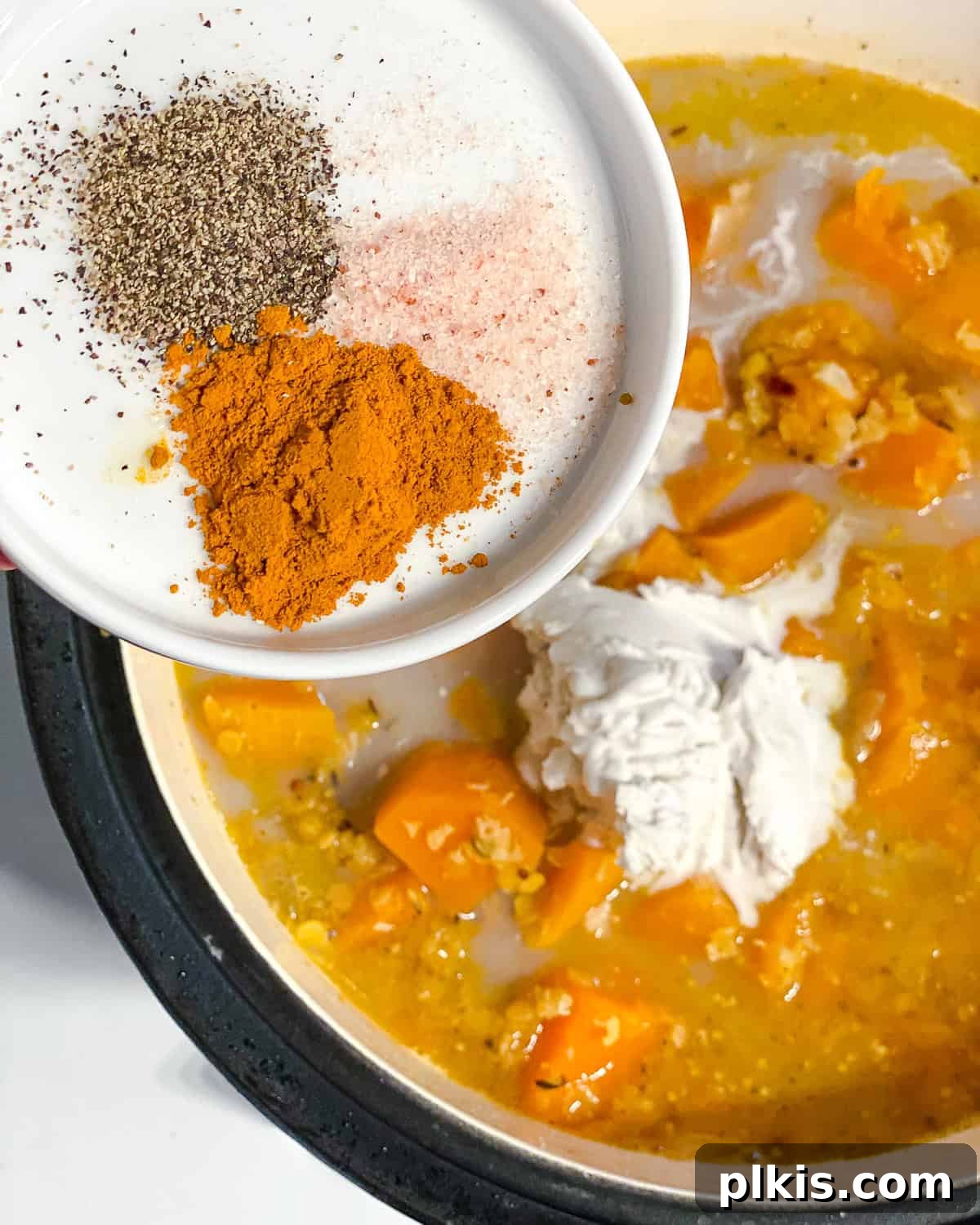
Step 4: Add Creaminess & Finish. Once the squash and lentils are tender, remove the lid and stir in the full-fat coconut milk. Season generously with salt, starting with one teaspoon and adjusting to taste. This is also the perfect time to add optional turmeric and black pepper for extra anti-inflammatory benefits. If desired, stir in chopped fresh cilantro for a burst of freshness. At this point, you can enjoy the butternut and lentil soup as a hearty, chunky stew, or you can achieve a smoother, creamier consistency. Use an immersion blender directly in the pot to puree some or all of the soup to your preferred texture. If using a regular stand blender, blend in batches (see tip below). Taste and adjust seasonings one last time. Serve warm and enjoy!
Pro Tip for Depth of Flavor: For an even richer, more complex taste, first sauté the butternut squash pieces separately in a bit of oil until they are lightly browned and slightly caramelized before adding them to the pot with the lentils and broth. This extra step brings out their natural sweetness and adds wonderful depth.
Using a Regular Blender Safely: When pureeing hot soup in a conventional blender, always exercise caution. Only fill the blender halfway to prevent overflow from steam expansion. Secure the lid firmly, holding it down with a clean kitchen towel. Crucially, remove the center cap of the blender lid (if it has one) to allow steam to escape, preventing pressure buildup. Blend in short bursts, pausing occasionally to lift the lid (still holding it with the towel) and release any accumulated steam. This ensures a safe and smooth blending process.
Effortless Slow Cooker Butternut Squash Lentil Soup
For those who prefer a hands-off approach or want to come home to a ready-made meal, this butternut squash lentil soup adapts beautifully to a slow cooker. While entirely optional, for the absolute best flavor, we highly recommend completing steps 1 and 2 (sautéing the spices and aromatics) on the stovetop before transferring them to the slow cooker. This brief initial sauté truly unlocks the full potential of the spices and creates a more robust flavor base.
Once you’ve completed the sauté (or if you’re skipping it for ultimate ease), simply add all of the ingredients – the sautéed aromatics and spices (if used), diced butternut squash, rinsed lentils, vegetable broth, and coconut milk – directly into your crockpot. Stir everything together to combine.
Cook the soup on the LOW setting for 7-9 hours, or on the HIGH setting for 3-4 hours. Cooking times can vary slightly depending on your slow cooker, so it’s a good idea to check for tenderness around the minimum cooking time. The butternut squash should be very soft, and the lentils should be fully cooked. If you notice the soup becoming too thick during cooking, you can add a little more vegetable broth or water to reach your desired consistency.
Once cooked, taste and adjust the seasonings of your lentil and butternut soup as needed, adding more salt, pepper, or other spices if desired. To achieve that creamy consistency, you can blend the soup directly in the crockpot using an immersion blender. Alternatively, carefully transfer portions of the soup to a stand blender (following the safety tips for hot liquids mentioned earlier) and blend until smooth, then return to the crockpot. Keep warm on low until you’re ready to serve.
Frequently Asked Questions About Butternut Squash & Lentil Soup
- How do I cube butternut squash efficiently and safely?
- Cubing butternut squash can seem daunting, but with a few tips, it’s quite simple. First, trim both ends of the squash to create flat surfaces. Next, chop the squash in half horizontally, separating the bulbous bottom from the neck. Use a sturdy spoon to scoop out the seedy, fleshy part from the bottom half. For the neck and the deseeded bottom, carefully slice the squash into ½-inch wide planks or “slabs.” Finally, stack a few slabs and cut them into ½-inch cubes. A sharp knife is key for safety and ease.
- Can I use canned butternut squash puree instead of fresh?
- Absolutely! Using canned butternut squash puree can save a significant amount of prep time. If you opt for puree, we recommend simmering it for an extra 5-8 minutes with the broth and lentils. This helps to cook out any lingering “canned” taste and allows the flavor to concentrate, resulting in a more robust and satisfying soup. Ensure you’re using 100% pure pumpkin or butternut squash puree, not pie filling.
- What are the best toppings to serve with butternut squash red lentil soup?
- Toppings can add wonderful texture and flavor contrasts to your creamy butternut squash red lentil soup. Consider adding a sprinkle of toasted butternut or pumpkin seeds for crunch, crispy air fryer chickpeas for extra protein and texture, or homemade croutons for a classic touch. A drizzle of high-quality olive oil or a swirl of chili oil can enhance richness and add a hint of spice. A dollop of plain vegan yogurt or sour cream alternative can provide a refreshing tang, and fresh chopped cilantro or parsley offers a vibrant finish. A few chili flakes can also provide a gentle kick.
- Is butternut squash soup with red lentils truly healthy?
- Yes, this butternut squash soup with red lentils is exceptionally healthy! It’s a nutrient-dense meal that leverages the best of plant-based ingredients. Butternut squash is rich in Vitamin A (beta-carotene), Vitamin C, and potassium, all vital for vision, immune function, and heart health. Red lentils are an outstanding source of plant-based protein, dietary fiber (aids digestion and satiety), iron, and folate. Beyond these main ingredients, the garlic and ginger contribute powerful anti-inflammatory and immune-boosting properties, while the spices offer various health benefits. Even the coconut milk provides healthy fats. This soup is a complete and wholesome meal.
- Can this soup be made gluten-free or oil-free?
- Yes, this recipe is naturally gluten-free, assuming your vegetable broth is gluten-free (most are, but always check the label). To make it oil-free, simply replace the initial tablespoon of oil used for sautéing the spices and aromatics with ¼ cup of vegetable broth or water. You’ll need to stir frequently to prevent sticking and ensure the spices don’t burn, but the method works well.
Expert Tips for Perfect Butternut Squash & Lentil Soup
Achieve consistently delicious results with your creamy butternut squash and lentil soup by keeping these professional tips in mind:
- Sauté the Spices and Aromatics: This initial step is non-negotiable for maximum flavor. While it only adds a few minutes to your cooking time, dry roasting the whole spices (like mustard and cumin seeds) until fragrant, followed by sautéing the onion, garlic, and ginger, truly helps to unlock their full aromatic potential and build a deep, complex flavor base for the entire soup. Don’t rush this stage.
- Adjust the Texture to Your Liking: The beauty of this butternut and red lentil soup is its adaptability. You can leave it mostly chunky for a more stew-like experience, blend it partially for a soup with some body and bits of vegetable, or fully blend it until perfectly smooth and velvety. An immersion blender makes this process incredibly easy, allowing you to achieve your desired consistency directly in the pot.
- Control Soup Thickness: If you prefer a thinner soup, gradually add more vegetable broth or water until it reaches your desired consistency. For a thicker soup, you can reduce the amount of liquid slightly, or simply let it simmer uncovered for a few extra minutes at the end to allow some of the liquid to evaporate. The lentils will also continue to thicken the soup as it cools.
- Boost Flavor with Roasting: For an even deeper, sweeter, and more caramelized flavor profile, consider roasting your butternut squash (and even the onion) before adding it to the soup. Toss the cubed squash with a little oil, salt, and pepper, then roast at 400°F (200°C) for 20-25 minutes until tender and slightly browned. This caramelization intensifies the sweetness and adds incredible depth that simmering alone cannot achieve.
- Make it Oil-Free: If you’re aiming for an oil-free dish, simply replace the oil used for sautéing with ¼ cup of vegetable broth or water. Sauté your spices and aromatics in the broth, stirring frequently to prevent sticking. The flavors will still develop beautifully.
- Taste and Adjust Seasonings: This is perhaps the most crucial tip for any recipe. Always taste your soup before serving and don’t be afraid to adjust the seasonings. A squeeze of lemon juice can brighten the flavors and add acidity. A touch more salt can bring everything into balance. If you find the spices too intense, a small amount of maple syrup or agave can balance it. Conversely, if you want more heat, add a dash of hot sauce. Seasoning incrementally ensures a perfectly balanced flavor profile.
- Don’t Overcook Lentils: Red lentils cook relatively quickly. Overcooking can turn them mushy and cause them to lose their structure entirely, especially if you plan to keep the soup chunky. Aim for tender but not disintegrating.

Serving Suggestions for Butternut Squash & Lentil Soup
This creamy, hearty red lentil butternut squash soup is incredibly versatile and can be enjoyed as a light appetizer or a fulfilling main course. Its rich flavor and satisfying texture make it a wonderful centerpiece for any meal. Here are some delectable serving suggestions to complement your soup:
- Crusty Bread: A classic pairing! Serve your soup with slices of warm, crusty bread to dip and soak up every last drop. Options like the easiest no-knead bread, a slice of sweet and savory sweet potato cornbread, or flavorful easy vegan garlic bread are perfect choices.
- Simple Side Salads: A refreshing green salad provides a lovely contrast to the richness of the soup. A crisp garden salad with a light vinaigrette, a vibrant kale salad, or a creamy Vegan Caesar salad would be excellent accompaniments.
- Seasonal Fall Salads: Embrace the flavors of autumn with salads featuring seasonal produce. Consider an easy apple pecan salad with cranberries, a hearty roasted beet and kale salad, or a crunchy vegan broccoli salad.
- Roasted or Steamed Vegetables: Enhance your meal with a side of perfectly cooked vegetables. Oven-charred broccoli, tender air fryer Brussels sprouts, or spicy roasted cauliflower offer delicious textures and flavors that pair wonderfully with the soup.
- Grains: For an even more substantial meal, serve your soup over a bed of fluffy quinoa, brown rice, or even farro. The grains will absorb the flavorful broth and add another layer of texture and nutrients.
- Sandwiches or Wraps: A half-sandwich or a light vegan wrap makes for a complete and satisfying lunch or dinner alongside a bowl of this wholesome soup.
Storage & Reheating Instructions
This butternut squash and lentil soup is fantastic for meal prepping, as its flavors often deepen and improve overnight. Here’s how to store and reheat it effectively:
Fridge: Allow the soup to cool completely to room temperature before transferring it to an airtight container. It will keep beautifully in the refrigerator for 4-5 days, making it perfect for grab-and-go lunches or quick weeknight dinners.
Freezer: This soup freezes exceptionally well! For long-term storage, portion the cooled soup into freezer-safe containers, sturdy Ziplock or Stasher bags (lying them flat for efficient storage), or silicone muffin trays (once frozen, pop out the blocks and transfer to a freezer bag). It can be stored in the freezer for 3-4 months without losing quality. When you’re ready to enjoy it, simply let it thaw in the fridge overnight.
Reheat: To reheat, transfer the desired amount of soup to a microwave-safe bowl and heat in 30-second increments, stirring occasionally, until it’s piping hot. Alternatively, gently reheat the soup on the stovetop over medium-low heat, stirring frequently, until it reaches your desired temperature. If the soup has thickened too much during storage, add a little more vegetable broth or water to achieve your preferred consistency.
More Delicious Vegan Soups to Consider….
Soups
Vegan Broccoli Potato Soup
Vegan Dinners
Vegan Jackfruit Chicken Noodle Soup
Vegan Dinners
Kale Vegetable Bean Soup
Vegan Dinners
Vegan Asparagus Soup
If you tried this Butternut Squash and Lentil Soup recipe or any other recipe on my blog, please leave a 🌟 star rating and let me know how it went in the 📝 comments below. Your feedback is greatly appreciated!
Butternut Squash and Lentil Soup
15 minutes
25 minutes
40 minutes
6 – 8

Video
Equipment
-
Large Pot
-
Garlic press
-
My favorite knives
-
Measuring Cups
-
Measuring spoons
-
Wooden Spoon
-
High Speed Blender
-
Immersion blender
Ingredients
- 1 tablespoon medium-high heat oil
- 1 tablespoon brown mustard seeds
- 1 tablespoon whole cumin seeds
- ¼ teaspoon red pepper flakes (adjust to taste)
- 1 medium yellow onion diced
- 2 garlic cloves chopped
- 1 inch piece of ginger peeled and chopped
- 2 pounds butternut squash peeled, de-seeded, and cubed
- 1 cup red lentils
- 4 cups vegetable broth (or 4 cups water + bouillon)
- 1 (13.5-ounce) can coconut milk
- 1 teaspoon salt (or more to taste)
- ¼ cup chopped cilantro (optional)
- (Optional: 1 teaspoon turmeric and ½ teaspoon black pepper, for extra anti-inflammatory benefits)
Instructions
-
Heat the oil in a large pot over medium-low heat. Add the mustard seeds, cumin seeds, and red pepper flakes, stirring constantly. Cook for about 1–2 minutes, or until fragrant and the mustard seeds begin to pop. Be careful not to let the heat get too high, as the cumin seeds can burn easily.
-
Add the diced onion, minced garlic, and chopped ginger to the pot. Cover with a lid and cook over medium-low heat for 2–3 minutes, stirring occasionally, until the onion softens and becomes translucent.
-
Stir in the cubed butternut squash and rinsed red lentils, ensuring they are well coated with the spices and aromatics. Pour in the vegetable broth and bring the mixture to a gentle simmer. Cover the pot and continue to cook for 15–20 minutes, or until the squash is very soft and the lentils are tender. (If using brown or green lentils, cooking time may be longer, around 30-40 minutes).
-
Once the squash and lentils are tender, stir in the full can of coconut milk. Season the soup with 1 teaspoon of salt (or more to taste). If using, now is the time to add 1 teaspoon of turmeric and ½ teaspoon of black pepper for extra anti-inflammatory benefits. Add chopped cilantro if desired for a fresh garnish.
-
Enjoy the soup as a chunky, hearty stew, or use an immersion blender to puree it directly in the pot until you reach your desired consistency – from partially blended for some texture to fully smooth and creamy. If you are using a regular stand blender, remember to blend in batches, filling it only halfway and allowing steam to escape, before returning the pureed soup to the pot.
-
Keep the soup warm over low heat until ready to serve. Taste and adjust any final seasonings before serving.
Notes
- Sauté the spices and aromatics: This step is crucial for developing deep flavor. It only adds a few minutes but significantly enhances the complexity and depth of the soup’s taste profile.
- To adjust texture: You have full control! Leave the butternut and red lentil soup chunky for a hearty stew, blend it partially for a creamy soup with some texture, or fully blend it for a smooth, velvety consistency. An immersion blender simplifies this process greatly.
- For a thicker/thinner soup: If you prefer a thicker soup, reduce the amount of broth slightly or allow it to simmer uncovered for an additional 5-10 minutes. For a thinner soup, simply add more vegetable broth or coconut milk until you reach your desired consistency.
- For more flavor depth: Roasting the butternut squash (and even the onion) before adding it to the pot will bring out a deeper, sweeter, and more caramelized flavor that elevates the entire dish. Toss with a little oil, salt, and pepper, and roast at 400°F (200°C) for 20-25 minutes.
- Make it oil-free: Substitute the oil with ¼ cup of vegetable broth or water during the initial sautéing of spices and aromatics. Stir frequently to prevent sticking.
- Taste and adjust: Always taste your soup before serving. Balance the flavors to your liking by adding a squeeze of lemon juice for brightness and acidity, a touch of sweetener (like maple syrup) to balance spice, more red pepper flakes for heat, or additional salt as needed.
Nutrition
Calories: 343 kcal
Carbohydrates: 42 g
Protein: 11 g
Fat: 17 g
Saturated Fat: 13 g
Polyunsaturated Fat: 1 g
Monounsaturated Fat: 3 g
Sodium: 1035 mg
Potassium: 1017 mg
Fiber: 13 g
Sugar: 6 g
Vitamin A: 16456 IU
Vitamin C: 36 mg
Calcium: 118 mg
Iron: 6 mg
Additional Info
Author: Renee Press
Course: Dinner, Lunch
Cuisine: Indian
Method: Stovetop
Diet: Vegan
Tried this recipe?
Please tag us at @PlantBasedOnABudget! 🙂