
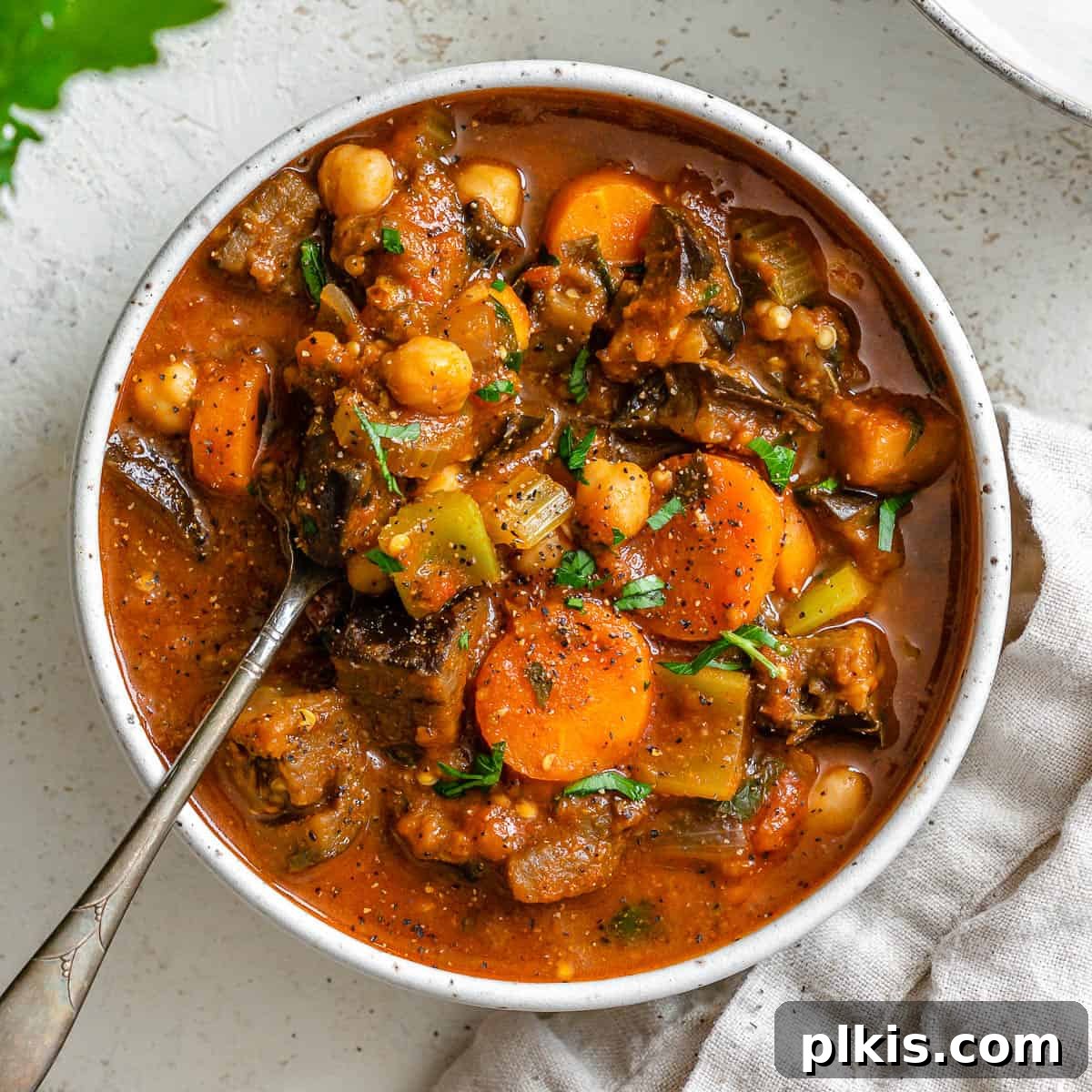
Delve into the comforting world of our Hearty Chickpea and Eggplant Stew, a vibrant, wholesome, and incredibly flavorful dish that promises warmth and satisfaction in every spoonful. Crafted from humble, budget-friendly kitchen staples, this plant-based stew delivers an impressive punch of fiber and protein, making it a perfect meal for any day of the week. Whether you prefer the steady simmer of the stovetop or the convenient hands-off approach of a slow cooker, we’ve got you covered with easy-to-follow methods.

Irresistible Hearty Tomato, Chickpea, and Eggplant Stew
While stews often conjure images of chilly autumn evenings or frosty winter days, this delightful chickpea and eggplant (or aubergine) creation transcends seasonal boundaries. Infused with summery eggplant and bathed in a rich, savory tomato sauce, this nutrient-dense and deeply comforting dish is one we proudly enjoy all year long. Its robust flavors and satisfying texture make it a beloved staple, offering a bowl of nourishing goodness that feels like a warm hug.
The beauty of this stewed eggplant recipe lies in its sheer simplicity and adaptability. It’s a true one-pot wonder, requiring minimal fuss and an array of common, inexpensive pantry ingredients. With just a bit of chopping and under an hour on the stovetop, you can whip up a gourmet-tasting meal that’s both gluten-free, dairy-free, grain-free, and entirely vegan. The preparation is straightforward, making it an ideal choice for busy weeknights when you crave something wholesome without spending hours in the kitchen.
Once patiently simmered, either on your stovetop or in a slow cooker, the eggplant transforms into a melt-in-your-mouth tender delicacy. It absorbs all the aromatic spices and rich tomato flavors, creating a harmonious blend that’s truly exceptional. Fiber-rich chickpeas add a hearty texture and a significant boost of plant-based protein, turning this flavorful sauce into a truly satisfying meal. Beyond its incredible taste, this stew is also incredibly practical: it stores beautifully in the refrigerator, freezes like a dream, and reheats perfectly, making it an excellent candidate for meal prep or enjoying delicious leftovers throughout the week.
If you’re eager to explore more ways to enjoy the versatile eggplant, be sure to check out some of our other fantastic recipes. Dive into our sticky eggplant and tofu, savor the exquisite maple-soy glazed sautéed eggplant, build towering crisp eggplant stacks, whip up a speedy quick eggplant curry, or indulge in the unique texture of our hazelnut eggplant pasta. Each offers a distinct and delicious take on this incredible vegetable.
Essential Ingredients for Your Eggplant and Chickpea Stew
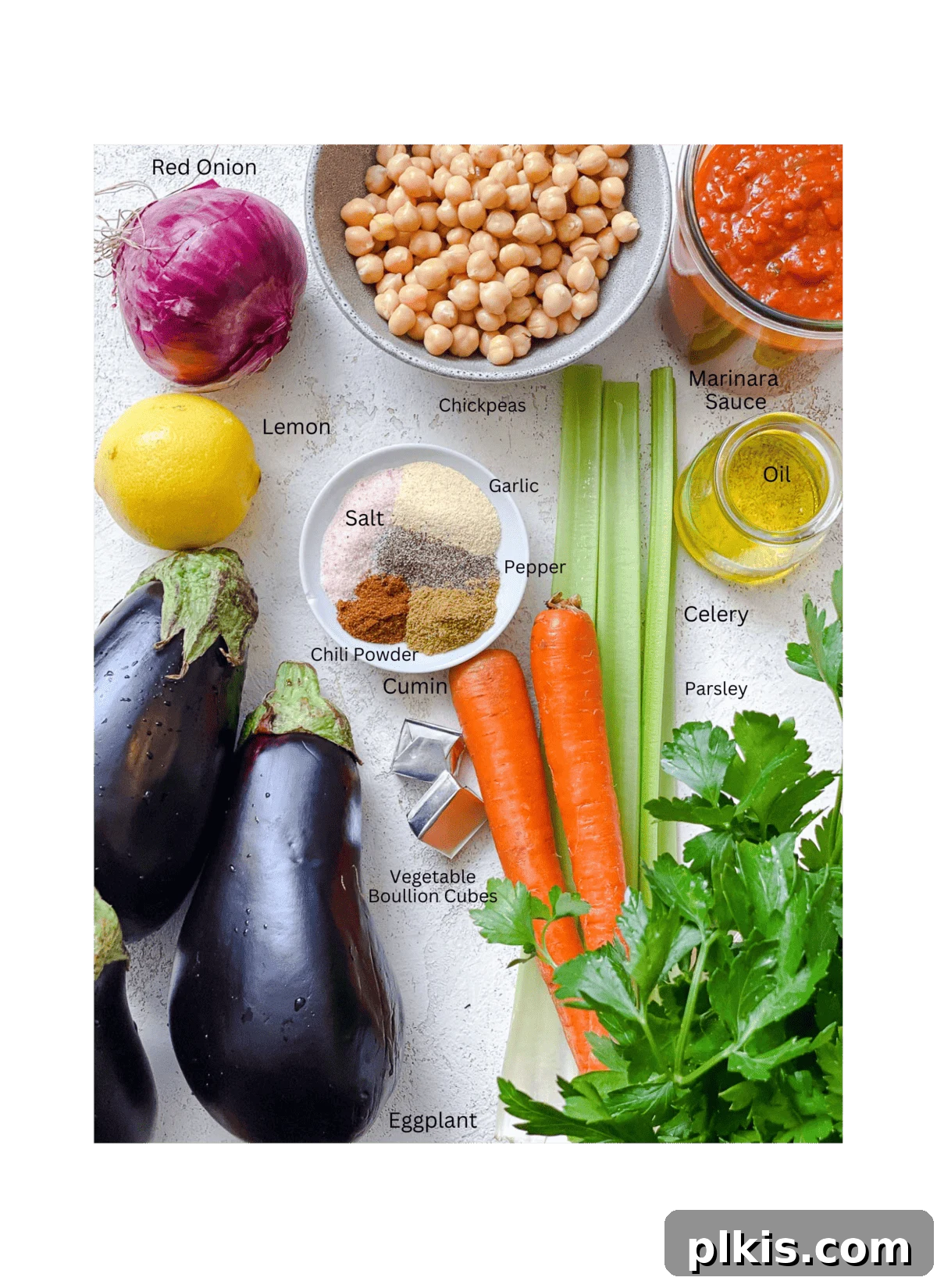
Crafting this flavorful stew relies on a simple yet powerful combination of ingredients. Here’s what you’ll need, along with some helpful tips for each:
- Eggplant: For the best results, opt for smaller eggplants. These tend to have fewer seeds, which reduces the chance of any bitterness, and their flesh is often more tender. Look for eggplants that are firm to the touch with smooth, shiny skin – a sign of freshness.
- Chickpeas (Garbanzo Beans): These versatile legumes are the backbone of this stew’s heartiness and protein content. You can use either canned chickpeas, thoroughly drained and rinsed, or home-cooked chickpeas for a slightly richer flavor. White beans like cannellini also make an excellent substitute, offering a similar creamy texture. For a different twist, canned lentils (brown or green) would also complement the stew beautifully.
- Mirepoix (Onion, Carrot, Celery): This classic aromatic trio forms the foundational flavor base for many stews and soups, and ours is no exception. Sautéing these vegetables slowly builds a deep, savory foundation that elevates the entire dish.
- Garlic: Freshly minced garlic adds an indispensable aromatic depth. Feel free to adjust the amount to your personal taste – some prefer a subtle hint, while others enjoy a more pronounced garlic flavor. In a pinch, garlic powder can be used, but fresh is always recommended for the best taste.
- Oil: Any neutral cooking oil will work well for sautéing, but we particularly recommend good quality olive oil for its complementary Mediterranean notes and health benefits.
- Tomato Sauce: The rich, tangy tomato base is crucial for this stew. We find that a good quality tomato basil marinara sauce provides excellent flavor with minimal effort. Alternatively, plain tomato sauce, smooth tomato passata, or even high-quality canned tomatoes (crushed or whole, then broken down) will yield delicious results.
- Seasonings: Just a few pantry staples are all it takes to unlock heaps of flavor in this stew.
- Chili Powder: Adds a mild warmth and earthy depth. You can substitute with a pinch of cayenne pepper or red pepper flakes if you prefer more heat.
- Cumin: Provides a warm, earthy, and slightly smoky aroma that pairs wonderfully with chickpeas and tomatoes.
- Sea Salt & Black Pepper: Essential for seasoning and bringing out all the other flavors. Adjust to your preference.
- Broth: Vegetable broth forms the liquid base of our stew. We often use vegetable bouillon cubes dissolved in water for convenience and cost-effectiveness, but a rich, pre-made vegetable broth will also work wonderfully. If you’re mindful of sodium intake, opt for a reduced-sodium broth.
- Lemon: A squeeze of fresh lemon juice at the end is a game-changer! It brightens the rich, savory flavors of the tomato eggplant stew, adding a delightful zesty finish. Bottled lemon juice can be used in a pinch. As an alternative, a splash of your favorite vinegar (red wine, white wine, or apple cider vinegar) can also provide a similar acidic lift.
- Fresh Parsley: Just before serving, a sprinkle of fresh minced parsley adds a burst of herbaceous freshness and a lovely visual appeal to the hearty stew.
Exciting Eggplant Stew Recipe Variations and Additions
This stewed eggplant recipe is incredibly versatile, allowing you to easily adapt it to different flavor profiles or to incorporate additional vegetables and ingredients you love. Don’t hesitate to get creative!
- Other Spices: Expand the aromatic dimensions of your stew by experimenting with additional spices.
- Smoked Paprika: For a deeper, subtly smoky flavor that complements the tomato base beautifully.
- Coriander: Adds a bright, citrusy, and slightly sweet note.
- Dried Oregano / Italian Seasoning: Perfect for enhancing the Mediterranean character of the stew.
- Cinnamon: A small pinch can add unexpected warmth and complexity, especially in more Middle Eastern-inspired versions.
- Turmeric: Offers an earthy flavor and a lovely golden hue, along with its renowned health benefits.
- Leafy Greens: Boost the nutrient content by adding leafy greens. Spinach can be stirred in at the very end of cooking, wilting quickly into the hot stew. For heartier greens like kale or chard, add them in the last 5-8 minutes of simmering to allow them enough time to soften without becoming mushy.
- Other Vegetables: Enhance the texture, flavor, and nutritional value of your eggplant tomato stew with a variety of other vegetables.
- Zucchini: Diced zucchini adds a mild flavor and soft texture, integrating seamlessly.
- Broccoli / Cauliflower: Small florets can be added during the last 15-20 minutes of simmering.
- Peas / Green Beans: Add these tender vegetables during the final 10 minutes of cooking for a pop of color and freshness.
- Mushrooms: Sliced mushrooms, sautéed with the mirepoix, add an earthy umami depth.
- Roasted Bell Peppers: Adds a sweet, smoky flavor. You can use pre-roasted jarred peppers or roast your own before adding.
- Sweetener: If you find that your chosen tomato product is particularly acidic, a small amount of a sweetener can help balance the flavors and create a more rounded taste. A teaspoon of sugar, brown sugar, or maple syrup can work wonders.
For an authentic Mediterranean eggplant stew recipe, consider incorporating a blend of dried oregano or Italian seasoning, a generous dash of smoked paprika, and a pinch of red pepper flakes for a subtle kick. Garnish with fresh basil, and experiment with optional add-ins like briny olives, tangy capers, or additional vegetables such as zucchini or sun-dried tomatoes.
Mastering the Art of Chickpea Eggplant Stew: A Step-by-Step Guide
Creating this rich and flavorful chickpea eggplant stew is a straightforward process that yields incredibly delicious results. Follow these steps for a perfect batch every time:
- 1) Prepare Your Ingredients: Begin by thoroughly draining and rinsing your canned chickpeas; this removes excess sodium and improves texture. Next, chop the eggplant into uniform 1-inch cubes to ensure even cooking. Mince your garlic finely, and thinly slice the onion, celery, and carrots. Having all your ingredients prepped and ready before you start cooking, also known as mise en place, makes the cooking process smooth and enjoyable.
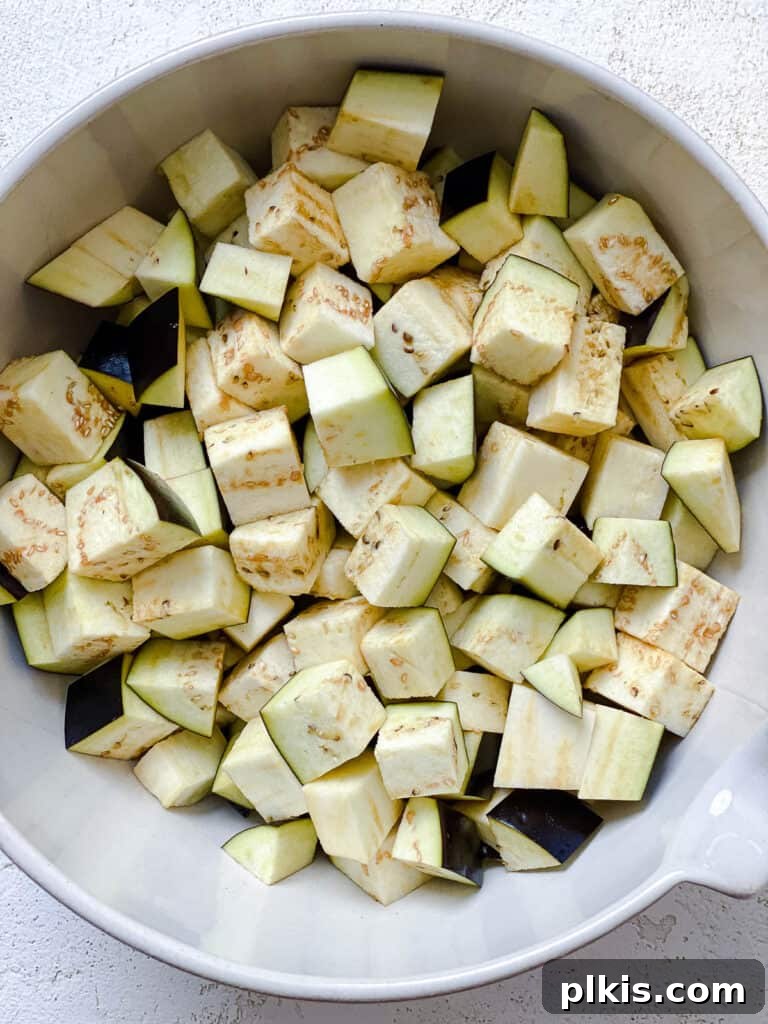
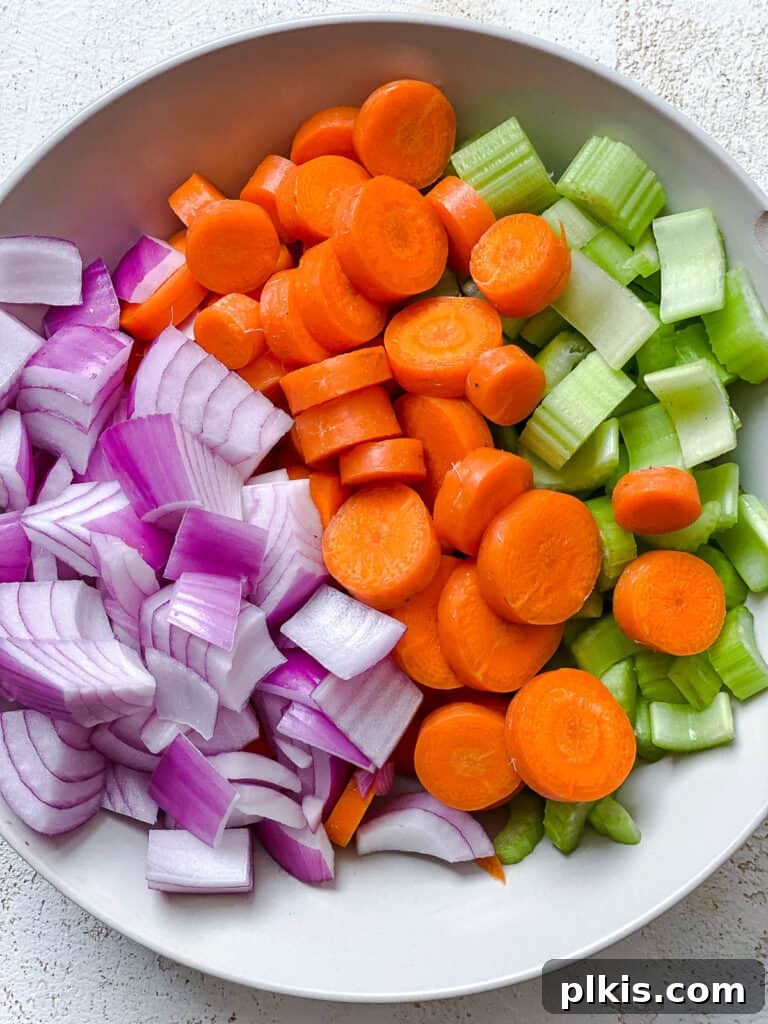
- 2) Sauté the Eggplant: Heat a large, heavy-bottomed pot or Dutch oven over medium-high heat with ¼ cup of your chosen oil. Once the oil is shimmering hot, add the cubed eggplant and season it generously with a pinch of salt. Cook the eggplant for about 5 minutes, stirring occasionally. The goal here is to soften the eggplant and allow it to brown slightly on all sides, which develops a wonderful depth of flavor and texture. Once cooked, carefully remove the eggplant from the pan and set it aside; it will be added back later to finish cooking in the sauce.
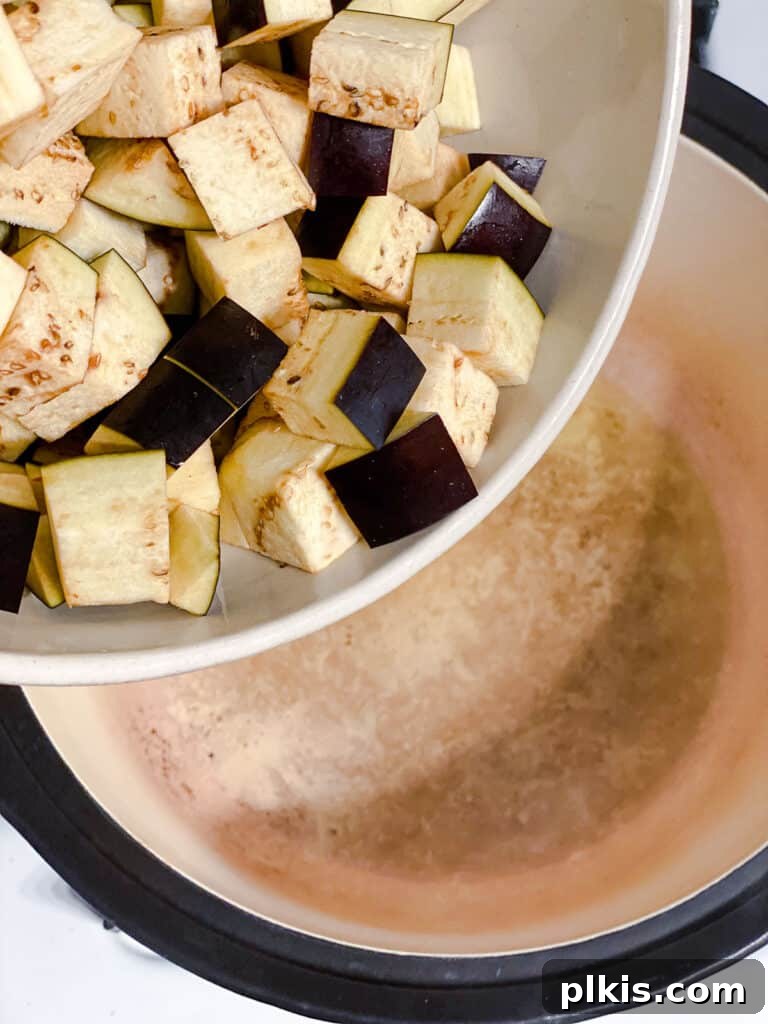
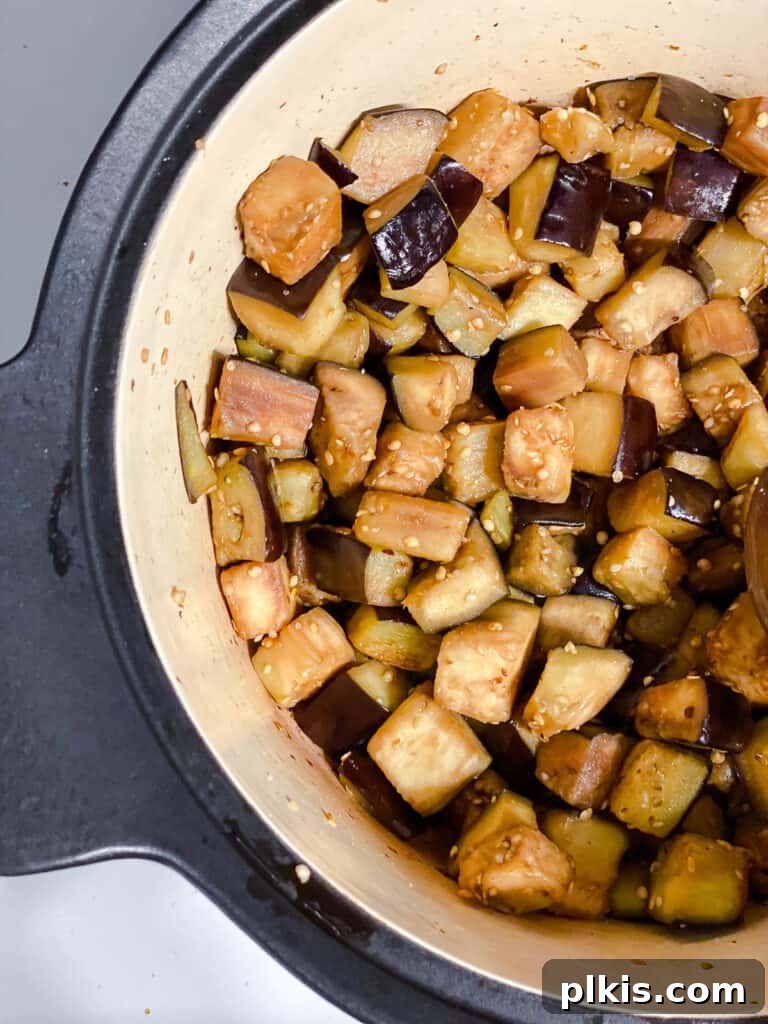
- 3) Sauté the Mirepoix: In the same pot, add an additional tablespoon of oil. Then, add the sliced onion, minced garlic, celery, and carrots. Cook these vegetables for 3-5 minutes, stirring frequently, until the onion becomes translucent and the vegetables begin to soften and release their fragrant aromas.
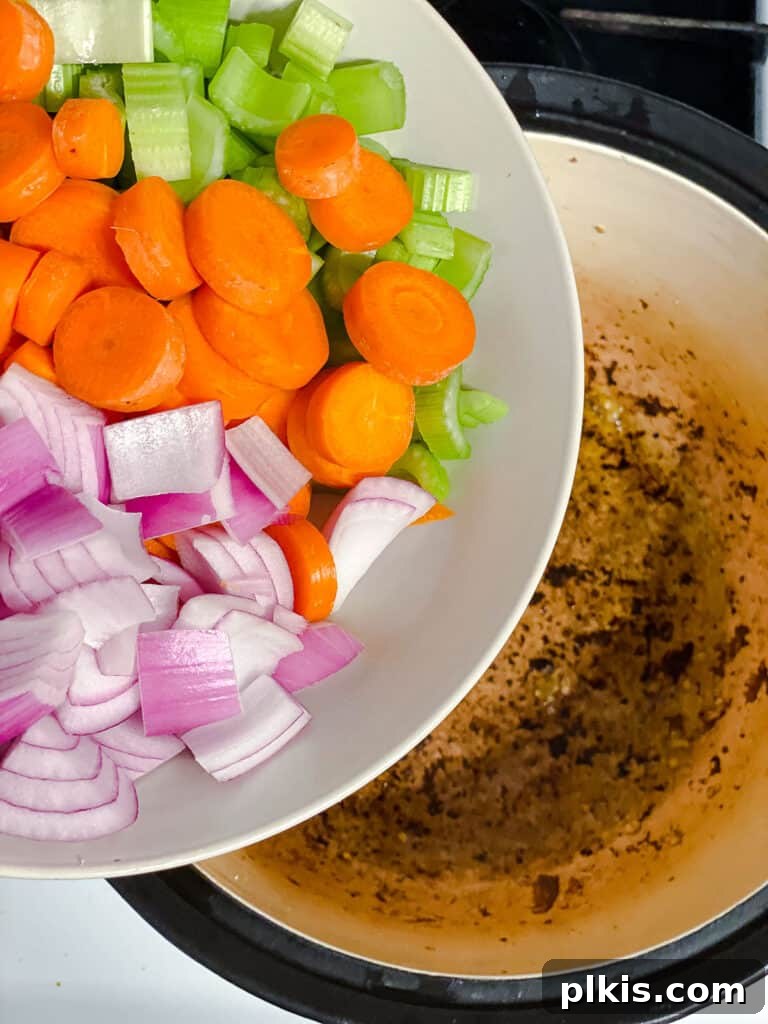
Pro Tip: Taking the time to cook the vegetables until they’re lightly caramelized adds an incredible depth of flavor to your eggplant chickpea stew. Make sure to de-glaze the pan after this step, scraping up any delicious brown bits from the bottom. These “fond” bits are packed with flavor and will dissolve into your stew, enriching its taste profile.
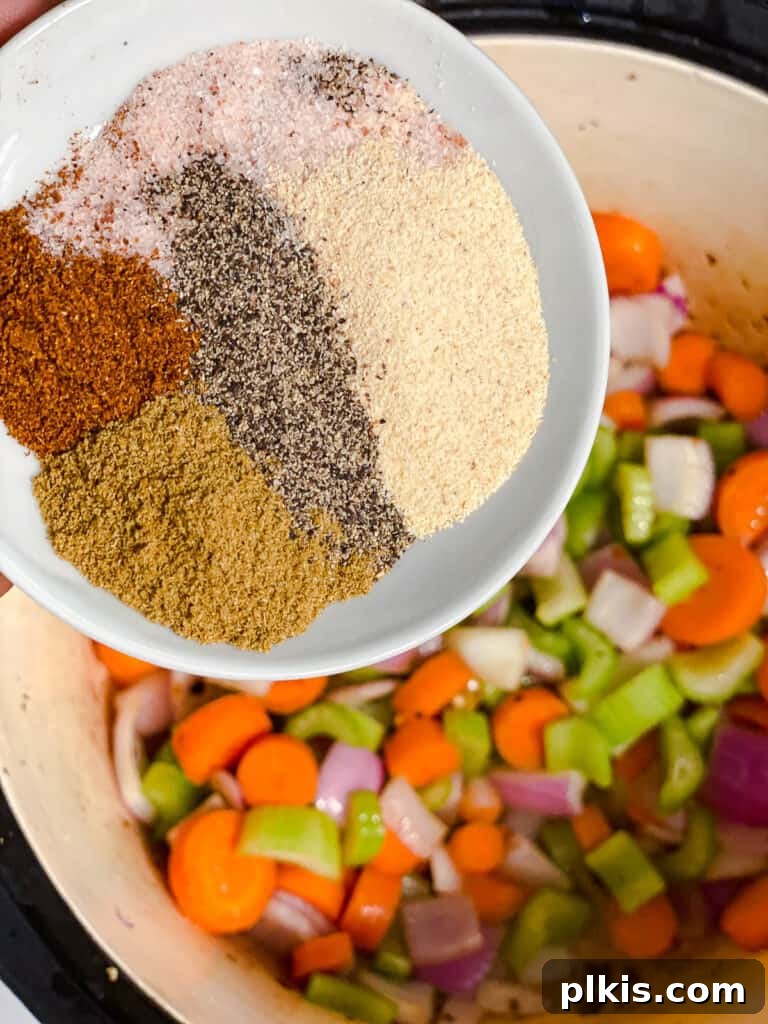
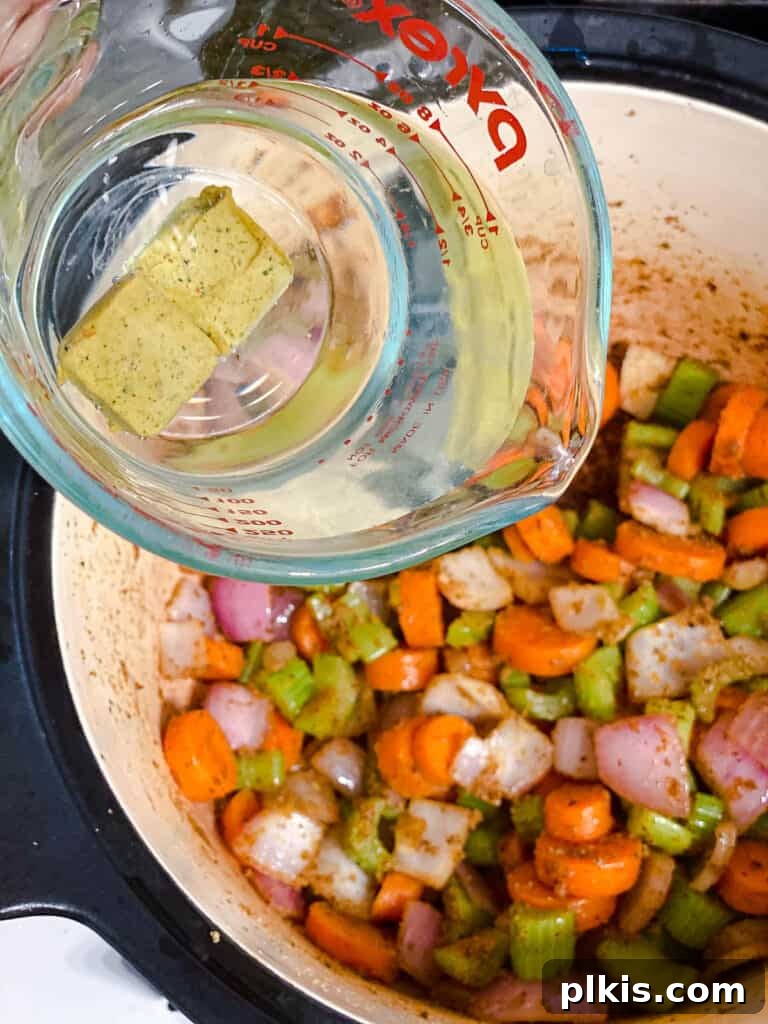
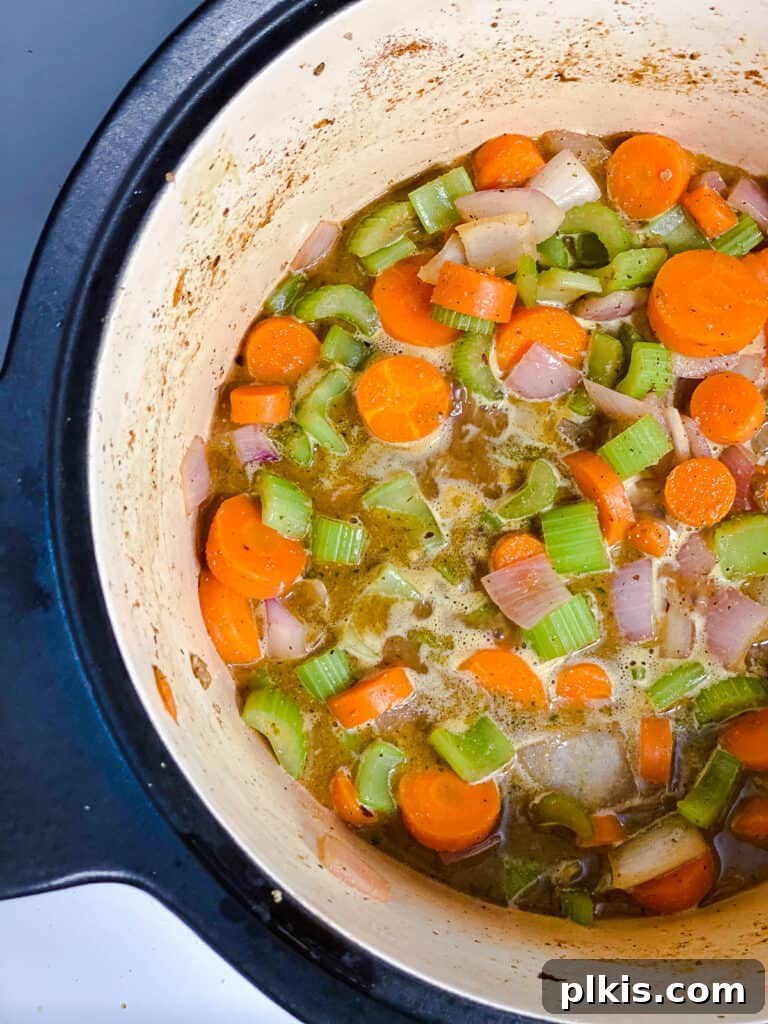
- 4) Bloom the Spices and Add Broth: Add the ground cumin, chili powder, sea salt, and black pepper to the sautéed vegetables. Stir well, allowing the spices to toast lightly for about one minute. This “blooming” of spices in hot oil helps to release their full aroma and flavor. Next, pour in the vegetable broth (or add the bouillon cubes and water, stirring until dissolved) and stir thoroughly, deglazing the pan as you go.
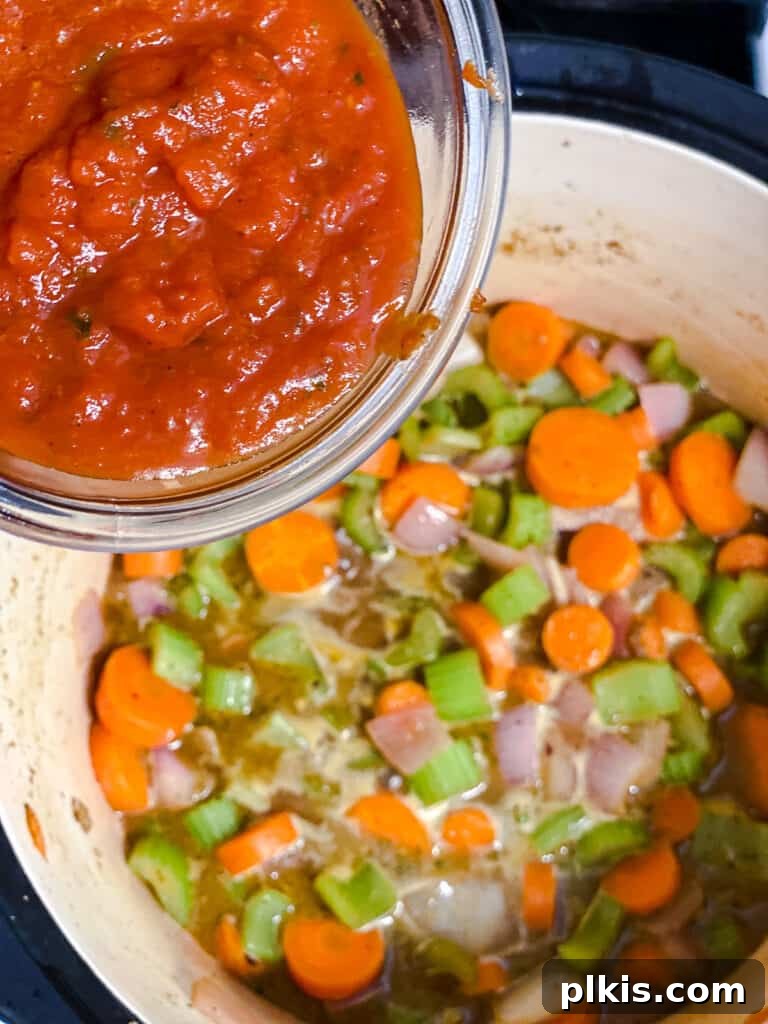
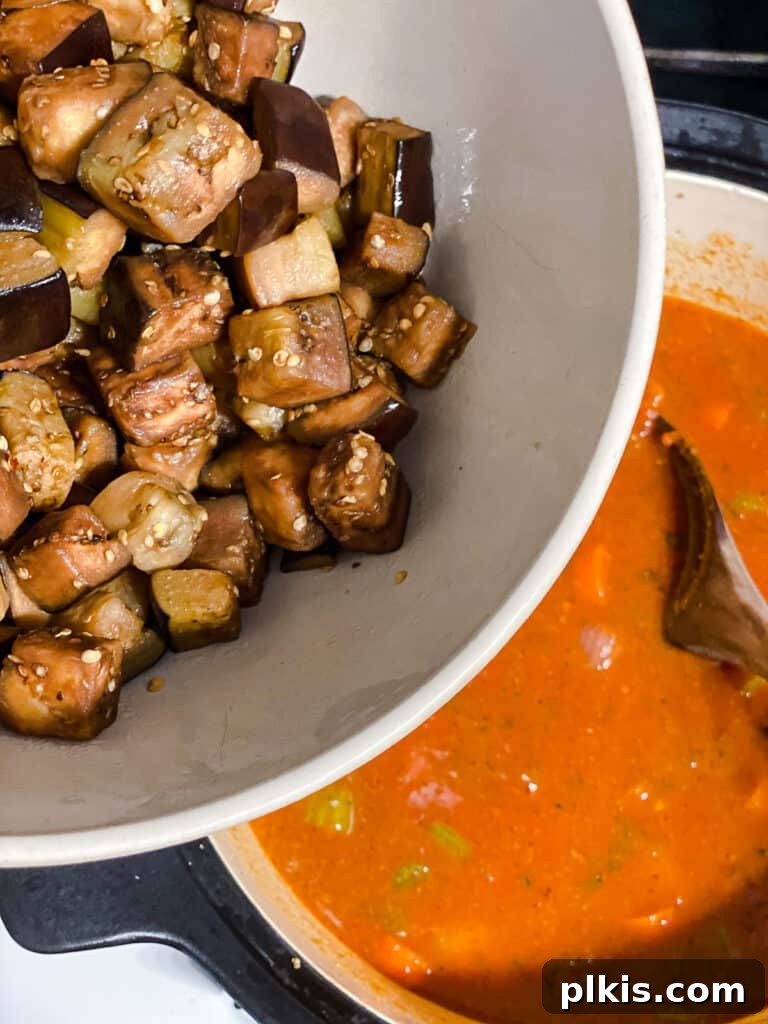
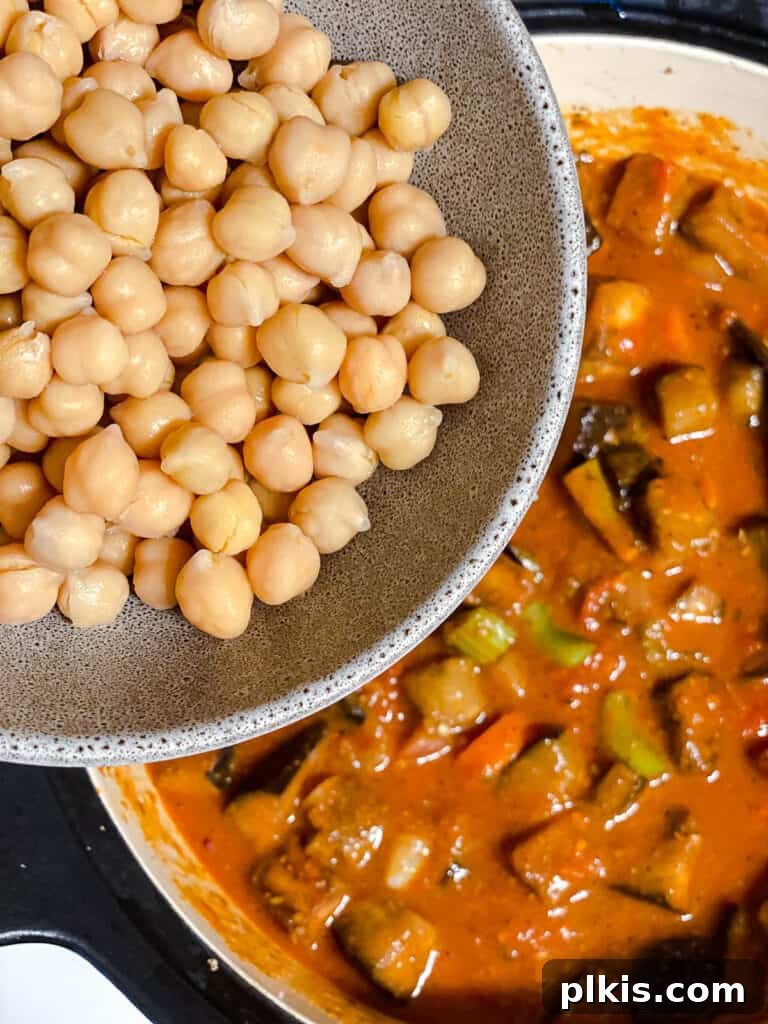
- 5) Combine and Simmer: Now, add the marinara sauce, the previously sautéed eggplant, and the rinsed chickpeas to the pot. Stir all the ingredients together to ensure they are well combined. Bring the eggplant tomato stew to a gentle boil, then reduce the heat to a low simmer. Cover the pot with a lid and let it cook for 30-40 minutes. Remember to stir occasionally, approximately every 10 minutes, to prevent any sticking or burning at the bottom of the pot and to ensure even cooking and flavor distribution. This slow simmer allows all the flavors to meld beautifully and the eggplant to become incredibly tender.
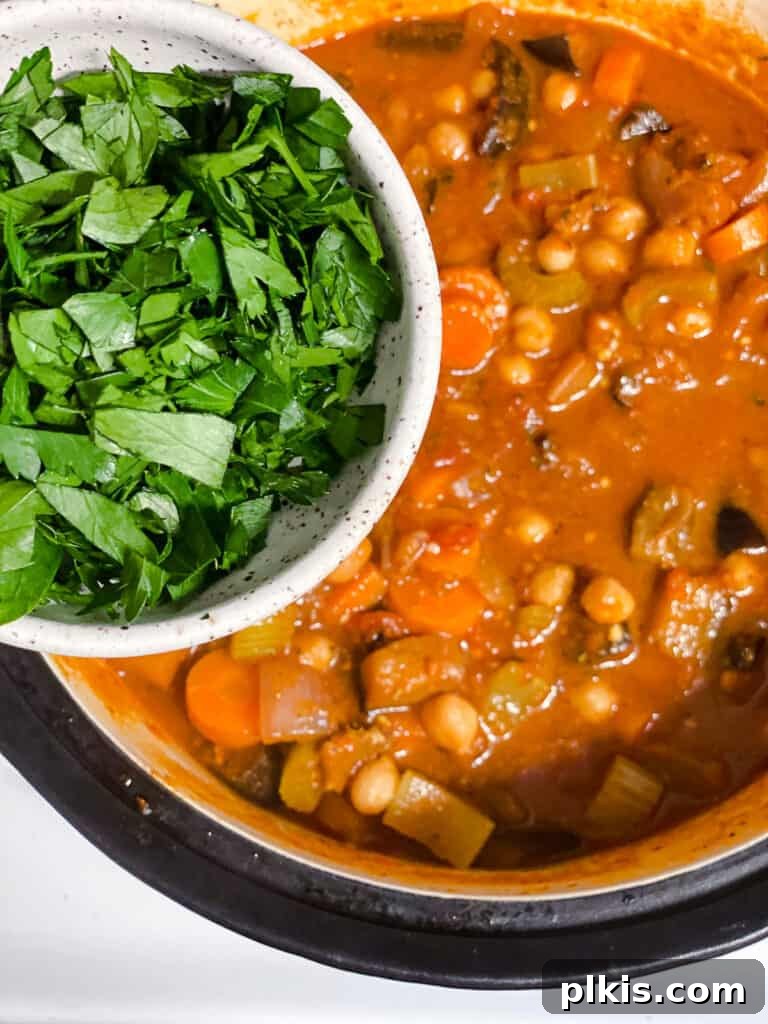
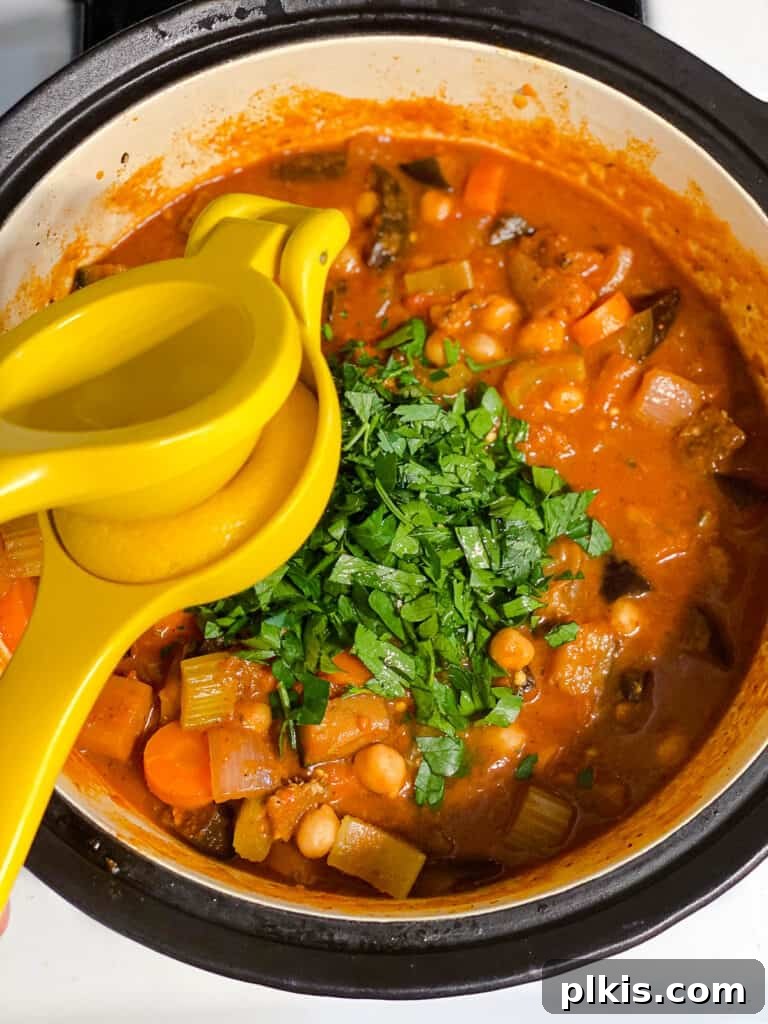
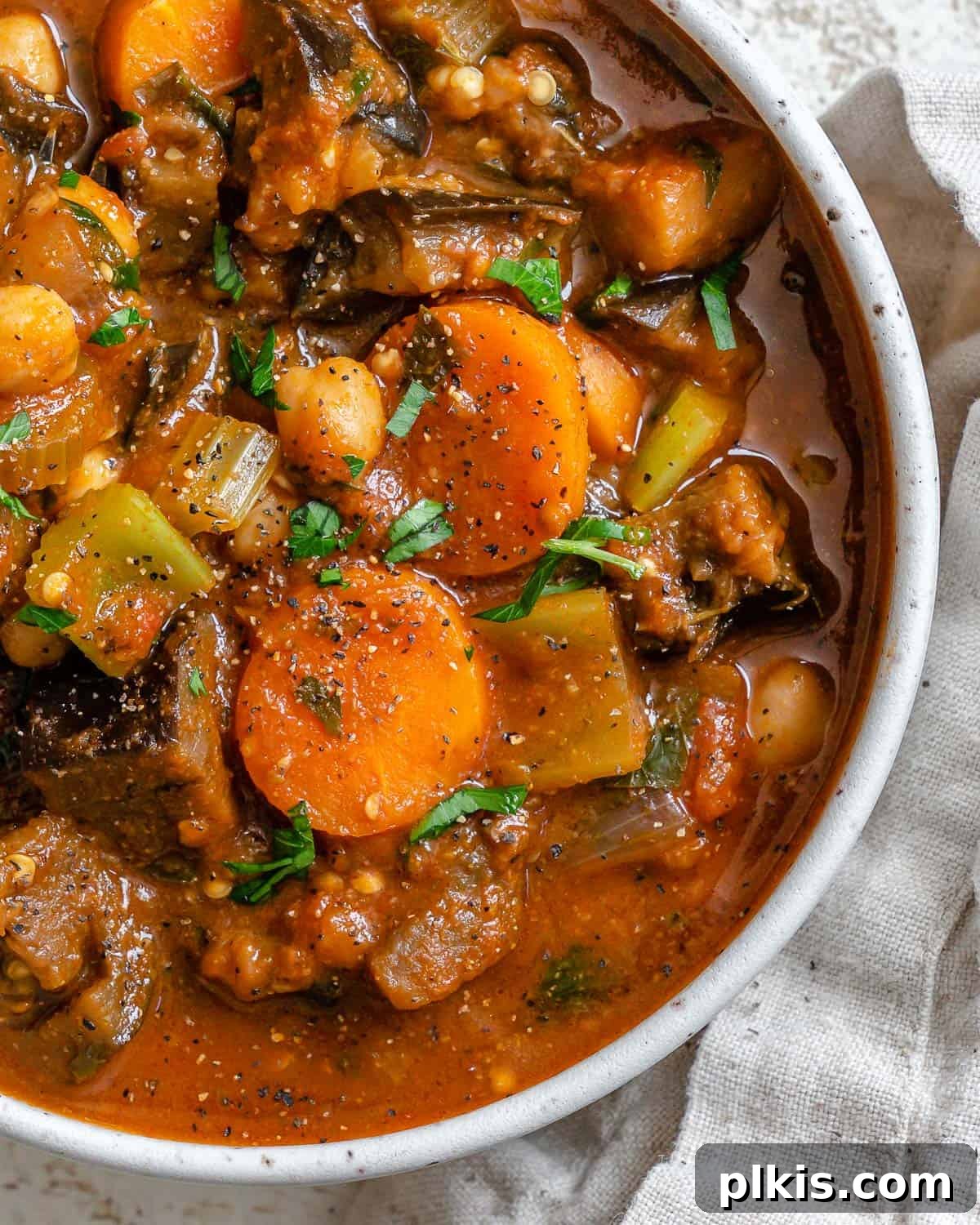
- 6) Finish and Serve: Once the stew has simmered and the eggplant is tender, remove it from the heat. Stir in the fresh lemon juice and minced parsley. Give it a taste, and adjust any seasonings as needed – perhaps a little more salt, pepper, or a pinch of chili powder for an extra kick. Your delicious and hearty chickpea eggplant stew is now ready to be enjoyed!
Frequently Asked Questions About Eggplant and Chickpea Stew
Historically, salting eggplant was a common practice used to draw out excess moisture and reduce any potential bitterness. However, modern varieties of eggplant have largely been bred to be less bitter, making this step often unnecessary for many recipes, including this stew. If you have particularly large or older eggplants, or if you simply prefer the traditional method, you can salt the chopped eggplant by placing it in a colander, sprinkling liberally with salt, and letting it drain for about 30 minutes before wiping away any excess salt. For this recipe, we found it to be perfectly delicious without pre-salting.
Eggplants are known for their sponge-like quality, readily soaking up oil as they cook. While you can attempt to reduce the amount of oil, it’s important to note that doing so may affect the final texture of the eggplant, preventing it from achieving that desirable melt-in-your-mouth tenderness. Less oil also increases the risk of the eggplant burning or sticking to the pan, requiring much closer monitoring during the sautéing process. For the best flavor and texture, we recommend following the specified oil amounts.
Absolutely! This recipe adapts beautifully to a slow cooker for a more hands-off approach. For the most robust and developed flavor, we highly recommend taking the initial step to sauté the eggplant and the mirepoix (onion, garlic, celery, carrots) on the stovetop as instructed before transferring. This caramelization step adds significant depth that slow cooking alone cannot achieve. Once these initial ingredients are sautéed, add them, along with all remaining ingredients (except lemon juice and parsley, which are added at the end), to your slow cooker. Cover with the lid and cook on LOW for 7-8 hours or on HIGH for 3-4 hours. Check occasionally to see if more vegetable broth is needed to maintain your desired consistency. Before serving, taste and adjust any seasonings, then stir in the fresh lemon juice and parsley.
Expert Tips for a Flawless Eggplant and Chickpea Stew
Elevate your eggplant and chickpea stew with these professional cooking tips:
- Customize the Heat Level: This stew offers a wonderful base for customization. If you prefer a milder flavor, use less chili powder. For those who enjoy a fiery kick, feel free to add more chili powder, or introduce other heat sources like harissa paste, a generous pinch of red pepper flakes, or a dash of cayenne pepper. Experiment to find your perfect spice balance.
- Sautéing is Key for Flavor Development: Don’t skip the initial sautéing steps! Sautéing the mirepoix (onion, carrots, celery) until lightly caramelized helps to build a rich, deep, and complex flavor base for the stew. Similarly, briefly sautéing the eggplant until it softens and browns is crucial for achieving a desirable texture that holds up during simmering, preventing it from becoming overly mushy. This step also allows the spices to “bloom” in the hot oil, intensifying their aromatic compounds.
- Embrace the Slow Simmer: While it might be tempting to rush, the low and slow simmering process is fundamental to this stew’s success. This gentle cooking method allows all the individual flavors to fully meld and harmonize, creating a cohesive and delicious stew. It also ensures that the eggplant becomes wonderfully tender without disintegrating, striking the perfect balance between soft and intact. Patience truly pays off here.
- Adjust the Consistency to Your Liking: The beauty of a homemade stew is its adaptability. For a thinner, more soup-like consistency, simply stir in additional vegetable broth until it reaches your desired liquid level. If you prefer a thicker, heartier stew, allow it to simmer uncovered for a longer period to reduce the liquid, or create a quick cornstarch slurry (mix 1-2 tablespoons of cornstarch with an equal amount of cold water) and stir it into the simmering stew until it thickens. For an extra creamy texture, you can blend a small portion of the chickpeas and some of the broth, then stir it back into the stew.
Storage and Reheating Instructions for Your Eggplant Stew
This hearty chickpea and eggplant stew is not only delicious freshly made but also fantastic for meal prepping and enjoying as leftovers. The flavors truly deepen and meld overnight, making it even more delicious the next day!
Make Ahead: We are big advocates for preparing this stew a day in advance or making a large batch for plenty of leftovers. The additional time allows the spices and vegetables to fully infuse the tomato sauce, resulting in an even richer, more complex flavor profile on day two.
Fridge: Once the eggplant chickpea stew has cooled completely to room temperature, transfer it to an airtight container (or several individual containers for easy grab-and-go meals). Store it in the refrigerator for up to 3-4 days. Ensure it’s sealed properly to maintain freshness and prevent odor transfer.
Freezer: This stew freezes exceptionally well. Allow the stew to cool completely before freezing. Transfer it into airtight freezer-safe containers, heavy-duty Ziplock or Stasher bags (squeezing out excess air), or even a silicone muffin mold for perfectly portioned individual servings. Remember to leave a little room at the top for expansion during freezing. It can be stored in the freezer for up to three months. When ready to enjoy, simply transfer the frozen stew to the refrigerator overnight to thaw.
Reheat: Gently reheat the aubergine stew on the stovetop over medium-low heat, stirring occasionally until heated through. You may need to add a splash of vegetable broth or water to achieve your desired consistency. Alternatively, you can reheat individual portions in the microwave until warm.
Perfect Pairings: What to Serve with Eggplant and Chickpea Stew
This versatile chickpea eggplant stew can be enjoyed as a satisfying main course or a hearty side dish. Here are some fantastic serving suggestions to complete your meal:
- Bread: A classic pairing for any stew! Serve with thick, crusty bread for dipping into the flavorful sauce, pillowy focaccia, warm garlic bread, or soft pita bread. Even cornbread makes a delightful accompaniment, perfect for soaking up every last drop.
- Grains: Serve the stew over a bed of fluffy rice or protein-packed quinoa. Popular choices include fragrant white rice, wholesome brown rice, light and airy couscous, or nutrient-dense quinoa. For a low-carb option, cauliflower rice pairs exceptionally well with the rich flavors of this eggplant chickpea stew.
- Pasta: Transform the stew into a comforting pasta dish. Serve it tossed with your favorite long pasta like spaghetti or short-shaped pasta such as penne or rotini for a satisfying meal.
- Creamy Mash or Polenta: For ultimate comfort, pair the stew with a generous scoop of creamy mashed potatoes or rich, velvety polenta. The smooth texture provides a wonderful contrast to the hearty stew.
- Side Salad: Balance the richness of the stew with a simple, crisp, leafy green side salad. A light vinaigrette dressing will add a refreshing element to the meal.
Optionally garnish your stewed eggplant with a dollop of vegan yogurt or sour cream, extra fresh herbs like basil or cilantro, and/or a sprinkle of toasted pine nuts or slivered almonds for added texture and richness.
Photos by Alfonso Revilla
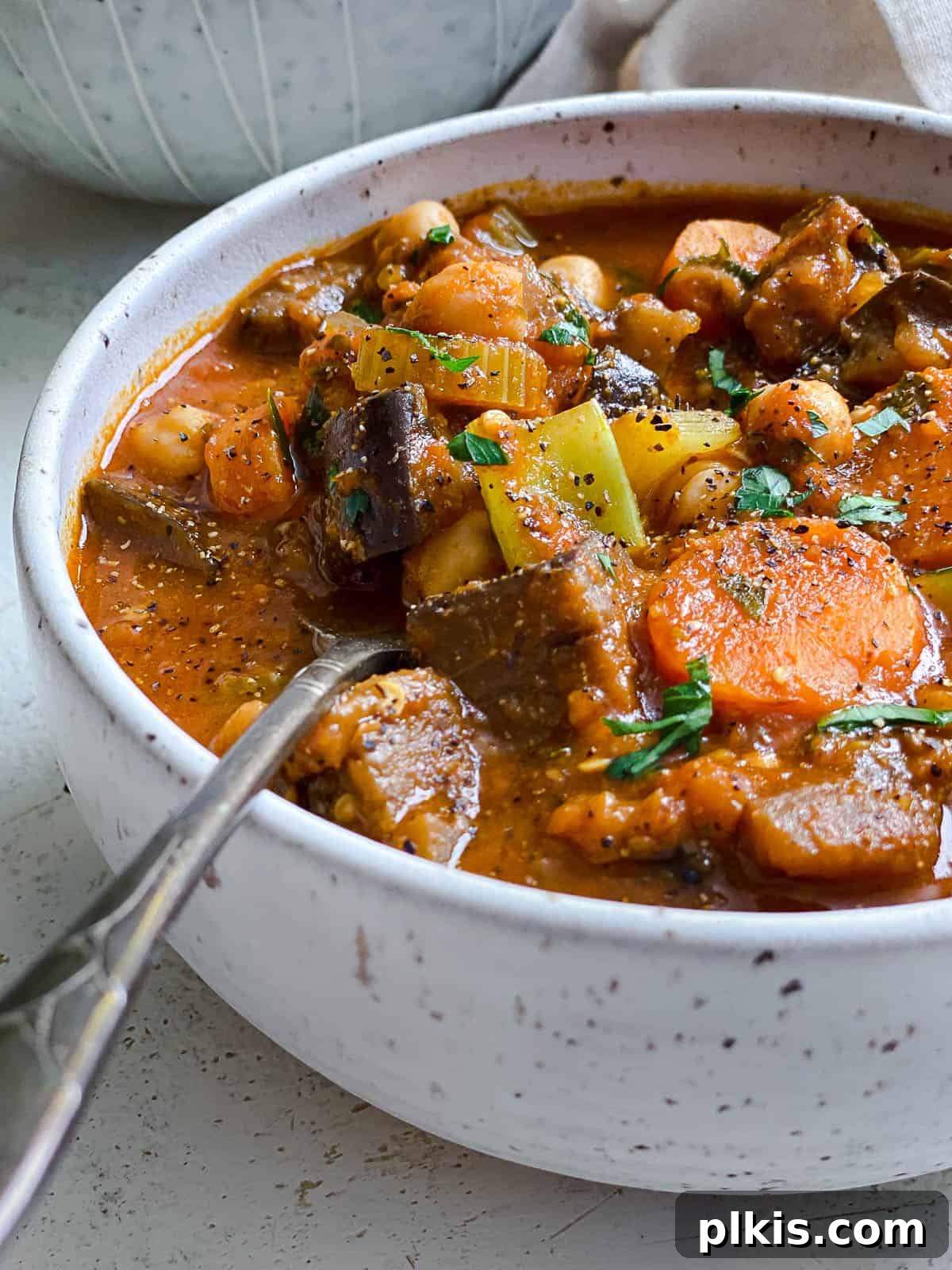
Eggplant Stew with Tomatoes & Chickpeas
Rated 5 out of 5 stars by 38 votes.
Prep Time: 15 mins
Cook Time: 40 mins
Total Time: 55 mins
Servings: 4 – 6

Print Recipe
This hearty chickpea and eggplant stew is packed with flavor, fiber, & plant-based protein but made entirely of affordable kitchen staples! Stovetop & Crockpot methods below!
Equipment
- Knife set
- Measuring Cups
- Measuring spoons
Ingredients
- ¼ cup + 1 tablespoon of olive oil, divided
- 4 cups of eggplant, cut into 1-inch cubes
- A pinch of salt
- 1 yellow or red onion, chopped
- 5 garlic cloves, minced
- 3 celery stalks, sliced
- 2 carrots, sliced
- 2 teaspoons of ground cumin
- 1 teaspoon of chili powder
- Salt and pepper, to taste
- 2 vegetable bouillon cubes
- 1 cup of water
- 1 (24-ounce) jar of tomato basil marinara sauce
- 1 (15-ounce) can garbanzo beans, drained and rinsed
- Juice of one lemon
- 1 cup of parsley, minced
Instructions
- In a large pot over high heat, heat ¼ cup of the oil. Add the eggplant and season with salt. Cook for 5 minutes, stirring occasionally until soft and browned on all sides. Carefully remove the eggplant and set aside.
- To the same pot, add 1 tablespoon of oil. Add the onion, garlic, celery, and carrots. Cook until onions are translucent and fragrant.
- Add the cumin, chili powder, salt, and pepper and cook for one minute, stirring constantly.
- Add the bouillon cubes and water. Stir until the bouillon cubes are completely dissolved, scraping any bits from the bottom of the pot.
- Add the marinara sauce, the sautéed eggplant, and the garbanzo beans. Bring the stew to a boil, cover with a lid, lower the heat to a low simmer, and cook for 30 to 40 minutes (stirring every 10 minutes to avoid burning on the bottom).
- Add the lemon juice and the parsley. Mix well and adjust with more salt and pepper if needed.
- Serve hot and enjoy!
Notes
- Adjust the heat level: Add less/more chili powder or even more heat with harissa, red pepper flakes, cayenne pepper, etc.
- Sauté the vegetables and seasonings: This blooms the spices and lightly caramelizes the veggies for rich, deep, complex flavor. Sautéing the eggplant is important for texture, too.
- Don’t take shortcuts: The low, slow simmering helps to bring together all the flavors of this stewed eggplant and tomatoes recipe into a cohesive, delicious stew while avoiding the eggplant becoming mushy.
Nutrition (per serving, estimated)
- Calories: 325 kcal
- Carbohydrates: 38g
- Protein: 10g
- Fat: 17g
- Saturated Fat: 2g
- Polyunsaturated Fat: 3g
- Monounsaturated Fat: 11g
- Sodium: 1510mg
- Potassium: 1138mg
- Fiber: 12g
- Sugar: 12g
- Vitamin A: 7309 IU
- Vitamin C: 47mg
- Calcium: 130mg
- Iron: 5mg
Additional Info
- Author: Toni Okamoto
- Course: Dinner
- Cuisine: American
- Method: Stovetop
- Diet: Vegan
Tried this recipe?
Please tag us at @PlantBasedOnABudget! 🙂