
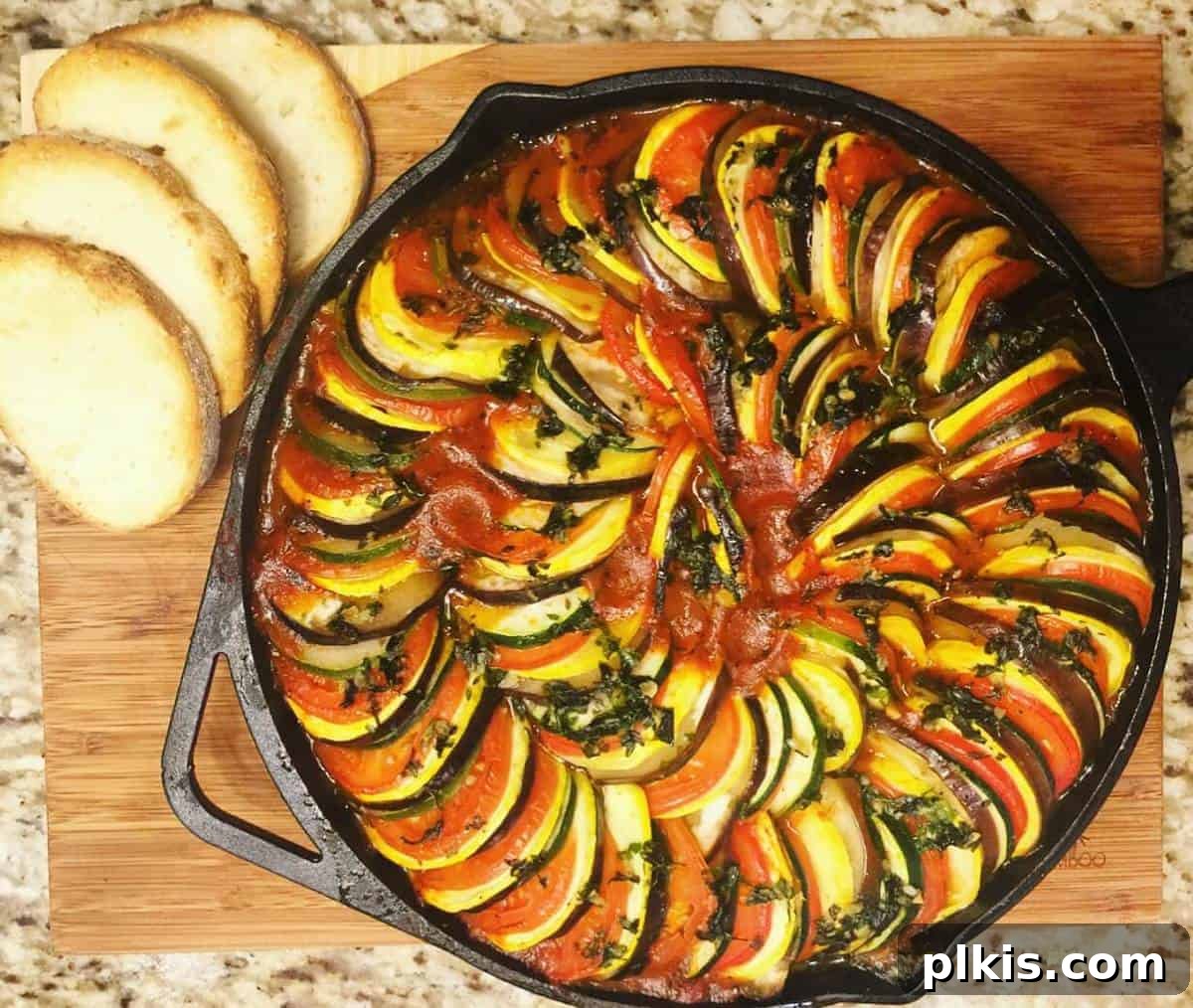
Baked Ratatouille: A Healthy & Flavorful Vegan Skillet Dinner
Step into the heart of Provençal cuisine with this exquisite Baked Ratatouille recipe. Forget the animated movie for a moment (though it’s a classic!), and let’s talk about the true star: a vibrant, aromatic medley of garden-fresh vegetables. This dish is not just a meal; it’s a celebration of simplicity, health, and incredible flavor, all coming together in a visually stunning spiral that promises to impress.
Whether you’re a seasoned chef or a kitchen novice, this recipe is designed for ease and delicious results. It’s naturally vegan, packed with nutrients, and incredibly versatile, making it an ideal choice for a wholesome main course or a delightful side dish. Prepare to fall in love with the rich flavors and comforting warmth of this timeless French classic.
Why You’ll Adore This Baked Ratatouille
There’s a reason ratatouille has captivated hearts (and palates) for generations. Our baked rendition elevates this traditional stew into a truly special experience:
- Visually Stunning: The meticulous arrangement of thinly sliced vegetables in a beautiful spiral pattern transforms this rustic dish into a work of art, perfect for entertaining or a fancy weeknight meal.
- Remarkably Flavorful: Fresh herbs, ripe tomatoes, and tender vegetables slowly bake together, allowing their flavors to meld into a deeply satisfying and aromatic symphony.
- Incredibly Healthy: Bursting with vitamins, minerals, and fiber, this plant-based powerhouse is a guilt-free indulgence that supports a balanced diet. It’s naturally vegan and fits beautifully into a Mediterranean lifestyle.
- Easy to Make: Despite its elegant appearance, the process is straightforward, requiring minimal active cooking time. Most of the magic happens in the oven!
- Customizable: Feel free to experiment with your favorite seasonal vegetables or adjust the herb profile to match your taste preferences.
- Comfort Food at Its Best: Warm, hearty, and deeply comforting, a skillet of baked ratatouille is the perfect antidote to a chilly evening or a satisfying centerpiece for any gathering.
The Enduring Charm: A Glimpse into Ratatouille’s History
Ratatouille, pronounced “ra-ta-TOO-ee,” is a traditional French Provençal stewed vegetable dish, originating from Nice. The word “ratatouille” comes from the Occitan “ratatolha” and French “ratouiller” (to stir up). While often associated with the glamorous kitchens of fine dining, its roots are humble. Historically, it was a peasant dish, made by farmers using fresh summer vegetables harvested at their peak. It was a resourceful way to utilize an abundance of ripe tomatoes, zucchini, eggplant, and bell peppers.
Traditional ratatouille often involves sautéing each vegetable separately before combining them, allowing each ingredient to develop its distinct flavor. However, over time, many variations have emerged, including the “confit byaldi” style, made famous by Chef Thomas Keller (and Disney’s Ratatouille film!), which features thinly sliced vegetables layered in a spiral, much like our recipe here. This baked version captures the essence of the classic while offering a visually appealing and often less labor-intensive preparation.
Health Benefits of a Mediterranean Classic
Our Baked Ratatouille isn’t just delicious; it’s a nutritional powerhouse. Rooted in the principles of the Mediterranean diet, this dish is naturally brimming with goodness:
- Rich in Vitamins and Minerals: Zucchini, yellow squash, eggplant, and tomatoes are all excellent sources of essential vitamins like C, A, and K, as well as minerals such as potassium and manganese.
- High in Fiber: All the vegetables contribute significantly to your daily fiber intake, aiding digestion, promoting gut health, and helping you feel full and satisfied.
- Antioxidant Boost: Tomatoes (especially when cooked) are rich in lycopene, a powerful antioxidant. Bell peppers, eggplant, and fresh herbs also provide a wealth of antioxidants that combat oxidative stress and inflammation.
- Heart-Healthy: Made with olive oil and a bounty of vegetables, this recipe is low in saturated fat and cholesterol-free, supporting cardiovascular health.
- Hydrating: Many of the vegetables, particularly zucchini and tomatoes, have high water content, contributing to overall hydration.
- Weight Management Friendly: High in volume and fiber but relatively low in calories, ratatouille can be a great addition to a weight-conscious diet, offering satisfaction without heavy ingredients.
Embracing dishes like baked ratatouille is a delicious way to nourish your body with wholesome, plant-based ingredients.
Essential Kitchen Tools for Your Ratatouille Journey
While the beauty of ratatouille lies in its simple ingredients, having the right tools can make the preparation even more enjoyable and efficient. Here are a few recommendations to help you craft your perfect baked ratatouille:
- Cast Iron Skillet: A well-seasoned cast iron skillet is ideal for this recipe. It distributes heat evenly, provides a lovely crust on the bottom layer of vegetables, and transitions beautifully from stovetop to oven to table. A 12-inch skillet is often perfect for serving 6.
- Sharp Knife Set: Precise, thin slicing is key for the elegant spiral presentation. A good quality, sharp knife set will make quick work of preparing your vegetables, ensuring uniform slices for even cooking and a beautiful finish.
- Sturdy Cutting Board: A large and stable cutting board is essential for safety and efficiency when slicing numerous vegetables. Bamboo or thick plastic boards are excellent choices.
- Mandoline Slicer (Optional, but Recommended): For those who desire perfectly uniform, paper-thin vegetable slices, a mandoline can be a game-changer. Exercise caution and always use a safety guard when operating a mandoline.
- Mixing Bowls: You’ll need a few bowls for preparing your herb drizzle and possibly tossing sliced vegetables with a bit of olive oil and seasoning before layering.
- Aluminum Foil: Essential for covering the ratatouille during the initial baking phase, allowing the vegetables to steam and soften perfectly before uncovering for a beautiful finish.
Equipping your kitchen with these basics will set you up for success in creating this and many other delicious recipes!
Baked Ratatouille Recipe
Quick Details
- Prep Time: 20 minutes
- Cook Time: 1 hour
- Total Time: 1 hour 20 minutes
- Yields: 6 servings
- Author: Lauren Bossi
- Course: Dinner
- Cuisine: French
- Method: Oven Baked
- Diet: Vegan
Rated 4.87 out of 5 stars by 23 readers.
Print Recipe
Ingredients
- 2 zucchini, thinly sliced into coins
- 2 yellow squash, thinly sliced into coins
- 2 small eggplants, thinly sliced into coins
- 5 roma tomatoes, thinly sliced into coins
- 26 ounces of tomato basil pasta sauce (your favorite brand)
- 1 yellow or red bell pepper, finely diced
- 2 Tablespoons of fresh parsley, chopped
- 2 Tablespoons of fresh thyme, chopped
- 2 Tablespoons of fresh basil, chopped (about 7-9 leaves)
- 1 teaspoon of minced garlic
- Salt and pepper, to taste
- 4 Tablespoons of olive oil, divided
Instructions
- Prepare Vegetables: Wash all vegetables thoroughly. Using a sharp knife or mandoline, thinly slice the zucchini, yellow squash, eggplants, and roma tomatoes into uniform coins, approximately ⅛ to ¼ inch thick. Aim for consistent thickness to ensure even cooking.
- Preheat Oven: Preheat your oven to 375 degrees Fahrenheit (190 degrees Celsius).
- Prepare the Sauce Base: In a 12-inch cast iron skillet (or an oven-safe baking dish), heat 1 tablespoon of olive oil over medium-high heat. Add the finely diced bell pepper and sauté for about 3-4 minutes, or until softened and slightly aromatic. Stir in the 26 ounces of tomato basil pasta sauce. Reduce the heat to low and allow the sauce to warm through. Once heated, spread the sauce evenly across the bottom of the skillet, creating a flavorful base for your vegetables.
- Arrange the Vegetables: Begin layering the thinly sliced vegetables (zucchini, yellow squash, eggplant, and roma tomatoes) in an alternating, spiral pattern around the skillet. Start from the outer edge of the pan and work your way inward, overlapping each slice slightly. Continue until the entire pan is beautifully covered with the vibrant vegetable mosaic. If you have extra vegetable slices, you can save them for another use or layer them beneath the visible spiral if the pan allows.
- Craft the Herb Drizzle: In a small bowl, combine the remaining 3 tablespoons of olive oil with the minced garlic, chopped fresh thyme, fresh basil, and fresh parsley. Season generously with salt and freshly ground black pepper to taste. Mix well to create an aromatic herb drizzle.
- Dress the Ratatouille: Evenly pour the prepared herb drizzle over the top of the layered vegetables in the skillet. Ensure each vegetable slice gets a touch of this flavorful dressing.
- Bake to Perfection: Cover the skillet tightly with aluminum foil. Place the covered skillet into the preheated oven and bake for 40-45 minutes. This initial covered baking allows the vegetables to steam and become tender.
- Finish Baking: After 40-45 minutes, carefully remove the foil. Return the uncovered skillet to the oven and continue baking for another 15-20 minutes, or until the vegetables are perfectly soft, slightly caramelized on the edges, and the sauce is bubbly. The top vegetables should be tender but still hold their shape.
- Serve: Carefully remove the skillet from the oven. Let the baked ratatouille rest for a few minutes before serving. Enjoy hot!
Chef’s Notes & Pro Tips
This dish is incredibly versatile! It works beautifully as a satisfying main meal or a flavorful side. Feel free to incorporate other seasonal vegetables you love, such as thinly sliced potatoes, sweet potatoes, or different colored bell peppers. Remember, depending on the size of your vegetables and your skillet, you might not use every single slice. Don’t worry, the extra veggies can always be used for a quick sauté or a fresh salad!
For best results, try to choose vegetables that are similar in diameter when possible. This helps in creating a more uniform and visually appealing spiral pattern.
Mastering the Art: Tips for the Perfect Ratatouille
Creating a truly exceptional Baked Ratatouille is an achievable feat with a few insider tips:
- Slicing Perfection is Key: The uniform thickness of your vegetable slices (about ⅛ to ¼ inch) is crucial. This ensures they cook evenly and contributes to the stunning visual appeal of the spiral. A mandoline slicer, if you have one, can be invaluable for achieving consistent slices. If using a knife, take your time and aim for precision.
- Embrace Fresh, Quality Produce: The beauty of ratatouille lies in the inherent flavors of its simple ingredients. Opt for fresh, ripe, and in-season vegetables for the best taste and texture. Local farmer’s markets are often a great source.
- Don’t Skimp on Herbs: Fresh herbs are non-negotiable for authentic Provençal flavor. Basil, thyme, and parsley bring distinct aromatic notes that elevate the dish significantly. Don’t hesitate to be generous with them.
- Season Generously: Vegetables need seasoning! Don’t be shy with salt and freshly ground black pepper in both the sauce base and the herb drizzle. Taste as you go, especially with the sauce.
- The Art of the Spiral: While time-consuming, arranging the vegetables in a spiral is worth the effort for presentation. Alternate colors and types of vegetables (e.g., zucchini, eggplant, tomato, squash) to create a vibrant mosaic.
- Adjust Baking Time: Ovens vary, and so does the water content in vegetables. The baking times are a guideline. Keep an eye on your ratatouille during the uncovered phase. You want the vegetables to be tender but not mushy, with a slight char on some edges for added flavor.
- Let it Rest: Just like a good steak, allowing your ratatouille to rest for 5-10 minutes after baking allows the flavors to settle and the dish to firm up slightly, making it easier to serve.
Creative Serving Suggestions
Baked Ratatouille is wonderfully versatile and can be enjoyed in many ways:
- As a Main Course: Serve it directly from the skillet with a crusty baguette to sop up all the delicious juices. It’s hearty enough on its own!
- With Grains: Pair it with fluffy quinoa, couscous, brown rice, or a pearl barley pilaf for a more substantial and satisfying meal.
- Pasta Perfection: Toss it with your favorite pasta (linguine, penne, or orzo work well) for a complete and flavorful plant-based pasta dish.
- Alongside Protein: While excellent on its own, it can also be a fantastic side for grilled tofu, tempeh, or plant-based sausages for those who desire additional protein.
- Bruschetta Topping: Spoon chilled ratatouille over toasted bread rubbed with garlic for a delightful appetizer or light lunch.
- Egg Enhancer: Serve it for brunch topped with a perfectly fried or poached egg (if not strictly vegan) for a Mediterranean-inspired morning meal.
- Vegan Cheese Sprinkle: A sprinkle of vegan Parmesan or a dollop of vegan ricotta before serving can add an extra layer of richness.
Storing and Reheating Your Delicious Leftovers
One of the best things about Baked Ratatouille is that it often tastes even better the next day, as the flavors have more time to meld and deepen. Here’s how to properly store and reheat your leftovers:
- Cool Down: Allow the ratatouille to cool completely to room temperature before storing. This prevents condensation and bacterial growth.
- Storage: Transfer the cooled ratatouille to an airtight container. It will keep well in the refrigerator for up to 3-4 days.
- Freezing: Ratatouille freezes remarkably well! Once completely cooled, transfer it to freezer-safe containers or heavy-duty freezer bags. It can be frozen for up to 2-3 months. Thaw overnight in the refrigerator before reheating.
- Reheating on the Stovetop: For best results, gently reheat ratatouille in a pot or skillet over medium-low heat. Add a splash of vegetable broth or water if it seems too dry. Stir occasionally until warmed through.
- Reheating in the Oven: If you want to retain some of the texture, place the ratatouille in an oven-safe dish, cover loosely with foil, and reheat at 300°F (150°C) for about 20-30 minutes, or until hot.
- Microwave Reheating: For a quick reheat, portion out individual servings and microwave on medium power, stirring halfway through, until heated to your desired temperature. Be careful not to overcook, as this can make the vegetables mushy.
Nutrition Information (per serving)
Calories: 191 kcal
Carbohydrates: 24g
Protein: 6g
Fat: 10g
Saturated Fat: 1g
Polyunsaturated Fat: 1g
Monounsaturated Fat: 7g
Sodium: 658mg
Potassium: 1288mg
Fiber: 9g
Sugar: 16g
Vitamin A: 2138IU
Vitamin C: 73mg
Calcium: 70mg
Iron: 3mg
*Nutrition facts are an estimate and may vary based on specific brands and preparation methods.
Frequently Asked Questions About Ratatouille
What is the difference between traditional ratatouille and baked ratatouille?
Traditional ratatouille (like Ratatouille Niçoise) typically involves sautéing each vegetable separately to develop individual flavors before combining them and simmering into a stew. Baked ratatouille, especially the “confit byaldi” style featured here, involves thinly slicing and layering the vegetables over a sauce base and baking them until tender. The baked version often results in a more structured, visually appealing dish with distinct vegetable textures, while the traditional version is more stew-like.
Can I use different vegetables in this recipe?
Absolutely! Ratatouille is very forgiving. You can experiment with other seasonal vegetables like thinly sliced carrots, mushrooms, bell peppers of different colors, or even sweet potatoes. Just ensure they are sliced to a similar thickness as the other vegetables for even cooking.
How can I make my ratatouille spicier?
To add a kick, you can include a pinch of red pepper flakes in your tomato sauce or herb drizzle. A finely diced jalapeño or serrano pepper sautéed with the bell pepper in the sauce base would also work well.
Is it necessary to use a cast iron skillet?
While a cast iron skillet is highly recommended for its excellent heat retention and oven-to-table appeal, you can certainly use any oven-safe baking dish. A ceramic or glass casserole dish will work perfectly fine, though you might not get the same slight crispiness on the bottom layer of vegetables.
Can I prepare ratatouille ahead of time?
Yes, ratatouille is an excellent make-ahead dish! You can assemble the entire dish up to a day in advance, cover it tightly, and store it in the refrigerator. When ready to bake, add about 10-15 minutes to the covered baking time to account for starting from a cold temperature. Leftovers also taste fantastic, as the flavors deepen overnight.
How do I prevent the vegetables from becoming watery?
Using ripe but firm vegetables helps. Additionally, salting eggplant slices and letting them sit for about 30 minutes before rinsing and patting dry can draw out excess moisture. However, in this baked preparation, the excess moisture often contributes to the sauce and steams the vegetables to tenderness, so it’s less of a concern than with stovetop versions.
Join Our Community
Tried this recipe?
We’d love to see your creations! Please tag us on Instagram at @PlantBasedOnABudget! 😊