
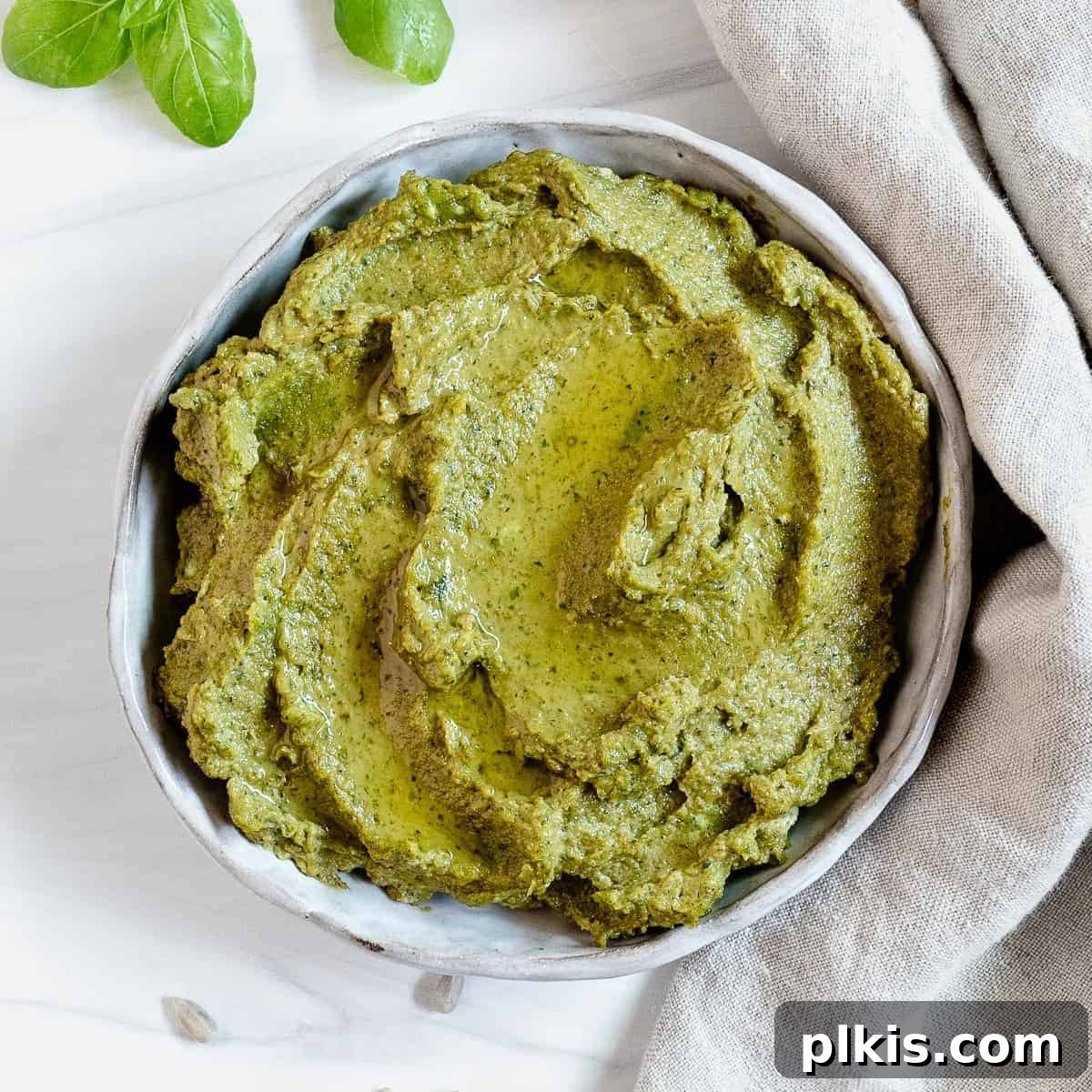
Unlock the secret to delicious, budget-friendly pesto with this incredible 6-ingredient Sunflower Seed Pesto recipe! Ditch the expensive pine nuts and dairy-based parmesan for a vibrant, homemade sauce that’s ready in just 5 minutes. Perfect for tossing with pasta, spreading on sandwiches, elevating wraps and pizzas, or even as a flavorful dip. This nut-free and vegan pesto delivers all the taste you love, without breaking the bank or compromising on dietary needs.
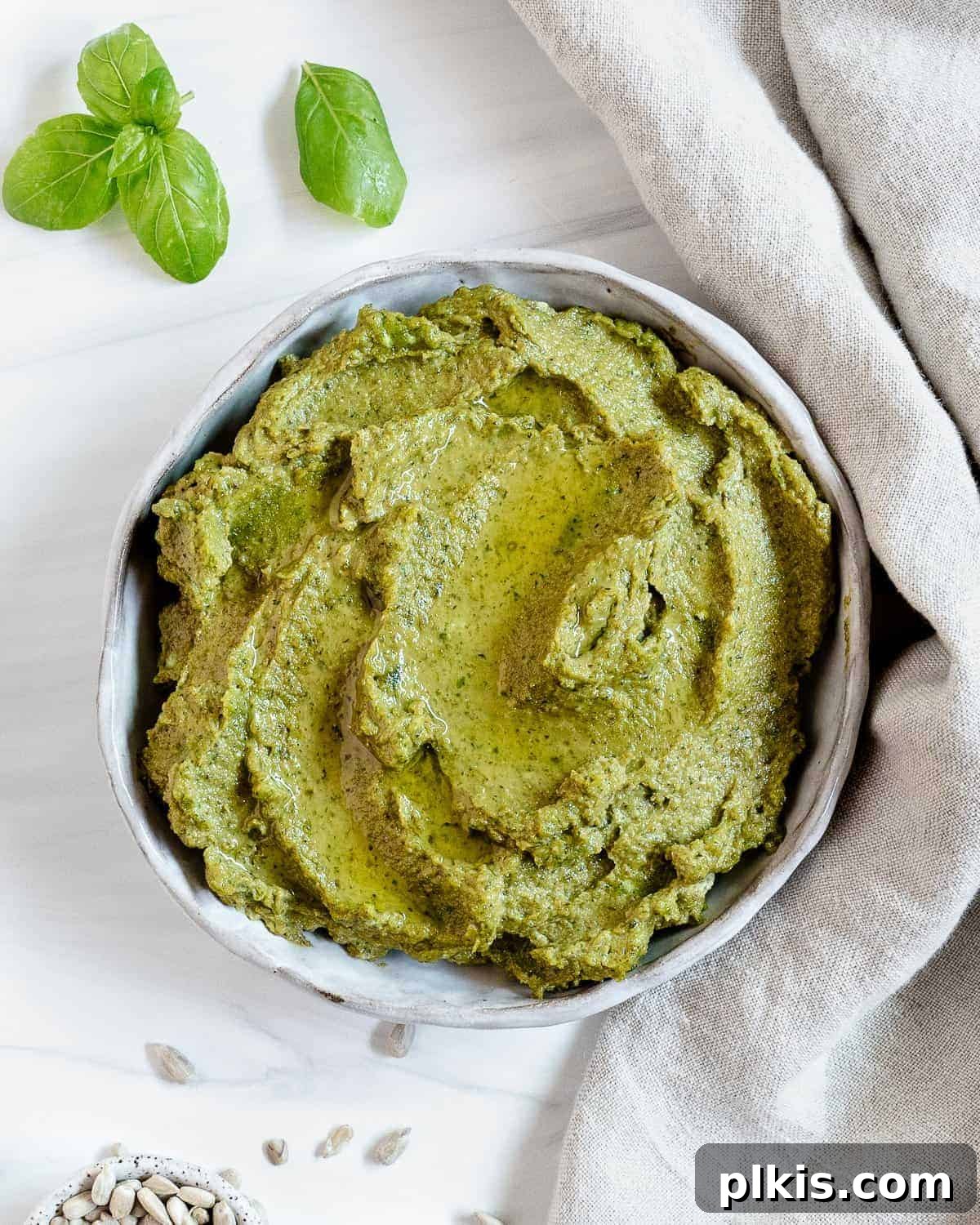
Discover the Magic of 6-Ingredient Fresh Basil Sunflower Seed Pesto
Traditional pesto, while undeniably delicious and incredibly versatile, often comes with a hefty price tag due to its key ingredients: expensive pine nuts and dairy-based parmesan cheese. For those embracing a plant-based lifestyle or simply looking to manage their grocery budget, these ingredients can be a significant hurdle. But what if you could enjoy a rich, flavorful pesto that’s not only incredibly affordable but also entirely plant-based and nut-free?
That’s where our innovative Vegan Basil Sunflower Seed Pesto shines! We’ve already explored wonderful alternatives like walnut pesto, arugula pesto, and parsley-arugula vegan pesto. Now, we’re thrilled to introduce this inexpensive sunflower seed version, which rivals regular pesto in taste and texture but is far gentler on your wallet. This recipe proves that you don’t need to compromise on flavor or quality to eat well on a budget.
Why Choose Sunflower Seeds for Your Pesto?
Sunflower seeds are a true culinary gem, offering a fantastic solution for a budget-friendly and allergy-conscious pesto. Not only are they significantly more inexpensive than pine nuts (often up to 75% cheaper, especially when purchased in bulk from Mediterranean or Asian stores), but they also pack a powerful nutritional punch. These tiny seeds are brimming with fiber, heart-healthy monounsaturated and polyunsaturated fats, and a rich array of vitamins and minerals. You’ll find generous amounts of vitamin E, folate, manganese, copper, selenium, and B vitamins, all contributing to your overall well-being.
Beyond their cost-effectiveness and health benefits, sunflower seeds lend a wonderfully smooth and creamy texture to pesto, making every bite a delight. When blended with fresh basil, robust olive oil, pungent garlic, bright lemon, and savory nutritional yeast, this pesto captures the very essence of summer with its vibrant flavors.
One of the best features of this nut-free pesto is its incredible ease of preparation. It takes mere minutes to whiz together in a food processor, making it a perfect last-minute addition to any meal. This recipe is also highly diet-friendly, catering to those who are gluten-free, dairy-free, vegan, low-carb, or following a Whole30 eating plan. Plus, it’s an excellent choice for reducing food waste, as it’s both meal-prep and freezer-friendly, lasting up to 6 months. Though, with its irresistible taste and versatility, we doubt you’ll have many leftovers!
If you adore the fresh aroma of basil, you might also enjoy this refreshing watermelon basil salad.
The Essential Ingredients & Smart Substitutions
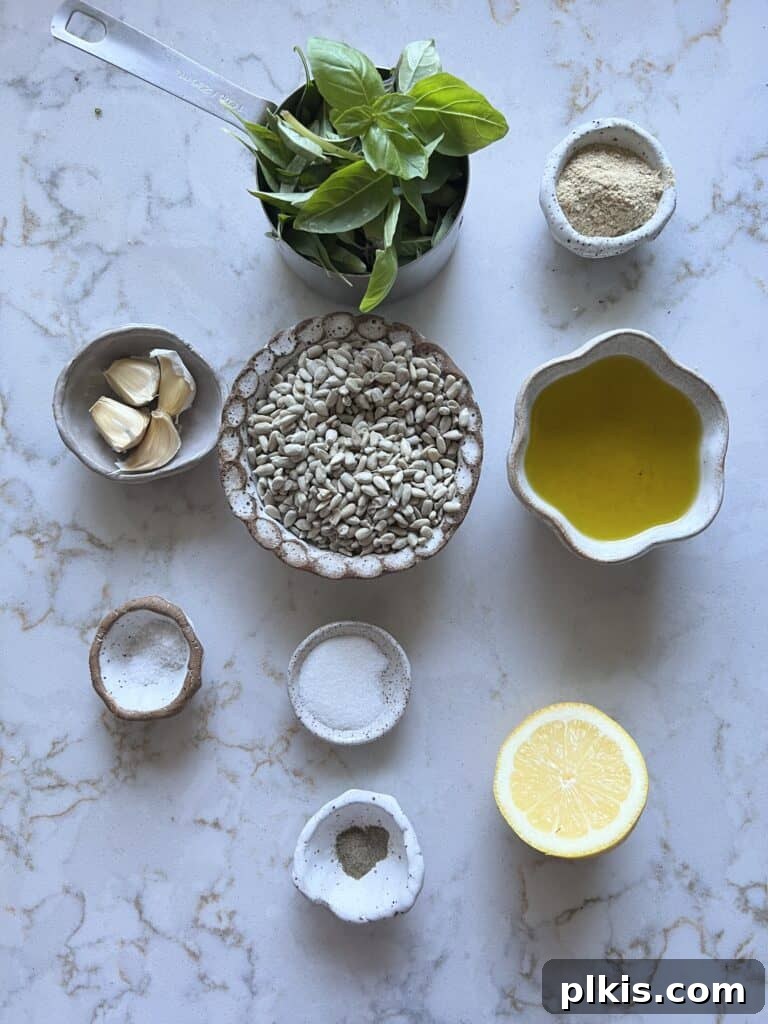
Crafting the perfect sunflower seed pesto requires just a handful of fresh, high-quality ingredients. Here’s a breakdown of what you’ll need and how you can customize it to your liking:
- Fresh Basil: The star of any pesto, you’ll need a generous amount of fresh basil leaves for that classic aromatic flavor. If you’re feeling adventurous or want to use up other greens, you can experiment with alternatives like parsley, arugula, baby kale, or spinach. Feel free to use a single green or a flavorful combination. For a clever zero-waste tip, consider incorporating well-washed carrot top greens or beet greens into your pesto mix.
- Sunflower Seeds: Opt for unsalted, raw sunflower seeds for the best results and to control the overall sodium content. These seeds are the foundation of our nut-free pesto, providing a creamy texture and mild, nutty flavor. While walnuts or pumpkin seeds could also work as alternatives, sunflower seeds truly shine in this recipe due to their affordability and smooth consistency.
- Extra Virgin Olive Oil: A good quality extra-virgin olive oil is crucial for achieving that signature silky, smooth pesto texture and rich flavor. It binds all the ingredients together beautifully.
- Garlic: Fresh garlic provides a pungent kick that’s essential for a vibrant pesto. If you prefer a milder garlic flavor, try using roasted garlic, or soak raw garlic cloves in ice water for about 10 minutes before blending. Alternatively, a pinch of garlic powder can be used to taste. Adjust the quantity to your preference.
- Salt & Black Pepper: These basic seasonings enhance all the other flavors. Start with the recommended amount and adjust to your personal taste after blending.
- Sugar: It might sound surprising, but a small pinch of sugar plays a vital role in balancing and enhancing the overall flavor profile of this sunflower seed pesto. It subtly rounds out the acidity and bitterness, creating a more harmonious taste without making the pesto sweet. Adjust the amount to your preference or omit if desired, but we highly recommend trying it!
- Nutritional Yeast: This ingredient is a game-changer for vegan pesto! Nutritional yeast steps in to provide a slightly nutty, “cheesy,” and umami-rich flavor that cleverly replaces dairy-based parmesan cheese. It’s an essential component for achieving that familiar pesto depth in a plant-based way.
- Lemon Juice: Fresh lemon juice adds a bright, zesty tang that cuts through the richness of the oil and seeds, lifting the entire flavor profile. Freshly squeezed lemon juice is always best, but bottled juice will also work in a pinch. For an extra burst of citrusy zing, consider adding a small amount of finely grated lemon zest.
Effortless Preparation: How to Make Sunflower Seed Pesto
Making this incredibly delicious and versatile pesto is astonishingly simple and takes just minutes. You’ll be amazed at how quickly you can transform these basic ingredients into a gourmet-level sauce.
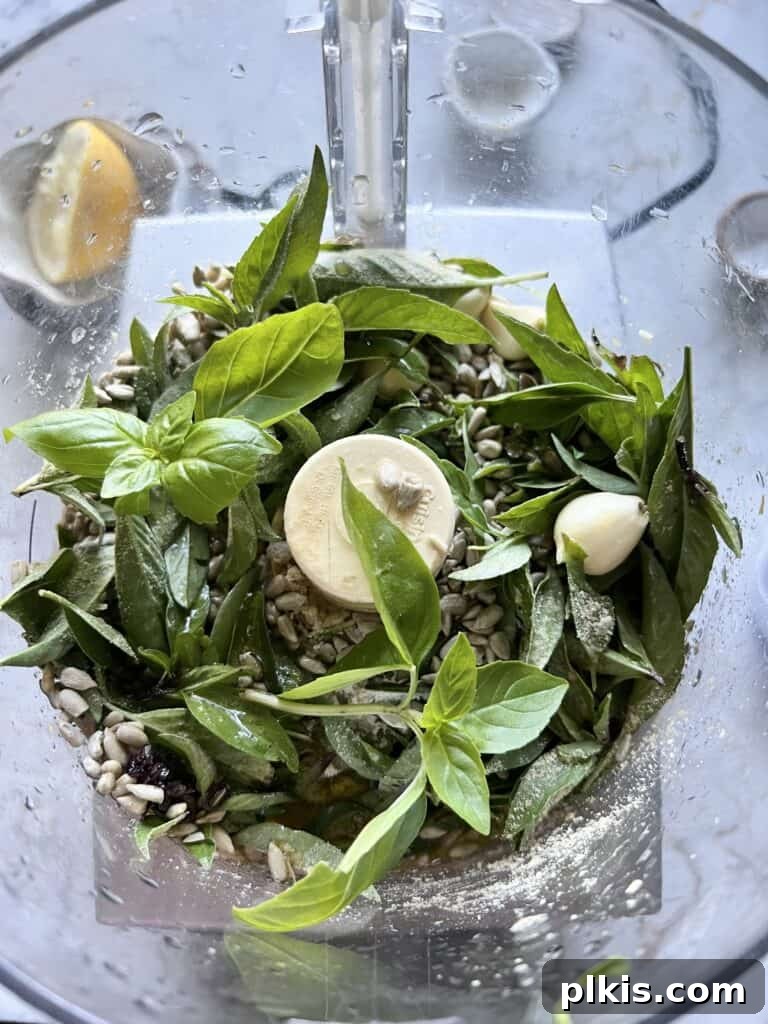
- Step 1: Combine Ingredients: Add all of your prepared ingredients – fresh basil, raw sunflower seeds, olive oil, garlic cloves, salt, pepper, sugar, nutritional yeast, and lemon juice – into the bowl of a food processor.
- Step 2: Process to Creaminess: Secure the lid and process the mixture until it reaches a smooth, creamy consistency. Be sure to stop and scrape down the sides of the food processor bowl as needed to ensure all ingredients are thoroughly incorporated. This step typically takes only 1-2 minutes, depending on your food processor. Avoid over-processing if you prefer a chunkier pesto; stop once your desired texture is achieved.
- Step 3: Taste and Adjust: Once processed, give your pesto a taste. This is your chance to customize it perfectly! Adjust any elements you feel are needed – perhaps a little more garlic for a bolder flavor, extra lemon juice for more tang, or additional nutritional yeast for a richer “cheesy” depth. Add more salt or pepper if desired.
And just like that, your homemade, nut-free basil sunflower seed pesto is ready to be enjoyed! Keep reading for an abundance of our favorite serving recommendations to inspire your next meal.
Meal Prep & Storage: Make Ahead & Keep Fresh
Not only is sunflower pesto incredibly versatile (as you’re about to discover), but it’s also a fantastic candidate for meal prepping. You can easily make a large batch and store it to have healthy, flavorful additions on hand for days or even months!
Once prepared, fresh sunflower seed pesto can be stored in an airtight container in the refrigerator for 5-7 days. To maximize freshness and prevent darkening, press a piece of plastic wrap directly onto the surface of the pesto before sealing the container, or pour a thin layer of olive oil over the top.
For longer storage, this pesto freezes exceptionally well, lasting anywhere from 4-6 months in the freezer!
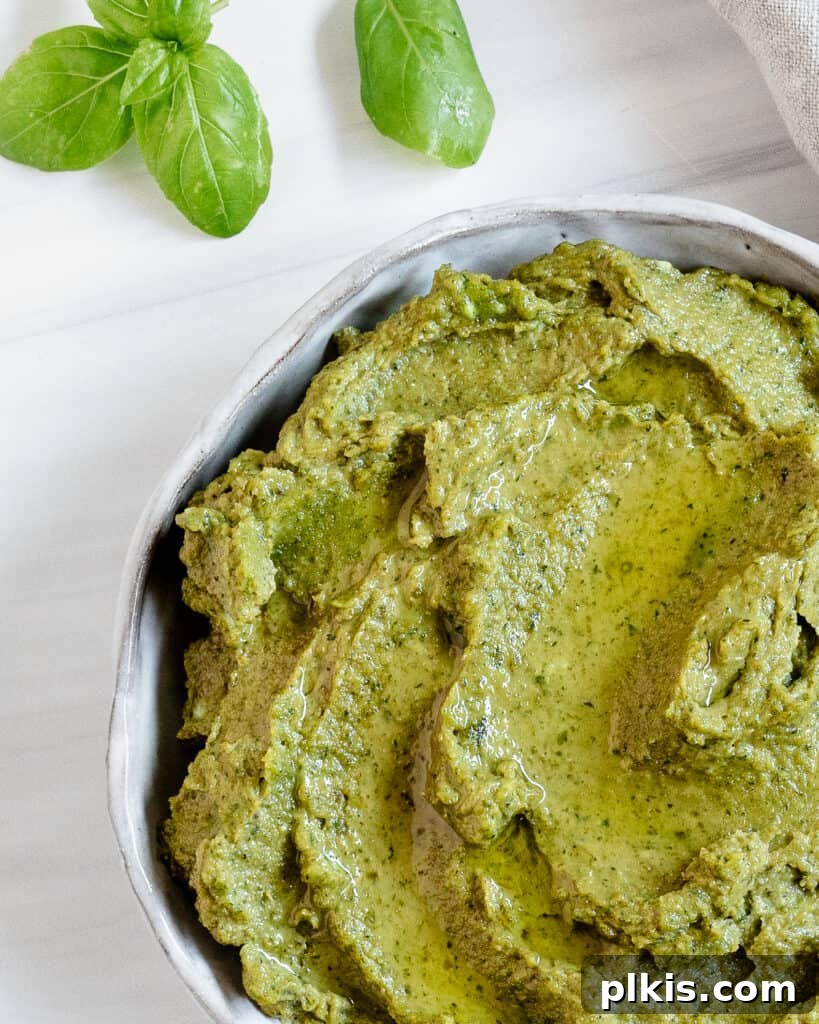
The Best Way to Freeze Homemade Pesto
Freezing pesto is a smart way to preserve its fresh flavor and aroma for future meals. Our favorite method involves portioning:
Spoon the pesto into 1-2 tablespoon portions using an ice cube tray. Freeze until completely solid, which usually takes a few hours. Once frozen, pop the pesto cubes out of the tray and transfer them to an airtight freezer-safe bag or container. This makes it incredibly convenient to grab just the amount you need for a single serving or recipe.
When you’re ready to use a frozen pesto cube, simply allow it to thaw at room temperature for about 30 minutes. Alternatively, you can add the frozen cubes directly to hot dishes, such as simmering sauces or soups, where they will melt and integrate beautifully.
Important Note: Basil pesto can naturally darken due to oxidation when exposed to air; this is entirely normal and does not affect its flavor or safety. If you wish to maintain its vibrant green color as much as possible, always store pesto (whether in the fridge or when freezing in jars/containers) with a thin layer of olive oil poured over the surface before sealing.
Unleash the Flavor: Creative Ways to Use Sunflower Seed Pesto
Pesto is truly one of the most versatile condiments you can have in your kitchen, offering countless ways to elevate your meals and prevent food waste. Its rich, herbaceous flavor profile makes it suitable for breakfast, lunch, dinner, and even snacks! Here are over a dozen of our top recommendations for incorporating this delicious sunflower seed pesto into your culinary repertoire:
- Pasta Perfection (Warm or Cold): The classic pairing! Toss it generously with any type of pasta for a quick and satisfying meal. Think vegan stuffed shells, potato gnocchi, a creamy mac n’ cheese alternative, spaghetti squash, or layered into a hearty lasagna. It’s also fantastic in chilled pasta salads for a refreshing summer dish.
- Grain Enhancer: Stir a few spoonfuls into your favorite cooked grains like quinoa, rice, farro, or couscous. It transforms a simple side dish into a flavorful main or a robust base for salads, such as a lemon-garlic quinoa salad or arugula pesto couscous.
- Bread Spreader & Sandwich Star: Use it as a vibrant spread for crostini, bruschetta, or simply slather it on toast. It’s a game-changer for sandwiches, toasties, paninis, and wraps. Try it in a tofu and pesto sandwich, a gourmet vegan grilled cheese, a creamy mushroom sandwich, or spread on hearty pesto bagels. It also adds incredible depth to white bean burgers or any bread recipe featuring grilled vegetables.
- Vibrant Veggies: Drizzle this homemade pesto over grilled, roasted vegetables, or steamed greens. It adds an instant burst of flavor to staples like crispy cauliflower, asparagus, broccoli, or bell peppers.
- Stuffed Vegetable Delight: Incorporate pesto into stuffings for vegetables. Imagine pesto pasta stuffed mushrooms (or our pumpkin seed pesto stuffed mushrooms for another variation) or flavorful stuffed sweet peppers.
- Soup Enhancer: Stir a spoonful of pesto into your favorite soups just before serving, or use it as a flavorful garnish. It works wonders in creamy soups like zucchini basil soup, broccoli soup, or a hearty kale bean soup, adding a fresh, herbaceous dimension.
- Cheese Board / Charcuterie Accent: Serve a small bowl of sunflower seed pesto as part of a vegan cheese board or charcuterie spread, or any grazing platter. It pairs beautifully with crackers, vegan cheeses, and fresh vegetables.
- Creamy Dips & Spreads: Mix this vegan nut-free pesto into (or use as a garnish for) other dips like hummus, white bean dip, vegan ricotta dip, or a dairy-free yogurt-based dip for an extra layer of flavor.
- Pizza & Calzone Topping: Dollop or drizzle it over your homemade pizza before or after baking. It’s exceptional on a Mediterranean hummus pizza or folded into vegan calzones for a burst of basil and garlic.
- Salad Dressing & Sauce: Thin the pesto slightly with a bit of water or extra olive oil and lemon juice to create a vibrant salad dressing or a versatile pesto sauce. Drizzle it over potato salad or elevate options like a vegan Caprese salad.
 Frequently Asked Questions (FAQs)
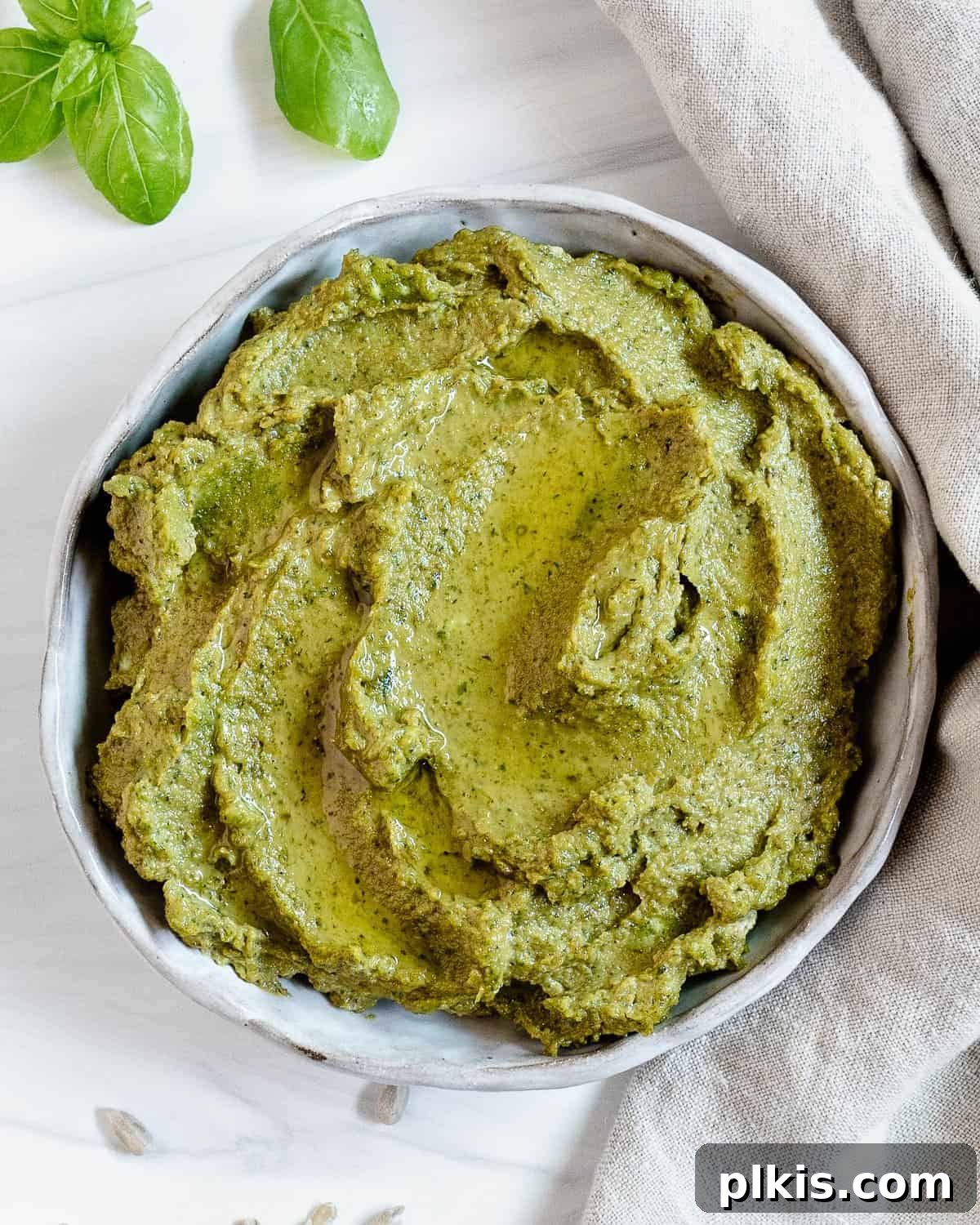 Frequently Asked Questions (FAQs)
Should I soak the sunflower seeds before using them?
Soaking sunflower seeds is not strictly necessary for this recipe, especially if you have a powerful food processor. However, if you have a sensitive digestive system or prefer to enhance the digestibility and nutrient absorption of seeds, then soaking can be beneficial. Soaking helps to “activate” the seeds by breaking down enzyme inhibitors.
To soak the sunflower seeds, place them in a large bowl and cover them with plenty of fresh water. Let them soak overnight (typically 8-12 hours). The next day, drain and rinse the soaked seeds thoroughly. For the best pesto texture, it’s recommended to dry the seeds again before use. You can spread them across a large baking sheet and allow them to air dry for several hours, or use an oven on its lowest temperature setting (around 150-200°F or 65-95°C) for 1-2 hours until completely dry.
Can I use salted sunflower seeds for this pesto?
While technically possible, we highly recommend using unsalted, raw sunflower seeds for this recipe. If you use salted sunflower seeds, it becomes very difficult to control the overall sodium level of your pesto, potentially resulting in an overly salty taste. It’s always best to add salt incrementally to taste, which is much easier to do when starting with unsalted ingredients.
Is it possible to reduce the amount of olive oil in the pesto?
Absolutely! The easiest way to control and potentially reduce the amount of olive oil is by using a food processor with a feeding chute (drizzle opening). Start by adding all the other ingredients, then slowly drizzle in the olive oil bit by bit while the processor is running. Stop adding oil once the pesto reaches your desired consistency and creaminess. Keep in mind that reducing the oil too much might result in a thicker, less smooth pesto and could slightly impact its shelf life.
Is the sugar truly necessary in this pesto recipe?
While a pinch of sugar might seem unconventional in a savory pesto, we’ve found it makes a noticeable difference. It acts as a flavor balancer, subtly rounding out the natural bitterness of the basil and the acidity of the lemon, without making the pesto overtly sweet. It adds a depth that enhances the overall harmony of flavors. However, feel free to taste the pesto before adding any sugar, and then decide if you want to include it. It’s a personal preference, but we encourage you to try it as it elevates the final product!
Top Tips for Perfect Pesto & Recipe Notes
-
Preventing Basil Discoloration: Basil can oxidize and darken when exposed to air and heat. To keep your pesto as vibrant green as possible, you have a couple of options:
- Process all the other ingredients first until smooth, then add the basil leaves last and pulse just until your desired consistency is reached. This minimizes its exposure to air and blade friction.
- Alternatively, you can briefly blanch the basil leaves for about 30 seconds in boiling water, then immediately transfer them to an ice bath to shock them and lock in their color. Pat them completely dry before adding to the food processor.
- Customize the Texture: The beauty of homemade pesto is that you control the consistency. Adjust the processing time in your food processor to achieve your preferred texture – whether you like a super smooth, creamy pesto or a slightly chunkier, more rustic one.
-
Alternative Blending Methods: No food processor? No problem!
- You can also make this sunflower pesto using an immersion blender. Place all the ingredients in a tall, narrow container and blend until smooth. Add a splash of water if needed to help achieve the desired consistency.
- For a truly traditional and machine-free approach, you can prepare this pesto with a mortar and pestle. This method requires more effort but yields a wonderfully textured pesto as the ingredients are crushed rather than cut.
- Frugal Growing Tip: Growing your own herbs, especially prolific ones like basil, is an excellent way to save money and ensure a constant supply of fresh ingredients. Pick off the leaves as needed, and the plant will often replenish itself, eliminating the need to buy fresh basil bundles repeatedly.
- Thinning Your Pesto: If your pesto is too thick for a particular application, you can easily thin it down with a small amount of water or vegetable broth. However, be aware that adding water can slightly reduce the pesto’s shelf life, so it’s best to consume water-thinned pesto within 2-3 days.
- For Enhanced Flavor: If you desire an even deeper, nuttier flavor profile from your sunflower seeds, try lightly toasting them in a dry pan over medium heat for a few minutes until fragrant and slightly golden. Let them cool completely before adding them to the food processor.
Explore More Delicious Vegan Dressings
If you enjoyed this versatile pesto, you’ll love these other homemade vegan dressings and sauces that add a burst of flavor to any meal:
- Japanese Carrot-Ginger Salad Dressing
- Creamy Avocado Green Goddess Dressing
- Zesty Cilantro Green Chili Dressing
- Vibrant Slaw Dressing (with a kick!)
- Simple & Bright Lemon Dressing
- Flavorful Basil Salad Dressing (with peanuts)
Photos by Alfonso Revilla
Vegan Basil Sunflower Seed Pesto (Without Pine Nuts)
43 votes
Video
Equipment
-
Measuring Cups
-
Measuring spoons
-
Food Processor
Ingredients
-
1
cup
of basil -
½
cup
of raw sunflower seeds -
¼
cup
of olive oil -
3-4
cloves garlic -
¼
teaspoon
of salt -
¼
teaspoon
of sugar -
¼
teaspoon
of black pepper -
1
Tablespoon
of nutritional yeast -
1
Tablespoon
of fresh lemon juice
Instructions
-
Combine all ingredients in a food processor and process until creamy. Usually, 1-2 minutes, stopping to scrape down the sides as needed.
-
Toss with warm pasta, spread on toast or pizza, or use as a dip.
Notes
Read the blog post for more FAQs, notes, and serving recommendations!
Nutrition
Carbohydrates: 11g
Protein: 10g
Fat: 45g
Saturated Fat: 5g
Polyunsaturated Fat: 11g
Monounsaturated Fat: 26g
Sodium: 296mg
Potassium: 356mg
Fiber: 4g
Sugar: 2g
Vitamin A: 652IU
Vitamin C: 7mg
Calcium: 58mg
Iron: 3mg
Additional Info
Tried this recipe?Please tag us at @PlantBasedOnABudget! 🙂