
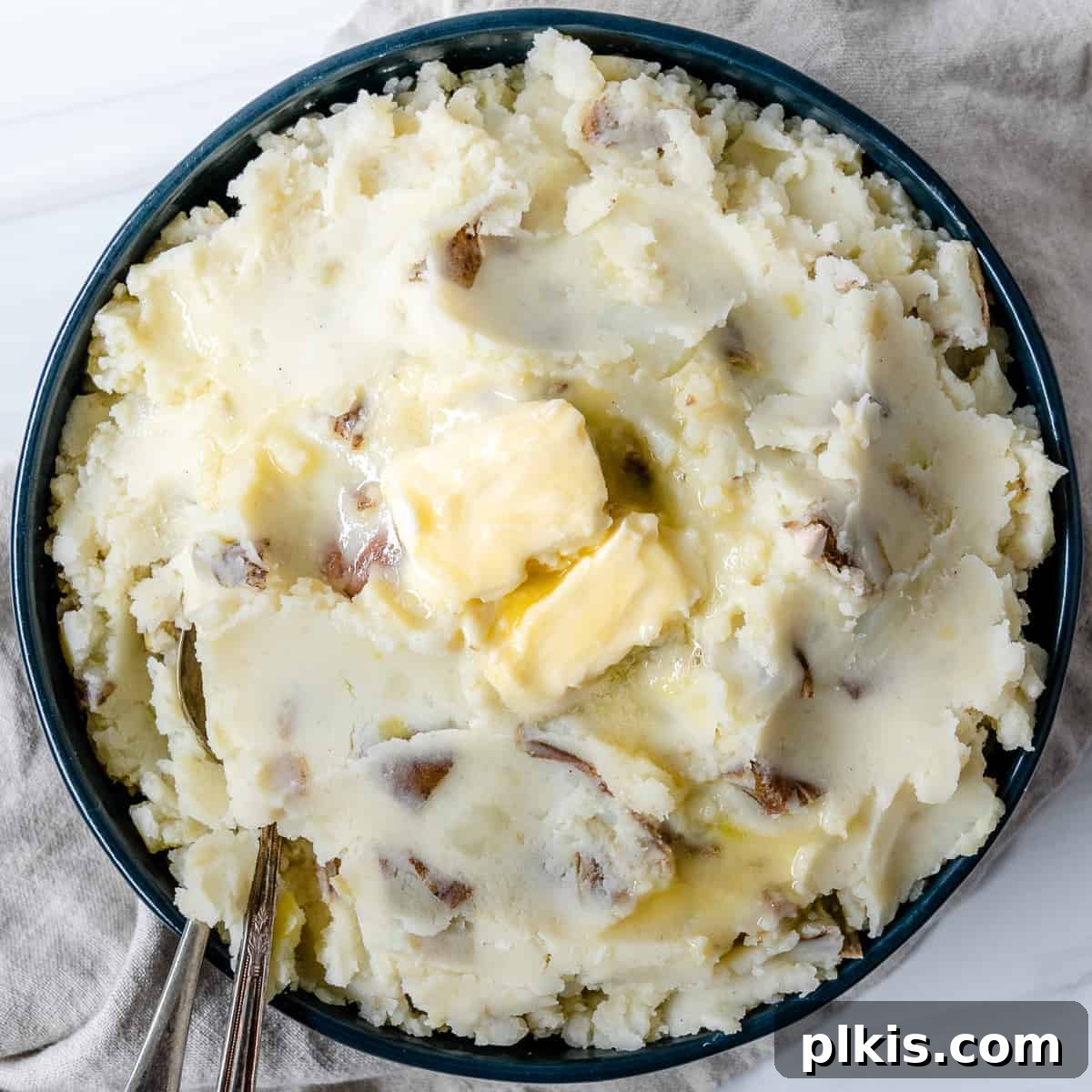
Welcome to the ultimate guide for creating the BEST vegan mashed potatoes, a dish so versatile and delicious, it caters to every preference. Whether you crave a velvety smooth texture, a rustic skin-on mash, or a robust garlic-infused flavor, this master recipe provides the perfect foundation. With just a handful of simple ingredients and about 30 minutes of your time, you’ll prepare an exquisite gluten-free, dairy-free side dish that’s ideal for any occasion, from festive holiday feasts like Thanksgiving and Christmas to comforting plant-based roast dinners year-round.

Mastering the Art of Versatile Vegan Mashed Potatoes
There’s truly never a bad moment to indulge in a bowl of creamy, comforting vegan mashed potatoes. However, as the holiday season, with its grand feasts like Thanksgiving (explore 45 Vegan Thanksgiving recipes here), draws near, we’re thrilled to present our definitive base recipe for dairy-free mashed potatoes. This adaptable guide allows you to customize your mash to perfection, whether you prefer it with the skins on for added texture and nutrients, entirely free of vegan butter or plant milk, or infused with rich, ‘cheesy,’ or veggie-packed flavors. Below, you’ll find our foundational recipe for incredibly creamy vegan mashed potatoes, accompanied by a plethora of ideas to transform it into exactly what your palate desires.
Crafting a recipe that satisfies diverse tastes can feel a bit like Monica in that famous Friends episode, where everyone has a specific potato request. But fear not! This adaptable base recipe guarantees the best vegan mashed potatoes you’ve ever had, designed to meet every craving. Our personal favorite variation? Creamy, skin-on vegan garlic mashed potatoes, a recipe we proudly include below!
Beyond their incredible taste, these fluffy, thick, and creamy vegan mashed potatoes are wonderfully budget-friendly. Made with just a few economical ingredients, they offer a deeply satisfying and comforting experience, serving as the perfect complement to a wide array of dishes, especially a rich and savory easy vegan mushroom gravy.
Essential Ingredients for Your Vegan Mashed Potatoes
You’ll be delighted to discover that crafting the finest vegan mashed potatoes requires only a minimal list of staple ingredients for the base recipe. These simple components are the starting point for a truly unforgettable side dish.

Creative Add-Ins & Delightful Recipe Variations
The beauty of this vegan mashed potato recipe lies in its incredible adaptability. Once you master the base, the possibilities for customization are endless. Here are some fantastic ways to elevate your mash:
- Aromatic Herbs: Infuse your plant-based milk with fresh herbs like rosemary, thyme, or sage during the warming process for a deeper flavor profile. Alternatively, sprinkle chopped fresh chives, scallions, or parsley over the finished dish as a vibrant garnish, adding a burst of freshness.
- Nutrient-Packed Veggie Mash: Easily boost the nutritional value and texture by incorporating cooked vegetables directly into your dairy-free mashed potatoes. Peas, finely chopped broccoli florets, shredded carrots, wilted spinach, kale, cabbage, or sweet corn kernels are all excellent choices that blend seamlessly.
- Creamy Vegan Cheese Infusion: Achieve a delightful cheesy flavor in several ways. Stir in a dollop of plant-based cream cheese for an extra layer of creaminess and tangy richness. For a more traditional cheesy taste, mix in some grated vegan parmesan or a melty, sharp cheddar-style dairy-free cheese. If you prefer a simpler, savory umami boost, a few tablespoons of nutritional yeast will do the trick.
- Bold Seasoning Explorations: Don’t hesitate to experiment with various seasonings to find your perfect flavor balance. Cumin adds an earthy warmth, chili powder introduces a subtle kick, paprika offers a sweet and smoky note, and onion powder enhances the overall savory depth.
- Flavorful Pesto Swirl: For an instant flavor upgrade, simply stir a spoonful of your favorite vegan pesto into your warm mash. It adds a vibrant herbaciousness and a touch of richness.
- Sweet & Savory Root Vegetable Mash: For a delightful twist, replace half of the potatoes with an equal amount of cooked parsnips. Parsnips contribute a natural sweetness that beautifully complements the potatoes, creating a unique and delicious root veggie mash that still pairs wonderfully with your chosen herbs and seasonings.
- Lower-Carb Alternative: If you’re looking to reduce the carbohydrate content without completely eliminating potatoes, substitute about one-third of the potatoes with cooked cauliflower. This creates a lighter mash that’s still incredibly satisfying. You might also enjoy a dedicated Vegan Mashed Cauliflower dish.
Simple Steps to Perfect Vegan Mashed Potatoes
Creating these delectable vegan mashed potatoes is straightforward. Follow these simple steps for a consistently delicious result. For the complete recipe card with precise measurements, please scroll further down.


Step 1: Prepare the Potatoes. Begin by thoroughly washing your potatoes. For even cooking, chop them into uniform 1-inch pieces. For a smoother, classic mashed potato texture, feel free to peel the potatoes. However, for a more rustic feel and added nutrients, leaving the skin on is perfectly acceptable and delicious!
Step 2: Boil Until Tender. Transfer the chopped potatoes and whole garlic cloves to a large saucepan. Cover them generously with cold, salted water. Bring the water to a rolling boil over medium-high heat, then reduce the heat to a simmer. Allow the potatoes to cook for 20-25 minutes, or until they are easily pierced with a fork, indicating they are perfectly tender.


Step 3: Mash to Perfection. Once the potatoes are tender, carefully drain all the water using a colander. Return the cooked potatoes and garlic to the empty pot. Now it’s time to mash! Use a potato ricer for the smoothest, fluffiest results, a potato masher for a slightly chunkier texture, or even a sturdy fork if those tools aren’t available. Mash until most lumps are gone and the potatoes begin to break down.
Step 4: Season and Serve. While mashing, gradually incorporate the plant-based milk, vegan butter, salt, and pepper. Continue mashing and stirring until you achieve your desired consistency and flavor profile. Taste and adjust seasonings as needed. Finally, transfer your luscious mashed potatoes to a serving dish and enjoy! Optionally, garnish with a sprinkle of fresh black pepper, chopped herbs, or an extra pat of vegan butter for an even richer experience.
For exceptionally smooth and creamy vegan garlic mashed potatoes, don’t hesitate to add a little extra plant-based milk and/or vegan butter. The exact quantities may vary based on the natural moisture content of your potatoes.
Frequently Asked Questions About Vegan Mashed Potatoes
Whether to peel your potatoes or not is entirely a matter of personal preference. Leaving the skins on will result in a slightly more rustic, textured mash with visible bits of peel. This also means you retain more nutrients and fiber. If you’re aiming for that classic, ultra-smooth, and creamy mashed potato experience, then peeling the potatoes is recommended. You can always save the peels to make vegetable stock or roast them with a little oil and seasoning for a crispy snack!
We generally advise against using a food processor or immersion blender for traditional mashed potatoes. The high-speed blades can overwork the potato starch, releasing too much of it and resulting in a gummy, gluey, and unpleasant texture. For a truly creamy, rather than sticky, mash, it’s best to stick to manual methods like a potato ricer, masher, or even a sturdy fork. If you’re making a very large batch and need some mechanical help, a hand-held electric mixer on a low speed can work, but proceed with caution and avoid overmixing.
If you prefer to omit plant-based milk, you have a couple of excellent alternatives. One option is to reserve some of the starchy cooking water from the potatoes. This water contains natural starches that help bind and moisten the mash, achieving the correct consistency. Be aware that the flavor will be less creamy, so you might need extra seasoning. Alternatively, a popular and delicious substitute is vegetable stock (broth). Using regular vegetable stock in place of plant-based milk adds a wonderful depth of savory flavor, resulting in delicious no-milk mashed potatoes. You can even enhance the cooking water or stock with a little stock powder for an extra flavor boost.
You can still achieve wonderfully creamy mashed potatoes even without vegan butter. A drizzle of good quality olive oil can add richness and a lovely flavor. Vegan mayonnaise is another surprising but effective substitute that contributes both creaminess and a subtle tang. If you’re looking to reduce fat content entirely, simply use extra plant-based milk (or your chosen milk substitute) to reach your desired creamy consistency. The potatoes will still be incredibly flavorful and satisfying.
When serving mashed potatoes as a side dish, we generally recommend planning for about ½ pound (approximately 1 ½ to 2 medium Russet potatoes) per person. For larger gatherings, holiday meals, or events where mashed potatoes are a star, it’s always a good idea to factor in an extra 2-3 pounds. This ensures everyone gets plenty and accounts for any potential seconds or delicious leftovers, which can be enjoyed for several days.
Top Tips and Notes for Perfect Vegan Mashed Potatoes
Achieving perfectly fluffy, creamy, or chunky mashed potatoes is an art form. Here are our top tips and notes to help you master this classic dish every time:
- Understanding Your Mashing Tool: The utensil you choose significantly impacts the final texture.
- Potato Ricer: For the ultimate smooth, fluffy, and light mashed potatoes, a ricer is your best friend. It forces the potatoes through small holes, creating an incredibly even texture.
- Potato Masher: This tool offers more control. Mash as much or as little as you prefer for a texture that’s usually slightly lumpier and denser than riced potatoes, which many people love.
- Fork: If you don’t have specialized tools, a sturdy fork will work, producing the chunkiest, thickest texture.
- Hand-Held Mixer (for creamed potatoes): While generally not recommended for traditional mash to avoid gumminess, a hand-held mixer can be used for “creamed” potatoes, but be cautious not to overwork them.
- For a Truly Silken Potato Purée: If you’re aiming for a restaurant-quality, super-smooth purée, press your mashed potatoes through a fine-mesh sieve using a spatula. This painstaking process removes every last lump, resulting in an incredibly delicate texture. Be warned: it’s labor-intensive, so consider delegating this task if you can!
- Preventing Discoloration for Large Batches: When preparing a significant quantity of mashed potatoes, immediately transfer your chopped potatoes into a pan of water (or a water-filled bowl) after cutting. This prevents them from oxidizing and turning a less appealing brown or grey color.
- The Warm Milk Advantage: While not strictly essential, gently warming your plant-based milk before adding it to the mashed potatoes helps to maintain the overall warmth of the dish. It also allows the milk to integrate more smoothly without cooling down your perfectly cooked potatoes.
- Flavor Infusion for Extra Depth: To add another layer of flavor, infuse your vegan milk with herbs. Our favorite is rosemary: simply add a couple of sprigs to the plant-based milk in a small pot, bring to a simmer, and let it steep for several minutes before removing the herbs and adding the flavored milk to your potatoes.
- Avoiding “Soupy” Mash: After draining your cooked potatoes, return the empty pot to the stovetop over low heat. Add the drained potatoes back and stir constantly for a few minutes. This gentle heat will evaporate any excess water clinging to the potatoes, ensuring a dry base that prevents a “soupy” or watery mash.
- Taste Test Your Dairy-Free Milk: Not all plant-based milks are created equal when it comes to flavor. Some might impart a subtle taste that you may not prefer in your mash. If trying a new brand or type of plant milk, test a small amount with a tiny portion of your mashed potatoes first to ensure it complements the flavor profile. Unflavored, unsweetened varieties are generally best.

Storage and Reheating Tips for Vegan Mashed Potatoes
Ensuring your delicious vegan mashed potatoes can be enjoyed beyond the initial meal is simple with proper storage and reheating techniques.
Once your mashed potatoes have cooled completely, transfer any leftovers to an airtight container. They will keep beautifully in the refrigerator for up to four days. For longer storage, vegan mashed potatoes (including any variations you’ve made, like garlic mash) can be frozen for up to three months. To freeze, spread them evenly in a freezer-safe bag or container, removing as much air as possible to prevent freezer burn. When ready to enjoy, simply allow them to thaw in the refrigerator overnight.
To reheat your mashed potatoes, you can use either a microwave or the stovetop. For stovetop reheating, place the mash in a saucepan over low heat, stirring frequently. For microwave reheating, place in a microwave-safe dish and heat in short intervals, stirring between each. In either case, add a splash of extra dairy-free milk and/or a pat of plant-based butter as you reheat. This helps to restore their creamy consistency and delightful texture, bringing them back to their freshly made glory before serving.
Creative Ways to Serve Creamy Vegan Mashed Potatoes
To call these dairy-free mashed potatoes a versatile side dish would be a significant understatement. Their rich, comforting nature allows them to complement an almost endless array of meals. Here are just a few of our favorite ways to enjoy them:
- As a quintessential part of any holiday spread, such as a Thanksgiving or Christmas feast, especially when paired with your favorite vegan gravy (we highly recommend this savory vegan mushroom gravy).
- A comforting staple for your weekly plant-based roast dinner, providing a hearty and satisfying component.
- Served alongside savory vegan sausages or our delightful vegan lentil meatballs for a classic and fulfilling meal.
- Paired with a wholesome vegan meatloaf, allowing the mash to soak up all the delicious flavors.
- The perfect accompaniment to hearty stews, like this rustic vegan chickpea stew, adding a creamy contrast.
- A delightful side for various vegan pies, from savory pot pies to shepherd’s pie variations.
Don’t let any leftover dairy-free mashed potatoes go to waste! They are fantastic for creating entirely new dishes. Use them to make homemade gnocchi or dumplings, incorporate them into bread recipes for added moisture and texture, or whip up a classic “bubble and squeak.” This traditional British dish combines leftover mashed potatoes and roasted vegetables, pan-fried into a delicious, thick pancake. You can also easily transform them into similar savory potato pancakes or croquettes.

The BEST Vegan Mashed Potatoes (+ Variations!)
Rated 5 out of 5 stars by 47 voters.
Prep: 10 mins
Cook: 25 mins
Total: 35 mins
Servings: 6 – 8

Print Recipe
Comfort food at its finest. This base for Vegan Mashed Potatoes is the perfect budget-friendly side dish to compliment your favorite meals!
Video
Equipment
- My favorite knives
- Measuring Cups
- Measuring spoons
- Large Pot
- Colander
- Potato Masher
Ingredients
- 4 pounds russet potatoes, washed and cut into 1-inch pieces
- 5 garlic cloves
- 1 cup unflavored, unsweetened plant-based milk
- ¼ cup vegan butter
- 1 ½ teaspoon salt
- ½ teaspoon pepper
Instructions
- In a large pot over medium-high heat, add the 1-inch potato pieces and whole garlic cloves. Submerge them completely in water. Bring to a boil and cook for 25 minutes or until the potatoes are completely tender.
- Once the potatoes are fully tender, drain all the water using a colander. Return the drained potatoes and garlic to the pot, then add the plant-based milk, vegan butter, salt, and pepper.
- Mash the potatoes and garlic using a potato masher or a large, sturdy fork until you achieve your desired consistency – from chunky to smooth.
Notes
- Use warm plant-based milk: While not 100% necessary, warming the milk before adding it to the potatoes will help keep the entire dish warm.
- For extra flavor: You can infuse the vegan milk with herbs (rosemary is our favorite). Add a couple of sprigs of rosemary to the vegan milk in a small pot. Bring to a simmer and then allow to simmer for several minutes. Remove the herbs before adding the plant-based milk to the potatoes.
- To avoid ‘soupy’ potatoes: After draining the potatoes, you can return the pan to the heat, stirring constantly for several minutes, to remove any excess water (until the spuds are dry). Then continue with the mashing.
- Experiment with dairy-free milk: You may find that you aren’t happy with the flavor the dairy-free milk imparts in the mash. So always test a new kind of milk with a small amount of mash as a ‘test.’
Nutrition
Calories: 251kcal | Carbohydrates: 45g | Protein: 5g | Fat: 6g | Saturated Fat: 1g | Polyunsaturated Fat: 2g | Monounsaturated Fat: 3g | Trans Fat: 1g | Sodium: 76mg | Potassium: 1087mg | Fiber: 6g | Sugar: 2g | Vitamin A: 5IU | Vitamin C: 50mg | Calcium: 45mg | Iron: 2mg
Additional Info
Author: Toni Okamoto
Course: Dinner, Lunch
Cuisine: American
Method: Stovetop
Diet: Vegan
Tried this recipe? Please tag us at @PlantBasedOnABudget! 🙂