

Unlocking the delicious potential of butternut squash is surprisingly simple, especially when you master the art of roasting. This versatile winter vegetable transforms into a sweet, tender, and deeply flavorful culinary gem with minimal effort, making it a perfect addition to any meal, from a cozy weeknight dinner to a festive holiday spread. If you’re looking to elevate your vegetable game and infuse your dishes with a touch of seasonal warmth, learning how to roast butternut squash is an absolute must.

As the crisp air of autumn arrives and winter’s chill sets in, seasonal vegetables like butternut squash become culinary stars. With its vibrant color and hearty texture, it finds its way into countless recipes, offering both nourishment and comfort. For those with a plentiful harvest from a summer garden or simply a keen eye at the market, knowing the foundational techniques for preparing this gourd is invaluable. This comprehensive guide will take you back to the basics, providing everything you need to know about roasting a butternut squash to perfection.
Mastering the Art of Roasting Butternut Squash: Your Ultimate Guide
Why Choose Roasted Butternut Squash?
Roasting fundamentally transforms butternut squash, intensifying its naturally sweet, nutty, and subtly savory flavor profile. The dry heat of the oven coaxes out its sugars, leading to a beautiful caramelization on the exterior, while the interior becomes incredibly tender and moist. This process doesn’t just make it taste amazing; it also enhances its natural aroma, filling your kitchen with an inviting scent.
Its inherent versatility makes roasted butternut squash a fantastic ingredient for an array of dishes. It can serve as a delightful side, a hearty addition to soups and stews, a creamy component in sauces, or even the star of a main course. The journey to culinary creativity with this wonderful gourd truly begins with mastering the roasting technique. Once you achieve that perfect balance of caramelized edges and a smooth, soft interior, you’ll find yourself reaching for butternut squash again and again. The rich, almost buttery texture makes it incredibly satisfying, whether eaten straight from the oven or incorporated into more complex preparations.
There are several effective ways to roast butternut squash, each suited to different culinary needs. You can choose to roast it whole, in large halves, or cut into smaller, convenient cubes. Roasting it whole simplifies preparation significantly, as it minimizes handling of the tough skin. Halves offer a quicker cook time and beautiful presentation, while diced squash is ideal for incorporating into salads, pasta dishes, or for faster individual servings. Regardless of the method you choose, the outcome is consistently a sweet, flavorful, and incredibly appetizing dish.
Unlocking the Health Benefits of Butternut Squash
Beyond its delightful taste and versatility, butternut squash is a nutritional powerhouse, making it an exceptionally healthy choice for any diet. It’s not just delicious; it’s packed with an impressive array of vitamins, minerals, and disease-fighting antioxidants. This low-calorie, high-fiber winter squash contributes significantly to overall well-being and may play a role in protecting the body against various ailments.
- Rich in Vitamins: Butternut squash is an excellent source of Vitamin A (in the form of beta-carotene), essential for vision, immune function, and skin health. It also provides a substantial amount of Vitamin C, a powerful antioxidant that supports immunity and collagen production.
- Essential Minerals: You’ll find a good supply of potassium, which is crucial for blood pressure regulation and nerve function, as well as magnesium, important for muscle and nerve function, blood sugar control, and bone health.
- High in Fiber: Its high fiber content supports digestive health, helps regulate blood sugar levels, and contributes to a feeling of fullness, which can aid in weight management.
- Antioxidant Power: The vibrant orange flesh of butternut squash indicates its rich antioxidant content, including carotenoids like beta-carotene and alpha-carotene, which combat oxidative stress and may reduce the risk of chronic diseases such as certain cancers, heart disease, and age-related mental decline.
Incorporating roasted butternut squash into your diet is a simple and delicious way to boost your nutrient intake and support a healthy lifestyle.

Essential Tools for Perfect Roasting
One of the many advantages of roasting butternut squash is that it requires only basic kitchen equipment that most home cooks already possess. You don’t need any specialized gadgets to achieve fantastic results.
- Oven: Naturally, a functional oven is paramount for roasting.
- Baking Sheet or Baking Dish: A sturdy baking sheet or a ceramic/glass baking dish is essential for holding the squash and facilitating even cooking. For optimal caramelization, choose a sheet with enough surface area to allow the squash pieces to spread out without overcrowding.
- Large Sharp Knife: A good quality, sharp chef’s knife is crucial for safely and efficiently cutting the tough skin of the squash, especially if you plan to roast it in halves or cubes.
- Vegetable Peeler: If you opt for dicing, a sturdy vegetable peeler can make the task of removing the squash’s tough outer skin much easier and safer than using a paring knife.
- Spoon: A sturdy spoon is helpful for scooping out the seeds and fibrous strands from the squash cavity.
Selecting and Preparing Your Butternut Squash
The journey to perfectly roasted butternut squash begins at the market. Selecting the right squash is key to a delicious outcome. Look for a squash that is firm to the touch all over, with no soft spots, deep scratches, or cuts. Its skin should have a uniform, creamy beige or pale orange tint. Avoid any squash with green patches (indicating immaturity) or brown spots/punctures, as these can be signs of spoilage or mold. When picking, I always opt for a squash that feels notably heavy for its size, as this often indicates good moisture content and ripeness.
Preparing butternut squash might seem daunting due to its hard exterior, but with the right technique, it’s quite manageable.
- Wash Thoroughly: Always start by washing the outside of your butternut squash under cool running water to remove any dirt or debris.
- Trim Ends: Using your large sharp knife, carefully trim off both the stem and bottom ends of the squash. This provides a stable base when cutting and makes slicing much easier.
- Choose Your Cut:
- For Whole Roasting (Easiest Method): No further cutting is needed beyond trimming the ends. This is often the simplest approach for beginners.
- For Halves: Stand the squash upright on one of its trimmed flat ends. Carefully slice it in half lengthwise, using a gentle rocking motion with your sharp knife. If the squash is particularly hard, you might need to apply firm, steady pressure.
- For Diced Cubes: First, you’ll need to peel the squash. A good vegetable peeler works wonders here. Once peeled, carefully cut the squash in half lengthwise. Then, slice each half into long strips, and finally, dice these strips into 1-inch (or desired size) cubes. Always prioritize safety when cutting.
- Remove Seeds: If you’re roasting halves or cubes, use a sturdy spoon to scoop out the seeds and stringy fibrous bits from the cavity. Don’t discard the seeds! They can be cleaned, dried, tossed with a little oil and salt, and roasted for a delicious, healthy snack.
Once prepared, your butternut squash is ready for its delicious transformation in the oven.
Step-by-Step Guide: How to Roast Butternut Squash to Perfection
Roasting butternut squash is straightforward, yielding incredibly satisfying results. Here’s how to achieve perfectly roasted squash, regardless of your preferred preparation style:
Roasting Whole Butternut Squash: (Simplest Method)
- Preheat Oven: Preheat your oven to 400°F (200°C). For even cooking and a slight head start on caramelization, you can place your baking sheet in the oven while it preheats.
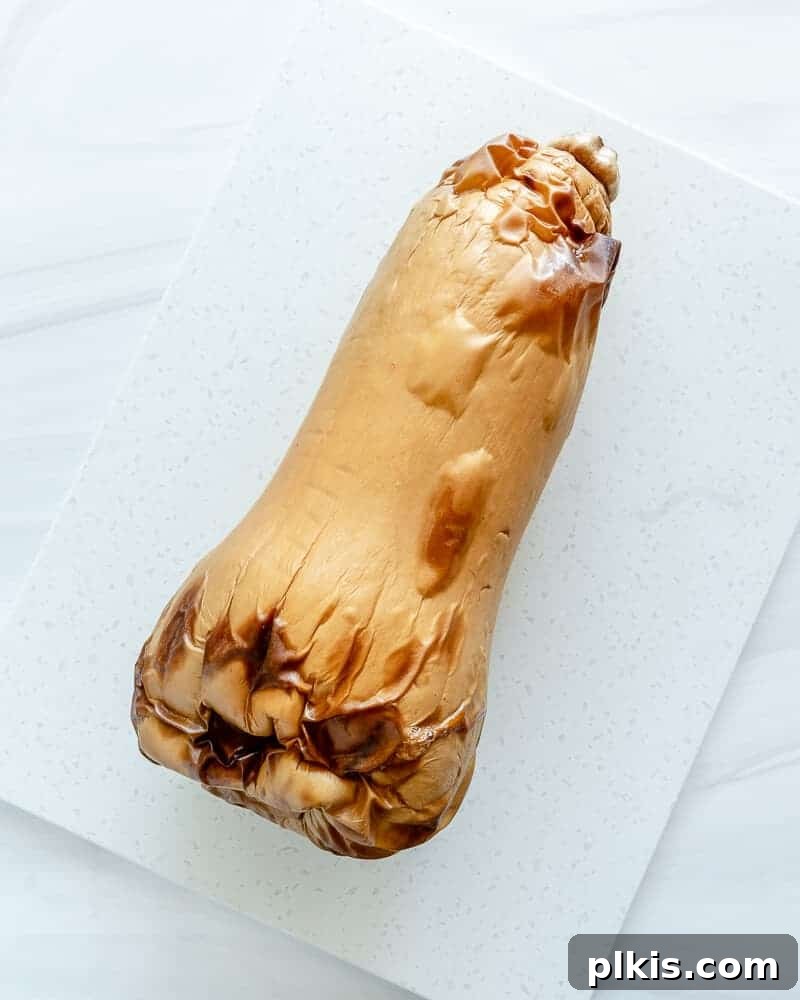
- Roast: Place the entire, trimmed butternut squash directly on the preheated baking sheet. Bake for approximately 60-75 minutes. The exact time will depend on the size of your squash. It’s done when the skin is slightly browned, and the squash yields easily when pierced with a fork.
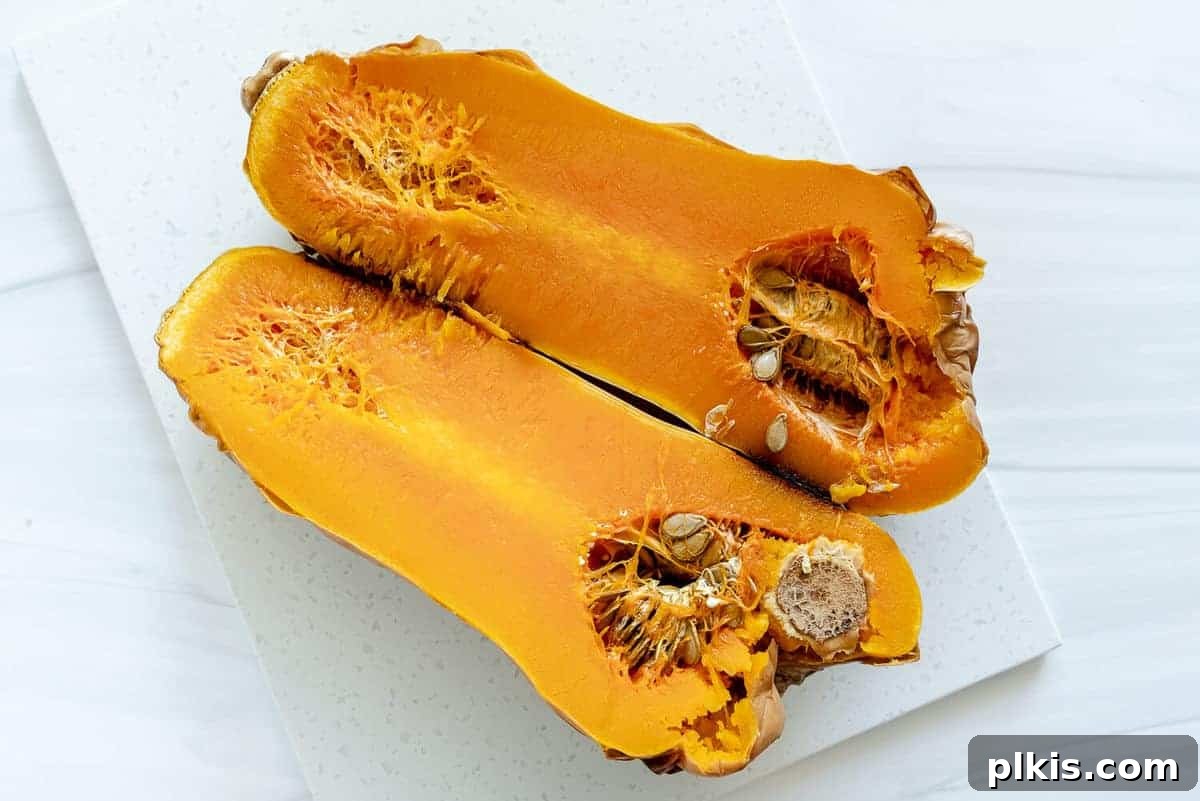
- Cool and Serve: Carefully remove the squash from the oven and let it cool for a few minutes. Once cool enough to handle, use a sharp knife to slice it in half lengthwise. Scoop out the seeds and any stringy bits. The soft, sweet flesh can then be scooped directly from the skin and enjoyed as is, or seasoned further.
Roasting Butternut Squash Halves:
- After trimming, cutting in half, and deseeding, brush the cut sides with a tablespoon of olive oil and season generously with salt and freshly ground black pepper. Place the squash halves cut-side down on your baking sheet. This technique allows for a bit of extra steaming internally, keeping the flesh moist, while the direct contact with the hot pan helps create a wonderful caramelized crust on the cut surface. Roast for 45-60 minutes at 400°F (200°C), or until the flesh is tender and the cut side is nicely browned.
Roasting Diced Butternut Squash:
- Once peeled and diced into 1-inch cubes, toss the squash pieces with 1-2 tablespoons of olive oil, salt, and pepper in a large bowl. Ensure all cubes are evenly coated. Spread the seasoned cubes in a single layer on your baking sheet, being careful not to overcrowd the pan, as this can lead to steaming instead of roasting. Roast at 400°F (200°C) for 25-35 minutes, flipping the cubes halfway through the cooking time, until they are tender, golden brown, and slightly crispy on the edges.
Once roasted to your liking, the tender, sweet flesh can be scooped from its skin (for whole or halves) or enjoyed directly. It’s now ready to be transformed into countless dishes, from creamy butternut squash soups and hearty mashes to rich sauces, elegant risottos, and even delightful baked goods.
Elevate Your Flavors: Best Seasonings for Butternut Squash
While roasted butternut squash is inherently delicious with just a pinch of salt and pepper, it’s also a blank canvas for a wide array of flavors. You can easily adapt it to suit any meal or palate, leaning into either sweet or savory profiles.
To add depth and character with minimal effort, consider these flavorful seasoning combinations:
- Classic Garlic and Herbs: You can never go wrong with the aromatic combination of grated fresh garlic cloves and woody herbs like fresh rosemary or thyme. Finely chopped fresh parsley or sage also adds a lovely herbaceous note. This blend is perfect for a savory side dish that complements almost any main course.
- A Touch of Spice: For those who appreciate a gentle kick, a dash of chipotle powder, chili powder, cayenne pepper, or ground cumin can introduce warmth and a smoky depth. These spices pair exceptionally well with the squash’s natural sweetness, creating a balanced and exciting flavor profile. Start with a small amount and adjust to your preference.
- Sweet & Warming Spices: If you’re aiming for a sweeter profile, perfect for desserts or a comforting breakfast side, sprinkle with ground cinnamon, nutmeg, or a pinch of allspice. For an extra touch of sweetness, a drizzle of maple syrup or a sprinkle of coconut sugar before roasting will caramelize beautifully and enhance the squash’s natural sugars. This is particularly delicious in fall and winter dishes.
Remember, a little olive oil or avocado oil is essential to help the seasonings adhere and promote beautiful caramelization during roasting. Experiment with different combinations to discover your personal favorites!
Storing Roasted Butternut Squash for Future Enjoyment
Having a batch of roasted butternut squash on hand is fantastic for quick meals and meal prep throughout the week. Proper storage ensures its freshness and flavor.
- Refrigeration: Cooled roasted butternut squash (whether whole, halves, or diced) can be stored in an airtight container in the refrigerator for up to 5 days. This makes it convenient for adding to salads, grain bowls, or reheating as a side.
- Freezing (Diced or Pureed): For longer storage, freezing is an excellent option, especially for diced or pureed squash.
- For Diced Squash: Allow the roasted butternut squash cubes to cool completely. Spread them in a single layer on a baking sheet lined with parchment paper. Freeze for 3-4 hours, or until thoroughly frozen solid. This “flash freezing” prevents the cubes from clumping together. Once frozen, transfer the cubes to an airtight plastic freezer bag or container. They can be stored in the freezer for up to three months.
- For Pureed Squash: If you’ve pureed your roasted squash, let it cool, then transfer it to freezer-safe containers or even ice cube trays for smaller portions. Once frozen, transfer to a freezer bag.
When you’re ready to use frozen roasted squash, it can be thawed in the refrigerator overnight or simply added directly to hot soups, stews, or roasted dishes.
Creative Culinary Uses for Roasted Butternut Squash
Roasted butternut squash is incredibly versatile, far beyond just being a simple side dish. Its golden-brown edges, caramelized sweetness, and soft texture make it a fantastic component in a myriad of recipes. Here are some of my personal favorite ways to incorporate this delicious vegetable into various dishes:
- Roasted Butternut Squash with Indian Spices and Caramelized Onions: This recipe elevates the squash with warm, aromatic Indian spices like turmeric and garam masala, complemented by the sweet notes of caramelized onions. While perfect for fall, this flavorful dish can be enjoyed year-round as a hearty side or light main.
- Thai-Style Butternut Squash Soup: A creamy, pureed soup that offers a comforting embrace on a cold winter night. The vibrant flavors of Thai cuisine, with a hint of chilies for a gentle kick and rich coconut milk for a touch of sweetness, transform roasted squash into an exotic and satisfying meal.
- Butternut Squash Sauce and Roasted Veggies: Create a luscious, velvety sauce using roasted butternut squash (instead of steamed, as suggested in the linked recipe, for deeper flavor) and carrots. This sauce is fantastic over pasta, grain bowls, or as a flavorful base for other vegetable dishes, adding incredible depth and creaminess.
- Warm Salads and Grain Bowls: Add roasted butternut squash cubes to your favorite green salads or grain bowls. Its sweetness and tender texture complement bitter greens, crunchy nuts, and savory proteins beautifully.
- Butternut Squash Tacos/Burritos: Use seasoned roasted butternut squash as a flavorful filling for tacos, burritos, or enchiladas. Its hearty nature pairs wonderfully with black beans, corn, and fresh salsa.
- Butternut Squash Risotto: Incorporate pureed or finely diced roasted squash into a creamy risotto for a seasonal, comforting, and visually stunning dish.
- Breakfast Hash: Combine roasted butternut squash cubes with potatoes, onions, and plant-based sausage for a hearty and flavorful breakfast hash.
- Pancakes or Muffins: Pureed roasted butternut squash can be folded into pancake or muffin batter, adding moisture, natural sweetness, and a boost of nutrients. Think pumpkin spice, but with squash!
The possibilities are endless once you have a batch of perfectly roasted butternut squash. Get creative and enjoy this incredible vegetable!
Photos by Alfonso Revilla
Simple Roasted Butternut Squash Recipe
Rating: 5 out of 5 stars (Based on 17 votes)
Prep Time: 1 minute
Cook Time: 1 hour
Total Time: 1 hour 1 minute
Servings: 4 servings

Print Recipe
Summary
Roasting a butternut squash is an incredibly simple yet rewarding culinary skill that transforms this humble gourd into a tender, sweet, and deeply flavorful ingredient. This golden-brown and caramelized squash can be enjoyed as a side dish, pureed into soups, or serve as the base for delicious sauces.
Video Guide
Equipment
- Baking sheet
- Large sharp knife
- (Optional) Vegetable peeler or paring knife
Ingredients
- 1 Butternut Squash (medium to large, approximately 2-3 lbs)
- 1-2 tablespoons Olive Oil (or avocado oil, for roasting halves/cubes)
- Salt and freshly ground Black Pepper (to taste)
- (Optional) Desired seasonings (e.g., garlic powder, dried rosemary, cinnamon, maple syrup)
Instructions
- Prepare the oven: Preheat your oven to 400°F (200°C). For best results and to ensure a hot surface for caramelization, place your baking sheet in the oven while it preheats.
- Prepare the squash (for whole roasting): Wash the butternut squash thoroughly. For this whole roasting method, there’s no need to peel or cut the squash initially. Simply trim off the stem and bottom ends for stability.
- Roast: Carefully place the whole, trimmed squash onto the preheated baking sheet. Bake for approximately 60-75 minutes. The precise cooking time will vary depending on the size of your squash; it’s done when the skin is lightly browned and the squash feels soft when gently pierced with a fork.
- Cool and Serve: Once roasted, carefully remove the squash from the oven. Allow it to cool for a few minutes until it’s comfortable enough to handle. Using a large sharp knife, carefully slice the squash in half lengthwise. Scoop out the seeds and any stringy fibrous bits. The tender, sweet flesh can then be scooped directly from the skin and served, or seasoned further to your preference.
Alternative Roasting Methods:
- For Halves: If you’ve cut the squash in half and removed the seeds, brush the cut surfaces with olive oil and season with salt and pepper. Place the halves cut-side down on the baking sheet. Roast at 400°F (200°C) for 45-60 minutes, or until the flesh is tender and the cut side shows beautiful caramelization.
- For Diced Cubes: After peeling and dicing the squash into 1-inch cubes, toss them in a bowl with olive oil, salt, pepper, and any desired seasonings. Spread the cubes in a single layer on your baking sheet to ensure even roasting. Roast at 400°F (200°C) for 25-35 minutes, turning halfway through, until the cubes are tender and golden brown with slightly crispy edges.
Notes
Store leftover roasted butternut squash in an airtight container in the refrigerator for up to 5 days. To freeze, spread cooled, diced roasted squash on a parchment-lined baking sheet and freeze until solid (about 3-4 hours) to prevent sticking. Then transfer the frozen cubes to a freezer-safe bag or container and store for up to three months. This method is excellent for future soups, sauces, or quick additions to meals.
Nutrition Information (per serving)
(Please note that nutritional values are approximate and can vary based on serving size, specific ingredients, and preparation methods.)
| Nutrient | Amount |
|---|---|
| Calories | 338 kcal |
| Carbohydrates | 88 g |
| Protein | 8 g |
| Fat | 1 g |
| Saturated Fat | 1 g |
| Polyunsaturated Fat | 1 g |
| Monounsaturated Fat | 1 g |
| Sodium | 30 mg |
| Potassium | 2640 mg |
| Fiber | 15 g |
| Sugar | 17 g |
| Vitamin A | 79725 IU |
| Vitamin C | 158 mg |
| Calcium | 360 mg | Iron | 5 mg |
Additional Information
- Author: Toni Okamoto
- Course: Entree, Side Dish
- Cuisine: American
- Method: Baking
- Diet: Vegan
Tried this recipe?
We’d love to see your creations! Please tag us on Instagram at @PlantBasedOnABudget when you share your delicious roasted butternut squash! 😊