
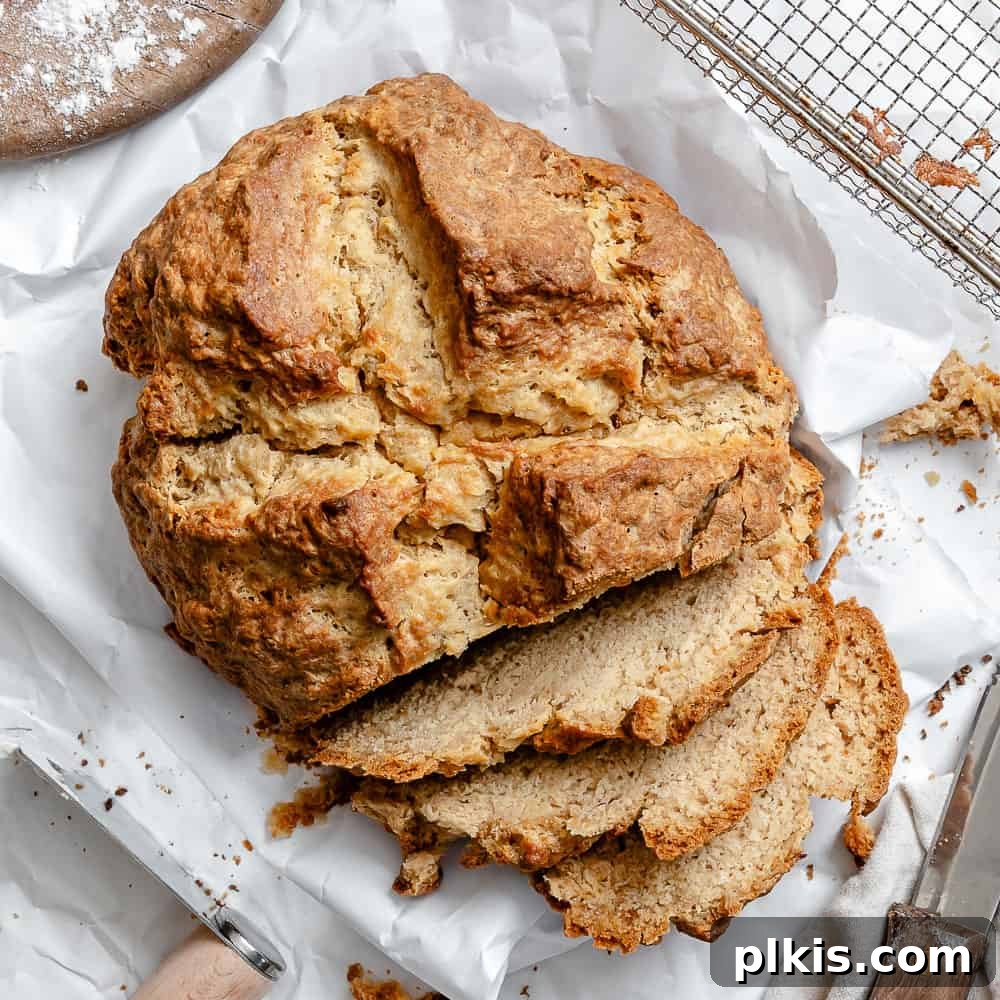
Vegan Irish Soda Bread offers a delightful, yeast-free baking experience, perfect for beginners and seasoned bakers alike. This remarkably simple recipe allows you to create a rustic, deeply satisfying loaf with a wonderfully crisp crust and a tender, dense crumb in under an hour. Whether you’re celebrating St. Patrick’s Day or simply craving a wholesome, homemade bread to accompany your favorite soups, stews, or a generous slather of vegan butter, this dairy-free Irish soda bread is a versatile staple you’ll find yourself making year-round.
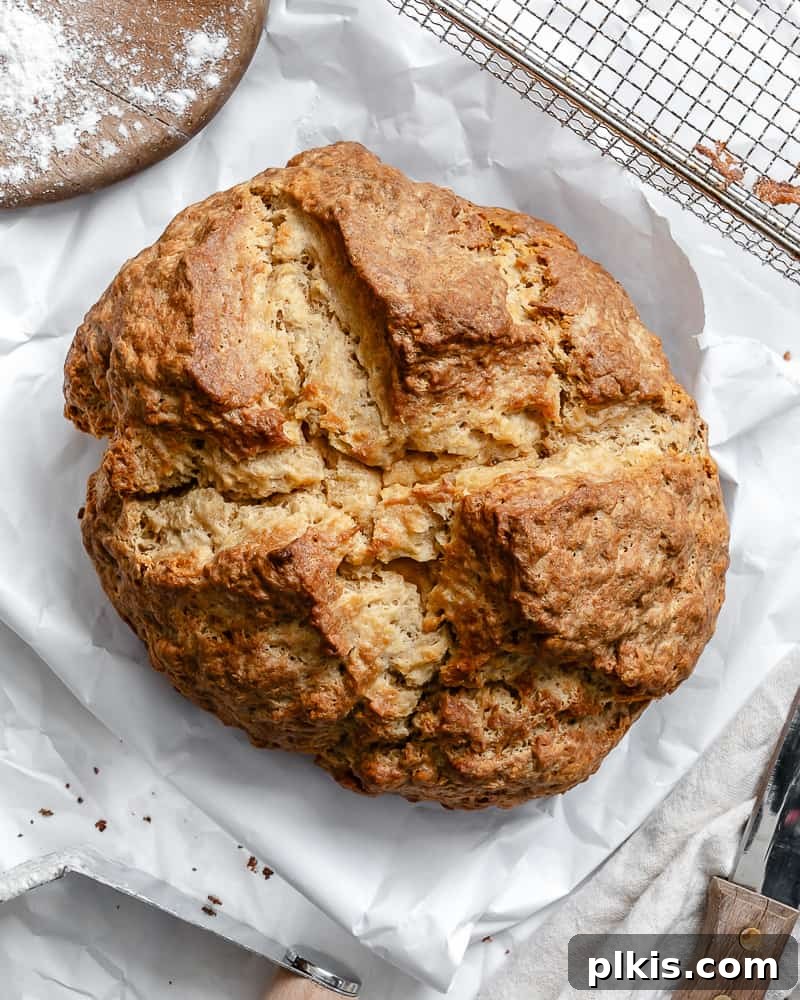
Baking Made Simple: Quick & Easy Yeast-Free Vegan Soda Bread
Many aspiring home bakers find the idea of making bread intimidating, often due to the complexities of yeast, the need for precise proofing times, and the delicate balance of temperature control involved in traditional bread recipes like a classic sandwich loaf or even an easy no-knead version. This is where vegan Irish soda bread shines as a fantastic entry point into the world of homemade bread.
Our fast and easy vegan Irish soda bread recipe eliminates all those concerns. It’s a hearty, tender loaf that requires no yeast, no tedious proofing, and no fussy temperature monitoring. Its straightforward process makes it an absolute dream for beginners, delivering impressive results with minimal effort. If you’re eager to explore more effortless vegan bread creations, don’t miss our recipes for easy vegan garlic bread and delightful vegan naan!
Understanding Irish Soda Bread: A Culinary History
Irish soda bread is an iconic quick bread, distinguished by its use of baking soda as the primary leavening agent instead of yeast. This traditional method has been a cornerstone of Irish cuisine for centuries, especially in times when yeast was not readily available or accessible for home baking. The magic happens when baking soda reacts with an acidic ingredient, typically buttermilk, producing carbon dioxide bubbles that give the bread its characteristic rise and dense yet soft texture.
Traditionally, authentic Irish soda bread is incredibly simple, often made with just four core ingredients: flour, baking soda, salt, and buttermilk. However, as recipes travelled and evolved, particularly in Americanized adaptations, additional ingredients like eggs (for richness), butter, sugar, raisins, or other sweet or savory add-ins became common. Our vegan rendition captures the essence of this beloved bread, making it accessible to everyone. The result is a loaf that’s subtly sweet, rich with buttery notes, and boasts a wonderfully craggy, golden crust, reminiscent of an oversized, rustic American biscuit or a hearty scone – in the most delicious way imaginable.
Why You’ll Adore This Vegan Irish Soda Bread
There are countless reasons to fall in love with this recipe:
- Effortlessly Quick: From mixing bowl to oven, this bread can be ready in under an hour, making it perfect for last-minute cravings or busy schedules. No yeast, no waiting!
- Beginner-Friendly: If you’ve never baked bread before, this is the perfect recipe to start with. The process is straightforward, requiring minimal kneading and no complex techniques.
- Simple Ingredients: You’ll likely have most of these pantry staples on hand, proving that delicious homemade bread doesn’t require a trip to a specialty store.
- Crisp Crust & Soft Crumb: The exterior bakes up beautifully golden and crisp, while the interior remains wonderfully soft, dense, and moist – a texture that’s utterly comforting.
- Dairy-Free & Vegan: Enjoy a classic comfort food without any animal products, perfect for those with dietary restrictions or anyone embracing a plant-based lifestyle.
- Incredibly Versatile: Fantastic with both sweet and savory accompaniments, it’s a bread that adapts to any meal or snack.
Essential Ingredients & Smart Substitutions
Crafting the perfect vegan Irish soda bread starts with quality ingredients. Here’s what you’ll need and some helpful tips for substitutions:
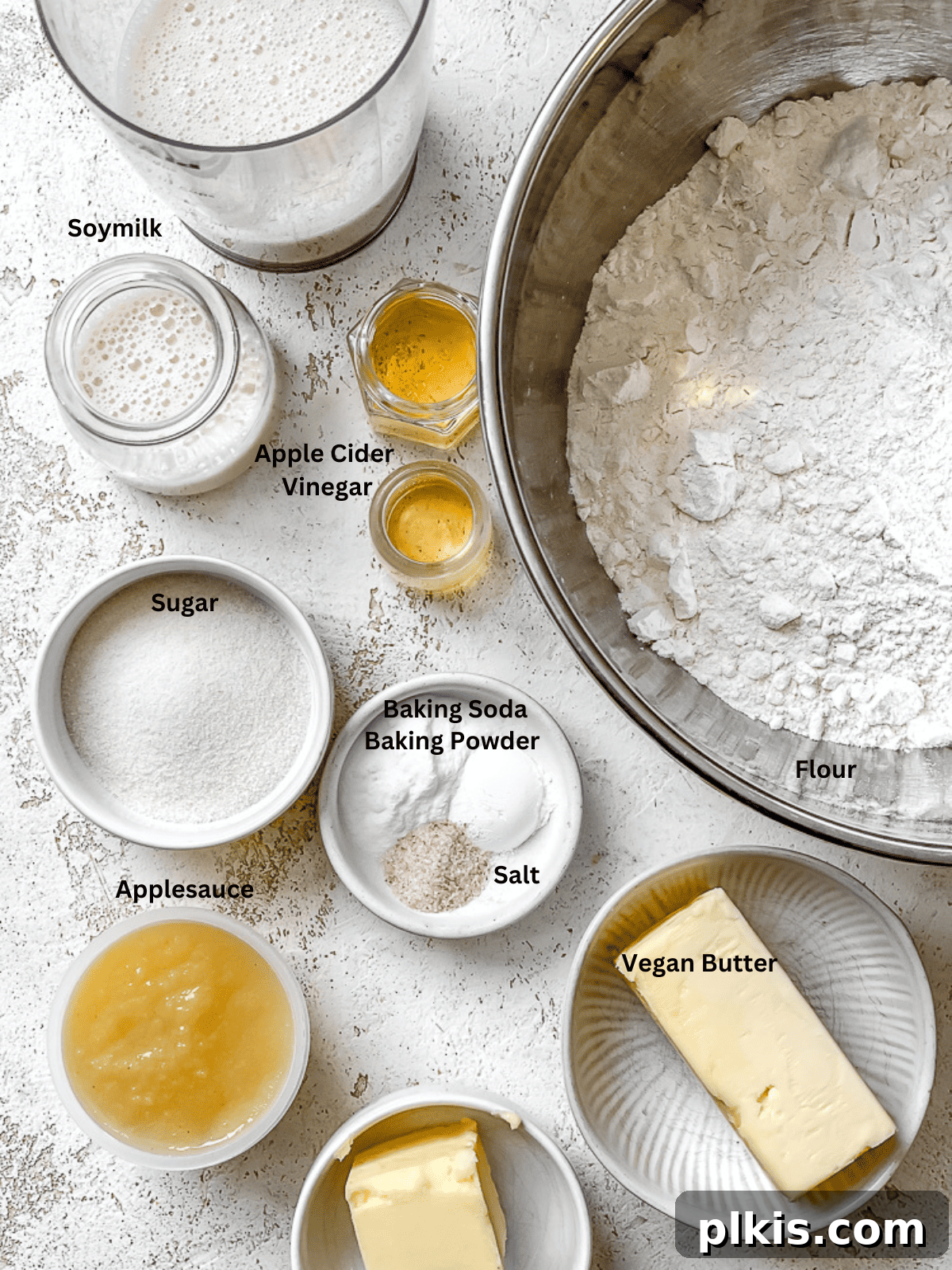
- Flour: All-purpose flour is our go-to for a consistently tender crumb. For a slightly heartier loaf, you can experiment with a 50/50 blend of all-purpose and whole wheat flour. Low-gluten cake flour also yields excellent results, contributing to a softer texture.
- Vegan Butter: The quality of your vegan butter matters here! Opt for a high-quality, room-temperature vegan butter (brands like Miyoko’s or Earth Balance are excellent choices) to achieve the best flavor and texture. Room temperature butter is crucial for cutting into the flour properly.
- Vegan Buttermilk: Easily create a dairy-free buttermilk substitute by combining plain soy milk (which curdles beautifully) with apple cider vinegar or lemon juice. You can also use oat milk or almond milk, though soy milk tends to yield the best curdling effect, mimicking traditional buttermilk most closely.
- Baking Soda: This is the star of soda bread, providing the essential leavening. Always ensure your baking soda is fresh and active for optimal rise. You can test its freshness by mixing a tiny amount with vinegar; it should fizz immediately.
- Baking Powder: While baking soda is key, this recipe benefits from the addition of baking powder. The combination of both leavening agents ensures a balanced rise and tender texture, and they are not interchangeable in this specific formula.
- Applesauce: Unsweetened applesauce serves as an excellent vegan egg replacer, adding moisture and contributing to the dense yet soft quality of the bread. For a slightly lighter loaf, you may be able to reduce or omit it, but be mindful of potential changes in texture.
- Sugar: (Optional) A small amount of sugar adds a subtle sweetness that complements the rich, buttery flavor. Feel free to use brown sugar or unrefined coconut sugar for different flavor profiles. Adjust to your preference or omit for a purely savory bread.
- Sea Salt: Essential for seasoning and enhancing all the other flavors in the bread. Don’t skip it!
- To Brush: A mixture of extra vegan buttermilk and melted vegan butter is brushed over the loaf before and during baking. This not only promotes a beautiful golden-brown crust but also helps keep the bread soft and flavorful.
Exciting Flavor Variations & Customization Tips
One of the best aspects of this vegan Irish soda bread is its incredible versatility. It serves as a perfect canvas for both savory and sweet additions, allowing you to tailor it to any craving or occasion:
- Classic Raisin Irish Soda Bread: Embrace tradition by mixing in 1-2 cups of raisins (or smaller currants). For an extra layer of flavor, consider adding 1-2 teaspoons of cinnamon, ½ teaspoon of vanilla extract, 1-2 teaspoons of fresh orange zest, and/or 1-2 tablespoons of caraway seeds.
- Festive Cranberry Orange Soda Bread: Perfect for holidays or a special brunch! Incorporate 1-1 ½ cups of dried cranberries, 1 tablespoon of orange zest (or lemon zest for a brighter note), and increase the sugar by ½-⅓ cup. Optionally, add 1 teaspoon of cinnamon and/or ½-¾ cup of chopped walnuts for added texture and richness. A simple lemon glaze drizzled over the top takes this variation to the next level.
- Aromatic Caraway Irish Soda Bread: For those who appreciate its unique, slightly anise-like flavor, add 1-2 tablespoons of caraway seeds to the dough. This can be done with or without raisins, depending on your preference.
- Savory Vegan Cheddar & Herb Soda Bread: Transform your loaf into a savory delight by omitting the sugar and folding in 1-2 cups of shredded sharp vegan cheddar cheese. Enhance it further with 2-3 tablespoons of fresh chopped herbs like chives, green onion, parsley, or dill. A tablespoon of chopped rosemary or a mix of Italian herbs also works beautifully. Don’t forget a touch of garlic powder or roasted garlic for extra depth!
Other Creative Add-ins:
- Sun-Dried Tomatoes: Chopped sun-dried tomatoes (oil-packed or rehydrated) add a lovely tang and chewiness.
- Olives: Sliced green and/or black olives provide a briny, Mediterranean twist.
- Garlic: Roasted garlic cloves, mashed into a paste, or a teaspoon of garlic powder can infuse the bread with aromatic warmth.
- Fried Onions: Crispy fried onions (store-bought or homemade) offer a delicious savory crunch.
- Nuts/Seeds: Pumpkin seeds, poppy seeds, pine nuts, pistachios, or a mixed seed blend can add texture, nutrients, and a subtle nutty flavor.
- Other Dried Fruit: Experiment with chopped dried apricots, figs, or cherries for different sweet variations.
Baking Your Vegan Irish Soda Bread: A Step-by-Step Guide
Follow these simple steps to create your perfect loaf of homemade vegan Irish soda bread.
Step 1: Prepare the Bread Dough
- Preheat your oven to 375°F (190°C). Line a large baking sheet (or a cast-iron skillet) with parchment paper or a silicone mat. This prevents sticking and ensures even baking.
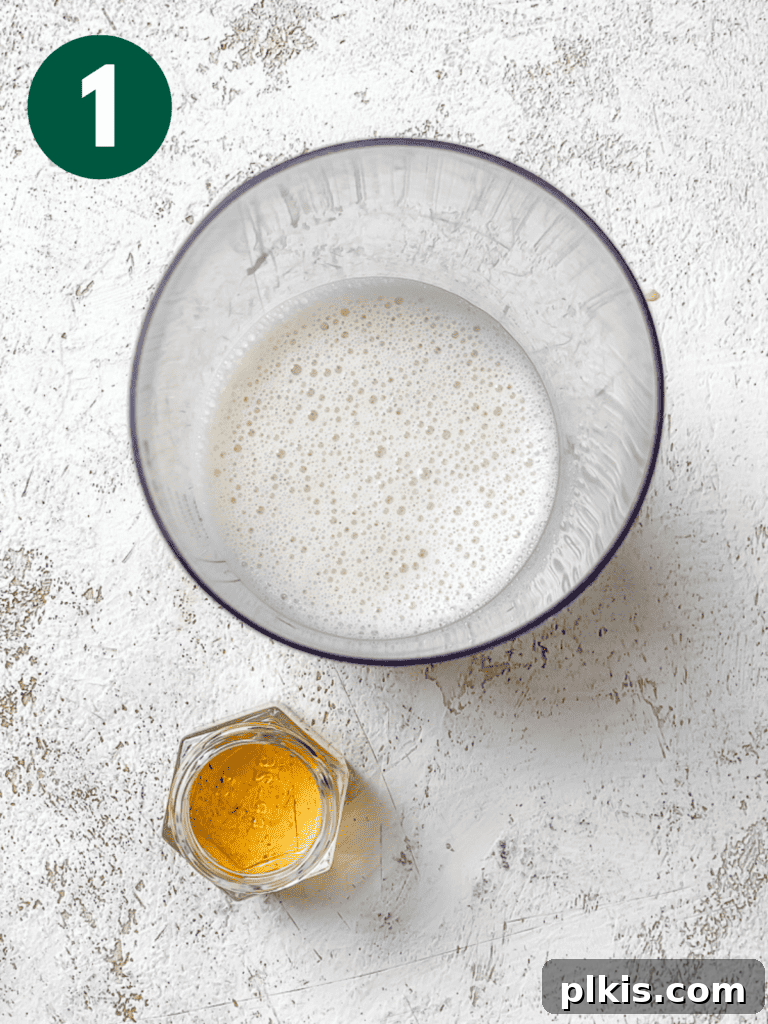
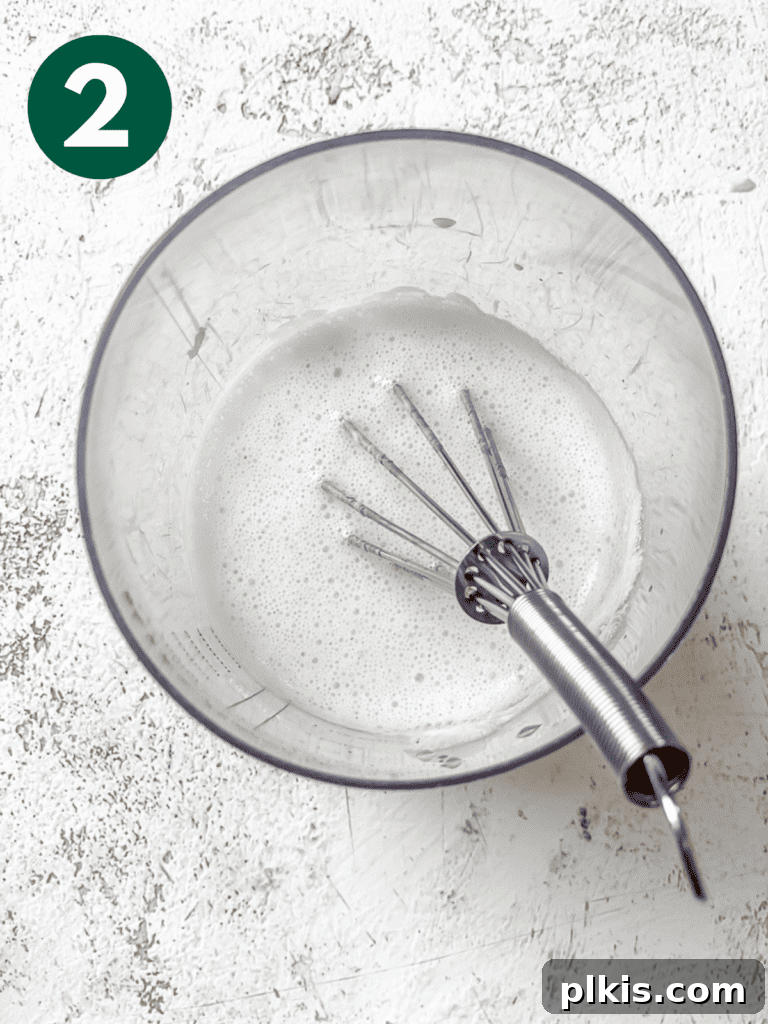
- In a small cup, combine the vegan milk and vinegar. Whisk gently until the mixture begins to curdle and thicken slightly. Set this aside for 5 minutes to allow the “vegan buttermilk” to fully develop.
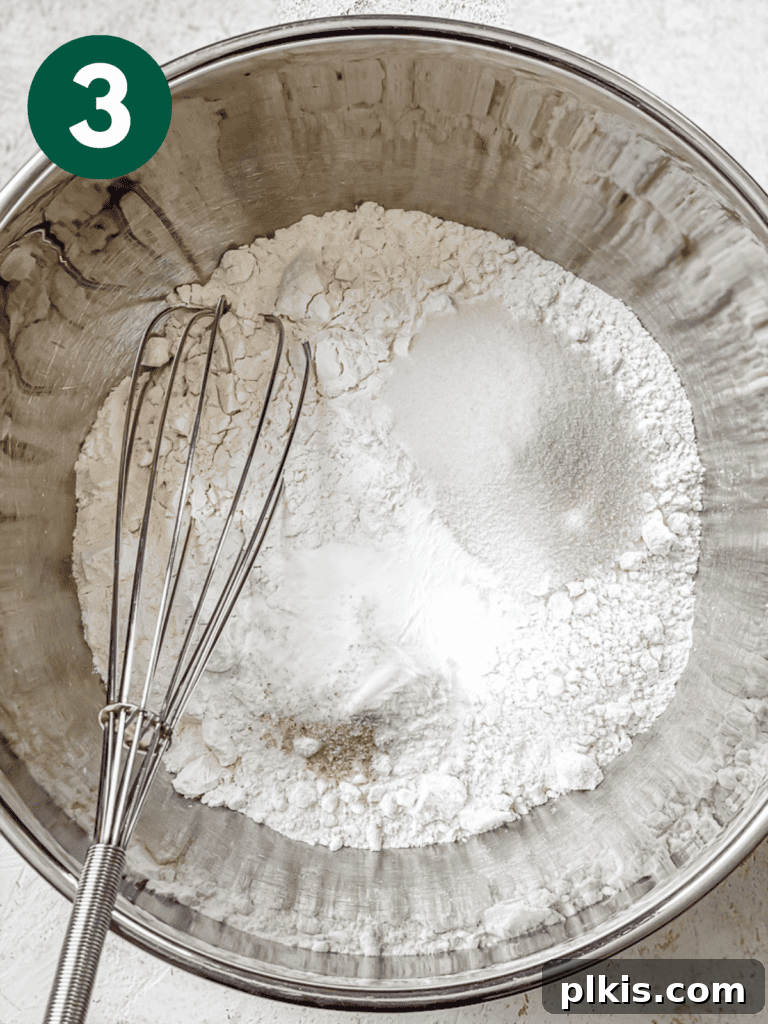
- In a large mixing bowl, thoroughly combine the dry ingredients: flour, sugar (if using), baking soda, baking powder, and sea salt. Use a whisk to ensure they are evenly distributed.
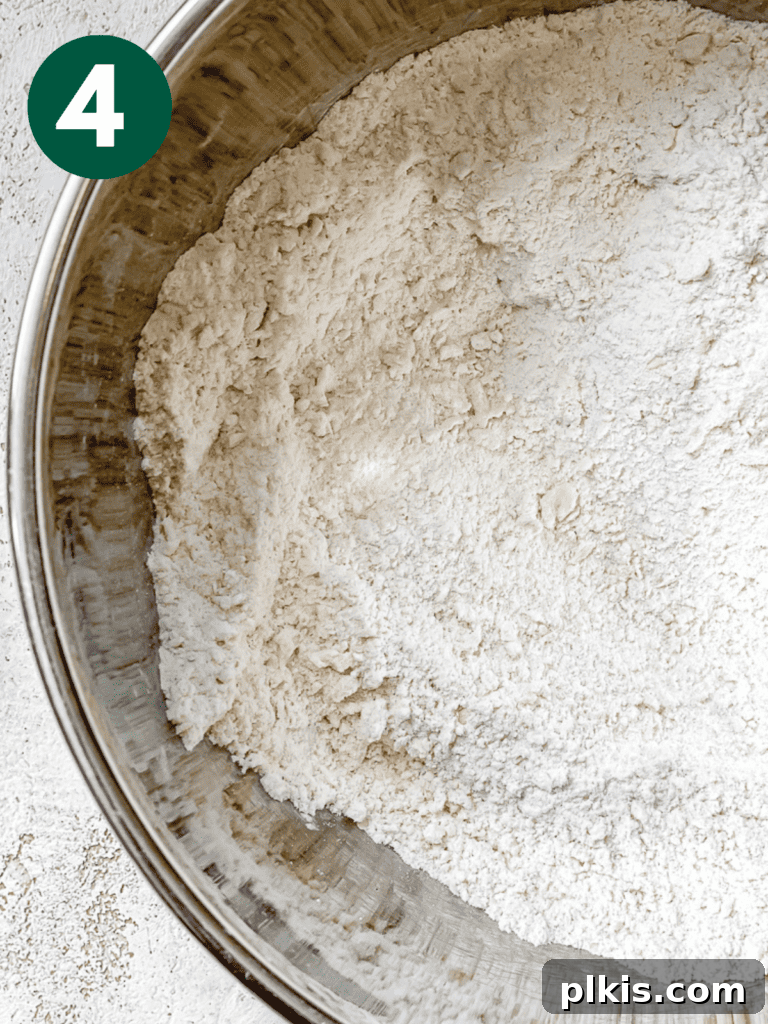
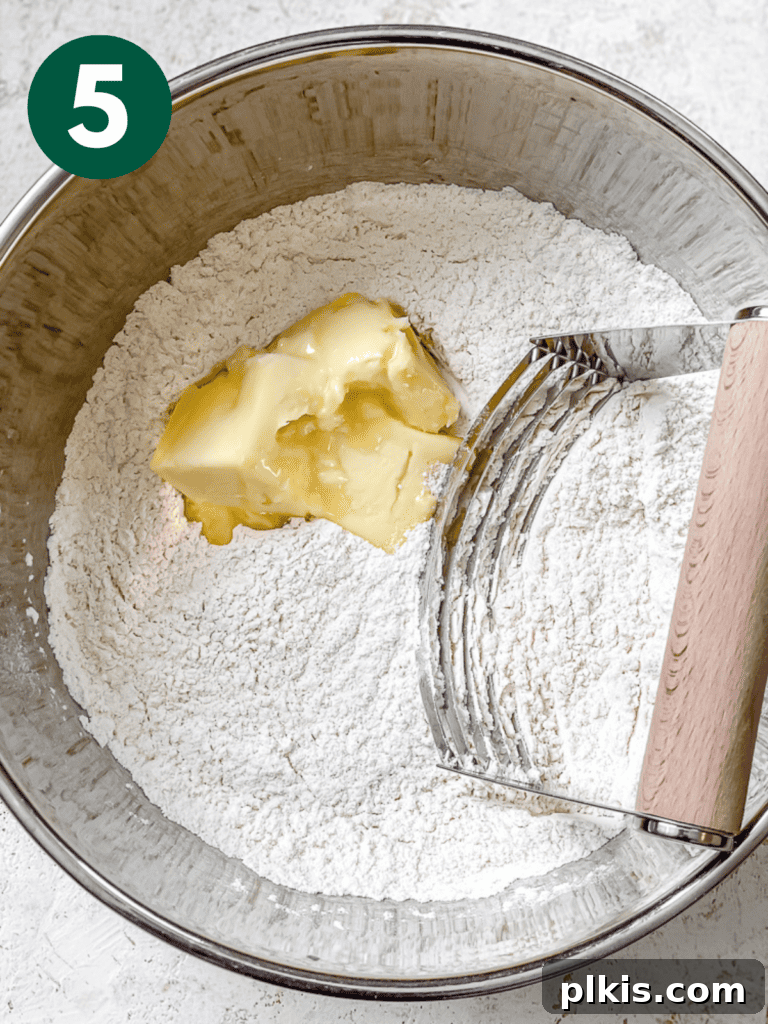
- Add the room-temperature vegan butter to the dry mixture. Using a pastry cutter or a fork, “cut” the butter into the flour until the mixture resembles wet sand or coarse crumbs. This step is crucial for creating a tender texture.
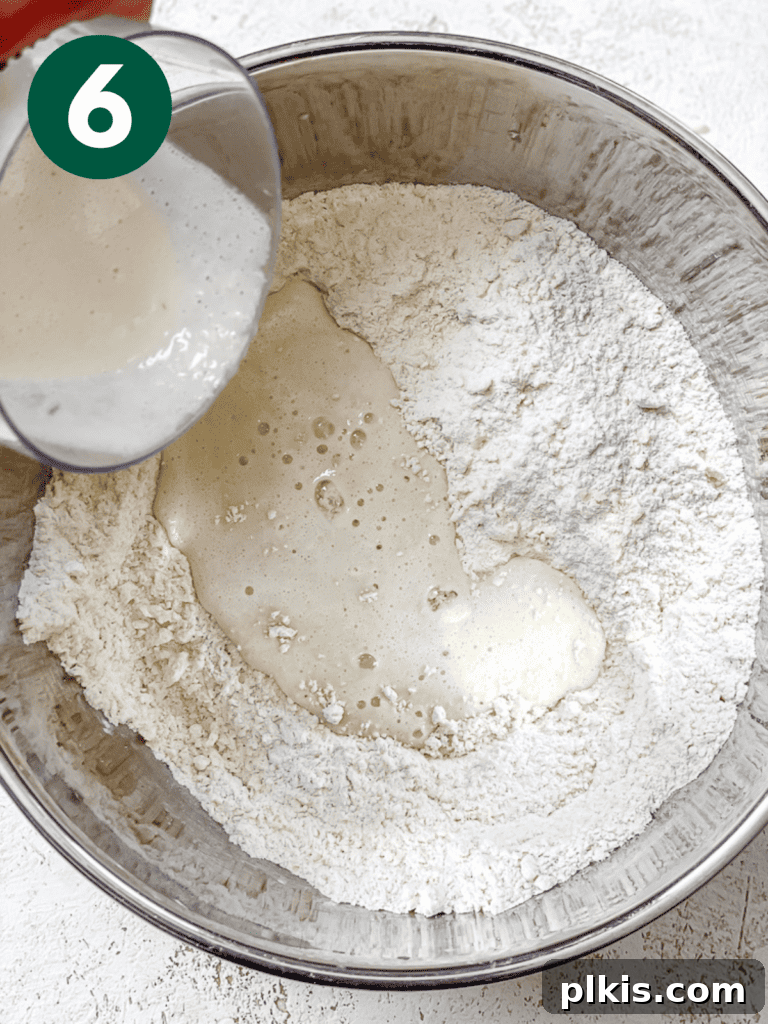
- Stir the applesauce into your prepared vegan buttermilk mixture. Then, pour this wet mixture into the flour and butter mixture. Use a spatula to gently mix until a sticky, shaggy dough forms. Do not overmix; a few dry spots are fine.
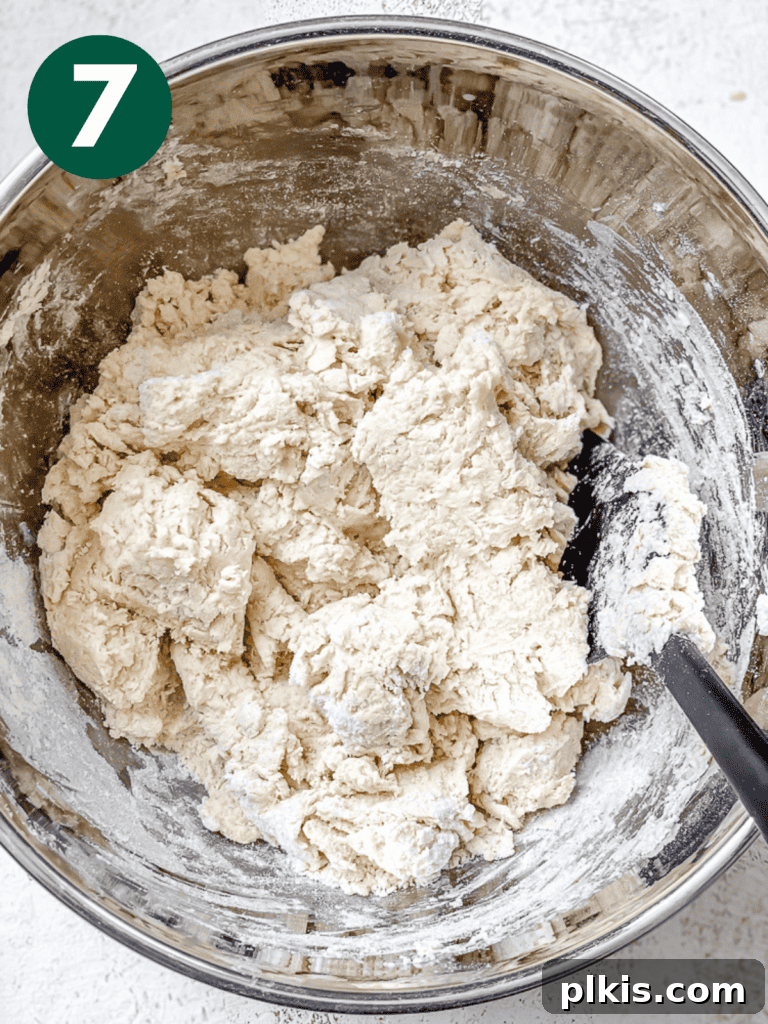
Step 2: Shape and Bake Your Loaf
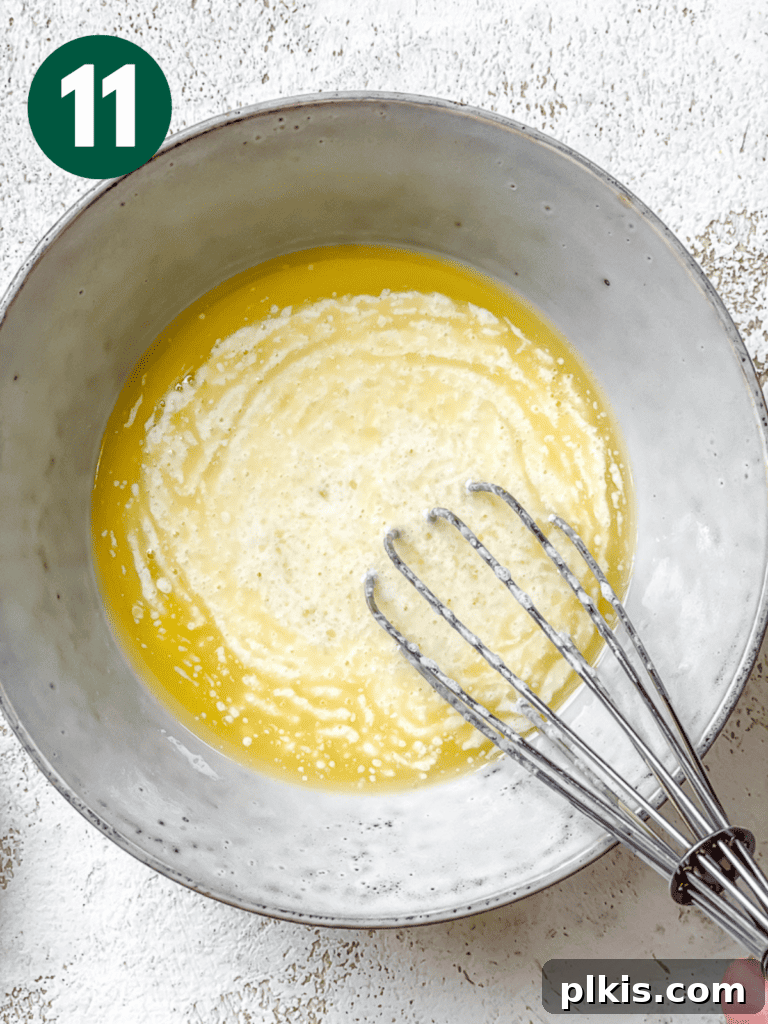
- Prepare the basting mixture: In a small bowl, combine ¼ cup of plain soy milk and 1 teaspoon of apple cider vinegar, mix well, and set aside for 5 minutes. Melt ¼ cup of vegan butter (about 30-35 seconds in the microwave, ensure it’s melted but not boiling hot). Stir the melted butter into the soy milk-vinegar mixture.
- Lightly flour a clean kitchen surface. Turn the shaggy dough onto it. Gently “knead” the dough, more like folding it over itself a few times, just until the small bits are incorporated and it barely holds together in a rough mass. Avoid over-kneading, as this can develop gluten and make the bread tough.
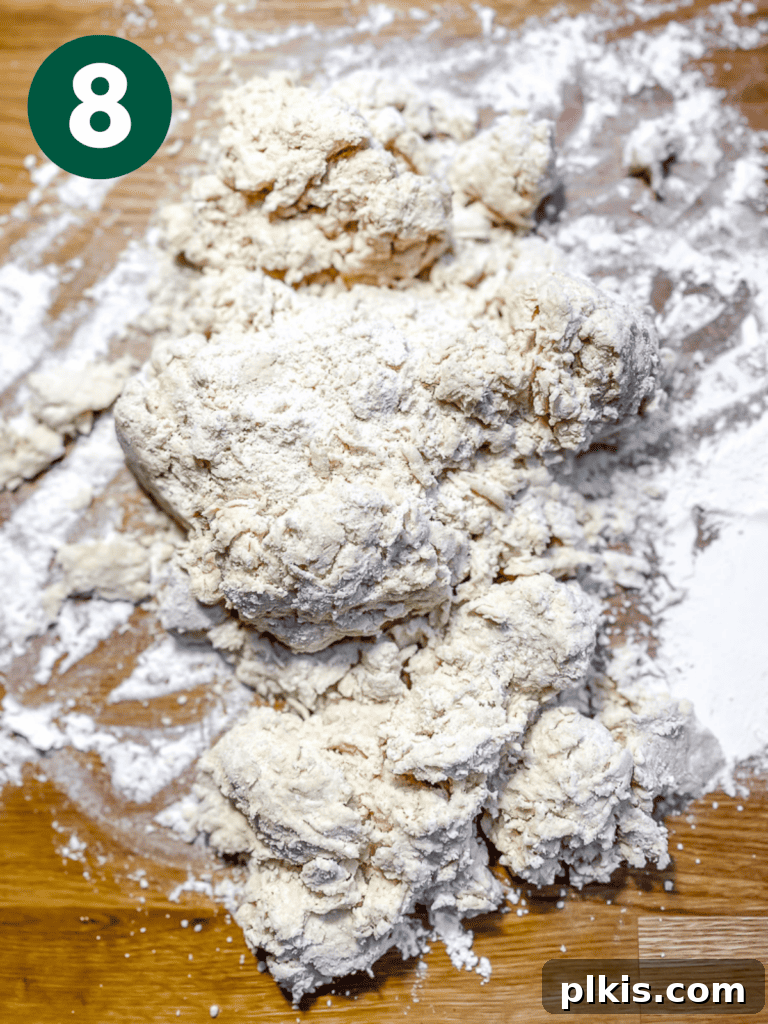
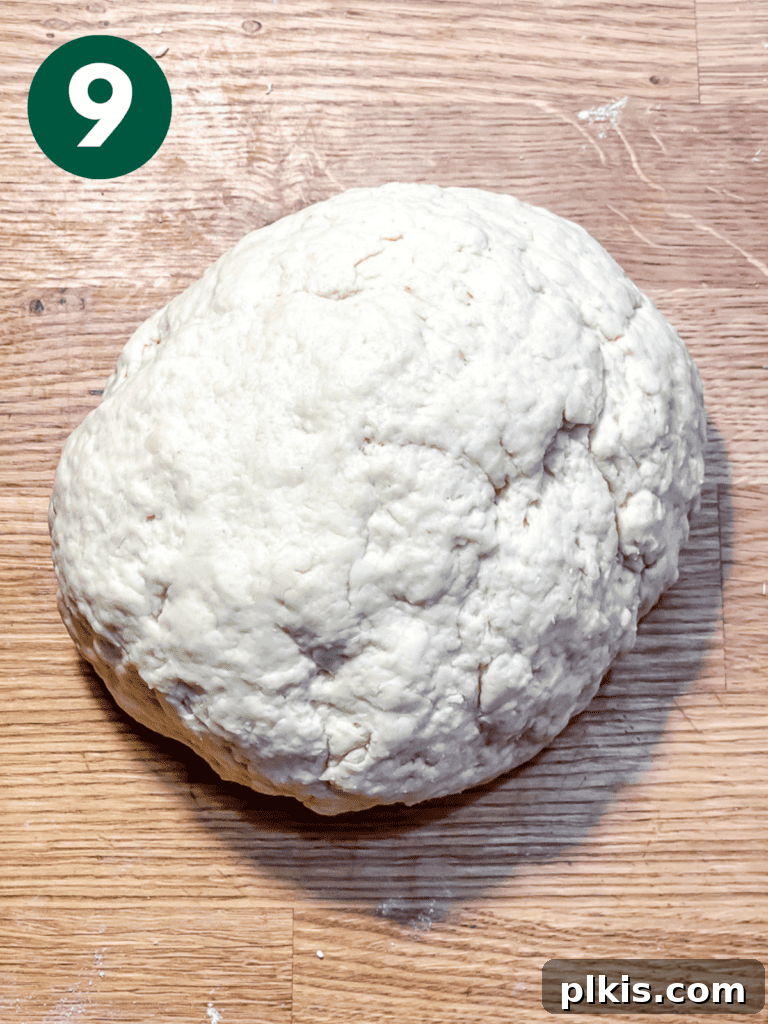
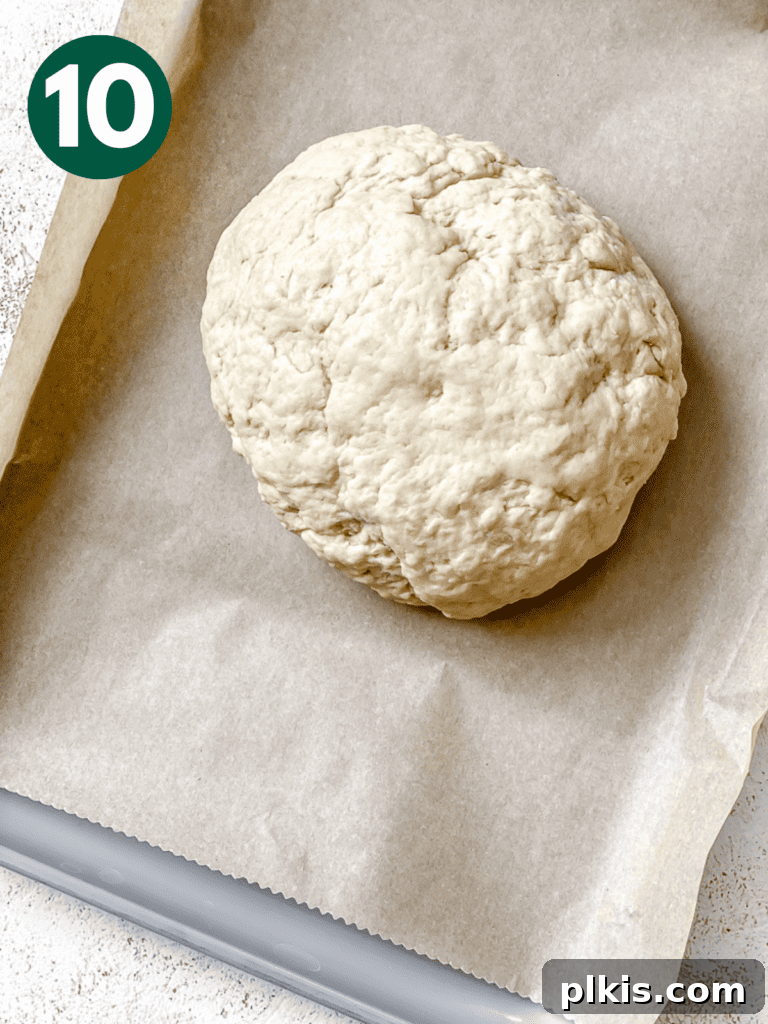
- Next, use your hands to gently lift and drop the dough onto the counter a few times, helping it form a somewhat round, rustic ball. Then, carefully transfer it to your prepared baking sheet.
Baker’s Note: The dough will be sticky, and it’s okay if it looks a bit messy – that’s part of its rustic charm! Work quickly to prevent the vegan butter from melting too much from the heat of your hands. There’s no need for perfection; a craggy appearance is desired!
- Brush a generous layer of the vegan milk and melted butter basting mixture over the entire top and sides of the dough. This adds flavor and helps create that beautiful, browned crust.
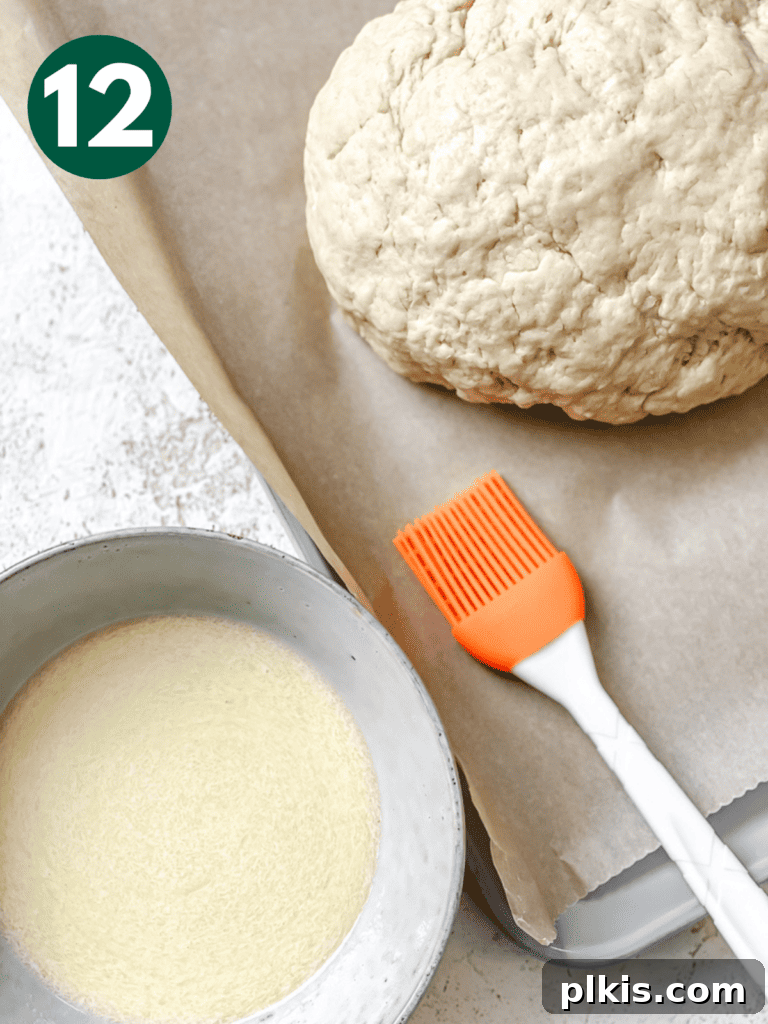
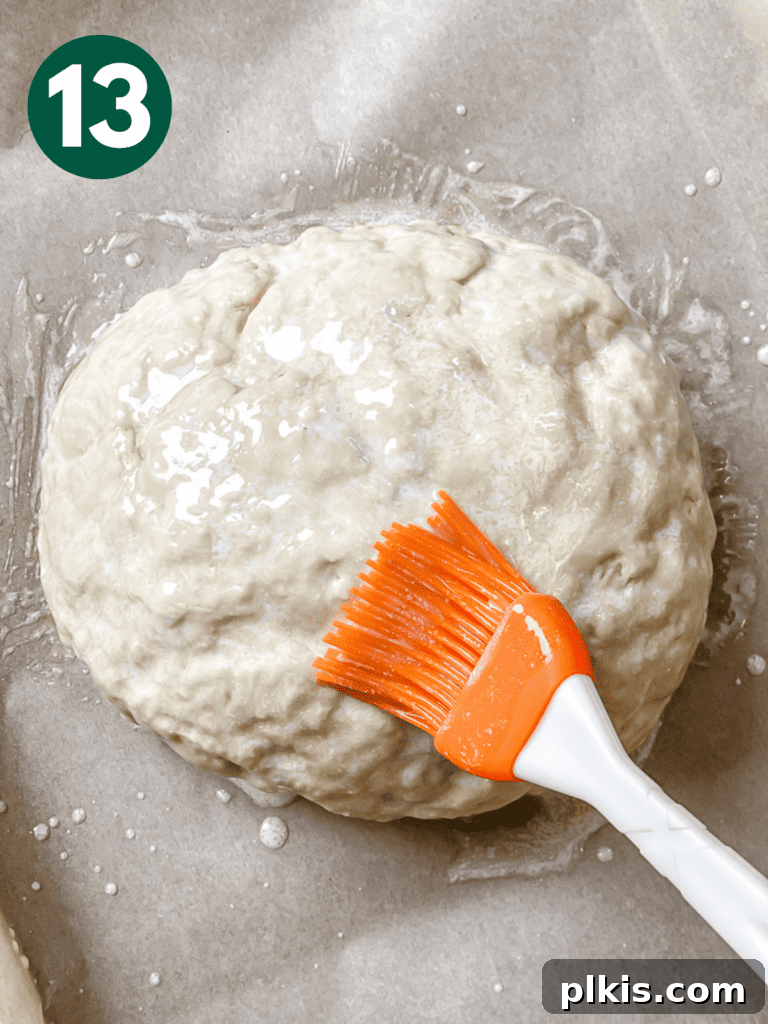
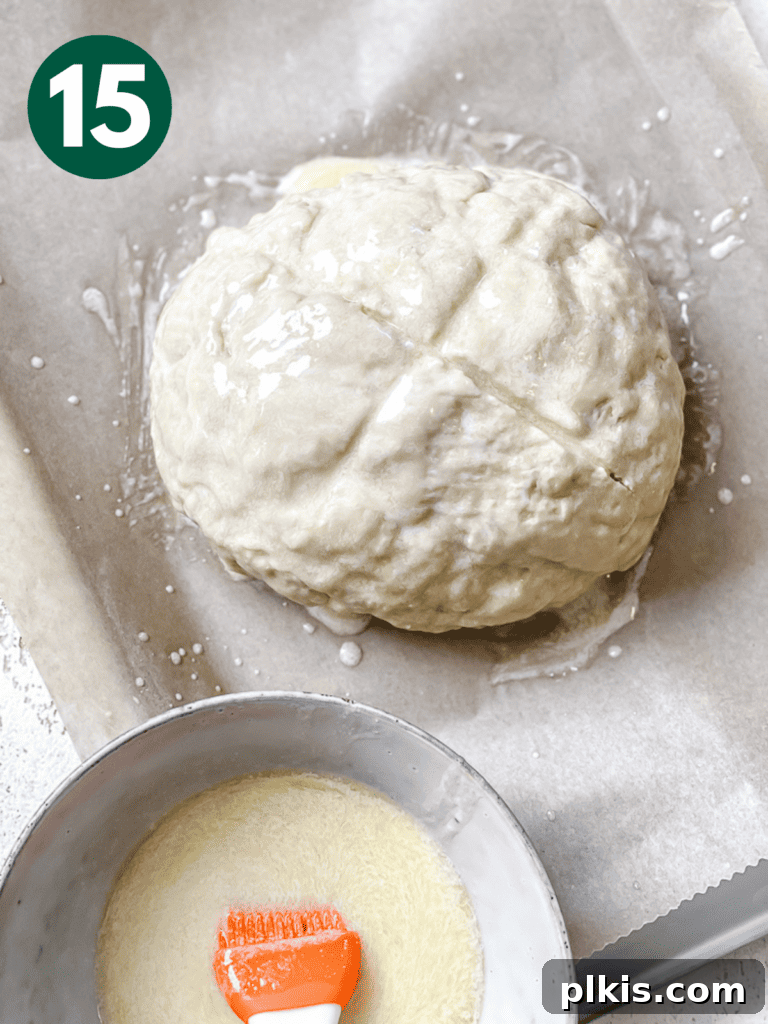
- Using a very sharp knife or a pastry razor, slice a deep ‘X’ into the top of the dough, about ½-inch to 1-inch deep. This traditional scoring helps the bread bake evenly and prevents it from bursting irregularly. Brush more of the basting mixture over the scored dough.
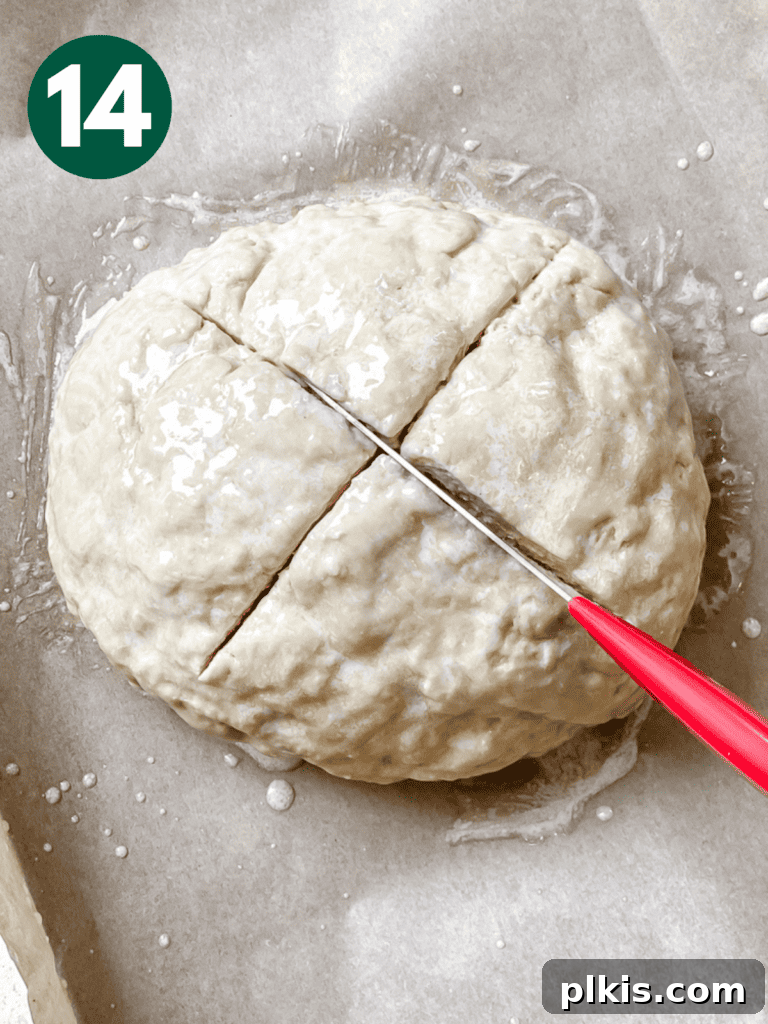
Important: Don’t use all the basting mixture just yet; you’ll use the rest to “baste” the dough once more during baking for maximum flavor and browning.
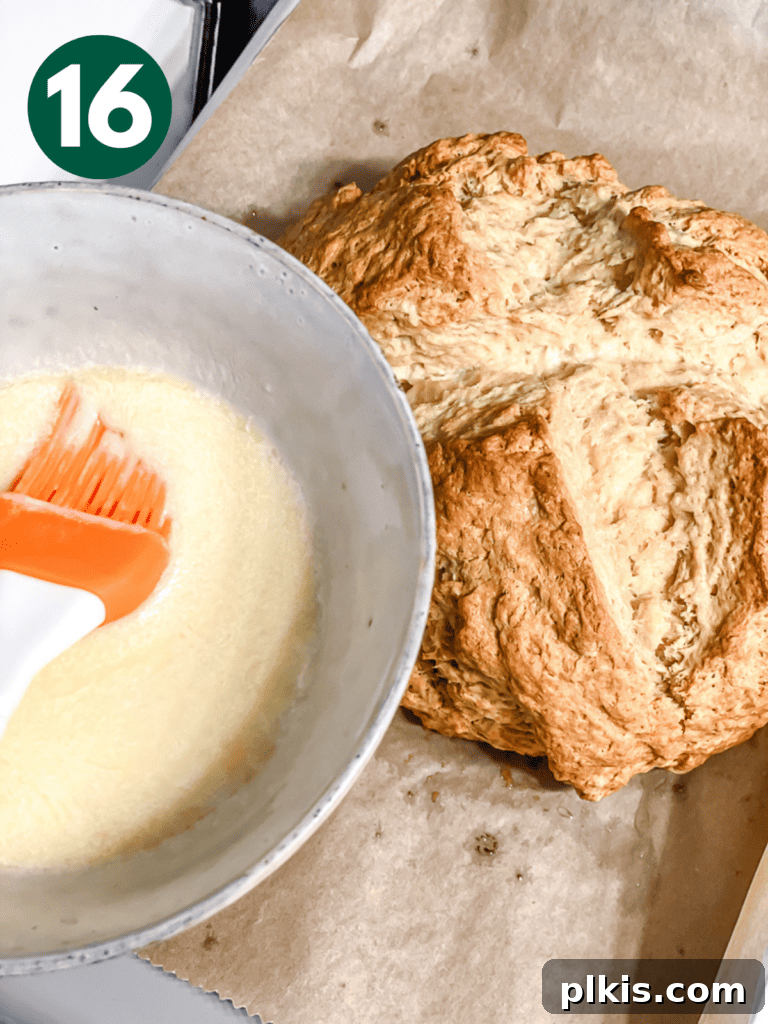
- Transfer the vegan soda bread to the preheated oven and bake for 30 minutes. After 30 minutes, remove the loaf from the oven, generously brush the remaining vegan milk and plant-based butter mixture over it, and return it to the oven for another 10-15 minutes, or until golden brown and cooked through.
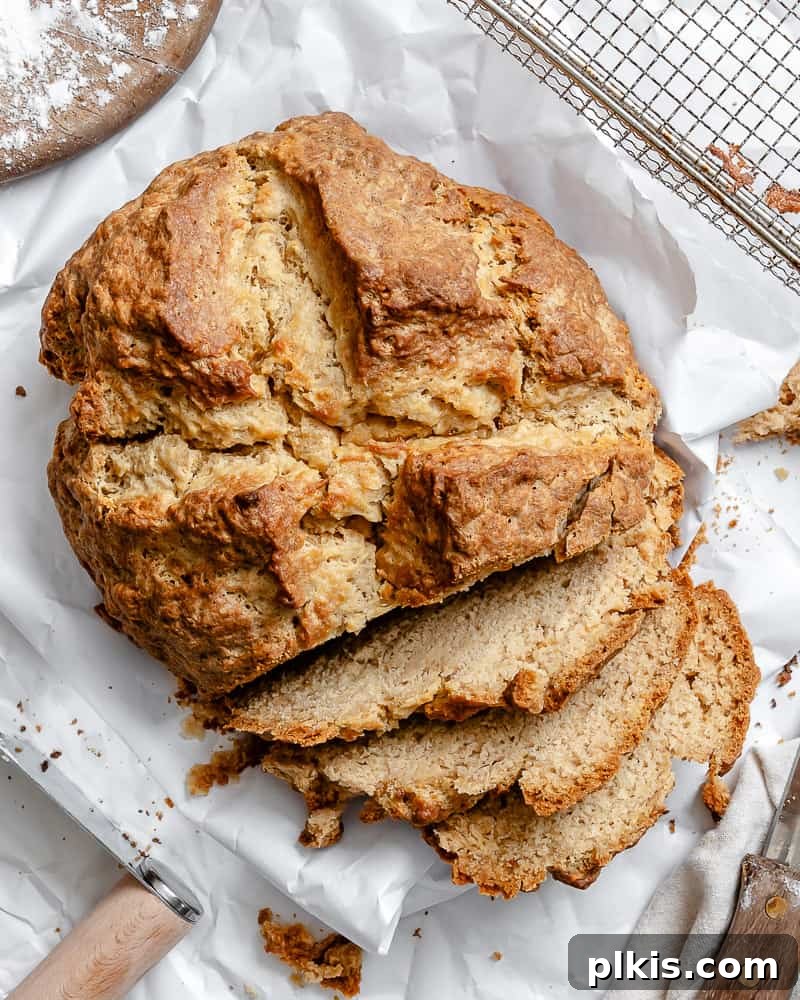
- Finally, remove the freshly baked loaf from the oven and immediately transfer it to a wire cooling rack. Allow it to cool for at least 30 minutes before slicing. This crucial cooling period ensures the internal structure sets properly, preventing a mushy or dense interior. Enjoy your delicious homemade vegan Irish soda bread!
Frequently Asked Questions (FAQs)
While we haven’t personally tested a gluten-free version, you may be able to substitute the all-purpose flour with a 1:1 gluten-free flour blend (such as King Arthur’s or Bob’s Red Mill). Be aware that gluten-free soda bread is likely to be denser and potentially a bit drier than the traditional version.
Your vegan Irish soda bread is perfectly baked when the crust is beautifully golden brown. To double-check, gently tap the bottom of the loaf with your knuckles – it should sound hollow. This indicates it’s cooked through.
A common reason for dense soda bread is overworking the dough. When flour is kneaded too much, the gluten strands develop excessively, leading to a tougher, more compact texture. To avoid this, handle the dough minimally – just enough to bring it together into a rough loaf. The goal is a shaggy dough, not a smooth one!
Plain soy milk typically works best for creating vegan buttermilk because its protein content reacts well with the acid (apple cider vinegar or lemon juice) to curdle and thicken. Oat milk and almond milk can also be used, but soy milk often yields the most effective curdling and a richer flavor.
Yes, absolutely! Fresh lemon juice is an excellent substitute for apple cider vinegar in making vegan buttermilk. Use the same quantity as specified for the vinegar.
Expert Tips for Vegan Soda Bread Success
- Verify Your Baking Soda’s Freshness: Baking soda is crucial for this yeast-free bread. Always ensure it’s not only within its expiration date but also still active. You can quickly test this by combining a small amount with a splash of vinegar or lemon juice; it should vigorously bubble and fizz immediately if it’s still potent.
- Do Not Overwork the Dough: This is arguably the most critical tip for soda bread. It’s perfectly normal and desirable for the dough to be shaggy and somewhat crumbly, not smooth like yeast bread dough. The key is to handle it as little as possible to avoid over-developing the gluten in the flour, which would result in a tough, chewy loaf rather than a tender one.
- Properly Score the Top: The traditional ‘X’ cut into the top of the dough is more than just decorative. It helps the heat penetrate the center of the loaf more efficiently, ensuring it bakes evenly throughout. Aim for a depth of ½ to 1 inch.
- Allow Adequate Cooling Time: Patience is a virtue, especially after baking! Allowing the bread to cool for at least 30 minutes on a wire rack is essential. This allows the internal structure of the loaf to properly ‘set.’ Slicing it too soon can lead to a mushy, dense, or crumbly interior.
- Use Room-Temperature Vegan Butter: Just like in traditional baking, room-temperature butter cuts into the flour much more easily, creating those desirable pockets of richness and contributing to a tender crumb.
- Measure Flour Correctly: For accurate results, spoon your flour into the measuring cup and then level it off with a straight edge, rather than scooping directly from the bag (which can compact the flour and lead to using too much).
Delightful Ways to Enjoy Vegan Irish Soda Bread
The beauty of dairy-free soda bread lies in its versatility. It can be enjoyed in a myriad of ways, from simple pleasures to sophisticated pairings, suitable for any time of day:
- Classic Comfort: Serve it warm or lightly toasted with generous lashings of vegan butter, a dollop of your favorite jam, marmalade, or fruit preserves.
- Sandwich Base: Its dense yet soft texture makes it an excellent foundation for creating delicious sandwiches, especially with savory fillings.
- Breakfast Bliss: Enjoy it for breakfast alongside fluffy scrambled tofu, avocado, or other plant-based breakfast toppings.
- Soup & Stew Companion: It’s the ultimate accompaniment to hearty meals! Perfect for soaking up the rich broths of creamy corn chowder, comforting chickpea soup, warming root vegetable and lentil stew, or a savory vegan Irish stew.
- Dipping Delight: Use slices to dip into robust sauces, gravies, or flavorful dishes like vegan chili.
- Pasta Partner: It makes a wonderful side for various pasta dishes, including spaghetti with roasted red pepper and sweet potato cream sauce, or a creamy brown rice risotto.
Storage & Freezing Guidelines
This bread is best enjoyed fresh and warm, but leftovers are still delicious with proper storage.
Store any leftover vegan soda bread in a cloth bag, a bread box, or wrapped in wax paper at room temperature for 2-3 days. Avoid airtight plastic containers, as they can make the crust soft.
If your vegan soda bread starts to feel a little tough or dry, you can easily freshen it up. Simply sprinkle it with a bit of water and microwave it for 15-30 seconds, or bake it in a preheated oven (around 300°F/150°C) for 5-10 minutes until warm and slightly softened.
Can You Freeze Irish Soda Bread?
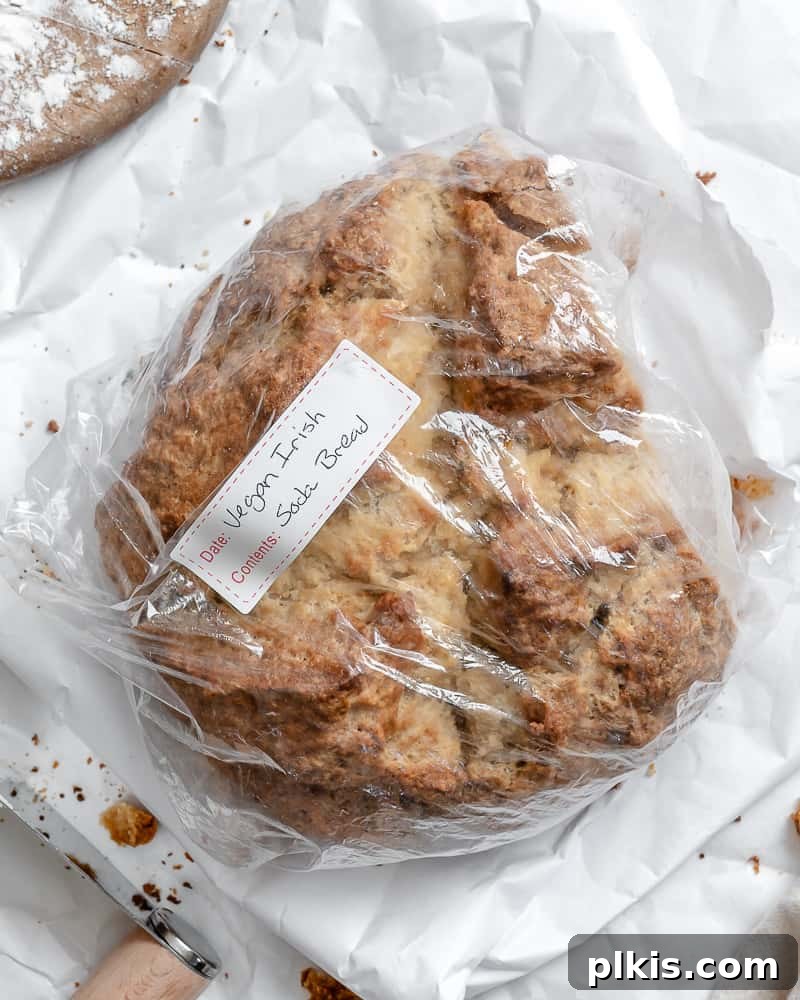
Yes, vegan Irish soda bread freezes beautifully! You can freeze it whole or sliced. To freeze, wrap the cooled bread tightly in plastic wrap, then place it in a freezer-safe Ziplock bag or Stasher bag. It will keep well in the freezer for 2-3 months. When ready to enjoy, thaw at room temperature, or gently reheat in the microwave or oven until warm.
Explore More Vegan Bread Recipes
If you loved making this easy vegan Irish soda bread, be sure to check out these other fantastic plant-based bread recipes:
- Skillet Cornbread
- Vegan Focaccia Bread
- Vegan American Biscuits
- Sweet Potato Biscuits
- Jalapeño Cornbread
Photos by Alfonso Revilla
Vegan Irish Soda Bread
Equipment
-
Measuring Cups
-
Measuring spoons
-
Baking sheet
Ingredients
- 1 cup of plain soymilk
- 1 tablespoon of apple cider vinegar
- 4 cups all-purpose flour
- 3 tablespoons of sugar
- 2 teaspoons of baking soda
- 1 tablespoon of baking powder
- ½ teaspoon salt
- ½ cup of vegan butter, room temperature
- ½ cup of plain applesauce
- ¼ cup of plain soy milk
- 1 teaspoon of apple cider vinegar
- ¼ cup vegan butter, melted
Instructions
-
Preheat the oven to 375 degrees F. and line a large baking sheet with a silicone mat or parchment paper. Set aside.
-
In a cup, mix together the soy milk and apple cider vinegar. Whisk until it thickens. Set aside for 5 minutes.
-
In a large mixing bowl, mix the flour, sugar, baking soda, baking powder, and salt.
-
Add the vegan butter and using a pastry cutter or a fork, work the vegan butter into the flour until a sandy texture is achieved.
-
Add the applesauce to the cup with the vegan milk and apple cider vinegar mixture. Mix well and add it to the bowl with the flour mixture. Using a spatula, mix well. The dough will be sticky and somewhat broken apart.
-
Lightly flour a clean surface and place the dough on it. Knead the dough until all the small particles are incorporated into the dough. Do not over knead. Form a ball by shaping it with your hands and gently lifting and dropping the dough on the counter. It will be sticky so it could be a bit messy. Just work quickly so the vegan butter does not melt with the heat of your hands. Place the dough ball on the baking sheet. And set aside.
-
Mix the ¼ cup of soymilk and 1 teaspoon of apple cider vinegar. Mix well until it thickens. Set aside for 5 minutes. Put the ¼ cup of vegan butter in a microwave safe bowl and microwave for 35 seconds or until melted, but not boiling or overheated.
-
Add the vegan butter to the soy milk apple cider vinegar mixture. Mix well and set aside.
-
Brush the soy milk and vegan butter mixture on top of the dough.
-
Using a very sharp knife or a pasty razor. Slice an X on top of the dough ball.
-
Brush more of the sory milk and vegan butter mixture all around the dough.
-
Place in the middle rack of the oven and bake for 30 minutes.
-
Remove the bread from the oven and generously brush the remaining plant milk and vegan butter mixture on the bread.
-
Put the baking sheet back in the oven and bake for 10 minutes.
-
Remove from the oven and immediately remove the bread from the baking sheet and transfer the bread to a cooling rack. Allow it to cool for 30 minutes before slicing.
-
Enjoy it warm and fresh or allow it to cool completely.
Notes
- Check your baking soda: Check it’s not only in date but definitely still active by combining a little with vinegar/lemon juice. It should bubble/fizz immediately.
- Don’t overwork the dough: It’s normal for it to be shaggy. It won’t be smooth, and neither should it be. The key is to avoid strengthening the gluten in the flour.
- Score the top: This helps heat reach the center to bake evenly. ½-1 inches deep is perfect.
- Leave it to cool: This ensures it properly ‘sets’ inside before slicing. Otherwise, it can be mushy and dense.
Nutrition
Carbohydrates: 446g
Protein: 61g
Fat: 133g
Saturated Fat: 27g
Polyunsaturated Fat: 41g
Monounsaturated Fat: 58g
Trans Fat: 16g
Sodium: 5843mg
Potassium: 1094mg
Fiber: 16g
Sugar: 56g
Vitamin A: 3352IU
Vitamin C: 22mg
Calcium: 1204mg
Iron: 26mg
Additional Info
Tried this recipe?
Please tag us at @PlantBasedOnABudget! 🙂