
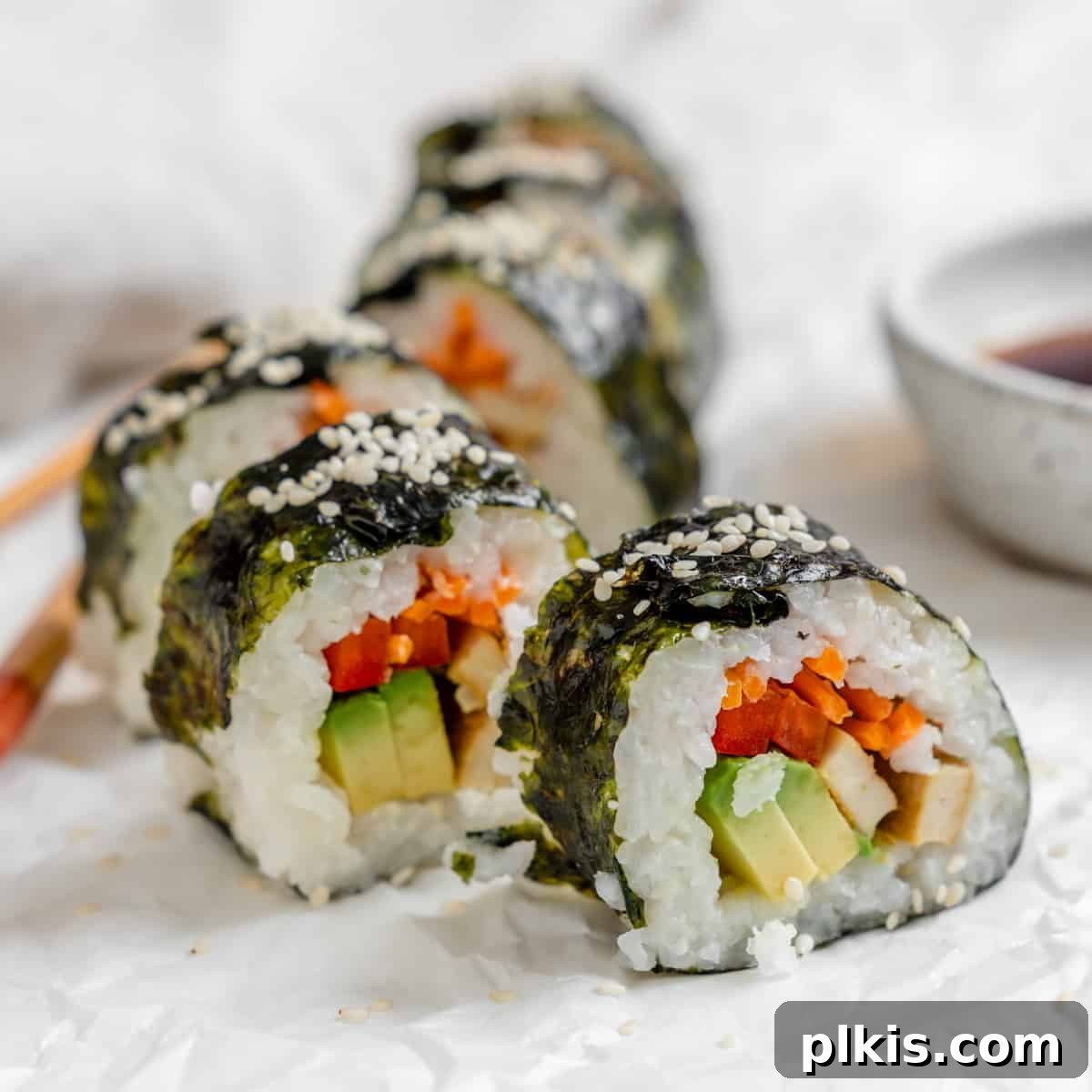
Embark on a culinary adventure with these incredible vegan sushi rolls, featuring a delightful medley of mixed vegetables and perfectly crispy tofu. Often referred to as vegetable maki, these homemade rolls are an absolute game-changer for anyone looking to enjoy fresh, flavorful, and nutritious sushi. Whether you’re a seasoned chef or a complete beginner in the kitchen, this recipe is designed for ease, promising crispy, crunchy, tender, and utterly delicious results every time. Beyond their irresistible taste and texture, these rolls are incredibly versatile, allowing you to customize fillings to your heart’s content, making them an ideal choice for healthy, plant-based meals.
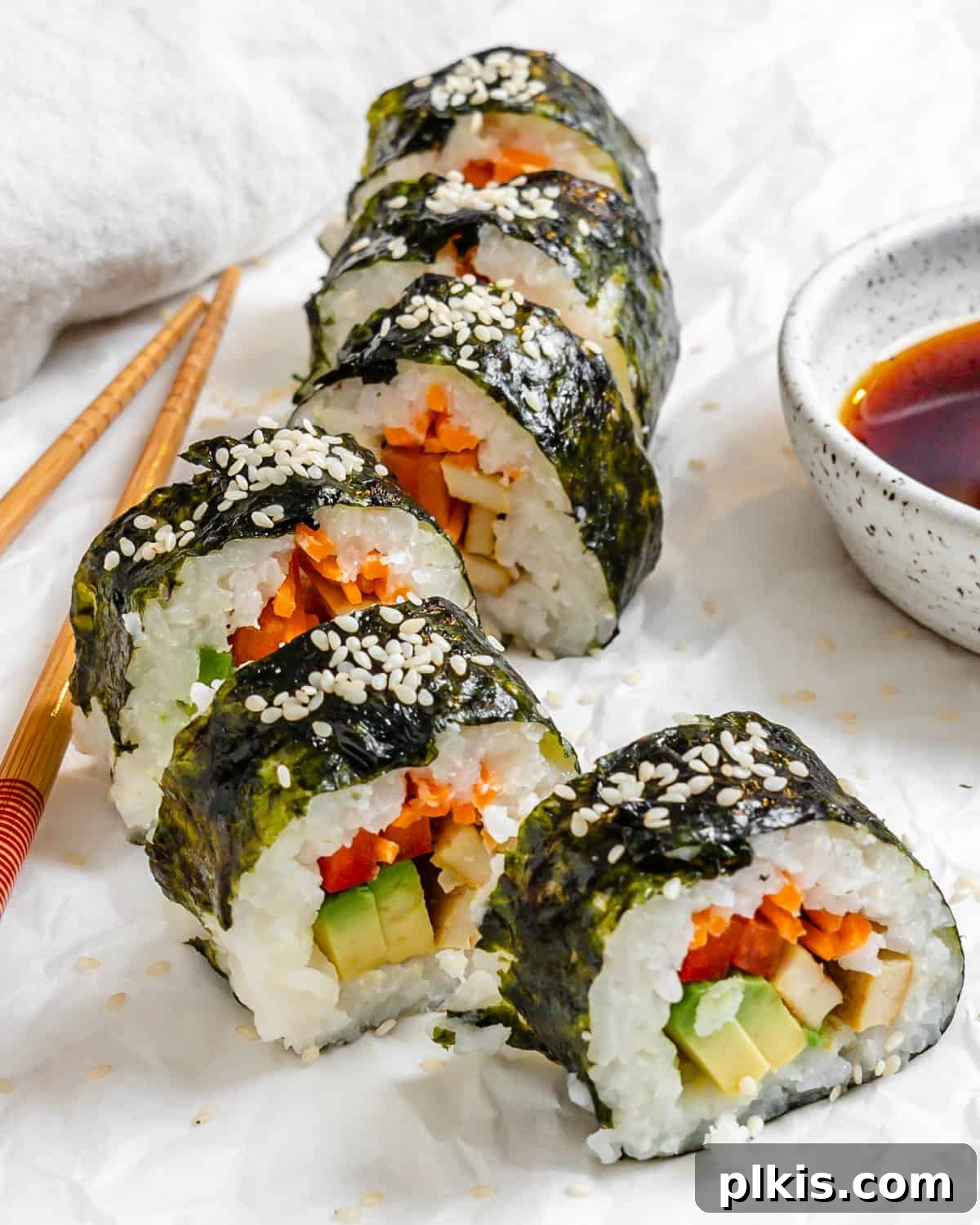
Mastering Vegan Sushi Rolls: A Beginner-Friendly Guide
For those embracing a vegan lifestyle or simply exploring plant-based cuisine, finding high-quality, delicious, and affordable sushi can often be a challenge. Thankfully, the art of crafting delectable vegan sushi rolls – specifically these vibrant tofu and vegetable maki rolls – at home is much simpler than you might imagine. Not only does it offer a significant cost saving compared to takeout, but it also provides the freedom to select your favorite fresh ingredients, ensuring a superior taste experience every time. Imagine the satisfaction of creating restaurant-quality sushi in your own kitchen!
While there might be a slight learning curve initially, mastering the technique of rolling sushi is a rewarding skill. Once you get the hang of it, you’ll find yourself constantly craving these fresh and flavorful vegetable maki rolls. Making sushi can even transform into a fun, interactive event! Gather your household or a group of friends for a lively sushi-making party. It’s an engaging evening activity that everyone, regardless of their cooking experience, is sure to enjoy, creating lasting memories along with delicious food.
This vegan sushi recipe is incredibly adaptable, but we’re excited to share one of our absolute favorite filling combinations: crispy tofu and a rainbow of fresh vegetables. This pairing isn’t just visually stunning; it’s a powerhouse of nutrition. The vibrant array of veggies contributes essential micronutrients, while the seasoned tofu provides a robust source of plant-based protein, making each bite both satisfying and incredibly wholesome. The blend of textures and flavors creates a harmonious balance that will tantalize your taste buds.
One of the best aspects of this recipe is that you don’t need an arsenal of specialized kitchen equipment to get started. Basic tools you likely already own are often sufficient. And the real magic happens once you’ve conquered the rolling technique: a world of endless customization opens up. You can experiment with virtually any vegetable, fruit, or plant-based protein, making each batch uniquely yours. Keep reading as we dive into a comprehensive list of our top vegan sushi filling ideas!
Essential Vegan Sushi Ingredients and Smart Substitutions
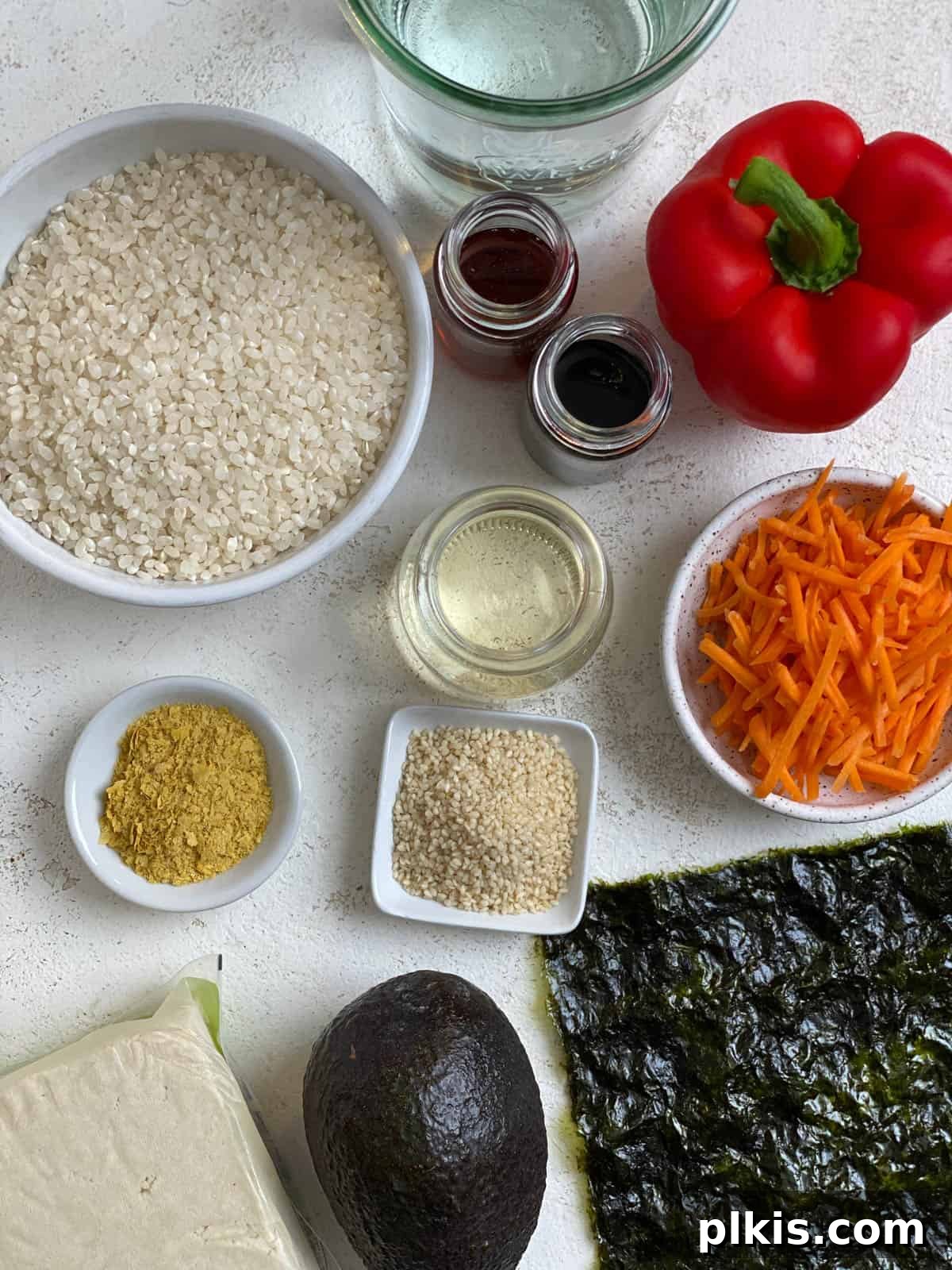
Crafting perfect veggie sushi rolls hinges on three fundamental components: exquisitely crispy tofu, a colorful assortment of fresh mixed vegetables, and perfectly seasoned sushi rice. Each element plays a crucial role in achieving the optimal flavor, texture, and structural integrity of your homemade maki.
Crafting the Perfect Crispy Tofu
- Tofu Selection: For these tofu sushi rolls, it is crucial to select firm or extra-firm tofu (or even tempeh). These varieties possess a denser texture, making them ideal for pressing out excess water, which is key to achieving a delightfully crispy exterior and a firm, roll-friendly interior. Softer tofus tend to crumble and release too much moisture.
- Soy Sauce (or Alternatives): Regular dark or reduced-sodium soy sauce will infuse the tofu with a rich, savory umami flavor. If you adhere to a gluten-free diet, fear not! Tamari or coconut aminos are excellent gluten-free alternatives that deliver a similar depth of flavor without compromising your dietary needs.
- Nutritional Yeast: This magical ingredient is a vegan pantry staple for a reason. Nutritional yeast imparts an umami-rich, slightly “cheesy” and nutty flavor to the tofu, enhancing its savory profile and adding an extra layer of deliciousness that beautifully complements the other sushi components.
For an elevated tofu experience, consider making breaded tofu strips, which add an extra layer of crunch. Alternatively, experiment with other flavorful sauces and marinades, such as a sweet and savory teriyaki sauce, to create teriyaki tofu that offers a different, yet equally delicious, taste dimension.
The Foundation: Perfect Sushi Rice
- Choosing the Right Rice: The star of any sushi roll is the rice. Always opt for rice specifically labeled as sushi rice, which is a short-grain sticky rice. Its unique texture and starch content allow it to bind together perfectly, making it easy to roll. If sushi rice is unavailable, a high-quality short-grain white rice, preferably a ‘sticky rice’ variety, can be used as a close substitute. Avoid long-grain rice, as it lacks the necessary stickiness.
- Rice Vinegar: This is the secret to authentic sushi flavor. Rice vinegar provides the classic tangy, slightly sweet, and distinct aroma that characterizes traditional sushi rice. It balances the richness of the fillings and adds a refreshing zing to each bite.
- Salt: A simple yet essential ingredient, salt is used to season the sushi rice, enhancing its natural flavor and ensuring a well-rounded taste profile. Just a pinch can make a significant difference.
- Sweetener: We recommend using agave or another liquid sweetener for ease of dissolution. This adds a subtle sweetness that perfectly complements the tanginess of the rice vinegar. If you prefer using granulated sugar, gently heat it with the rice vinegar until it fully dissolves before mixing it into the cooked rice.
Complementary Vegetable Sushi Ingredients
- Nori Seaweed: These essential dark green sheets are what hold your sushi rolls together. Ensure you use nori seaweed sheets specifically designed for sushi, as they have the correct texture and strength for rolling. Nori also contributes a unique oceanic umami flavor that is characteristic of traditional sushi.
- Vibrant Vegetables: For this vegetable maki, we love incorporating a selection of different vegetables to create a symphony of colors, textures, and flavors. Our top choices include:
- Avocado: Thinly sliced, creamy avocado adds a rich, buttery texture and healthy fats, balancing the crispiness of the tofu and the crunch of other vegetables. Its mild flavor is a perfect complement.
- Carrot: Shredded or cut into thin matchsticks, carrots provide a delightful crunch and a hint of natural sweetness, along with a vibrant pop of orange color.
- Bell Pepper: Thinly sliced red, orange, or yellow bell pepper offers a crisp texture and a sweet, slightly fruity flavor. Their bright colors also make your sushi rolls visually appealing.
- Sesame Seeds (Optional but Recommended): Regular or black sesame seeds, lightly toasted, serve as a beautiful garnish. Beyond their aesthetic appeal, they add a subtle nutty flavor and a delicate crunch, enhancing the overall sensory experience of your sushi rolls.
Unleash Your Creativity: More Vegan Sushi Filling Ideas
The beauty of homemade vegan sushi lies in its boundless versatility. There’s an abundance of other vegetables, fruits, and plant-based elements you can incorporate into your vegetable sushi recipe. Don’t be afraid to mix and match to discover your favorite combinations! Here are some more of our top vegan sushi ideas to inspire your next rolling session:
- Radish: Thinly sliced, radishes add a refreshing, peppery bite and a beautiful pop of pink or red color.
- Cucumber: De-seeded and thinly sliced into matchsticks, cucumber provides a cool, crisp texture and a refreshing, mild flavor that perfectly complements richer ingredients.
- Asparagus: Lightly steamed or blanched, cooked asparagus spears offer a tender-crisp texture and earthy flavor.
- Eggplant: Roasted until tender and then thinly sliced, eggplant brings a savory, meaty depth to the rolls.
- Green Beans: Blanched until tender-crisp, green beans offer a lovely snap and a fresh, subtly sweet taste.
- Sweet Potato, Butternut Squash, or Pumpkin: Roasted and cut into fries or sticks, these ingredients add a sweet, creamy, and earthy element.
- Mango: Thinly sliced ripe mango offers a tropical sweetness and juicy texture, pairing exceptionally well with cooling cucumber and creamy avocado.
- Vegan Cream Cheese: A thin smear of vegan cream cheese can add a luxurious creaminess and tangy flavor, mimicking the richness found in some traditional rolls.
- Spring Onion/Chives: Long, thin slices of spring onion or finely chopped chives introduce a mild oniony zest and a fresh, herbaceous note.
- Sprouts: Alfalfa, broccoli, or sunflower sprouts add a delicate crunch and a boost of fresh, raw nutrients.
- Purple Cabbage: Finely shredded purple cabbage provides a vibrant color, a satisfying crunch, and a slightly peppery flavor.
- Mushrooms: Marinated, sautéed, and thinly sliced mushrooms (like shiitake or oyster) contribute a deep umami flavor and a satisfying, chewy texture.
- Pickled Vegetables: Think pickled daikon (takuan), pickled ginger, or other fermented vegetables for a tangy, savory, and often sweet counterpoint.
- Spinach: Lightly blanched or fresh spinach leaves can add a subtle earthy flavor and a soft texture.
- Crispy Onions: For an irresistible textural contrast, sprinkle crispy fried onions over your completed vegetable maki before serving.
To add an extra layer of excitement and flavor, consider garnishing your plant-based sushi with a homemade spicy mayo topping. Simply combine your favorite vegan mayonnaise with hot sauce (like sriracha) to achieve your desired level of heat, then artfully drizzle it over your finished tofu sushi rolls. This creamy, spicy sauce elevates the entire dish.
Step-by-Step Guide: How to Make Vegan Sushi Rolls
While making vegan sushi rolls involves several distinct preparation steps, the overall process is surprisingly straightforward once you become familiar with the technique. Follow this detailed, step-by-step guide to create beautiful and delicious homemade sushi.
Step 1: Preparing the Crispy Tofu
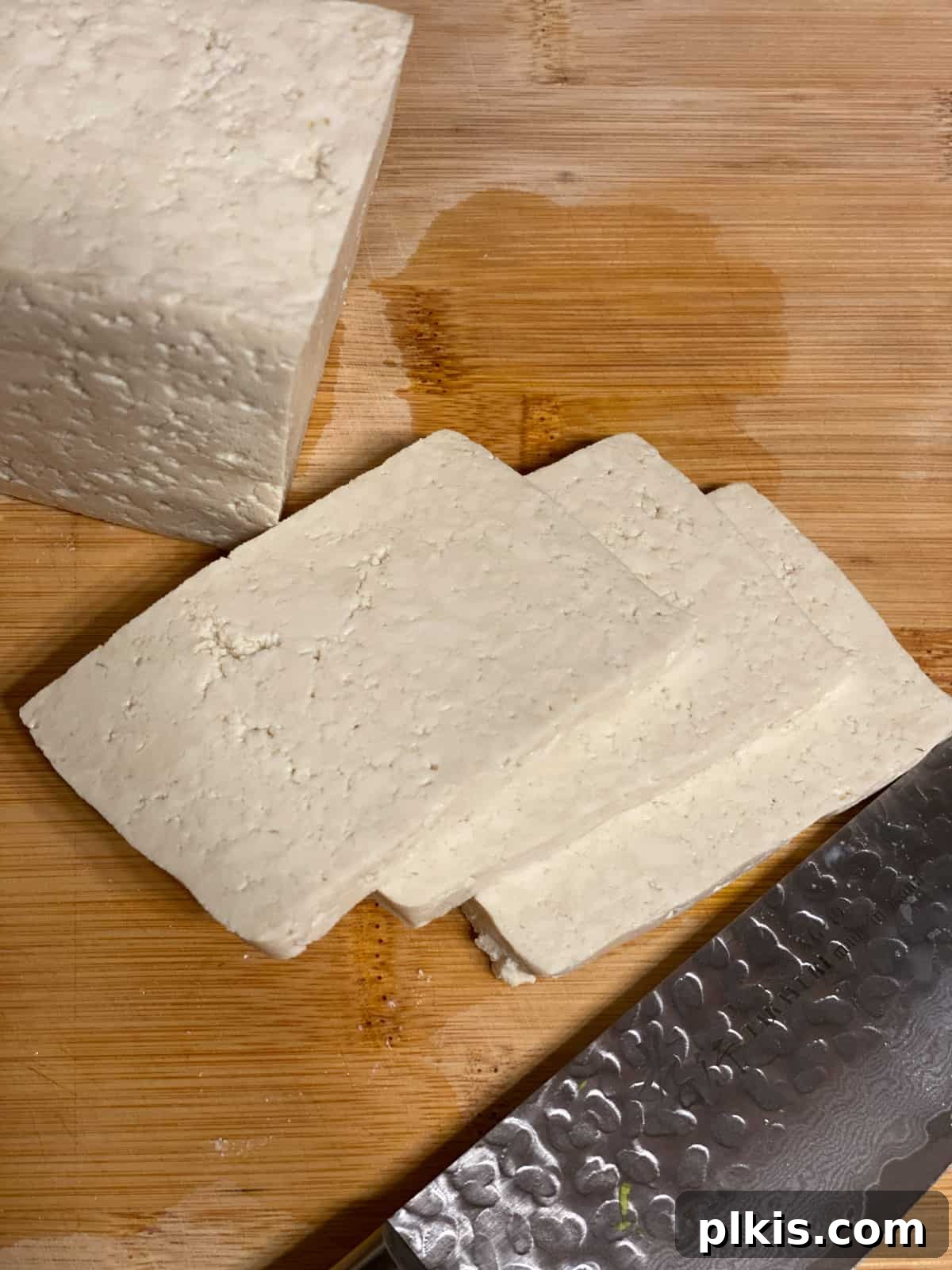
Achieving perfectly crispy tofu is fundamental to this recipe. Before any seasoning or baking, it’s essential to press the tofu to remove excess liquid. This crucial step prevents soggy tofu and allows it to absorb marinades more effectively and crisp up beautifully. Aim to press your tofu for at least 30 minutes, or up to several hours for best results, using a tofu press or by wrapping it in paper towels and placing a heavy object on top. Once pressed:
- 1) Preheat your oven to 425°F (220°C). Line a baking sheet with parchment paper to prevent sticking and aid in cleanup.
- 2) Slice the pressed tofu into ½-inch thick slabs. Arrange these slices evenly across the prepared baking sheet. Drizzle them generously with soy sauce (or tamari/coconut aminos) and sprinkle with nutritional yeast. Gently rub the seasonings onto both sides of each tofu slice, ensuring they are thoroughly and evenly coated. This creates a flavorful crust.
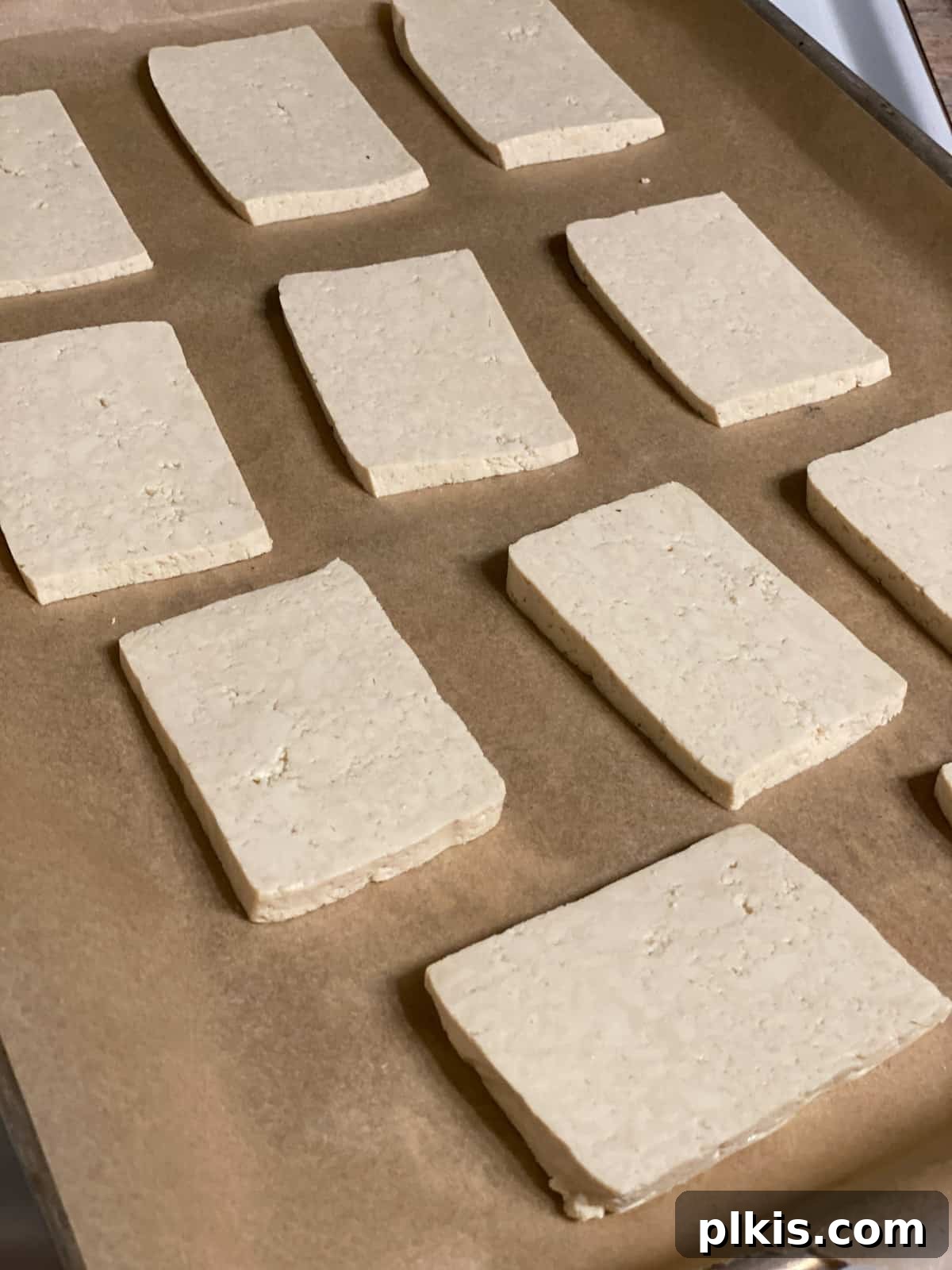
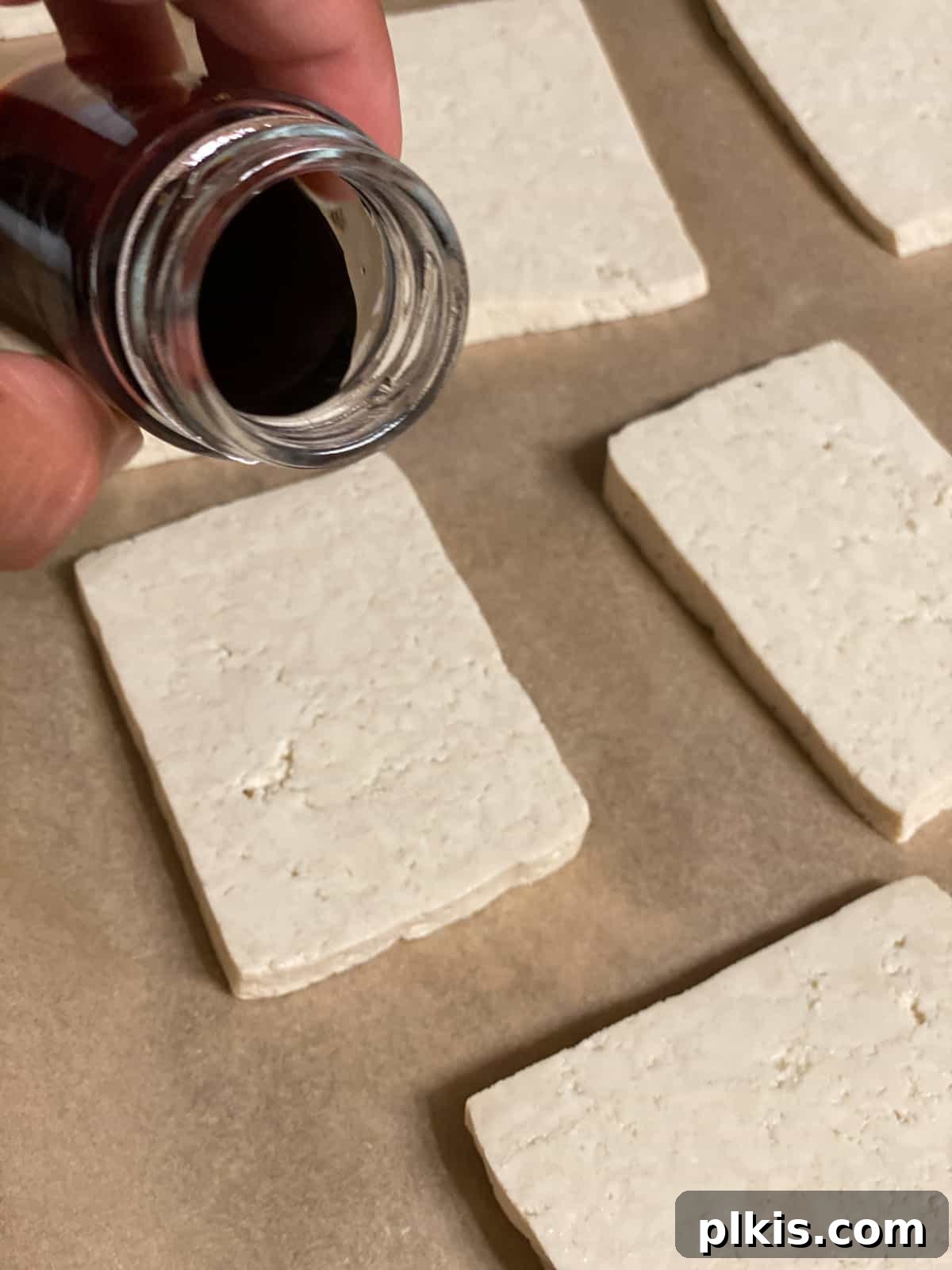
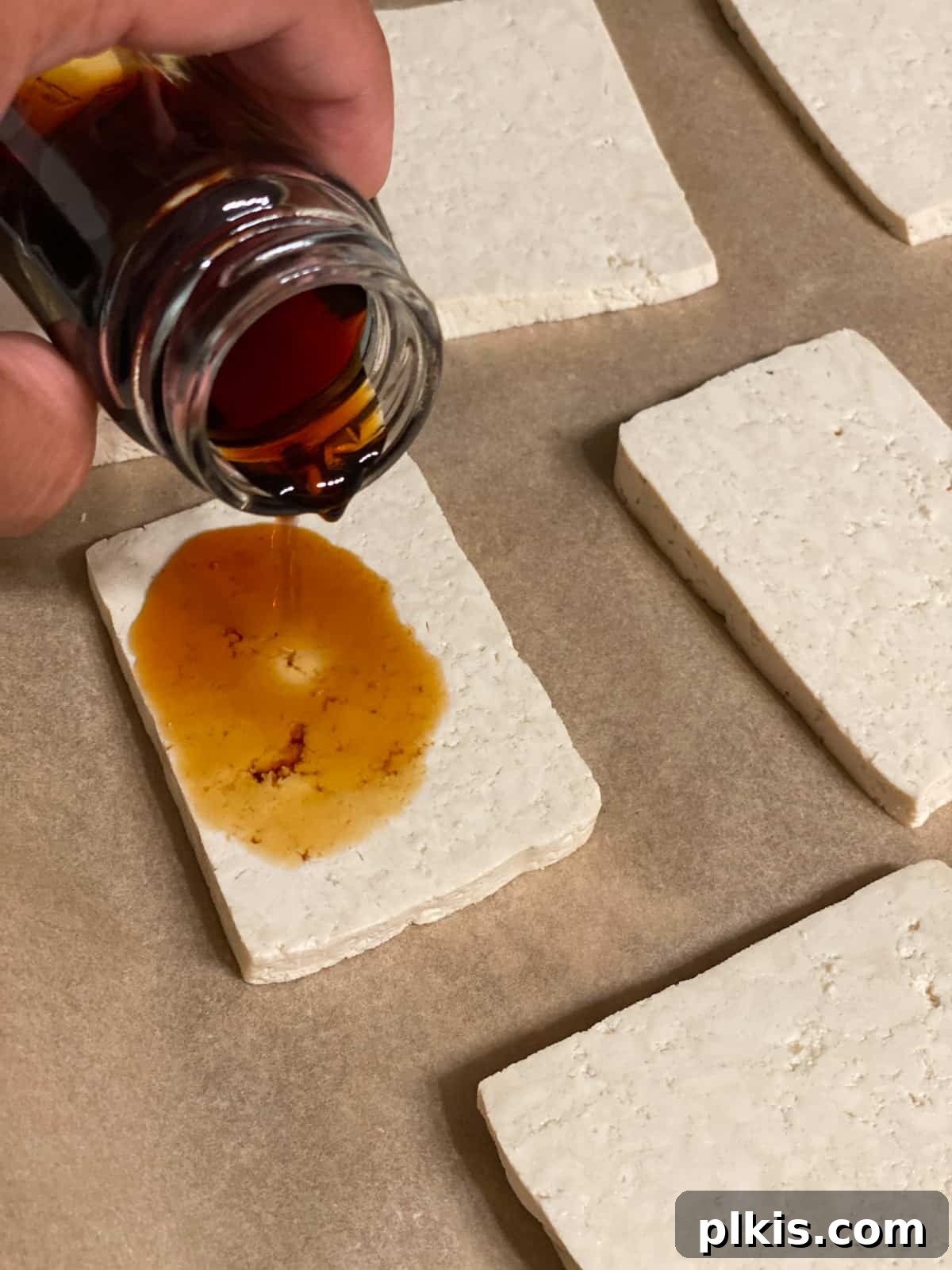
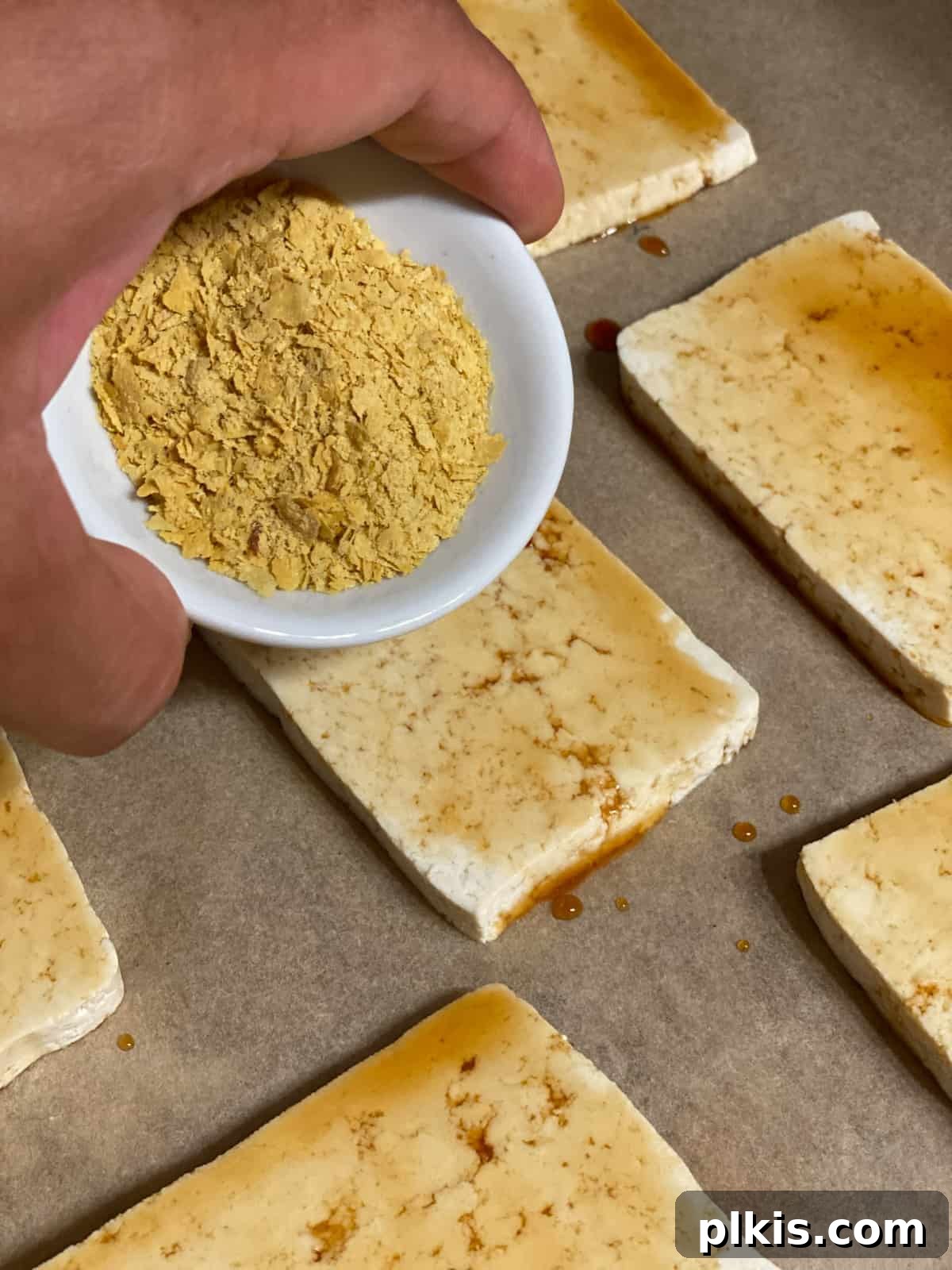
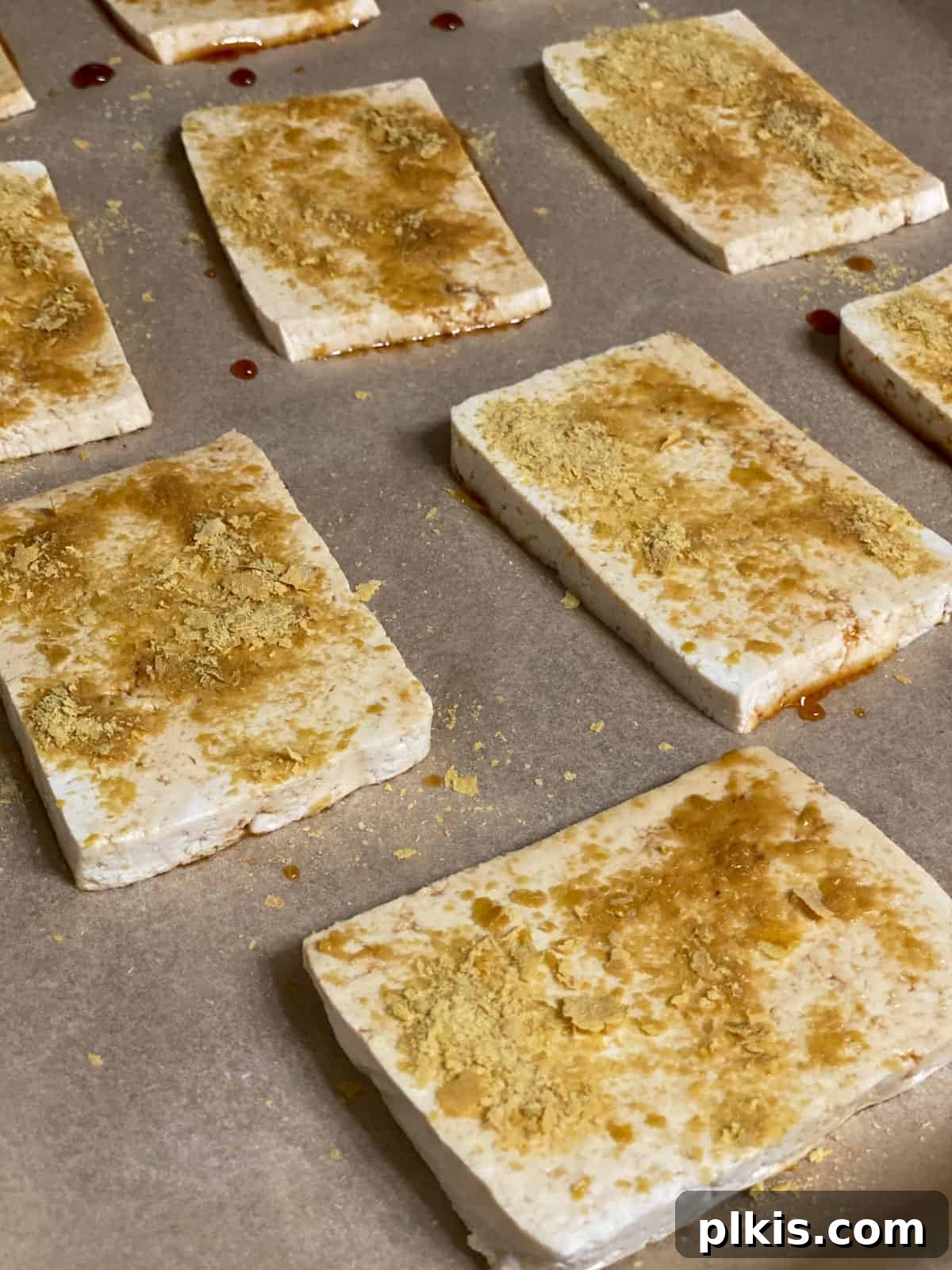
For an even crispier texture, lightly dust the seasoned tofu slices with a small amount of cornstarch before baking. This creates an extra crispy coating that holds up wonderfully in your sushi rolls.
- 3) Carefully transfer the baking sheet to the preheated oven. Bake for approximately 20-25 minutes, making sure to flip the tofu halfway through the cooking time to ensure even browning and crispiness on both sides. The tofu is ready when it turns a beautiful golden brown and develops a satisfyingly crispy texture.
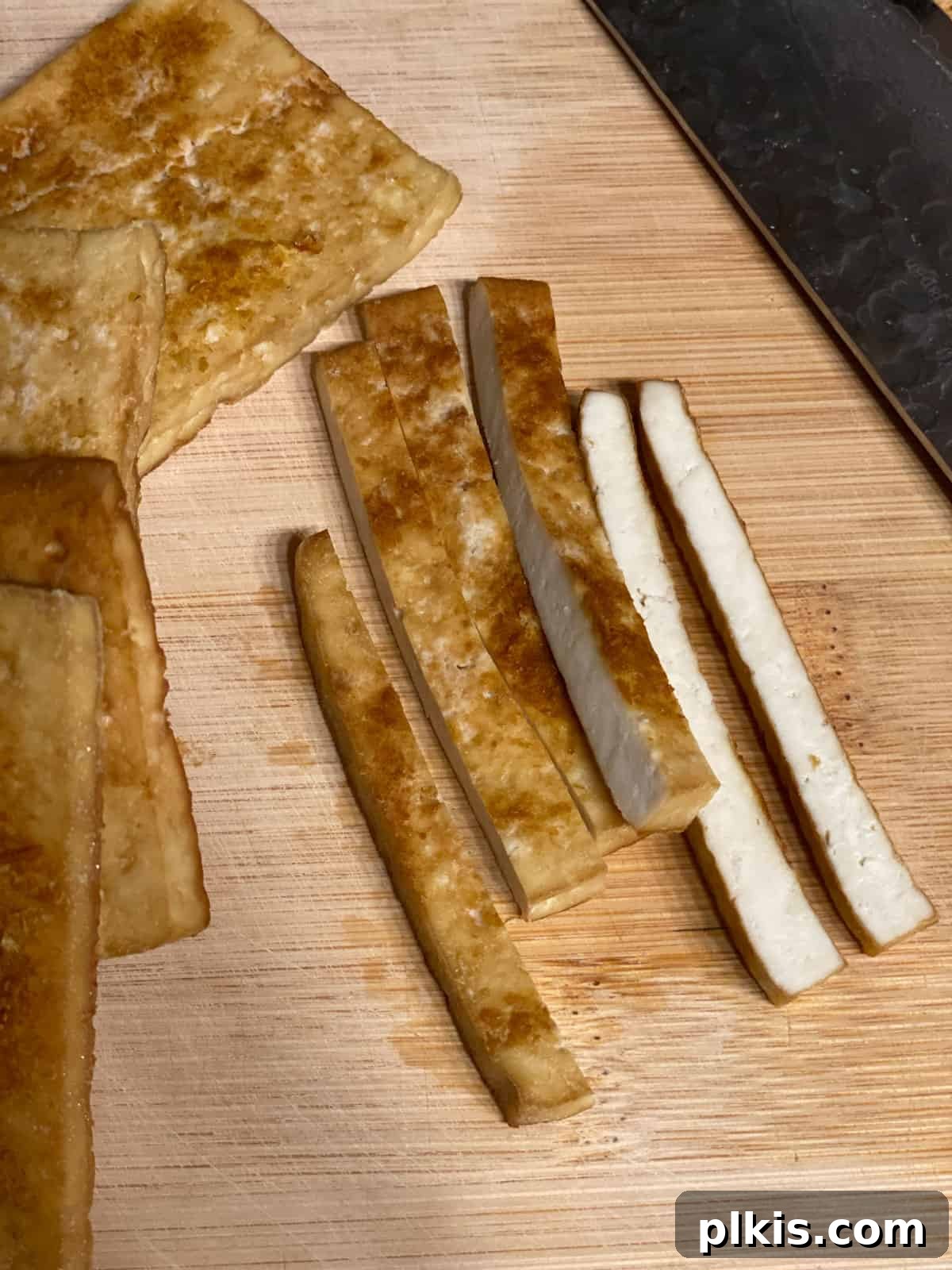
- 4) Once baked, remove the tofu from the oven and allow it to cool for a few minutes. This brief cooling period helps it firm up further. Then, slice the crispy tofu slabs into ½-inch wide strips, which are the perfect size for your sushi fillings.
Step 2: Preparing the Sushi Rice and Fresh Vegetables
While your tofu is baking, you can efficiently prepare the sushi rice and chop your vegetables to minimize downtime.
- 1) Begin by preparing the sushi rice according to the package instructions. This typically involves thoroughly rinsing the rice under cold water until the water runs clear to remove excess starch. Then, cook it in a rice cooker or on the stovetop. Once cooked, transfer the hot rice to a wide, shallow bowl or baking sheet to cool down. Cover it with a damp kitchen towel to prevent it from drying out while it cools. Proper cooling is essential for handling and seasoning.
- 2) Meanwhile, wash and prepare all your chosen vegetables. For this recipe, we thinly shredded the carrot (into delicate matchsticks), and thinly sliced both the avocado and bell pepper. Consistency in cutting size is important for even distribution and easier rolling.

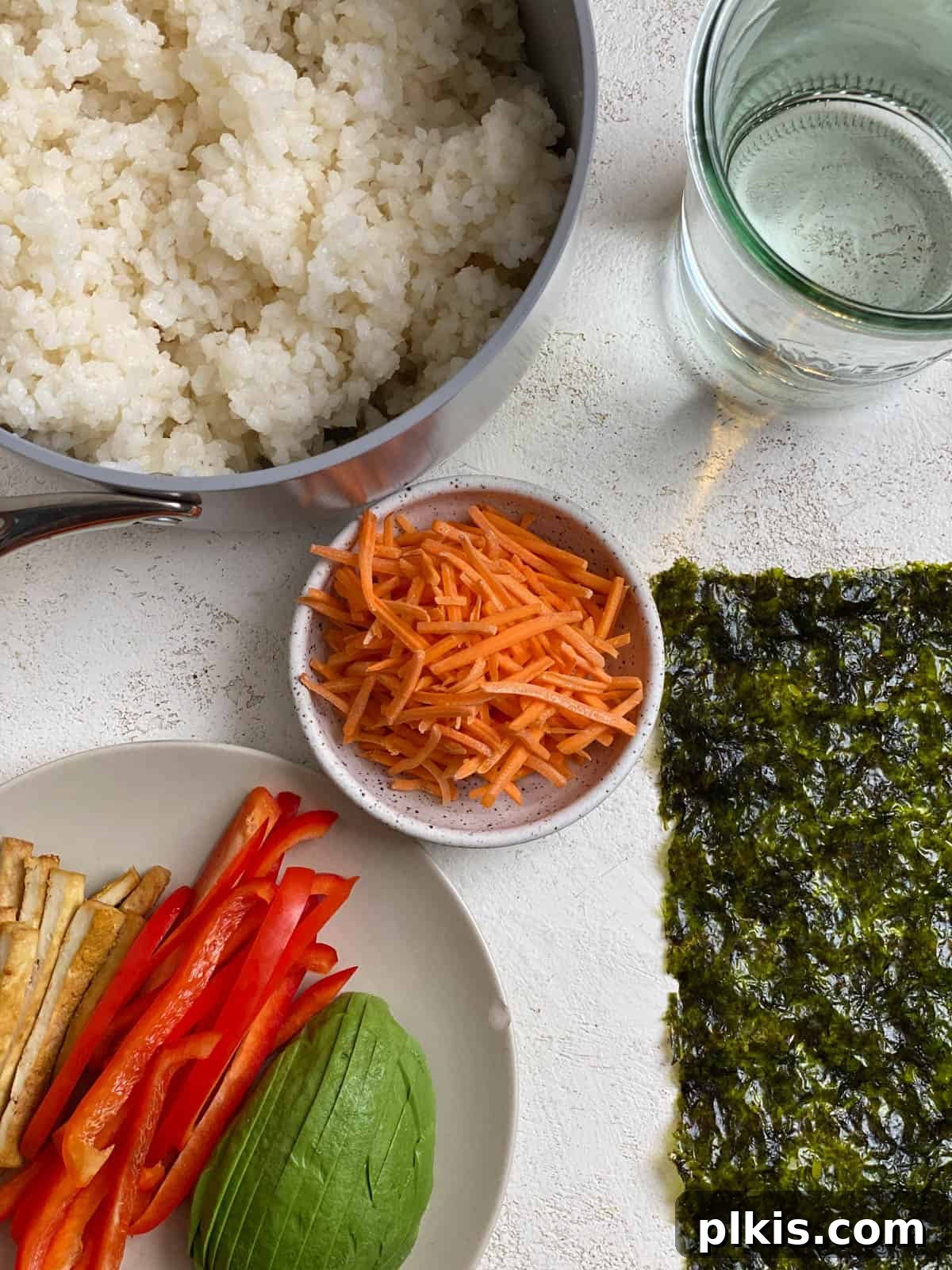
If you don’t plan on serving and eating your sushi immediately, lightly dip the sliced avocado in some lemon or lime juice. This simple trick helps prevent it from browning, keeping your rolls looking fresh and appetizing.
- 3) Once the sushi rice has cooled to a warm or room temperature, gently add the sweetener, rice vinegar, and salt. Using a wooden spoon or two, carefully fold and mix the seasoning into the rice. Avoid mashing the rice; the goal is to incorporate the flavors without crushing the grains, maintaining its fluffy yet sticky texture.
Step 3: Assembling Your Vegetable Tofu Sushi Rolls
Before you begin assembling, ensure you have all your components neatly laid out in front of you: the prepared sushi rice, nori sheets, crispy tofu strips, and all your sliced vegetable fillings. Keep a small bowl of water nearby to periodically moisten your fingers, which will prevent the sticky rice from clinging to them.
- 1) Take one sheet of nori seaweed and place it glossy-side down on your clean work surface. If using a bamboo rolling mat, place the nori on top of it. Scoop approximately one cup of seasoned sushi rice onto the nori. Dip your fingers in the water bowl, then use them to gently spread the rice into a thin, even layer across the nori sheet. Make sure to leave a 1-inch strip of nori free from rice at the top edge (the edge furthest from you). This will be crucial for sealing the roll.
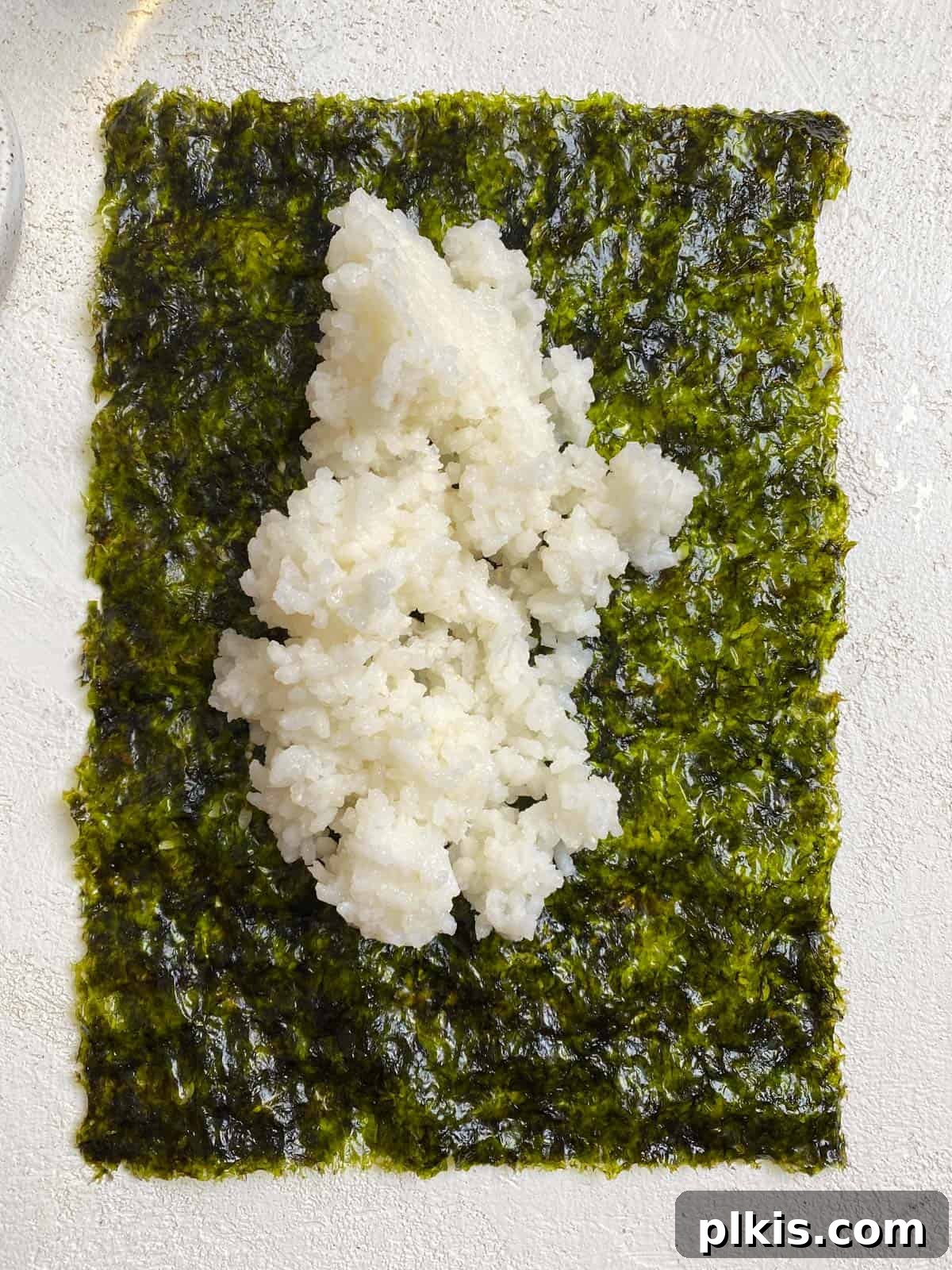
- 2) Next, artfully arrange a small amount of each desired vegetable and the crispy tofu strips side by side, forming a thin, straight line across the middle of the sushi rice layer.
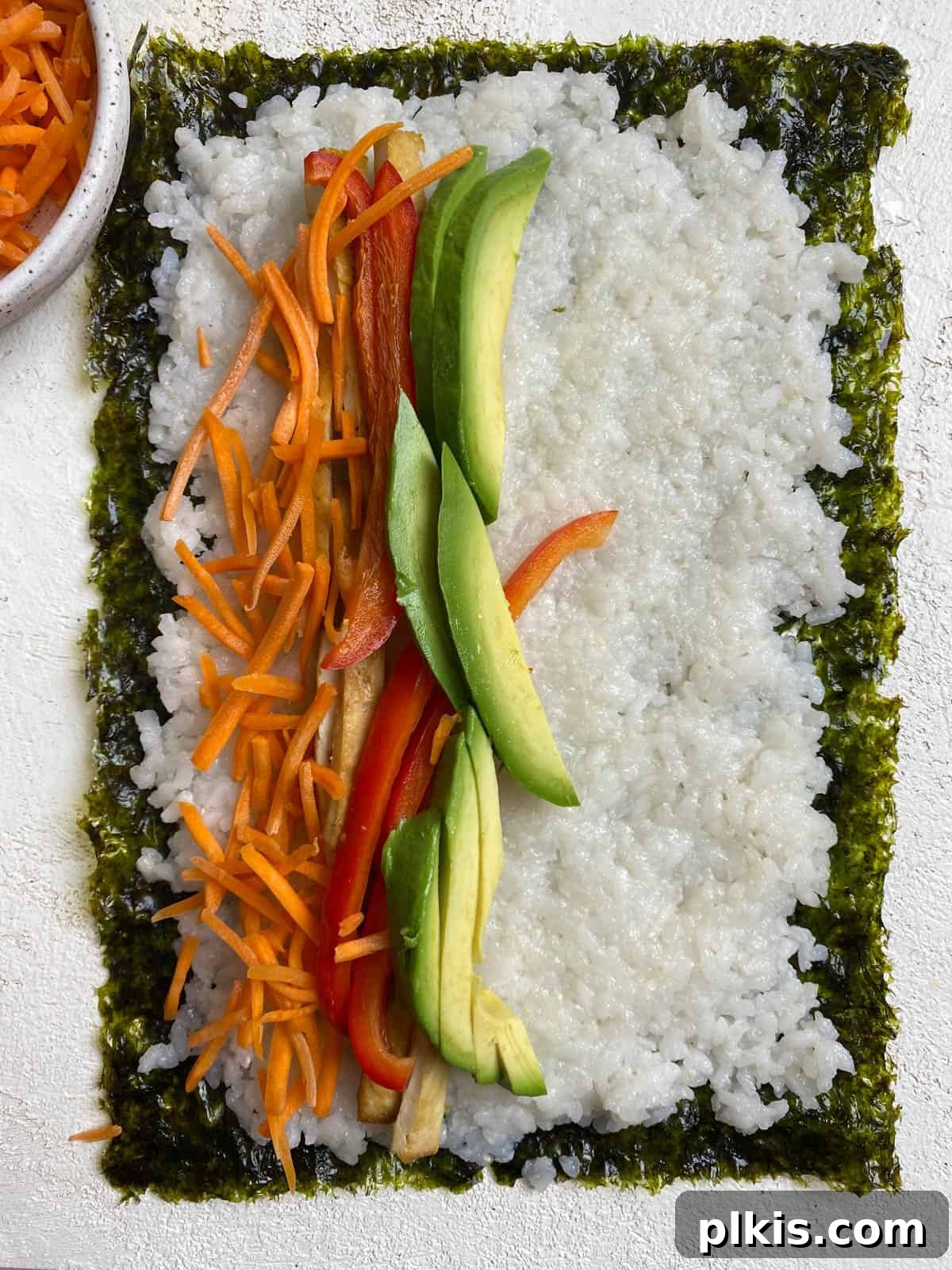
Remember the golden rule of sushi filling: less is often more to avoid overfilling and making the roll difficult to seal. You only need a few pieces of each ingredient, ideally arranged in a single layer. It might take a few attempts to gauge the perfect amount, but soon it will become second nature.
To Make Uramaki (Inside-Out Roll): For an “inside-out” roll where the rice is on the exterior, spread the rice over the nori sheet as normal. Then, carefully flip the entire sheet over onto a piece of plastic wrap, so the rice side is facing down on the plastic. Add your chosen fillings in a line down the middle of the nori (now facing up), then proceed to roll tightly as described below.
Step 4: Rolling and Slicing Your Tofu Vegetable Maki
This is where the magic happens. A bamboo sushi rolling mat is highly recommended for achieving tight, professional-looking rolls, but a thick kitchen towel lined with plastic wrap can also work effectively.
- To begin rolling, grasp the edge of the mat (or towel) closest to you, just under the nori sheet. Start rolling away from yourself, guiding the mat over the tofu and veggie filling. As you roll, maintain a firm grip and apply gentle, even pressure across the length of the roll, squeezing lightly to create a tight, compact cylinder. The goal is to eliminate air pockets and ensure the roll holds its shape.
- Continue rolling until you are almost at the bare 1-inch strip of nori you left earlier. Dip a finger in your water bowl and lightly moisten this exposed edge of seaweed. This acts as a natural adhesive. Then, continue rolling the vegan sushi roll completely until it seals securely. Gently give it a final squeeze along its length to ensure it’s firm.
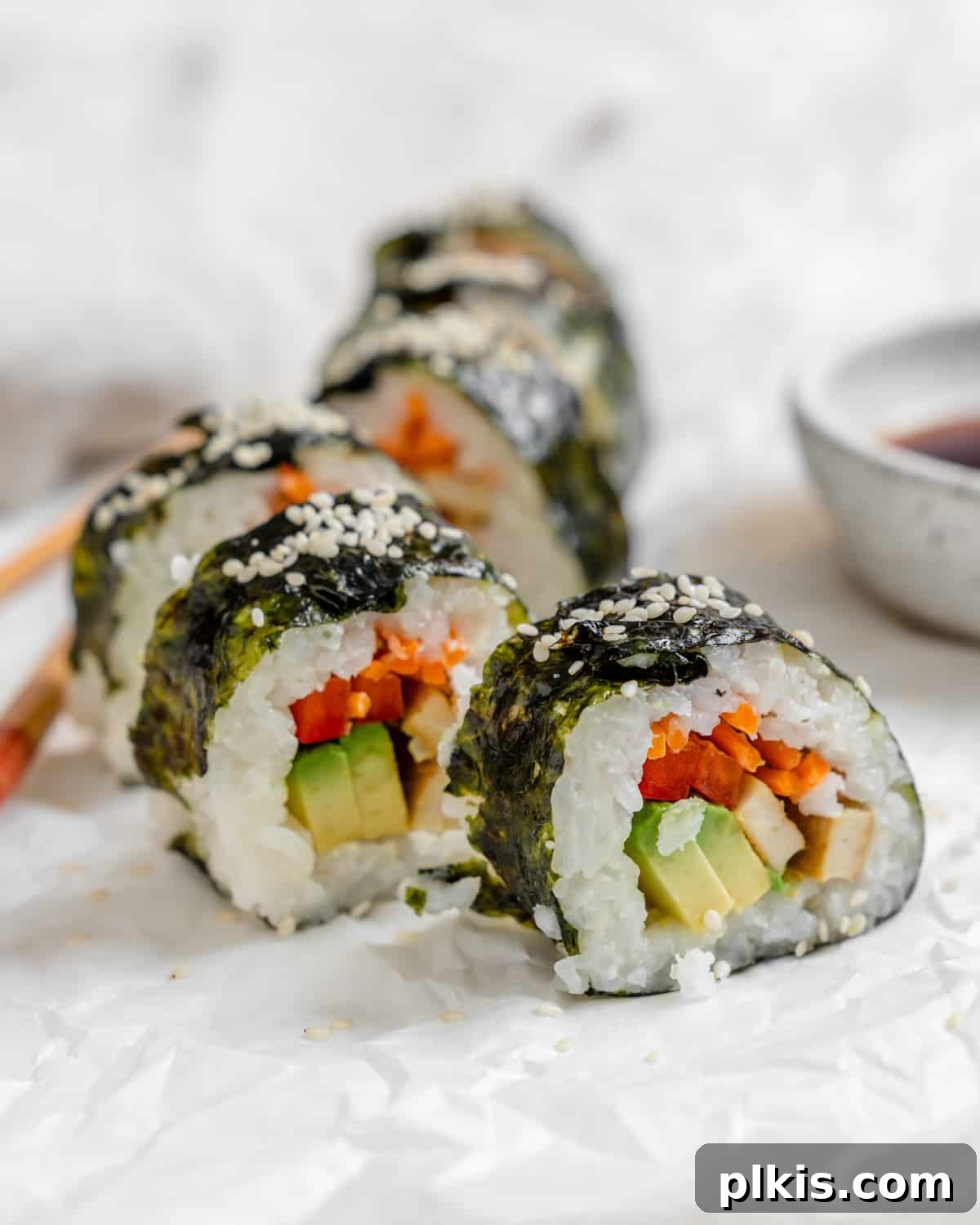
- Allow the rolled vegetable tofu sushi to rest for a few minutes. This brief resting period helps the roll set and makes it easier to slice without falling apart. Next, take a very sharp knife and dip its blade in water (re-dip between each cut to prevent sticking). Carefully slice the roll into even 1-inch pieces. A single, smooth cutting motion is best.
- Repeat the entire process with the remaining nori sheets and fillings until all your ingredients are used up. Once all your veggie sushi rolls are sliced and arranged, sprinkle them generously with toasted sesame seeds for added flavor and visual appeal.
Serve your freshly made tofu vegetable maki immediately with traditional accompaniments. Offer extra soy sauce for dipping, or elevate the experience with your favorite dipping sauces such as fiery wasabi, creamy spicy mayo, or a sweet and savory teriyaki sauce. Optionally, include some pickled ginger on the side to cleanse the palate between bites.
Expert Tips and Important Notes for Sushi Success
Even though sushi making is a simple process, a few key tips can elevate your experience and ensure consistently delicious results:
- Embrace Patience: Our most important piece of advice for newcomers to sushi rolling is to cultivate patience. Your first few rolls might not be perfectly symmetrical or as tight as you’d like, and that’s perfectly normal! It often takes several attempts to get a true feel for how much filling to add and the right pressure to apply when rolling. But here’s the good news: even imperfect rolls will still taste absolutely fantastic! Practice makes perfect, and every roll is a step towards mastery.
- Keep a Water Bowl Handy: This seemingly small detail makes a huge difference. You’ll constantly need to moisten your fingers to prevent the sticky sushi rice from adhering to them during spreading. Additionally, a damp knife is crucial for cleanly slicing your vegetable tofu sushi rolls without tearing the nori or squishing the fillings. Remember to re-dip your knife between each cut.
- The “Less is More” Philosophy: This is a critical principle in sushi making. It’s far better to under-fill your veggie sushi than to over-fill it. An overstuffed roll will be incredibly difficult to close, roll tightly, and slice neatly. Stick to a single, thin layer of fillings. Similarly, ensure all your fillings are cut into thin matchstick pieces or slim slices, allowing for easy rolling and an even distribution of flavor in each bite.
- Have Fun Experimenting: Don’t be confined to the suggested fillings! The world of vegan sushi is incredibly diverse. Feel free to play around with a wide array of veggies, fruits, and even different plant-based proteins to create unique and delicious combinations. Make rolls with a diverse medley of ingredients or focus on a single star vegetable. Let your creativity flow and enjoy the process of discovery!
- Utilize a Sharp, Wet Knife: A sharp knife is non-negotiable for clean sushi cuts. A dull knife will drag and tear the rolls. Always dampen the blade with water before slicing the tofu sushi roll, and wipe and re-dampen it after every cut to minimize sticking and ensure precise, neat portions.
- No Rolling Mat? No Problem!: While a bamboo sushi rolling mat is a traditional tool, you can improvise. A thick kitchen towel covered with plastic wrap can serve as an effective substitute for rolling. The plastic wrap prevents the rice from sticking to the towel.
- Skip the Roll, Go for a Bowl: If you’re short on time, intimidated by rolling, or simply craving a deconstructed version, transform this recipe into a delicious sushi bowl. Simply pile all the prepared sushi rice, crispy tofu, and fresh vegetables into a bowl, then drizzle with your favorite sauces or soy sauce. It’s all the flavor with none of the rolling hassle!
Frequently Asked Questions About Vegan Sushi
Absolutely! If you’re not a fan of nori or simply want to try something different, you have several creative options. You could use pliable rice paper wrappers, commonly used for fresh spring rolls, to encase your rice and fillings. Alternatively, special colored vegetable sheets (like carrot or spinach wraps) or soy paper sheets are available in some Asian markets. For a fun, low-carb take, you can core out a cucumber and fill the hollow interior with seasoned sushi rice and your favorite fillings, creating unique “cucumber boats” or rolls.
No, not all sushi is vegan. Traditional sushi often includes raw fish (sashimi), seafood, or eggs, which are not vegan. However, it’s incredibly easy and delicious to create vegan sushi rolls. By combining perfectly seasoned sushi rice, nutrient-rich seaweed (nori), and any array of your favorite plant-based fillings – such as crispy tofu, fresh vegetables, and flavorful sauces – you can enjoy a completely vegan sushi experience that is both healthy and satisfying. Look for terms like “kappa maki” (cucumber roll) or “avocado maki” for naturally vegan options at restaurants, or better yet, make your own!
While traditional sushi calls for short-grain sticky rice, you can certainly experiment with several other grains to make sushi-style rolls. Options like brown rice, quinoa, and even couscous can be used. However, it’s important to note that these grains aren’t naturally as ‘sticky’ as sushi rice, so their preparation method will need significant adjustment. You might need to cook them with a bit more water, mash them slightly, or add a binder (like a flax “egg” or a small amount of starchy potato) to help them hold together for rolling. The texture and flavor will differ from classic sushi, but they can make for a healthy and interesting alternative.
To make homemade sushi, a few key items will greatly assist you. A bamboo sushi rolling mat (makisu) is highly recommended for creating tight, even rolls. A very sharp knife is crucial for slicing the rolls cleanly. For preparing the rice, a good quality pot or a rice cooker will work well. A large, shallow bowl or baking sheet for cooling and seasoning the rice, along with a small bowl of water for dipping your fingers and knife, completes the basic setup. No need for expensive gadgets, just these simple tools for a rewarding experience.
Preventing your sushi rolls from falling apart comes down to a few critical techniques. First, ensure your sushi rice is properly cooked and seasoned; it needs to be sticky enough to bind but not mushy. Second, don’t overfill the nori sheet – a single, thin layer of fillings is ideal. Third, and most importantly, roll tightly! Use firm, even pressure with your bamboo mat to squeeze out air pockets as you roll. Finally, use a damp, sharp knife for slicing, as a dull or dry blade can tear the nori and cause the roll to unravel. Resting the roll for a few minutes before slicing also helps it set.
Storage Instructions for Vegan Sushi Rolls
This homemade vegan sushi is undoubtedly at its absolute best when prepared and enjoyed fresh, immediately after rolling. The longer it sits, the more prone the nori seaweed on the outside becomes to softening or becoming slightly soggy, while the seasoned rice inside may start to dry out and harden, losing its ideal texture. For the most authentic and enjoyable experience, serve promptly!
However, if you wish to prepare the rolls a little in advance or find yourself with delicious leftovers, proper storage is key to maintaining their quality for as long as possible. Wrap the individual rolls tightly in plastic wrap to create an airtight seal. This helps to protect them from air exposure. Store the wrapped rolls in an airtight container in the refrigerator and aim to enjoy them within 1-2 days. For optimal freshness and presentation, it’s best to leave the rolls whole during storage and only slice them into individual pieces right before you plan to serve them. This minimizes exposed surface area and helps preserve the texture. Allow the sushi to come to room temperature for about 15-20 minutes before eating; this enhances the flavors and softens the rice, resulting in the best possible eating experience.
Explore More Delicious Vegan Recipes
If you loved making these vegan sushi rolls, you’ll surely enjoy exploring our other fantastic plant-based dishes:
- Warm Soba Salad with Sunomono-Style Cucumbers
- Garlic Sesame Soba Noodles
- Japanese Braised Tofu with Vegetables
- Tofu Lettuce Wraps
- Udon with Spicy Tofu & Greens
- Veggie-Heavy Ramen Soup
- Garlic Ginger Noodle Soup
Photos by Alfonso Revilla
Vegan Sushi Rolls with Crispy Tofu
30 mins
15 mins
45 mins
4 servings
Equipment
-
Measuring spoons
-
Measuring Cups
-
Baking sheet
-
Sharp knife
Ingredients
- 1 package firm tofu sliced to ½’ thick
- 2 tablespoons soy sauce or tamari
- 1 tablespoon nutritional yeast
- 2 cups sushi rice also called sticky rice (purple jasmine sticky rice blend recommended)
- 1 avocado sliced
- 1 carrot julienned or thinly sliced
- 1 red bell pepper thinly sliced
- 1 package toasted nori seaweed sheets
- 3 ½ cups water
- 3 Tablespoons agave or other liquid sweetener
- 1 Tablespoon rice vinegar
- 2 to 3 tablespoons toasted sesame seeds
- 1 teaspoon salt or to taste
Instructions
-
Preheat the oven to 425 degrees F. Arrange ½-inch thick tofu slices on a parchment paper-lined baking sheet. Drizzle evenly with soy sauce or tamari and sprinkle with nutritional yeast. Rub slices on both sides to coat. Bake for roughly 10 minutes on each side, flipping once, until golden brown, crispy, and slightly puffed. Let them cool, then slice into ½-inch wide strips and set aside.
-
While tofu bakes, prepare sushi rice according to package directions (rinse thoroughly, then cook). Transfer to a wide bowl or sheet and let cool, covered with a damp towel.
-
Slice all vegetables thinly (julienne carrot, slice avocado and bell pepper) and arrange them on a cutting board near your nori sheets. Keep a small bowl of cold water nearby for moistening your fingers. Once the rice has cooled slightly, add the sweetener, rice vinegar, and salt. Gently mix to combine without mashing the rice.
-
Lay one sheet of nori (glossy side down) on a clean work surface or a bamboo rolling mat. Spread about 1 cup of seasoned sushi rice evenly over the nori, using damp fingers, leaving 1 inch of nori free at the top edge. Place a small amount of each veggie and tofu strip in a thin line across the middle of the rice. Begin rolling away from yourself, using the mat to guide the roll tightly over the fillings. Continue rolling until you reach the bare edge of seaweed. Moisten this bare edge with a damp finger to seal the roll. Let it rest for a minute. Then, using a sharp knife dipped in water (re-dip between cuts), slice the roll into 1-inch pieces. Repeat with remaining ingredients. Your first few rolls may be imperfect, but they will taste great and improve with practice. Sprinkle finished rolls with toasted sesame seeds and serve.
Notes
- Be patient: Sushi rolling can take practice. Don’t worry if your first few rolls aren’t perfect; they’ll still be delicious!
- Keep a water bowl nearby: Use it for your fingers to prevent rice from sticking and to dampen your knife for clean cuts.
- Less is more: Avoid overfilling your rolls to ensure they can be rolled and sealed properly. Cut fillings into thin, consistent pieces.
- Experiment with fillings: Feel free to customize with your favorite vegan vegetables and sauces.
- Sharp, wet knife: Essential for neat slicing.
- Sushi bowl option: If rolling seems too daunting, serve all ingredients layered in a bowl for a deconstructed sushi experience.
Nutrition
Calories: 615kcal
Carbohydrates: 101g
Protein: 21g
Fat: 15g
Saturated Fat: 2g
Polyunsaturated Fat: 5g
Monounsaturated Fat: 7g
Sodium: 1136mg
Potassium: 614mg
Fiber: 9g
Sugar: 14g
Vitamin A: 5178IU
Vitamin C: 59mg
Calcium: 216mg
Iron: 5mg
Additional Info