
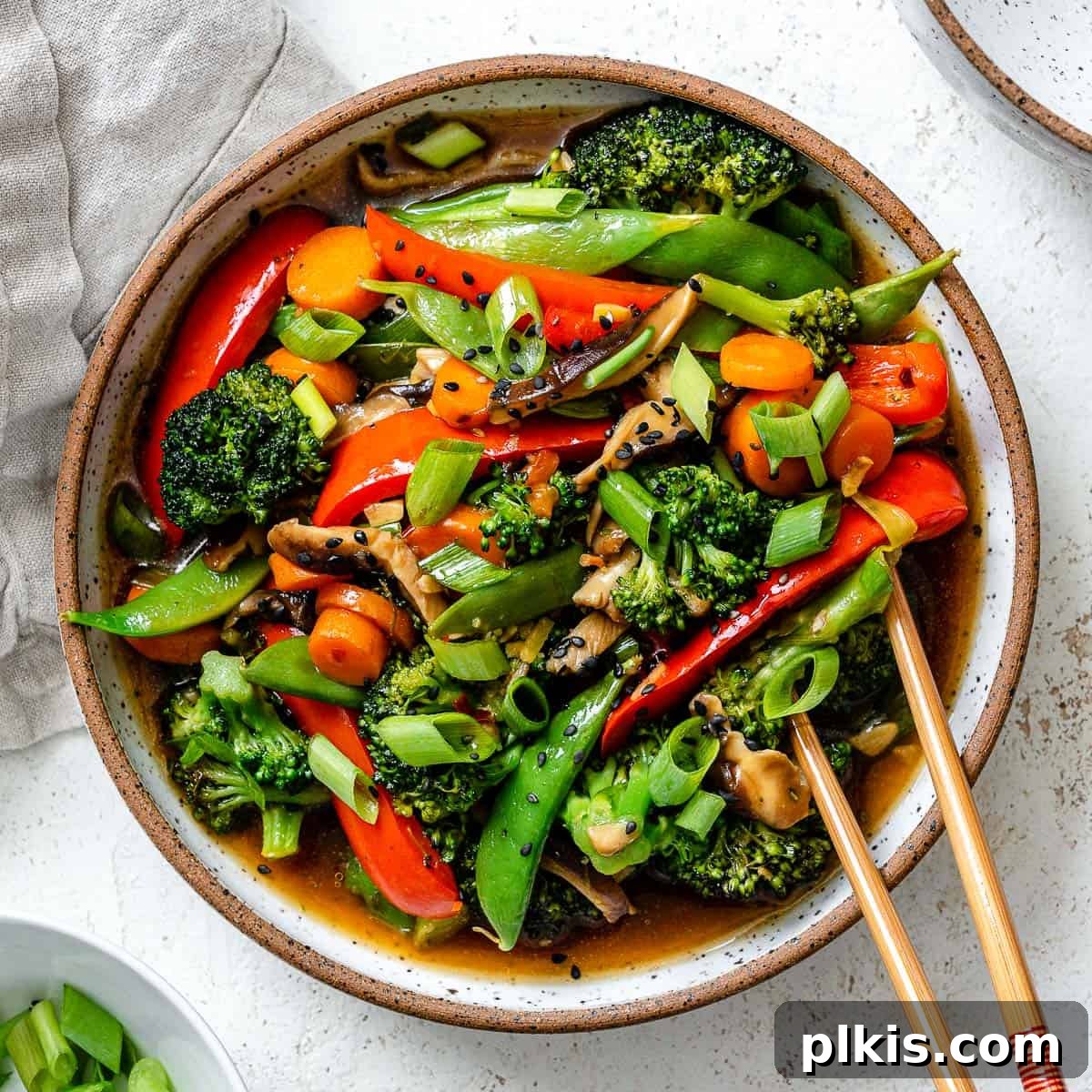
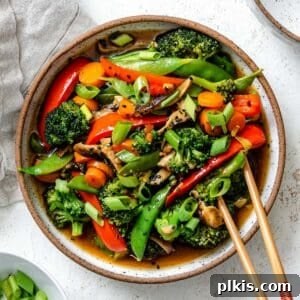
Transform your busy weeknights into a culinary delight with this incredibly easy and utterly delicious one-pan stir-fry vegetables recipe. In just 20 minutes, you can create a vibrant, healthy, and highly nutritious meal, all smothered in a perfectly balanced sweet and savory stir-fry sauce. This versatile dish is not only a time-saver but also a fantastic way to ensure your family enjoys a bounty of fresh vegetables, making healthy eating both convenient and incredibly tasty.
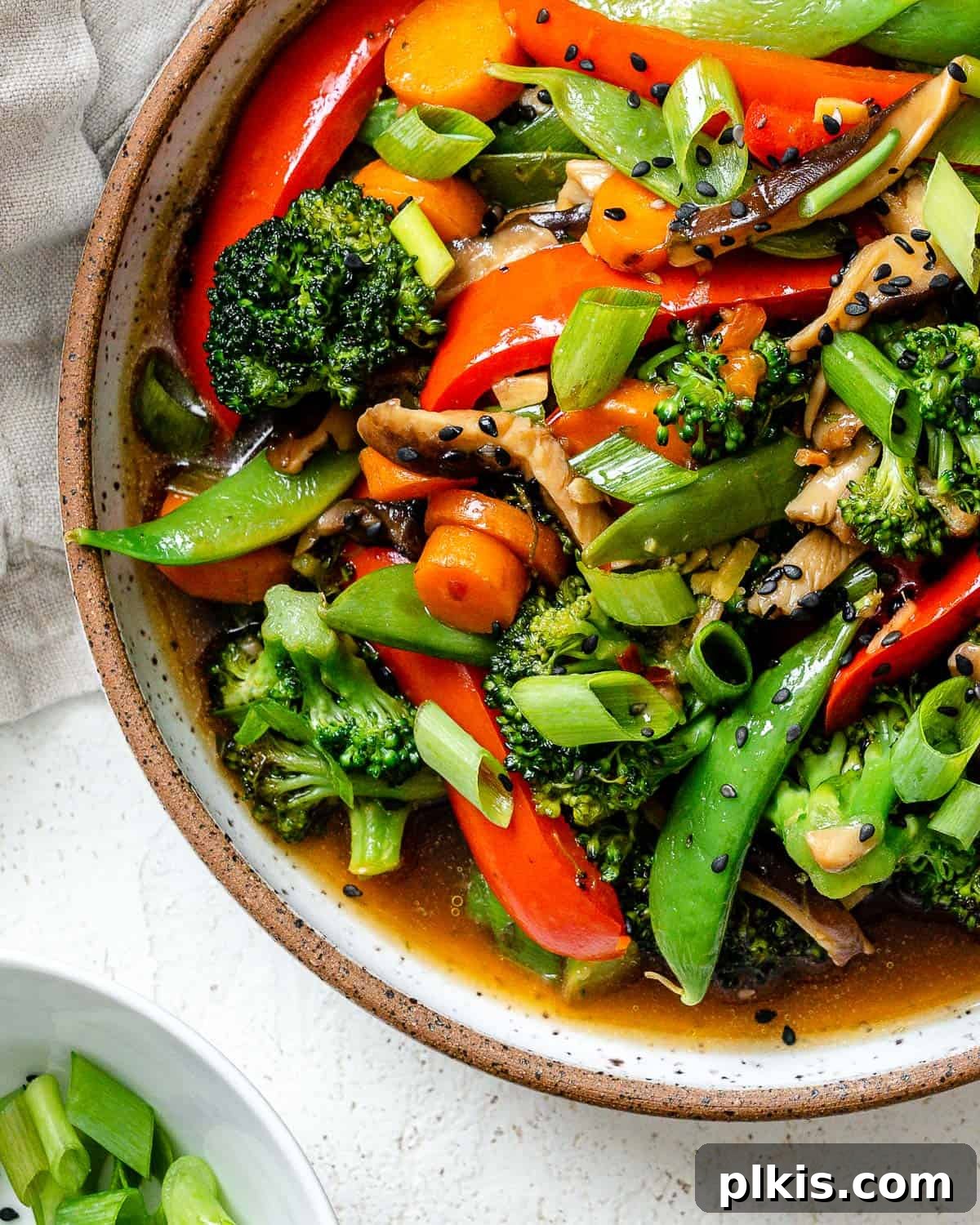
Table of contents
- Quick and Easy Stir-Fry Vegetables: Your Weeknight Hero
- Why Choose Homemade Stir-Fry?
- Essential Ingredients for the Perfect Stir-Fry
- The Vibrant Stir-Fry Vegetables
- The Irresistible Vegan Stir Fry Sauce
- Customize Your Healthy Vegetable Stir-Fry
- Add Protein for a Heartier Meal
- Expand Your Veggie Horizons: Other Best Vegetables for Stir-Fry
- Mastering the Stir-Fry Technique: Step-by-Step Guide
- Frequently Asked Questions About Stir-Fries
- Expert Tips for the Best Vegetable Stir-Fry
- Serving Suggestions for Your Stir-Fry Creation
- Storage and Reheating Instructions
- More Delectable Vegan Asian Dinner Recipes
Quick and Easy Stir-Fry Vegetables: Your Weeknight Hero
Stir-fries have long been celebrated as the ultimate solution for a low-fuss, high-nutrient, and incredibly satisfying family dinner. This recipe elevates humble stir-fry vegetables into a culinary experience, thanks to a simple yet exquisitely balanced sweet and savory sauce that coats every ingredient with irresistible flavor. It’s the perfect strategy to encourage everyone at the table, even the pickiest eaters, to embrace the goodness of more fresh veggies.
The beauty of a vegetable stir-fry lies in its boundless versatility. There are practically endless possibilities to create a dish bursting with unique flavors, delightful textures, and essential nutrients. Whether you’re looking to clear out your refrigerator at the end of the week or simply craving a specific combination, this recipe adapts effortlessly. Feel free to experiment with different vegetable combinations and even tweak the sauce’s flavor profile to suit your personal preferences. From crisp broccoli to tender mushrooms, every bite promises a harmonious blend of taste and wholesome goodness.
Why Choose Homemade Stir-Fry?
Opting to make stir-fried mixed vegetables at home offers a multitude of advantages over ordering takeout. Firstly, it’s significantly healthier and more economical. You have complete control over the ingredients, ensuring your meal is free from unwanted additives like MSG (if you choose to avoid it). This recipe is also naturally 100% gluten-free and dairy-free, catering to various dietary needs without compromising on flavor or satisfaction.
Beyond its health benefits, homemade stir-fry is a fantastic option for meal prepping. You can easily prepare, store, and reheat this delicious vegetable stir-fry over several days, making it an excellent choice for busy individuals and families. Serve it alongside fluffy brown rice, nutritious quinoa, or savory noodles for a complete and well-rounded meal. Enjoy the peace of mind that comes with knowing exactly what’s in your food, all while saving time and money.
Craving more simple and mouthwatering vegan stir-fry recipes? Explore our collection featuring spicy sesame tofu stir-fry, shiitake asparagus tofu stir-fry, veggie brown rice stir-fry, and udon edamame stir-fry.
Essential Ingredients for the Perfect Stir-Fry
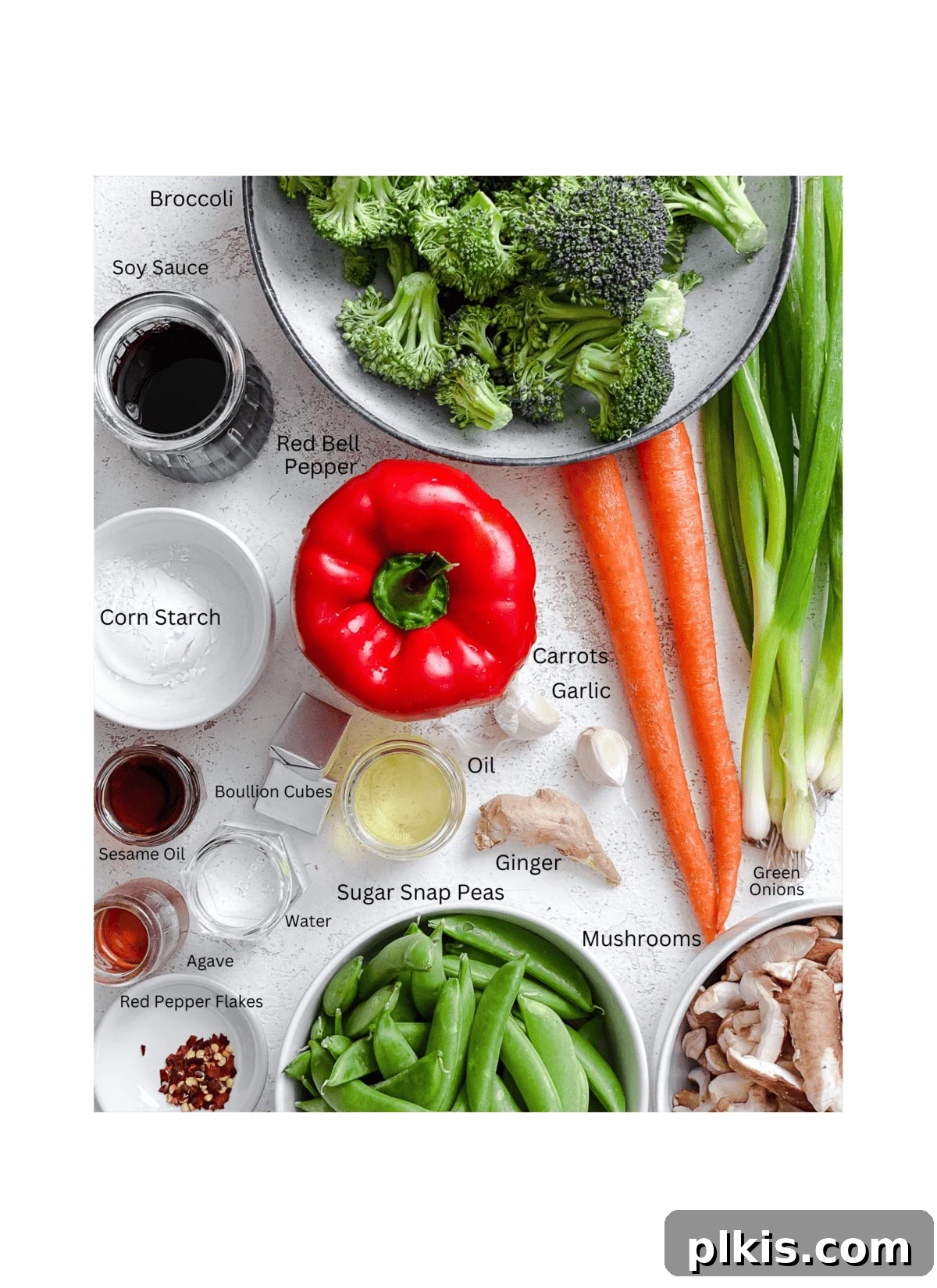
Crafting an exceptional vegetable stir-fry starts with a selection of fresh, high-quality ingredients. Our recipe focuses on a dynamic combination of colorful vegetables and a rich, aromatic sauce designed to deliver maximum flavor and nutrition.
The Vibrant Stir-Fry Vegetables
- Cooking Oil: Begin with a high-heat cooking oil, such as avocado oil or grapeseed oil, to ensure proper stir-frying without burning. A small amount of toasted sesame oil is added towards the end to infuse a rich, nutty aroma.
- Aromatics: Freshly minced ginger and garlic form the aromatic backbone of this dish. They release an incredible fragrance when lightly sautéed, laying a flavorful foundation for all the vegetables.
- Core Vegetables: We’ve carefully chosen a mix of textures and colors for a visually appealing and satisfying stir-fry. Our preferred combination includes:
- Broccoli: Whether fresh or frozen florets, broccoli adds a delightful crunch and a wealth of nutrients.
- Bell Pepper: Sliced bell peppers (red, green, or yellow) contribute sweetness and vibrant color.
- Carrots: Thinly sliced carrots add natural sweetness and a subtle crispness.
- Mushrooms: Button, brown, cremini, or shiitake mushrooms are all excellent choices, bringing an earthy depth and a meaty texture.
- Sugar Snap Peas: These provide a sweet, snappy crunch that contrasts wonderfully with the other vegetables.
- Baby Corn (Optional): For an extra textural element and mild sweetness.
- Water Chestnuts (Optional): Found canned in the international aisle of most grocery stores, water chestnuts offer a unique tender crunch that elevates the stir-fry experience.
- Garnish: Finish your stir-fry with a sprinkle of chopped green onions and sesame seeds (raw or toasted) for an extra layer of flavor and visual appeal.
The Irresistible Vegan Stir Fry Sauce
The magic of this stir-fry truly comes alive with its perfectly balanced sweet and savory sauce:
- Sesame Oil: Toasted sesame oil is a non-negotiable ingredient, providing a deeply fragrant, nutty flavor that is characteristic of authentic Asian cuisine.
- Soy Sauce: A blend of dark and light soy sauce is ideal for a complex flavor profile without excessive saltiness. Alternatively, use all light/reduced-sodium soy sauce or opt for gluten-free tamari or coconut aminos for a gluten-free version.
- Sweetener: To perfectly balance the savory notes, incorporate a natural sweetener like agave, maple syrup, or brown sugar. A sugar alternative can also be used.
- Vegetable Bouillon/Stock: This forms the liquid base of the sauce. You can use vegetable bouillon cubes dissolved in hot water or a ready-made vegetable stock. A reduced-sodium version is recommended for better control over salt levels.
- Cornstarch: A cornstarch slurry (cornstarch mixed with a small amount of cold water) is essential for thickening the sauce, giving it a desirable glossy sheen and ensuring it beautifully coats the vegetables. Arrowroot flour can be used as an alternative.
- Red Pepper Flakes (To Taste): For those who enjoy a hint of heat, red pepper flakes add a pleasant warmth. Hot sauce can also be used for a spicier kick.
Customize Your Healthy Vegetable Stir-Fry
One of the greatest aspects of this vegetable stir-fry recipe is its adaptability. It serves as a fantastic base, allowing you to easily incorporate additional ingredients to boost flavor, texture, and nutritional value. Feel free to make it your own!
Add Protein for a Heartier Meal
To transform this side dish into a more substantial, well-balanced meal, consider adding a protein source:
- Tofu: Extra-firm tofu, pressed and cubed, is a classic stir-fry addition. Marinate it for extra flavor before stir-frying until golden and slightly crispy.
- Tempeh: Offering a firm texture and nutty flavor, tempeh can be crumbled or cubed and added for a boost of protein and fiber.
- Seitan: Seitan, with its chewy, meat-like texture, is another excellent plant-based protein that holds up well in stir-fries.
- Beans: Kidney beans, white beans, or chickpeas can be stirred in at the end to add plant-based protein and fiber, making the dish even more filling.
Beyond protein, other additions can enhance the overall experience:
- Noodles: For a complete noodle stir-fry, cook your favorite regular stir-fry noodles (ensure they are egg-free for a vegan meal), rice noodles, or brown rice noodles according to package instructions, then toss them with the stir-fried vegetables and sauce.
- Pineapple Juice: Replace a portion of the vegetable bouillon/broth with pineapple juice for a touch of natural sweetness and a subtle tropical twist.
- Nuts: Cashews are a perennial favorite in stir-fries, providing a soft crunch and rich flavor. Peanuts also make a delicious addition. Add them at the very end to maintain their crispness.
- Lemon/Lime Wedges: Serve with fresh lemon or lime wedges on the side. A squeeze of citrus juice just before eating brightens all the flavors.
Expand Your Veggie Horizons: Other Best Vegetables for Stir-Fry
The beauty of stir-frying is that almost any vegetable can be incorporated. Here are more excellent choices that cook well and add wonderful variety:
- Bok Choy: Adds a mild, slightly bitter note and tender leaves.
- Mini Corn: Similar to baby corn, these offer a delightful texture.
- Cabbage: Shredded cabbage adds bulk and a pleasant crunch.
- Bean Sprouts: Stirred in at the very last minute for a fresh, crisp texture.
- Edamame: Shelled edamame beans provide protein and a sweet, slightly grassy flavor.
- Zucchini: Sliced zucchini cooks quickly and absorbs flavors beautifully.
- Onion: Sliced yellow or red onion adds a pungent sweetness.
- Asparagus: Trimmed and cut into bite-sized pieces, asparagus adds a distinct flavor and tender-crisp texture.
Mastering the Stir-Fry Technique: Step-by-Step Guide
Achieving a nutritious and delicious vegetable stir-fry is surprisingly straightforward, requiring just a few key steps and a bit of organization. Follow these instructions for perfect results every time:
- Prepare All Ingredients: The key to a successful stir-fry is having everything ready before you start cooking. Begin by thoroughly rinsing, drying, and chopping all your chosen vegetables. This includes chopping broccoli into florets, and slicing bell pepper, carrots, and mushrooms. Peel and finely mince the fresh ginger and garlic.
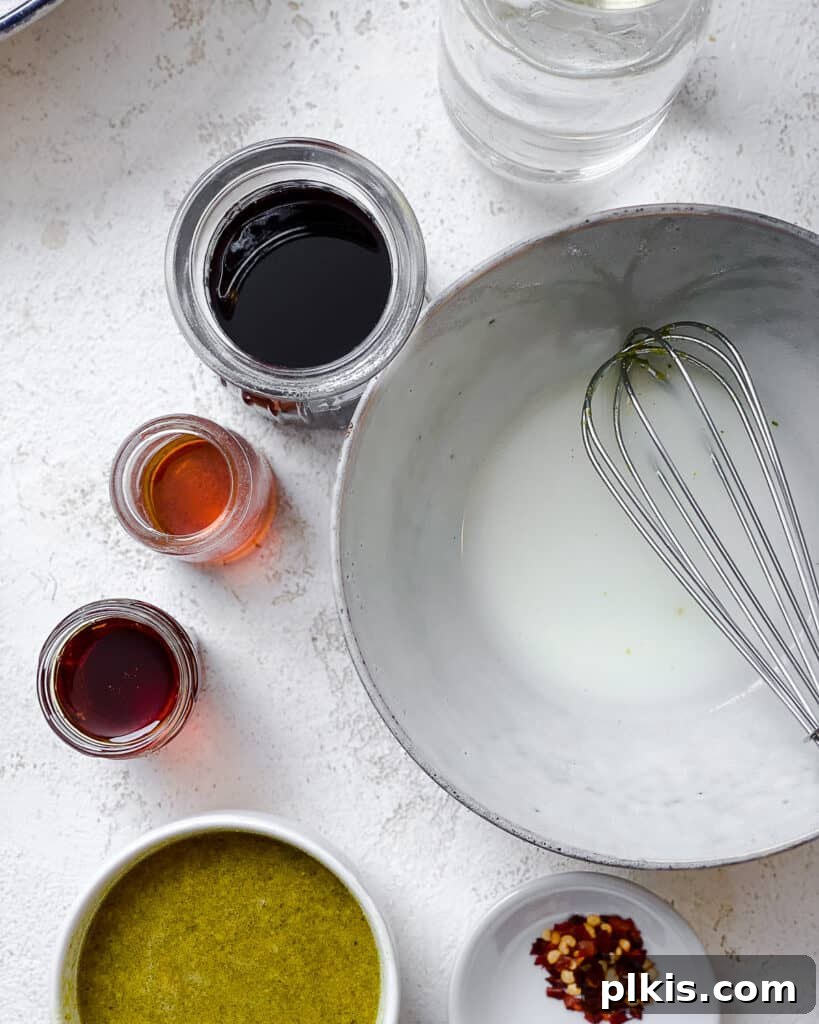
- Assemble the Stir-Fry Sauce: In a small bowl, whisk together the cornstarch and cold water until you have a smooth, lump-free slurry. In a separate cup, dissolve the vegetable bouillon cubes in hot water, then add this to the cornstarch mixture along with the remaining stir-fry sauce ingredients (sesame oil, soy sauce, sweetener, red pepper flakes). Whisk everything until well combined and set aside.
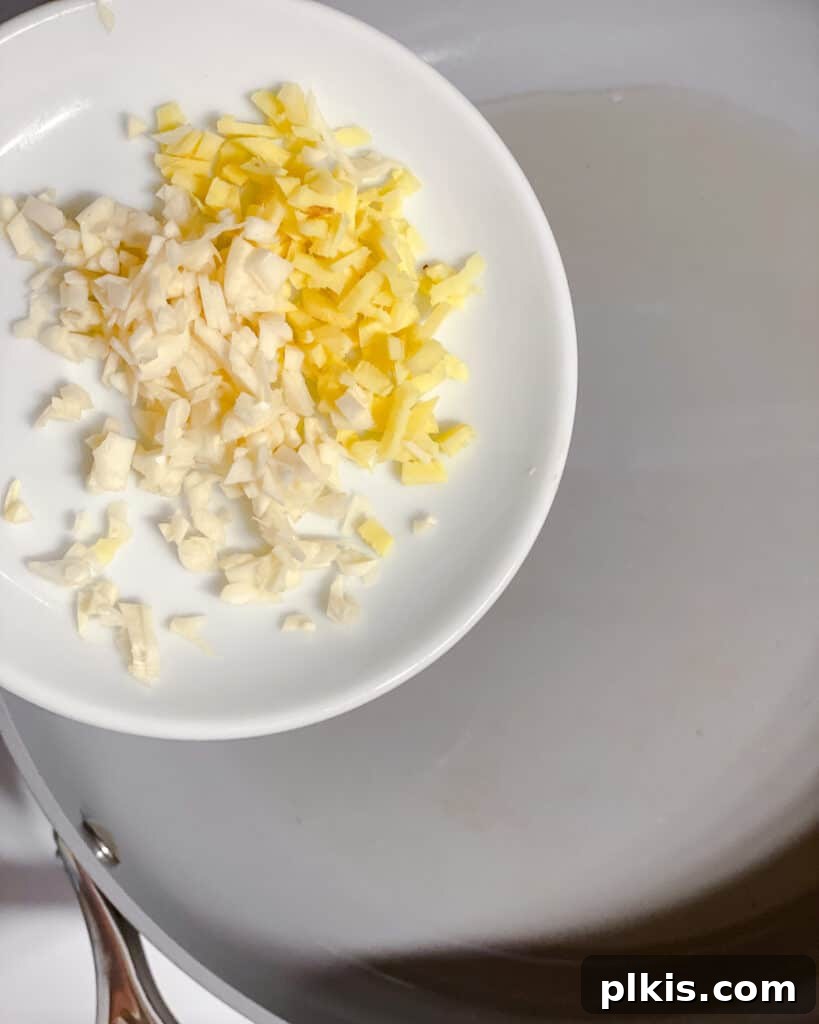
- Sauté Aromatics: Heat a large skillet or a wok over medium-high heat. Once hot, add your high-heat cooking oil. Immediately add the minced ginger and garlic. Stir-fry constantly for 1-2 minutes until they become wonderfully fragrant but ensure they do not brown or burn.
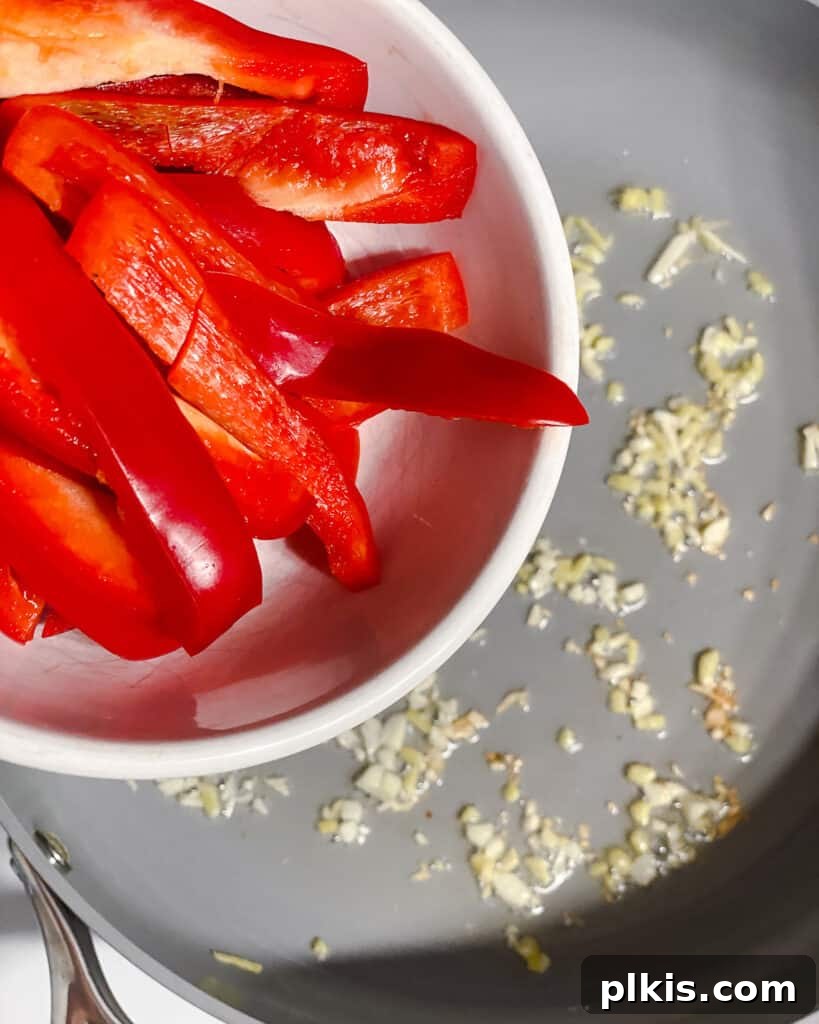
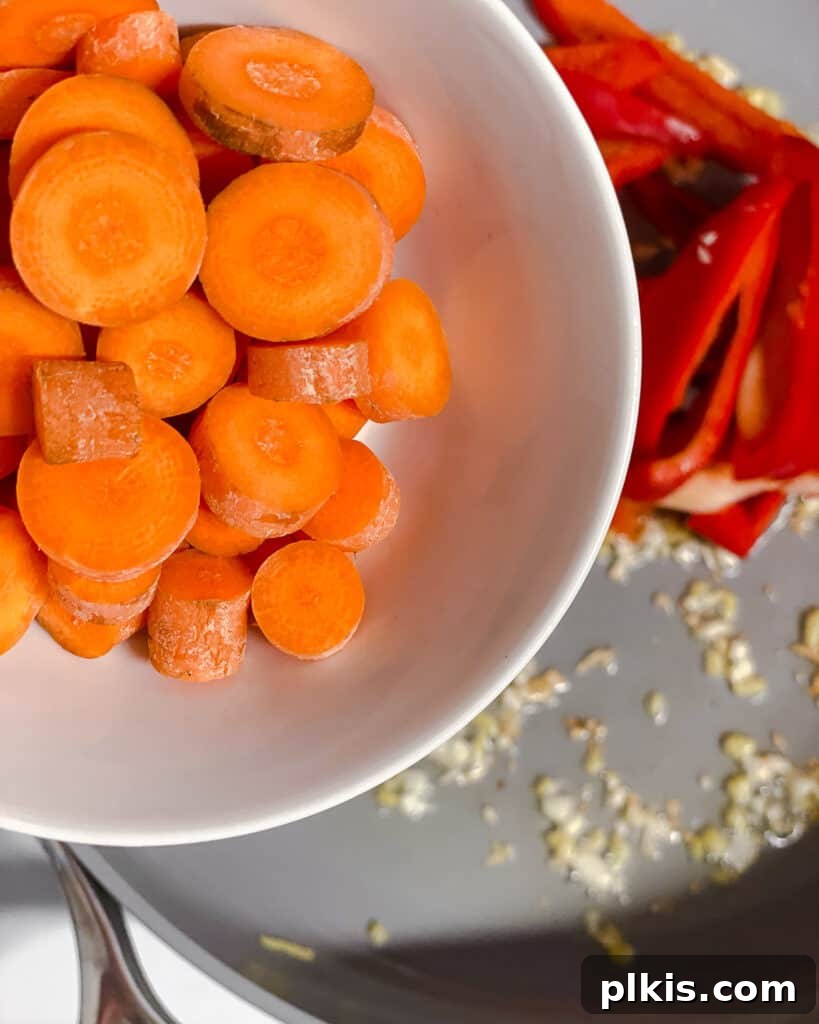
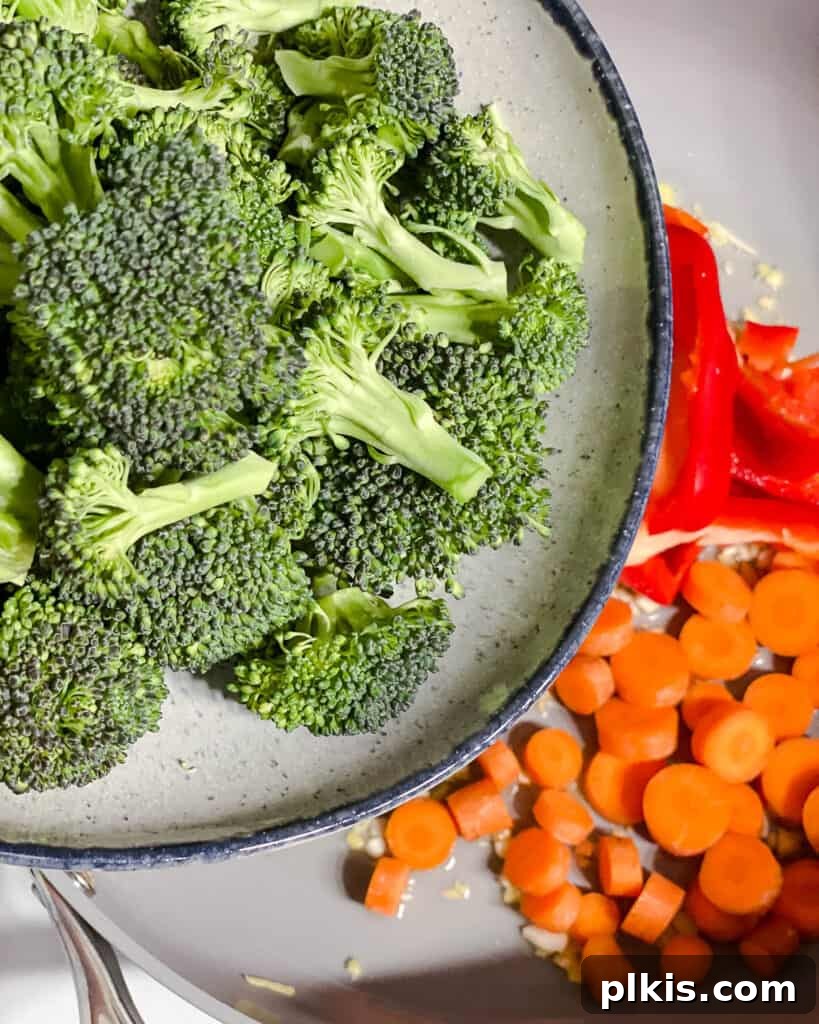
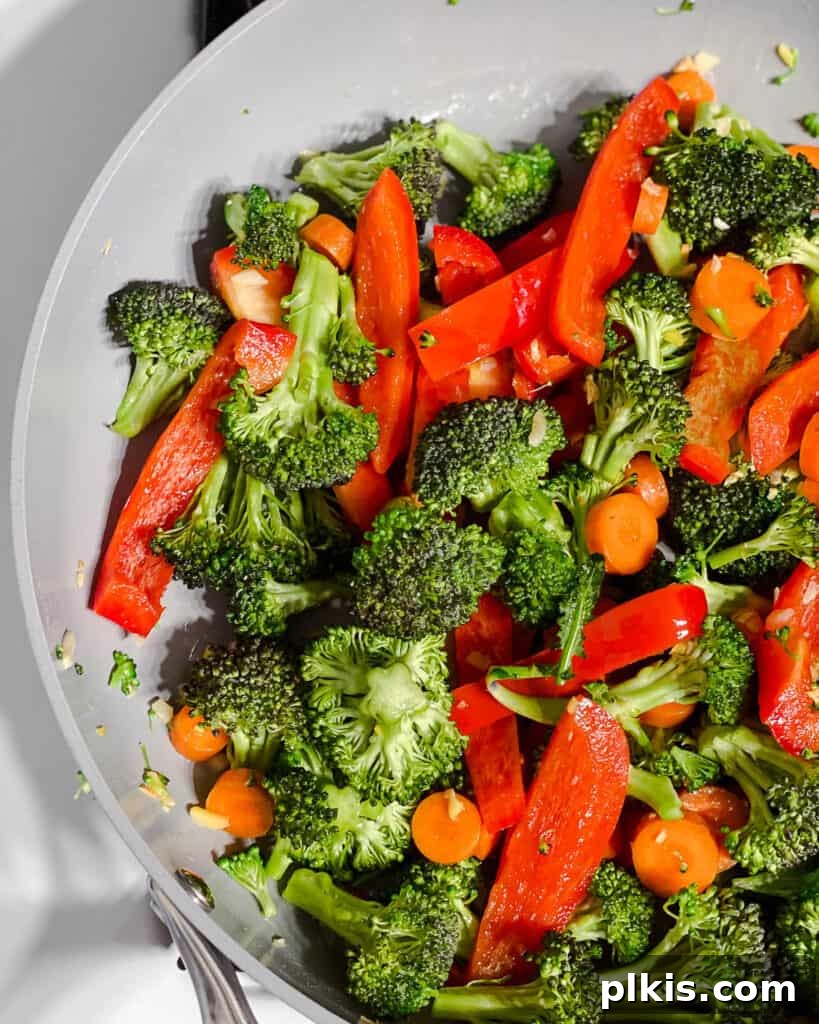
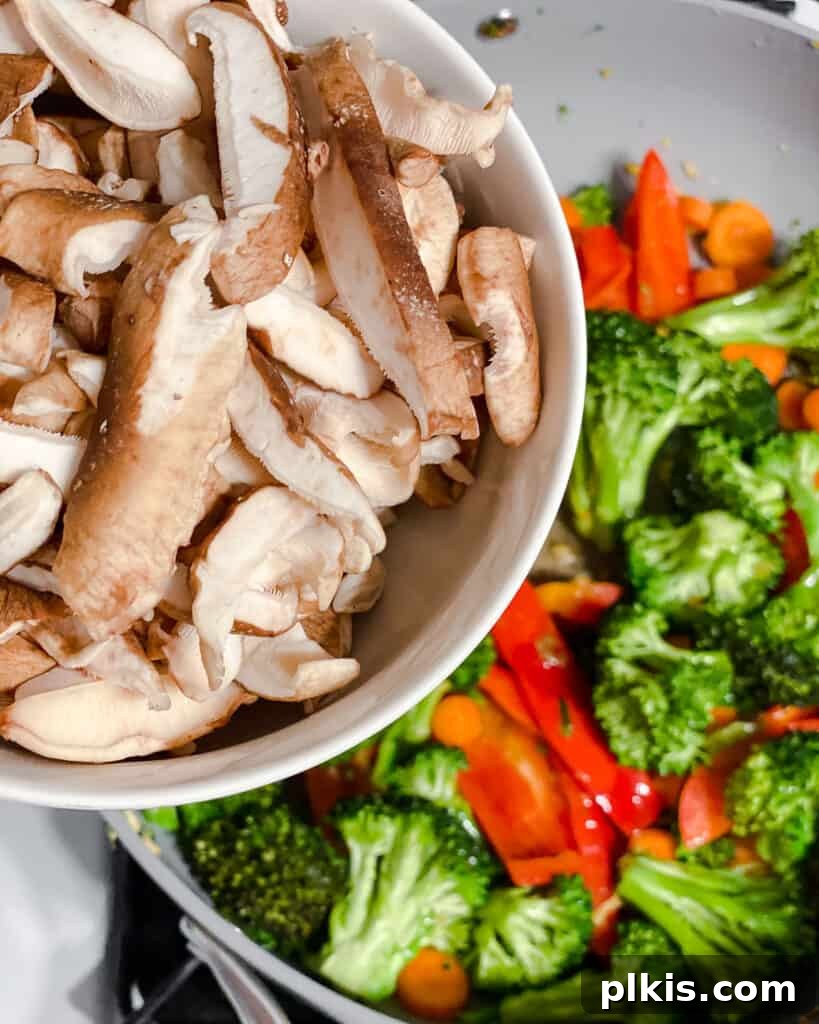
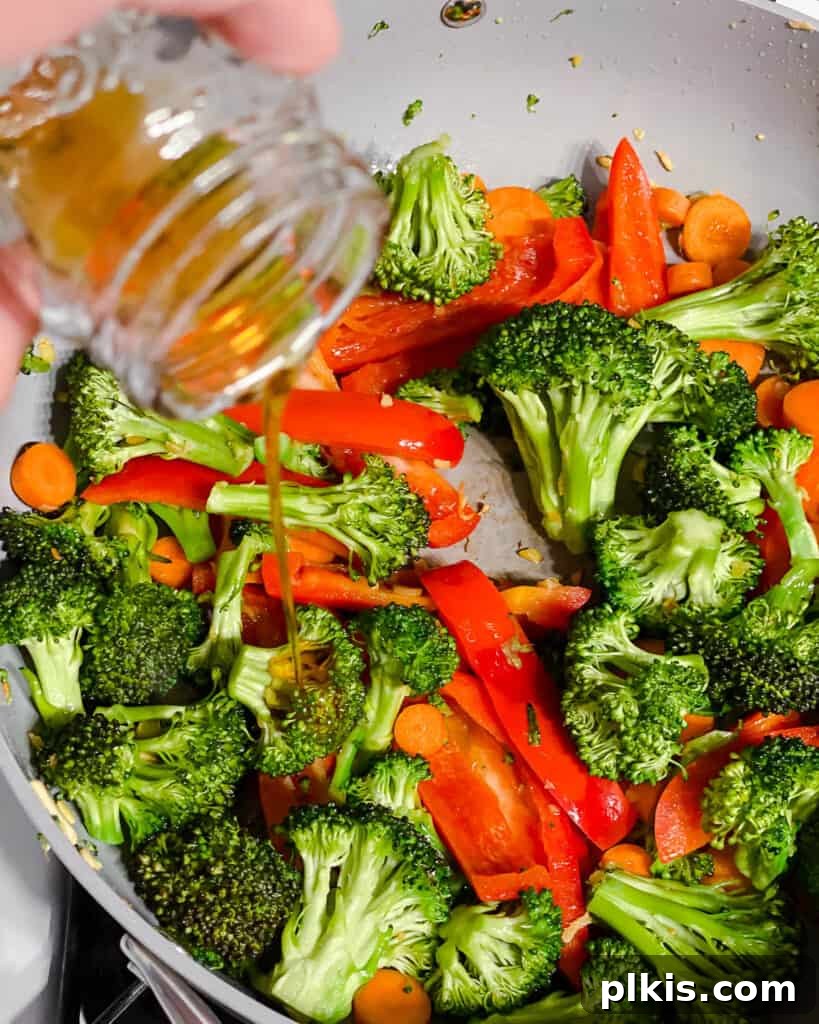
- Add Harder Vegetables: Introduce the broccoli florets, sliced bell pepper, and carrots to the pan. Stir-fry for approximately 5 minutes, allowing these harder vegetables to begin softening while retaining a pleasant crispness. Then, stir in the sliced mushrooms and continue cooking for another 3-5 minutes, until the mushrooms have released their excess liquid and softened.
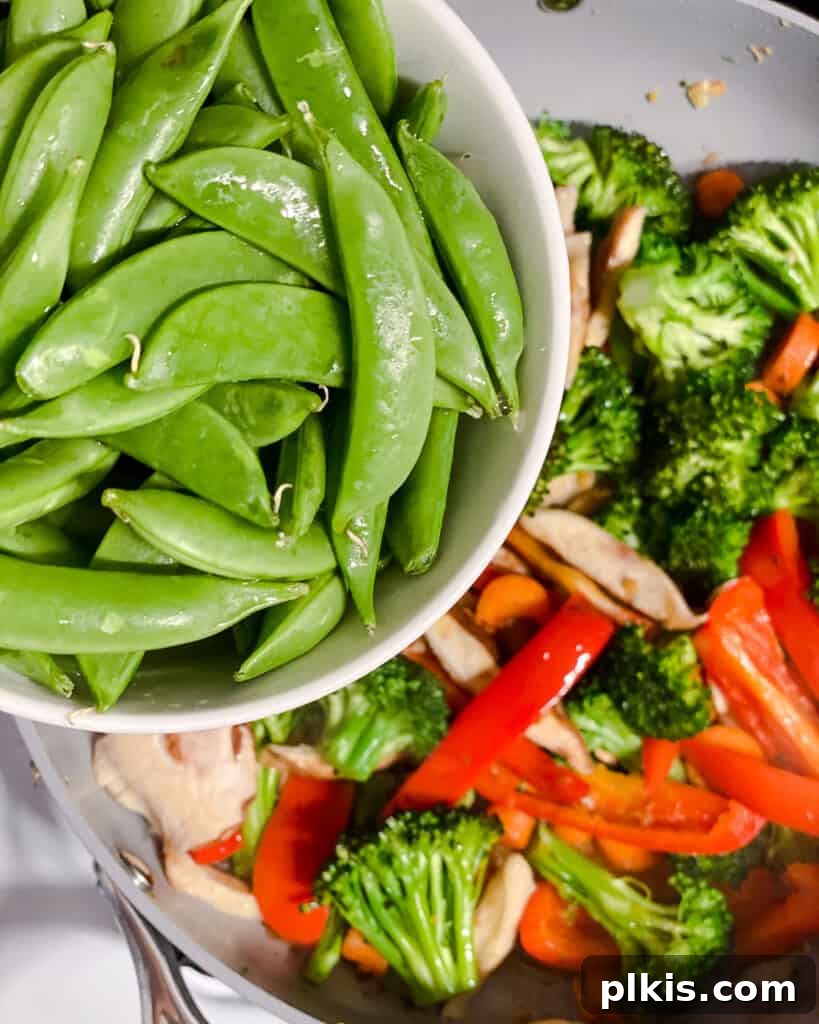
- Add Remaining Vegetables and Sauce: Stir in the sugar snap peas, baby corn (if using), and water chestnuts (if using), along with the additional toasted sesame oil. Continue to stir-fry for 3-5 minutes until these vegetables are tender-crisp. Before pouring, give your prepared stir-fry sauce another quick whisk, as the cornstarch tends to settle at the bottom. Pour the sauce over the vegetables, stirring vigorously to ensure every piece is beautifully coated.
- Thicken and Serve: Continue to cook the stir-fried vegetables for just a few minutes, stirring occasionally, until the sauce thickens to a glossy consistency and clings beautifully to all the veggies. If the sauce becomes too thick or dry, add an extra splash of water or vegetable broth.
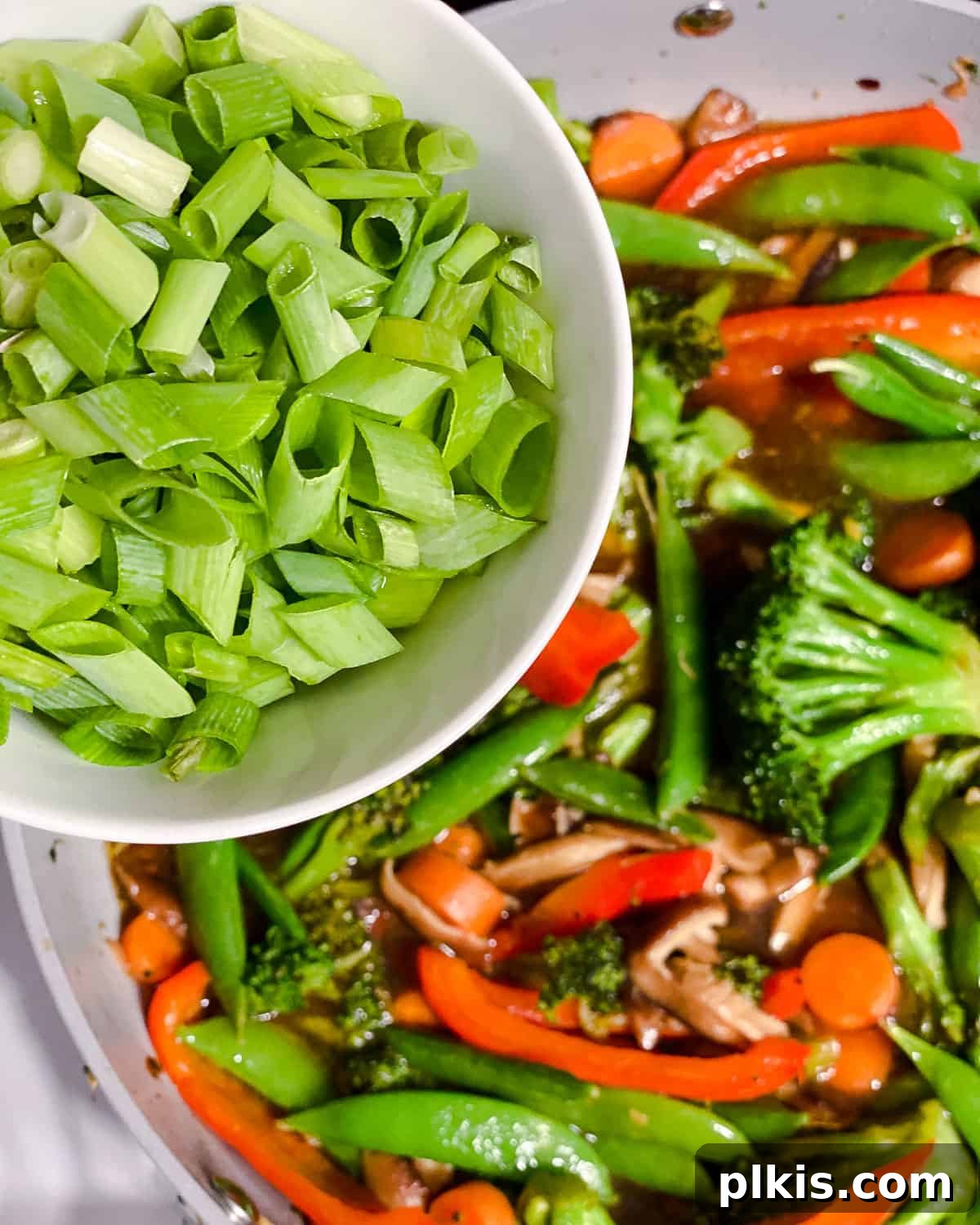
- Garnish and Enjoy: Remove the stir-fried vegetables from the heat. Garnish generously with sliced green onions and a sprinkle of sesame seeds. Serve immediately and savor this delicious, healthy meal!
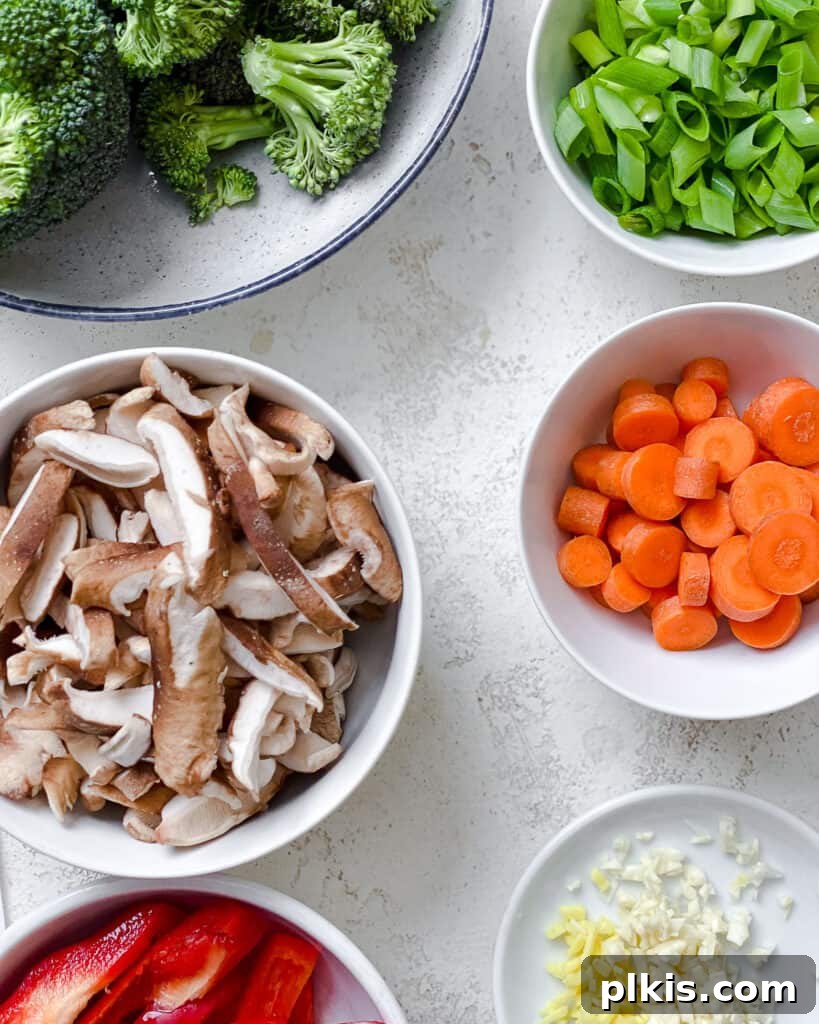

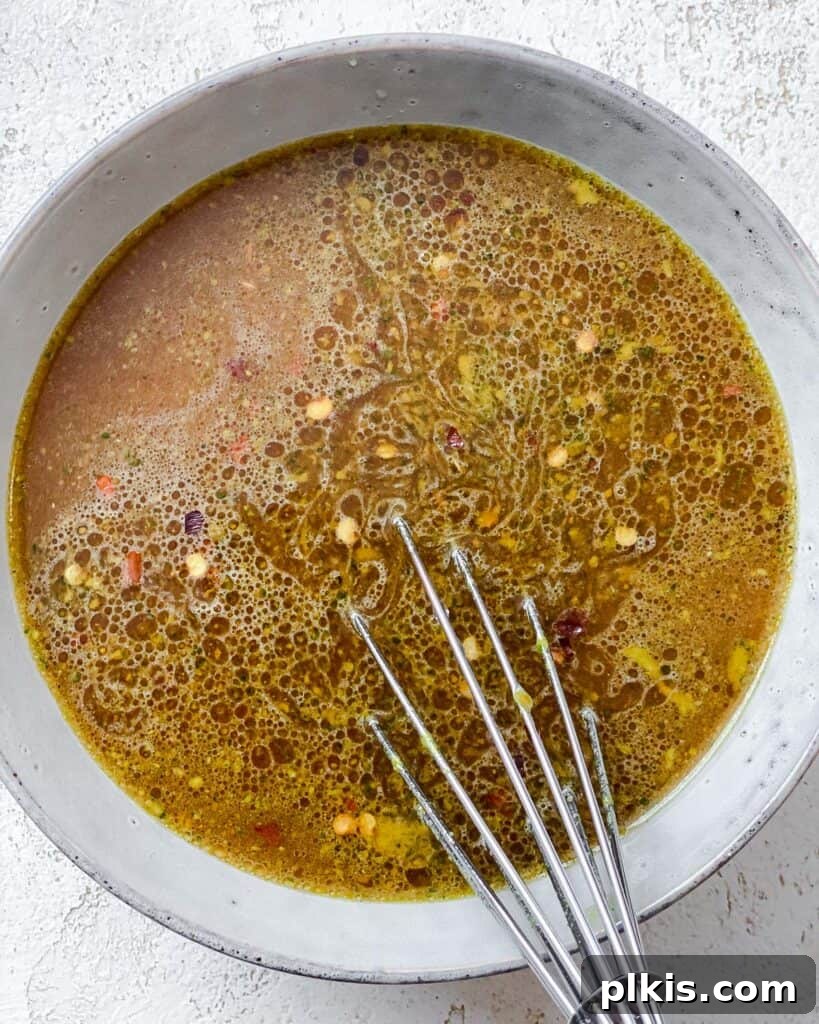
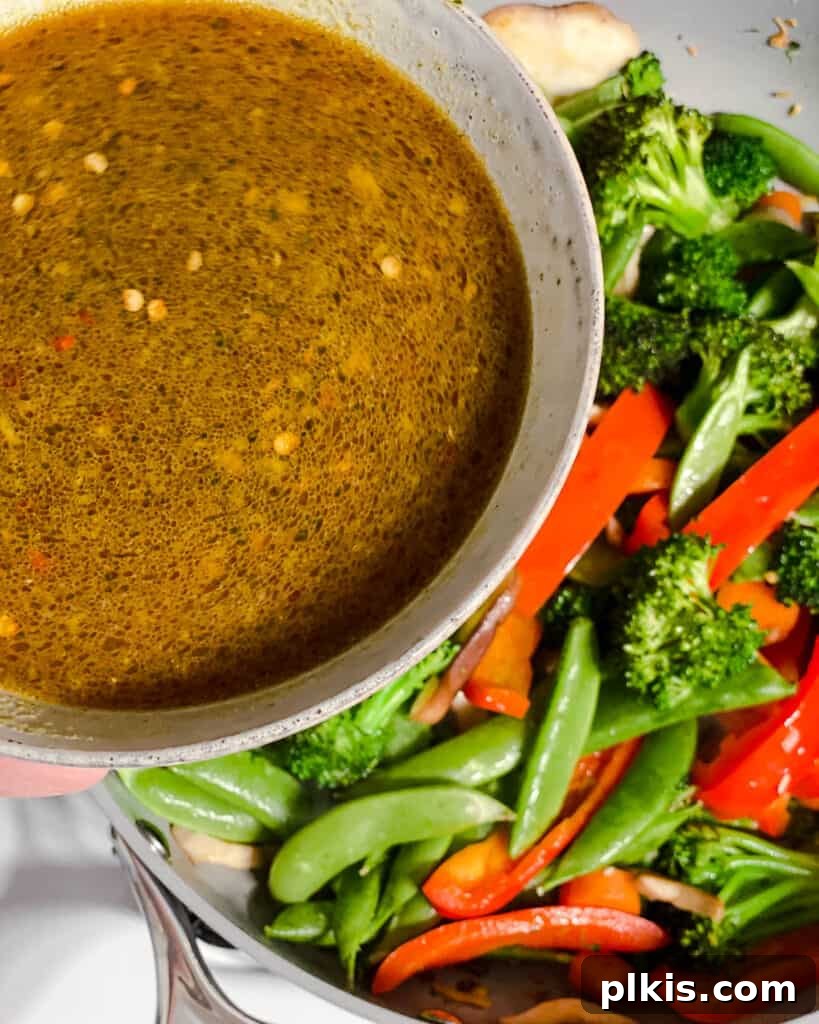
Important Tip: Always give the stir-fry sauce a good stir from the bottom of the bowl right before adding it to the pan, as cornstarch can settle.
Frequently Asked Questions About Stir-Fries
Yes, stir-fry vegetables are excellent for meal prepping! You can chop all your vegetables 1-2 days in advance, and prepare the stir-fry sauce up to 2-3 days ahead. For even faster meals, you can cook the entire stir-fry to about 75% doneness, then quickly reheat it later in the week without overcooking the vegetables. This partial cooking method helps maintain optimal texture.
When stir-frying, always start with the hardest, longest-cooking vegetables first. Examples include broccoli, carrots, and onions. After a few minutes, add medium-cooking vegetables like bell peppers and mushrooms. Softer vegetables, such as sugar snap peas or leafy greens like spinach or bok choy, should be added last, typically in the final 30-60 seconds of cooking, to ensure they remain tender-crisp and don’t become soggy.
Absolutely! Frozen vegetables are a convenient option for stir-fries, especially when fresh produce isn’t available. However, be aware that cooking times will vary, and the texture of the vegetables may be softer compared to fresh ones. Additionally, frozen vegetables tend to release more moisture as they cook, which might result in a slightly thinner sauce. If this happens, you can add a bit more cornstarch slurry to thicken it back up.
Stir-frying is considered a very healthy cooking method. It’s a fast technique that helps retain more nutrients in vegetables compared to longer cooking methods like boiling. By quickly cooking vegetables over high heat, you maximize their flavor, texture, and nutritional content. When combined with a lean protein source and a healthy carbohydrate (like rice or noodles), these easy stir-fried vegetables create a nutrient-dense, well-balanced meal that supports overall wellness.
Expert Tips for the Best Vegetable Stir-Fry
Achieving a restaurant-quality vegetable stir-fry at home is easier than you think with these expert tips:
- Prepare All Ingredients First (Mise en Place): This is arguably the most critical tip for stir-frying. The process is incredibly fast, so there’s no time to chop or measure once the heat is on. Ensure all your vegetables are chopped, aromatics minced, and the sauce is mixed and ready to pour before you even turn on the stove. This preparation ensures a smooth cooking flow and prevents anything from burning.
- Slice Vegetables Evenly: Uniformly sized vegetables will cook at the same rate. This consistency ensures that every piece reaches an equally tender-crisp (or your preferred tender) texture, avoiding overcooked bits and undercooked chunks.
- Cook Vegetables Incrementally: Different vegetables have different cooking times. To achieve perfectly tender-crisp vegetables throughout your stir-fry, add them to the pan in stages, starting with the hardest and slowest-cooking vegetables first (e.g., carrots, broccoli), followed by medium-cooking ones (e.g., bell peppers, mushrooms), and finally quick-cooking items (e.g., sugar snap peas, leafy greens) in the last few minutes.
- Embrace Experimentation: This vegan stir-fry recipe is remarkably flexible. Feel free to swap out or add any vegetables you love. It’s a fantastic way to use up whatever fresh produce you have on hand and discover new favorite combinations.
- Time-Saving Hack: For those extra busy nights, combine just a couple of fresh, prepared vegetables with a pre-cut stir-fry vegetable mix from your grocery store. This significantly reduces prep time without sacrificing flavor or nutrition.
- Use a Large Skillet or Wok: A traditional wok is ideal for stir-frying due to its large surface area and ability to retain high heat evenly, which is crucial for achieving that signature stir-fried texture. However, a large, heavy-bottomed skillet or a cast-iron pan will also work effectively. The key is to avoid overcrowding the pan; if you add too many vegetables at once, they will steam rather than stir-fry, resulting in a softer, less desirable texture. Cook in batches if necessary.
Serving Suggestions for Your Stir-Fry Creation
This easy vegetable stir-fry is incredibly versatile and can be served in numerous ways to create a fulfilling and delicious meal:
- Over Grains: The most classic accompaniment is serving your healthy vegetable stir-fry over a bed of fluffy brown rice, savory fried rice, or light and nutritious cauliflower rice (which can also be stir-fried with the veggies). For a protein boost, opt for nutrient-rich quinoa.
- With Noodles: You have two excellent options here:
- Vegetable Noodle Stir-Fry: Cook your favorite noodles separately, then add them directly into the pan with the stir-fried vegetables and sauce during the final stages of cooking, tossing to combine.
- Side Dish: Serve the stir-fry alongside a bowl of plain or lightly seasoned noodles. For a low-carb alternative, zucchini noodles or spiralized sweet potato noodles taste fantastic.
- Added Protein: Enhance your meal with extra plant-based protein like crispy oven-baked or pan-fried tofu, marinated tempeh, or even a handful of edamame or chickpeas.
- As Part of a Feast: Elevate your stir-fry into a full takeout-inspired feast by pairing it with delicious appetizers such as vegetable spring rolls (fresh or crispy), savory dumplings or wontons, or crispy seaweed.
Storage and Reheating Instructions
This vegetable stir-fry is convenient for leftovers, allowing you to enjoy healthy meals throughout the week:
- Fridge: Allow the stir-fried vegetables to cool completely to room temperature before transferring them to an airtight container. Store in the refrigerator for up to 3-4 days.
- Freeze: For longer storage, this veggie stir-fry can be frozen for up to one month. Be aware that the vegetables may become softer in texture upon thawing. To reheat, transfer the frozen stir-fry to the refrigerator to thaw overnight before warming.
- Reheat: Reheat leftovers gently using either a microwave (in microwave-safe container) or on the stovetop in a skillet over medium heat, stirring occasionally, until thoroughly warmed through. Add a splash of water or vegetable broth if the sauce appears too thick.
More Delectable Vegan Asian Dinner Recipes
If you loved this stir-fry, be sure to explore more of our plant-based Asian-inspired dishes:
- Moo Shu Vegetables
- Easy Vegetable Fried Brown Rice
- Spicy Sugar Snap Peas with Horseradish
- Garlic Sesame Soba Noodles
- Veggie Chow Mein
- Maple Soy Stir-Fried Eggplant
- Pancit Bihon (Filipino Rice Noodles)
Photos by Alfonso Revilla
Easy Stir-Fry Vegetables Recipe
Prepare delicious one-pan stir-fry vegetables with an irresistible sweet and savory sauce in just 20 minutes. A healthy, nutritious, and versatile meal perfect for busy weeknights!
Rating: 5 out of 5 stars from 44 votes
Prep Time: 10 mins
Cook Time: 20 mins
Total Time: 30 mins
Servings: 3 to 4
Equipment
- Measuring spoons
- Measuring Cups
- Knife set
- Small Whisk
Ingredients
Stir Fry Sauce
- 1 ½ tablespoons of cornstarch
- 2 tablespoons of cold water
- 2 vegetable bouillon cubes
- 1 cup of hot water
- ¼ cup of soy sauce (or gluten-free tamari)
- 2 tablespoons of sugar or agave (or maple syrup)
- 2 teaspoons + 1 teaspoon of sesame oil (or olive oil)
- Red pepper flakes, to taste
Stir Fry Veggies
- 1 tablespoon of high heat oil (e.g., avocado, grapeseed)
- 2 teaspoons of fresh ginger, minced
- 2 garlic cloves, minced
- 2 cups of fresh or frozen broccoli florets
- 1 green or red bell pepper, sliced
- 1 carrot, sliced
- 1 cup of sliced mushrooms (button, cremini, shiitake)
- 1 (8-ounce) package of sugar snap peas
- 1 cup of baby corn (optional)
- 1 can of water chestnuts, drained and rinsed (optional)
- 1 bundle of green onions, sliced
- Sesame seeds, for garnish (optional)
- Rice or noodles (optional, for serving)
Instructions
- In a small bowl, combine the cornstarch and cold water to create a lump-free slurry. Dissolve the bouillon cubes in the hot water, then add this to the cornstarch mixture. Stir in the soy sauce, sugar/agave, 2 teaspoons of sesame oil, and red pepper flakes. Whisk until fully mixed and set aside.
- Heat 1 tablespoon of high-heat oil in a large pan or wok over medium-high heat. Add the minced ginger and garlic, and cook for 1 to 2 minutes until fragrant but not browned.
- Add the broccoli, bell pepper, and carrots to the pan. Stir-fry for 5 minutes, stirring regularly to prevent burning and ensure even cooking.
- Next, add the sliced mushrooms and continue to cook for 3-5 minutes, allowing them to release their juices and soften.
- Stir in the sugar snap peas, baby corn (if using), and water chestnuts (if using), along with the remaining 1 teaspoon of sesame oil. Sauté all the vegetables for another 3-5 minutes. Then, whisk the prepared stir-fry sauce again (as cornstarch may settle) and pour it into the pan. Mix well to thoroughly coat all the vegetables with the sauce.
- Cook for about 5 minutes, stirring occasionally, until the sauce thickens and becomes glossy. If the sauce becomes too dry, add a splash of water or vegetable broth.
- Remove the pan from the heat. Stir in the sliced green onions. Serve hot, optionally over your choice of rice or noodles, garnished with sesame seeds.
Notes
- The sauce is the star of this stir-fry; feel free to customize the vegetables to your liking or use whatever you have on hand.
- Prepare ingredients first: Stir-frying is a quick process. Have all ingredients chopped and ready before you start cooking.
- Slice veggies evenly: Ensures consistent cooking and texture.
- Cook incrementally: Add harder vegetables first, then softer ones, to achieve perfectly tender-crisp results.
- Experiment with veggies: This recipe is a great canvas for your favorite vegetable combinations.
Nutrition
Calories: 398 kcal | Carbohydrates: 61g | Protein: 12g | Fat: 15g | Saturated Fat: 2g | Polyunsaturated Fat: 5g | Monounsaturated Fat: 7g | Sodium: 1589mg | Potassium: 973mg | Fiber: 11g | Sugar: 23g | Vitamin A: 6071IU | Vitamin C: 159mg | Calcium: 96mg | Iron: 4mg
Additional Info
Author: Toni Okamoto
Course: Side Dish
Cuisine: Asian
Method: Stovetop
Diet: Vegan