
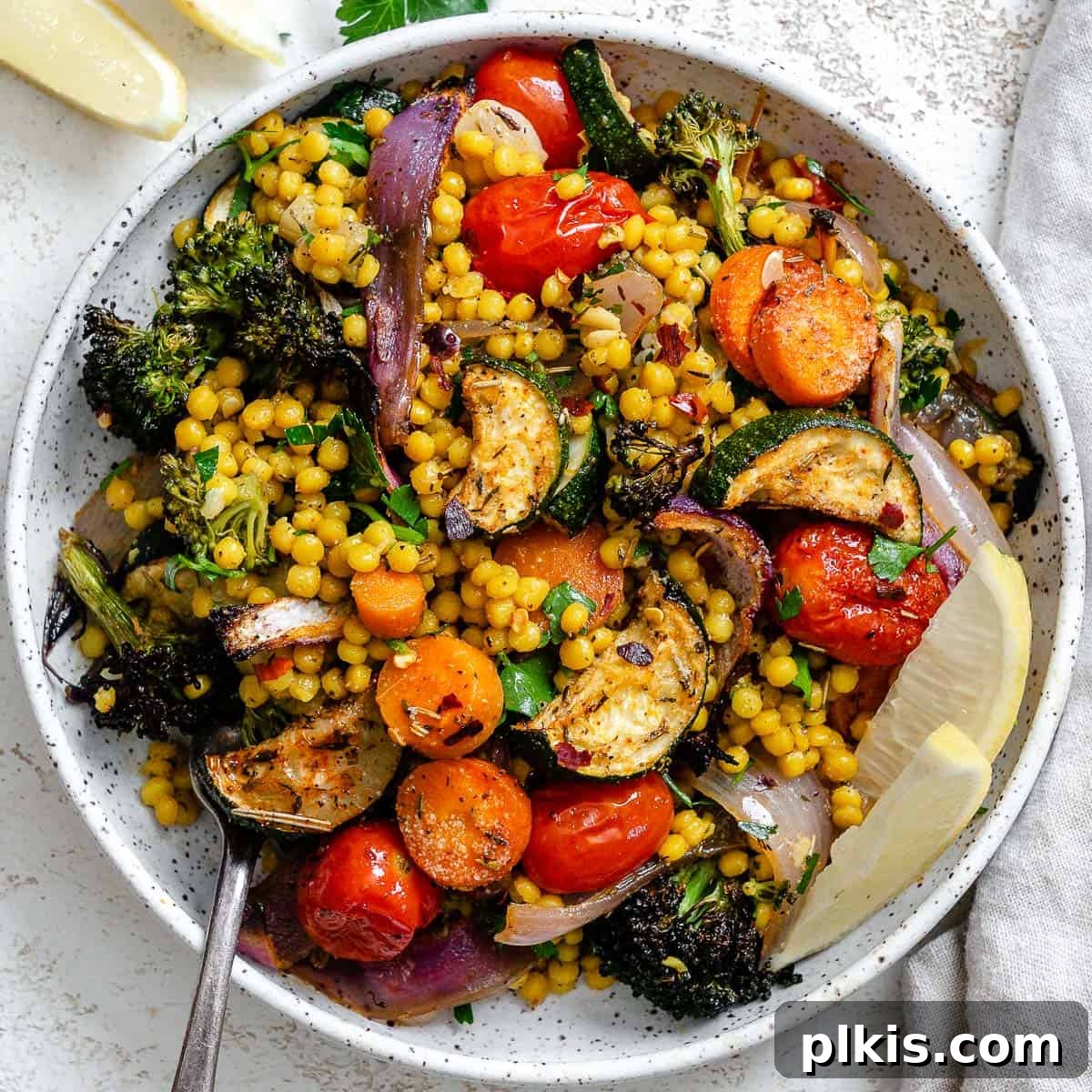
Embark on a culinary journey with this incredibly flavorful and easy-to-make Roasted Vegetable Couscous. This delightful dish combines tender, caramelized roasted vegetables with perfectly cooked giant couscous, creating a symphony of textures and tastes. Finished with a vibrant squeeze of lemon, fresh parsley, and a hint of red pepper flakes, it transforms into a satisfying and wholesome meat-free meal, perfect for a quick lunch or a hearty dinner. Whether you’re a seasoned chef or a beginner in the kitchen, this plant-based recipe is designed to impress with minimal effort and maximum flavor.
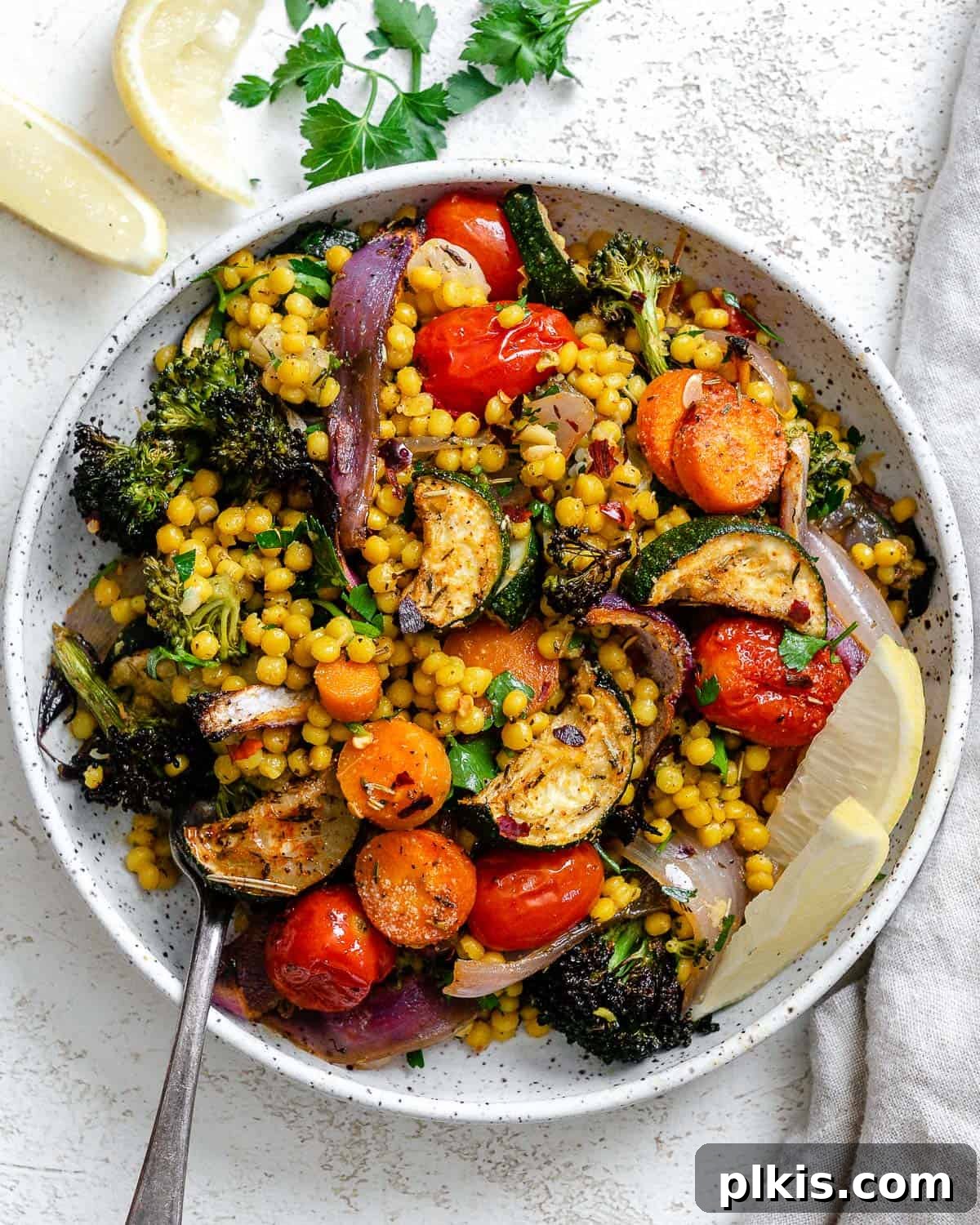
Table of Contents
- Why You’ll Love This Roasted Vegetable Couscous Recipe
- Essential Ingredients and Clever Substitutions
- Enhance Your Couscous: Creativity with Add-Ins
- Step-by-Step Guide to Making Roasted Vegetable Couscous
- Chef-Inspired Recipe Pro Tips
- Frequently Asked Questions (FAQs)
- What to Serve With Couscous?
- Storage and Meal Prep Information
- Discover More Plant-Based Recipes
Why You’ll Love This Roasted Vegetable Couscous Recipe
This Roasted Vegetable Couscous isn’t just a meal; it’s a culinary experience designed for convenience, flavor, and health. Here’s why this recipe will quickly become a staple in your kitchen:
-
Effortlessly Easy: Forget complicated cooking techniques. This recipe is incredibly straightforward, requiring mostly hands-off time while the oven does its magic. With simple chopping and roasting, even beginners can achieve spectacular results, making it ideal for busy weeknights or relaxed weekend meals.
-
Budget-Friendly & Accessible: Crafted with readily available and inexpensive ingredients, this roasted vegetable couscous proves that eating well doesn’t have to break the bank. It’s a fantastic way to utilize pantry staples and seasonal produce, creating a wholesome, delicious dish without compromising your budget.
-
Explosion of Flavor: Prepare for a sensory delight! Each bite of this couscous is bursting with aromatic, well-seasoned vegetables that caramelize beautifully in the oven. Combined with garlicky couscous and brightened by fresh lemon, parsley, and a subtle kick from red pepper flakes, it offers a complex, full-bodied flavor profile that is savory, slightly smoky, and wonderfully fragrant.
-
Nutritionally Rich & Wholesome: Beyond its incredible taste, this veggie couscous is a powerhouse of nutrition. Packed with beneficial fiber, complex carbohydrates, essential vitamins, vital minerals, and powerful antioxidants, it supports heart health, reduces inflammation, and promotes healthy digestion. It’s a truly guilt-free indulgence.
-
Highly Customizable: This recipe is a canvas for your culinary creativity! Feel free to enjoy it warm straight from the oven or chilled as a refreshing salad. Experiment with different herbs, spices, and a wide array of vegetables to clear out your fridge and truly make this dish your own. It’s wonderfully adaptable to your preferences and what you have on hand.
-
Perfect for Meal Prep: Save time during the week by preparing a larger batch! This roasted vegetable couscous stores beautifully in the fridge for several days and is also freezer-friendly, allowing you to enjoy healthy, delicious meals whenever hunger strikes. It reheats exceptionally well, making it a convenient option for planned meals.
Craving more satisfying and hearty plant-based dishes? Explore our other delectable recipes like the Mediterranean Chickpea Lentil Salad, the vibrant Sesame Noodle Salad, or the refreshing Orzo Chickpea Salad!
Essential Ingredients and Clever Substitutions
Crafting this roasted vegetable couscous masterpiece is simple, thanks to a list of common, budget-friendly ingredients often found right in your pantry or local grocery store.
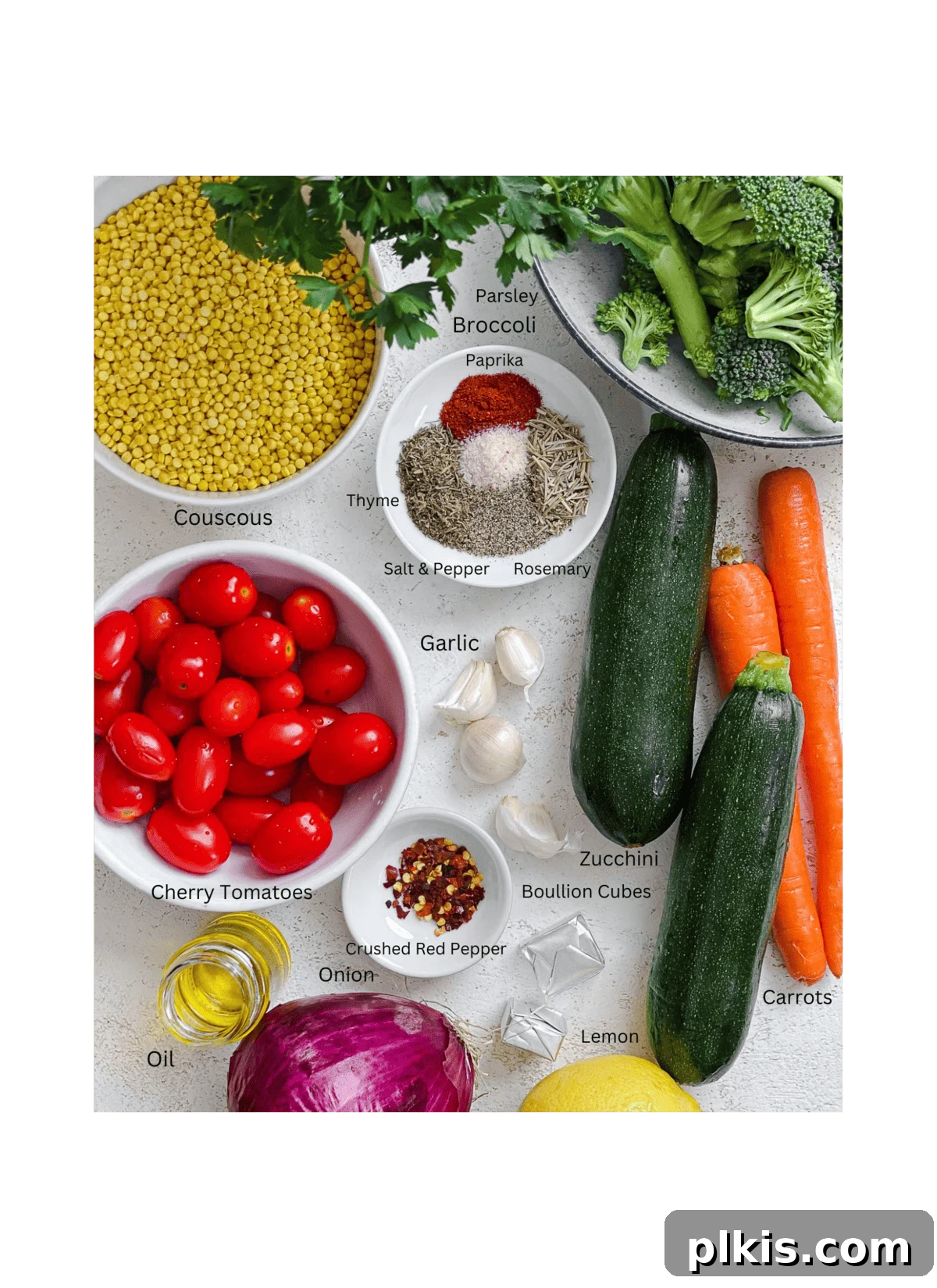
- Giant Couscous (Pearl Couscous): The star of our dish, also known as Israeli couscous. This durum wheat-based pasta offers a delightful chewy texture that holds up beautifully to the roasted vegetables. You can use regular or whole wheat varieties for added fiber. If you can’t find giant couscous, regular couscous, orzo pasta, farro, or even quinoa (adjusting cooking times accordingly) make suitable alternatives.
- Vegetable Broth: Cooking the couscous in vegetable broth infuses it with deep, savory flavor from the start. Homemade broth is excellent, but a good quality store-bought vegetable stock (reduced-sodium if preferred) works perfectly. Vegetable bouillon dissolved in water is another convenient option.
- Olive Oil: A staple for roasting vegetables, olive oil provides a rich flavor and helps achieve that desirable caramelization. Avocado oil can be used as a neutral alternative.
- Fresh Garlic: Whole garlic cloves are roasted alongside the vegetables, softening and mellowing into a sweet, aromatic paste that’s mashed into the couscous. This step is crucial for flavor development. In a pinch, garlic powder can be sprinkled over the raw vegetables before roasting, though the depth of flavor will differ.
- Selection of Vegetables: This recipe shines with a diverse mix of colors and textures. Our chosen combination includes:
- Broccoli: Breaks down into tender florets with slightly crispy edges when roasted.
- Zucchini: Slices become wonderfully tender and slightly sweet.
- Red Onion: Caramelizes beautifully, adding a sweet and savory depth.
- Carrots: Thinly sliced carrots roast to a tender sweetness, offering a lovely earthy note.
- Cherry Tomatoes: These burst with juicy flavor, adding a fresh, acidic pop. Baby plum or grape tomatoes work equally well.
Feel free to mix and match with other favorites like bell peppers (any color), eggplant, ribboned spinach, yellow squash, sweet potato, mushrooms, asparagus, or cauliflower. The key is to cut them to similar sizes for even cooking.
- Flavorful Seasoning: A simple yet powerful blend transforms the vegetables:
- Minced Rosemary: Provides a piney, fragrant aroma that pairs beautifully with roasted vegetables.
- Dried Thyme: Earthy and slightly floral, thyme is a classic herb for roasting.
- Smoked Paprika: Adds a beautiful color and a depth of smoky flavor without needing actual smoke.
- Sea Salt & Black Pepper: Essential for enhancing all the other flavors.
- Bright Garnishes: These final touches elevate the dish:
- Lemon Wedges: A squeeze of fresh lemon juice adds essential brightness and acidity, cutting through the richness of the roasted vegetables.
- Fresh Parsley: Chopped fresh parsley (or other fresh herbs like basil, dill, green onion, or mint) provides a burst of freshness and color.
- Red Pepper Flakes: Offers a gentle warmth and a subtle kick, balancing the savory elements.
Enhance Your Couscous: Creativity with Add-Ins
One of the best aspects of this roasted vegetable couscous is its versatility. Don’t hesitate to customize it with additional ingredients to match your taste or what you have on hand, transforming it into a new and exciting dish every time!
- Diverse Vegetables: Broaden your vegetable horizons! Incorporate bell peppers of any color for sweetness and crunch, tender eggplant, earthy mushrooms, crisp asparagus spears, or even florets of cauliflower. Sweet potato chunks or yellow squash would also make excellent additions.
- Sweet Touches with Dried Fruits: For a hint of unexpected sweetness and textural contrast, consider adding a handful of dried fruits. Raisins, chopped apricots, or dried cranberries complement the savory notes beautifully, especially if you’re leaning towards a more Moroccan-inspired flavor profile.
- Vegan Cheesy Goodness: Elevate the savory profile with a sprinkle of vegan cheese. Crumbly vegan feta cheese adds a briny tang, while a small amount of nutritional yeast provides a subtle nutty, umami, ‘cheesy’ flavor without any dairy.
- A World of Other Seasonings: Don’t limit yourself to the suggested herbs. Experiment with earthy cumin for a deeper warmth, vibrant turmeric for a golden hue and a touch of bitterness, or spicy chili powder/cayenne pepper for an extra kick. For a truly authentic Moroccan twist, ras el hanout and a pinch of cinnamon are exquisite additions that will transport your taste buds.
- Crunchy Nuts and Seeds: Add texture, healthy fats, and extra protein by incorporating toasted nuts or seeds. Almonds, peanuts, pistachios, pine nuts, or pepitas (pumpkin seeds) lightly toasted in a dry pan for a minute or two will provide a delightful crunch and nutty flavor.
- Zesty Lemon Brightness: While lemon wedges are suggested for garnish, grating the zest from one lemon directly into the couscous or over the roasted vegetables adds an even more pronounced brightness and citrusy tang that awakens the palate.
- Boost with Plant-Based Proteins (Pulses): To make this couscous with veggies a more complete and substantial meal, easily increase its heartiness with vegan protein sources. Cooked lentils, chickpeas, or white beans (such as cannellini or great northern beans) are fantastic additions, providing fiber and protein that will keep you feeling full and satisfied.
Step-by-Step Guide to Making Roasted Vegetable Couscous
Follow these simple steps to create a delicious and wholesome roasted vegetable couscous that’s packed with flavor and vibrant ingredients.
-
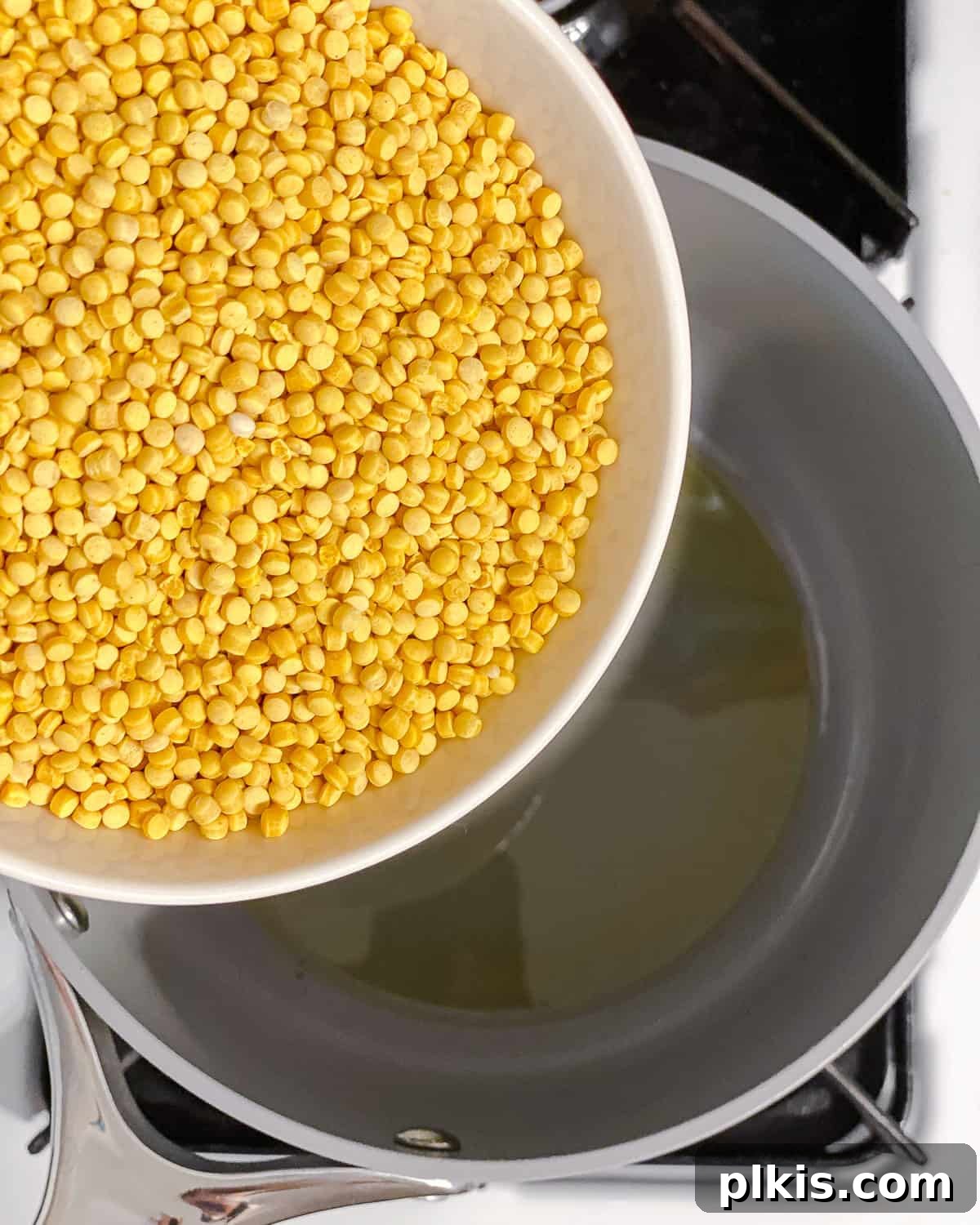
Prepare the Couscous: Begin by heating a medium saucepan over medium-high heat. Once hot, add one tablespoon of olive oil and the giant couscous. Sauté the couscous for approximately 2 minutes, stirring continuously until it becomes fragrant and lightly golden brown. This crucial step toasts the couscous, enhancing its nutty flavor.
-
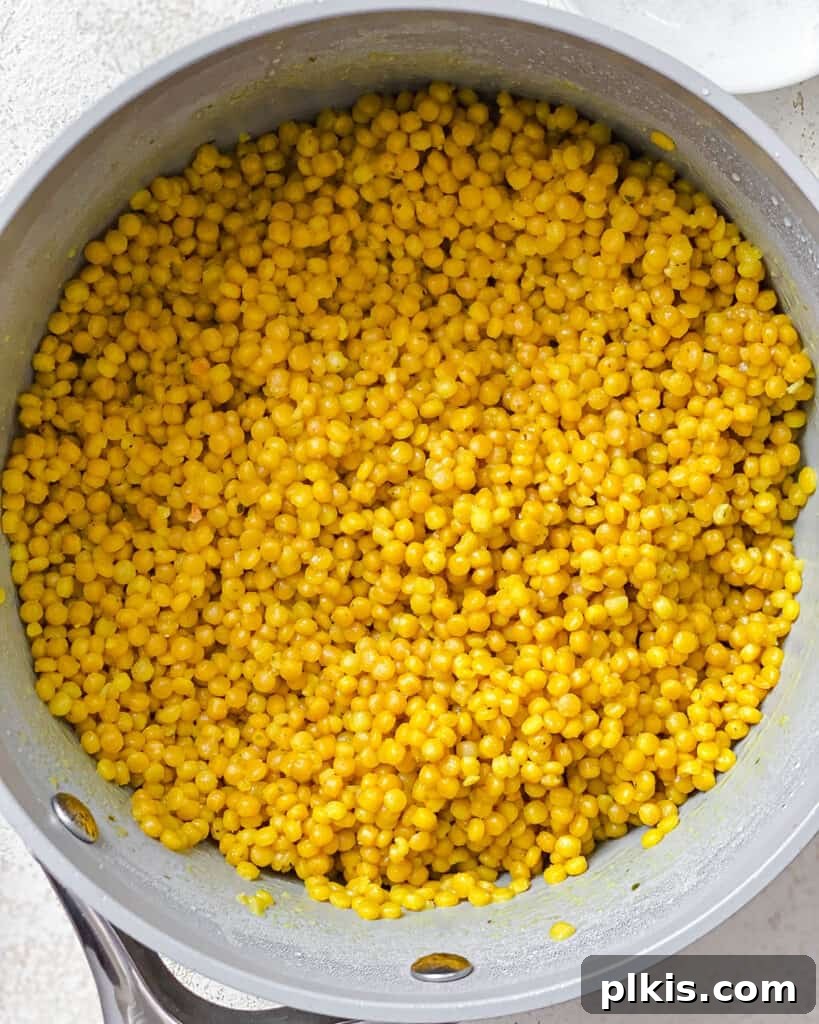
Cook the Couscous: Pour in the vegetable broth and bring the mixture to a rolling boil. Once boiling, immediately cover the saucepan with a tight-fitting lid, remove it from the heat, and allow it to sit undisturbed for 10 minutes. The couscous will absorb the broth and become tender. If using whole wheat or gluten-free varieties, always refer to the specific package instructions for optimal cooking results to ensure it’s tender but not mushy.


Important Note: Always follow the specific package instructions for your couscous variety (especially whole wheat or gluten-free) to ensure perfect tenderness.
-
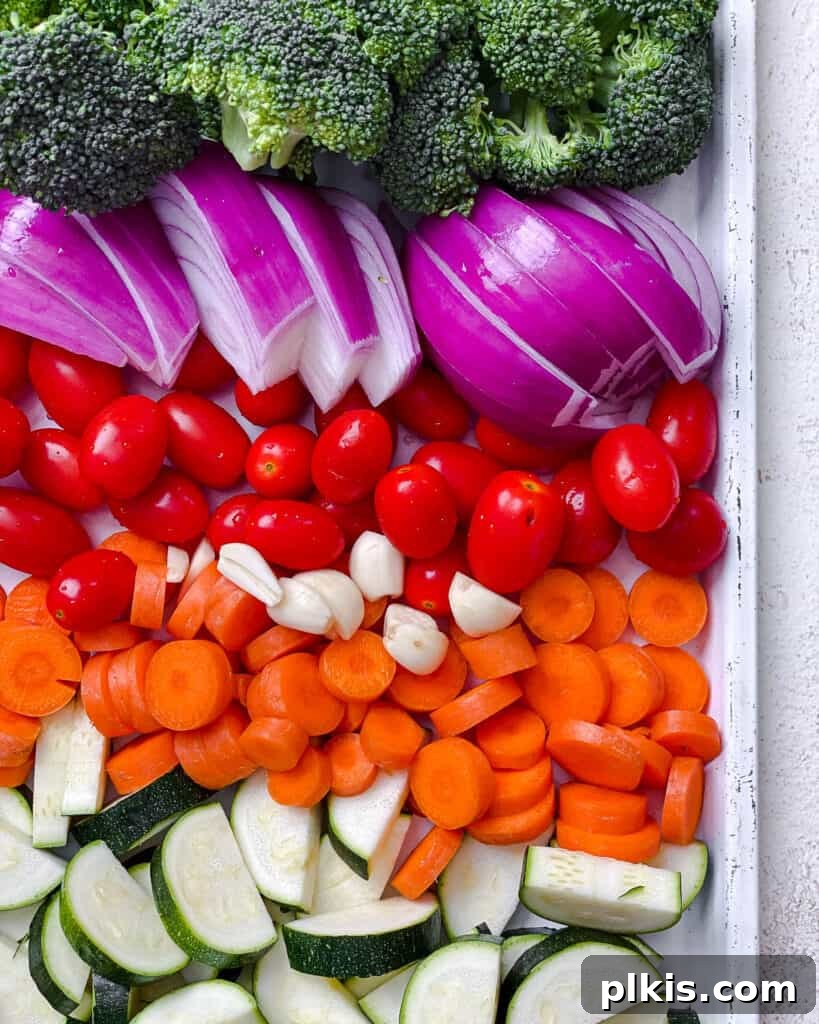
Prepare the Vegetables: While the couscous is resting, preheat your oven to 400°F (200°C). Prepare your vegetables for roasting: break the broccoli into even-sized florets, halve the zucchini lengthwise and then slice it into ¼-inch thick pieces. Slice the red onion into similar ¼-inch pieces. For the carrots, slice them thinner, about 1/6-inch thick, as they take slightly longer to cook. Peel the whole garlic cloves, leaving them intact. Keep the cherry tomatoes whole.
-
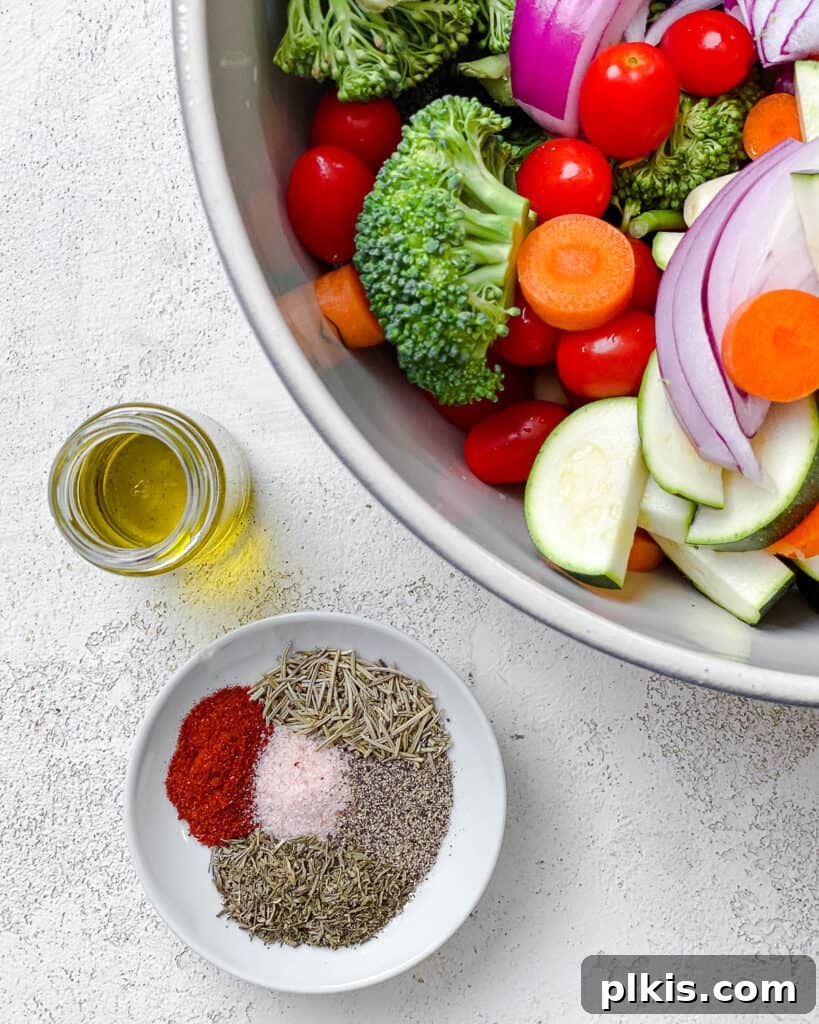
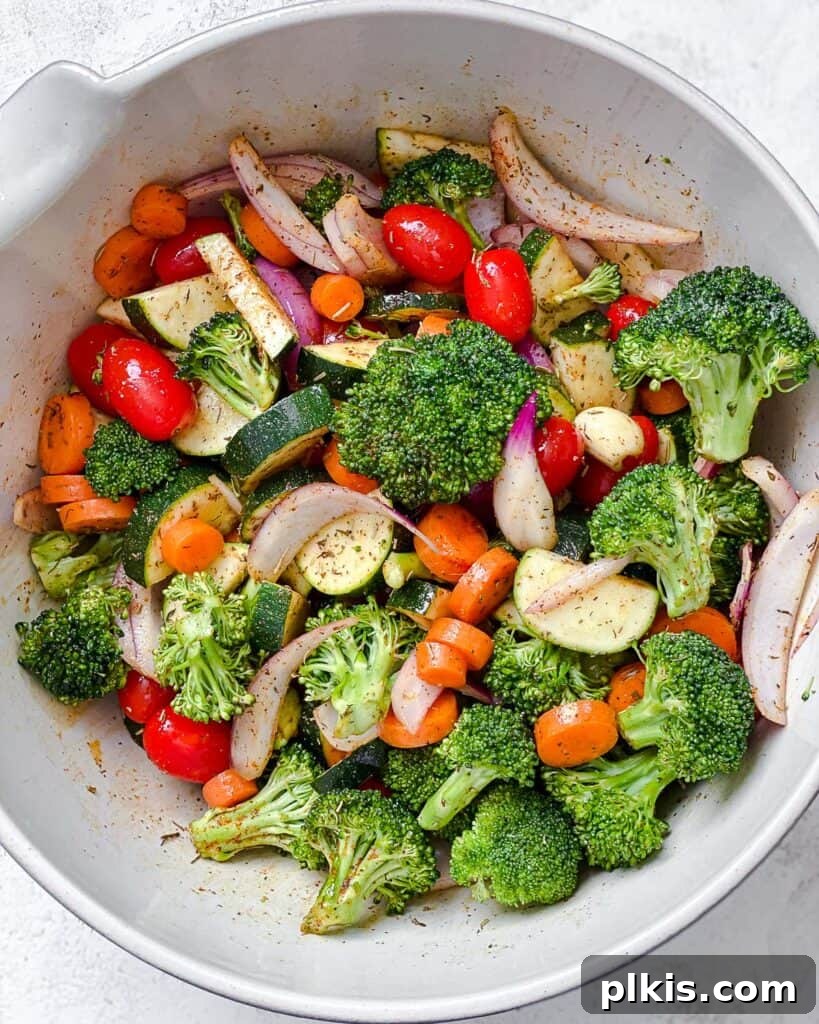
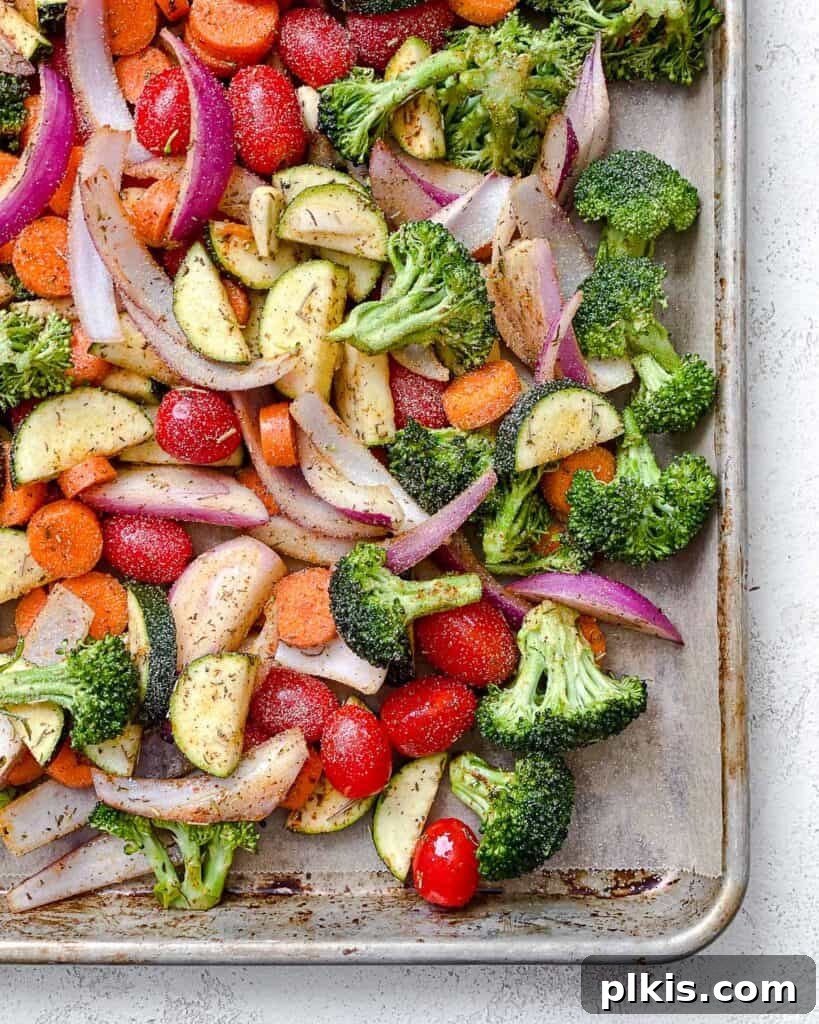
Season and Arrange Vegetables: In a large bowl, or directly on a parchment-lined baking sheet for less cleanup, combine all the prepared vegetables (broccoli, zucchini, red onion, carrots, cherry tomatoes) and the whole garlic cloves. Drizzle with the remaining two tablespoons of olive oil. Add the minced rosemary, dried thyme, smoked paprika, sea salt, and black pepper. Toss everything together thoroughly until all the vegetables are evenly coated with the oil and seasonings. Spread them in a single layer on the baking sheet to ensure even roasting and caramelization.
-
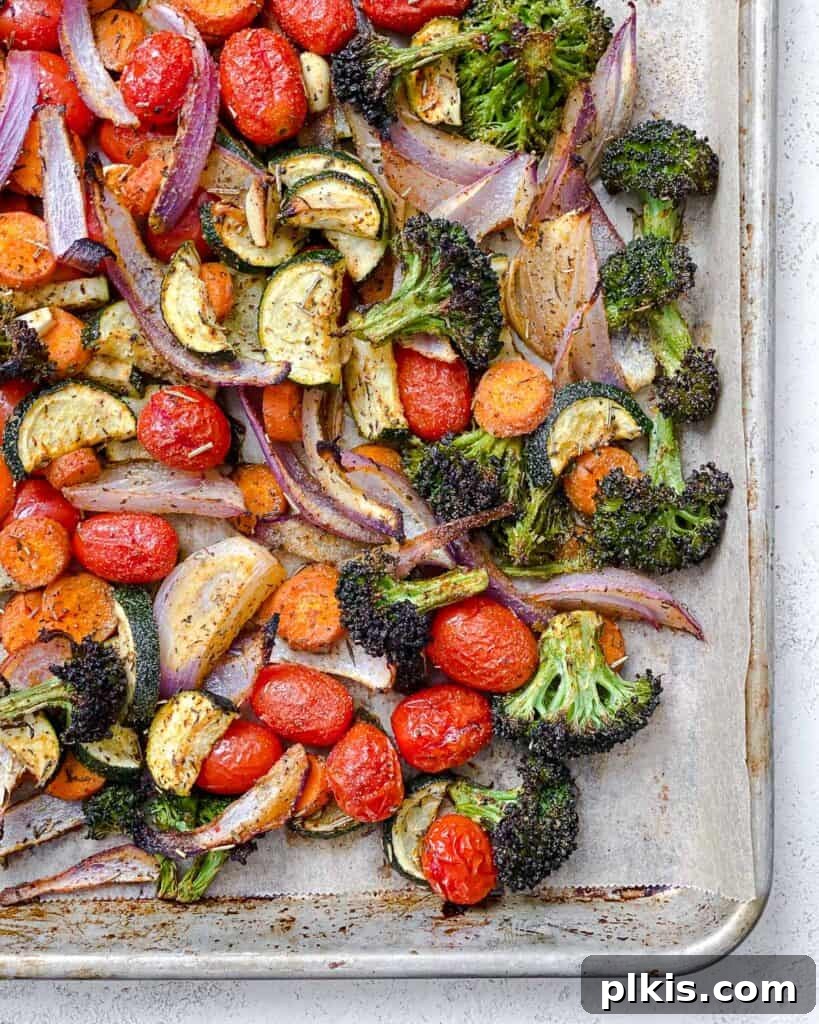
Roast the Vegetables: Place the baking sheet in the preheated oven and roast the vegetables for 35-40 minutes. The cooking time may vary slightly depending on your oven and the size of your vegetable pieces. Look for them to be lightly caramelized and slightly charred on the outside, and wonderfully tender in the middle. Gently toss them halfway through cooking for even browning.
-
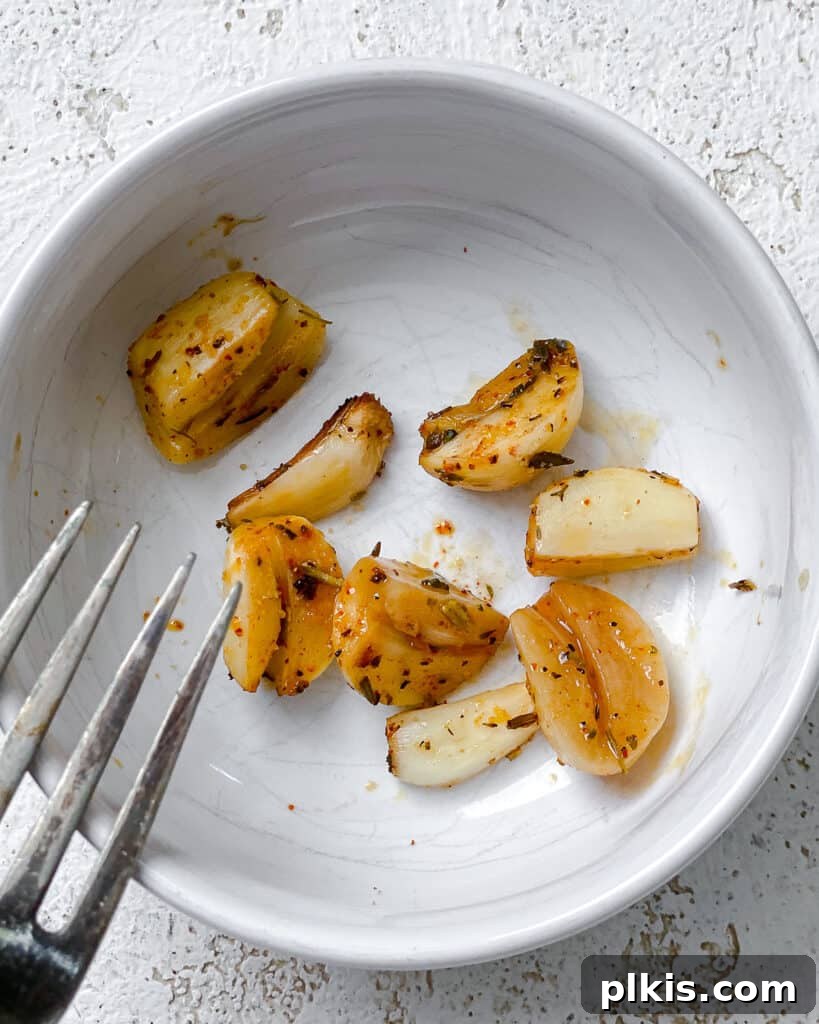
Infuse Couscous with Garlic: Once the vegetables are roasted, carefully remove the softened, sweet roasted garlic cloves from the baking pan. Mash them thoroughly with a fork or the back of a spoon until a smooth paste forms. Transfer this mashed garlic into the pot of cooked couscous and mix it in well. This infuses the couscous with a deep, mellow garlic flavor.


-
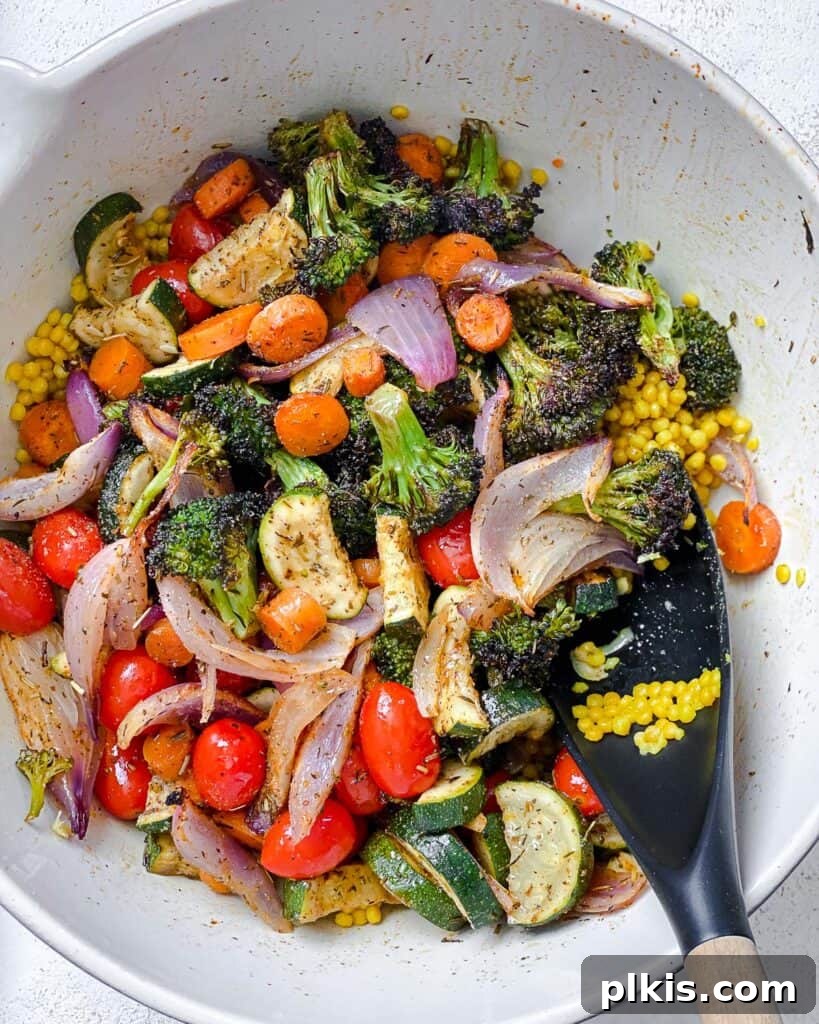
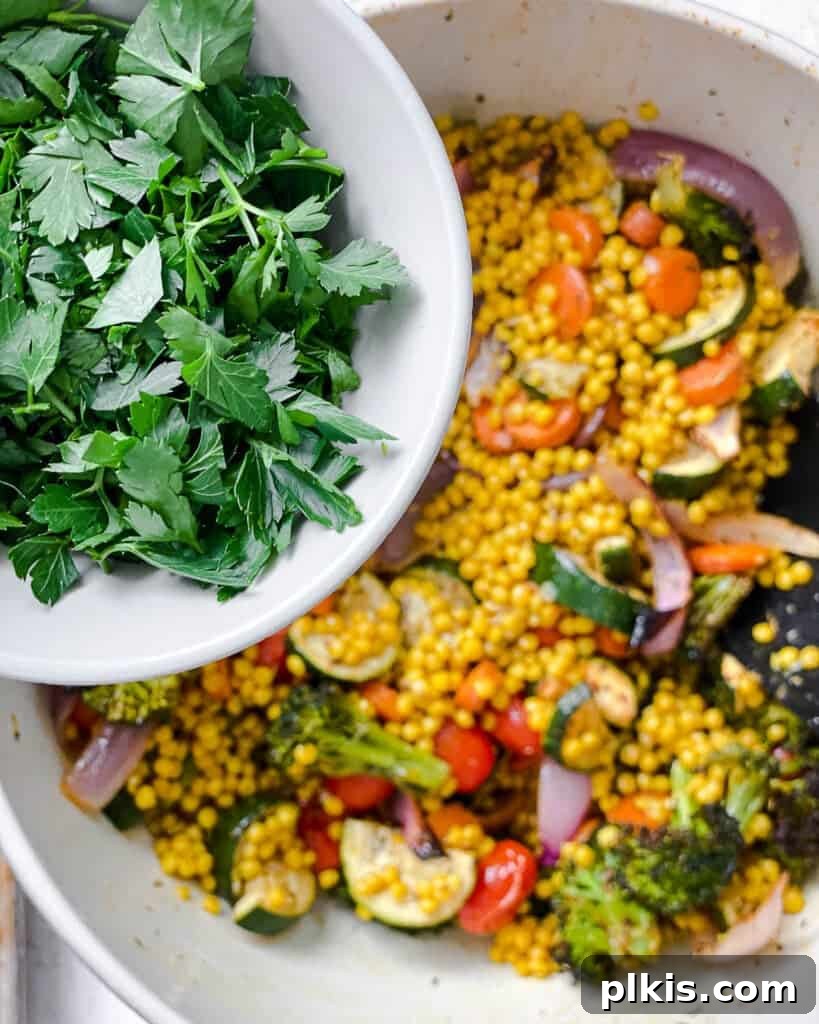
Combine and Serve: Finally, transfer the beautifully roasted vegetables and the garlic-infused couscous to a large serving dish. Toss everything together gently until well combined, ensuring the flavors meld. Serve the roasted vegetable couscous warm, or allow it to cool to room temperature for a delicious couscous salad. Garnish generously with freshly chopped parsley, a few extra lemon wedges for squeezing, and a sprinkle of red pepper flakes for an extra touch of color and subtle heat. Enjoy this hearty and satisfying meal!
Chef-Inspired Recipe Pro Tips
Unlock the full potential of your Roasted Vegetable Couscous with these expert tips, ensuring a perfect dish every time:
- Don’t Skip Toasting the Couscous: This seemingly small step makes a significant difference. Sautéing the couscous in a bit of oil for a couple of minutes before adding liquid brings out its inherent nutty flavor, adding depth and complexity to the final dish. It also contributes to a more appealing texture.
- Master Your Vegetable Chop: Consistency is key for even cooking. Ensure all your vegetables are cut into roughly similar-sized pieces. However, for denser root vegetables like carrots, slice them slightly thinner than quick-cooking items like zucchini or broccoli. This ensures everything becomes tender at the same time without some pieces turning mushy or remaining undercooked.
- Achieve Extra Caramelization: For those irresistible crispy edges and deeper flavor, consider a quick broil at the end. After the vegetables are fully roasted and tender, switch your oven to broiler mode and broil for 1-2 minutes. Keep a close eye on them to prevent burning, as broilers work very quickly!
- Embrace Vegetable Experimentation: The beauty of this recipe lies in its flexibility. Feel free to use whatever seasonal vegetables you have in your fridge or pantry. The most important consideration is choosing vegetables that cook at similar rates, or adjusting their size accordingly. This is a perfect opportunity to minimize food waste and explore new flavor combinations.
- Enjoy Warm or Chilled: This versatile dish can be served in multiple ways. Enjoy it warm, straight from the oven, as a comforting and hearty meal. Alternatively, allow it to cool completely and serve it as a refreshing vegan couscous vegetable salad, perfect for potlucks, picnics, or a light lunch.
Frequently Asked Questions (FAQs)
Here are some common questions about making and enjoying Roasted Vegetable Couscous:
Is couscous vegan?
Yes, traditional couscous, which is a durum wheat-based pasta, is naturally vegan. It does not contain any animal products. However, it is not gluten-free.
Can you cook couscous in the oven?
While some grain-based dishes can be cooked in the oven, we do not recommend cooking giant (pearl) couscous directly in the oven. Its preparation typically requires boiling water to properly absorb and become tender, a method best achieved on the stovetop as outlined in this recipe.
What can I add to couscous for flavor?
This roasted vegetable couscous recipe already provides a fantastic flavor foundation by cooking the couscous in vegetable broth and then combining it with herby, seasoned roasted vegetables. The final touches of fresh lemon juice, parsley, and red pepper flakes further enhance its vibrant taste. For more ideas, refer to the “What Could I Add to Roasted Veg Couscous?” section for a wide array of pantry-friendly additions like spices, dried fruits, nuts, or other vegetables.
Can I substitute the couscous?
Absolutely! If you’re looking for alternatives, you can experiment with other grains or pastas. Good substitutes include quinoa (for a gluten-free option), regular (fine) couscous, orzo pasta, farro, or barley. Remember to adjust the cooking method and liquid ratios according to the specific package instructions for your chosen substitute to ensure perfect results.
Could I grill the vegetables instead?
Yes, grilling the vegetables is a wonderful alternative to roasting and will impart a lovely smoky flavor. Prepare and season the vegetables as instructed, then grill them until they are tender and exhibit beautiful grill marks, with slightly caramelized or blackened edges. This adds another dimension of flavor to the dish.
What to Serve With Couscous?
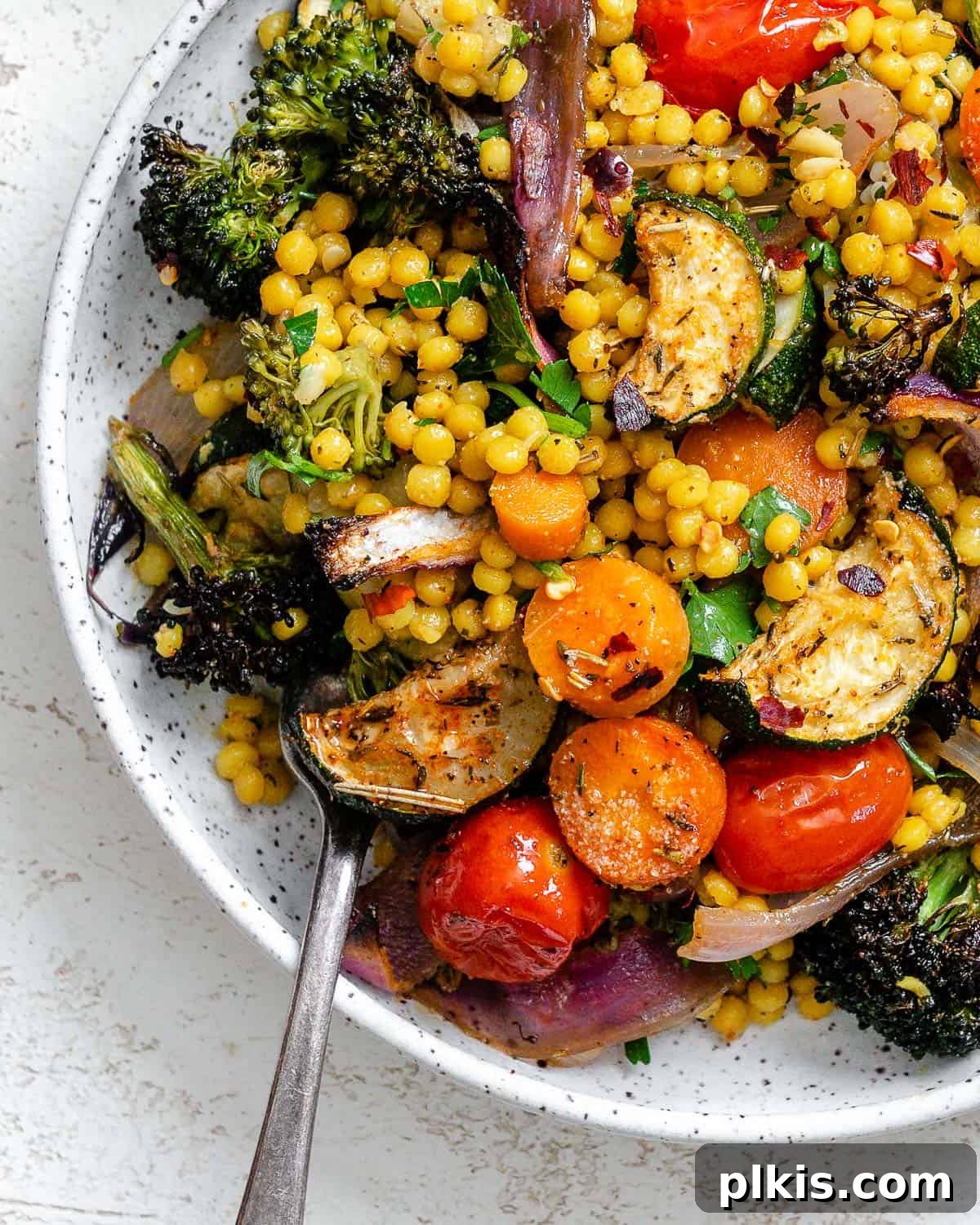
This roasted vegetable couscous is incredibly versatile and can be enjoyed as a main course or a flavorful side dish. Whether served warm or at room temperature (as a vibrant roast vegetable couscous salad), it’s a perfect addition to any dinner table, potluck, or picnic. Here are some delicious ideas for what to eat with your couscous:
- Hearty Plant-Based Proteins: Elevate your meal by pairing it with a protein source. Think marinated tofu or tempeh kabobs, perfectly grilled tofu steaks, savory black bean meatballs, or your favorite vegan mock meat options.
- Gourmet Vegan Burgers: It makes an excellent side dish for a delicious vegan burger. Explore any of these 9 Mouthwatering Vegan Burger Recipes to Try for a complete and satisfying meal.
- Classic Mediterranean Companions: For a delightful Mediterranean-inspired plate, serve your couscous alongside crispy baked falafels, perhaps with a generous dollop of creamy hummus and warm pita bread for dipping.
- Simple Green Salad: A fresh and crisp side salad, like a basic green salad or garden salad dressed with a light vinaigrette, provides a refreshing contrast to the richness of the roasted vegetables.
- Flavorful Saucy Dishes: Couscous is a fantastic alternative to rice or other grains when served with saucy vegan stews, rich tagines, or other slow-cooked dishes. It’s excellent for soaking up all the delicious sauces, especially when accompanied by some naan or additional pita bread.
Storage and Meal Prep Information
This Roasted Vegetable Couscous is excellent for meal prepping, ensuring you have delicious, healthy meals ready to go throughout the week.
Once prepared and thoroughly cooled, transfer any leftovers to an airtight container. It will keep beautifully in the refrigerator for 3-5 days. This makes it a perfect option for packed lunches or quick dinners.
For longer storage, this roasted veg couscous is also highly freezer-friendly. Store it in airtight containers or freezer-safe bags for up to 3 months. When you’re ready to enjoy it, simply allow it to thaw in the refrigerator overnight. You can then eat it chilled or reheat it.
When reheating the couscous and vegetables, we recommend adding a splash of water or vegetable broth. This helps to rehydrate the dish and prevents it from drying out, ensuring it remains tender and flavorful. You can reheat it gently in a microwave in 30-second increments, stirring between each, or warm it on the stovetop over low heat until heated through. Please note that the vegetables may become slightly softer in texture after thawing and reheating.
Discover More Plant-Based Recipes
If you enjoyed this recipe, you’ll love exploring these other plant-based delights:
- Mediterranean Pearl Couscous Salad
- Southwest Quinoa Salad
- Pancit Bihon [Filipino-Inspired Rice Noodles]
- Easy Farro Recipe with Roasted Vegetables
- Roasted Veggie Tacos
- Sweet Potato Quinoa Bowl
Photos by Alfonso Revilla
Roasted Vegetable Couscous
Rating: 5 out of 5 stars from 54 votes
Prep Time: 10 mins
Cook Time: 40 mins
Total Time: 50 mins
Servings: 4
Roasted vegetable couscous combines tender, lightly charred roasted vegetables with slightly chewy giant couscous, topped with lemon, parsley, and pepper flakes for a flavor-packed, super satisfying simple meat-free lunch or dinner!
Equipment
- Measuring spoons
- Measuring Cups
- Knife set
- Baking tray
Ingredients
- 3 tablespoons of olive oil, divided
- 2 cups of uncooked pearl/Israeli couscous
- 2 cups of vegetable broth
- 4 whole garlic cloves
- 2 cups of broccoli florets
- 2 zucchini, halved lengthwise and sliced
- 1 large red onion
- 2 carrots, sliced
- 1 cup of whole cherry tomatoes
- 2 teaspoons of minced rosemary
- 2 teaspoons of dried thyme
- 1 teaspoon of smoked paprika
- Salt and pepper to taste
- ½ cup of fresh parsley, chopped
- Lemon wedges, garnish
- Crushed red pepper, garnish
Instructions
- In a medium pot over medium-high heat, add one tablespoon of oil and the couscous. Cook for 2 minutes, constantly stirring to avoid burning. Add the vegetable broth, bring to a boil, cover, turn off the heat and let it sit undisturbed for 10 minutes.
- Preheat the oven to 400 degrees F (200°C).
- In a large bowl, add the garlic cloves, broccoli florets, zucchini, onion, carrots, cherry tomatoes, and 2 tablespoons of olive oil. Toss well to coat with oil. Then add the rosemary, thyme, smoked paprika, salt and pepper.
- Add the seasoned veggies to a sheet pan and cook for 35-40 minutes.
- Find the roasted garlic cloves, mash them, add them to the pot with the couscous, and mix well.
- In a large bowl, mix the veggies and couscous.
- Serve hot, sprinkle parsley and crushed red pepper flakes.
Notes
- Toast the couscous: This step only takes a couple of minutes and helps to enhance the nutty flavor of the couscous.
- Chop the vegetables correctly: Make sure each vegetable is cut into similar-sized pieces. However, cut carrots (and other root veggies) thinner than other veggies since they take longer to cook.
- For extra caramelization: Broil the veggies for 1-2 minutes at the end.
- Experiment with veggies: Based on what you have in your kitchen/pantry, and will cook at similar times. The sky is the limit.
Nutrition
Calories: 495kcal | Carbohydrates: 84g | Protein: 15g | Fat: 12g | Saturated Fat: 2g | Polyunsaturated Fat: 2g | Monounsaturated Fat: 8g | Sodium: 543mg | Potassium: 845mg | Fiber: 9g | Sugar: 8g | Vitamin A: 6937IU | Vitamin C: 88mg | Calcium: 102mg | Iron: 3mg
Additional Info
Author: Toni Okamoto
Course: Dinner, Lunch
Cuisine: Mediterranean
Method: Stovetop, Oven
Diet: Vegan
Tried this recipe? Please tag us at @PlantBasedOnABudget! 🙂