
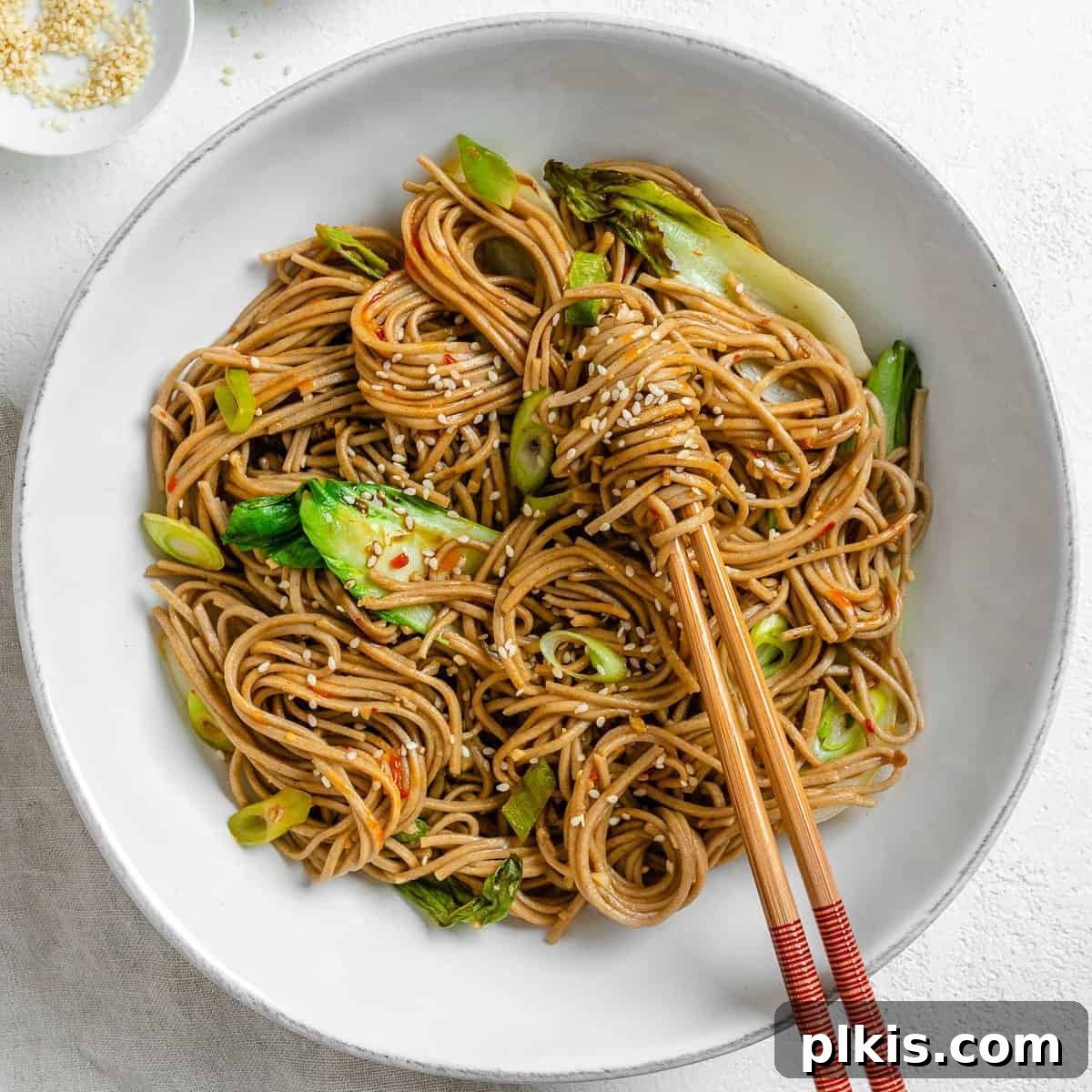
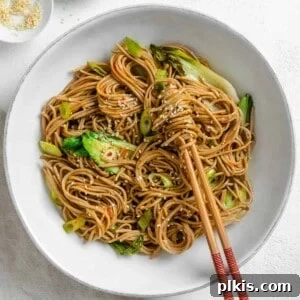
Discover the ultimate quick and healthy meal solution with these incredibly simple and utterly delicious Garlic Sesame Soba Noodles. Ready in just 20 minutes, this recipe offers unparalleled versatility, allowing you to enjoy it warm as a satisfying stir-fry or chilled as a vibrant sesame noodle salad, perfectly complemented by your choice of fresh vegetables. It’s a fast, nutritious, and incredibly easy-to-make dish, promising a foolproof, gluten-free, and meat-free option that’s perfect for any mid-week dinner or meal prep.
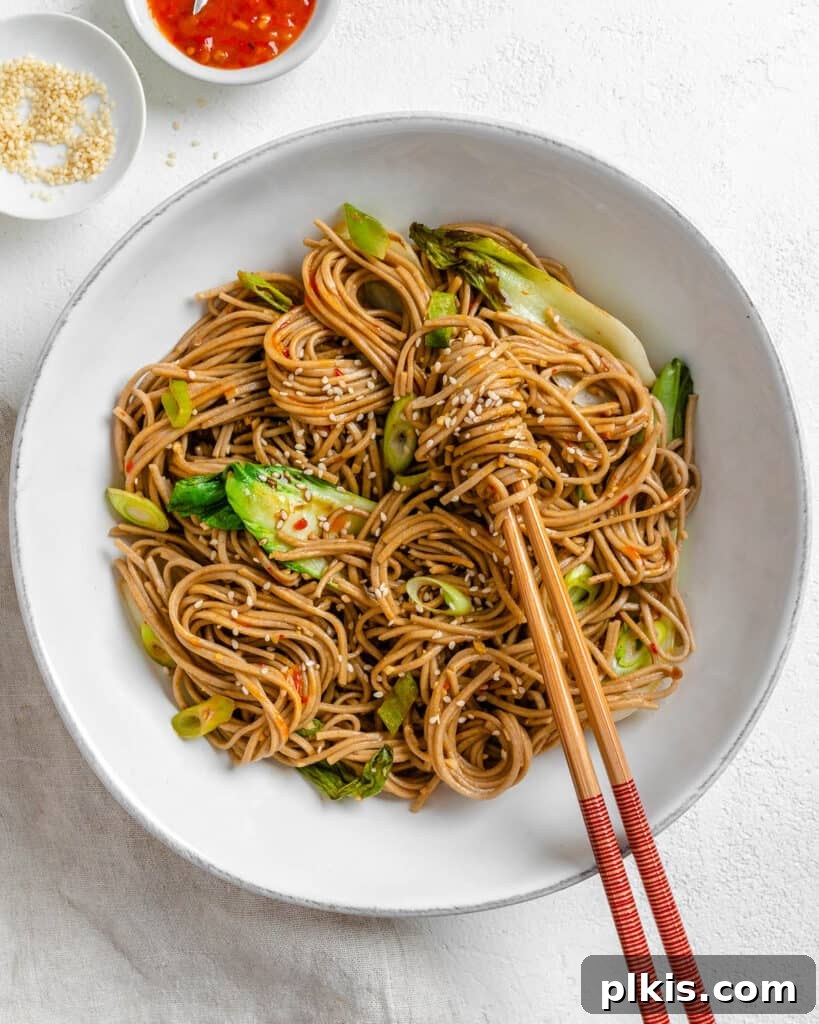
Quick, Simple, & Incredibly Versatile Sesame Soba Noodles Recipe
When time is of the essence, and you crave a nourishing yet hassle-free meal that can be on your table in under 20 minutes, noodle dishes and stir-fries are often the culinary heroes we turn to. We’ve previously delighted in sharing popular recipes like our straightforward veggie chow mein, the hearty udon edamame stir fry, and the flavorful shiitake-asparagus-tofu stir fry. Now, it’s time to introduce a new favorite to your rotation: these irresistibly aromatic Garlic Sesame Soba Noodles.
Crafted with a minimalist approach, this sesame noodle recipe utilizes just a handful of essential pantry staples and a couple of fresh additions, making it not only incredibly simple to prepare but also exceptionally budget-friendly. It’s the perfect solution for a last-minute midweek meal when you need something satisfying without a lengthy ingredient list or complex cooking steps. What makes this dish even more appealing is its incredible adaptability. You can enjoy it as a light and flavorful side dish, or elevate it to a hearty main course by incorporating your favorite stir-fried vegetables for a warm, comforting experience. Alternatively, transform it into a refreshing cold sesame noodle salad by pairing it with crisp, vibrant raw veggies such as finely shredded carrots, crunchy cabbage, and colorful bell peppers. The possibilities are endless, allowing you to customize this dish to perfectly suit your mood and preferences.
What Are Soba Noodles? Understanding This Healthy Japanese Staple
Soba noodles are a distinctive type of long, thin Japanese noodle, traditionally crafted from buckwheat flour. The term “soba” itself is the Japanese word for buckwheat, which gives these noodles their characteristic darker hue compared to conventional wheat-based noodles. Beyond their visual appeal, soba noodles boast a unique earthy, subtly nutty flavor profile that sets them apart and adds a depth of taste to any dish.
A significant advantage of soba noodles, especially for those with dietary restrictions, is that buckwheat is naturally gluten-free. However, it’s crucial to exercise caution and check product labels, as some commercial varieties of soba noodles may include wheat flour to alter texture or reduce cost. For a truly gluten-free experience, always opt for varieties explicitly labeled as 100% buckwheat.
Beyond their unique flavor and gluten-free potential, buckwheat noodles are a nutritional powerhouse. They stand out from regular noodles by packing in additional dietary fiber and plant-based protein, contributing to a feeling of fullness and aiding digestion. Furthermore, buckwheat is celebrated for its impressive array of health benefits, attributed to its rich content of healthful plant compounds, powerful antioxidants, and a spectrum of essential vitamins and minerals. Scientific studies and health resources, such as those highlighted by Healthline, point to buckwheat’s potential roles in reducing inflammation, assisting in blood sugar control, promoting cardiovascular health, and even offering protective effects against certain cancers. Incorporating these nutrient-dense noodles into your diet, especially when paired with a simple, savory, and zingy ginger-garlic-sesame sauce, transforms this vegan soba noodle recipe into a delicious and foolproof way to effortlessly boost your nutrient intake. You might also enjoy exploring other soba-based creations like a warm soba salad with sunomono-style cucumbers or a vibrant chap chae-inspired soba dish.
Essential Ingredients for Perfect Sesame Soba Noodles
Crafting this delightful vegan soba noodle recipe is remarkably straightforward, requiring only a core set of pantry staples and a few fresh extras. The beauty of this dish lies in its simplicity and the ample opportunities it provides for customization and versatility.
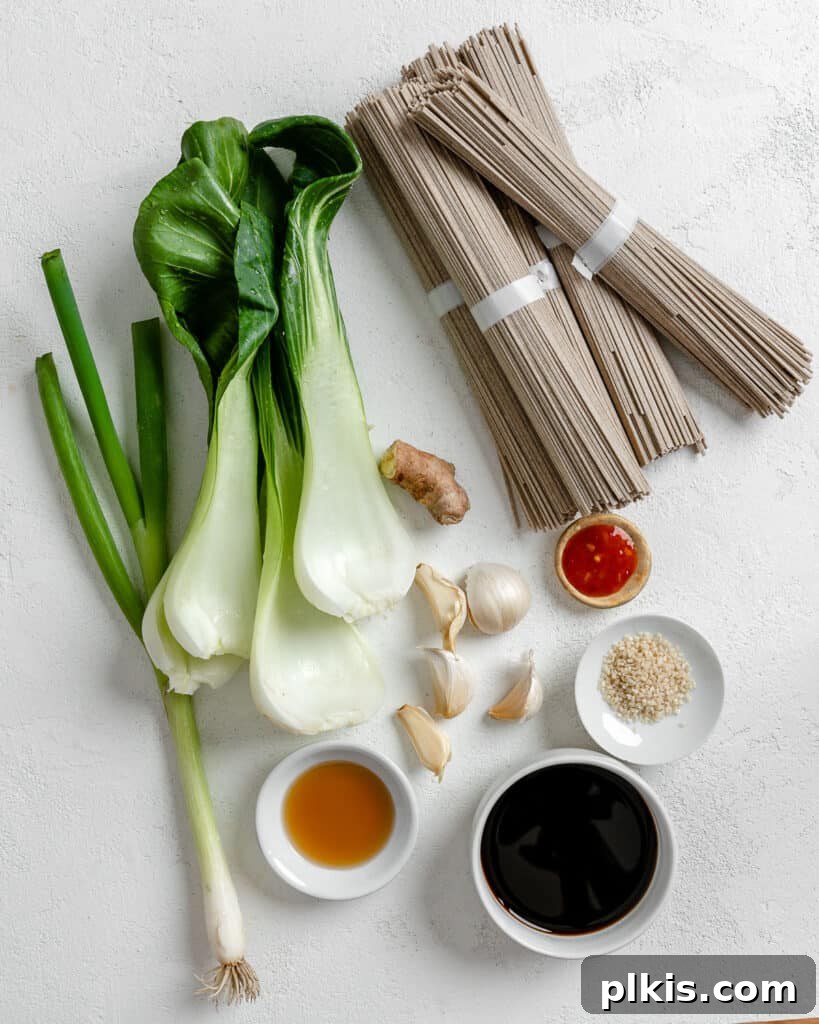
- Soba Noodles: The foundation of our dish. For those following a gluten-free diet or simply seeking the purest form of soba, prioritize 100% buckwheat noodles. Always check the ingredient list, as some brands may blend buckwheat with wheat flour.
- Aromatics: The vibrant heart of these Japanese-inspired soba noodles. A generous combination of freshly minced garlic and grated fresh ginger provides a pungent, warm, and deeply aromatic base that elevates the entire dish. These two ingredients are non-negotiable for their distinctive flavor contribution.
- Sesame Oil: Toasted sesame oil is a non-negotiable flavor enhancer. Its rich, nutty, and deeply aromatic profile is critical to the dish’s signature taste. Do not substitute toasted sesame oil with plain sesame oil or any other cooking oil, as the flavor difference is substantial and will alter the essence of the recipe.
- Soy Sauce: This staple brings umami and saltiness to the sauce. You can use either dark or light soy sauce, or opt for a reduced-sodium version if preferred. For a gluten-free alternative that delivers similar depth of flavor, tamari or coconut aminos are excellent substitutes.
- Chili Paste: To introduce a hint of warmth and a gentle kick, chili paste is included. Feel free to use your preferred variety, whether it’s classic chili paste, chili sauce, sriracha, or chili garlic paste. The amount is entirely adjustable to your personal taste – omit it entirely for mild sesame sauce noodles or increase for a bolder, spicier flavor.
- Vegetables: We’ve opted for yu choy in our base recipe, a leafy green vegetable known for its tender stalks and slight bitterness that complements the savory sauce. Excellent alternatives include crisp bok choy or tender broccolini. Refer to our comprehensive FAQs section for a broader range of vegetable ideas to inspire your culinary creativity.
- Garnish: Essential for both flavor and visual appeal. We use finely sliced green onions (scallions), incorporating both the white and green parts for a mild oniony bite and fresh color. A sprinkle of sesame seeds, either raw or lightly toasted (we highly recommend toasting for enhanced nuttiness), completes the dish.
Optional Add-Ins & Creative Recipe Variations
One of the true joys of this garlic sesame noodle recipe is its incredible flexibility. It serves as a fantastic foundation that you can easily adapt and enhance with various add-ins and creative twists to suit your palate or whatever ingredients you have on hand:
- For Extra Spice (Chili): If you crave a bolder heat profile in your sesame ginger noodles, consider sprinkling in some red pepper flakes directly into the sauce or drizzling a touch of chili oil over the finished dish. This transforms them into delightful chili garlic noodles with an extra kick.
- A Touch of Acid: A small splash of acid can brilliantly brighten the flavors and add a layer of complexity to the sesame oil noodles. Experiment with a squeeze of fresh lemon juice, lime juice, or a dash of rice wine vinegar. This acidity cuts through the richness and adds a welcome zing.
- Balancing Sweetness (Sugar): Particularly when an acid is added, a tiny pinch of sugar or a small drizzle of maple syrup can help to perfectly balance the savory and tangy notes of the sauce, creating a more harmonious flavor profile.
- Boosted Protein: Easily elevate the nutritional value and heartiness of this garlic sesame noodles recipe with a protein boost. Integrate firm or extra-firm tofu (either crispy air-fried tofu or pre-puffed varieties work wonderfully), crumbled tempeh, or your preferred plant-based meat alternative, such as vegan ‘chicken strips.’
- Creamy Texture (Tahini): For a luxurious, creamier sauce, whisk in a tablespoon or two of tahini. Its rich, nutty flavor pairs beautifully with sesame. As an alternative, a small dollop of natural peanut butter can also achieve a similar creamy consistency, leaning towards a satay-style noodle.
- Umami from Nori: While perhaps not a budget staple for everyone, if you happen to have some at home, a sprinkle of shredded nori (dried seaweed) makes for an incredibly delicious and visually appealing garnish. It adds a subtle oceanic umami and delicate crispness to the healthy soba noodles.
- Expanded Veggies: The world of quick-cooking stir-fried vegetables is your oyster when it comes to enhancing this sesame noodles recipe. Consult our comprehensive FAQs for a detailed list of our top recommendations, ensuring your dish is packed with color, texture, and nutrients.
How to Make Ginger and Garlic Sesame Soba Noodles: A Step-by-Step Guide
Crafting these flavorful ginger and garlic sesame soba noodles is a straightforward process, designed for efficiency and delicious results. Follow these simple steps for a perfect meal:
- 1) Cook the Soba Noodles: Begin by cooking your soba noodles according to the specific instructions provided on their package. Typically, this involves boiling them in water for approximately 5-7 minutes until they reach an al dente texture, meaning they are tender but still have a slight chew to them.
Important Tip: Immediately after the noodles are cooked, it is crucial to drain them thoroughly and then rinse them under cold running water. This essential step serves two primary purposes: it effectively removes excess starches that can make the noodles sticky, and it prevents them from clumping together, ensuring each strand remains distinct and perfectly coated by the sauce.
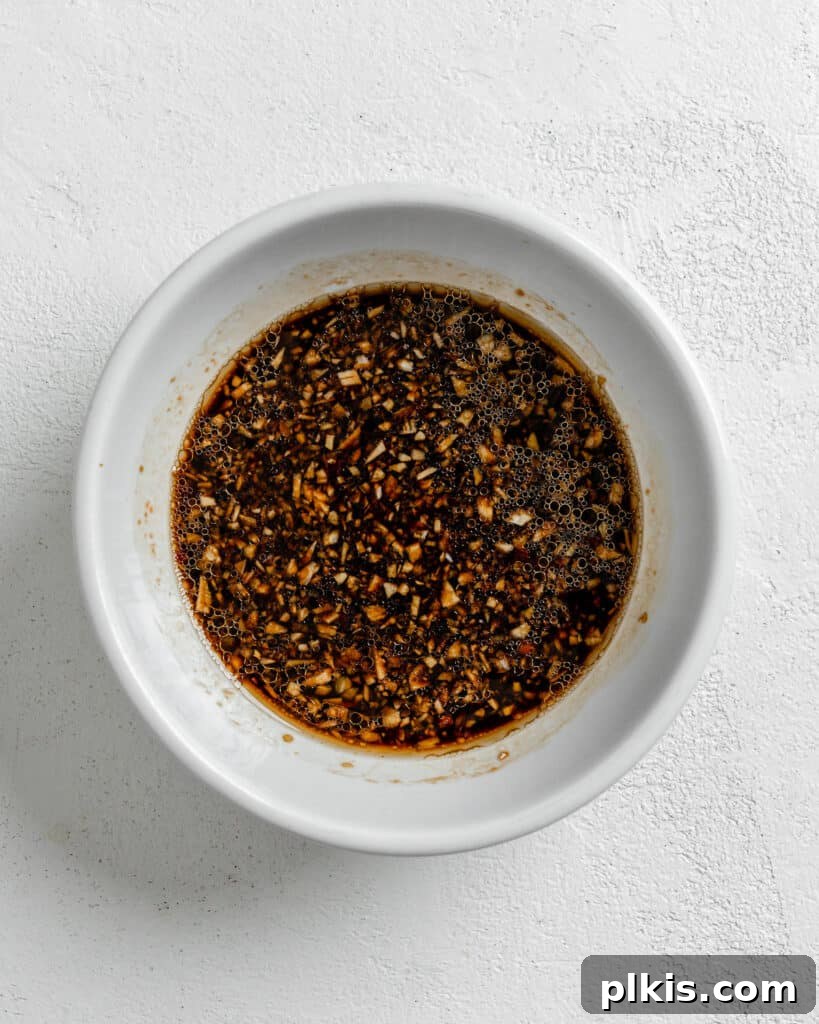
- 2) Prepare the Sesame Soba Sauce: While your noodles are cooking, turn your attention to the irresistible sauce. First, finely mince your garlic cloves and grate the fresh ginger. The finer they are, the more their flavors will infuse the sauce. In a small bowl, combine the minced garlic and grated ginger with the toasted sesame oil, soy sauce (or tamari/coconut aminos for a gluten-free option), and chili paste. Whisk all these ingredients together until they are well combined and the sauce has a uniform consistency. This creates a potent and aromatic base for your noodles.
- 3) Wilt Your Vegetables: In a large skillet or wok, add your chopped yu choy (or any other green vegetable of your choice, such as bok choy or broccolini). Sauté the vegetables over medium heat for a few minutes, allowing them to soften and wilt slightly. This step ensures your vegetables are tender-crisp and ready to absorb the delicious sauce.
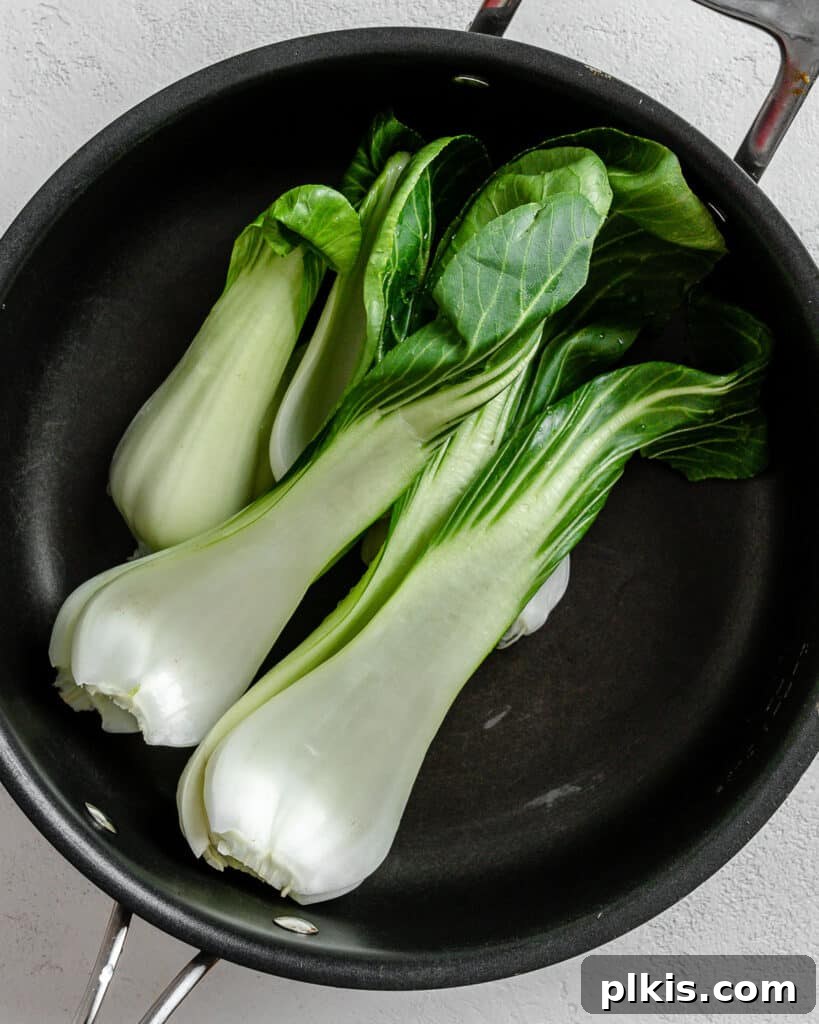
- 4) Combine and Toss: Once the vegetables are suitably wilted, add the rinsed and drained soba noodles to the skillet. Pour in the prepared sesame sauce and add the sliced green onions. Toss all the ingredients together thoroughly, ensuring every noodle strand and vegetable piece is evenly coated with the rich sauce. Cook for just about a minute, allowing the flavors to meld and the noodles to warm through.
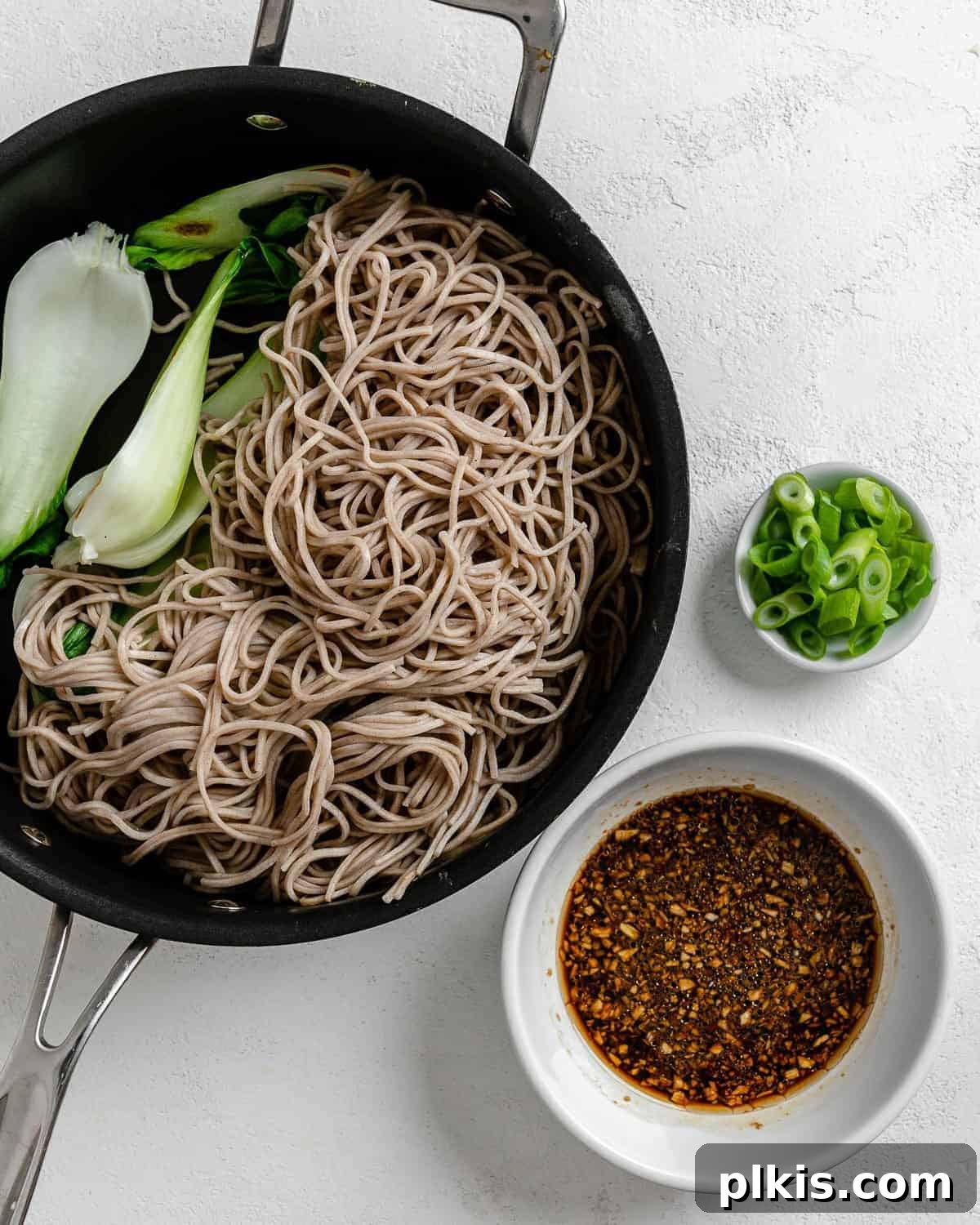
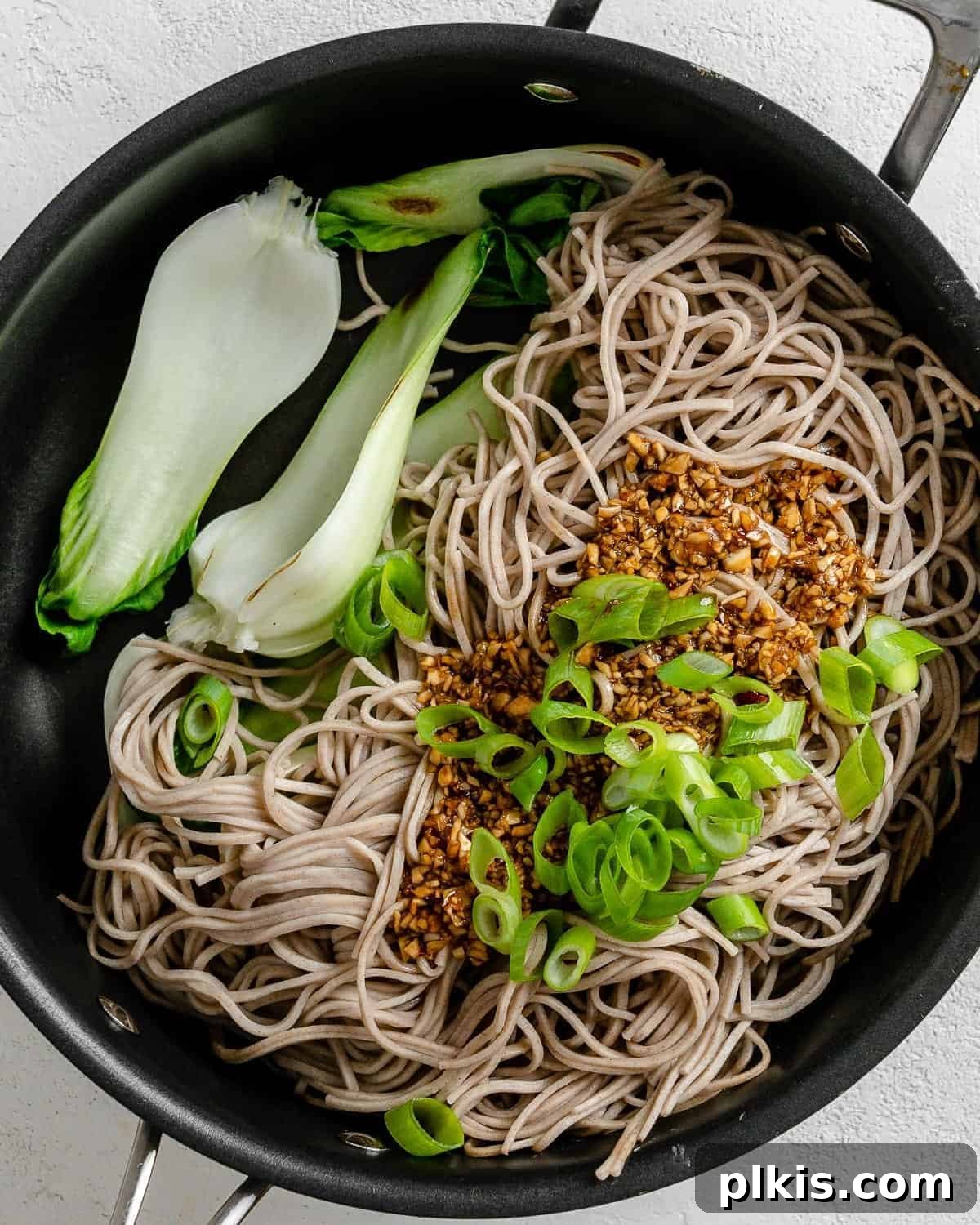
- 5) Garnish and Serve: Finally, transfer your delicious garlic sesame soba noodles to serving bowls. Garnish generously with a sprinkle of sesame seeds for added crunch and visual appeal. For an extra touch of freshness, you can add a few more sliced green onions. Serve immediately and enjoy!
The Refreshing Cold Soba Noodle Salad Recipe: A Summer Delight
Transforming these warm, savory noodles into a refreshing cold soba noodle salad is incredibly simple and yields a delightful dish perfect for warmer weather or light lunches. After cooking the soba noodles according to package instructions and draining them, immediately transfer them to a bowl filled with ice-cold water, or rinse them thoroughly under running cold water. This crucial step rapidly cools the noodles, prevents them from overcooking, and halts the starch release, ensuring a perfectly al dente and non-sticky texture for your salad.
Once cooled and thoroughly drained, toss the chilled noodles with the prepared garlic sesame sauce. At this stage, you can also fold in any raw, crisp vegetables of your choice, such as shredded carrots, cucumber ribbons, bell pepper strips, or radish slices, adding vibrant color and refreshing crunch. Serve these cold sesame noodles immediately for a light, invigorating, and flavorful meal that’s both healthy and satisfying.
Frequently Asked Questions About Sesame Soba Noodles
Absolutely! While soba noodles offer a unique texture and flavor, this versatile sesame oil soba sauce pairs wonderfully with various other noodles. Feel free to substitute with delicious options like ramen noodles, thick udon noodles, delicate rice vermicelli, or broader rice noodles. Each substitution will lend a slightly different character to the dish, but the core flavors of the sauce will shine through beautifully.
The beauty of these vegan garlic sesame noodles lies in their adaptability to a wide array of vegetables. You can truly customize this recipe with any of your favorite stir-fry vegetables to boost nutrition, color, and texture. Here are some excellent recommendations:
- Broccoli florets or slender broccolini spears
- Crisp snow peas or tender green beans
- Fresh spinach or sweet garden peas
- Finely shredded carrot or thinly sliced cabbage
- Colorful bell peppers (red, yellow, orange)
- Crunchy bean sprouts or exotic water chestnuts
- Tender zucchini or mini corn cobs/sweetcorn kernels
- Earthy mushrooms (shiitake, cremini, or button)
For ultimate convenience, consider using a pre-packaged fresh or frozen ‘stir-fry vegetables’ combination to add to your garlic sesame noodles. If you’re planning to prepare a refreshing cold sesame noodle salad, you also have the option to incorporate raw veggies for extra crunch and freshness, such as creamy avocado slices, sweet sugar snap peas, or thinly sliced radish. When adding any vegetables, aim to choose those with similar cooking times and chop them into uniform pieces to ensure even cooking. It’s often best to stir-fry them briefly while the noodles are cooking, or just before combining everything.
While it’s always best to refer to the specific cooking instructions on your soba noodle package, the general method is quite simple. Bring a large pot of water to a rolling boil. Add the soba noodles and cook them for approximately 3-5 minutes, or until they are al dente. This means they should be tender but still retain a slight bite. Once cooked, drain them thoroughly in a colander. Immediately rinsing them under cold water is crucial to remove any excess starch, which prevents them from sticking together and ensures a perfect, non-clumpy texture.
Yes, rinsing cooked soba noodles is a highly recommended and essential step for optimal texture. If you skip this, the noodles will quickly clump together as they cool, becoming sticky and difficult to separate. Rinsing them under cold water effectively washes away the excess starches that are released during cooking, leaving you with individual, perfectly separated noodle strands. Additionally, tossing a small amount of oil into the noodles (which is naturally incorporated with the sesame oil in this recipe’s sauce) can further help reduce any potential clumping, ensuring a smooth and enjoyable eating experience.
Top Recipe Tips and Expert Notes for Perfect Soba Noodles
Achieving perfectly flavorful and well-textured sesame soba noodles is easy with a few key considerations. Keep these expert tips in mind to ensure your dish is a resounding success every time:
- Avoid Overcooking the Noodles: Soba noodles cook relatively quickly. They are best enjoyed when they are al dente, meaning they have a tender consistency but still retain a pleasing, slight chewiness. Overcooking will result in mushy, unappetizing noodles, so keep a close eye on them during the boiling process and follow package instructions carefully.
- Always Rinse Cooked Noodles Thoroughly: As highlighted in our instructions, this step is paramount. Rinsing the cooked soba noodles under cold water is the most effective way to remove any residual starches that cause them to clump together. This ensures that each noodle strand remains separate, creating a much more pleasant texture and allowing the sauce to coat them evenly.
- Toast Your Sesame Seeds for Enhanced Flavor: This simple but impactful step can significantly elevate the overall taste of your dish. Toasted sesame seeds release a deeper, richer, and nuttier aroma and flavor compared to raw seeds. To toast them, simply add the sesame seeds to a dry skillet over medium heat. Stir them frequently for a few minutes until they become fragrant and turn a light golden brown. Be careful not to burn them, as they can go from toasted to burnt very quickly.
- Adjust Flavors to Your Personal Taste: Culinary preferences are deeply personal, and this recipe is designed to be adaptable. We all have different thresholds for garlic intensity, ginger zing, chili spice, and saltiness. Don’t hesitate to tweak the amounts of each ingredient in the sauce to perfectly suit your liking. Taste as you go and make minor adjustments until it hits your sweet spot.
- Soba Noodle Brands Can Vary: It’s worth noting that different brands of soba noodles can yield varying results in terms of texture and even ingredients. Some soba noodles are made purely from buckwheat flour, making them gluten-free, while others incorporate wheat flour. Always read the ingredient list carefully, especially if you have dietary restrictions. Feel free to experiment with several brands to discover your preferred texture and composition.
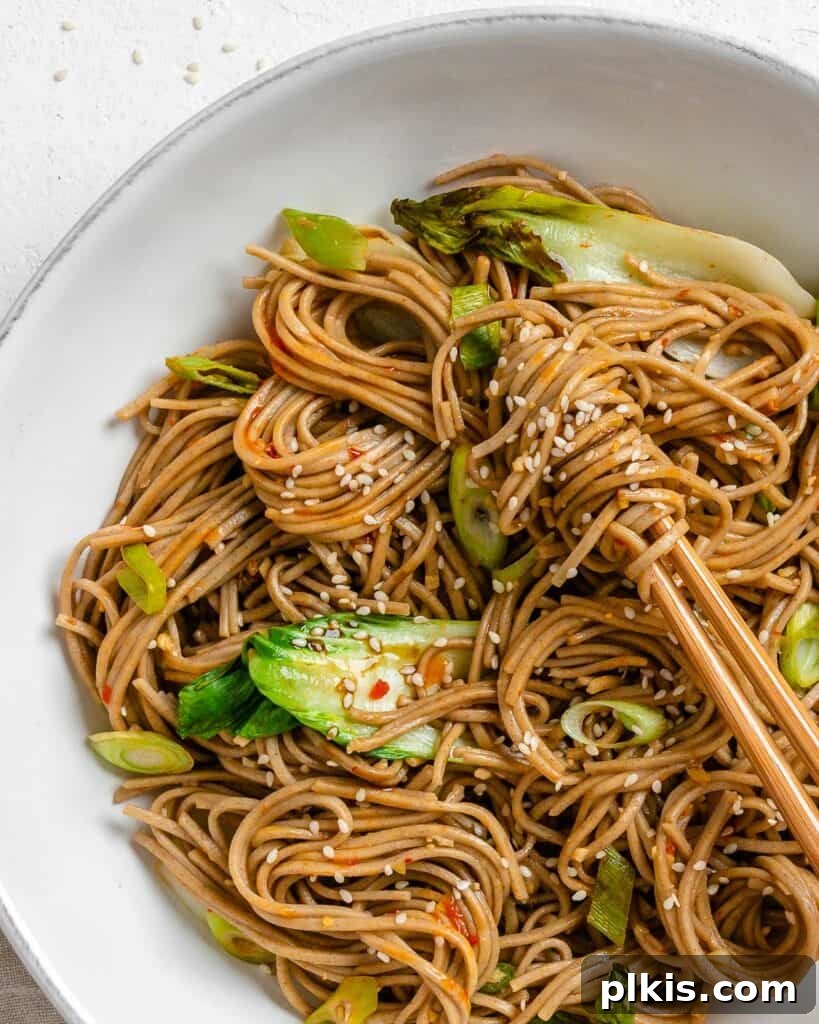
Creative Ways to Serve Your Sesame Soba Noodles
Once your delectable sesame soba noodles are ready, the serving possibilities are abundant, making this dish incredibly versatile for any occasion. They shine brightly whether presented as a standalone simple side dish or elevated to a satisfying main course. For a truly hearty and ‘fully loaded’ noodle bowl, consider topping the dish with additional protein components like perfectly pan-fried tofu cubes, steamed dumplings, or an even wider array of stir-fried vegetables. This enhances both the nutritional profile and the visual appeal of your meal. Alternatively, for a lighter yet still flavorful spread, serve the soba noodles alongside complementary side dishes, such as a crisp and refreshing edamame salad or a simple cucumber and radish pickle. No matter how you choose to serve them, these noodles promise a delightful culinary experience.
Storing Leftover Sesame Soba Noodles for Later Enjoyment
Leftover sesame soba noodles are a fantastic option for future meals and retain their deliciousness remarkably well. To store any remaining portions, transfer them into an airtight container and place it in the refrigerator. They will keep fresh and flavorful for approximately 2-3 days. The wonderful thing about these noodles is their versatility even as leftovers. You can enjoy them straight from the fridge as a chilled soba noodle salad, which can be particularly refreshing. Alternatively, if you prefer them warm, you can easily reheat the noodles in a microwave until heated through, or gently warm them on the stovetop in a skillet with a splash of water or vegetable broth to prevent sticking and rehydrate them slightly.
Explore More Delicious Vegan Sesame Recipes
If you’ve fallen in love with the rich, nutty flavor of sesame in these soba noodles, you’ll be thrilled to discover many other vegan recipes that highlight this incredible ingredient. From crispy snacks to savory mains and refreshing salads, sesame seeds and sesame oil add a distinctive depth that transforms ordinary dishes into extraordinary culinary experiences. Expand your plant-based repertoire with these fantastic sesame-infused creations:
- Crispy Oven-Baked Sesame Fries
- Vibrant Sesame Noodle Salad
- Tender Sesame Drenched Asparagus
- Flavorful Spicy Sesame Tofu Stir Fry
- Savory Sesame Zucchini Fritters
- Delightful Sesame Potato Puffs
Photos by Alfonso Revilla
Garlic Sesame Soba Noodles
Video
Equipment
-
Measuring spoons
-
Measuring Cups
-
Small Whisk
-
Large Pot
Ingredients
Instructions
-
Cook soba noodles according to package instructions.
-
In a standard-size bowl, whisk together the garlic, ginger, sesame oil, soy sauce, and chili paste.
-
In a large pot or saucepan, add yu choy (or vegetable of choice) to wilt slightly. Then add cooked noodles to this pan along with sauce and green onions. Cook about 1 minute, mixing together all elements.
-
Top with sesame seeds.
Notes
- Chili: To increase the spice in the sesame ginger noodles, you could add some red pepper flakes or chili oil to make delicious chili garlic noodles.
- An acid: Add a small splash of either lemon or lime juice or rice wine vinegar to add zing and depth to the sesame oil noodles.
- Sugar: A pinch of sugar or maple syrup helps to balance the flavors, especially when an acid is added.
- Protein: Easily boost the protein in this garlic sesame noodles recipe with the addition of tofu (crispy or puffed), tempeh, or your favorite meat alternative like ‘chicken strips.’
- Tahini: Add some tahini (or possibly peanut butter) for a creamier sauce.
- Nori: While this isn’t cheap, if you have some at home, some shredded seaweed is a delicious garnish for the healthy soba noodles.
- Veggies: There are plenty of quick-cooking stir-fried veggies you could add to the sesame noodles recipe. Check the FAQs for all our top recommendations.