
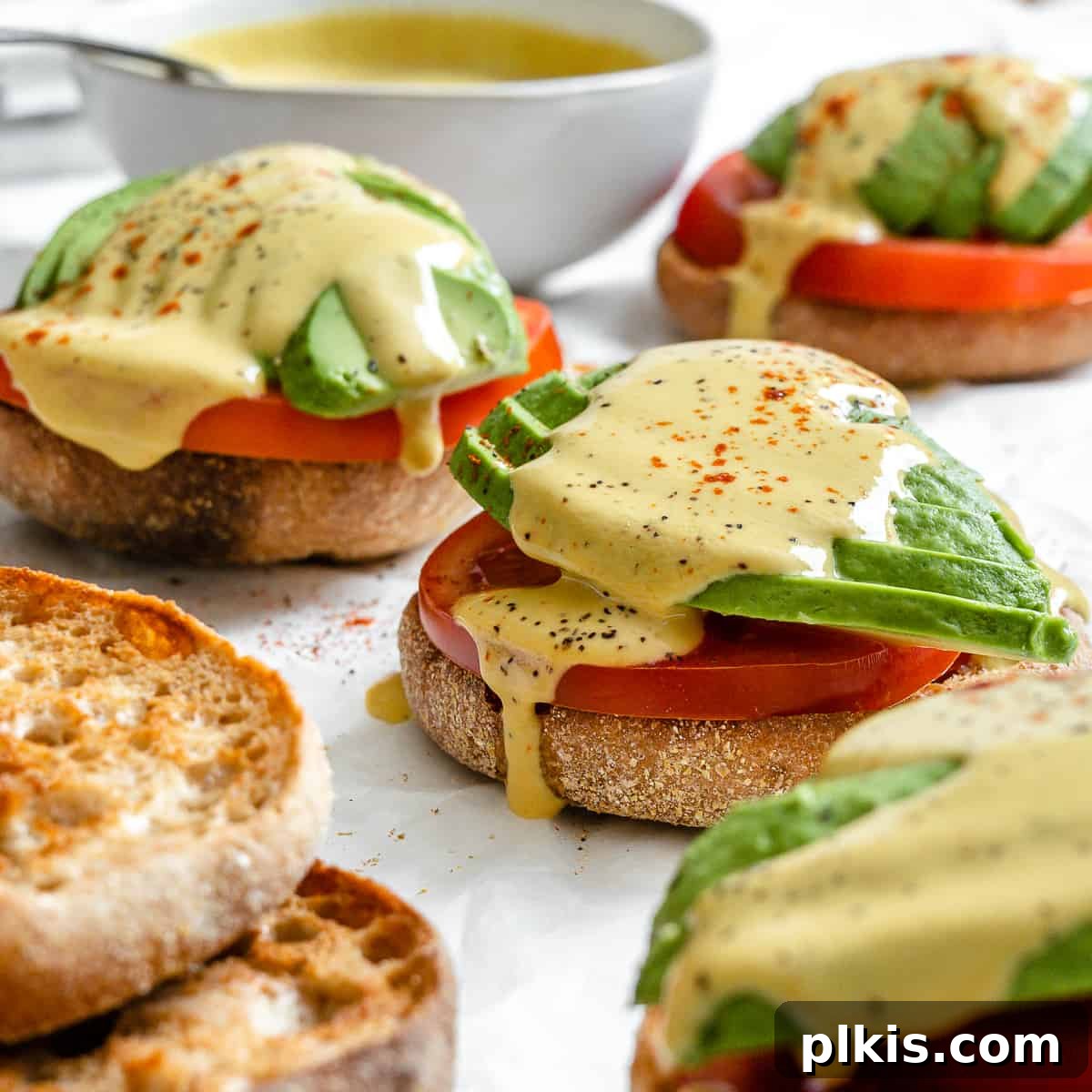
Unlock the secret to a rich, creamy, and utterly delicious plant-based delight with our easy vegan hollandaise sauce recipe. Crafted with just 8 simple ingredients, a blender, and less than 10 minutes of your time, this sauce transforms everyday meals into gourmet experiences. Perfect for those following a dairy-free, egg-free, or nut-free lifestyle, this recipe is also optionally gluten-free, ensuring everyone can enjoy its luxurious texture and vibrant flavor. Say goodbye to traditional limitations and embrace a healthier, equally satisfying alternative that’s ready to drizzle over your favorite dishes.
Discovering Hollandaise Sauce: From Classic to Vegan Perfection
Traditionally, Hollandaise sauce, often referred to as “Dutch sauce,” is one of the five mother sauces of French cuisine, with its origins tracing back to the mid-17th century. It’s a classic emulsion-based sauce renowned for its super thick, velvety smooth, and rich texture. Made primarily from egg yolks, melted butter, and a touch of lemon juice or white wine vinegar, it’s a staple for elevating dishes like Eggs Benedict and steamed asparagus.
However, for individuals adhering to a vegan or dairy-free diet, this classic culinary delight has historically been off-limits. The good news is that those days are firmly in the past! Thanks to innovative culinary techniques and smart ingredient substitutions, it’s now incredibly simple to whip up a vegan hollandaise sauce that rivals its traditional counterpart in both taste and texture. This plant-based version masterfully mimics the iconic richness and creaminess without any animal products.
Beyond being inclusive, this vegan rendition offers several advantages. You won’t have to worry about the finicky process of emulsifying egg yolks and butter, which often leads to “broken” sauces in traditional recipes. Our vegan hollandaise eliminates this stress, making it heaps easier to prepare even for novice cooks. Moreover, it’s a lighter and often healthier alternative, boasting fewer saturated fats while maintaining a super silky, rich, and full-bodied flavor profile. All this is achieved with just a few simple, inexpensive pantry staples, making it a sustainable and budget-friendly choice. Once you try it, you’ll find yourself wanting to dip and drizzle this incredible sauce over virtually everything!
Essential Ingredients for Your Vegan Hollandaise
Creating this magnificent vegan hollandaise sauce relies on a handful of accessible and affordable ingredients, each playing a crucial role in achieving its signature creamy texture and savory depth. The beauty of this recipe lies in its simplicity and the clever use of plant-based components to mimic traditional flavors.
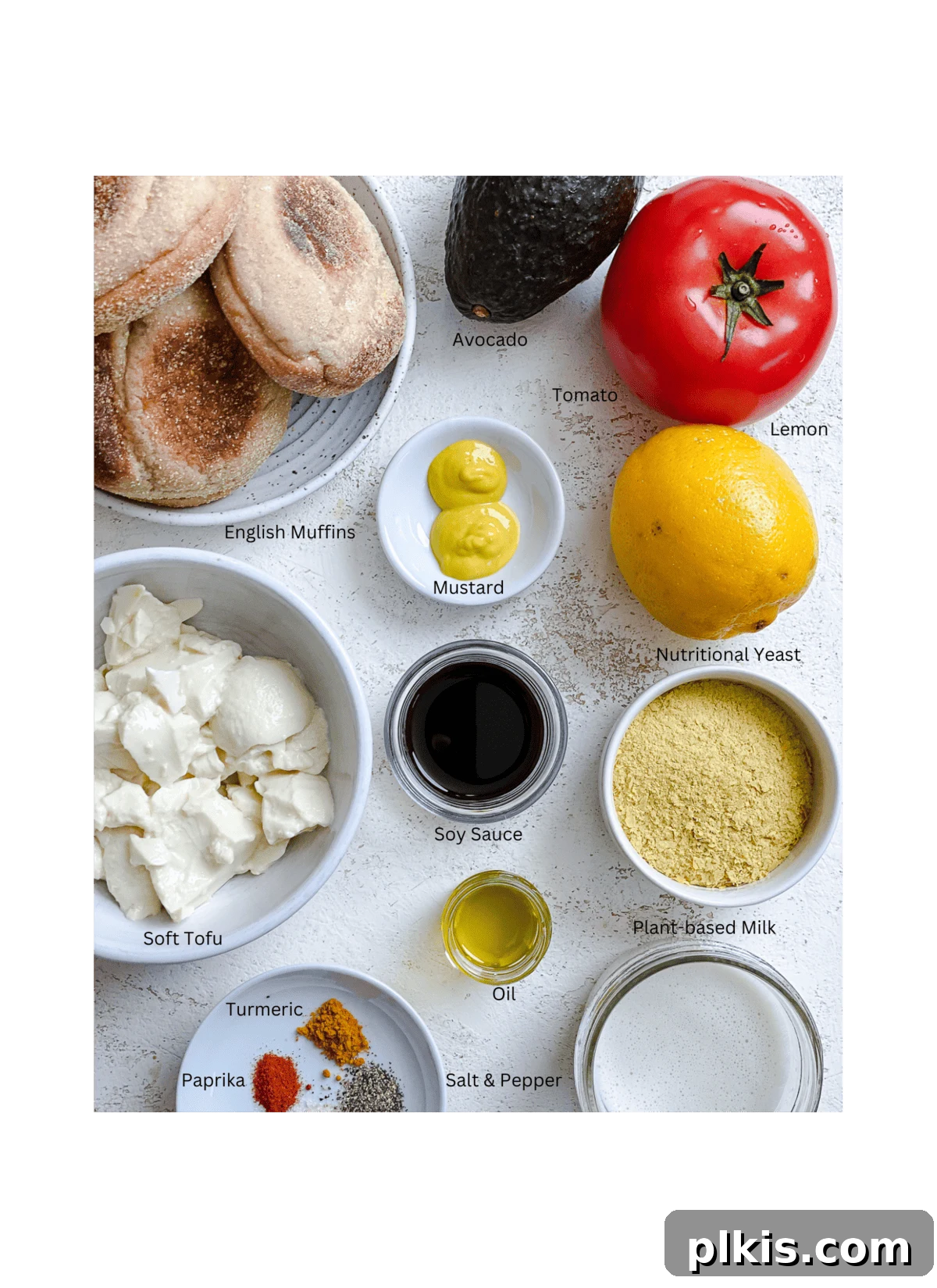
The foundation of our vegan hollandaise is soft tofu, which provides the incredibly smooth and creamy base characteristic of hollandaise. For a savory, umami-rich, and slightly “cheesy” flavor, nutritional yeast is indispensable. The tanginess and bright notes come from fresh lemon juice, cutting through the richness beautifully. A touch of mustard (Dijon works wonderfully) adds a subtle piquant warmth and helps with the overall flavor profile. Plain unsweetened plant-based milk (almond, soy, or oat milk are great choices) is used to achieve the perfect consistency, allowing you to adjust the thickness to your preference. A small amount of olive oil contributes to the luxurious mouthfeel, while soy sauce (or tamari for a gluten-free option) deepens the savory notes. Finally, a pinch of paprika and turmeric not only adds a warm, subtle spice but also imparts that iconic pale yellow hue, making it visually appealing and closer to its traditional counterpart.
For an even more complex flavor profile, consider adding a pinch of onion powder and/or garlic powder. If you desire a distinct “eggy” flavor that perfectly mimics traditional hollandaise, a tiny pinch of black salt (kala namak) is a game-changer. This special salt, with its sulfuric notes, magically recreates the essence of eggs.
Crafting the Perfect Vegan Eggs Benedict
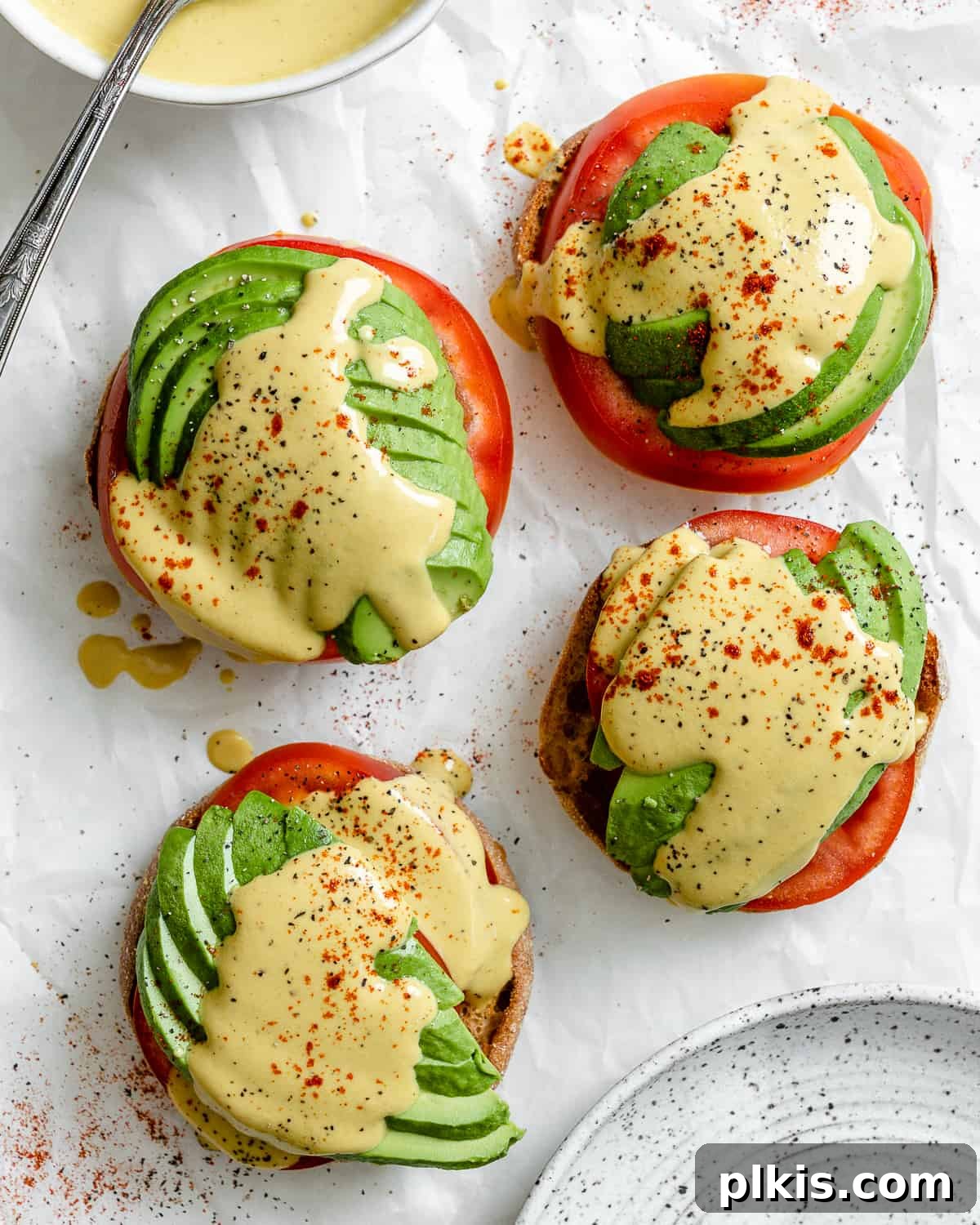
While our vegan hollandaise is incredibly versatile, one of its most celebrated uses is in creating a magnificent vegan Eggs Benedict. This plant-based take on a brunch classic is both satisfying and delightfully flavorful. Here are the key components for an exceptional vegan Eggs Benedict:
- English Muffins: The classic base for any Benedict. Feel free to use regular bread if preferred, or opt for gluten-free English muffins or bread to cater to dietary needs. Toast them to golden perfection for that essential crispy texture.
- Fresh Vegetables: Instead of poached eggs, we embrace the freshness of nature. Large, ripe tomatoes, thinly sliced, offer a juicy and slightly acidic counterpoint. Creamy slices of ripe avocado (refer to our avocado guide for selection tips) add healthy fats and a wonderfully soft texture that pairs beautifully with the hollandaise.
- Flavorful Spices for Garnish: To finish your delightful vegan Eggs Benedict, a sprinkle of spices adds both visual appeal and a burst of flavor. We highly recommend a dash of cayenne pepper (or red pepper flakes) for a subtle kick, smoked paprika for depth and warmth, and freshly ground black pepper. A pinch of flaky sea salt is optional but can enhance the overall taste.
Creative Topping Ideas for Your Vegan Benedict
The beauty of a vegan Benedict is its adaptability. You can easily customize it with a variety of toppings to create your ideal flavor and texture combination:
- Tofu ‘Egg’ Scramble: Seasoned with kala namak, nutritional yeast, and garlic powder, this scramble perfectly mimics the texture and eggy flavor of traditional poached eggs.
- Grilled or Pan-Fried Tofu/Tempeh Slices: For a more substantial bite, consider thinly sliced and seasoned grilled tofu steaks or tempeh, adding a protein-rich layer.
- Sautéed Greens: Wilted spinach or kale adds a vibrant color, essential nutrients, and a slight bitterness that beautifully balances the richness of the hollandaise.
- Sautéed Mushrooms: Earthy and savory sautéed mushrooms bring a wonderful depth of flavor and meaty texture.
- Steamed Asparagus with Lemon Garlic: A classic pairing with hollandaise, fresh steamed asparagus spears offer a delicate crunch and spring freshness.
- Vegan Bacon or Ham Slices: Crispy vegan bacon or savory plant-based ham slices add a familiar smoky, salty element. Try homemade vegan carrot bacon for a unique twist.
- Roasted Cherry Tomatoes: Sweet and slightly caramelized roasted tomatoes burst with flavor, adding a gourmet touch.
- Micro-greens/Sprouts: For a fresh, peppery, and visually appealing finish, scatter a handful of micro-greens or sprouts.
- Fresh Herbs: Garnish with finely chopped fresh herbs like parsley, chives, or dill to brighten the flavors and add aromatic notes.
Whip Up Your Vegan Hollandaise: A Simple Two-Step Process
Preparing this incredibly creamy and dairy-free hollandaise alternative is astonishingly straightforward. All you need is a blender and a few minutes, making it an ideal quick addition to any meal.
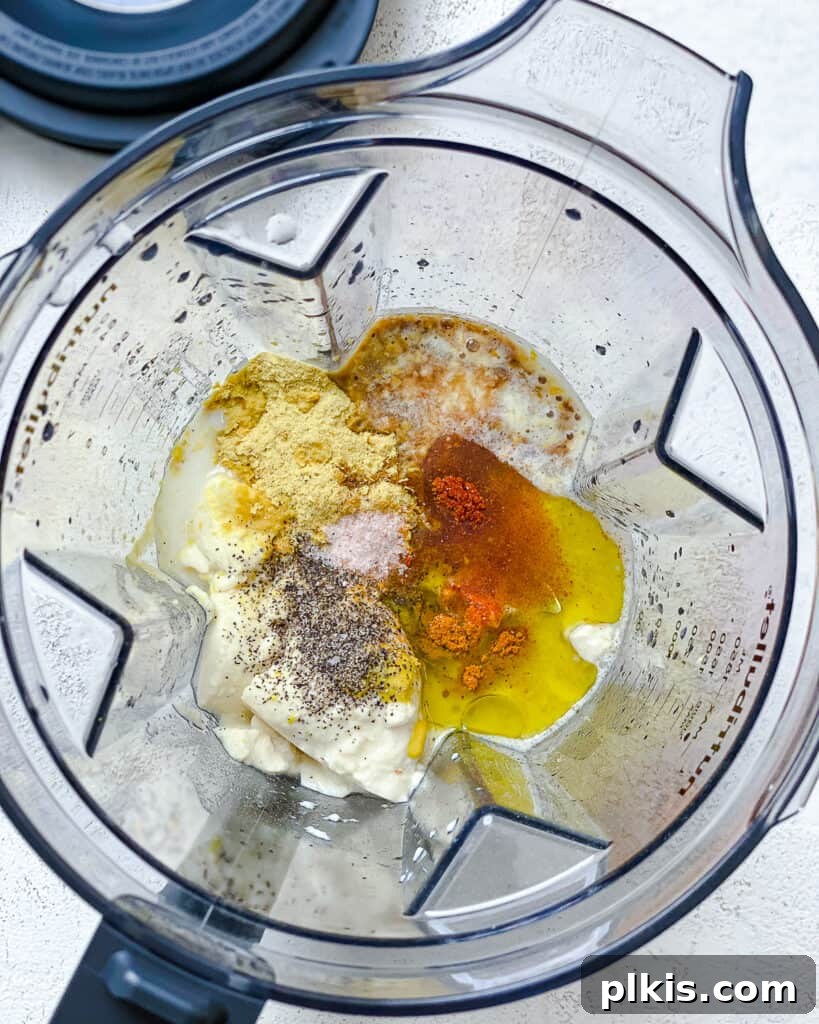
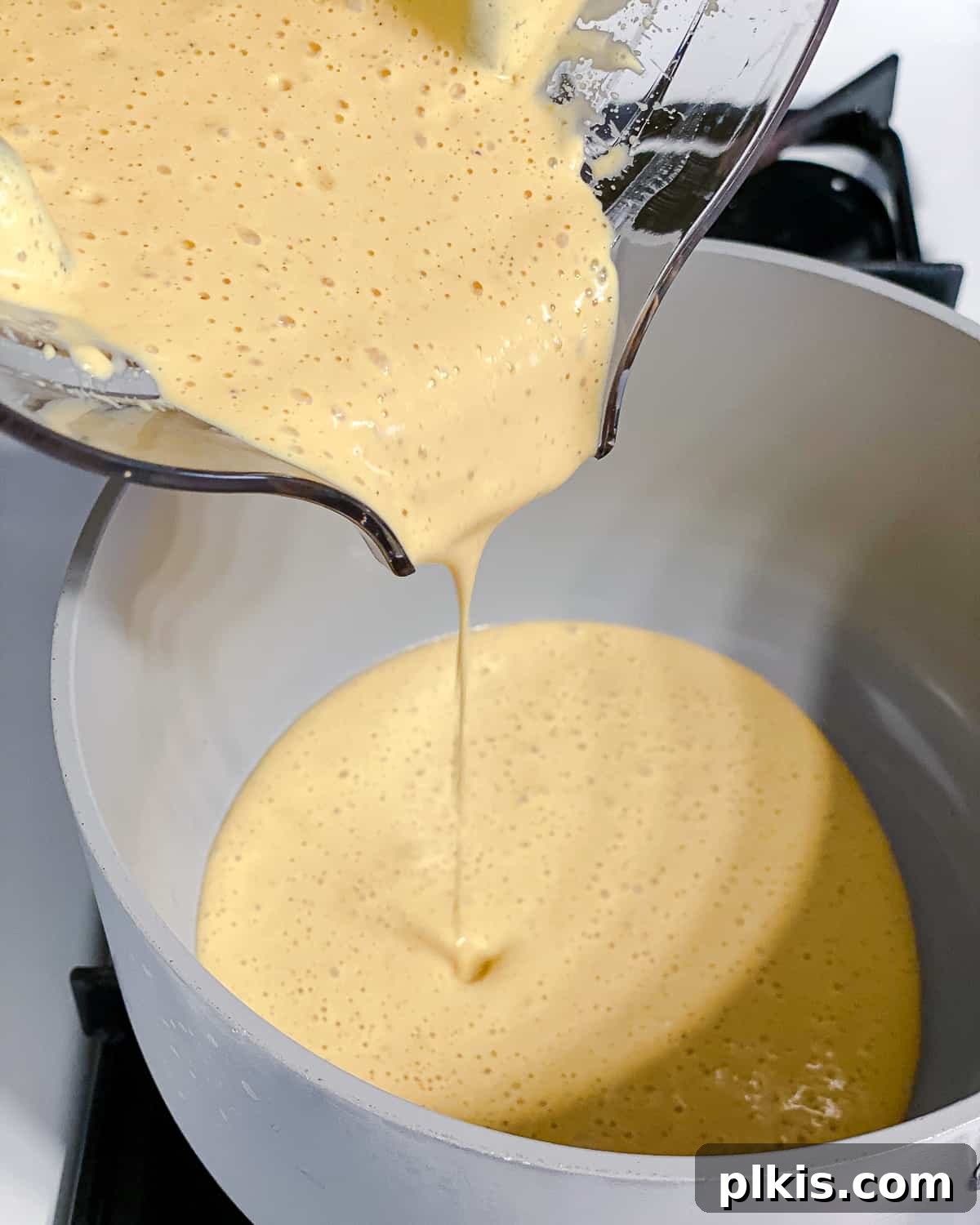
Step 1: Blend to Perfection. Gather all your vegan hollandaise sauce ingredients—soft tofu, mustard, nutritional yeast, lemon juice, plant-based milk, olive oil, soy sauce, paprika, and turmeric. Add them into your blender. Process until the mixture is completely smooth and creamy, ensuring no lumps remain. Taste the sauce and season it generously with salt and pepper to your preference. This step is crucial for achieving that signature velvety texture.
Step 2: Gently Warm. Once blended to perfection, transfer your creamy sauce to a small saucepan. Heat it over low heat, stirring frequently. The goal is to warm the sauce through without letting it boil or simmer vigorously, which could alter its texture. Gentle warming ensures a perfectly smooth and luxurious consistency, ready to be enjoyed.
Assembling Your Delicious Vegan Eggs Benedict
With your homemade vegan hollandaise sauce gently warming, it’s time to bring together the elements of your vegan Eggs Benedict for a truly satisfying brunch or breakfast.
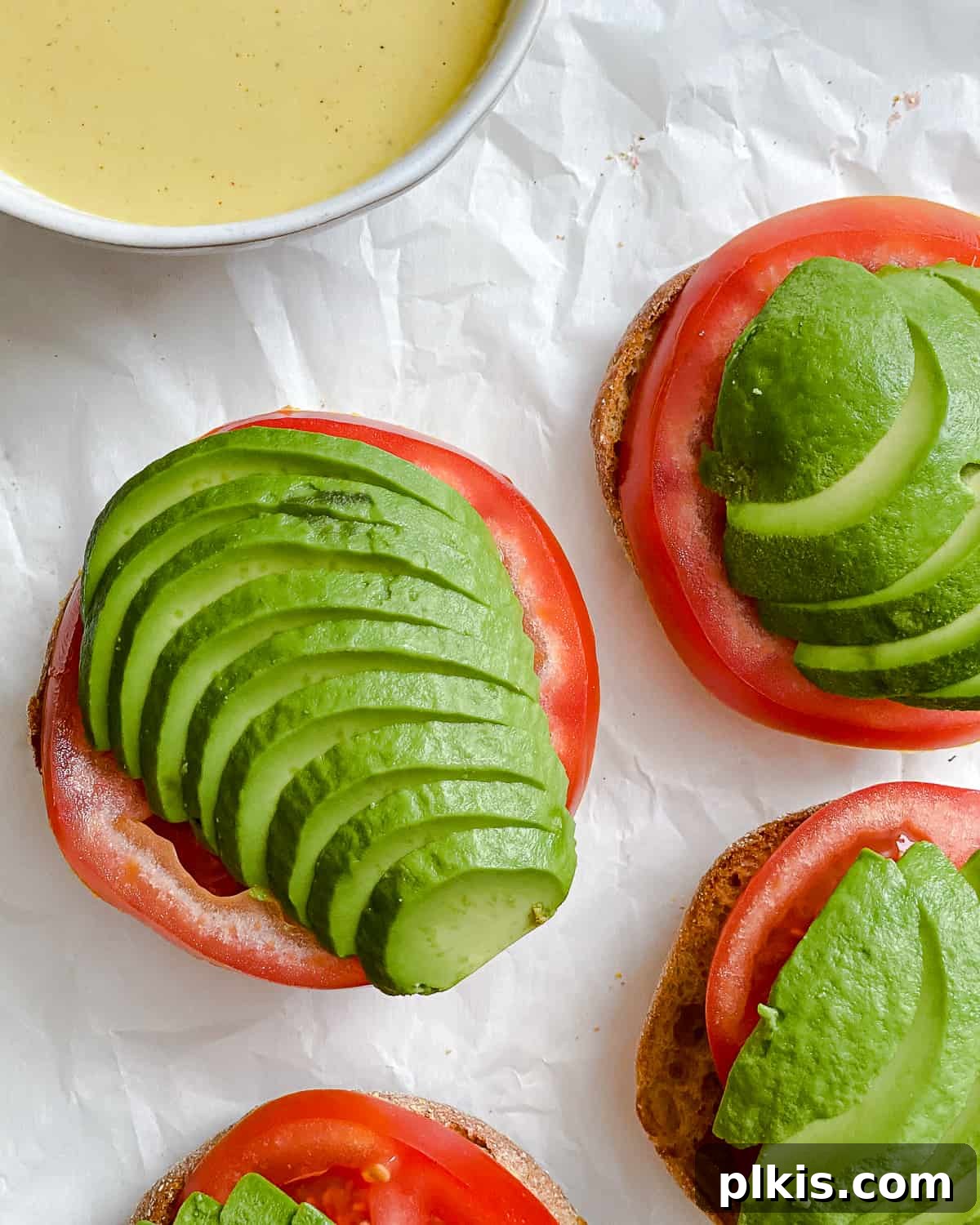
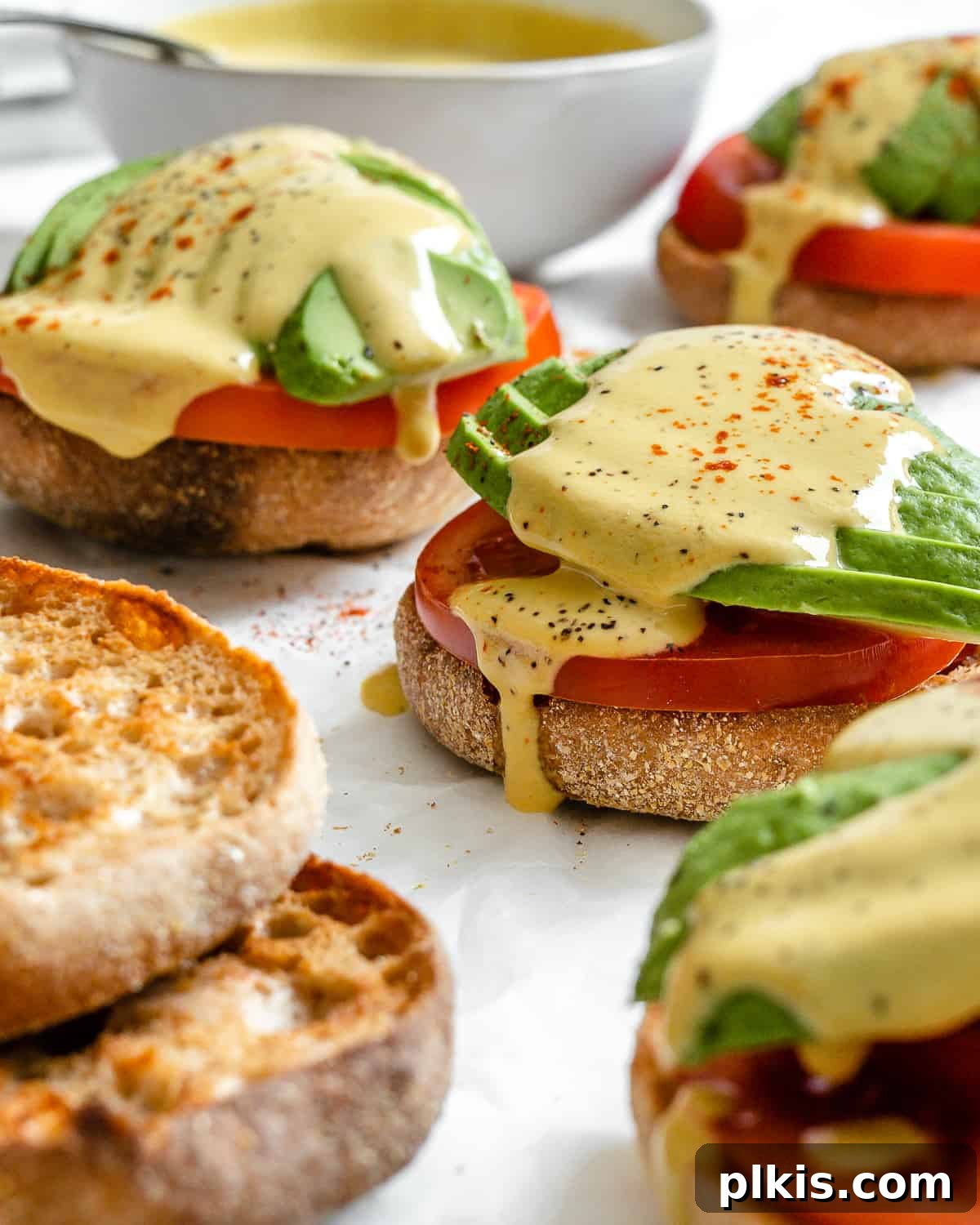
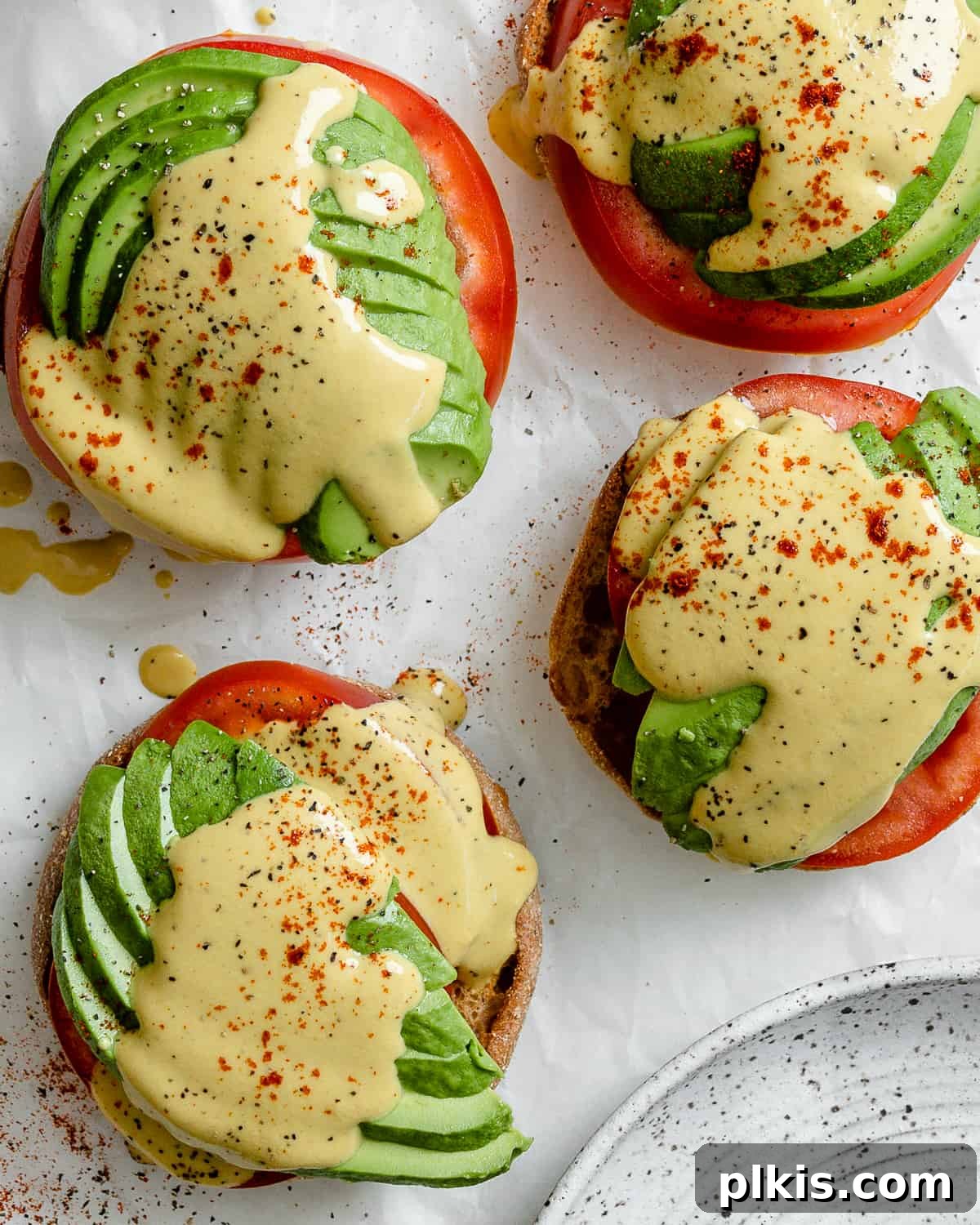
Step 3: Assemble and Serve. While your exquisite hollandaise sauce is warming, prepare the other components. Toast your English muffin halves until they are golden brown and slightly crispy. Carefully slice your ripe tomato and avocado into even, thin rounds. To assemble, place one slice of tomato and 2-3 slices of avocado on each toasted muffin half. Then, generously drizzle the warm, egg-free hollandaise sauce over the toppings. For a final flourish, sprinkle a touch of paprika, a hint of cayenne pepper for a gentle kick, and a grind of fresh black pepper. Your masterpiece is complete! Serve immediately and savor every rich, creamy bite of this homemade vegan delight.
Expert Tips for the Perfect Vegan Hollandaise
Achieving the ideal vegan hollandaise sauce is simple with these professional tips:
- The Importance of Soft Tofu: The type of tofu you use is paramount. For that incredibly smooth and creamy consistency, it’s essential to use soft or silken tofu. Firmer varieties will not blend into the desired velvety texture. If you’re unsure, consult our comprehensive guide to tofu for more insights.
- Turmeric for Color, Not Overpowering Flavor: A small pinch of turmeric is included primarily for its vibrant yellow hue, which beautifully replicates the color of traditional hollandaise. You only need a tiny amount; too much can introduce an unwanted earthy flavor.
- Always Season to Taste: After blending, always taste your sauce before serving. Adjust the seasonings as needed. You might want to add more salt or pepper, a bit more lemon juice for extra tang, or a touch more mustard for a bolder flavor. Trust your palate to achieve your perfect balance.
- Adjusting Consistency with Plant-Based Milk: The thickness of your hollandaise can be easily modified. If you desire a thinner sauce, slowly add a small amount of extra plant-based milk until it reaches your preferred pourable consistency. For a thicker sauce, you can reduce the amount of milk slightly or allow it to warm gently on the stovetop for a minute or two longer (without boiling).
- Heat Gently and Avoid Boiling: When warming the sauce, use very low heat and stir frequently. Boiling or overheating the sauce can cause it to become grainy or alter its smooth, creamy texture. The goal is to warm it through, not to cook it.
Frequently Asked Questions About Vegan Hollandaise
Yes, traditional Hollandaise sauce is rich in dairy, as it is primarily butter-based. It also contains eggs. For those who are unable to consume dairy or eggs, this innovative vegan Hollandaise sauce recipe offers a delicious and perfect solution, allowing everyone to enjoy this classic sauce.
Absolutely! While soft tofu provides an excellent creamy base, it’s certainly possible to make a delicious vegan Hollandaise using soaked cashews or even sunflower seeds for a nut-free option. To do this, soak 1 cup of cashews (or sunflower seeds) either overnight in cold water or for about an hour in hot water. Drain them, then blend the soaked nuts/seeds in a high-speed blender with almost equal parts water and the remaining sauce ingredients (excluding the plant-based milk). Continue blending until the sauce is completely smooth and creamy. It will naturally thicken slightly as it simmers gently to warm.
Technically, you can freeze both tofu-based and cashew-based vegan Hollandaise sauce. However, it’s important to note that upon thawing, the sauce may develop a slightly grainy texture or separate. To restore its creamy consistency, you’ll likely need to re-blend it for several seconds until it becomes smooth again. For best results, it’s often preferable to enjoy the sauce fresh or refrigerate it.
Versatile Serving Ideas for Your Dairy-Free Hollandaise
This incredibly versatile dairy-free hollandaise sauce can be used in all the delightful ways you’d enjoy the original, and then some! Its creamy texture and rich flavor make it a perfect accompaniment to a wide array of dishes, transforming everyday meals into extraordinary culinary experiences.
- As the Star of Vegan Eggs Benedict: The quintessential use! Pair it with toasted English muffins, fresh tomato, and avocado, or experiment with our suggested savory toppings like tofu scramble or grilled tempeh.
- Elevating Vegetables: Drizzle generously over steamed, roasted, or grilled vegetables. It’s particularly fantastic with lemon garlic asparagus, curry roasted broccoli, tender artichokes, or savory vegan Brussels sprouts.
- With Potatoes and Root Vegetables: Transform simple potato dishes into comfort food masterpieces. Pour over breakfast potatoes, crispy hashbrowns, a hearty potato or root vegetable hash, or even a classic baked potato.
- Enhancing Tofu Scrambles: Add an extra layer of richness and flavor to your morning tofu scramble, making it even more decadent and satisfying.
- A Perfect Dipping Sauce: Serve it as a luxurious dipping sauce for homemade vegan patties, crispy zucchini fritters, or other small bites like golden baked falafels.
- Drizzled Over Savory Meals: Elevate your favorite wraps and tacos. It’s delicious drizzled inside a tofu breakfast burrito, complementing the flavors of sweet potato enchiladas, or as a creamy element in breakfast tacos.
- For Special Occasions: This elegant sauce is a fantastic addition to your dinner party lineup or any holiday brunch or dinner table, from Thanksgiving (check out these 45 Vegan Thanksgiving recipes) to Christmas celebrations.
Storing Your Vegan Hollandaise Sauce
To ensure the best quality and flavor, it’s advisable to only heat the amount of vegan hollandaise sauce you plan to use immediately. Any leftover sauce can be easily stored for future enjoyment.
Transfer the remaining vegan hollandaise sauce to an airtight container and place it in the refrigerator. It will stay fresh and delicious for up to 5 days. This makes it a great make-ahead option for busy mornings or meal prepping.
Upon refrigeration, the sauce may naturally thicken slightly. If you find it too thick when you’re ready to use it again, simply whisk in a small amount of water or unsweetened plant-based milk until it reaches your desired creamy consistency. Gently warm it over low heat, stirring constantly, to restore its velvety texture.
Easy Vegan Hollandaise Sauce
Just 8 ingredients, a blender, and under 10 minutes make for a wonderfully creamy vegan hollandaise sauce. It’s dairy-free, egg-free, nut-free, optionally gluten-free, and creamy, rich, & delicious!
Equipment
- My favorite knives
- Measuring Cups
- High Speed Blender
- Immersion blender
- Round Serving Platter
Ingredients
- ¾ cup of soft tofu
- 2 teaspoons of mustard
- 4 tablespoons of nutritional yeast
- 1 ½ teaspoons of lemon juice
- ½ cup of plain unsweetened plant-based milk
- 1 tablespoon of olive oil
- 2 teaspoons of soy sauce
- Pinch of paprika
- Pinch of turmeric
- Salt & pepper, to taste
- 8 slices of bread or English muffins (whatever is available or preferred), toasted (optional)
- 1 tomato, thinly sliced (optional)
- 1 avocado, thinly sliced (optional)
- Cayenne pepper, for garnishing (optional)
- Paprika, for garnishing (optional)
- Freshly ground black pepper, for garnishing (optional)
Instructions
- Place the soft tofu, mustard, nutritional yeast, lemon juice, plant-based milk, oil, soy sauce, paprika, and turmeric in a blender. Blend until smooth. Add salt and pepper, to taste.
- In a saucepan over low heat, warm the hollandaise sauce.
- Optionally, to assemble a sandwich: On each half muffin or toast, place a slice of tomato and a few slices of avocado. Drizzle the warmed hollandaise sauce on top and sprinkle the sauce with a bit of pepper, paprika, and cayenne pepper.
Notes
- Use soft tofu: It’s important to use the correct kind to achieve the super creamy vegan Hollandaise sauce consistency.
- The turmeric is for color: You only need a little to provide the classic yellow color.
- Season to taste: Taste it after blending and then season to taste with salt and pepper and adjust any of the other flavors (mustard, lemon juice, etc.)
- To adjust the consistency: The amount of plant-based milk added will directly affect how thick the sauce is.
Nutrition
- Calories: 340 kcal
- Carbohydrates: 38g
- Protein: 14g
- Fat: 16g
- Saturated Fat: 2g
- Polyunsaturated Fat: 3g
- Monounsaturated Fat: 8g
- Trans Fat: 0.01g
- Sodium: 579mg
- Potassium: 682mg
- Fiber: 8g
- Sugar: 6g
- Vitamin A: 479 IU
- Vitamin C: 13mg
- Calcium: 137mg
- Iron: 3mg
Additional Info
- Author: Miranda Rivera
- Course: Breakfast
- Cuisine: French
- Method: Stovetop
- Diet: Vegan
Please tag us at @PlantBasedOnABudget! 🙂