
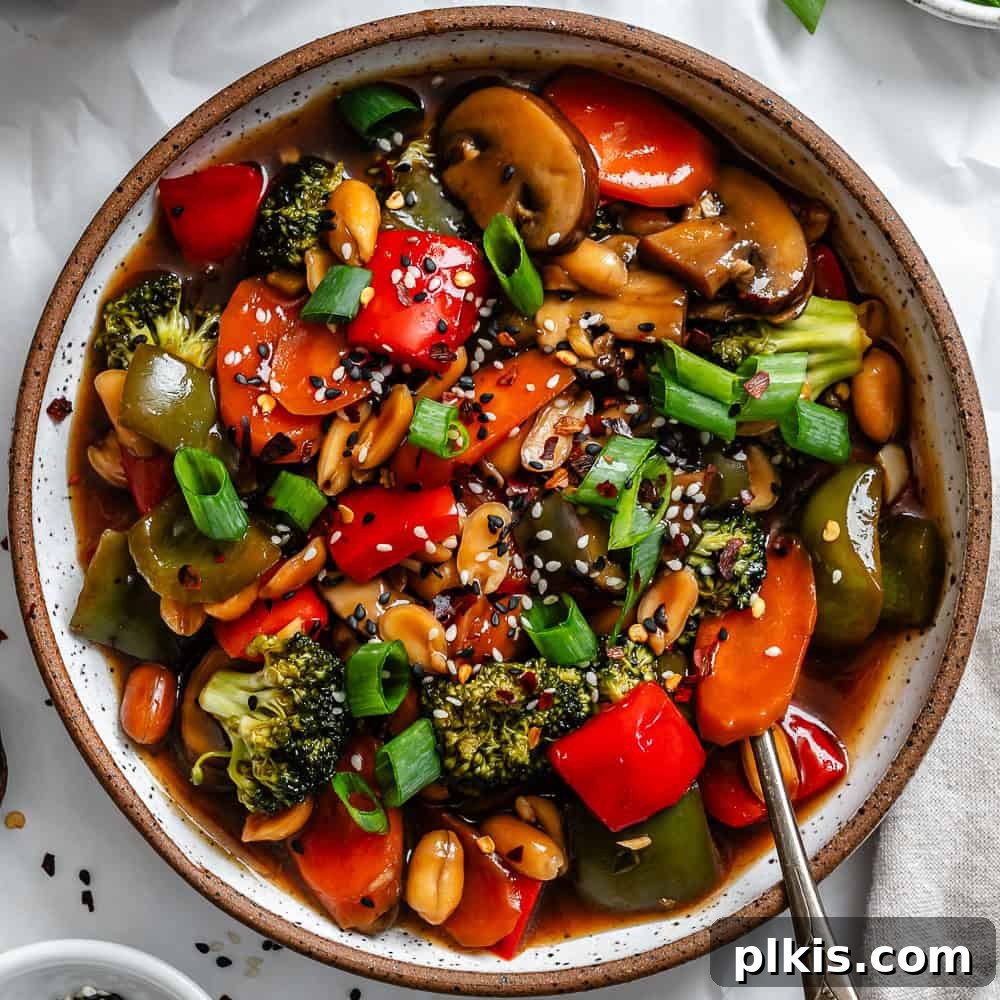
Kung Pao Vegetables is a vibrant, flavorful, and incredibly satisfying vegan stir-fry that brings the iconic taste of Chinese takeout right to your kitchen. Featuring a medley of tender-crisp mixed vegetables and crunchy peanuts bathed in an irresistibly savory, sweet, and spicy sauce, this dish is a crowd-pleaser that comes together in just 30 minutes. It’s the perfect weeknight meal for those craving a healthy, plant-based option without sacrificing bold flavors or precious time.
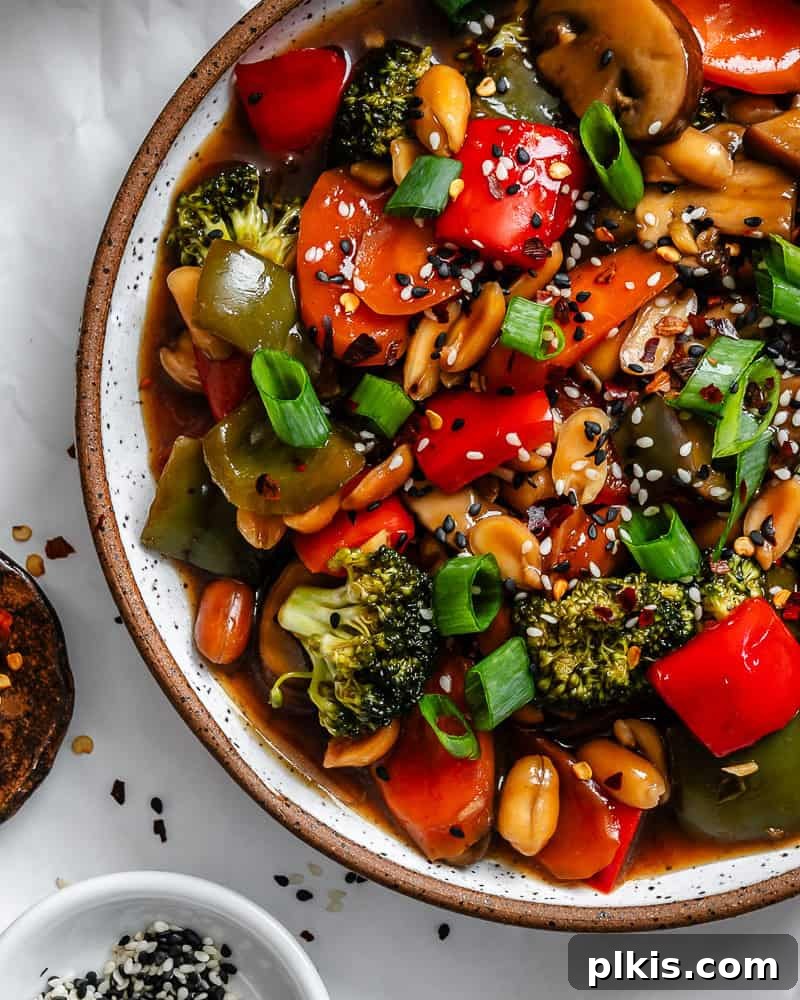
What Is Kung Pao? History and Flavor Profile
Kung Pao, also known as Gong Bao or Kung Po, is a celebrated stir-fry dish originating from the Sichuan province of China. This classic cuisine is renowned for its distinctive “mala” flavor—a combination of numbing (ma) and spicy (la) sensations, typically achieved through the liberal use of Sichuan peppercorns and dried chili peppers. Traditionally, Kung Pao features diced chicken, peanuts, and vegetables, all coated in a rich, complex sauce that balances sweet, sour, savory, and spicy notes.
While authentic Sichuan Kung Pao is characterized by its intense heat and unique numbing quality, many Westernized versions adapt the recipe to suit a broader palate, often toning down the spice or omitting Sichuan peppercorns entirely. This particular recipe takes inspiration from the beloved flavor profile of Kung Pao, focusing on the harmonious blend of sweet, savory, and spicy elements, but reimagines it as a delightful and accessible vegan meal. It’s a testament to how traditional flavors can be adapted to create a healthier, meat-free option that’s both budget-friendly and incredibly quick to prepare.
Our vegan Kung Pao Vegetables recipe captures the essence of this iconic dish with simple pantry staples, making it an excellent choice for those seeking a delicious and satisfying plant-based alternative to traditional takeout. It’s packed with micronutrients from a variety of fresh vegetables and offers a customizable spice level to suit your preference, all ready in under 30 minutes.
Why You’ll Love This Vegan Kung Pao Vegetables Recipe
This Kung Pao Vegetables recipe is more than just a meal; it’s a culinary experience designed for busy individuals who refuse to compromise on taste or health. Here’s why this dish is poised to become a staple in your meal rotation:
- Lightning Fast: Ready in just 30 minutes, this recipe is your go-to for speedy weeknight dinners when time is of the essence. Forget long waits for takeout; homemade deliciousness is just minutes away.
- Flavor Explosion: The sauce is a masterpiece of balance, delivering umami richness alongside perfect notes of sweet, savory, and spicy. Every bite is an exciting journey for your taste buds.
- Nutrient-Packed: Loaded with fresh, vibrant vegetables, this dish is a powerhouse of vitamins, minerals, and fiber, ensuring you get a wholesome and satisfying meal.
- Budget-Friendly: Making Kung Pao at home with vegetables is significantly more economical than ordering takeout, allowing you to enjoy gourmet flavors without breaking the bank.
- Highly Customizable: Whether you prefer more heat, different vegetables, or added protein, this recipe is incredibly versatile, inviting you to tailor it to your exact preferences.
- Vegan & Satisfying: A perfect option for those following a plant-based diet, proving that vegan meals can be every bit as hearty and flavorful as their meat-based counterparts.
- Meal Prep Friendly: Whips up quickly and stores beautifully, making it ideal for meal prepping healthy lunches or dinners for the week ahead.
If you’re a fan of bold, Asian-inspired flavors, you might also enjoy other spicy vegan dishes like General Tso’s Tofu, Chili Oil Noodles with Crispy Tofu, and Spicy Sesame Tofu Stir-fry.
The Essential Ingredients and Clever Substitutions
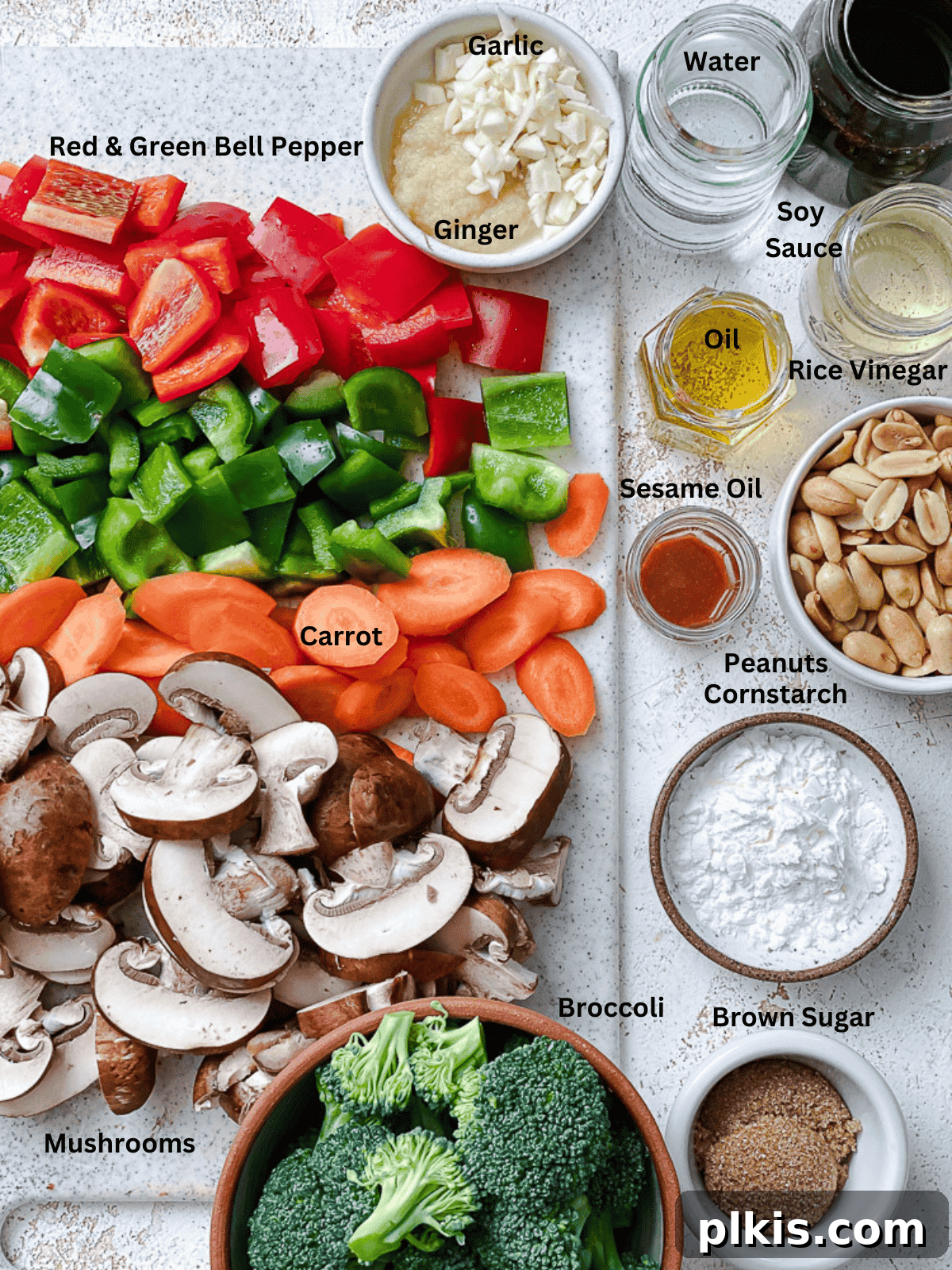
For the Vibrant Vegetable Medley:
- High-Heat Neutral Oil: Essential for stir-frying. Avocado oil, grapeseed oil, or canola oil are excellent choices.
- Bell Peppers (Red & Green): Provide sweetness, crunch, and beautiful color. Feel free to use yellow or orange bell peppers as well.
- Carrots: Add natural sweetness and a firm texture. Slice them thinly for quicker cooking.
- Mushrooms: Contribute an earthy, umami depth. Cremini, button, or shiitake mushrooms work wonderfully. Wipe them clean with a damp paper towel instead of washing to prevent waterlogging.
- Broccoli Florets (Frozen or Steamed): A fantastic addition for both texture and nutrition. Using pre-steamed or frozen broccoli saves time.
- Other Vegetable Ideas: Customize your stir-fry with thinly sliced onion, cauliflower florets, green beans, asparagus, Brussels sprouts, eggplant, zucchini, snow peas, baby corn, or water chestnuts for added crunch.
For the Irresistible Kung Pao Sauce:
- Low Sodium Soy Sauce: Forms the savory backbone. If using regular soy sauce, reduce the amount to ¼ cup to manage sodium levels. For a gluten-free option, use tamari.
- Cornstarch: Acts as a thickening agent, giving the sauce its signature glossy texture. Arrowroot powder can be used as an alternative.
- Water: Helps achieve the right sauce consistency.
- Rice Vinegar: Adds a crucial tangy counterpoint, balancing the sweetness and richness. Apple cider vinegar can be a substitute in a pinch.
- Brown Sugar: Provides sweetness and depth. Maple syrup or agave nectar can be used for a refined sugar-free option.
- Sesame Oil (Optional but Recommended): A small amount adds a wonderfully aromatic, nutty fragrance that elevates the overall flavor.
- Fresh Ginger (Minced): Essential for that warm, pungent, zesty kick.
- Fresh Garlic (Minced): Provides an aromatic base that pairs perfectly with ginger.
- Sriracha: Delivers the spicy element. Adjust the amount to your preferred heat level. Sambal oelek or chili garlic sauce are good alternatives.
- Unsalted Peanuts: The iconic crunchy component of Kung Pao. Don’t skip these! Toasted cashews can also be used.
Optional Traditional Enhancements:
- Sichuan Peppercorns: For an authentic “mala” (numbing and spicy) experience, add 2-3 teaspoons of whole Sichuan peppercorns or 1 teaspoon ground. Briefly stir-fry them in oil at the start to release their unique flavor.
- Dried Chili Peppers: Traditionally, Sichuan-style dried chili peppers are flash-fried to infuse heat into the oil. You can use 4-8 dried Chile de Arbol or other dried chilies, adjusting quantity based on desired spice. Sauté them in oil for 2-4 minutes until they darken before adding vegetables.
Adding Protein to Your Vegan Kung Pao:
- Tofu: Transform this into a protein-rich meal by adding crispy pan-fried tofu or baked tofu cubes. Press the tofu well before cooking for the best texture.
- Legumes/Beans: Chickpeas or cannellini beans are easy additions for extra protein and fiber.
- Edamame: Shelled edamame can be added towards the end of cooking for a boost of protein and vibrant green color.
How to Make Quick and Easy Kung Pao Vegetables
Crafting this flavorful vegan Kung Pao takes just a few simple steps, making it perfect for even the busiest evenings.
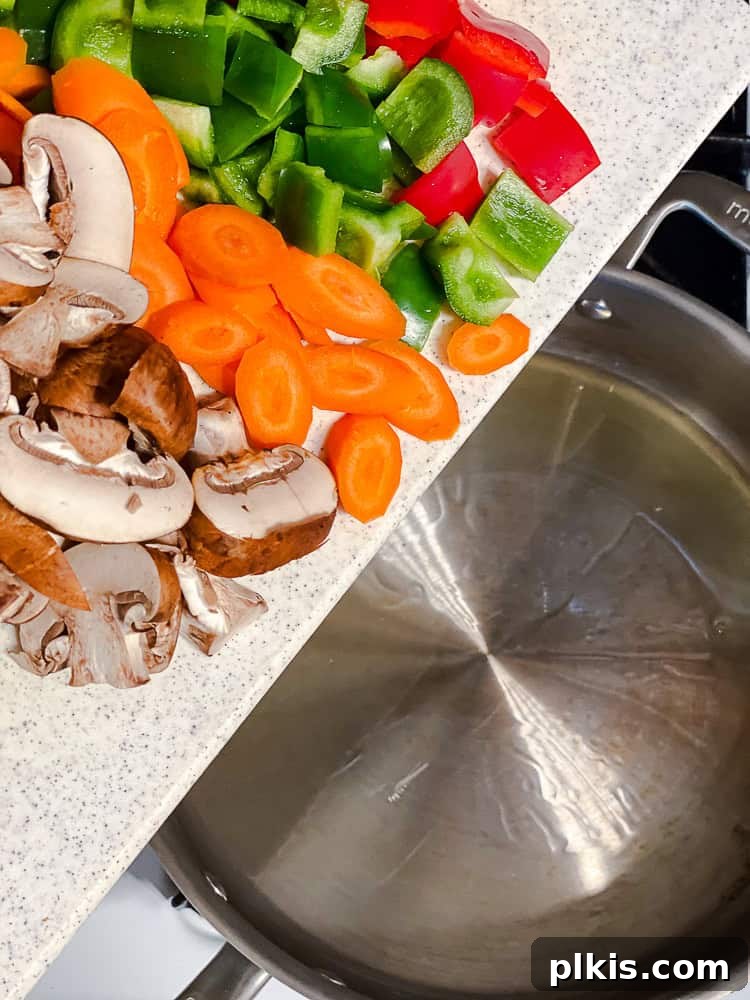
Step 1: Prepare Your Vegetables and Stir-Fry the Base. Begin by preparing all your vegetables: peel and mince the garlic and ginger, dice the bell peppers, and thinly slice the carrots and mushrooms (remember to wipe mushrooms clean with a damp paper towel instead of washing). Heat the high-heat neutral oil in a large skillet or wok over high heat. Once shimmering hot, add the diced bell peppers, thinly sliced carrots, and sliced mushrooms to the pan. Stir-fry for about 5 minutes, reducing the heat to medium, stirring frequently to ensure even cooking and prevent burning. This initial sautéing develops a delicious caramelized flavor in the harder vegetables.
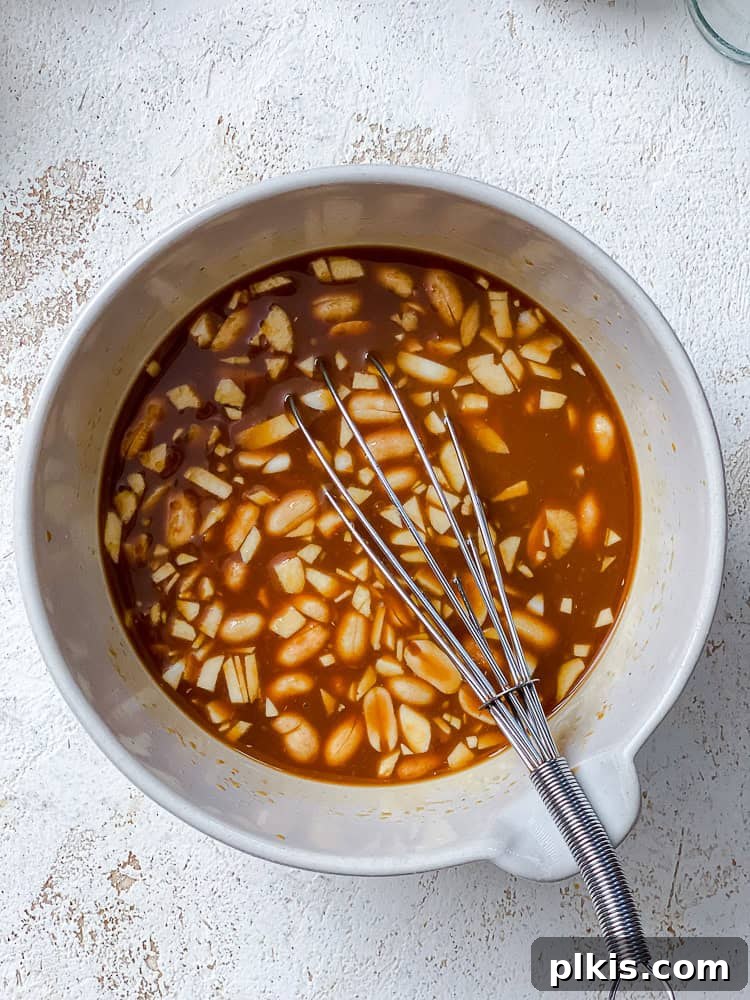
Step 2: Whisk Together the Flavorful Kung Pao Sauce. While the vegetables are cooking, prepare your signature Kung Pao sauce. In a small bowl, combine the low sodium soy sauce, cornstarch, water, rice vinegar, brown sugar, sesame oil (if using), sriracha, minced garlic, minced ginger, and the unsalted peanuts. Whisk these ingredients together thoroughly until the cornstarch is fully dissolved and the sauce is well combined. This ensures a smooth, lump-free sauce that will evenly coat your vegetables.
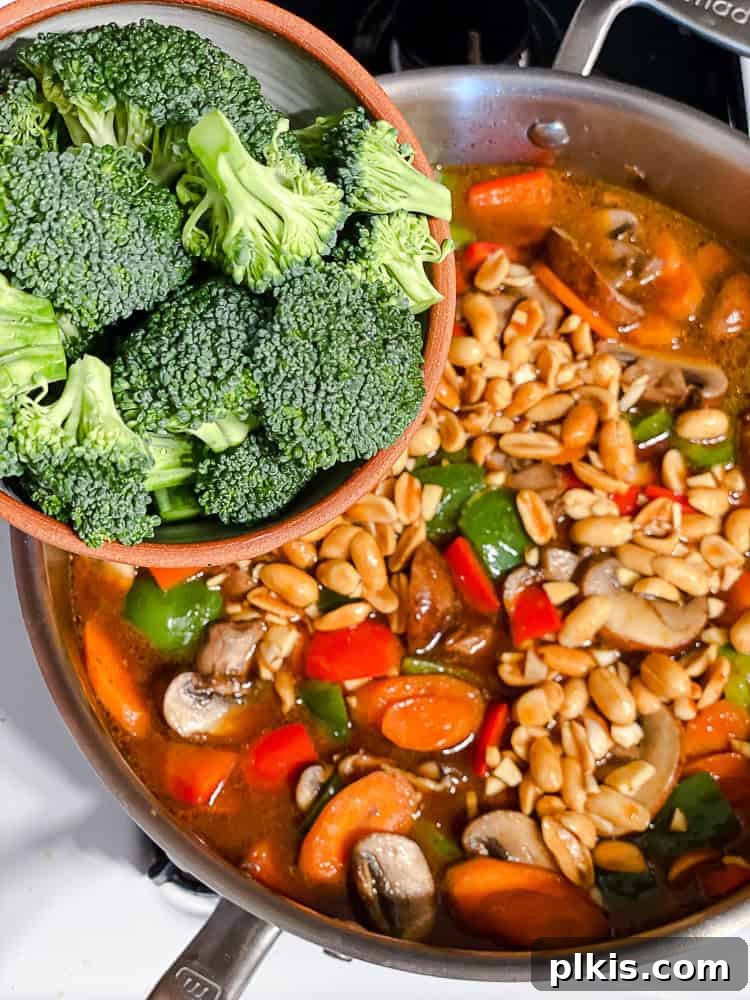
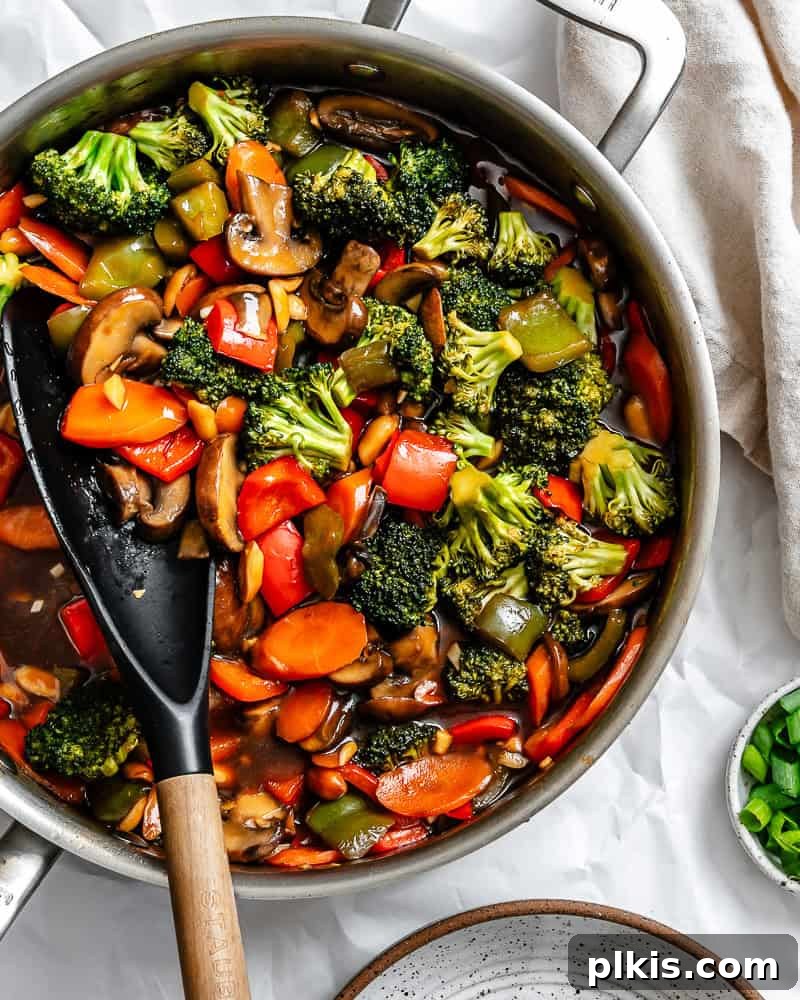
Step 3: Combine and Thicken the Sauce. Pour the prepared Kung Pao sauce mixture directly into the pan with your sautéed vegetables. Immediately add the broccoli florets. Continue to stir-fry constantly, ensuring all vegetables are coated in the sauce. Cook until the sauce begins to bubble gently and thickens to a glossy consistency, which usually takes only a couple of minutes. The cornstarch will activate and create that desirable coating. Once thickened, remove the pan from the heat.
Step 4: Rest and Serve. Cover the pan with a lid and allow the Kung Pao vegetables to rest for 5 minutes. This allows the flavors to meld beautifully and the vegetables to finish cooking gently in the residual heat, ensuring they are perfectly tender-crisp. After resting, remove the lid.
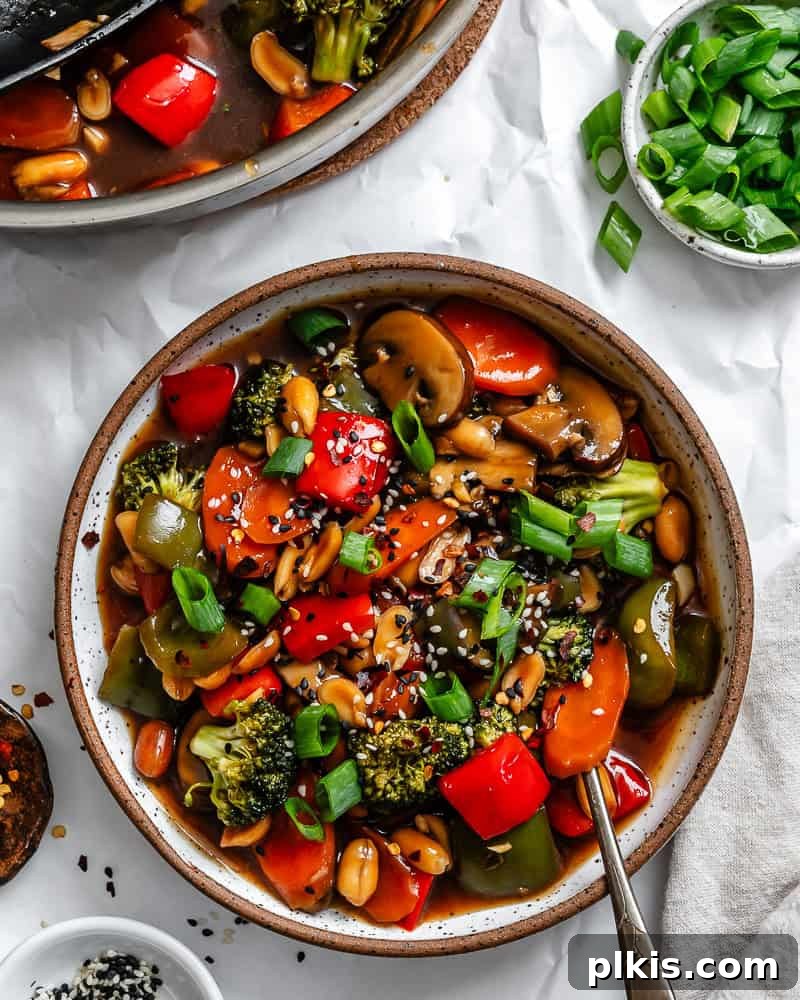
Step 5: Garnish and Enjoy! Optionally, garnish your freshly made Kung Pao Vegetables with sliced green onions for a fresh, pungent finish and a sprinkle of red pepper flakes for an extra kick. Serve immediately with your favorite rice or noodles for a complete, satisfying meal. Enjoy the vibrant flavors and textures!
Pro Recipe Tips for a Perfect Vegan Stir-Fry
Achieving a restaurant-quality stir-fry at home is easier than you think with these expert tips:
- Embrace Freshness: The foundation of any great stir-fry is fresh ingredients. Use the freshest vegetables available to you for the most vibrant flavors and satisfying textures.
- Uniform Cuts are Key: Ensure all your vegetables are cut into roughly even-sized pieces. This promotes even cooking, preventing some veggies from being overcooked while others remain raw. For harder vegetables like carrots, slice them thinner or julienne them.
- Don’t Overcrowd Your Pan: This is crucial for stir-frying. If you add too many vegetables at once, the temperature of your pan will drop rapidly, causing the vegetables to steam instead of searing and caramelizing. Cook in batches if necessary, or use a wide wok or skillet.
- Mastering the Heat: Stir-frying requires high heat to achieve that desirable tender-crisp texture. Ensure your oil is shimmering before adding vegetables. Keep the ingredients moving constantly to prevent burning.
- Adjusting Spice Levels: The beauty of homemade Kung Pao is full control over the heat. Start with 1 teaspoon of sriracha and add more to taste. For extra heat, include a pinch of red pepper flakes or even dried chilies as mentioned in the variations section. For a milder dish, reduce the sriracha or omit it entirely.
- Taste and Tweak the Sauce: Don’t be afraid to taste the sauce before adding it to the pan and adjust it to your liking. Want it sweeter? Add a touch more sugar. More tangy? A splash more rice vinegar. Extra savory? A dash more soy sauce.
- Prep Everything Ahead (Mise en Place): Stir-frying is a very quick cooking method. Have all your ingredients chopped, minced, and measured before you even turn on the stove. This ensures a smooth and stress-free cooking process, as you won’t have time to chop mid-stir-fry.
- Blanch Harder Vegetables (Optional): For very dense vegetables like thick-cut carrots or broccoli stems, a quick blanch in boiling water for 1-2 minutes before stir-frying can ensure they cook through evenly without overcooking other, more delicate ingredients.
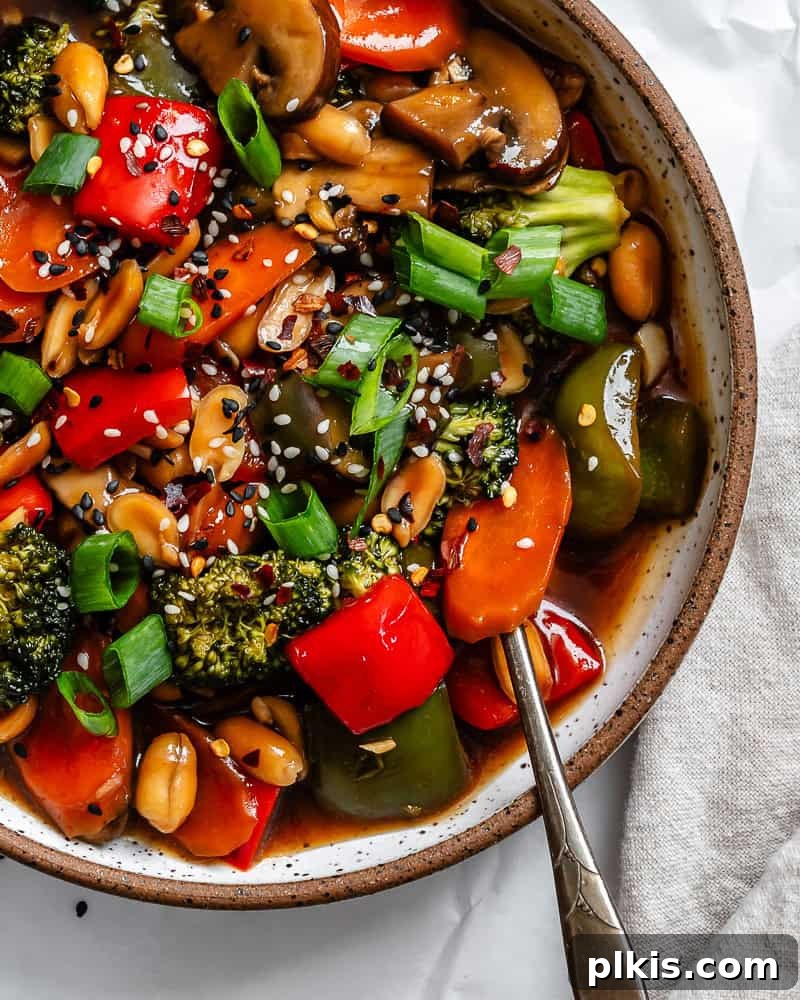
Serving Suggestions for a Complete Meal
Kung Pao Vegetables are incredibly versatile and can be enjoyed in many ways. Here are some delicious serving ideas to make it a complete and satisfying meal:
- Classic with Rice: The most popular accompaniment. Serve your Kung Pao mixed vegetables over a bed of fluffy white rice, nutritious brown rice (learn how to cook brown rice), or even a flavorful veggie-packed vegan fried rice.
- Noodle Bowls: For a hearty and comforting meal, serve your Kung Pao over a mound of your favorite noodles. Think lo mein, rice noodles, or even ramen. You can also double the sauce recipe to create delicious Kung Pao noodles.
- Quinoa Power Bowl: For a protein-rich and gluten-free alternative to rice, pair your stir-fry with nutty quinoa (our complete guide to quinoa).
- Extra Protein Power: Enhance your meal with additional plant-based protein. Serve alongside crispy pan-fried tofu, baked tempeh, or other vegan mock meats for a more substantial dish.
- Asian-Inspired Appetizers: Start your meal with complementary appetizers. Light and fresh tofu spring rolls with mango and avocado, crispy vegetable spring rolls, or savory steamed dumplings make excellent companions.
- Refreshing Side Salads: Cut through the richness of the stir-fry with a crisp, refreshing side salad. A spicy cucumber salad or an easy edamame salad would add a wonderful contrast in flavor and texture.
Storage and Meal Prep Instructions for Kung Pao Vegetables
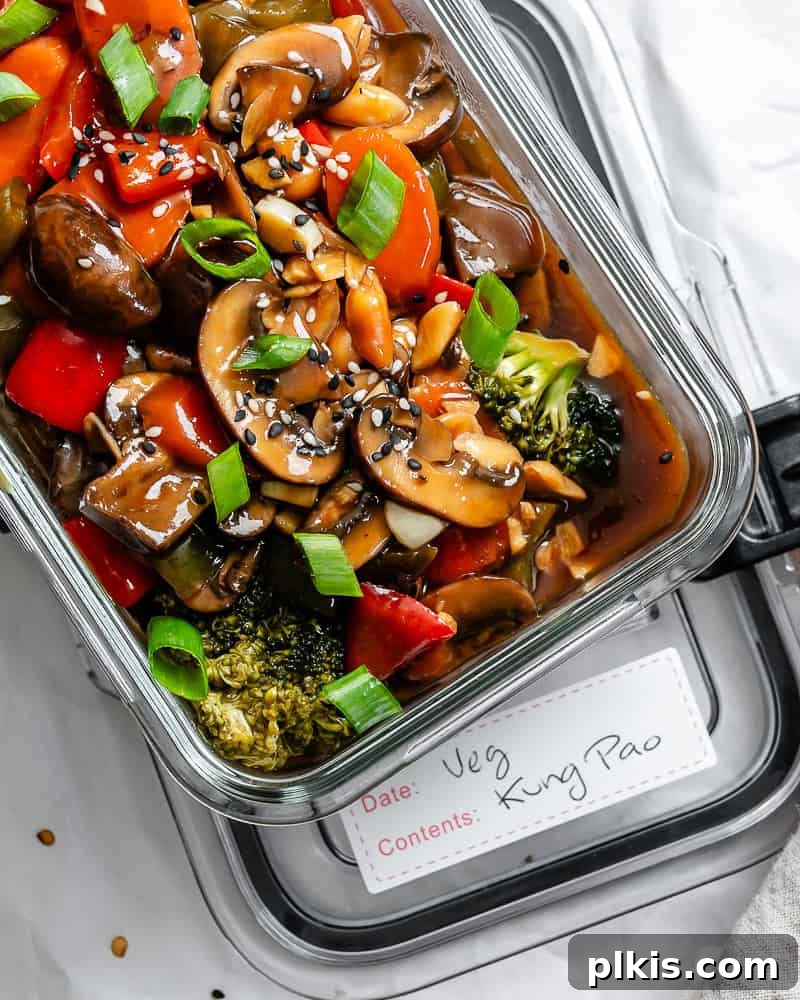
One of the many benefits of this Kung Pao Vegetables recipe is how well it stores, making it perfect for meal prepping and enjoying flavorful leftovers throughout the week.
- Refrigerator Storage: Allow the Kung Pao vegetables to cool completely before transferring them to an airtight container. Store in the refrigerator for up to 5-7 days. The flavors often deepen overnight, making it even more delicious!
- Freezer Storage: For longer storage, you can freeze the cooked Kung Pao vegetables. Place cooled leftovers in a freezer-safe airtight container or freezer bag. It can be stored in the freezer for up to 3 months. Be aware that the vegetables, especially bell peppers and mushrooms, may soften slightly in texture upon thawing, but the flavor will remain excellent.
- Reheating: To reheat, simply transfer the desired portion to a skillet or wok over medium heat. Stir-fry gently until heated through. If the sauce appears too thick or dry, add a splash of water or vegetable broth to loosen it up and restore its desired consistency. You can also microwave individual portions until hot.
This recipe is excellent for meal prep. Prepare a larger batch at the beginning of the week, divide it into individual containers with a serving of rice or noodles, and you’ll have delicious, healthy, and quick meals ready to go for busy workdays or evenings.
Other Delicious Vegan Veggie Recipes To Consider
Vegan Dinners
Roasted Veggie Tacos
Vegan Appetizers
Easy Mushy Peas with Roasted Veggies
Vegan Dinners
Veggie Chow Mein | Cheap Plant-Based Meal
Vegan Dinners
Stir-Fried Veggies With Tofu
If you tried this Kung Pao Vegetables recipe or any other recipe on my blog, please leave a 🌟 star rating and let me know how it went in the 📝 comments below. Your feedback is greatly appreciated!
Kung Pao Vegetables
10 mins
20 mins
30 mins
4 to 6
Equipment
-
Measuring spoons
-
Measuring Cups
-
Knife set
Ingredients
- 3 tablespoons of high-heat neutral oil
- 1 red bell pepper, diced
- 1 green bell pepper, diced
- 3 carrots, thinly sliced
- 1 pint of mushrooms, sliced
- 2 cups of frozen or steamed broccoli florets
- ½ cup low sodium soy sauce (use ¼ cup if using regular soy sauce)
- 2 tablespoons of cornstarch
- ⅓ cup of water
- ¼ cup of rice vinegar
- 2 tablespoons of brown sugar
- 1 tablespoon of sesame oil (optional)
- 2 tablespoons of ginger, minced
- 3 garlic cloves, minced
- 1-2 teaspoons of sriracha
- ½ cup of unsalted peanuts
- Red pepper flakes to taste, garnish (optional)
- 1 bunch green onion, sliced (optional)
Instructions
-
1. Heat the oil in a large pan over high heat. Add the bell peppers, carrots, and mushrooms. Lower the heat to medium and sauté for 5 minutes. Regularly mix to prevent them from burning, allowing them to soften slightly and develop flavor.
-
2. In a small bowl, whisk together the soy sauce, cornstarch, water, rice vinegar, sugar, sesame oil (if using), ginger, garlic, sriracha, and peanuts. Ensure the cornstarch is fully dissolved.
-
3. Pour the sauce mixture over the vegetables in the pan and add the broccoli. Continue to stir-fry, ensuring all ingredients are well coated, until the sauce comes to a light boil and thickens to a glossy consistency. Turn off the heat, cover with a lid, and allow it to sit for 5 minutes for the flavors to meld and vegetables to finish cooking.
-
4. Optionally, stir in the sliced green onions and serve immediately, perhaps over rice or noodles.
Notes
- Use super fresh vegetables: This creates the freshest, most delicious stir-fry.
- Cut the veggies evenly: Even-sized pieces will ensure even cooking.
- Don’t overcrowd the pan: Otherwise, the veggies will steam rather than caramelize at all. Cook in batches if needed.
- To adjust the heat: Adjust how much hot sauce (sriracha) and red pepper flakes you add and/or the types of chilies you use (if using any).
- Taste and tweak: When making Kung Pao sauce at home, it’s really easy to tweak the balance of sweet, savory, and spicy to your personal preference.
Nutrition
Carbohydrates: 34g
Protein: 15g
Fat: 26g
Saturated Fat: 4g
Polyunsaturated Fat: 7g
Monounsaturated Fat: 14g
Trans Fat: 0.04g
Cholesterol: 6mg
Sodium: 2068mg
Potassium: 832mg
Fiber: 6g
Sugar: 12g
Vitamin A: 9037IU
Vitamin C: 108mg
Calcium: 82mg
Iron: 2mg
Additional Info
Toni Okamoto
Dinner
Asian
Stovetop
Vegan
Tried this recipe?
Please tag us at @PlantBasedOnABudget! 🙂