

Unlock the secrets to perfectly baked spaghetti squash right in your own kitchen with our expert tips and tricks. This versatile, low-carb vegetable is an absolute game-changer, offering a healthy and delicious base for all your favorite pasta recipes throughout the autumn and winter seasons, and even year-round! Forget traditional wheat pasta sometimes – spaghetti squash provides a delightful, guilt-free alternative that’s both satisfying and incredibly nutritious.
Beyond its reputation as one of the best low-carb, low-calorie “pastas,” spaghetti squash boasts an impressive array of health benefits that traditional wheat-based Italian pasta simply can’t match. It’s not just a clever carb substitute; it’s a nutritional powerhouse in its own right.
This fantastic winter squash is an excellent source of dietary fiber, promoting digestive health and keeping you feeling full longer. It’s also packed with essential vitamins like Vitamin C, crucial for immune function, and Vitamin A, vital for vision and skin health. Furthermore, spaghetti squash is rich in antioxidants such as beta-carotene, which helps protect your cells from damage. Its naturally high water content also makes it incredibly hydrating. With so many compelling reasons, you’ll be eagerly anticipating spaghetti squash season all year long!
Table of Contents
- Why Oven-Baked Spaghetti Squash Is a Must-Try
- Essential Tools & Ingredients for Perfect Spaghetti Squash
- Step-by-Step Guide: How to Bake Spaghetti Squash in the Oven
- Common Questions & Troubleshooting for Spaghetti Squash
- Expert Tips for Achieving Perfectly Roasted Spaghetti Squash
- Creative Ways to Serve Your Baked Spaghetti Squash
- Storage & Freezing Guidelines for Spaghetti Squash
- More Kitchen Basics Recipes to Explore
Why Oven-Baked Spaghetti Squash Is a Must-Try
When it comes to preparing spaghetti squash, baking it in the oven is hands-down the best method. This technique not only enhances its natural flavors but also ensures the ideal texture, transforming it into those iconic, delightful strands. Here’s why baking spaghetti squash will become your go-to:
- Hands-Free & Effortless Cooking: After a little initial prep of slicing and seeding, your oven takes over completely. This allows you to focus on other tasks, making it a perfect option for busy weeknights or relaxed weekend cooking. It’s truly a set-it-and-forget-it approach to healthy eating.
- Superior Texture & Perfect Strands: Unlike pressure cooking or slow cooking methods, which can sometimes result in overly mushy squash, baking in the oven perfectly preserves the distinct, spaghetti-like strands. The dry heat of the oven prevents excess moisture build-up, ensuring your “noodles” are firm, al dente, and wonderfully individual, just like traditional pasta.
- Naturally Low-Fat & Wholesome: One of the greatest advantages of baking winter squashes like spaghetti squash is the ability to roast them with minimal or no added fats. You can achieve beautifully tender and flavorful results without relying on excessive vegan butter or refined oils, making it an incredibly clean and healthy dish.
- Ideal for Meal Prep & Batch Cooking: Most standard ovens are spacious enough to accommodate two to three spaghetti squashes at once. This makes oven baking an incredibly efficient method for meal prepping for the week ahead or preparing a healthy side dish for a larger gathering. Maximize your cooking time and enjoy healthy meals with ease.
- Deepened Flavor through Roasting: By baking the spaghetti squash cut-side down, you allow the natural sugars to caramelize against the baking sheet. This roasting process intensifies the squash’s inherent sweetness, creating a richer, more complex flavor profile that simply can’t be achieved with other cooking techniques. The edges become slightly browned and wonderfully tender.
Essential Tools & Ingredients for Perfect Spaghetti Squash
Preparing spaghetti squash requires just a few basic items, but having the right tools can make the process significantly easier and safer. Here’s what you’ll need to get started on your roasted spaghetti squash journey:
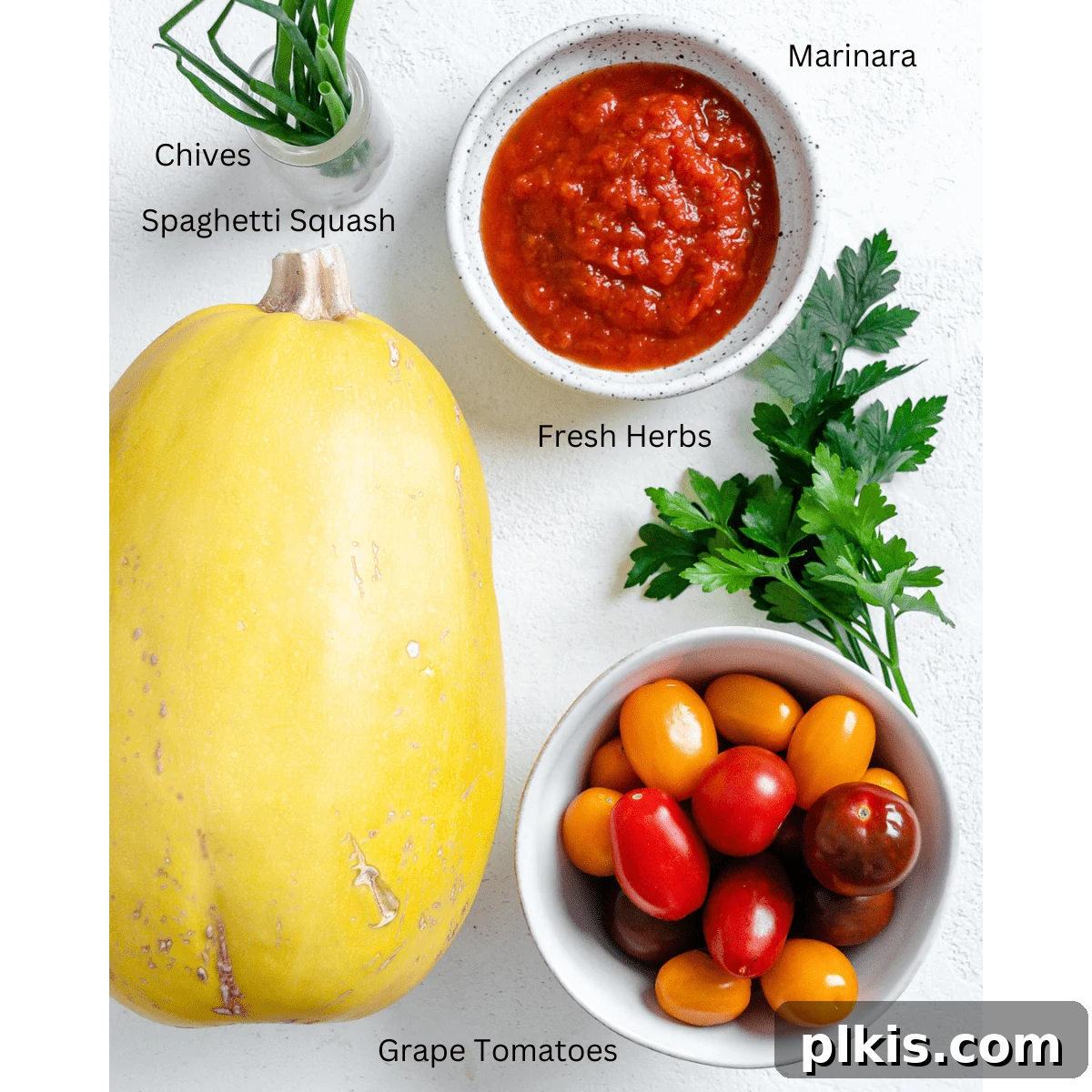
- Spaghetti Squash: You’ll need one whole spaghetti squash for this recipe. While you can often find spaghetti squash in grocery stores throughout the year, they are typically most abundant, in season, and at their best price during the fall and winter months in the northern hemisphere. Look for a squash that feels heavy for its size, has a firm rind, and is free of soft spots or blemishes.
- Sharp Knife: Winter squashes, including spaghetti squash, are notoriously firm and challenging to cut. For the best results and your safety, invest in a large, very sharp chef’s knife. Some people also find a sturdy serrated knife effective for piercing and slicing through the tough skin. Safety first!
- Cutting Board: A large, stable cutting board is essential for safely preparing your squash. A rubber mat placed underneath your cutting board, or a non-slip cutting board itself, can help stabilize the squash and prevent it from rolling around while you cut, significantly reducing the risk of accidents.
- Baking Sheet: A sturdy baking sheet is necessary for roasting. For easy cleanup and to prevent sticking, you can line it with aluminum foil or parchment paper.
- Oil (Optional): A small amount of cooking oil, such as olive oil or avocado oil, can be optional but beneficial. A light brush of oil on the cut sides of the squash helps prevent it from sticking to the baking sheet, promotes beautiful caramelization, and contributes to a lightly golden-brown finish on the edges, enhancing both flavor and appearance.
Step-by-Step Guide: How to Bake Spaghetti Squash in the Oven
Baking spaghetti squash to perfection is a straightforward process. Follow these simple steps for tender, spaghetti-like strands every time:
- 1) Begin by preheating your oven to 350 degrees Fahrenheit (175 degrees Celsius). While the oven heats, thoroughly wash the exterior of your spaghetti squash under cool running water. Pat it dry with a clean towel. Carefully cut the squash in half vertically, from stem to end. This long cut ensures you get the longest possible “spaghetti” strands.
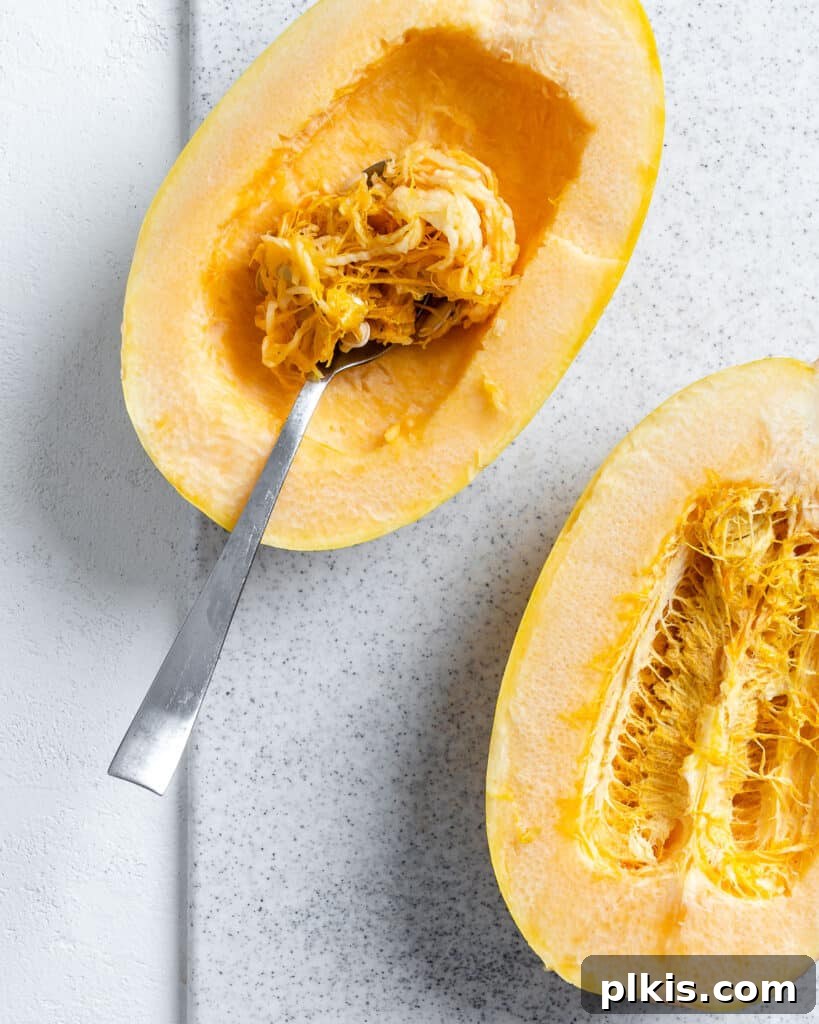
- 2) Once halved, use a spoon (an ice cream scoop works great!) to scrape out all the seeds and fibrous pulp from the center of each squash half. You want the cavity to be clean and smooth. Then, place both halves face-down (cut-side down) onto a foil-lined baking sheet. Lining the sheet with foil not only makes cleanup a breeze but also aids in the caramelization of the squash’s natural sugars.
- 3) Bake the squash for approximately 50-55 minutes, or until it is fork-tender. You can test for doneness by piercing the skin with a knife; it should slide in easily. More importantly, when you scrape the inner flesh with a fork, the long, noodle-like strands should effortlessly pull away from the sides. If they resist, continue baking for another 5-10 minutes.
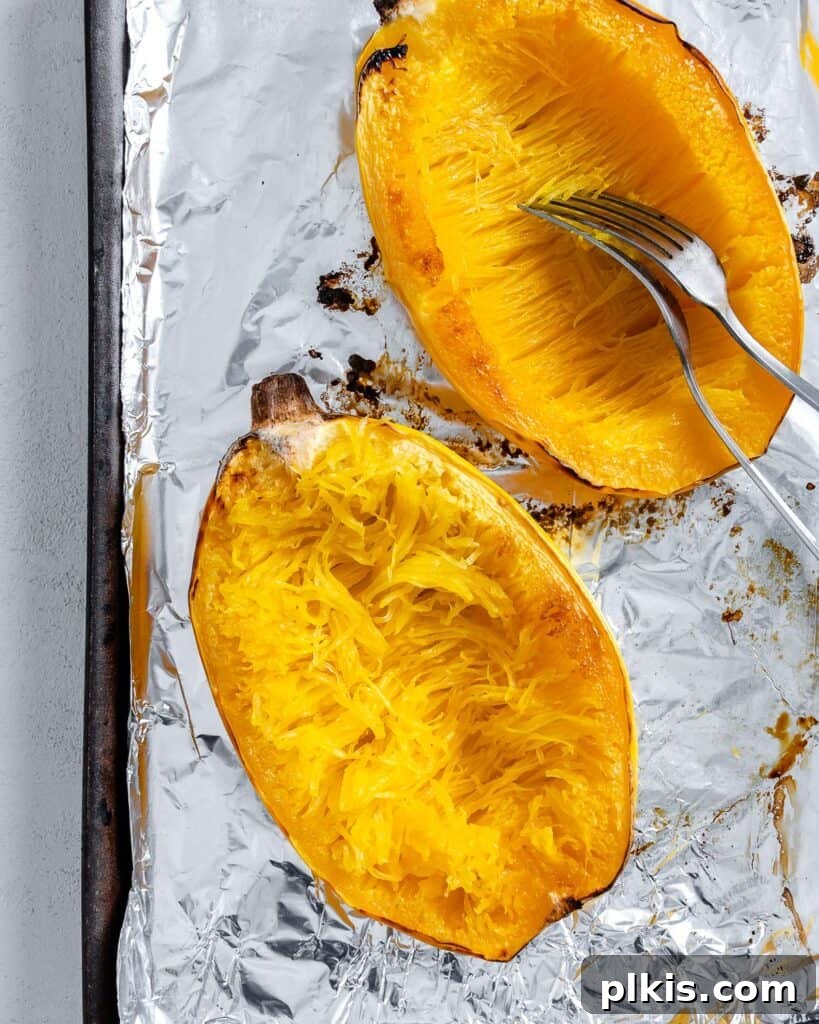
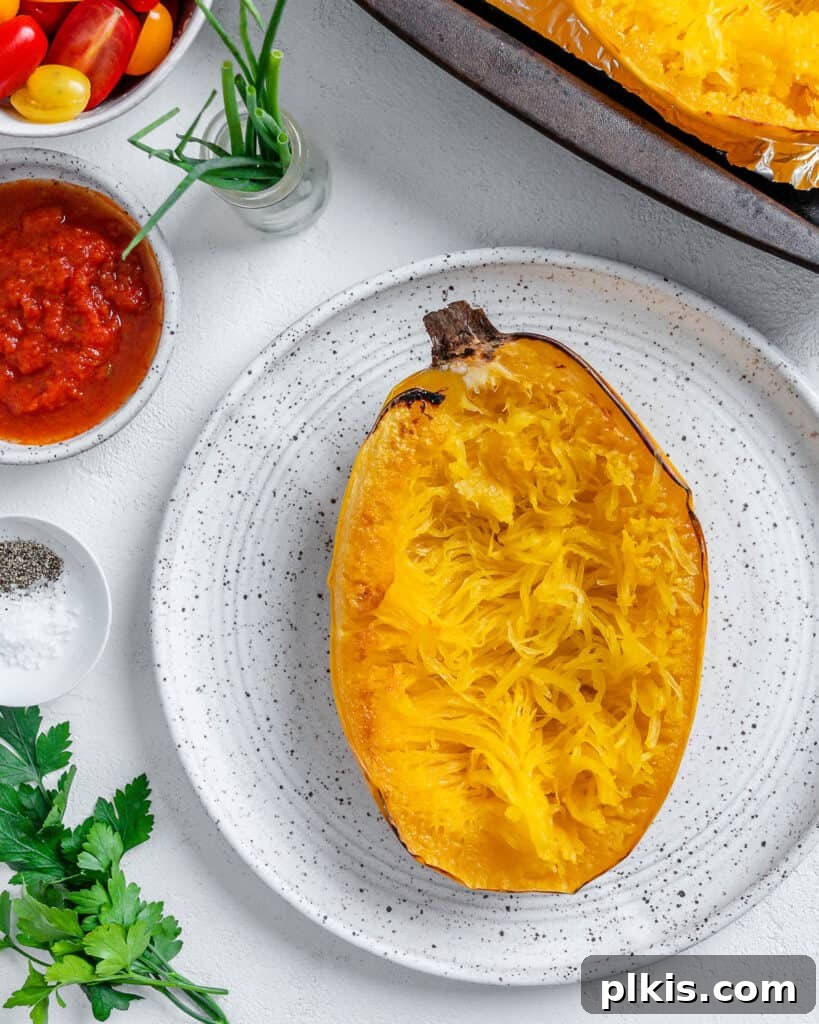
- 4) Once cooked, carefully remove the squash from the oven. Using a fork, gently scrape the warm flesh from the sides of each half, creating those beautiful “spaghetti” strands. Season generously with salt and freshly ground black pepper to taste. Serve immediately while hot, either in its natural boat-like form or transferred to a serving dish, topped with your favorite sauce and desired garnishes.
No tin foil? No problem! You can easily use parchment paper for lining your baking sheet, or opt for a reusable silicone baking mat. If you don’t have these, simply grease a regular baking sheet with a bit of cooking spray or a light coating of olive oil to prevent sticking.
Common Questions & Troubleshooting for Spaghetti Squash
Baking spaghetti squash is generally simple, but a few common questions and challenges can arise. Here are answers to help you achieve the best results every time:
Cutting a spaghetti squash in half is arguably the most challenging part of the recipe due to its hard exterior. To make this step easier and safer, always use a large, very sharp chef’s knife or a sturdy serrated knife. First, thoroughly wash and dry the squash. To stabilize it and prevent it from rolling, you can place it on a rubber mat or a damp kitchen towel. For even more stability, carefully slice a thin layer off both ends of the squash so it can stand flat on your cutting board. Then, slowly and carefully slice through the middle, applying even pressure.
If, even after using the stabilization tips above, your spaghetti squash is still too hard to cut safely, you can pre-soften it. Carefully poke the squash several times all over with a fork or knife (this prevents it from exploding due to steam build-up). Place it in the microwave on high for about 3-5 minutes. Let it cool slightly until it’s easy to handle, then attempt to cut it again. If it’s still too firm, repeat the microwaving process in shorter increments until it’s pliable enough to slice safely.
No, there’s no need to peel spaghetti squash before baking! The thick skin serves as a natural cooking vessel, holding the moisture in and making it easy to scrape out the cooked flesh. Simply leave the skin on and roast the spaghetti squash cut-side down (with the skin side facing up). Once the squash is perfectly cooked and tender, scrape the long strands away from the sides, leaving the empty skin behind. You can then discard or compost the skin.
If your spaghetti squash turns out mushy instead of forming distinct strands, it was most likely overcooked. Overcooking causes the cell walls to break down too much, losing its signature texture. Another potential reason could be that the squash was on the older side and past its prime freshness, making it more prone to mushiness. To prevent this, always test for doneness carefully and remove it from the oven as soon as the strands pull away easily.
Yes, you can cook a whole spaghetti squash in the oven! This method bypasses the challenging cutting step. Simply poke the entire squash several times with a fork to allow steam to escape. Place it on a baking sheet and roast at 400°F (200°C) for 60-90 minutes, depending on its size, or until it feels tender when squeezed. Once cooked and cooled enough to handle, you can then cut it in half and remove the seeds before scraping out the strands. While easier to cut, this method might result in slightly less caramelization on the cut edges compared to baking face-down.
For optimal results, baking spaghetti squash at 350°F (175°C) is ideal. This moderate temperature allows the squash to cook through evenly without drying out or burning, promoting tender strands and a slightly caramelized flavor. While some recipes suggest higher temperatures, 350°F offers a good balance for consistent cooking and a pleasant texture.
Expert Tips for Achieving Perfectly Roasted Spaghetti Squash
Follow these expert tips to ensure your baked spaghetti squash comes out perfectly tender, flavorful, and with those desirable spaghetti-like strands every single time:
- An Adjusted Cook Time May Be Required: The cooking time for spaghetti squash can vary significantly based on its size and the thickness of its walls. A smaller squash might be ready in 40-45 minutes, while a large squash can easily take 60 minutes or even longer to cook through completely. Always use the fork-tender test and visual cues (strands pulling away easily) rather than strictly adhering to a timer.
- Ensuring Even Roasting: Spacing is Key: To prevent excess moisture from accumulating inside the squash halves and to encourage even roasting and caramelization, it’s crucial to space them out on the baking sheet. Aim for at least a couple of inches between each half. If you cannot comfortably fit two squash halves on one baking sheet with adequate spacing, use two separate baking sheets. Overcrowding can lead to steaming instead of roasting.
- Don’t Discard the Seeds!: Just like with roasted pumpkin seeds, spaghetti squash seeds are a delicious and nutritious snack. Don’t throw them away! After cleaning, toss them with a little oil, salt, and your favorite spices, then roast them until golden and crispy. They make a fantastic addition to salads, soups, or can be enjoyed on their own as a healthy snack.
- Seasoning for Best Flavor: While the natural sweetness of spaghetti squash is delightful, a simple seasoning can elevate its flavor profile. Before roasting, you can lightly brush the cut sides with olive oil and sprinkle with salt and black pepper. After roasting, you can add more salt and pepper, a pinch of garlic powder, or fresh herbs like parsley or chives for an extra burst of flavor.
- Checking for Doneness Accurately: The best way to tell if your spaghetti squash is done is by gently piercing the skin with a fork or knife – it should slide in easily with little resistance. More importantly, when you scrape the cooked flesh with a fork, it should readily separate into individual, tender strands. If the strands are still difficult to pull apart or seem watery, give it a few more minutes in the oven.
Creative Ways to Serve Your Baked Spaghetti Squash
The beauty of baked spaghetti squash lies in its incredible versatility. While it’s most famously used as a delicious and healthy replacement for traditional wheat-based spaghetti noodles, the serving possibilities are truly endless. Here are some inspiring ideas to enjoy your perfectly roasted spaghetti squash:
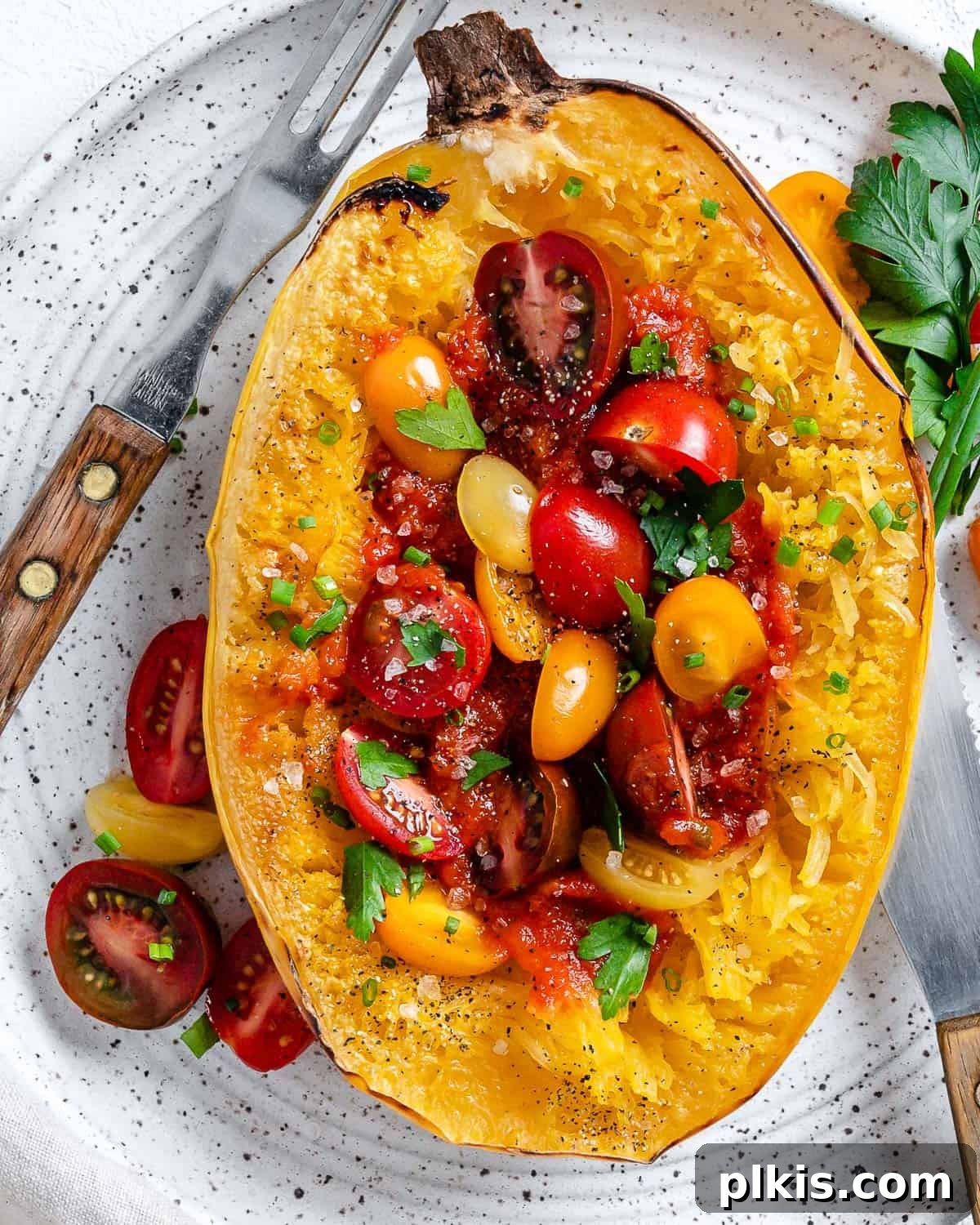
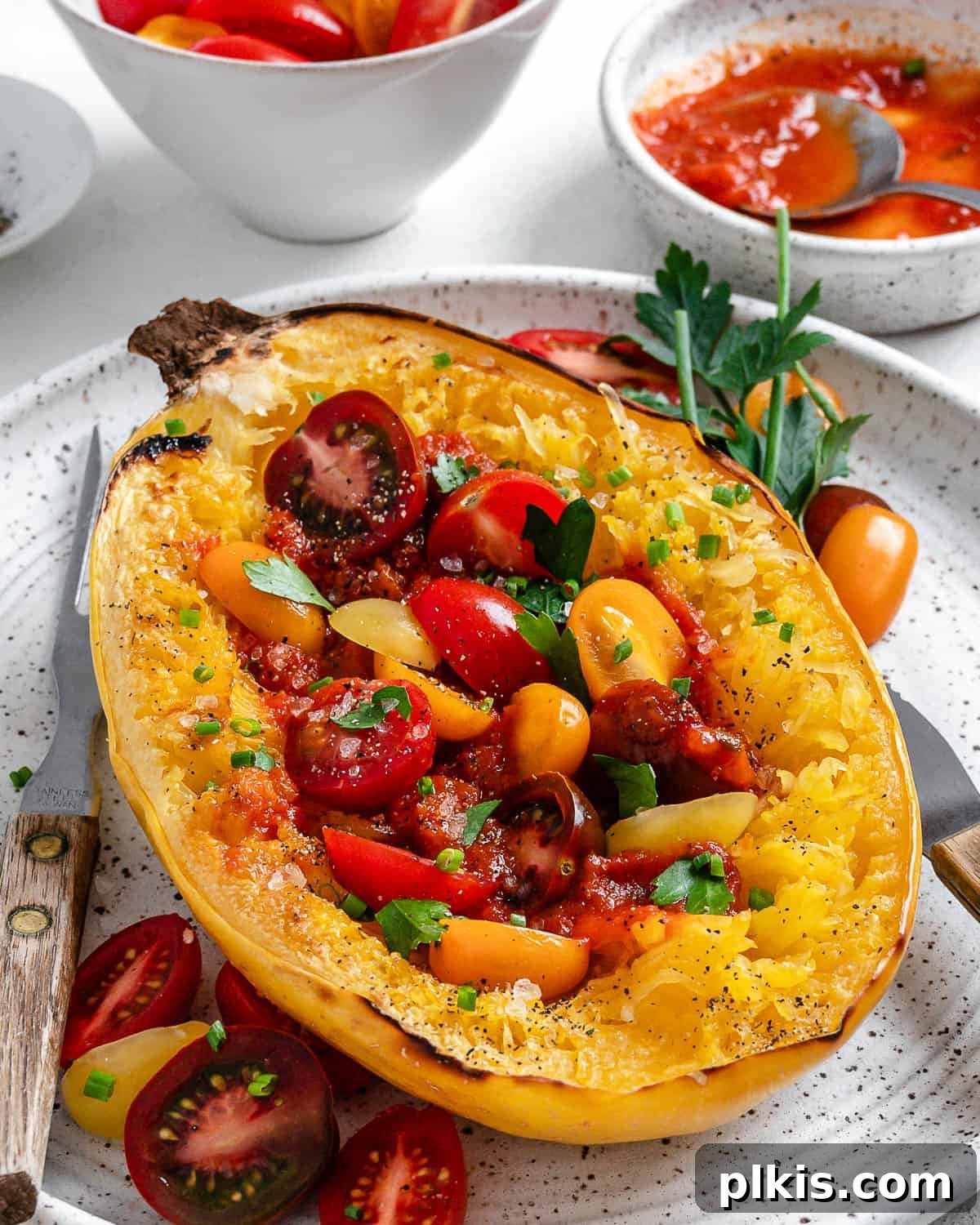
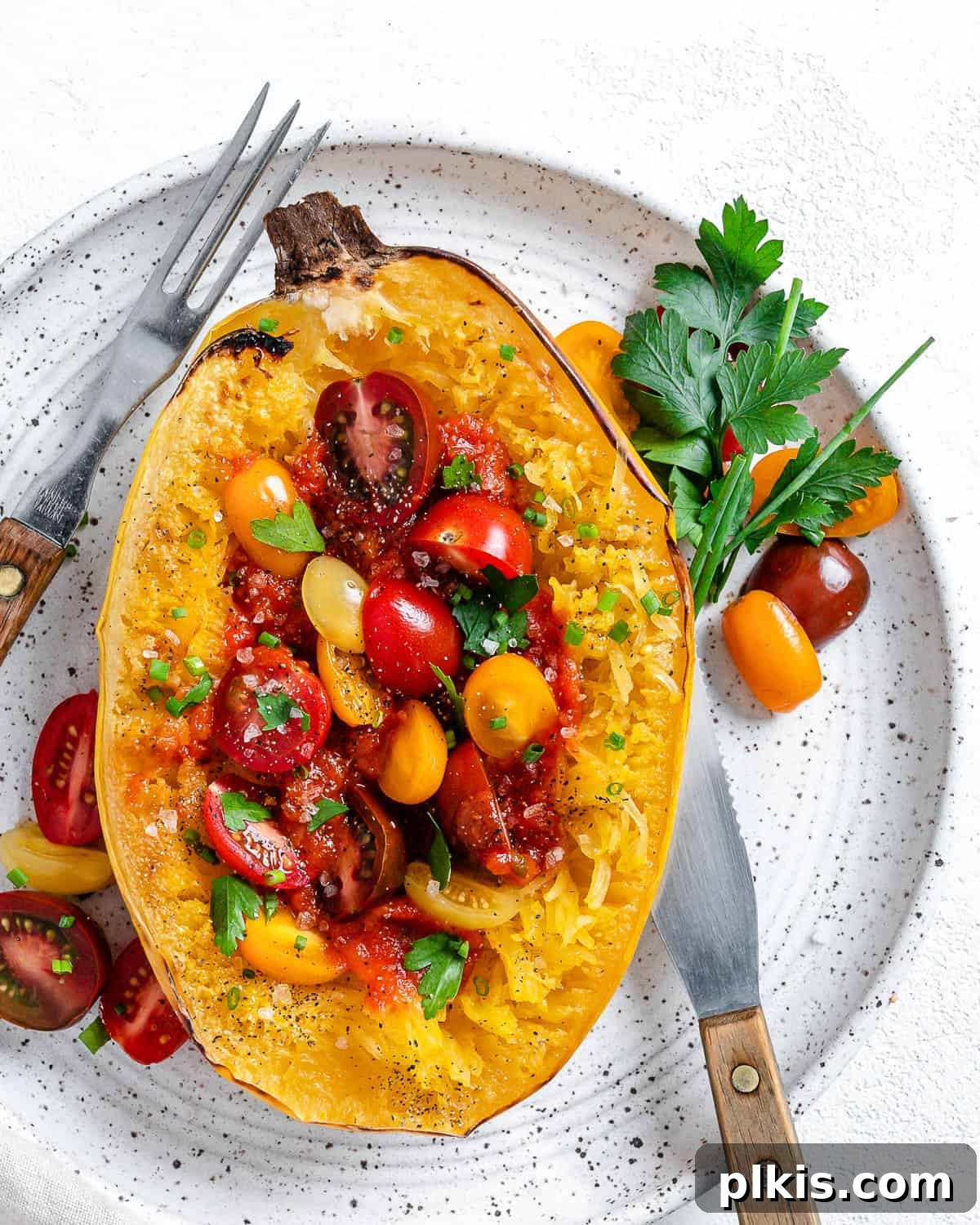
- Classic Pasta Alternatives: The most popular way to enjoy spaghetti squash is to swap it for pasta. Simply fork out the strands and toss them with your favorite pasta sauce. As pictured, you can serve it right in its own skin as charming spaghetti squash boats, topped with a generous splash of marinara sauce, halved grape tomatoes, fresh chives, and a sprinkle of salt and pepper to taste.
- Flavorful Spaghetti Squash Boats: Fill the hollowed-out squash halves with a variety of toppings before or after roasting. Think of it as a canvas for your culinary creativity! Beyond marinara, you can add sautéed vegetables, plant-based ground “meat,” beans, or vegan cheese for a complete and satisfying meal baked directly in its natural bowl.
- Versatile Sauce Pairings: Experiment with different homemade pasta sauces to discover your favorite low-carb twist on classic pasta dishes. Spaghetti squash pairs wonderfully with a wide range of flavors:
- Sweet Potato Pasta Sauce
- Creamy Curry Pasta Sauce
- Dairy-Free Alfredo Sauce
- Butternut Squash Pasta Sauce
- Homemade Meaty Tomato Sauce
- Boost Your Meal with Protein: If you’re looking to make your spaghetti squash meal even more substantial and rich in protein, consider incorporating some excellent plant-based protein sources. Check out these helpful guides for inspiration: The Best Plant-Based Protein Sources and a comprehensive Guide to Plant-Based Meats. These can be mixed directly into your squash or served alongside.
- As a Side Dish: Simply season with herbs, garlic, and a squeeze of lemon for a light and healthy side dish to accompany any main course.
Storage & Freezing Guidelines for Spaghetti Squash
Proper storage is key to enjoying your delicious baked spaghetti squash long after it comes out of the oven. Here’s how to keep it fresh and flavorful:
- Refrigeration for Short-Term Storage: Once cooked, spaghetti squash will maintain its freshness and best texture for about 3-4 days when stored properly in the refrigerator. First, ensure the squash has cooled completely to room temperature. Then, you can either transfer the scraped spaghetti squash strands to an airtight storage container or simply cover the squash halves tightly with plastic wrap or reusable food wrap. Storing it in an airtight container helps prevent it from drying out or absorbing other odors from your fridge.
- Freezing for Long-Term Enjoyment: Freezing leftover spaghetti squash is a fantastic option for extended storage, allowing you to enjoy this healthy vegetable months down the line. However, to prevent it from becoming mushy upon thawing, a few crucial steps are required. The squash must be fully cooked, thoroughly cooled, and, most importantly, sufficiently drained to remove all excess moisture. This extra step helps preserve its texture. For full, detailed instructions on the best way to freeze spaghetti squash to maintain its quality, we recommend consulting helpful resources like this article from Taste of Home. They provide excellent guidance on how to prep it for the freezer to ensure minimal textural changes.
More Kitchen Basics Recipes to Explore
Mastering basic cooking techniques can elevate your home cooking and open up a world of culinary possibilities. If you enjoyed learning how to bake spaghetti squash, explore these other essential kitchen recipes:
- How to Roast a Butternut Squash
- How to Roast Garlic in a Pan
- How to Cook Brown Rice
- How to Roast Mushrooms
- How to Microwave Sweet Potatoes
- How to Make Glazed Carrots
Photos by Alfonso Revilla
How to Bake Spaghetti Squash
5 mins
50 mins
55 mins
2 servings

Learn How to Bake Spaghetti Squash at home with a few of the best tips and tricks. Use it as the healthy, low-carb base of all of your favorite pasta recipes all fall and winter long!
Equipment
-
Knife set
-
Baking sheet
Ingredients
- 1 spaghetti squash
- A scoop of marinara
- Grape tomatoes, halved (optional)
- Chives, optional
- Fresh herbs, optional
- Salt & pepper to taste
Instructions
-
Preheat the oven to 350 degrees F.
-
Wash and cut your squash in half, vertically. Remove the seeds and place both pieces face-down on a foil-lined baking sheet.
-
Bake for 50 to 55 minutes, or until soft/tender (you should be able to scrape the sides with a fork easily).
-
Serve hot with marinara sauce scooped on top, tomato halves, fresh herbs, or simply a little salt & pepper to your desired taste.
Notes
- An adjusted cook time may be required. Depending on the size of your squash and the thickness of the halves, an altered cook time may be required. For example, if you’re baking a large squash, it may take 60+ minutes to cook through.
- Space the spaghetti squash halves out if possible. To prevent excess moisture from building inside the squash as they roast, it is best to space them out on the baking sheet so they have a couple of inches between each halve. If you cannot fit two squash halves on one baking sheet, use two baking sheets.
- Save the seeds! Similar to roasted pumpkin seeds, spaghetti squash seeds can be roasted and sprinkled on salads, soups, or eaten on their own as a healthy snack.
Nutrition
Carbohydrates: 41 g
Protein: 5 g
Fat: 3 g
Saturated Fat: 1 g
Polyunsaturated Fat: 1 g
Monounsaturated Fat: 0.3 g
Sodium: 378 mg
Potassium: 977 mg
Fiber: 10 g
Sugar: 19 g
Vitamin A: 1873 IU
Vitamin C: 31 mg
Calcium: 133 mg
Iron: 2 mg
Additional Info
Margaret Chapman
Lunch
American
Oven
Vegan
Please tag us at @PlantBasedOnABudget! 🙂