
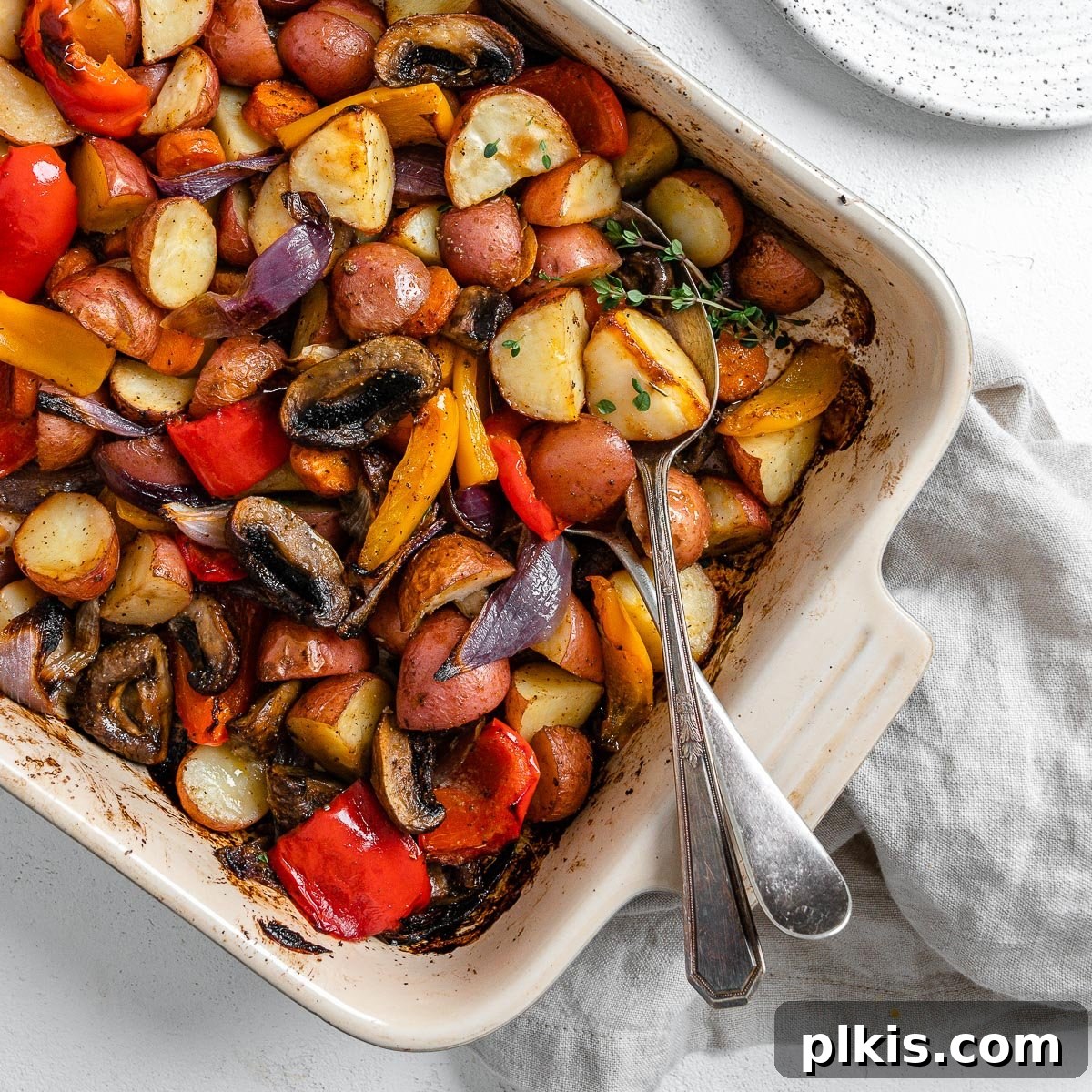
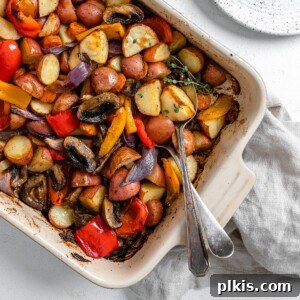
Welcome to your new favorite go-to recipe: these incredibly easy and delicious vegan roasted vegetables with thyme. Whether you’re a seasoned chef or a kitchen novice, this dish promises maximum flavor with minimal effort. It’s an exceptionally versatile, budget-friendly, and nutrient-packed option perfect for daily meals, elaborate dinners, or efficient meal prep. Imagine crispy potatoes, tender carrots, earthy mushrooms, and sweet bell peppers, all infused with aromatic thyme and roasted to golden perfection. While our preferred combination includes potatoes, carrots, mushrooms, and bell peppers, the beauty of this recipe lies in its adaptability – nearly any vegetable can join the party! With just about 5 minutes of hands-on preparation, your oven takes over, transforming simple ingredients into a culinary masterpiece.
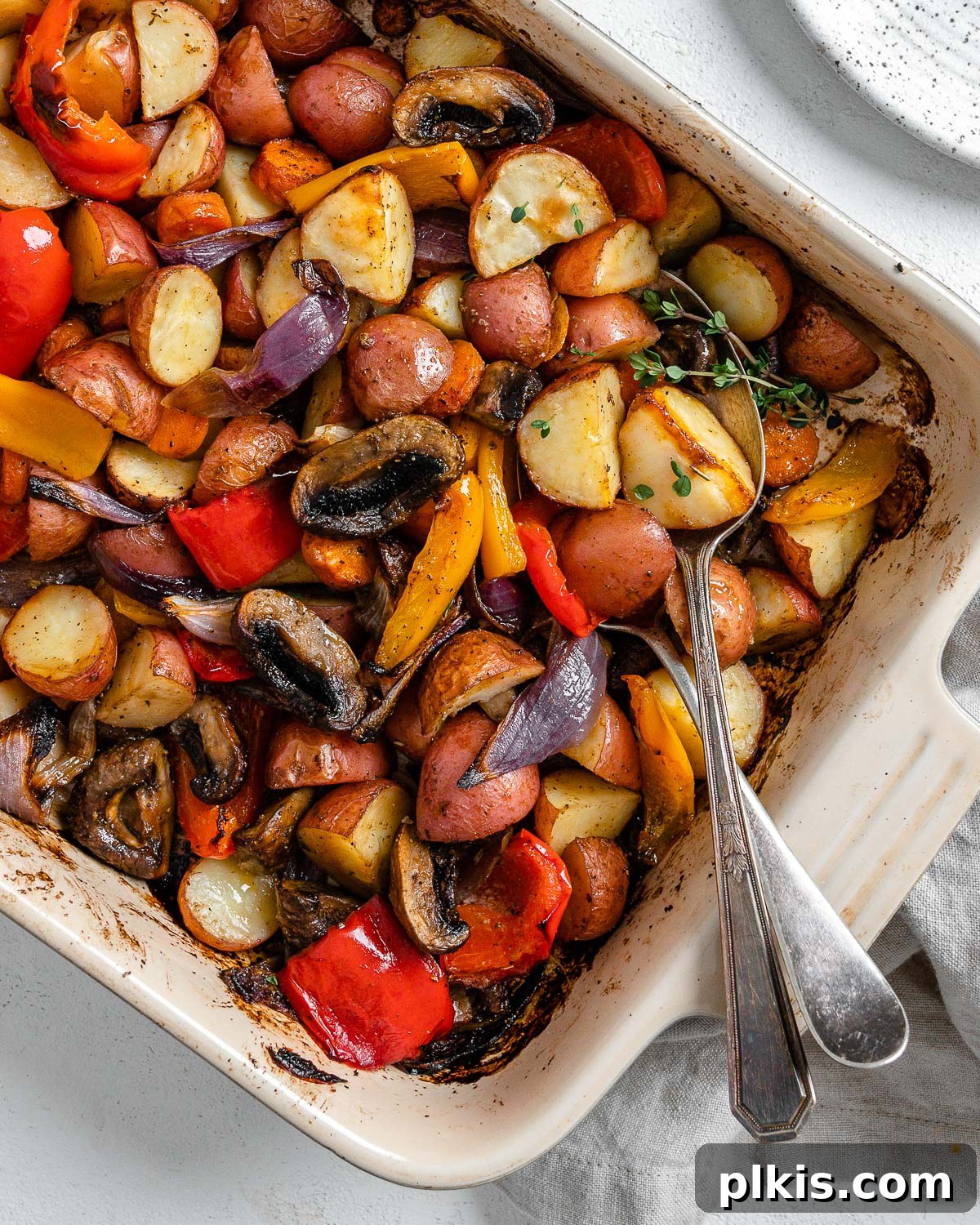
This roasted vegetable recipe has earned a permanent spot on our weekly menu. Its inherent simplicity, coupled with endless flexibility, ensures that dinner remains exciting and stress-free. It’s the kind of dish that adapts to your pantry and your preferences, making healthy eating both enjoyable and accessible. By embracing this method, you’re not just cooking; you’re unlocking the full potential of your produce, turning everyday veggies into a caramelized, savory delight.
If you’re seeking more effortless vegetable inspiration, be sure to explore our Spanish cauliflower rice and simple roasted mushrooms recipes. Both are ready in under 30 minutes, proving that delicious, plant-based meals don’t have to be complicated or time-consuming!
Roasted potatoes and vegetables are a universal crowd-pleaser, pairing beautifully with virtually any main course. We particularly adore serving them alongside crispy tofu sticks, sweet and spicy tofu, or hearty lentil burger patties. Their robust flavor and satisfying texture elevate every dish they accompany, adding both substance and a vibrant burst of plant-powered goodness.
Why You’ll Love These Vegan Roasted Vegetables
Beyond their mouth-watering taste, these roasted vegetables offer a multitude of benefits that make them a staple in any kitchen. Here’s why this recipe truly shines:
- Unmatched Versatility: This recipe is your culinary canvas! It’s incredibly forgiving and adaptable, allowing you to use your favorite seasonal vegetables or creatively utilize whatever produce you have on hand. It’s perfect for minimizing food waste and maximizing flavor, making it a sustainable choice for your kitchen.
- Effortless Preparation: Forget complicated steps or lengthy ingredient lists. Aside from simply chopping your chosen veggies, all you need are a touch of oil and your preferred seasonings to create perfectly crispy, tender roasted vegetables. The oven does most of the work, freeing you up for other tasks.
- Naturally Healthy & Nutrient-Dense: Roasting is a fantastic cooking method that helps vegetables retain more of their essential vitamins, minerals, and antioxidants compared to boiling or steaming. This ensures you’re getting the most nutritional value from every bite, contributing significantly to a balanced and healthy diet.
- Fantastic for Meal Prep: This dish is a meal prepper’s dream! Make a large batch at the start of the week, and you’ll have wholesome, delicious components ready for quick and easy additions to lunches, dinner sides, or as a base for salads and grain bowls throughout your busy schedule.
- Budget-Friendly Goodness: Vegetables are often more affordable than many other food groups, especially when bought in season. This makes this recipe a smart and economical choice for delicious and healthy eating on a budget without compromising on taste or vital nutrients.
The Magic of Roasting: Unlocking Flavor and Nutrition
Roasting vegetables isn’t just about cooking them; it’s about transforming them. The high heat of the oven works wonders, coaxing out natural sugars and creating incredible depth of flavor that other cooking methods simply can’t achieve. This process, often referred to as caramelization and the Maillard reaction, gives your vegetables that coveted golden-brown crispness and a slightly smoky, sweet undertone that is intensely satisfying.
Beyond flavor, roasting is also a nutritional powerhouse. Unlike boiling, which can leach water-soluble vitamins into the cooking water, roasting helps to seal in nutrients, concentrating their goodness. This means you’re getting more of the good stuff – essential fiber, an array of vitamins (like Vitamin A from carrots and Vitamin C from peppers), and powerful antioxidants – with every forkful. It’s a simple yet highly effective way to boost your daily vegetable intake and support overall well-being, all while creating a dish that tastes absolutely phenomenal.
The dry heat environment of an oven also encourages a drier surface on the vegetables, which is key to achieving that delightful crisp exterior, a textural element often missed in steamed or boiled preparations. This makes roasted vegetables an exciting and engaging way to consume more plant-based foods.
Essential Ingredients for Perfect Roasted Vegetables
Fresh, vibrant vegetables and a few pantry staples are all it takes to create a spectacular batch of roasted potatoes and vegetables for any meal. Let’s delve into what goes into our preferred blend and why each component plays a crucial role:
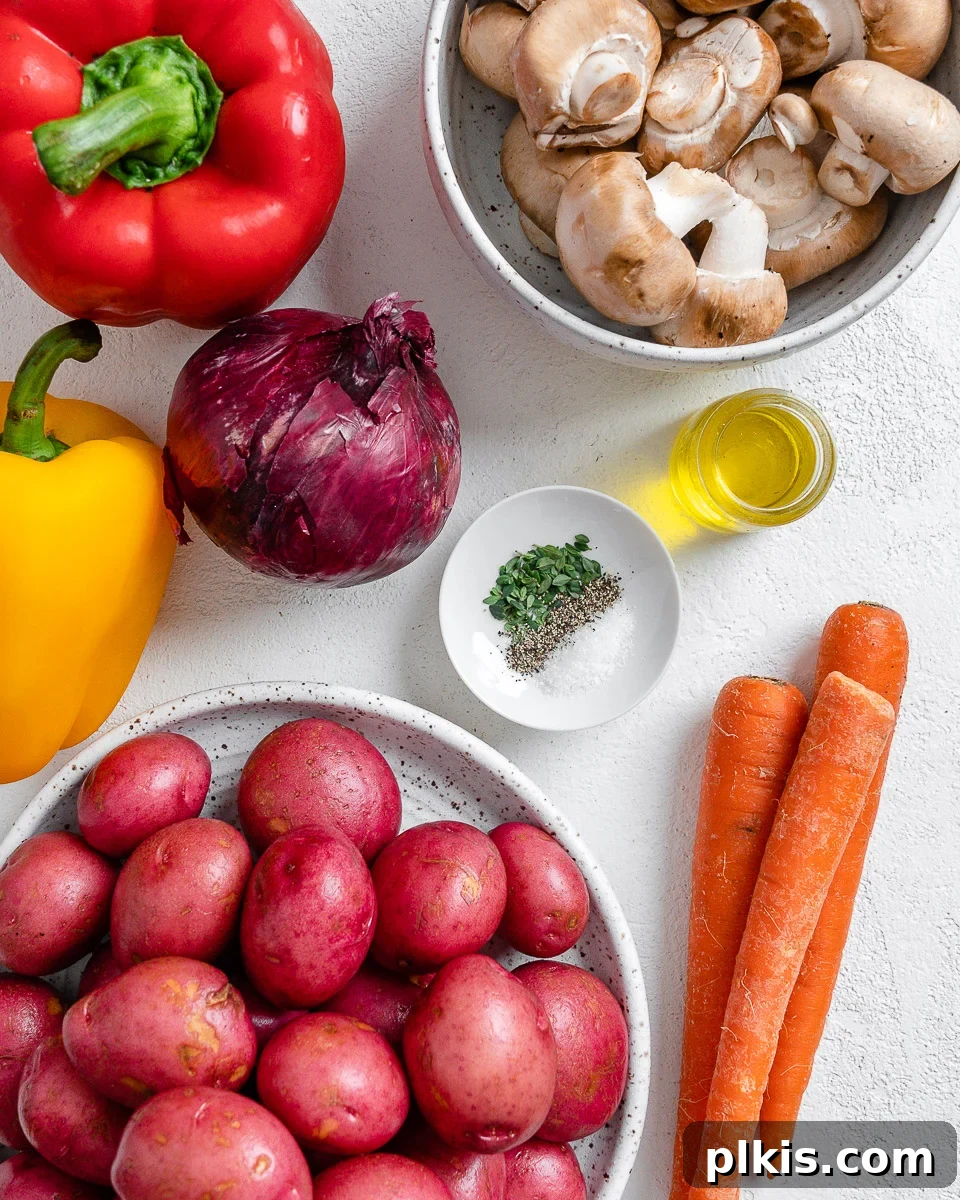
- Red Potatoes: These thin-skinned beauties are ideal for roasting. Their waxy texture helps them hold their shape and develop a wonderfully crispy exterior while remaining tender and fluffy on the inside. For variation, Yukon Gold, small new potatoes, or even sweet potatoes can be fantastic substitutes, each lending a slightly different flavor profile.
- Red or Yellow Onion: Essential aromatics that soften and sweeten significantly in the oven, adding a foundational layer of savory and slightly sweet flavor to the entire dish. Red onions offer a slightly sharper, more piquant flavor and a beautiful purple hue, while yellow onions are sweeter and milder, perfect for a subtle background note.
- A Colorful and Flavorful Mix of Veggies: Our favorite blend for visual appeal and balanced taste includes:
- Carrots: They become incredibly sweet, tender, and slightly caramelized when roasted, providing a lovely contrast in texture and a burst of natural sweetness. Their earthy flavor complements the other vegetables beautifully.
- Fresh Mushrooms: Whether you choose cremini, button, or shiitake, mushrooms add an umami-rich, earthy depth that elevates the entire dish. They absorb flavors wonderfully and shrink considerably during roasting, concentrating their savory essence.
- Yellow and Red Bell Peppers: These add vibrant color, a refreshing sweetness, and a slight tenderness with a bit of bite even after roasting. Their high water content means they soften beautifully while retaining their distinct pepper flavor. Green peppers can also be used for a slightly more bitter, earthy note.
- Cooking Oil: The right oil is key for perfect roasting. Choose your favorite moderate to high-heat cooking oil. Extra virgin olive oil is a classic for its Mediterranean flavor, but avocado oil (known for its high smoke point and neutral flavor), grapeseed oil, or even melted coconut oil also work wonderfully, ensuring even browning and a delicious crisp texture. The oil helps to conduct heat and prevent sticking.
- Dried Thyme: This humble pantry staple is the star seasoning here, infusing the vegetables with its distinct, earthy, and slightly floral aroma. Thyme has a natural affinity for root vegetables and potatoes. If you have fresh thyme on hand, feel free to use it – simply double the amount for a more potent, vibrant flavor.
- Salt and Pepper: Fundamental seasonings that are critical for enhancing the natural flavors of the vegetables and bringing everything into harmonious balance. Don’t underestimate their power to transform simple ingredients.
Optional Add-ins and Flavor Variations: Feel free to experiment with other vegetables like broccoli florets, cauliflower, zucchini, parsnips, Brussels sprouts, asparagus, or cherry tomatoes. You can also vary the seasonings with garlic powder, onion powder, smoked paprika, rosemary, or a touch of chili flakes for a subtle kick. Remember to adjust cutting sizes and cooking times as needed to accommodate different densities and textures.
Step-by-Step Guide: How To Make Perfect Vegan Roasted Veggies
Creating these delightful roasted vegetables is incredibly straightforward and requires minimal fuss. Follow these simple steps for a consistently delicious outcome that will impress every time:
- 1) Prepare Your Oven and Pan: Begin by preheating your oven to a robust 400 degrees Fahrenheit (200 degrees Celsius). High heat is absolutely crucial for achieving that desirable crispy exterior and thorough cooking. Line a large 9×13-inch baking pan (or two smaller ones if you have a lot of veggies) with parchment paper or foil for easy cleanup. For an extra crisp result, you can even place the empty baking sheet in the oven while it preheats.
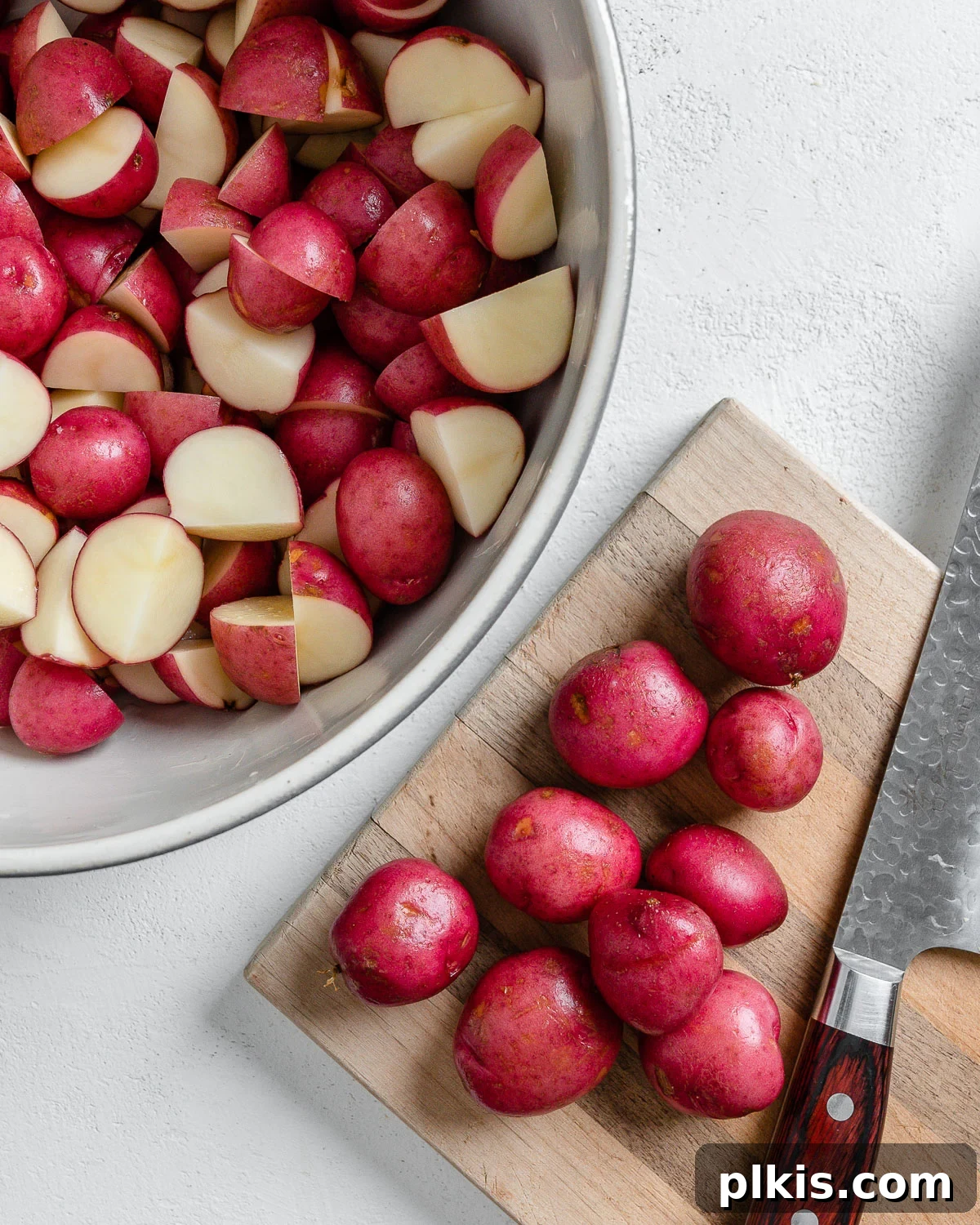
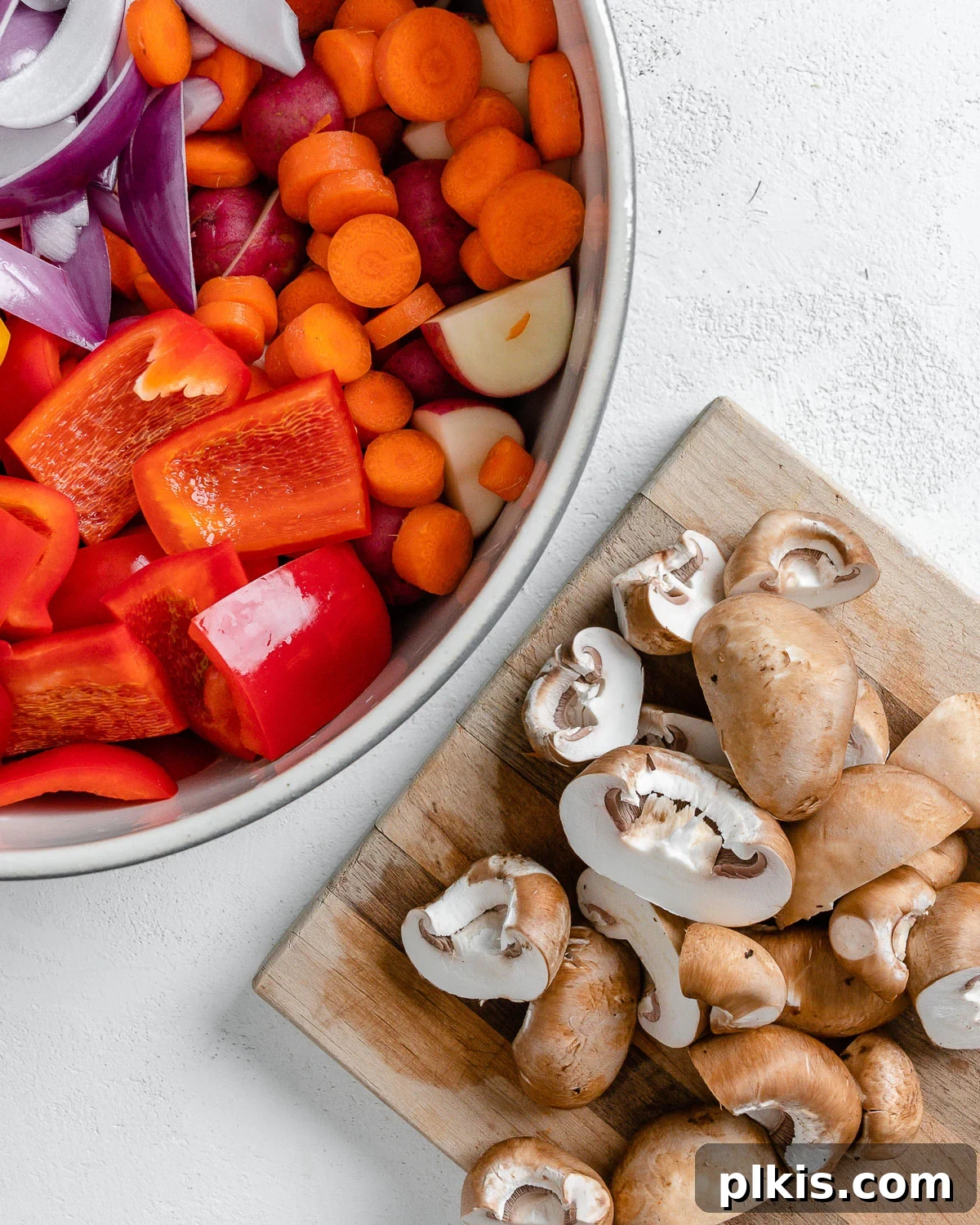
- 2) Prep and Coat the Veggies: In a large mixing bowl, combine all your uniformly cut vegetables. Remember our expert tip: denser vegetables like potatoes and carrots should be cut into smaller pieces than softer ones like mushrooms and peppers to ensure even cooking. Drizzle generously with your chosen oil, then sprinkle evenly with dried thyme (or fresh, if using), salt, and freshly ground black pepper. Toss everything together thoroughly using your hands or a large spoon until every single piece of vegetable is lightly and evenly coated. This ensures consistent seasoning and beautiful browning across all ingredients.
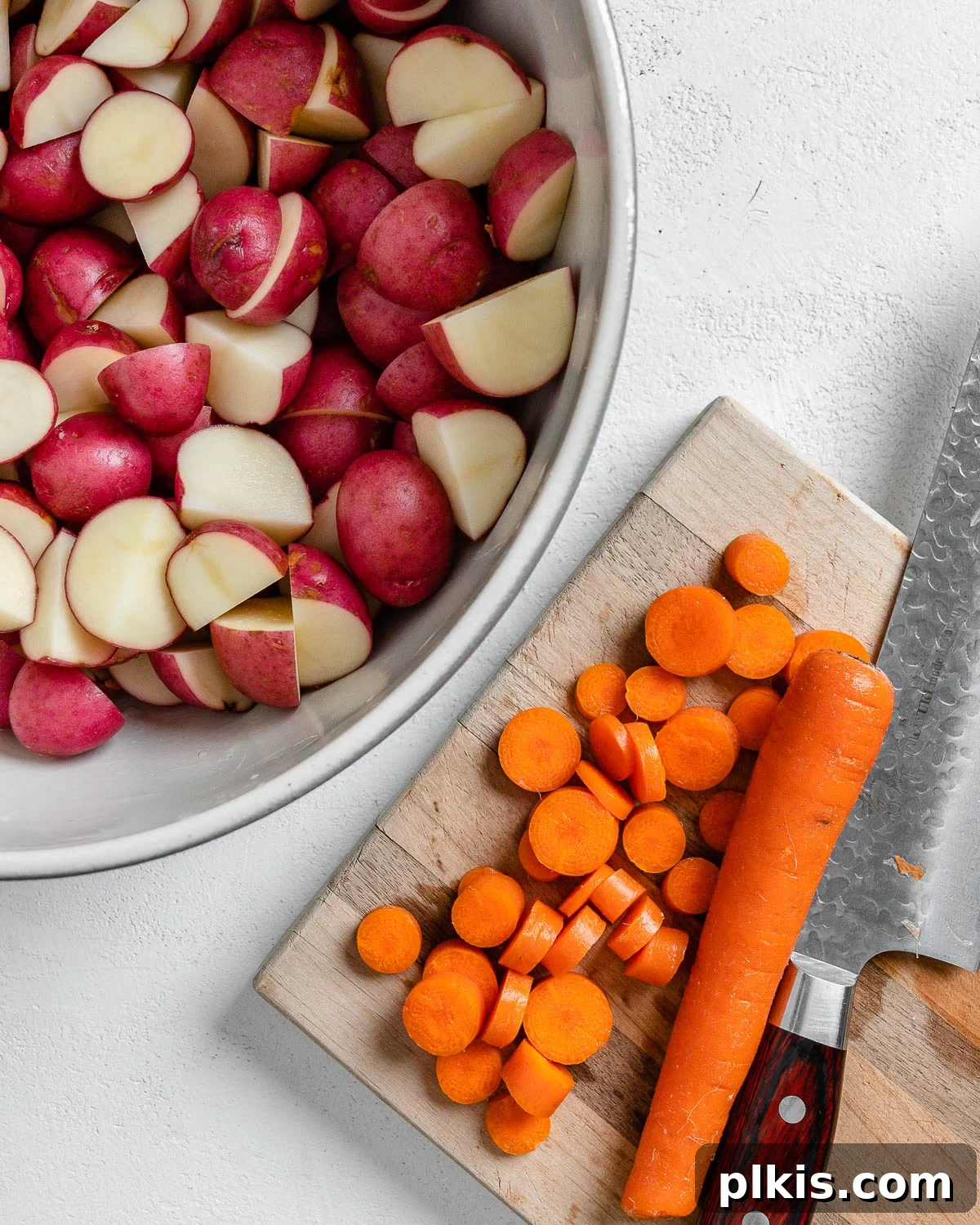
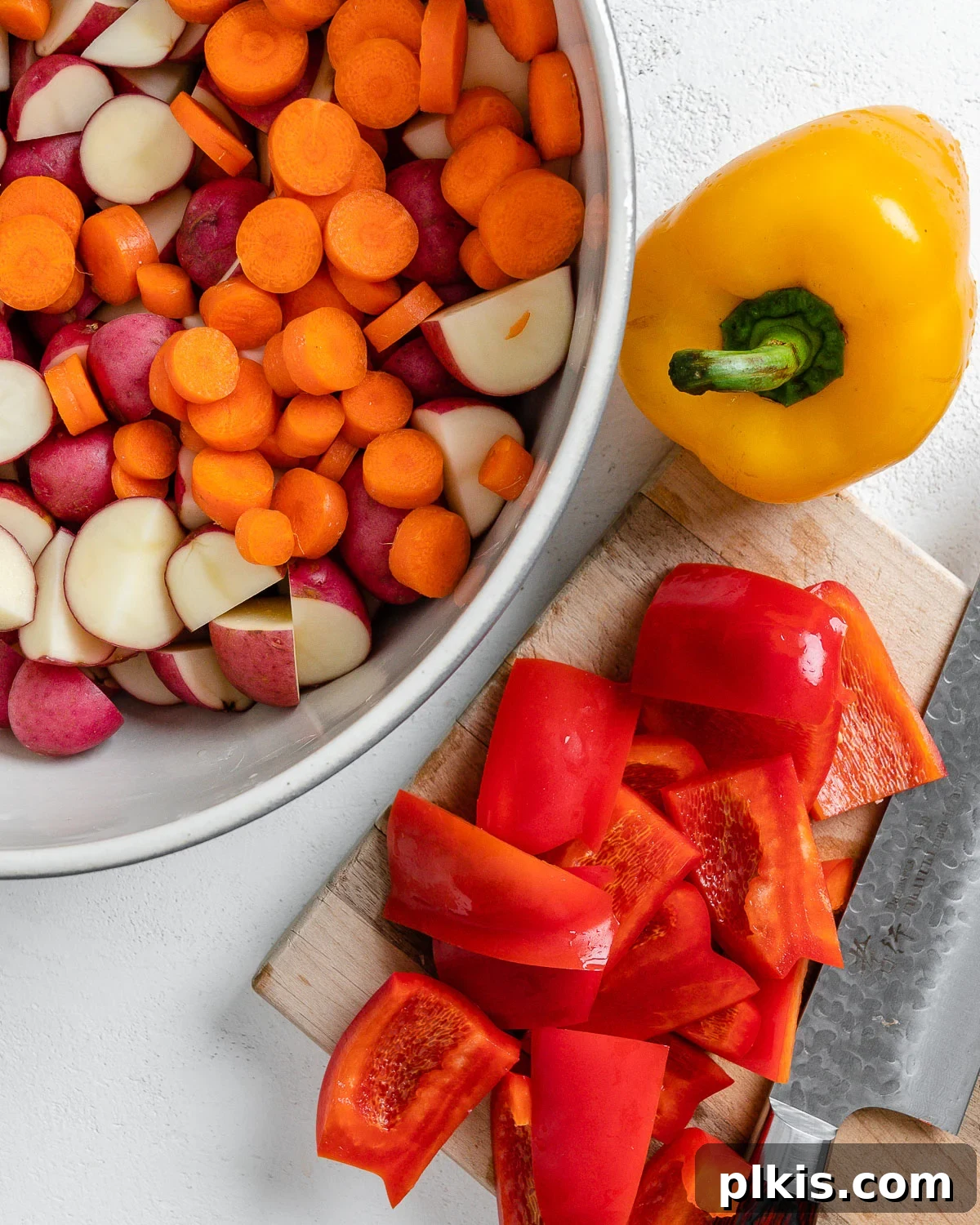
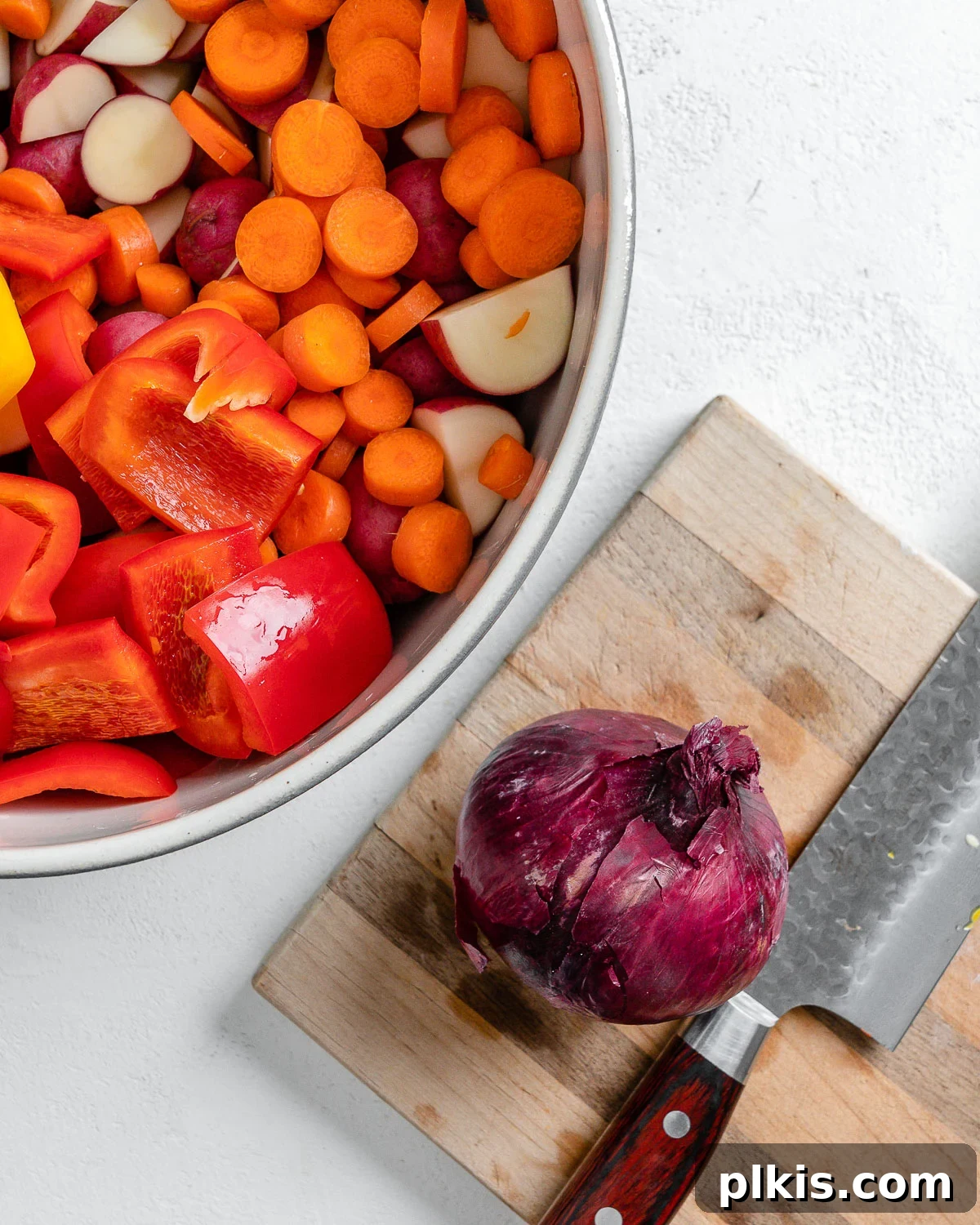
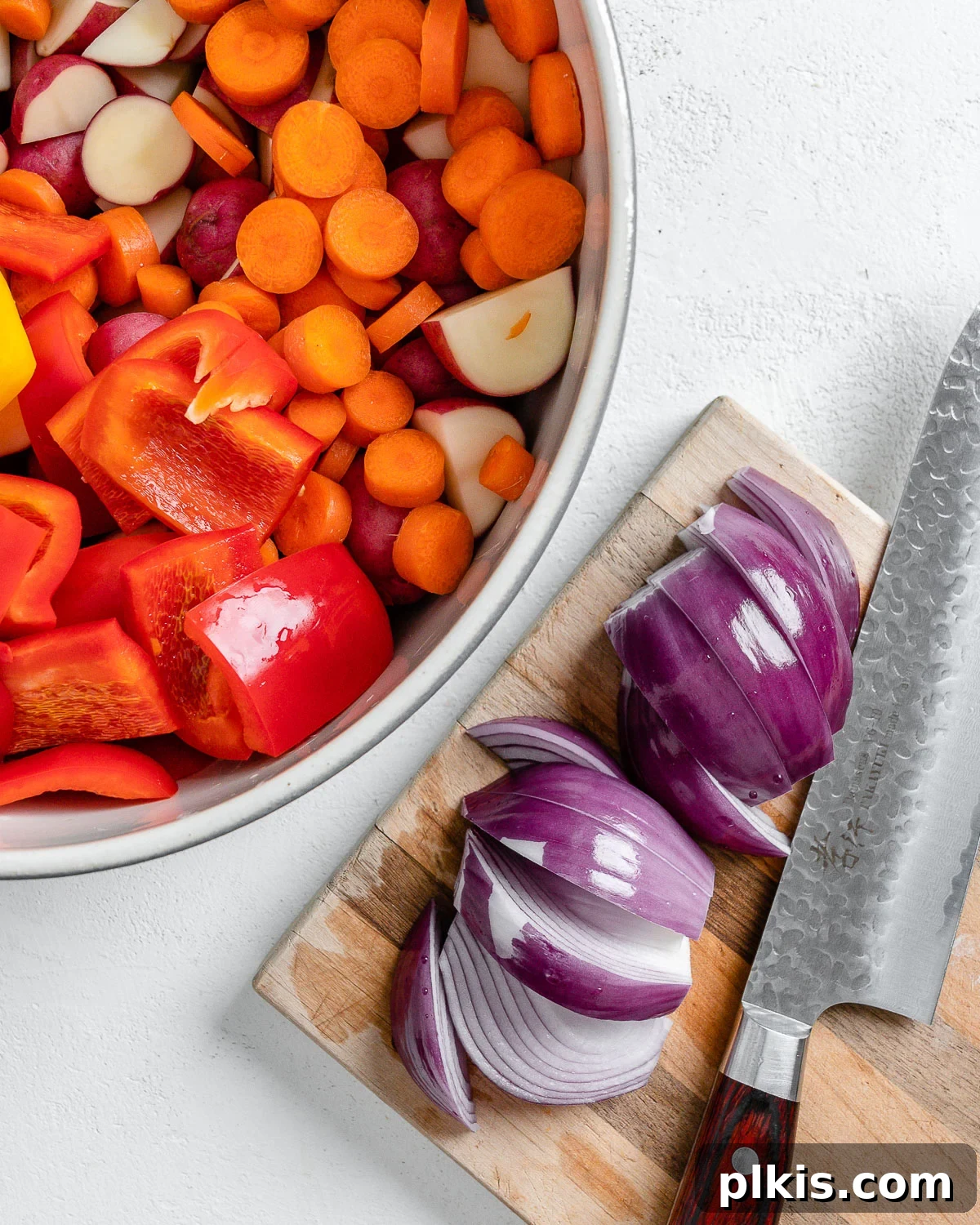
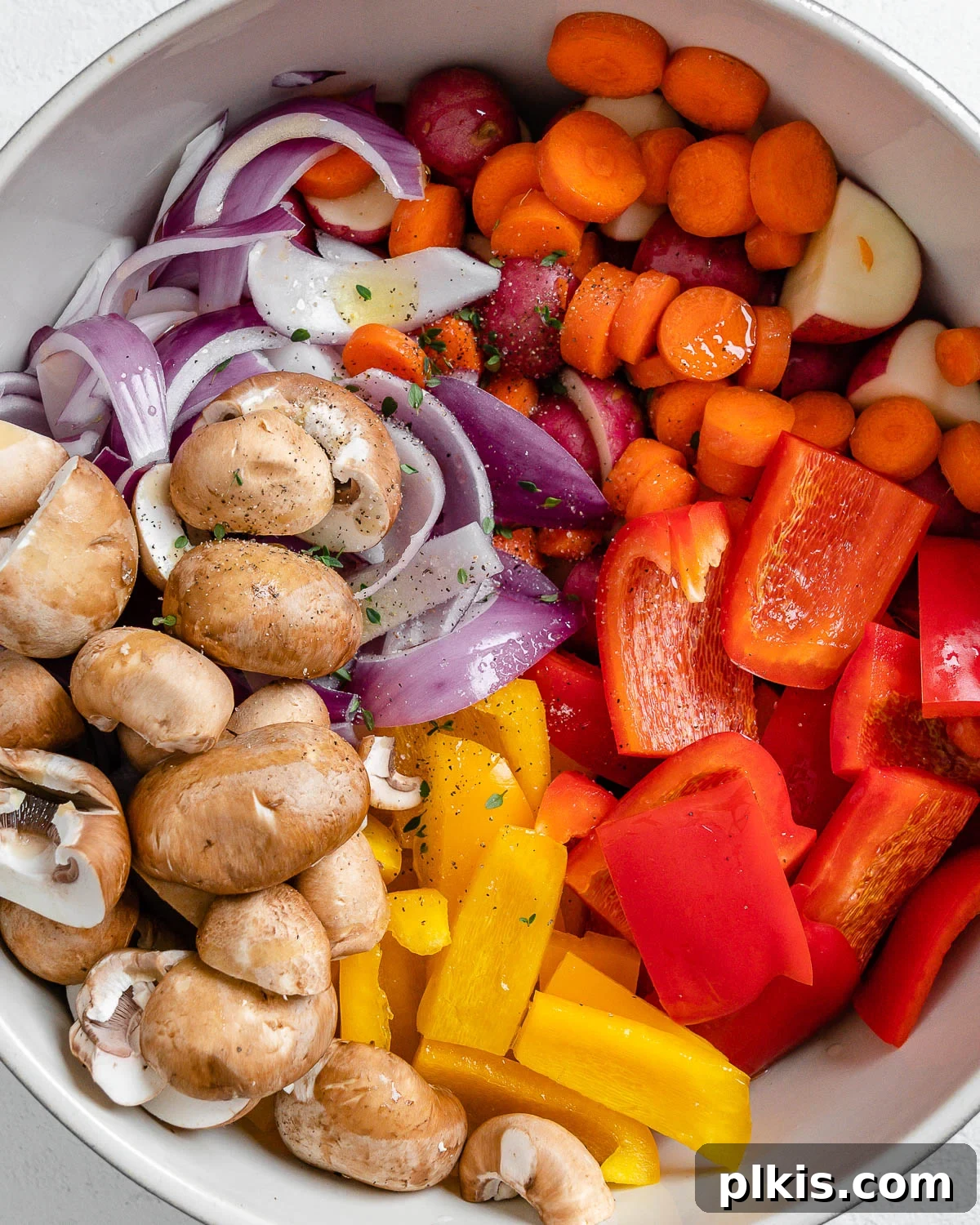
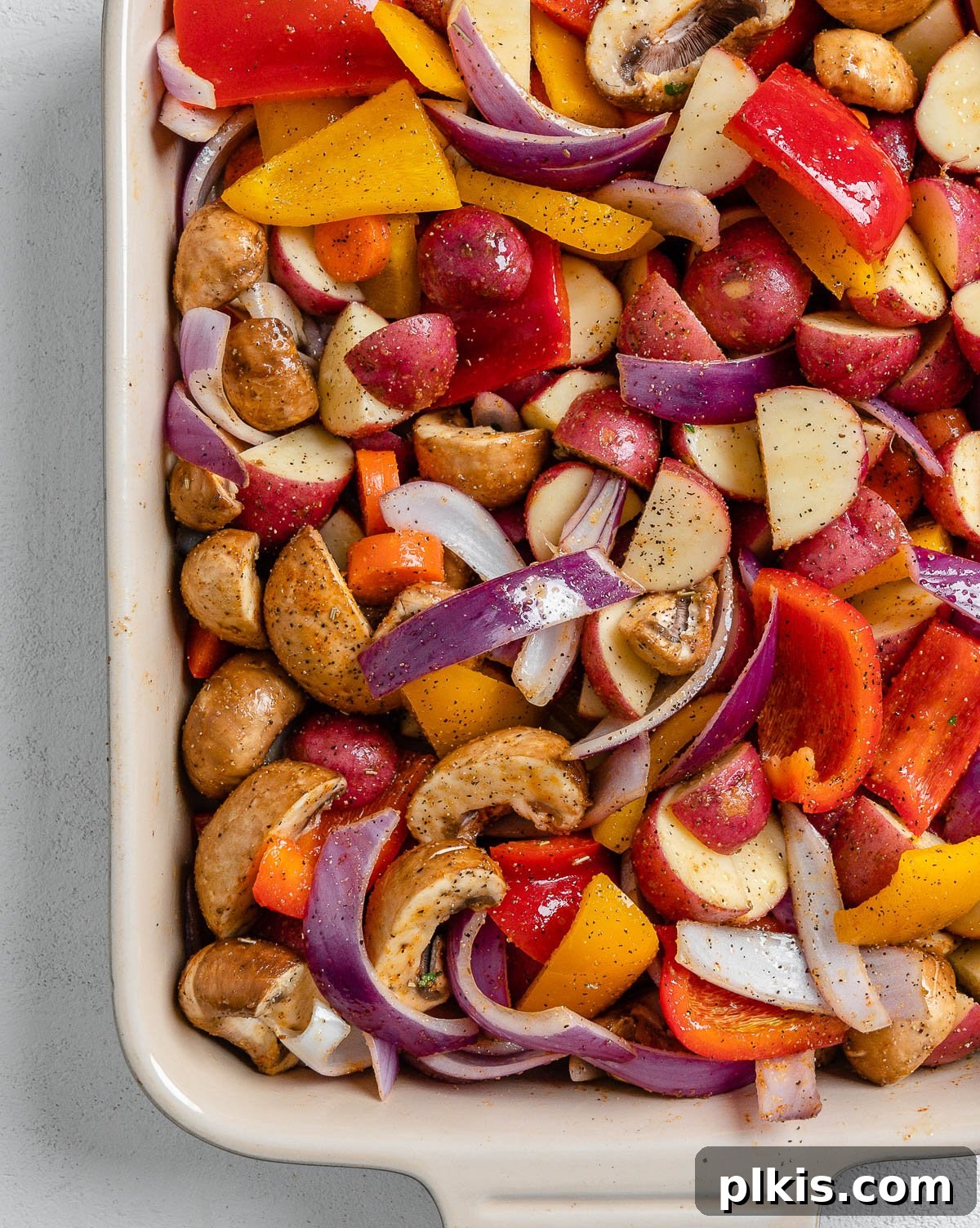
- 3) Roast to Perfection: Transfer the seasoned vegetables to your prepared baking pan(s). Critically, spread them out in a single layer without overcrowding the pan. Giving them space is key for crispiness. Place the pan(s) in the preheated oven and roast for approximately 45 to 50 minutes, or until the vegetables are beautifully tender when pierced with a fork, deeply browned, and slightly caramelized at the edges. During cooking, remember to stir the vegetables occasionally (every 15-20 minutes is a good rhythm) to ensure all sides get a chance to crisp up evenly and prevent any one side from burning.
Expert Tips for Super Crispy and Flavorful Roasted Vegetables
Achieving perfectly crisp and flavorful roasted vegetables is an art, but with these expert tips, you’ll master it in no time. These subtle techniques make all the difference between good and absolutely incredible:
- Uniform Cutting is Paramount: The golden rule for even cooking! Ensure all your vegetables, especially denser root vegetables like potatoes and carrots, are cut into roughly the same size pieces. This allows everything to cook evenly and be ready at the same time. If some pieces are too large, they’ll be undercooked, while smaller pieces might char prematurely. Aim for pieces that are about 1 to 1.5 inches.
- Never Crowd the Pan: This is arguably the most crucial tip for achieving truly crispy roasted vegetables. When vegetables are packed too closely on the baking sheet, they release moisture, which then gets trapped, causing them to steam rather than roast. This results in soft, soggy veggies instead of crisp, caramelized ones. Use two baking sheets if necessary to ensure a single, spacious layer with plenty of room between pieces. Air circulation is your friend!
- High Heat is Essential for Browning: Roasting at 400°F (200°C) or higher is critical. This intense heat promotes quick browning and caramelization on the exterior of the vegetables while cooking the interior to tender perfection. Lower temperatures will lead to softer, less flavorful, and less appealingly textured results.
- Preheat Your Baking Sheet (for Maximum Crispness): For an extra boost of crispiness and a head start on browning, place your empty baking sheet in the oven while it preheats. Adding the seasoned vegetables to a hot pan gives them an immediate sear, kickstarting the Maillard reaction and forming that irresistible crust.
- Don’t Forget to Stir (but not too much): While you don’t want to constantly disturb the veggies, giving them a good stir every 15-20 minutes ensures that all sides come into contact with the hot pan, promoting even browning and the development of those coveted crisp edges. This also prevents sticking.
- Use the Right Amount of Oil: Oil is vital for transferring heat, preventing sticking, and achieving that desirable crispiness. Drizzle enough to lightly coat all the vegetables without making them greasy. Too little oil, and they’ll stick and burn; too much, and they’ll fry instead of roast, potentially becoming soggy.
- Season Generously and Thoughtfully: Don’t be shy with your seasonings. Vegetables can absorb a good amount of salt and pepper. Consider adding aromatic garlic powder, savory onion powder, or a pinch of smoked paprika for extra flavor dimensions and a beautiful color. Fresh herbs, like rosemary or oregano, can also be added during the last 10-15 minutes of cooking for a vibrant finish.
Frequently Asked Questions About Vegan Roasted Vegetables
- How do vegans roast vegetables?
- Vegans roast vegetables fundamentally the same way everyone else does, but with a conscious choice to use only plant-based ingredients. This primarily means opting for healthy vegetable oils like olive oil, avocado oil, or grapeseed oil instead of dairy-based butter. For those creating full sheet pan meals, vegans creatively incorporate delicious plant-based proteins such as tofu, tempeh, chickpeas, or various beans and lentils, ensuring a complete, nutritious, and satisfying meal.
- Are roasted vegetables healthy?
- Absolutely! In most cases, roasted vegetables are an incredibly healthy choice for side dishes, snacks, or meal components. When prepared with just a minimal amount of healthy oil and basic seasonings, they offer a low-calorie, high-fiber, and nutrient-dense addition to your diet. Roasting preserves many water-soluble vitamins better than boiling, allowing you to maximize their nutritional benefits. Choosing oils rich in monounsaturated and polyunsaturated fats, like olive or avocado oil, further enhances their health profile by providing beneficial fats.
- Are roasted vegetables good leftover?
- Yes, roasted vegetables make fantastic leftovers! Their flavors often deepen and meld even further after a day or two in the refrigerator. They can be enjoyed reheated or even served cold or at room temperature, adding versatility to your meal planning. For best results when reheating, use an oven (at 350°F/175°C for 10-15 minutes) or an air fryer to help restore some of their crispness. Microwaving is also an option for convenience, though they may become softer. Cold roasted vegetables are excellent additions to grain bowls, salads, wraps, or as a quick and healthy snack.
- Can I use frozen vegetables for roasting?
- Yes, you can absolutely roast frozen vegetables, and it’s a great way to enjoy veggies year-round! The key is to ensure they are spread in a single layer on the baking sheet and not overcrowded, similar to fresh vegetables. You may need to increase the cooking time slightly (by about 10-15 minutes), and they might release more water initially, so a slightly higher oven temperature (around 425°F or 220°C) can help them crisp up. There’s no need to thaw them beforehand; roast them directly from frozen for the best texture.
- How can I make my roasted vegetables extra crispy?
- For maximum crispiness, follow these key tips: 1) Ensure your vegetables are cut uniformly and are not overcrowded on the baking sheet – use two pans if needed. 2) Use a good amount of oil to coat them evenly, which aids in heat transfer and browning. 3) Roast at a consistently high temperature (400-425°F / 200-220°C). 4) Consider preheating your baking sheet in the oven before adding the vegetables. 5) Don’t stir too frequently in the initial stages; let them develop a solid crust on one side before flipping. 6) For an advanced technique, a light dusting of cornstarch or arrowroot powder (about 1 teaspoon per pound of veggies) sprinkled on the vegetables after oiling can also aid in achieving an extra-crisp texture by absorbing excess surface moisture.
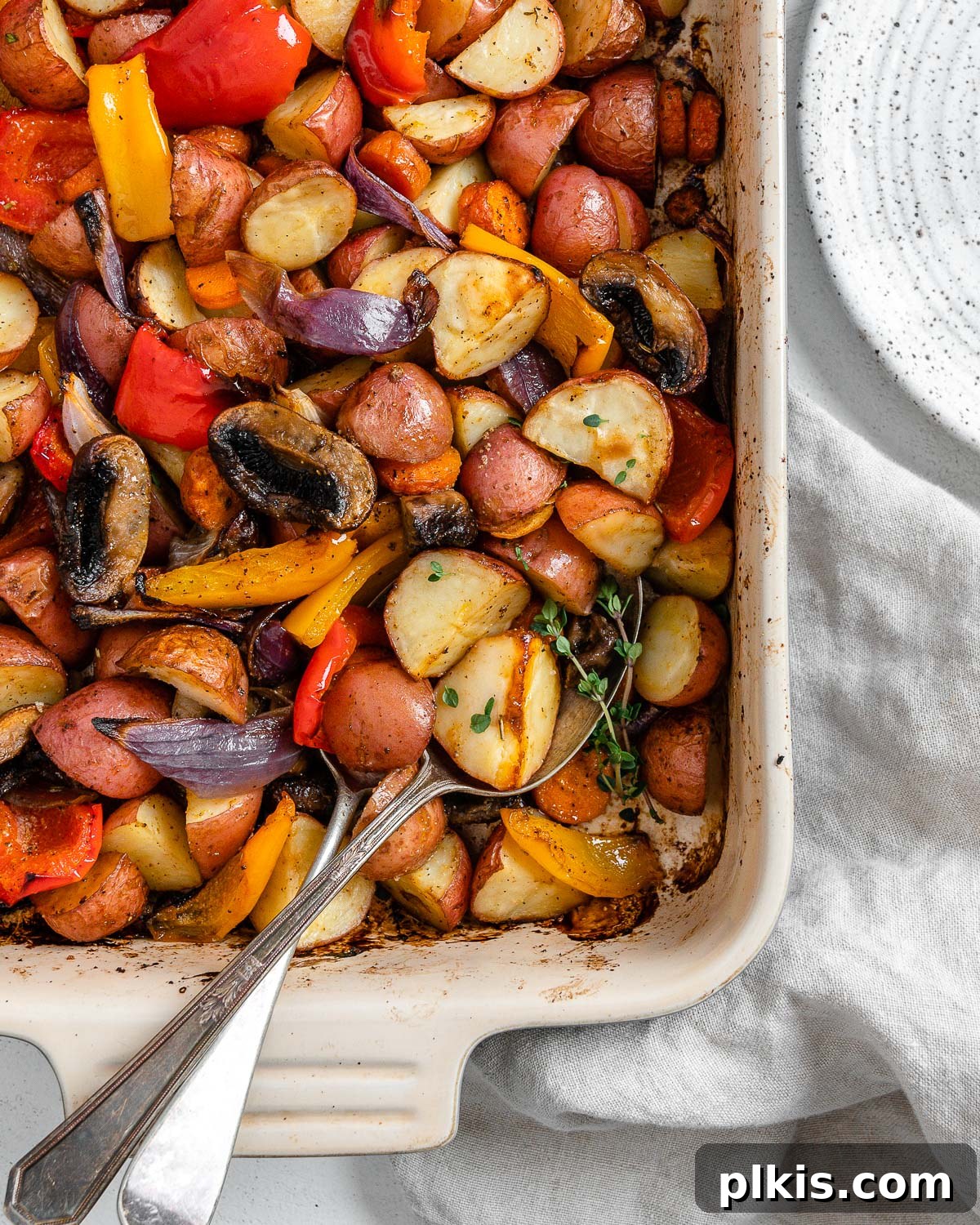
Delicious Ways to Enjoy Your Roasted Vegetables
Once your beautifully roasted vegetables are ready, the possibilities are endless! Their savory, caramelized flavor makes them an incredibly versatile component for countless meals. Here are some of our favorite ways to incorporate them into your weekly menu:
- The Perfect Side Dish: These versatile veggies complement almost any main course. They are especially delightful alongside savory tofu dishes, hearty vegan burger patties, lentil loaves, grilled tempeh, plant-based sausages, or even a simple bowl of fluffy rice and beans.
- Elevate Your Pasta Dishes: Toss your warm, roasted vegetables on top of virtually any vegan pasta dish for added texture, flavor, and a significant boost of nutrition. They pair perfectly with a creamy vegan alfredo sauce, a zesty vegan garlic sauce, or a simple marinara, transforming a basic pasta meal into a more substantial and satisfying experience.
- Stellar Salads & Nourishing Bowls: Batch cook a larger quantity of roasted potatoes and vegetables for your weekly meal prep. Throughout the week, effortlessly add them to a variety of fresh green salads, vibrant grain bowls (like quinoa or farro bowls), or use them as a hearty filling for wraps and sandwiches. They add incredible flavor and substance to cold dishes.
- Savory Tacos & Wraps: For a delightful twist, add these seasoned vegetables to your favorite vegan tacos, burritos, or warm wraps. Their robust flavor and tender texture make them an excellent addition, complementing creamy sauces or spicy salsas.
- Hearty Breakfast Hash: Repurpose any leftovers into a delicious breakfast hash. Simply sauté them lightly with some crumbled plant-based sausage or scrambled tofu for a wholesome and filling morning meal.
- Quick & Healthy Snack: Enjoy them straight from the oven or reheated as a healthy and satisfying snack. A sprinkle of nutritional yeast can add a cheesy flavor!
More Incredible Vegan Vegetable Dishes to Try
If you’ve fallen in love with these roasted vegetables and are eager for more plant-based inspiration, explore these other fantastic recipes that celebrate the goodness and versatility of vegetables in delicious and creative ways:
- Garlicky Spinach Polenta Pie
- BBQ Cauliflower Bites
- Roasted Butternut Squash with Indian Spices and Caramelized Onions
- Crispy Garlic Parsley Potatoes
- Hearty Mixed Bean Salad
Photos by Alfonso Revilla
Vegan Roasted Vegetables with Thyme
These vegan roasted vegetables are an inexpensive dish idea to use for meal prep, side dishes, and salads. While our favorite combination includes potatoes, carrots, mushrooms, and peppers, this recipe truly works with almost any vegetable you have on hand. It requires minimal hands-on time, making it a perfect easy meal solution.
Recipe Details
- Prep Time: 25 mins
- Cook Time: 45 mins
- Total Time: 1 hr 10 mins
- Servings: 12 servings
- Course: Dinner, Lunch
- Cuisine: American
- Method: Oven
- Diet: Vegan
- Author: Miranda Rivera
Equipment
- Set of knives
- Measuring spoons
- Large mixing bowl
Ingredients
- 2 pounds red potatoes, cubed (about 9 cups)
- 1 red or yellow onion, sliced
- 3 medium carrots, sliced
- ½ pound fresh mushrooms, destemmed and halved
- 1 large sweet yellow bell pepper, cut into 1 ½ inch pieces
- 1 large sweet red bell pepper, cut into 1 ½ inch pieces
- 2 Tablespoons oil (e.g., olive, avocado, grapeseed)
- 1 teaspoon dried thyme
- 1 teaspoon salt
- ¼ teaspoon pepper
Instructions
- Preheat the oven to 400°F (200°C). In a large bowl, combine all the cut vegetables, oil, thyme, salt, and pepper. Mix everything together thoroughly until evenly coated.
- Transfer the seasoned vegetables to a 9×13-inch baking pan, spreading them in a single layer. Roast for 45 to 50 minutes, or until vegetables are tender and beautifully browned. Stir occasionally (every 15-20 minutes) to ensure even cooking and crispness.
Notes
- For extra flavor: Add 1-2 cloves of minced garlic or ½ teaspoon of garlic powder to the vegetable mix before roasting for an aromatic boost. A pinch of smoked paprika can also add a delightful depth and a smoky undertone.
- Cutting dense vegetables: Always cut denser vegetables like potatoes and carrots into smaller, more uniform pieces than softer vegetables like mushrooms and bell peppers. This critical step ensures that everything cooks at approximately the same rate and achieves optimal tenderness without some pieces being overcooked or undercooked.
- Avoid overcrowding: For perfectly crispy vegetables, it’s absolutely crucial to spread them in a single layer on the baking pan with space between each piece. If the pan is too crowded, the vegetables will steam instead of roast, leading to a softer, less desirable texture. If necessary, use two baking pans to allow for adequate air circulation.
Nutrition Information (per serving)
(Based on 12 servings)
- Calories: 96 kcal
- Carbohydrates: 17g
- Protein: 3g
- Fat: 3g
- Saturated Fat: 0.3g
- Polyunsaturated Fat: 0.4g
- Monounsaturated Fat: 2g
- Sodium: 220mg
- Potassium: 530mg
- Fiber: 3g
- Sugar: 3g
- Vitamin A: 3020 IU
- Vitamin C: 55mg
- Calcium: 19mg
- Iron: 1mg
We hope this comprehensive guide inspires you to create your own batches of delicious vegan roasted vegetables with confidence and creativity. This recipe is a testament to how simple ingredients, when treated with care and the right technique, can yield extraordinary flavors and abundant nutrition. It’s truly a cornerstone for healthy eating, efficient meal prepping, and effortlessly incorporating more vibrant vegetables into your daily diet. Don’t be afraid to experiment with your favorite seasonal produce and discover the endless possibilities!
We absolutely love seeing your culinary creations! If you tried this recipe and loved it, please share your photos and tag us at @PlantBasedOnABudget on Instagram. Happy roasting, and enjoy every flavorful bite!