
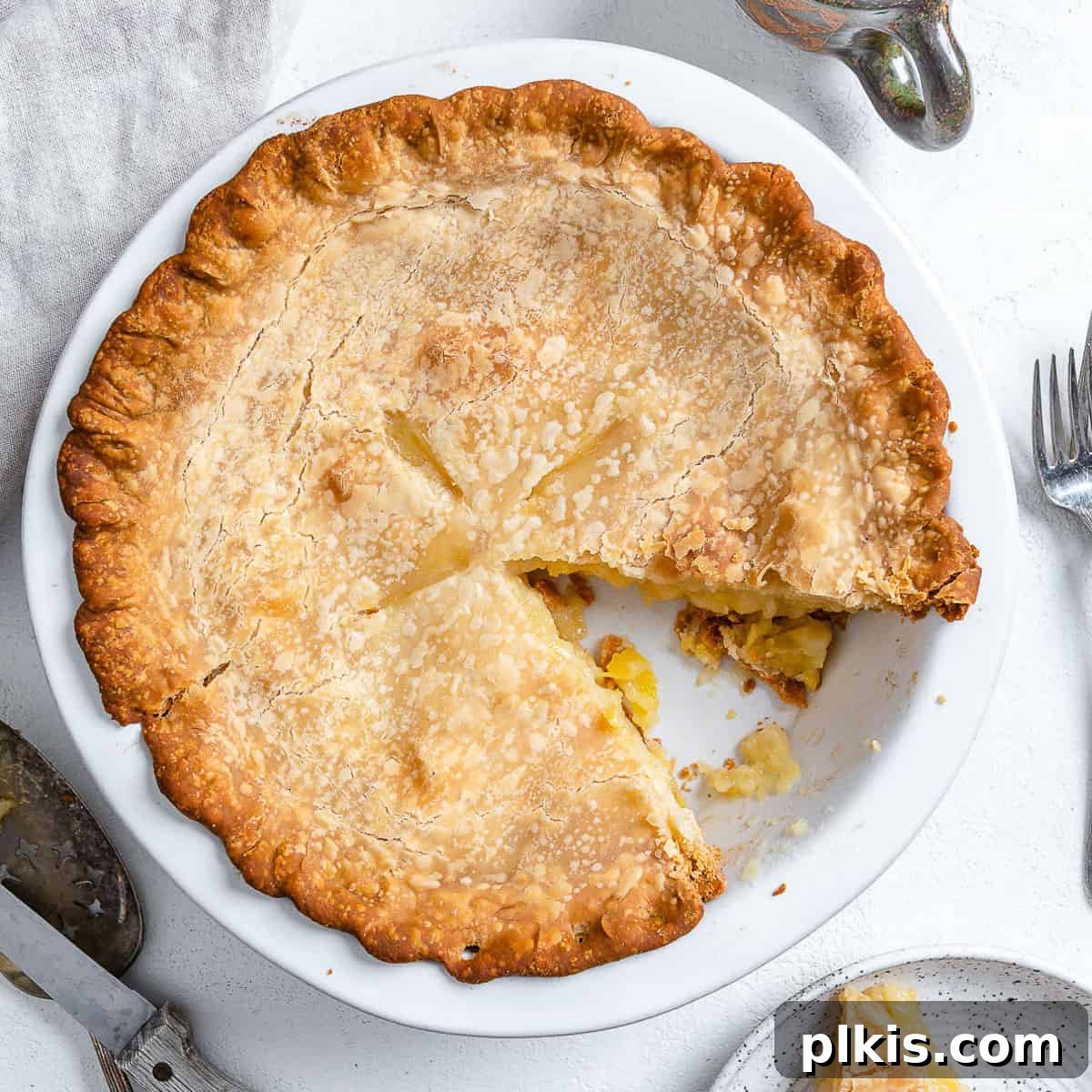
Welcome to your new favorite dessert: a delightful Vegan Coconut Pineapple Pie! This irresistible treat effortlessly blends the tropical sweetness of pineapple with the creamy richness of coconut milk, all encased in a flaky, “buttery” pie crust. It’s a simple, quick, and utterly delicious dessert that promises to be a crowd-pleaser for any occasion. Perfect for those seeking plant-based options, this recipe is naturally dairy-free and egg-free, with easy adaptations for gluten-free and sugar-free diets. Whether you prefer an open-faced tart or a classic covered pie, this recipe offers versatility and vibrant flavor that will transport you straight to a sun-drenched beach with every single bite.
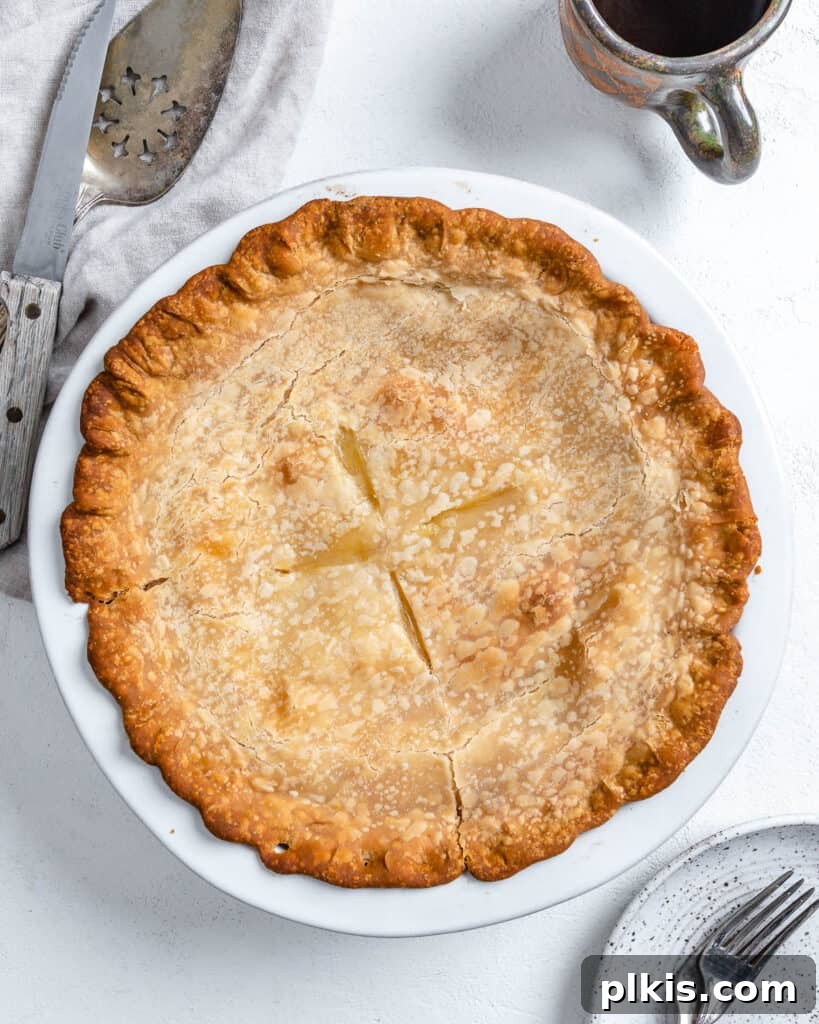
Tropical Bliss: An Irresistible Pineapple Pie Recipe
As the weather warms and longer days invite us outdoors, our cravings naturally lean towards refreshing, summery flavors. This creamy coconut and pineapple pie is more than just a dessert; it’s a sensory escape. Imagine yourself unwinding at a luxurious beachside resort, the gentle sea breeze on your skin, and the sweet taste of paradise on your tongue. This pie captures that very essence, allowing you to recreate a slice of tropical heaven right in your own kitchen with minimal effort.
Our recipe for this vegan pineapple pie stands out for its simplicity and explosive flavor. Requiring just a handful of inexpensive ingredients, including the convenience of a premade pie crust, it’s designed to save you time and energy without compromising on taste. You have the flexibility to use fresh, ripe pineapple for that ultimate zest or opt for canned pineapple for even quicker preparation. Furthermore, whether you envision a beautifully open-faced pie, adorned with golden-brown coconut flakes, or a traditional closed pie with a lattice top, this recipe guides you through both options.
Beyond its fantastic taste and ease of preparation, this pineapple pie is a thoughtful choice for entertaining. Its naturally dairy-free and egg-free composition makes it suitable for many dietary preferences. With simple adjustments, it can effortlessly become a gluten-free or even sugar-free dessert, ensuring all your guests can indulge. The sweet, luscious filling, made from creamy coconut milk and tangy pineapple, is incredibly moreish and an absolute must-try for any pineapple enthusiast. For an elevated experience, incorporate shredded coconut into the filling to intensify that quintessential coconut-pineapple synergy.
This versatile dessert is perfect for any occasion – be it an elegant dinner party, a casual cookout, a festive picnic, or simply a delightful mid-week treat for your family. Serve it warm, allowing the aromas to fill your home, or chilled for a refreshing sensation. Enjoy a slice on its own, or elevate it further with a scoop of homemade nice cream or a cloud of light and airy whipped coconut cream.
If you find yourself captivated by the tropical allure of pineapple, we invite you to explore more of our vegan pineapple recipes. Delight in a revitalizing Kale Pineapple Smoothie, savor the classic charm of Vegan Pineapple Upside-Down Cake, enjoy a wholesome Pineapple Walnut Muffin, or try the unexpectedly delicious Pineapple Glazed Tofu for a savory twist.
Essential Ingredients for Your Vegan Coconut Pineapple Pie
Crafting this delightful pineapple pie requires just six fundamental, budget-friendly pantry staples. Each ingredient plays a crucial role in building the pie’s rich flavor and perfect texture.
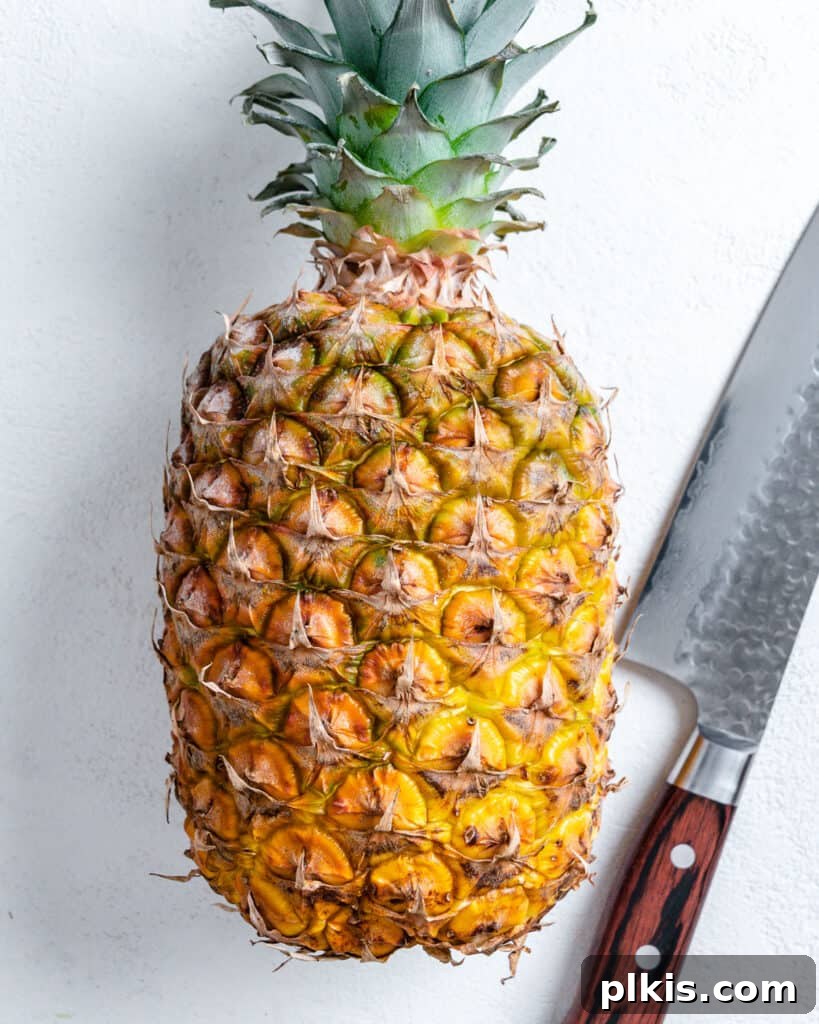
- Pineapple: The star of our pie! We recommend using one large, ripe, fresh pineapple for the most vibrant flavor. Ripe pineapples offer a natural sweetness and tang that truly shines in this dessert. If fresh isn’t available or you’re looking for a shortcut, frozen (and thawed) pineapple works just as well. For an even quicker option, consider using canned pineapple.
Can I use canned pineapple?
Absolutely! If you opt for crushed pineapple or pineapple tidbits from a can, be mindful that the moisture content can vary. You might find it necessary to add a little extra cornstarch or potato starch to achieve the desired thick consistency for the pie filling. Drain the pineapple well to avoid an overly runny filling, and then adjust the starch as needed.
- Sugar: We use granulated white sugar to sweeten the filling, complementing the pineapple’s natural tartness. For those preferring less refined options, coconut sugar or maple syrup can be substituted, though these may alter the color and subtle flavor of the filling. If you’re aiming for a sugar-free pie, erythritol or another suitable sugar-free sweetener can be used. Always adjust the quantity to your personal preference and the inherent sweetness of your pineapple.
- Lemon: Fresh lemon juice is indispensable in this recipe. It provides a bright, acidic counterpoint that balances the sweetness of the sugar and coconut milk, enhancing the overall tropical flavor without making the pie taste distinctly lemony. Always opt for fresh lemon juice for the best, most vibrant results.
- Starch: This is your thickening agent, crucial for achieving that perfectly set, creamy pie filling. Either cornstarch or potato starch will work effectively. These starches activate with heat, transforming the liquid filling into a luscious, scoopable consistency. Arrowroot powder is another excellent gluten-free alternative if you have it on hand.
- Coconut Milk: The foundation of our pie’s incredible creaminess. We typically use light canned coconut milk for a rich but not overly heavy texture. If you desire an even more decadent pie, full-fat canned coconut milk can be used, which will result in a thicker, richer filling. Ensure you use canned coconut milk, not the beverage type found in cartons, as the latter is too thin.
- Premade Vegan Pie Crust: To simplify the process, we rely on a readily available vegan 9-inch pie crust. These can be found in most grocery stores’ refrigerated or freezer sections. If you’re making a traditional closed pie, you’ll need two crusts – one for the base and one for the top. For an elegant open-faced pie, a single crust suffices. Of course, if you enjoy baking from scratch, feel free to prepare your favorite homemade vegan pie crust. For a gluten-free option, simply choose a certified gluten-free premade pie crust.
Optional Add-ins & Creative Recipe Variations
While delicious on its own, this vegan coconut pineapple pie offers a fantastic canvas for additional flavors and creative variations. Don’t hesitate to experiment and make it truly your own!
- Shredded Coconut: To truly amplify the coconut flavor and create the ultimate coconut pineapple pie, stir in about ⅔ to 1 cup of unsweetened shredded coconut into the filling during the simmering process. The coconut will soften and integrate beautifully. If you’re making an open pie, reserve a little extra to sprinkle over the top before baking for a toasted, aromatic finish.
- A Pinch of Salt: A tiny pinch of salt (about ¼ teaspoon) can work wonders, enhancing the natural sweetness of the pineapple and balancing all the flavors in the pie filling. It’s a secret ingredient that often goes unnoticed but makes a significant difference.
- Warm Spices: For a comforting warmth, consider adding a cinnamon stick to the filling while it simmers, then remove it before pouring into the crust. Alternatively, a pinch (¼ to ½ teaspoon) of ground cinnamon or even a touch of nutmeg can provide a lovely depth of flavor that complements the tropical notes.
- Vanilla Extract: A classic flavor enhancer, 1-2 teaspoons of vanilla extract, added at the end of the filling’s cooking process, will round out the sweetness and add a sophisticated aroma to your pie.
- Zest Appeal: For an extra burst of citrus aroma and flavor, grate a teaspoon or two of lemon zest into the filling along with the lemon juice. Orange or lime zest could also offer intriguing variations.
- Other Fruit Combinations: Feel free to get creative with other fruits. Why not try a Strawberry Pineapple Pie by adding a handful of chopped fresh strawberries to the filling? Blueberries, raspberries, or even a tart rhubarb could create delightful new flavor profiles. For something heartier, consider pairing pineapple with chopped apples or cherries. Always adjust sweetness and starch slightly when introducing other fruits, as their natural sugar and moisture content will differ.
- A Touch of Nutmeg: A subtle hint of freshly grated nutmeg can elevate the tropical profile of this pie, offering a warm and inviting aroma that pairs wonderfully with both pineapple and coconut. Add just a pinch along with the cinnamon, if using.
Step-by-Step Guide: How to Make Your Creamy Vegan Pineapple Pie
Making this tropical pie is straightforward. Follow these steps for a perfectly baked, delicious dessert!
- 1) Begin by preheating your oven to 425°F (218°C). This ensures your pie crust starts baking immediately for optimal flakiness.
- 2) Next, prepare your fresh pineapple. Using a sharp chef’s knife, carefully remove the rough outer peel. Once peeled, go back with a smaller paring knife to remove any remaining “eyes” – the small, dark spots embedded in the pineapple flesh. Then, chop the pineapple into manageable chunks. Transfer these chunks to a food processor. Pulse the pineapple until it reaches a consistency resembling crushed pineapple. This ensures a smooth yet textured filling.
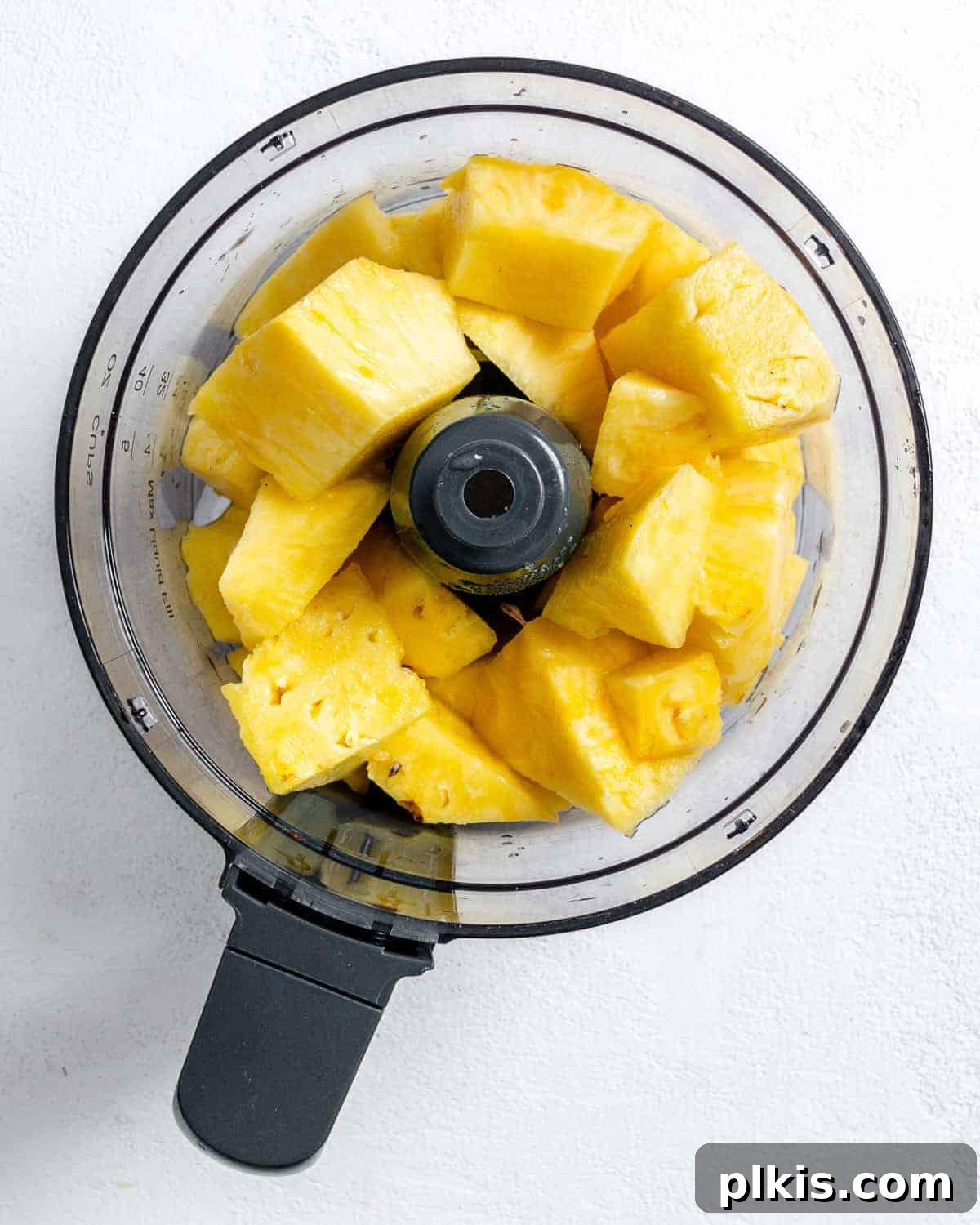
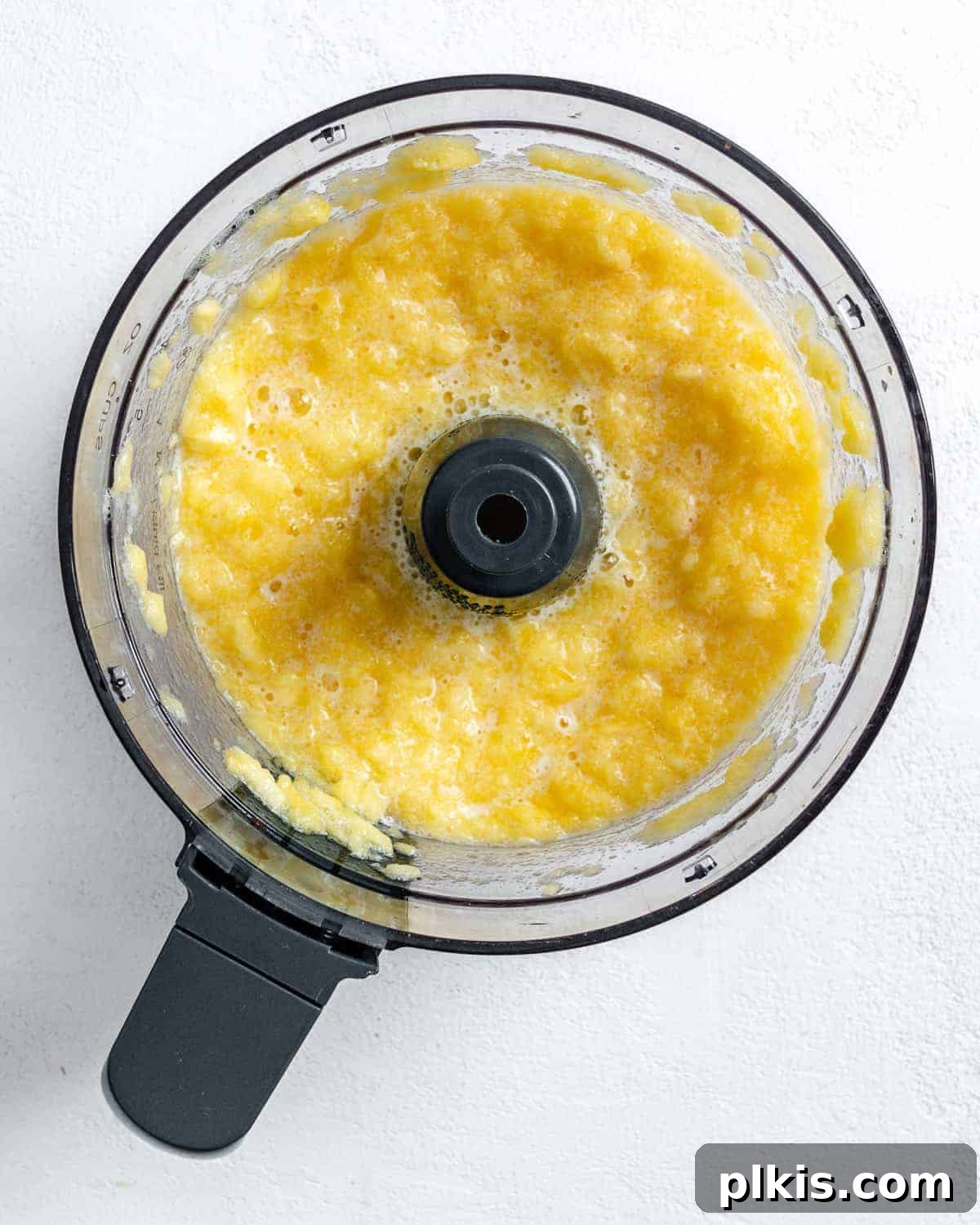
- 3) In a large saucepan, combine the processed pineapple, granulated sugar, and fresh lemon juice. Place the saucepan over medium heat, stirring gently to combine the ingredients.
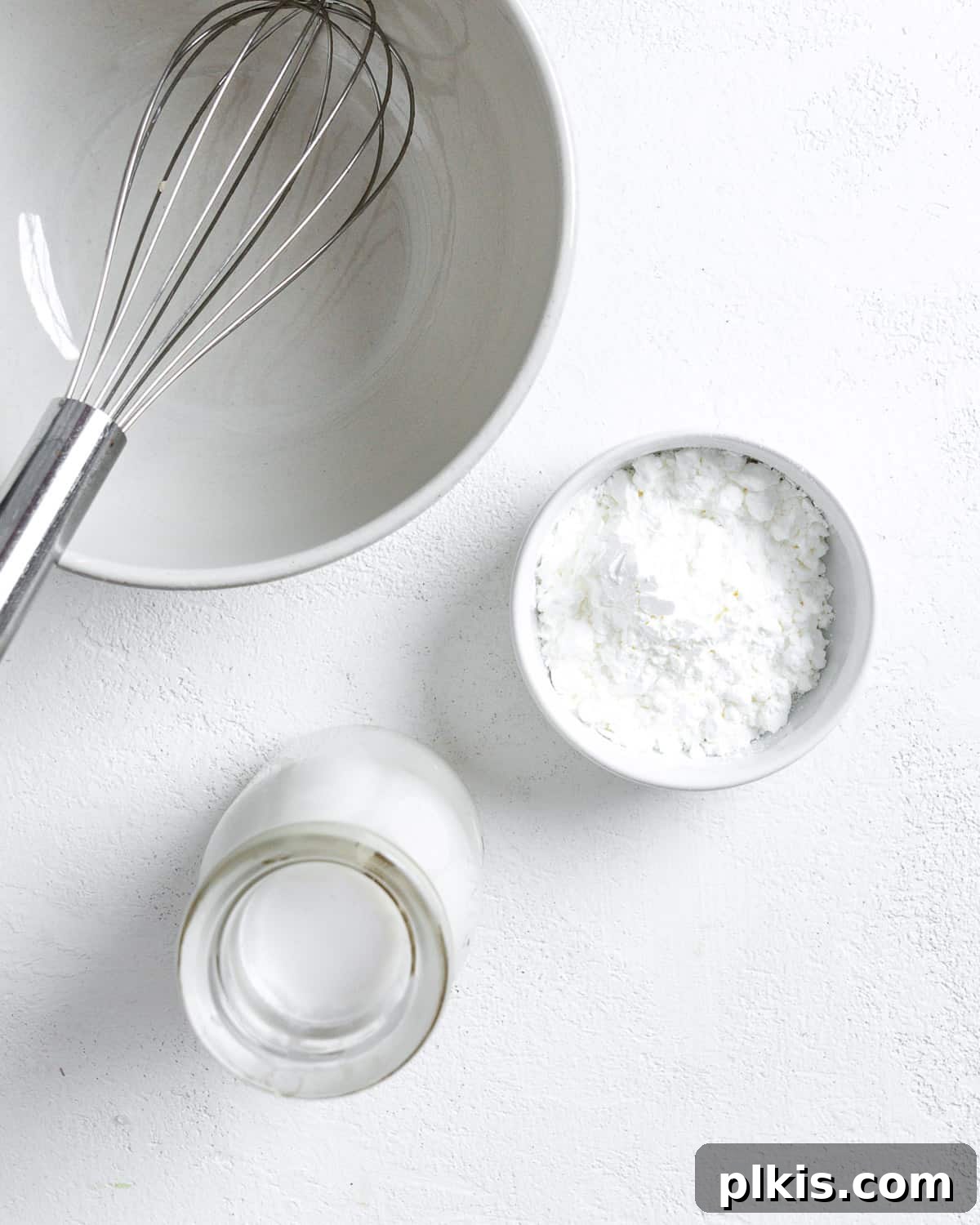
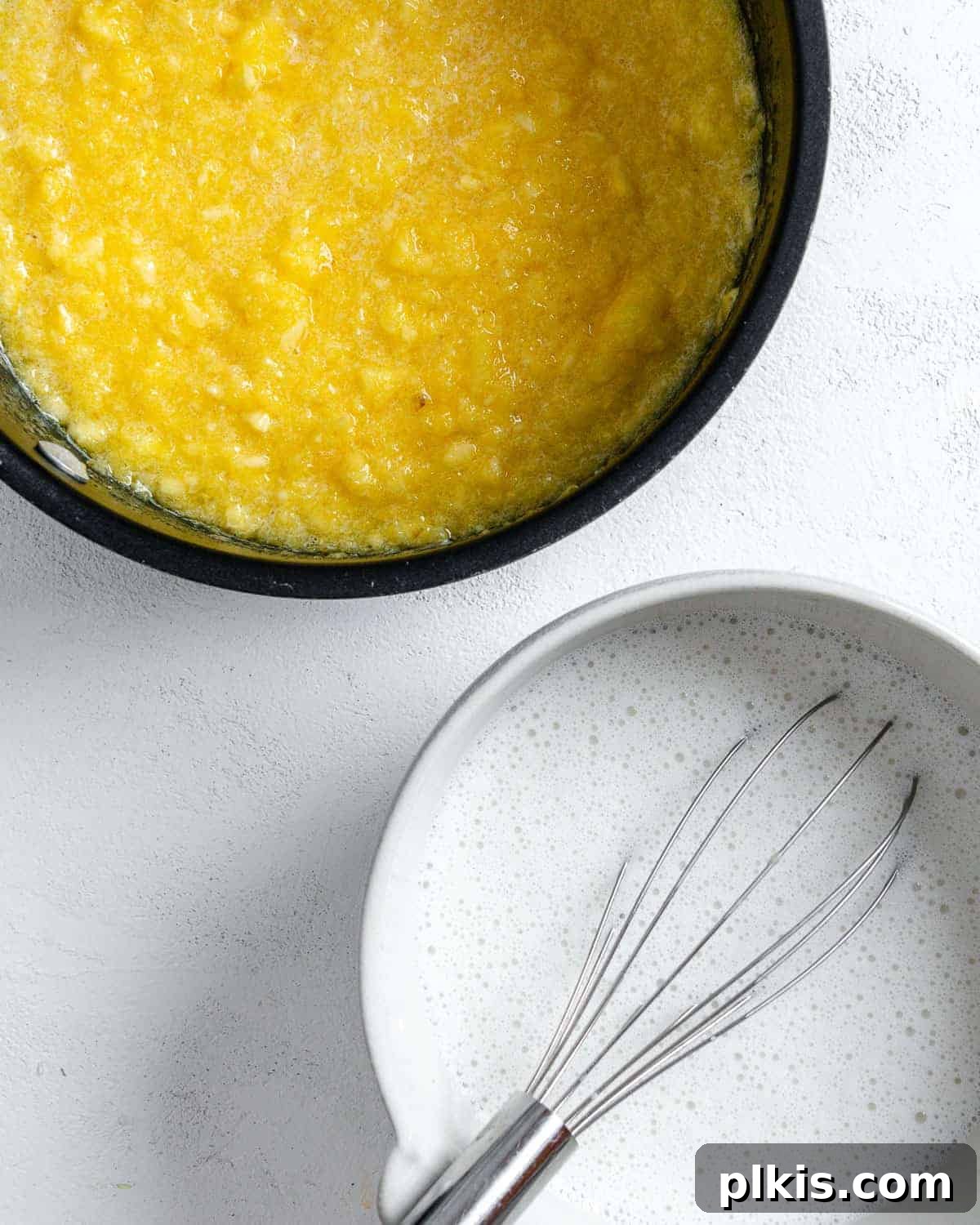
- 4) In a separate small bowl, dissolve ¼ cup of the cornstarch (or potato starch) into the canned coconut milk, whisking until no lumps remain. Add this coconut milk and starch mixture to the saucepan with the pineapple. Bring the mixture to a boil, then immediately reduce the heat to low and allow it to simmer for 15-20 minutes, stirring occasionally. Meanwhile, combine the remaining 2 tablespoons of starch with ⅓ cup of water, mixing thoroughly until smooth. Stir this second starch slurry into the simmering pineapple filling. Continue to stir continuously until the filling visibly thickens to a rich, spoonable consistency.
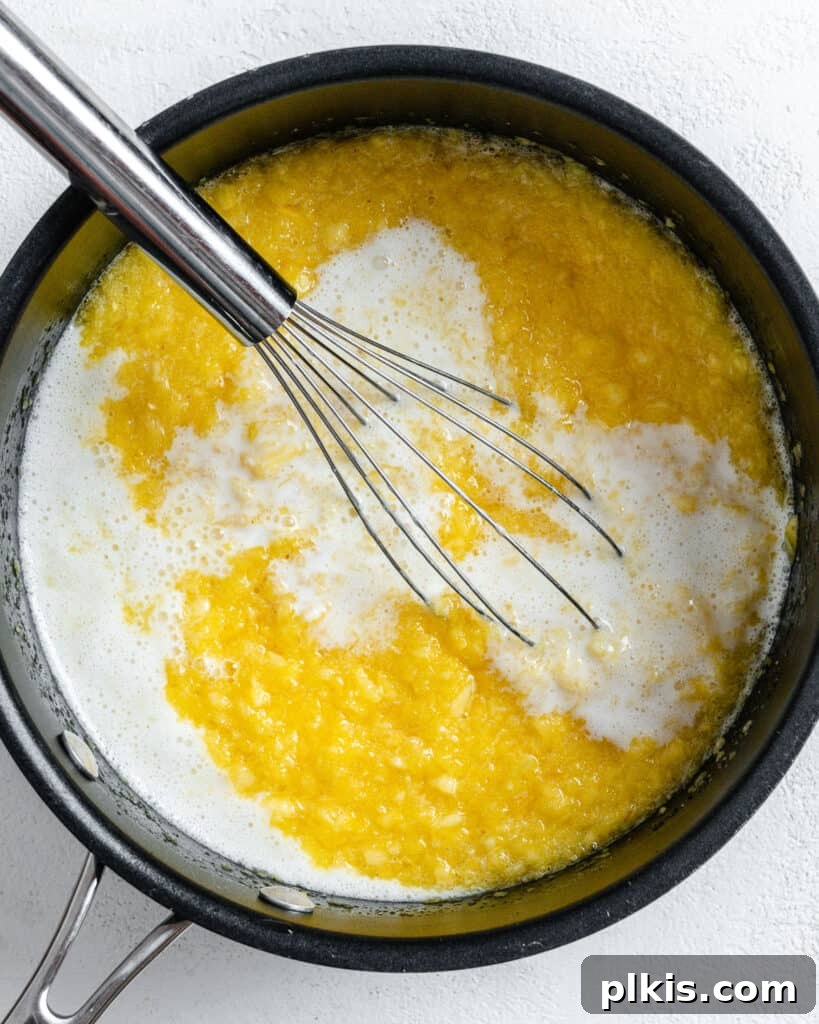
When the filling is ready, it should resemble the thick consistency of a hearty oatmeal, easily coating the back of a spoon.
- 5) Remove the saucepan from the heat and allow the pineapple pie filling to cool for 20-30 minutes. This cooling period helps the filling set further and prevents a soggy bottom crust. Once cooled, pour the luscious mixture into your premade pie crust positioned in a 9-inch pie dish. If you are making a closed pie, carefully place the second premade crust over the filling. Using a sharp knife, cut a few slits across the top crust to allow steam to escape during baking, preventing bubbling and cracking.
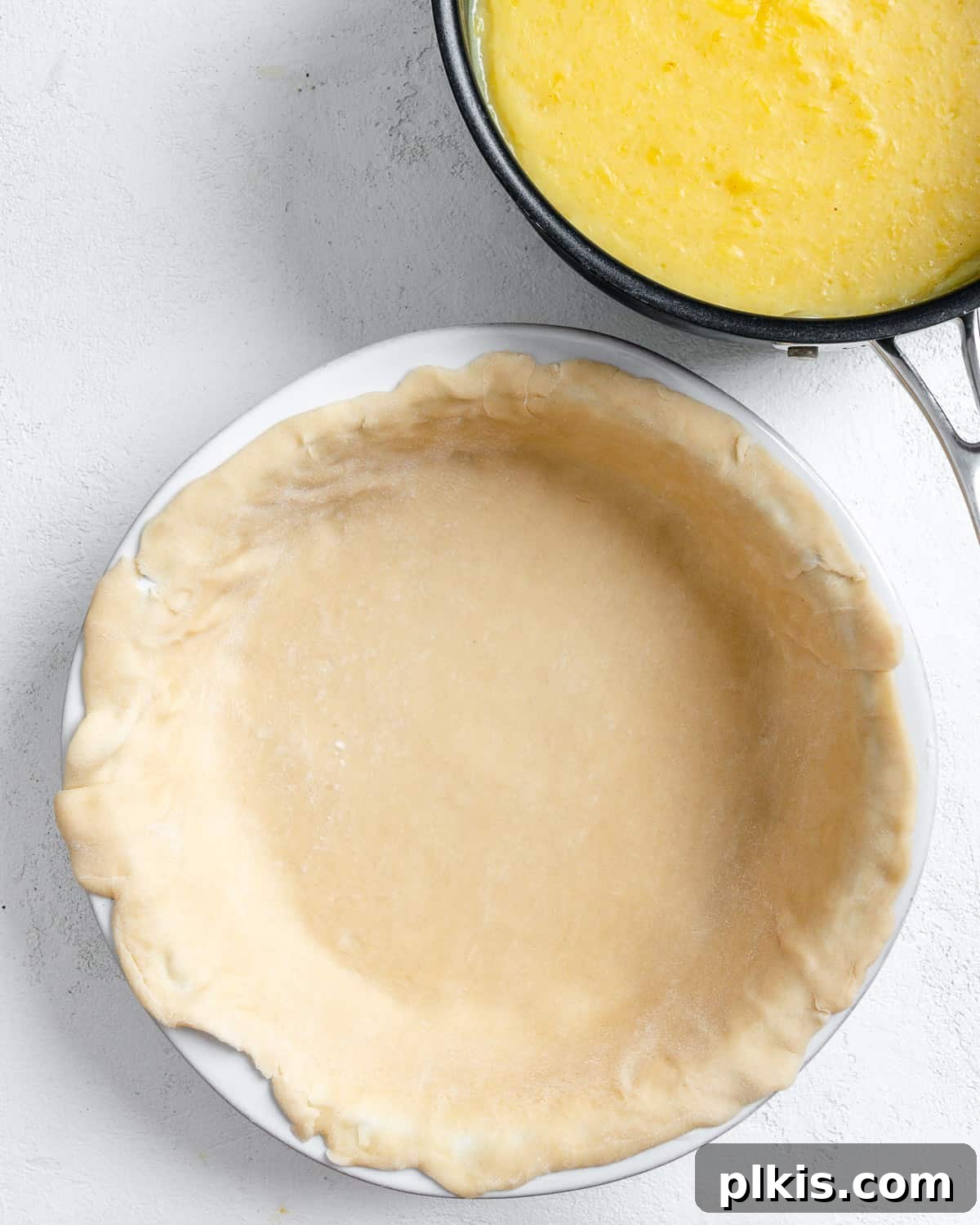
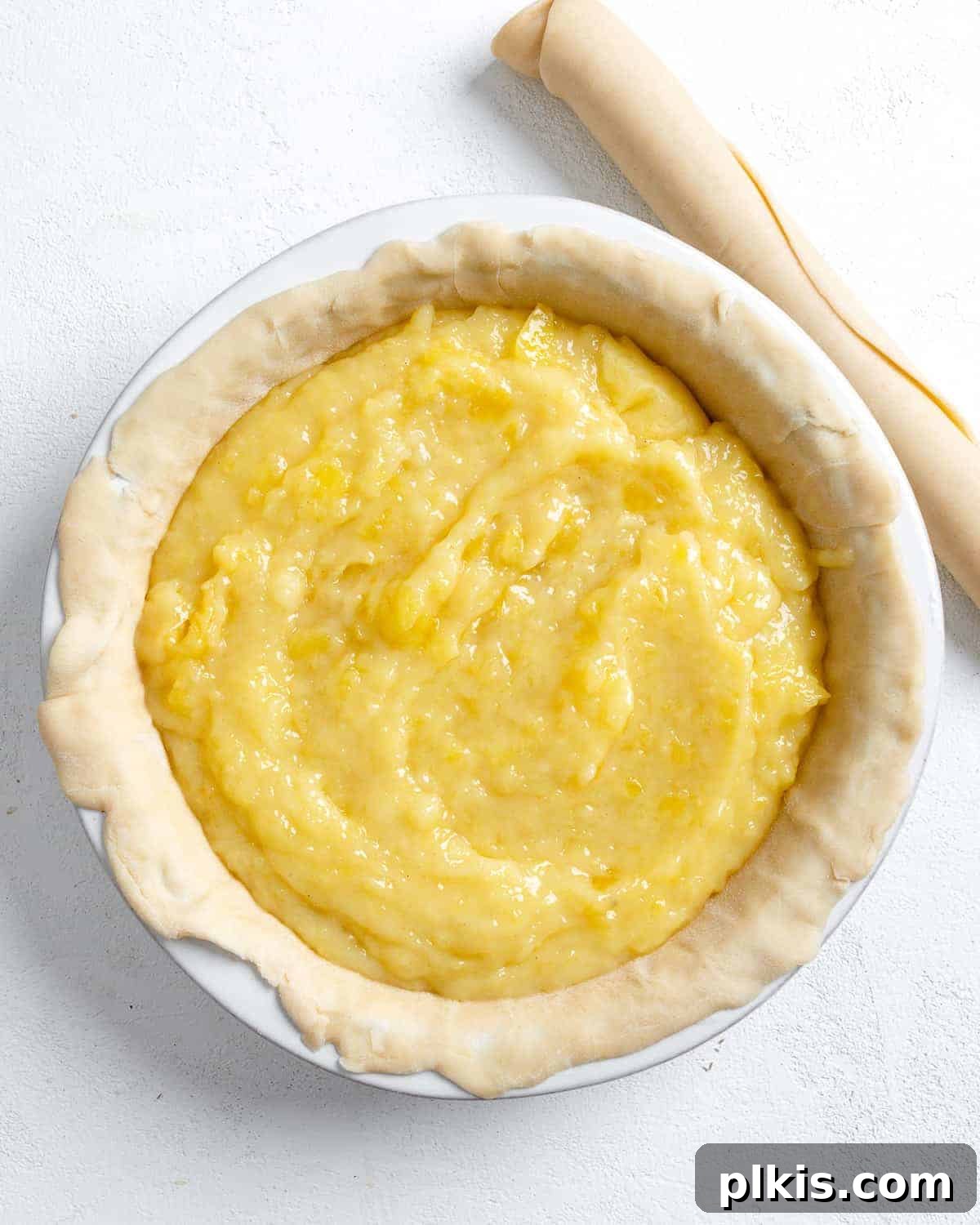
For an elegant open pie, simply omit the second pie crust topping. You can optionally sprinkle with shredded coconut before baking.
- 6) Carefully transfer the prepared pie to the middle shelf of your preheated oven. Bake for approximately 35-40 minutes, or until the crust is golden brown and the filling is bubbly.
Keep an eye on the crust during baking. If the top of the pie starts to brown too quickly, you can loosely tent it with aluminum foil to prevent over-browning. Should it continue to darken excessively, reduce the oven temperature to 350°F (180°C) for the remainder of the baking time.
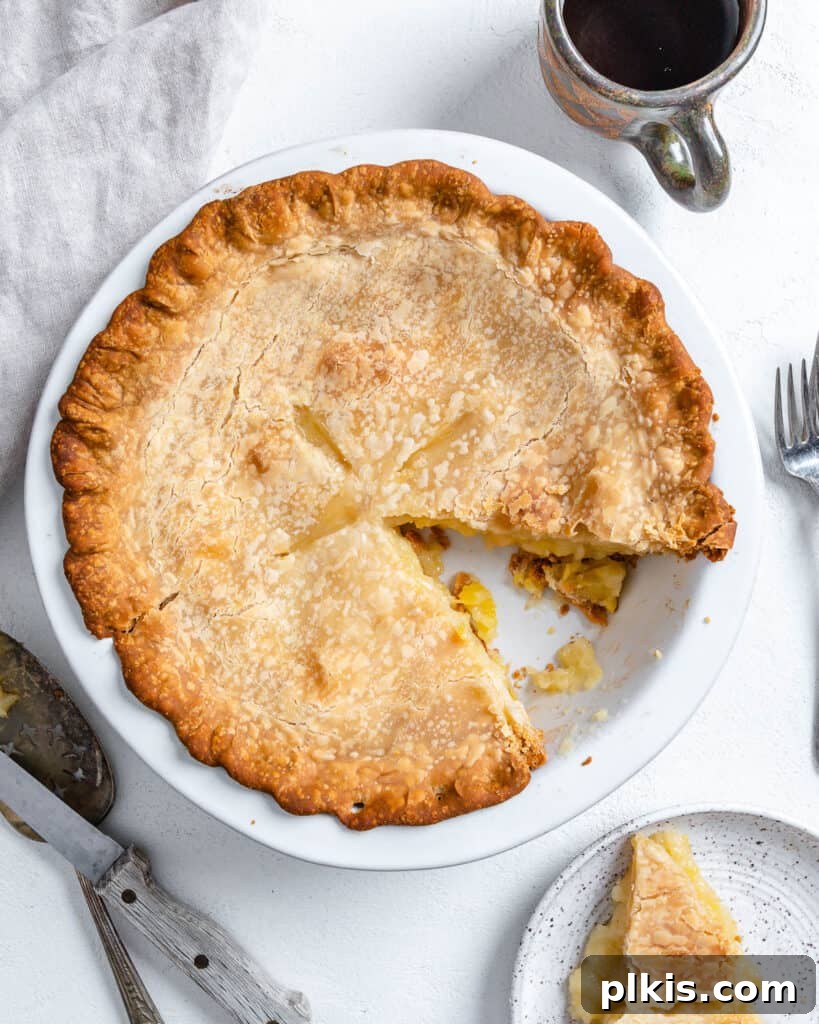
Once baked, remove the pie from the oven and allow it to cool completely on a wire rack before slicing and serving. This crucial cooling period allows the filling to fully set, ensuring clean, beautiful slices. You can then enjoy your pie as-is, or get creative with garnishes – enjoy every tropical bite!
Frequently Asked Questions (FAQs) About Vegan Pineapple Pie
Absolutely! The delicious pineapple pie filling is naturally gluten-free. To make the entire pie gluten-free, simply ensure you use a certified gluten-free premade pie crust, which are widely available in most grocery stores.
Sometimes, depending on the size and juiciness of your pineapple, you might find yourself with a little extra filling. Don’t let it go to waste! This creamy pineapple filling is incredibly versatile. It makes a fantastic cake filling, a vibrant topping for pancakes or waffles, or can be spooned into jars layered with dairy-free yogurt and fresh fruit for a delightful parfait-style dessert or breakfast.
Yes, you can! The creamy coconut pineapple filling can be prepared 2-3 days in advance. Once cooked and cooled, store it in an airtight container in the refrigerator. When you’re ready to bake, simply pour it into your pie crust and proceed with the baking instructions. We haven’t extensively tested freezing the filling, but it’s possible with good results if stored in a freezer-safe container. Let us know if you try it!
If your pie filling seems too thin, it’s usually due to insufficient starch activation or too much liquid. Ensure you’re measuring your starch accurately. Starch needs heat to activate, so make sure the mixture comes to a full boil and simmers for the recommended time. If it’s still too thin after simmering, create a small slurry with a tablespoon of starch and a tablespoon of cold water, stir it into the warm filling, and return it to a boil for a minute or two until it thickens. For canned pineapple, remember to drain it very well.
You’ll know your pie is perfectly baked when the crust is beautifully golden brown, and the filling, visible through the steam slits or at the edges for an open pie, appears bubbly and set. For a closed pie, the top crust should look firm and slightly puffed. If using an instant-read thermometer, the internal temperature of the filling should reach around 200-205°F (93-96°C) for optimal setting.
Expert Tips for a Flawless Vegan Pineapple Pie
Achieving the perfect vegan coconut pineapple pie is simple with a few helpful tips:
- Taste and Adjust Sweetness: The sweetness of pineapple can vary greatly depending on its ripeness. Always taste your pineapple before adding sugar to the filling. You might need to adjust the amount of sugar up or down to suit your preference and the natural sweetness of your fruit.
- Utilize Canned Pineapple for Speed: For those days when time is of the essence, canned crushed pineapple is a fantastic shortcut. Just remember to drain it thoroughly to avoid excess moisture. You may also need to slightly increase the amount of starch in the recipe to account for potential differences in liquid content compared to fresh pineapple.
- Troubleshooting Thin Filling: If, after simmering, your filling remains too thin, don’t panic. Prepare a small slurry with an additional tablespoon of cornstarch (or potato starch) and a tablespoon of cold water. Stir this into the warm filling and gently increase the heat while stirring continuously. Starch is heat-activated, so a bit more heat and a touch more starch will help it thicken beautifully.
- Ventilation for Topped Pies: When baking a closed pie with a top crust, it is crucial to cut several slits (about 1-inch long) into the top crust. These vents allow steam to escape during baking, preventing the crust from becoming soggy or the pie from bursting, and ensuring an evenly cooked filling.
- Preventing Over-Browning: Pie crusts can brown quickly, especially at higher temperatures. If you notice your pie crust is darkening too rapidly before the filling is fully set, simply cover the edges or the entire top of the pie loosely with aluminum foil. This acts as a shield, protecting the crust from further browning while the filling continues to cook. If browning persists, lower the oven temperature as suggested in the instructions.
- The Importance of Cooling: While tempting to slice into a warm pie, patience is key! Allowing the pie to cool completely, preferably for several hours or even overnight, gives the filling ample time to fully set. This ensures clean, defined slices and the best texture.
Storage and Make-Ahead Tips
Preparing this delicious vegan coconut pineapple pie can be managed to suit your schedule, making it an ideal choice for meal prep or special occasions.
You can prepare the creamy pineapple filling up to 2-3 days in advance and store it, covered, in the refrigerator. This allows you to assemble and bake the pie closer to serving time. If you prefer to make your own pie crust from scratch, you can also prepare and bake the crusts in advance, storing them in the freezer until ready to use.
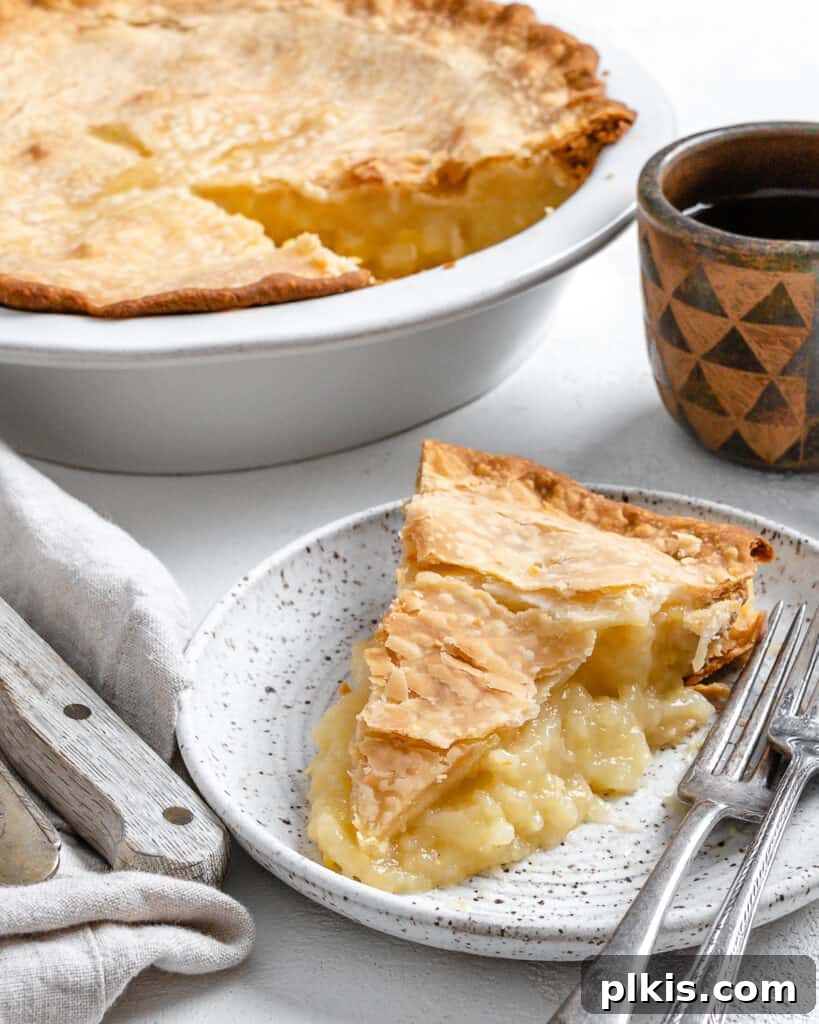
To store any leftover vegan coconut pineapple pie, first allow it to cool completely to room temperature. Then, cover the pie tightly with plastic wrap or transfer individual slices to an airtight container. Refrigerate for up to 3-4 days. We do not recommend storing the pie at room temperature, even without dairy or eggs, as the freshness and texture will degrade more quickly.
We haven’t yet experimented with freezing the entire baked pie, but if you do, please let us know how it thaws and holds up – we’d love to hear about your experience!
Perfect Serving Recommendations
Whether you prefer it warm or chilled, a slice of this fresh pineapple pie is a true delight. We often find ourselves leaning towards the chilled version for its refreshing qualities, but both are equally delicious. Enjoy a piece on its own, or elevate the experience with one of these tempting accompaniments:
- A generous dollop of velvety vegan custard.
- A scoop of creamy vegan ice cream, such as a simple vanilla or even a complementary mango or passion fruit flavor.
- A light and airy swirl of whipped coconut cream or your favorite store-bought vegan whipped topping.
- A spoonful of dairy-free yogurt (plain or vanilla) for a tangy contrast.
- A sprinkling of toasted shredded coconut or finely chopped macadamia nuts for added texture and tropical flair.
- A drizzle of vegan caramel sauce for an extra touch of decadence.

Discover More Vegan Pie Recipes
If you loved this tropical pie, we have a whole array of other delightful vegan pie recipes waiting for you to explore:
- 4-Ingredient Vegan Chocolate Pie
- Silken Chocolate Peppermint Pie
- Classic Vegan Apple Pie
- Easy as Vegan Banana Cream Pie
- Harvest Apple Pear Pie
- Decadent Pumpkin Chocolate Pie
- Sweet Vegan Peach Pie
- Tangy Strawberry Rhubarb Pie
- Easy Strawberry Blueberry Pie
- Surprising Zucchini Mock Apple Pie
Photos by Alfonso Revilla
Creamy Pineapple Pie

Equipment
-
Sharp Knives
-
Measuring Cups
-
Measuring Spoons
-
Food Processor
-
Large Saucepan
-
9-inch Pie Dish
Ingredients
- 1 large fresh pineapple
- ¾ cup granulated sugar (adjust to taste)
- 1 lemon, juiced
- ¼ cup + 2 Tablespoons potato or corn starch, divided
- 1 (13.66-ounce) can lower fat coconut milk
- ⅓ cup water
- 2 (9-inch) premade vegan pie crusts (1 for open pie)
Instructions
-
Preheat oven to 425°F (218°C).
-
Carefully peel the pineapple, remove any eyes, and cut it into chunks. Transfer to a food processor and pulse until it reaches a crushed consistency.
-
In a large saucepan over medium heat, combine the crushed pineapple, sugar, and fresh lemon juice.
-
In a small bowl, dissolve ¼ cup of the starch in the coconut milk, then add this mixture to the saucepan. Bring to a boil, then reduce heat and simmer on low for 15-20 minutes, stirring occasionally. In another small bowl, mix the remaining 2 tablespoons of starch with ⅓ cup of water until smooth, then stir this into the simmering filling. Continue stirring until the mixture thickens to an oatmeal-like consistency.
-
Remove the filling from heat and allow it to cool for 20-30 minutes before pouring into your premade pie crust.
-
If making a closed pie, cover the filling with the second pie crust. Cut a few slits across the top to allow steam to escape during baking. For an open pie, omit the second crust.
-
Bake on the middle shelf for 35 to 40 minutes, or until the crust is golden brown and the filling is bubbly. If the crust browns too quickly, tent loosely with foil. Allow the pie to cool completely on a wire rack before slicing and serving.
Notes
For a pie with a top crust, ensure you cut several slits in the top to allow steam to escape, which prevents a soggy crust and ensures even cooking.