
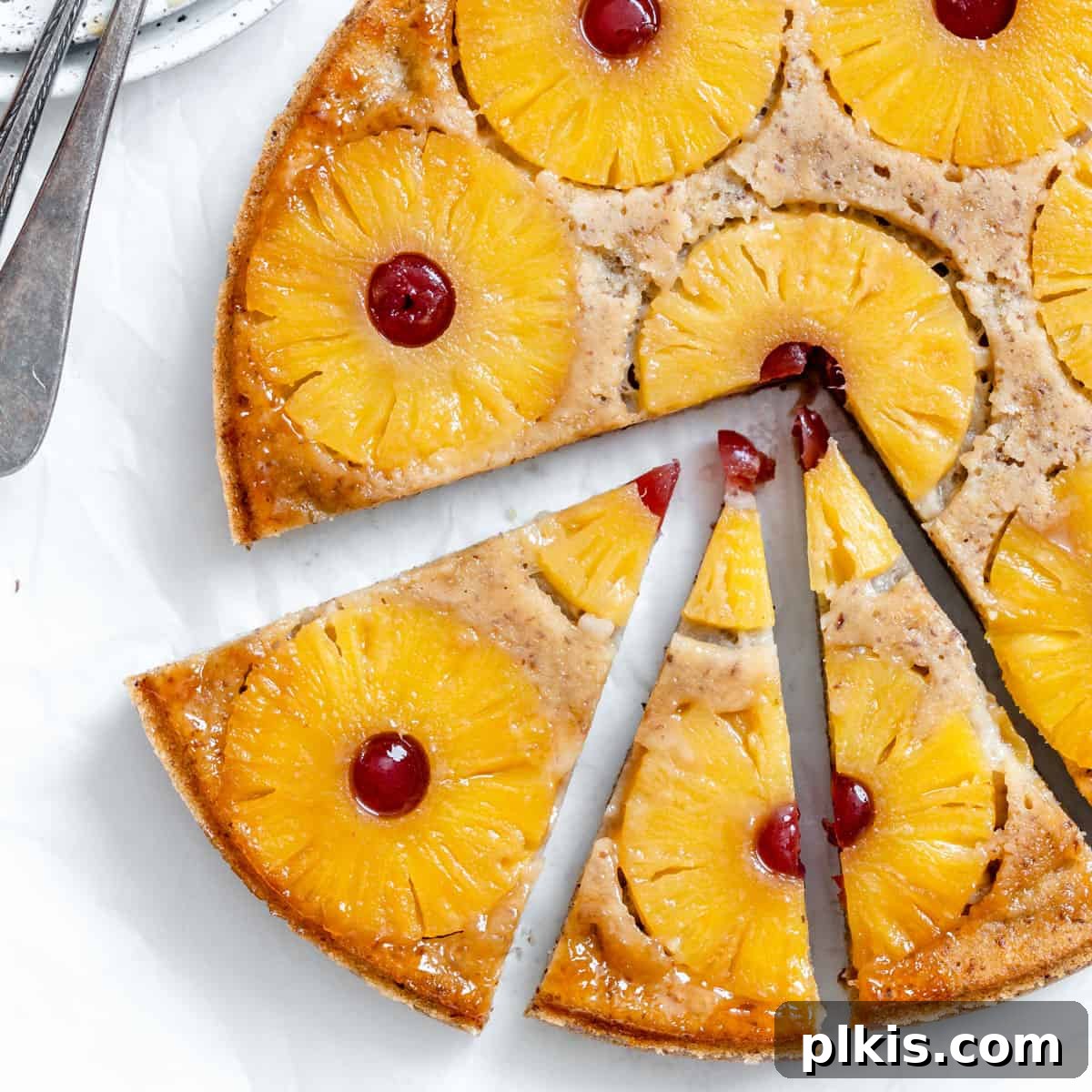
Step into a world of delightful nostalgia with this incredibly moist, fluffy, and perfectly sweet vegan pineapple upside down cake. This isn’t just any dessert; it’s a plant-based reimagining of a beloved classic, featuring a tender vanilla cake crowned with a shimmering, caramelized brown sugar, juicy pineapple slices, and vibrant maraschino cherries. A true crowd-pleaser, this easy vegan cake recipe brings all the charm of a retro favorite without any eggs or dairy, making it perfect for everyone to enjoy. Get ready to bake a stunning and delicious plant-based dessert that will transport you straight back to cherished childhood memories!

Discover the Best Vegan Pineapple Upside Down Cake Recipe
The pineapple upside-down cake holds a special place in the hearts of many, a culinary icon often associated with home baking and heartwarming gatherings. This particular retro homemade pineapple upside-down cake successfully transforms into a completely vegan delight, proving that classic flavors can be achieved with plant-based ingredients. Much like other timeless recipes such as chocolate depression cake or vanilla cupcakes, this dish has a rich history and continues to charm generations. Our rendition, however, is entirely free from eggs and dairy, offering a delightful plant-based dessert that even non-vegans will enthusiastically savor.
Imagine biting into a slice of this simple vanilla cake – it’s wonderfully moist, incredibly tender, and surprisingly rich. The ‘buttery’ notes of the cake perfectly complement the sweet and fruity explosion from its signature pineapple and cherry topping, all enhanced by a luscious caramelized brown sugar glaze. While its vibrant appearance might suggest a complex baking process, this fuss-free pineapple upside-down cake is actually remarkably simple to prepare, making it an ideal project for even novice bakers. It’s practically fail-proof, designed to deliver impressive results with minimal effort.
You won’t need an array of specialized equipment either. A single bowl, a mixing spoon, a standard cake pan, and a handful of readily available, inexpensive ingredients are all that’s required. Thanks to the convenience of canned pineapple, this eggless pineapple cake can be enjoyed all year round, transcending seasonal limitations. This makes it a fantastic choice for festive occasions like Easter brunches, Mother’s Day celebrations, or any large gathering where you want to impress your guests. Just be warned: don’t expect any leftovers!
If you’re looking to expand your repertoire of easy and delicious vegan bakes, we have plenty more simple recipes to explore. Why not try our wholesome vegan banana bread, the tropical indulgence of our coconut pineapple pie, the zesty delight of lemon blueberry scones, or our flavorful pineapple walnut muffins? Each offers a unique way to enjoy plant-based baking at its best.

Essential Ingredients for Your Vegan Pineapple Upside Down Cake

Crafting the perfect vegan pineapple upside down cake begins with selecting the right ingredients. Each component plays a vital role in achieving that quintessential taste and texture, from the vibrant fruit topping to the moist, tender cake base. Here’s a detailed look at what you’ll need:
The Irresistible Topping
- Pineapple: We highly recommend using a 20oz can of pineapple slices, typically packed in juice or light syrup. These provide consistent sweetness and moisture, and their uniform shape creates a beautiful presentation. While pineapple tidbits or chunks can also work, the classic aesthetic often relies on those distinct rings. Remember to thoroughly drain the pineapple slices before use to prevent excess moisture in the cake.
- Maraschino Cherries: These glossy, super-sweet candied cherries are undeniably a hallmark of any traditional pineapple upside-down cake. They add a pop of color and an extra layer of sweetness that is truly iconic. While you can omit them if you prefer, their presence truly completes the retro charm of this dessert. Look for glace cherries or candied cherries if maraschino isn’t specifically labeled.
- Vegan Butter: Just a small amount of melted vegan butter is crucial for greasing the cake tin. This not only prevents sticking but also forms the base for our magnificent caramel. Unlike parchment paper, which can sometimes interfere with the pineapple’s beautiful design, a thin layer of butter ensures a clean release and a perfect presentation. For those who desire an extra generous layer of rich, caramelized brown sugar syrup coating the cake, you can increase the amount of vegan butter (refer to the recipe notes for specific quantities).
- Brown Sugar: When combined with the melted vegan butter, brown sugar works its magic, creating a deep, golden, and incredibly flavorful caramelized topping that truly defines this vegan upside down cake. The molasses in brown sugar lends a unique depth that granulated sugar simply can’t replicate. If you’re looking for an unrefined sugar option, coconut sugar can be used as a delicious alternative, offering a slightly different but equally appealing caramel flavor.
The Moist and Fluffy Vanilla Cake
- All-Purpose Flour: The foundation of our cake. Standard all-purpose flour provides the ideal structure and tenderness for this recipe. For a boost in fiber and a slightly nuttier flavor, you can incorporate some whole wheat flour, up to 50% of the total flour amount. While we haven’t personally tested it, many gluten-free all-purpose blends (such as those from King Arthur’s or Bob’s Red Mill) are often successful in similar recipes, so you may be able to achieve a gluten-free version.
- Flax Egg (or Chia Egg): To brilliantly replace two traditional eggs, we utilize a flax egg (or chia egg). This involves combining ground flaxseed (flax meal) or chia seeds with warm water. As it sits, the mixture thickens and forms a gel-like consistency, acting as an excellent binder that mimics the properties of eggs, ensuring a cohesive and moist cake structure.
- Granulated Sugar: White granulated sugar is best for achieving the classic sweetness and delicate texture within the vanilla cake batter itself. Its fine crystals dissolve easily and contribute to a light crumb. If you prefer a less refined option, raw cane sugar can be used, though it might impart a slightly different color and a hint of molasses flavor to the cake.
- Mild Cooking Oil: Oil is key to achieving a truly tender and moist eggless pineapple upside down cake. Unlike solid fats, oil remains liquid at room temperature, contributing to a softer crumb that stays moist longer. Opt for a mild-flavored cooking oil like canola oil, vegetable oil, or melted coconut oil, ensuring it doesn’t overpower the delicate vanilla and pineapple flavors.
- Plant-Based Milk: Any variety of vegan milk will work beautifully in this recipe, whether it’s almond milk, oat milk, soy milk, or another favorite. For the absolute moistest results, we recommend using a ‘full-fat’ plant milk or even canned full-fat coconut milk (from a can, not a carton, as it’s much richer). The higher fat content contributes to a richer flavor and a more luxurious texture.
- Baking Powder: This essential leavening agent is responsible for giving our eggless pineapple cake its wonderful lift and airy, fluffy texture. Ensure your baking powder is fresh for optimal results; if it’s expired, your cake might turn out dense.
- Vanilla Extract: Natural vanilla extract provides the most authentic and robust vanilla flavor, which is crucial for a vanilla cake base. A high-quality vanilla paste can also be used for an even more intense aroma and flavor profile.
- Salt: Just a touch of salt is all it takes to elevate the flavors of any sweet treat or baked good. It balances the sweetness and brings out the nuances of the vanilla and pineapple, making every bite more satisfying.
Delicious Variations and Add-ins for Your Vegan Pineapple Cake
While this vegan pineapple upside down cake is absolutely perfect as is, you might want to experiment with additional flavors and textures to make it uniquely your own. Here are some fantastic ideas to elevate your plant-based creation:
- Chopped Pecans: For a delightful nutty crunch and a complementary earthy flavor, consider replacing some of the maraschino cherries with finely chopped pecans. You can sprinkle them directly into the brown sugar layer before adding the pineapple, or fold them into the cake batter for a more integrated texture. Walnuts would also be a delicious alternative.
- Toasted Coconut: Infuse a tropical flair by adding ⅓ to ½ cup of unsweetened desiccated coconut to the cake batter. The coconut will toast lightly as the cake bakes, releasing its aromatic oils and adding a lovely chewiness that pairs wonderfully with pineapple.
- Fresh Ginger: Introduce a warm, spicy kick with ginger. You can either add about 2 tablespoons of freshly grated ginger directly to the cake batter for a subtle warmth, or finely chop some crystallized ginger (candied ginger) and fold it into the batter for a more pronounced, chewy burst of flavor. Ginger and pineapple are a classic pairing that works beautifully.
- Citrus Zest: For an extra layer of brightness, incorporate the zest of one lemon or orange into the vanilla cake batter. The citrus notes will enhance the fruitiness of the pineapple and add a subtle, refreshing aroma.
- Spices: A pinch of ground cinnamon, nutmeg, or even cardamom can add depth and warmth to the cake. Start with ½ teaspoon of your chosen spice mixed into the dry ingredients to subtly enhance the overall flavor profile.
- Rum or Pineapple Juice: For an adult twist, replace a couple of tablespoons of the plant-based milk with a good quality dark rum. Alternatively, if you want an intensified pineapple flavor without alcohol, use the reserved pineapple juice from the can to replace some of the plant milk.
Step-by-Step Guide: Crafting Your Perfect Vegan Pineapple Upside Down Cake
Baking this easy vegan pineapple cake is a joyous and rewarding experience. Follow these detailed instructions to ensure a flawless result every time. Remember, the key to a perfect upside-down cake is in the preparation of the topping and a gentle flip!
- 1) Prepare the Flax Egg: In a small bowl, whisk together the flax meal and water. Set it aside for at least 10 minutes to allow it to thicken and congeal. This step is crucial, as the flax egg will act as your binding agent in place of traditional eggs.
- 2) Preheat Oven & Prepare Pan: Preheat your oven to 350°F (176°C). Lightly grease a 9-inch pie or cake tin with the melted vegan butter. A springform pan works exceptionally well for easy release, but if you use one, be sure to place a baking sheet beneath it in the oven to catch any potential caramel leaks. For an extra layer of non-stick security, you can spray the cake tin with cooking spray before adding the vegan butter.

- 3) Arrange the Topping: Evenly sprinkle the brown sugar into the prepared pan, creating a solid, uniform layer. Next, carefully arrange the pineapple slices: typically, six slices form a circle around the outside edge of the pan, with the seventh slice placed in the middle. Gently place the maraschino cherries into the holes of the pineapple slices for that classic, colorful look. (Refer to the photos provided if you need a visual guide for placement.)


Optional Decorative Step: For an even more elaborate presentation, cut any remaining pineapple slices in half and arrange them around the inner sides of the pan. You can also strategically place additional cherries in any small gaps between the pineapple slices to maximize visual appeal.
- 4) Prepare the Cake Batter: In a large mixing bowl, combine all the cake ingredients: flour, granulated sugar, baking powder, oil, vanilla extract, salt, plant-based milk, and the prepared flax egg. Whisk everything together until just well combined. Be careful not to over-mix the batter, as this can lead to a dense or rubbery cake by overdeveloping the gluten. A few small lumps are perfectly fine.


- 5) Pour the Batter: Carefully pour the prepared cake batter over the pineapple and cherry topping in the pan. Use a spatula to gently spread the batter evenly, ensuring it covers all the fruit without disturbing the arrangement too much.


- 6) Bake to Perfection: Transfer the pineapple cake to your preheated oven and bake for approximately 45 minutes. To prevent the top from browning too quickly, loosely cover the cake with aluminum foil during the last 15 minutes of baking. The cake is done when a toothpick inserted into the center (making sure not to go all the way to the bottom and hit the fruit) comes out clean or with only a few moist crumbs attached.
- 7) Cool and Flip: Once baked, remove the pan from the oven and carefully peel away the foil. Allow the cake to cool in the pan for 20 minutes. This cooling period is crucial, as it allows the caramelized topping to set properly and prevents the cake from breaking apart when flipped. After cooling, gently flip the cake over onto a serving dish, admire your beautiful creation, and enjoy!
How To Expertly Flip an Upside-Down Cake?
Flipping an upside-down cake can seem daunting, but with the right technique, it’s simple and rewarding:
- Loosen the Edges: First, use a thin silicone spatula or a butter knife and carefully run it around the sides of the pan, between the cake and the pan, to loosen any stuck edges.
- Prepare for the Flip: If using a springform tin, unclip and remove the sides. If using a regular cake pan, select a large serving plate that is wider than your cake pan. Center the plate over the top of the cake pan.
- The Big Moment: Holding the serving plate firmly against the cake pan with one hand on the bottom of the plate and the other gripping the pan, swiftly and confidently flip the entire assembly over. The cake should now be resting upside down on the plate inside the pan.
- Release and Reveal: Allow the cake to sit for about a minute in this inverted position. This gives the caramel a chance to fully release from the pan. Then, gently lift the cake pan off the plate, revealing your stunning, perfectly caramelized vegan pineapple upside down cake.
Frequently Asked Questions About Vegan Pineapple Upside Down Cake
Absolutely! While slices offer a classic aesthetic, pineapple chunks or tidbits work wonderfully. When using chunks, we suggest creating a similar decorative pattern by arranging them into small ’rounds’ and placing a cherry in the center of each. Crushed pineapple, on the other hand, will spread over the entire bottom of the pan, creating a delightful, textured base for the cake rather than distinct fruit designs. Both options are delicious, just expect a different visual outcome.
Using fresh pineapple is possible, particularly when it’s perfectly ripe and in season, as it offers a wonderfully vibrant flavor. However, canned pineapple tends to yield more consistent results because fresh pineapple releases more moisture during baking, which can sometimes make the cake soggy or prevent proper caramelization. If you opt for fresh, use a mandoline slicer to cut thin, uniform slices, and then thoroughly pat them dry with paper towels to minimize excess moisture.
While we understand the desire to reduce fat, we are cautious about drastically reducing the oil in this recipe, as it is crucial for ensuring a tender and moist cake crumb. Without sufficient oil, the cake may turn out dry and less enjoyable. If you wish to experiment, you could try replacing a portion (but not all) of the oil with unsweetened applesauce. Start by substituting about ¼ cup of oil with applesauce, monitoring the batter consistency, and be prepared for a slightly different texture.
Yes, this recipe is quite versatile and adapts well to other fruits! We’ve successfully tried it with both canned pear slices and peach slices, yielding equally delicious results. You could also experiment with thinly sliced apples, berries (though they release more juice), or even stone fruits like plums and apricots when they are in season. Just ensure the fruit is uniformly sliced and patted dry if fresh, to manage moisture levels.
This often happens if the cake wasn’t greased thoroughly enough or if it wasn’t allowed to cool sufficiently before flipping. Ensure you generously grease your pan, particularly the sides, with vegan butter. Also, allowing the cake to cool for the recommended 20 minutes is critical. This gives the caramel layer time to solidify slightly, making it much easier to release cleanly. If it still sticks, try gently prying the stuck areas with a thin spatula, or if it’s just a small piece, you can carefully reattach it to the cake.
While we haven’t personally tested a gluten-free version, many bakers have success substituting all-purpose flour with a high-quality 1:1 gluten-free baking blend that contains xanthan gum (like those from King Arthur or Bob’s Red Mill). Be aware that gluten-free cakes can sometimes be a bit more delicate, so handle with extra care during baking and flipping.
Serving Suggestions & Storage Tips for Your Vegan Pineapple Upside Down Cake
This exquisite vegan pineapple upside-down cake is truly at its peak on the day it’s baked, when the cake is supremely moist and the caramel topping is wonderfully fresh and glistening. The warm, inviting aroma and perfectly balanced flavors are best enjoyed soon after it’s cooled and flipped.
Should you have the rare delight of leftovers, you can technically store them in an airtight container in the refrigerator for 2-3 days. However, as with most cakes, it tends to dry out slightly over time. For longer preservation, individual slices can be wrapped tightly in plastic wrap and then placed in an airtight freezer-safe bag or container, where they will keep for up to 3 months. To enjoy, thaw frozen slices overnight in the fridge or at room temperature.
To refresh and enhance the experience of any leftover slices (whether refrigerated or thawed), we highly recommend serving them at room temperature or gently warmed. Pair them with something “wet” to reintroduce moisture and add a luxurious touch. Fantastic accompaniments include a dollop of creamy vegan custard, a scoop of refreshing nice cream (banana-based ice cream), a generous swirl of light and airy coconut whipped cream, or even a scoop of your favorite vanilla vegan ice cream. These pairings elevate the dessert, ensuring every bite is as enjoyable as the first.

Expert Tips for the Best Vegan Pineapple Upside Down Cake
Achieving a perfectly moist, flavorful, and beautifully presented vegan pineapple upside down cake is simple with these expert tips:
- Measure Flour Accurately: This is one of the most common baking mistakes! Always fluff up your flour in its bag or container before measuring. Then, gently use a spoon to transfer it into your measuring cup until it overflows slightly. Level it off precisely with the flat side of a knife or a straight edge. Scooping the measuring cup directly into the flour can compact it, leading to too much flour, which results in a dense, dry, or heavy cake.
- Do Not Over-mix the Batter: Once you’ve combined the wet and dry ingredients, mix just until they are incorporated and no streaks of dry flour remain. Over-mixing develops the gluten in the flour excessively, which can lead to a tough, dense, or rubbery cake texture. A few small lumps in the batter are perfectly acceptable.
- Skip the Parchment Paper: For this specific cake, it’s best to avoid using parchment paper on the bottom of the pan. Parchment can sometimes stick to the caramelized pineapple and cherries, potentially tearing the beautiful design when you flip the cake. A well-greased pan is all you need for a clean release.
- Allow Adequate Cooling Time: This step is absolutely crucial for a successful flip! Resist the urge to flip the cake immediately out of the oven. Letting the cake rest in the pan for the recommended 20 minutes allows the hot caramel to cool and solidify slightly, ensuring it releases cleanly from the pan and adheres perfectly to the cake without making a sticky mess.
- For More Brown Sugar Caramel: If you adore a thicker, richer caramel sauce permeating your cake, increase the melted vegan butter to ¼ cup and the brown sugar to ½ cup for the topping layer. This creates a more abundant and luxurious caramel pool.
- For Enhanced Pineapple Flavor: To boost the natural pineapple flavor within the cake itself, substitute ¼ cup of the plant-based milk with the pineapple juice drained from the canned pineapple. This subtle swap adds an extra layer of fruity depth that perfectly complements the topping.
- Use the Right Pan: A 9-inch round cake pan or pie dish is ideal. If using a springform pan, always place a baking sheet underneath it in the oven to catch any potential drips of the delicious caramel.
- Don’t Peek Too Early: Avoid opening the oven door frequently during baking, especially in the first 20-30 minutes. Sudden temperature changes can cause the cake to sink in the middle. Trust your oven and the suggested baking time.
Explore More Delicious Vegan Baking Recipes
If you’ve enjoyed making this vegan pineapple upside down cake, you’ll be thrilled to discover more simple yet delicious plant-based baking recipes to add to your repertoire. Expand your culinary horizons with these fantastic options:
- Oil-Free Banana Muffins
- Blackberry Chocolate Cupcakes
- Easy Pear Crisp
- Super Fudgy Vegan Brownies
- Vegan Apple Pie
For even more inspiration, be sure to check out these 35 must-try vegan cake recipes! Happy baking!
Photos by Alfonso Revilla
Vegan Pineapple Upside Down Cake

Equipment
-
Measuring spoons
-
Measuring Cups
-
Large bowl
Ingredients
- 2 tablespoons of flaxseed meal
- 6 tablespoons of warm water
- 1 tablespoon of vegan butter, melted
- 2 tablespoons of brown sugar
- 1 (20-ounce) can of pineapple slices
- 13 maraschino cherries
- 1 ½ cups of all-purpose flour
- ½ cup of granulated sugar
- 1 ½ teaspoons of baking powder
- ⅓ cup of canola oil
- 2 teaspoons of vanilla extract
- ¼ teaspoon of salt
- 1 cup of plant-based milk
Instructions
-
In a small bowl, beat together the flaxseed meal and water for 1 minute. Place in the refrigerator for at least 10 minutes.
-
Preheat the oven to 350 degrees F and lightly brush a 9 circular pie baking pan or dish with the melted vegan butter.
-
Sprinkle the brown sugar evenly over the prepared pan and lay the pineapple slices on top. There should be six in the outer circle and one in the middle. You can also cut the remaining slices in half and add them to the sides of the pie pan. Add the maraschino cherries in the holes of the pineapples (see photo for a visual).
-
In a large bowl, add the flour, sugar, baking powder, canola oil, vanilla extract, salt, plant-based milk, and flaxseed meal mixture, and whisk it together until it’s well-combined.
-
Pour the batter over the prepared pie pan and spread it evenly using a spatula.
-
Bake for 30 minutes. At the 30 minute mark, remove from the oven and loosely cover with tin foil. Bake for an additional 15 minutes.
-
Remove from the oven, uncover, and allow it to cool for 20 minutes. Gently flip the cake over and slide it out from the pan.
Notes
- Measure the flour correctly: First, fluff it up in the bag. Then, use a spoon to transfer it to the measuring cup, leveling it off with the back of a knife. If you scoop the cup directly into the bag, you’ll have too much flour and a dense and/or dry vegan pineapple cake.
- Don’t over-mix the batter: This will overdevelop the gluten and can lead to dense, rubbery/gummy pineapple cake.
- Skip the parchment paper: As it may affect the pineapple design.
- Leave the cake to rest: This is crucial for the proper flip!
Nutrition
Carbohydrates: 97g
Protein: 7g
Fat: 24g
Saturated Fat: 2g
Polyunsaturated Fat: 8g
Monounsaturated Fat: 14g
Trans Fat: 1g
Sodium: 416mg
Potassium: 270mg
Fiber: 5g
Sugar: 58g
Vitamin A: 78IU
Vitamin C: 13mg
Calcium: 217mg
Iron: 3mg