

As the crisp air of autumn ushers in cooler temperatures, there’s nothing quite like a bowl of warm, comforting soup to nourish the soul. This fall, treat yourself to the exquisite taste of roasted Kabocha Squash Soup – a dish that perfectly encapsulates the cozy essence of the season. More than just a delicious meal, this vibrant soup is packed with essential nutrients, making it an incredibly healthy and satisfying choice for both fall and winter dining. Its naturally sweet, earthy flavor, enhanced by aromatic spices and a creamy texture, makes it an instant favorite for anyone seeking warmth and wholesome goodness in every spoonful. Embrace the season with this incredibly comforting and easy-to-make roasted kabocha squash delight.

Why You’ll Adore This Roasted Kabocha Squash Soup Recipe
When the autumn leaves begin to change, my kitchen transforms into a sanctuary of seasonal warmth, filled with the rich aromas of pumpkin and butternut squash. These versatile ingredients find their way into hearty and comforting main courses, from creamy butternut mac and cheese to savory vegan pumpkin chili, and even a luxurious creamy pumpkin risotto. But among all these delightful creations, this roasted kabocha squash soup holds a special place, offering a unique blend of simplicity, flavor, and incredible nutritional benefits.
You’ll fall in love with this recipe for several compelling reasons. Firstly, it’s remarkably simple and budget-friendly, proving that gourmet flavors don’t have to come with a hefty price tag or complicated steps. The magic begins with roasting the humble kabocha squash and onion, a crucial step that caramelizes their natural sugars, intensifying their sweetness and depth. This slow, gentle heat unlocks a richer, more complex flavor profile than boiling or steaming could ever achieve. Once perfectly roasted, these ingredients are simmered in a wholesome broth, infused with a symphony of warm, aromatic spices like ginger, garlic, and cumin. The final step is a quick blend, transforming these simple components into a luxuriously smooth and velvety soup. Aside from the initial chopping of the squash – which we’ll share tips to make easier – this recipe is an absolute breeze to prepare, coming together in just about an hour, making it perfect for a weeknight dinner or a special weekend treat. It’s truly a celebration of fall’s bounty, delivering immense flavor with minimal effort.
For those who can’t get enough of cozy squash inspiration, be sure to explore other comforting recipes. Indulge in a bowl of roasted delicata squash and sweet potato soup, perfect for a lighter yet equally satisfying option. For a more substantial meal, try our vegan stuffed acorn squash, or enjoy the versatility of baked spaghetti squash as a healthy pasta alternative. Each of these recipes showcases the incredible versatility and delicious potential of seasonal squash.
Essential Ingredient Insights for Your Kabocha Squash Soup
Crafting the perfect kabocha squash soup starts with understanding each ingredient and its role in building the rich flavor profile. While the full list of ingredients and precise measurements can be found in the recipe card below, let’s dive into some key components and useful notes to ensure your soup is absolutely spectacular.
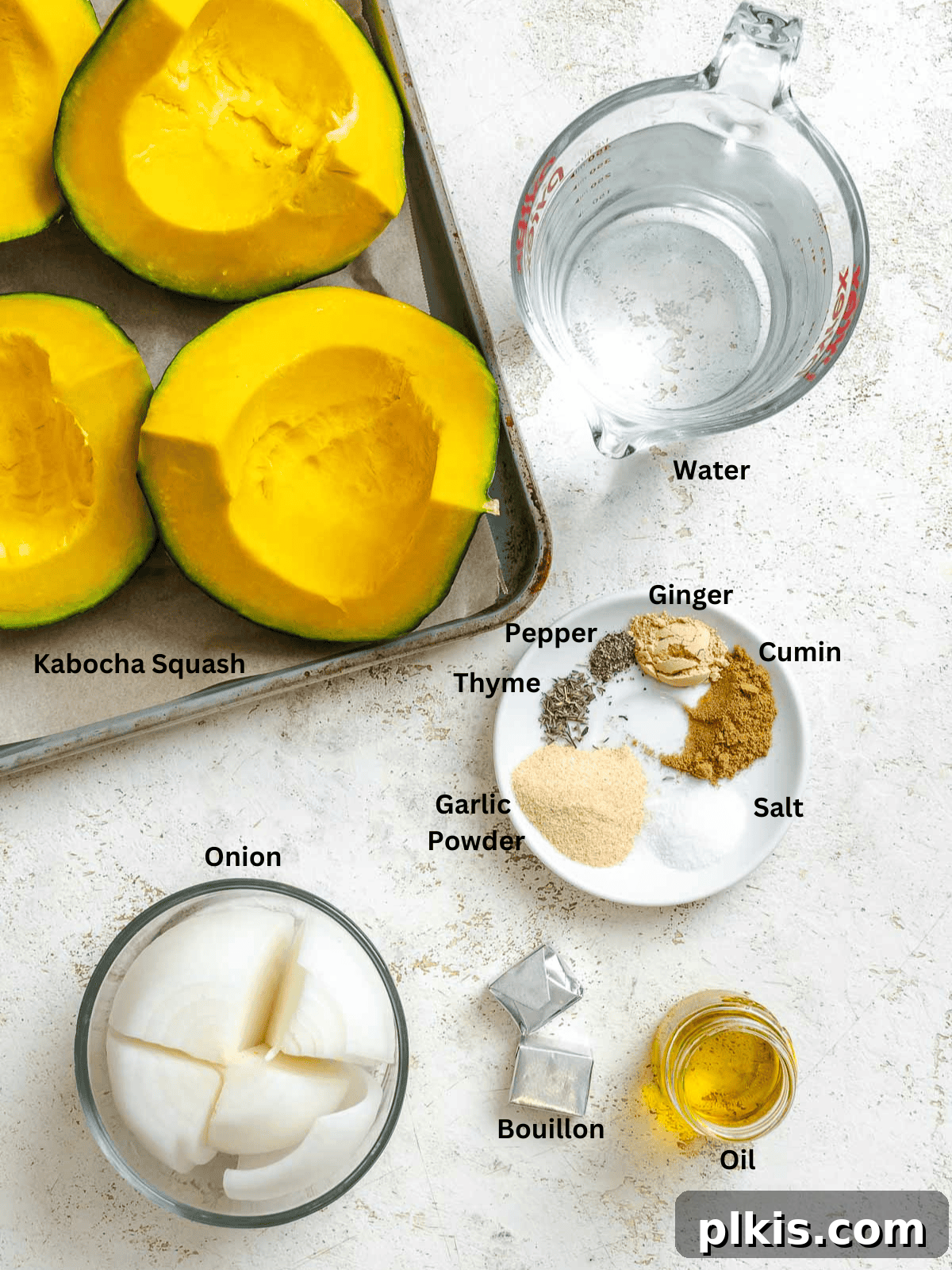
- Kabocha Squash: This is the star of our soup, often referred to as “Japanese pumpkin” due to its similar sweet, earthy flavor and dense, creamy texture. When selecting your kabocha, look for one that feels remarkably heavy for its size. The skin should be dark green, firm, and unblemished (though some varieties may have deep orange-red skin, which is also fine). Avoid any squash with soft spots, cracks, or dull coloring, as these indicate it may be past its prime. Kabocha’s flesh is naturally sweet, with hints of chestnut, making it ideal for roasting and blending into a velvety soup. While kabocha is highly recommended for its unique taste and texture, other winter squashes like butternut, acorn, or even sugar pumpkin can be used as alternatives if kabocha isn’t available. However, be aware that their flavor profiles and sweetness levels may vary slightly.
- Yellow Onion: Roasting the onion alongside the squash is crucial. The high heat caramelizes its sugars, transforming its sharp flavor into a sweet, mellow, and deeply aromatic foundation for the soup.
- Olive Oil: A good quality olive oil is essential for roasting, helping the squash and onion achieve that beautiful caramelization and contributing to the overall richness of the soup.
- Garlic Powder: We use garlic powder both for roasting and simmering. It offers a consistent, mellow garlic flavor that infuses deeply into the vegetables and broth, rather than the sharper taste of fresh garlic which might overpower the delicate squash.
- Cumin Powder: Cumin brings a warm, earthy, and slightly smoky note that beautifully complements the sweetness of the kabocha. It’s a key spice for balancing the flavors.
- Ginger Powder: Ginger adds a subtle warmth and a touch of zesty brightness, preventing the soup from tasting too heavy and adding an intriguing layer of complexity.
- Vegetable Broth (Water + Bouillon Cube): Using water and a vegetable bouillon cube allows for easy adjustment of flavor intensity and sodium. You can also use pre-made vegetable broth if preferred.
- Salt and Black Pepper: These fundamental seasonings enhance all the other flavors. Remember to taste and adjust throughout the cooking process, especially at the end, to achieve perfect balance.
- Dried Thyme: Thyme imparts a classic, earthy, and slightly floral herb note that pairs wonderfully with squash and creates a comforting aroma.
Creative Recipe Variations and Flavorful Add-Ins
While our base kabocha squash soup recipe is undeniably delicious on its own, it also serves as a fantastic canvas for culinary creativity. Don’t hesitate to experiment with these variations and add-ins to tailor the soup to your personal taste preferences and available ingredients. Each suggestion offers a unique way to enhance the flavor, texture, or nutritional profile of this already wonderful dish:
- Apple/Pear: For a delightful sweet-tart complexity, consider adding 1-2 cored and quartered apples (like Honeycrisp or Fuji) or pears (such as Bosc or Anjou) to the baking sheet alongside the squash and onion. Roasting them will soften their texture and concentrate their sugars, infusing the soup with a subtle fruity brightness that pairs beautifully with the squash.
- Carrot: To add an extra layer of earthy sweetness and vibrant color, dice a medium carrot and roast it with your squash and onion. Carrots deepen the flavor profile and add more beta-carotene, boosting the soup’s nutritional value and creating a richer, more complex taste.
- Lemon Juice: A squeeze of fresh lemon juice (or lime juice) at the very end of cooking can be transformative. Its bright acidity cuts through the richness of the squash, awakening the other flavors and adding a refreshing zest that prevents the soup from tasting flat. It’s a small addition with a significant impact on balance.
- Maple Syrup: If your kabocha squash isn’t as sweet as you’d like, or if you simply prefer a sweeter soup, a tablespoon or two of maple syrup (or brown sugar) added while simmering can enhance its natural sweetness. Start with a small amount and add more to taste.
- ‘Cream’: For an exceptionally rich and velvety vegan kabocha soup, consider incorporating ¼ to ½ cup of a creamy element at the blending stage. Options include homemade cashew cream, which provides a neutral, rich base; silken tofu, for a protein boost and smooth texture without much added fat; or full-fat canned coconut milk, which imparts a subtle tropical sweetness and incredible creaminess.
- Nutritional Yeast: To introduce an umami-rich, ‘cheesy’ depth without dairy, stir in 1-2 tablespoons of nutritional yeast while simmering or after blending. It adds a savory complexity that elevates the soup’s overall flavor.
- Other Seasonings: Expand your spice palate by adding ground coriander for a citrusy, earthy note, paprika (sweet or smoked) for color and depth, chili powder for a gentle warmth, and/or turmeric for its earthy flavor and vibrant golden hue. Alternatively, for a more exotic twist, use 1-2 teaspoons of curry powder or garam masala to transport your taste buds to different culinary regions.
Crafting Your Perfect Roasted Kabocha Squash Soup: A Step-by-Step Guide
Creating this delicious and comforting kabocha squash soup is an enjoyable process, broken down into simple, manageable steps. The beauty of this recipe lies in the roasting, which develops incredible depth of flavor. Remember to consult the full recipe card below for precise measurements and detailed instructions. Let’s get started!

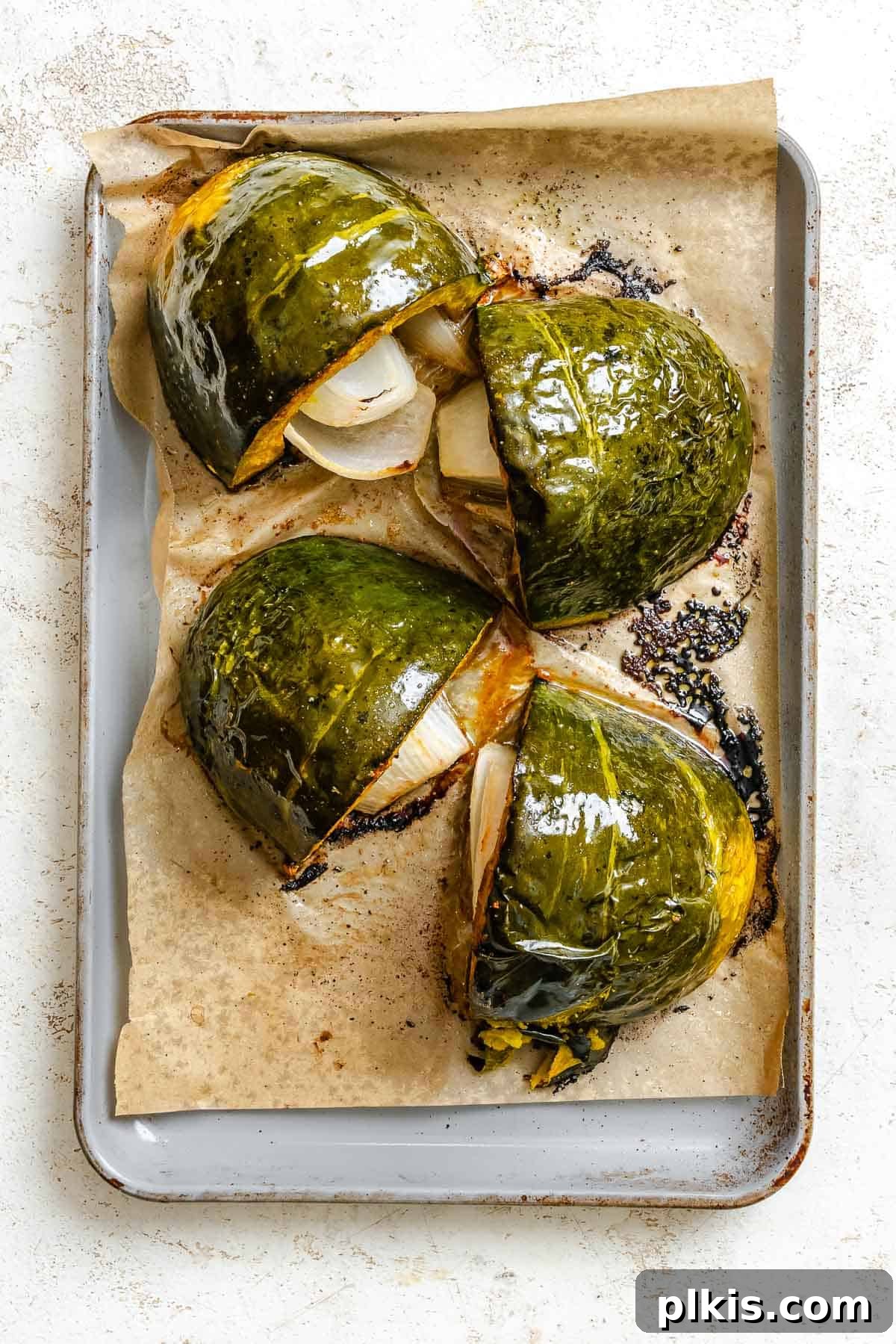
Step 1: Prepare for Roasting. Begin by preheating your oven to a robust 400°F (200°C) to ensure even caramelization. Line a large baking sheet with parchment paper for easy cleanup and to prevent sticking. While the oven heats, carefully prepare your vegetables: peel and quarter the yellow onion, and then tackle the kabocha squash. The squash can be tough, so use a sturdy, sharp knife. Cut it into manageable quarters, then use a spoon to scoop out all the seeds and fibrous strands from the center. You don’t need to peel the kabocha at this stage, as the skin will soften during roasting and be easier to remove later.
Step 2: Roast to Perfection. Once your squash and onion are prepped, transfer the chopped ingredients to the prepared baking sheet. Drizzle them generously with olive oil, sprinkle with one tablespoon of garlic powder, and a teaspoon of salt. Toss everything together thoroughly, ensuring each piece is evenly coated. Arrange the kabocha squash pieces upright, cut side up, on the baking sheet. Tuck the onion pieces underneath or around the squash – this helps protect the onions from burning while allowing them to sweeten and soften beautifully. Roast in the preheated oven for 30-35 minutes, or until the squash is wonderfully tender when pierced with a fork and exhibits light caramelization around the edges. The onions should be soft and lightly browned. Once roasted, remove the baking sheet from the oven and set it aside, allowing the squash to cool just enough so you can handle it comfortably to peel away the skin.
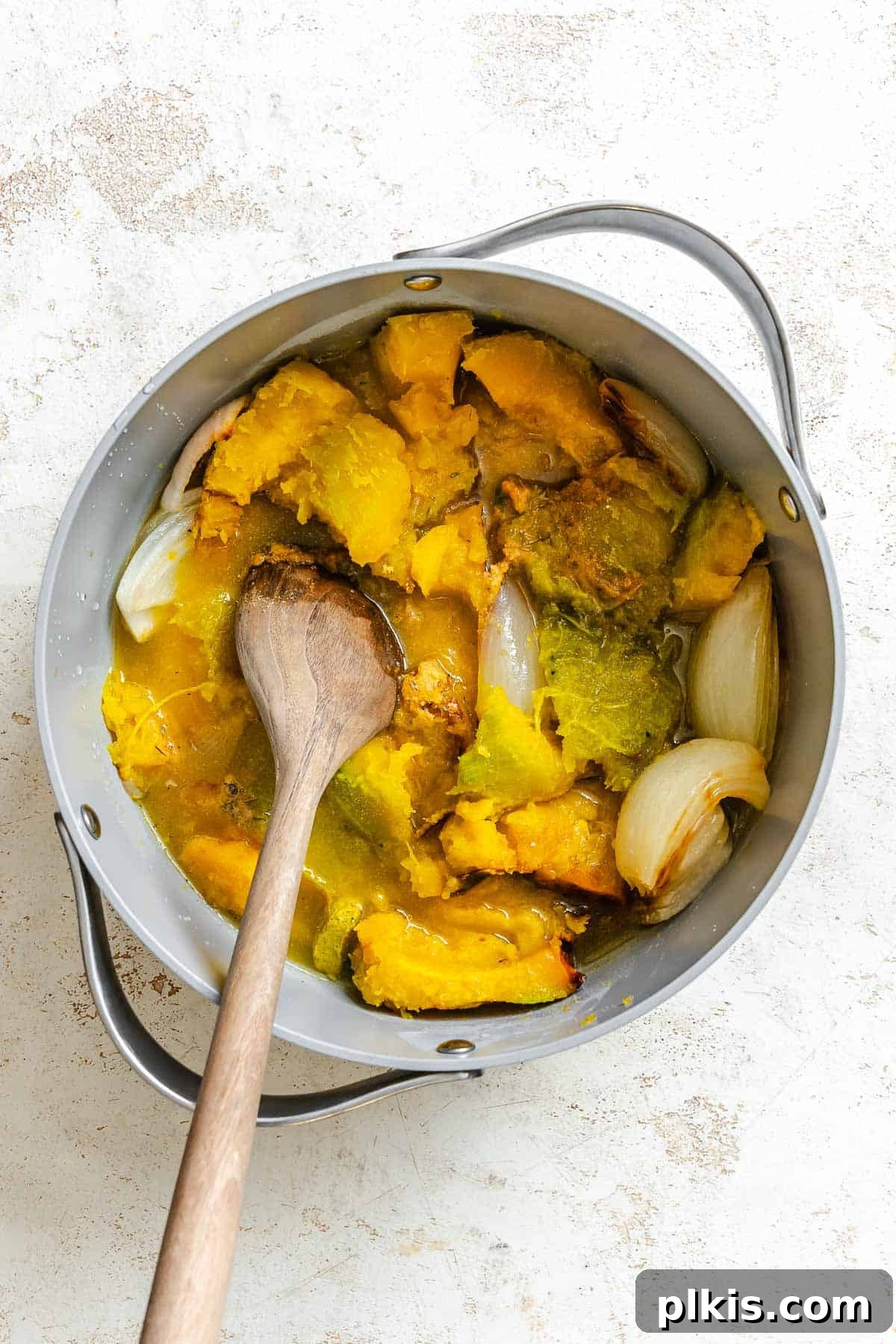

Step 3: Combine and Simmer. Once the roasted kabocha squash has cooled slightly and its skin has been removed, transfer the tender, sweet flesh along with the caramelized onion to a large, heavy-bottomed pot. Add the remaining garlic powder, cumin powder, ginger powder, black pepper, and the specified amount of salt. Pour in the vegetable broth (or water with the bouillon cube). This combination of roasted vegetables and warm spices forms the flavorful base of your soup, ready for the next stage of cooking.
Step 4: Build Depth of Flavor. Stir all the ingredients in the pot thoroughly, ensuring the spices are well distributed. Bring the mixture to a gentle boil over medium-high heat. Once boiling, reduce the heat to low, cover the pot with a lid, and allow the soup to simmer for 5-10 minutes. This simmering stage is crucial as it allows all the flavors to meld and deepen, creating a harmonious and incredibly rich broth. The roasted squash and spices will infuse the liquid, intensifying the overall taste of the soup.
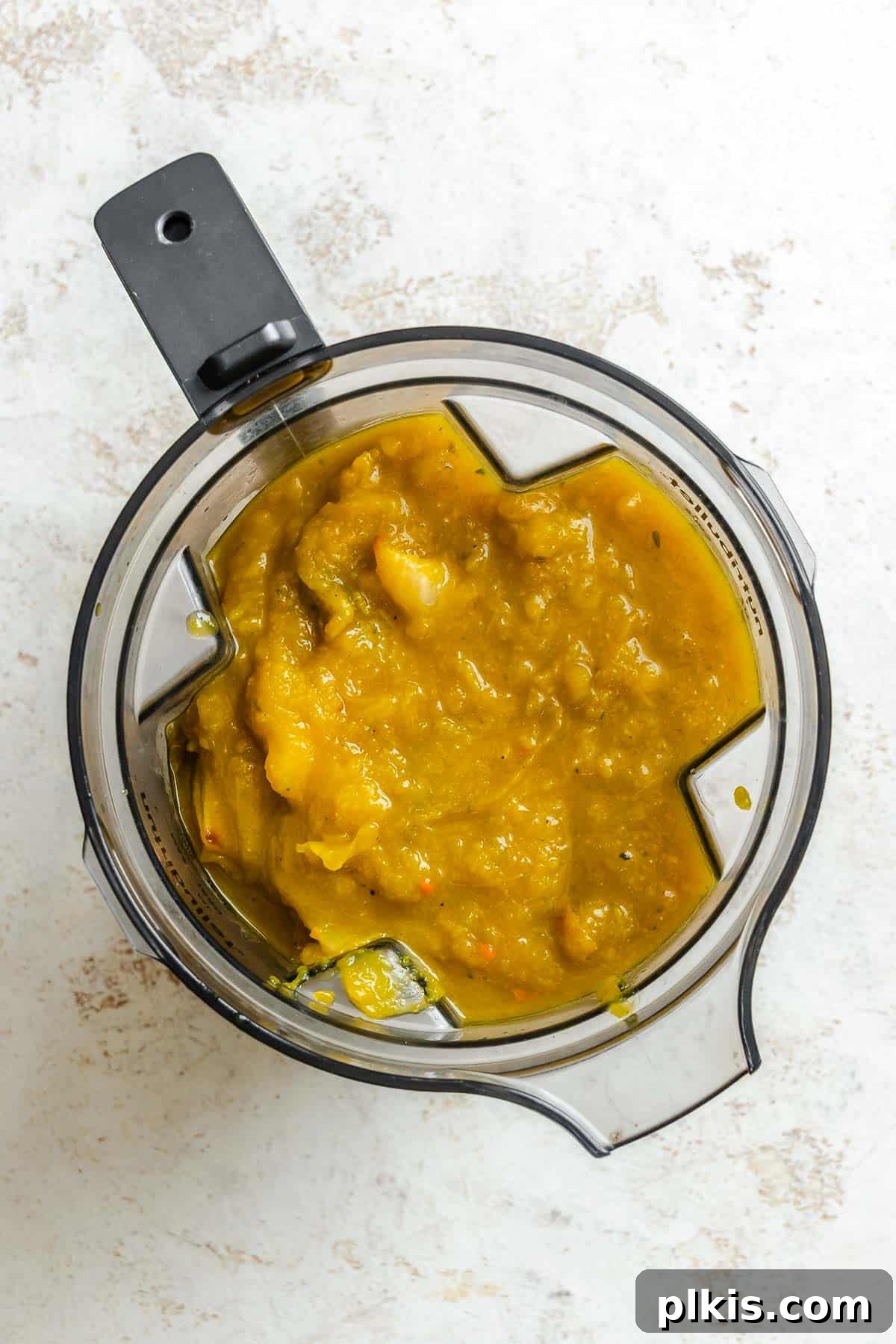
Step 5: Blend and Serve. Turn off the heat from the stove. Now it’s time to achieve that signature creamy texture. If you have an immersion blender, simply place it directly into the pot and blend until the soup is completely smooth and free of any lumps. For those using a stand blender, exercise caution with hot liquids. Only fill the blender halfway to prevent overflow and steam buildup, working in batches if necessary. When blending hot soup in a stand blender, always remove the small cap from the lid (the vent) and cover the opening with a clean kitchen towel to allow steam to escape while preventing splatters. Alternatively, you can pause occasionally to open the lid and release accumulated steam. Once blended to a silky consistency, taste the soup and adjust any seasonings – you might want a little more salt, cumin, or a touch of black pepper. Serve the kabocha squash soup warm, optionally garnished with fresh thyme leaves and a sprinkle of red pepper flakes for a subtle kick and vibrant color. Enjoy this deliciously comforting homemade creation!
Frequently Asked Questions About Kabocha Squash Soup
Absolutely! Kabocha squash soup, especially when made with wholesome ingredients like ours, is incredibly healthy and nutrient-dense. Kabocha squash itself is a powerhouse of vitamins, minerals, and antioxidants. It’s particularly rich in beta-carotene, which the body converts to Vitamin A, vital for vision and immune function. It also provides a significant amount of Vitamin C, an important antioxidant, along with potassium for blood pressure regulation, iron for energy, and dietary fiber for digestive health. These components contribute to several health benefits, including enhanced immunity, improved skin health, and better gut function. Plus, our recipe is naturally vegan and low in unhealthy fats, making it a truly guilt-free and nourishing meal.
Technically, you could use alternative cooking methods like boiling, steaming, or pan-frying the squash. However, we strongly recommend sticking with roasting for this recipe. Roasting the kabocha squash and onion at a high temperature is key to developing their deep, complex flavors. The caramelization that occurs during roasting enhances their natural sugars, creating a rich, sweet, and slightly nutty taste that simply cannot be replicated by other cooking methods. Boiling or steaming would result in a much milder, watery flavor and texture, while pan-frying might not achieve the same even tenderness and depth. For the best possible flavor, stick with the roasting method outlined in the recipe.
Yes, you absolutely can adapt this recipe for a slow cooker, but with a slight modification to ensure maximum flavor. While you can transfer everything to a crockpot for 1-2 hours on HIGH or 3-4 hours on LOW, we still highly recommend roasting the kabocha squash and onion first. This initial roasting step is crucial for developing the depth and sweetness that define this soup. After roasting, simply add the peeled, roasted squash and onion, along with the rest of the ingredients (spices, broth), to your slow cooker. Cook on HIGH for 1-2 hours or on LOW for 3-4 hours until all flavors have melded. Once cooked, use an immersion blender directly in the crockpot (if immersion-blender safe) or transfer batches to a stand blender to achieve that signature smooth consistency.
When selecting kabocha squash for your soup, look for one that is uniformly dark green (or deep orange-red, depending on the variety), firm, and feels heavy for its size. The skin should be dull, not shiny, which indicates ripeness. Avoid any squash with soft spots, blemishes, or cracks, as these can be signs of spoilage. A good kabocha will also have a dry, corky stem. Choosing a ripe and healthy squash is the first step to a flavorful soup!
Expert Recipe Notes and Handy Tips for Success
To help you achieve the best possible kabocha squash soup every time, here are some additional tips and tricks, covering everything from maximizing flavor to making prep easier and storing your delicious creation:
- For Even More Caramelization: If you desire an extra layer of deep, smoky sweetness, after roasting the squash and onion until tender, you can briefly broil them. Transfer the baking sheet to the top rack of your oven and broil for just 1-3 minutes. Watch them very closely, as they can burn quickly. This step will enhance the caramelized edges and add more depth to the final soup.
- For Easier Chopping: Kabocha squash can be notoriously hard to cut. To make the chopping process much safer and easier, carefully poke a few holes into the squash with a fork or sharp knife. Then, microwave the whole squash for 2-4 minutes. This will slightly soften the skin and flesh, making it much simpler to cut through with a long, sharp chef’s knife. Always use a stable cutting board and exercise caution when cutting any hard squash.
- Save the Seeds: Don’t discard those kabocha seeds! They are edible and make a fantastic crunchy snack. Clean them thoroughly, toss them with a little olive oil and your favorite seasonings (salt, paprika, chili powder), and roast them in the oven at 300°F (150°C) for 15-20 minutes, or until golden and crisp. They’re a delicious and waste-reducing garnish for your soup or a healthy snack.
- To Adjust the Soup Thickness: The desired consistency of your soup is a matter of personal preference. If you find your blended soup too thick, simply add more vegetable broth or water, a quarter cup at a time, until it reaches your preferred pourable consistency. If it’s too thin, you can simmer it uncovered for a few extra minutes to allow some liquid to evaporate, or stir in a tablespoon of cornstarch slurry (cornstarch mixed with a little cold water) and simmer until thickened.
- Immersion Blender vs. Stand Blender: Both types of blenders can achieve a smooth soup, but they have their differences. An immersion blender (stick blender) is incredibly convenient as it allows you to blend directly in the pot, minimizing cleanup. However, high-powered stand blenders, like a Vitamix, typically create an exceptionally smooth, almost silken consistency that some prefer. If using a stand blender for hot liquids, remember to vent the lid and work in batches to prevent pressure buildup.
- Make it as Pasta Sauce: Transform this delicious soup into a creamy, savory pasta sauce! To do so, simply reduce the amount of broth you use during simmering to create a thicker base. After blending, stir in a generous amount of nutritional yeast for a cheesy flavor, and optionally a tablespoon of your favorite vegan cream cheese or cashew cream. Toss with your preferred pasta for a unique and comforting meal.

Delightful Topping Ideas to Elevate Your Soup
While this kabocha squash soup is undeniably delicious on its own, adding a creative topping can transform it into an even more exciting and visually appealing dish. Think of toppings as the final flourish, adding contrasting textures, fresh flavors, or a touch of elegance. You’ll never see me turn down a good topping, and here are some fantastic ideas to inspire you:
- A luxurious swirl of coconut cream, a dollop of homemade cashew cream, or a spoonful of plain vegan yogurt for added richness and a beautiful presentation.
- A vibrant drizzle of chili oil for a spicy kick, or garlic oil for an extra layer of savory aroma.
- Freshly chopped herbs such as parsley, fragrant thyme, earthy sage, mild chives, vibrant green onion, or bright cilantro can add a burst of freshness and color.
- Delicate microgreens for a gourmet touch and a slight peppery bite.
- For delightful crunch and texture, sprinkle on roasted spicy pumpkin seeds, crispy air fryer chickpeas, or golden, crunchy croutons.
- Crispy fried shallots or thinly sliced, savory crispy baked kale chips for a unique savory crispness.
- Unexpected fresh fruit, like a sprinkle of jewel-toned pomegranate arils or finely diced apple/pear, can offer a refreshing burst of sweetness and acidity that beautifully complements the squash.
Perfect Serving Suggestions for Your Kabocha Soup
This comforting, creamy kabocha squash soup is incredibly versatile and can be enjoyed in many ways. It makes a wonderful, warming appetizer to start a meal, or a satisfying and wholesome main course all on its own. For those looking to complete the dining experience, here are some excellent pairing suggestions that complement the soup’s rich flavor and smooth texture:
- Artisan Bread: Nothing beats dipping a piece of warm, crusty bread into a rich soup. Serve with homemade no-knead bread, soft vegan dinner rolls, fluffy vegan focaccia, or chewy vegan naan for soaking up every last drop.
- Hearty Sandwiches: A classic combination! Pair your soup with a delicious sandwich like a savory pesto tofu sandwich, a hearty mushroom sandwich, a gooey vegan grilled cheese, or a bagel topped with your favorite savory spreads.
- Fresh Salads: A crisp, refreshing salad provides a perfect textural contrast to the creamy soup. Opt for a simple leafy green salad with a light vinaigrette, an elegant pear salad, a robust roasted beet and kale salad, or a festive apple pecan salad.
- Wholesome Grains: To make your soup even heartier and more filling, stir in some cooked grains directly into the bowl. Cooked quinoa, wild rice, farro, or even small pasta shapes are excellent additions that boost protein and fiber content, transforming it into a complete meal.
Storage and Reheating Instructions
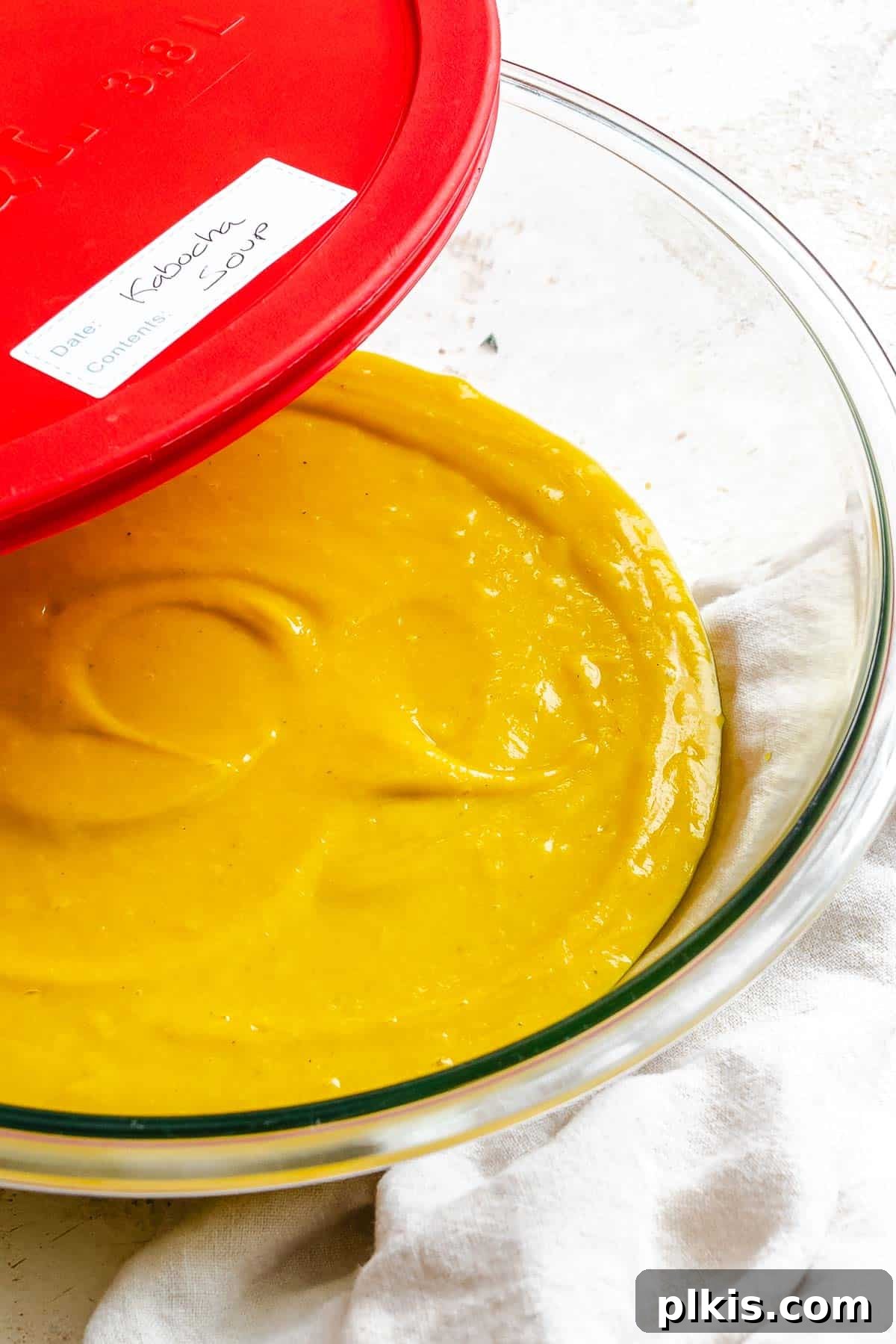
One of the best things about homemade soups is how well they store, making them perfect for meal prepping or enjoying leftovers throughout the week. Our kabocha squash soup is no exception, and it actually tastes even better the next day as the flavors have more time to meld and deepen.
Fridge: Once cooled to room temperature, transfer the soup to an airtight container. It will keep beautifully in the refrigerator for 4-5 days. Ensure the container is sealed tightly to maintain freshness and prevent any absorption of other fridge odors.
Freeze: This soup freezes exceptionally well! For easy portions, pour the cooled soup into freezer-safe bags, removing as much air as possible before sealing and spreading them flat to freeze. Alternatively, use airtight freezer-safe containers or silicone “Souper Cubes” for individual portions. Frozen soup will maintain its quality for up to 4 months. To thaw, simply transfer it to the refrigerator overnight.
Reheat: When you’re ready to enjoy your soup again, you have a couple of convenient options. Reheat it gently on the stovetop over medium-low heat, stirring often to prevent sticking and ensure even warming. Alternatively, you can reheat individual portions in the microwave: transfer to a microwave-safe bowl, heat in 30-second bursts, stirring in between, until hot. If the soup appears too thick after reheating, add a splash more water or vegetable stock to reach your desired consistency.
More Cozy Vegan Squash Recipes to Explore
Vegan Lunches
Thai Butternut Squash Soup
Soups
Butternut Squash and Apple Soup
Vegan Dinners
Butternut Squash Curry
Vegan Dinners
Roasted Pumpkin Soup
If you tried this roasted kabocha squash soup recipe or any other delicious recipe on my blog, please leave a 🌟 star rating and let me know how it went in the 📝 comments below. Your feedback truly helps others discover and enjoy these plant-based creations! Thanks!
Roasted Kabocha Squash Soup

Want to save this recipe?
Enter your email & get this sent to your inbox! Plus you’ll get great new recipes from us every week!
Equipment
-
Knife set
-
Measuring spoons
-
Measuring Cups
-
Immersion blender
-
Baking tray
Ingredients
- 2 pounds kabocha squash
- 1 yellow onion peeled and quartered
- 2 tablespoons olive oil
- 1 tablespoon garlic powder (for roasting)
- 1 teaspoon salt plus more to taste
- 1 tablespoon garlic powder (for soup)
- 1 teaspoon cumin powder plus more to taste
- 2 cups water
- 1 vegetable bouillon cube
- 1 teaspoon ginger powder
- ¼ teaspoon black pepper
- ½ teaspoon dried thyme
- Fresh thyme and crushed red pepper for garnish (optional)
Instructions
-
Preheat oven to 425 degrees Fahrenheit (220 degrees Celsius).
-
Cut the kabocha squash into quarters and scoop out the seeds.
-
Line a baking sheet with parchment paper. Place the squash quarters and onion pieces on the sheet.
-
Drizzle with olive oil, sprinkle with 1 tablespoon garlic powder and 1 teaspoon salt, and toss to coat evenly.
-
Arrange the squash cut side up, tucking the onion pieces underneath.
-
Roast for 30 minutes. Check doneness by piercing the squash with a fork—if soft, it’s ready. If not, roast in 5-minute increments until tender.
-
Remove from the oven and let cool slightly. Peel off and discard the squash skin.
-
Place the roasted squash and onion into a large pot.
-
Add 1 tablespoon garlic powder, 1 teaspoon cumin powder, water, vegetable bouillon cube, ginger powder, black pepper, and thyme.
-
Cover the pot, bring to a boil, then reduce heat and simmer for 5–10 minutes.
-
Remove from heat and blend with an immersion blender until smooth, or blend in batches in a countertop blender.
-
Taste and adjust seasoning with more salt or cumin if desired.
-
Serve hot, garnished with fresh thyme and crushed red pepper if desired.
Notes
- For more caramelization: Broil the roasted squash for 1-3 minutes.
- For easier chopping: Microwave the squash for 2-4 minutes (poke a few holes first), to slightly soften it. Then, use a long, sharp knife.
- Save the seeds: Roast and toss them with seasonings as a tasty snack.
- To adjust the soup thickness: Adjust how much broth/water you use.