
Cozy up to a comforting bowl of homemade vegan Thai red curry – a truly irresistible dish that is creamy, rich, wonderfully aromatic, and perfectly spiced. Bursting with layers of bold, authentic Thai flavors, this recipe transforms into a quick, easy, and completely customizable weeknight meal. Best of all, it’s incredibly budget-friendly and can be on your table in under 30 minutes, making it the ultimate solution for busy evenings!
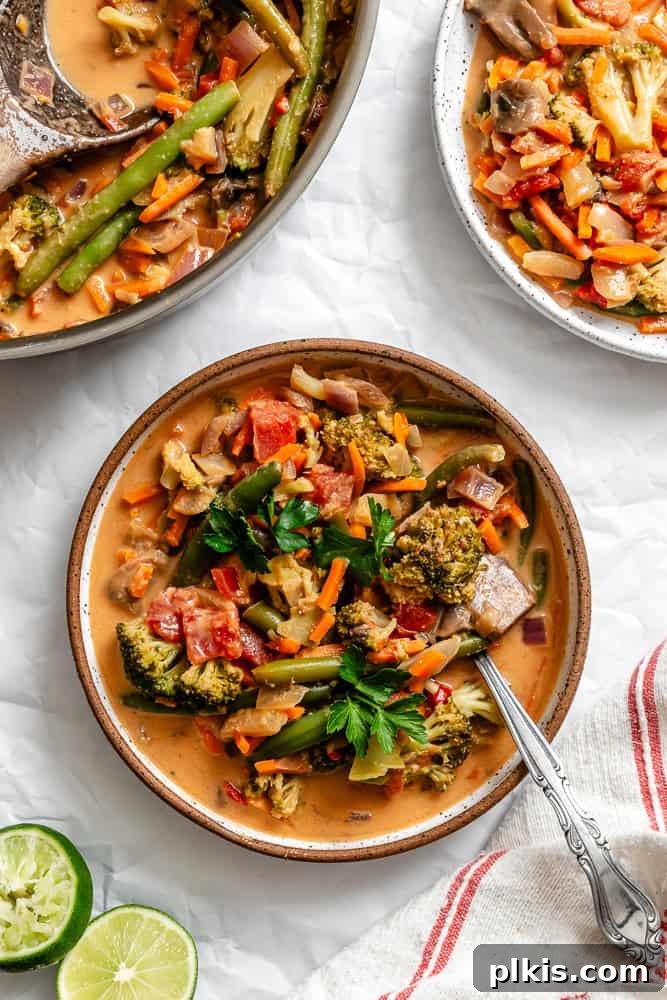
Why You’ll Love This Quick & Easy Vegan Thai Red Curry
Imagine a meal so profoundly flavorful and satisfying that it feels like it took hours to prepare, yet it’s ready in less than 30 minutes. That’s precisely what you get with this fantastic vegan Thai red curry. It’s a testament to how incredible plant-based cooking can be – delivering a harmonious blend of creamy textures, fragrant spices, a delightful kick of heat, and savory depth, all in one easy pan. This recipe isn’t just a meal; it’s a culinary experience designed for convenience and deliciousness.
What makes this dish a true weeknight hero? For starters, it leverages the power of readily available ingredients like store-bought red curry paste, luscious coconut milk, and versatile frozen vegetables (or whatever fresh produce you have on hand). This combination allows you to whip up a light yet incredibly filling one-pan wonder that effortlessly balances creamy richness with exotic aromas and just the right amount of spice. It’s simply irresistible!
Beyond its speed and simplicity, this vegan Thai red curry offers a multitude of benefits. It’s a significantly healthier, quicker, and more affordable alternative to ordering takeout, giving you complete control over the ingredients and nutritional content. Its inherent flexibility makes it perfect for clearing out your fridge, as almost any vegetable can find a happy home in this curry. Being naturally vegan, there’s no need to worry about traditional fish sauce or shrimp paste; we focus on pure plant-based goodness. And here’s a pro tip: like many great curries, it tastes even better on day two, as the flavors have more time to meld and deepen. Serve it with fluffy rice or tender noodles for a truly satisfying and memorable meal that will have everyone asking for seconds!
If you enjoy the vibrant flavors of Thai cuisine, you might also like to explore other plant-based delights such as slow cooker red curry with tofu, tofu pad Thai, vegan vegetable pad Thai, vegan Thai pizza, crunchy Thai peanut salad, Thai butternut squash soup, or the classic Thai mango sticky rice.
Essential Ingredients for Your Vegan Red Curry
Crafting the perfect vegan Thai red curry starts with understanding the role of each ingredient. Below, we highlight key components and offer insights for best results. For the complete list of ingredients, precise quantities, and potential substitutes, please refer to the comprehensive recipe card at the end of this guide.
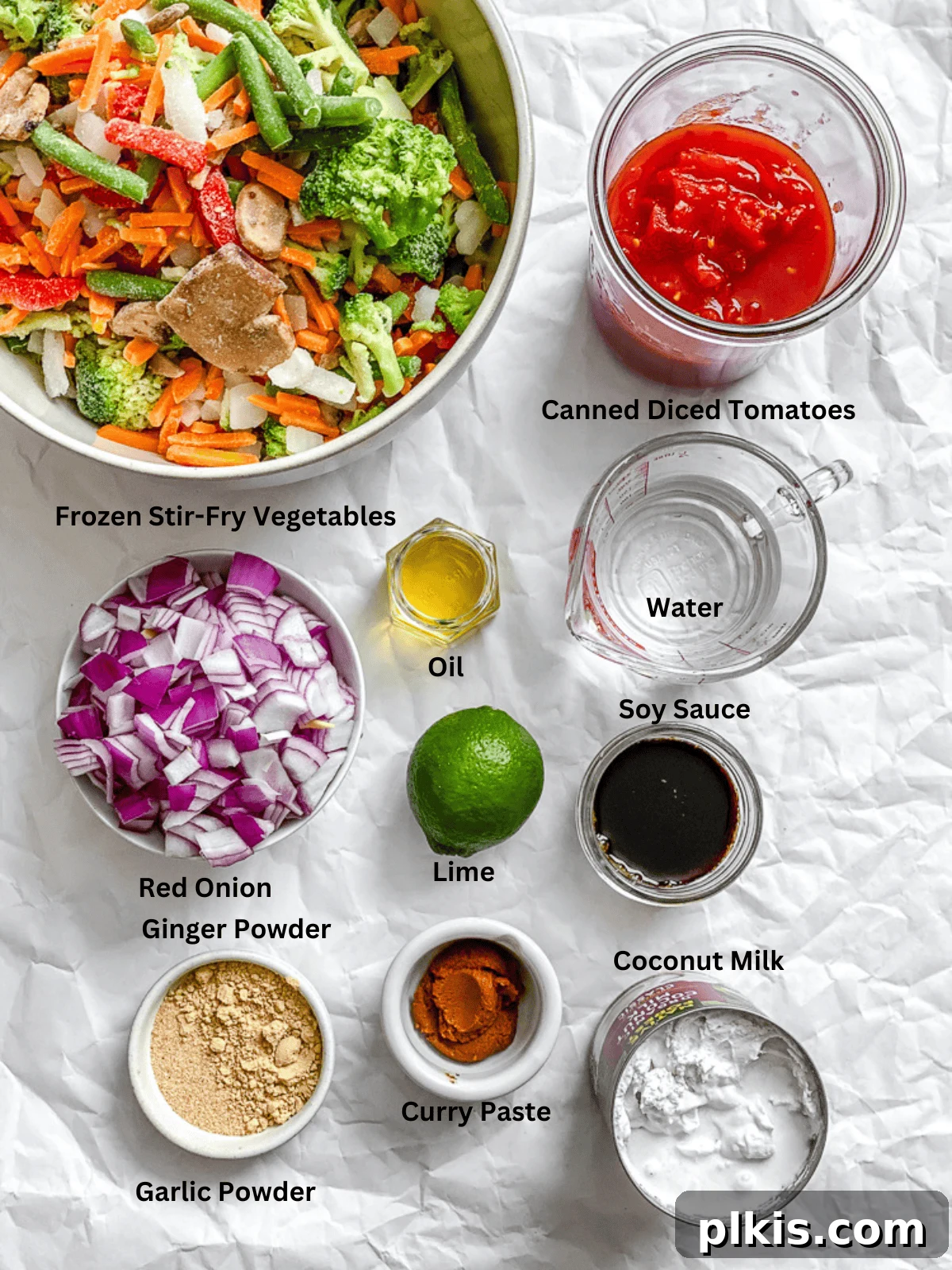
Red Curry Paste: The Heart of the Flavor
The red curry paste is arguably the most crucial ingredient, as it dictates the core flavor and spice level of your curry. While many brands are available, their flavor profiles and heat intensities can vary significantly. Some pastes are spicier than others, and some might have slightly different aromatic notes depending on the balance of ingredients like red chilies, lemongrass, galangal, kaffir lime zest, and shallots. We highly recommend testing a few different brands to discover your personal preference. When selecting a paste, always double-check the label to ensure it’s truly vegan, as some traditional Thai red curry pastes contain shrimp paste. Adjusting other elements like lime juice and sweetener after tasting will help you achieve a perfectly balanced flavor profile tailored to your palate.
Creamy Coconut Milk: The Foundation
Full-fat canned coconut milk is essential for achieving that luxurious, creamy texture characteristic of authentic Thai curries. It provides richness and helps to mellow the spice. While light coconut milk can be used for a thinner, lighter curry, we suggest full-fat for the most satisfying experience. Shake the can well before opening to ensure the cream and liquid are thoroughly combined.
Aromatic Duo: Garlic and Ginger
Though this recipe uses garlic and ginger powder for speed, fresh minced garlic and grated ginger will elevate the aroma and depth of your curry considerably. If you opt for fresh, add them to the pan after the onion for about a minute until fragrant, before adding the tomatoes.
Canned Diced Tomatoes: Tangy Sweetness
Diced tomatoes in their juices add a subtle tang and a hint of sweetness, complementing the richness of the coconut milk and the spice of the curry paste. They also contribute to the body of the sauce.
Frozen Stir-Fry Vegetables: Convenience & Nutrition
Using a bag of frozen stir-fry vegetables is a brilliant shortcut that makes this recipe incredibly fast and convenient. These mixes often contain a colorful assortment of broccoli, carrots, bell peppers, and snow peas, providing a good range of textures and nutrients without any chopping required. Feel free to use fresh vegetables if preferred; simply prepare them accordingly (see “Recipe Variations” below).
Soy Sauce: Savory Umami Boost
Soy sauce (or tamari for a gluten-free option) adds a crucial umami depth and savory notes to the curry, balancing the other flavors. If you prefer, a plant-based ‘fish sauce’ alternative can also be used for a more authentic Thai flavor profile without the animal products.
Fresh Lime: The Bright Finish
A squeeze of fresh lime juice at the end is non-negotiable! It brightens the entire dish, cutting through the richness and enhancing all the other flavors. Don’t skip it!
Creative Recipe Variations and Flavorful Add-Ins
One of the best aspects of this vegan Thai red curry is its incredible versatility. It’s a fantastic canvas for your culinary creativity and a perfect recipe for utilizing whatever ingredients you have on hand. Don’t be afraid to experiment and make it truly your own!
- Sweetener for Balance: A touch of sweetness can beautifully balance the creamy, spicy, and savory elements of this curry. Incorporate 1-2 teaspoons of coconut sugar, maple syrup, or even a dash of agave nectar. This subtle addition deepens the overall flavor profile, creating a more complex and well-rounded dish.
- Aromatic Kaffir Lime Leaves: For an extra layer of authentic Thai fragrance and a distinct citrusy depth, add 3-5 fresh or frozen kaffir lime leaves. Bruise them slightly before adding to the curry base to release their essential oils. Remember to remove them before serving, as they are not typically eaten.
- Amplify the Spice: If you crave more heat, it’s easy to dial up the spice level. You can add a splash of your favorite hot sauce or sriracha, a pinch of red pepper flakes, or finely minced fresh chili (like bird’s eye chilies) along with the curry paste. Start small and add incrementally to reach your desired intensity.
- Boost Your Protein: Transform this curry into an even more substantial and fulfilling meal by incorporating your favorite plant-based proteins. Excellent options include a can of rinsed and drained chickpeas, cubes of quick crispy pan-fried tofu (which holds its shape wonderfully and absorbs flavors), crumbled tempeh, or even store-bought mock vegan chicken pieces. Add these during the simmering stage to allow them to absorb the rich curry sauce.
- Hearty Potatoes: For a more robust and comforting curry, add bite-sized pieces of potato. Yukon Gold, red potatoes, or sweet potatoes all work beautifully. Add them along with the main vegetables and ensure they are fully cooked and tender before serving. Sweet potatoes, in particular, lend a lovely natural sweetness that complements the red curry flavors.
- Diverse Vegetable Blend: While frozen stir-fry vegetables are convenient, crafting your own seasonal blend of fresh vegetables offers endless possibilities. Chop them into similar-sized pieces for even cooking. Consider combinations like:
- Crunchy Delights: Baby corn, crisp carrots (sliced or baby carrots), and sugar snap peas or green beans for texture.
- Earthy & Umami: Sliced mushrooms and bamboo shoots for an authentic touch.
- Colorful Peppers: Bell peppers (red, yellow, or orange) add sweetness and vibrant color.
- Soft & Tender: Zucchini, broccoli florets, or cauliflower florets are wonderful additions that cook relatively quickly.
- Leafy Greens: Stir in fresh spinach or kale at the very end until just wilted for an extra boost of nutrients and a beautiful green contrast.
- Garnishes for Freshness and Crunch: Don’t forget the power of garnishes! Fresh cilantro, Thai basil, a sprinkle of crushed peanuts, or thinly sliced red chilies for an extra pop of color and heat can elevate your curry’s presentation and flavor.
How to Craft Your Delicious Vegan Thai Red Curry
Creating this flavorful vegan Thai red curry is surprisingly simple and swift, perfect for any weeknight. Follow these easy steps to bring this aromatic dish to life. For the precise measurements of all ingredients, please refer to the recipe card below.
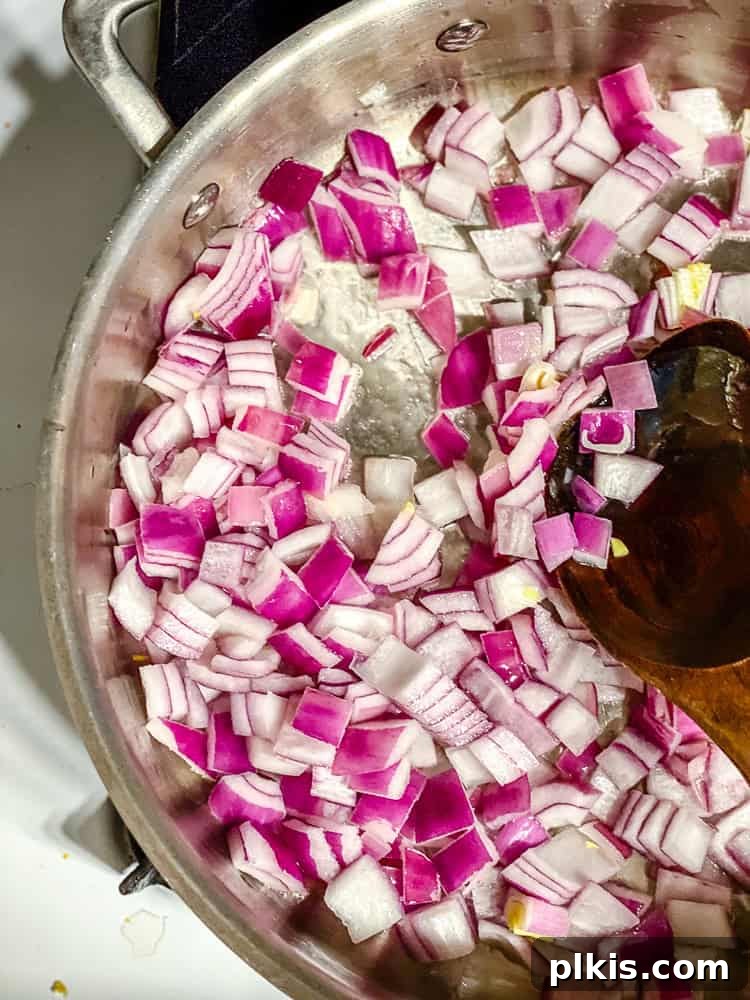
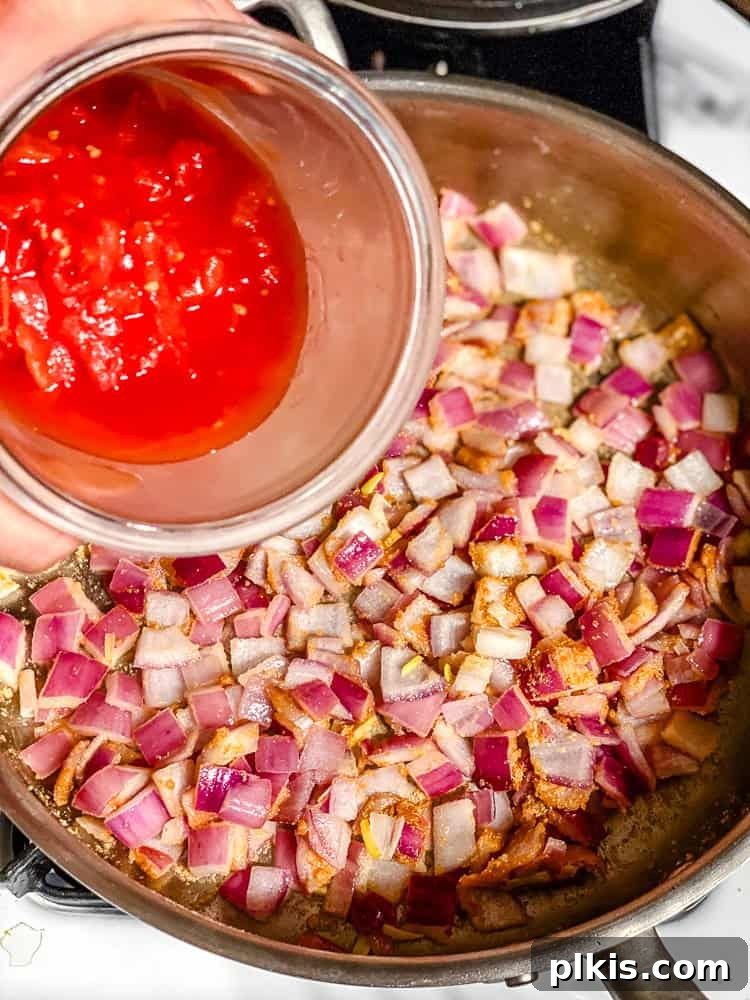
Step 1: Sauté the Aromatics. Begin by heating the high-heat oil in a large, lidded pan or Dutch oven over medium-high heat. Once the oil is shimmering, add the diced red onion. Sauté, stirring occasionally, until the onion softens and becomes translucent, typically about 3-5 minutes. This step builds the aromatic foundation of your curry.
Step 2: Build the Flavor Base. Stir in the garlic powder and ginger powder, cooking for just about 5 seconds until fragrant. Be careful not to burn them. Immediately follow by stirring in the entire can of diced tomatoes, including their juices. Bring the mixture to a gentle boil, stirring occasionally, which helps to concentrate the tomato flavor.
Quick Tip: If you are using fresh minced garlic and grated ginger instead of powder, add them to the pan after the onion has softened, sautéing for about 1 minute until fragrant before adding the diced tomatoes. Fresh aromatics will add an even deeper dimension of flavor to your curry.
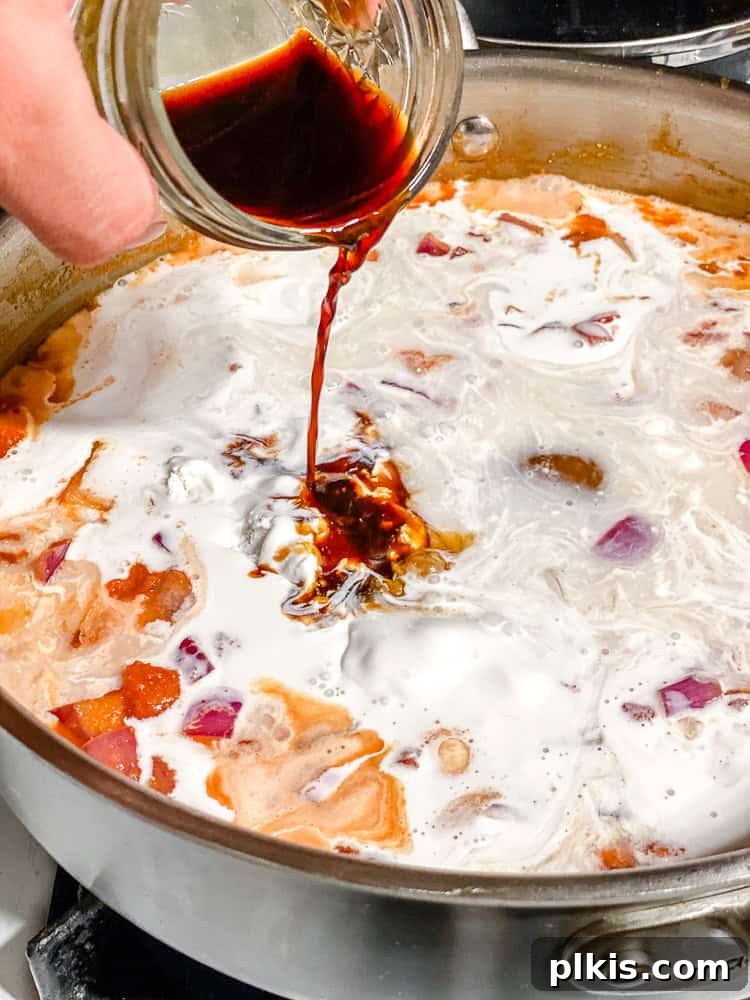
Step 3: Combine Liquids and Curry Paste. Pour in the creamy coconut milk, add the red curry paste, water, and soy sauce (or tamari). Stir all the ingredients together thoroughly until the curry paste is fully dissolved and well incorporated into the liquid. Bring the entire mixture to a gentle boil once more.
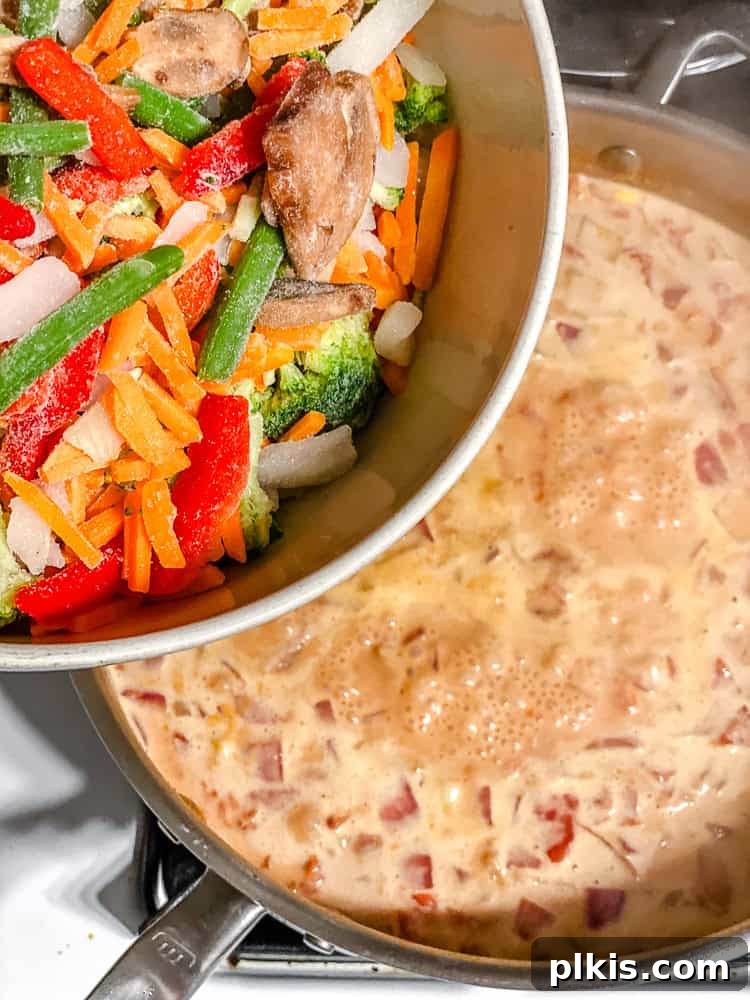
Step 4: Add Vegetables and Simmer. Add the frozen stir-fry vegetables to the pan, stirring well to ensure they are fully coated in the aromatic curry sauce. Once the mixture returns to a boil, reduce the heat to a gentle simmer. Cover the pan with a lid and allow the vegan red Thai curry to simmer for 10 minutes, or until the vegetables are tender-crisp.
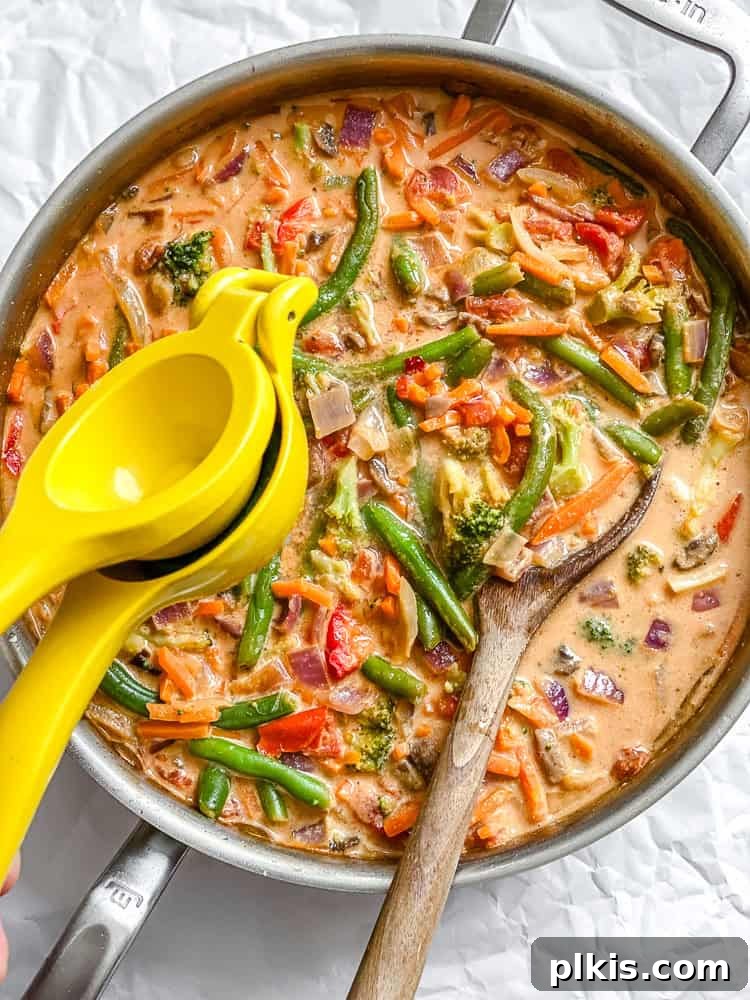
Step 5: Finish and Serve. Turn off the heat. Remove the lid and squeeze the fresh juice of one lime directly into the curry. Stir gently to incorporate the vibrant citrus notes. Taste and adjust seasonings if necessary – you might want a bit more curry paste for spice, an extra squeeze of lime for brightness, or a touch of sweetener for balance. Serve this easy red Thai curry hot, optionally garnished with fresh cilantro, Thai basil, a sprinkle of crushed peanuts for crunch, and/or thinly sliced red chili for an extra pop of color and heat. Enjoy your delicious homemade meal!
For a truly complete and satisfying meal, we love to serve this rich vegan Thai red curry alongside various grains. Classic choices include fragrant jasmine rice or sticky rice, which beautifully soak up the flavorful sauce. Healthier options like brown rice or quinoa also pair wonderfully. Don’t forget to include your plant protein of choice for a power-packed dinner!
Frequently Asked Questions About Vegan Thai Red Curry
Can I use fresh vegetables instead of frozen ones?
Absolutely! Using fresh vegetables is a fantastic option. Simply chop them into similar-sized pieces to ensure even cooking. When adding them to the pan, consider their cooking times: add harder vegetables (like carrots, potatoes, or broccoli) first, allowing them to soften slightly before introducing quicker-cooking, softer vegetables (like bell peppers, spinach, or zucchini) towards the end of the simmering process. This ensures all your vegetables reach perfect tenderness without becoming mushy.
Is Thai red curry typically spicy?
The spice level of Thai red curry can vary significantly. Generally, store-bought Thai red curry pastes range from mild to medium heat. The overall spiciness of your dish will depend on the brand of curry paste you choose and the amount you use. We recommend starting with a smaller amount of paste (e.g., half the suggested quantity) and then adding more incrementally to taste. This allows you to easily find your preferred level of heat, ensuring a pleasant experience for everyone.
How can I thicken my Thai curry if it’s too runny?
If your Thai curry turns out thinner than you prefer, it’s easy to thicken it. In a small bowl, whisk together 1-2 tablespoons of cornstarch with about 4 tablespoons of cold water until you have a smooth, lump-free slurry. Gradually stir this mixture into your simmering curry. Increase the heat slightly, stirring continuously, and allow the curry to cook for another 1-2 minutes. The sauce will visibly thicken as the cornstarch activates. If it’s still not thick enough, you can repeat the process with a little more cornstarch slurry.
What does Thai red curry taste like?
Thai red curry is celebrated for its incredibly complex and harmonious flavor profile. It’s an aromatic curry characterized by the rich creaminess of coconut milk, balanced with a mild to medium heat from red chilies. The curry paste itself provides a symphony of flavors, often including bright and citrusy lemongrass, pungent shallots, earthy galangal, sharp garlic, and sometimes a hint of kaffir lime. While traditional versions might include shrimp paste, vegan alternatives offer the same depth of flavor using plant-based ingredients, resulting in a comforting, savory, and slightly sweet dish that is utterly delicious.
Is this Vegan Thai Red Curry gluten-free?
This recipe can easily be made gluten-free. The main ingredient to check is the soy sauce. Ensure you use a gluten-free tamari or a certified gluten-free soy sauce. Most red curry pastes are naturally gluten-free, but always double-check the label, especially for any additives or thickeners. All other ingredients are typically naturally gluten-free.
Can I prepare this curry ahead of time?
Absolutely! This vegan Thai red curry is an excellent meal prep option. In fact, like many curries, its flavors tend to meld and deepen further after a day or two in the refrigerator, making it even more delicious. Prepare the curry as directed, allow it to cool completely, and then store it in an airtight container. When ready to serve, simply reheat gently on the stovetop or in the microwave.
Expert Tips for Perfecting Your Vegan Thai Red Curry
Elevate your homemade vegan Thai red curry from good to outstanding with these professional tips and tricks:
- Maximize Flavor with Fresh Aromatics: While powders offer convenience, for the most vibrant and authentic flavor, prioritize using fresh ginger and garlic. Finely mince or grate them. For an even deeper flavor, briefly “temper” the curry paste: once the fresh ginger and garlic are fragrant (after sautéing the onion), add the curry paste to the pan and sauté it for 1-2 minutes before adding any liquids. This process toasts the spices in the paste, releasing their full aromatic potential and creating a richer, more complex base for your curry.
- Control the Spice Incrementally: Red curry pastes vary greatly in heat. To ensure your curry is perfectly spiced to your liking, start by adding just half of the recommended amount of curry paste. Stir it in, let it simmer briefly, and then taste. If you desire a stronger, spicier vegan Thai red curry, gradually add more paste, a teaspoon at a time, tasting after each addition until you reach your ideal heat level. It’s always easier to add more spice than to take it away!
- Adjust for Richness or Lightness: You have full control over the richness and consistency of your curry. For a richer, thicker, and creamier curry, you can use slightly less water or broth, or even substitute some of the water with additional coconut milk. Conversely, if you prefer a lighter, thinner curry, you can increase the water or vegetable broth ratio, or opt for light coconut milk instead of full-fat. Experiment to find your perfect balance.
- Personalize Your Curry: This recipe is incredibly adaptable, inviting you to customize it to your personal preferences. Don’t hesitate to adjust the amount of curry paste for spice, swap out or add different vegetables based on what’s in season or what you love, increase or decrease the amount of fresh lime juice for brightness, or incorporate a touch of sweetener (like coconut sugar or maple syrup) to balance the flavors. Make it truly your own signature dish!
Storage & Reheating Instructions
This vegan Thai red curry is not only delicious fresh but also makes for excellent leftovers. Properly stored, it’s a fantastic meal prep option!
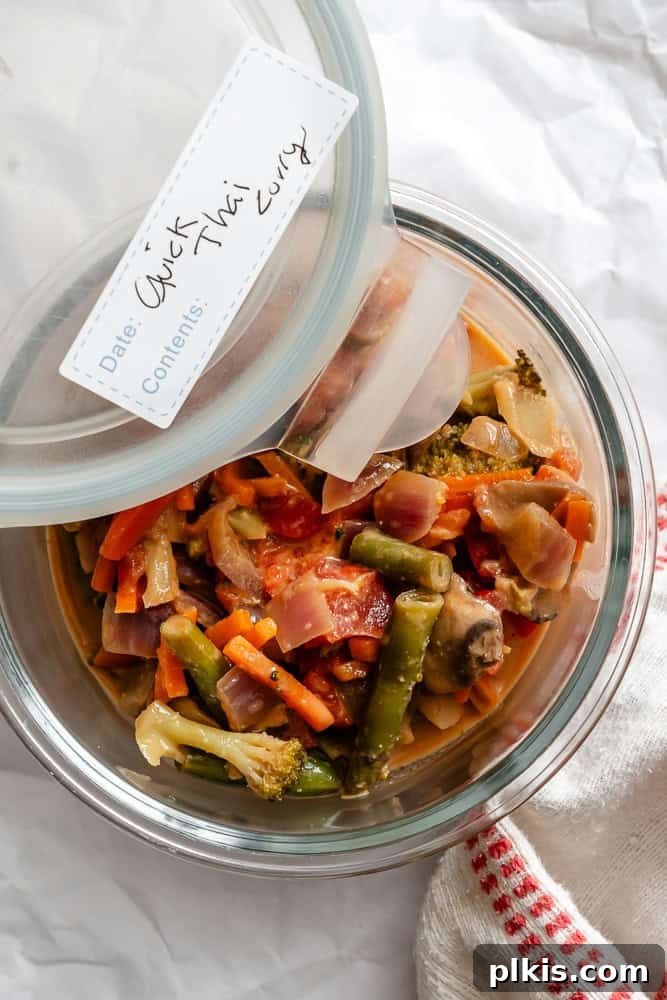
Fridge: Allow the curry to cool completely to room temperature before transferring it to an airtight container. It will keep beautifully in the refrigerator for 3-4 days. As a bonus, the flavors often deepen and meld overnight, making it taste even better on day two!
Freezer: For longer storage, let the curry cool entirely. Then, transfer it to a freezer-safe container, such as a Ziplock bag (squeezing out excess air), a Stasher bag, or a rigid freezer-safe container. It can be frozen for up to 3 months. When you’re ready to enjoy it, thaw the curry overnight in the refrigerator. Be aware that some vegetables, particularly those with high water content, may soften slightly in texture after freezing and thawing, but the flavor will remain excellent.
Reheat: To reheat your curry, you have a couple of options:
- Microwave: Place a serving in a microwave-safe bowl and heat in 30-second increments, stirring thoroughly between each interval, until it is piping hot throughout.
- Stovetop: Transfer the desired amount of curry to a saucepan. Reheat over low to medium-low heat, stirring occasionally, until it reaches your desired temperature and is steaming hot. If it seems too thick, you can add a splash of water or vegetable broth to thin it out slightly.
Vegan Thai Red Curry (30 Min Meal)
A comforting and vibrant homemade vegan Thai red curry that’s creamy, aromatic, perfectly spiced, and brimming with bold flavors. This quick, easy, and fully customizable meal is ready in under 30 minutes and is incredibly budget-friendly for any weeknight.
Recipe Overview
- Prep Time: 5 minutes
- Cook Time: 20 minutes
- Total Time: 25 minutes
- Servings: 4 to 6
Equipment Needed
- Large Skillet (with a lid)
- Chef’s Knife (or your favorite set of knives for dicing)
Ingredients
- 2 tablespoons high-heat oil (such as canola, vegetable, or grapeseed oil)
- 1 large red onion, diced
- 1 tablespoon garlic powder (or 3-4 cloves fresh garlic, minced)
- 1 tablespoon ginger powder (or 1 tablespoon fresh ginger, grated)
- 1 (15-ounce) can diced tomatoes (undrained, in their juices)
- 2 pounds frozen stir-fry vegetables (or a mix of your favorite fresh vegetables, chopped)
- 1 (15-ounce) can full-fat coconut milk (well-shaken)
- 1 tablespoon red curry paste (plus more to taste, ensuring it’s vegan)
- ½ cup water (or vegetable broth for more flavor)
- 2 tablespoons soy sauce (or tamari for gluten-free)
- 1 fresh lime, for juicing
Instructions
- Heat the high-heat oil in a large pan with a lid over medium-high heat until shimmering.
- Add the diced red onion to the hot pan and cook, stirring occasionally, until it softens and becomes translucent, about 3-5 minutes.
- Stir in the garlic powder and ginger powder (or fresh minced garlic and grated ginger if using), and sauté for about 5 seconds until fragrant. Immediately add the diced tomatoes with their juices. Stir well and bring the mixture to a gentle boil.
- Pour in the coconut milk, add the red curry paste, water, and soy sauce. Stir thoroughly until the curry paste is fully dissolved and combined. Bring the entire mixture to a boil.
- Add the frozen stir-fry vegetables to the pan and mix well to coat them in the sauce. Once the curry returns to a boil, reduce the heat to a simmer, cover the pan with a lid, and let it cook for 10 minutes, or until the vegetables are tender.
- Turn off the heat. Uncover the pan and squeeze the fresh juice of one lime over the curry. Stir gently to incorporate. Taste and adjust seasonings as needed (add more curry paste for heat, lime for brightness, or a touch of sweetener if desired). Serve hot and enjoy!
Notes
- For Enhanced Flavor: If time allows, use fresh minced ginger and garlic. After sautéing the onion, add the fresh ginger and garlic, cook for about a minute, then add the curry paste and “temper” it by sautéing for 1-2 minutes before adding the liquids. This deepens the spice flavors.
- Adjust Spice Levels: Start with half the recommended curry paste and gradually add more to achieve your preferred spice intensity. Curry pastes vary in heat.
- Vary Richness: Control the thickness and richness by adjusting the coconut milk to water/broth ratio. Use light coconut milk for a thinner, lighter curry.
- Customize Your Way: Feel free to adjust the amounts of curry paste, the types of vegetables, the quantity of lime juice, and consider adding a touch of sweetener (like coconut sugar or maple syrup) to balance the flavors according to your preference.
Nutrition Information (per serving, based on 4 servings)
- Calories: 487 kcal
- Carbohydrates: 49 g
- Protein: 13 g
- Fat: 32 g
- Saturated Fat: 22 g
- Polyunsaturated Fat: 2 g
- Monounsaturated Fat: 6 g
- Sodium: 768 mg
- Potassium: 1143 mg
- Fiber: 13 g
- Sugar: 7 g
- Vitamin A: 12345 IU
- Vitamin C: 42 mg
- Calcium: 135 mg
- Iron: 8 mg
Additional Recipe Information
- Author: David Sterkel
- Course: Dinner
- Cuisine: Asian, Thai
- Method: Stovetop
- Diet: Vegan, Plant-Based
Tried this incredibly delicious and easy vegan Thai red curry recipe? We would absolutely love to see your creations! Share your culinary success with us on Instagram and tag @PlantBasedOnABudget. Your homemade masterpiece could inspire others to try this fantastic plant-based meal! Happy cooking! 🙂