
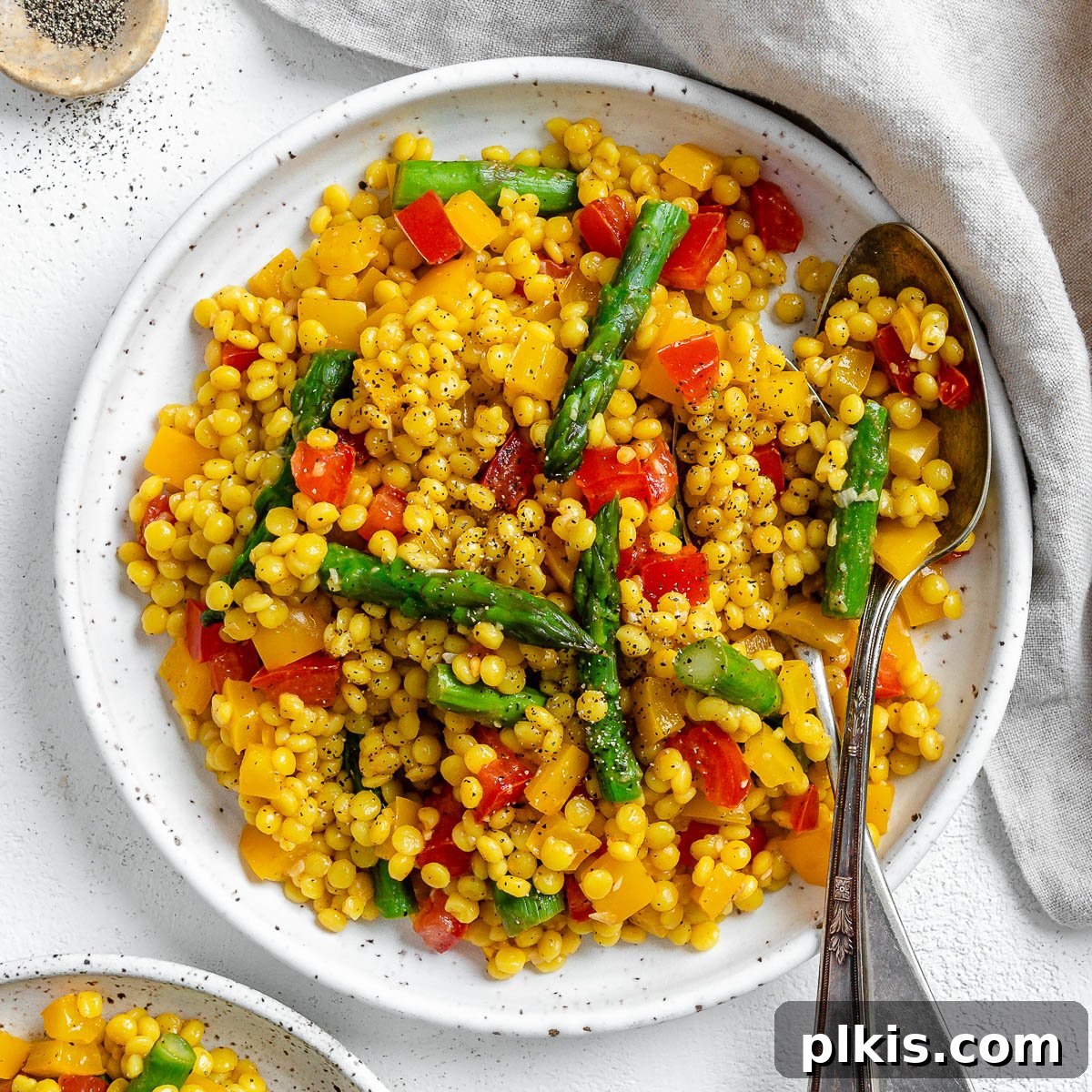
Welcome to your new favorite kitchen staple! This incredibly easy vegan couscous recipe is designed to transform your meal planning, offering a delicious, healthy, and versatile option that’s ready in a flash. Made with just a handful of fresh ingredients, it can be on your table in under 20 minutes, making it the perfect solution for busy weeknights when you crave something nutritious without the fuss. Whether you’re looking for a vibrant, flavorful side dish to complement any meal or want to bulk it up with a healthy plant-based protein to create a satisfying main course, this recipe truly shines. Its simplicity and adaptability make it a culinary chameleon, eager to fit into your lifestyle and tantalize your taste buds.
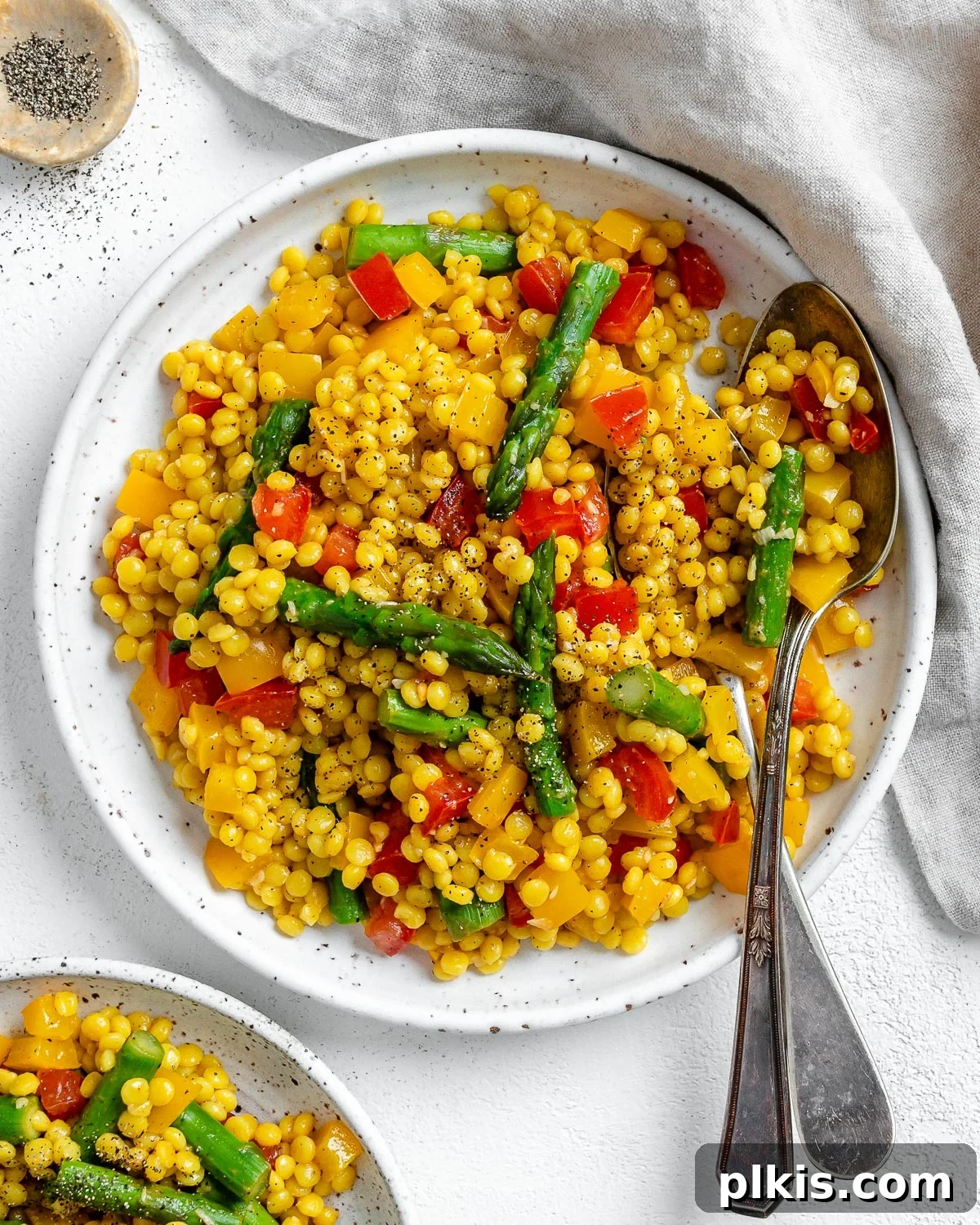
I simply adore couscous, and once you discover how quickly it cooks and how effortlessly it adapts to various flavors, you will too! Its rapid preparation time makes it an absolute lifesaver for those hectic evenings when time is of the essence but you still want to enjoy a homemade, wholesome meal. Beyond this delightful vegetable rendition, if you find yourself captivated by the charm of couscous, I highly recommend exploring other variations. You might particularly enjoy a fragrant pesto couscous, bursting with herbaceous notes, or a refreshing pearl couscous salad, offering a delightful chewiness and a medley of textures. The possibilities are truly endless with this humble grain-like pasta.
This recipe isn’t just for dinner; it’s a fantastic foundation for dynamic meal prep! You can easily transform it into a vibrant vegan couscous bowl, perfect for an on-the-go lunch that’s both nutritious and incredibly satisfying. Imagine a colorful blend of fluffy couscous and tender-crisp vegetables, packed into a portable container, ready to fuel your afternoon. It’s an excellent way to ensure you have healthy, homemade options at your fingertips throughout the week, saving you time and money.
Why This Vegan Couscous Recipe Will Become Your Go-To
This veggie-packed vegan couscous is more than just a recipe; it’s a strategic addition to your kitchen arsenal, offering a multitude of benefits that cater to modern, health-conscious lifestyles. Here’s why it’s poised to become a staple in your meal rotation:
- Effortlessly Quick and Easy: In today’s fast-paced world, finding time to cook healthy meals can be a challenge. This recipe understands that. With minimal chopping and a total cooking time of less than 20 minutes, you can have a gourmet-tasting dish on the table faster than ordering takeout. It’s perfect for beginners and seasoned cooks alike, requiring no complicated techniques or extensive culinary skills.
- Transforms into a Hearty Main Dish: While brilliant as a side, this vegan couscous easily scales up to a fulfilling main course. Simply integrate your favorite plant-based proteins to add substance and staying power. Think succulent tofu cubes, protein-rich chickpeas, hearty black beans, or even lentils. These additions not only boost the nutritional profile but also make it a robust and satisfying meal for any time of day.
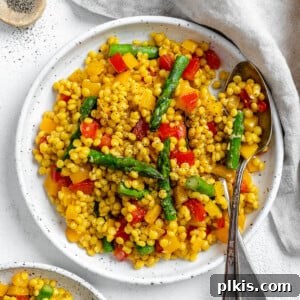
- Abundantly Healthy and Delicious: This recipe is a vibrant celebration of fresh vegetables, ensuring each bite is packed with essential vitamins, minerals, and fiber. The combination of tender asparagus, crisp bell peppers, and juicy tomatoes creates a delightful texture and flavor contrast, making healthy eating an absolute pleasure. It’s a guilt-free dish that doesn’t compromise on taste.
- A Refreshing Alternative to Pasta and Rice: If you’re seeking to break free from the monotony of traditional side dishes like pasta and rice, couscous offers an exciting change of pace. Its unique texture and ability to absorb flavors make it a fantastic foundation for a wide array of culinary explorations. It brings a subtly exotic touch to your plate, elevating everyday meals.
- Perfect for Meal Prep: Its versatility extends to meal preparation. This couscous dish tastes wonderful both warm and at room temperature, making it an ideal candidate for packed lunches. Prepare a larger batch at the beginning of the week, and you’ll have wholesome, ready-to-eat meals or sides for days.
Understanding Couscous: A Culinary Journey
Couscous, often mistaken for a grain, is actually a type of pasta made from semolina, which is coarsely ground durum wheat. This foundational ingredient is similar to what’s used in many traditional pasta dishes, setting couscous apart from grains like rice or quinoa. Its origins trace back to North Africa, particularly the Maghreb region, where it has been a culinary cornerstone for centuries, deeply embedded in the cultural and gastronomic identity of countries like Morocco, Algeria, and Tunisia.
The beauty of couscous lies in its incredible versatility. Historically, it was prepared in a special double-chambered pot called a “couscoussière.” The lower pot held a stew or broth, and the upper pot, with its perforated bottom, held the couscous, allowing it to steam gently above the simmering liquid. This steaming process is crucial, as it results in the signature light, fluffy texture that distinguishes perfectly cooked couscous from its boiled counterparts. While traditional methods can be labor-intensive, modern, instant varieties allow us to enjoy this delightful staple with minimal effort.
There are several types of couscous, each with its own characteristics and culinary uses:
- Fine-Grain Couscous: This is the most common type found in Western supermarkets, often labeled as “instant couscous.” Its tiny granules cook rapidly, typically by simply soaking in hot water or broth for a few minutes. It’s ideal for quick side dishes and salads.
- Medium-Grain Couscous: Slightly larger than fine-grain, this variety offers a bit more chew and often requires a short steaming or simmering process.
- Israeli Couscous (Pearl Couscous): Also known as Moghrabieh, this variety consists of much larger, spherical pasta pearls. It has a chewier texture, similar to orzo, and is typically cooked by boiling in water or broth, much like regular pasta. It’s excellent in salads, as a base for stews, or simply as a side.
Couscous boasts a relatively neutral flavor profile, which is precisely why it’s so beloved. This neutrality allows it to readily absorb the vibrant flavors of whatever ingredients it’s paired with—be it aromatic spices, fresh herbs, robust vegetables, or savory broths. It serves as a perfect canvas for both savory and sweet preparations, from hearty vegetable tagines to sweet porridges infused with dried fruits and nuts. Its light and fluffy texture, combined with its ability to soak up sauces and seasonings, makes it an excellent choice for a wide range of dishes, offering a pleasant change from more common grains or starches.
Essential Ingredients for Your Veggie Couscous
One of the many charms of this vegan couscous recipe is its reliance on simple, wholesome ingredients that are readily available. You’ll be amazed at the depth of flavor and nutrition you can achieve with just a few core components. Here’s a closer look at what goes into this vibrant dish, along with some insights into ingredient choices:
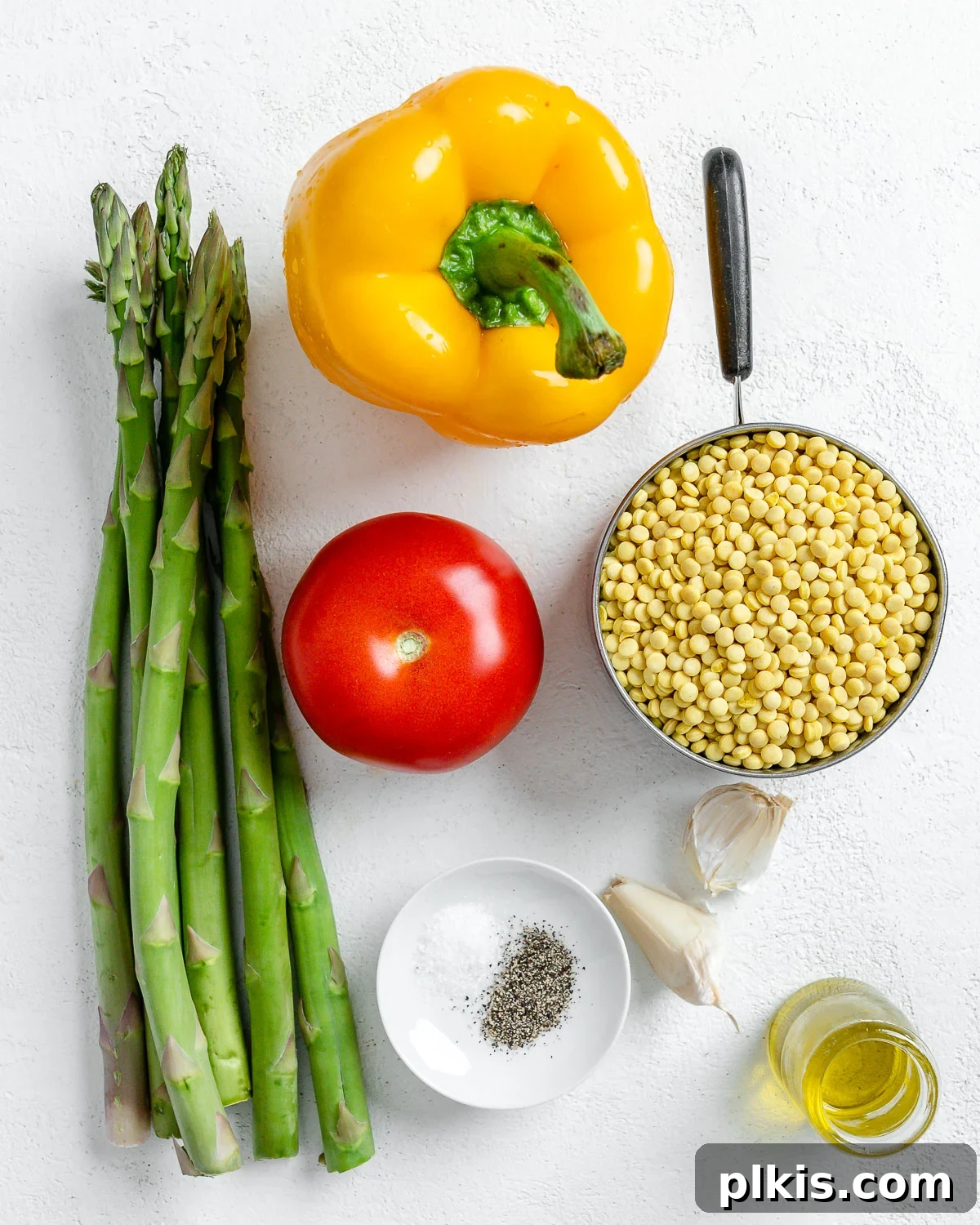
- Dried Couscous: This is the star of our dish. While fine-grain (instant) couscous is typically used for its speed and ease, you can certainly experiment with medium-grain or even Israeli (pearl) couscous for a different texture. Just be sure to carefully follow the specific cooking instructions provided on your chosen package, as preparation times and water ratios can vary significantly between types.
- Vegetable Oil: A good quality oil is essential for sautéing the vegetables, adding richness and helping to bring out their natural sweetness. Feel free to use your preferred neutral-flavored oil. My top choices include extra virgin olive oil for its rich, fruity notes, grapeseed oil for its light body and high smoke point, or sunflower oil for a classic, mild flavor.
- Fresh Vegetables: The beauty of this recipe lies in its adaptability. For this rendition, we’re using crisp asparagus, vibrant bell pepper, and juicy tomato. However, this is merely a suggestion! Feel free to customize your veggie selection based on seasonality, what you have on hand, or your personal preferences. Other fantastic additions include zucchini, thinly sliced carrots, chopped spinach or kale (added at the end), mushrooms, or sweet corn kernels. Aim for a colorful variety for both visual appeal and a broader nutritional spectrum.
- Fresh Garlic Cloves: Garlic is a foundational flavor in countless savory dishes, and it truly elevates this couscous. Using fresh garlic, finely minced, will provide the most potent and aromatic experience, far superior to pre-minced or powdered alternatives. Don’t skip this for an incredible depth of flavor.
- Salt and Freshly Ground Black Pepper: These humble seasonings are crucial for balancing and enhancing all the other flavors. Seasoning to taste ensures your couscous is perfectly balanced, bringing out the best in the vegetables and the couscous itself.
Crafting Your Vegan Couscous: A Step-by-Step Guide
Creating this delicious and healthy vegan couscous is remarkably straightforward. Follow these simple steps, and you’ll have a delightful meal ready in no time:
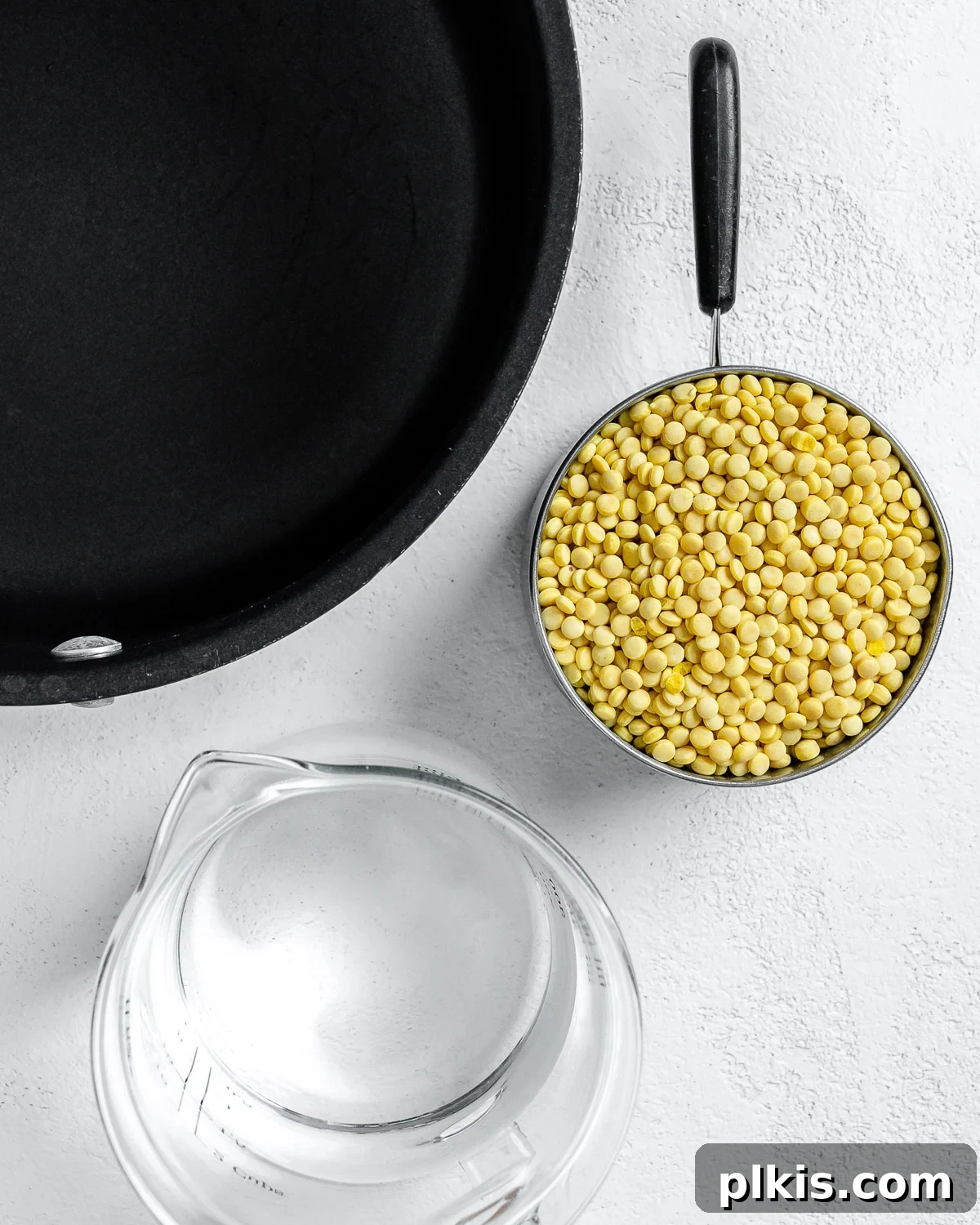
- 1) Prepare the Couscous: Begin by cooking your dried couscous according to the package instructions. This is crucial as different types of couscous (fine, medium, Israeli) have varying water ratios and cooking times. Typically, for fine-grain couscous, you’ll bring water or vegetable broth to a boil, stir in the couscous, cover, remove from heat, and let it sit for about 5 minutes until the liquid is absorbed and the couscous is fluffy. Use a fork to fluff it gently once cooked.
- 2) Sauté the Vegetables: While your couscous is resting, heat a large skillet or frying pan over medium heat. Once hot, add your chosen vegetable oil. Allow the oil to shimmer slightly, then add the chopped asparagus, diced bell pepper, and minced garlic cloves to the pan. Sauté these vegetables, stirring occasionally, until they are tender-crisp. This typically takes about 5 to 8 minutes. The goal is to cook them just enough to soften and release their flavors without making them mushy. They should retain a slight bite for optimal texture.
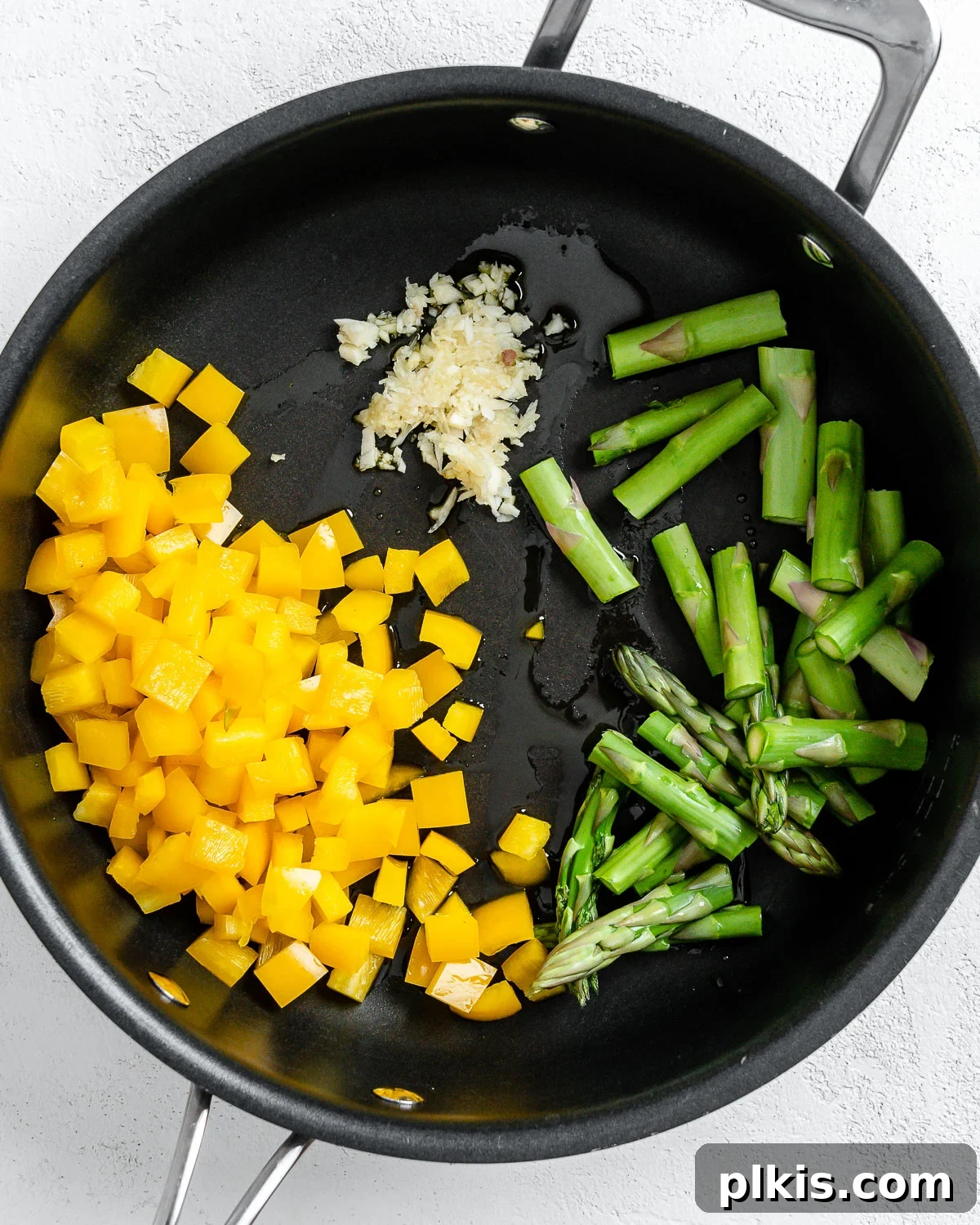
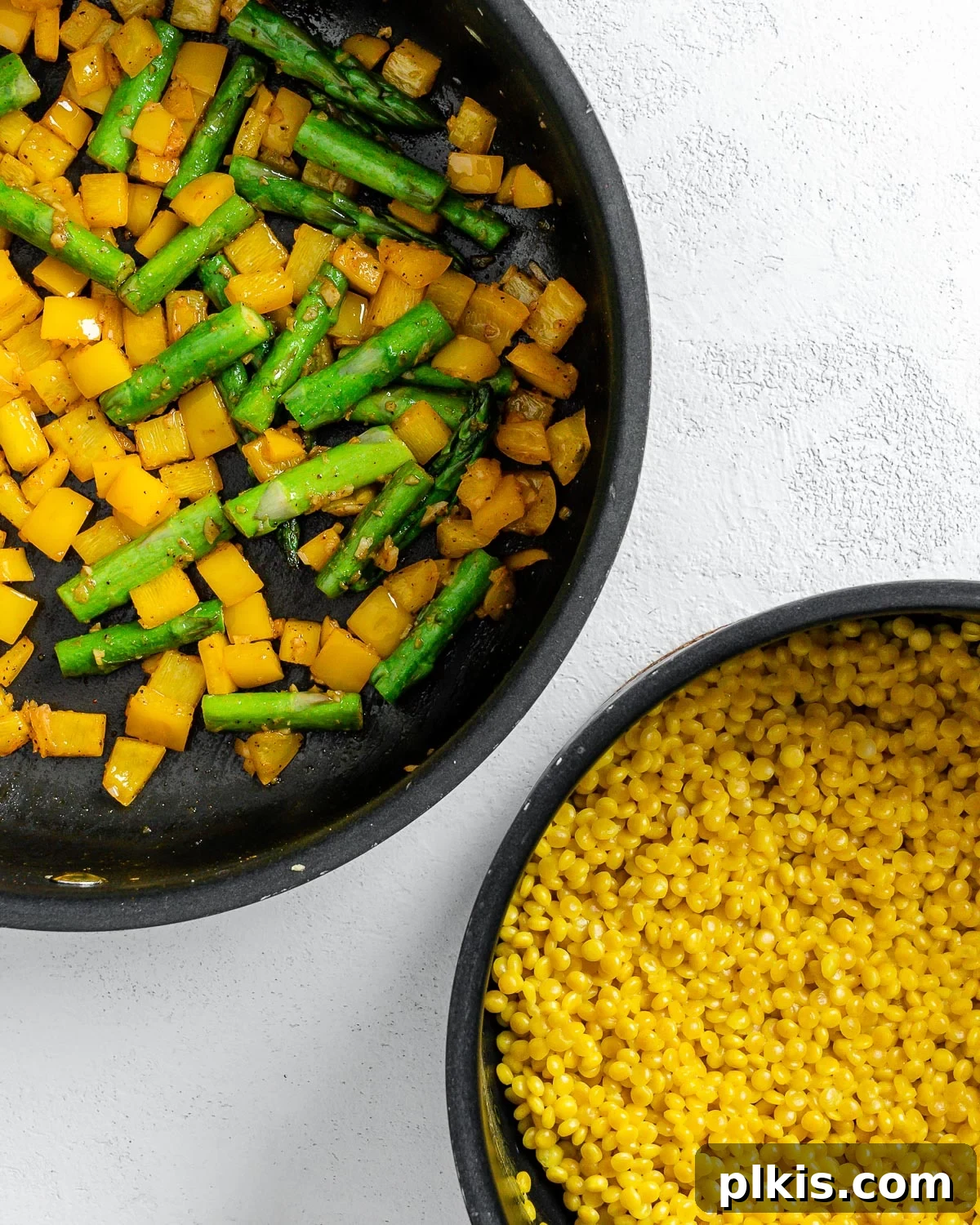
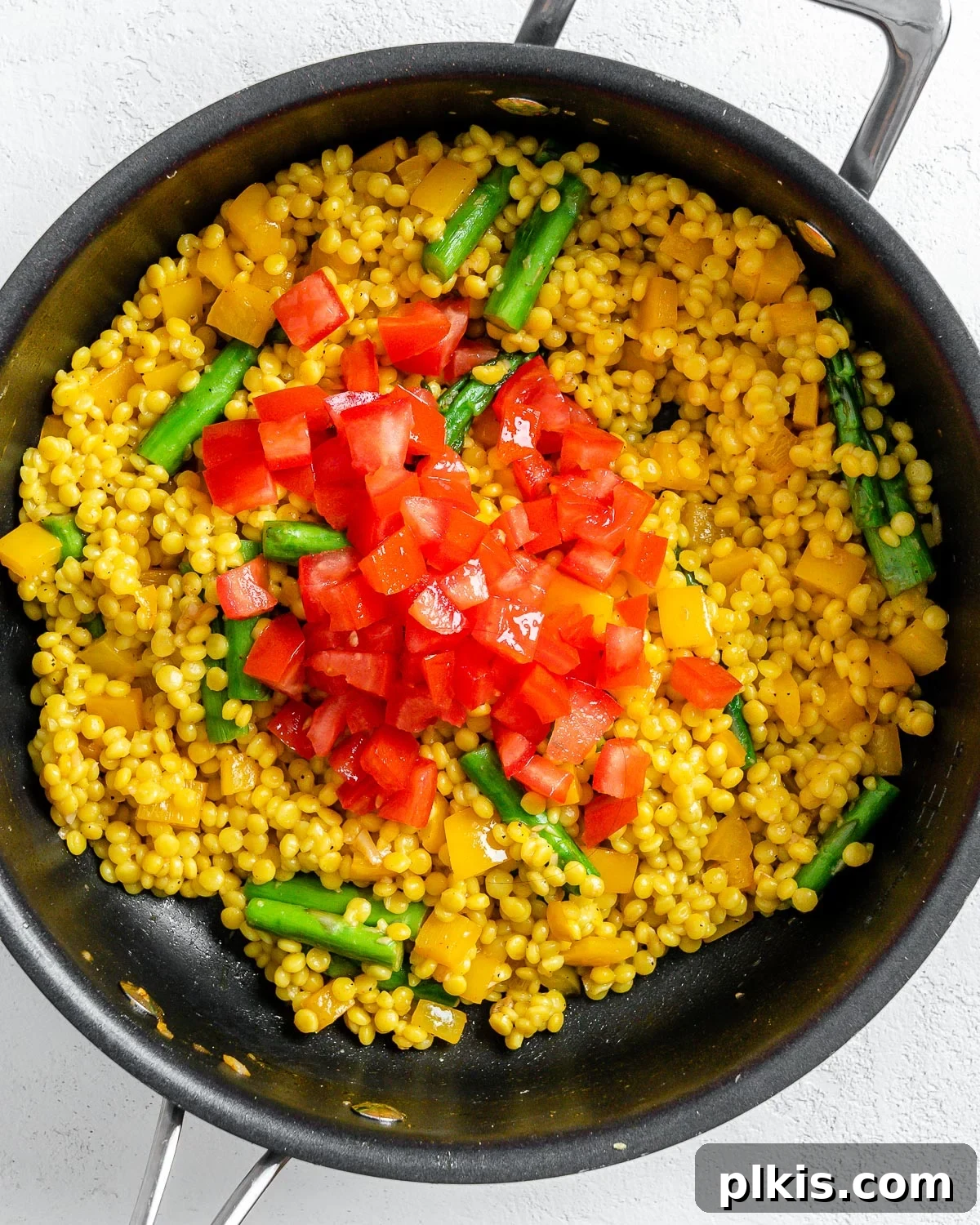
- 3) Combine and Serve: Once the vegetables are perfectly tender-crisp, season them generously with salt and freshly ground black pepper to taste. Next, gently fold the sautéed vegetables into the cooked and fluffed couscous. Add the diced fresh tomato and mix everything together until well combined. The warmth of the couscous and vegetables will slightly soften the tomato, releasing its fresh juices. Serve your vibrant veggie couscous warm for a comforting meal, or allow it to cool to room temperature for a refreshing salad-like dish.
Expert Tips for Perfect Vegan Couscous Every Time
Achieving perfectly fluffy couscous and vibrant, flavorful vegetables is simple with a few insider tips. These pointers will help you master this quick and easy dish, ensuring delicious results consistently:
- Always Adhere to Package Instructions for Couscous: While the basic principle of cooking couscous is similar, there can be subtle but important differences in liquid ratios and resting times depending on the brand and type (fine-grain, medium-grain, or Israeli/pearl couscous). Following the package directions will prevent sticky, overcooked couscous or undercooked, crunchy grains.
- Embrace Tender-Crisp Vegetables: The key to delectable veggie couscous is to avoid overcooking your vegetables. Aim for a tender-crisp texture, where they are cooked through but still retain a slight bite and their vibrant color. This not only enhances the overall texture of the dish but also preserves more of their nutritional value and fresh flavor.
- Versatility in Serving Temperature: One of the best qualities of this dish is its flexibility. It’s equally delightful served warm as a comforting side or main dish, or at room temperature as a refreshing salad. This makes it an ideal candidate for meal prepping; enjoy it hot for dinner, and pack the leftovers for a convenient and delicious weekday lunch.
- Infuse Extra Flavor: To take your couscous to the next level, consider adding a squeeze of fresh lemon juice and a sprinkle of finely minced fresh parsley or cilantro right before serving. The citrus brightens all the flavors, while fresh herbs add an aromatic lift.
- Achieve Ultimate Fluffiness: After the couscous has absorbed its liquid, use a fork to gently fluff it. Avoid stirring or pressing, as this can make it dense. Gently separating the grains with a fork will give you that desirable light and airy texture.
- Spice It Up: Don’t be shy with spices! A pinch of cumin, turmeric, or a touch of smoked paprika can add wonderful North African or Mediterranean flair to your vegetable medley.
Frequently Asked Questions About Vegan Couscous
New to cooking with couscous or looking for ways to enhance your plant-based meals? Here are some common questions and comprehensive answers to help you make the most of this versatile ingredient:
Couscous is naturally vegan, offering a blank canvas for a wide array of plant-based additions. It pairs exceptionally well with vibrant and aromatic ingredients. For a sweet touch, consider dried apricots, raisins, or dates, often complemented by a pinch of cinnamon or cardamom. For savory dishes, almost any vegetable works – think sautéed zucchini, bell peppers, onions, mushrooms, or leafy greens like kale and spinach. Legumes such as chickpeas and lentils add protein and fiber, making it a more substantial meal. Fresh herbs like mint, cilantro, or parsley provide a burst of freshness, while citrus elements like lemon juice and orange zest can brighten the entire dish. Don’t forget nuts like almonds or pistachios for crunch and healthy fats, and a generous amount of fresh garlic for depth of flavor.
The most common ratio for fine-grain instant couscous is typically 1:1, meaning one cup of liquid (water or vegetable broth) for every cup of couscous. However, it’s always best to check the specific package instructions, as this can vary slightly by brand or type. Couscous can generally be prepared using two primary methods:
- Soaking Method: This is the quickest and most common for instant couscous. Boiling water or hot broth is poured directly over the dry couscous in a bowl. The bowl is then covered and left to sit for about 5-10 minutes, allowing the couscous to absorb the liquid and become tender and fluffy.
- Pilaf Method: This method adds an extra layer of flavor. First, the dry couscous is lightly toasted in a bit of plant-based butter or olive oil in a pan until slightly golden. Then, broth or water is added, brought to a simmer, covered, and cooked until all the liquid is absorbed. This technique yields a more aromatic and slightly richer flavor profile.
No, traditional couscous is not gluten-free. It is made from semolina, which is derived from durum wheat. As such, it contains gluten. However, for those with gluten sensitivities or celiac disease, there are now gluten-free alternatives available, such as couscous made from corn, rice, or even cauliflower. Always check the label to ensure you’re choosing a certified gluten-free product if that is a dietary requirement.
Leftover vegetable couscous should be stored in an airtight container in the refrigerator within two hours of cooking. Properly stored, it will remain fresh and delicious for about 3-4 days. It’s excellent for meal prep as it holds up well and tastes great served chilled or reheated. When reheating, you might want to add a splash of vegetable broth or water to rehydrate it slightly and prevent it from drying out.
Absolutely! This vegan couscous recipe is an ideal candidate for making ahead. Its flavors tend to meld and develop even further after a few hours or overnight in the refrigerator. Prepare it as directed, allow it to cool completely, then transfer it to an airtight container. Store it in the fridge for up to 3 days. When ready to serve, you can enjoy it cold or at room temperature, or gently warm it if preferred.
Perfect Pairings: What to Serve with Your Vegan Couscous
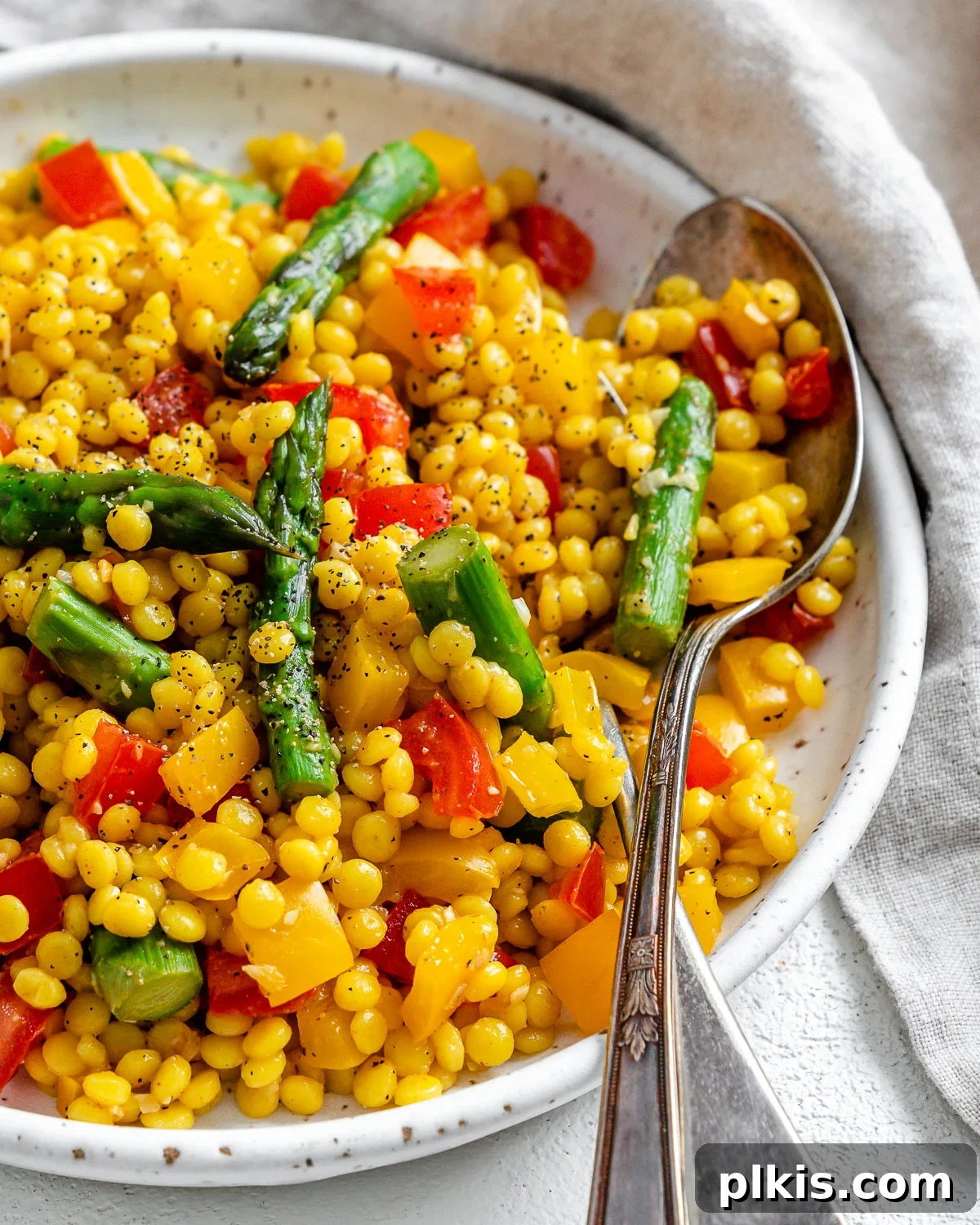
The beauty of couscous, especially this light and flavorful veggie version, lies in its remarkable adaptability. Its neutral yet subtly nutty flavor profile makes it an excellent canvas, capable of complementing an incredibly diverse range of dishes. Whether you’re aiming for a comforting main meal or a refreshing side, couscous seamlessly fits the bill. It truly shines when served alongside both sweet and savory components, making it a fantastic ingredient to experiment with. You can enjoy it with dried fruits, chopped fresh vegetables, crunchy nuts, or even as a base for vibrant salads.
Think beyond just a simple side! Couscous can be served cold in vibrant, refreshing salads, or hot as a comforting “porridge” (especially popular in sweet Moroccan preparations) or as a central component in a main dish, much like a pilaf or a grain bowl.
- As a Satisfying Main Dish: Elevate your leftover veggie couscous into a hearty and complete meal for lunch or dinner. Simply add a generous topping of protein-rich ingredients. Crispy, air-fried chickpeas provide a delightful crunch and protein boost, while perfectly seasoned savory tofu cubes or tempeh offer a substantial, flavorful addition. You could also serve it alongside a hearty lentil stew, a flavorful vegetable curry, or grilled plant-based skewers for a more elaborate main course.
- A Versatile Side Dish: This vegan couscous makes a refreshing and light accompaniment to virtually any meal where you’d typically serve rice or pasta. It pairs wonderfully with roasted vegetables, a fresh green salad, or a simple protein. Consider it a vibrant alternative to a classic rice pilaf or a fresh pasta side dish. It’s also superb alongside a rich vegetable tagine, a vibrant Mediterranean salad, or even as a stuffing for bell peppers or zucchini.
- Building a Complete Meal: For a balanced and diverse meal, consider serving your couscous with a variety of textures and flavors. A dollop of hummus or a swirl of tahini sauce can add creamy richness. A sprinkle of toasted seeds (like pumpkin or sunflower) provides extra crunch and nutrients. And for an extra pop of freshness, a scattering of pomegranate seeds or a handful of fresh mint leaves can truly transform the experience.
Discover More Easy Plant-Based Recipes
If you loved the simplicity and flavor of this vegan couscous, you’re in for a treat! Our kitchen is brimming with quick, budget-friendly, and incredibly tasty plant-based recipes designed to make healthy eating accessible and enjoyable. Here are a few more easy side dishes and light meals that we think you’ll adore:
- Vegan Sweet Potato Salad: A creamy, satisfying salad perfect for potlucks or a light lunch.
- Tofu Larb Salad: A zesty, herbaceous, and savory dish inspired by Thai cuisine.
- Veggie Chow Mein: A quick and flavorful noodle dish packed with colorful vegetables.
- Crispy Carrot Fries: A healthier and equally delicious alternative to traditional potato fries.
- Hearty Lima Bean Sausage Patties: A surprisingly delicious and protein-packed option for breakfast or a savory addition to any meal.
All these recipes are crafted to inspire and simplify your plant-based journey, proving that healthy eating can be both easy and incredibly delicious. Happy cooking!
Photos by Alfonso Revilla
Vegan Couscous with Veggies
Equipment
-
Measuring Cups
-
Measuring spoons
-
My favorite knives
Ingredients
- 1 cup of dried couscous
- 1 Tablespoon of vegetable oil
- 6 spears of asparagus, chopped into ¼-inch pieces
- 1 bell pepper diced
- 1 medium tomato diced
- Salt and pepper to taste
Instructions
-
In a medium pan, cook couscous according to the package instructions.
-
Heat a large pan over medium heat, heat oil. Add in your asparagus, bell pepper, and garlic, and cook until tender, about 5 to 8 minutes.
-
To season, add a little salt & pepper. Fold in with couscous and diced tomato, and serve warm.
Notes
- Add extra flavor: Lemon juice with minced parsley pair nicely with this dish.
- Don’t overcook the veggies. Leaving the vegetables with a bit of crunch makes a better-tasting veggie couscous.
- Works hot or cold. This means you can eat it hot for dinner and save the leftovers to carry for an easy weekday lunch.
Nutrition
Carbohydrates: 73g
Protein: 12g
Fat: 8g
Saturated Fat: 1g
Polyunsaturated Fat: 4g
Monounsaturated Fat: 2g
Trans Fat: 1g
Sodium: 14mg
Potassium: 421mg
Fiber: 6g
Sugar: 4g
Vitamin A: 2398IU
Vitamin C: 85mg
Calcium: 32mg
Iron: 1mg
Additional Info
Tried this recipe?Please tag us at @PlantBasedOnABudget! 🙂