
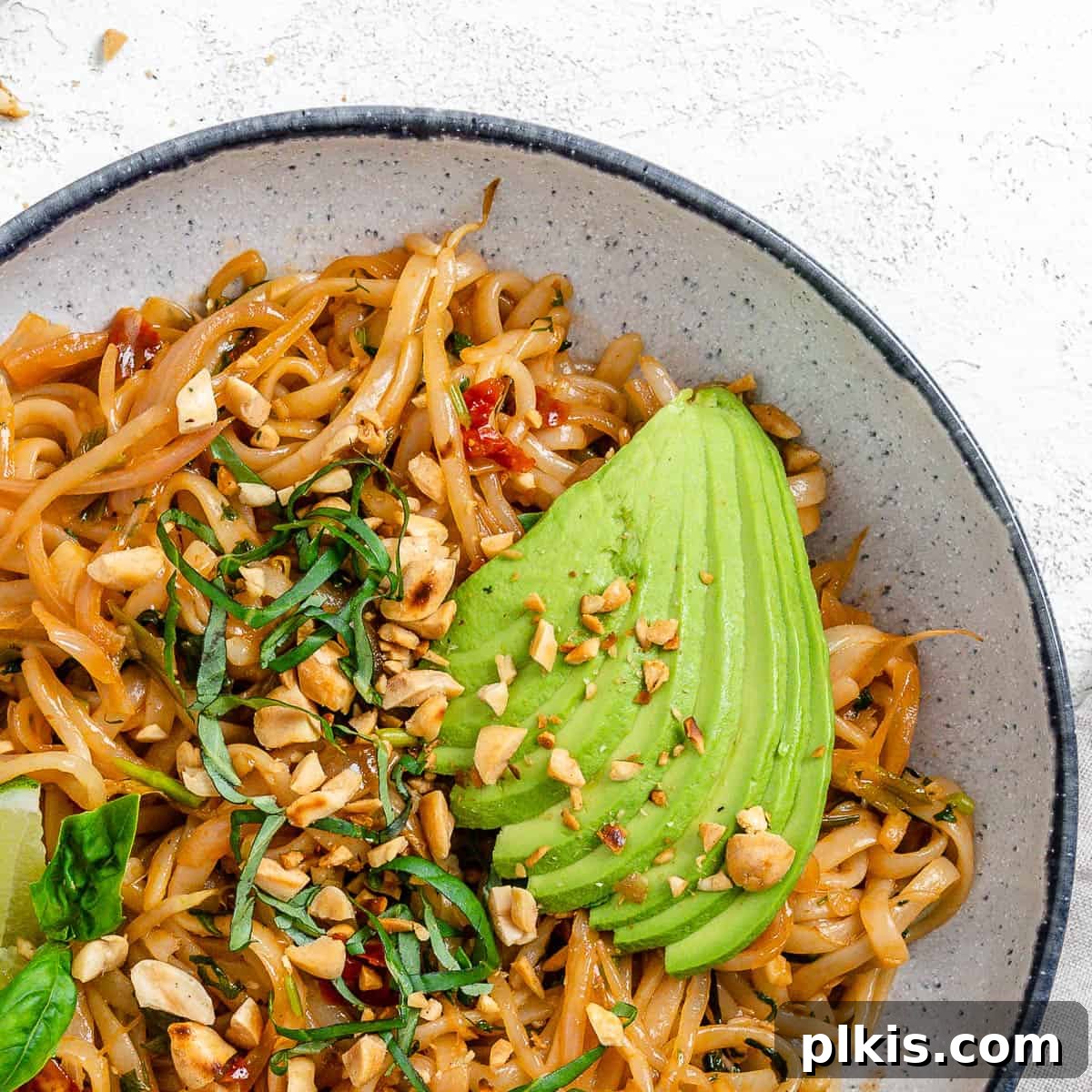
If you’re searching for an incredibly simple yet profoundly flavorful vegan vegetable pad thai recipe that you can effortlessly whip up in your own kitchen, look no further. This plant-based twist on the classic Thai dish is not only versatile and bursting with authentic flavors but also surprisingly easy to prepare in just 30 minutes, making it the perfect choice for busy weeknights or whenever you crave a delicious and healthy meal.
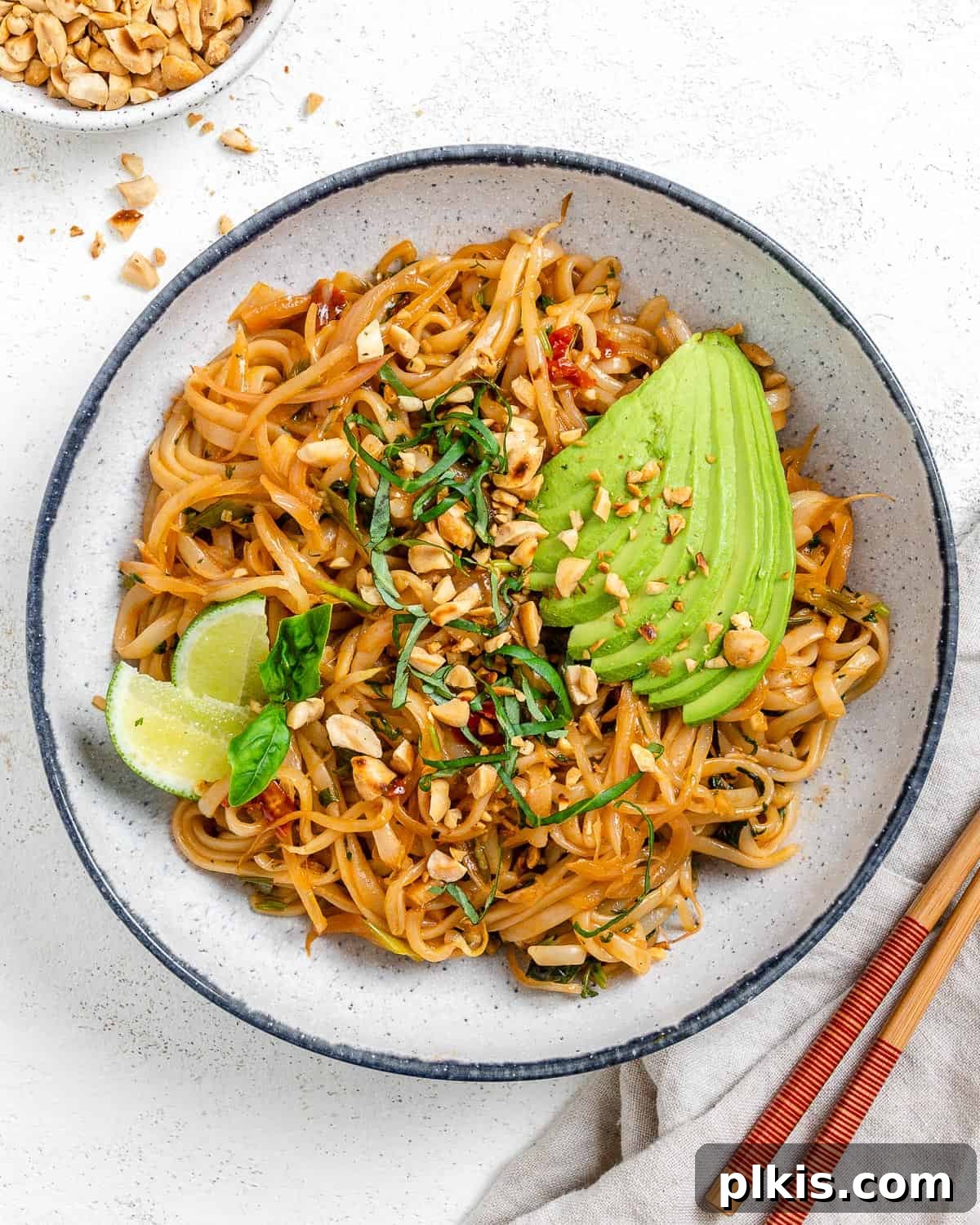
Our easy vegan pad thai delivers a satisfying meal that’s both nutrient-dense and remarkably filling. It’s an ideal solution for a quick and wholesome family dinner, offering a delightful culinary experience without compromising on taste or convenience. Plus, it yields generous portions, guaranteeing delicious lunch leftovers to enjoy throughout the week. This recipe is your ticket to a vibrant, healthy, and incredibly tasty plant-based Thai experience at home.
Should you find yourself captivated by the vibrant flavors of this plant-based pad thai, we encourage you to explore other delightful Thai-inspired creations. You might also savor our Yellow Tofu Curry or the wonderfully sweet and savory Sweet Coconut Thai Tofu. For an even broader selection of easy and flavorful plant-based meals, dive into our full collection of Thai recipes.
What Exactly is Pad Thai?
Pad Thai stands as one of Thailand’s most iconic and beloved noodle dishes, renowned globally for its intricate balance of sweet, sour, salty, and spicy flavors. Traditionally, this stir-fried dish is prepared with rice noodles, a protein source like shrimp or tofu, eggs, bean sprouts, crushed peanuts, and a distinctive sauce often containing fish sauce, tamarind, and palm sugar. It’s a culinary masterpiece that showcases the complexity and depth of Thai cuisine, often served with a wedge of lime and fresh herbs to brighten every bite.
While our recipe isn’t an exact replication of the more traditional, shrimp and egg-laden dish, it brilliantly captures the spirit and incredible taste of Pad Thai through thoughtful plant-based substitutions. This vegan pad thai recipe reimagines the classic, creating a hearty and intensely flavorful Thai meal that is entirely plant-based. We focus on fresh vegetables and a perfectly balanced sauce to deliver a truly satisfying experience that is both authentic in essence and suitable for a vegan diet, proving that you don’t need animal products to enjoy the rich culinary heritage of Thailand.
Why You’ll Love This Easy Vegan Pad Thai Recipe
This isn’t just another noodle dish; it’s a culinary experience designed for convenience, health, and exceptional flavor. Here’s why this vegetable pad thai will quickly become a cherished recipe in your home:
- Unbelievably Quick & Convenient: With a total preparation and cook time of just 30 minutes, this recipe is a godsend for busy weeknights. Say goodbye to lengthy cooking sessions and hello to a gourmet meal in half an hour.
- Rich & Authentic Flavor Profile: Our plant-based version doesn’t skimp on flavor. The harmonious blend of sweet, sour, and savory notes, combined with a hint of spice, creates a taste that rivals your favorite Thai restaurant. It’s genuinely delicious and deeply satisfying.
- Wholesome and Packed with Veggies: This Pad Thai is loaded with fresh, vibrant vegetables, making it a nutritious choice for any meal. It’s a fantastic way to boost your daily veggie intake without sacrificing taste.
- Super Customizable to Your Liking: Whether you want to add more heat, experiment with different vegetables, or incorporate extra protein, this recipe is incredibly flexible. It’s designed to be easily adapted to your personal preferences and whatever ingredients you have on hand.
- Perfect for Meal Prep: This dish tastes just as good, if not better, the next day. Prepare a larger batch and enjoy wholesome, flavorful lunches or dinners throughout the week. Its robust flavors hold up beautifully when stored.
- Naturally Vegan & Easily Gluten-Free: Catering to various dietary needs, this recipe is entirely plant-based. With a simple swap of soy sauce for tamari or coconut aminos, it effortlessly becomes a delicious gluten-free option, ensuring everyone can enjoy a taste of Thailand.
Essential Ingredients for a Stellar Vegetable Pad Thai
Don’t be daunted by the comprehensive list of ingredients required to create this incredible homemade pad thai! Many of these items are likely already in your pantry or easily accessible at any local grocery store. Each component plays a crucial role in building the layered, complex flavors that make Pad Thai so irresistible. Let’s dive into what makes this dish truly special:
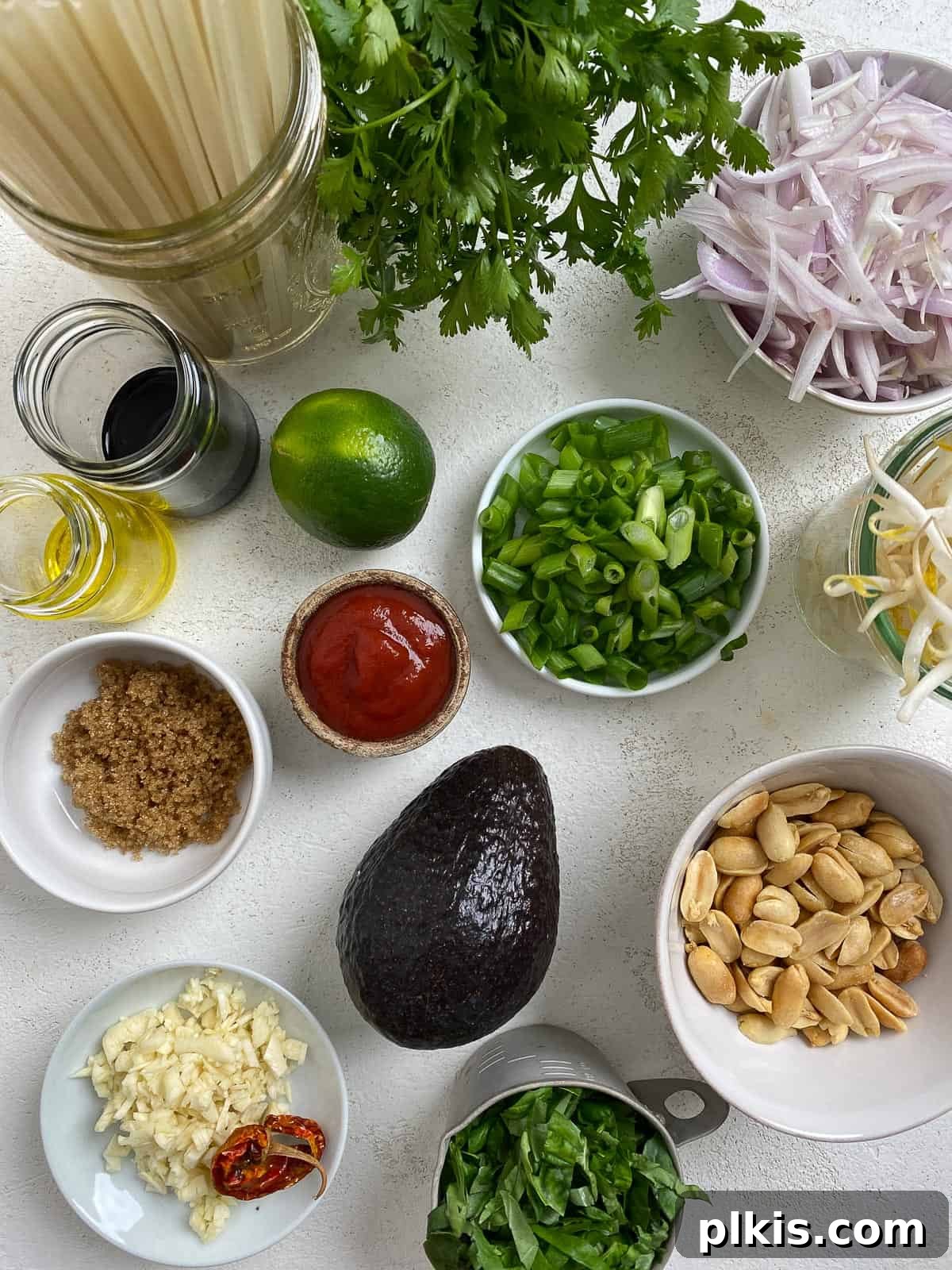
- Rice Noodles: The foundation of any great Pad Thai. We highly recommend using ¼-inch wide flat rice noodles for that authentic texture and mouthfeel, but any medium-width rice noodle will work beautifully. Ensure they are cooked al dente, as they will continue to soften slightly when stir-fried.
- Soy Sauce: This provides the essential umami and salty base for our Pad Thai sauce. For those following a gluten-free diet, easily swap it out for tamari or coconut aminos without compromising flavor.
- Brown Sugar: Critical for balancing the tang of lime and the saltiness of soy sauce, brown sugar adds a deep, molasses-rich sweetness. Its nuanced flavor is superior to white sugar here; however, agave nectar is a fantastic alternative if preferred.
- Fresh Lime Juice: There is absolutely no substitute for the bright, zesty flavor of freshly squeezed lime juice. It provides the signature sour note that is indispensable to authentic Pad Thai. Always use fresh for the best results!
- Ketchup or Tamarind Paste: Ketchup offers a sweet and tangy tomato base, contributing a unique depth to the sauce. For a more traditional Thai flavor, tamarind paste is an excellent choice, providing a distinctive sourness and fruity undertone. Either option will work well to build the complex sauce.
- Oil: A high-smoke point oil is essential for stir-frying. We recommend sesame oil for its nutty aroma, peanut oil for its classic Asian flavor profile, or grapeseed oil for a neutral option. Choose your favorite to infuse your dish with deliciousness.
- Aromatics: Finely sliced shallots and fresh minced garlic are the powerhouses that lay the aromatic foundation of this Pad Thai. Their gentle sweetness and pungent notes create the first layer of irresistible flavor. If shallots are unavailable, yellow onion makes a suitable substitute.
- Hot Chili Pepper: For those who love a kick, a Thai or red chili, de-seeded and finely chopped, will introduce a lovely heat. Adjust the amount to your spice preference, but remember to deseed them to manage the intensity.
- Mung Bean Sprouts: These delicate sprouts add a refreshing crunch and freshness, a hallmark of Pad Thai. Look for them in the produce section and purchase them as close to cooking time as possible, as they are quite perishable. Thinly sliced cabbage can also be used for a similar crunch.
- Fresh Herbs: A generous handful of fresh cilantro, basil, and chopped green onions are vital for garnishing and infusing the dish with vibrant, fresh flavors just before serving. These aromatic herbs elevate the entire experience. Learn how to store herbs properly here!
- Peanuts: Crushed, roasted, and unsalted peanuts are an absolute must for their delightful crunch and rich, savory flavor. They add a wonderful texture and depth as a garnish.
- Avocado: While not traditional, sliced avocado adds a luxurious creaminess and a boost of healthy fats, contributing a beautiful color and a mellow counterpoint to the vibrant flavors.
Creative Variations and Simple Substitutions
One of the best aspects of this vegan pad thai recipe is its inherent adaptability. Feel free to unleash your creativity and tailor it to your dietary needs, personal taste, or whatever fresh ingredients you happen to have on hand. Here are some fantastic ideas to inspire you:
- Adjust the Heat: The spiciness of your Pad Thai is entirely in your hands! Use more or less of the hot chili pepper to achieve your desired level of warmth. If serving to children or those sensitive to spice, omit the chili from the main dish and offer sliced chilies or chili flakes on the side for individual customization.
- Boost the Protein: For an even more substantial meal, consider adding extra plant-based protein. Marinated tofu, pan-fried until golden, or crispy fried tofu strips are excellent additions. You could also include tempeh, edamame, or even chickpeas for a different texture and protein kick. Integrate them into the stir-fry towards the end.
- Load Up on More Veggies: This Pad Thai welcomes a variety of fresh vegetables! Broccoli florets, tender kale, crisp bok choy, thinly shredded cabbage, julienned carrots, or earthy mushrooms all make fantastic additions. Simply slice them thinly to ensure even cooking and sauté them alongside the mung bean sprouts for a few minutes until they are tender-crisp. Seasonal vegetables are always a great choice!
- Nut-Free Alternatives: If you or your guests have a peanut allergy or simply prefer a different crunch, toasted sesame seeds or toasted cashews are wonderful substitutes for the peanuts. For a completely nut-free option, roasted sunflower or pumpkin seeds can provide a similar textural element.
- Make it Oil-Free: Achieving an oil-free Pad Thai is simple! Just omit the oil entirely when sautéing your aromatics. Instead, use a splash of vegetable broth or water to prevent sticking and still achieve that lovely browned flavor for your vegetables.
Step-by-Step Guide: How To Make Vegan Pad Thai
Creating this flavorful vegan pad thai is simpler than you might think. Follow these clear instructions to bring a taste of Thailand to your table in just 30 minutes:
- 1) Begin by bringing a medium pot of water to a rolling boil. Carefully add your rice noodles and cook them according to package directions until they are just al dente—meaning they are firm to the bite, but not hard. Overcooked noodles can become mushy, so keep a close eye on them. Once cooked, drain them immediately, rinse thoroughly with cold water to stop the cooking process and prevent sticking, then set them aside. If you wish, drizzle with a teaspoon of oil and toss gently to ensure they remain separated while you prepare the other components.
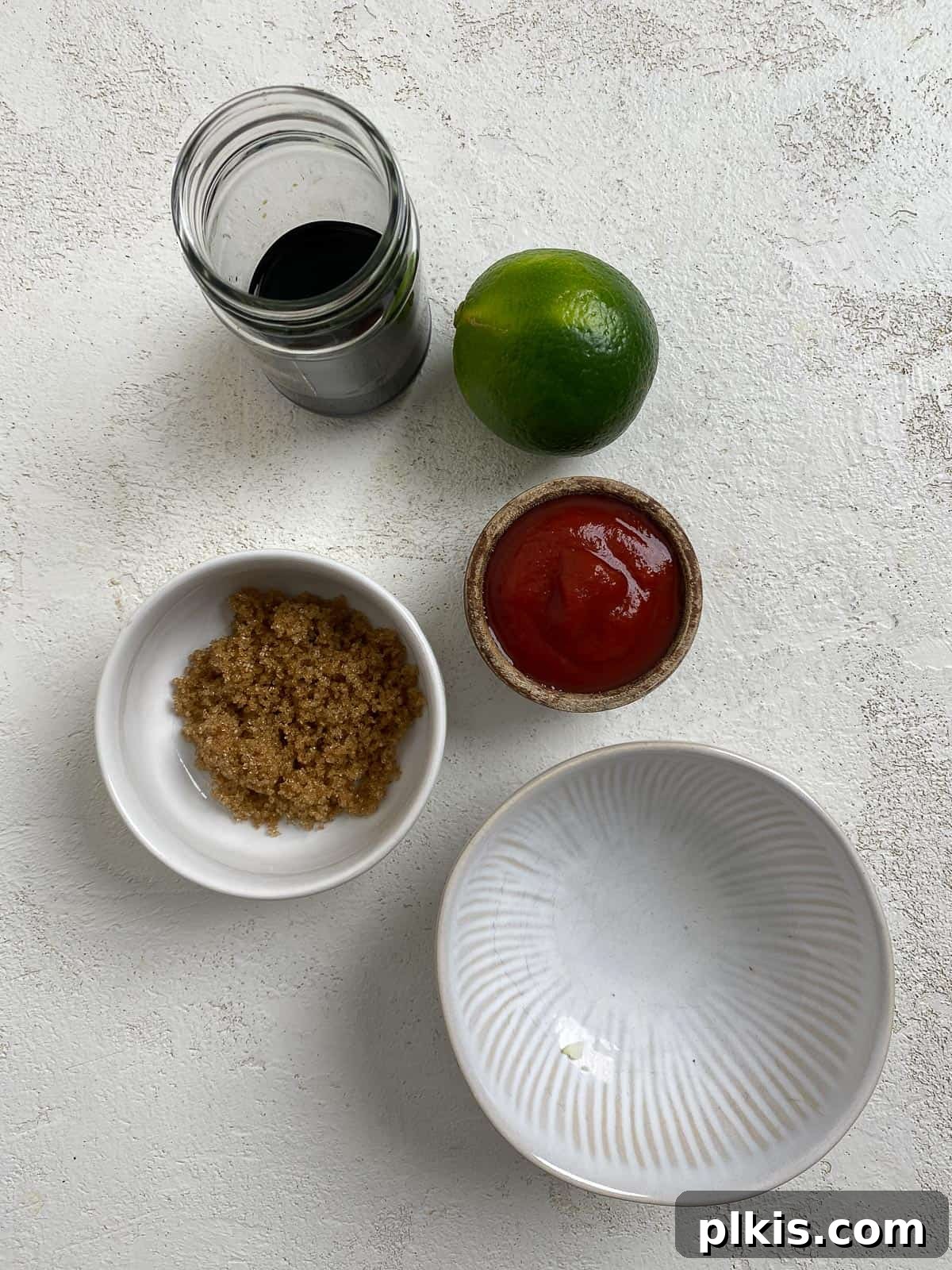
- 2) While your noodles are cooking or cooling, prepare the vibrant Pad Thai sauce. In a small bowl, combine the soy sauce (or tamari/coconut aminos for gluten-free), brown sugar (or agave), fresh lime juice, and ketchup (or tamarind paste). Whisk these ingredients together until well combined and the sugar has dissolved. Set this flavorful sauce aside.
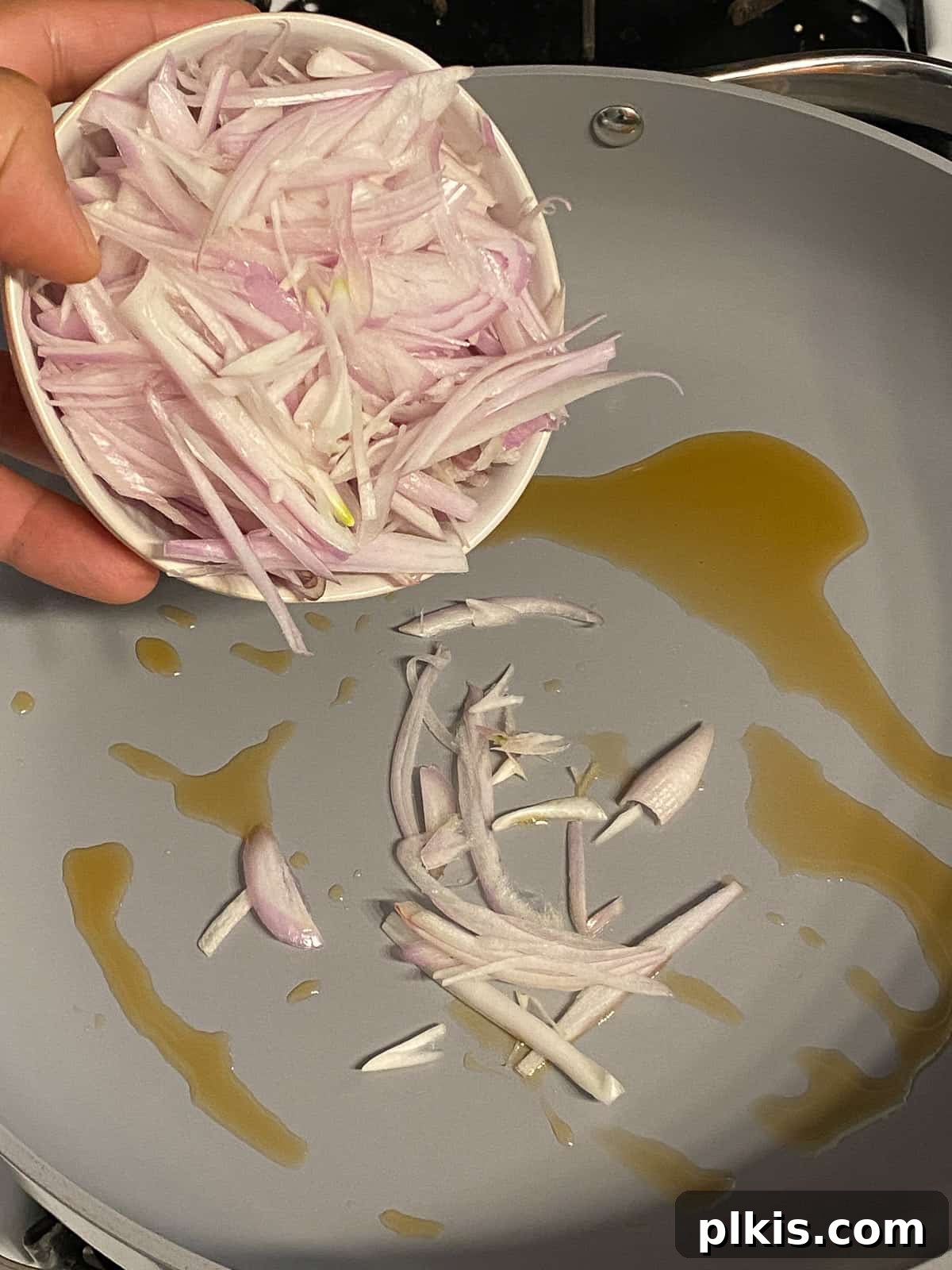
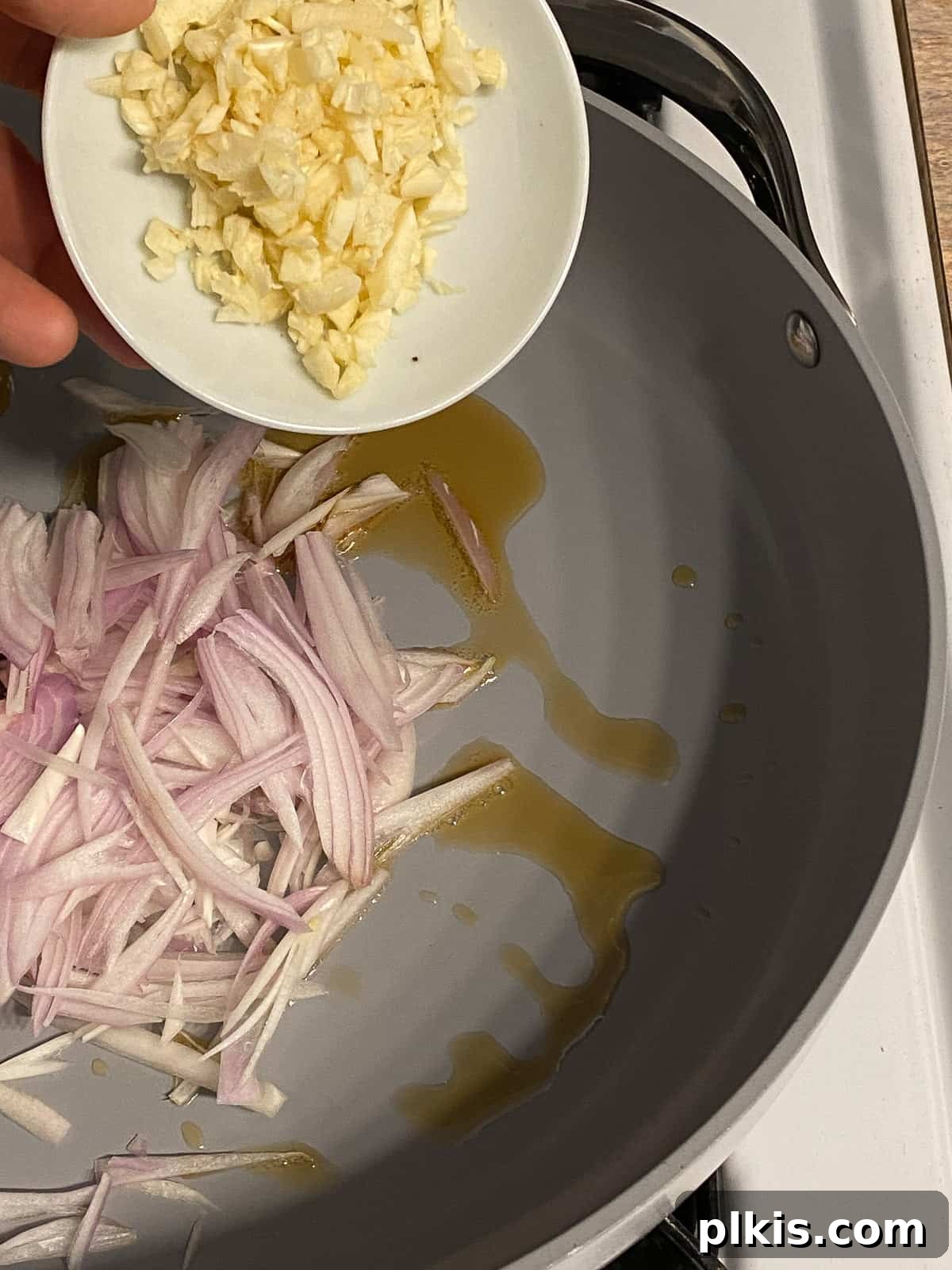
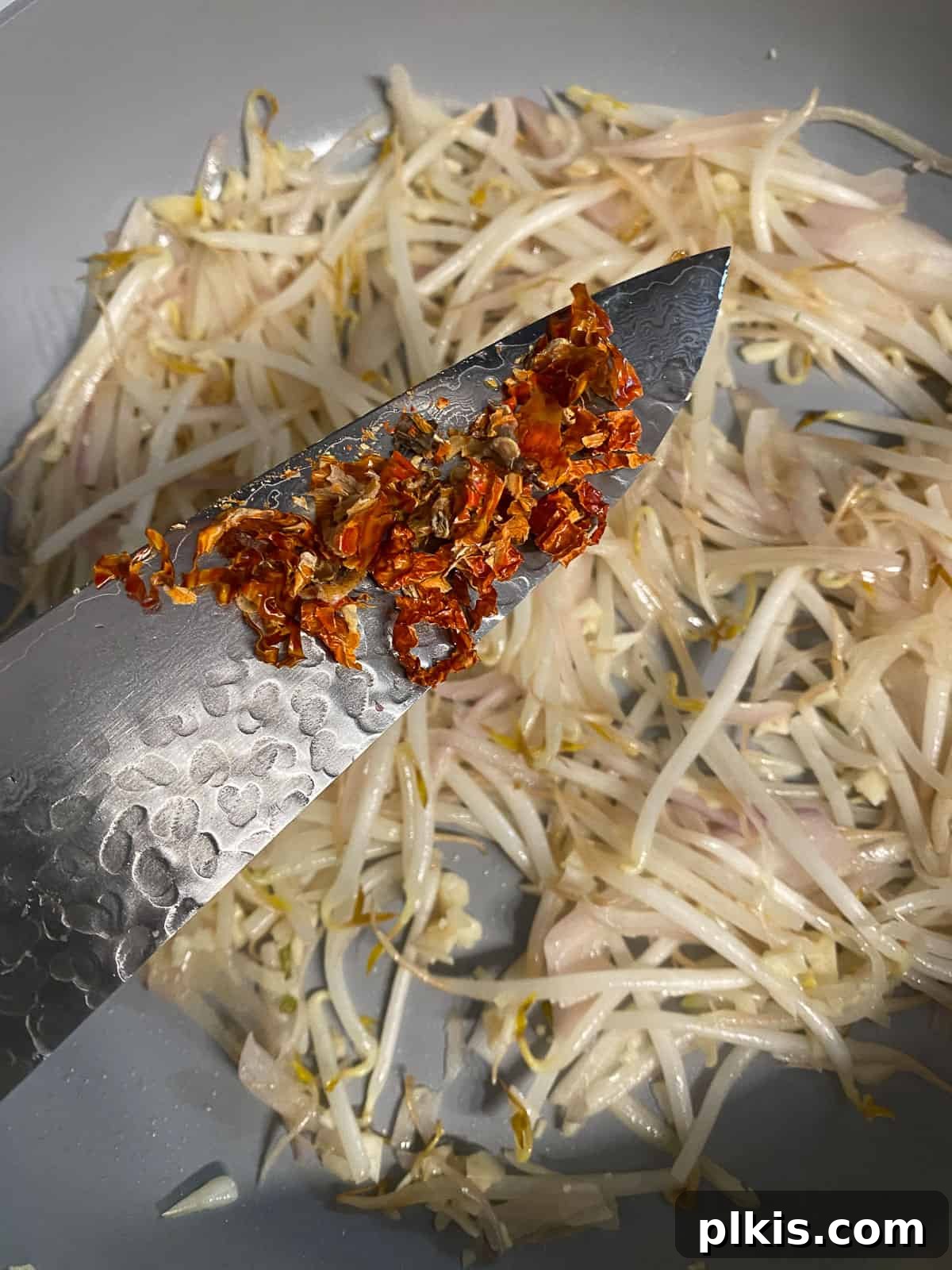
- 3) Heat the tablespoon of oil (sesame, peanut, or grapeseed) in a large skillet or wok over medium heat. If you’re going oil-free, skip this step and use a splash of vegetable broth later. Once the oil is hot and shimmering, add the sliced shallot (or yellow onion), minced garlic, and finely chopped chili pepper. Sauté for 3-4 minutes, stirring frequently, until the aromatics are slightly softened and lightly browned, releasing their fragrant aromas.
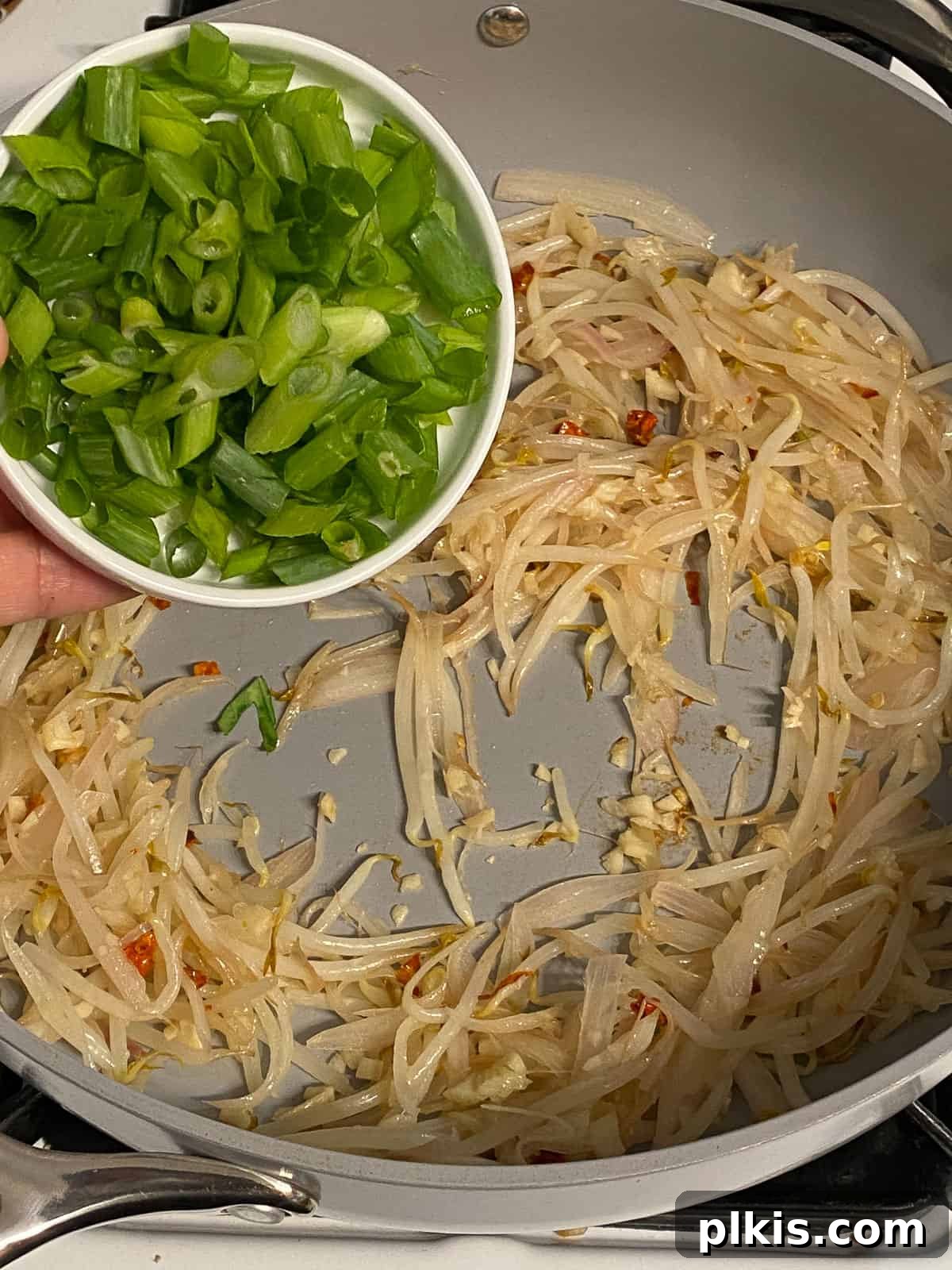
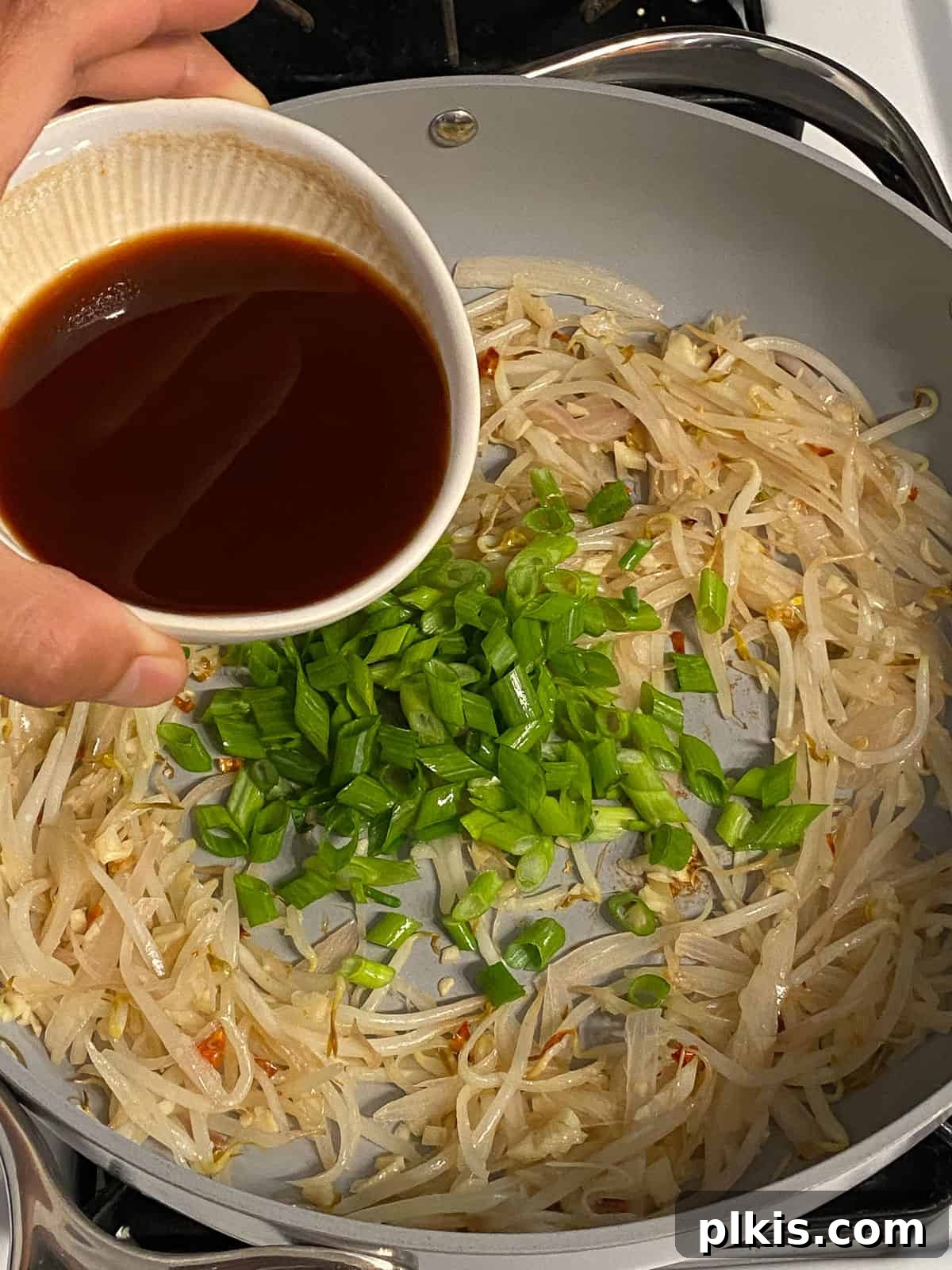
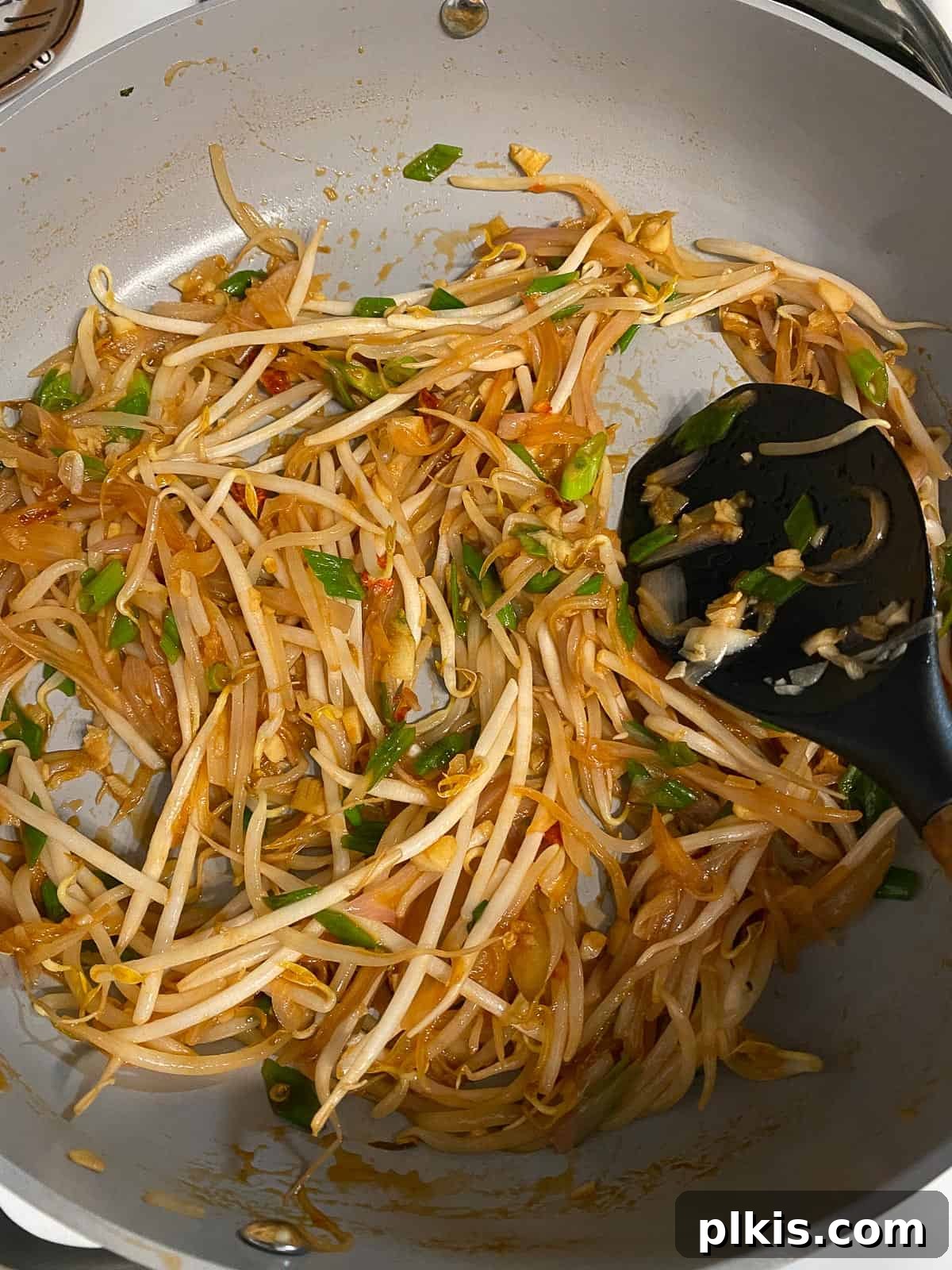
- 4) To the sautéed aromatics, add the mung bean sprouts and chopped green onions. Pour in half of the whisked Pad Thai sauce mixture. Toss everything together vigorously to ensure the vegetables are well coated and cook for just one minute more until the sprouts are slightly tender-crisp. Immediately transfer these fragrant veggies to a large mixing bowl and set aside.
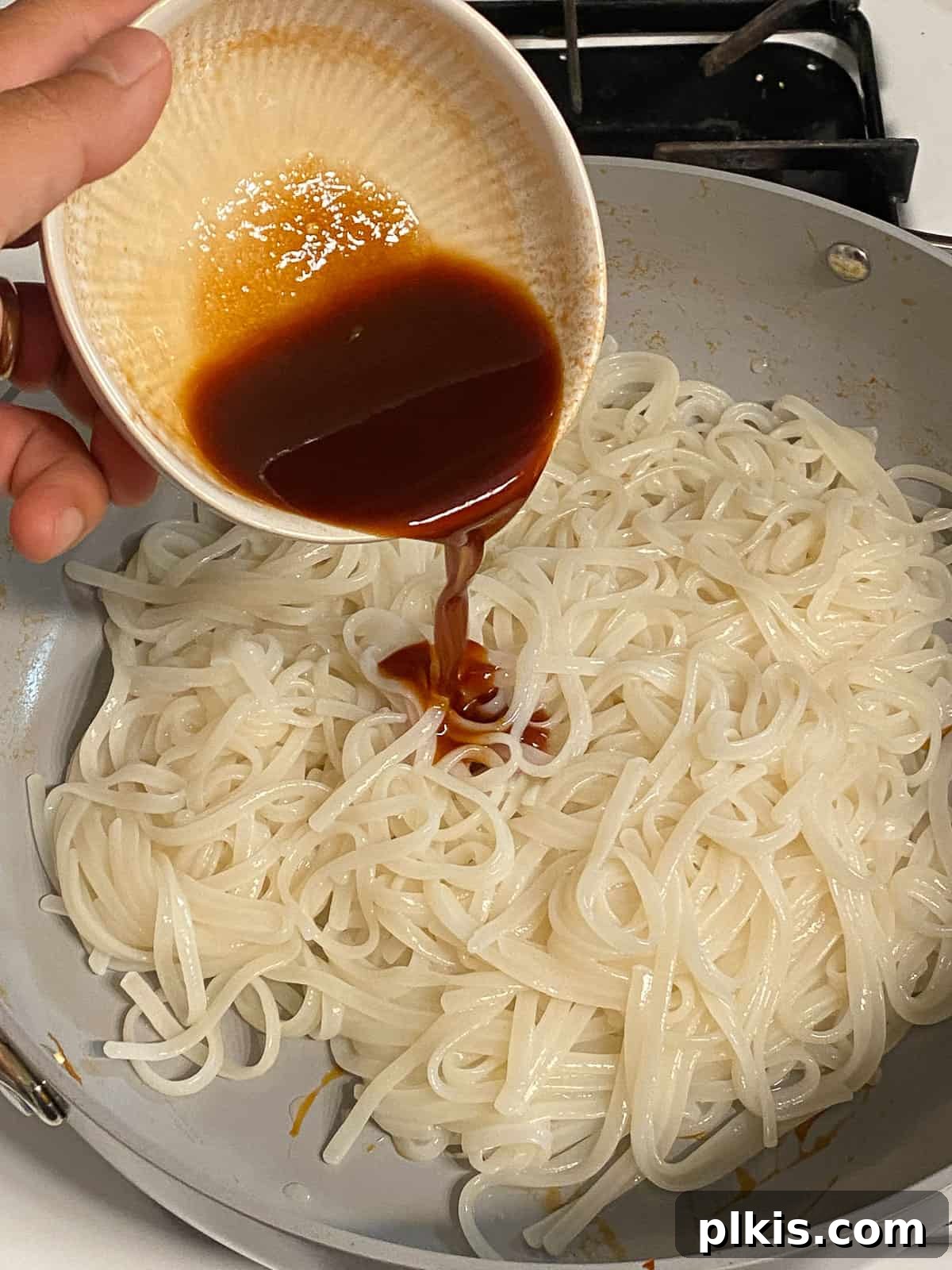
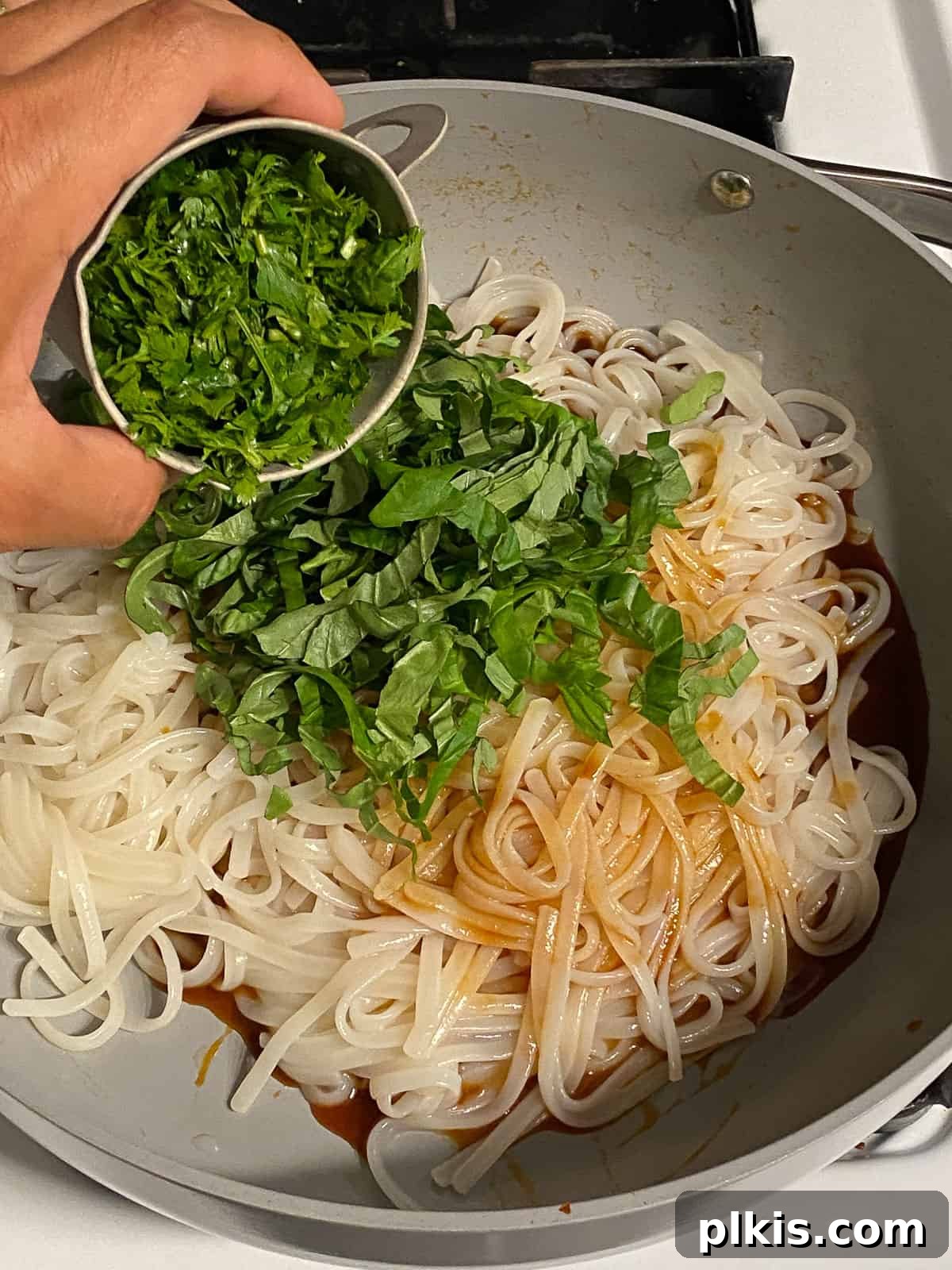
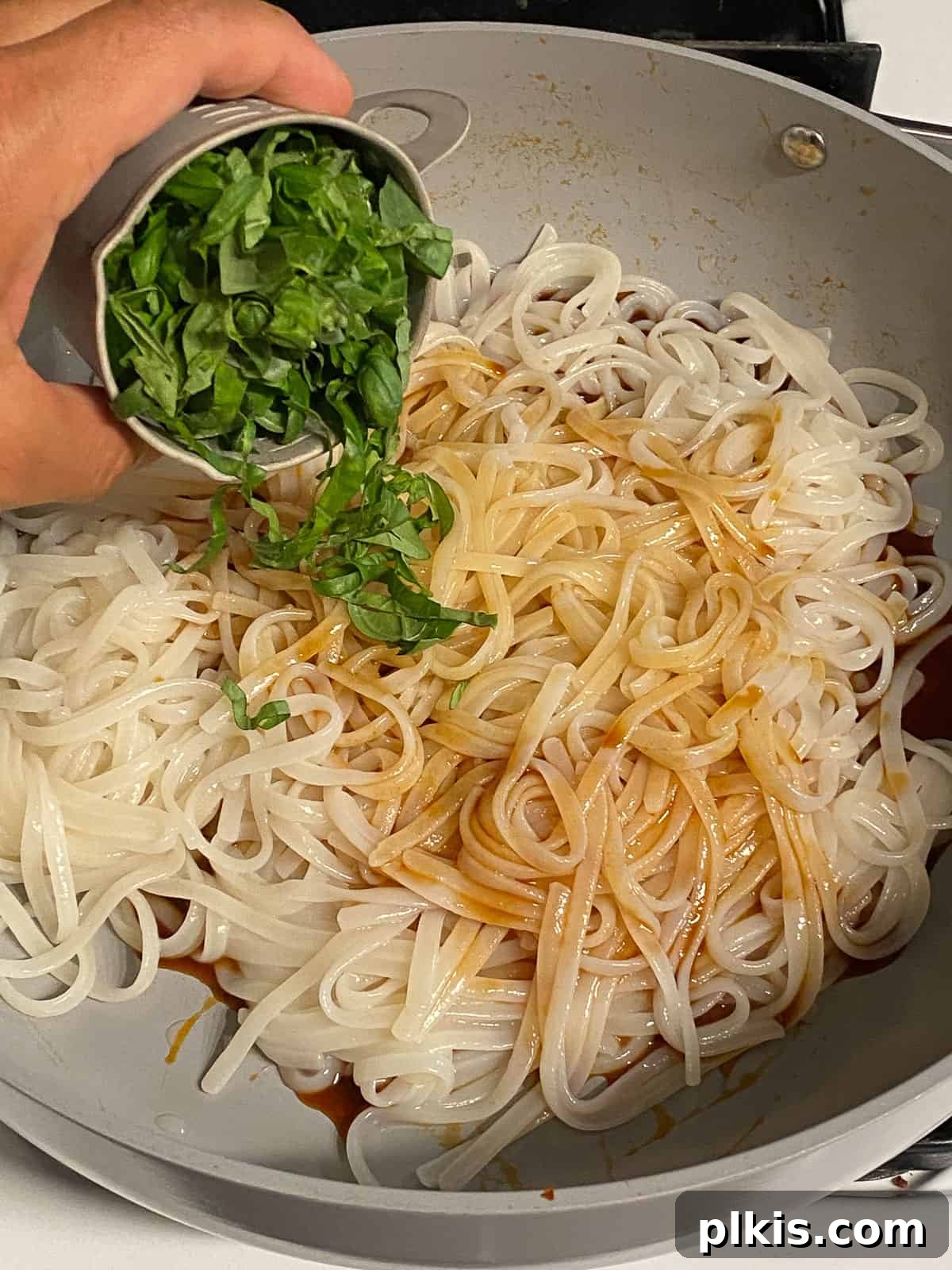
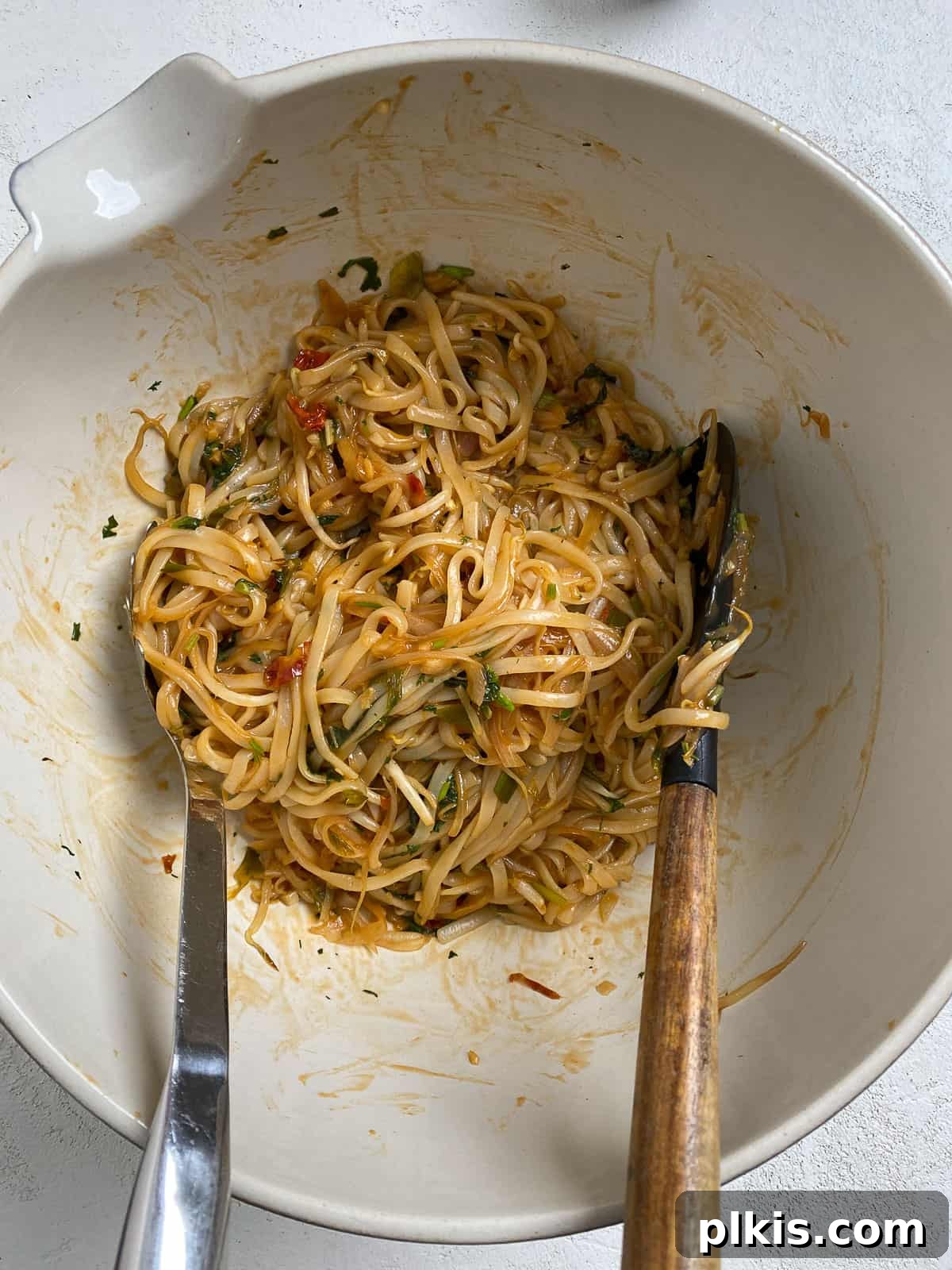
- 5) Using the same skillet (no need to clean it!), add the cooked rice noodles. Pour in the remaining half of the Pad Thai sauce. Sprinkle with salt, and add the fresh chopped cilantro and basil. Toss everything together thoroughly with tongs until the noodles are evenly coated with the sauce and herbs, ensuring a vibrant mix of flavors in every strand.
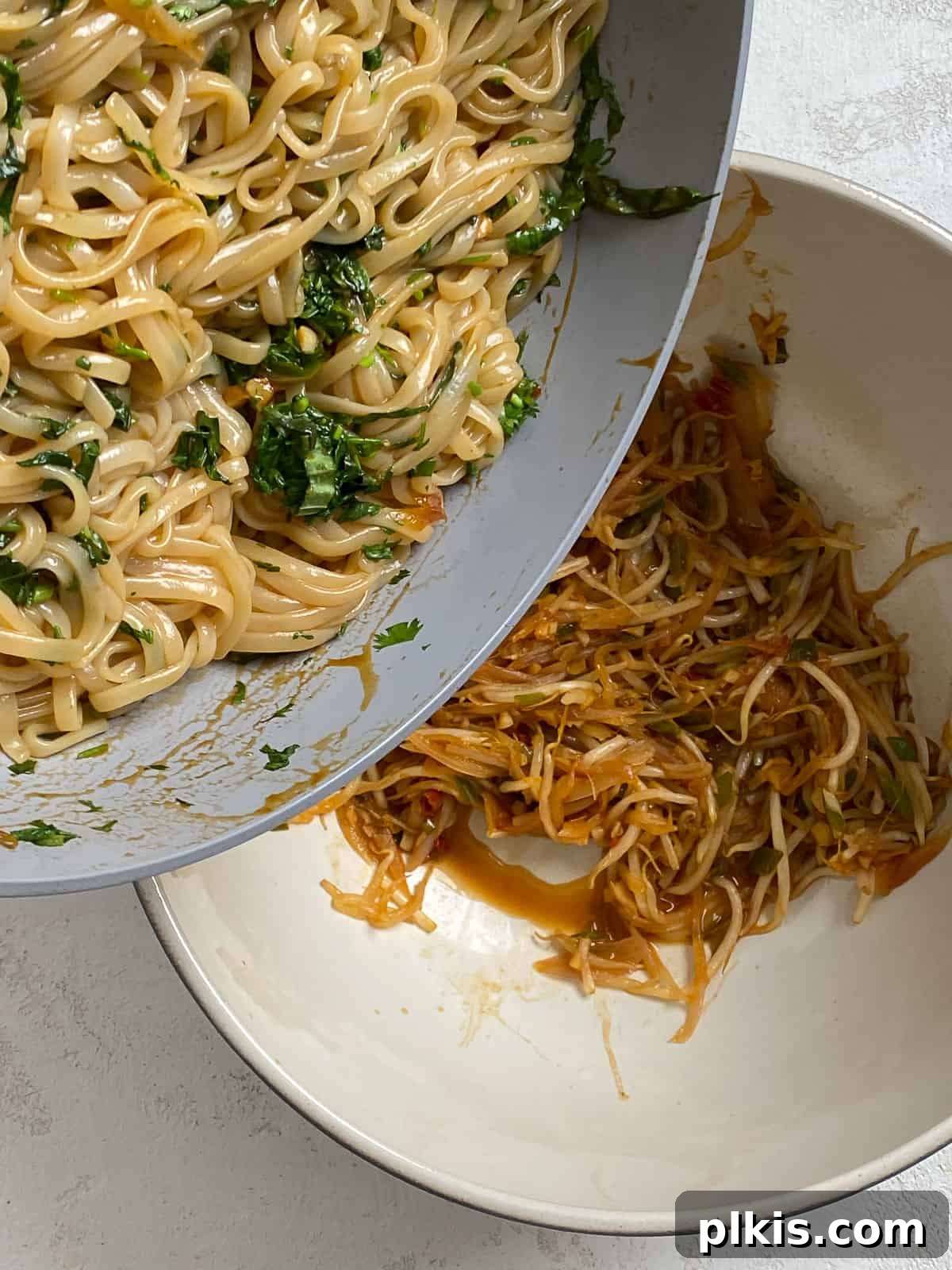
- 6) Now, combine the cooked rice noodles with the sautéed vegetables in the large mixing bowl. Gently toss them together, as if you were making a fresh salad, ensuring an even distribution of noodles, veggies, and sauce. This step brings all the elements of your Pad Thai together harmoniously.
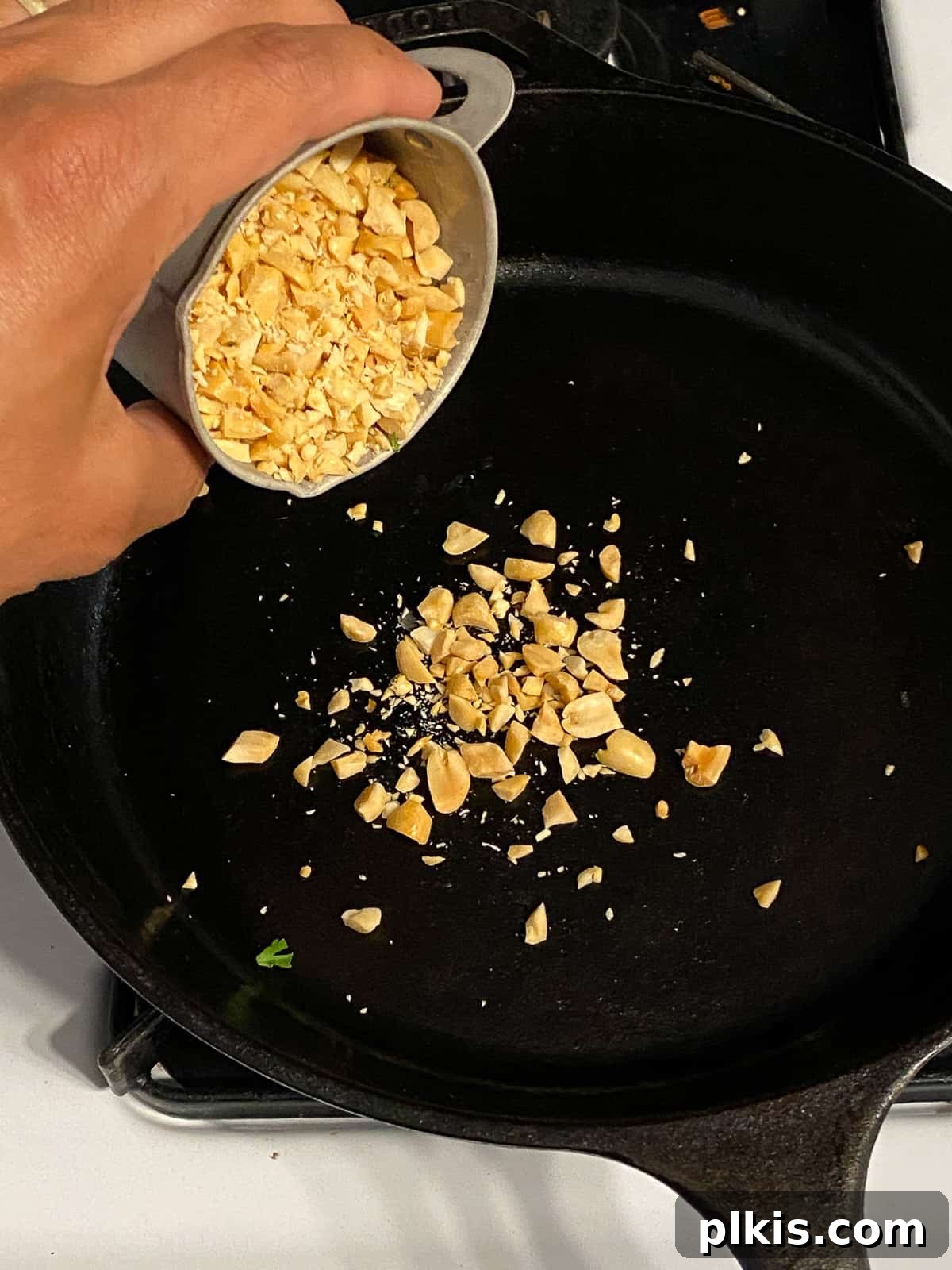
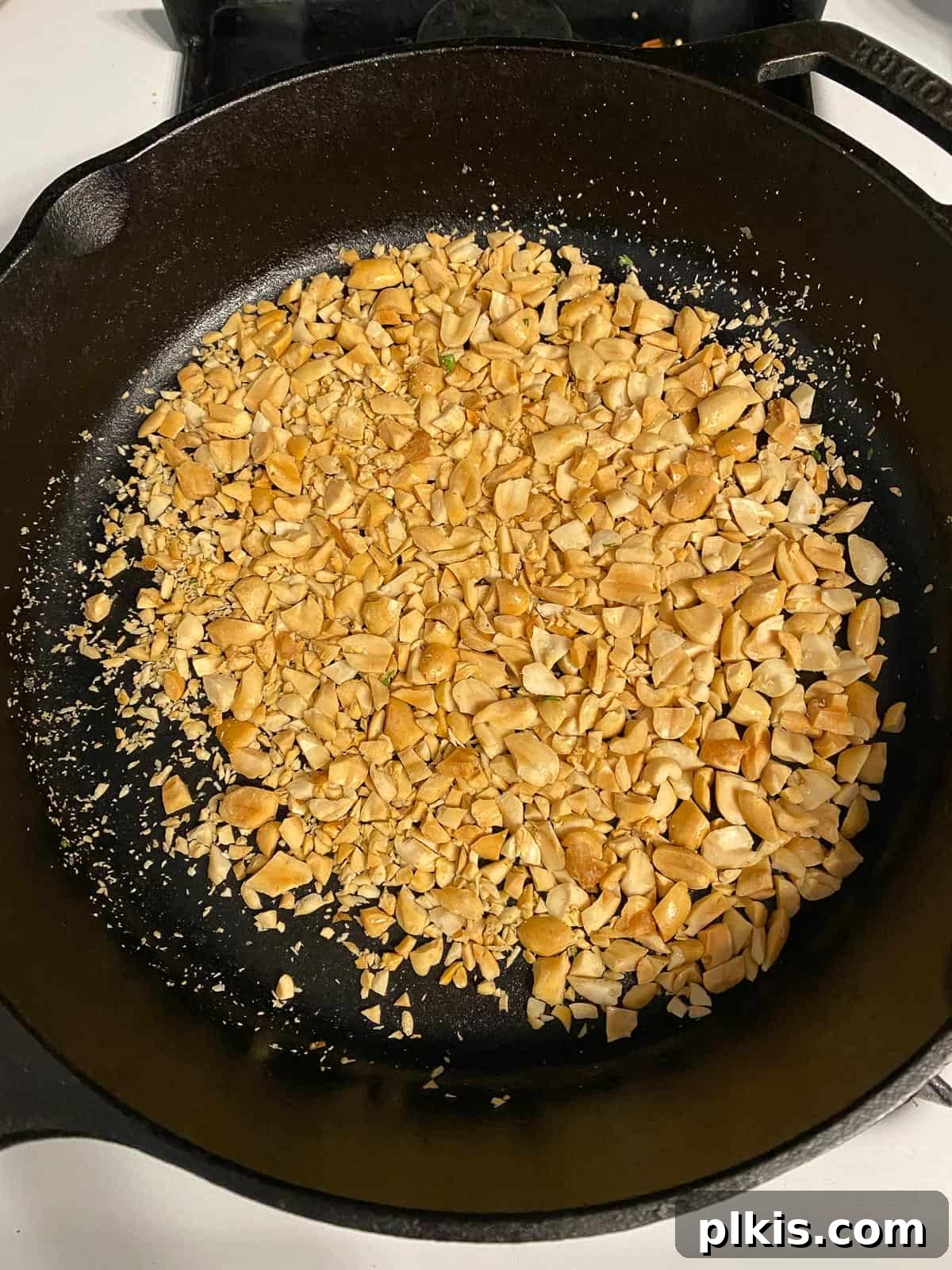
- 7) For an extra touch of flavor and crunch, add the chopped peanuts to the skillet (the same one you just used) and gently toast them over medium heat. Stir frequently for about 2-3 minutes until they turn a light golden color and become fragrant. Be careful not to burn them.
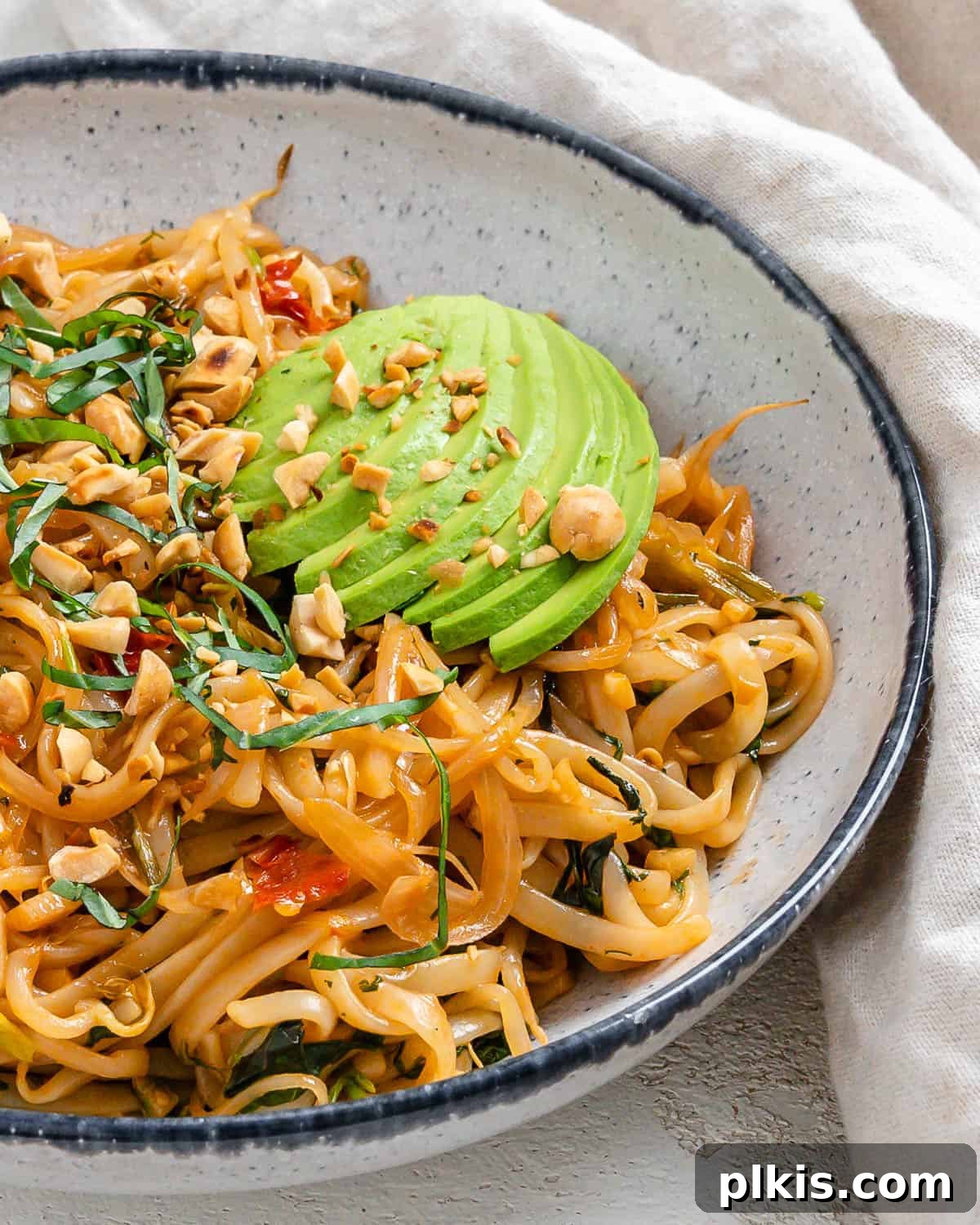
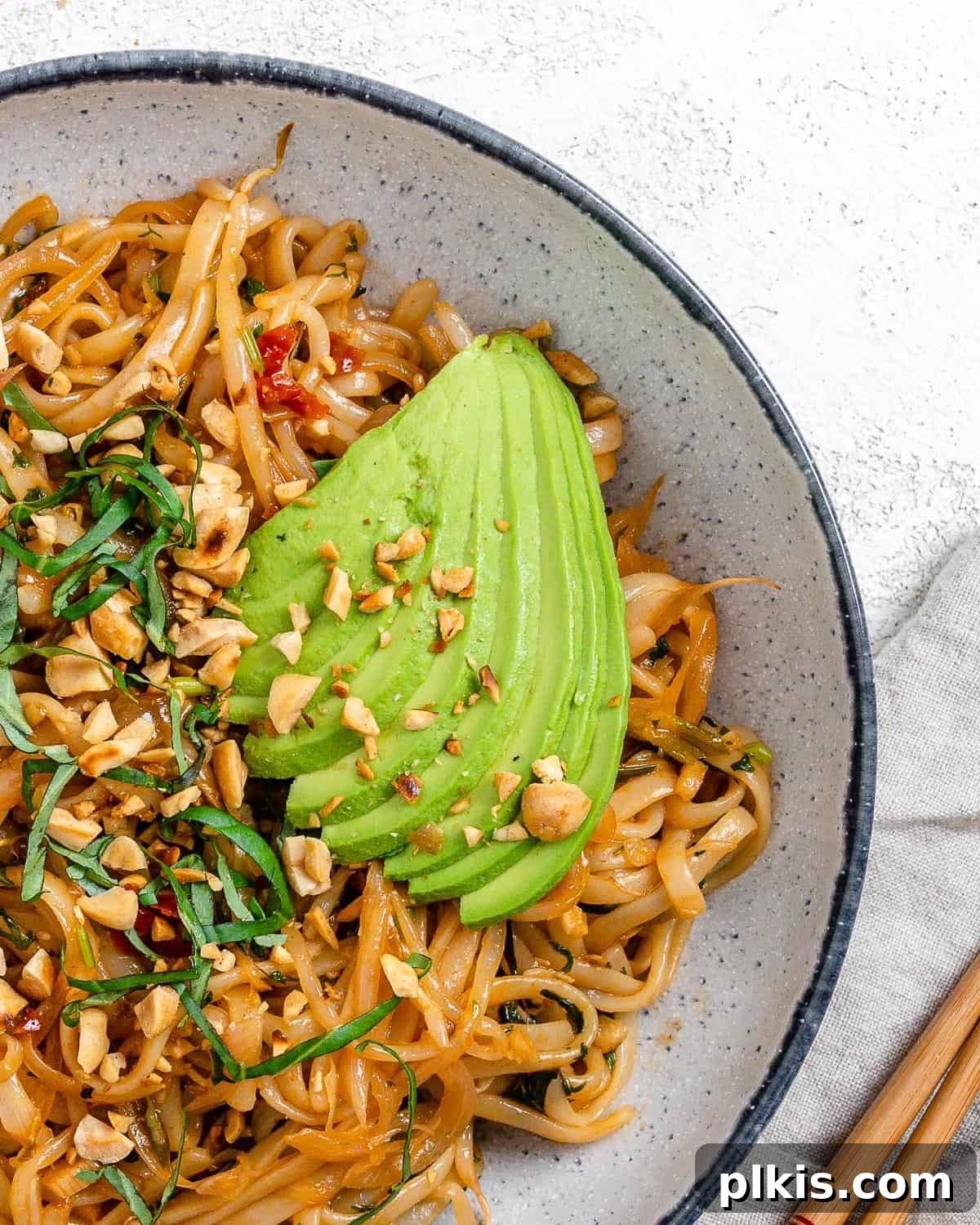
- 8) To serve, portion the flavorful Pad Thai into individual bowls. Generously sprinkle with the freshly toasted peanuts and artfully arrange slices of ripe avocado on top. For an extra burst of freshness, you can add more chopped basil, cilantro, and a drizzle of extra lime juice if desired. A lime wedge on the side of each plate makes for a beautiful and functional garnish. Enjoy your homemade vegan vegetable pad thai!
Expert Tips for Crafting the Perfect Vegan Pad Thai
Achieving restaurant-quality vegetable pad thai at home is entirely possible with a few insider tips. Pay attention to these details to elevate your cooking and ensure a truly outstanding dish every time:
- Master the Noodles: Rice noodles are delicate and can easily become mushy if overcooked. It’s crucial to follow the package instructions closely and cook them only until they are al dente. They will continue to soften slightly when they are added to the hot skillet with the sauce. Rinsing them under cold water immediately after draining is key to stopping the cooking process and preventing them from sticking together.
- Customize the Spice Level: If you’re not a fan of intense heat, or if you’re cooking for children, simply reduce the amount of hot chili pepper (or omit it entirely) in the main dish. Instead, offer thinly sliced chilies, chili flakes, or a small dish of Sriracha on the side, allowing each person to add spice to their own preference.
- Uniform Veggie Prep is Key: When adding extra vegetables to your Pad Thai, ensure they are all sliced into similar-sized, thin pieces. This consistency guarantees that all vegetables cook evenly and quickly, achieving that desirable tender-crisp texture without some being raw and others overcooked.
- Avoid Overcrowding Your Skillet: For a truly great stir-fry, it’s essential to cook ingredients in batches if your skillet or wok isn’t large enough. Overcrowding the pan lowers the temperature, causing ingredients to steam rather than stir-fry, which results in soggy vegetables and noodles. Cook the aromatics and sprouts, remove them, then add the noodles.
- Taste and Adjust: The beauty of Pad Thai lies in its balance of flavors. Before serving, always taste your dish and adjust as needed. Does it need a little more sweetness? Add a touch more brown sugar. A bit more tang? A squeeze of fresh lime juice will do the trick. A pinch more salt or a dash of spice can make all the difference.
- Storing Leftovers: Any leftover vegan vegetable pad thai can be stored in an airtight container in the refrigerator for up to three days. It makes for an excellent quick lunch! While it reheats well, we do not recommend freezing Pad Thai, as the rice noodles can become brittle and the texture of the vegetables can suffer upon thawing.
Frequently Asked Questions About Vegan Pad Thai
The best way to reheat your leftover vegetable pad thai is in a skillet or wok over medium-low heat. Add a tiny splash of water or vegetable broth to the pan with the noodles, then stir-fry gently until everything is heated through. This method helps to rehydrate the noodles and prevents them from drying out or sticking. If it seems a bit thick or is sticking, you can add a touch of oil or a bit more water to loosen the sauce and bring it back to life.
No, typically traditional Pad Thai is not gluten-free, although it can easily be made so. While the rice noodles, which form the base of the dish, are naturally gluten-free, the sauce often contains conventional soy sauce, which includes wheat. To make this vegan pad thai entirely gluten-free, simply ensure you swap regular soy sauce for gluten-free tamari or coconut aminos. Always double-check ingredient labels for other hidden gluten sources, especially in pre-made sauces.
Absolutely! This is a great meal prep friendly dish. You can prepare the Pad Thai sauce up to 2-3 days in advance and store it in an airtight container in the refrigerator. You can also chop all your vegetables (shallots, garlic, chili, green onions) ahead of time. The noodles are best cooked fresh, but having the sauce and veggies prepped will significantly reduce your cooking time on the day you plan to serve it.
Explore More Delicious Stir Fry Recipes
If you’ve enjoyed the simplicity and incredible flavors of this vegan vegetable pad thai, you’re sure to love our other easy and satisfying stir-fry dishes:
- Udon Edamame Stir Fry
- Brown Rice Veggie Stir Fry
- Shiitake Asparagus Tofu Stir Fry
- Spicy Sesame Tofu Stir Fry
Photos by Alfonso Revilla
Vegan Vegetable Pad Thai
15
15
30
4 servings
Equipment
-
My favorite knives
-
Measuring Cups
-
Measuring spoons
Ingredients
- 1 (1-pound) package of ¼-inch wide rice noodles
- 4 Tablespoons of soy sauce tamari, or coconut aminos (soy sauce substitute)
- 2 Tablespoons of brown sugar (or agave)
- 2 Tablespoons of fresh lime juice (about 1 lime)
- 2 Tablespoons of ketchup or tamarind paste
- 1 Tablespoon of sesame, peanut, or grape seed oil
- 1 cup of shallot or yellow onion sliced
- 4 cloves garlic chopped
- 1 hot chili pepper, Thai or red chili de-seeded and finely chopped
- 1 cup of mung bean sprouts (or cabbage, thinly sliced)
- 1 bunch of green onions chopped
- ½ teaspoon of salt
- ½ cup of fresh cilantro chopped
- ½ cup of fresh basil chopped
- ½ cup of peanuts roasted and unsalted, chopped
- 1 ripe avocado sliced
Instructions
-
Set a medium pot of water to boil for rice noodles. Cook them until just al dente, drain, rinse, and set aside. Drizzle with a teaspoon of oil if desired and toss to prevent noodles from sticking together. You can proceed with the following steps while the noodles are cooking.
-
In a small bowl, whisk together the soy sauce, sugar, lime juice, and ketchup. Set aside.
-
In a skillet, heat oil on medium heat (or omit if you prefer) and sauté shallot or onion, garlic, and chili pepper for 3-4 minutes until lightly browning. Add mung bean sprouts, green onions, and half of the sauce mixture. Toss well and let cook one minute more. Transfer veggies to a large bowl and set aside.
-
Add cooked rice noodles to the same skillet and toss with remaining sauce, salt, cilantro, and basil and mix together well. Add rice noodles to the veggie bowl and toss them together like making a salad.
-
Add peanuts to skillet to gently toast and warm. Cook them on medium heat until turning golden, about 2-3 minutes. Sprinkle atop noodle bowl along with sliced avocado, and additional chopped basil and cilantro if desired. Drizzle with extra lime juice, or serve with a wedge of lime.
Notes
- This is a base recipe to work from, but we often include more veggies; broccoli, kale, bok choy, cabbage, carrots, and mushrooms all make excellent additions. Simply slice thinly and sauté them when you add the bean sprouts.
- You can even substitute toasted sesame seeds or toasted cashews for the peanuts if you prefer.
- If you’d like this to be oil-free, simply leave it out, or sauté veggies in vegetable broth instead.
- Protein-packed and very filling, this dish makes a great weeknight dinner and makes plenty for lunch leftovers.
Nutrition
Carbohydrates: 58g
Protein: 12g
Fat: 20g
Saturated Fat: 3g
Polyunsaturated Fat: 6g
Monounsaturated Fat: 10g
Sodium: 1406mg
Potassium: 747mg
Fiber: 9g
Sugar: 14g
Vitamin A: 510IU
Vitamin C: 19mg
Calcium: 83mg
Iron: 3mg
Additional Info
Renee Press
Dinner, Lunch
Asian, Thai
Stovetop
Vegan
Tried this recipe?
Please tag us at @PlantBasedOnABudget! 🙂