
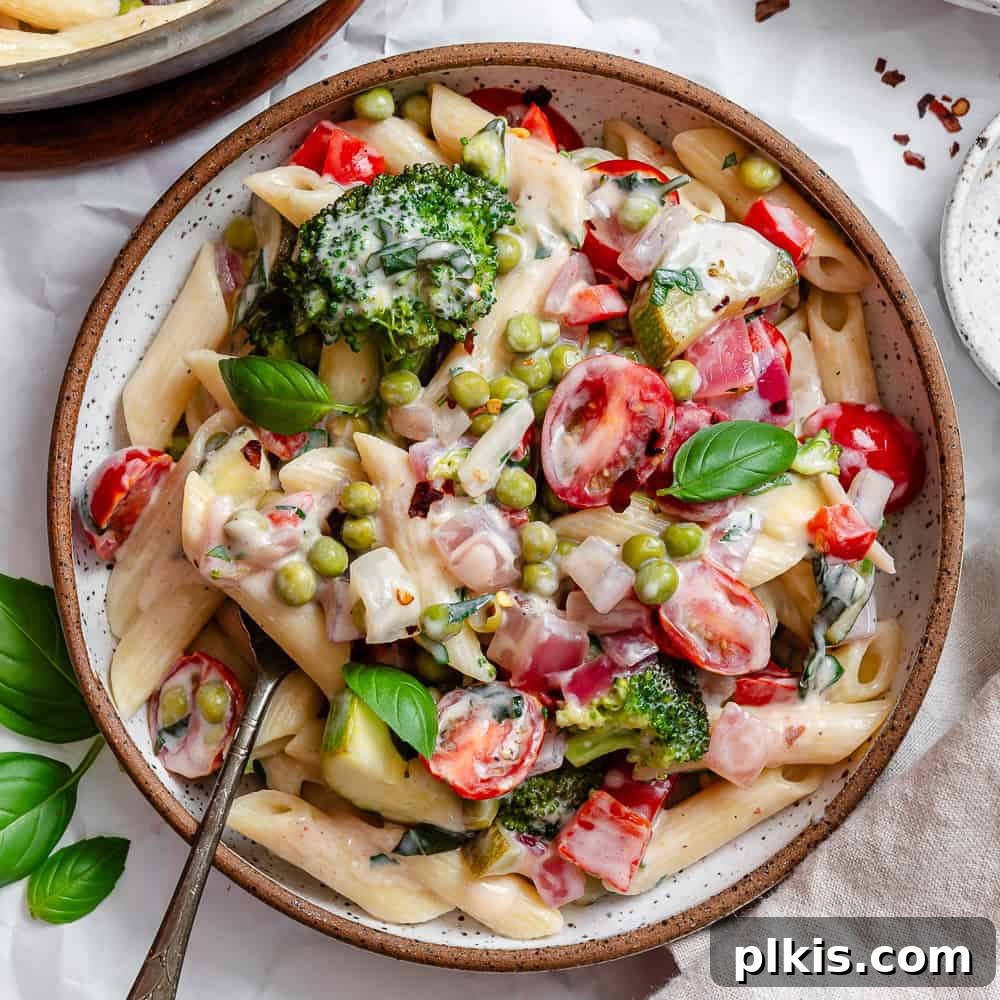
Welcome to the ultimate guide for crafting a vibrant, healthy, and incredibly satisfying **Vegan Pasta Primavera**! This delightful one-pot meal is the epitome of spring and summer dining, bringing together a colorful medley of fresh vegetables, aromatic herbs, and perfectly cooked pasta, all coated in a luxuriously creamy, protein-rich silken tofu sauce. Whether you’re a seasoned vegan chef or just exploring plant-based cuisine, this recipe promises an easy, delicious, and nutrient-packed dinner ready in under an hour.
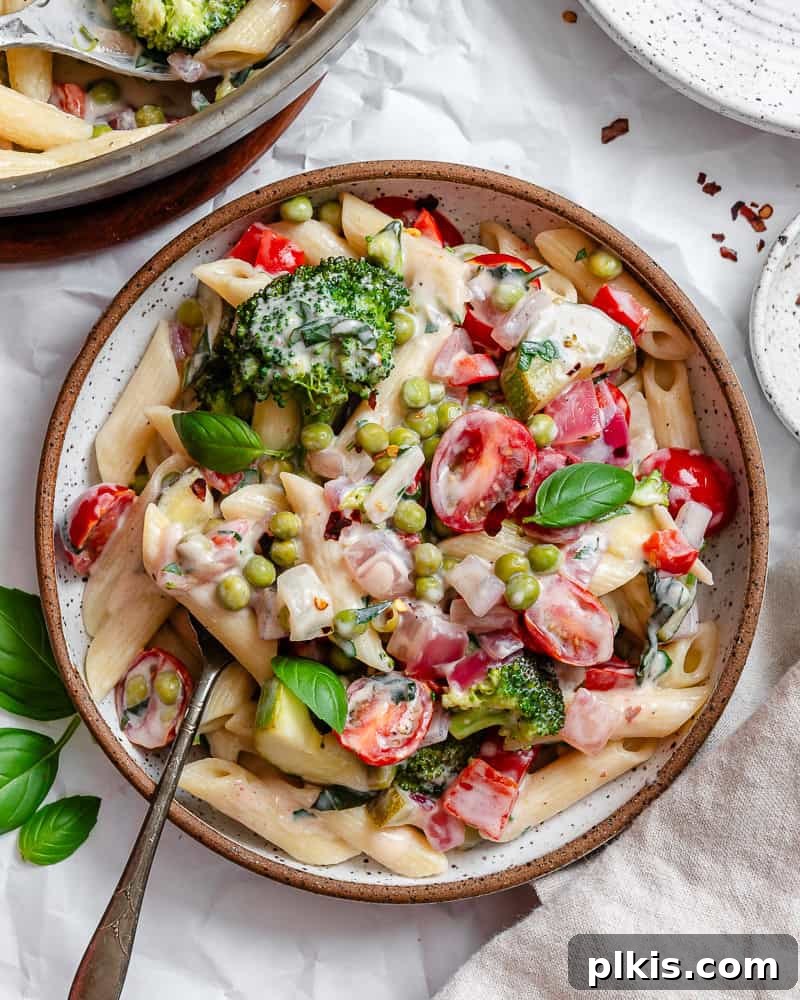
Why This One-Pot Vegan Pasta Primavera Will Become Your New Favorite
There’s an undeniable allure to a creamy pasta dish, and this **vegan pasta primavera recipe** truly elevates the experience. It’s more than just a meal; it’s a celebration of fresh flavors and effortless cooking. Here’s why this recipe deserves a permanent spot in your culinary repertoire:
- Unmatched Creaminess, Guilt-Free: Imagine a sauce so rich and smooth, you’d never guess it’s completely dairy-free. Our secret ingredient, silken tofu, blends seamlessly with reserved pasta water to create an unbelievably creamy texture that perfectly coats every strand of pasta and every tender-crisp vegetable. It’s a delightful surprise, offering a protein boost without any heavy creams or unhealthy fats.
- A Symphony of Fresh Vegetables: “Primavera” literally means “spring,” and this dish lives up to its name by making seasonal vegetables the undisputed stars. We’re talking about vibrant broccoli, tender zucchini, sweet peas, and juicy tomatoes that bring a burst of color and a spectrum of essential nutrients to your plate. It’s a fantastic way to enjoy a wide variety of plant-based goodness in one delicious serving.
- Quick & Convenient One-Pot Meal: Say goodbye to stacks of dirty dishes! This entire meal comes together in a single pot, from cooking the pasta to simmering the sauce and tossing in the fresh ingredients. It’s designed for efficiency, delivering a wholesome and satisfying dinner in under an hour – perfect for busy weeknights or relaxed weekend gatherings.
- Customizable to Your Liking: The beauty of pasta primavera lies in its flexibility. Don’t have zucchini? Use asparagus! Prefer a different herb? Swap basil for oregano. This recipe is wonderfully adaptable, allowing you to easily adjust the vegetables and herbs based on what’s in season, what you have on hand, or simply what you’re craving. It’s a canvas for your culinary creativity.
- Healthy and Wholesome: Packed with fiber from the vegetables and plant-based protein from the tofu, this pasta primavera is not just delicious but also incredibly nourishing. It’s naturally dairy-free, cholesterol-free, and can easily be made gluten-free, making it suitable for a variety of dietary needs and preferences without compromising on flavor.
Craving more delightful creamy vegan pasta dishes? Explore our other popular recipes like the 20-Minute Creamy Tahini Pasta, comforting Creamy Vegan Mushroom Pasta, classic Vegan Fettuccine Alfredo, and the seasonal Creamy Pumpkin Pasta.
What is Pasta Primavera? A Culinary Journey to Spring
Pasta primavera, a name that beautifully translates to “spring pasta” in Italian, is a celebration of fresh, seasonal vegetables tossed with pasta. While its name suggests ancient Italian roots, this beloved dish actually emerged from New York City kitchens in the 1970s, quickly becoming a sensation for its vibrant flavors and lighter approach to pasta. The original concept involved pasta served with a rich medley of garden-fresh vegetables and often a light cream sauce or butter-based sauce.
Our vegan rendition of pasta primavera embraces the spirit of the classic while making it entirely plant-based and even more nourishing. We maintain the core principle: showcasing an abundance of tender-crisp vegetables. However, we swap traditional dairy creams for a silky, protein-packed silken tofu sauce, ensuring every bite is just as rich and satisfying, but with added health benefits. This dish is characterized by its bright flavors, often enhanced with lemon, garlic, and fresh herbs, making it the perfect light yet fulfilling meal for warmer months.
Essential Ingredients for Your Vegan Pasta Primavera
Creating this stunning vegan pasta primavera requires a handful of fresh ingredients and a few pantry staples. The beauty of this recipe lies in its simplicity and the quality of its components. Here’s a closer look at what you’ll need to bring this delightful dish to life:
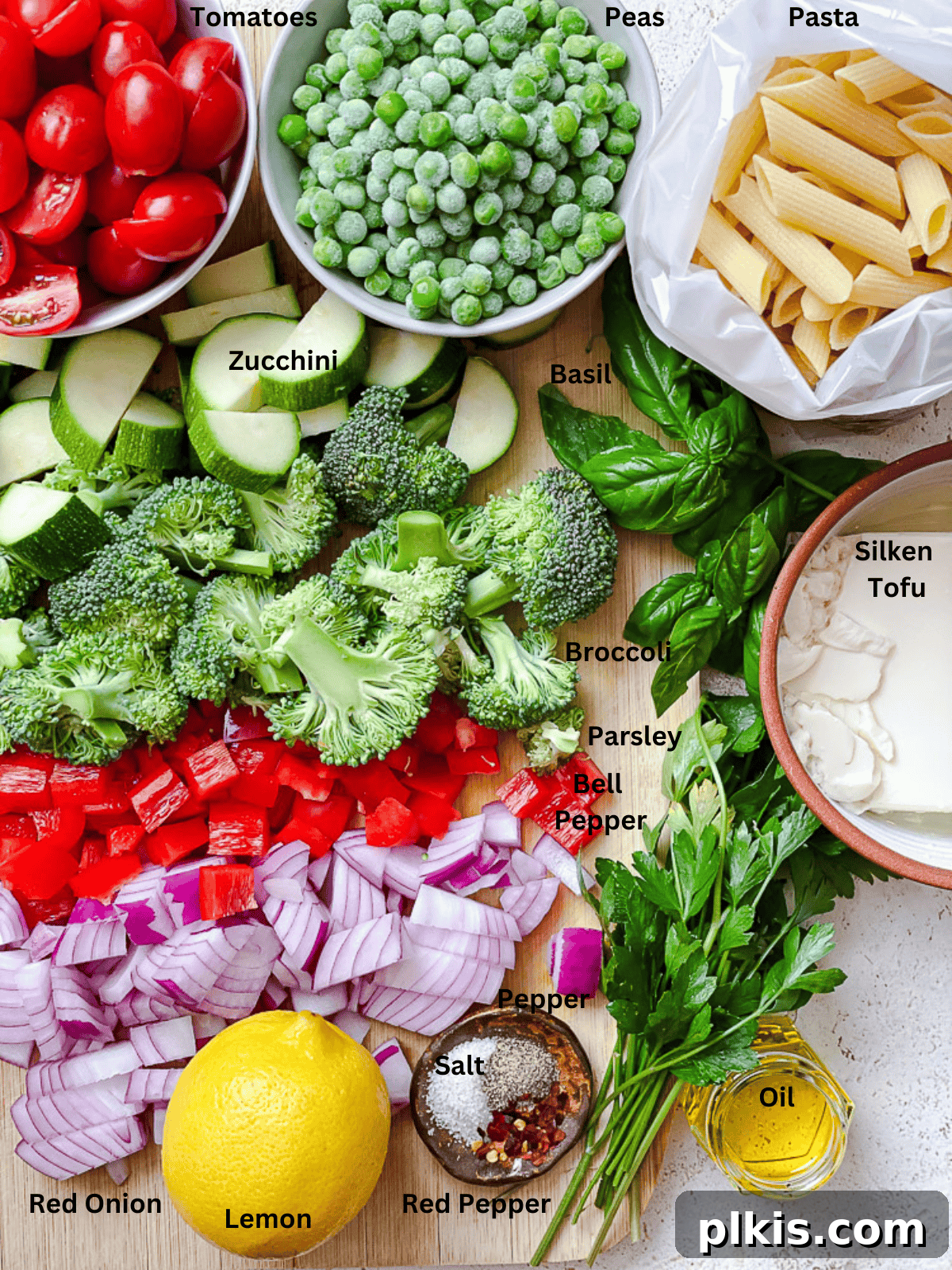
- Your Choice of Pasta (1 pound): Any medium-length pasta shape works wonderfully here. Think fettuccine, linguine, spaghetti, penne, rotini, or even farfalle.
- Gluten-Free Option: Easily swap regular pasta for your favorite gluten-free variety to make this recipe accessible for everyone.
- Olive Oil (2 tablespoons): The foundation for sautéing our aromatics and vegetables, adding a rich, fruity note.
- Red Onion (1 small, diced): Provides a mild, sweet allium base for our flavor profile. Yellow or white onion can be substituted.
- Garlic Cloves (5, thinly sliced): Essential for that robust, aromatic Italian flavor. Don’t skimp on the garlic!
- Bell Pepper (1, diced): Choose any color – red, yellow, or orange bell peppers add sweetness and vibrant color.
- Broccoli Florets (2 cups, roughly chopped): A classic primavera vegetable, offering a pleasant bite and nutritional punch.
- Zucchini (1 small, sliced into half moons): Adds a delicate texture and mild flavor that blends beautifully with the other vegetables.
- Salt and Black Pepper (to taste): Crucial for seasoning and enhancing all the natural flavors.
- Crushed Red Pepper (¼ teaspoon): For a subtle hint of warmth and a touch of excitement. Adjust to your spice preference.
- Frozen Peas (1 cup): Sweet, tender, and quick-cooking, peas are a primavera staple.
- Lemon (1, zest and juice): The bright, zesty notes of lemon are non-negotiable in primavera, cutting through the richness of the sauce and awakening all the flavors.
- Silken Tofu (12-ounce box): This is the hero of our creamy sauce! Silken tofu’s smooth consistency is paramount for achieving that luxurious, dairy-free creaminess. Firm or extra-firm tofu will not yield the same result.
- Reserved Pasta Water (1 cup): The starchy liquid left over from cooking the pasta is a secret weapon. It helps emulsify the sauce, making it incredibly smooth, luscious, and allowing it to cling beautifully to the pasta and vegetables.
- Halved Grape Tomatoes (1 ½ cups): Added at the end for fresh bursts of sweetness and color. Cherry tomatoes also work well.
- Fresh Basil (¼ cup, chopped): An iconic Italian herb that brings fragrant, sweet notes.
- Fresh Italian Parsley (¼ cup, chopped): Adds a fresh, herbaceous finish and a touch of peppery brightness.
- Crushed Red Pepper Flakes (for garnish, optional): For those who love a bit more kick!
Making it Gluten-Free: It’s incredibly simple! Just swap out traditional wheat pasta for your preferred gluten-free pasta variety. Ensure your chosen brand holds up well during cooking and mixing.
Elevate Your Pasta Primavera: Creative Additions and Substitutions
This vegan pasta primavera recipe is fantastic as is, but it’s also wonderfully versatile, inviting you to experiment and make it your own. Here are some ideas to customize your dish, enhance flavors, or boost its nutritional content:
- Roasted Garlic: For an even deeper, sweeter garlic flavor, roast a head of garlic until soft, then blend the cloves directly into the silken tofu sauce. This adds a sophisticated layer of taste.
- Beans for Protein Power: Blend a can of drained and rinsed cannellini beans or butter beans into your sauce for an extra protein punch and a slight increase in creaminess. Alternatively, toss them in with the pasta and veggies for added texture and substance.
- Vegan Cheese Delights: Finish each serving with a sprinkle of shredded vegan mozzarella, a generous dusting of vegan parmesan, or some nutritional yeast for a cheesy, umami depth.
- More Fresh Herbs: Don’t limit yourself to basil and parsley. Incorporate ¼ cup of finely chopped fresh oregano, thyme, or rosemary along with the other herbs for a more complex aromatic profile.
- Expand Your Veggie Medley: The beauty of primavera is its adaptability. Feel free to add other seasonal favorites like sliced mushrooms, tender artichoke hearts, sweet corn kernels, cauliflower florets, or leafy greens such as fresh spinach or kale (stir in at the very end until wilted) for an even more substantial and nutrient-rich meal.
- A Touch of Spice: If you love heat, increase the amount of crushed red pepper in the sauce or add a dash of your favorite hot sauce.
Step-by-Step Guide: Crafting Your Creamy Vegan Pasta Primavera
Making this delightful one-pot vegan pasta primavera is straightforward and enjoyable. Follow these detailed steps to achieve a perfectly creamy and flavorful dish:
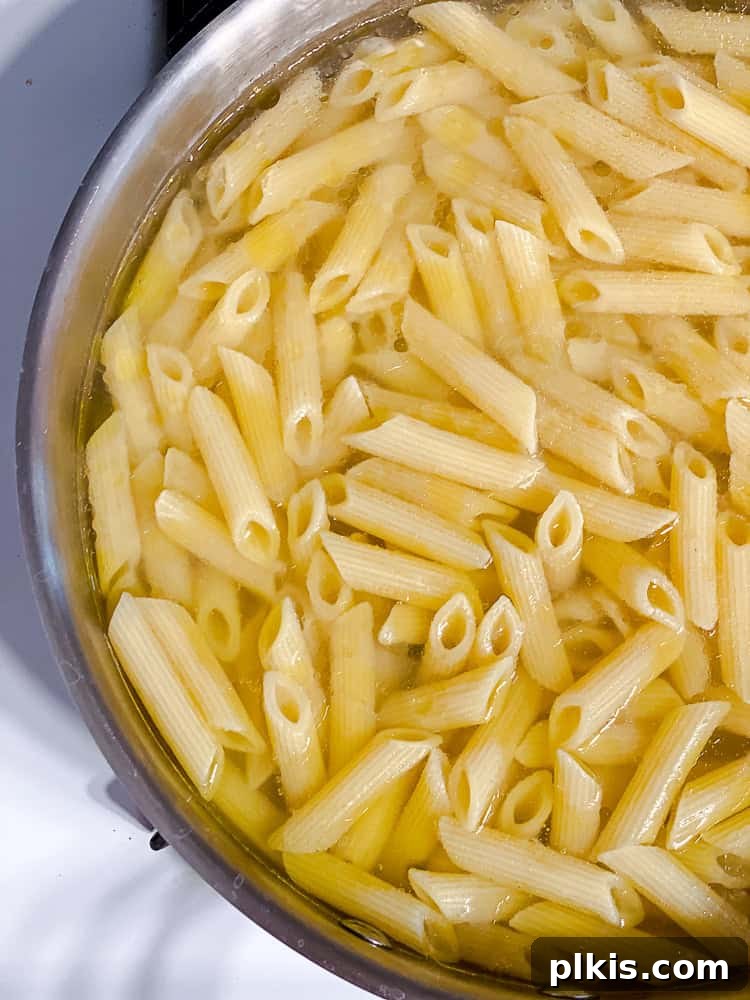
Step 1: Cook the Pasta and Reserve Water. Bring a large pot of generously salted water to a rolling boil. Add your chosen pasta and cook according to package instructions, but aim for about 2 minutes less than the recommended time, ensuring it’s just shy of al dente. This pre-emptive undercooking is crucial, as the pasta will finish cooking in the sauce and you want to avoid a mushy texture. Before draining the pasta, carefully scoop out and reserve 1 cup of the starchy cooking water. This liquid is essential for achieving the perfect sauce consistency. Drain the pasta and set it aside in a colander.
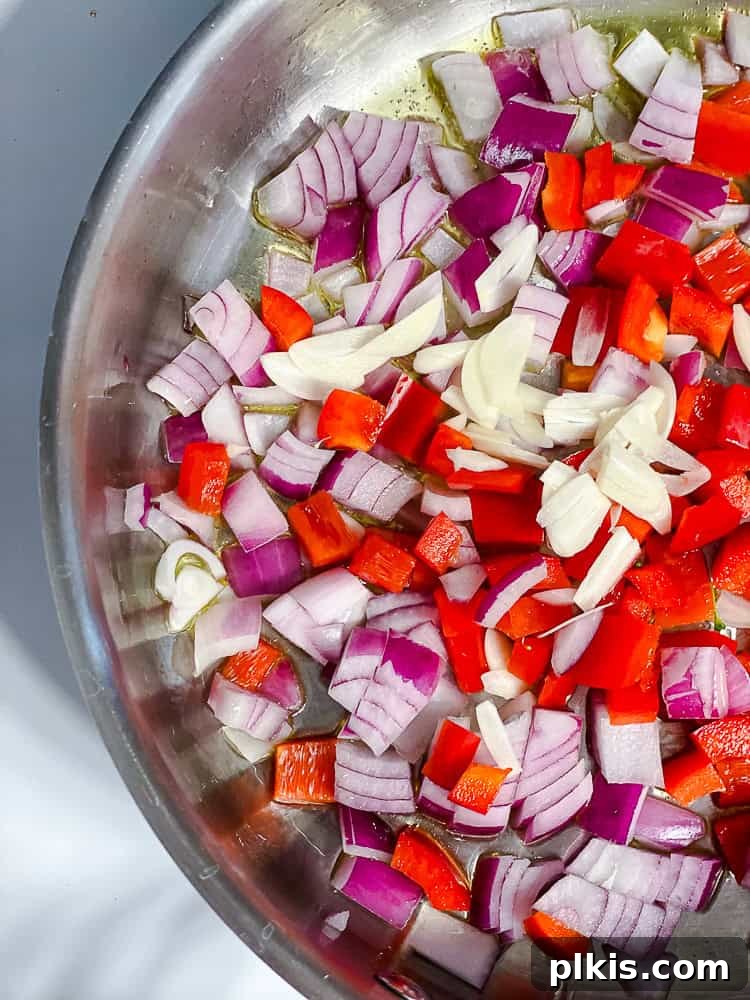
Step 2: Sauté the Aromatics. Give the pot a quick rinse if needed, then place it back on the stove over medium-high heat. Once any residual water has evaporated, add the 2 tablespoons of olive oil. Immediately add the diced red onion, thinly sliced garlic, and diced bell pepper to the hot oil. Sauté for 5-7 minutes, stirring occasionally, until the onions become translucent, the garlic is fragrant, and the bell peppers begin to soften.
Pro Tip for Pasta: Cooking the pasta just to “al dente” (soft yet with a slight firm bite) is key. The noodles will continue to absorb liquid and cook further when tossed in the creamy sauce, so overcooking them initially will result in a mushy texture. Keep a close eye on the cooking time!
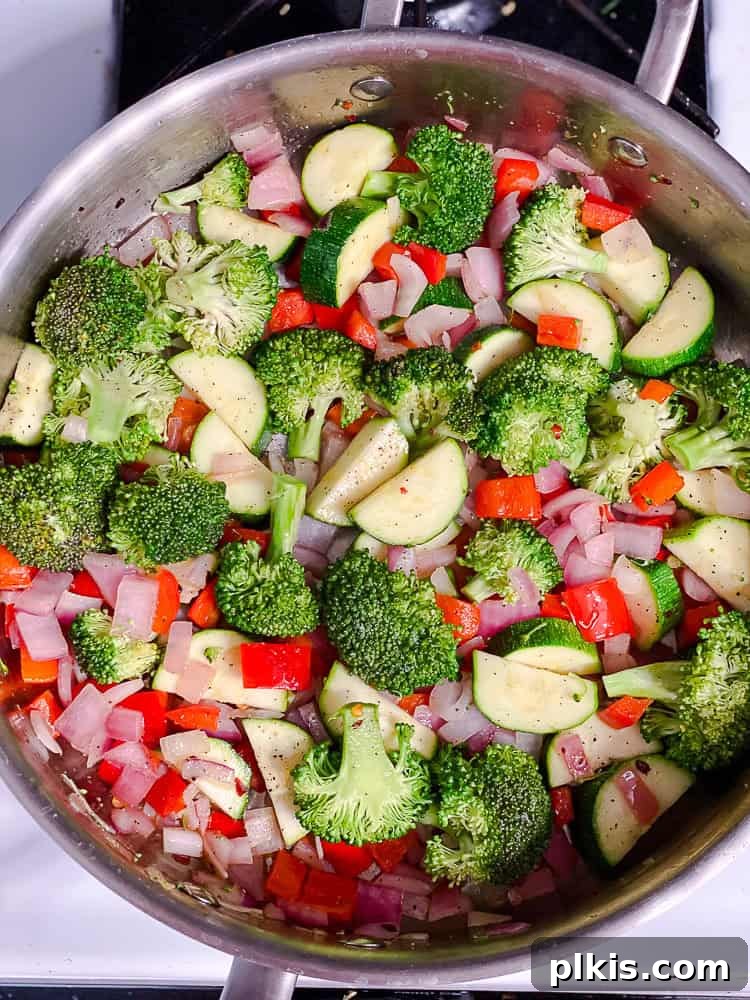
Step 3: Add the Core Vegetables and Seasonings. To the sautéed aromatics, add the broccoli florets, zucchini slices, salt, black pepper, and crushed red pepper. Stir well to combine all ingredients. Cover the pot and reduce the heat to low. Let the vegetables gently steam and soften for approximately 3 minutes, stirring once or twice to prevent sticking.
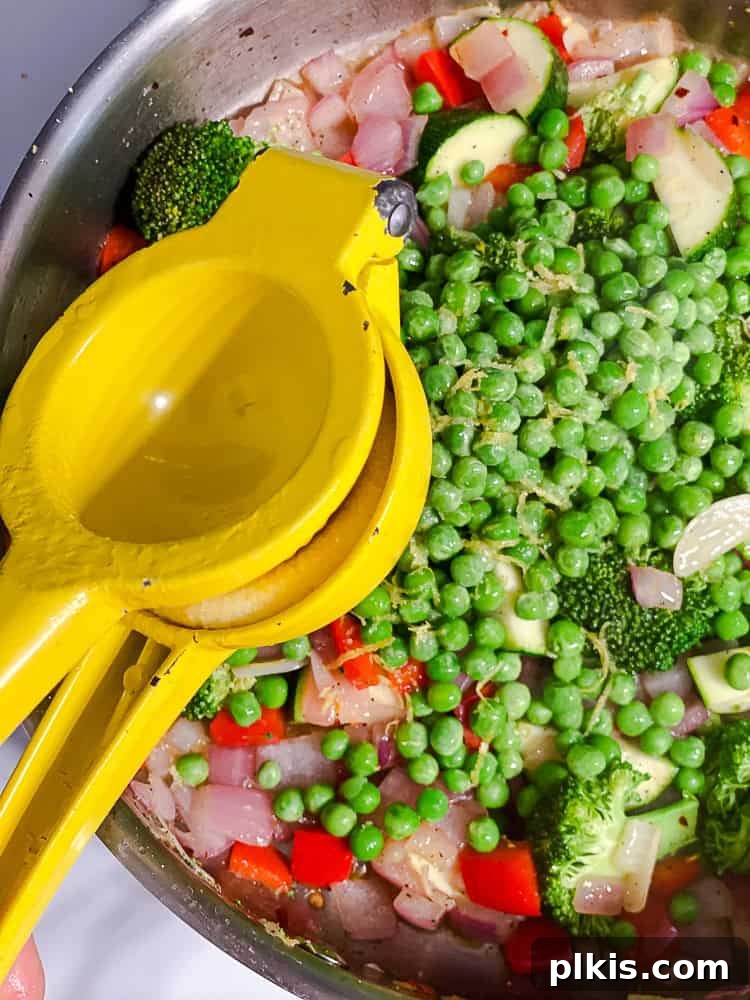
Step 4: Incorporate Peas and Lemon. After 3 minutes, remove the lid and add the frozen peas, 1 teaspoon of fresh lemon zest, and the juice from the entire lemon to the pot. Stir everything together gently. Cover the pot again and continue cooking on the lowest heat setting while you prepare the creamy sauce. The lemon will brighten the flavors and the peas will cook through.
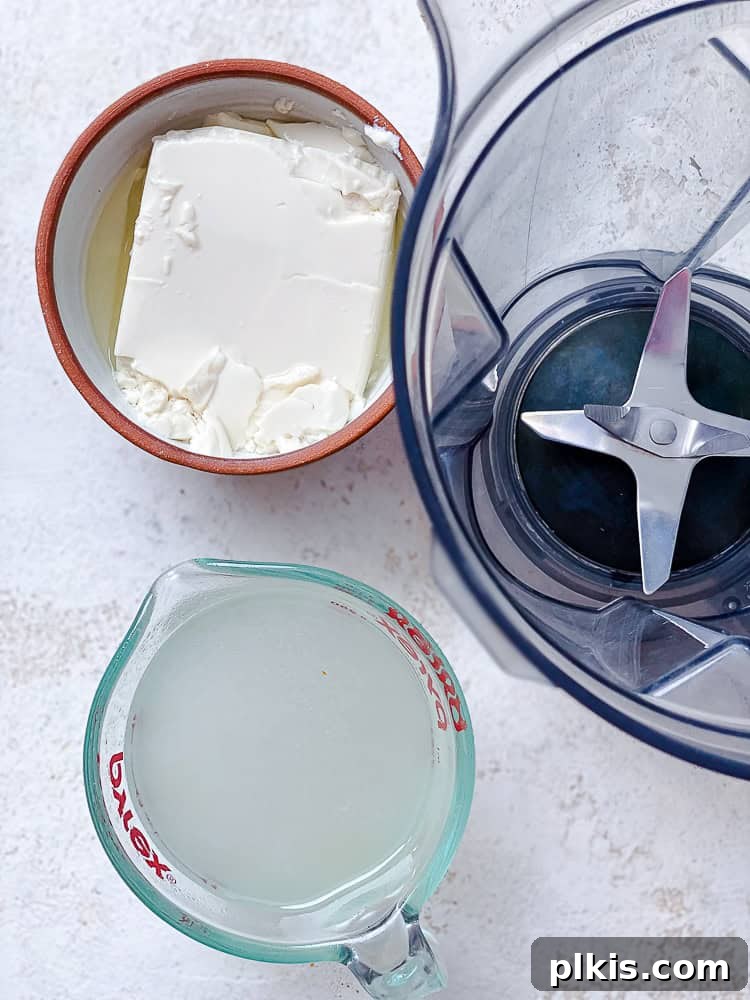
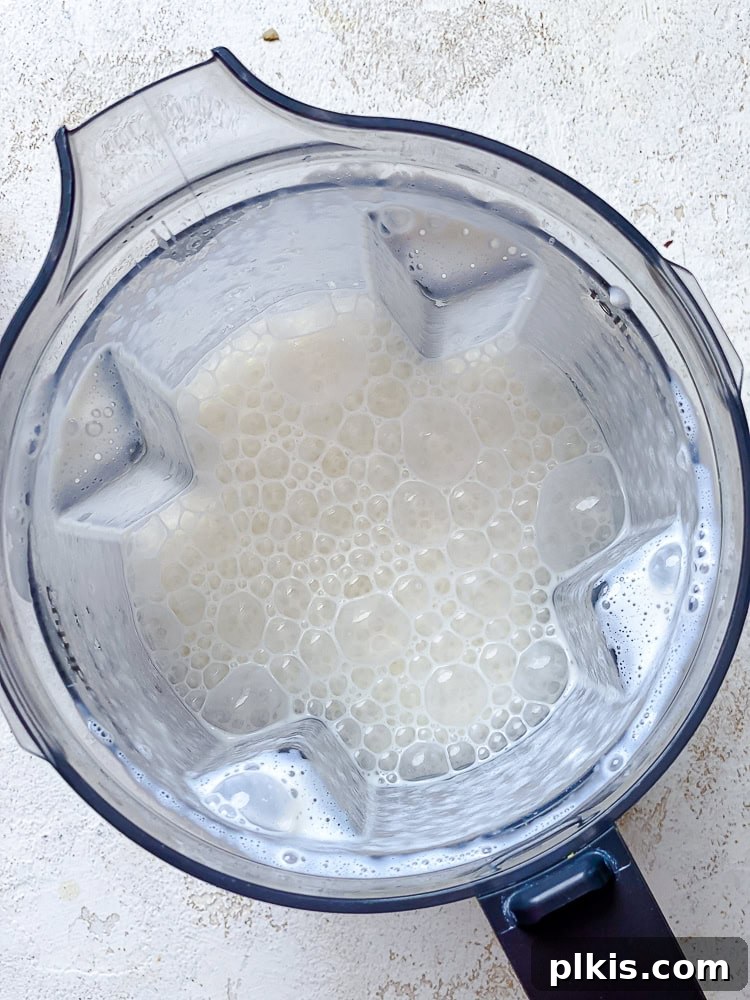
Step 5: Prepare the Silken Tofu Cream Sauce. In the cup of a blender, food processor, or using an immersion blender, combine the entire 12-ounce box of silken tofu with ½ cup of the reserved pasta cooking water. Ensure you use silken tofu, as its soft, delicate texture is essential for achieving a perfectly smooth sauce.
Step 6: Blend to Creamy Perfection. Blend the tofu and pasta water mixture until it is completely smooth, creamy, and free of any lumps. It should have a consistency similar to heavy cream. If it seems too thick, add another splash of pasta water until desired creaminess is achieved.
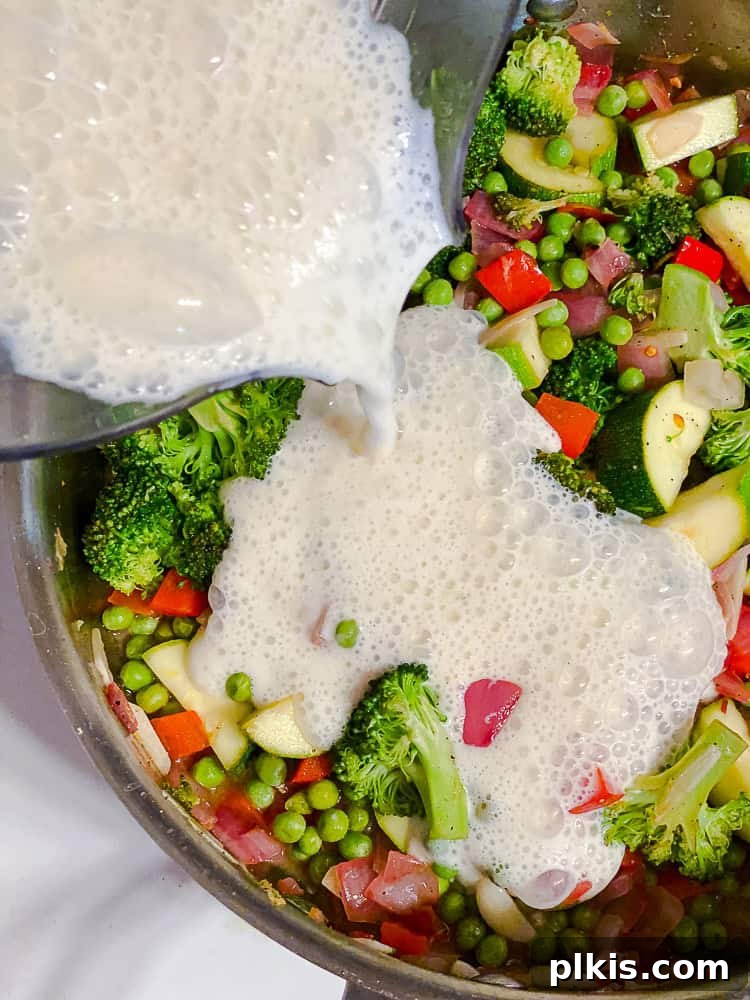
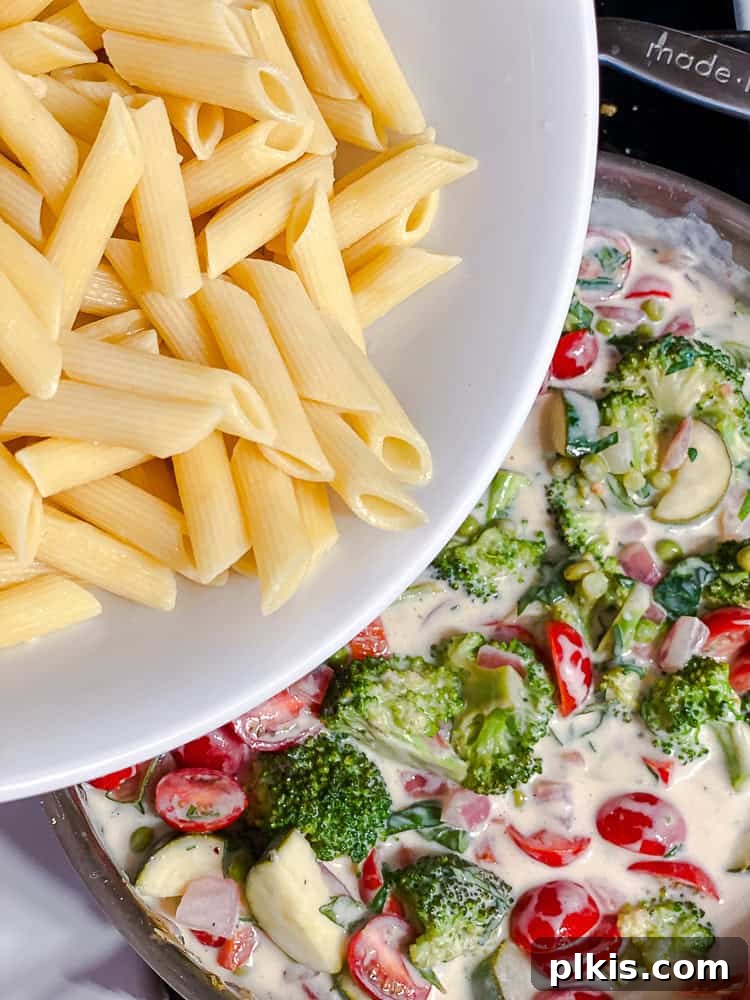
Step 7: Combine Sauce and Vegetables. Pour the freshly blended silken tofu cream sauce into the pot with the gently cooking vegetables. Stir everything thoroughly to ensure the vegetables are evenly coated. Increase the heat to medium and bring the mixture to a gentle boil, stirring occasionally. Cook for about 5 minutes, allowing the flavors to meld and the sauce to warm through.
Step 8: Add Fresh Elements and Pasta. Turn off the heat completely. Now, add the halved grape tomatoes, fresh chopped basil, fresh chopped Italian parsley, and the previously cooked pasta to the pot. Gently mix all the ingredients together until everything is well combined and coated in the creamy sauce.
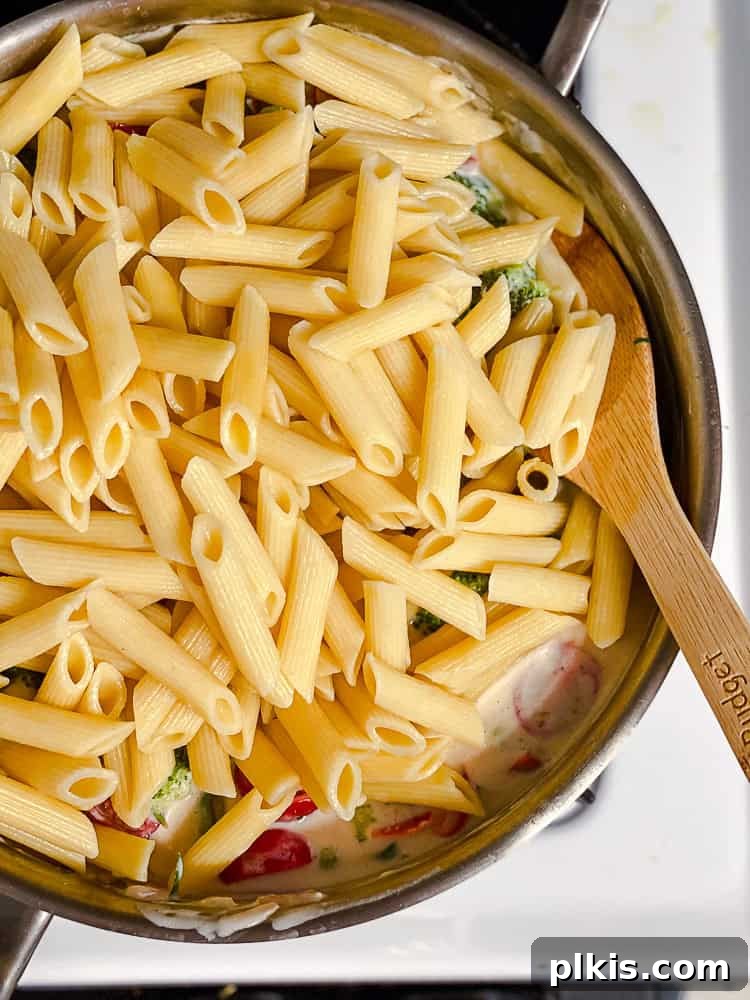
Step 9: Final Simmer and Serve. Cover the pot with a lid and let the pasta primavera sit undisturbed for about 10 minutes. The residual heat from the sauce will finish cooking the pasta to perfection and warm the tomatoes and herbs. Once the 10 minutes have passed, uncover, taste, and adjust the seasonings as needed – you might want a little more salt, pepper, or a squeeze of lemon. If the pasta is still slightly too firm for your liking, cover it again and let it sit for another 5 minutes. Before serving, you can add the remaining ½ cup of reserved pasta water if the sauce appears too thick or dry, then mix well. Serve immediately in bowls, perhaps garnished with a sprinkle of crushed red pepper flakes. Enjoy your perfectly crafted vegan pasta primavera!
Frequently Asked Questions About Vegan Pasta Primavera
“Primavera” translates to “spring” in Italian, so the dish is typically made with fresh, vibrant spring vegetables. Classic choices often include asparagus, broccoli, peas, zucchini, bell peppers, spinach, and cherry or grape tomatoes. However, there are no strict rules, and the dish is designed to be flexible. Feel free to use whatever seasonal vegetables are fresh and appealing to you, or simply what you already have in your refrigerator!
If silken tofu isn’t an option, you have a few excellent alternatives for a creamy, plant-based sauce. You can replace the silken tofu with a 15-ounce can of drained and rinsed cannellini beans or butter beans, blended with the pasta water until smooth. Another popular choice is using ½ cup of raw cashews, soaked in hot water for at least 30 minutes (or boiled for 10 minutes) and then blended with the pasta water. For more established creamy bases, you could also prepare a vegan alfredo sauce or a simple cashew cream to use instead.
Absolutely! This recipe is incredibly easy to adapt for a gluten-free diet. Simply use your favorite gluten-free pasta in place of traditional wheat pasta. Many excellent gluten-free pasta options are available that hold up well in creamy sauces.
Medium-length pasta shapes with some surface area for the sauce to cling to are ideal. Fettuccine, linguine, penne, rotini, farfalle (bow-tie), and even spaghetti are all fantastic choices. Avoid very tiny pasta shapes that might get lost, or extremely large ones that can overpower the delicate vegetables.
Yes, it is! This dish is packed with fresh vegetables, providing a wealth of vitamins, minerals, and dietary fiber. The silken tofu sauce offers a great source of plant-based protein without the saturated fat and cholesterol found in dairy creams. It’s a balanced and wholesome meal perfect for a nutritious diet.
Expert Tips for the Perfect Vegan Pasta Primavera
To ensure your vegan pasta primavera turns out perfectly every time, keep these expert tips in mind:
- Only Use Silken Tofu for the Sauce: This is a non-negotiable! The unique, soft texture of silken or soft tofu is essential for achieving a smooth, velvety, and truly creamy sauce. Firmer varieties like firm or extra-firm tofu will result in a grainy or lumpy sauce texture that won’t work for this recipe. If you’re new to tofu, check out our comprehensive guide to tofu to understand the differences.
- Never Drain All the Pasta Water: Do not forget this crucial step! Reserving at least 1 cup of the starchy pasta cooking water before draining the rest is vital. This liquid is a culinary secret weapon; its starch content helps to emulsify the silken tofu sauce, giving it a luscious, silky-smooth consistency that clings beautifully to every piece of pasta and vegetable. Without it, your sauce might be too thick or lose its desired texture.
- Maintain the Cover During the Final Simmer: Once you’ve added the pasta, tomatoes, and herbs to the sauce, cover the pot tightly and resist the urge to peek! The hot steam trapped inside is necessary to gently finish cooking the pasta to perfect al dente and to warm all the fresh ingredients through. Lifting the lid releases this essential heat and steam, which can prolong cooking time or result in unevenly cooked pasta.
- Serve Immediately for Best Texture: This pasta primavera is at its absolute best when served fresh, hot, and creamy. As the pasta sits, it will naturally continue to absorb the sauce, which can make the dish less creamy over time. For the most delightful, melt-in-your-mouth bites, dish it up as soon as it’s ready.
- Taste and Adjust Seasoning: Always taste your dish before serving! Different brands of pasta, vegetables, and even the saltiness of your pasta water can affect the final flavor. Feel free to add more salt, pepper, a touch more lemon juice, or even a pinch more crushed red pepper to suit your palate. Balancing the flavors is key to a truly unforgettable dish.
- Don’t Overcook the Vegetables: The goal for primavera vegetables is tender-crisp, retaining their vibrant color and a slight bite. Overcooked vegetables become mushy and lose their appeal. Stick to the suggested cooking times to keep them perfect.
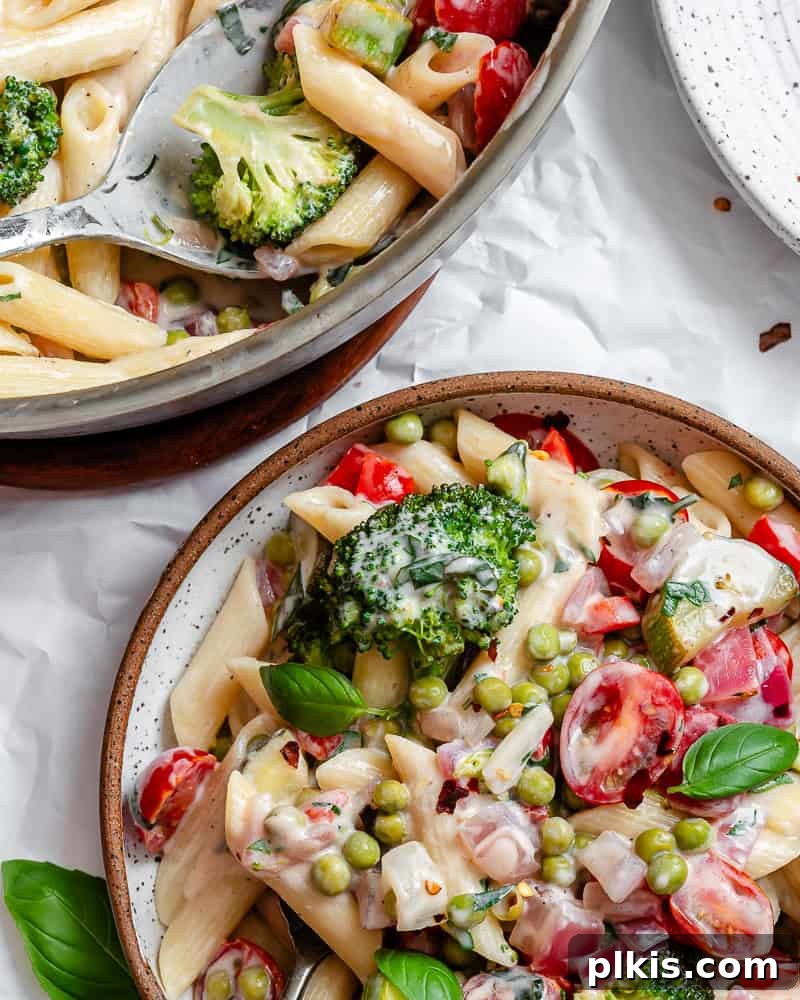
Serving Suggestions for Your Vegan Pasta Primavera
This healthy and satisfying vegan pasta primavera shines as a stand-alone main course, but it also pairs beautifully with a variety of sides to complete your meal:
- Crisp Green Salads: Complement the rich pasta with a light and refreshing salad. Options like a Vegan Caesar Salad, a sweet and savory Strawberry Kale Salad, or a hearty Roasted Beet and Kale Salad add a wonderful fresh contrast.
- Crusty Bread: Don’t let a drop of that delicious creamy sauce go to waste! Serve with warm, crusty bread like Easy Vegan Garlic Bread, soft Vegan Focaccia, or simple breadsticks for soaking up every flavorful spoonful.
- Starchy Vegetable Sides: For a more substantial meal, consider pairing with a comforting starchy vegetable. Creamy Vegan Mashed Potatoes, a lighter Vegan Mashed Cauliflower, or naturally sweet Vegan Mashed Sweet Potatoes offer a delicious textural contrast.
- Light Vegetable Soup: Begin your meal with a warm bowl of light vegetable soup. A fragrant Creamy Vegan Tomato Basil Soup, elegant Creamy Asparagus Soup, or a refreshing Vegan Zucchini Soup can be wonderful appetizers.
Storage and Reheating Instructions
While vegan pasta primavera is undeniably at its peak when served fresh, hot, and creamy, leftovers can certainly be enjoyed! Follow these tips for proper storage and reheating:
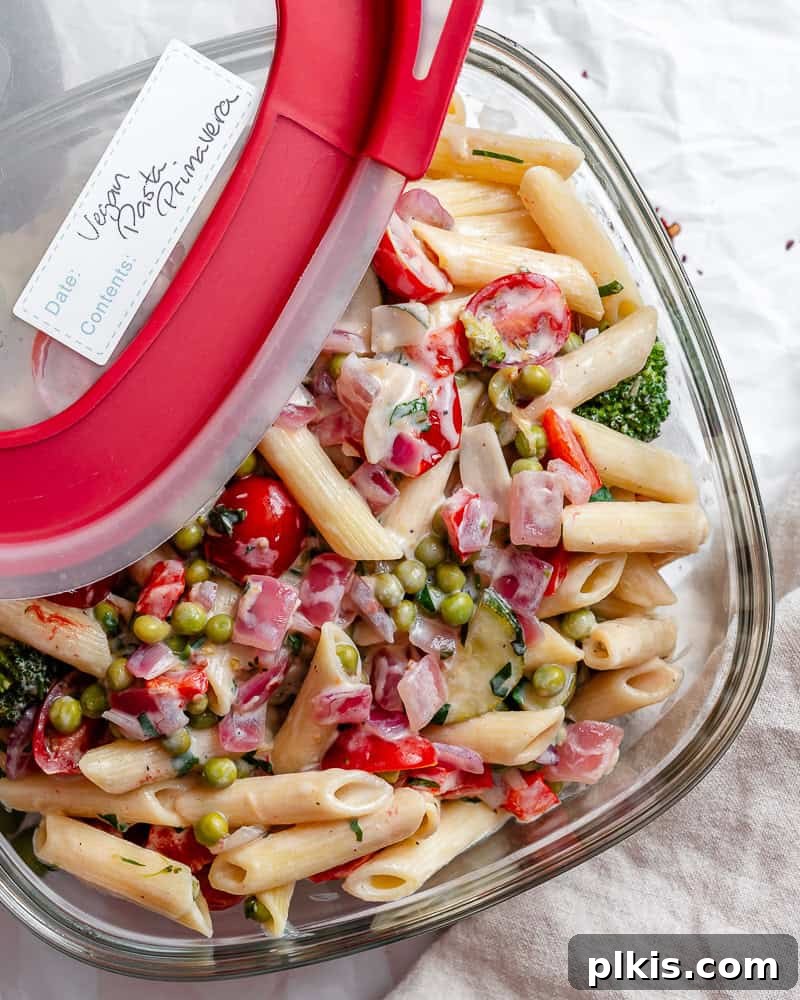
- Refrigerator Storage: If you have any leftovers, allow the pasta to cool completely before transferring it to an airtight container. Store it in the **refrigerator for up to 2 to 3 days** for optimal freshness and safety.
- Reheating: To reheat individual portions, you can use the microwave. Warm the pasta in 30-second intervals, stirring in between, until it’s heated through. Alternatively, for a stovetop reheat, place the pasta in a saucepan over medium heat, stirring gently until warm.
- Preventing Dryness: As the pasta sits and cools, it will continue to absorb the sauce, which can make the dish appear drier than when it was first made. To restore its creamy consistency during reheating, add a splash of water, vegetable broth, or your favorite plant-based milk (such as unsweetened almond or soy milk) until it reaches your desired creaminess.
Vegan Pasta Primavera
Equipment
-
Measuring spoons
-
Measuring Cups
-
My favorite knives
-
Blender
Ingredients
- 1 pound of your choice of pasta
- 2 tablespoons of olive oil
- 1 small red onion diced
- 5 garlic cloves thinly sliced
- 1 bell pepper diced
- 2 cups broccoli florets roughly chopped
- 1 small zucchini sliced into half moons
- Salt and black pepper to taste
- ¼ teaspoon of crushed red pepper
- 1 cup of frozen peas
- 1 lemon zest and juice
- 1 (12-ounce) box of silken tofu
- 1 cup of pasta water
- 1 ½ cups halved grape tomatoes
- ¼ cup of basil chopped
- ¼ cup of Italian parsley chopped
- Crushed red pepper flakes for garnish
Instructions
-
Cook the pasta in a large pot according to package instructions, but cook it for 2 minutes less than the recommended time for al dente. Before draining, reserve 1 cup of the starchy pasta water. Set the drained pasta aside in a colander.
-
Rinse the pot quickly, then place it back on the stove over medium-high heat. Once all the water from the pot has evaporated, add the olive oil.
-
Add the diced onion, thinly sliced garlic, and diced bell pepper. Sauté, stirring occasionally, until the onions are translucent and fragrant, and the bell pepper begins to soften (about 5-7 minutes).
-
Add the broccoli florets, zucchini slices, salt, black pepper, and crushed red pepper. Stir well to combine, cover the pot, and cook on low heat for 3 minutes, stirring occasionally to prevent the vegetables from burning.
-
Add the frozen peas, 1 teaspoon of lemon zest, and the juice of the whole lemon. Mix well, cover with a lid, and lower the heat to the lowest setting while you prepare the sauce.
-
In a blender, food processor, or using an immersion blender, combine the silken tofu and ½ cup of the reserved pasta water. Blend until completely smooth and creamy.
-
Pour the cream sauce into the pot with the vegetables. Mix well, turn the heat up to medium, and cook for 5 minutes or until the sauce comes to a light boil, stirring occasionally.
-
Turn off the heat. Add the halved grape tomatoes, chopped basil, chopped parsley, and the cooked pasta. Gently mix well to combine all ingredients. Cover the pot with the lid and let it sit for 10 minutes to allow the pasta to finish cooking undisturbed with the residual heat of the sauce.
-
Once the 10 minutes have passed, uncover, taste, and add more seasoning if needed. If the pasta is still slightly too raw, cover it and let it sit for 5 more minutes. When ready to serve, if the sauce appears too thick, add the other ½ cup of the reserved pasta water and mix well. Serve immediately and enjoy!
Notes
- This recipe only works with silken tofu: It’s important to use silken or soft tofu to get a smooth and creamy sauce. Firmer types of tofu, like extra firm tofu, will not work. Check out this guide to tofu to learn about the different types!
- Don’t drain the pasta water: Do not forget to reserve 1 cup of the pasta cooking water from the pot before draining the rest! This starchy water gives the pasta sauce a silky smooth and luscious consistency and helps it cling to every noodle and vegetable.
- Keep the pot covered: Don’t be tempted to peek at the pasta once you add it to the sauce. You don’t want the hot steam to escape, as it’s needed to finish cooking the pasta.
- Serve it right away: The pasta will absorb the sauce as it sits, so you’ll want to serve it right away for the creamiest bites.