
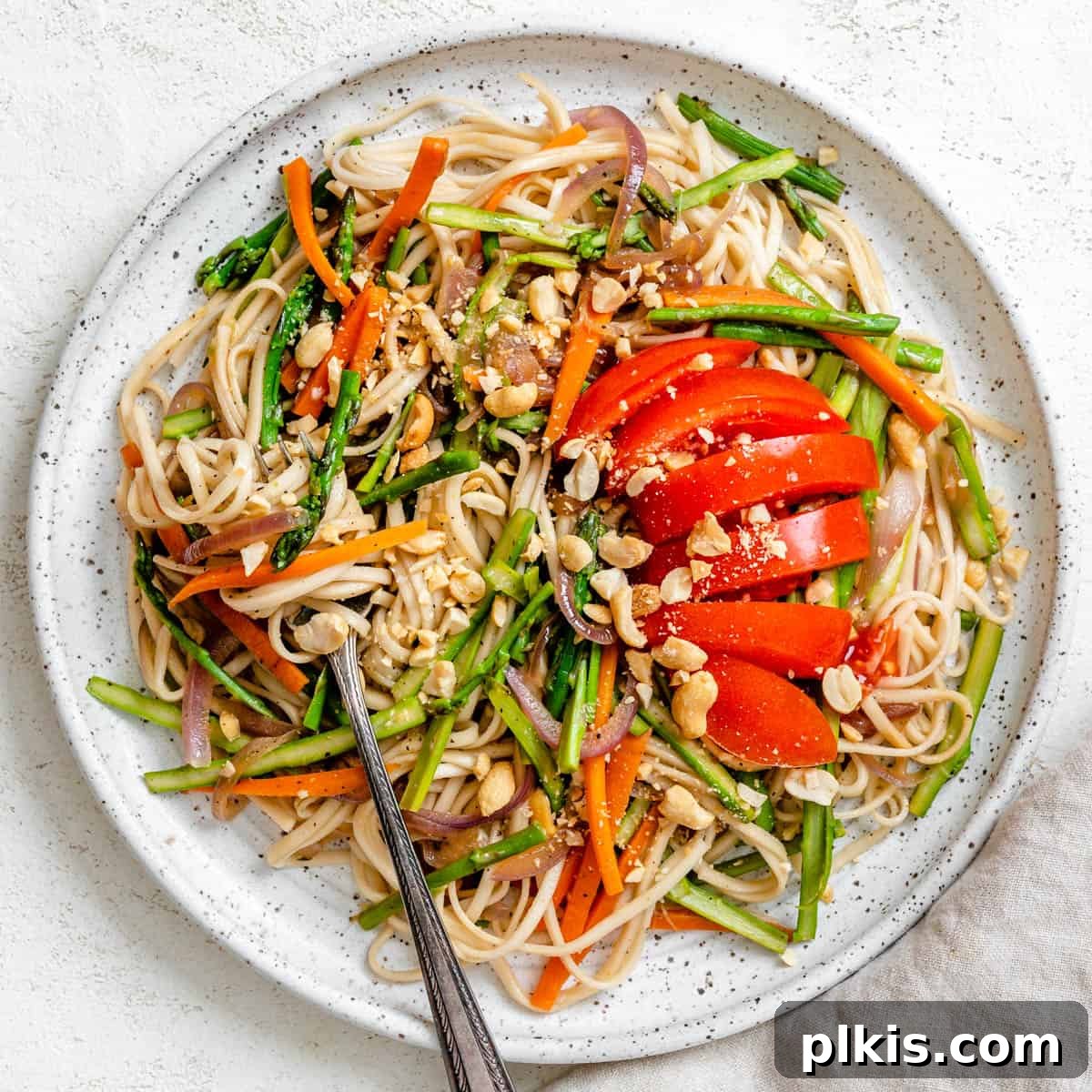
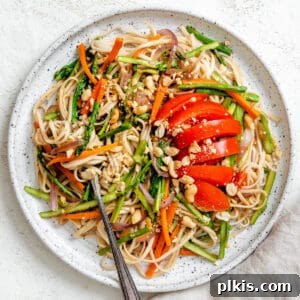
Craving a meal that’s both incredibly delicious and remarkably easy to prepare? Look no further than this delightful Vegetable Noodle Stir Fry. It’s the quintessential stir fry: simple, packed with nutrients, and bursting with flavor. In just 25 minutes, with only 9 core ingredients, you can create a wholesome, plant-based dish that’s perfect for busy weeknights or a quick, satisfying lunch. This recipe is designed to simplify your cooking routine without compromising on taste or health benefits, making it an ideal addition to any meal plan.
Stir-fries hold a special place in the culinary world for their versatility and speed. They offer a fantastic way to incorporate a variety of vegetables into your diet, helping you effortlessly meet your daily fiber requirements. The beauty of this Vegetable Noodle Stir Fry lies in its adaptability. While we provide a fantastic foundational recipe, feel free to use it as a springboard for your own creativity. Experiment with different vegetables, add a unique protein, or even customize the sauce to discover your ultimate stir-fry combination. Whether you’re a seasoned chef or a kitchen novice, this recipe guarantees a rewarding cooking experience and a meal you’ll crave again and again.
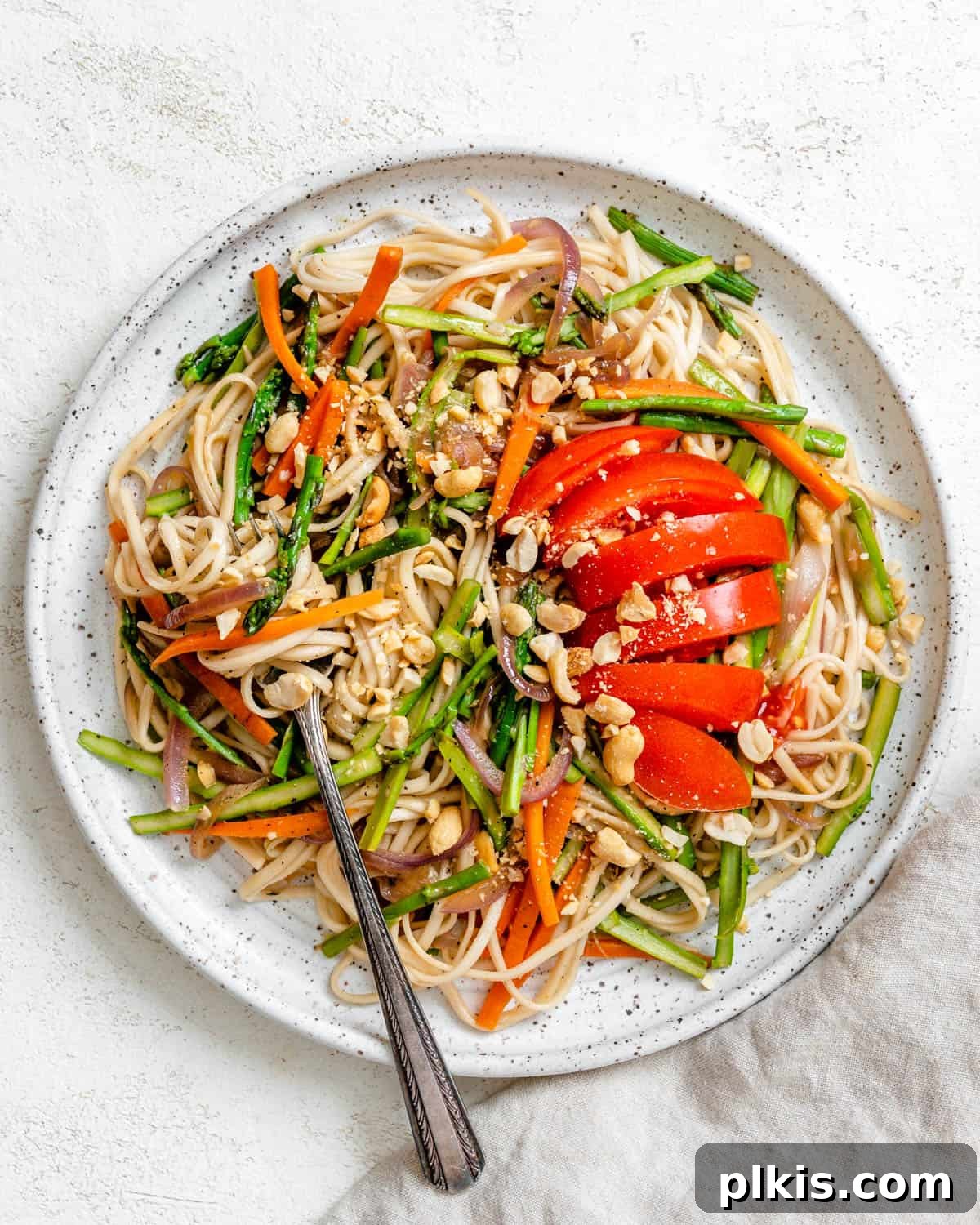
Table of Contents
- Why You’ll Love This Vegetable Noodle Stir Fry
- The Star Ingredients
- Versatile Add-ins and Flavorful Substitutions
- How to Master Your Vegetable Noodle Stir Fry
- Common Questions About This Stir Fry
- Expert Recipe Tips for Success
- Creative Serving Suggestions
- Storage Instructions & Leftover Tips
- More Irresistible Noodle Recipes to Try
Why You’ll Absolutely Love This Vegetable Noodle Stir Fry
This Vegetable Noodle Stir Fry isn’t just another recipe; it’s a testament to how simple, wholesome ingredients can come together to create something truly extraordinary. Here’s why this dish will become a staple in your kitchen:
- Minimal Ingredients, Maximum Flavor: You only need 9 ingredients to whip up this incredibly satisfying veggie stir fry! Forget complicated lists or expensive, obscure items. We focus on easily accessible ingredients that deliver robust flavor without breaking the bank. This makes it a perfect recipe for budget-conscious cooks and anyone looking to simplify their grocery shopping.
- Lightning-Fast Preparation – Ready in 25 Minutes: Time is precious, especially on busy weeknights. This stir fry is designed for speed, going from pantry to plate in just about 25 minutes. It’s the ultimate solution for a last-minute lunch or a quick dinner when you need something delicious and nutritious without a lengthy cooking process.
- Fresh or Frozen: Your Choice, Your Budget: Whether you prefer the crispness of fresh produce or the convenience and affordability of frozen vegetables, this recipe works beautifully with both. Frozen produce can be a fantastic budget-friendly option, especially when certain vegetables are out of season. Using frozen stir fry mixes is a clever hack we frequently employ in our free vegan meal plans to keep costs down and meals delicious.
- Dietary-Friendly & Universally Enjoyable: Naturally vegan and effortlessly gluten-free (when using tamari or gluten-free soy sauce and rice noodles), this recipe caters to a wide array of dietary needs and preferences. For those seeking an oil-free option, simply sauté your vegetables with water or vegetable broth instead of oil. It’s a truly inclusive dish that everyone at the table can enjoy.
- Nutrient-Rich and Wholesome: Beyond its delicious taste, this stir fry is a powerhouse of nutrients. Loaded with fresh vegetables, it provides essential vitamins, minerals, and dietary fiber. The addition of peanuts offers healthy fats and plant-based protein, making this a well-rounded and energizing meal.
The Star Ingredients for Your Perfect Stir Fry
Each ingredient in this recipe plays a crucial role in building layers of flavor and texture. We’ve kept it simple, focusing on fresh, accessible items that combine to create a truly memorable meal. Here’s a closer look at what you’ll need:
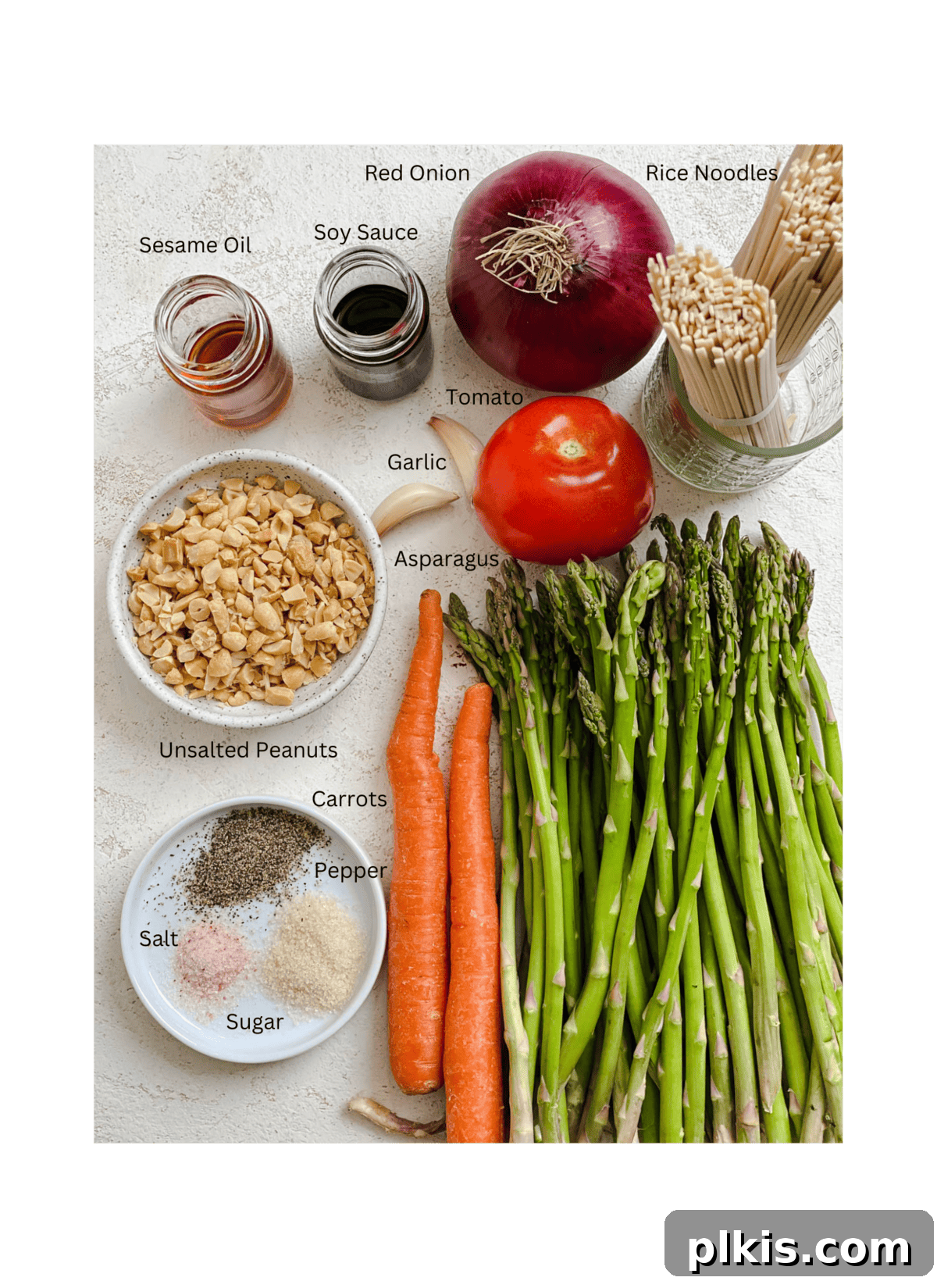
- Noodles: The foundation of any good noodle stir fry! While we love using delicate rice noodles for their light texture and ability to absorb sauce, feel free to experiment with your favorites. Udon noodles offer a delightfully chewy experience, buckwheat noodles provide an earthy flavor, and ramen noodles can add a quick and satisfying base. Ensure you choose gluten-free options if required.
- Aromatics: The soul of Asian cuisine often begins with a robust aromatic base. A simple yet powerful combination of thinly sliced red onion and freshly minced garlic creates an incredibly fragrant and flavorful foundation for your stir fry. Fresh is always best for maximum aroma and taste.
- Carrots: Sweet, vibrant, and packed with nutrients, carrots add both color and a subtle sweetness. We recommend fresh carrots, julienned or thinly sliced into strips for quick cooking, but frozen carrot slices are a perfectly acceptable and convenient alternative.
- Asparagus: These tender green spears contribute a wonderful crisp-tender texture and a distinct, slightly earthy flavor. Use fresh or frozen asparagus spears, chopped into 1-inch pieces, ensuring any woody ends are removed before cooking.
- Soy Sauce (or Alternatives): Essential for that savory umami depth and necessary saltiness. Regular soy sauce works perfectly, but if you’re adhering to a gluten-free diet, opt for tamari or coconut aminos, which offer similar flavor profiles without the gluten.
- Sugar: A small pinch of sugar is vital for balancing the savory and salty notes of the stir-fry sauce. It rounds out the flavors beautifully. Granulated sugar, brown sugar, coconut sugar, or even liquid sweeteners like maple syrup or agave nectar can be used interchangeably.
- Unsalted Peanuts: Crushed, unsalted peanuts are a game-changer in this stir fry. They provide a fantastic crunchy texture, a delightful nutty flavor, and are an excellent source of healthy fats and plant-based protein, adding substance and satiety to the dish.
- Tomato (Optional): For a burst of freshness, vibrant color, and a juicy, crisp texture, we love adding sliced or quartered tomatoes on top just before serving. Any variety of tomato will work – choose your favorite!
- Sesame Oil: Toasted sesame oil is not just for cooking; it’s a flavor enhancer. Used for sautéing and drizzled at the end, it imparts a rich, nutty aroma that is characteristic of many Asian-inspired dishes.
Versatile Add-ins and Flavorful Substitutions
One of the greatest joys of stir-frying is its incredible flexibility. This recipe is a canvas, and you’re the artist! Don’t be afraid to customize it with your favorite ingredients to create a unique dish every time. Here are some ideas to get you started:
- Expand Your Veggie Palette: Just like many of our vegan dinner recipes, this stir fry is perfect for using up leftover odds and ends in your fridge. Swap or add any of your favorite fresh or frozen vegetables. Consider vibrant green beans, colorful bell peppers (red, yellow, or orange), tender broccoli florets, crisp snow peas or snap peas, thinly sliced green onions, delicate baby bok choy, earthy shiitake mushrooms, or even some thinly sliced cabbage for extra crunch. The more colorful, the better – a rainbow of vegetables means a wider range of nutrients!
- Boost Your Protein: If you’re looking for a heartier meal or an extra protein punch, stir-fries are excellent vehicles for plant-based proteins. Crispy pan-fried tofu cubes, crumbled or sliced tempeh, savory soy curls, or hearty soya chunks all absorb the sauce beautifully. For a truly delicious addition, try making our Pan-Fried Tempeh with Ginger Soy Sauce and tossing it in with your noodles and veggies. Edamame or shelled peas also make simple, quick protein additions.
- Elevate Your Sauce Game: Our base sauce is simple and effective, but if you prefer a richer, more complex, or saucier stir fry, don’t hesitate to enhance it! A drizzle of sriracha or a dollop of chili garlic paste can add a pleasant kick. For a creamy and savory option, whisk in a tablespoon of peanut butter (or almond butter for a nut-free alternative) with a little hot water before adding to the pan. You could also prepare a dedicated stir-fry sauce like our Spicy Peanut Dipping Sauce or a 5-Minute Homemade Stir Fry Sauce to toss everything in. A touch of rice vinegar or lime juice can brighten the flavors with a tangy lift.
- Spice It Up: If you love a little heat, it’s easy to make this dish spicier. Incorporate freshly grated ginger for a warm, pungent kick. A teaspoon of chili paste or a sprinkle of red pepper flakes during sautéing will infuse heat throughout the dish. A dash of your favorite hot sauce or a few slices of fresh red chili pepper as a garnish can also elevate the spice level to your liking.
- Nut-Free Option: If you have a peanut allergy, simply omit the peanuts. You can add toasted sesame seeds or crispy fried onions for crunch, or even a handful of roasted cashews (if tolerated) for a different nutty flavor.
How to Master Your Vegetable Noodle Stir Fry
Creating a perfect stir fry is all about timing and high heat. Follow these steps for a delicious and quick meal:
- Step 1: Prepare Your Noodles. Begin by cooking your chosen noodles according to the package instructions. This is a crucial step – pay close attention to the recommended cooking time to avoid overcooking. Once perfectly al dente, drain the noodles thoroughly and rinse them under cool water. Rinsing helps remove excess starch, preventing them from sticking together later. Transfer them to a large bowl and set aside.
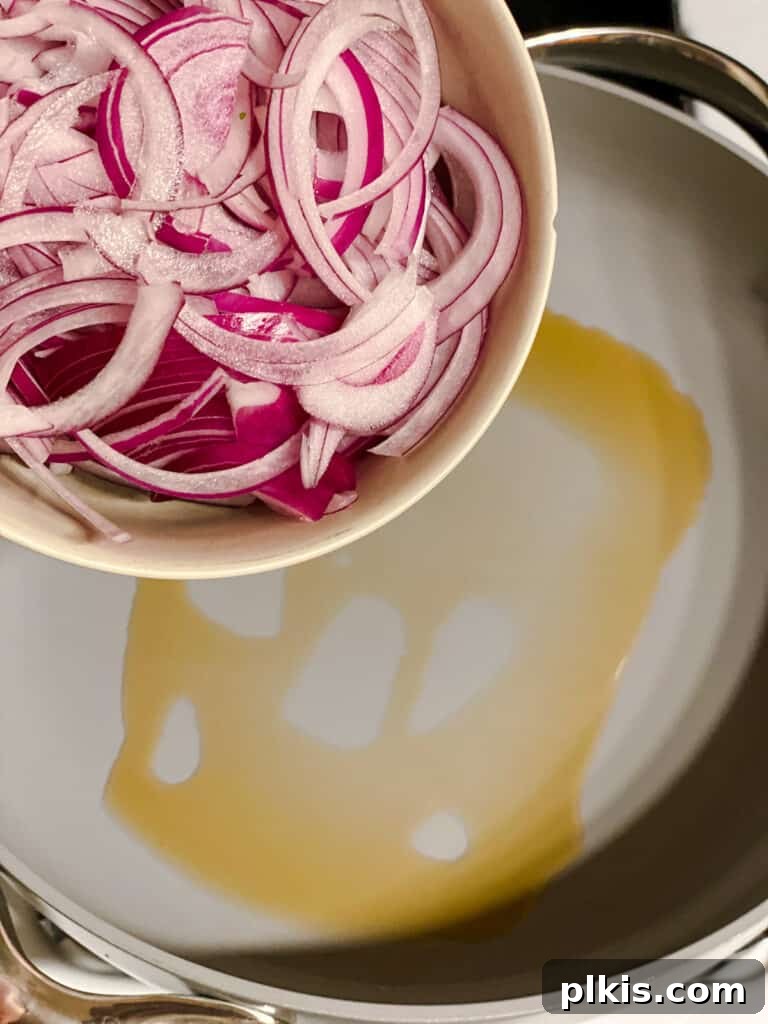
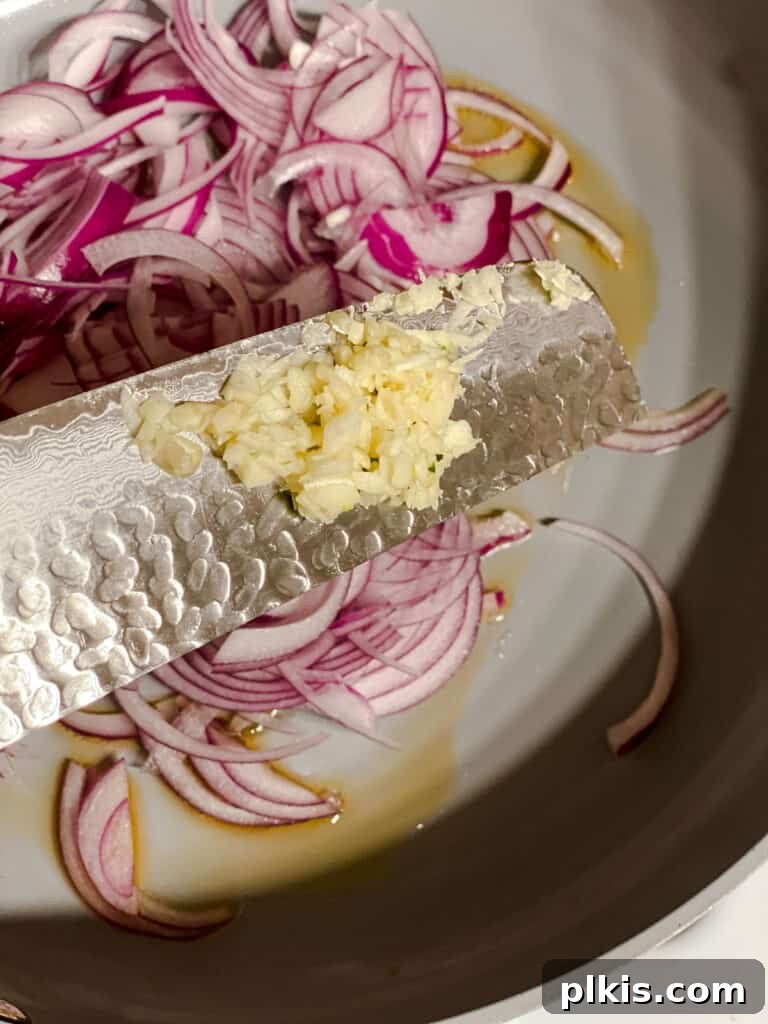
- Step 2: Sauté the Aromatics. Heat 1 tablespoon of sesame oil in a large skillet or wok over medium-high heat. Once the oil is shimmering and warm, add the thinly sliced red onion. Sauté for 2-3 minutes, stirring occasionally, until the onion softens and becomes translucent. Immediately add the finely chopped garlic and continue to sauté for another 30 seconds, stirring constantly to prevent it from burning. Burnt garlic can impart a bitter flavor.
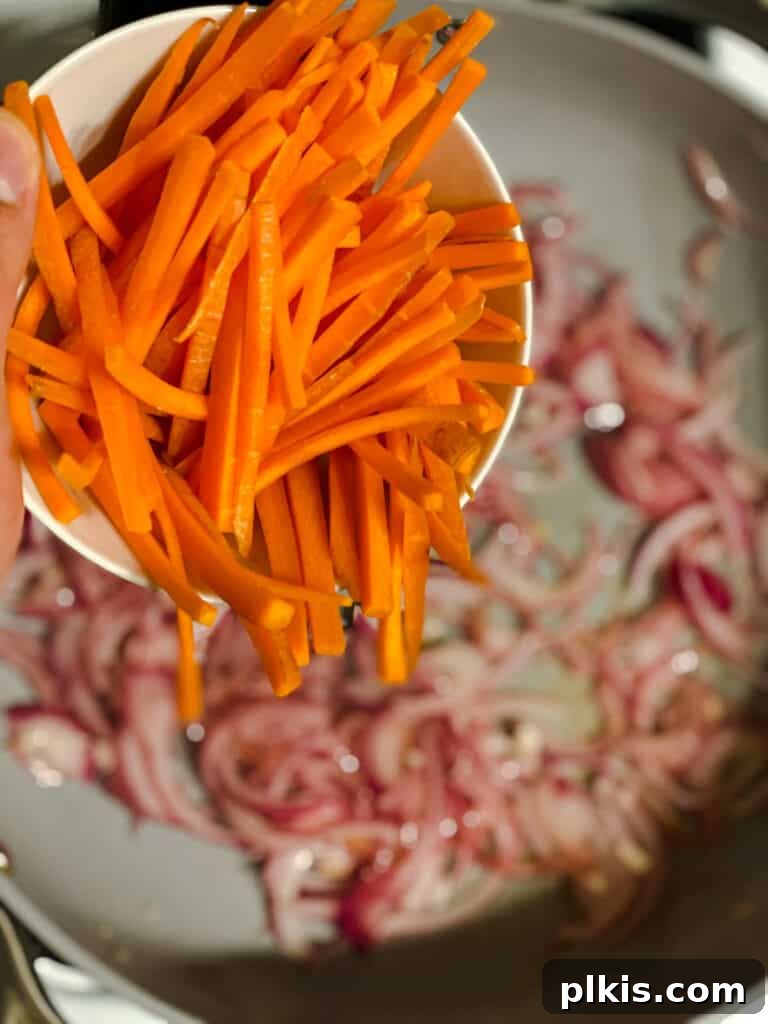
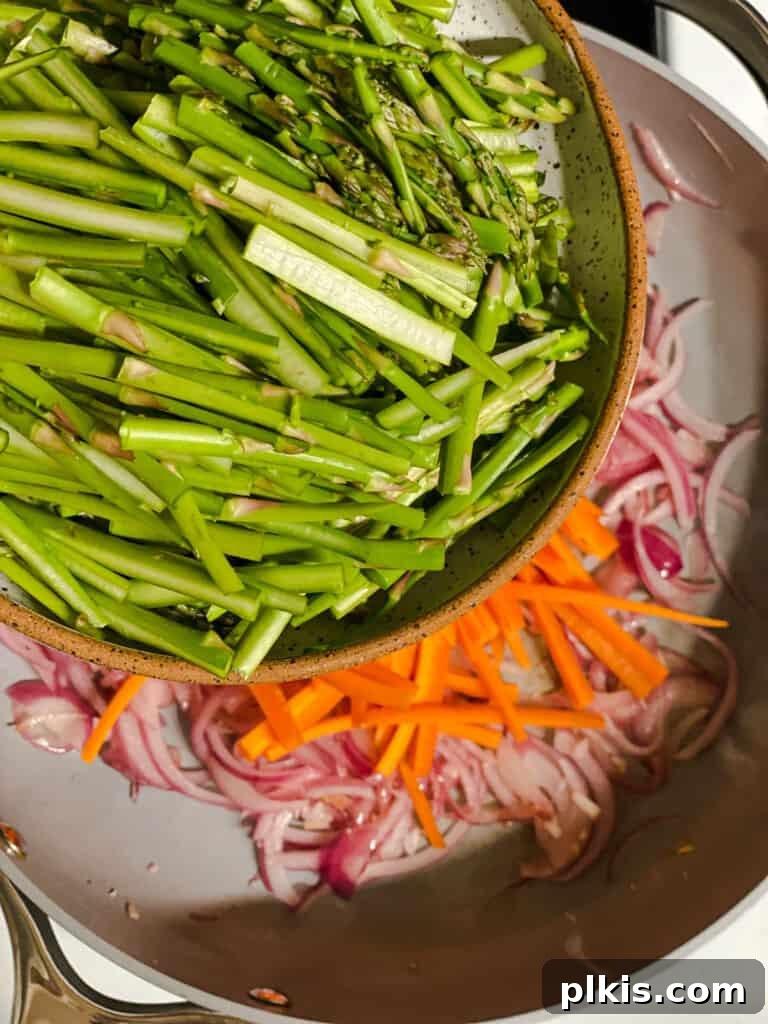
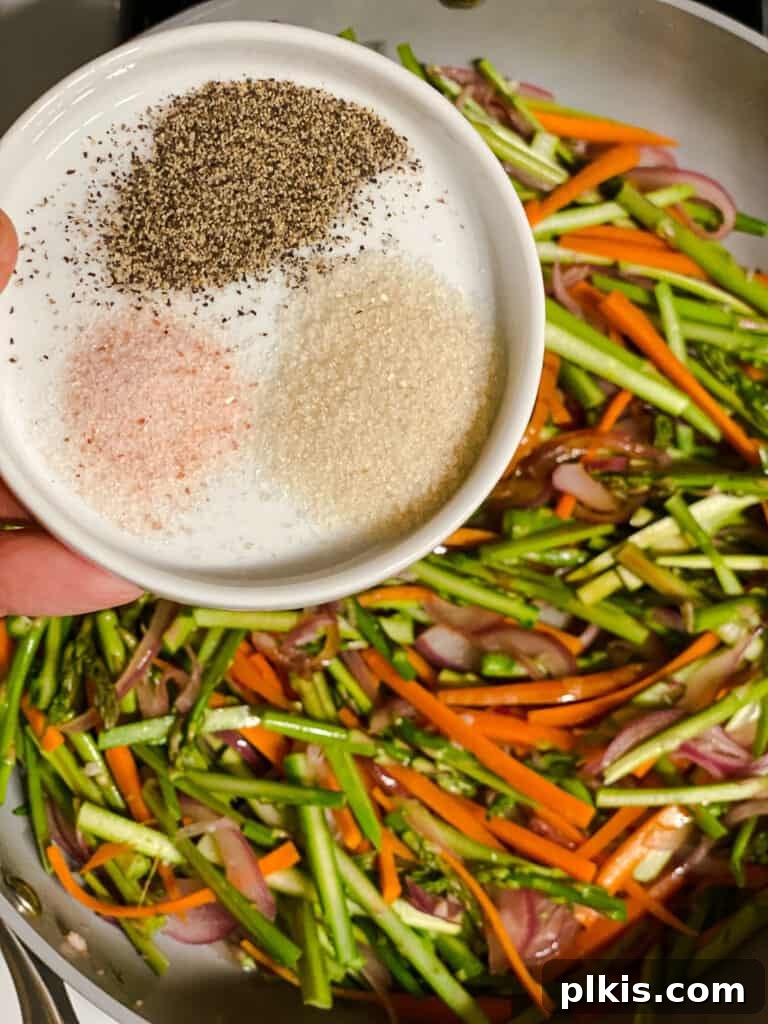
- Step 3: Stir Fry the Vegetables. Add the sliced carrots, asparagus pieces, 1 tablespoon of soy sauce (or alternative), sugar, sea salt, and black pepper to the pan with the aromatics. Continue to cook for another 2-3 minutes, stirring frequently. You want the asparagus spears to become a vibrant green and the carrots to be tender-crisp, retaining a slight bite. This quick cooking ensures they are flavorful and retain their nutritional value.
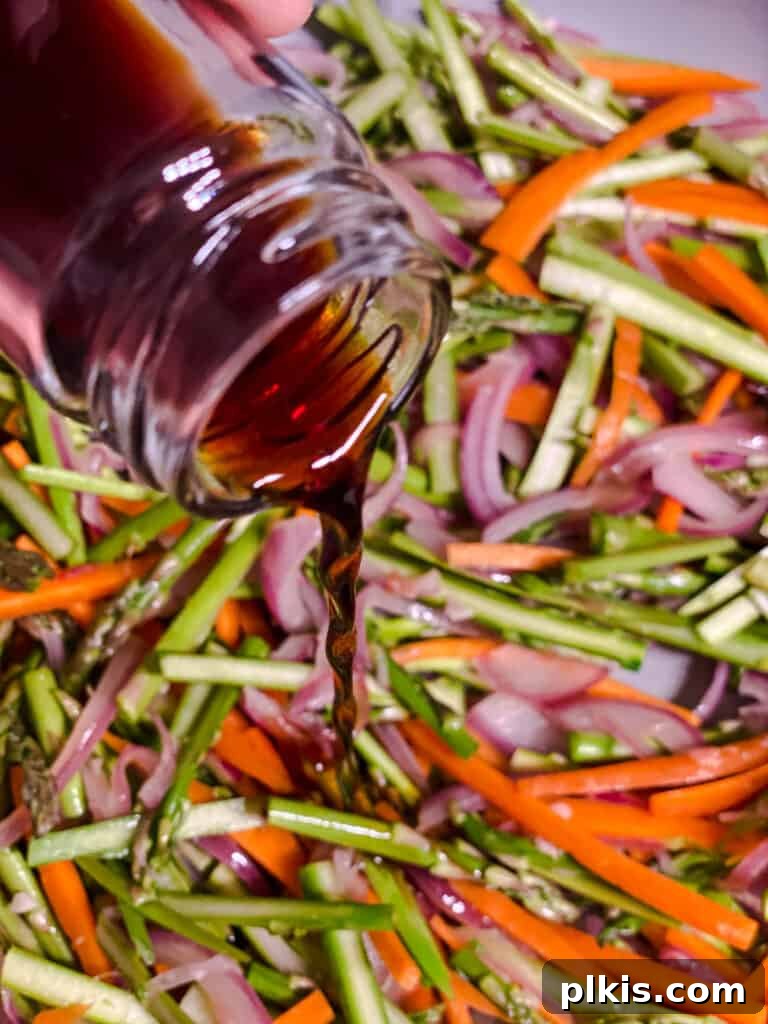
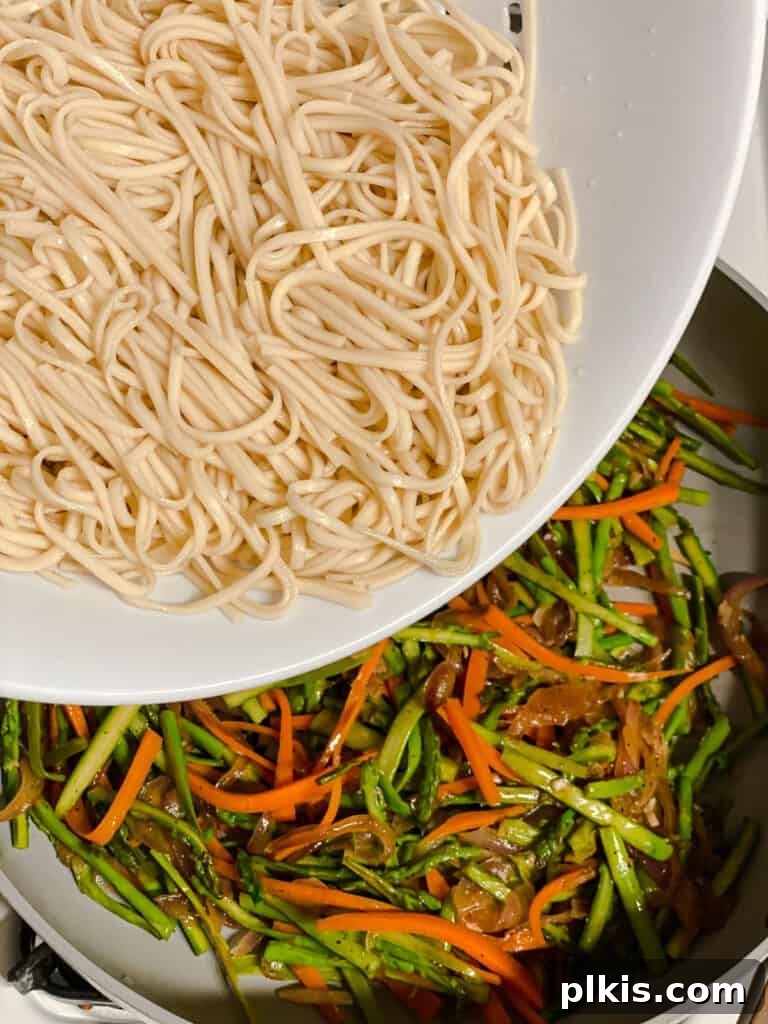
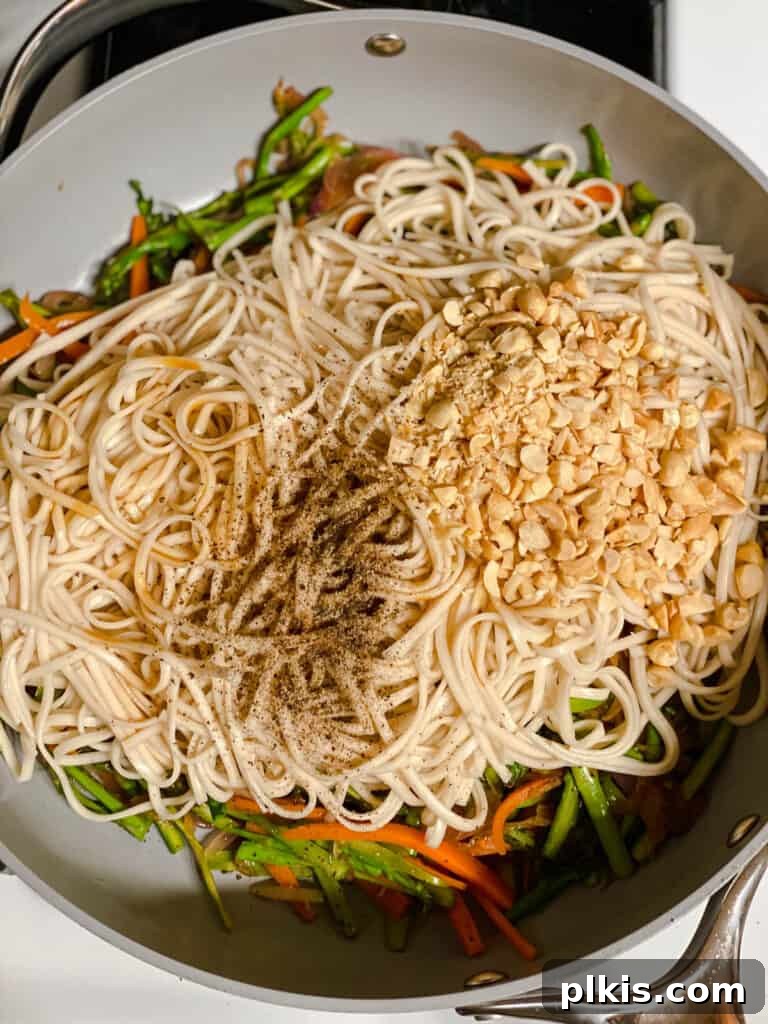
- Step 4: Combine and Finish. Finally, add the cooked and rinsed rice noodles back into the pan with the stir-fried vegetables. Add the remaining 1 tablespoon of sesame oil, the remaining 1 tablespoon of soy sauce, the crushed peanuts, and freshly ground black pepper to taste. Toss everything vigorously to ensure the noodles and vegetables are evenly coated with the delicious sauce. Serve immediately, garnished with optional fresh tomato quarters, and perhaps a sprinkle of extra crushed peanuts. Enjoy your perfectly balanced and flavorful stir fry!
Common Questions About This Stir Fry
New to stir-frying or just have some questions about this specific recipe? Here are answers to some frequently asked questions:
The best noodles depend entirely on your personal preference and dietary needs. For a gluten-free option, thin rice noodles are a fantastic and very popular choice. They have a neutral flavor, a slightly chewy texture, and absorb sauces beautifully. If you can tolerate wheat, udon noodles are excellent for those who enjoy thicker, chewier noodles, while lo mein noodles also offer a satisfying texture. For a quick-cooking, thinner noodle, ramen noodles are a great option (just discard the seasoning packet if using instant ramen). Ultimately, use what you love!
The key to preventing sticky noodles is proper rinsing. After draining your cooked noodles, rinse them thoroughly under cool running water. This washes away excess starch that causes them to clump. For extra assurance, you can also toss them with a tiny bit of sesame oil once rinsed before adding them to the stir fry. This will create a light coating that prevents sticking.
A watery stir fry usually occurs when the noodles are not properly drained before being added to the pan. Noodles retain a lot of water, and if that moisture isn’t removed, it will release into your stir-fry sauce, making it thin and bland. After cooking, always transfer your noodles to a colander or fine-mesh sieve and let all the excess water drain off for several minutes before adding them to your stir-fried vegetables. Another tip: ensure your pan is hot enough when cooking vegetables; this helps the moisture evaporate quickly rather than steam the veggies.
Yes, absolutely! For an oil-free version, simply sauté your onions, garlic, and other vegetables in a small amount of vegetable broth or water instead of oil. Add a tablespoon or two at a time, allowing it to evaporate, and replenishing as needed to prevent sticking. The flavor will still be fantastic!
For optimal stir-frying results, a wok is ideal because of its high heat retention and sloped sides, which make tossing ingredients easy. However, a large, heavy-bottomed skillet or a cast-iron pan will also work effectively. The main goal is a pan that can withstand and maintain high heat to get that desirable slight char on your vegetables.
Expert Recipe Tips for Stir-Fry Success
Achieving a perfectly delicious and vibrant stir fry is easier than you think, especially with these insider tips:
- High Heat is Your Best Friend: Stir-fries thrive on high heat! This is crucial for achieving that characteristic “wok hei” – a smoky, caramelized flavor – and ensuring your vegetables get a nice char while remaining crisp-tender. Using a wok or a similar large, heavy-bottomed skillet that can handle and maintain high temperatures is key. Don’t overcrowd the pan; cook in batches if necessary to keep the heat high.
- Never Overcook Your Noodles: Noodle cook times are often much shorter than pasta. It’s vital to keep a close eye on your noodles and strictly follow the package directions. Overcooked noodles quickly turn mushy and lose their desirable texture, making for a less appealing stir fry. Test them frequently during boiling to ensure they are al dente.
- The Power of Prep: “Mise en Place”: This recipe comes together incredibly fast – sometimes in as little as 15 minutes of actual cooking! To make the process seamless and stress-free, adopt the “mise en place” philosophy: wash, chop, and measure all your ingredients *before* you even turn on the stove. This way, everything is ready to go into the hot pan in quick succession, preventing anything from burning and ensuring a smooth cooking flow. You’ll thank yourself for this small effort later!
- Dry Ingredients, Better Sauté: Ensure your vegetables are as dry as possible after washing. Excess moisture can lower the pan’s temperature and steam the vegetables instead of stir-frying them, leading to a less vibrant and crisp result. A quick pat-down with a paper towel can make a big difference.
- Taste and Adjust: Always taste your stir fry before serving and adjust seasonings as needed. You might want a little more soy sauce, a dash more sugar, or an extra sprinkle of black pepper to suit your preference. A squeeze of lime juice at the end can also brighten all the flavors.
Creative Serving Suggestions
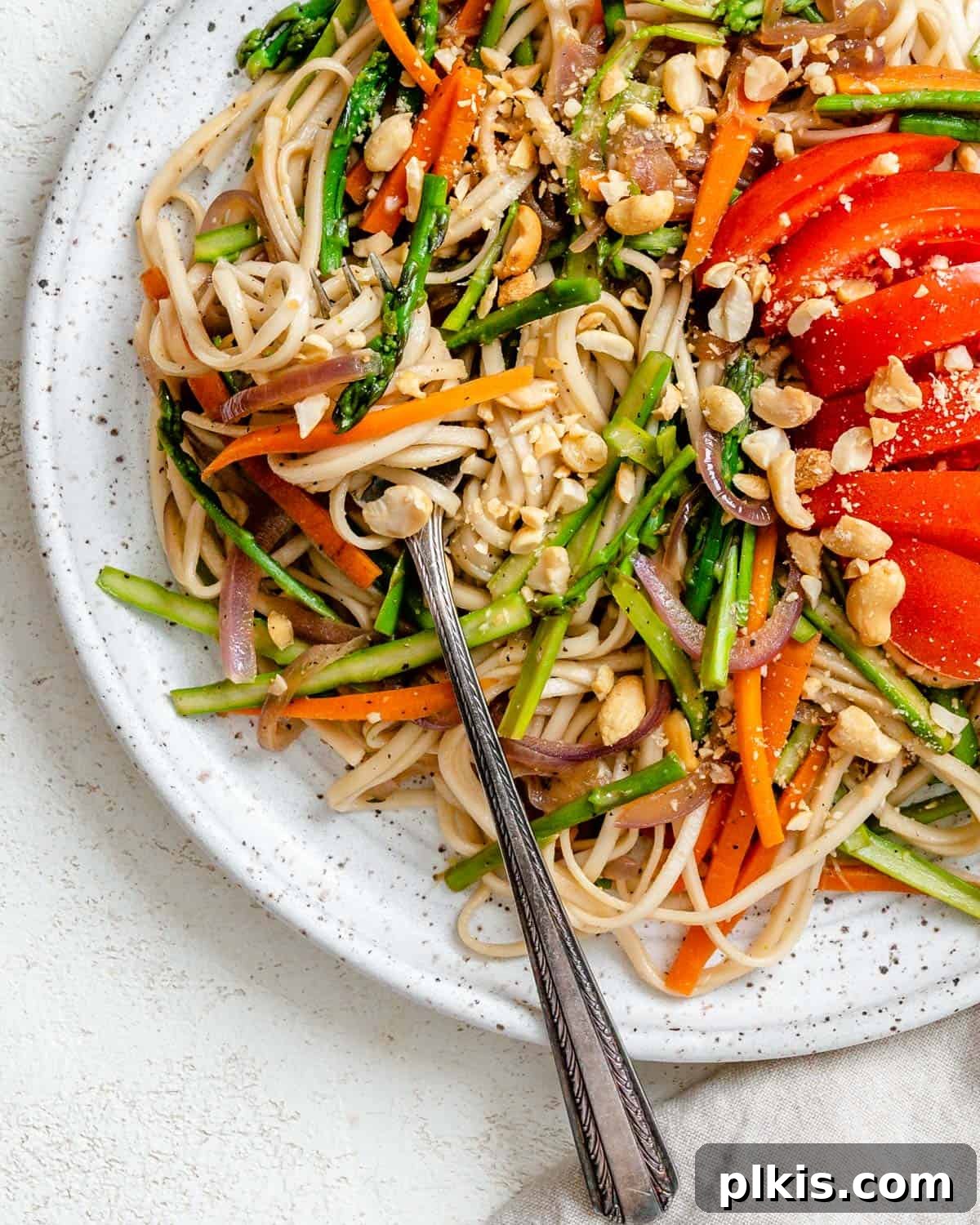
This Vegetable Noodle Stir Fry is a delightful meal all on its own, perfect for a quick and easy lunch or dinner. For an elevated experience, garnish your finished dish generously with extra crushed peanuts for crunch, freshly chopped cilantro for herbaceous brightness, thin slices of red onion for a slight bite, and vibrant quartered tomatoes for a burst of freshness and juicy texture. It’s light enough to whip up effortlessly on any weeknight, and its versatility allows you to enjoy it year-round by simply using your favorite seasonal produce.
Beyond being a standalone dish, this stir fry pairs beautifully with a variety of complementary sides or additional plant-based proteins. Consider serving it alongside crispy pan-fried tofu or tempeh for added sustenance. For vegetable sides, try our tender Baby Bok Choy with Soy Sauce, savory Braised Cabbage, or some refreshing Tofu Spring Rolls. A side of steamed edamame or a simple cucumber salad would also provide a wonderful contrast. Don’t forget a drizzle of sriracha or a squeeze of lime for an extra pop of flavor!
Storage Instructions & Leftover Tips
While this vegetable noodle stir fry truly shines when served fresh, you can certainly enjoy the leftovers. If you happen to have any, store them in an airtight container in the refrigerator for 2-3 days. To reheat, you can either gently warm it in the microwave or, for best results, reheat it in a skillet on the stovetop over medium heat, adding a splash of water or vegetable broth to prevent drying out and to revive the sauce. Stir occasionally until thoroughly heated through.
However, freezing this stir fry is generally not recommended. The texture of the noodles can become mushy and grainy once thawed, and the vegetables may lose their crispness and vibrant color, diminishing the overall quality of the dish. It’s best enjoyed fresh or within a couple of days from the refrigerator.
More Irresistible Noodle Recipes to Try
If you’ve enjoyed this Vegetable Noodle Stir Fry and are looking to expand your noodle repertoire, we have a variety of other delicious plant-based noodle dishes that are sure to satisfy your cravings. From vibrant salads to comforting warm bowls, there’s a noodle recipe for every occasion:
- Vegan Vegetable Pad Thai
- Noodle Salad [Cold Sesame Noodles]
- Coco Nut Butter Veggie Rice Noodles
- Garlic Sesame Soba Noodles
- Chap Chae-Style Soba Noodles
- Peanut Noodle Salad [Glass Noodle Salad]
- Vietnamese Noodle Salad
- Spicy Kimchi Noodle Bowl
- Quick Lemon Herb Pasta
Photos by Alfonso Revilla
Vegetable Noodle Stir Fry
★★★★★
10 minutes
15 minutes
25 minutes
4
servings
Equipment
-
Measuring spoons
-
Measuring Cups
-
Knife set
-
Large skillet or wok
Ingredients
4 Servings
4 Servings
- 1 package of rice noodles
- 2 tablespoons of toasted sesame oil
- ½ a red onion, thinly sliced
- 2 cloves garlic, finely chopped
- 2-3 carrots, sliced into strips or julienned
- 1 bunch of asparagus, chopped into 1-inch pieces, woody stems removed
- 2 tablespoons of soy sauce, tamari (for GF), or coconut aminos
- 1 teaspoon of sugar
- ½ teaspoon of sea salt
- Freshly ground black pepper, to taste
- ½ cup of roasted unsalted peanuts, crushed
- 1 ripe tomato, quartered (optional, for garnish)
Instructions
-
Cook rice noodles according to package directions. Drain well and rinse with cool water to prevent sticking. Set aside in a large bowl.
-
Heat 1 tablespoon of sesame oil in a skillet or wok over medium-high heat. Add the thinly sliced red onion and sauté for 2-3 minutes until translucent. Add the finely chopped garlic and sauté for an additional 30 seconds, stirring constantly to prevent burning.
-
Add the carrots, asparagus, 1 tablespoon of soy sauce, sugar, sea salt, and black pepper to the pan. Cook for 2-3 minutes, stirring frequently, until the asparagus is bright green and the carrots are tender-crisp.
-
Return the cooked rice noodles to the pan with the vegetables. Add the remaining 1 tablespoon of sesame oil, the remaining 1 tablespoon of soy sauce, crushed peanuts, and black pepper (if desired). Toss everything well to coat evenly. Serve immediately, garnished with extra peanuts and a side of lightly salted tomato quarters, if using.
Notes
For the best stir-fry experience, remember these key tips:
- Use a skillet that can withstand high heat! Stir-fries are best when tossed together at medium-high heat. The veggies get a nice char, and the flavor is infused throughout. For best results, use a wok or a similar large, heavy-bottomed skillet.
- Don’t overcook the noodles! Noodles usually have a fairly short cook time compared to pasta, so keep a close eye on them and double-check the package directions. They can quickly overcook and become mushy if left boiling too long. Always check the package directions!
- Chop your vegetables in advance. This recipe comes together in just 15 minutes of active cooking. To make it as easy and quick as possible, wash, chop, and measure all your ingredients before starting your stir fry. This organized approach (mise en place) will ensure a smooth and enjoyable cooking process.
- Don’t overcrowd the pan. Cooking vegetables in smaller batches, if necessary, helps maintain high heat and ensures they stir-fry rather than steam, leading to better texture and flavor.
- Adjust seasoning to taste. Always taste your sauce and the final dish before serving to adjust salt, sweetness, or spice levels according to your preference.
Nutrition
Carbohydrates: 63g
Protein: 11g
Fat: 17g
Saturated Fat: 3g
Polyunsaturated Fat: 6g
Monounsaturated Fat: 7g
Sodium: 927mg
Potassium: 669mg
Fiber: 7g
Sugar: 7g
Vitamin A: 6459IU
Vitamin C: 18mg
Calcium: 81mg
Iron: 4mg
Additional Info
Renee Press
Dinner, Lunch
Asian
Stovetop
Vegan
Tried this recipe?
Please tag us at @PlantBasedOnABudget! 🙂