
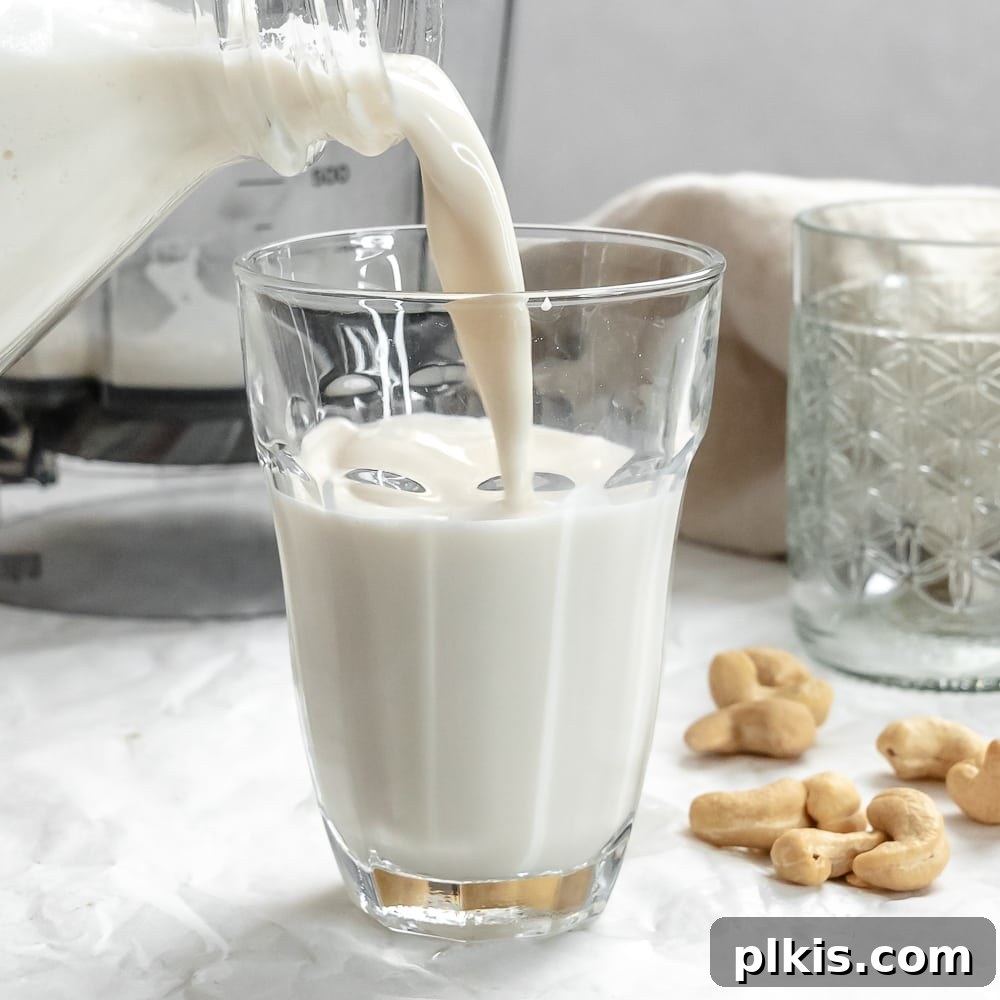
Experience the unparalleled creaminess and refreshing taste of homemade cashew milk. This incredibly simple, 4-ingredient recipe requires no straining, making it the easiest and most delicious dairy-free, plant-based milk alternative you’ll ever make. Perfect for those seeking a nutritious, versatile, and lactose-free option!
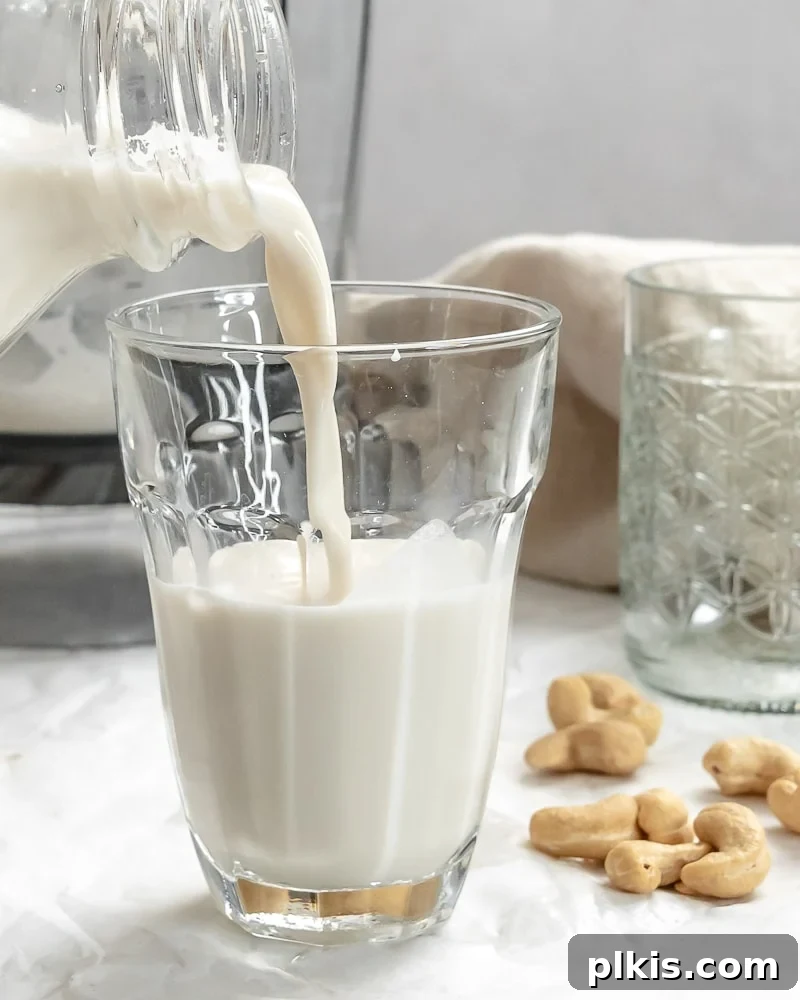
Table of Contents
- Why Choose Homemade Cashew Milk?
- The Simple Ingredients
- Unleash Your Creativity: Flavor Variations
- Step-by-Step: How to Make Cashew Milk
- Customize Your Creaminess: Cashew-to-Water Ratio
- Nutritional Benefits of Cashew Milk
- Frequently Asked Questions (FAQs)
- Pro Tips for Perfect Cashew Milk
- Storage Best Practices
- Explore More Vegan Drinks
Embarking on your journey into homemade nut milks is incredibly rewarding, and this simple cashew milk recipe is the perfect starting point. Not only is it renowned for its exceptional creaminess among dairy-free options, offering a wonderfully neutral flavor profile, but it also boasts a significant advantage: no straining required! Forget the mess of nut milk bags; just a quick soak, drain, and blend transform raw cashews into a nutrient-rich, smooth, and waste-free plant-based milk.
Making your own cashew milk is remarkably straightforward, effortlessly customizable with various flavors, and significantly healthier and more economical than store-bought alternatives. Its versatility makes it suitable for both sweet and savory applications. Enjoy it chilled or warmed in your favorite beverages like energizing smoothies, decadent vegan milkshakes, comforting teas, and frothy lattes. It’s also an ideal addition to morning cereal, hearty oatmeal, and enhances recipes for fluffy pancakes and crispy waffles. Don’t stop there – use it to elevate the texture of creamy mashed potatoes, enrich savory sauces, or lend moisture to your favorite baked goods. The possibilities are truly endless!
Why Choose Homemade Cashew Milk?
While many regions now offer a wide array of dairy-free milk options in stores, creating your own at home presents numerous compelling advantages that make it a truly superior choice for health-conscious and budget-savvy individuals alike:
- Pure Ingredients, No Additives: Take complete control over what goes into your body by eliminating all artificial flavors, colors, gums, stabilizers, and preservatives often found in commercial plant milks. Your homemade version will be naturally clean and wholesome.
- Ingredient Transparency: Be 100% in control of the ingredients and their exact amounts. This allows you to tailor the milk to your specific dietary needs or preferences, such as sugar content or cashew concentration.
- Significant Cost Savings: If you frequently consume plant-based milk, making it at home can lead to substantial long-term savings. Raw cashews, especially when purchased in bulk, are often more cost-effective per serving than pre-packaged alternatives.
- Endless Flavor Customization: Unlock a world of flavor possibilities without the hefty price tag associated with specialty store-bought milks. This simple cashew milk recipe serves as a perfect blank canvas for your culinary imagination.
- Tailored Creaminess: Easily adjust the ratio of cashews to water to achieve your desired consistency – from a light, refreshing beverage to a rich, creamy “half-and-half” substitute for coffee and cooking.
- Quick & Simple Process: Beyond the soaking time, the actual preparation is incredibly fast. With a high-speed blender, the entire process takes just minutes, and best of all, you don’t even have to strain the milk, saving you time and effort!
The Simple Ingredients for Your Best Cashew Milk
Crafting homemade cashew milk is surprisingly simple, requiring just a few staple ingredients. The key to its exceptional creaminess and flavor lies in the quality of these components.
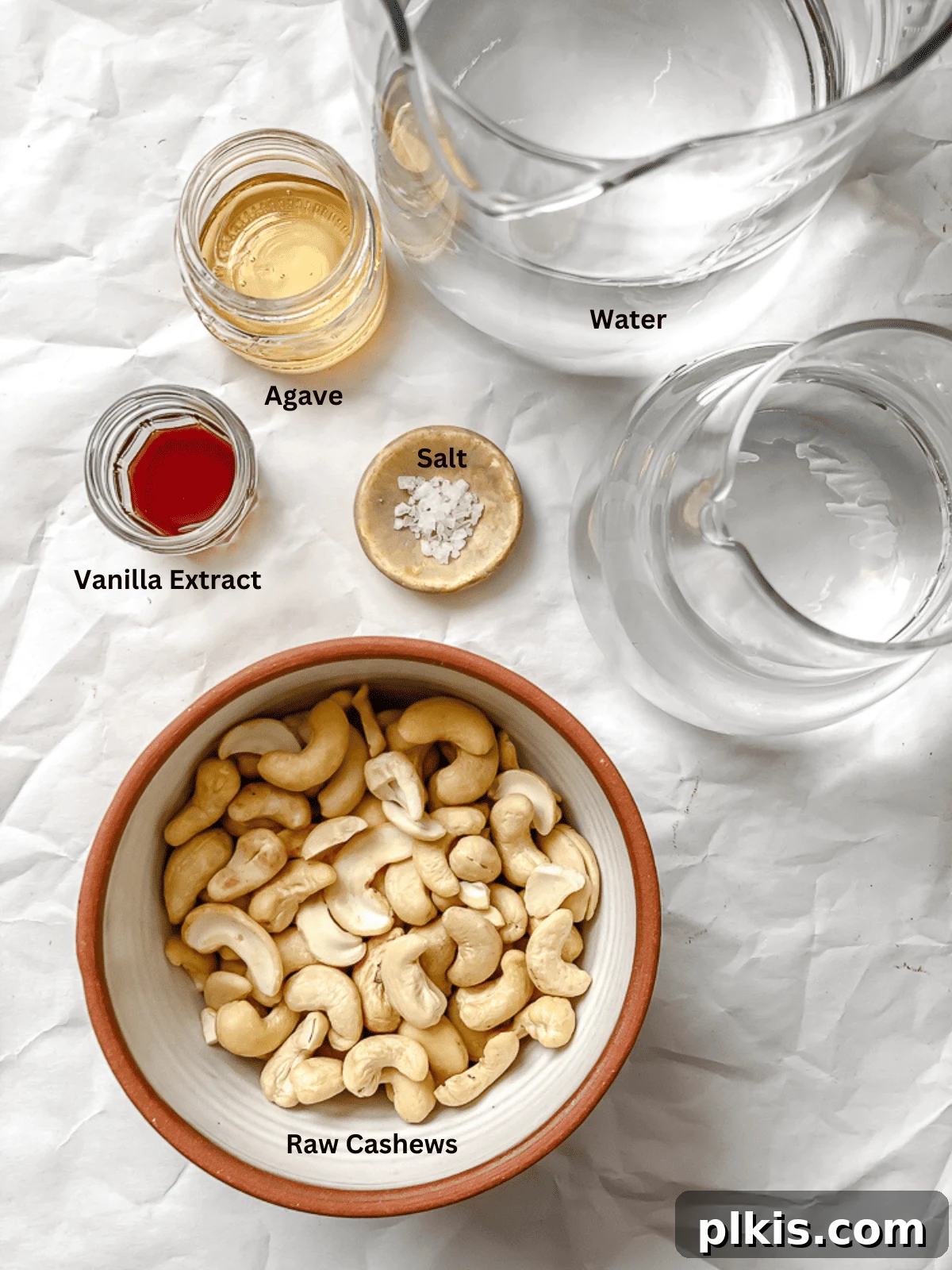
- Raw Cashews: The star of our recipe! Always opt for unsalted, raw cashew nuts. Raw cashews yield the smoothest, creamiest milk without any overpowering roasted flavor. For the most economical option, consider buying them from bulk bins or in larger packages. Ensure they are fresh for the best taste.
- Water: You’ll need water for two stages: first, for soaking the cashews, and then fresh, filtered water for blending. Using filtered water will ensure the purest taste for your milk.
- Sweetener (Optional): While optional, a touch of sweetener can enhance the overall flavor, especially if you prefer a slightly sweet milk. We highly recommend liquid sweeteners like maple syrup or agave nectar, as they dissolve seamlessly into the mixture, preventing any gritty texture. Date syrup or homemade date paste also work wonderfully for a more natural, fruit-derived sweetness. Adjust the amount to your personal taste, or omit it entirely for an unsweetened version.
- Vanilla Extract (Optional but Recommended): Though technically optional, a good quality vanilla extract adds a lovely aromatic depth and enhances the “milk” flavor. Use natural vanilla extract for the best results and to avoid any artificial aftertaste.
- Pinch of Salt: A tiny pinch of salt might seem unexpected, but it’s a game-changer! It beautifully balances and amplifies the natural sweetness and nutty flavor of the cashews, creating a more well-rounded and delicious cashew milk.
Vanilla Cashew Milk vs. Plain: This recipe primarily focuses on a delicious vanilla cashew milk. If you prefer a plain, unsweetened version, simply omit the vanilla extract and any sweetener.
Unleash Your Creativity: Exciting Flavor Variations
Once you master the basic cashew milk recipe, you’ll discover how incredibly easy it is to whip up a diverse range of delightful flavor variations with minimal extra effort or cost. Let your imagination guide you!
- Decadent Chocolate Cashew Milk: Transform your basic milk into a rich treat by adding 2 tablespoons of unsweetened cocoa powder or cacao powder. For an extra layer of complexity, a tiny pinch of coffee or espresso powder can deepen the chocolate flavor.
- Fresh Berry Cashew Milk: For a vibrant and fruity twist, blend in about 2 cups of fresh or frozen berries such as strawberries, raspberries, blueberries, or mixed berries. This creates a naturally sweet and colorful drink, perfect for breakfast or a snack.
- Invigorating Espresso Cashew Milk: Start your day with the perfect homemade pick-me-up. Simply add a shot or two of freshly brewed espresso, or a teaspoon of instant espresso powder, directly into the blender with your other ingredients.
- Warm Spiced Cashew Milk: Embrace cozy flavors by infusing your milk with spices. Try a teaspoon of pumpkin pie spice blend for an autumnal treat, or a chai spice mix for an exotic touch. For a simpler yet comforting version, just a dash of cinnamon and/or nutmeg creates a delightful horchata-style beverage.
- Golden Milk Cashew Milk: Incorporate anti-inflammatory benefits and a beautiful golden hue by blending in ½ teaspoon of turmeric powder, a pinch of black pepper (to aid absorption), and a touch of ginger powder.
- Mint Chocolate Cashew Milk: Combine the chocolate milk variation with a few drops of peppermint extract for a refreshing minty twist.
Nut-Blend Milk Innovations: Don’t limit yourself to just cashews! Experiment with different nut combinations. A popular and delicious option is cashew almond milk, utilizing a 50/50 ratio of soaked cashews and almonds for a unique flavor and texture profile.
Step-by-Step: How to Make Cashew Milk
Making homemade cashew milk is a straightforward process, primarily involving soaking and blending. Follow these simple steps to achieve perfect, creamy results every time.
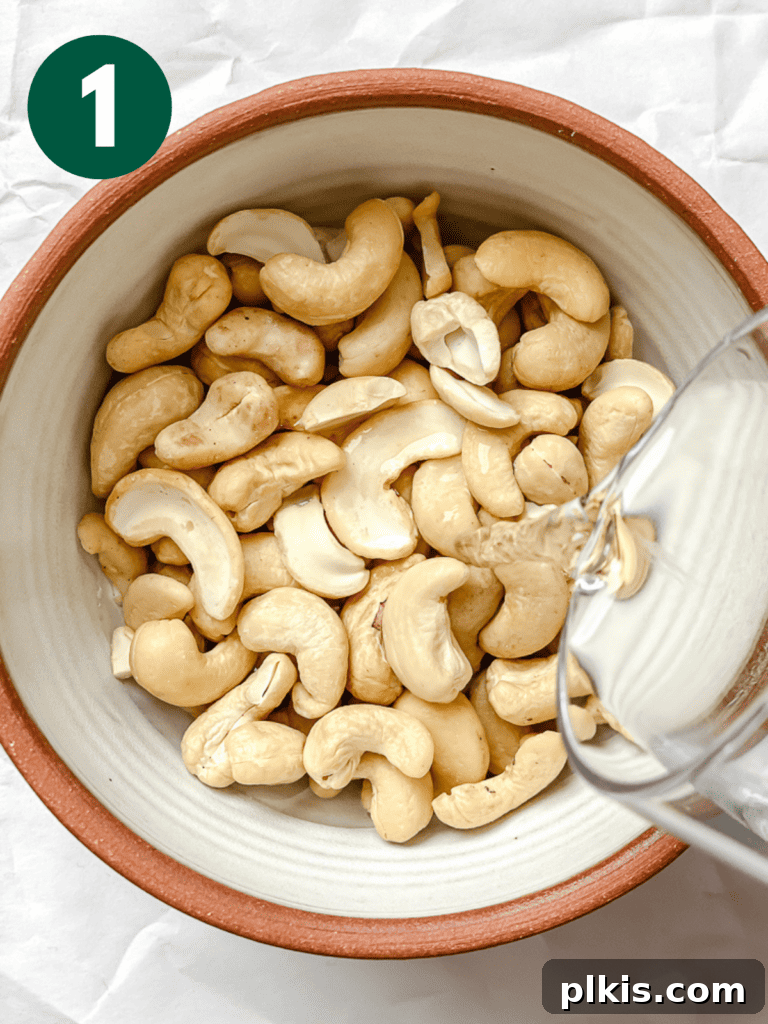
- Step 1: Soak the Cashews. Begin by placing your raw cashews in a bowl and covering them with several inches of cold water. It’s crucial to soak them overnight, or for at least 8 hours. This softens the cashews, making them easier to blend into an incredibly smooth consistency and also aids in digestion by reducing phytic acid.
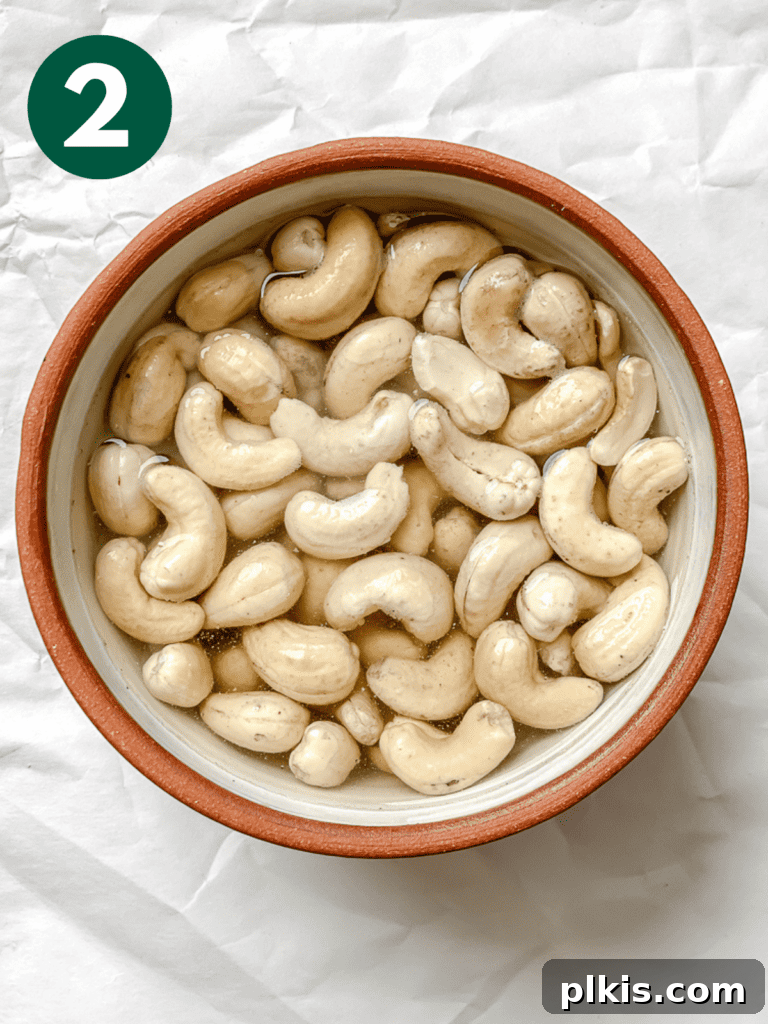
Forgot to Soak? Quick Softening Method: If you’re short on time, you can achieve a quicker softening by boiling the cashews in water for 5-10 minutes. While they won’t be as thoroughly softened as with an overnight soak, this method is effective in a pinch and still allows for a relatively smooth blend.
- Step 2: Drain and Rinse. Once the cashews are adequately soaked, thoroughly drain the soaking water. Rinse the cashews well under cold running water. This step is important to remove any phytic acid released during soaking and ensure the purest flavor for your milk.
- Step 3: Blend Ingredients. Transfer the rinsed cashews to a high-speed blender. Add 4 cups of fresh, filtered water, a pinch of salt, and any optional flavorings like vanilla extract and maple syrup or agave. Ensure all ingredients are in the blender.
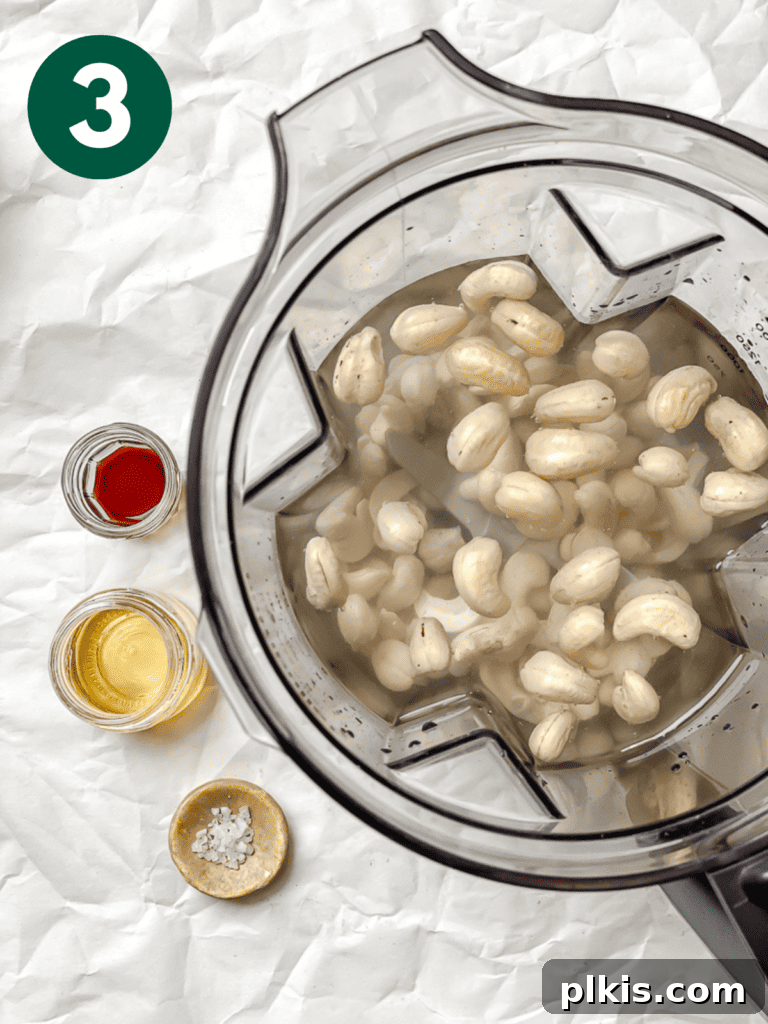
- Step 4: Achieve Creamy Perfection. Secure the lid on your blender and blend the mixture on high speed for approximately 2 minutes. Continue blending until the mixture is completely creamy, milky, and free of any gritty cashew pieces. The power of a high-speed blender is key here for achieving that signature smooth texture without needing to strain.
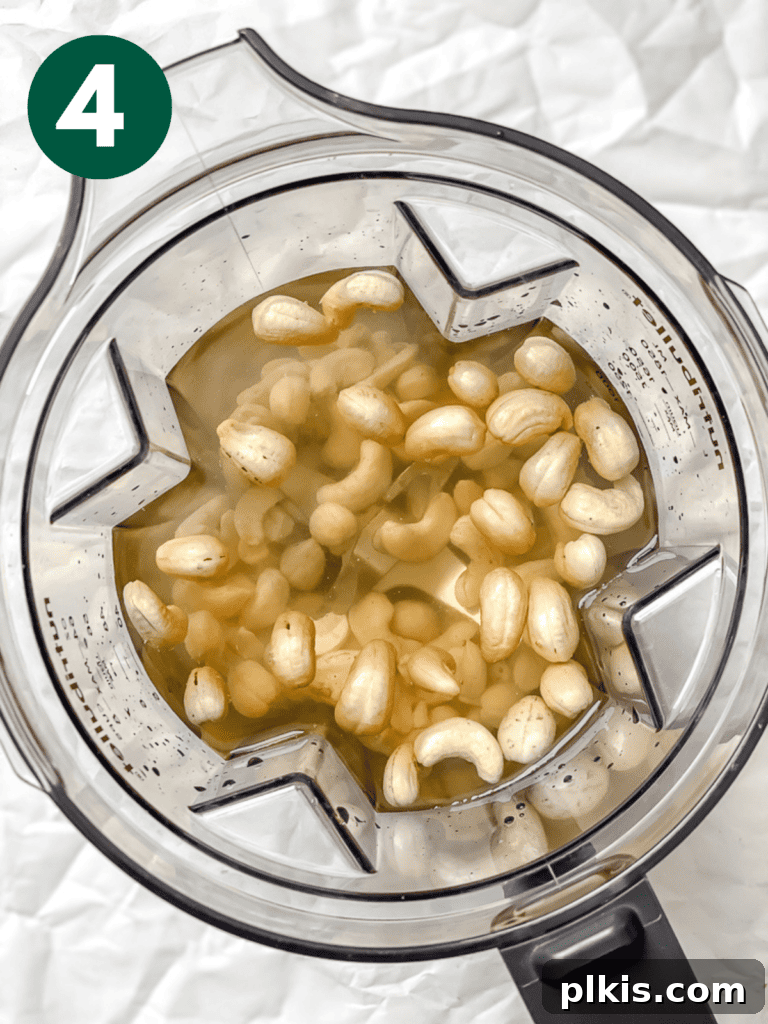
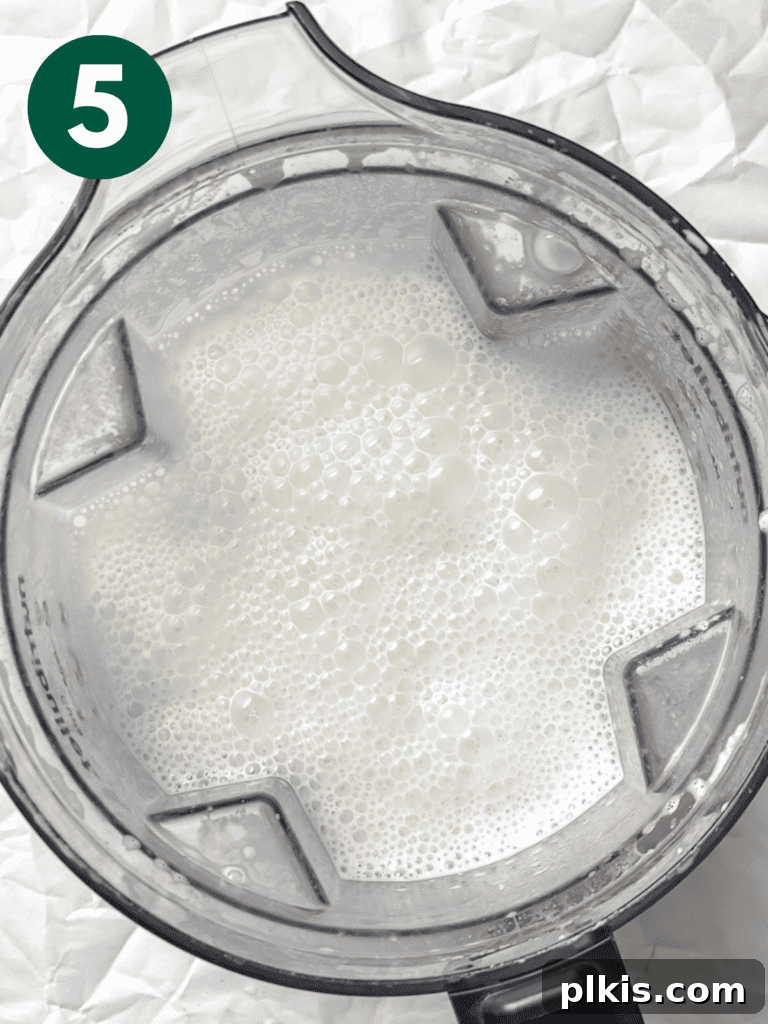

Tips for Lower-Powered Blenders: If you are not using a high-speed blender, we recommend starting by blending the cashews with just 1-2 cups of water first to create a concentrated paste, then gradually adding the remaining water. Your cashew milk may still be slightly gritty. In this case, you can strain it through a fine-mesh nut milk bag or several layers of cheesecloth for a smoother finish.
30-Second ‘CHEAT’ CASHEW MILK: In a pinch, you can create a delicious and surprisingly creamy cashew milk by simply combining 2 tablespoons of smooth cashew butter (raw, unsalted varieties work best) with 4 cups of water in a blender. Blend until thoroughly combined for an instant nut milk solution!
Customize Your Creaminess: Adjusting the Cashew-to-Water Ratio
One of the best aspects of making homemade cashew milk is the ability to customize its consistency. Depending on how you plan to use it and your personal preference, you can easily adjust the nut-to-water ratio to achieve varying levels of creaminess and richness.
- Regular Cashew Milk (1 cup cashews + 4 cups water): This is the standard ratio that yields a wonderfully creamy yet pourable drink, similar in texture and richness to 2% dairy milk. It’s perfect for everyday use in smoothies, with cereal, or as a refreshing glass on its own.
- Extra Creamy Cashew Milk (1 cup cashews + 3 cups water): For a richer, more indulgent consistency akin to “half and half” or light cream, reduce the water slightly. This thicker version is ideal for adding to coffee, enriching sauces, or making decadent desserts where a more substantial mouthfeel is desired.
- Lighter Cashew Milk (½-⅓ cup cashews + 4 cups water): If you prefer a lighter, thinner milk with a milder cashew flavor, decrease the amount of cashews used. This ratio is excellent for those who want a very subtle nutty taste or are using the milk primarily for hydration and lighter beverages.
Nutritional Benefits of Cashew Milk
Beyond its delicious taste and versatility, homemade cashew milk offers a host of nutritional benefits that contribute to overall well-being. When made simply with raw cashews and water, it’s a naturally wholesome beverage.
- Rich in Healthy Fats: Cashews are packed with monounsaturated and polyunsaturated fats, which are known to be heart-healthy. These fats can help lower bad cholesterol levels and support cardiovascular health.
- Source of Essential Minerals: Cashews provide several vital minerals, including magnesium, phosphorus, zinc, copper, and iron. Magnesium is crucial for muscle and nerve function, blood sugar control, and blood pressure regulation. Zinc supports immune function and wound healing.
- Good for Digestion: The dietary fiber content in cashews, though reduced slightly when blended into milk, still contributes to digestive health. Soaking the cashews before blending also helps break down phytic acid, making the nutrients more bioavailable and easier for your body to absorb.
- Antioxidant Properties: Cashews contain antioxidants like zeaxanthin, which can help protect your eyes from harmful UV rays and reduce the risk of age-related macular degeneration.
- Vitamin K: This nut milk provides a good source of Vitamin K, essential for blood clotting and bone health.
- Plant-Based Protein: While not as high in protein as dairy milk, homemade cashew milk still offers a modest amount of plant-based protein, contributing to satiety and muscle repair.
It’s important to remember that homemade cashew milk, due to its higher nut content compared to many commercial brands, will naturally be more calorific and have a higher fat percentage. Enjoy it in moderation as part of a balanced diet.
Frequently Asked Questions (FAQs)
While technically possible to skip soaking if you have a very high-powered blender, we highly recommend soaking the nuts. Soaking provides several benefits: it softens them, allowing them to blend into an incredibly creamy consistency; it significantly reduces their phytic acid content, which enhances nutrient absorption; and it makes the milk easier to digest. For the smoothest, most nutritious milk, an overnight soak is best.
Absolutely! At its most basic, DIY cashew milk is a pure blend of soaked cashews and water. It’s a nutrient-rich beverage packed with several essential vitamins and minerals, including iron, magnesium, phosphorus, potassium, and zinc. It also contains plenty of healthy dietary fiber and beneficial heart-healthy fats. However, because it contains a higher percentage of nuts than many store-bought options, it can be fairly calorific with a higher fat content, so mindful consumption as part of a balanced diet is recommended.
Store-bought cashew milk often achieves a thick, silky texture through the use of added thickeners, gums, and stabilizers. Crucially, these commercial products typically contain a very small percentage of actual nuts, diluted significantly with water. In contrast, this homemade cashew milk recipe is crafted with a substantially higher ratio of cashews to water, resulting in a richer, creamier, and more nutrient-dense product. This higher nut content naturally translates to more calories, but also significantly more flavor and nutritional value per serving.
For the best results, we recommend using raw cashews. Roasted cashews tend to have a stronger, more distinct flavor that can overpower the delicate taste of the milk, and they may not blend as smoothly, potentially leading to a slightly gritty texture.
Grittiness usually occurs if the cashews weren’t soaked long enough or if your blender isn’t powerful enough. Ensure you soak cashews for at least 8 hours (or use the quick boil method). A high-speed blender is key for super smooth results. If using a less powerful blender, you might need to blend for a longer duration and then strain the milk through a nut milk bag or fine cheesecloth.
Pro Tips for Perfect Cashew Milk Every Time
Achieving consistently perfect homemade cashew milk is easy with these expert tips and tricks:
- Invest in a High-Speed Blender: This is arguably the most crucial piece of equipment. While a regular blender can technically work, a high-speed blender will pulverize the cashews completely, resulting in an exceptionally smooth, creamy, and strain-free milk. A lower-powered blender will require more blending time and likely necessitate straining.
- Master the Creaminess: Don’t be afraid to experiment with the cashew-to-water ratio. Refer to the detailed section above for suggested ratios to achieve your desired consistency, whether you prefer a light, everyday drink or a rich, decadent cream.
- Always Blend with Fresh Water: After soaking your cashews, it’s essential to discard the soaking water. This water contains phytic acid (often referred to as ‘anti-nutrients’) and other impurities released from the nuts. Always rinse the cashews thoroughly and blend them with fresh, filtered water for the cleanest taste and enhanced digestibility.
- Fortify Your Homemade Nut Milk: For an added nutritional boost, consider fortifying your homemade cashew milk. You can easily blend the contents of a supplement capsule (such as vegan vitamin D, calcium, or B12) directly into your cashew milk. This allows you to customize the nutritional profile to meet your dietary needs.
- Taste and Adjust: Before storing, always taste your fresh cashew milk. Adjust sweetness or add a touch more vanilla or salt as needed to perfectly suit your palate.
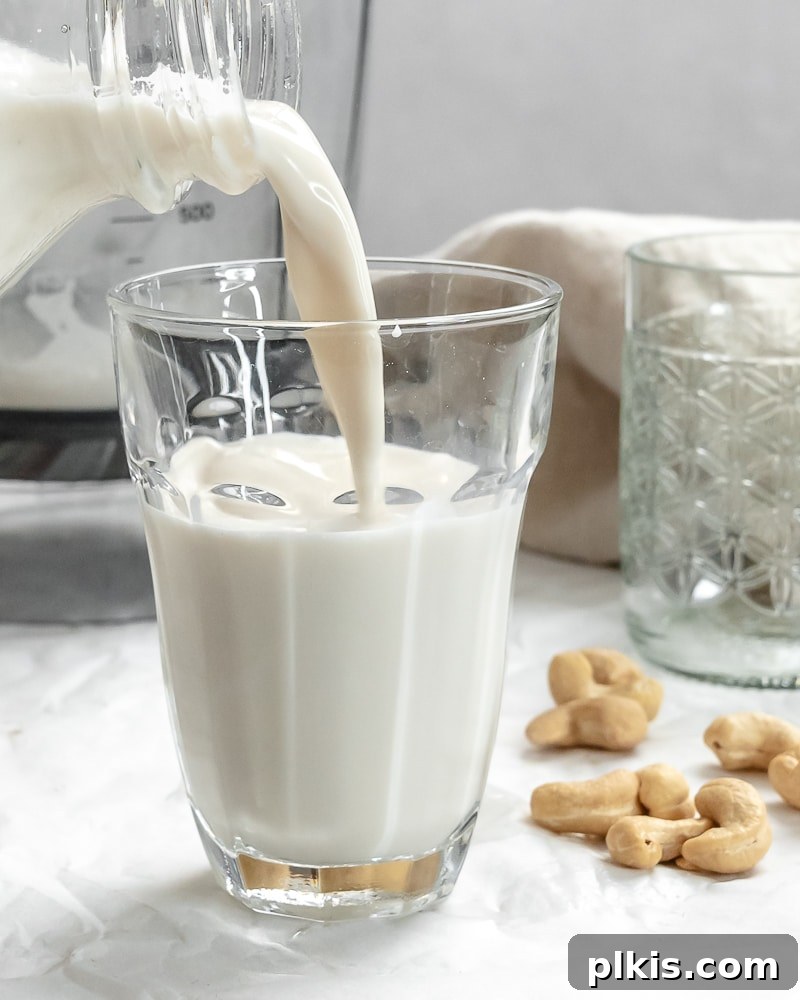
Storage Best Practices for Homemade Cashew Milk
Since this homemade cashew milk recipe is entirely free of stabilizers and preservatives, it naturally won’t have the extended shelf life of commercial store-bought options. It’s also normal for natural separation to occur over time while sitting.
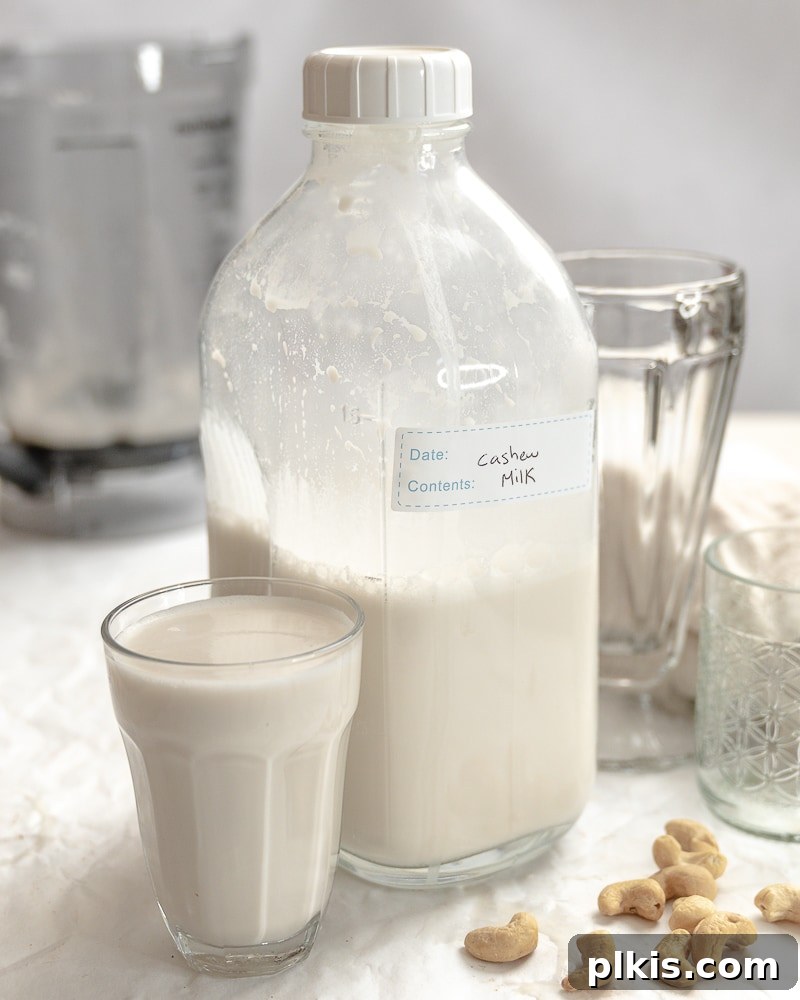
To ensure freshness and quality, store your homemade cashew milk in a clean, airtight container – such as a glass jar or bottle with a tight-fitting lid – in the refrigerator for 3-4 days. For longer storage, you can safely transfer it to the freezer for up to 3 months. When freezing, remember to leave some headspace in the container as liquids expand when frozen. To use, simply thaw in the refrigerator overnight. Always shake the container well between each use to reintegrate any natural separation and restore its creamy consistency.
Explore More Fun Vegan Drinks
If you’ve enjoyed making your own cashew milk, you’ll love these other delightful vegan beverage recipes:
- Creamy Mexican Horchata
- Rich Mexican Hot Chocolate
- Soothing Golden Milk Latte
- Refreshing Strawberry Milk Tea
Photos by Alfonso Revilla
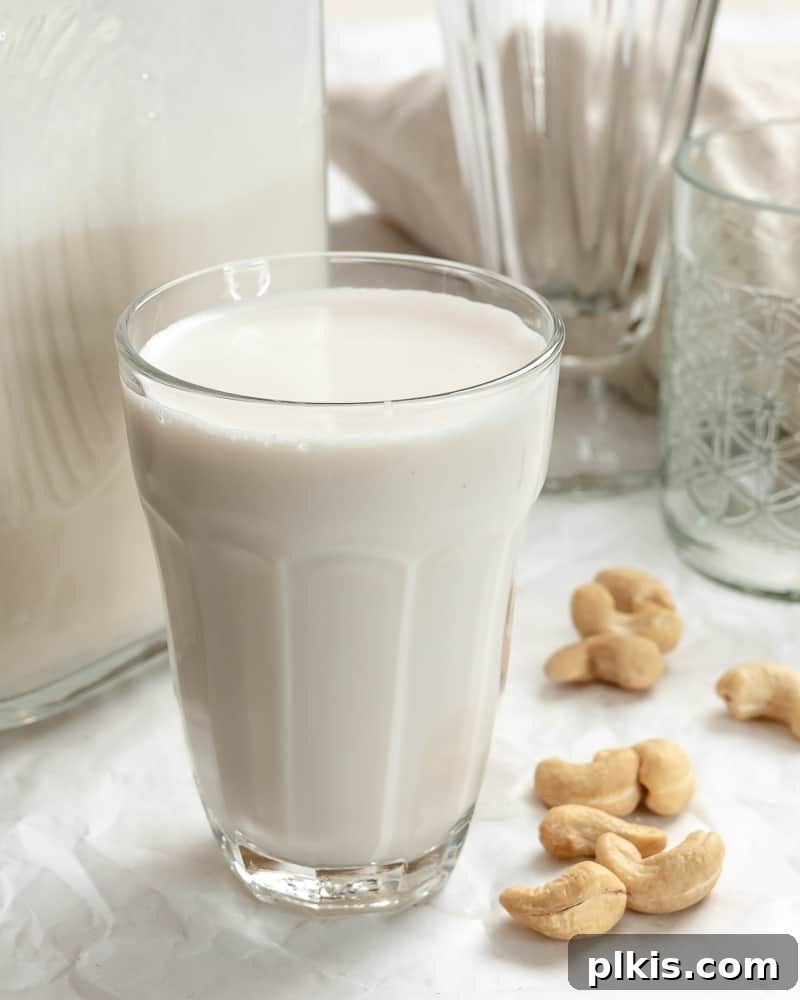
How to Make Cashew Milk
5
0
8
8 5
2 to 4

Equipment
-
High Speed Blender
-
Medium Bowl
-
Measuring spoons
-
Measuring Cups
-
Glass Bottles with Caps
Ingredients
- 1 cup raw cashews
- 4 cups water + water for soaking
- 1-2 tablespoons of maple syrup or agave (depending on sweetness preference)
- 1 teaspoon of vanilla extract
- Pinch of salt
Instructions
-
Start by soaking the cashews overnight or for at least 8 hours. (See additional note if you forgot to soak.)
-
After the cashews have soaked, drain and rinse them thoroughly.
-
In a high-power blender, add the soaked cashews, 4 cups of fresh water, maple syrup or agave (if using), vanilla extract (if using), and salt. Blend on high for 2 minutes, or until the mixture is completely creamy and milky.
Notes
- Use a high-speed blender: While it’s technically possible to use a lower-powered blender, it will take longer to blend and may not achieve the same silky-smooth consistency. This means it’ll likely require the additional step of straining it through a nut milk bag or cheesecloth.
- To adjust the creaminess: Simply adjust the ratio of cashews to water to achieve your desired consistency. Refer to the “Adjusting the cashew-to-water ratio” section in the main post for suggested guidelines.
- Blend with fresh water: The water used for soaking cashews will contain phytic acid and other impurities. It should always be discarded (or used to water plants) and not used for blending into the milk. Always use fresh, filtered water for blending.
Nutrition
Carbohydrates: 53g
Protein: 24g
Fat: 57g
Saturated Fat: 10g
Polyunsaturated Fat: 10g
Monounsaturated Fat: 31g
Sodium: 65mg
Potassium: 902mg
Fiber: 4g
Sugar: 20g
Vitamin C: 1mg
Calcium: 98mg
Iron: 9mg
Additional Info
Toni Okamoto
Breakfast, Drinks
American
Blender
Vegan
Tried this recipe?
Please tag us at @PlantBasedOnABudget! 🙂