
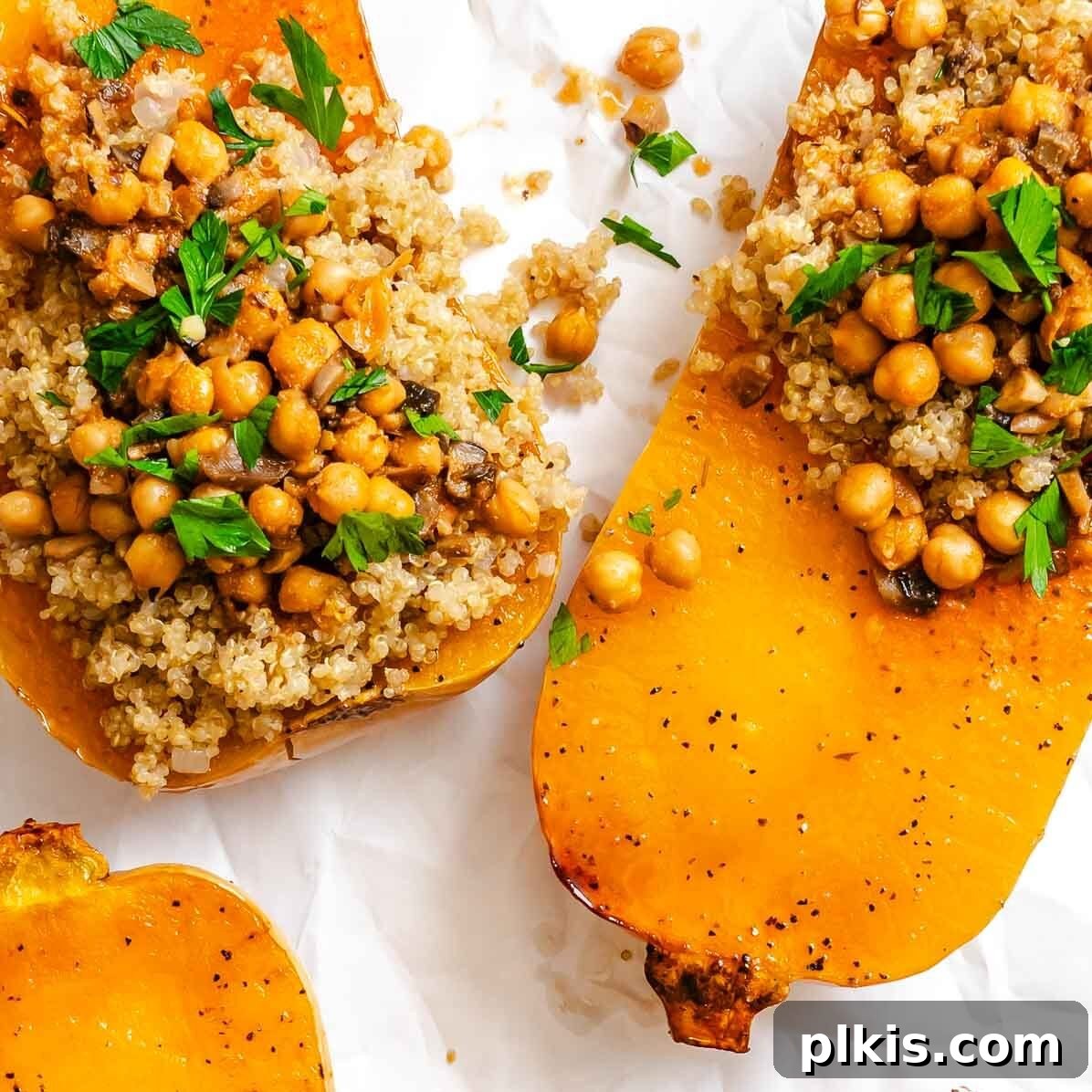
Discover the ultimate plant-based centerpiece for your holiday table or a comforting weeknight meal with this exquisite **Stuffed Butternut Squash** recipe. Packed with savory quinoa, earthy mushrooms, and protein-rich chickpeas, this dish is a culinary delight that promises warmth and satisfaction in every forkful. It’s an effortlessly elegant vegan main that’s perfect for Thanksgiving, Christmas, or any occasion craving a hearty, wholesome, and incredibly flavorful meal.
Why You’ll Adore This Stuffed Butternut Squash Recipe
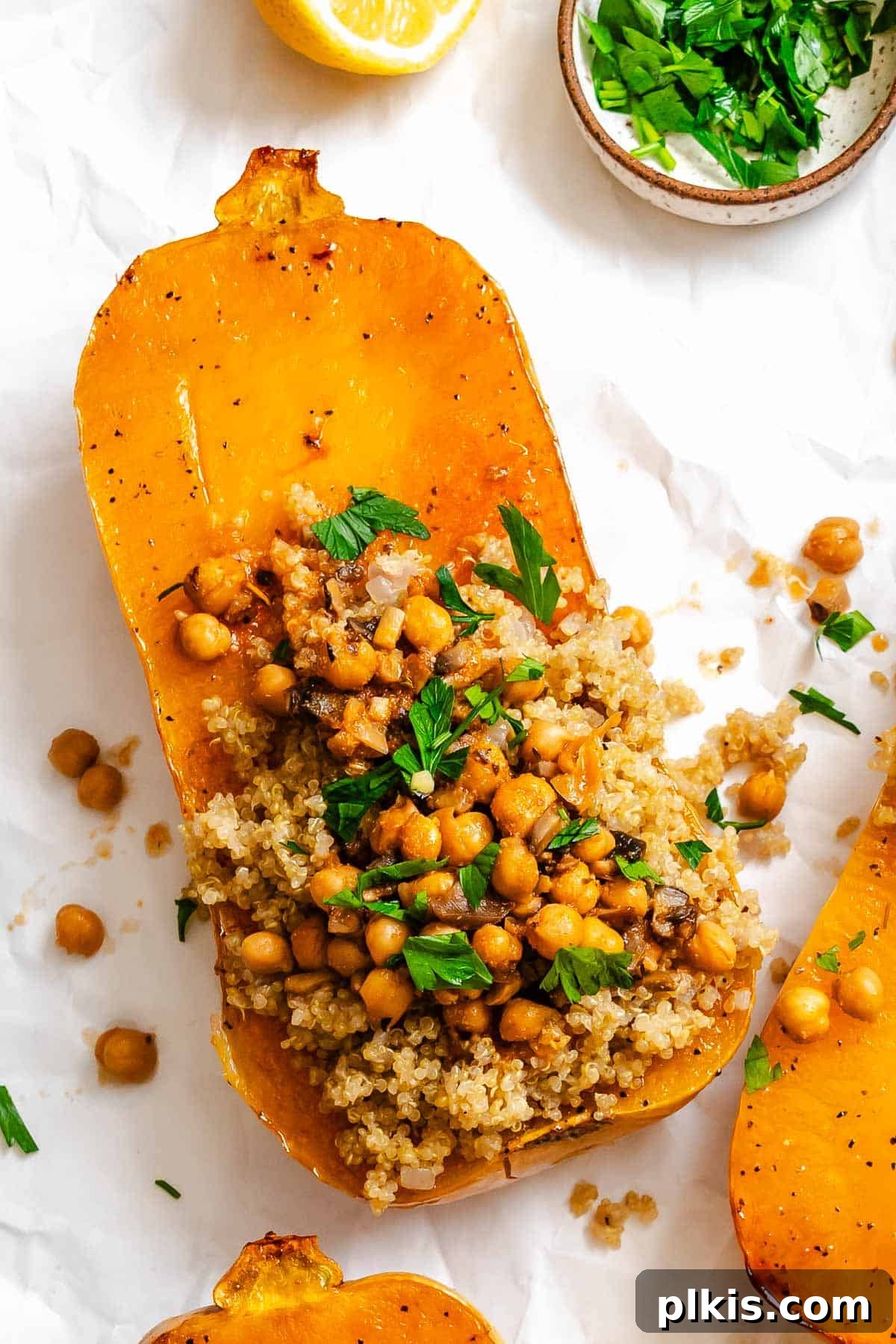
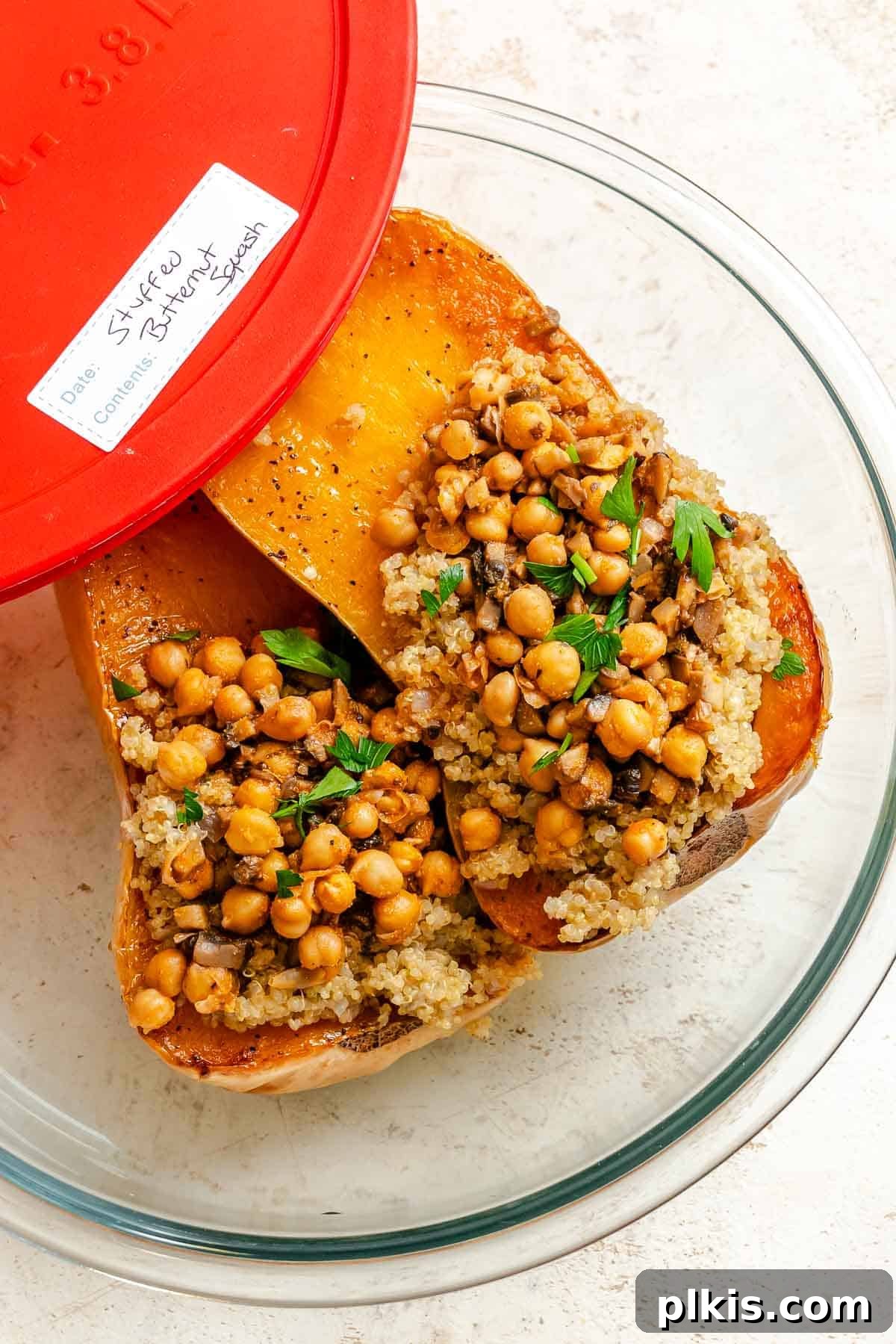
Embrace the flavors of the season with a dish that truly stands out. This year, redefine your holiday dining experience by opting for this homemade, wholesome, and budget-friendly vegan stuffed butternut squash. It’s a delectable and visually stunning alternative to often expensive, processed store-bought vegan mains, making it the ideal fuss-free holiday showstopper. This recipe celebrates the natural sweetness of butternut squash, roasted to tender, caramelized perfection, then generously filled with a robust mixture of fluffy quinoa, savory mushrooms, and hearty chickpeas. This protein-packed stuffing perfectly complements the squash’s delicate sweetness, creating a balanced and deeply satisfying main course for any autumn or winter gathering.
Beyond its incredible taste and beautiful presentation, this recipe offers numerous benefits. It’s incredibly easy to prepare, even for novice cooks, and boasts impressive versatility, allowing for endless customization to suit your palate or what you have on hand. Furthermore, this plant-based dish is a powerhouse of nutrients, rich in fiber, vitamins, and plant-based protein, making it a healthy choice that doesn’t compromise on flavor or festive appeal. It’s a wonderful way to impress guests and nourish your family during the colder months, without breaking the bank or spending hours in the kitchen.
If you’re eager to explore more delicious ways to enjoy this seasonal favorite, be sure to check out my other vegan butternut squash creations. Dive into a bowl of my Butternut Squash Curry, savor the comforting warmth of Creamy Curried Butternut Squash Lentil Soup, delight in the vibrant flavors of Butternut Apple Soup, or enjoy the fresh simplicity of an Easy Butternut Squash Salad. Each recipe highlights the incredible versatility and delightful taste of this beloved winter squash.
Essential Ingredient Insights
Crafting the perfect vegan stuffed butternut squash begins with understanding your ingredients. While the full list and precise quantities are detailed in the recipe card below, here are some key considerations for selecting and preparing the core components of this delightful dish:
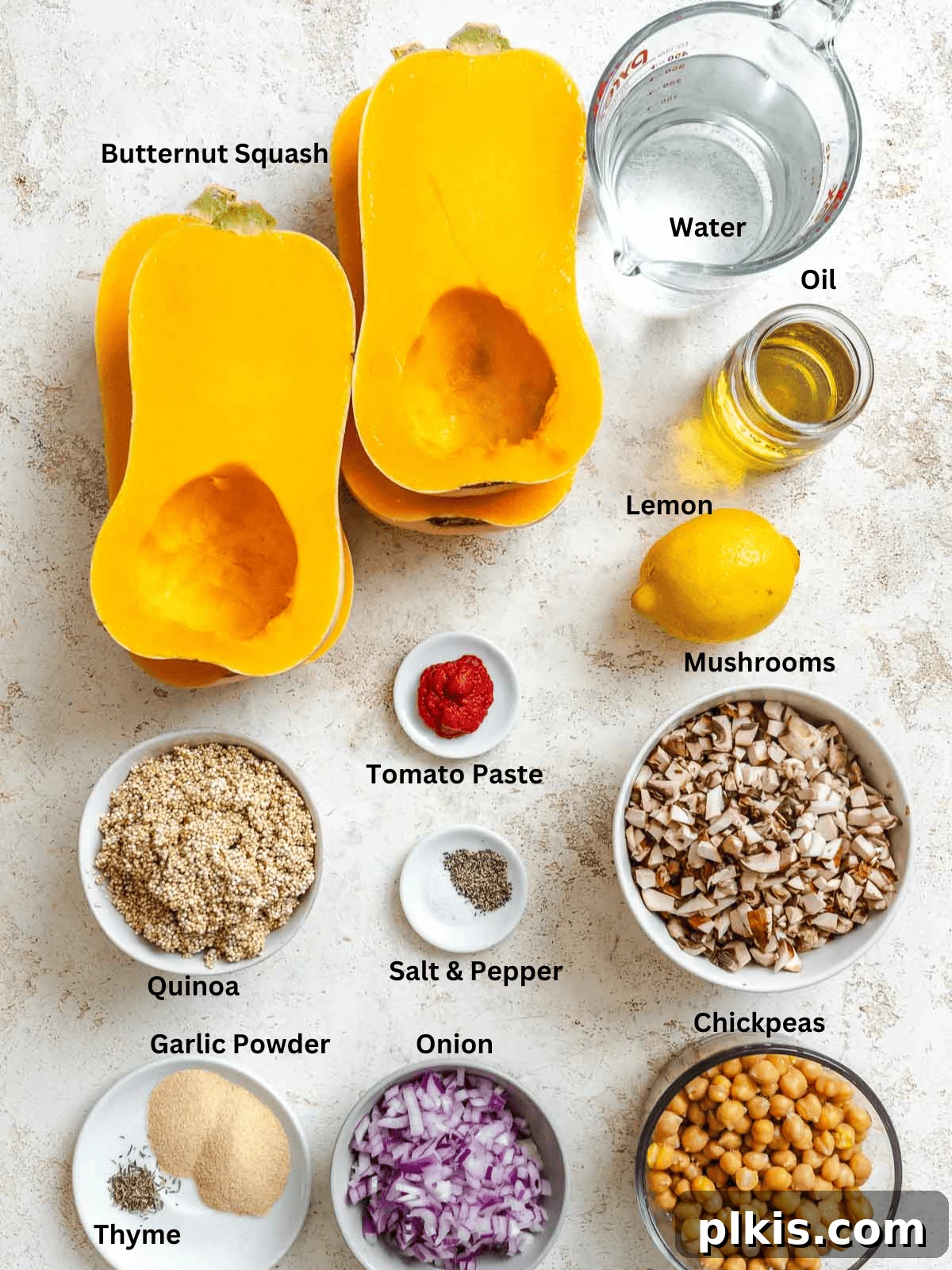
- Butternut Squash: The star of our dish! For optimal results, aim for a medium-sized butternut squash, typically around 2 pounds. Look for one with an even, pear-like shape, which ensures consistent cooking and easier stuffing. The skin should be smooth and free from any soft spots or blemishes. A good indicator of ripeness and quality is its weight – a ripe squash will feel heavy for its size. Its vibrant orange flesh is not only beautiful but also rich in vitamins A and C.
- Quinoa: This ancient grain forms the fluffy, protein-packed base of our stuffing. Remember to thoroughly rinse quinoa before cooking to remove its natural bitter coating, saponin. While white quinoa is commonly used, feel free to experiment with red or tri-color varieties for added visual appeal and a slightly nuttier flavor. Quinoa is a complete protein, offering all nine essential amino acids, making it an excellent choice for a plant-based meal.
- Mushrooms: Earthy and savory, mushrooms add a wonderful depth of umami to the filling. Cremini (baby bella) or button mushrooms are excellent choices due to their mild flavor and firm texture, which holds up well during sautéing. Always clean mushrooms by wiping them with a damp paper towel rather than rinsing, as they tend to absorb water, which can hinder proper browning.
- Chickpeas: These versatile legumes contribute a fantastic texture and a significant boost of plant-based protein and fiber. Canned chickpeas are incredibly convenient – simply drain and rinse them before adding to the mixture. If you prefer cooking from scratch, dried chickpeas can also be used, though they require pre-soaking and a longer cooking time. They add a satisfying chewiness and heartiness to the stuffing.
- Aromatics (Onion & Garlic): The foundation of flavor! Diced red onion brings a subtle sweetness and sharp bite when sautéed, while garlic powder provides a consistent, aromatic punch. Feel free to use fresh minced garlic for an even more intense flavor profile.
- Oil: A good quality oil, such as olive oil or avocado oil, is essential for roasting the squash and sautéing the filling ingredients. It helps in achieving that beautiful caramelization on the squash and ensures the vegetables cook evenly and develop their full flavor.
- Spices (Cinnamon, Thyme, Salt, Pepper): Cinnamon adds a warm, subtly sweet note to the roasted squash, enhancing its natural flavor. Dried thyme brings an aromatic, herbaceous quality to the mushroom and chickpea mixture, perfectly complementing the other savory ingredients. Salt and black pepper are crucial for seasoning, bringing all the flavors into harmony.
- Tomato Paste: A concentrated burst of umami, tomato paste enriches the mushroom and chickpea mixture, adding a deep, savory foundation that ties all the flavors together.
- Lemon Juice: A squeeze of fresh lemon juice at the end brightens the entire dish, cutting through the richness and adding a delightful tang that elevates the overall flavor profile.
Creative Recipe Variations to Explore
One of the many joys of this vegan stuffed butternut squash recipe is its incredible adaptability. It serves as a fantastic base for culinary creativity, allowing you to easily switch up ingredients and tailor it to your preferences, dietary needs, or seasonal availability. Here are some inspiring ways to customize your stuffed squash:
- Flavor-Boosting Spices: Elevate the flavor profile of your filling or squash with a variety of spices. A touch of smoked paprika can add a smoky depth, while ground cumin and coriander introduce warming, earthy notes. For those who enjoy a little heat, a pinch of cayenne pepper or chili flakes will do the trick. For a cheesy, savory kick without dairy, nutritional yeast is an excellent addition to the filling. If you prefer a sweeter squash, a light brushing of maple syrup or agave nectar before roasting enhances caramelization and flavor, creating a delightful sweet-and-savory contrast.
- Fruity Accents: Introduce a touch of sweetness and tang with various fruits, perfect for a festive touch. Dried cranberries, added with the quinoa to plump up during cooking, offer a chewy texture and tart flavor. Fresh pomegranate seeds, sprinkled on top before serving, provide a burst of juicy sweetness and vibrant color. Sautéed apple or pear chunks can also be incorporated into the filling, adding a comforting sweetness that pairs beautifully with the savory elements, making it an ideal vegan Thanksgiving main course.
- Crunchy Nuts and Seeds: Add delightful texture and healthy fats with toasted nuts and seeds. Toasted pecans or walnuts bring a rich, buttery crunch, while pine nuts offer a delicate flavor. For a nut-free option, pepitas (pumpkin seeds) are fantastic, providing a satisfying snap and a boost of nutrients. These are especially great when paired with the aforementioned fruit additions.
- Hearty Greens: Increase the nutritional value and bulk of your filling by folding in sautéed leafy greens. Kale, spinach, Swiss chard, or collard greens wilt down beautifully and absorb the flavors of the stuffing, adding essential vitamins and a touch of freshness.
- Diverse Vegetables: Feel free to replace or add to the mushrooms with other vegetables to enhance flavor and texture. Diced carrots and celery can be sautéed alongside the onion for a classic mirepoix base. Brussels sprouts, sweet corn, zucchini, or bell peppers can also be chopped and mixed into the filling, offering different textures and nutrient profiles. For a briny, umami kick, consider adding a few chopped olives.
- Savory Vegan Sausage: For an extra layer of savory richness and protein, crumble or slice your favorite vegan sausage and cook it with the mushroom-chickpea mixture. This adds a meatier texture and hearty flavor that even non-vegans will appreciate.
- Fresh Herb Finish: Fresh herbs are key to bright, aromatic flavors. Stir in finely chopped fresh rosemary, thyme, or sage into the filling just before serving, or use them as a beautiful garnish. Fresh parsley or cilantro also provides a lovely pop of color and herbaceous freshness.
- Sauce Enhancements: Drizzle your stuffed squash with a complementary sauce for an extra layer of flavor and moisture. A creamy tahini sauce (similar to what you’d find with this creamy tahini pasta recipe) offers a rich, nutty finish. A tangy balsamic glaze provides a sweet and sour contrast. For a more traditional pairing, a rich vegan gravy is superb. Alternatively, a vibrant creamy avocado sauce or a sprinkle of crumbled tofu feta cheese can add unique and delicious dimensions to your dish.
Mastering Vegan Stuffed Butternut Squash: A Step-by-Step Guide
Creating this flavorful quinoa-stuffed butternut squash is a straightforward process, broken down into four simple elements. Each step is designed to build layers of flavor, ensuring a perfectly cooked and incredibly satisfying dish. Follow these instructions for a successful and delicious meal.

Step 1: Roast the Butternut Squash. Begin by preheating your oven to 400°F (200°C). Carefully wash and dry your butternut squash. To prepare it for roasting, trim a small portion off the stem and base ends to create a stable cutting surface. Then, using a long, sharp knife, carefully cut the squash in half lengthwise. With a spoon, scoop out the fibrous, seedy part from each half. Place the squash halves cut-side up on a baking sheet, drizzle generously with 3 tablespoons of oil, and season with a sprinkle of salt, black pepper, and cinnamon. Gently rub the seasonings into the flesh. Flip the squash halves cut-side down and roast for 30-40 minutes, or until they are fork-tender and slightly caramelized.
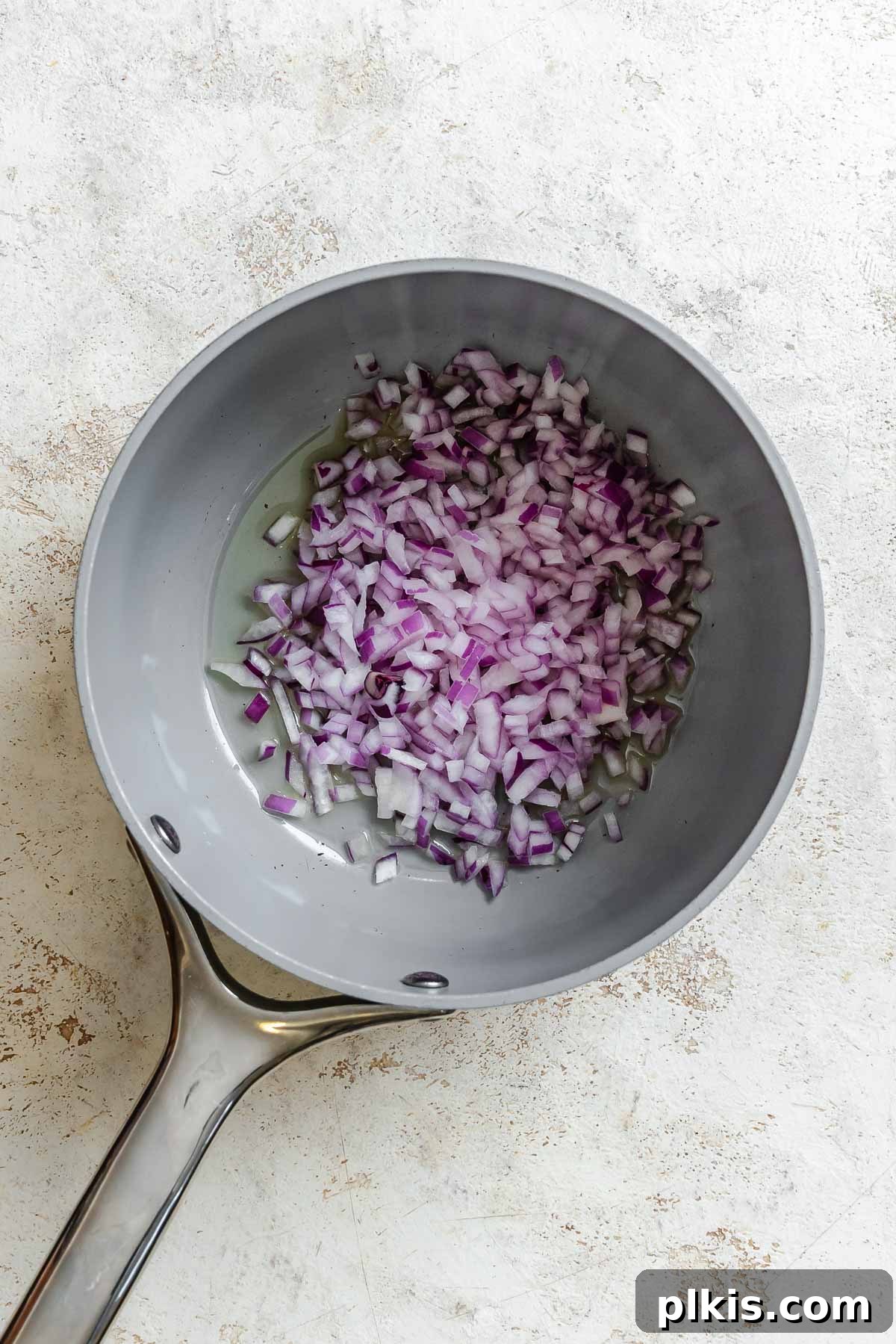
Step 2: Cook the Quinoa. While the squash roasts, prepare the quinoa. In a medium saucepan, heat 2 tablespoons of oil over medium heat. Add the diced onion and sauté until it becomes translucent and soft, about 5-7 minutes. Stir in 1 tablespoon of garlic powder and ½ teaspoon each of salt and pepper, continuing to sauté for about 20 seconds until fragrant. Next, add the thoroughly rinsed quinoa, water, and the bouillon cube (if using) to the saucepan. Stir everything together, bring the mixture to a boil, then cover the pan and reduce the heat to a low simmer. Allow the quinoa to cook undisturbed for 15 minutes. Once cooked, remove the pan from the heat, keeping it covered, and let it rest for another 10 minutes. Finally, fluff the quinoa with a fork and re-cover it until you’re ready for assembly.
Pro Tip for Squash Prep: Butternut squash can be notoriously difficult to cut. To make it easier and safer, place a damp towel beneath the squash for stability while cutting, and/or microwave the whole squash for 2-3 minutes to slightly soften the skin before attempting to cut it. Don’t forget to save those seeds for roasting – they make a delicious snack!
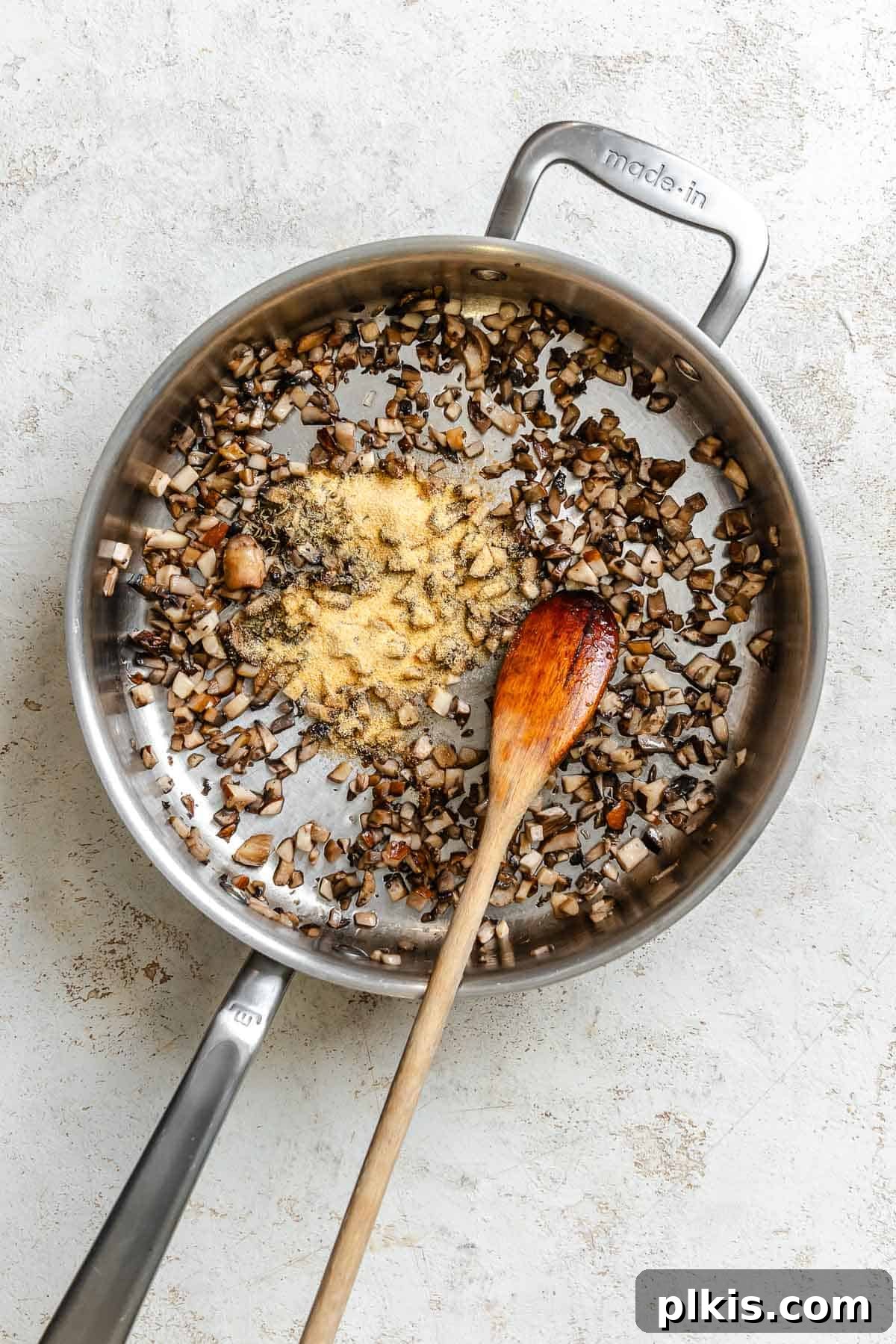
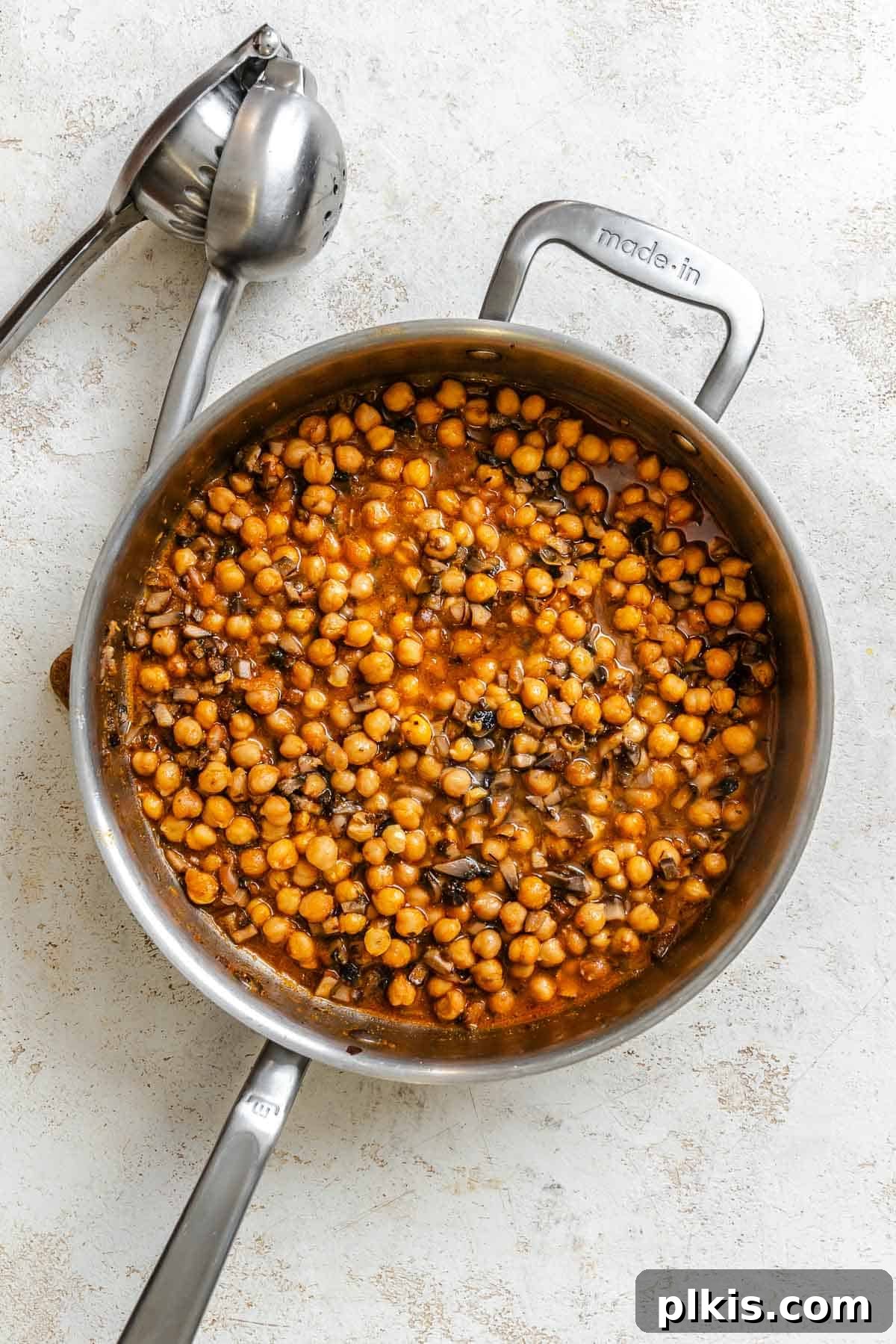
Step 3: Prepare the Mushroom Mixture. While the quinoa is simmering, finely chop your mushrooms. Heat 2 tablespoons of oil in a large pan over medium-high heat. Add the chopped mushrooms along with a pinch of salt and pepper. Sauté the mushrooms until they release their juices and begin to brown, about 5-7 minutes. Lower the heat, then stir in the remaining 1 tablespoon of garlic powder and the dried thyme. Continue to sauté for another 20 seconds, allowing the aromatics to become fragrant.
Step 4: Finish the Chickpea Filling. To the sautéed mushrooms, stir in the tomato paste, drained and rinsed chickpeas, and 1 cup of hot water. Mix well to combine all ingredients. Bring the mixture to a light boil, then cover the pan and let it simmer for 10 minutes, allowing the flavors to meld. Stir occasionally and add a little more water if necessary to maintain a lovely, saucy consistency. Finally, stir in the juice of ½ a lemon for a burst of freshness and adjust seasoning to taste. Keep the filling covered until you’re ready to stuff the squash.
Mushroom Cleaning Tip: For the best flavor and texture, always wipe mushrooms clean with a damp paper towel instead of rinsing them under water. Mushrooms are like sponges and will absorb water, which can make them soggy when cooked.
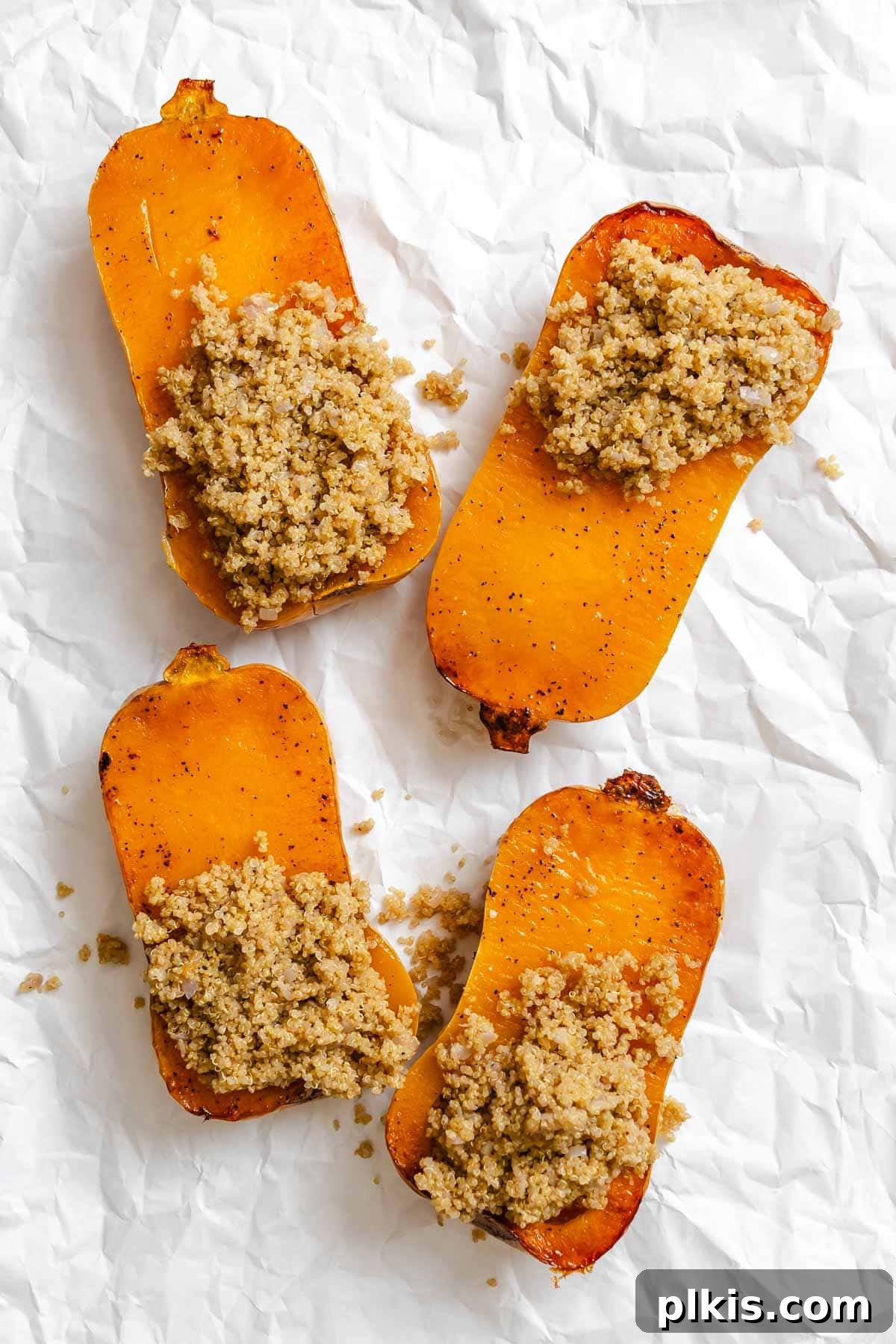
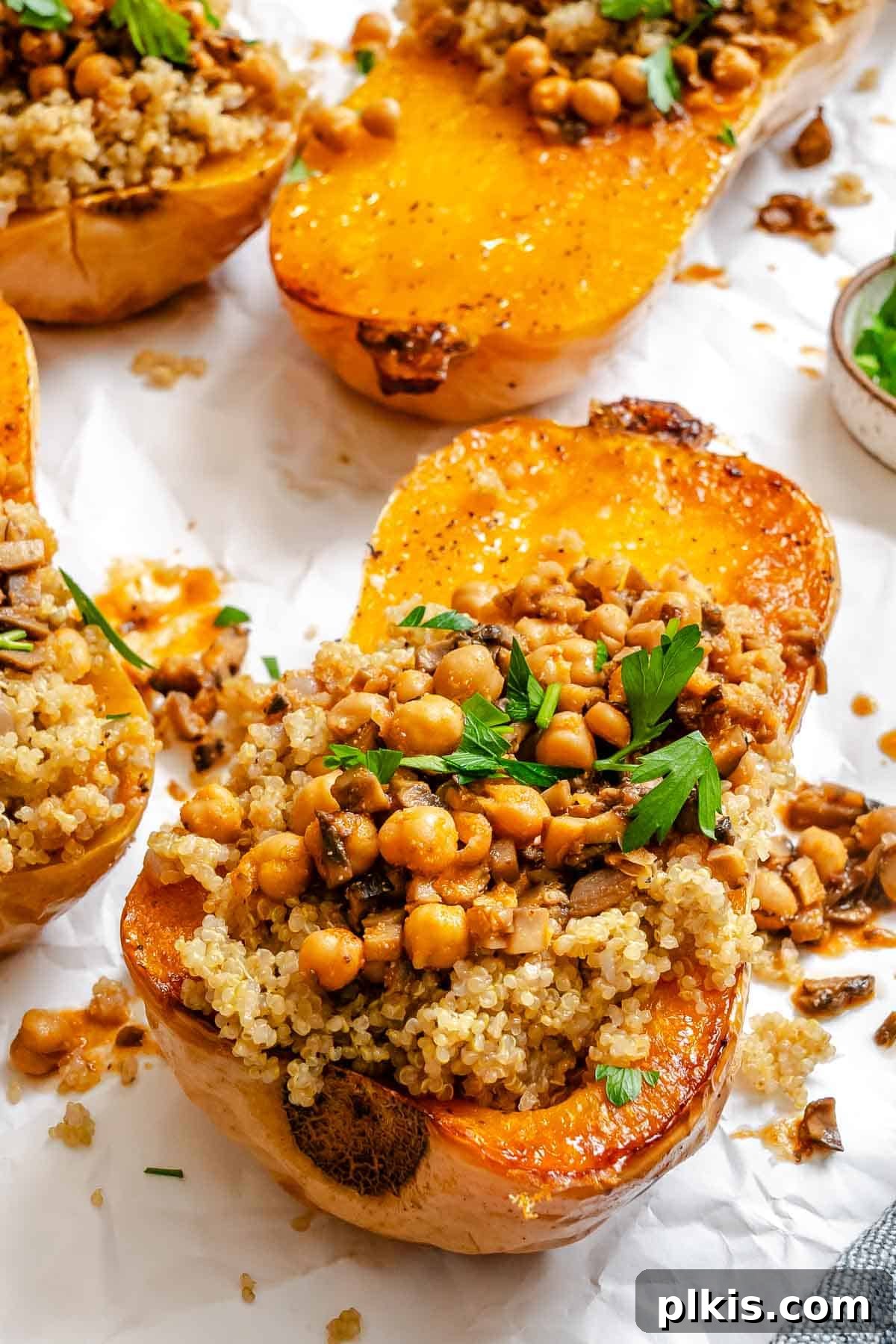
Step 5: Assemble and Serve. Once the squash is roasted and the filling components are ready, it’s time to assemble your beautiful dish. Carefully place the warm, roasted squash halves cut-side up onto individual serving plates. Generously spoon the fluffy quinoa into the cavities of each squash half, piling it up enticingly. Next, spoon the rich mushroom-chickpea mixture over the quinoa, ensuring you drizzle some of those delicious cooking juices over both the quinoa and the roasted squash for maximum flavor. For a final flourish, optionally garnish with fresh parsley or thyme. Serve immediately and enjoy this comforting, hearty, and elegant vegan main!
Alternative Assembly Tip: For a more integrated filling, you can mix the cooked quinoa with the mushroom-chickpea mixture in a large bowl before spooning it into the roasted squash halves. This ensures every bite has a bit of everything!
Frequently Asked Questions About Stuffed Butternut Squash
While technically not mandatory, trimming the stem and base ends of the butternut squash makes it significantly easier and safer to stabilize the squash on your cutting board before halving it. This simple step can prevent slips and ensure a cleaner cut.
Absolutely! Cutting the squash into quarters can be a great way to create smaller, individual portions, which might be ideal for a lighter meal or for serving more guests. Just be aware that the smaller cavities will be slightly harder to stuff neatly, but the flavor will remain just as delicious.
Yes, this recipe is excellent for meal prep! The individual components—the roasted butternut squash, the cooked quinoa, and the mushroom-chickpea filling—can all be prepared 2-3 days in advance. Store them separately in airtight containers in the refrigerator. When you’re ready to serve, simply assemble the squash halves and reheat them in a microwave or, for best results, in a foil-covered dish in the oven at 350°F (175°C) until thoroughly heated through.
Certainly! Air frying is a fantastic way to achieve tender, caramelized squash. Just ensure your butternut squash halves fit comfortably in your air fryer basket without overcrowding. Air fry them cut-side down at 350°F (180°C) for about 15 minutes, then flip them over and continue cooking for another 10-15 minutes, or until they are perfectly tender when pierced with a fork.
Definitely! This recipe is adaptable to various winter squash. I’ve already shared a wonderful recipe for Vegan Stuffed Acorn Squash, which works beautifully. Delicata squash is another excellent choice, known for its thin, edible skin and sweet flavor. Remember to adjust the baking time as needed, as different squash varieties and sizes may cook at varying rates.
Expert Tips for a Perfect Stuffed Butternut Squash
Achieving a truly exceptional stuffed butternut squash is simple with a few insider tricks. These professional tips will help you navigate the process with ease, ensuring your dish is not only delicious but also beautifully presented and perfectly cooked every time.
- Select the Right Squash: The foundation of this dish is the butternut squash itself. Choose a medium-sized squash (around 2 pounds) that has an even, consistent shape. This ensures that both halves will cook uniformly and provide a balanced cavity for the delicious filling. A squash that’s heavy for its size with smooth, unblemished skin is generally a good indicator of quality and ripeness.
- Mastering the Cut: Butternut squash can be notoriously firm and tricky to cut safely. Always use a long, sharp chef’s knife. For added stability and safety, place the squash on a damp towel or a non-slip mat before cutting. If it’s still too challenging, a quick hack is to microwave the whole squash for 2-3 minutes; this will slightly soften the skin, making it much easier to slice through.
- Adjust the Portion Size: This recipe is incredibly flexible when it comes to serving sizes. You can use the squash halves as generous individual portions or cut them into quarters for smaller appetites or a larger crowd. Don’t be shy about piling the filling high for a hearty meal, or use a slightly less generous amount if you prefer. Customize it to fit your needs and preferences.
- Monitor Roasting Time: The exact roasting time for your butternut squash will vary based on its precise size, thickness, and even the calibration of your oven. The key is to roast it until it’s fork-tender throughout and the cut edges are lightly caramelized, indicating sweetness and deep flavor. Check for doneness by gently piercing the thickest part of the squash with a fork—it should slide in with minimal resistance.
- Elevate the Presentation: The natural cavity of the butternut squash provides a beautiful “boat” for your filling. If you desire an even deeper filling, you can carefully scoop away a bit more of the cooked squash flesh (and incorporate it into the filling, if you wish). For a truly elegant and impressive presentation, consider tying the roasted squash halves back together with kitchen twine and then slicing them into striking stuffed butternut “rounds” before serving. This creates a stunning visual for special occasions.
- Don’t Overcrowd the Pan: When roasting your squash and sautéing your filling ingredients, avoid overcrowding the baking sheet or skillet. Overcrowding can lead to steaming instead of roasting or browning, which prevents ingredients from developing their full flavor and texture. If necessary, cook in batches.
- Taste and Adjust Seasoning: Always taste your filling and adjust the seasonings as you go. A pinch more salt, a dash of pepper, or an extra squeeze of lemon can make all the difference in bringing out the best flavors in your dish.
- Easy Cleanup with Parchment: Lining your baking sheet with parchment paper or a silicone baking mat before roasting the squash will make cleanup significantly easier, preventing any sticky caramelized bits from adhering to the pan.
Perfect Pairings: Serving Suggestions
This roasted stuffed butternut squash is far more than just a side dish; it makes a magnificent, satisfying, and completely meat-free main course. It’s an ideal choice for festive occasions like Thanksgiving and Christmas, elegant vegan roast dinners, dinner parties, or any time you desire a hearty and impressive plant-based meal. Serve it alongside a variety of complementary dishes to create a truly unforgettable feast.
- Flavorful Sauces: Drizzle with a creamy tahini sauce for a rich, nutty counterpoint, or opt for a classic vegan gravy to add traditional comfort.
- Classic Stuffing: Pair it with a savory and satisfying Easy Cornbread Stuffing for a complete holiday experience.
- Freshly Baked Breads: Serve alongside warm Vegan Dinner Rolls or unique Butternut Squash Sage Biscuits for soaking up all the delicious juices.
- Sweet & Tart Accompaniments: A vibrant Cranberry Sauce with Orange Juice adds a delightful balance of sweetness and tartness that perfectly complements the squash.
- Green Vegetable Sides: Complete your meal with classic vegetable dishes like Vegan Green Bean Casserole and simple, sweet Sautéed Carrots.
- Light & Refreshing Salads: Offer a contrast with a crisp leafy green salad, a sweet and savory Pear Salad, or a zesty Shaved Brussels Sprouts Salad to cleanse the palate.
Storage and Reheating Recommendations
This vegan stuffed butternut squash is not only delicious freshly made but also stores and reheats wonderfully, making it perfect for leftovers or meal prep. Follow these guidelines to keep your dish fresh and flavorful.
To Store: Allow any leftover stuffed butternut squash to cool completely to room temperature. Once cooled, transfer the squash halves (or individual portions) to an airtight container. They will keep fresh in the refrigerator for 3-4 days, maintaining their excellent taste and texture.
To Freeze: For longer storage, this dish freezes beautifully. You can freeze the assembled butternut squash halves, or you can freeze the roasted squash and the filling elements separately in freezer-safe containers. This flexibility allows for easy thawing and assembly later. Stored properly, it will last for up to 3 months in the freezer. When ready to enjoy, thaw the frozen components or assembled squash in the refrigerator overnight.
To Reheat: For the best results when reheating, place the thawed or refrigerated stuffed squash halves in a dish, cover them with foil, and warm them in the oven at 350°F (175°C) for 10-15 minutes, or until thoroughly heated through. This method helps the squash retain its moisture and the filling stays tender. Alternatively, for a quicker option, you can microwave individual portions for 2-3 minutes, or until hot, though the texture might be slightly softer.
More Delightful Vegan Butternut Squash Recipes
Vegan Dinners
Roasted Curried Butternut Squash
Vegan Desserts
Butternut Squash Cake
Vegan Dinners
Butternut Squash Mac and Cheese
Vegan Lunches
Thai Butternut Squash Soup
If you tried this vegan stuffed butternut squash recipe or any other recipe on my blog, please leave a 🌟 star rating and let me know how it went in the 📝 comments below. Thanks!
Vegan Stuffed Butternut Squash

Equipment
-
Knife set
-
Measuring spoons
-
Measuring Cups
Ingredients
- 2 small to medium butternut squash halved and seeded
- 7 tablespoons oil divided
- 1 teaspoon cinnamon (optional)
- Salt and black pepper to taste
- 1 small red onion diced
- 2 tablespoons garlic powder divided
- 1 cup quinoa thoroughly rinsed
- 1 ¾ cups water
- 1 low-sodium bouillon cube (optional)
- 1 cup mushrooms finely chopped
- 1 teaspoon dried thyme
- 1 tablespoon tomato paste
- 1 (15-ounce) can chickpeas drained and rinsed
- 1 cup hot water
- Juice of ½ a lemon
- Fresh parsley and thyme for garnish (optional)
Instructions
Roast the Butternut Squash:
-
Preheat the oven to 400 degrees F and line a baking sheet with parchment paper or a silicone mat.
-
Place the squash halves cut-side up on the baking sheet. Drizzle 3 tablespoons of oil over them, and sprinkle with salt, black pepper, and cinnamon. Rub the oil and seasoning into the squash, focusing on the cut side.
-
Flip the squash cut-side down and roast for 30 minutes. Check for doneness by inserting a fork into the thickest part. If still firm, continue roasting in 10-minute increments until very soft.
Cook The Quinoa
-
In a medium saucepan over medium heat, heat 2 tablespoons of oil. Add the diced onion and cook until translucent.
-
Stir in 1 tablespoon garlic powder, ½ teaspoon salt, and ½ teaspoon black pepper. Cook for 20 seconds while mixing.
-
Add the rinsed quinoa, water, and bouillon cube (if using). Mix, bring to a boil, cover, and reduce heat to a simmer. Cook undisturbed for 15 minutes.
-
Turn off heat and let the quinoa rest, covered, for 10 minutes. Fluff with a fork and keep covered until ready to assemble.
Prepare the Mushroom-Chickpea Mixture:
-
In a large pan, heat 2 tablespoons oil over medium-high heat. Add the mushrooms, a pinch of salt, and pepper. Cook until mushrooms release their juices.
-
Lower heat and stir in 1 tablespoon garlic powder and dried thyme. Cook 20 seconds.
-
Add tomato paste, chickpeas, and hot water. Stir, bring to a light boil, cover, and cook 10 minutes, adding more water if needed to maintain a juicy consistency.
-
Stir in lemon juice and adjust seasoning. Keep covered until assembly.
Assemble the Squash:
-
Place the roasted squash halves cut-side up on serving plates.
-
Spoon quinoa into the cavities, filling them generously, and spread some around the tops.
-
Top with the mushroom-chickpea mixture, making sure to drizzle some of the cooking juices over the quinoa and squash.
-
Optionally garnish with fresh parsley and thyme.
Notes
- Select the right squash: Use a medium, even-shaped squash for even cooking/filling.
- Use a long, sharp knife: Squash can be notoriously tricky to cut. It may help to microwave it for 2-3 minutes to soften before cutting.
- Adjust the portion size: Use squash halves or quarters, pile the filling up, or use slightly less – make it work for you.
- Roasting time varies: Based on the exact size and shape of the squash. Roast it until fork-tender and lightly caramelized.