

Delightful Vegan Lemon Lavender Cookies: The Perfect Spring Treat
Step into spring with these exquisitely soft, subtly chewy, and wonderfully aromatic vegan lemon lavender cookies. Infused with the bright zest of fresh lemons and the delicate fragrance of culinary lavender, these dairy-free and egg-free delights are crowned with a light, tangy lemon glaze, making them an ideal indulgence for any springtime occasion.

Why You’ll Adore This Lemon Lavender Cookie Recipe
Are you searching for a dessert that’s both elegant and incredibly delicious? These vegan lemon lavender cookies are guaranteed to captivate your taste buds and impress your guests. Imagine a cookie that’s wonderfully ‘buttery’ (thanks to plant-based butter!), perfectly sweet, with a delightful crispness at the edges and a tender, chewy center. Each bite offers a harmonious blend of zesty lemon and gentle floral lavender, ensuring a sophisticated flavor profile that never tastes soapy – a common concern with lavender baking, expertly avoided here!
Beyond their irresistible taste and texture, these cookies are remarkably easy to prepare. Crafted with simple, affordable plant-based ingredients and clear, straightforward instructions, they’re naturally egg-free and dairy-free, making them suitable for a wider range of dietary preferences without compromising on flavor. The recipe culminates with a vibrant lemon glaze, adding that final zingy touch that elevates these cookies into the ultimate springtime confection. They’re perfect for celebrating Easter, Mother’s Day brunches, charming baby showers, or simply enjoying with a warm cup of Earl Grey tea on a quiet afternoon.
If you’re a fan of citrus-infused treats, you might also enjoy exploring our lemon blueberry cookies, classic vegan lemon shortbread cookies, or delightful apricot cookies for more plant-based inspiration.
Essential Ingredients for Your Lemon Lavender Cookies
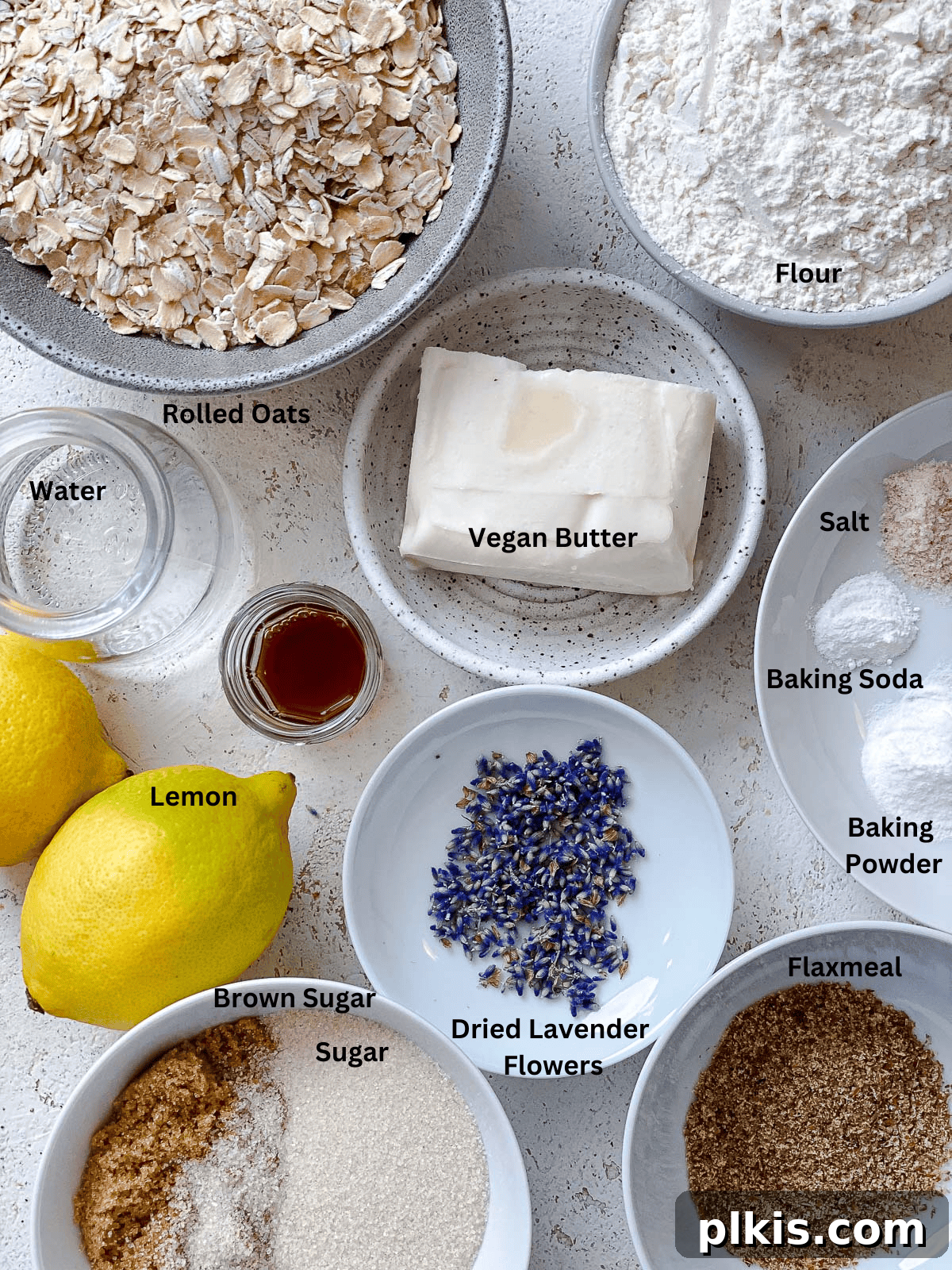
Crafting these exquisite lemon lavender cookies begins with a selection of readily available and affordable ingredients. As a vegan recipe, we utilize plant-based alternatives that deliver incredible flavor and texture. Here’s a closer look at the key components that make these cookies truly special:
- Flaxmeal & Warm Water (Flax Egg): This dynamic duo replaces traditional eggs, binding the dough and adding a subtle richness. When combined, flaxmeal and water create a gelatinous mixture that acts as an excellent vegan binder, ensuring your cookies hold together perfectly.
- All-Purpose Flour: The foundation of our cookie structure, providing the perfect tender crumb. For best results, measure your flour accurately to avoid dense or dry cookies.
- Baking Soda & Baking Powder: These leavening agents work together to give the cookies their delightful lift and softness, contributing to that satisfyingly fluffy texture.
- Unsalted Vegan Butter: Essential for that rich, ‘buttery’ flavor and tender texture without any dairy. It’s crucial to use vegan butter at room temperature for optimal creaming with the sugars.
- Granulated & Light Brown Sugar: A combination of sugars creates the ideal balance of sweetness and contributes to both crisp edges and a chewy interior. Light brown sugar also adds a hint of molasses depth that complements the other flavors.
- Salt: A pinch of salt is vital for balancing and enhancing all the other flavors. It brightens the lemon zest and makes the lavender notes more pronounced, preventing the cookies from tasting one-dimensional.
- Vanilla Extract: A classic cookie enhancer, vanilla complements both citrus and floral notes beautifully, adding a layer of warmth and complexity to the overall taste.
- Rolled Oats: These provide a wonderful chewiness and a wholesome texture to the cookies, distinguishing them from a typical shortbread. They absorb moisture during the chilling process, contributing significantly to the perfect soft, yet firm consistency.
- Fresh Lemons (Zest & Juice): The star of the show! Fresh lemon zest provides an intense citrus aroma and essential oils, which are crucial for that vibrant lemon flavor. The juice adds tartness and moisture, brightening the overall profile.
- Dried Culinary Lavender Flowers: The delicate, fragrant heart of these cookies. It’s paramount to use culinary-grade lavender, preferably organic, to ensure a pleasant, non-soapy taste. This ensures a subtle, enchanting floral note.
Creative Variations: Elevate Your Lemon Lavender Cookies
While these lemon lavender cookies are a dream on their own, they also serve as a fantastic canvas for culinary creativity. Feel free to experiment with these additions to personalize your batch and discover new favorite flavor combinations:
- Orange Zest & Juice: For a different citrus profile, consider swapping out the lemon for vibrant orange zest and juice. This creates a slightly sweeter and rounder citrus note that pairs beautifully with the delicate essence of lavender.
- Almond Extract: A tiny dash (just about ¼ teaspoon) of almond extract can add a delightful depth and nutty undertone to your cookies, beautifully complementing both the bright lemon and fragrant lavender.
- Poppy Seeds: Introduce a delightful textural contrast and a subtle, earthy flavor by stirring in some poppy seeds. They also add a charming visual appeal, reminiscent of classic lemon poppy seed muffins.
- Candied Lemon Peel: For an extra burst of concentrated lemon flavor and a lovely chewiness, finely chop some candied lemon peel and fold it into the dough. This adds a sophisticated touch and intensifies the citrus notes.
- Vegan White Chocolate: Elevate the indulgence with dairy-free white chocolate chips or chunks. The creamy sweetness of white chocolate balances the tart lemon and fragrant lavender beautifully, creating a truly decadent treat.
- Rosemary: For those who appreciate a more complex, herbaceous twist, a small pinch of finely chopped fresh rosemary can add an unexpected savory dimension that works surprisingly well with the citrus and floral notes of lemon and lavender.
- Lemon Sugar Coating: Before baking, roll the cookie dough balls in a mixture of granulated sugar and extra lemon zest. This creates a sparkling, sweet, and crunchy crust with an intensified lemon aroma and a delightful texture.
- Lavender Syrup in Glaze: For an even more pronounced floral note, consider adding 1 teaspoon of culinary lavender syrup to your lemon glaze. This enhances the lavender flavor and can give the glaze a beautiful, subtle hue.
Baking Bliss: How to Make Your Lemon Lavender Cookies
Creating these delightful cookies is a straightforward and rewarding process. Follow these detailed steps to achieve perfect, aromatic vegan lemon lavender cookies every time.

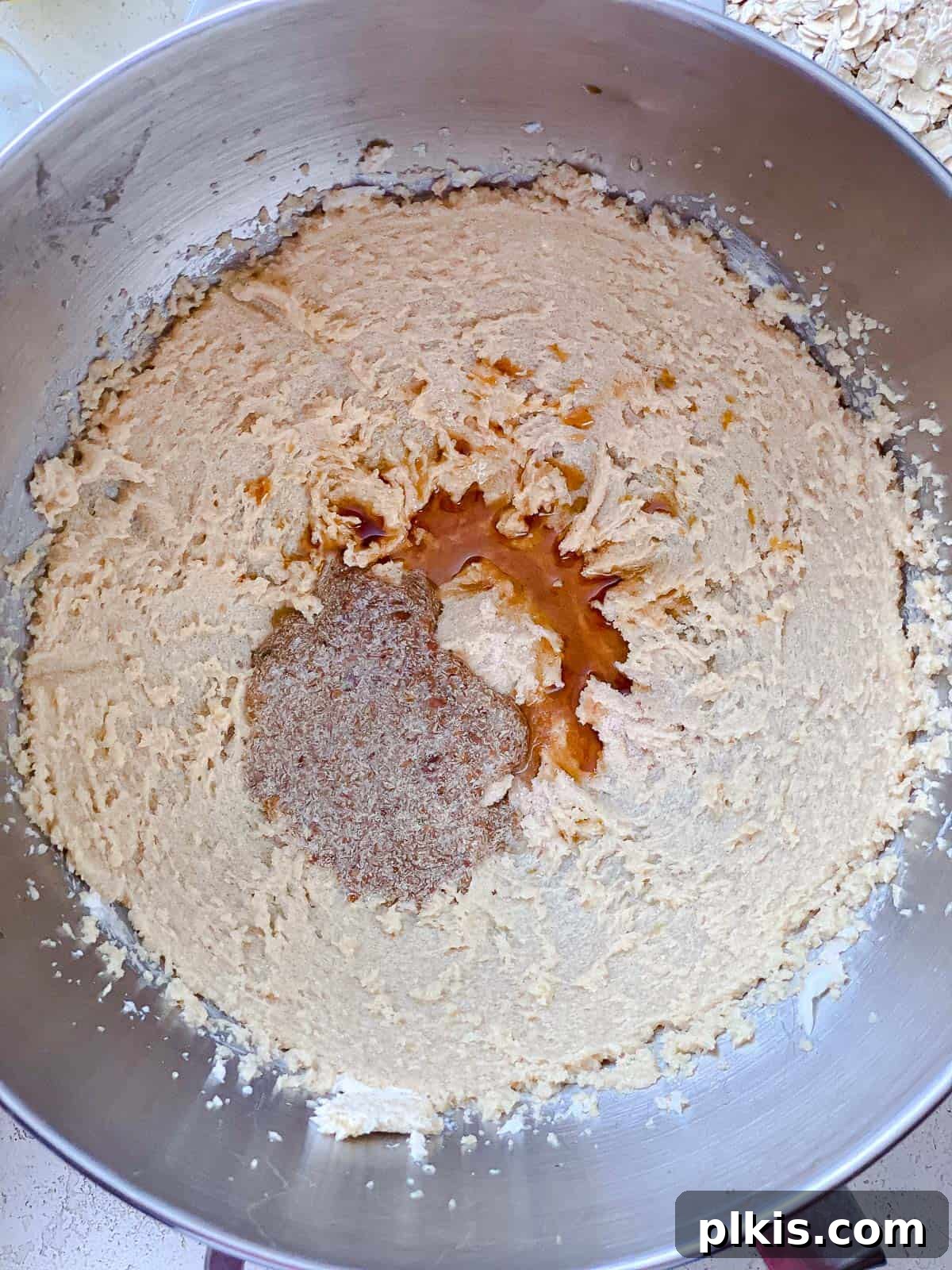
- Prepare Your Flax Egg & Citrus: In a small bowl, combine 1 tablespoon of ground flaxseed with 2 ½ tablespoons of warm water. Stir them together well and set the mixture aside for at least 5 minutes. During this time, it will thicken into a gel-like consistency, effectively creating your vegan “flax egg.” While that’s setting, zest both lemons and squeeze out their juice, ensuring you have everything ready.
- Combine Dry & Wet Ingredients: In a medium bowl, whisk together 1 cup of all-purpose flour, ½ teaspoon of baking soda, and ¼ teaspoon of baking powder until they are thoroughly combined. In a separate, larger bowl (or the bowl of a stand mixer fitted with the paddle attachment), cream ½ cup of room-temperature unsalted vegan butter with ¼ cup of granulated sugar and ½ cup of light brown sugar. Beat with an electric mixer until the mixture is light, fluffy, and pale in color, typically for 2-3 minutes. Next, add ½ teaspoon of salt, 1 teaspoon of vanilla extract, the lemon zest and juice, and your prepared flax egg. Continue to mix on high speed for another 2 minutes, ensuring all ingredients are fully incorporated and the mixture is well aerated.
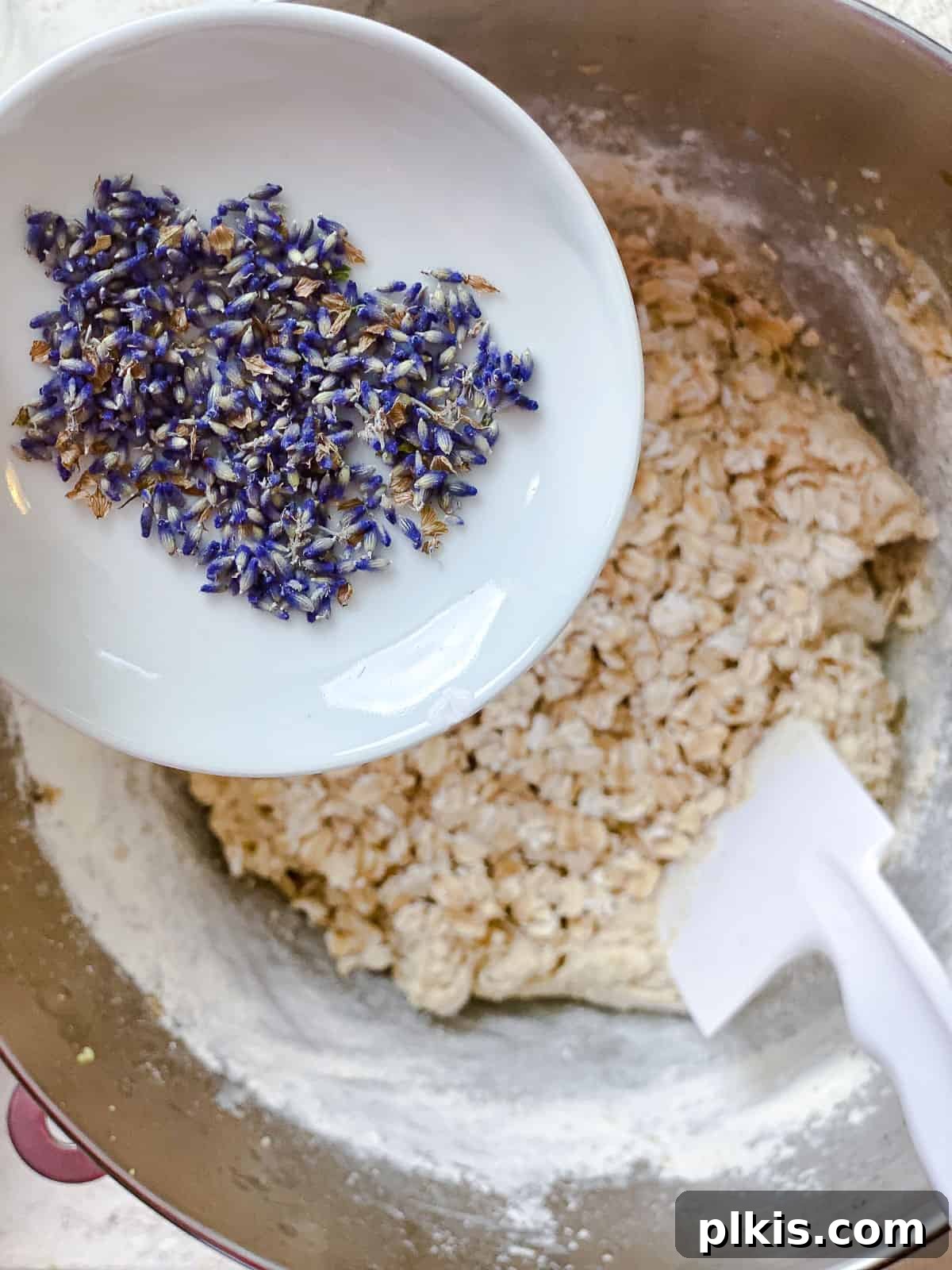

- Incorporate Dry Mix, Oats & Lavender: Gradually add the flour mixture (from step 2) to the wet ingredients in the large bowl, mixing on low speed until *just* combined. It’s crucial not to over-mix at this stage, as overworking the gluten can result in tough cookies. Once the flour is mostly incorporated, fold in 1 ½ cups of rolled oats and 2 teaspoons of dried culinary lavender flowers. Mix gently until all the dry ingredients are moist and evenly distributed throughout the dough, taking care not to mix for too long.
- Chill the Dough for Flavor Infusion: Cover the cookie dough bowl tightly with a damp towel or plastic wrap and refrigerate for at least 1 ½ hours. This crucial chilling step serves a dual purpose: it allows the rolled oats to fully absorb moisture from the dough, resulting in a perfectly chewy, rather than dry, texture. More importantly, it gives the fragrant lavender and bright lemon ample time to meld and deepen their delicate aromas and flavors throughout the entire batch, creating a more cohesive and pronounced taste in the final baked cookie.
Pro Tip for Enhanced Flavor: For an even stronger lemon and lavender essence in your cookies, consider a quick pre-step: blend the lemon zest and dried lavender flowers with the granulated sugar for a few seconds in a food processor or spice grinder before adding them to the wet ingredients. This technique helps to release the essential oils more effectively from the zest and breaks the lavender into smaller, more evenly distributed pieces, ensuring maximum flavor payoff.

- Bake & Glaze: Preheat your oven to 375°F (190°C). Line a baking sheet with parchment paper or a silicone mat. Scoop approximately 2 tablespoon portions of the chilled dough. Lightly roll each portion into a ball, then place them 2 inches apart on the prepared baking sheet and gently press down to flatten them slightly. Bake for 8-12 minutes, or until the edges are golden brown and the centers appear still slightly soft and just set. Remove the baking sheet from the oven and let the cookies rest on the warm sheet for about 10 minutes; this allows them to firm up without becoming brittle. Carefully transfer the semi-cooled cookies to a wire rack to cool completely. While the cookies cool, prepare the glaze: in a small bowl, whisk together ½ cup of powdered sugar and 1 tablespoon of fresh lemon juice until smooth and pourable. Once the cookies are fully cooled, drizzle the lemon glaze generously over each cookie. For an extra touch of beauty and intensified flavor, sprinkle with additional fresh lemon zest and a few dried culinary lavender flowers.
Expert Tips for Perfect Lemon Lavender Cookies
Achieving bakery-quality vegan lemon lavender cookies is simple with a few key techniques and considerations. These pro tips will help ensure your cookies turn out perfectly soft, flavorful, and beautifully aromatic every time:
- Always Use Culinary-Grade Lavender: This is paramount for delicious results. Ensure you’re exclusively using culinary-grade dried lavender flowers, preferably organic. Non-culinary lavender can contain harsh oils or pesticides, resulting in a bitter, overwhelming, or even “soapy” taste. Culinary lavender provides a delicate, fragrant floral note.
- Measure Flour Accurately: Baking is a precise science, and proper flour measurement is crucial for the correct cookie texture. Instead of scooping directly from the flour bag (which compacts the flour and adds too much), fluff the flour in its bag or container, then spoon it gently into your measuring cup. Level off the excess with the straight edge of a knife. This method prevents dense or dry cookies.
- Avoid Over-Mixing the Dough: Once you add the flour mixture to the wet ingredients, mix only until the ingredients are just combined and no streaks of dry flour remain. Over-mixing vigorously or for too long develops the gluten in the flour, which can result in tough, dense cookies rather than the desired soft and chewy texture.
- Don’t Skip the Chill Time: The refrigeration period for the dough is not optional; it is essential. Chilling serves multiple important purposes: it allows the rolled oats to fully hydrate, preventing them from absorbing moisture during baking and potentially drying out your cookies. More critically, it gives the aromatic compounds from the lavender and lemon zest ample time to meld and deepen their flavors throughout the entire cookie dough, resulting in a more harmonious and pronounced taste in the final baked product.
- For Crispier Cookies: If you prefer your cookies with a slightly firmer, crispier texture rather than a soft chew, you can extend the baking time by an additional 2-3 minutes. Keep a close eye on them during this extended period to prevent over-browning or burning.
- Room Temperature Vegan Butter is Key: Ensure your vegan butter is truly at room temperature – soft enough to indent easily but not melted or greasy. This allows it to cream properly with the sugars, incorporating air which is vital for a lighter, fluffier cookie texture. If the butter is too cold, it won’t cream well; if it’s too warm, the dough might become greasy and spread too much.
- Fresh Lemon Zest for Maximum Flavor: While lemon juice provides tang, it’s the zest that contains all the concentrated aromatic oils that give these cookies their vibrant, bright lemon flavor. Always opt for fresh lemon zest for the best and most impactful citrus notes. Avoid bottled lemon zest if possible.

Make Ahead and Storage Guidelines
These delightful vegan lemon lavender cookies are perfect for preparing in advance, making entertaining a breeze or simply ensuring you always have a sweet treat on hand when a craving strikes.
Storing Baked Cookies:
Once your lemon lavender cookies are completely cooled and the glaze has set, store them in an airtight container at room temperature for up to 2-3 days. For extended freshness, particularly in warmer climates, they can be kept in the refrigerator for up to a week. The flavors often meld and deepen even more beautifully after a day or two of storage.
Freezing Dough or Baked Cookies:
These lavender lemon cookies freeze exceptionally well, offering great flexibility for future enjoyment:
- Freezing Dough: Prepare the cookie dough as instructed, up to the crucial chilling step. Instead of proceeding to baking, portion the dough into individual balls (e.g., 2 tablespoon scoops). Arrange these dough balls in a single layer on a baking sheet and flash-freeze them until solid, which typically takes about 1-2 hours. Once firm, transfer the frozen dough balls to a freezer-safe Ziplock bag or an airtight container, separating layers with parchment paper if stacking. They can be stored in the freezer for up to 3 months. When ready to bake, simply place the frozen dough balls on a prepared baking sheet and bake directly from frozen, adding an extra 2-3 minutes to the usual baking time.
- Freezing Baked Cookies: Allow your baked and glazed lemon lavender cookies to cool completely. Arrange them in a single layer on a baking sheet and flash-freeze until they are solid. Once frozen, transfer them to a freezer-safe container or bag, separating layers with parchment paper to prevent sticking. They can be stored in the freezer for up to 3 months. To enjoy, simply thaw them overnight in the refrigerator or at room temperature for an hour or two before serving.
Lemon Lavender Cookies Recipe
These lemon lavender cookies are soft, fluffy, a little chewy, and bursting with citrus and floral notes, with a light lemon glaze—the perfect springtime cookie!
Prep Time: 15 mins
Cook Time: 10 mins
Chill Time: 1 hr 30 mins
Total Time: 1 hr 55 mins
Yields: 12 cookies

Equipment
- Measuring spoons
- Measuring Cups
- Electric Mixer (handheld or stand mixer)
- Large mixing bowl
- Medium mixing bowl
- Small bowl
- Baking sheets
- Parchment paper or silicone baking mats
- Wire cooling rack
Ingredients
- 1 tablespoon flaxmeal
- 2 ½ tablespoons warm water
- 1 cup all-purpose flour
- ½ teaspoon baking soda
- ¼ teaspoon baking powder
- ½ cup unsalted vegan butter, at room temperature
- ¼ cup granulated sugar
- ½ cup light brown sugar
- ½ teaspoon salt
- 1 teaspoon vanilla extract
- 1 ½ cups rolled oats
- Zest and juice from 2 lemons
- 2 teaspoons dried culinary lavender flowers
For the Glaze
- ½ cup powdered sugar
- 1 tablespoon fresh lemon juice
For Topping (Optional)
- Extra lemon zest
- 1 teaspoon dried culinary lavender flowers
Instructions
- Prepare Flax Egg: In a small bowl, combine the flaxmeal and warm water. Stir well and set aside for 5 minutes to thicken.
- Combine Dry Ingredients: In a medium bowl, whisk together the flour, baking soda, and baking powder. Set aside.
- Cream Wet Ingredients: In a large bowl, using an electric mixer, cream the room-temperature vegan butter with both granulated and light brown sugars until light and fluffy. Add the salt, vanilla extract, lemon zest, lemon juice, and the prepared flax egg. Mix on high for 2 minutes.
- Combine Dough: Gradually add the whisked flour mixture to the wet ingredients, mixing on low speed until just combined. Be careful not to over-mix. Fold in the rolled oats and dried lavender flowers until well incorporated.
- Chill the Dough: Cover the cookie dough with a damp towel or plastic wrap and refrigerate for at least 1 ½ hours. This step is essential for flavor infusion and ideal texture.
- Prepare for Baking: Preheat your oven to 375°F (190°C). Line a baking sheet with a silicone mat or parchment paper.
- Shape Cookies: Scoop 2 tablespoon portions of the chilled dough. Lightly roll each into a ball, then place them 2 inches apart on the baking sheet and gently press to flatten.
- Bake: Bake for 8 to 12 minutes, or until the edges are golden brown and the centers are slightly underbaked.
- Cool: Remove from the oven, and let the cookies sit on the warm baking sheet for about 10 minutes to harden. Using a spatula, carefully transfer them to a wire rack to cool completely.
- Glaze: While cookies cool, whisk together the powdered sugar and 1 tablespoon of fresh lemon juice in a small bowl until smooth for the glaze. Once cookies are fully cooled, drizzle the glaze over them and optionally sprinkle with extra lemon zest and lavender flowers.
Recipe Notes
- Always use culinary-grade lavender to ensure a pleasant flavor.
- Measure flour accurately by spooning it into the cup and leveling.
- Avoid over-mixing the dough to keep cookies tender.
- For crisper cookies, increase baking time by 2-3 minutes.
- Chilling the dough is crucial for flavor development and texture.
Nutrition Facts (per cookie)
- Calories: 195 kcal
- Carbohydrates: 34 g
- Protein: 3 g
- Fat: 8 g
- Saturated Fat: 1 g
- Polyunsaturated Fat: 3 g
- Monounsaturated Fat: 4 g
- Trans Fat: 1 g
- Sodium: 213 mg
- Potassium: 69 mg
- Fiber: 1 g
- Sugar: 13 g
- Vitamin A: 0.2 IU
- Vitamin C: 1 mg
- Calcium: 22 mg
- Iron: 1 mg
Additional Information
- Author: Toni Okamoto
- Course: Dessert
- Cuisine: American
- Method: Oven
- Diet: Vegan
Tried this delightful recipe? We’d love to see your creations! Please tag us on Instagram at @PlantBasedOnABudget and share your baking success! 🙂
Frequently Asked Questions About Lemon Lavender Cookies
Can I make these cookies ahead of time?
Absolutely! These cookies are perfect for preparing in advance. You have two excellent options: you can prepare the cookie dough up to the chilling step and refrigerate it for up to 3 days. This is great for meal prepping or getting a head start on baking. Alternatively, you can shape the vegan cookies into balls, arrange them on a tray, and flash-freeze them until solid. Once firm, transfer them to a freezer-safe bag or airtight container and store for up to 3 months. When you’re ready to bake, simply place the frozen dough balls on a prepared baking sheet and add an extra 2-3 minutes to the normal baking time.
Could I use lavender extract instead of dried flowers?
Yes, lavender extract can be used as an alternative to dried culinary lavender flowers, though the resulting flavor profile might be slightly different. Since extracts can be quite potent, we recommend starting with a small amount, such as ¼ teaspoon, and adjusting to taste. To ensure the flavor is to your liking before baking the entire batch, it’s always a good idea to bake a single test cookie first and adjust the extract amount if necessary.
Are these cookies similar to shortbread?
These vegan lemon lavender cookies offer a distinct texture that is thicker and chewier than traditional shortbread. This difference comes from the addition of rolled oats and a different leavening structure, which contributes to their soft and fluffy interior. However, if you prefer a shortbread-like texture infused with these delightful flavors, you could adapt our vegan lemon shortbread recipe by incorporating culinary lavender and topping it with a lemon glaze.